
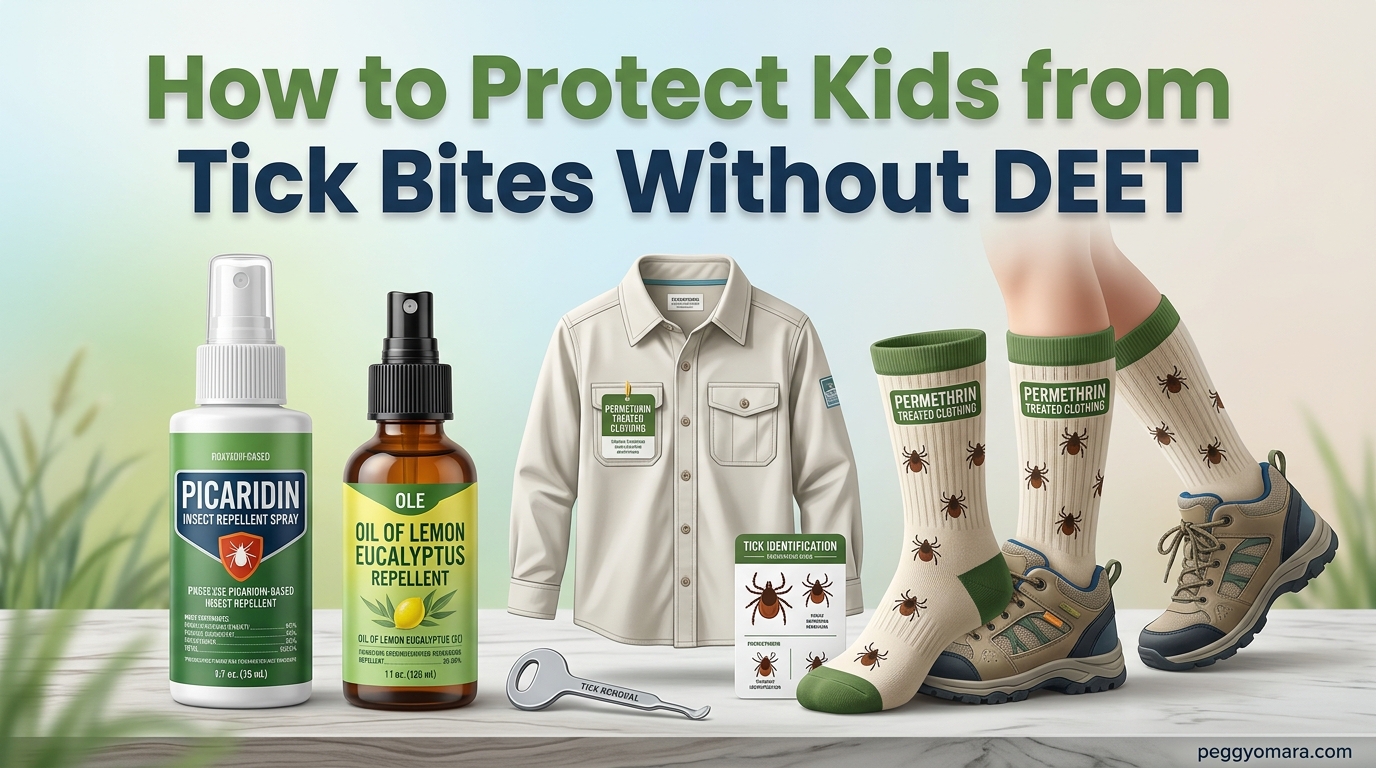
Every spring, I start dreading the tick checks. My kids love exploring the backyard, hiking trails, and camping with us every summer. But the thought of Lyme disease and other tick-borne illnesses keeps me up at night. I used to think I had two choices: douse my children in DEET or just hope for the best. Turns out, I was wrong.
You can protect kids from tick bites without DEET and still keep them safe from Lyme disease, Rocky Mountain Spotted Fever, and other tick-borne infections. Our family has been using DEET-free strategies for three seasons now, and I am sharing what actually works based on CDC guidelines and real-world testing.
This guide covers EPA-registered alternatives like picaridin and oil of lemon eucalyptus, clothing strategies that create a physical barrier, and a tick check routine that even my wiggly 6-year-old tolerates. Whether your kids are toddlers or teens, you will find practical solutions here.
Table of Contents
Understanding Tick Risks for Children
Ticks are not just a summer nuisance. They are vectors for serious diseases that can affect children for years. The blacklegged tick (also called the deer tick) transmits Lyme disease, which can cause joint pain, neurological problems, and fatigue if left untreated. The American dog tick and Rocky Mountain wood tick carry Rocky Mountain Spotted Fever, a potentially fatal bacterial infection.
Children face unique risks because they spend more time at ground level where ticks live. They crawl through grass, roll on lawns, and explore wooded areas with enthusiasm. Kids also have less developed immune systems than adults, making prompt detection and treatment even more critical.
Tick season varies by region, but in most areas, the highest risk months run from April through September. Some ticks, like the blacklegged tick, remain active whenever temperatures stay above freezing. This means year-round vigilance in warmer climates and extended seasons in temperate zones.
Not every tick carries disease. In high-risk areas, roughly 20-30% of blacklegged ticks carry the Lyme disease bacterium. But since you cannot tell by looking, every tick bite requires attention. The good news: prompt removal within 24 hours dramatically reduces disease transmission risk.
Why Consider DEET-Free Options
DEET has been the gold standard insect repellent since 1957. The CDC and EPA confirm it is safe when used as directed, even for children older than 2 months. So why do many parents, including me, seek alternatives?
The smell is the first turnoff. DEET has a distinct chemical odor that kids often hate. I have watched my daughter wrinkle her nose and refuse to let me apply it to her face and neck. That reaction makes complete coverage nearly impossible.
Some children develop skin irritation from DEET. While rare, reactions include redness, itching, and rash. Parents of kids with sensitive skin or eczema often prefer gentler options. Additionally, DEET can damage certain plastics and synthetic fabrics, which matters when your child wears expensive outdoor gear.
Many parents simply prefer to minimize chemical exposure on their children’s skin when effective alternatives exist. The EPA has registered several non-DEET repellents that provide comparable tick protection. These options give families choice without sacrificing safety.
EPA-Registered DEET Alternatives That Actually Work
The Environmental Protection Agency maintains a searchable database of repellents proven effective against ticks and mosquitoes. When you want to protect kids from tick bites without DEET, these are your science-backed options:
Picaridin: The Top DEET Alternative
Picaridin (also called KBR 3023 or icaridin) leads my list for good reason. Developed in the 1990s and available in the US since 2005, picaridin provides protection comparable to DEET without the odor or greasy feel. The CDC specifically recommends picaridin for tick protection.
For tick protection, look for picaridin concentrations of 20%. Lower concentrations work well for mosquitoes but may not repel ticks effectively. Products with 20% picaridin typically provide 8-12 hours of protection.
Age guidance: Picaridin is approved for children 6 months and older. It does not damage plastics or fabrics, making it ideal for outdoor gear. It is odorless, which means my kids actually let me apply it to their faces without protest.
Oil of Lemon Eucalyptus (OLE) and PMD
Oil of lemon eucalyptus comes from the leaves of the lemon eucalyptus tree. The synthesized version, called PMD (para-menthane-3,8-diol), is EPA-registered and proven effective against ticks. Do not confuse this with essential oil of lemon eucalyptus, which is not the same thing and not EPA-registered.
PMD products typically contain 30% concentration and provide about 6 hours of protection. The CDC recommends PMD as an effective DEET alternative.
Important age restriction: PMD is not approved for children under 3 years old. For toddlers and babies, choose picaridin instead. Some parents report a mild citrus scent that fades quickly.
IR3535
IR3535 (ethyl butylacetylaminopropionate) has been used in Europe for decades and entered the US market more recently. Avon Skin So Soft Bug Guard uses this ingredient. The EPA registers IR3535 as effective against ticks when used at appropriate concentrations.
IR3535 provides shorter protection time than picaridin or PMD, typically 4-6 hours. This means more frequent reapplication during long outdoor days. However, it has an excellent safety profile and works well for families who prefer frequent reapplication to stronger chemicals.
2-Undecanone
Less commonly discussed but EPA-registered, 2-undecanone (also called methyl nonyl ketone) occurs naturally in wild tomato leaves. Some natural repellent products use this ingredient. It provides shorter protection than picaridin but offers another option for DEET-free protection.
Application Tips for Best Results
Apply repellent to exposed skin and clothing according to label directions. For faces, spray on your hands first, then rub on your child’s face to avoid eye contact. Never apply repellent under clothing or on cuts, wounds, or irritated skin.
Wash treated skin with soap and water when your child comes indoors. Launder treated clothing before wearing again. Reapply according to product label guidelines, typically every 4-12 hours depending on the active ingredient and concentration.
Clothing and Gear Strategies
Chemical repellents work best alongside physical barriers. Smart clothing choices dramatically reduce tick attachment opportunities. Here is what our family uses:
The Light-Colored Clothing Rule
Dark colors make tick detection nearly impossible. Light-colored pants, shirts, and socks let you spot ticks quickly during checks. When my kids wear khaki hiking pants instead of navy blue, I find ticks crawling before they attach.
Long sleeves and long pants create the first line of defense. Tuck pants into socks to form a barrier ticks must climb over. This simple step blocks many ticks from ever reaching skin.
Permethrin-Treated Clothing
Permethrin deserves special attention because it works differently than skin repellents. You apply permethrin to clothing, shoes, and gear, not skin. It actually kills ticks on contact rather than just repelling them.
The EPA classifies permethrin as safe for children’s clothing when used as directed. You can buy pre-treated clothing (brands like Insect Shield and Bug Blocking) or treat your own using permethrin spray. Treatment lasts through multiple washes, typically 6 weeks or 6 washings.
I treat my kids’ hiking pants, socks, and shoes before camping season. For backyard play, permethrin-treated shoes and socks provide excellent protection without any skin application.
Hats and Accessories
Wide-brimmed hats protect the scalp and make head checks easier. Ticks often drop from vegetation above, so covering hair helps. Bandanas treated with permethrin provide neck protection during hikes.
Closed-toe shoes and socks beat sandals for tick country. Sandals expose feet and ankles where ticks commonly attach. Hiking boots with permethrin-treated gaiters offer the best protection for serious outdoor adventures.
Daily Tick Check Routine
No repellent or clothing strategy catches everything. Daily tick checks remain essential for complete protection. Here is the routine that works for our family:
When to Check
Check immediately after any outdoor activity in grassy, brushy, or wooded areas. Check again at bedtime, which gives you better lighting and a calmer child. For campouts, we do morning checks too since ticks sometimes attach overnight.
Body Location Checklist
Ticks prefer warm, moist, hidden areas. Check these locations carefully:
- Scalp and hairline, especially behind ears and at the base of the neck
- Armpits and along the underarms
- Belly button and waistline
- Between the legs and groin area
- Behind the knees and between toes
Use your fingers to feel for small bumps. A fingernail works well for parting hair to check the scalp. For thick hair, a fine-tooth comb helps spot attached ticks.
Making It Routine (and Fun)
We call our evening checks “tick patrol time” at our house. My kids know the routine and expect it after outdoor days. For younger children, make it a game: “I am going to find any tick hitchhikers trying to hide.” Use a flashlight to make it feel like an adventure.
Older kids can learn to do self-checks with mirror assistance. Teach them to look for tiny black or brown dots that were not there yesterday. Nymph-stage ticks can be as small as a poppy seed, so careful inspection matters.
What to Do If You Find a Tick on Your Child
Finding a tick triggers panic in most parents. Stay calm. Prompt, proper removal reduces disease transmission risk significantly. Here is exactly what to do:
Proper Removal Technique
Use fine-tipped tweezers, not your fingers. Grasp the tick as close to the skin surface as possible. Pull upward with steady, even pressure. Do not twist, jerk, or squeeze the tick’s body, which can cause it to regurgitate infectious material into the bite wound.
After removal, clean the bite area thoroughly with rubbing alcohol or soap and water. Wash your hands too. Dispose of the tick by submerging it in alcohol, placing it in a sealed bag, or flushing it down the toilet.
Avoid old myths like using nail polish, petroleum jelly, or a hot match. These methods do not work and may increase disease transmission risk by causing the tick to release more saliva.
After Removal Steps
Save the tick in a sealed container if possible. Identification matters because different species carry different diseases. Your pediatrician or local health department can identify the tick type if needed.
Mark your calendar with the bite date. Watch for symptoms including fever, rash (especially a bull’s-eye pattern), headache, muscle aches, or joint pain. Early Lyme disease treatment with antibiotics is highly effective.
When to Call the Doctor
Contact your pediatrician if the tick was attached for more than 24 hours, if you cannot completely remove the tick, if the bite area develops a rash or looks infected, or if your child develops fever or flu-like symptoms within weeks of the bite.
Some doctors prescribe preventive antibiotics after high-risk tick bites in areas with high Lyme disease rates. Discuss this option with your pediatrician if the tick was likely a blacklegged tick and attached for an extended period.
Additional Prevention Strategies
Beyond repellents and clothing, several environmental strategies reduce tick encounters:
Your Yard Matters
Keep grass mowed short, especially where kids play. Remove leaf litter and brush piles where ticks hide. Create a 3-foot wood chip or gravel barrier between your lawn and wooded areas to reduce tick migration.
Consider professional tick control treatments if you live in a high-risk area. Many pest control companies offer organic or reduced-chemical options for families who prefer minimal environmental impact.
Protect Your Pets
Dogs and cats bring ticks indoors. Use veterinarian-recommended tick prevention on pets who go outside. Check pets after walks just like you check kids. Keeping pets tick-free protects the whole family.
Trail Wisdom
When hiking, stay in the center of trails and avoid brushing against vegetation. Ticks wait on grass and brush with legs outstretched, ready to grab passing hosts. Avoid sitting directly on the ground or on logs in tick habitat.
Frequently Asked Questions
What repels ticks besides DEET?
EPA-registered alternatives to DEET include picaridin, oil of lemon eucalyptus (OLE/PMD), IR3535, and 2-undecanone. Picaridin at 20% concentration provides the longest-lasting protection, comparable to DEET. Oil of lemon eucalyptus works for about 6 hours but is not recommended for children under 3.
What month are ticks the worst?
Tick activity peaks from April through September in most regions. However, blacklegged ticks remain active whenever temperatures stay above freezing. In southern climates, ticks may be active year-round. Spring and early summer typically see the highest nymph tick populations, which are harder to spot than adult ticks.
Why no DEET for kids?
Many parents choose DEET-free options due to strong odor, skin irritation concerns, or preference for minimizing chemical exposure. While the CDC confirms DEET is safe for children over 2 months when used as directed, EPA-registered alternatives like picaridin provide comparable protection without odor or greasy residue.
Does DEET stop ticks from biting?
DEET repels ticks by confusing their sensory receptors, making it harder for them to detect and bite humans. However, DEET does not kill ticks. It provides a protective barrier that typically lasts 4-8 hours depending on concentration. Proper clothing coverage and daily tick checks remain essential even with DEET use.
What is the safest tick repellent for toddlers?
For children under 3, picaridin (20% concentration) is the safest EPA-registered tick repellent. It is approved for children 6 months and older, is odorless, does not damage fabrics, and provides 8-12 hours of protection. Avoid oil of lemon eucalyptus products for children under 3 years old.
Is permethrin safe for children’s clothing?
Yes, the EPA classifies permethrin as safe for children’s clothing when applied as directed. Apply permethrin to clothing, shoes, and gear only, never directly to skin. Pre-treated clothing is available, or you can treat items at home. Protection lasts through approximately 6 washings.
How do I check my child for ticks?
Check your child immediately after outdoor activities and again at bedtime. Focus on warm, hidden areas: scalp and hairline, behind ears, armpits, belly button, waistline, groin, behind knees, and between toes. Use your fingers to feel for small bumps. Light-colored clothing makes tick detection easier during the day.
Conclusion
You can protect kids from tick bites without DEET using proven strategies backed by the CDC and EPA. Picaridin offers the best DEET-free tick protection for children 6 months and older. Oil of lemon eucalyptus works for kids over 3. Combine these repellents with permethrin-treated clothing, light colors, and thorough daily tick checks for comprehensive protection.
Remember that no single method catches everything. Layer your defenses: apply repellent to skin, treat clothing with permethrin, choose light colors, and check your child thoroughly after outdoor time. If you find a tick, remove it promptly with tweezers and monitor for symptoms.
Tick protection does not require harsh chemicals. With the right knowledge and routine, your family can enjoy the outdoors safely and confidently. Start with picaridin, invest in some treated clothing, and make tick checks a regular habit. Your kids will stay safer, and you will sleep better knowing you have got this covered.