
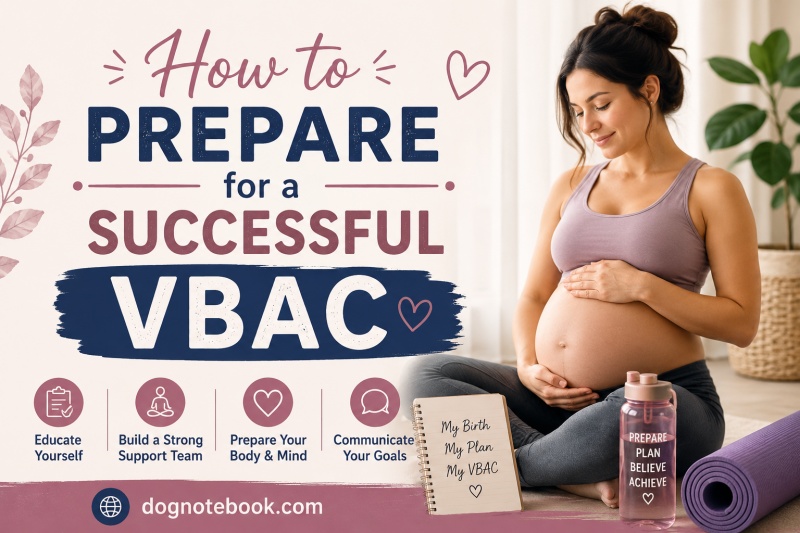
Preparing for a vaginal birth after cesarean (VBAC) can feel overwhelming. After your previous C-section, you may have questions about whether your body can handle labor. You might wonder if VBAC is truly safe. These concerns are completely normal.
The encouraging news is that 60 to 80 percent of women who attempt VBAC have successful vaginal births. Your body is not broken. With proper preparation and the right support team, you can significantly increase your chances of achieving the birth experience you desire.
How to prepare for a successful VBAC involves five essential steps that work together to set you up for the best possible outcome:
- Find a truly VBAC-supportive provider who believes in your ability to birth vaginally and has the statistics to back up that belief.
- Prepare your body with targeted exercises that strengthen your pelvic floor, improve fetal positioning, and build the stamina needed for labor.
- Get educated about the birth process so you can make informed decisions and advocate for yourself confidently.
- Build a strong support system including a VBAC-experienced doula and peer support from women who understand your journey.
- Choose the right birth setting that aligns with your goals and has policies that support VBAC attempts.
This guide covers everything you need to know about preparing for VBAC in 2026. From understanding your odds of success to specific exercises and emotional preparation, you will find actionable steps you can take right now. Let us walk through this journey together.
Table of Contents
What Is VBAC and Why Consider It?
VBAC stands for vaginal birth after cesarean. It means giving birth vaginally after having had one or more previous C-sections. The medical term doctors often use is TOLAC, which stands for trial of labor after cesarean. This refers to the process of attempting vaginal birth after a previous surgical delivery.
Many women consider VBAC for deeply personal reasons. Some want to experience vaginal birth for the first time. Others hope for a shorter recovery period so they can care for their new baby and older children more easily. Some women feel a strong desire to prove their bodies are capable of giving birth normally.
Your reasons for wanting VBAC are valid, whatever they may be. Understanding the facts helps you make an informed choice that aligns with your values and health needs.
VBAC Success Rates: What the Research Shows
According to the American College of Obstetricians and Gynecologists (ACOG), about 60 to 80 percent of women who attempt VBAC achieve successful vaginal births. Your individual success rate depends on several factors.
Women who have had a previous vaginal birth before or after their C-section have higher success rates, often reaching 80 to 90 percent. Those whose previous C-section was performed for a non-recurring reason, such as breech position or fetal distress, also tend to have better odds.
On the other hand, factors like a high body mass index (BMI), being older than 40, or having a very large baby can lower your chances somewhat. However, these are not automatic disqualifiers. Many women with these factors still achieve successful VBAC with proper preparation and support.
Comparing Risks: VBAC vs Repeat C-Section
Every birth option carries risks. Understanding these helps you make a decision based on facts rather than fear. For most low-risk women, VBAC is statistically safer than a repeat cesarean when looking at overall health outcomes.
The primary risk associated with VBAC is uterine rupture, where the scar from your previous C-section opens during labor. This occurs in approximately 1 in 300 VBAC attempts for women with one prior low-transverse incision. While serious, this complication is rare, and hospitals are equipped to respond quickly with emergency surgery if needed.
Repeat C-sections carry their own risks. These include increased bleeding, infection, blood clots, and complications in future pregnancies. Each additional cesarean increases the risk of placental problems in subsequent pregnancies. Recovery from C-section typically takes 4 to 6 weeks versus 1 to 2 weeks for vaginal birth.
Most major medical organizations, including ACOG, recommend that women with one previous C-section be counseled about VBAC as a safe option. The choice ultimately belongs to you after weighing these factors with your healthcare provider.
Finding a VBAC Supportive Provider
Your choice of healthcare provider is the single most important factor in VBAC success. A truly supportive provider believes in your ability to birth vaginally and creates an environment where that can happen. Unfortunately, not all providers who say they support VBAC actually do.
In my research and conversations with women who have had both successful and unsuccessful VBAC attempts, the provider factor comes up repeatedly. One mother shared in a forum discussion that her doctor claimed to be VBAC-friendly but pressured her into scheduling a repeat C-section at 38 weeks. Another found that her provider’s hospital had a secret VBAC ban despite official policies suggesting otherwise.
Red Flags: When a Provider Is Not Truly Supportive
Watch for these warning signs that indicate a provider may not genuinely support your VBAC goals. They require you to schedule a C-section by a certain date if labor has not started. They mention “big baby” as a reason to avoid VBAC without evidence. They limit how long you can labor or push. They require continuous fetal monitoring that restricts your movement. They express doubt about your ability to birth vaginally based on factors like age or weight without medical justification.
A provider who truly supports VBAC will discuss your individual risk factors honestly while maintaining an attitude of optimism and partnership. They will share their personal VBAC success rate with you. The national average for VBAC success among supportive providers is around 70 to 80 percent. If your provider’s rate is significantly lower, ask why.
Green Flags: Signs of a True VBAC Advocate
Supportive providers typically display certain positive characteristics. They encourage you to go into labor spontaneously. They support your desire to move freely during labor and birth in positions of your choosing. They have a VBAC success rate of 70 percent or higher. They discuss informed consent and your right to refuse interventions. They are patient with the normal variation in labor length and progression.
Do not hesitate to interview multiple providers. Many women successfully switch providers late in pregnancy when they realize their current care team is not aligned with their goals. Finding the right support matters more than convenience or perceived loyalty.
Questions to Ask Potential Providers
When interviewing providers, ask specific questions to assess their true VBAC support. What is your VBAC success rate? This is the most important question. If they do not track this or refuse to share, consider it a red flag.
What is your approach if I go past my due date? Supportive providers usually allow you to wait for spontaneous labor up to 41 or 42 weeks with monitoring. What are your policies on fetal monitoring during VBAC labor? Intermittent monitoring that allows movement is preferable to continuous monitoring that confines you to bed.
Under what circumstances would you recommend a repeat C-section? Listen for evidence-based answers rather than arbitrary time limits. What percentage of your patients have unmedicated births? This reveals their general philosophy about birth.
What hospital or birth center do you work with, and what are their VBAC policies? Hospital policies sometimes override provider support, so understanding both is essential.
Physical Preparation for VBAC
Preparing your body for vaginal birth after cesarean involves more than general pregnancy fitness. You need targeted preparation that addresses the specific physical demands of labor and addresses any lingering effects from your previous surgery.
C-sections leave a scar not just on your skin but on your uterus. While this scar rarely causes problems, the abdominal surgery can create tightness and adhesions in surrounding tissues. Addressing this scar tissue and optimizing your pelvic floor function gives you a stronger foundation for labor.
The Role of Pelvic Floor Physical Therapy
Pelvic floor physical therapy (PFPT) is one of the most valuable yet underutilized resources for VBAC preparation. In forums and support groups, women consistently describe pelvic floor PT as transformative. Many say they wish they had known about it sooner.
A pelvic floor physical therapist can assess muscle tone, identify imbalances, and teach you exercises tailored to your body. They can also work on scar tissue mobilization from your previous C-section. This helps restore normal movement patterns and reduces restrictions that could affect labor.
If possible, start pelvic floor therapy in your second trimester. This gives you time to address any issues and practice the techniques you will need. Many physical therapists who specialize in pregnancy can also teach you labor positions and pushing techniques specific to your pelvic anatomy.
Body Balancing and Fetal Positioning
The position your baby assumes in the womb significantly affects your VBAC success. Optimal fetal positioning, with the baby’s head down and facing your back, creates the easiest path through the birth canal. The Spinning Babies program offers specific techniques to encourage this positioning.
Body balancing exercises help release tension in pelvic ligaments and muscles. This creates more room for the baby to settle into an ideal position. The three principles of Spinning Babies, balance, gravity, and movement, form the foundation of this approach.
Balance refers to releasing tight ligaments and muscles that might restrict the baby’s movement. Gravity means using positions that use gravity to help the baby descend. Movement involves staying active during pregnancy to keep your pelvis mobile and responsive.
Starting these practices around 20 to 30 weeks gives your baby the best chance to settle into an optimal position before labor begins. However, it is never too late to start. Many women have successfully turned malpositioned babies late in pregnancy using these techniques.
Overall Fitness and Labor Stamina
Labor is physically demanding, especially for VBAC mothers who may have longer labors as their bodies work through the birth process for the first time or after a long gap. Building cardiovascular endurance and lower body strength helps you meet this challenge.
Walking is one of the best exercises for pregnancy and VBAC preparation. It keeps your pelvis mobile, encourages optimal fetal positioning, and builds the stamina you will need for labor. Aim for 30 minutes of walking most days if your provider approves.
Swimming and prenatal yoga also provide excellent preparation. Swimming relieves pressure on your joints while providing gentle resistance training. Yoga improves flexibility, body awareness, and breathing techniques that serve you well during labor.
Essential Exercises to Prepare for VBAC
Specific exercises target the muscle groups and movement patterns you will use during labor. Practicing these regularly during pregnancy prepares your body and builds your confidence in its capabilities.
Start these exercises in your second trimester and continue through your pregnancy. Always listen to your body and stop if you feel pain or discomfort. Check with your provider before beginning any new exercise routine.
Diaphragmatic Breathing
Diaphragmatic breathing, also called belly breathing, is foundational for VBAC preparation. This technique activates your parasympathetic nervous system, reducing stress and creating the hormonal environment that supports labor progress.
To practice, sit comfortably or lie on your side. Place one hand on your chest and one on your belly. Inhale deeply through your nose, allowing your belly to expand while keeping your chest relatively still. Your lower hand should rise while your upper hand stays steady.
Exhale slowly through pursed lips, allowing your belly to fall. Focus on making your exhale longer than your inhale. This activates your parasympathetic response and trains your body to relax on command.
Practice this breathing for 5 to 10 minutes daily. Use it during moments of stress to build the habit. When labor begins, this breathing pattern will feel natural and help you stay calm and focused.
Deep Squats
Deep squats open your pelvis and strengthen your legs, glutes, and core. They also stretch your perineum, preparing the tissues for the stretching that occurs during vaginal birth.
Stand with your feet wider than hip-width, toes pointing slightly outward. Lower your hips down and back as if sitting in a chair. Go as low as feels comfortable, aiming for your hips below your knees if possible.
Keep your chest lifted and your weight in your heels. You can hold onto a sturdy surface for balance if needed. Hold the squat position for 30 to 60 seconds, then stand up slowly.
Perform 3 to 5 deep squats daily. As you get stronger and more flexible, you may be able to hold them longer or perform them without support. Many women find that practicing deep squats helps them instinctively choose this position during labor.
Cat-Cow Stretch
The cat-cow stretch improves spinal mobility and encourages optimal fetal positioning. It also helps relieve back pain common in pregnancy and prepares your core for the work of labor.
Begin on your hands and knees in a tabletop position. Your wrists stack under your shoulders and your knees under your hips. Inhale as you arch your back, dropping your belly toward the floor and lifting your tailbone. This is the cow position.
Exhale as you round your spine upward, tucking your tailbone under and bringing your chin toward your chest. This is the cat position. Move slowly between these positions, coordinating your breath with the movement.
Continue for 1 to 2 minutes, moving at your own pace. This stretch feels wonderful anytime your back feels tight. It also teaches you to move your pelvis freely, a skill that serves you well during labor.
Perineal Massage
Perineal massage prepares the tissues between your vagina and anus for the stretching of vaginal birth. Research suggests it may reduce the risk of tearing, especially for first-time vaginal births.
Begin around 34 weeks of pregnancy after getting approval from your provider. Wash your hands thoroughly and apply a natural oil like coconut oil or olive oil to your thumbs and perineum. Insert your thumbs about an inch into your vagina. Press down toward your rectum and then out toward the sides, stretching the tissues gently.
Hold the stretch for 1 to 2 minutes, gradually increasing the pressure as the tissues relax. You may feel a burning sensation similar to what you might experience as the baby’s head crowns. This helps your body become familiar with the sensation.
Perform perineal massage for 5 to 10 minutes, three to four times per week. Many women find it easier to have their partner assist with this technique, though you can certainly do it yourself.
Side-Lying Release
The side-lying release is a Spinning Babies technique that helps balance pelvic ligaments and create more room for the baby to descend. It is particularly helpful if your baby is positioned high or seems stuck in a posterior position.
Lie on your side with your back near the edge of a firm bed or table. Your head rests on a pillow, and your bottom leg hangs off the edge. Keep your hips stacked vertically and your top foot supported on a stool or chair.
Allow your bottom leg to hang freely, completely relaxed. The weight of your leg creates gentle traction on your pelvic ligaments. Hold this position for 3 to 5 minutes, then switch sides.
Perform this release once daily, particularly if you know your baby is not in an optimal position. Many women report feeling immediate shifts in baby’s position after doing this technique.
Lunge Technique
Lunges during pregnancy strengthen your legs while creating asymmetry in your pelvis. This asymmetry can help a malpositioned baby find a better position and create more space during labor.
Stand with one foot forward and one back, about 2 to 3 feet apart. Lower your back knee toward the ground, keeping your front knee over your ankle. Go as low as feels comfortable and safe.
Push back up to standing. Complete 5 to 10 lunges on each side. You can hold onto a wall or sturdy surface for balance if needed.
Lunges also prepare you for the asymmetrical positions that often help during labor. Many women naturally assume lunge-like positions while coping with contractions, and having strong legs makes this easier.
Building Your VBAC Support Team
You cannot and should not walk the VBAC path alone. Building a strong support team ensures you have the emotional, physical, and informational backing you need before, during, and after birth.
Women who achieve successful VBAC consistently point to their support team as a crucial factor. In forums, you will read story after story of how a doula’s presence changed everything or how an ICAN meeting provided the courage to switch providers.
The Essential Role of a VBAC-Experienced Doula
A doula provides continuous emotional and physical support throughout your labor. Unlike medical staff who may change shifts, your doula stays with you from early labor through birth, offering consistent encouragement and practical assistance.
For VBAC specifically, hiring a doula with VBAC experience matters. These doulas understand the unique emotional landscape of VBAC. They know the positions and techniques that work best for VBAC labors. They can help you navigate hospital protocols and advocate for your preferences.
Research shows that continuous support from a doula reduces the likelihood of C-section by about 25 percent. For VBAC mothers, this support can make the difference between another surgery and the vaginal birth you desire.
When interviewing doulas, ask specifically about their VBAC experience. How many VBACs have they attended? What is their success rate? How do they handle situations where interventions are suggested? The right doula will feel like a trusted ally from your first meeting.
Peer Support Through ICAN and Other Groups
Connecting with other women who have walked the VBAC path provides unique benefits that partners and providers cannot offer. These women understand your fears because they have felt them. They know the joy of VBAC success and can genuinely tell you it is possible.
The International Cesarean Awareness Network (ICAN) offers local chapters and online communities where you can find this support. ICAN meetings provide evidence-based information about VBAC, emotional support for processing previous births, and practical advice from those who have been there.
Many communities also have VBAC-specific Facebook groups or local meetups. These peer connections often become lifelines during challenging moments. When your mother-in-law questions your VBAC choice or when you feel nervous at 38 weeks, these women understand and can offer genuine empathy.
Research from the VBAC community suggests that women who participate in peer support groups report higher satisfaction with their birth experiences regardless of outcome. The support helps you process your journey and feel understood.
Partner Preparation and Involvement
Your partner plays a crucial role in your VBAC journey, yet partner preparation is often overlooked in VBAC resources. Partners need education and support too. They may have their own fears about VBAC based on what they witnessed during your previous C-section.
Encourage your partner to attend childbirth education classes with you. Consider a VBAC-specific class or workshop where they can learn about the process and ask questions. The more they understand, the more confident they can be in supporting you.
Discuss your birth preferences together before labor begins. Make sure your partner knows your priorities and can advocate for them if you become focused on labor. Some couples create code words or signals to communicate needs without lengthy explanations during contractions.
Partners also need emotional support. Consider connecting your partner with other VBAC partners or encouraging them to attend an ICAN meeting with you. When your partner feels confident and supported, they can support you more effectively.
Emotional and Mental Preparation
The physical preparation for VBAC gets significant attention, and rightly so. However, emotional and mental preparation deserves equal focus. Your mindset and emotional state profoundly affect your labor experience and outcomes.
Many women pursuing VBAC carry emotional wounds from their previous C-section. You may feel like your body failed you. You might harbor disappointment, anger, or trauma from that experience. Processing these feelings before your VBAC attempt is not optional. It is essential preparation.
Processing Previous Birth Trauma
If your previous C-section was emergency, traumatic, or left you feeling powerless, you may have unresolved trauma. This trauma can lurk beneath the surface, emerging as anxiety during your next pregnancy or sabotaging your confidence during labor.
Signs that you may have unprocessed birth trauma include persistent thoughts about your previous birth, nightmares or flashbacks, avoiding conversations about birth, feeling panicked when thinking about labor, or disassociating when remembering the experience.
Working with a therapist who specializes in birth trauma can help you process these experiences. Some women find EMDR (Eye Movement Desensitization and Reprocessing) particularly effective for birth-related trauma. Others benefit from cognitive behavioral therapy or simply talking through their experience with a skilled counselor.
Even if your previous C-section was planned and peaceful, you may have grief about not experiencing vaginal birth. Honor this grief. Allow yourself to feel disappointed about what you missed while hoping for something different this time.
Addressing Fear of Uterine Rupture
The fear of uterine rupture haunts many women considering VBAC. Media portrayals and even some medical providers present this risk as far more common and dangerous than it actually is. Understanding the true statistics helps replace fear with informed confidence.
Uterine rupture occurs in approximately 0.3 percent of VBAC attempts with one previous low-transverse incision. That means 99.7 percent of women do not experience this complication. When rupture does occur, it is not always catastrophic. Many cases are caught early and addressed with surgery before serious harm occurs.
Compare this to the risks of repeat C-section, which include higher rates of hemorrhage, infection, and complications in future pregnancies. For most women, VBAC is statistically safer overall.
If fear of rupture persists despite understanding the statistics, work with your provider to create a monitoring plan that addresses your concerns while preserving your birth preferences. Some women feel safer with certain monitoring protocols. Finding a balance between safety and autonomy is key.
Visualization and Positive Mindset Practices
Your brain does not fully distinguish between vividly imagined experiences and real ones. This means visualization can actually prepare your body for labor. Many athletes use this technique, and it applies beautifully to birth preparation.
Create a regular visualization practice starting in your second or third trimester. Find a quiet space where you will not be interrupted. Close your eyes and imagine your labor unfolding smoothly. Picture yourself coping beautifully with contractions. Visualize your baby descending and being born vaginally.
Engage all your senses in this visualization. What do you hear? What does the room look like? How does your body feel as you push your baby out? The more detailed your visualization, the more powerful its effect on your subconscious mind.
Affirmations also support positive mindset preparation. Choose phrases that resonate with you and repeat them daily. Some women find power in statements like “My body knows how to birth” or “I am strong and capable.” Write your affirmations where you will see them regularly.
Preparing for All Possible Outcomes
Preparing for VBAC does not mean guaranteeing VBAC will happen. Even with perfect preparation, some women end up with another C-section. This outcome, sometimes called CBAC or Cesarean Birth After Cesarean, is not a failure. It is simply a different path to meeting your baby.
Preparing emotionally for this possibility protects your mental health and allows you to birth with confidence rather than desperation. ACB, or attitude cesarean birth, happens when women feel defeated before labor even begins because they cannot imagine facing another C-section.
Consider writing a “gentle cesarean” birth plan alongside your VBAC plan. This plan outlines preferences if surgery becomes necessary. Include requests like skin-to-skin contact in the operating room, delayed cord clamping, and a clear drape so you can see your baby being born.
Having this backup plan does not doom your VBAC attempt. It frees you to pursue VBAC wholeheartedly while knowing that any path to meeting your baby can be beautiful and empowered.
VBAC Birth Planning and Preparation Timeline
Preparing for VBAC is not a last-minute endeavor. The most successful VBAC mothers begin preparation early and build their readiness gradually throughout pregnancy. This timeline helps you know what to focus on during each trimester.
First Trimester: Foundation and Provider Search
Your first trimester focuses on building the foundation for your VBAC journey. Begin researching providers immediately if you are not already with someone supportive. The earlier you find the right care team, the more time you have to build trust and prepare together.
Start educating yourself about VBAC. Read evidence-based books and resources. Join online communities where you can learn from others’ experiences. The VBAC Facts website and resources from Evidence Based Birth provide excellent starting points.
Begin gentle movement practices if you were not active before pregnancy. Walking and prenatal yoga establish healthy habits that will serve you throughout pregnancy and prepare your body for labor.
Second Trimester: Physical Preparation and Team Building
The second trimester is when VBAC preparation kicks into high gear. Your energy typically returns, and you can engage more fully in physical preparation.
Start pelvic floor physical therapy if possible. Begin the exercises outlined earlier in this guide. Focus particularly on diaphragmatic breathing, cat-cow stretches, and walking.
Hire your doula during this trimester. The earlier you bring them onto your team, the more support they can provide. Many doulas offer prenatal visits where they help you practice positions and techniques for labor.
Connect with peer support through ICAN or other VBAC groups. Attend your first meeting. Start building relationships with women who will cheer you on.
Begin body balancing and Spinning Babies techniques around 20 to 30 weeks. This timing allows your baby plenty of opportunity to settle into an optimal position.
Third Trimester: Final Preparation and Birth Planning
Your third trimester focuses on final preparation and solidifying your birth preferences. Continue your exercises, increasing focus on deep squats and perineal massage as you approach 34 weeks.
Finalize your birth plan. Discuss it with your provider and bring copies for your hospital bag. Include both your VBAC preferences and your gentle cesarean backup plan.
Practice your labor positions and comfort measures with your partner and doula. Rehearsing these beforehand makes them instinctive during labor.
Address any remaining fears or concerns. If anxiety persists, talk with your provider or a counselor. Going into labor with unresolved fear works against the hormonal flow you need for birth.
Choosing Your Birth Setting
Where you give birth significantly impacts your VBAC experience. Hospital VBAC remains the most common choice, offering immediate access to emergency care if needed. Look for hospitals with VBAC-friendly policies and true 24-hour anesthesia coverage.
Birth center VBAC is an option for low-risk women in some areas. Birth centers offer home-like environments with midwifery care while remaining close to hospital transfer if needed. Requirements for birth center VBAC vary by location and provider.
Home VBAC, or HBAC, is chosen by some women who feel safest in their own space. This option requires a skilled provider experienced with home birth and VBAC, and is generally only appropriate for the lowest-risk situations with easy hospital access nearby.
Interview your potential birth settings just as you interviewed providers. What are their VBAC statistics? How do they handle VBAC labors? What is their approach to monitoring and interventions? The right setting supports your goals rather than creating obstacles.
Frequently Asked Questions About VBAC Preparation
How can I increase my chances of successful VBAC?
You can increase your VBAC success chances by finding a truly supportive provider with a high VBAC rate, preparing your body with pelvic floor therapy and targeted exercises like squats and diaphragmatic breathing, staying active during pregnancy, hiring a VBAC-experienced doula, and allowing labor to start spontaneously when possible. Women who follow these steps see success rates of 70 to 80 percent or higher.
What are the odds of a successful VBAC?
According to ACOG, 60 to 80 percent of women who attempt VBAC achieve successful vaginal births. Your individual odds improve if you have had a previous vaginal birth, go into labor spontaneously, have a normal BMI, and work with a supportive provider. Women with multiple favorable factors may see success rates of 80 to 90 percent.
Is there anything I can do to prepare for a VBAC?
Yes, preparation significantly improves VBAC outcomes. Physical preparation includes pelvic floor physical therapy, exercises like deep squats and perineal massage, and body balancing techniques. Mental preparation involves educating yourself, processing any trauma from your previous birth, and building a strong support team including a doula and peer support group. Starting these preparations in your second trimester gives the best results.
What is the 4 1 1 rule for birth?
The 4-1-1 rule is a guideline for when to go to the hospital or birth center during labor. It suggests heading in when contractions are 4 minutes apart, lasting 1 minute each, and following this pattern for at least 1 hour. For VBAC mothers, some providers may want you to come earlier, so discuss timing with your specific care team during your prenatal appointments.
Can I have a VBAC after 2 c-sections?
Yes, VBAC after 2 cesareans, called VBA2C, is possible for many women. Success rates are somewhat lower than after one C-section but still significant, typically ranging from 50 to 70 percent depending on your other risk factors. You will need to work with a highly supportive provider, as some doctors and hospitals do not support VBA2C. Each additional C-section increases future pregnancy risks, making VBA2C an option worth exploring with your care team.
How long should I wait between c-section and VBAC?
Most providers recommend waiting 18 to 24 months between deliveries to optimize VBAC success and safety. This timing allows your uterine scar to fully heal and reduces the risk of uterine rupture. Some research suggests that intervals shorter than 18 months may increase rupture risk slightly, while longer intervals are associated with better outcomes. Discuss your specific situation with your provider, as individual factors may influence their recommendation.
What exercises help prepare for VBAC?
The most beneficial exercises for VBAC preparation include deep squats to open the pelvis and strengthen legs, diaphragmatic breathing for relaxation and pain management, cat-cow stretches for spinal mobility and optimal fetal positioning, perineal massage to prepare tissues for stretching, and side-lying releases for pelvic balance. Walking daily for 30 minutes also builds stamina and encourages good fetal positioning. Start these exercises in your second trimester for best results.
What is the risk of uterine rupture in VBAC?
Uterine rupture occurs in approximately 0.3 percent of VBAC attempts for women with one prior low-transverse C-section incision. This means 99.7 percent of women do not experience this complication. Risk is higher with classical incisions, multiple prior C-sections, or labor induction with certain medications. When rupture does occur, hospitals can respond quickly with emergency surgery. For most women, the overall risks of repeat C-section actually exceed the risks of VBAC.
Conclusion
How to prepare for a successful VBAC is a journey that touches every aspect of your life: physical, emotional, mental, and social. The work you do during pregnancy to prepare your body, build your support team, and address your fears pays dividends during labor and birth.
Remember that VBAC is normal and achievable. Your body is not broken. With a 60 to 80 percent success rate for most women, the odds favor vaginal birth when you prepare thoughtfully and surround yourself with supportive care.
Start with finding a provider who truly believes in your ability to birth vaginally. Add pelvic floor physical therapy and targeted exercises to prepare your body. Hire a VBAC-experienced doula and connect with peer support. Process any emotional baggage from your previous birth so you can approach this experience with confidence.
Your VBAC journey is uniquely yours. Whether you achieve vaginal birth or another cesarean, the preparation you do empowers you to make informed choices and birth with dignity. Trust yourself, trust the process, and surround yourself with people who believe in your strength.
You have got this, mama.