
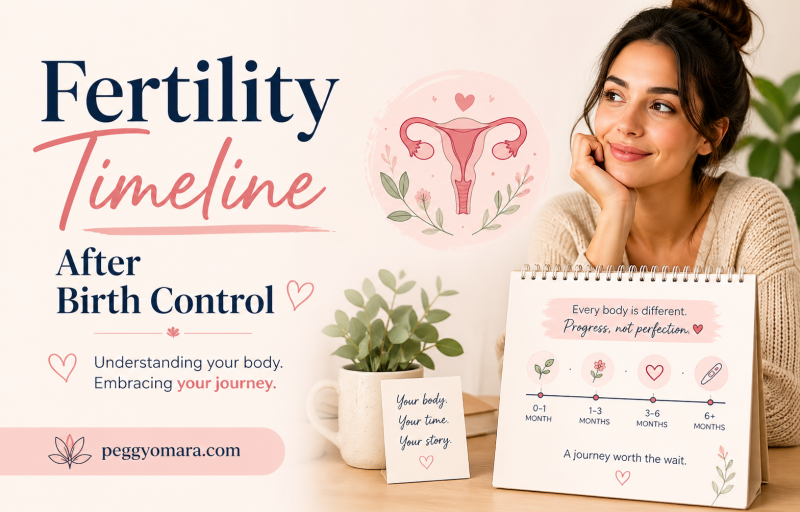
If you have recently stopped using hormonal birth control and are wondering when your fertility will return, you are not alone. According to a comprehensive 2018 review published in the journal Contraception and Reproductive Medicine, 83.1% of women who discontinued contraception became pregnant within the first 12 months. Most women regain their natural fertility faster than they expect, though the exact timeline depends on which method you were using.
Many women worry that years of birth control use might have damaged their fertility. This concern is understandable but largely unfounded. Hormonal contraceptives work by temporarily suppressing ovulation, not by causing permanent changes to your reproductive system. Once the hormones clear your body, your natural cycle typically resumes.
This guide breaks down exactly what to expect when coming off hormonal birth control. You will learn method-specific timelines, signs that your fertility is returning, factors that might delay conception, and when it makes sense to consult a healthcare provider.
Table of Contents
Quick Facts: Fertility Return by Birth Control Method
Before diving into the details, here is a quick reference guide for how quickly fertility typically returns after stopping each type of birth control.
- Combination pills: Ovulation returns within 1-3 months for most women; 72-94% conceive within 12 months
- Progestin-only pills (mini-pill): Fertility returns within days to weeks; similar conception rates to combination pills
- Hormonal IUD (Mirena, Kyleena, etc.): Immediate return within days to weeks after removal
- Copper IUD (Paragard): Immediate fertility return upon removal
- Contraceptive implant (Nexplanon): Typically 1-3 months for cycle regularization
- Vaginal ring (NuvaRing): Ovulation usually returns within 1-2 cycles
- Birth control patch: Similar to pills, fertility returns within 1-3 months
- Depo-Provera shot: Longest delay at 10 months average; can take up to 18-24 months
The birth control shot stands out as the method with the most significant fertility delay. This is due to the high dose of depot medroxyprogesterone acetate remaining in your system for months after the last injection. If you are planning to conceive soon, discuss alternative methods with your provider well in advance.
How Hormonal Birth Control Affects Your Body
To understand why fertility returns at different rates, it helps to know how hormonal contraception works in the first place. Your menstrual cycle is regulated by the hypothalamic-pituitary-ovarian axis, a complex communication system between your brain and ovaries.
Each month, your hypothalamus releases gonadotropin-releasing hormone, which signals your pituitary gland to produce follicle stimulating hormone and luteinizing hormone. These hormones stimulate your ovaries to develop and release an egg. This process is called ovulation.
Hormonal birth control introduces synthetic estrogen and/or progestin into your system. These hormones suppress the natural release of follicle stimulating hormone and luteinizing hormone. Without these signals, your ovaries do not mature or release eggs. The hormones also thicken cervical mucus to block sperm and thin the endometrial lining to prevent implantation.
When you stop using hormonal contraception, your body must clear the synthetic hormones and restart natural hormone production. This transition happens quickly for some methods and more gradually for others.
Your natural fertility was never gone, just paused. Think of it like a computer entering sleep mode rather than shutting down completely. Once you wake the system, normal function returns.
How Coming Off Hormonal Birth Control Affects Your Fertility Timeline by Method
Each birth control method contains different hormones in varying doses and delivery systems. These differences directly affect how quickly your fertility returns after discontinuation.
Combination Birth Control Pills
Combination pills contain both estrogen and progestin. They are the most commonly used form of hormonal contraception. When you stop taking them, ovulation typically returns within 2-4 weeks for many women, though it can take up to 3 months for cycles to fully regularize.
A 2009 study in the journal Obstetrics and Gynecology found that 72-94% of former pill users conceived within 12 months of stopping. This rate is essentially identical to women who never used hormonal contraception. Research consistently shows that pill use, even for many years, does not impair future fertility.
Some women experience post-pill amenorrhea, meaning their period does not return right away. This occurs in about 3-6% of former pill users. If you do not get a period within 3 months of stopping the pill, schedule a visit with your healthcare provider to rule out other causes.
Progestin-Only Pills (Mini-Pill)
The mini-pill contains only progestin and works primarily by thickening cervical mucus and sometimes suppressing ovulation. Because the hormone dose is lower and cleared from your body faster, fertility typically returns within days to weeks after your last pill.
Many women using the mini-pill continue to ovulate irregularly even while taking it. This means your body never fully shut down egg production. Most mini-pill users conceive within the first few months after discontinuation.
Hormonal IUD (Mirena, Kyleena, Liletta, Skyla)
Hormonal IUDs release levonorgestrel directly into the uterus. Because the hormones stay localized rather than circulating throughout your entire body, they clear very quickly after removal. Most women ovulate within the first cycle after their IUD is taken out.
Studies show that former hormonal IUD users have fertility rates comparable to women who used non-hormonal methods. The levonorgestrel IUD primarily works by thinning the endometrial lining and thickening cervical mucus rather than fully suppressing ovulation in all users.
If you are planning to conceive, you can have your IUD removed and start trying immediately. Some women even conceive before their first post-removal period. This is safe and does not increase miscarriage risk.
Copper IUD (Paragard)
The copper IUD is non-hormonal, so fertility returns immediately upon removal. It works by creating an inflammatory response in the uterus that is toxic to sperm. Once removed, this effect disappears completely.
Women using the copper IUD have no hormonal suppression to recover from. Your natural cycle continues normally while using it, though periods may be heavier and cramping more intense. After removal, you are immediately in your normal fertile state.
Contraceptive Implant (Nexplanon)
The implant releases etonogestrel, a progestin, continuously for up to three years. Because it delivers a steady low dose, ovulation is suppressed in most users. After removal, the hormone clears within days.
Most women ovulate within 3-4 weeks after implant removal. However, it can take 1-3 months for cycles to become regular and predictable. A study published in the journal Contraception found that fertility returns rapidly after Nexplanon removal, with most women conceiving within 6-12 months if trying.
Some women experience irregular bleeding patterns for the first few months after removal. This is normal as your body recalibrates its natural hormone production. Tracking your cycles can help you identify when regular ovulation resumes.
Vaginal Ring (NuvaRing, Annovera)
The vaginal ring works similarly to combination pills, delivering estrogen and progestin through the vaginal walls. When you remove the ring, these hormones clear from your body within days. Ovulation typically returns within the first 1-2 cycles.
Because ring users receive a consistent daily hormone dose, their bodies adjust quickly when the hormones are withdrawn. Most former ring users conceive within the same timeframe as former pill users, with the majority pregnant within 6-12 months of discontinuation.
Birth Control Patch
The transdermal patch delivers estrogen and progestin through your skin. Like the pill and ring, fertility typically returns within 1-3 months after you stop using it. The hormones clear quickly once the patch is removed.
Research on patch users specifically is more limited than for pills, but available data suggests similar fertility return timelines. Most patch users resume regular ovulation within the first few cycles after discontinuation.
Birth Control Shot (Depo-Provera)
Depo-Provera requires special consideration because it has the longest fertility return timeline of any contraceptive method. Each injection contains a high dose of depot medroxyprogesterone acetate that remains in your system for months.
The average delay in return to fertility after the last Depo-Provera shot is 10 months. For some women, it takes 18 months or even up to 2 years for regular ovulation to resume. This extended timeline is the main reason providers often recommend alternative methods if you plan to conceive within the next year.
Research published in the journal Fertility and Sterility found that while 50% of former Depo users conceived within 10 months, it took 18 months for 75% to achieve pregnancy. If you have been using Depo-Provera and want to conceive soon, discuss timing with your healthcare provider.
Despite the delay, long-term fertility is not affected. Former Depo users ultimately have the same pregnancy rates as women who never used hormonal contraception, just with a longer wait to get there.
Is It Safe to Get Pregnant Immediately After Stopping Birth Control?
Many women wonder if conceiving right after stopping birth control could harm the pregnancy. The answer is reassuring: getting pregnant immediately after discontinuing hormonal contraception is safe and does not increase the risk of miscarriage or birth defects.
Old concerns about birth control hormones lingering and affecting early pregnancy have been disproven by extensive research. A 2016 Cochrane review found no increased risk of pregnancy complications in women who conceived soon after stopping hormonal contraception compared to those who waited.
The only exception is if you conceive while still using hormonal birth control, which is why consistent use matters. But once you stop, your body quickly transitions back to its natural state. If you happen to conceive before your first post-birth-control period, there is no cause for concern.
Some providers recommend waiting one cycle before trying to conceive simply to help with dating the pregnancy accurately. This is for convenience in calculating due dates, not for safety reasons.
Signs Your Fertility Is Returning
Knowing what to look for can help you identify when your body is ready for conception. Here are the key signs that your fertility is returning after stopping hormonal birth control.
Changes in Cervical Mucus
As your natural estrogen rises before ovulation, your cervical mucus changes from thick and sticky to clear, stretchy, and slippery. This fertile cervical mucus resembles egg whites and helps sperm travel to the egg. Noticing this change is often one of the first signs that ovulation is approaching.
While on hormonal birth control, cervical mucus is typically thick and inhibitory to sperm. When you see the transition to egg-white consistency, your fertility is returning.
Basal Body Temperature Shifts
Tracking your basal body temperature with a specialized thermometer can reveal when you ovulate. Your temperature typically rises 0.5 to 1 degree Fahrenheit after ovulation due to increased progesterone. Seeing this sustained temperature shift confirms that ovulation has occurred.
During the transition off birth control, you may notice irregular temperature patterns at first. Over time, a clear biphasic pattern emerges with lower temperatures before ovulation and higher temperatures after.
Return of Regular Menstrual Cycles
Your first bleed after stopping hormonal contraception is often a withdrawal bleed rather than a true period. True fertility signs emerge when you experience a natural menstrual cycle with ovulation followed by a luteal phase and menstruation.
Most women find their cycles regulate within 3 months. You are likely ovulating regularly when your cycle length stabilizes within a 25-35 day range and you observe consistent premenstrual symptoms like breast tenderness or mood changes.
Mittelschmerz (Ovulation Pain)
Some women experience mild pain or cramping on one side of their lower abdomen when they ovulate. This sensation, called mittelschmerz, occurs when the follicle ruptures and releases the egg. Noticing this monthly pain around cycle day 14 indicates regular ovulation has resumed.
Positive Ovulation Predictor Kit
Home ovulation tests detect the luteinizing hormone surge that triggers ovulation. A positive test indicates you will likely ovulate within 24-48 hours. These kits can be especially helpful during the transition period when you are trying to understand your new cycle pattern.
Factors That Can Affect Your Fertility Timeline
While birth control type is the primary factor determining fertility return, several other variables can speed up or delay your timeline to conception.
Age and Ovarian Reserve
Fertility naturally declines with age, regardless of birth control history. Women in their 20s and early 30s typically conceive faster than women over 35. This is due to decreasing egg quantity and quality, not birth control use.
If you are over 35 and have stopped birth control, you may want to seek fertility evaluation sooner than younger women. The American College of Obstetricians and Gynecologists recommends evaluation after 6 months of trying if you are 35 or older, compared to 12 months for younger women.
Duration of Birth Control Use
Many women worry that being on birth control for 10, 15, or even 20 years will harm their fertility. Research consistently shows this is not the case. Long-term use does not negatively impact fertility return timelines for most methods except Depo-Provera.
A large study following women who used the pill for 10+ years found their conception rates were identical to shorter-term users. Your body does not accumulate damage from extended hormonal contraception use. The return to fertility depends on the method, not the duration.
Underlying Health Conditions
Certain health conditions can affect how quickly your fertility returns. Polycystic ovary syndrome (PCOS) is one of the most common. Some women with PCOS experience more regular cycles while on hormonal birth control, which can mask the condition. When they stop, irregular ovulation becomes apparent.
Thyroid disorders, both hyperthyroidism and hypothyroidism, can disrupt menstrual cycles and ovulation. High prolactin levels, often caused by a benign pituitary tumor, can also suppress fertility. Endometriosis and uterine fibroids may impact conception even after fertility returns.
Lifestyle Factors
Your overall health significantly influences fertility. Smoking damages eggs and accelerates ovarian aging. Excessive alcohol consumption disrupts hormone balance. Both very low and very high body weight can suppress ovulation through effects on estrogen production.
Chronic stress elevates cortisol, which can interfere with reproductive hormones. Poor sleep disrupts your circadian rhythm and hormone cycles. Optimizing these factors before trying to conceive can help your fertility return more smoothly.
Partner Factors
Remember that fertility involves two people. Male factor infertility accounts for about 40% of conception difficulties. Sperm health depends on age, lifestyle, and medical history. If conception is taking longer than expected, both partners should be evaluated.
Sperm production takes approximately 74 days. Changes your partner makes today will affect sperm quality in about 2-3 months. Encouraging healthy habits like limiting alcohol, avoiding smoking, maintaining healthy weight, and managing stress can improve your combined fertility.
When to Seek Help
Most women will conceive within 12 months of stopping birth control and trying to get pregnant. However, certain situations warrant earlier evaluation by a healthcare provider or fertility specialist.
Schedule an appointment if you are under 35 and have not conceived after 12 months of regular, unprotected intercourse. If you are 35 or older, seek evaluation after 6 months of trying. Women 40 and over should consider consultation even sooner, as fertility declines more rapidly in the late reproductive years.
Seek medical attention sooner if you experience irregular or absent periods more than 3 months after stopping birth control (excluding Depo-Provera, which can take longer). Very painful periods, known endometriosis, or a history of pelvic inflammatory disease also warrant early evaluation.
If you had chemotherapy, radiation, or surgery affecting your reproductive organs, consult a specialist before trying to conceive. These treatments can impact fertility independently of birth control history.
A preconception visit with your healthcare provider can identify potential issues before you start trying. This appointment allows you to review your health history, update vaccinations, start prenatal vitamins with folic acid, and discuss any concerns specific to your situation.
Frequently Asked Questions
How long does it take to get fertile after stopping birth control?
Does stopping birth control increase fertility?
How long are you fertile after stopping the pill?
What are signs of good fertility?
Can long-term use of birth control pills cause infertility?
Can you get pregnant after stopping birth control without a period?
Conclusion
Coming off hormonal birth control marks an important transition in your reproductive journey. The fertility timeline after stopping birth control varies by method, with most women resuming normal ovulation within weeks to months. The research is clear: 83.1% of women conceive within 12 months, and long-term contraceptive use does not damage your fertility.
Understanding your specific method’s timeline helps set realistic expectations and reduces anxiety during the transition. Whether you used the pill for three years or fifteen, your body knows how to cycle naturally. Trust the process, track your signs of returning fertility, and remember that every woman’s timeline is unique.
If you have concerns about your fertility return or it is taking longer than expected, do not hesitate to reach out to your healthcare provider. They can offer personalized guidance based on your health history and help you navigate this transition with confidence.