
If you’re trying to conceive, timing matters more than you might think. Understanding when to have sex for conception can dramatically increase your chances of getting pregnant each cycle. The key is knowing your fertile window—that specific timeframe when pregnancy is actually possible.
Many couples spend months trying without success simply because they’re missing their optimal conception window. I’ve researched the latest medical guidance to help you understand exactly when to have sex for conception based on your body’s natural fertility patterns.
Table of Contents
What is the Fertile Window?
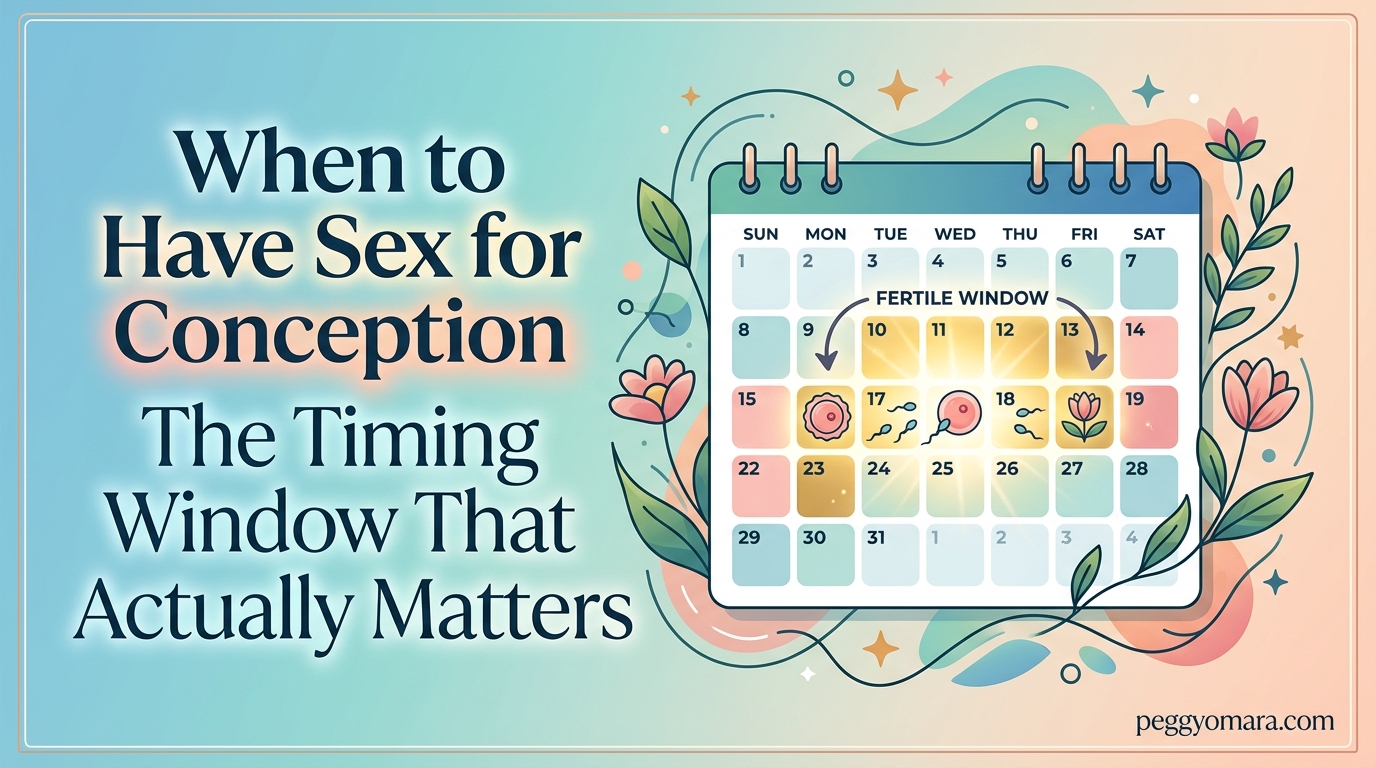
The fertile window is the specific timeframe during your menstrual cycle when conception is possible. It spans six days total, but not all days are equally fertile.
Here are the six days of your fertile window, ranked by fertility potential:
- Two days before ovulation – Highest fertility (approximately 25-30% chance of conception)
- One day before ovulation – Very high fertility (approximately 20-25% chance)
- Day of ovulation – Moderate fertility (approximately 15-20% chance)
- Three days before ovulation – Moderate fertility (approximately 10-15% chance)
- Four days before ovulation – Lower fertility (approximately 5-10% chance)
- Five days before ovulation – Lowest fertility (approximately 0-5% chance)
Understanding this window is crucial because sperm can survive inside the female reproductive tract for up to five days, while an egg remains viable for only 12-24 hours after ovulation.
Understanding Your Menstrual Cycle and Ovulation
Your menstrual cycle is more than just your period. It’s a carefully orchestrated hormonal process that prepares your body for potential pregnancy each month.
The typical menstrual cycle lasts 28 days, though anywhere from 21 to 35 days is considered normal. Ovulation typically occurs around day 14 of a 28-day cycle, but this varies significantly between individuals and even between cycles.
Several hormonal changes signal ovulation is approaching. Estrogen levels rise in the days leading up to ovulation, causing changes in cervical mucus and body temperature. Then, luteinizing hormone (LH) surges approximately 24-36 hours before ovulation occurs, triggering the release of an egg from the ovary.
Tracking these signs helps you predict when ovulation will occur, allowing you to plan intercourse during your most fertile days.
How Sperm and Egg Viability Work Together?
The reason the fertile window extends five days before ovulation comes down to sperm longevity. Unlike eggs, which survive only 12-24 hours after release, sperm can live inside the female reproductive tract for up to five days under ideal conditions.
This creates a unique conception window. Having sex before ovulation means sperm are already present and waiting when the egg is released, which actually gives you better odds than waiting until ovulation day itself.
Cervical mucus plays a crucial role here. In the days leading up to ovulation, changing hormone levels transform cervical mucus into a sperm-friendly environment that nourishes and protects sperm, extending their viability and helping them reach the egg.
The Best Days to Have Sex for Conception
Research consistently shows that the best time to have sex for conception is one to two days before ovulation. This timing maximizes your chances because healthy sperm will already be present in the fallopian tubes when the egg is released.
Having sex on the day of ovulation still offers good conception chances, but the window is narrower. Since the egg survives only 12-24 hours, timing becomes more critical. If you ovulate in the morning, having sex that same evening might already be too late for that cycle.
Many couples wonder if they can conceive if they had sex 72 hours before ovulation. The answer is yes—this falls within the fertile window and offers approximately 10-15% chance of conception, depending on individual factors.
How to Track Your Ovulation and Fertile Window?
Accurately identifying your fertile window requires tracking your body’s ovulation signs. Here are the most effective methods:
Calendar Method
The calendar method involves tracking your menstrual cycles for several months to identify patterns. Ovulation typically occurs 14 days before your next period starts, regardless of cycle length. For a 28-day cycle, this means ovulation around day 14. For a 35-day cycle, it would be around day 21.
This method works best for women with very regular cycles. If your cycles vary, you’ll need additional tracking methods for accuracy.
Cervical Mucus Monitoring
Your cervical mucus changes throughout your cycle in response to hormone fluctuations. In the days leading up to ovulation, you’ll notice mucus becoming clear, slippery, and stretchy—similar to raw egg whites. This fertile-quality mucus facilitates sperm movement and survival.
Checking your cervical mucus daily helps you identify when ovulation is approaching. When you see this egg-white consistency, you’re likely entering your fertile window.
Ovulation Predictor Kits (OPKs)
OPKs detect the luteinizing hormone surge that occurs 24-36 hours before ovulation. These tests can be purchased over-the-counter and used at home. A positive result indicates ovulation will likely occur within the next day or two.
OPKs are highly accurate for detecting the LH surge, but they don’t confirm that ovulation actually occurred. They also can’t predict ovulation more than a day or two in advance.
Basal Body Temperature (BBT)
Your resting body temperature rises slightly (0.4-1.0°F) after ovulation due to increased progesterone. By taking your temperature each morning before getting out of bed, you can detect this thermal shift.
BBT is most useful for confirming ovulation after it happens. It can help you identify patterns across cycles, but it won’t predict ovulation in advance for timing intercourse.
How Often Should You Have Sex During the Fertile Window?
Many couples wonder how frequently they should have sex during the fertile window. Medical experts generally recommend having sex every one to two days during your six-day fertile window.
This frequency ensures healthy sperm are consistently present without causing undue stress or fatigue. Having sex every day won’t significantly improve your chances compared to every other day, so choose a schedule that works for your relationship.
Quality matters too. Stress from scheduled sex can actually hinder conception by affecting hormone levels and libido. Finding a balance between timing and maintaining intimacy is key.
Morning vs Night Sex for Conception
A common question is whether morning or night sex is better for conception. The short answer: neither is inherently better.
Some theories suggest morning sex might be beneficial because sperm counts are typically higher in the morning. However, the difference is minimal and unlikely to significantly impact conception chances for most couples.
What matters more is consistency and timing relative to ovulation. Choose the time of day that works best for your schedule and energy levels, as this will help you maintain a regular pattern during your fertile window.
Age and Fertility Context
Age affects fertility for both women and men, but the impact is more pronounced for women due to the finite number of eggs.
Research indicates that by age 30, approximately 90% of a woman’s lifetime egg supply is gone. This doesn’t mean conception is impossible—far from it. But it does mean that understanding your fertile window becomes increasingly important as you age.
Egg quality also declines with age, which can affect conception chances and increase the time it takes to get pregnant. However, many women successfully conceive in their 30s and even early 40s by timing intercourse correctly and maintaining overall health.
For men, sperm quality gradually declines after age 40, but the impact is generally less dramatic than age-related fertility changes in women.
Stress and Sex: The Emotional Side of Trying to Conceive
Trying to conceive can become stressful, especially when months pass without success. The pressure of timing sex perfectly can actually work against you by creating anxiety that affects hormone levels and libido.
Research shows that high stress levels may delay ovulation or make cycles less predictable. This creates a frustrating cycle where stress about conceiving actually makes conception more difficult.
Maintaining intimacy beyond just baby-making sex helps. Find ways to reduce stress together, whether through exercise, meditation, or simply spending quality time as a couple. Remember that conception typically takes several months even for perfectly healthy couples with optimal timing.
When to Seek Medical Help
If you’ve been timing intercourse during your fertile window for 12 months (or six months if you’re over 35) without success, it’s time to consult a healthcare provider. They can evaluate both partners for potential fertility issues.
Earlier consultation may be warranted if you have irregular periods, a history of pelvic infections, or other known fertility risk factors. A fertility specialist can provide personalized guidance based on your unique situation.
Remember, seeking help doesn’t mean you’ve done anything wrong. Fertility challenges are common and treatable, and early intervention often leads to better outcomes.
FAQs
At what age are 90% of your eggs gone?
Research indicates that by age 30, approximately 90% of a woman’s lifetime egg supply is depleted. This natural decline begins before birth and accelerates in the later reproductive years. However, many women successfully conceive in their 30s and beyond by timing intercourse correctly and maintaining overall health.
What are the chances of conception if sex is timed perfectly?
When intercourse is perfectly timed one to two days before ovulation, conception chances range from 25-30% per cycle for healthy couples under 35. This drops to approximately 15-20% on ovulation day itself. Remember that even with optimal timing, conception typically takes several months for most couples.
Had sex 72 hours before ovulation?
Having sex 72 hours (three days) before ovulation falls within the fertile window and offers approximately 10-15% chance of conception. Sperm can survive up to five days in the female reproductive tract, so intercourse three days before ovulation can result in pregnancy if conditions are favorable.
Is morning sex or night sex better to get pregnant?
Neither morning nor night sex is definitively better for conception. Some theories suggest morning sex might offer a slight advantage due to higher sperm counts, but the difference is minimal. What matters most is timing relative to ovulation and maintaining consistency during your fertile window.
Can you get pregnant 5 days before ovulation?
Yes, pregnancy is possible five days before ovulation, though chances are lower (approximately 0-5%). This marks the beginning of the fertile window when sperm can survive until ovulation occurs. The highest conception probabilities occur one to two days before ovulation.
How many days after your period can you get pregnant?
You can get pregnant as soon as five days after your period ends, depending on cycle length. For women with shorter cycles (21-24 days), ovulation may occur shortly after menstruation ends. The fertile window always spans the five days before ovulation plus ovulation day itself.
Conclusion
Understanding when to have sex for conception and the timing window that actually matters can significantly increase your chances of pregnancy. The fertile window spans six days, with the highest conception rates occurring one to two days before ovulation.
Track your cycle using calendar methods, cervical mucus monitoring, ovulation predictor kits, or basal body temperature to identify your personal fertile window. Aim for intercourse every one to two days during this timeframe, and try to keep stress levels manageable while maintaining intimacy as a couple.
Remember that even with perfect timing, conception takes time for most couples. If you’ve been trying for 12 months (or six months if over 35) without success, consult a healthcare provider for personalized guidance.