
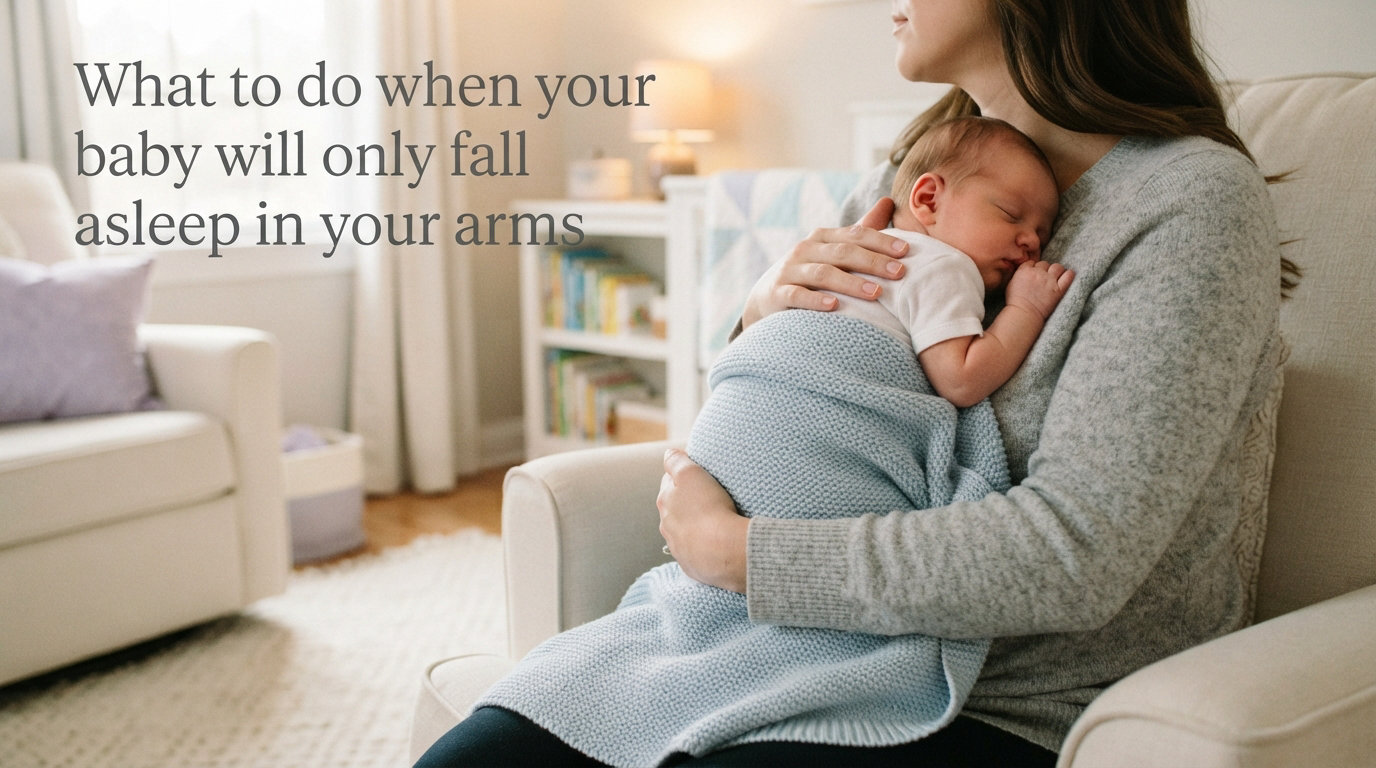
Your baby will only fall asleep in your arms, and every time you try to lay them down, they wake up screaming. You have not slept more than two hours in weeks. Your partner is taking turns holding the baby through the night just so you can function. You are wondering if you created this problem or if something is wrong.
Take a breath. This is one of the most common experiences for new parents, and it is completely normal. Understanding why your baby does this and learning gentle strategies to help them sleep independently can make this challenging phase feel more manageable.
In this guide, we will explain the science behind why babies prefer to sleep while held, address safety concerns, and provide practical, evidence-based steps to help your baby transition to sleeping in their bassinet or crib. These strategies come from pediatric sleep research and the collective wisdom of parents who have walked this same exhausting path.
Table of Contents
Why Your Baby Only Sleeps in Your Arms?
Your baby is not being difficult. They are being a baby. Understanding the biological reasons behind this behavior can help you respond with patience instead of frustration.
The Fourth Trimester Reality
Human babies are born neurologically immature compared to other mammals. Dr. Harvey Karp coined the term “fourth trimester” to describe the first three months of life, when babies are essentially still fetuses who happen to be outside the womb.
During pregnancy, your baby was held constantly. They were rocked by your movements, soothed by your heartbeat, kept warm by your body temperature, and surrounded by the muffled sounds of your body. Now they are in a world that feels cold, still, and startlingly quiet to them. Your arms recreate that womb-like environment they are still biologically expecting.
Survival Instincts at Work
From an evolutionary perspective, babies who stayed close to their caregivers survived. A baby sleeping alone on the ground was vulnerable to predators and environmental dangers. This hardwired preference for contact sleep kept infants safe for millennia.
Your baby does not know they live in a safe home with a monitored nursery. Their primitive brain is simply doing what kept their ancestors alive. Being in your arms triggers their calming reflex, lowers their heart rate, and helps them feel secure enough to sleep.
The Moro Reflex Complicates Things
Newborns are born with a startle reflex, also called the Moro reflex. When they feel like they are falling or when they hear a sudden noise, their arms fly outward and they cry out. This reflex is completely normal and usually disappears around 4-6 months.
When you lay your baby down, the sensation of falling can trigger this reflex, startling them awake. Being held keeps them feeling secure and prevents those jerky movements that interrupt sleep. This is one reason swaddling can be so helpful.
Temperature and Heart Rate Regulation
Newborns cannot regulate their body temperature effectively. Your warmth helps them maintain a stable temperature. They also have an irregular heart rate and breathing pattern that synchronizes with yours when you hold them.
Research shows that skin-to-skin contact stabilizes a baby’s heart rate, improves oxygen saturation, and helps regulate their body temperature. Your body is literally helping their body function better.
Is It Safe to Let Your Baby Sleep in Your Arms?
Many parents feel guilty about contact sleeping while simultaneously being too exhausted to do anything else. Understanding when it is safe and when it becomes risky can help you make informed decisions.
Short-Term Contact Naps Are Fine
The American Academy of Pediatrics (AAP) acknowledges that babies will sometimes fall asleep while being fed or held. If you are awake and monitoring your baby, brief periods of supervised contact sleep are not harmful.
Contact naps can actually be beneficial for bonding, especially in the early weeks. The key is that you remain awake and alert while holding your sleeping baby.
The Dangers of Unsupervised Sleep
The risks become significant when a tired parent falls asleep while holding their baby. This is when accidents happen. Babies can slip from arms, get wedged in couch cushions, or have their airway blocked by a sleeping adult’s body.
SIDS (Sudden Infant Death Syndrome) risk increases when babies sleep on adult beds, couches, or recliners. These surfaces are too soft and pose suffocation hazards. The safest sleep surface for your baby is a firm mattress in a crib or bassinet with no loose bedding.
When to Prioritize the Transition
If you find yourself falling asleep while holding your baby, it is time to prioritize moving them to a safe sleep surface. This is not about creating habits. It is about keeping your baby safe.
Most pediatricians recommend that by 3-4 months, babies should be practicing independent sleep. This does not mean you cannot hold your baby for naps occasionally. It means having a safe, consistent sleep space becomes increasingly important as they grow.
How to Get Your Baby to Sleep Without Being Held
Here are evidence-based strategies to help your baby learn to sleep in their bassinet or crib. Remember that every baby is different, and progress may be gradual.
Create a Soothing Sleep Environment
Your baby’s sleep space should mimic the womb as much as possible. The room should be dark, cool (between 68-72 degrees Fahrenheit), and quiet but not silent.
White noise is incredibly effective for newborns. It mimics the constant whooshing sound they heard in utero. Use a white noise machine or app and keep it running throughout the sleep period. The sound should be about as loud as a running shower.
A consistent bedtime routine signals to your baby that sleep is coming. This might include a bath, massage, feeding, swaddling, and a few minutes of rocking or singing. Keep the routine to 20-30 minutes and do it in the same order every time.
Master the Swaddle (for Babies 0-3 Months)
Swaddling is one of the most effective tools for helping babies sleep independently. A proper swaddle keeps their arms secure, preventing the Moro reflex from startling them awake. It also recreates the snug, contained feeling of the womb.
Use a lightweight, breathable swaddle blanket or a Velcro swaddle sack. The swaddle should be snug around the arms but loose around the hips to allow healthy hip development. Always place your baby on their back to sleep.
Stop swaddling as soon as your baby shows signs of rolling over, usually around 3-4 months. At that point, transition to a sleep sack that keeps them warm while allowing arm movement.
Practice the “Drowsy But Awake” Method
This technique is the foundation of independent sleep. Instead of waiting until your baby is fully asleep in your arms, lay them down when they are relaxed and drowsy but still somewhat awake.
This teaches your baby to associate their crib or bassinet with falling asleep, rather than always needing to be held first. It also means that when they naturally wake between sleep cycles (which happens every 45-60 minutes), they will recognize their environment and be more likely to settle back to sleep.
Start practicing this with the first nap of the day when sleep pressure is lower and your baby is typically in a better mood. It may take several attempts before your baby can fall asleep this way. Be patient and consistent.
Perfect the Transfer Technique
If your baby must be fully asleep before you can lay them down, timing and technique matter. Wait 10-15 minutes after your baby falls asleep before attempting a transfer. This allows them to enter a deeper sleep phase where they are less likely to wake.
When you lay them down, place their bottom first, then gently lower their head. Keep your hands on them for a minute, patting or applying gentle pressure on their chest. This gradual release mimics the continued contact they are used to.
Some parents find success with the “hand on chest” method. After laying your baby down, keep your hand firmly on their chest for several minutes. The pressure and your warmth can help them stay asleep through the transition.
If they stir immediately, try the “pat and shush” technique. Place a hand on their belly or chest and make a rhythmic “shhh” sound near their ear. This mimics the sounds and sensations of being held.
Watch Those Wake Windows
Overtired babies have a harder time falling asleep and staying asleep. Learning your baby’s wake windows can prevent the overtired spiral that makes contact sleeping seem like the only option.
For newborns (0-3 months), wake windows are typically 45-90 minutes. By 4-6 months, they extend to 1.5-2.5 hours. Watch for sleep cues like eye rubbing, yawning, staring off into space, or becoming fussy.
The goal is to get your baby to their sleep space before they become overtired. A baby who is put down at the right time is much more likely to fall asleep independently than one who has been pushed past their limit.
Try the Gradual Retreat Method
For babies who are very attached to being held, a gradual approach can work better than abrupt change. Start by holding your baby until they are very drowsy, then lay them down and stay right next to them, patting and shushing.
Over several days or weeks, gradually decrease your involvement. Move from patting to just having your hand on them, then to sitting next to the crib, then to sitting by the door, and eventually leaving the room once they are settled.
This method takes time and consistency, but it is gentle on both you and your baby. It respects their need for security while slowly building their confidence in sleeping independently.
Consider Babywearing as a Bridge
If your baby will only sleep while being held, babywearing can be a helpful compromise. A soft wrap or carrier allows your baby to sleep against your body while freeing your hands.
This is particularly useful for the newborn phase when babies need almost constant contact. It allows you to get things done while meeting your baby’s need for closeness. Just remember to follow safe babywearing guidelines and transfer your baby to a safe sleep surface for nighttime sleep.
Age-Based Expectations for Independent Sleep
What is reasonable to expect from your baby depends largely on their age. Setting appropriate expectations can help you avoid unnecessary stress.
0-3 Months: The Fourth Trimester
During the first three months, it is completely normal and expected that your baby will want to sleep in your arms for most or all sleep periods. Their nervous system is still developing, and they need the regulation that your body provides.
During this phase, focus on bonding and survival. Do not worry about “bad habits.” You can start introducing the bassinet for one nap a day, but do not stress if your baby strongly prefers being held. This is developmentally appropriate.
Many parents find that the first stretch of night sleep is the easiest place to practice independent sleep, even if daytime naps remain contact naps. Night sleep tends to consolidate first.
3-4 Months: Building Sleep Skills
Around the 3-month mark, babies typically become more capable of self-regulation. This is a good time to start being more consistent about where your baby sleeps. Continue using all the soothing techniques, but aim for more bassinet or crib sleep.
Be aware that many babies experience a sleep regression around 4 months. This happens because their sleep cycles are maturing and becoming more like adult sleep cycles. They may start waking more frequently and need more help falling asleep again.
This regression is temporary, usually lasting 2-6 weeks. Stay consistent with your routines and soothing techniques. This is not the time to introduce major changes, but rather to provide extra support.
4-6 Months: Ready for More Independence
By 4-6 months, most babies are capable of sleeping in their crib for both naps and nighttime. They have outgrown the Moro reflex, can self-soothe to some degree, and have more predictable sleep patterns.
If your baby is still only sleeping in your arms at this age and it is not working for your family, this is a good time to be more intentional about the transition. Consistency becomes more important now.
Some families choose to sleep train at this point, while others prefer gentler, more gradual methods. Both approaches can be successful. The key is choosing a method that feels right for your family and being consistent with it.
6+ Months: Consolidated Sleep Patterns
By 6 months, most babies are physically capable of sleeping through the night and taking long naps in their crib. They have likely dropped the swaddle and may be eating solid foods, which can help with sleep.
If your baby is still strongly resisting independent sleep at this age, it may be worth discussing with your pediatrician to rule out any underlying issues. However, many babies simply need more time and consistency.
When to Talk to Your Pediatrician
While contact sleeping is normal, there are times when you should consult your pediatrician about your baby’s sleep patterns.
Talk to your doctor if your baby is not gaining weight appropriately, if they have symptoms of reflux or milk allergy (frequent spitting up, arching back, crying during or after feeds, rash), or if they seem to be in pain rather than just needing comfort.
If your baby is not sleeping more than 30 minutes at a stretch even when held, or if they are extremely difficult to soothe at any time, these could be signs of an underlying issue that needs attention.
Most importantly, if you are experiencing severe sleep deprivation that is affecting your mental health or ability to function safely, talk to your doctor. They can offer support, check for postpartum depression or anxiety, and help you develop a plan.
Taking Care of Yourself During This Phase
We need to talk about you. The parent who has not slept, showered, or had a meal without a baby attached to them in weeks. This phase is hard on babies, but it is often harder on parents.
Wanting your baby to sleep independently does not make you a bad parent. It makes you a human who needs rest to function. You cannot pour from an empty cup, and a sleep-deprived parent is more prone to accidents, depression, and health problems.
Accept help when it is offered. Let someone else hold the baby while you nap. Tag team with your partner so each of you gets some uninterrupted sleep. Consider hiring a postpartum doula if it is within your budget.
Remember that this phase is temporary. Almost every parent who has been through it will tell you that one day, seemingly out of nowhere, their baby started sleeping in the crib. It may take weeks or months, but it will happen.
FAQ
Why will my baby only fall asleep in my arms?
Babies prefer sleeping in arms because of biological instincts from the fourth trimester. Your warmth, heartbeat, and movement recreate the womb environment they are still neurologically expecting. The Moro reflex also causes babies to startle awake when laid down, while being held prevents this. This behavior is completely normal and protective for newborns.
How do I get my baby to sleep not in my arms?
Start by creating a womb-like sleep environment with white noise, darkness, and swaddling. Practice laying your baby down drowsy but awake. Perfect the transfer technique by waiting 10-15 minutes after they fall asleep, then lowering their bottom first while keeping your hand on their chest. Watch wake windows to prevent overtiredness, and consider gradual retreat methods where you slowly decrease your involvement over time.
Can milk allergy affect sleep?
Yes, milk protein allergy or intolerance can disrupt sleep. Symptoms include frequent waking, arching back during feeds, excessive spitting up, gas, and eczema. If you suspect milk allergy, consult your pediatrician. They may recommend dietary changes for breastfeeding mothers or trying hypoallergenic formula.
What is the 3 6 9 rule for babies?
The 3-6-9 rule refers to wake windows for babies at different ages. At 3 months, babies can typically stay awake 1-2 hours. At 6 months, wake windows extend to 2-3 hours. At 9 months, babies can handle 3-4 hours of awake time. These are guidelines, and individual babies may vary.
When should I stop holding my baby to sleep?
There is no single right answer, as every family and baby is different. Most pediatricians suggest that by 3-4 months, babies should start practicing independent sleep. However, if holding your baby to sleep is working for your family and you are following safe sleep practices, it is okay to continue longer. The priority is safe sleep surfaces and parental mental health.
Is it okay to let my baby sleep on my chest?
Supervised contact naps on your chest are fine and can be beneficial for bonding. However, you must remain awake and alert. Never sleep with your baby on your chest on a couch, recliner, or bed, as this poses serious suffocation and fall risks. If you feel drowsy, move your baby to a safe sleep surface immediately.
Final Thoughts: This Too Shall Pass
When your baby will only fall asleep in your arms, it can feel like this phase will last forever. The sleep deprivation makes days blur together, and you may worry that you are doing something wrong or creating permanent bad habits.
You are not doing anything wrong. Your baby is behaving exactly as babies have behaved for thousands of years. This is a normal, temporary phase of development.
Be patient with your baby and gentle with yourself. Use the strategies in this guide, but also give yourself grace. Some days will be easier than others. What matters most is that you and your baby are safe, fed, and loved.
One day soon, you will lay your baby down in their crib, and they will sleep. Until then, remember that millions of parents have survived this phase, and you will too.