
Your toddler just smacked you across the face. Maybe it happened during a diaper change, at the playground, or right in the middle of dinner. Your cheek stings. Your heart hurts. And you are probably wondering what you did wrong as a parent.
Here is the truth that every parent needs to hear: toddler hitting is developmentally normal, incredibly common, and not a reflection of your parenting failures. Understanding toddler hitting why it happens and how to teach gentle hands can transform how you respond in these challenging moments.
I have worked with parents navigating this stage for over a decade, and I have also lived through it myself. My youngest went through a three-month phase where she hit every time she was frustrated, tired, or simply wanted attention. It passed. Yours will too. Let me walk you through exactly why this happens and the practical strategies that actually work.
Table of Contents
Why Toddlers Hit: The Developmental Reality?
Toddlers hit because their brains are not fully developed yet. This is not an excuse. It is a biological fact that helps us respond with empathy instead of anger.
The prefrontal cortex, responsible for impulse control and emotional regulation, does not fully mature until the mid-twenties. In toddlers aged one to three, this brain region is essentially offline when big emotions hit. Your child feels frustrated, angry, or overwhelmed, and their body acts before their thinking brain can intervene.
The Language Gap
Most toddlers hit because they cannot express what they need with words. A two-year-old might have a vocabulary of 50 to 200 words, but they experience the full range of human emotions. When they want a toy another child has, when they are overtired, or when they need your attention, hitting becomes their communication tool.
Think about it from their perspective. They have a need. They feel a big feeling. They have no words to express it. Hitting gets an immediate reaction. From a toddler’s limited perspective, it works.
It Is Normal Aggressive Behavior in Toddlers
Research from child development experts confirms that hitting, pushing, and even biting are normal parts of early childhood. Studies show that over half of all toddlers engage in physical aggression at some point. The behavior typically peaks between ages two and three and then gradually declines as language skills and impulse control develop.
This does not mean you should ignore hitting. It means you should approach it as a teaching opportunity rather than a behavioral crisis. Your toddler is not bad. They are learning.
Experimentation and Curiosity
Some toddlers hit simply because they are curious about cause and effect. They hit the table and it makes a sound. They hit their sibling and you rush over immediately. Toddlers are scientists studying how the world responds to their actions.
This experimental hitting is usually short-lived. When parents respond calmly and consistently without big emotional reactions, toddlers typically lose interest in hitting as a game.
Toddler Hitting: Why It Happens and How to Teach Gentle Hands
Teaching gentle hands is one of the most important skills you can help your toddler develop. This process takes time, repetition, and patience. Here are the techniques that actually work.
Model Gentle Touch Daily
Your toddler watches everything you do. When you stroke their cheek softly, hold their hand gently while crossing the street, or pat the dog carefully, you are teaching what gentle hands look like.
Narrate your actions. Say “I am using my gentle hands to pet the kitty” or “I touch your arm softly with my gentle hands.” This builds the vocabulary and concept before you need it in a discipline moment.
The Hand-Over-Hand Technique
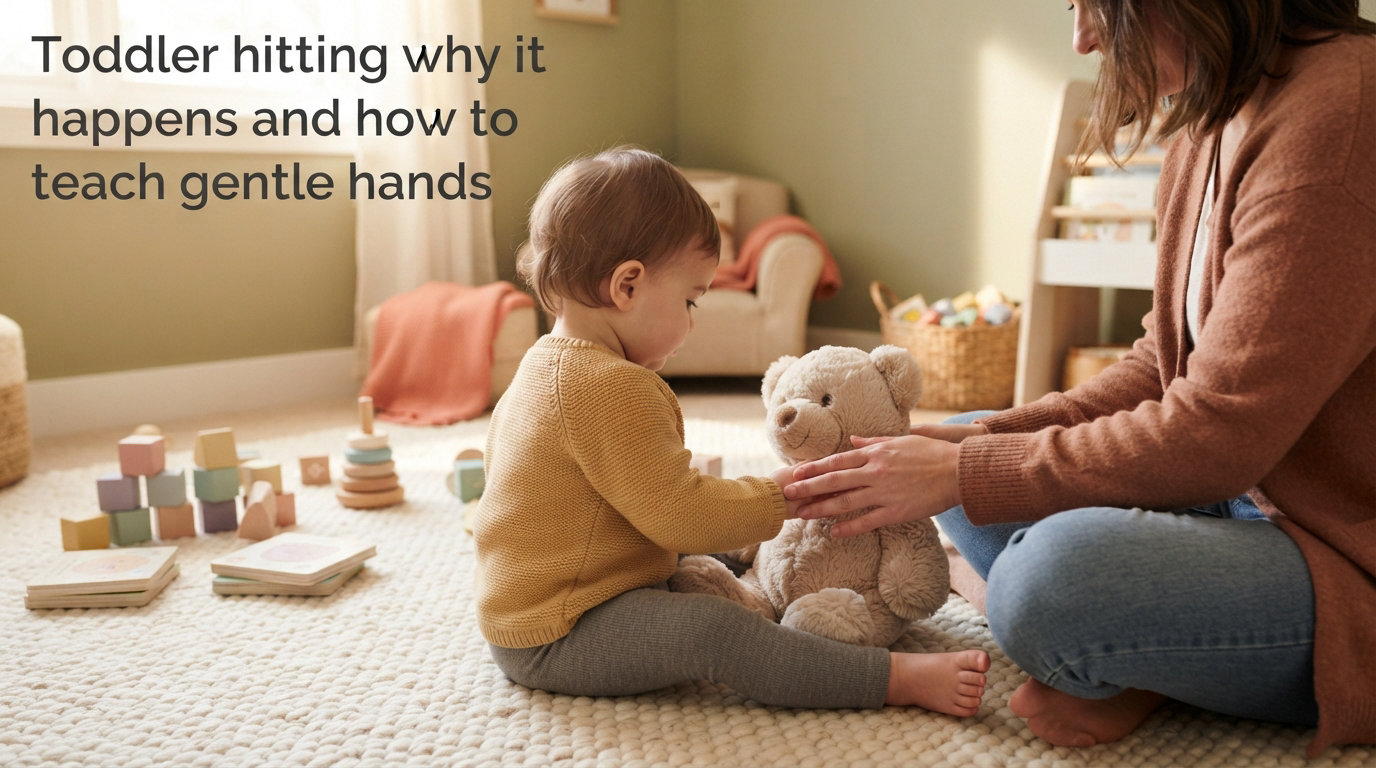
When your toddler starts to hit, gently catch their hand mid-air. Do not grab roughly. Simply stop the motion. Then guide their hand to touch you or the other person gently while saying “Gentle hands. We touch nicely.”
Practice this during calm moments too. Sit with your toddler and guide their hand to touch your face softly. Say “Yes, that is gentle. That feels good.” Positive reinforcement during calm times builds the neural pathways they will need when upset.
Use Simple, Clear Language
Toddlers do not process long explanations in the heat of the moment. Keep your phrases short and actionable. Here are scripts that work:
“No hitting. Hitting hurts. Gentle hands please.”
“I will not let you hit me. I keep us both safe.”
“Hands are for hugging, not hitting. Show me gentle.”
“You are frustrated. I understand. Use your words or gentle hands.”
Age-Specific Approaches
For 12 to 24 month olds, focus primarily on modeling and redirection. These babies are just beginning to understand cause and effect. Simple phrases like “Ouch, that hurts” while moving their hand away are most effective. Distraction works well at this age. Remove them from the situation and offer an alternative activity.
For 24 to 36 month olds, you can begin teaching emotional vocabulary. Name their feelings: “You are angry because he took your truck.” Offer alternatives: “You can tell him ‘I am mad’ or ask for help.” They are beginning to understand consequences, so brief explanations like “When you hit, we need to leave the playground” become appropriate.
Practical Response Strategies When Hitting Happens
What you do in the moment matters. Your response either escalates or de-escalates the situation. Here is the framework that works.
Stay Calm First
This is the hardest part. When your toddler hits you, your nervous system reacts. You might feel angry, embarrassed, or triggered. Take a breath before you respond. A calm parent teaches a calm child.
If you need to, physically step back for a moment. It is okay to say “I need to take a deep breath before we talk about this.” This models emotional regulation for your child.
Connection Before Correction
The most effective parenting approach for hitting is connecting before correcting. Your toddler hits because they are dysregulated. They need your calm presence to find their way back to regulation.
Get on their eye level. Make eye contact gently. Say “I see you. I am here.” Once they are calmer, then address the behavior. A dysregulated child cannot learn. Connection creates the safety needed for learning to happen.
Set Clear Boundaries Without Shame
Your toddler needs to know hitting is unacceptable, but they do not need to feel ashamed. Separate the behavior from the child. Say “Hitting is not okay” rather than “You are a bad boy for hitting.”
Be consistent. Every time hitting happens, respond the same way. Inconsistency confuses toddlers and prolongs the behavior phase.
Physical Intervention for Safety
Sometimes you need to physically stop hitting to keep everyone safe. Hold your toddler’s hands gently but firmly. Say “I will not let you hit. I keep everyone safe.” This is not punishment. It is protective intervention.
If your toddler is hitting another child, separate them immediately. Comfort the child who was hit first. This models empathy and shows that victims matter. Then address your toddler once everyone is safe.
Prevention Techniques That Actually Work
The best way to handle hitting is to prevent it before it starts. These proactive strategies reduce the frequency and intensity of hitting episodes.
Supervision Is Your Primary Tool
For toddlers with a hitting pattern, close supervision is essential. Watch for warning signs: clenched fists, tense body language, frustrated vocalizations. Intervene before the hitting starts by offering help, distraction, or removal from the triggering situation.
This is exhausting, I know. But intensive supervision for a few weeks usually breaks the hitting habit faster than inconsistent responses over months.
Recognize and Reduce Triggers
Most toddlers hit in predictable situations. Track when hitting happens. Is it when they are hungry? Tired? Overstimulated? Competing for toys? Once you identify patterns, you can prevent many incidents.
Keep snacks available. Watch for tired cues and start your wind-down routine earlier. Limit overwhelming environments. Teach turn-taking before playdates. Prevention is always easier than intervention.
Meet Needs Before They Escalate
Toddlers hit when their needs are not met. This is not spoiling them. It is understanding developmental reality. A toddler who hits for attention needs connection before they resort to hitting.
Spend ten minutes of focused play time with your toddler before you need to cook dinner or take a phone call. Fill their connection cup proactively, and they will not need to hit to get your attention.
When Your Own Emotions Get Triggered?
Let us talk about something most parenting articles ignore: how you feel when your toddler hits you. It hurts physically, yes. But it often hurts emotionally in ways that surprise us.
Understanding Your Reaction
Many parents feel intense anger, shame, or helplessness when their child hits. Sometimes this reaction comes from our own childhood experiences. If you were hit as a child, your toddler’s hitting might trigger old memories and feelings.
This is normal. You are not broken. Your nervous system is responding to a perceived threat based on past experiences. Recognizing this is the first step toward responding differently.
Calming Yourself First
You cannot teach calmness while dysregulated. When you feel your heart racing and your temper rising, pause. It is okay to say “I am feeling very angry right now. I need a moment to calm down.” Put your toddler in a safe space and take two minutes to breathe.
Some parents benefit from developing a personal calming ritual. Maybe it is splashing cold water on your face. Maybe it is stepping outside for fresh air. Maybe it is repeating a mantra like “This is a phase. This will pass. We are both learning.” Find what works for you.
Building Your Support System
Parenting through the hitting phase is hard. You need support. Talk to other parents who have been through this. Join online communities. Consider working with a parenting coach or therapist if your child’s aggression triggers intense emotional responses in you.
There is no shame in seeking help. The best parents are those who recognize when they need support and reach out for it.
When to Seek Professional Help
Most toddler hitting is normal and resolves with consistent, loving guidance. But sometimes hitting signals deeper concerns. Here is how to know the difference.
Normal Hitting Versus Concerning Behavior
Normal toddler hitting is impulsive, situational, and responsive to guidance. Your child hits when frustrated, stops when redirected, and gradually improves as their language skills develop. The behavior might happen a few times per week.
Concerning behavior includes hitting that is frequent, severe, or intentional in a calculated way. If your toddler hits dozens of times daily, causes significant injury, or seems to enjoy hurting others, consult your pediatrician.
Red Flags to Watch For
Contact your pediatrician or a child development specialist if you notice:
Hitting that increases in frequency or intensity despite consistent intervention.
Hitting accompanied by other aggressive behaviors like intentional property destruction or animal cruelty.
Hitting that persists beyond age four without improvement.
Hitting combined with significant delays in speech, social skills, or emotional connection.
Your intuition matters. If something feels wrong, trust that feeling and seek professional guidance.
How Long Does the Hitting Phase Last?
Most toddlers move through the hitting phase within three to six months of consistent guidance. Some take longer. Every child develops at their own pace. What matters is the trajectory: is the behavior gradually improving? If yes, you are on the right track.
FAQs
How to discipline a toddler who keeps hitting?
Discipline for toddlers who hit should focus on teaching, not punishment. Use a calm, consistent response: stop the hitting gently, name the emotion, offer an alternative, and redirect. Avoid timeouts which often do not work for this age. Instead, use ‘time-in’ where you stay with your child and help them calm down. Model gentle hands and praise positive behavior when you see it.
What is the 3 3 3 rule for toddlers?
The 3 3 3 rule helps parents remember that toddlers need 3 choices, 3 words per instruction, and 3 minutes of transition time. When addressing hitting, give your toddler 3 choices for what to do with their hands instead. Use just 3 words for your correction: ‘Gentle hands only.’ And allow 3 minutes for transitions between activities, as rushed toddlers hit more frequently.
How to teach toddlers gentle hands?
Teaching gentle hands requires modeling, practice, and patience. Model gentle touch daily by narrating your soft actions. Use the hand-over-hand technique to guide their touch during calm moments. Practice with stuffed animals or pets. Use simple phrases like ‘Touch nicely’ and ‘Gentle hands.’ For ages 12-24 months, focus on redirection. For 24-36 months, teach emotional vocabulary alongside gentle touch.
What is the 7 7 7 rule in parenting?
The 7 7 7 rule reminds parents to consider how they will feel about a parenting moment in 7 minutes, 7 weeks, and 7 years. When your toddler hits, ask yourself: will this matter in 7 minutes? Probably not. In 7 weeks? It will likely be resolved. In 7 years? You will barely remember it. This perspective helps you respond calmly rather than reacting with big emotions.
Is it developmentally normal for toddlers to hit?
Yes, hitting is developmentally normal for toddlers aged one to three. Their brains have not yet developed impulse control or emotional regulation skills. Most toddlers lack the language to express big feelings, so they use physical actions instead. Studies show that over half of toddlers engage in some form of physical aggression. The behavior typically peaks between ages two and three and declines as language and self-control develop.
What is the 10-10-10 rule for kids?
The 10-10-10 rule encourages parents to take 10 seconds to breathe, 10 words to respond, and 10 minutes of connection before correction. When your toddler hits, pause for 10 seconds to calm your own nervous system. Respond with no more than 10 words: ‘Hitting hurts. I keep us safe.’ Then spend 10 minutes connecting with your child before addressing the behavior further. This approach teaches emotional regulation through your example.
Conclusion: This Phase Will Pass
Understanding toddler hitting why it happens and how to teach gentle hands gives you the tools to navigate this challenging developmental phase with confidence. Remember the fundamentals: your toddler is not bad, just developing. Hitting is communication, not malice. Your calm, consistent response teaches more than any words ever could.
This phase will pass. One day soon, your child will use their words instead of their hands. They will regulate their emotions without your help. They will be gentle because you modeled gentleness for them during the hardest moments.
You are doing better than you think. Keep going.