
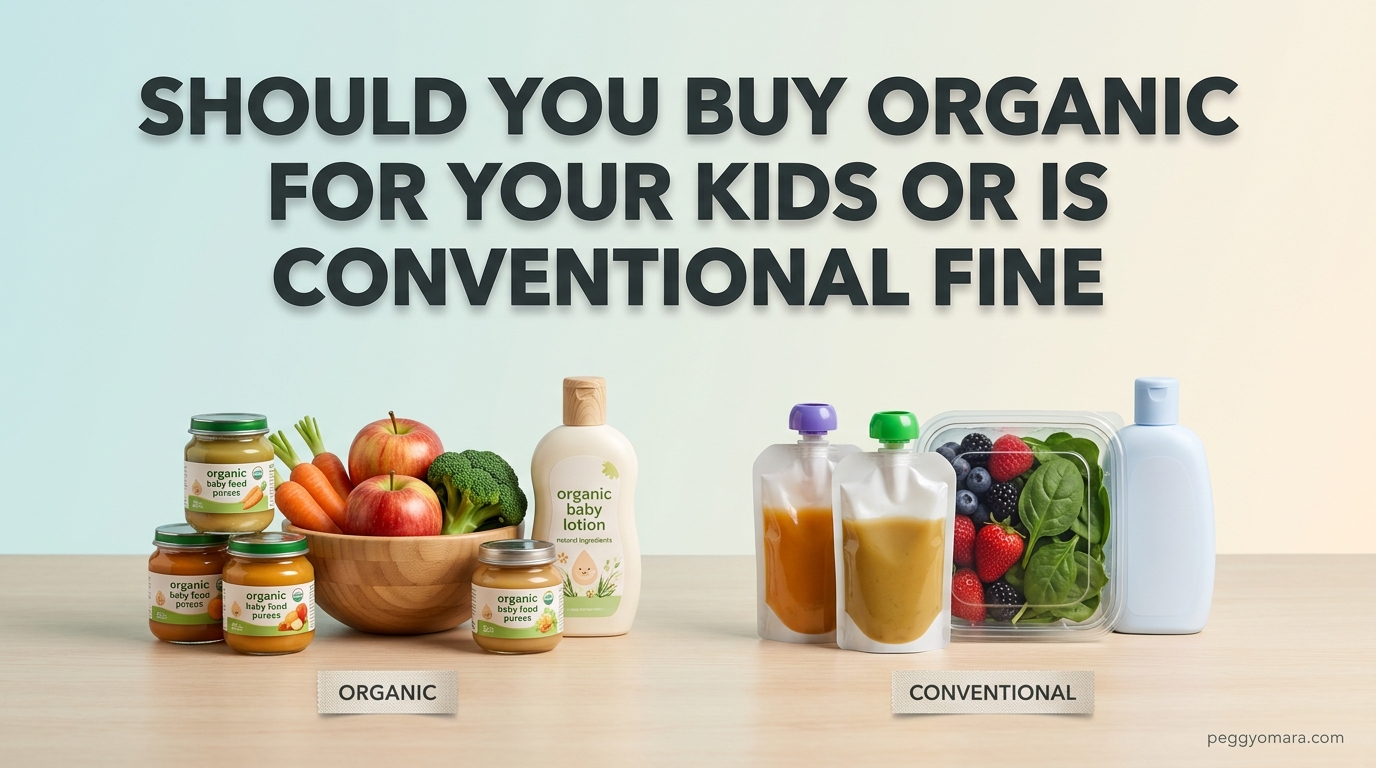
Standing in the produce aisle, you pick up two apples that look nearly identical. One costs $1.49 per pound and carries the USDA Organic seal. The other costs $0.99 and has no special label. Your child tugs at your cart, asking for a snack, and you wonder: Is the organic apple actually better for my kid? Or am I just paying more for the same nutrition?
This question haunts parents daily. I have spent months reviewing research studies, speaking with pediatricians, and talking with hundreds of parents about their food choices. The answer is not as black-and-white as marketing makes it seem.
Conventional fruits and vegetables provide the same essential vitamins, minerals, and fiber as organic options. Your child will not miss out on nutrition by eating conventional produce. The real differences lie in pesticide exposure, certain nutritional variations in animal products, environmental impact, and cost. Most families benefit from a strategic approach that prioritizes organic for some foods while buying conventional for others.
Table of Contents
What Does ‘Organic’ Actually Mean?
The USDA Organic seal is not just a marketing term. It represents a specific set of federal standards that farms and food producers must follow to earn certification. Understanding these standards helps you make informed choices.
USDA Organic Standards Explained
Organic food must meet strict requirements set by the United States Department of Agriculture. These standards cover how crops are grown and how animals are raised.
For produce to be certified organic, farmers cannot use synthetic pesticides or fertilizers. They must use natural methods like crop rotation, composting, and biological pest control. The land must be free of prohibited substances for at least three years before harvest. Genetic modification (GMOs) is strictly prohibited.
For meat, poultry, and eggs to carry the organic label, animals must eat 100% organic feed and have access to outdoor space. Farmers cannot use growth hormones or antibiotics except in specific medical situations. These animal welfare requirements exceed conventional farming standards.
Understanding Organic Labeling
Not all organic claims are equal. The USDA recognizes three levels of organic certification:
100% Organic: Every ingredient in the product is certified organic. These products display the USDA Organic seal.
Organic: At least 95% of ingredients are organic. The remaining 5% must come from a USDA-approved list of non-organic substances. These products also display the USDA Organic seal.
Made with Organic: At least 70% of ingredients are organic. These products cannot use the USDA seal but may state “made with organic” on the front of the package.
Products containing less than 70% organic ingredients can only mention organic in the ingredient list, not on the front of the package.
Is Organic More Nutritious? What the Research Shows
Parents often assume organic means healthier. But when researchers compare the nutritional content of organic and conventional foods, the differences are smaller than marketing suggests.
What Studies Actually Find
A comprehensive 2012 meta-analysis published in the Annals of Internal Medicine examined 237 research studies comparing organic and conventional foods. The researchers found no significant difference in vitamin or mineral content between the two categories. Organic produce does not contain more vitamin C, iron, or calcium than conventional alternatives.
However, the research did reveal some meaningful differences. Organic produce contains higher levels of certain antioxidants, including polyphenols and flavonoids. These compounds help plants defend against pests naturally, and they may offer health benefits to humans as well. The difference is modest but measurable.
Animal Products Show More Promise
The nutritional gap widens when examining meat, dairy, and eggs. Several studies have found that organic milk and meat contain higher levels of omega-3 fatty acids than conventional versions. A 2016 study in the British Journal of Nutrition found that organic milk contains about 50% more omega-3s than conventional milk.
This difference comes from animal diet. Organic cows eat more grass and less grain than conventional dairy cows. Grass-fed animals produce milk and meat with different fat profiles, including more heart-healthy omega-3s and conjugated linoleic acid (CLA).
Organic eggs also tend to contain more omega-3s, especially when hens are fed flaxseed or allowed to forage outdoors. The color of the yolk may be darker, but this indicates diet differences rather than superior nutrition.
The Bottom Line on Nutrition
For most nutrients, organic and conventional foods are nutritionally equivalent. A conventional apple provides the same fiber and vitamin C as an organic apple. The small increases in antioxidants and omega-3s are beneficial but not dramatic enough to make organic essential for health.
The greatest health benefit comes from eating a varied diet rich in fruits, vegetables, whole grains, and lean proteins, regardless of how those foods were grown.
Pesticide Residues: The Real Difference Between Organic and Conventional
Where organic and conventional foods diverge most significantly is in pesticide residue levels. This difference matters especially for children.
Children Are More Vulnerable
Children face higher risks from pesticide exposure than adults for several reasons. Their bodies are still developing, making them more susceptible to environmental toxins. They eat more food relative to their body weight than adults do. Their organs, particularly the liver and kidneys, are less efficient at processing and eliminating chemicals.
Children also tend to eat more of the foods that carry higher pesticide residues. Berries, apples, and other favorites top the list of produce with detectable pesticide levels.
What the Research Shows
Multiple studies have confirmed that organic produce contains fewer pesticide residues than conventional produce. A 2014 meta-analysis found that organic crops were four times less likely to contain pesticide residues than conventional crops. When residues were present on organic foods, they were at significantly lower levels.
A notable study published in Environmental Health Perspectives measured pesticide levels in the urine of children eating conventional versus organic diets. When children switched from conventional to organic foods, their urine pesticide levels dropped almost immediately. When they returned to conventional foods, levels rose again. This study demonstrated that diet directly affects pesticide exposure.
Are Conventional Pesticides Dangerous?
The pesticide levels found on conventional produce remain within safety limits established by the Environmental Protection Agency. These limits include significant safety margins, especially for children. The EPA sets allowable residue levels hundreds of times lower than amounts that show any effect in studies.
However, “safe limits” are based on individual pesticides tested in isolation. Scientists know less about the effects of multiple pesticide exposures combined, which is what happens when people eat various treated foods. This “cocktail effect” concerns some researchers, though conclusive evidence of harm at dietary exposure levels remains limited.
Washing and Peeling Helps
You can reduce pesticide exposure on conventional produce by washing fruits and vegetables thoroughly under running water. While washing does not remove all residues, it does reduce them significantly. Peeling removes even more, though you also lose some fiber and nutrients found in skins.
Buying organic eliminates most synthetic pesticide exposure. For parents concerned about minimizing chemical exposure for their children, this is the strongest argument for choosing organic produce.
Organic Meat, Dairy, and Eggs: What Parents Should Know
Animal products represent a different calculation than produce when deciding between organic and conventional. The issues extend beyond pesticides to include hormones, antibiotics, and animal welfare.
Hormones in Conventional Meat
In the United States, farmers can use growth hormones to increase meat production in cattle. These hormones help animals grow larger and faster. The practice is banned in organic farming and also prohibited in poultry and pork production regardless of whether it is organic or conventional.
The health impact of hormones in meat remains debated. The FDA maintains that residues in meat are too low to affect human health. However, some parents prefer to avoid even trace amounts of added hormones, particularly for young children.
Antibiotic Use
Conventional livestock operations routinely use antibiotics to prevent disease and promote growth. This practice contributes to antibiotic resistance, a serious public health concern. When bacteria are constantly exposed to low levels of antibiotics, they can develop resistance, making infections harder to treat in both animals and humans.
Organic farming prohibits routine antibiotic use. Animals can receive antibiotics to treat illness, but they cannot return to organic production after treatment. This restriction reduces antibiotic use significantly in organic operations.
For parents concerned about antibiotic resistance, organic meat and poultry offer a meaningful advantage over conventional options.
Animal Welfare Considerations
Organic standards require that animals have access to outdoor spaces and engage in natural behaviors. Cows must graze on pasture for a minimum portion of the year. Chickens must have outdoor access and space to move freely. These requirements address animal welfare concerns that many parents care about.
Conventional animal farming varies widely in its treatment of livestock. Some operations follow higher welfare standards voluntarily, but many do not. The organic label provides a consistent standard that parents can trust.
The Price Difference: Is Organic Worth the Extra Cost?
Organic food consistently costs more than conventional alternatives. Understanding these costs helps families make strategic decisions.
How Much More Does Organic Cost?
On average, organic food costs 20% to 100% more than conventional food. Produce shows the smallest premiums, typically 20% to 40% higher. Meat and dairy show larger differences, often 50% to 100% more expensive. Organic chicken and beef frequently cost double their conventional equivalents.
These price differences reflect the higher costs of organic farming. Without synthetic pesticides, farmers lose more crops to pests and must invest more labor in pest control. Organic feed costs more than conventional feed. Animals raised without growth hormones take longer to reach market weight, requiring more feed and care per pound of meat produced.
Budget Impact for Families
For a family spending $150 per week on conventional groceries, switching entirely to organic could cost an additional $75 to $150 weekly. Over a year, this adds thousands of dollars to the food budget. Many families cannot absorb this increase without cutting other essential expenses.
Parents should not feel guilty about buying conventional food when organic prices are prohibitive. Children receive excellent nutrition from conventional fruits, vegetables, grains, and proteins. The stress of financial strain affects family wellbeing too.
When Organic Offers Better Value
Despite higher prices, organic offers better value in certain categories. For foods where you consume the entire item including skin, such as berries, grapes, and apples, organic eliminates most pesticide exposure. For foods you peel, like bananas and oranges, conventional versions make more sense financially.
Organic animal products provide clearer nutritional and ethical advantages than organic produce. If your budget allows for only some organic purchases, prioritize organic meat, dairy, and eggs over organic fruits and vegetables.
The Dirty Dozen and Clean Fifteen: A Strategic Approach
The Environmental Working Group (EWG) publishes annual lists of produce with the highest and lowest pesticide residues. These lists help parents prioritize organic purchases strategically without breaking the budget.
The Dirty Dozen: Buy These Organic
These twelve fruits and vegetables consistently show the highest pesticide residues when grown conventionally. If you can only buy some organic produce, choose organic versions of these items:
1. Strawberries
2. Spinach
3. Kale, collard, and mustard greens
4. Grapes
5. Peaches
6. Pears
7. Nectarines
8. Apples
9. Bell and hot peppers
10. Cherries
11. Blueberries
12. Green beans
These foods have thin skins that absorb pesticides easily. Many are favorites among children, making the switch to organic versions particularly worthwhile. Strawberries top the list every year, often containing residues from ten or more different pesticides.
The Clean Fifteen: Conventional Is Fine
These fifteen fruits and vegetables show the lowest pesticide residues even when grown conventionally. Save money by buying conventional versions of these items:
1. Avocados
2. Sweet corn
3. Pineapple
4. Onions
5. Papaya
6. Sweet peas (frozen)
7. Asparagus
8. Honeydew melon
9. Kiwi
10. Cabbage
11. Mushrooms
12. Mangoes
13. Sweet potatoes
14. Watermelon
15. Carrots
These foods have thick skins, husks, or shells that protect the edible portion from pesticides. Avocados contain almost no detectable pesticide residues whether organic or conventional. Sweet corn and pineapple also show consistently low residue levels.
Using the Lists Effectively
The EWG updates these lists annually based on USDA testing data. I recommend checking their website each year for the latest rankings. Use these lists as a shopping guide, not a rigid rule. If organic strawberries are unavailable or too expensive one week, conventional strawberries still provide excellent nutrition.
Remember that eating any produce, organic or conventional, is better than eating none. Do not let perfect be the enemy of good when feeding your family.
How to Feed Your Family Well on Any Budget
Strategic shopping helps families balance health goals with financial realities. These practical approaches work for any budget level.
Mix Organic and Conventional
The most sustainable approach for most families involves mixing organic and conventional foods strategically. Buy organic for the Dirty Dozen and for animal products. Buy conventional for the Clean Fifteen and for foods you peel before eating.
This hybrid approach reduces your family’s pesticide exposure significantly while keeping costs manageable. You get the benefits of organic where they matter most without paying premium prices for every item.
Shop Seasonally and Locally
Organic produce costs less when it is in season locally. Summer brings affordable organic berries and tomatoes. Fall offers organic apples and squash at lower prices. Winter increases costs for out-of-season items shipped from distant locations.
Farmers markets sometimes offer organic produce at prices competitive with conventional supermarket options. You also support local agriculture and often get fresher, better-tasting food. Ask vendors about their growing practices; some farmers follow organic methods but have not pursued formal certification due to cost.
Consider Community Supported Agriculture
Community Supported Agriculture (CSA) programs allow you to buy shares in a local farm’s harvest. You receive a weekly box of seasonal produce throughout the growing season. Many CSAs offer organic options at prices below retail organic costs.
CSA boxes sometimes include unfamiliar vegetables, which encourages families to try new foods. The surprise element works well for adventurous eaters but may frustrate those who prefer specific meal planning.
Prioritize Whole Foods Over Processed
Whether organic or conventional, whole foods provide better nutrition than processed alternatives. A conventional apple beats an organic fruit snack containing added sugars. Conventional brown rice outperforms organic white rice in fiber and nutrients.
Focus your food budget on fresh produce, whole grains, lean proteins, and healthy fats. These foundational foods support children’s health regardless of whether they carry an organic label.
Grow Your Own
Even a small garden reduces your grocery bill and gives you control over growing practices. Herbs, tomatoes, lettuce, and peppers grow well in containers on balconies or patios. Children enjoy helping with gardening and often eat more vegetables they helped grow.
Homegrown produce offers the benefits of organic without the premium prices. You control exactly what goes into your soil and onto your plants.
Frequently Asked Questions
Is organic food better for children?
Organic food reduces pesticide exposure for children, but nutritionally it is very similar to conventional food. Both provide essential vitamins and minerals. The main advantage of organic is lower pesticide residues, which matters because children are more vulnerable to chemical exposure than adults. However, eating any produce, whether organic or conventional, supports children’s health better than avoiding fruits and vegetables due to cost concerns.
Is organic better than conventional?
Organic is better regarding pesticide exposure and certain animal welfare standards, but not significantly better nutritionally. Research shows organic produce contains similar vitamins and minerals as conventional produce. Organic meat and dairy contain more omega-3 fatty acids. The choice depends on your priorities: choose organic to minimize pesticides and support specific farming practices, choose conventional for more affordable nutrition.
Are there downsides to buying organic?
The main downside is cost. Organic food costs 20% to 100% more than conventional, which strains family budgets. Organic produce also has a shorter shelf life since it lacks preservative treatments, potentially leading to more food waste. Availability can be limited in some areas, making shopping less convenient. Finally, the organic label does not guarantee superior nutrition, so the premium price may not deliver proportional health benefits.
Is organic really worth the extra money?
Organic is worth the extra cost if your budget allows and you prioritize minimizing pesticide exposure, especially for the Dirty Dozen produce items. Organic animal products offer clearer advantages than organic produce due to differences in omega-3 content and antibiotic use. However, conventional food provides excellent nutrition at more affordable prices. A strategic approach buying organic for high-priority items and conventional for others offers the best value for most families.
Is conventional food safe for children?
Yes, conventional food is safe for children. Pesticide residues on conventional produce remain within safety limits established by the Environmental Protection Agency. These limits include significant safety margins for children. Decades of research support the safety of the food supply. Feeding children a varied diet of conventional fruits, vegetables, grains, and proteins supports healthy growth and development.
Which foods should I prioritize buying organic?
Prioritize buying organic for the Environmental Working Group’s Dirty Dozen: strawberries, spinach, kale, grapes, peaches, pears, nectarines, apples, peppers, cherries, blueberries, and green beans. These show the highest pesticide residues when grown conventionally. Also prioritize organic meat, dairy, and eggs to avoid routine antibiotic use and increase omega-3 intake. For other foods, conventional options offer excellent nutrition at lower cost.
Making the Right Choice for Your Family
The organic versus conventional debate generates strong feelings among parents. Social media amplifies the pressure to buy organic, with some implying that conventional food harms children. This message creates unnecessary guilt for families working within tight budgets.
The research supports a balanced perspective. Organic food offers real advantages: lower pesticide exposure, higher omega-3s in animal products, and support for farming practices that many parents value. Conventional food offers excellent nutrition at prices more families can afford. Both choices can support healthy, thriving children.
Should you buy organic for your kids or is conventional fine? The answer depends on your family’s priorities, values, and budget. If you can afford organic for the Dirty Dozen and animal products, that strategy maximizes benefits. If your budget limits you to mostly conventional food, your children still receive the nutrients they need for healthy growth.
The most important factor is not whether your apples carry an organic label. It is whether your children eat those apples instead of processed snacks. It is whether your family enjoys balanced meals together. It is whether you feel good about your choices rather than stressed by them.
Feed your children well. Love them deeply. Release the guilt. That matters more than any label.