
I spent years ignoring the subtle signals my body was sending every month. Like many women, I assumed ovulation was something that just happened in the background—nothing I needed to pay attention to unless I was trying to get pregnant. Then I started tracking my cycle and discovered I had been missing important clues my body was sharing about my fertility, my hormonal health, and my overall wellbeing.
Your body communicates with you constantly, and ovulation signs are some of the most reliable messages it sends. Understanding these signals helps you recognize your fertile window, identify your most energetic days, and catch potential hormonal imbalances early. Whether you are trying to conceive, avoid pregnancy naturally, or simply want to understand your body better, learning these seven ovulation signs will transform how you experience your monthly cycle.
Some of these signs are obvious once you know what to look for. Others are so subtle that they slip past unnoticed for years. I will walk you through each one, explain what it actually feels like based on real women’s experiences, and show you how to start tracking these signals today.
Table of Contents
What Is Ovulation and Why Does It Matter?
Ovulation is the release of a mature egg from one of your ovaries, typically occurring once per menstrual cycle. This biological process represents the peak of your fertility window—the roughly 24-hour period when conception is possible. The released egg travels down your fallopian tube, where it can be fertilized if sperm are present.
Most women ovulate around day 14 of a 28-day cycle, though anywhere from day 11 to day 21 is considered normal. Your cycle length, stress levels, health conditions, and age can all shift this timing. The entire process is orchestrated by a delicate dance of hormones, primarily estrogen, luteinizing hormone (LH), and progesterone.
Understanding when you ovulate matters for several reasons. If you are trying to conceive, timing intercourse during your fertile window significantly increases your chances. If you are tracking your health, ovulation is a key indicator that your hormones are functioning properly. Even if pregnancy is not on your radar, knowing your ovulation signs helps you understand your energy patterns, mood fluctuations, and physical changes throughout the month.
The 7 Ovulation Signs Your Body Is Sending
Every woman’s experience with ovulation is unique. Some feel multiple strong signs, while others notice barely anything. Both are completely normal. Here are the seven most common ovulation signs, ranked by how frequently women report noticing them.
1. Changes in Cervical Mucus
The most reliable ovulation sign is also the one many women never think to check. Your cervical mucus undergoes dramatic changes in the days leading up to ovulation, transforming from thick and sticky to clear, stretchy, and egg-white consistency. This fertile-quality mucus helps sperm survive and travel to meet the egg.
You can check your cervical mucus by observing what you see on toilet paper or by gently inserting a clean finger to collect a sample. During the fertile window, the mucus will stretch between your fingers in long, thin strands—often described as looking like raw egg whites. You may also notice increased wetness and sensation in your underwear.
After ovulation occurs, progesterone causes the mucus to thicken again, creating a plug that blocks sperm from entering the uterus. Many women on fertility forums describe this change as going from “slippery and clear” to “thick and creamy” or “lotion-like” within a day or two of ovulation. This makes cervical mucus monitoring one of the most accurate ways to confirm ovulation has happened.
2. Mittelschmerz (Ovulation Pain)
About 40% of women experience a distinct one-sided pain in their lower abdomen during ovulation. This phenomenon, called mittelschmerz (German for “middle pain”), occurs when the ovarian follicle ruptures to release the egg. The pain typically lasts anywhere from a few minutes to 48 hours, with most women reporting discomfort for less than a day.
The sensation varies significantly between women. Some describe it as a sharp, stabbing pain localized to one ovary. Others feel a dull ache, pressure, or a cramping sensation that comes and goes. The side of the pain corresponds to which ovary released the egg—right ovary release causes right-side pain, left ovary release causes left-side pain.
Women on trying-to-conceive forums often use mittelschmerz as their primary ovulation indicator. One woman shared, “When I ovulated, I felt it by my left ovary—like a sharp cramp and pressure.” Another noted, “Always get ovulation cramps; that is how I know when and if I am ovulating.” If you experience this pain consistently, tracking which side it occurs on can help you understand your ovulation patterns.
3. Basal Body Temperature Rise
Your basal body temperature (BBT) follows a predictable pattern throughout your menstrual cycle. It typically stays lower during the follicular phase (the first half of your cycle), then rises by about 0.5 degrees Fahrenheit immediately after ovulation occurs. This temperature shift is caused by increased progesterone production from the corpus luteum (the remnant of the follicle that released the egg).
To track your BBT, you need a special basal thermometer and must take your temperature immediately upon waking, before getting out of bed or moving around. The temperature spike confirms that ovulation has occurred, though by the time you see the rise, your fertile window has already passed. This makes BBT tracking useful for confirming ovulation and understanding your cycle patterns, but less helpful for timing intercourse to conceive.
Some women find BBT tracking frustrating because factors like poor sleep, alcohol consumption, illness, or waking at different times can affect readings. Others appreciate the concrete data it provides. If you are new to cycle tracking, starting with cervical mucus observation may be easier, then adding BBT once you have established that habit.
4. Breast Tenderness
Many women notice their breasts feel sore, swollen, or sensitive to touch around ovulation time. This tenderness is triggered by the surge in estrogen that precedes ovulation, followed by the rise in progesterone afterward. The sensation is similar to the breast tenderness that occurs before your period, but it happens at mid-cycle instead.
The timing helps distinguish ovulation-related breast tenderness from PMS symptoms. Ovulation tenderness typically appears around cycle day 14 and may last for several days into the luteal phase. PMS-related breast soreness usually intensifies in the week before your period starts. Some women experience both—a mid-cycle wave followed by a pre-period wave.
Not all women notice this sign, and some only experience it occasionally. Factors like caffeine intake, stress, and certain medications can also cause breast tenderness unrelated to ovulation. If breast soreness is your primary ovulation indicator, track it alongside other signs to confirm the pattern.
5. Heightened Libido
Nature designed your body to want sex when you are most fertile. Many women report a noticeable increase in sex drive during the days leading up to and including ovulation. This biological drive peaks when conception is most likely, typically one to two days before the egg is released.
The libido boost is driven by elevated estrogen and testosterone levels during the fertile window. Some women also report feeling more attractive, energetic, and confident during this time. These changes may be subtle—a general feeling of being “in the mood” more often—or quite pronounced.
While this sign can be helpful for timing intercourse when trying to conceive, it is not the most reliable indicator on its own. Stress, relationship dynamics, and daily life circumstances affect libido constantly. However, if you notice a consistent mid-cycle pattern of increased desire that aligns with other ovulation signs, you can use it as supporting evidence of your fertile window.
6. Mood Changes
The hormonal shifts around ovulation affect more than just your body—they influence your emotions too. Many women experience mood changes including increased irritability, emotional sensitivity, or feeling more emotionally volatile in the days surrounding ovulation. These changes are driven by the rapid rise and fall of estrogen and the introduction of progesterone into your hormonal mix.
Some women feel more anxious or stressed during this time. Others report feeling more creative, social, or communicative. The emotional effects vary significantly between women and even between cycles for the same woman. Tracking your mood alongside physical signs can help you identify your personal patterns.
Understanding these mood shifts helps you be kinder to yourself during the ovulation phase. If you know you tend to feel more irritable around day 14, you can plan accordingly—avoiding high-stress situations when possible and practicing self-care. Recognizing that these emotions have a biological cause, not a personal failing, can be incredibly validating.
7. Bloating and Water Retention
Hormonal fluctuations during ovulation can cause your body to hold onto extra fluid, leading to bloating and a feeling of puffiness. This water retention typically affects your abdomen, causing a distended or full sensation in your lower belly. Some women also notice swelling in their hands, feet, or face.
The bloating is caused by changes in estrogen and progesterone levels affecting your body’s fluid balance. While uncomfortable, this ovulation bloating is usually milder than the bloating many women experience before their periods. It typically resolves within a few days as your hormones stabilize in the luteal phase.
Some women confuse ovulation bloating with digestive issues or weight gain. Keeping track of when the bloating occurs in your cycle helps distinguish it from other causes. If you consistently notice a mid-cycle puffiness that resolves on its own, you are likely experiencing this common ovulation sign.
Additional Signs You Might Notice
Beyond the seven primary ovulation signs, some women experience additional physical and sensory changes. These signs are less universal but worth mentioning because they can be significant for those who experience them.
Light Spotting
Some women notice a small amount of light pink or brown spotting around ovulation. This occurs due to the sudden drop in estrogen that happens right before the LH surge, causing a brief shedding of the uterine lining. The spotting is typically very light—just a few drops—and lasts only a day or less.
While ovulation spotting is usually harmless, any mid-cycle bleeding should be mentioned to your healthcare provider, especially if it is heavy, painful, or a new symptom for you. Tracking when the spotting occurs helps determine if it is ovulation-related or potentially something else.
Heightened Senses
Some women report enhanced sense of smell, taste, or even vision during their fertile window. This heightened sensory awareness may have evolutionary roots—helping women detect potential mates or avoid spoiled food when pregnancy is possible. You might notice perfumes smell stronger, certain foods taste more intense, or your vision seems sharper.
While research on this phenomenon is limited, many women on fertility forums confirm experiencing it. One common report is suddenly noticing smells that normally go unnoticed, or finding certain scents particularly appealing or offensive during the fertile window.
Appetite Changes
Your appetite may fluctuate around ovulation. Some women feel hungrier and crave more protein-rich foods. Others experience a decreased appetite or specific food cravings. These changes are likely tied to the metabolic shifts that occur during the fertile window.
If you are trying to conceive, paying attention to appetite changes can be helpful. Your body may naturally guide you toward foods that support egg quality and early embryo development. Many women report craving foods they later learn are rich in fertility-supporting nutrients like folate and omega-3 fatty acids.
Vulva Changes
The external genitalia can show subtle changes during ovulation. Some women notice their vulva appears slightly swollen or feels more sensitive due to increased blood flow to the area. The labia may look fuller or feel different to the touch.
These changes are part of the body’s preparation for potential intercourse and are completely normal. They typically resolve within a day or two of ovulation. While subtle, women who are very attuned to their bodies may notice these sensations.
Why Some Women Don’t Notice Any Signs
If you read through this list and thought, “I never feel any of these things,” you are not alone. A significant percentage of women experience ovulation without any noticeable symptoms. This is completely normal and does not indicate a problem with your fertility or health.
Several factors influence whether you feel ovulation signs. Your pain tolerance, body awareness, hormone levels, and individual physiology all play a role. Some women have naturally higher pain thresholds and may not register mittelschmerz even when it occurs. Others have more subtle hormonal shifts that do not produce obvious physical symptoms.
Not feeling ovulation signs does not mean you are not ovulating. The only way to confirm anovulation (lack of ovulation) is through medical testing or consistent tracking over several months. If you are concerned about your ovulation, speak with your healthcare provider. They can run tests to check your hormone levels and confirm whether you are ovulating regularly.
How to Track Your Ovulation Signs
Once you know what to look for, tracking your ovulation signs becomes a powerful tool for understanding your body. Different methods work better for different women, and many find combining several approaches gives the most complete picture.
Cervical Mucus Monitoring
This method involves observing changes in your vaginal discharge throughout your cycle. Start checking daily after your period ends. Note the color, consistency, and amount of mucus you see. Fertile mucus is clear, stretchy, and slippery—like raw egg whites. After ovulation, it becomes thick, white, and sticky again.
Check your mucus at the same time each day for consistency. Many women check after a bowel movement when the mucus is most likely to be visible on toilet paper. You can also gently insert a clean finger to collect a sample from near your cervix.
Basal Body Temperature Charting
Take your temperature with a basal thermometer immediately upon waking, before any activity. Record the reading in a chart or app. Look for a sustained temperature rise of at least 0.2 to 0.5 degrees Fahrenheit that remains elevated for at least three days. This confirms ovulation has occurred.
For accurate results, you need at least three hours of consecutive sleep before taking your temperature. Try to take it at the same time each morning, within a 30-minute window. Factors like alcohol, poor sleep, and illness can affect readings, so note these in your chart.
Ovulation Predictor Kits (OPKs)
These urine tests detect the LH surge that occurs 24 to 48 hours before ovulation. They work similarly to pregnancy tests, showing a positive result when your LH levels peak. Start testing a few days before you expect to ovulate based on your cycle length.
OPKs are convenient and widely available, but they have limitations. They confirm the LH surge is happening, but not that ovulation actually occurred. Some women experience LH surges without releasing an egg. They are also not suitable for women with polycystic ovary syndrome (PCOS), who may have elevated LH levels throughout their cycle.
Fertility Apps and Trackers
Smartphone apps can help you log symptoms, track cycle length, and predict ovulation. They use algorithms based on your input data to estimate your fertile window. Popular options include Clue, Flo, Ovia, and Kindara.
While apps are convenient, they are only as accurate as the data you provide. Apps that rely solely on calendar calculations may be off by several days, especially if your cycle is irregular. The most accurate approach combines app tracking with physical sign observation.
The Calendar Method
This traditional approach involves tracking your cycle length over several months to predict when ovulation will occur. Subtract 14 days from your total cycle length to estimate ovulation day. For a 28-day cycle, ovulation likely occurs around day 14. For a 32-day cycle, around day 18.
The calendar method works best for women with very regular cycles. If your cycle length varies by more than a few days, this method becomes less reliable. Even with regular cycles, ovulation can shift due to stress, illness, or other factors.
When to See a Doctor
While most ovulation signs are completely normal, certain symptoms warrant medical attention. Knowing when to seek help protects your health and fertility.
Severe or Persistent Pain
Ovulation pain should be mild to moderate and last no longer than 48 hours. If you experience severe pain, pain that lasts more than two days, or pain that interferes with daily activities, contact your healthcare provider. Intense one-sided pain could indicate ovarian cysts, endometriosis, or other conditions requiring treatment.
Some women confuse ovulation pain with appendicitis. If the pain is severe, accompanied by fever, nausea, or vomiting, seek immediate medical care. It is better to be evaluated and find it is just ovulation than to delay treatment for a more serious condition.
Heavy Mid-Cycle Bleeding
Light spotting around ovulation is usually harmless, but heavy bleeding or bleeding that lasts more than a day or two needs evaluation. Any bleeding after intercourse, bleeding between periods that is heavier than spotting, or frequent irregular bleeding should be discussed with your doctor.
Signs of Anovulation
If you track your cycles and never observe any ovulation signs—no temperature rise, no cervical mucus changes, no positive OPK results over several months—mention this to your healthcare provider. Anovulation can result from stress, polycystic ovary syndrome, thyroid disorders, excessive exercise, low body weight, or other factors.
Signs that you may not be ovulating include very irregular cycles (shorter than 21 days or longer than 35 days), complete absence of periods, or cycles with no discernible pattern of fertile cervical mucus or temperature shifts.
Difficulty Conceiving
If you are under 35 and have been trying to conceive for 12 months without success, schedule a fertility consultation. If you are 35 or older, seek evaluation after 6 months of trying. Even if you are ovulating regularly, other factors may be affecting your fertility.
FAQs
What are the 7 signs of ovulation?
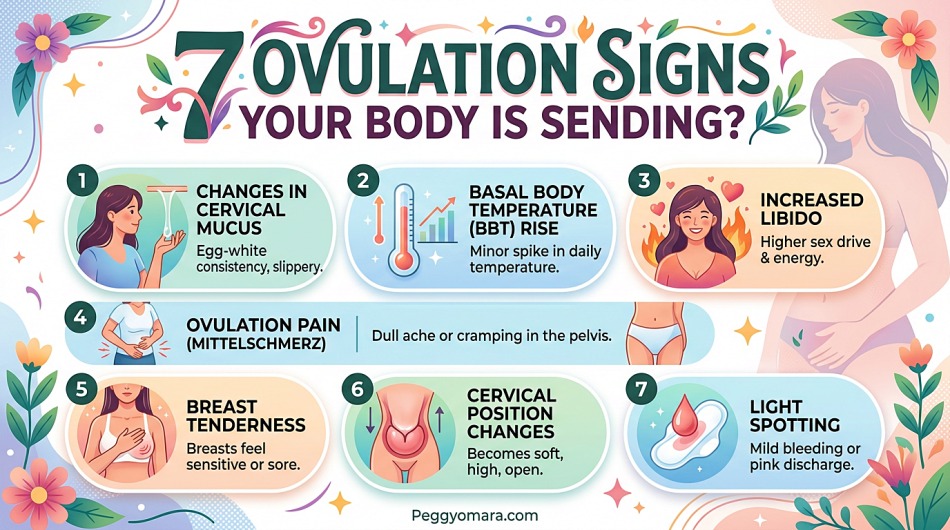
The seven main signs of ovulation are: (1) changes in cervical mucus to an egg-white consistency, (2) mittelschmerz (one-sided ovulation pain), (3) basal body temperature rise of about 0.5 degrees Fahrenheit, (4) breast tenderness, (5) heightened libido, (6) mood changes including irritability or emotional sensitivity, and (7) bloating and water retention. Some women also experience light spotting, heightened senses, appetite changes, or vulva swelling.
How do I know if my body skipped ovulation?
The only way to confirm anovulation is through consistent tracking or medical testing. Signs that you may not be ovulating include very irregular cycles (shorter than 21 days or longer than 35 days), complete absence of periods, or lack of any ovulation signs over several months. BBT tracking that shows no sustained temperature rise and absent fertile-quality cervical mucus can indicate anovulation. Consult your healthcare provider for hormone testing if you suspect you are not ovulating.
Can you smell ovulation?
Some women report a heightened sense of smell during their fertile window, though research on this phenomenon is limited. You might notice perfumes smell stronger, certain foods taste more intense, or you become more sensitive to odors you normally ignore. This heightened sensory awareness may have evolutionary roots related to detecting potential mates or avoiding spoiled food when pregnancy is possible.
How can you physically tell if you are ovulating?
You can physically tell you are ovulating by observing changes in cervical mucus (clear, stretchy, egg-white consistency), feeling one-sided lower abdominal pain (mittelschmerz), tracking your basal body temperature for a sustained rise, noticing breast tenderness, experiencing a libido increase, observing mood changes, or feeling bloated. Combining several tracking methods gives the most accurate picture of your ovulation timing.
How long does ovulation last?
The actual release of the egg (ovulation) takes only a moment, but your fertile window lasts about 5 to 6 days. This includes the 3 to 5 days before ovulation when sperm can survive in fertile cervical mucus, plus the 12 to 24 hours after ovulation when the egg remains viable for fertilization. Ovulation signs like cervical mucus changes and libido increases typically appear 1 to 2 days before the egg is released.
Understanding Your Body’s Signals
Learning your 7 ovulation signs transforms your relationship with your body. Instead of seeing your menstrual cycle as an inconvenience, you begin to appreciate it as valuable biological information. Each sign tells you something about your hormonal health, your fertility, and your overall wellbeing.
The women I have talked to who track their ovulation consistently report feeling more empowered and connected to their bodies. They can plan their schedules around their energy levels, understand their emotional patterns, and make informed decisions about conception or contraception. Whether you are trying to get pregnant, trying to avoid pregnancy, or simply curious about your body, this knowledge is invaluable.
Start with one tracking method that appeals to you. Cervical mucus monitoring is free and requires no special equipment. Add BBT charting or OPKs if you want more data. Be patient with yourself—it often takes 2 to 3 cycles to recognize your personal patterns. Remember that some women feel strong ovulation signs while others feel nothing at all, and both are completely normal.
Your body is constantly communicating with you. By learning these 7 ovulation signs, you are finally learning to listen.