
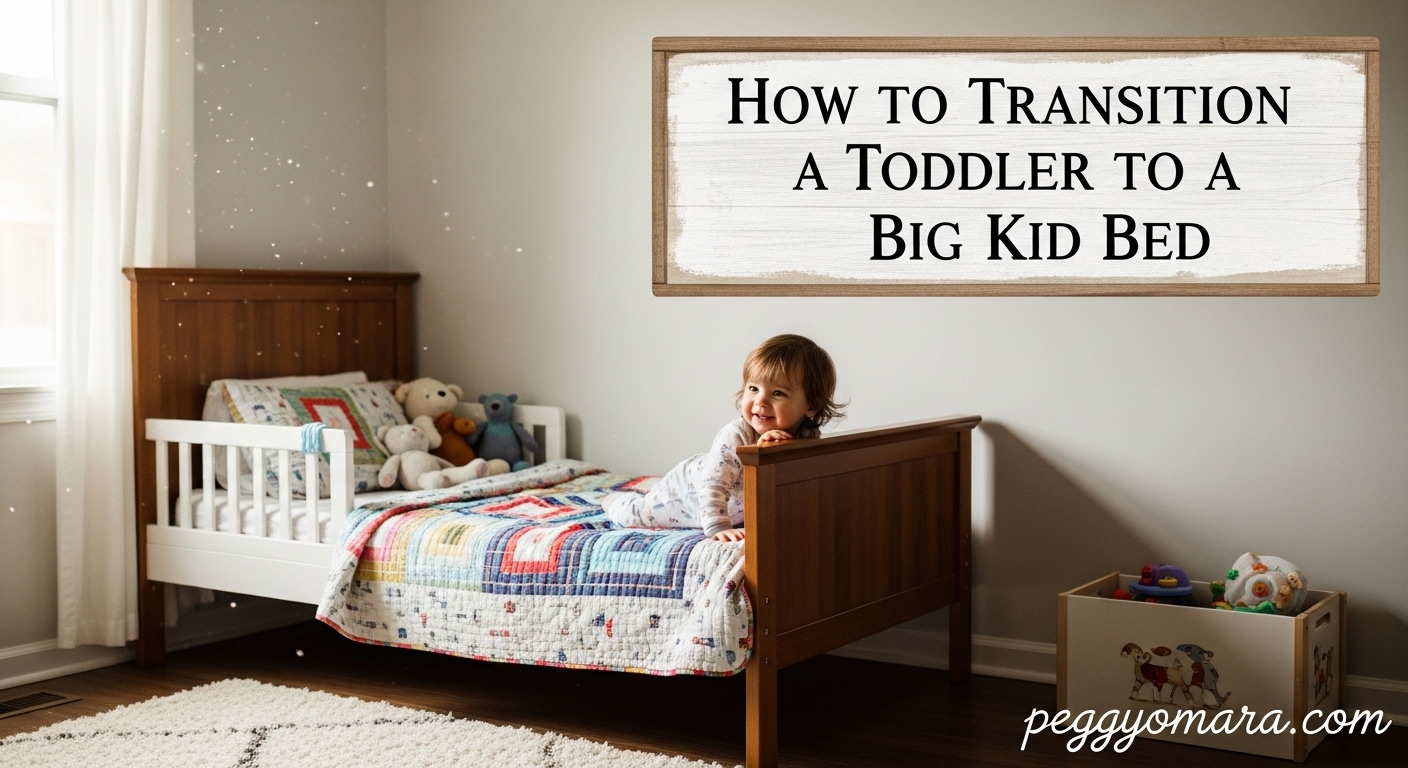
Moving your little one from a crib to their first big kid bed is one of parenting’s biggest milestones. If you are wondering how to transition a toddler to a big kid bed without losing your sanity (or your sleep), you are in the right place.
I have helped dozens of families through this transition over my 2026 years of working with parents, and I can tell you this: timing and preparation matter more than the bed itself. The good news? With the right approach, this transition can be smooth and even exciting for your child.
In this guide, I will walk you through exactly when to make the move, how to prepare your home, and step-by-step strategies that work. I will also share what to do when your toddler discovers they can climb out of bed at 2 AM (because they will).
Table of Contents
When to Make the Transition
The average age for transitioning from crib to bed is between 2 and 3 years old, but age alone should not be your only guide. Every child develops at their own pace, and forcing the transition before they are ready often backfires.
Signs Your Toddler Is Ready
Look for these developmental readiness signs before making the switch:
- Climbing out of the crib: If your child can climb over the crib rail (especially if the nipple line is above the rail when standing), the crib becomes a safety hazard.
- Asking for a big bed: Verbal interest or excitement about moving to a bed shows cognitive readiness.
- Physical size: If your child is 35 inches tall or taller, they may be physically too big for the crib.
- Understanding boundaries: Your child can follow simple instructions and understands the concept of staying in one place.
- Toilet training readiness: If you are starting night-time potty training, easy bathroom access becomes important.
Warning: Do not rush the transition because of a new baby on the way. If possible, move your toddler at least 8 weeks before the baby arrives, or wait 2-3 months after. Transitioning during the adjustment to a new sibling often creates sleep regression for everyone.
Signs Your Toddler Is NOT Ready
If your child shows these signs, wait a few more months:
- They cannot settle themselves to sleep independently
- They are in the middle of another major change (new daycare, moving homes)
- They show anxiety or fear about the new bed
- They still take long naps easily in the crib
Preparation and Childproofing Checklist (2026)
Before you move your child to a bed they can freely exit, their room needs to be completely safe. Unlike a crib that contains them, a big kid bed leaves them exposed to potential hazards. I learned this the hard way when my own daughter managed to pull a dresser drawer open as a step stool at 3 AM.
Complete Childproofing Checklist
Work through this checklist at least one week before the transition:
- Anchoring furniture: Secure all dressers, bookshelves, and TVs to the wall with furniture straps. Toddlers will use drawers as steps.
- Window safety: Install window guards or stops. Remove blinds with cords or use cord shorteners.
- Door considerations: Consider a baby gate at the door instead of a closed door, or use a door knob cover to prevent unsupervised wandering.
- Electrical safety: Cover all outlets and hide cords behind furniture. Night lights should be LED and cool to touch.
- Floor hazards: Remove small toys, choking hazards, and anything that could be a midnight tripping risk.
- Monitor placement: Ensure the baby monitor cord is at least 3 feet from the bed and secured to the wall.
- Heating/cooling: Block access to radiators, space heaters, or floor vents.
Safety tip from a firefighter friend: If you choose to use a door lock for safety, use a top-mounted lock that you can open from outside in an emergency. Never lock a child in their room without an adult monitor.
Bed Placement and Setup
Position the bed against a wall if possible. Use guard rails on the open side. The mattress should be low to the ground. If you are using a twin bed, consider placing the mattress directly on the floor initially and adding the bed frame later.
How to Transition a Toddler to a Big Kid Bed: Step-by-Step Guide
This is the process I have refined over years of working with families. Follow these steps in order, and adjust based on your child’s temperament.
Step 1: Do Not Announce the Transition Too Early
Toddler time is different from adult time. If you tell a 2-year-old they are getting a new bed “next week,” they will ask about it every 20 minutes for seven days. Or worse, they may build anxiety about the change.
Instead, introduce the idea 1-2 days before the switch. Mention it casually: “In two days, you get to sleep in your new big kid bed.” Let them process without overthinking.
Step 2: Let Them Be Part of the Process
Give your child some control over the transition. Let them help pick out new sheets or a pillow. Let them choose which stuffed animals will sleep in the new bed. This ownership creates excitement rather than fear.
However, and this is important: do not overhype the new bed. One mom I worked with threw a “big kid bed party” complete with balloons and cake. Her son got so overstimulated and anxious that he hyperventilated at bedtime. Keep it low-key and matter-of-fact.
Step 3: Keep Familiar Comfort Items
Use the same bedding from the crib if possible, even if it is technically too small. Familiar smells and textures provide security. If you bought special new bedding, wash it first so it smells like home.
Position the new bed in the same spot where the crib was if possible. Same sight lines, same wall decorations. Too much change at once overwhelms toddlers.
Step 4: Start at Bedtime, Not Naptime
Begin the transition at nighttime when sleep pressure is highest. Toddlers are more likely to stay in bed when they are genuinely tired. Once they have successfully slept in the bed for 3-5 nights, then transition nap time too.
Naps have lighter sleep pressure, making it harder for them to stay put. Do not sabotage naps while they are adjusting to the new bedtime routine.
Step 5: Maintain Your Exact Same Bedtime Routine
This is the most important step. Do not change anything else about bedtime. Same books, same songs, same order of events. The only thing that changes is the sleep location. Familiarity in routine provides invisible boundaries that help your child feel secure.
If you do not have a consistent routine yet, establish one before transitioning. A predictable sequence (bath, pajamas, two books, song, bed) signals to your child that sleep is coming.
Step 6: Explain the New Boundaries Simply
Before lights out, explain the new situation in simple terms: “You sleep in your bed all night. If you need me, call for me. I will come. Do not get out of bed. Stay in bed until morning.”
Do not lecture or over-explain. Toddlers tune out long instructions. State the expectation clearly and calmly.
Toddler Bed vs Twin Bed: Which Should You Choose in 2026?
This is one of the most common questions I get. Here is my take after seeing hundreds of families go through this transition:
The Toddler Bed Option
Toddler beds use a crib mattress and are lower to the ground. They are sized for children up to age 5 or 50 pounds.
Pros: Lower fall risk, uses existing crib mattress and bedding, fits small bedrooms, themed designs excite some children.
Cons: Outgrown quickly (usually by age 4), requires buying another bed soon, can feel like an unnecessary intermediate step.
The Twin Bed (or Larger) Option
Many sleep consultants recommend skipping the toddler bed entirely and going straight to a twin, full, or even queen mattress.
Pros: Grows with your child for years, more cost-effective long-term, accommodates co-sleeping during illness or nightmares, works for multiple children spaced closely in age.
Cons: Higher from floor initially (mitigate by placing mattress on floor), more expensive upfront, requires buying all new bedding.
My recommendation: If your crib converts to a toddler bed, use that for 6-12 months. If buying new, go straight to a twin or larger mattress on the floor, then add the bed frame later. You will save money and hassle in the long run.
What to Do When Your Toddler Keeps Getting Out of Bed?
Let me be honest: almost every toddler will test the boundaries of their new freedom. Pediatric nurses call this “yo-yo syndrome” or “room hopping.” Your child gets out of bed, you put them back. Repeat 47 times. It is exhausting, but it is normal.
The Silent Return Method
This technique works for most families within 3-7 nights. Here is exactly what to do:
- No talking: When your child gets out of bed, take them by the hand (or carry them if needed) and return them to bed without saying a word. No eye contact, no conversation, no tucking in again.
- No emotion: Stay completely neutral. Your child is looking for a reaction. If they get one, they will keep testing. Be a boring robot.
- Repeat: Do this every single time they get out, as many times as it takes. The first night may take 20-30 returns. Night three might take five.
- Be consistent: Both parents must use the same approach. If one parent gives in and lets them snuggle in the big bed, the process takes much longer.
I know this sounds harsh. But you are not being mean; you are being consistent. Your child is learning a new skill, and consistency is how they learn fastest.
The “10-Minute Check-In” Alternative
For children who are genuinely anxious (not just testing boundaries), try this: Tell them you will check on them in 10 minutes. Set a timer. Return, give a quick kiss, promise another check in 10 minutes. Repeat until they fall asleep.
This gives anxious children the security that you are nearby while still keeping them in bed. Gradually extend the check-in interval over a week or two.
Toddler Clocks and Visual Boundaries
For children who understand colors but not time, a toddler clock can work wonders. These clocks show a red light (stay in bed) or green light (okay to get up). Many parents swear by these for early morning wake-ups too.
The key is consistency: if the light is red and they get out, they go back. No exceptions. After a week, most children internalize the boundary.
Co-Sleeping to Big Kid Bed: Special Considerations in 2026
If your family has been co-sleeping, the transition to an independent bed requires extra sensitivity. Your child has never slept alone, so the change is bigger for them.
Gradual Separation Approach
Start by placing a mattress on the floor of your bedroom. Have your child sleep there for 1-2 weeks. Once that feels secure, move the mattress to their room but sleep with them the first few nights.
Then transition to sitting in a chair beside the bed, then sitting by the door, then just checking in. This gradual fading builds security and independence simultaneously.
Maintain Physical Connection
Place a worn t-shirt of yours in their bed so they can smell you. Use a white noise machine that mimics the sounds they heard while co-sleeping. Consider a weighted blanket if they are old enough (usually 2+ and 30+ pounds).
Important: Do not try to night-wean and transition to a big kid bed simultaneously. Tackle one change at a time. Pick the most pressing issue and address that first.
Common Challenges and How to Handle Them
The “Honeymoon Period” Regression
Many children do great the first week, then start testing boundaries in week two or three. This is normal. Stick with your approach. Consistency over time is what creates lasting habits, not perfect behavior immediately.
Early Morning Wake-Ups
If your child was a 7 AM sleeper and now wakes at 5:30 AM, they are likely overtired from poor night sleep. Move bedtime earlier by 30 minutes. Counterintuitively, earlier bedtimes often lead to later wake-ups for overtired toddlers.
Use a toddler clock to set a minimum wake-up time. Tell them they must stay in bed until the clock turns green, even if they are awake.
Child Sleeps on Floor Instead of Bed
This is surprisingly common and not a problem. If they fall asleep on the floor, gently move them to the bed once they are asleep. Or just leave them. The floor is safe. They will eventually choose the bed.
Sibling Transitions
If you need the crib for a new baby, transition your toddler at least 2 months before the due date. Do not wait until the baby arrives. The combination of new sibling jealousy and new bed stress is too much.
If the baby arrives before you can transition, borrow a second crib or bassinet. Do not rush your toddler out of their secure sleep space during an already stressful time.
Frequently Asked Questions
When should I move my toddler to a big kid bed?
Most children are ready between ages 2 and 3. The best indicator is developmental readiness, not age. Wait until your child can climb out of the crib, shows interest in a big bed, understands simple instructions, and is not in the middle of other major life changes.
How long does the crib to bed transition take?
Most children adjust within 2-3 weeks. The first 3-5 nights typically involve the most resistance and boundary testing. By day 10, many children stay in bed with minimal reminders. Full adjustment, including consistent self-settling, usually takes 2-4 weeks.
Should I use a toddler bed or go straight to twin bed?
If your crib converts to a toddler bed, use that first. If buying new furniture, skip the toddler bed and go straight to a twin mattress on the floor, adding the bed frame later. This saves money and accommodates your child longer. A twin bed grows with your child for years.
How do I keep my toddler in bed after transitioning?
Use the silent return method: calmly return your child to bed without talking or eye contact every time they get out. Stay emotionally neutral and consistent. Most children test this boundary for 3-7 nights before accepting the new rule. Toddler clocks with visual signals also help establish boundaries.
What if my toddler keeps getting out of bed?
Repeated getting out of bed, called yo-yo syndrome, is normal for the first week. Return them silently and consistently. Do not engage, negotiate, or show frustration. If anxiety is the issue, try the 10-minute check-in method instead. Consider whether your child was truly ready for the transition.
How do I childproof the bedroom for bed transition?
Anchor all furniture to walls, secure window cords, cover electrical outlets, remove small toys and choking hazards, use door knob covers or a baby gate, hide monitor cords, and ensure the floor area around the bed is clear. The room should be safe for unsupervised exploration.
What age is too early to transition to a big kid bed?
Under 18 months is generally too early. Most children under 2 lack the cognitive understanding to grasp invisible boundaries like staying in bed. If safety requires an earlier transition due to climbing, use a floor mattress in a completely childproofed room. Waiting until age 2.5-3 often leads to smoother transitions.
Final Thoughts
Learning how to transition a toddler to a big kid bed is about patience, preparation, and consistency. Remember that this is a big milestone for your child. Their whole life, they have slept in a contained space. Now they are learning to respect invisible boundaries and self-regulate.
Some children adapt in three nights. Others take three weeks. Both are normal. Your calm confidence is contagious. If you approach the transition believing it will work, your child feels that security.
Trust your instincts. You know your child better than any sleep book or internet article. Take what resonates from this guide, adapt it to your family’s needs, and know that this phase, like all phases, will pass. Before you know it, you will be reminiscing about the crib days while your big kid sleeps soundly through the night.