
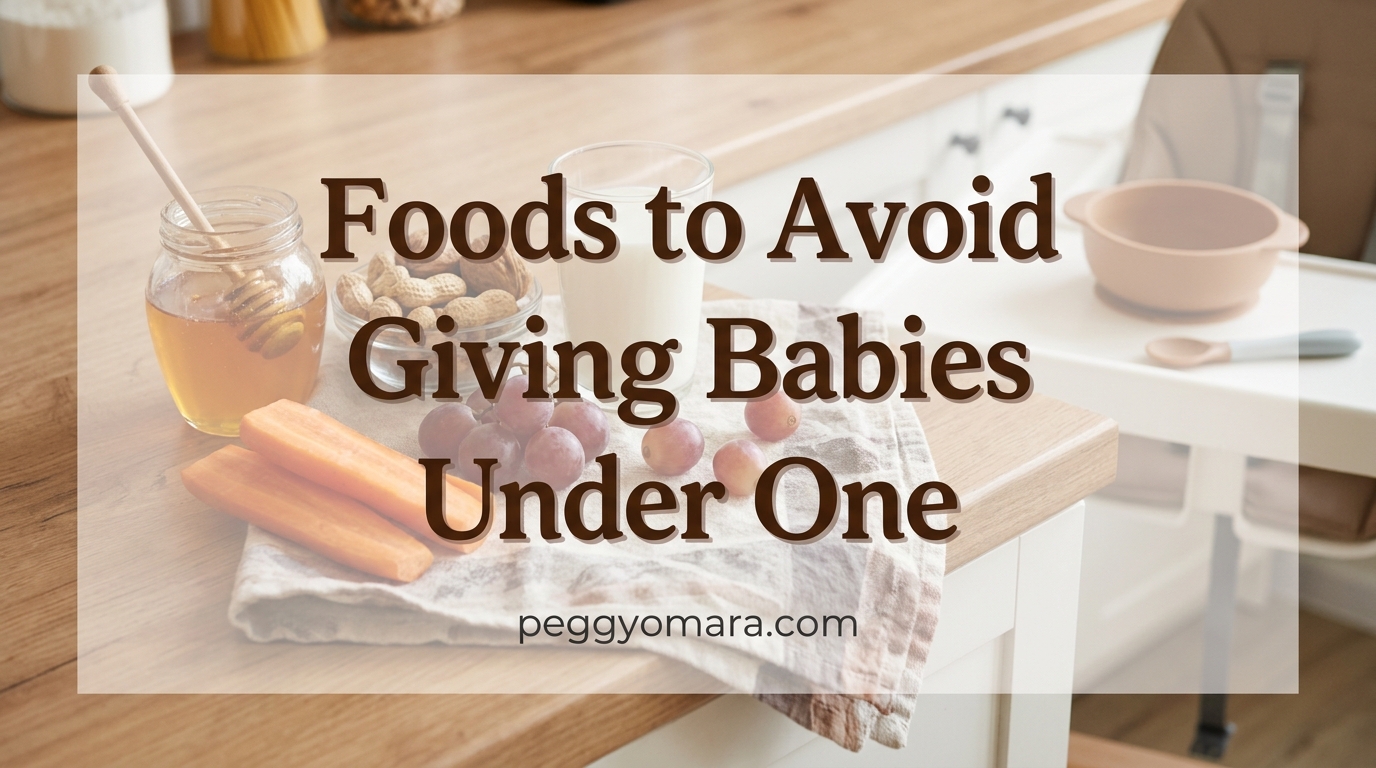
The first year of your baby’s life is filled with incredible milestones. Watching them discover the world of solid foods is one of the most exciting—and nerve-wracking—experiences for new parents.
I remember the anxiety I felt when my daughter started showing interest in my meals. Every bite she reached for made me pause and wonder: is this safe for her? Healthy nutrition habits start early, and the foundation we lay during our baby’s first year affects their health for decades.
Your baby’s body is still developing systems to process certain foods. Their kidneys are immature. Their digestive tract lacks the bacterial protection older children have. Their airways are narrow. Understanding which foods to avoid giving babies under one isn’t about being overly cautious—it’s about protecting them during a vulnerable developmental window.
In this guide, we’ll walk through every food and drink you need to avoid before your baby turns one. We’ll also cover what to do if an accidental slip-up happens, because every parent makes mistakes, and you deserve reassurance without judgment. From preconception through your baby’s first year, making informed choices helps you feel confident as a parent.
Table of Contents
Quick Reference: Foods to Avoid for Babies Under 1 (2026)
The NHS currently holds the featured snippet for this query with a simple bulleted list. Here’s our comprehensive quick reference guide you can bookmark or print:
Never give before 12 months:
- Honey (including baked goods containing honey)
- Cow’s milk as a main drink (small amounts in cooking are okay)
- Added sugar or sugary treats
- Excess salt or salty foods
- High-mercury fish (shark, swordfish, marlin, king mackerel, tilefish, orange roughy)
- Unpasteurized dairy products and juices
- Caffeine (coffee, tea, energy drinks, cola, chocolate)
Choking hazards to avoid or prepare safely:
- Whole nuts and peanuts
- Popcorn
- Hard candy or cough drops
- Whole grapes (quarter them lengthwise instead)
- Chunks of meat or cheese
- Raw vegetables (cook until soft)
- Hot dogs (cut into strips, not coins)
Limit significantly:
- Fruit juice (avoid entirely before 12 months if possible)
- Rice drinks (arsenic concerns)
- Soft unpasteurized cheeses
Keep this list handy when grocery shopping or dining out. Many parents screenshot it for quick reference.
Foods to Never Give Before 12 Months
Some foods pose immediate and serious risks to babies under one. These aren’t guidelines to bend or follow loosely—they are hard rules backed by pediatric and public health organizations worldwide.
Honey and Infant Botulism Risk
Honey is the most dangerous food you can give a baby under 12 months. Even a tiny taste can cause infant botulism, a rare but potentially fatal illness.
Here’s the science: Honey can contain spores of Clostridium botulinum bacteria. These spores are harmless to older children and adults because our mature digestive systems prevent them from growing. But babies under one lack sufficient stomach acid and beneficial gut bacteria to keep these spores in check. When the spores germinate in an infant’s immature intestines, they produce a toxin that causes paralysis.
Symptoms of infant botulism include constipation, poor feeding, lethargy, weak cry, drooping eyelids, and progressive muscle weakness. The illness can lead to respiratory failure and requires hospitalization, sometimes including mechanical ventilation. The good news: with proper medical care, most infants recover fully.
Common misconception busted: Many parents wonder if cooking or baking with honey makes it safe. The answer is absolutely not. Botulism spores are remarkably heat-resistant. Baking honey into bread, muffins, or cereal does not destroy them. Any food containing honey—including Honey Nut Cheerios, honey graham crackers, and honey-sweetened teething biscuits—is off-limits until your baby turns one.
Hidden sources of honey to watch for:
- Bread and rolls (honey wheat varieties)
- Cereals and granola
- Graham crackers and teething biscuits
- Barbecue sauce and glazes
- Flavored yogurt
- Cough syrups and throat lozenges marketed for children
Always read ingredient labels carefully. Honey appears in unexpected places. If you’re making your own baby food at home, use maple syrup, mashed banana, or applesauce for sweetness instead.
Cow’s Milk as Main Drink
Your baby needs breast milk or infant formula exclusively for the first 12 months of life. Cow’s milk should not replace these as the main drink before your baby turns one.
The reasons are threefold. First, cow’s milk is too high in protein and minerals for immature kidneys to process safely. An infant’s kidneys cannot concentrate urine effectively, and the renal solute load from cow’s milk can cause damage over time.
Second, cow’s milk is low in iron. Babies are born with iron stores that begin depleting around 6 months. Relying on cow’s milk instead of breast milk, formula, or iron-fortified foods can lead to iron-deficiency anemia, which affects brain development.
Third, the proteins in cow’s milk are harder for infants to digest and may cause microscopic intestinal bleeding. This bleeding, though invisible, contributes to iron deficiency.
Important distinction: Small amounts of cow’s milk used in cooking—mixed into mashed potatoes, added to sauces, or used in baking—are generally considered safe for babies over 6 months. The restriction applies to giving cow’s milk as a primary beverage.
Added Sugars and Sweet Treats
Babies do not need added sugar in their diet. Not a single gram. Their growing bodies require nutrient-dense foods, and sugar provides empty calories that displace the vitamins and minerals they need.
The American Academy of Pediatrics recommends no added sugar for children under 2 years. This includes table sugar, brown sugar, corn syrup, high-fructose corn syrup, and all other caloric sweeteners.
Sugar consumption in infancy is linked to several concerns. It contributes to tooth decay, even before teeth fully emerge. It establishes taste preferences that can last a lifetime, making children more likely to reject plain foods in favor of sweetened alternatives. Emerging research also suggests early sugar exposure may influence metabolism and increase obesity risk.
Watch for these hidden sugar names on labels:
- Corn syrup, high-fructose corn syrup
- Dextrose, fructose, glucose, maltose, sucrose
- Fruit juice concentrates (yes, these count as added sugar)
- Honey and molasses (also unsafe for other reasons)
- Cane sugar, evaporated cane juice
Many commercial baby foods, particularly fruit and yogurt pouches, contain surprising amounts of added sugar. Choose plain, single-ingredient options and add your own fruit for sweetness.
Excess Salt and Sodium
Babies’ kidneys are not mature enough to handle large amounts of sodium. Before age one, babies need less than 1 gram of salt per day (0.4 grams of sodium). They naturally get this from breast milk or formula without any added salt.
Processed and packaged foods are the biggest culprits for excess sodium. A single serving of commercial baby dinner or snack crackers can contain a significant portion of your baby’s daily sodium limit.
Too much salt puts strain on immature kidneys and may establish preferences for salty foods. It can also contribute to dehydration. When cooking for your baby, use herbs, spices, garlic, and lemon instead of salt for flavor.
High-sodium foods to avoid:
- Processed meats (bacon, hot dogs, sausage, deli meats)
- Commercial baby dinners and meals
- Crackers and savory snacks
- Stock cubes and gravy
- Restaurant meals (typically very high in sodium)
High-Mercury Fish
Fish provides excellent nutrition for babies—protein, omega-3 fatty acids, and minerals. But some fish contain high levels of mercury, which damages developing brains and nervous systems.
Mercury bioaccumulates in large predatory fish. The bigger and older the fish, the more mercury it contains. When babies consume high-mercury fish, the metal crosses the blood-brain barrier and interferes with neurological development.
Never give these high-mercury fish to babies:
- Shark
- Swordfish
- Marlin
- King mackerel
- Tilefish
- Orange roughy
- Bigeye tuna (found in some sushi)
Safe fish options for babies include:
- Salmon
- Cod
- Haddock
- Pollock
- Tilapia
- Light canned tuna (limit to 1-2 times per week)
- Sardines
When introducing fish, start with small amounts and watch for allergic reactions. Offer one new fish at a time, waiting 3-5 days before introducing another potential allergen.
Unpasteurized Foods and Drinks
Pasteurization heats foods to kill harmful bacteria. Unpasteurized (raw) products pose serious foodborne illness risks, particularly to babies with immature immune systems.
Never give your baby unpasteurized milk, cheese, juice, or cider. Soft cheeses made from unpasteurized milk—including brie, camembert, blue cheese, and queso fresco—can harbor Listeria bacteria that cause severe illness or death in infants.
When shopping, check labels for the word “pasteurized.” If eating out or traveling abroad, ask about pasteurization status. In some countries, unpasteurized products are common and considered traditional.
Caffeine and Stimulants
Babies cannot process caffeine efficiently. It stays in their systems much longer than in adults and can cause irritability, sleep disturbances, and increased heart rate.
Avoid giving your baby any foods or drinks containing caffeine. This includes:
- Chocolate and cocoa products
- Tea (including some herbal teas that contain caffeine)
- Coffee and coffee-flavored foods
- Energy drinks
- Cola and other caffeinated sodas
Even small amounts of chocolate given as a “treat” can affect your baby’s sleep and mood. Wait until after age one, and even then, limit chocolate due to sugar content.
Choking Hazards Every Parent Must Know (2026)
Choking is a leading cause of injury and death in children under three. Babies’ airways are approximately the width of a drinking straw. Foods that are hard, round, sticky, or the size of the airway can completely block breathing within minutes.
Never give these choking hazards to babies under one:
Whole nuts and peanuts: Hard, round, and perfectly sized to lodge in a baby’s airway. Instead, offer smooth nut butters thinned with breast milk, formula, or water. Spread thinly on soft bread or offer from a spoon.
Popcorn: The hulls can stick to airways, and unpopped kernels are hard and round. Save popcorn for older children who can chew thoroughly.
Hard candy and cough drops: These are choking hazards and contain sugar babies don’t need. Never give hard candy to babies, even as a “treat” or to soothe teething.
Whole grapes: Grapes are the perfect size and shape to block a baby’s airway completely. Always quarter grapes lengthwise, then cut each quarter in half for babies under two. Cherry tomatoes pose the same risk—quarter them lengthwise.
Chunks of meat or cheese: Cut meats and cheeses into thin strips baby can gum, not cubes they could swallow whole. Matchstick-sized pieces are safest.
Raw vegetables: Raw carrots, celery, and apple slices are too hard for babies without molars. Cook vegetables until soft enough to mash with a fork. Grate raw apples or cook until soft.
Hot dogs: The cylindrical shape matches a child’s airway exactly. If offering hot dogs, remove the peel and cut lengthwise into thin strips, not coin-shaped rounds.
Marshmallows: Sticky and expandable, marshmallows can conform to and block airways. Avoid entirely.
Chewing gum: Babies cannot understand the concept of chewing without swallowing. Gum presents a serious choking risk and should never be given.
Always supervise your baby during meals. Sit them upright in a high chair, not reclined in a stroller or car seat. Learn infant CPR and choking rescue procedures—every parent and caregiver should know these skills.
What to Do If Your Baby Accidentally Eats a Forbidden Food?
Mistakes happen. Every parent has a story about the moment they turned their back and found their baby with something they shouldn’t have. If your baby accidentally consumes a forbidden food, here’s how to respond calmly and appropriately.
If your baby ate honey:
First, don’t panic. While infant botulism is serious, it is also rare. Between 2001 and 2021, an average of 18 cases per year were reported in the United States from all causes, not just honey.
Watch your baby closely for constipation, poor feeding, excessive drooling, weak cry, or unusual lethargy. These symptoms typically appear 12-36 hours after exposure but can take up to 14 days.
If your baby shows any symptoms, seek emergency medical care immediately. Tell healthcare providers exactly when and how much honey was consumed. There is an antitoxin available that, when given early, significantly improves outcomes.
If your baby appears completely normal, continue normal activities but remain vigilant. The vast majority of babies who eat honey will be fine. Call your pediatrician for reassurance if needed—they’d rather hear from you than have you worry alone.
If your baby drank cow’s milk:
A small sip of cow’s milk is unlikely to cause harm. A full bottle is more concerning but still rarely causes serious problems in a single instance. Watch for signs of an allergic reaction (hives, vomiting, difficulty breathing) or digestive upset.
Contact your pediatrician if your baby consumed a large amount, shows symptoms, or has a known milk protein sensitivity. Otherwise, return to breast milk or formula and avoid repeating the mistake.
If your baby is choking:
Signs of choking include inability to cry or make sounds, weak or ineffective cough, high-pitched noises while inhaling, blue lips or skin, or loss of consciousness.
For babies under one who are choking: sit down and lay your baby face-down along your forearm, supporting their head. Give up to five firm back blows between the shoulder blades with the heel of your hand. If the object doesn’t dislodge, turn your baby face-up, support the head, and give up to five chest thrusts using two fingers in the center of the chest. Alternate back blows and chest thrusts until the object comes out or your baby becomes unresponsive.
If your baby becomes unresponsive, call 911 immediately and begin infant CPR. Take an infant CPR class before your baby starts solids—it’s a skill every parent should have.
If your baby ate something with excess salt or sugar:
A single exposure to salt or sugar won’t cause lasting harm. Offer extra breast milk or formula to help dilute excess sodium. Return to healthy feeding practices at the next meal without guilt.
Remember: one mistake does not make you a bad parent. Babies are resilient, and you are learning. Use accidents as motivation to double-check labels and communicate clearly with caregivers.
Handling Family Pressure About Forbidden Foods
One of the hardest parts of enforcing food safety rules isn’t knowing what to avoid—it’s handling well-meaning relatives who disagree with your choices. Grandparents, in particular, may dismiss modern guidelines, insisting they gave you honey and you turned out fine.
These conversations require balancing respect for elders with protection for your baby. Here are strategies that work:
Lead with medical authority: Rather than making it about your opinion, cite pediatrician recommendations, CDC guidelines, or AAP statements. “The pediatrician was very clear that no honey is allowed before one” carries more weight than “I don’t think babies should have honey.”
Explain the why: Many relatives comply more readily when they understand the reason. Explain that honey can cause paralysis in babies, that cow’s milk damages kidneys, or that choking happens silently and quickly. Facts often overcome resistance better than rules.
Address the “you turned out fine” argument: Acknowledge their experience while explaining that guidelines change based on new research. Infant botulism was less understood decades ago. Some babies did get sick—we just didn’t connect it to honey at the time. Today we know better, so we do better.
Set boundaries firmly but kindly: If a relative continues to push after education, become direct: “I know you want to give her a treat, but I’m not willing to risk her health. Please respect our decision.” Your baby’s safety matters more than avoiding temporary awkwardness.
Provide alternatives: Give relatives approved ways to bond with your baby through food. They can offer banana slices, cooked sweet potato, or small bits of cheese (if baby is over 6 months). Having a list of “grandparent-approved” snacks reduces the temptation to sneak forbidden foods.
Consider supervision levels: If a caregiver repeatedly disregards your rules, you may need to limit unsupervised time with your baby. This is a last resort, but your child’s safety is non-negotiable.
Frequently Asked Questions
What foods can’t babies under 1 have?
Babies under 1 should never have honey (botulism risk), cow’s milk as a main drink, added sugars, excess salt, high-mercury fish (shark, swordfish, marlin, king mackerel, tilefish), unpasteurized foods, or caffeine. They should also avoid choking hazards including whole nuts, popcorn, hard candy, whole grapes, and raw vegetables.
What is the 3 6 9 rule for babies?
The 3 6 9 rule refers to feeding milestones: at 3 months babies typically take 3-4 ounces per feeding, at 6 months most babies start solids with single-ingredient purees, and at 9 months many babies advance to soft finger foods and mashed textures. However, every baby develops at their own pace.
Does cooking honey kill botulism spores?
No, cooking or baking with honey does NOT kill botulism spores. The spores are highly heat-resistant and survive baking temperatures. Foods made with honey—including honey wheat bread, muffins, cereals, and Honey Nut Cheerios—are unsafe for babies under 12 months even after cooking.
Can I give my 11-month-old just a taste of honey?
No, even a small taste of honey is not safe for babies under 12 months. Botulism spores can cause illness with minimal exposure. Wait until your baby’s first birthday to introduce honey in any amount.
My baby accidentally ate honey. What should I do?
Watch for symptoms of infant botulism including constipation, poor feeding, weak cry, lethargy, and drooping eyelids for up to 14 days. Symptoms typically appear within 12-36 hours. If any develop, seek emergency care immediately. Most babies who eat honey will be fine, but vigilance is important.
Why can’t babies under 1 have cow’s milk?
Cow’s milk is too high in protein and minerals for babies’ immature kidneys to process. It lacks sufficient iron and may cause microscopic intestinal bleeding. Babies need breast milk or formula exclusively for the first 12 months for proper growth and development.
Can babies have juice before 1?
It’s best to avoid juice entirely before 12 months. The American Academy of Pediatrics recommends no juice for babies under 1 because it offers no nutritional benefit, contributes to tooth decay, and may replace more nutritious breast milk or formula. After 1, limit to small amounts of 100% fruit juice.
When can babies have peanut butter?
Most babies can have smooth peanut butter starting around 6 months after other solids are tolerated. Use thin layers spread on soft bread or dilute with breast milk or water to prevent choking. Avoid chunky peanut butter until age 4 due to choking risk from peanut pieces.
Conclusion: You Can Do This
The list of foods to avoid giving babies under one may seem overwhelming at first. Honey, cow’s milk, added sugars, excess salt, choking hazards—it is a lot to remember when you’re already sleep-deprived and adjusting to parenthood.
But here’s what I want you to remember: you are not expected to be perfect. You are expected to be informed and to try your best. Every parent makes mistakes. Every baby eventually eats something they shouldn’t. What matters is that you understand the risks, take them seriously, and keep learning.
The first year passes quickly. Before you know it, your baby will be blowing out that first birthday candle and tasting their first bite of honey-sweetened cake. Until then, the restrictions exist to protect them during a brief but vulnerable window of development.
Bookmark this guide. Reference it when grocery shopping. Share it with grandparents and caregivers. And when you feel anxious about whether you’re doing everything right, remind yourself that caring enough to read this article already makes you a good parent.
Your baby is lucky to have someone watching out for them. Trust your instincts, follow the guidelines, and enjoy this precious first year of discovery—one safe bite at a time.