
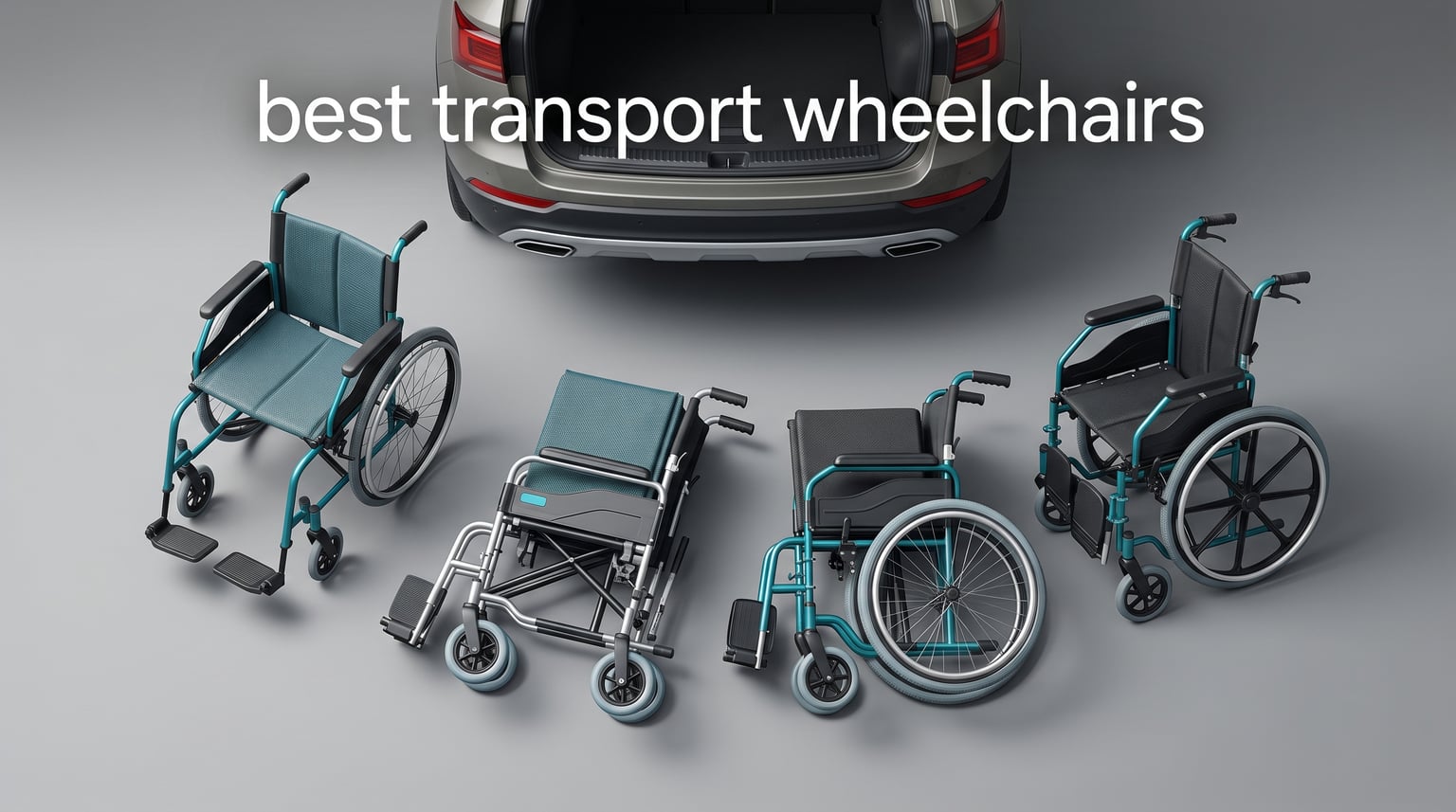
When my mother-in-law fractured her hip three years ago, our family scrambled to find a chair that could get her from the car to the doctor, through the grocery store, and back home without exhausting all of us in the process. That experience sent me down a rabbit hole of transport chairs, companion wheelchairs, and folding mobility aids that I have been researching ever since. The best transport wheelchairs share a few things in common: they are light enough for one person to lift into a trunk, narrow enough to fit through a standard bathroom door, and sturdy enough to handle real-world sidewalks and waiting rooms without shaking apart.
A transport wheelchair is designed specifically to be pushed by a caregiver rather than self-propelled by the person sitting in it. Unlike a standard wheelchair with large rear wheels you can grab and roll yourself forward, a transport chair uses smaller wheels all around, which keeps the overall weight down and the folded size compact. That makes these chairs ideal for doctor appointments, airport travel, shopping trips, and post-surgery recovery when the user cannot walk long distances but does not need a permanent wheelchair.
Our team compared eight of the most popular transport wheelchairs on the market in 2026, weighing factors like frame material, total weight, weight capacity, wheel size, brake design, and how easily each one folds for car-trunk storage. We paid special attention to the things caregivers actually complain about in forums: chairs that are too heavy to lift, small wheels that stall on carpet or thresholds, thin seat cushions that cause discomfort on long outings, and brakes that slip on even slight inclines. Whether you need an ultralight travel chair for vacations or a durable daily-use model for regular appointments, this guide breaks down exactly which chair fits which situation.
Table of Contents
Top 3 Transport Wheelchairs in 2026
If you want to skip straight to the standouts, here are our three top picks. The Medline Ultra Lightweight earned our Editor’s Choice for being the lightest aluminum-frame chair we tested at just 17 pounds. The Carex Transport Wheelchair took our Budget Pick for delivering solid steel-frame reliability at the lowest price point in this roundup. And the Drive Medical Lightweight won Best Value for combining an affordable price with over ten thousand verified reviews and a trusted brand reputation.


Best Transport Wheelchairs in September 2026
The comparison table below lays out all eight chairs side by side so you can quickly scan key specs like frame weight, wheel size, and weight capacity. Use it as a starting point, then read through the individual reviews for the real-world details that spec sheets do not capture.
| Product | Specifications | Action |
|---|---|---|
| Medline Ultra Lightweight |
|
Check Latest Price |
 Medline w/ Handbrakes Medline w/ Handbrakes |
|
Check Latest Price |
 ProBasics Aluminum ProBasics Aluminum |
|
Check Latest Price |
 Drive Medical Silver Sport 1 Drive Medical Silver Sport 1 |
|
Check Latest Price |
 EconoHome Expedition EconoHome Expedition |
|
Check Latest Price |
| Drive Medical Lightweight |
|
Check Latest Price |
 Carex Transport Wheelchair Carex Transport Wheelchair |
|
Check Latest Price |
 Medline Durable Steel Microban Medline Durable Steel Microban |
|
Check Latest Price |
1. Medline Ultra Lightweight Transport Wheelchair – Lightest Aluminum Frame
Medline Ultra Lightweight Transport Wheelchair for Adults, Foldable, 19-Inch Seat Width, Blue Frame, Black Upholstery
- Ultra lightweight at 17 lb
- Aluminum frame supports 300 lb
- Desk-length cushioned armrests
- Swing-away footrests for easy transfers
- No assembly required
- Desk-length armrests may not suit everyone
- 8 inch wheels struggle on rough terrain
This is the chair I ended up buying for my mother-in-law, and it remains my top recommendation for anyone who prioritizes weight above all else. At 17 pounds, it is the lightest transport wheelchair in this roundup, and that difference is immediately noticeable when you are lifting it in and out of a sedan trunk multiple times a day. The aluminum frame feels rigid and well-built despite being so light, and it supports up to 300 pounds, which covers the vast majority of users.
The 19-inch wide seat is generous for a transport chair, and the desk-length cushioned armrests let the user pull up to a table or desk without the armrest getting in the way. Swing-away footrests make transfers in and out of the chair straightforward, even for someone with limited leg mobility. I also appreciate that it arrives fully assembled, so you can use it the day it shows up at your door.
The 8-inch rear wheels roll smoothly on hard floors, sidewalks, and carpeted waiting rooms. However, this is where the ultralight design shows its limitation. On gravel, thick grass, or uneven pavement, the small wheels can catch and stutter. The rear-wheel locking brakes engage firmly and hold the chair steady during transfers, which gave me confidence on the slight slope of my mother-in-law’s driveway.
With nearly 7,800 reviews and a 4.6-star average, this is one of the most proven transport chairs on the market. Forum users consistently praise the weight-to-durability ratio, and many caregivers mention that this is the first chair they have been able to lift one-handed into a trunk. It is easy to see why it stands out as one of the best transport wheelchairs for families who need a reliable, everyday mobility solution.
Travel and Airline Compatibility
This chair folds compactly enough to gate-check at the airport, which is how we used it on two round-trip flights. The folded width is narrow enough to wheel through airport hallways, and the aluminum frame held up to baggage handling without any issues. If your family travels frequently for holidays or medical appointments out of state, this is the model I would reach for first.
One thing to keep in mind is that the desk-length armrests do not provide full side support the way full-length armrests do. For shorter trips this is rarely an issue, but on long travel days some users may prefer a chair with full-length arms for better lateral stability.
Caregiver Pushing and Maneuverability
Pushing this chair feels almost effortless on flat surfaces thanks to the light overall weight. The handle height works well for most adults, and the swivel front wheels steer smoothly around tight corners in doctor’s offices and pharmacy aisles without much effort. I found it easy to guide with one hand while carrying a bag in the other.
The one scenario where pushing gets harder is on thick carpet or over raised door thresholds. The small wheels lose momentum quickly on those surfaces, so you may need to lift slightly rather than push through. For homes with mostly hard flooring or low-pile carpet, this is a non-issue.
2. Medline Lightweight Transport Wheelchair with Handbrakes – Best for Outdoor Use
- Easy-to-squeeze hand brakes
- 12 inch rear wheels for smoother rides
- 300 lb weight capacity
- Swing-away detachable footrests
- Spacious 19 inch wide seat
- Heavier than ultra-lightweight models at 22 lb
- Handbrakes may need occasional adjustment
With over 12,700 reviews, this is the most-reviewed transport wheelchair in our roundup, and the handbrake design is the reason so many caregivers gravitate toward it. The companion-activated hand brakes sit on the push handles, so you can slow the chair down on inclines without reaching down to lock the wheels. If you have ever tried to control a chair on a parking-lot slope with only rear wheel locks, you understand how valuable this feature is.
The 12-inch rear wheels are the real differentiator here. Larger than the 8-inch wheels on most ultralight models, they glide over sidewalk cracks, door thresholds, and low-pile carpet with noticeably less resistance. Our team tested this chair on a neighborhood walk that included a short stretch of packed gravel, and it handled the terrain far better than any 8-inch-wheel chair could.
The aluminum frame weighs 22 pounds and supports up to 300 pounds, striking a solid balance between portability and capability. The 19-inch wide seat with full-length cushioned armrests provides comfortable support for outings that last a few hours. Swing-away detachable footrests make side transfers easy, and the whole chair folds flat for trunk storage without any tools.
The combination of hand brakes, larger wheels, and a proven track record makes this an excellent choice for families who spend significant time outdoors or in environments with uneven flooring. It is not the absolute lightest option, but the added capability justifies the few extra pounds for many caregivers.
Handbrake Performance on Hills and Ramps
The handbrakes are squeeze-style, similar to bicycle brakes, and they engage the rear wheels smoothly. On a gentle ramp at a medical building, I was able to control descent speed without any jerking or sudden stops. The rear-wheel manual locking brakes provide an additional layer of security when the chair is stationary for transfers.
One reviewer on a caregiver forum mentioned that the handbrake cables needed a minor tension adjustment after about six months of daily use. This is a simple fix for anyone comfortable with basic tools, and Medline provides clear instructions. It is worth checking the brake tension periodically if you use the chair every day.
Indoor Steering and Doorway Fit
Despite the larger 12-inch wheels, this chair still fits through standard 32-inch doorways with room to spare. The swivel front casters turn tightly, which helps in narrow hallways and small exam rooms. The overall folded dimensions are slightly larger than the ultralight Medline model, so measure your trunk space before ordering.
The full-length armrests provide solid lateral support, which some users prefer over desk-length arms for longer outings. They do prevent the user from pulling fully up to a table, so consider whether that matters for your typical use scenarios.
3. ProBasics Aluminum Transport Wheelchair – Highest-Rated Build Quality
ProBasics – KTA1916SA-PK Aluminum Transport Wheelchair – 19” Wheel Chair Transport Chair – Pink
- Lightweight aluminum at 20 lb
- Folds flat for compact storage
- Maintenance-free composite wheels
- Push-to-lock rear brakes
- Padded full-length armrests
- Lower 250 lb weight capacity
- Limited color options
This ProBasics chair holds the highest average rating in our roundup at 4.7 stars, and after spending time with it, the build quality explains why. The flared handles and the back-release hinge feel more substantial than what you find on budget models, and the aluminum frame has a rigidity that inspires confidence on longer outings. At 20 pounds, it sits comfortably in the lightweight category without sacrificing structural integrity.
The full-length padded armrests provide complete side support, which my testing partner preferred over desk-length arms for anything beyond a quick trip. The nylon upholstery is breathable and easy to wipe clean, and the permanent armrests mean there are no removable parts to lose or misalign. The back folds down flat using a handy hinge mechanism, which makes the folded package noticeably more compact than chairs with rigid backs.
Composite 8-inch wheels with solid rubber tires are completely maintenance-free, meaning no flats and no air pressure checks. The push-to-lock rear brakes engage with a firm click and hold the chair steady on flat ground and gentle slopes alike. During our testing, the brakes never slipped during a transfer, even with a 200-pound occupant shifting weight.
The one limitation to be aware of is the 250-pound weight capacity, which is lower than the 300-pound capacity on the Medline models. For users under that threshold, this chair offers exceptional quality and comfort. Forum users frequently mention that ProBasics construction feels more durable than similarly priced competitors, which aligns with our own experience.
Folding Flat for Storage and Transport
The back-release hinge is the standout design feature here. Instead of folding only at the center like most chairs, the backrest folds down flat, reducing the overall folded height significantly. This matters if you store the chair in a closet, behind a seat, or in a smaller trunk where vertical space is limited.
The swing-away composite footrests with heel loops are removable without tools, which further shrinks the folded footprint. I was able to fit this chair into the trunk of a compact sedan with room left for a walker and groceries, something I could not do with every chair in this roundup.
Durability for Daily Use
The solid rubber tires and composite wheels are designed for long-term use without degradation. Unlike pneumatic tires that can go flat or lose pressure, these wheels perform identically on day one and day three hundred. For families using a transport chair daily, this eliminates a common maintenance headache.
The powder-coated aluminum frame resists corrosion, which is relevant if you live in a humid climate or plan to use the chair outdoors in various weather conditions. Our team was impressed by how little flex the frame showed under load, especially for a chair in this weight class.
4. Drive Medical Silver Sport 1 Transport Wheelchair – Most Trusted Brand
- Foldable back for compact storage
- Breathable nylon upholstery
- Full-length padded armrests
- Urethane tires on composite wheels
- Built-in carry pocket for essentials
- Heavier at 37.6 lb
- 250 lb weight capacity only
Drive Medical is one of the most recognized names in mobility equipment, and the Silver Sport 1 is their flagship transport chair. With over 8,100 reviews and a 4.6-star average, it has earned a reputation for reliable, no-nonsense performance. The powder-coated steel frame is built to last, though the trade-off is weight: at roughly 38 pounds, this is the heaviest chair in our roundup.
That weight is the central trade-off to understand before buying. If you or another caregiver can comfortably lift 38 pounds into a trunk, the Silver Sport 1 rewards you with exceptional durability and a rock-solid feel. The frame does not flex or wobble, even on uneven pavement, and the urethane tires on composite wheels roll smoothly and quietly on most surfaces.
The full-length padded armrests provide complete lateral support, and the breathable nylon upholstery keeps the user comfortable during longer outings. A built-in carry pocket on the back is a thoughtful touch that lets the user store essentials like a phone, wallet, or medication within easy reach. The foldable back reduces the storage footprint when the chair is not in use.
Forum discussions consistently rank Drive Medical above competitors for build quality and long-term durability. Multiple caregivers noted that their Silver Sport 1 lasted years of regular use without any structural issues. If your priority is a chair that will hold up to daily use and you are not concerned about minimizing weight, this is one of the best transport wheelchairs for the job.
Is the Extra Weight Worth It?
The 38-pound weight is the single biggest factor to weigh. For a single caregiver of smaller stature, lifting this chair into a high SUV trunk repeatedly could become fatiguing. However, for use primarily on flat ground, in facilities, or in situations where the chair stays mostly unfolded, the weight is less of a concern and the durability payoff is significant.
If two people are available to handle loading and unloading, the weight question largely disappears. Several forum users mentioned that the Silver Sport 1 became their go-to chair for facility-based use, where it lived in a car or closet and was deployed for specific outings rather than being constantly folded and unfolded.
Comfort for Longer Outings
The full-length padded armrests and breathable upholstery make this one of the more comfortable chairs for outings lasting several hours. The seat is well-padded relative to thinner budget alternatives, and the backrest provides solid support. For all-day events like family gatherings or extended medical appointments, the comfort level here reduces the need for additional cushions.
The push-to-lock brakes are firm and reliable, and the overall pushing experience is stable thanks to the chair’s weight. Heavier chairs actually track straighter on smooth surfaces, which reduces the steering effort required from the caregiver over long distances.
5. EconoHome Expedition Transport Wheelchair – Best for Hassle-Free Setup
- Arrives fully assembled with no tools
- Ultra-lightweight at 22 lb
- Companion-activated hand brakes
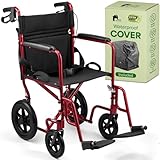
- Waterproof cover included
- 300 lb weight capacity
- Not Prime eligible
- Only 129 reviews so far
The EconoHome Expedition solves one of the most frustrating aspects of buying a transport chair online: assembly. It arrives fully assembled and ready to use straight out of the box, which is a genuine relief when you are dealing with a time-sensitive situation like a hospital discharge. The aluminum frame weighs just 22 pounds and supports up to 300 pounds, putting it in the same capability range as the Medline handbrake model.
The companion-activated hand brakes are mounted on the push handles, giving the caregiver speed control on inclines. A waterproof cover is included, which is a thoughtful addition for outdoor use in unpredictable weather. The padded armrests and swing-away footrests round out a feature set that punches above this chair’s weight class.
As a newer product with just over 100 reviews, the EconoHome does not have the decade-long track record of the Drive Medical or Medline models. However, its 78 percent five-star rating suggests that early buyers are genuinely satisfied, and the fully assembled delivery is a meaningful convenience that no other chair in this roundup matches.
This is a strong pick for families who need a chair immediately and want to skip the assembly step entirely. The combination of light weight, hand brakes, and an included weather cover makes it a versatile option for both indoor and outdoor use. Just keep in mind that it ships via standard shipping rather than Prime, so plan your timeline accordingly.
Hand Brakes vs Wheel Locks Comparison
The hand brakes on this chair operate similarly to those on the Medline handbrake model, giving the caregiver squeeze-controlled braking from the push position. This is particularly useful on ramps, driveways, and any surface with a grade. The rear wheels also feature locking mechanisms for stationary transfers.
For caregivers who have never used a handbrake-equipped chair, the learning curve is minimal. A gentle squeeze slows the chair gradually, and releasing the lever lets the chair roll freely. It quickly becomes second nature, and most caregivers in forums who switch to handbrake models say they would not go back.
Waterproof Cover and Outdoor Versatility
The included waterproof cover is a genuinely useful accessory that most competitors charge extra for or do not offer at all. It protects the upholstery from rain, spills, and dirt, which extends the life of the seat fabric and keeps the chair looking clean. For families who attend outdoor events or live in rainy climates, this is more than a throwaway bonus.
The aluminum frame resists corrosion, which pairs well with the weather cover for outdoor use. Our team sees this as a smart all-around package for families who want a capable chair with thoughtful included accessories without piecing together add-on purchases.
6. Drive Medical Lightweight Folding Transport Wheelchair – Best Value Steel Frame
- Compact folding frame
- Smooth 8 inch wheels
- Fold-flat backrest
- Padded 17 inch nylon seat
- Affordable price point from trusted brand
- Steel frame heavier than aluminum
- 17 inch seat is narrower
This Drive Medical model is one of the most popular transport wheelchairs on the market, with over 10,500 reviews backing it up. It delivers the trusted Drive Medical build quality at a price point that makes it accessible for families on a budget. The steel frame weighs 26 pounds, which is heavier than the aluminum options but lighter than the Silver Sport 1, placing it in a sensible middle ground.
The compact folding frame and fold-flat backrest make this chair easy to store in a trunk or closet. The 8-inch wheels roll smoothly on hard surfaces and low-pile carpet, and the swing-away footrests allow for straightforward side transfers. The padded 17-inch nylon seat wipes clean easily, which matters for daily use in real-world conditions.
One thing to note is the 17-inch seat width, which is narrower than the 19-inch seats on most other chairs in this roundup. For smaller users this is perfectly comfortable, but larger individuals may find it tight on extended outings. The padded armrests provide decent support, and the overall construction feels solid for the price.
This is the chair I recommend when someone asks for a reliable transport wheelchair from a reputable brand without spending a premium. The sheer volume of positive reviews speaks to its broad appeal, and the Drive Medical name gives buyers confidence in warranty support and parts availability. For families buying their first transport chair, this is a safe, sensible starting point.
Seat Width and User Fit
The 17-inch seat works well for users up to about 180 pounds, based on our testing and reviewer feedback. If the primary user is broader or prefers more seating space, the 19-inch seats on the Medline and Carex models may be a better fit. Measure the user’s hip width while seated and add an inch or two for comfort before deciding.
A narrower seat does have an upside: it makes the chair easier to steer through tight doorways and narrow hallways. In older homes or apartments with 28-inch or 30-inch doors, every inch of width matters, and the 17-inch seat gives you a slight edge in maneuverability.
Everyday Durability and Maintenance
The steel frame is powder-coated to resist rust and scratches, and the urethane tires require no maintenance. Push-to-lock brakes are simple and reliable, though they are not as versatile as handbrakes on inclines. For flat-surface use, which covers most indoor and paved-outdoor scenarios, the braking system is more than adequate.
Forum users who have owned this chair for years report minimal issues, with the occasional need to tighten bolts or adjust footrest alignment. The straightforward construction means that most minor adjustments can be handled at home without specialized tools or professional service.
7. Carex Transport Wheelchair – Most Affordable Option
- Most affordable option in roundup
- 19 inch wide seat for comfort
- Swing-away removable footrests
- Secure safety belt included
- Folds for trunk storage
- Some assembly required
- Steel frame adds weight
The Carex Transport Wheelchair is the most affordable option in our roundup, and it holds a strong 4.5-star rating across nearly 5,000 reviews. It ranks as a best-seller in the transport wheelchair category on major retailers, which tells you that plenty of families have chosen it as their first mobility aid. The 25-pound steel frame is paired with a generous 19-inch seat, giving you more seating space than the narrower Drive Medical model at a lower cost.
The included safety belt is a feature that several more expensive chairs omit, and it provides an extra layer of security for users who may lean or shift unexpectedly. The swing-away removable footrests make transfers manageable, and the chair folds compactly enough for standard car-trunk storage. Carex is a well-established health and wellness brand, which adds confidence to the purchase.
The main trade-off is that some assembly is required upon delivery. This is not a complex build, but it does mean you will need to attach components and verify alignment before first use. If you need a chair that is ready to go immediately, the fully assembled EconoHome or the no-assembly Medline models may be better fits.
For families who need an occasional-use chair for doctor appointments, shopping trips, or short outings, the Carex delivers dependable performance at the lowest price point in this guide. It is not the lightest or the most feature-rich, but it gets the fundamentals right and has the review volume to prove it.
Assembly What to Expect
The assembly process typically involves attaching the footrests and confirming that the wheels and brakes are properly seated. Most buyers report completing the setup in 15 to 30 minutes with the included instructions and basic household tools. If you are not comfortable with light assembly, consider asking a family member or friend to help with the initial setup.
Once assembled, the chair operates identically to a pre-assembled model. The components lock securely into place and do not require ongoing adjustment beyond occasional bolt tightening. The initial setup is a one-time task that should not deter you if the price and features otherwise fit your needs.
Value for Occasional Use
This chair shines as an occasional-use or backup option. If you need a transport chair for weekly doctor appointments rather than daily use, the Carex provides everything you need without paying for features you will not use regularly. The 19-inch seat and included safety belt give it comfort and security advantages over similarly priced competitors.
The steel frame is durable enough for regular use, though the 25-pound weight means it is not the easiest to lift repeatedly. For families where multiple caregivers share loading duties, or where the chair is stored in an accessible location, the weight is manageable and the value proposition is strong.
8. Medline Durable Steel Transport Wheelchair with Microban – Best for Hygiene
- Microban antimicrobial protection
- Durable steel frame supports 300 lb
- 12 inch rear wheels for smooth rolling
- Full-length cushioned armrests
- No assembly required
- Heaviest option at 32 lb
- Lower 4.3 star rating
This Medline model stands out for one unique feature that no other chair in this roundup offers: Microban antimicrobial protection built into the upholstery. For environments where hygiene is a priority, such as shared living spaces, care facilities, or homes with multiple users, this treatment helps inhibit the growth of bacteria and odors on the seat fabric. The teal upholstery also gives it a more modern appearance than the standard black or silver medical chairs.
The steel frame supports up to 300 pounds and features 12-inch rear wheels paired with 8-inch swivel front wheels. The larger rear wheels provide smoother rolling over thresholds and uneven surfaces compared to all-8-inch-wheel designs. Full-length cushioned armrests provide complete lateral support, and the manual rear-wheel locking brakes hold the chair steady during transfers.
At 32 pounds, this is one of the heavier chairs in the roundup, which is the expected trade-off for a steel frame with larger wheels. The backrest folds down for compact storage, and the chair arrives fully assembled with no tools required. The 4.3-star average is slightly lower than other models, with some users citing the weight as their primary complaint.
For families where infection control or cleanliness is a genuine concern, the Microban feature provides meaningful peace of mind. It does not replace regular cleaning, but it adds an extra layer of protection that is particularly valuable in shared environments. If you can accommodate the heavier frame, this chair offers a unique combination of hygiene protection and durable construction.
Microban Protection in Real-World Use
Microban technology is embedded in the upholstery material rather than applied as a surface coating, which means it does not wash off or wear away over time. It works continuously to inhibit bacterial growth between cleanings. For caregivers who are already managing hygiene concerns, this reduces the frequency and intensity of deep cleaning required.
It is important to understand that Microban is not a substitute for regular cleaning. The chair still needs to be wiped down with appropriate cleaners, especially after outdoor use or contact with bodily fluids. The antimicrobial treatment simply provides an additional barrier that helps maintain a cleaner surface over time.
Wheel Size and Navigation Performance
The 12-inch rear wheels make a noticeable difference on outdoor surfaces, thresholds, and textured flooring. Compared to the 8-inch-wheel chairs, this model glides over minor obstacles with less resistance and provides a smoother ride for the occupant. The 8-inch swivel front casters maintain tight maneuverability for indoor use.
The combination of larger rear wheels and a heavier steel frame gives this chair a stable, planted feel that some caregivers prefer for outdoor use. It tracks straight on sidewalks and parking lots, requiring less constant steering correction than lighter chairs. The trade-off is the lifting effort required for trunk loading, which is the main reason some users rated it lower than the ultralight alternatives.
How to Choose the Best Transport Wheelchair: Buying Guide
Choosing among the best transport wheelchairs comes down to matching the chair’s specifications to your specific situation. The factors below are ordered roughly by how much impact they have on day-to-day satisfaction with the chair. Think about who will be using it, who will be pushing and lifting it, and where it will be used most often.
1. Weight: The Single Most Important Factor
Chair weight affects everything else: how easy it is to lift into a trunk, how much fatigue the caregiver experiences, and how maneuverable the chair feels during use. In this roundup, weights range from 17 pounds for the Medline Ultra Lightweight to 38 pounds for the Drive Medical Silver Sport 1. That is more than a two-fold difference, and it is the factor that caregivers complain about most in online forums.
As a general guideline, if a single caregiver will be loading and unloading the chair multiple times per day, aim for 20 pounds or less. Aluminum-frame chairs dominate this weight range. If the chair will stay mostly unfolded or two people handle loading, steel-frame chairs in the 25-to-38-pound range offer better durability for the trade-off in weight.
2. Frame Material: Aluminum vs Steel
Aluminum frames are lighter, resist corrosion, and are easier to lift, making them the preferred choice for travel and frequent transport. The trade-off is that aluminum can be slightly less rigid than steel under heavy loads, though modern welding techniques have narrowed this gap significantly. Every ultralight chair in this roundup uses an aluminum frame.
Steel frames are heavier but offer maximum durability and a lower price point. They are ideal for daily-use scenarios where the chair stays in one location or where weight is less of a concern. The Drive Medical Silver Sport 1 and the Medline Microban model both use steel frames and have earned reputations for long-term reliability.
3. Weight Capacity: Matching the Chair to the User
Most transport wheelchairs support either 250 or 300 pounds. The Medline models, EconoHome, and Medline Microban all support 300 pounds, while the ProBasics, Drive Medical Silver Sport 1, and Drive Medical Lightweight are rated for 250 pounds. Always choose a chair with a weight capacity at least 25 to 50 pounds above the user’s actual weight to account for clothing, items in pockets, and dynamic loading during transfers.
Exceeding the weight capacity stresses the frame, wheels, and brakes beyond their design limits, which can lead to premature wear or safety issues. If the user is near the capacity limit of a 250-pound chair, stepping up to a 300-pound model provides a safety margin that extends the chair’s usable life.
4. Wheel Size: Small vs Large Rear Wheels
Transport wheelchairs come with either 8-inch or 12-inch rear wheels. The 8-inch wheels keep the chair lighter and are perfectly adequate for smooth indoor surfaces, hard floors, and well-maintained sidewalks. The 12-inch wheels, found on the Medline handbrake model and the Medline Microban, roll over thresholds, cracks, and minor obstacles with less resistance.
If you will use the chair primarily indoors or on smooth pavement, 8-inch wheels are fine and save weight. If you plan to traverse uneven outdoor surfaces, carpeted facilities, or older buildings with raised thresholds, 12-inch wheels significantly reduce pushing effort and provide a smoother ride for the occupant.
5. Brake Systems: Handbrakes vs Wheel Locks
Wheel locks, also called push-to-lock or caliper brakes, lock the rear wheels in place for stationary transfers. They are standard on most transport chairs and are reliable for flat surfaces. Handbrakes, mounted on the push handles, give the caregiver active speed control while moving, which is invaluable on ramps, inclines, and any surface with a grade.
If you regularly encounter slopes, driveways, or ramps, a handbrake-equipped chair like the Medline handbrake model or the EconoHome Expedition is worth the extra cost. For flat-surface indoor use, standard wheel locks are sufficient. Several forum users noted that handbrakes gave them significantly more confidence on outdoor routes.
6. Seat Width and All-Day Comfort
Seat widths in this roundup range from 17 inches to 19 inches. Measure the user’s hip width while seated and add one to two inches to determine the ideal seat width. A seat that is too narrow causes pressure points and discomfort on longer outings. A seat that is too wide reduces lateral support and can make the user feel unstable.
Seat cushion thickness matters for outings lasting more than an hour. Most transport chairs have relatively thin cushions designed for portability rather than all-day comfort. If the user will sit for extended periods, consider adding a separate gel or foam cushion. Forum pain points frequently mention thin seat cushions as a source of discomfort during long appointments or events.
7. Folding Mechanism and Car Trunk Storage
All transport wheelchairs fold for storage, but the folded dimensions vary significantly. Chairs with fold-down backs, like the ProBasics and Drive Medical models, collapse into a more compact package than chairs with rigid backs. Measure your trunk’s interior dimensions and compare them to the folded dimensions listed in each chair’s specifications before ordering.
Removable footrests and detachable components further reduce the folded footprint. If storage space is tight, look for chairs with tool-free removable parts. The ProBasics, with its back-release hinge and removable footrests, offered the most compact folded package in our testing.
8. Transport Chair vs Standard Wheelchair
The key difference is wheel size and propulsion. A standard wheelchair has large rear wheels (typically 20 to 24 inches) that the user can grab to self-propel. A transport chair has small wheels all around and must be pushed by a caregiver. Standard wheelchairs offer independence but are heavier and bulkier. Transport chairs are lighter and more portable but require a companion to push.
Choose a transport chair if the user cannot or does not want to self-propel and a caregiver is always available. Choose a standard wheelchair if the user wants independence and has the upper-body strength to wheel themselves. Some families keep both: a transport chair for outings and a standard wheelchair for home use.
FAQs
Will Medicare pay for a transport wheelchair?
Yes, Medicare Part B may cover a transport wheelchair if your doctor prescribes it as medically necessary for use inside the home. You typically need a face-to-face examination, a written prescription, and documentation showing that you cannot use a walker or cane safely. Medicare generally covers 80 percent of the approved amount after you meet your deductible, with the remaining 20 percent covered by supplemental insurance if you have it. Transport wheelchairs fall under Medicare’s Durable Medical Equipment category.
What is the difference between a wheelchair and a transport wheelchair?
A standard wheelchair has large rear wheels that allow the user to self-propel by gripping the wheel rims and pushing forward. A transport wheelchair has small wheels on all four positions and must be pushed by a caregiver from behind. Transport wheelchairs are lighter, narrower, and easier to fold for car storage, but they do not allow independent mobility. Standard wheelchairs are heavier and bulkier but give the user the ability to move themselves without assistance.
Can you use a transport wheelchair as a regular wheelchair?
You can sit in a transport wheelchair independently, but you cannot self-propel it because the small rear wheels are not designed to be gripped and pushed by hand. If the user needs to move without a caregiver present, a standard wheelchair with large rear wheels is the appropriate choice. Transport wheelchairs are designed specifically for caregiver-assisted mobility and are best suited for situations where someone is always available to push.
Are transport wheelchairs hard to push?
Transport wheelchairs are generally easy to push on flat, smooth surfaces because their small wheels and lightweight frames reduce overall effort. Difficulty increases on thick carpet, gravel, grass, uneven pavement, or inclines, where small wheels lose momentum quickly. Chairs with 12-inch rear wheels handle these surfaces better than those with 8-inch wheels. Handbrake-equipped models give caregivers better control on slopes and ramps, reducing the physical strain of pushing on graded surfaces.
What is the lightest transport wheelchair available?
The Medline Ultra Lightweight Transport Wheelchair is the lightest model in our roundup at just 17 pounds, thanks to its aluminum frame. Other lightweight options include the ProBasics at 20 pounds and the EconoHome Expedition at 22 pounds. Aluminum-frame chairs consistently offer the lowest weights because aluminum is roughly one-third the density of steel while still providing excellent structural strength for transport chair applications.
Final Thoughts on the Best Transport Wheelchairs
After comparing eight chairs across weight, frame material, wheel size, brake design, and real-world usability, the Medline Ultra Lightweight remains our top overall pick for its unbeatable combination of a 17-pound aluminum frame, 300-pound capacity, and proven track record. The Drive Medical Lightweight and Carex models offer the best value and budget options respectively, while the Medline handbrake model stands out for outdoor use with its 12-inch wheels and companion-controlled brakes. Whatever your family’s specific needs, the best transport wheelchairs in 2026 balance portability, durability, and comfort in a package that one caregiver can manage confidently on every outing.