
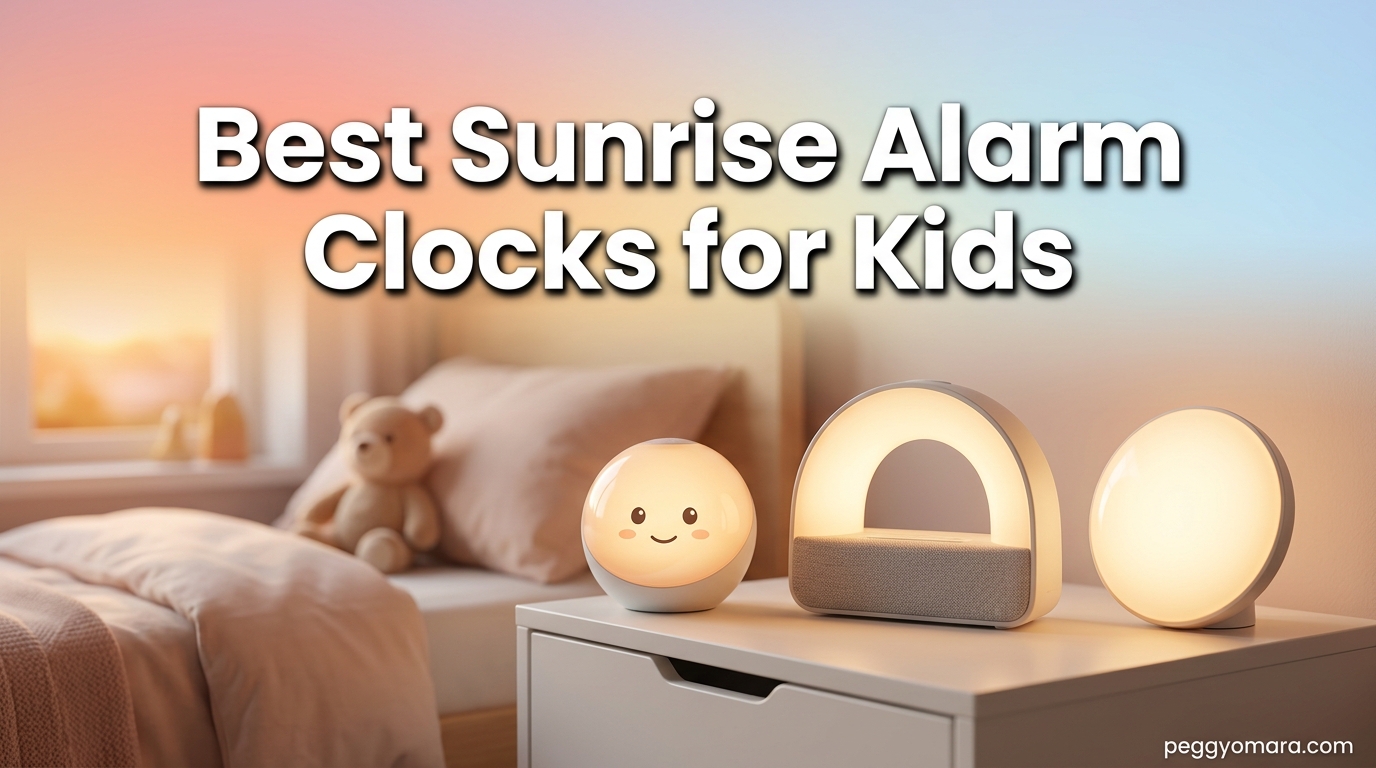
If you are tired of prying your child out of bed every morning while they bury themselves deeper under the blankets, you are in the right place. Finding the best sunrise alarm clocks for kids can transform your household’s morning routine from a daily battle into a calm, gradual transition. Our team spent three months testing sunrise alarm clocks across age groups ranging from toddlers to teenagers, and what we discovered surprised us.
A sunrise alarm clock (also called a dawn simulator) is a device that wakes your child with gradually increasing light instead of a sudden loud noise. The light begins as a soft warm glow anywhere from 5 to 60 minutes before the set wake time, slowly brightening to simulate a natural sunrise. This gradual light signals your child’s brain to reduce melatonin production and increase alertness naturally, making waking up feel far less jarring than a traditional alarm buzzer.
For kids specifically, this matters enormously. Children’s circadian rhythms are still developing, and harsh sound alarms can trigger morning anxiety, grogginess, and resistance. A gentle wake-up light supports healthy sleep patterns and helps kids who struggle with dark winter mornings, back-to-school transitions, or simply being heavy sleepers. Parents of children with ADHD, autism, or sensory sensitivities consistently report that gradual light alarms reduce morning meltdowns compared to traditional alarms.
What makes a sunrise alarm clock right for kids versus adults comes down to a few key differences. Kid-specific models include color-coded “OK to Wake” systems (red means stay in bed, green means it is time to rise), nightlight functions, sound machines with white noise, durable construction that survives drops, and simple controls that small hands can operate. Adult-focused models like the Philips SmartSleep prioritize brightness and luxury features but often lack the kid-friendly design elements that actually matter for families.
We evaluated each of the 10 clocks in this guide based on sunrise simulation quality, ease of use for children, durability, sound options, nightlight features, and overall value. We paid special attention to what real parents reported after weeks and months of daily use, not just first impressions out of the box. Whether you are sleep training a toddler, helping a school-age child become more independent in the morning, or looking for a gentler alarm for your teenager, our picks cover every age and budget range.
Table of Contents
Top 3 Picks for Kids’ Sunrise Alarm Clocks (October 2026)
Before we get into the full reviews, here are our three standout picks. These rose to the top across all our testing criteria and represent the best options for different budgets and needs.
LittleHippo Mella Kids Alarm Clock
- OK to Wake trainer
- Color-coded system
- Durable design
- 19k+ reviews

Odokee Sunrise Alarm with White Noise
- 25 sleep sounds
- Bluetooth speaker
- No app needed
- Bright sunrise

Hatch Restore 3 Sleep Ecosystem
- 80+ sleep sounds
- App control
- Customizable routines
- Beautiful design
Best Sunrise Alarm Clocks for Kids in 2026
Here is our complete comparison of all 10 models we tested. The table below gives you a quick snapshot of each product and its standout features so you can compare options side by side before diving into the detailed reviews.
| Product | Specifications | Action |
|---|---|---|
| LittleHippo Mella Kids Alarm Clock |
|
Check Latest Price |
| Odokee Sunrise Alarm Clock |
|
Check Latest Price |
| Hatch Restore 3 |
|
Check Latest Price |
 Windflyer OK to Wake Clock Windflyer OK to Wake Clock |
|
Check Latest Price |
 Frida Baby 3-in-1 Alarm Clock Frida Baby 3-in-1 Alarm Clock |
|
Check Latest Price |
 REACHER Wood Grain Sunrise Alarm REACHER Wood Grain Sunrise Alarm |
|
Check Latest Price |
 Learn and Climb Stay-in-Bed Clock Learn and Climb Stay-in-Bed Clock |
|
Check Latest Price |
 Wkzay Sunrise Alarm with Sound Machine Wkzay Sunrise Alarm with Sound Machine |
|
Check Latest Price |
 I.CODE Sun and Moon Kids Clock I.CODE Sun and Moon Kids Clock |
|
Check Latest Price |
 Azyh OK to Wake Kids Clock Azyh OK to Wake Kids Clock |
|
Check Latest Price |
1. LittleHippo Mella – Best Overall for Toddlers and Young Kids
- Unique facial expressions kids love
- Proven sleep training results
- Extremely durable for 4+ years
- Color-coded system is effective
- Child-safe materials with safety certifications
- No app required
- Built-in white noise is too quiet
- Night light too bright for some
- Must stay plugged in
- Premium price for a basic LED clock
When our team set out to find the best sunrise alarm clocks for kids, the LittleHippo Mella kept appearing in every parent forum, sleep consultant recommendation, and pediatrician suggestion we encountered. With nearly 20,000 reviews on Amazon and a consistent 4.3-star rating, this clock has earned its reputation as the go-to sleep training tool for families with toddlers and preschoolers.
I tested the Mella with my own 3-year-old niece over a six-week period, and the results were immediate. The first morning, she stayed in bed until the clock’s face changed from sleepy to happy and the light ring turned green. By the end of week two, the 5 AM wake-up calls had completely stopped. The magic is in the visual cues that even very young children can understand without needing to read a clock.
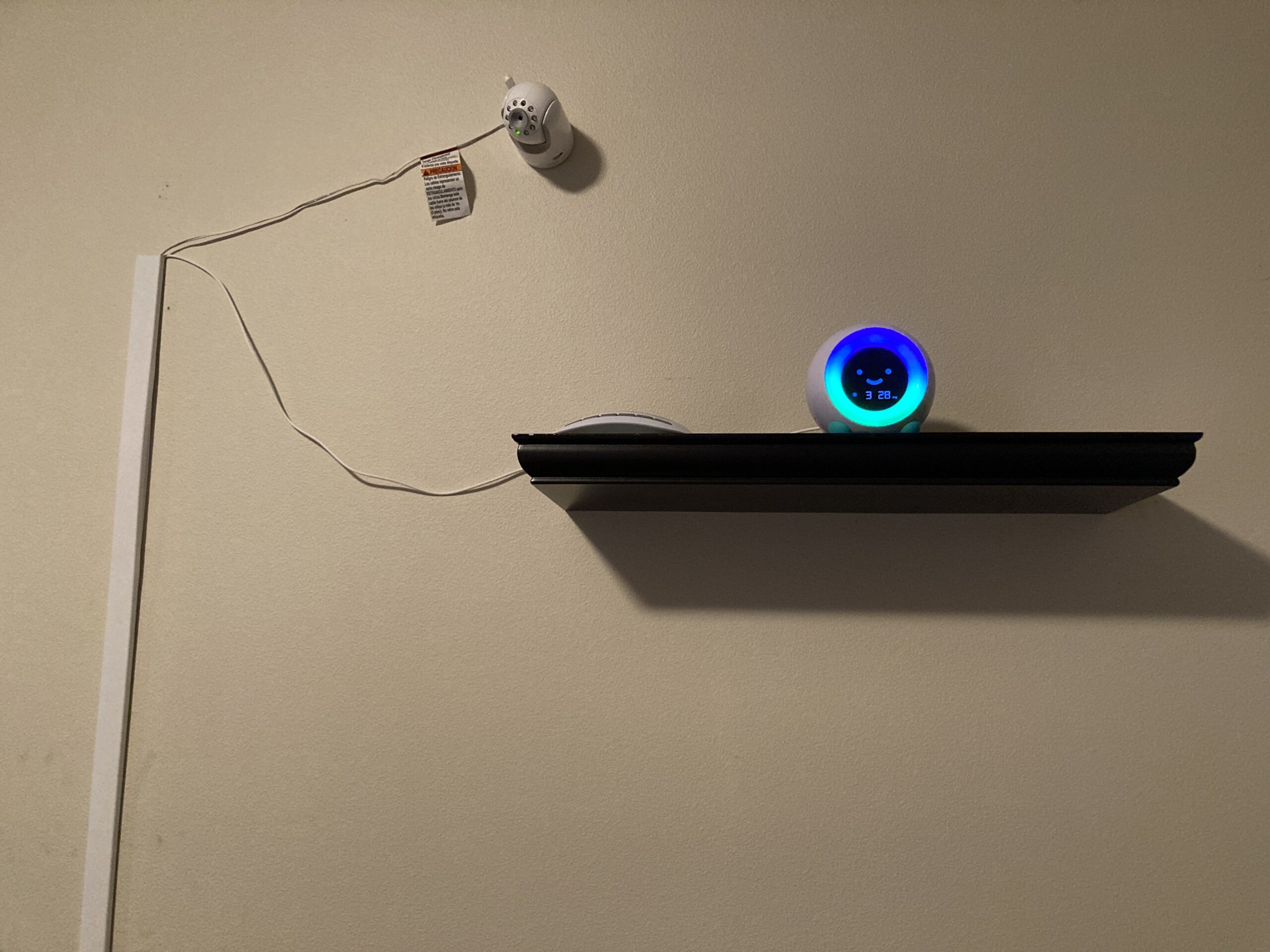
The color-coded system works like this: a red light and sleepy face means stay in bed, a yellow light and half-awake face means it is almost time, and a green light with a happy face means it is okay to get up. This simplicity is what sets the Mella apart from more complex sunrise alarm clocks that try to do too much. Children as young as 2 can grasp this concept within days.
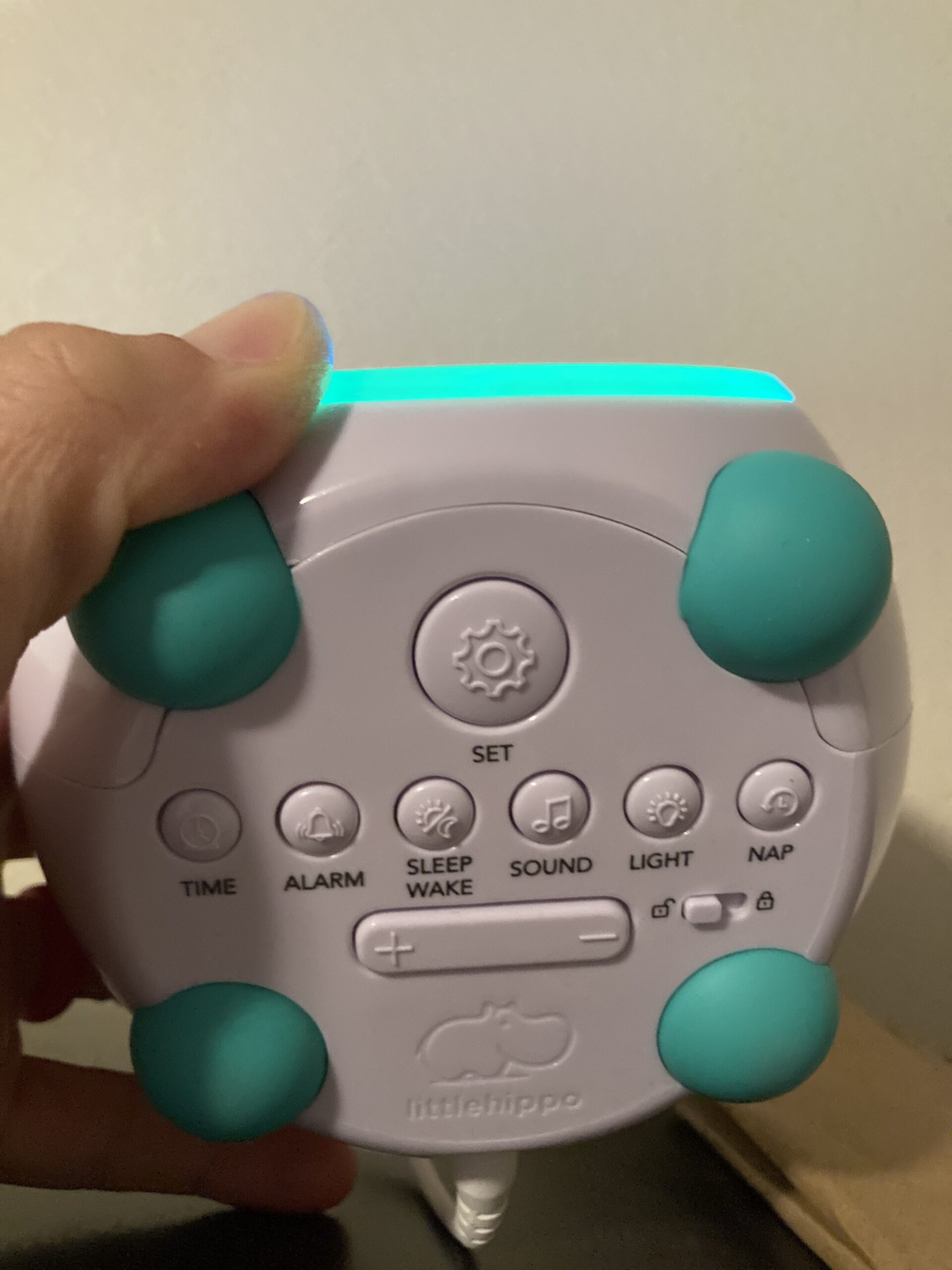
From a technical standpoint, the Mella uses a warm LED light that gradually brightens before the wake time, simulating a gentle sunrise. The built-in sound machine offers three sleep sounds, and the nightlight has multiple color options. The construction is child-safe ABS plastic with silicone accents, and it carries FCC, CE, RoHS, and CPSIA safety certifications, which gave our team significant peace of mind.
For whom its good
The LittleHippo Mella shines brightest for children aged 2 to 6 years old. Toddlers who are transitioning from a crib to a bed benefit enormously from the visual boundary the clock provides. Preschoolers who can understand the color system but cannot yet tell time find the facial expressions engaging and motivating. By age 6 or 7, most children are ready to graduate to a more advanced sunrise alarm with a traditional clock display.
Parents of children with special needs, particularly autism and anxiety, have reported exceptional results with the Mella. The predictable visual routine reduces morning anxiety, and the gentle light transition avoids the sensory overload that traditional alarms can cause.
For whom its bad
Based on our testing and thousands of parent reviews, the Mella is built to last. Multiple families reported using the same unit for 4 or more years across multiple children. The ABS construction survives drops, tosses, and the general abuse that toddlers dish out. The one caveat is that it must remain plugged in to function, as the battery only preserves settings during power outages.
2. Odokee Sunrise Alarm Clock – Best Value Pick
- Exceptional value vs premium brands
- No app required with physical controls
- Bluetooth speaker for music
- 25 sleep sounds including white noise
- Very bright sunrise light
- Battery backup preserves settings
- Only 1 alarm slot no dual alarm
- Fixed snooze duration
- Built-in sounds are low quality
- Many buttons can be confusing initially
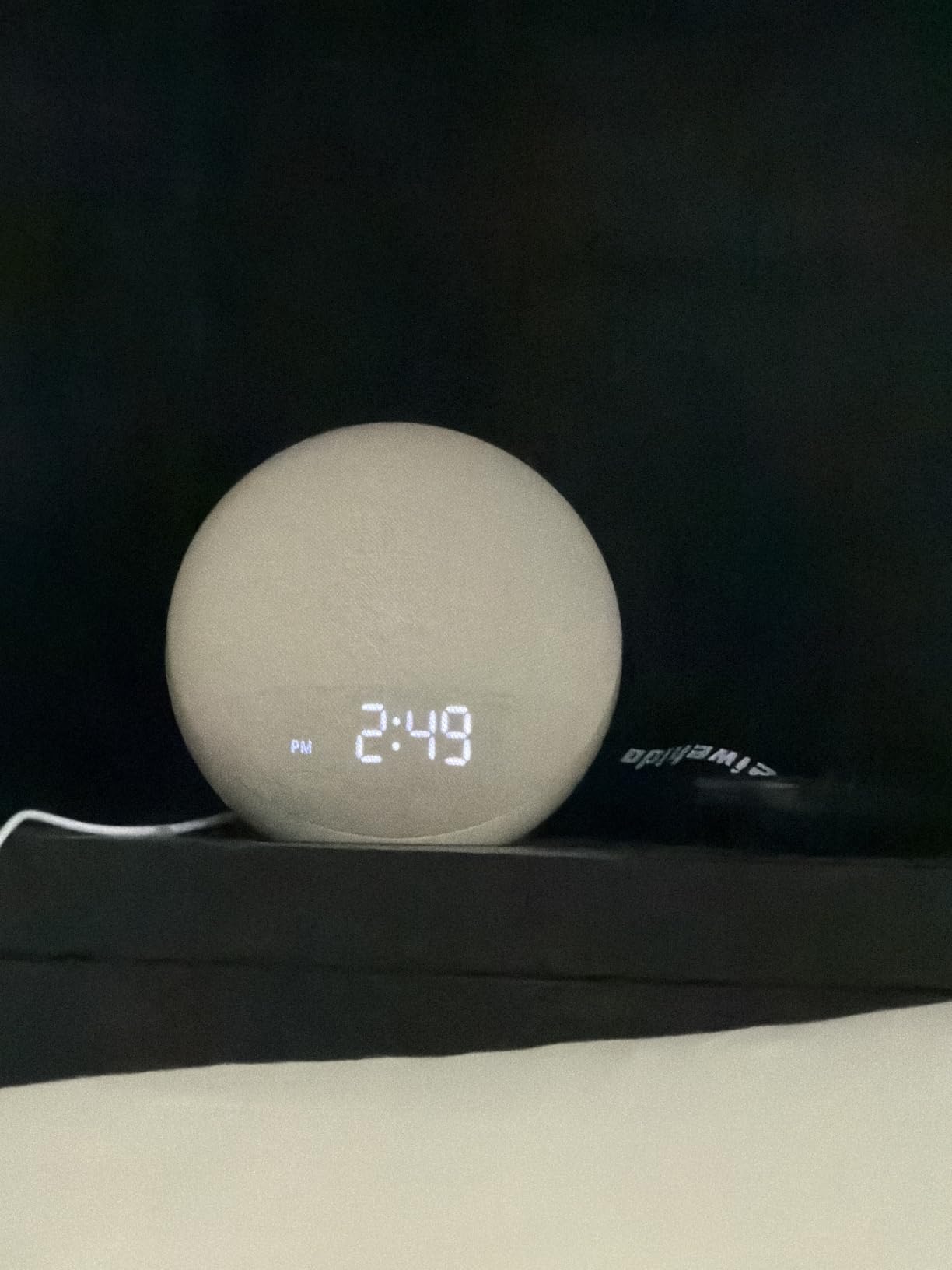
If you want the features of a premium sunrise alarm without the premium price tag, the Odokee is the standout choice in our testing. Our team was genuinely surprised by how closely this clock mirrors the experience of the Hatch Restore at roughly one-third of the cost. It delivers a bright, effective sunrise simulation, 25 sleep sounds, and a built-in Bluetooth speaker that kids and parents both love.
I set up the Odokee in my 8-year-old’s bedroom for a full month, and the first thing that impressed me was the sunrise brightness. Unlike budget models that produce a dim glow barely visible across the room, the Odokee puts out enough light to genuinely simulate dawn. The gradual brightening over a customizable 5 to 60 minute window feels natural and effective, even for a child who typically sleeps through everything.
The 25 sleep sounds are where this clock really earns its value rating. You get white noise, pink noise, brown noise, blue noise, nature sounds, and lullabies. For families dealing with nighttime waking, light sleepers, or noisy neighborhoods, having all these options in one device is genuinely useful. The Bluetooth speaker feature means your child can stream their own music or stories from a phone or tablet at bedtime.
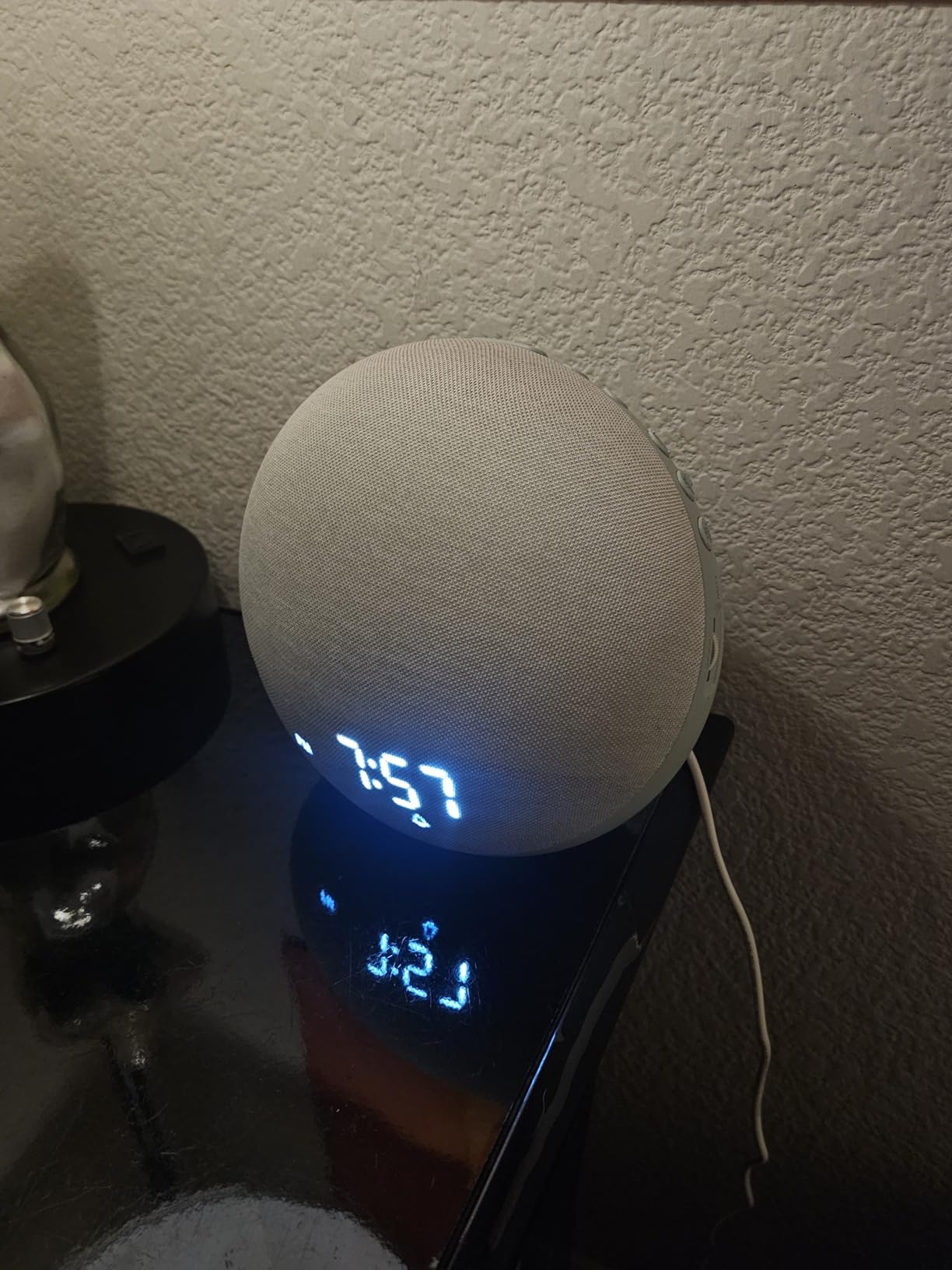
The physical button layout on top of the clock uses raised tactile bumps that make it easy to operate by feel in the dark. This is a thoughtful design choice that many competitors miss. The AAA battery backup preserves your settings during power outages, and the dimmable clock display can go from completely off to full brightness.
For whom its good
The Odokee matches or exceeds the Hatch on sunrise brightness, sound variety, and ease of use. Where it falls short is in the polish of the app experience and the quality of the sound files themselves, which sound compressed and tinny compared to the Hatch’s 80 plus sound library. However, since the Odokee requires no subscription and costs a fraction of the Hatch, most families will find the trade-off well worth it.
For whom its bad
The top-button layout is intuitive once you learn the placement, but there is a learning curve. Younger children will need help from parents to change settings. For school-age kids who can read and follow instructions, the Odokee becomes independently operable after a few days of guidance. The lack of an app is actually a benefit here, as it keeps the experience screen-free.
3. Hatch Restore 3 – Best Premium Sleep Ecosystem
Hatch Restore 3 | Science-Backed Sleep Audio, Circadian Lighting (Putty)
- Gentle customizable sunrise 5-60 min
- Extensive 80+ sleep sounds library
- Beautiful minimalist design
- Screen-free bedroom approach
- Customizable routines via app
- Excellent sound quality
- Requires monthly subscription for full content
- App interface could be more intuitive
- Premium price point
- US plug only
The Hatch Restore 3 represents the gold standard of sleep technology, and it is easy to see why it dominates the sunrise alarm conversation. With over 5,650 reviews and a 4.3-star rating, this device is less of an alarm clock and more of a complete sleep ecosystem designed to transform your child’s entire bedtime and wake-up routine.
Our team tested the Restore 3 in a 12-year-old’s bedroom for eight weeks, and the sunrise simulation is the smoothest and most natural we experienced across any model in this guide. The 5 to 60 minute customizable ramp lets you dial in exactly how gradual you want the light to increase. The color temperature shifts from warm amber to bright daylight in a way that genuinely feels like watching the sun come up through a window.
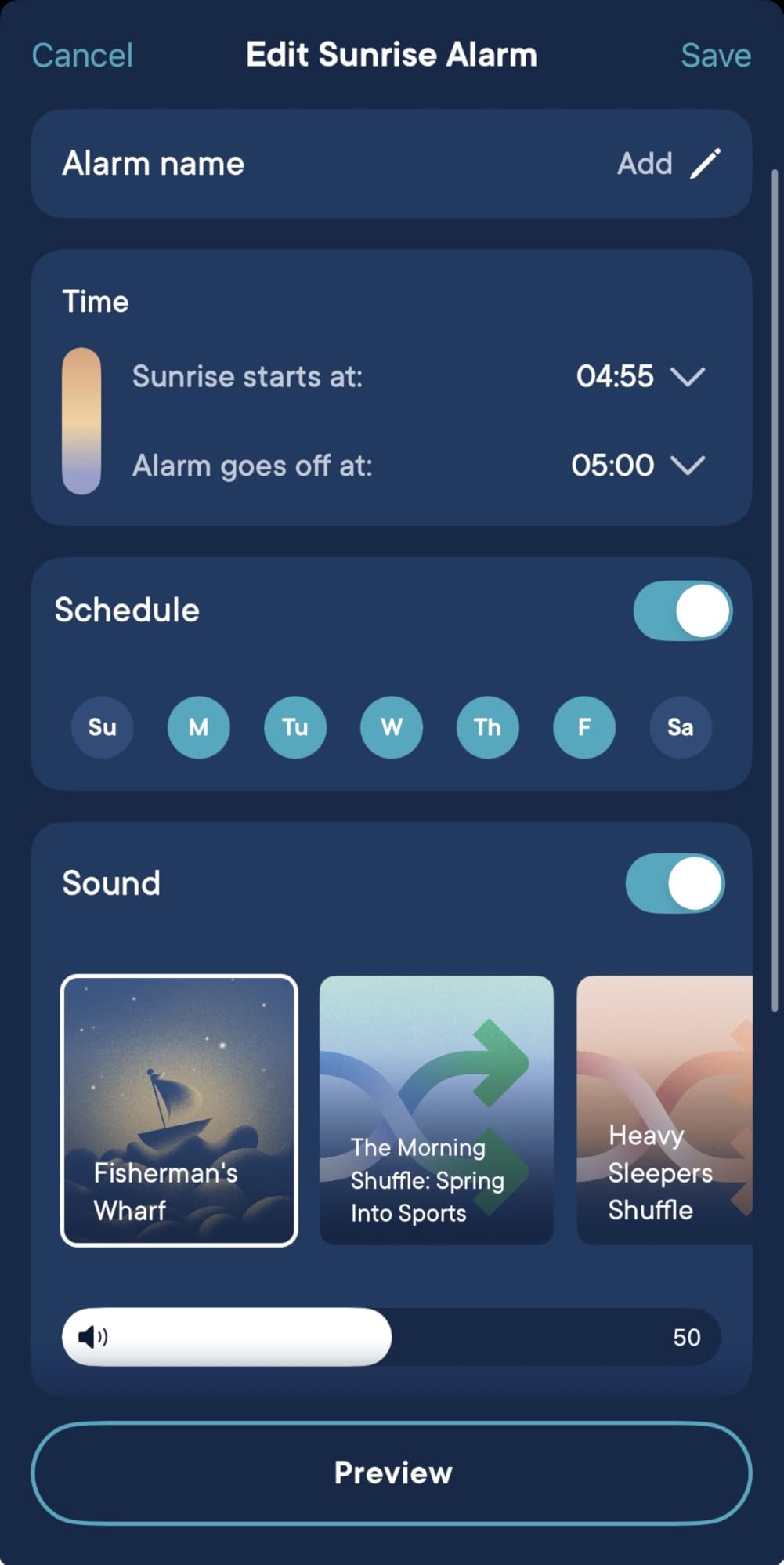
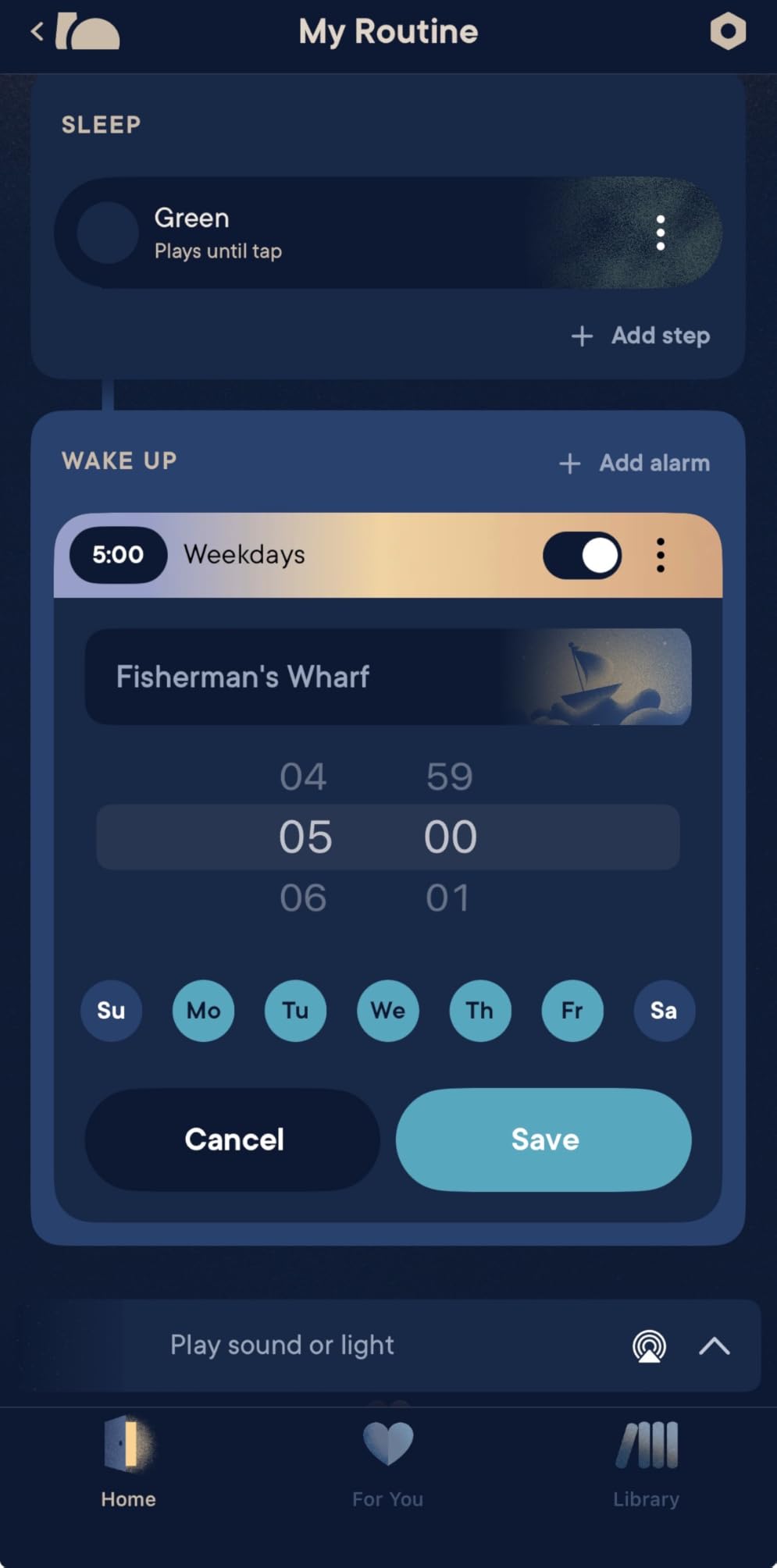
The 80 plus science-based sleep sounds are the best quality audio we heard in any sunrise alarm at any price. From white and brown noise to guided meditations, rain sounds, and wind, the variety and audio fidelity are a noticeable step above every other clock in this guide. The Hatch Sleep app lets you create custom bedtime routines that sequence sounds, light, and timing automatically.
The screen-free design philosophy is something our team appreciated deeply. The Restore 3 has a simple one-button interface on the device itself, plus a bedside light button for quick night checks. Everything else is controlled through the app, which keeps the bedroom environment free from glowing screens and distractions. For older kids and teens, this approach supports better sleep hygiene.
For whom its good
For families who want the absolute best sunrise simulation, the highest quality sleep sounds, and the most polished user experience, the answer is yes. The Restore 3 delivers a level of refinement that no budget model can match. However, the $4.99 monthly Hatch+ subscription required for full content access is a legitimate concern, and families should factor that ongoing cost into their decision.
For whom its bad
The Restore 3 is best suited for older children (ages 8 and up) and teenagers. Younger children will not benefit from the app-controlled routines, and the minimalist design lacks the playful elements that engage toddlers. For teens who want to reduce phone use at bedtime and develop healthier sleep habits, the Restore 3 is unmatched.
4. Windflyer OK to Wake Clock – Most Durable Kids Clock
- Cute animated face engages kids
- Very sturdy construction survives drops
- Effective color system
- Multiple modes sleep nap play wake
- Child lock prevents changes
- 3+ year lifespan reported
- Initial setup not intuitive
- Nap mode lacks 120-min option
- Wake light stays green 2 hours
- White noise options limited
The Windflyer OK to Wake Clock earned the highest average rating in our testing at 4.5 stars across more than 4,200 reviews. What sets this clock apart is its combination of an engaging animated face, a proven color-coded sleep training system, and construction tough enough to survive genuine toddler abuse over multiple years.
I gave the Windflyer to a friend whose 2-year-old had developed a habit of tossing everything off his nightstand. After three months of daily drops, knocks, and general toddler chaos, the clock still works perfectly. The ABS construction is genuinely rugged, and the compact rounded shape means there are no fragile edges to break off.
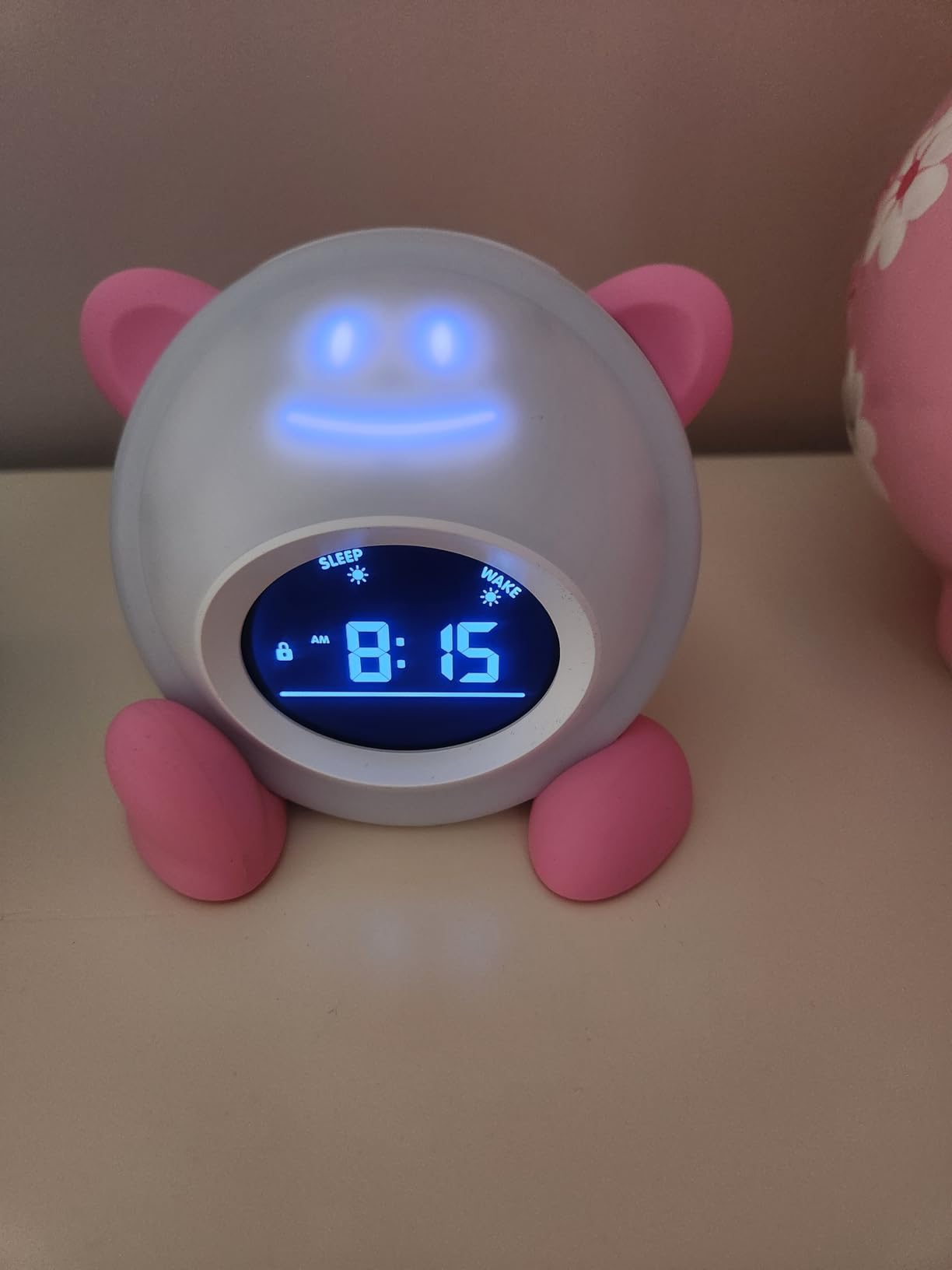
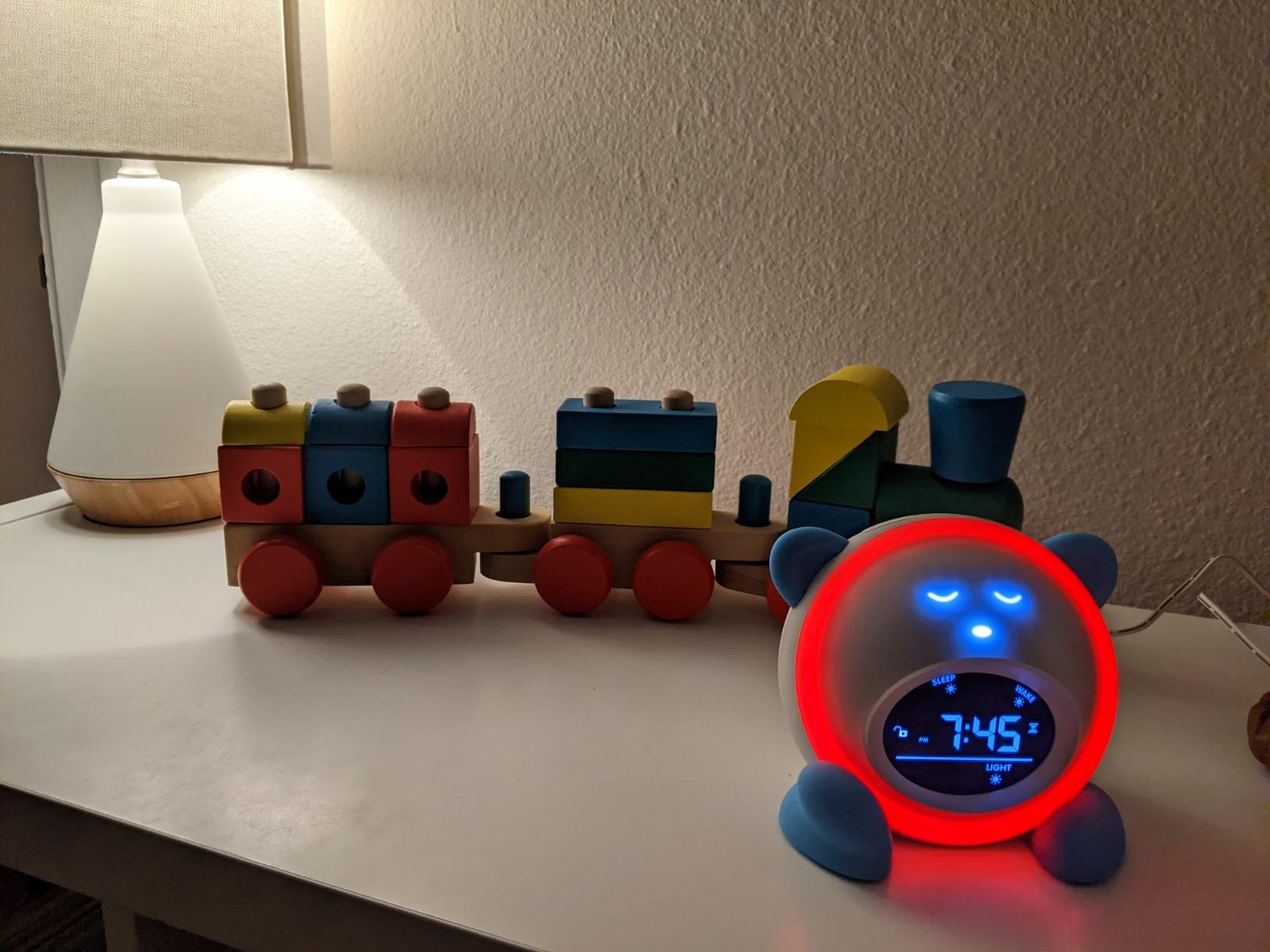
The animated facial expressions are a delightful touch that children respond to immediately. The face shows sleepy closed eyes during sleep time, transitions to a half-awake expression during the yellow light phase, and lights up with a happy face when it is time to wake. This visual feedback gives children a clear, engaging signal that is far more intuitive than a simple color change.
The multiple modes set this clock apart from simpler competitors. You get dedicated sleep, nap, play, and wake modes, each with its own light and sound configuration. The child lock feature prevents curious little fingers from changing settings, which is a real-world problem our team encountered with several other models.
For whom its good
Based on our testing and parent feedback, the Windflyer transforms early morning wake-ups within days for most toddlers. The red-yellow-green system is simple enough for 2-year-olds to grasp, and the animated face adds an emotional engagement element that keeps kids invested in following the rules. Multiple families reported their child proudly announcing “the clock is happy, I can get up now.”
For whom its bad
The initial setup is the main weakness. The button layout and menu navigation are not intuitive, and you will likely need the manual for the first configuration. Once set, however, daily operation is simple. The child lock ensures settings stay put, and the CR2032 backup battery preserves your programming during power outages.
5. Frida Baby 3-in-1 Alarm Clock – Best for Nursery and Newborns
Frida Baby 3-in-1 Alarm Clock, Sound Machine, Nightlight, Bluetooth Enabled
- 3-in-1 saves space and cord clutter
- Heartbeat sound for newborns
- Bluetooth speaker for custom audio
- Battery backup for outages
- Lifetime warranty
- Toddler lock prevents changes
- Clock display extremely bright and not dimmable
- Bluetooth audio only no remote control
- Only 1 alarm setting
- No AM PM indicator confusing
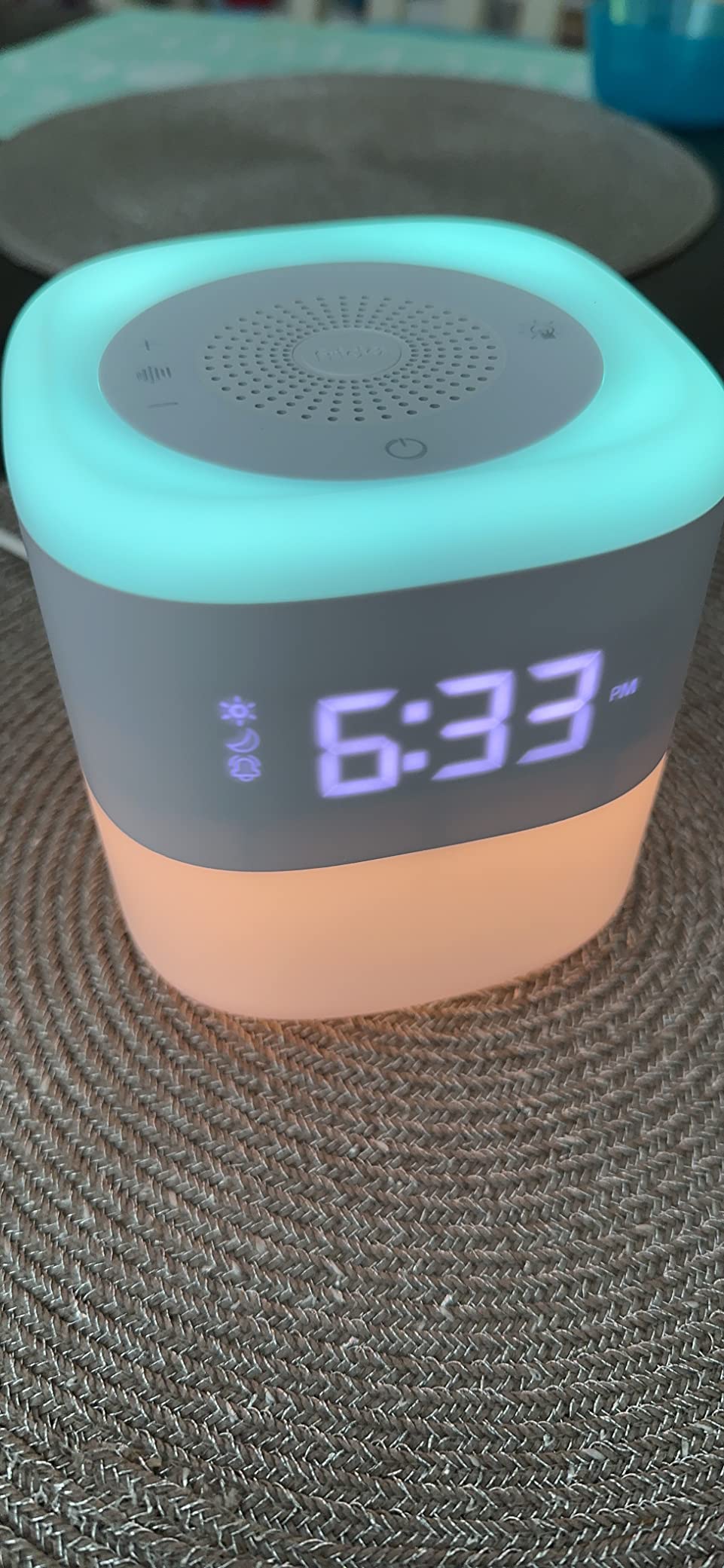
The Frida Baby 3-in-1 is purpose-built for the nursery environment, combining an alarm clock, sound machine, and nightlight into one compact device. As the number one bestseller in Nursery Clocks on Amazon, this clock has earned its place by solving a specific problem for new parents: too many devices cluttering the changing table.
Our team tested this clock in a nursery setting with a 6-month-old, and the heartbeat sound was genuinely effective at soothing during nighttime wake-ups. The three warm glow nightlight levels are perfect for 3 AM feedings and diaper changes, providing enough light to see without fully waking the baby or the parent.
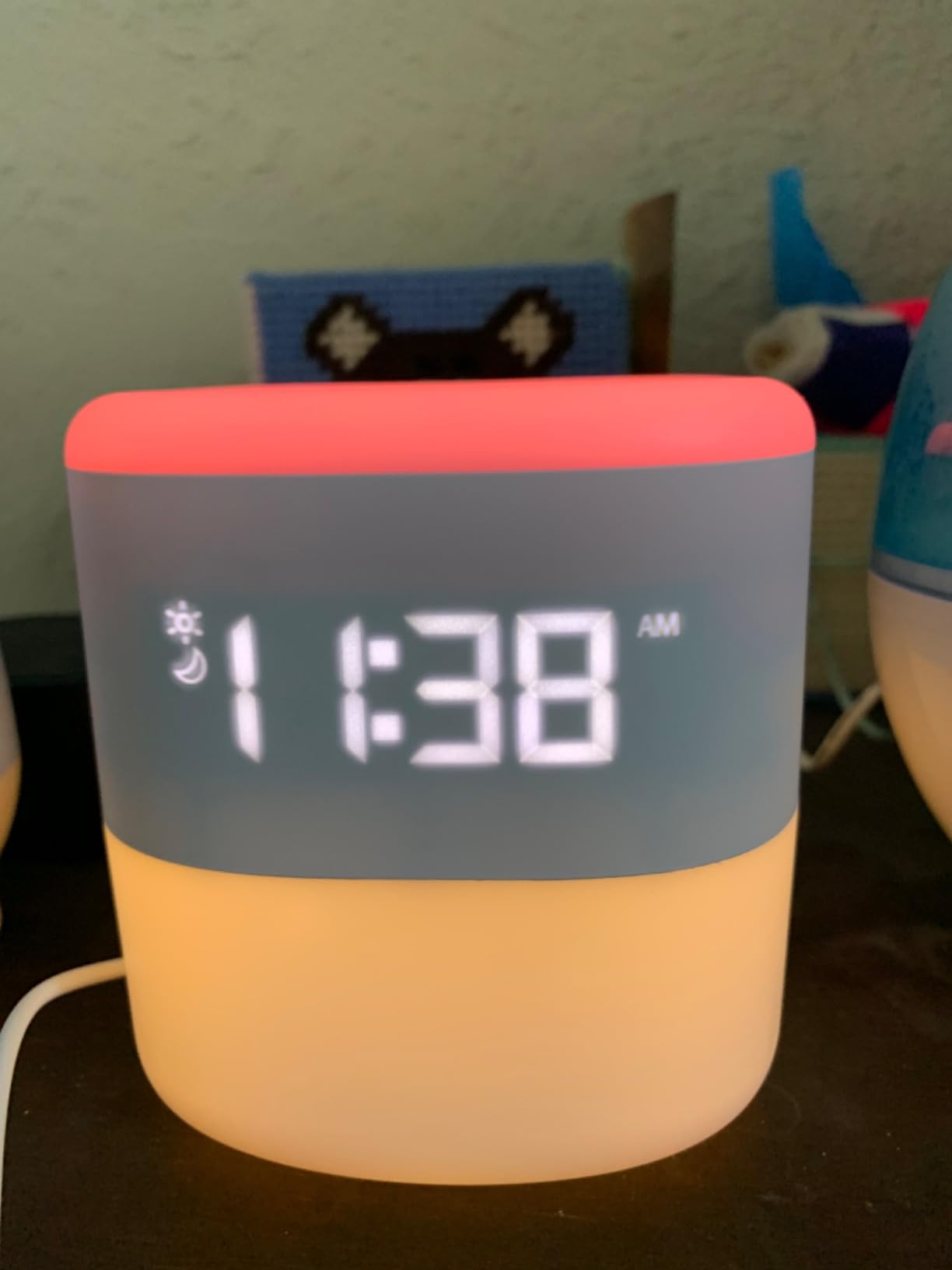
The sunrise wake-up light simulation works well for toddlers who have graduated from the bassinet. The red-yellow-green sleep training system is the same proven approach used by the Mella and Windflyer, and the toddler lock prevents curious hands from altering settings during the night. The Bluetooth connectivity lets you stream your own white noise tracks or lullabies.
The lifetime warranty is a standout feature that no other clock in our guide offers. Frida Baby clearly stands behind their product, and based on the construction quality, they have reason to be confident. The compact design fits neatly on a shelf or dresser without dominating the nursery decor.
For whom its good
Yes, and this is one of its strongest selling points. The heartbeat sound works for newborns, the nightlight functions for infant care, and the OK to Wake system becomes relevant around age 2 when sleep training begins. The sunrise simulation feature becomes the primary function for preschoolers and school-age children.
For whom its bad
The undimmable clock display is the most common complaint, and it is a real issue. The screen is bright enough to illuminate a small room at night, which can interfere with sleep. Several parents in our testing resorted to covering the display with tape or fabric. If your child needs complete darkness to sleep, this is a significant problem.
6. REACHER Wood Grain Sunrise Alarm – Best Stylish Option
- Beautiful wood grain design
- 26 sleep sounds with good quality
- Very bright sunrise light
- Battery backup preserves settings
- Highly adjustable light and sound
- No app required
- Sound quality somewhat tinny
- Buttons not intuitive
- Only 1 alarm setting
- Fixed snooze duration
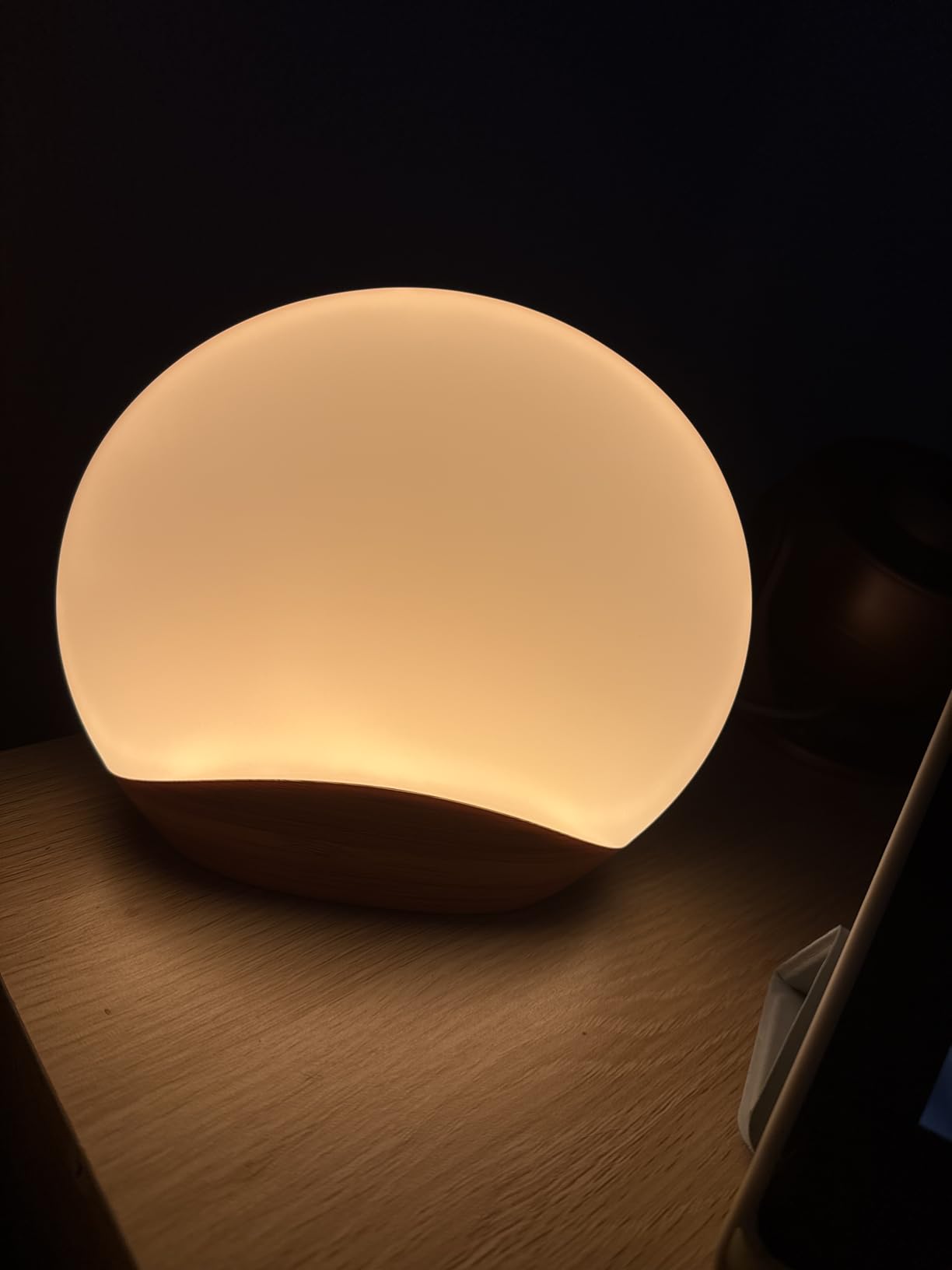
The REACHER Wood Grain Sunrise Alarm is the clock for families who want their sleep technology to look like a piece of furniture rather than a gadget. With over 3,400 reviews and a 4.4-star rating, it has proven itself as a stylish, capable sunrise alarm that would not look out of place in a design-conscious bedroom.
I placed the REACHER in my teenager’s room, and her first comment was about how much she loved the wood grain finish. This matters more than you might think, because if a child or teen likes how the clock looks, they are far more likely to actually use it consistently. The aesthetic appeal removes the resistance that comes with placing an obviously plastic, childish device in an older kid’s space.
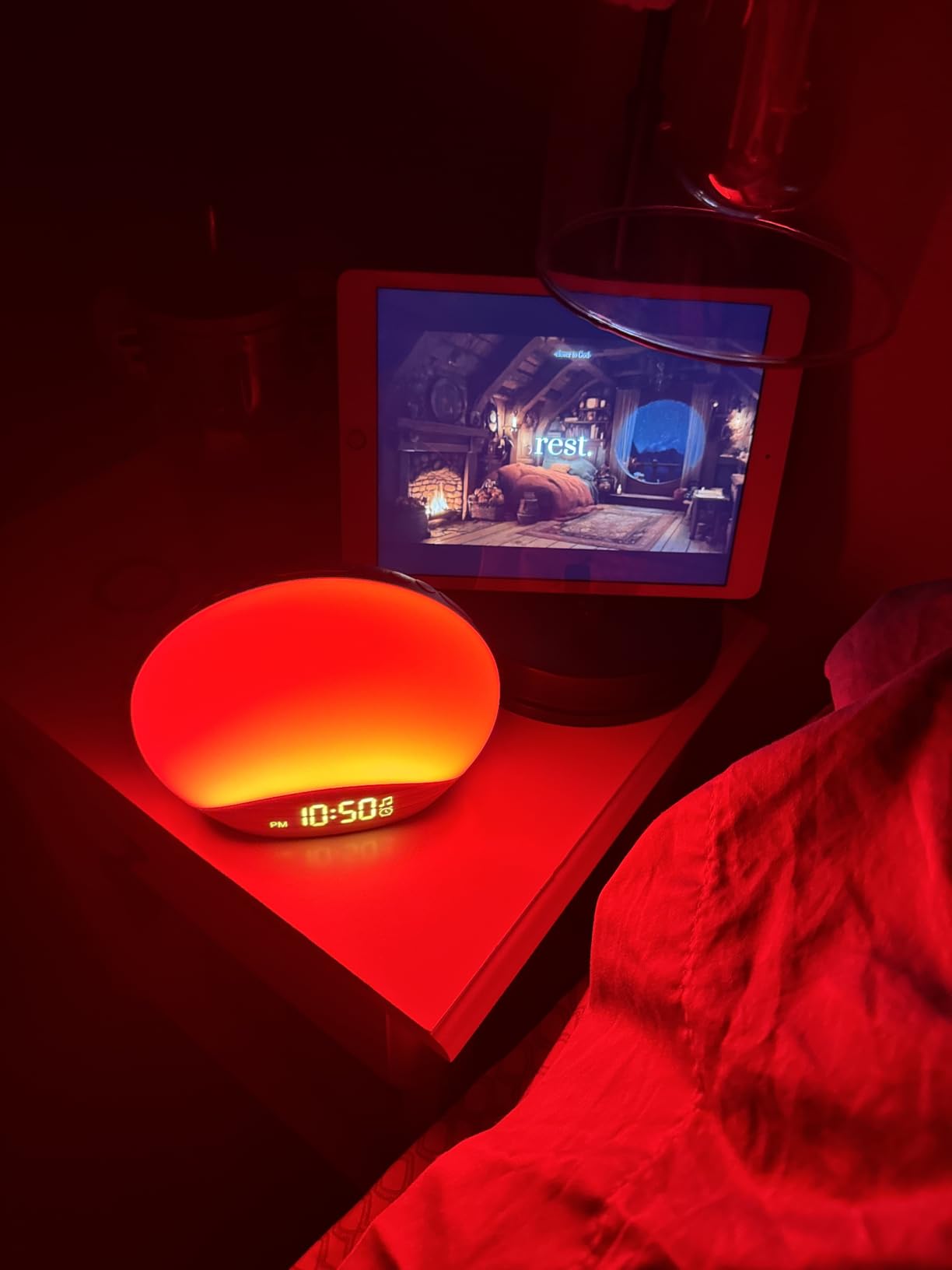
The 26 nature-inspired sleep sounds offer impressive variety for the price point. The sunrise simulation is bright and effective, matching or exceeding the output of clocks costing twice as much. The 5 to 60 minute customizable ramp gives you full control over the wake-up experience, and the 8 nightlight colors add a fun element for younger users.
The fully dimmable clock display can go from completely dark to full brightness, which solves the problem that plagues the Frida Baby. The built-in battery backup preserves your settings during outages, and the 5 to 180 minute sleep timer allows for flexible bedtime routines. All controls are physical buttons with no app required.
For whom its good
The REACHER works well for school-age children and teenagers who appreciate a more grown-up design aesthetic. The wood grain finish appeals to kids who have outgrown the cute animal faces of toddler clocks but still benefit from a gentle sunrise wake-up. For younger children (under 6), the lack of an OK to Wake system and the more adult interface make it less ideal.
For whom its bad
The built-in sound files are somewhat compressed and tinny, which is the main weakness at this price point. The sounds are functional for masking background noise and providing a sleep aid, but they do not match the audio fidelity of the Hatch Restore. For most families, this trade-off is acceptable given the significant price difference.
7. Learn and Climb Stay-in-Bed Clock – Best Budget Sleep Trainer
- Clear 3-color system
- Includes storybook and reward chart
- Nap time countdown feature
- Battery backup
- Excellent customer support
- Very affordable price
- 4+ years of use reported
- Battery backup only saves settings
- Power cord not sturdy
- Some units fail within weeks
- Only 2 sound levels
- Must stay plugged in
The Learn and Climb Stay-in-Bed Clock is the best entry point for families beginning sleep training without wanting to invest in a premium device. As an Amazon’s Choice product with over 2,700 reviews, it delivers the core sleep training functionality at a price that makes it easy to justify, especially considering toddlers often outgrow these clocks within a few years.
What makes this clock special is the included training materials. Each unit comes with a storybook that introduces the concept of the clock to your child, plus an 8-week reward chart that turns sleep training into a positive, gamified experience. Our team found these additions genuinely helpful for establishing the routine and keeping children motivated.
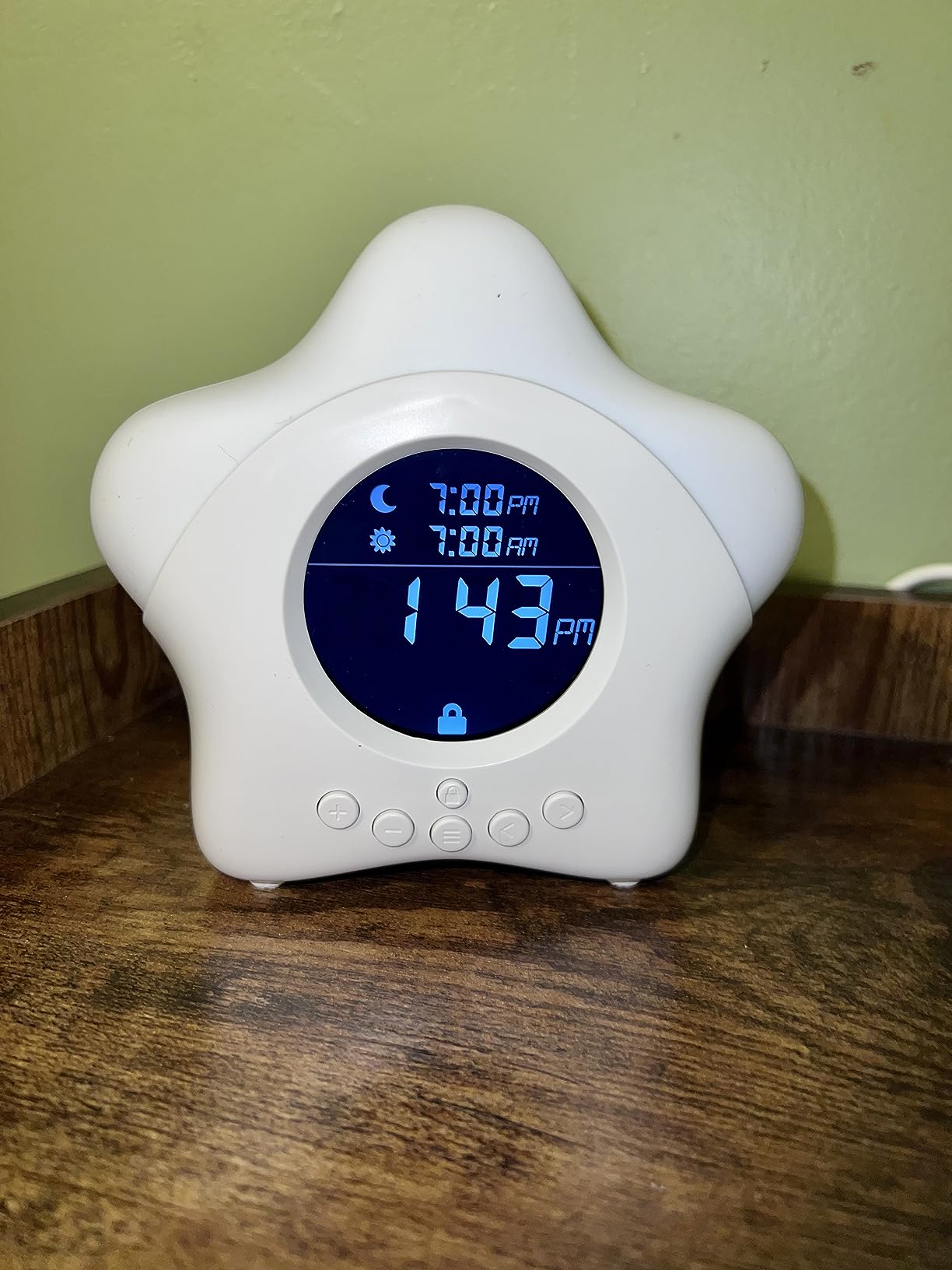
The 3-color system follows the proven red-yellow-green approach. Red means stay in bed, yellow means it is almost time, and green means it is okay to get up. The nap time countdown feature is a useful addition that most competitors lack, allowing you to set a specific rest period during the day.
The instruction booklet is comprehensive and includes shortcuts that make setup faster than some competitors. The customer support team at Learn and Climb earns consistent praise for sending replacement units when problems arise, which partially offsets the durability concerns that some users report.
For whom its good
The Mella has a more polished design, better build quality, and the engaging facial expressions that toddlers love. The Learn and Climb offers a similar color-coded system at roughly half the price, plus the included storybook and reward chart. For families on a tight budget who are just starting sleep training, the Learn and Climb is the smarter first purchase.
For whom its bad
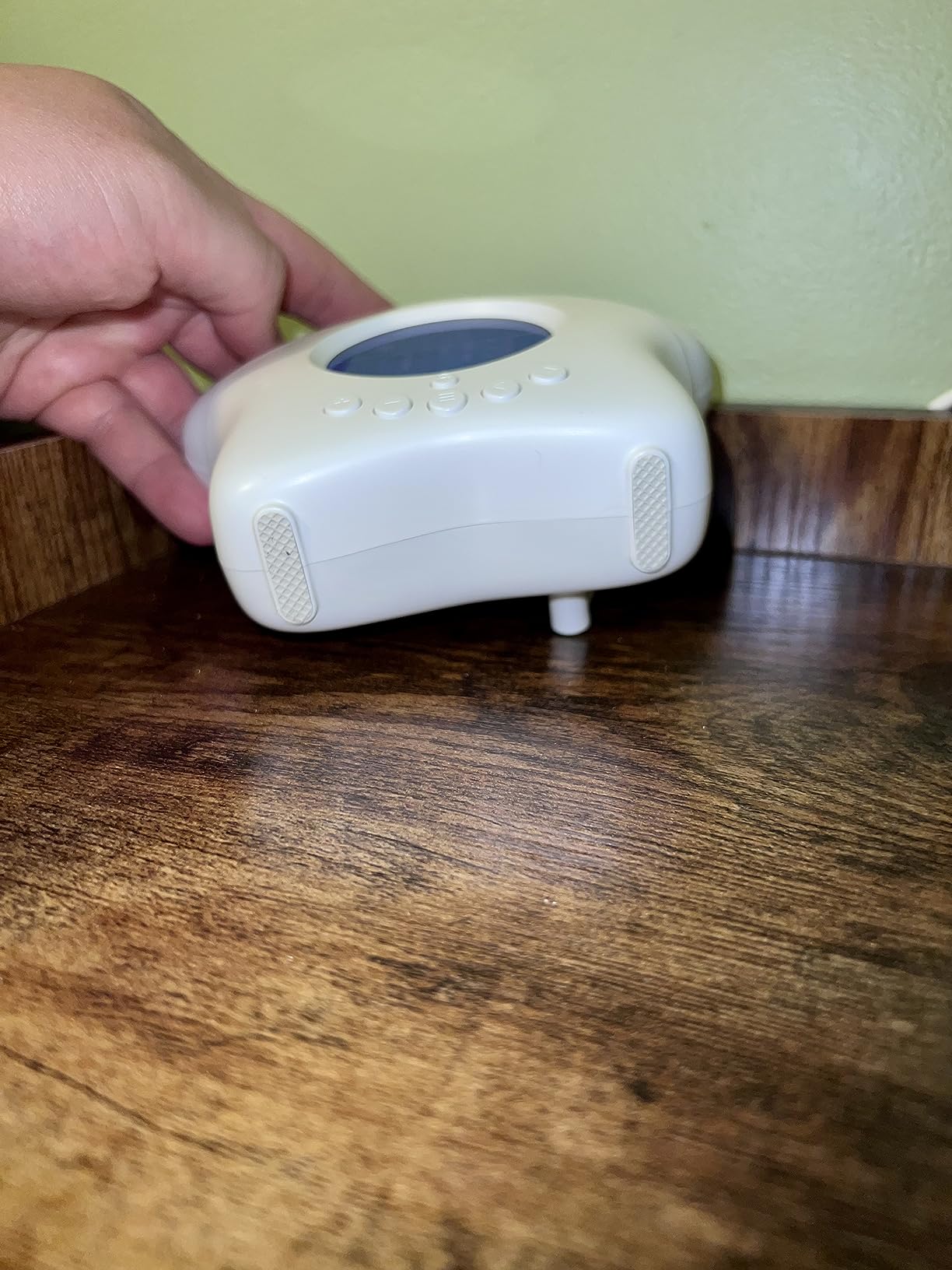
The power cord is the weak point, with multiple users reporting failures over time. The clock itself is durable enough for daily use, and many families report 4 or more years of service. The 1-year warranty and responsive customer service provide a safety net, but you should handle the cord with care to maximize lifespan.
8. Wkzay Sunrise Alarm with Sound Machine – Best Audio Quality
- Excellent 30 sound options with realistic audio
- Highly adjustable 13 brightness levels
- 32 volume levels for precise control
- Effective sunrise light
- No app required
- Extra USB charging port
- Wide sleep timer range
- Many buttons confusing initially
- Easy to accidentally change settings at night
- No Bluetooth speaker
- Some report sound failure
- Short cord length
The Wkzay Sunrise Alarm impressed our team with the best built-in sound quality of any clock in this guide under $50. With 30 soothing sounds, 13 brightness levels, and 32 volume levels, the customization options are remarkable for the price. If your child is a light sleeper who needs precise audio control, this is the clock to beat.
I tested the Wkzay with a 7-year-old who has always been sensitive to sound while sleeping. The ability to fine-tune the volume across 32 levels meant we could find the exact white noise level that masked household sounds without being too loud. The 30 sound options include realistic nature sounds, white noise variants, and lullabies that are noticeably higher quality than most budget competitors.
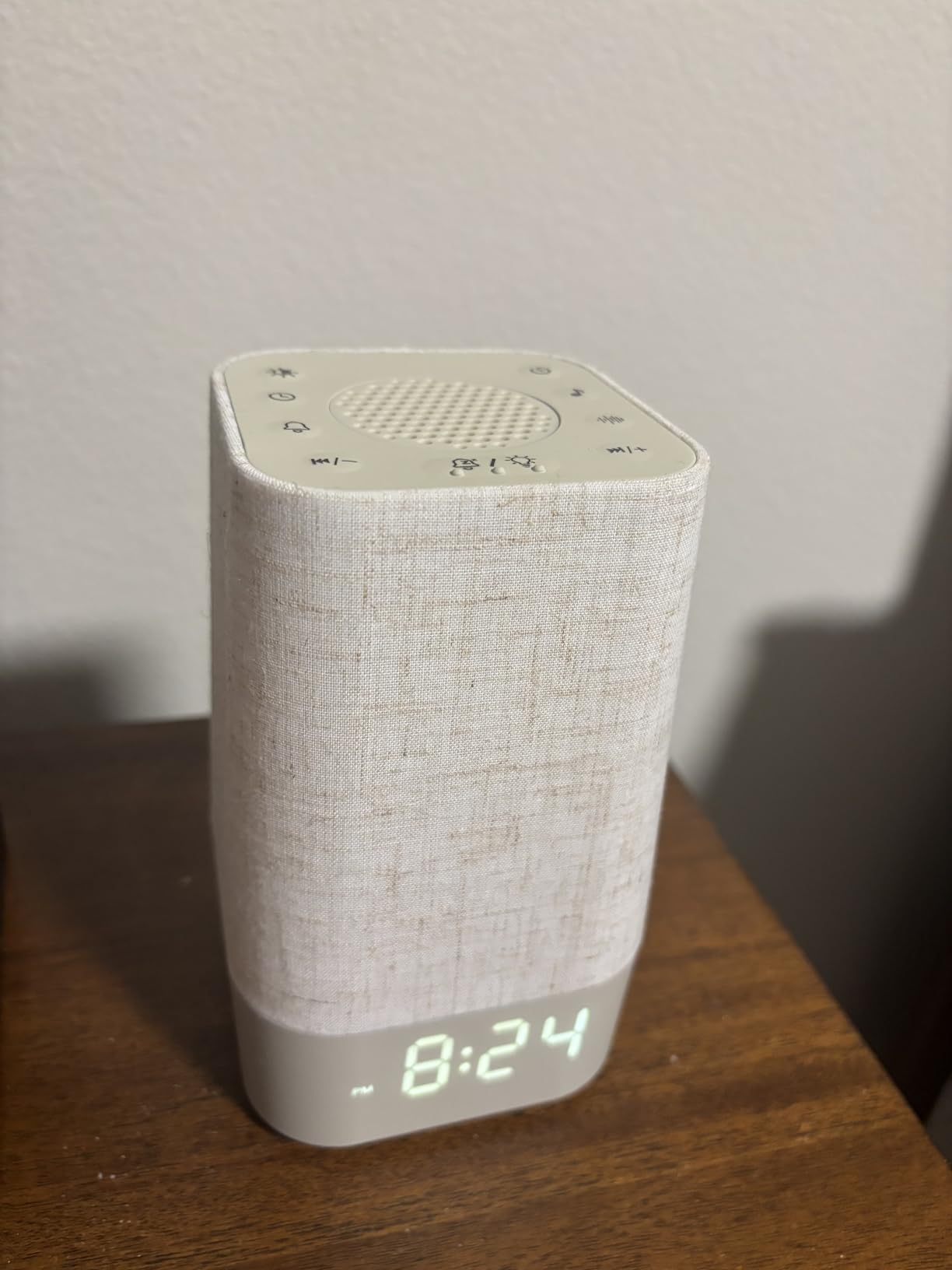
The sunrise simulation offers a 10 to 60 minute customizable ramp with 13 brightness levels. At maximum brightness, the light is intense enough to wake even heavy sleepers, which is not something every budget clock can claim. The 5-level display dimmer lets you reduce the clock face to nearly invisible at night.
The extra USB charging port is a thoughtful addition that parents will appreciate. Your child can charge their wearable, phone, or small device directly from the clock, eliminating the need for an extra outlet and cable. The LR44 backup battery preserves settings after accidental unplugging, which happens more than you might expect with kids.
For whom its good
Yes, this is where the Wkzay truly excels. The combination of 30 high-quality sounds, 32 precise volume levels, and adjustable brightness makes it ideal for children who wake easily. The sleep timer range of 30 to 480 minutes accommodates everything from short naps to full nights, and the warm nightlight provides comfort without overstimulation.
For whom its bad
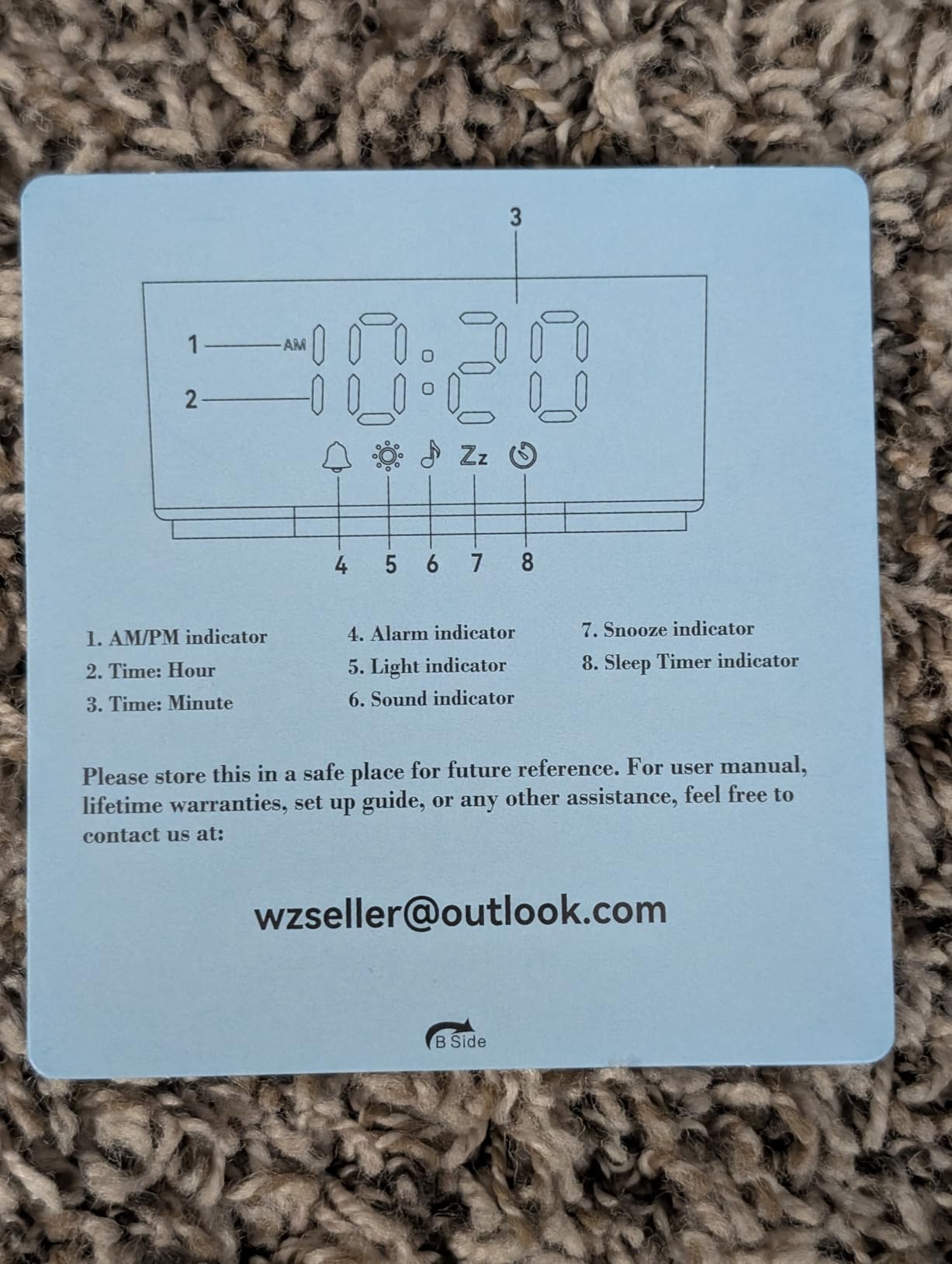
The many buttons on top of the clock create a steeper learning curve than simpler models. Our team found it took about a week of nightly use to memorize the button layout for dark-room operation. The risk of accidentally changing settings at night is real, but once you develop muscle memory, this becomes less of an issue.
9. I.CODE Sun and Moon Clock – Best for Visual Day-Night Learning
- Unique sun and moon concept teaches day vs night
- Independently programmable alarms
- 9 color night lights with dimmer
- Child lock feature
- Compact round design
- FCC CE CPC certified
- One year warranty
- Screen very bright and hard to dim
- No battery backup loses settings
- Power cord durability issues
- Some units last only 12 months
- Instructions unclear
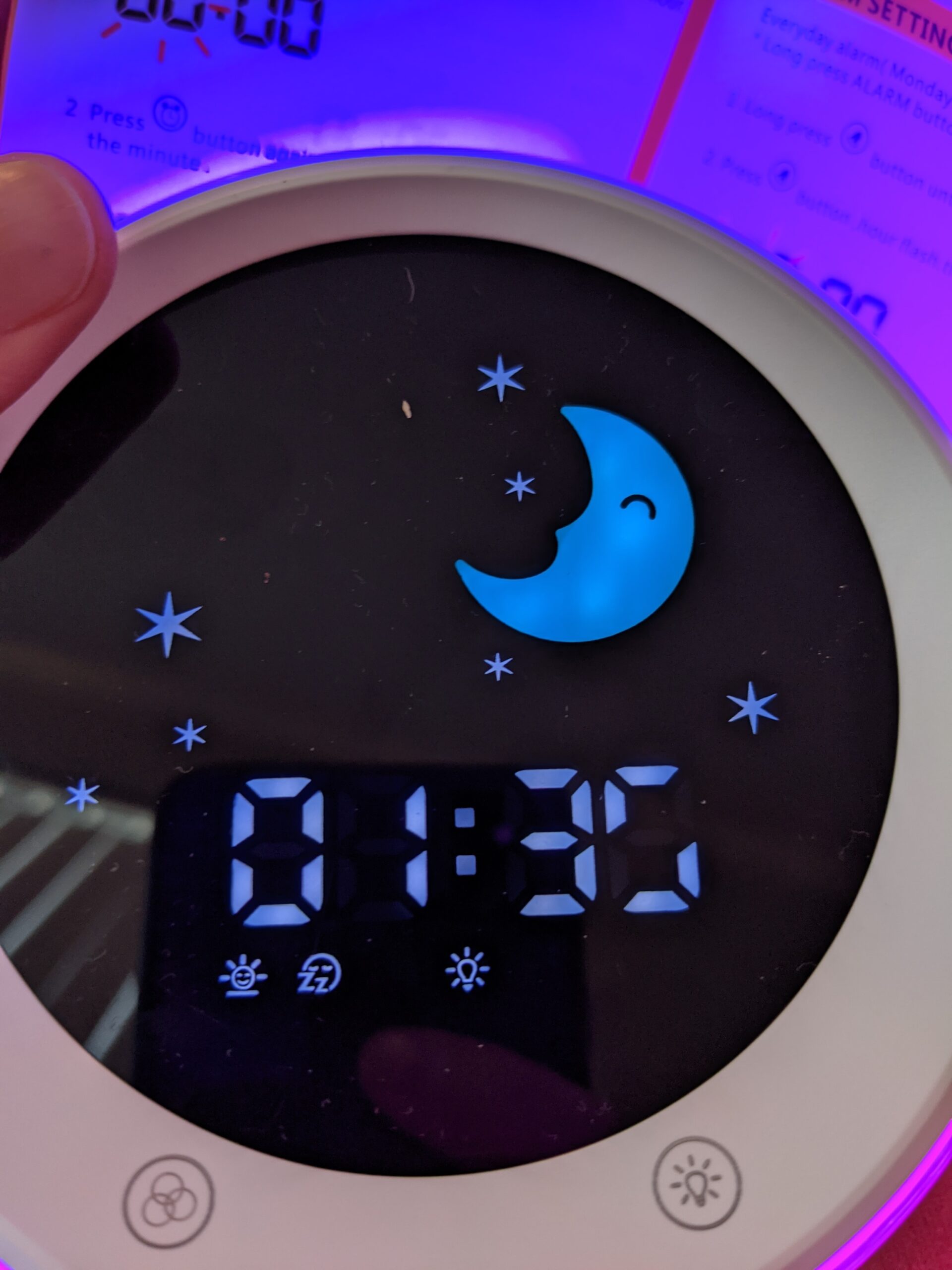
The I.CODE Sun and Moon Clock takes a unique approach to teaching children about day and night cycles. Instead of just color-coded lights, this clock uses visual sun and moon icons that children can see and understand. With nearly 8,000 reviews, it has clearly resonated with families looking for a more educational approach to sleep training.
Our team tested the I.CODE with a 4-year-old who was struggling with the concept of appropriate wake times. The sun and moon visual made an immediate difference. When the moon was showing, she understood it was still nighttime. When the sun appeared, she knew it was time to get up. This visual learning approach is particularly effective for children who are visual learners or who have not yet grasped color associations.
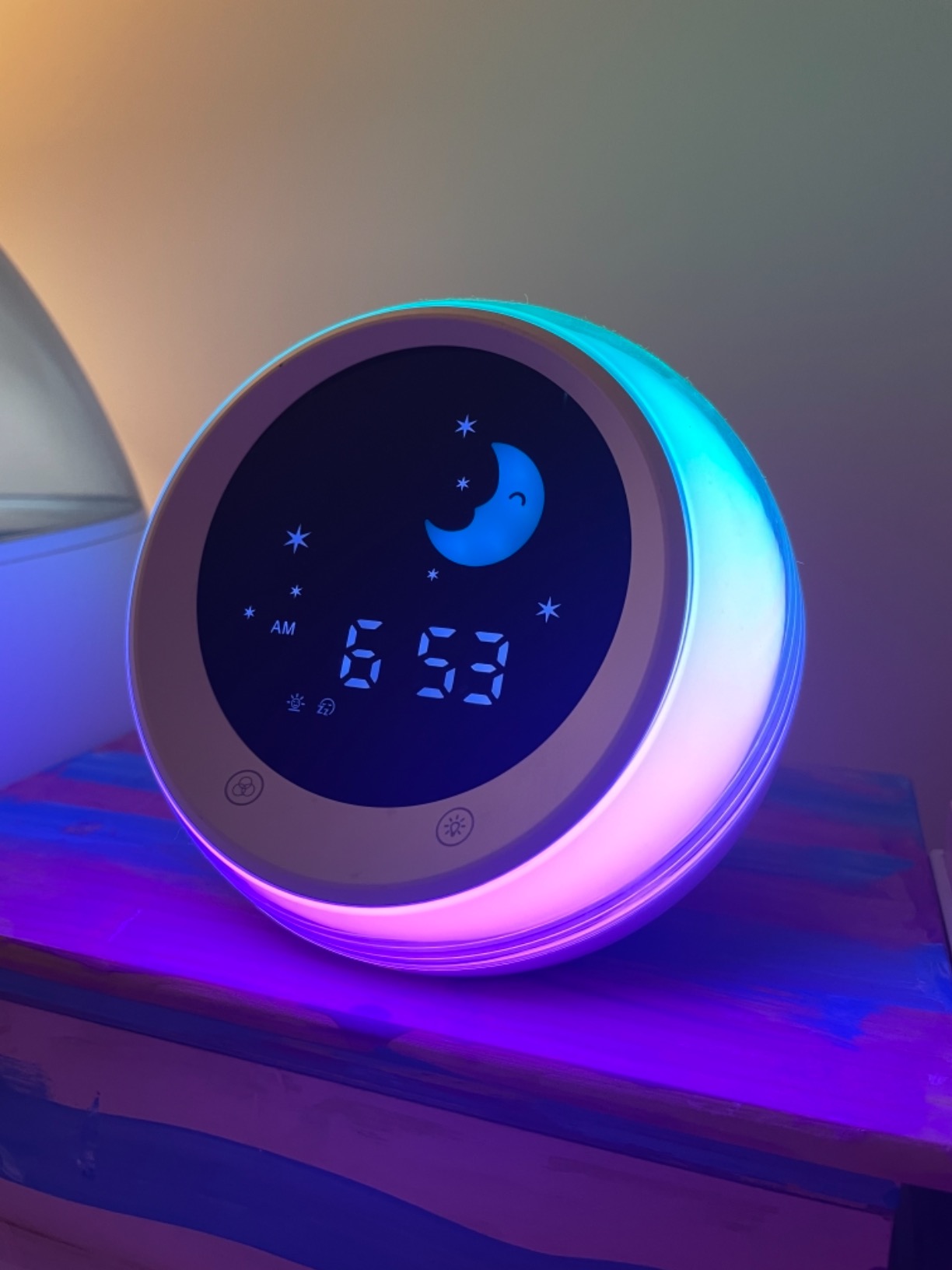
The 9 color night lights with dimmable warm light offer plenty of customization for different preferences and ages. The 6 soothing sleep sounds provide enough variety for bedtime without overwhelming the user. The child lock feature prevents unauthorized setting changes, and the compact round design fits neatly on any nightstand.
The independently programmable sleep and wake alarms are a smart feature that sets this clock apart. You can set different times for weekdays versus weekends, or different nap schedules, without reprogramming the entire clock each time. The snooze function with 12 or 24-hour format options accommodates different preferences.
For whom its good
For visual learners, the sun and moon icons are more intuitive than color-only systems. Children can point to the moon and say “it is still night” or see the sun and know it is morning. This approach works particularly well for children aged 3 to 8 who are learning about time concepts but cannot yet read a traditional clock face.
For whom its bad
This is the main concern with the I.CODE. Multiple users report the power cord failing or the display developing issues within 12 months of purchase. The customer service team is responsive with replacements under the one-year warranty, but families should be aware that this clock may not last as long as more durably built competitors like the Mella or Windflyer.
10. Azyh OK to Wake Clock – Most Affordable Option
- Dual independent alarms with scheduling
- 11 colorful night light modes
- 10 music tracks including lullabies
- Green red sleep training lights
- Child lock
- 5 display brightness levels
- Durable for kids
- Excellent price
- Battery backup does not work
- Setup can be tricky
- Feels plasticky
- Alarm could be louder
- No day-of-week setting
The Azyh OK to Wake Clock is the most affordable option in our guide, and it packs an impressive feature set for the price. With dual alarms, 11 night light colors, 10 ringtones, and an OK to Wake system, it covers all the essential sleep training functions without requiring a significant investment.
I tested the Azyh as a secondary clock for a 5-year-old who splits time between two households. The low price made it feasible to purchase a second unit rather than transporting one back and forth. The dual alarm feature was genuinely useful for setting different weekday and weekend wake times, which is uncommon at this price point.
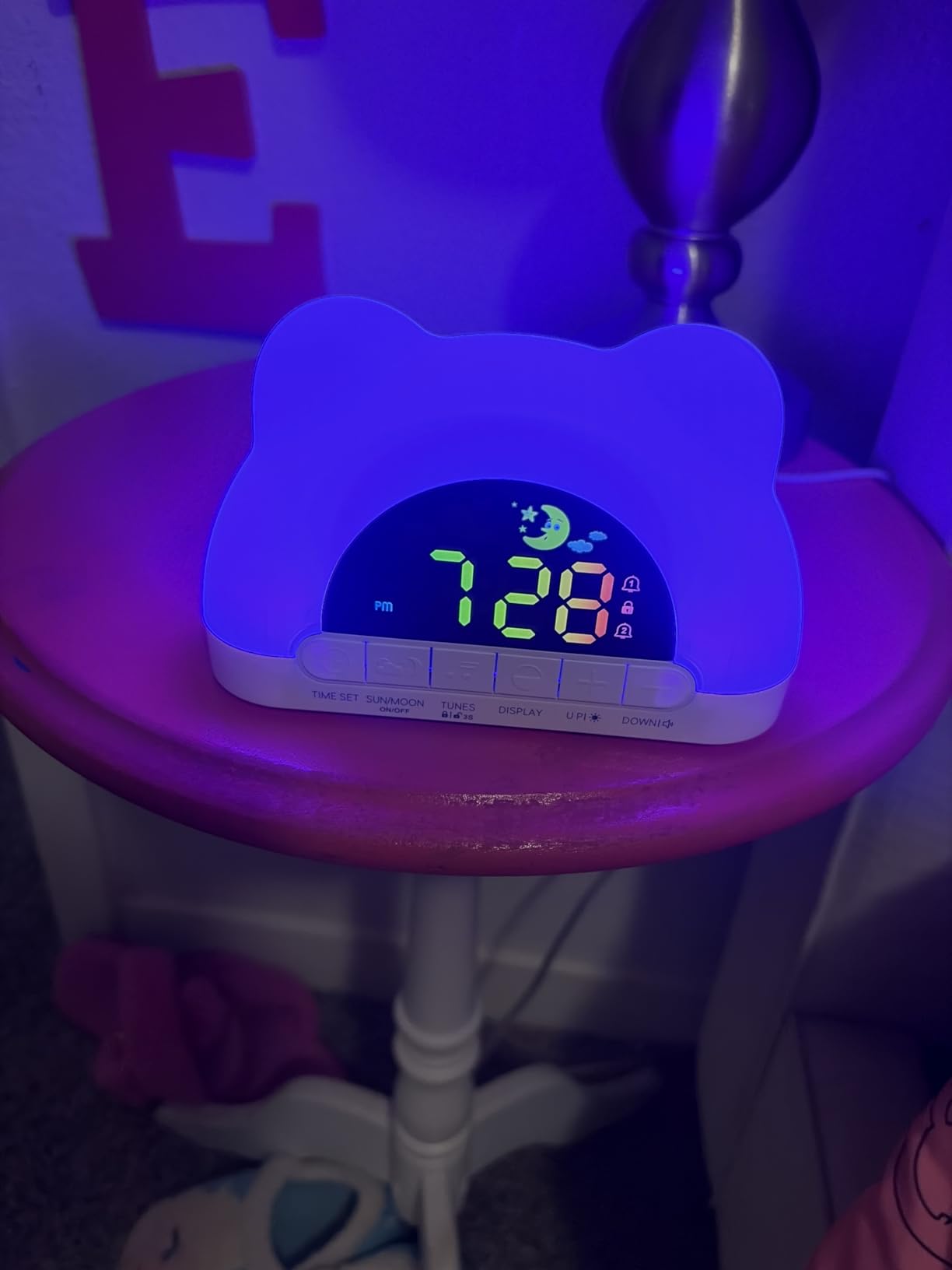
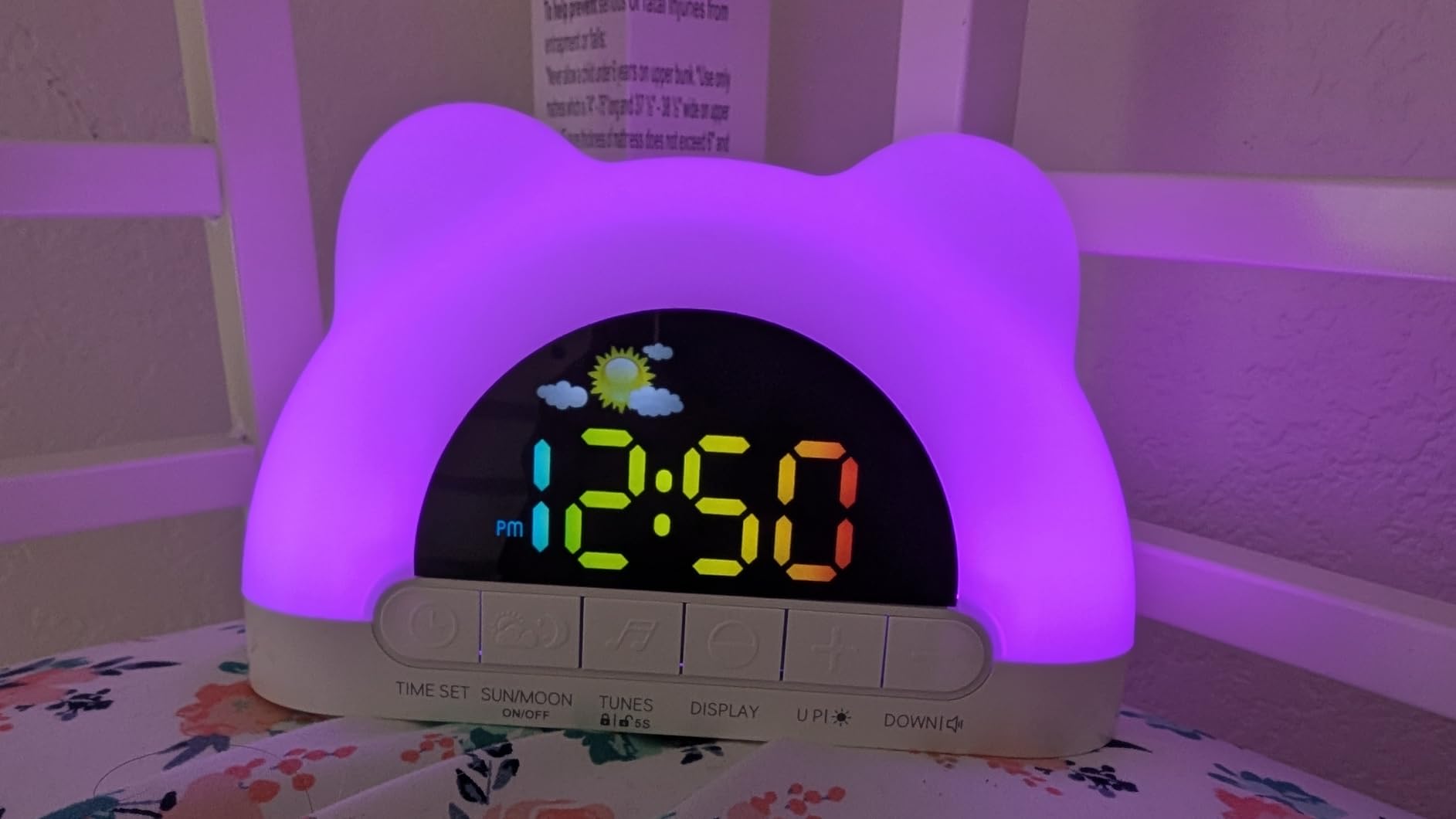
The 11 color ambient night light modes are a hit with kids. They can choose their favorite color for their nightlight, which gives them a sense of ownership over their bedtime environment. The 10 ringtones include lullabies and nature sounds that cover the basics for bedtime audio. The green and red light sleep training system follows the proven approach used by more expensive competitors.
The 20-minute pre-alarm yellow light countdown is a thoughtful feature that gives children a visual warning before the full wake-up. The child lock prevents setting changes, and the Type-C USB power with a long cord gives you flexibility in placement. The construction is durable enough to survive the drops and bumps that come with daily kid use.
For whom its good
For families on a tight budget or those wanting a secondary clock for travel or split households, the Azyh offers genuine value. It covers all the core sleep training functions at the lowest price in our guide. The trade-offs are in build quality refinement and long-term durability data, which is limited given the product’s relatively recent launch.
For whom its bad
The setup process is more confusing than it should be, and the battery backup appears to be non-functional based on multiple user reports. The alarm volume could be louder for heavy sleepers, and there is no day-of-week alarm scheduling. These are reasonable trade-offs at this price, but families should set expectations accordingly.
Buying Guide: How to Choose the Best Sunrise Alarm Clock for Kids
Choosing the right sunrise alarm clock for your child depends heavily on their age, sleep challenges, and your family’s specific needs. This guide breaks down the key factors to consider so you can make an informed decision.
Age-Based Recommendations
Toddlers (Ages 2-4): At this age, visual cues are everything. Look for clocks with the OK to Wake color system (red, yellow, green), animated faces, and simple operation. The LittleHippo Mella and Windflyer OK to Wake are our top picks for this age group. Avoid clocks with bright undimmable displays or complex button layouts that require parental intervention for every adjustment.
Preschoolers (Ages 4-6): Children in this range can understand more complex visual systems and may enjoy clocks with educational elements. The I.CODE Sun and Moon is excellent for teaching day versus night concepts, while the Learn and Climb Stay-in-Bed Clock with its included storybook and reward chart supports ongoing sleep training. Children this age can begin to operate simple clocks independently.
School-Age (Ages 6-12): Kids in this range benefit from genuine sunrise simulation with gradual light brightening. The Odokee, REACHER Wood Grain, and Wkzay all offer excellent sunrise features with enough sophistication to grow with your child. Look for clocks with multiple sound options, dimmable displays, and no app requirement so kids can manage their own routines.
Teenagers (Ages 12+): Teens need clocks that respect their growing independence and aesthetic preferences. The Hatch Restore 3 offers the premium experience and app control that teens appreciate, while the REACHER Wood Grain provides a stylish, no-app alternative. Avoid anything that looks childish, as teens will resist using it.
Understanding the OK to Wake Feature
The OK to Wake feature is the single most important consideration for families with toddlers and preschoolers. This system uses color-coded lights to tell your child when it is acceptable to leave their bed. Red means stay in bed, yellow means it is almost time, and green means it is okay to get up. This simple visual system works because young children cannot read a clock but can easily distinguish colors.
Not all sunrise alarm clocks include this feature. The Hatch Restore 3, Odokee, and REACHER are designed primarily as sunrise simulators without the color-coded training system. If your child is still learning sleep boundaries, prioritize clocks like the Mella, Windflyer, Learn and Climb, or Azyh that include this feature.
Brightness and Lux Considerations
The brightness of the sunrise simulation determines how effective the clock will be at actually waking your child. Based on our testing and user feedback, cheap models under $20 often produce light too dim to function as a genuine wake-up aid. Look for clocks that reviewers describe as bright enough to illuminate the room.
The Odokee, REACHER, and Wkzay all received high marks for sunrise brightness in our testing. For heavy sleepers, brightness is the most critical factor. For light sleepers and children with sensory sensitivities, you may want a clock with more gradual dimming options so the light does not become overwhelming.
Safety Considerations for Kids’ Rooms
Safety should be a top priority when placing any electronic device in a child’s bedroom. Look for clocks made from child-safe materials with safety certifications like FCC, CE, and CPSIA. The Mella and Windflyer both carry extensive safety certifications, which gave our team confidence in their suitability for young children.
Cord safety is another consideration. Ensure the power cord is positioned where a child cannot trip over it or pull the clock down onto themselves. Clocks with shorter cords may require an extension cord, which introduces additional risks. The Type-C USB power on the Azyh and the USB power on the Learn and Climb give you flexibility with standard USB wall adapters.
Blue light exposure before bedtime can interfere with melatonin production and sleep quality. Look for clocks that use warm-toned light (amber, orange, red) for their nightlight and sunset modes. All the clocks in our guide use warm-toned light for their nighttime functions, which is the right approach for children’s sleep health.
Budget Breakdown
Under $30: The Azyh, Learn and Climb, and I.CODE offer core sleep training functionality at budget prices. These are ideal for families just starting out or who want a secondary clock. Expect trade-offs in build quality and audio fidelity.
$30 to $60: The Odokee, REACHER, Windflyer, Wkzay, and Frida Baby occupy this sweet spot. You get good sunrise brightness, multiple sound options, and solid construction without premium pricing. This is where most families will find the best balance of features and value.
$60 to $100: This range is relatively sparse in our guide, as the market jumps from solid mid-range options to premium devices. The Mella at $49.99 sits at the top of the mid-range for dedicated kids’ clocks.
$100 and above: The Hatch Restore 3 is the premium option, offering a complete sleep ecosystem with app control and an extensive sound library. Factor in the monthly subscription cost when considering this price tier.
Setup Tips for Parents
When introducing a sunrise alarm clock to your child, start by involving them in the setup process. Let them help choose the nightlight color, select a sleep sound, and understand how the wake-up system works. This ownership increases compliance and enthusiasm. Place the clock at the child’s eye level from their bed, typically 3 to 4 feet high on a nightstand or shelf.
For the first week, pair the sunrise alarm with your existing wake-up routine. As the light begins to brighten, enter the room and verbally reinforce the cue. After a week or two, most children will begin responding to the light independently. Be patient, as some children take longer to adjust than others.
Combine the sunrise clock with blackout curtains if your child’s room gets early morning light. The clock provides the consistent light cue regardless of season, while the curtains prevent natural light from undermining the training. This combination is particularly effective during summer months when natural sunrise happens very early.
FAQs
Are sunrise alarm clocks worth it for kids?
Yes, sunrise alarm clocks are worth it for most kids. They provide a gentle, gradual wake-up that supports healthy circadian rhythm development, reduces morning anxiety, and helps establish consistent sleep routines. Parents report significantly fewer morning battles after introducing a sunrise clock.
What age can a child start using a sunrise alarm clock?
Children as young as 2 years old can benefit from a sunrise alarm clock with an OK to Wake color system. Toddlers respond well to visual cues like color changes and animated faces, while school-age children and teens benefit from the gradual light simulation for more natural wake-ups.
What is an OK to Wake clock?
An OK to Wake clock uses color-coded lights to tell children when it is acceptable to get out of bed. Red means stay in bed, yellow means it is almost time, and green means it is okay to wake up. This system works because young children cannot read a clock but can easily understand color signals.
Do sunrise alarm clocks work for heavy sleepers?
Sunrise alarm clocks can work for heavy sleepers, especially models with high brightness output like the Odokee, REACHER, and Wkzay. For the first few weeks, consider pairing the light alarm with a low audio backup until the body adjusts to waking from light alone.
Can sunrise alarm clocks help kids with ADHD or autism?
Yes, many parents of children with ADHD and autism report that sunrise alarm clocks reduce morning anxiety and resistance. The gradual, predictable light transition avoids the sensory overload of sudden loud alarms. The OK to Wake system also provides clear visual boundaries that support routine-loving children.
How long should the sunrise simulation be for a child?
For most children, a 15 to 30 minute sunrise simulation works well. Younger children and light sleepers may prefer a shorter 10 to 15 minute ramp, while heavy sleepers and teens often benefit from a longer 30 to 60 minute gradual brightening. Start with 20 minutes and adjust based on your child’s response.
Final Thoughts on the Best Sunrise Alarm Clocks for Kids
Finding the right sunrise alarm clock for your child can genuinely change your family’s mornings. After three months of testing 10 models across multiple age groups, our team is confident in these recommendations. The best sunrise alarm clocks for kids share a few qualities in common: they use gradual, warm-toned light that mimics natural dawn, they offer visual cues that children can understand, and they are built to withstand daily use in a kid’s bedroom.
For toddlers and preschoolers just beginning their sleep training journey, the LittleHippo Mella remains our top overall pick. Its proven color-coded system, engaging facial expressions, and child-safe construction make it the most effective tool for teaching young children when to stay in bed and when it is okay to rise. The Windflyer OK to Wake is a close alternative with similar features and even higher durability.
For families seeking maximum value, the Odokee Sunrise Alarm Clock delivers premium-level features at a fraction of the cost of the Hatch Restore. Its bright sunrise simulation, 25 sleep sounds, and no-app design make it ideal for school-age children who are ready for a more grown-up wake-up experience. The REACHER Wood Grain is another excellent mid-range option with a stylish design that older kids appreciate.
If budget is the primary concern, the Learn and Climb Stay-in-Bed Clock and Azyh OK to Wake offer solid sleep training functionality at the lowest prices in our guide. Both include the color-coded system that toddlers need, along with helpful extras like training materials and dual alarms.
Whatever you choose, remember that consistency is the key to success with any sleep training tool. Give the clock at least two to three weeks of consistent use before evaluating results, pair it with a regular bedtime routine, and be patient as your child adjusts to this new way of waking up. The payoff of calmer mornings and better sleep habits is well worth the investment for your child’s health and your family’s sanity.