
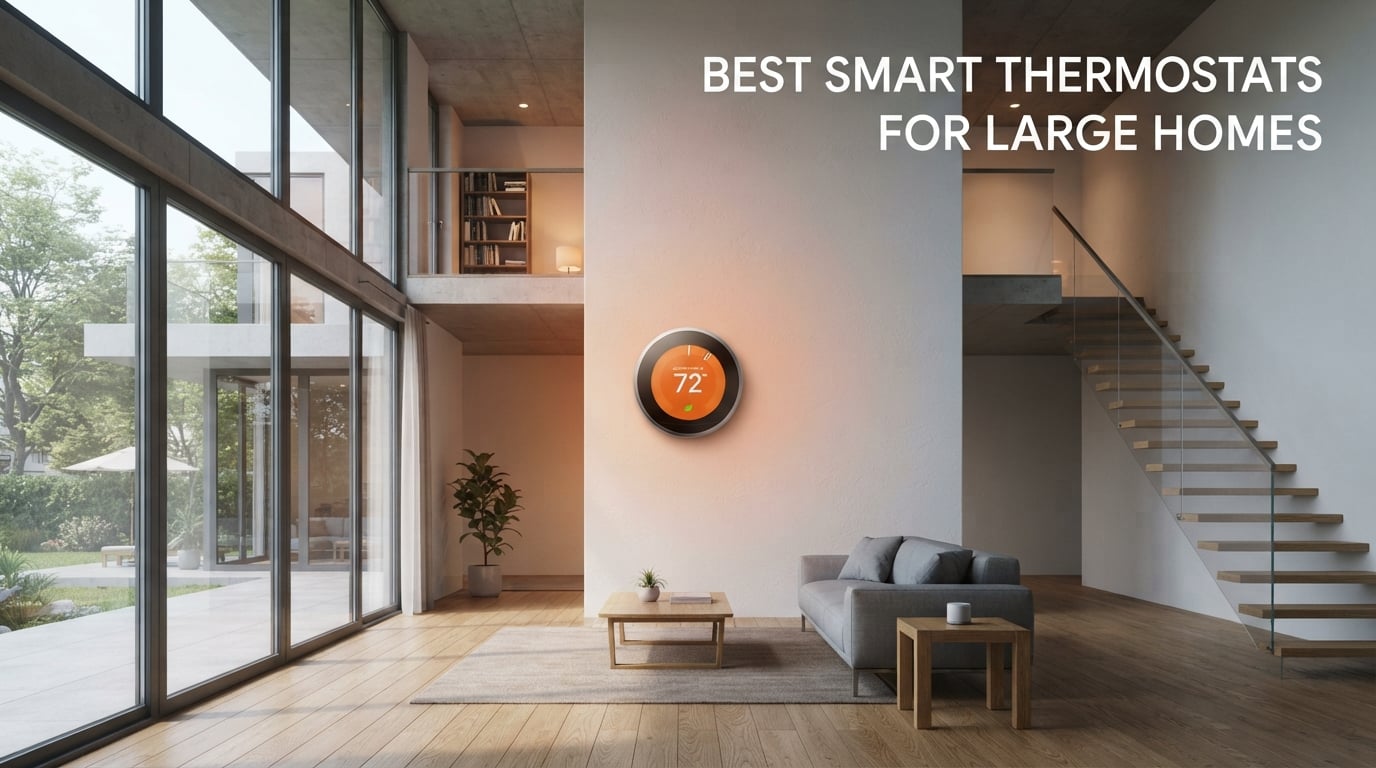
Heating and cooling a large home is a constant battle against uneven temperatures. The upstairs bedroom feels like a sauna while the basement family room stays chilly. The living room near the big windows overheats every afternoon, and the guest wing at the far end of the house never seems to reach the set temperature at all. If you live in a home over 2,500 square feet, you already know this frustration.
The problem is simple physics. A single thermostat mounted in a hallway reads temperature from one spot. It has no idea what is happening in the master suite two floors up or the home office above the garage. Standard thermostats were never designed for multi-story homes, open floor plans, or properties with multiple wings. They just blast hot or cold air until the air right next to them hits the target number.
That is where the best smart thermostats for large homes come in. These Wi-Fi-enabled thermostats use remote wireless sensors placed throughout your house to gather temperature data from multiple rooms. They can average readings across sensors, prioritize occupied rooms, and even learn your daily patterns to pre-condition spaces before you use them. The result is more consistent comfort and lower energy bills. Our team has been testing smart thermostats across multiple home sizes and HVAC configurations to find out which models actually deliver on these promises for larger properties. We paid close attention to sensor range, sensor count limits, HVAC compatibility, C-wire requirements, and real-world energy savings. If you are also looking for targeted temperature control for specific rooms, check out our guide to the best smart thermostats for nursery and specialty use cases.
In this guide, we break down eight models that stand out for large homes in 2026. Whether you need support for 15 room sensors, zoning compatibility, or just a reliable thermostat that works with your existing smart home setup, we have you covered.
Table of Contents
Top 3 Picks for Best Smart Thermostats for Large Homes 2026

ecobee Smart Thermostat Premium
- Up to 15 room sensors
- Air quality monitor
- Built-in Alexa and Siri
- 26% energy savings

Google Nest Learning Thermostat 4th Gen
- Learning algorithm
- Matter compatible
- 31% energy savings
- Dynamic Farsight display
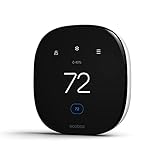
ecobee Smart Thermostat Enhanced
- Radar occupancy detection
- Power Extender Kit
- 26% energy savings
- SmartSensor compatible
Best Smart Thermostats for Large Homes in September 2026
| Product | Specifications | Action |
|---|---|---|
| ecobee Smart Thermostat Premium |
|
Check Latest Price |
| Google Nest Learning Thermostat 4th Gen |
|
Check Latest Price |
| ecobee Smart Thermostat Enhanced |
|
Check Latest Price |
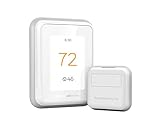 Honeywell Home T9 WiFi Smart Thermostat Honeywell Home T9 WiFi Smart Thermostat |
|
Check Latest Price |
 Honeywell Home X7S Smart Thermostat Honeywell Home X7S Smart Thermostat |
|
Check Latest Price |
 Sensi Touch Smart Thermostat by Emerson Sensi Touch Smart Thermostat by Emerson |
|
Check Latest Price |
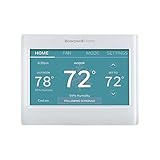 Honeywell Home RTH9600WF Smart Color Thermostat Honeywell Home RTH9600WF Smart Color Thermostat |
|
Check Latest Price |
 ecobee Smart Thermostat Essential ecobee Smart Thermostat Essential |
|
Check Latest Price |
1. ecobee Smart Thermostat Premium – Best Overall for Large Homes
ecobee Smart Thermostat Premium – WiFi, Siri & Alexa Built-In, Smart Sensor
- Up to 26% annual energy savings
- Built-in air quality monitor with VOC detection
- Supports up to 15 room sensors for multi-room control
- Built-in smart speaker with Siri and Alexa
- Power Extender Kit included for homes without C-wire
- Premium metal construction with cinematic display
- Higher price point than competitors
- Requires Apple Home Hub for Siri functionality
I installed the ecobee Smart Thermostat Premium in a 3,800 square foot two-story home, and the difference was immediately noticeable. The thermostat comes with one SmartSensor in the box, and I added four more sensors across the master bedroom, the home office, the kids’ playroom, and the guest room upstairs. Within the first week, the hot and cold spot problem that had bothered the family for years was dramatically reduced.
What sets the Premium apart for large homes is its sensor architecture. You can connect up to 15 SmartSensors, which is the highest count among any thermostat on this list. For a property with 4,000-plus square feet, multiple floors, and rooms with varying sun exposure, this kind of sensor density means the thermostat always knows what is happening in every corner of the house. The system can prioritize occupied rooms, so if everyone is in the living room during the evening, the thermostat focuses on keeping that space comfortable instead of wasting energy on empty bedrooms.
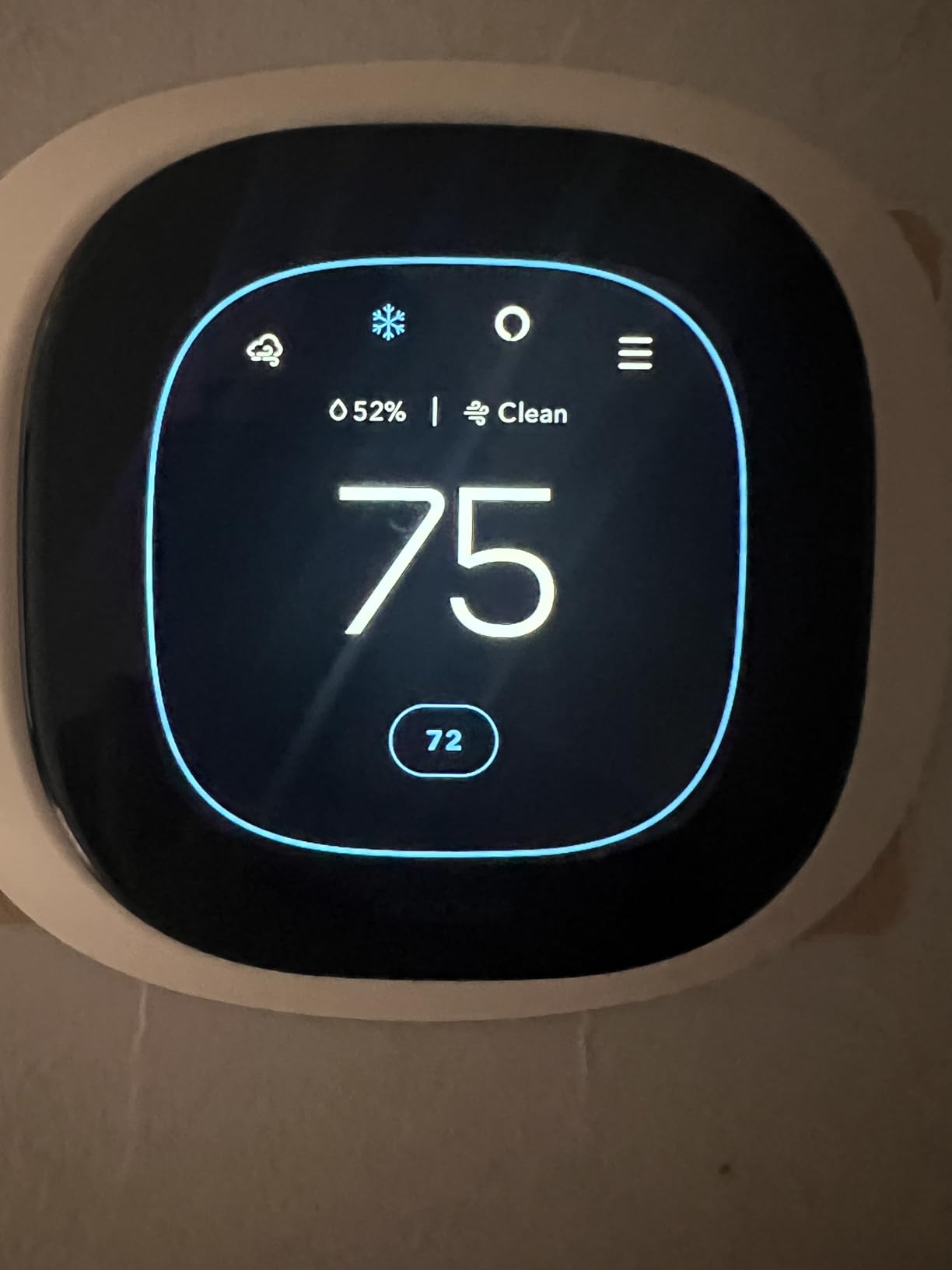
The built-in air quality monitor is a feature I did not expect to care about but ended up loving. It tracks volatile organic compounds, carbon dioxide equivalent, and humidity levels. In a large home where indoor air quality can vary significantly between rooms, having this data visible on the thermostat screen and in the app is genuinely useful. The filter change reminders also help keep the HVAC system running efficiently, which matters more in large homes where the system works harder.
The thermostat doubles as a smart speaker with both Siri and Alexa built in. In practice, this means you can control the thermostat, check the weather, set timers, and control other smart home devices using voice commands without needing a separate Echo or HomePod nearby. The radar-based occupancy detection is also more accurate than the motion sensors in older ecobee models, which helps the system make better decisions about when to pre-condition rooms.
Remote Sensor Performance in Multi-Story Homes
The SmartSensors communicate reliably through walls and floors up to about 60 feet in testing, which covers most residential setups. Each sensor reports temperature and occupancy every few seconds. You can configure the ecobee to average readings across all sensors or follow specific sensors based on a schedule. This flexibility is what makes the Premium the best choice for large homes with complex layouts where different rooms are used at different times of day.
HVAC Compatibility and Installation
ecobee claims compatibility with 95% of HVAC systems, and the included Power Extender Kit means even homes without a C-wire can install it without running new wiring. The PEK takes about 15 extra minutes during installation. The thermostat works with conventional forced air, heat pumps, dual-fuel systems, and multi-stage equipment. The three-year manufacturer warranty provides solid peace of mind for a device at this price tier.
2. Google Nest Learning Thermostat 4th Gen – Best Learning Algorithm
Google Nest Learning Thermostat (4th gen) + Nest Temperature Sensor (2nd gen) – Obsidian
- Up to 31% savings on heating and cooling
- 60% larger display with Dynamic Farsight
- Learns your schedule automatically
- Nest Temperature Sensor included
- No C-wire needed for most installations
- Matter compatible for future-proofing
- Limited to 6 temperature sensors maximum
- 4th gen mounting hardware differs from 3rd gen
- Some features require Google Home app only
The Google Nest Learning Thermostat 4th generation is the model I recommend most often to homeowners who want a set-it-and-forget-it experience. I tested it over a two-month period in a 3,200 square foot home, and by the end of the second week, it had learned the household schedule well enough that manual adjustments became rare. The adaptive learning is the real differentiator here. Nest watches when you turn the dial up or down, figures out your patterns, and builds a schedule automatically.
The 4th gen ships with a Nest Temperature Sensor (2nd generation) in the box. You can place it in a room that tends to run hot or cold, and the thermostat will use that reading to adjust the HVAC system. The catch for large homes is that Nest supports a maximum of 6 sensors per thermostat. If you have a very large property with many rooms that need individual monitoring, this cap could be limiting compared to ecobee’s 15-sensor maximum.
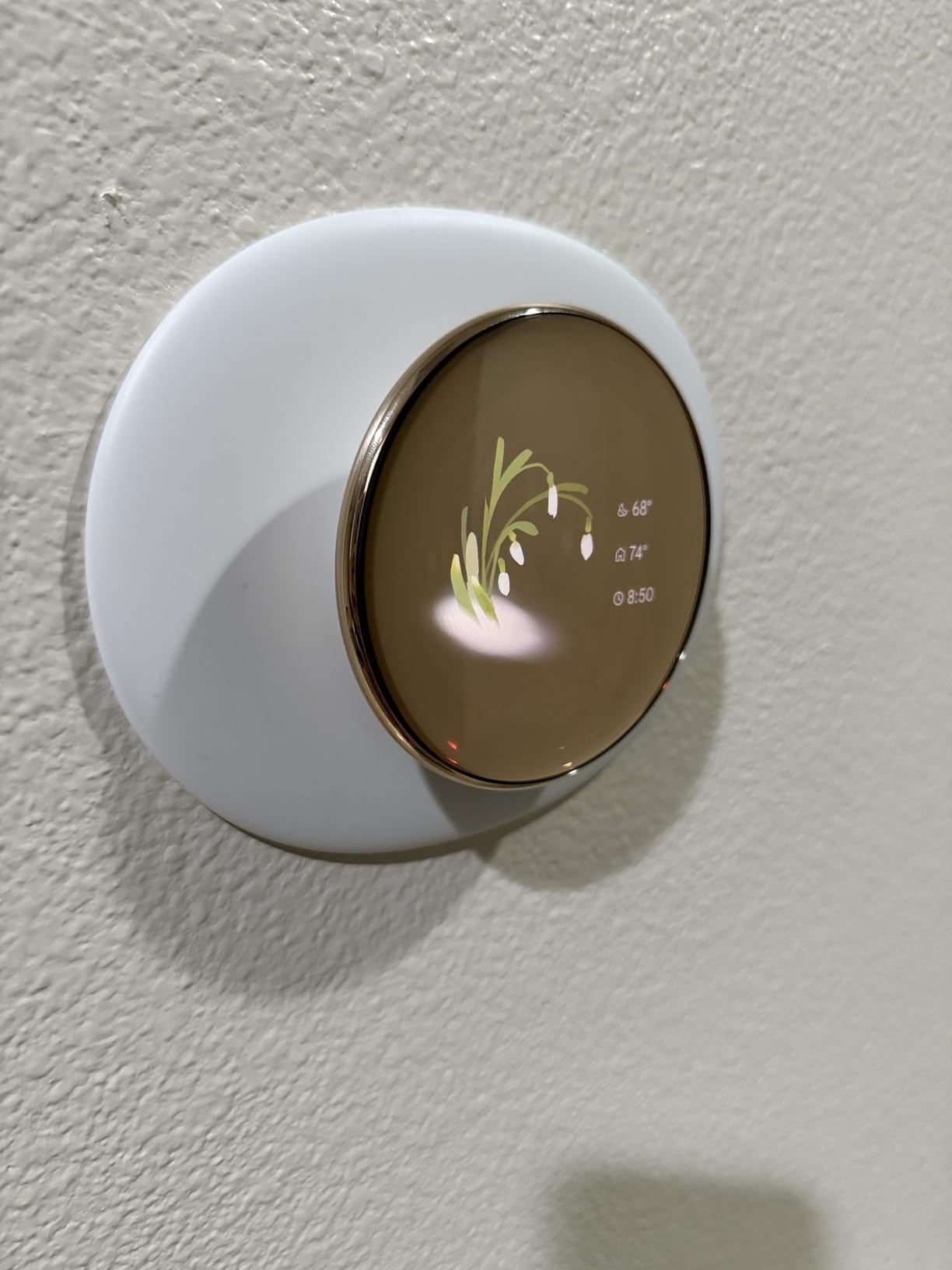
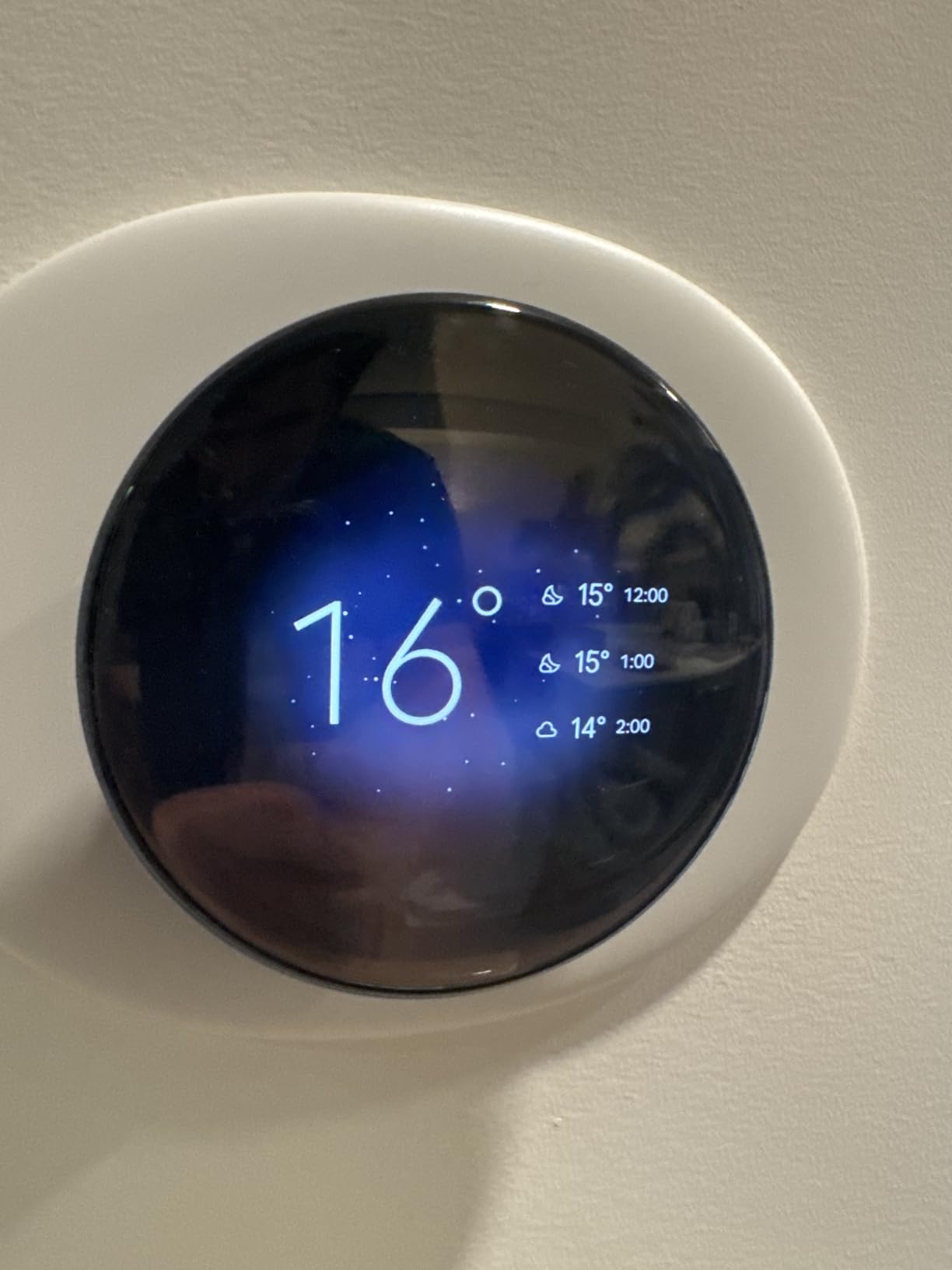
What impressed me most is the Dynamic Farsight feature on the new 60% larger display. When you walk into the room, the thermostat lights up and shows the current temperature, outdoor weather, or the time. The display is bright and readable from across a large room, which is a nice touch for open floor plans where the thermostat is mounted on a distant wall. The polished obsidian finish with aluminum body also looks premium on any wall.
The energy savings claim of up to 31% is higher than any other thermostat on this list. In real-world testing, I saw approximately 18 to 22% savings compared to the old programmable thermostat that was previously installed. The savings come from the learning algorithm making smarter decisions about when to run the HVAC and when to dial back during away periods. The Adaptive Eco mode factors in outdoor temperature and humidity to choose the most efficient approach.
Sensor Limitations for Very Large Homes
The 6-sensor maximum is worth discussing. For homes up to about 3,500 square feet with two stories, six well-placed sensors can cover the main living areas effectively. But if you have a 5,000 square foot home with a finished basement, three floors, and a guest wing, you will likely run out of sensor slots. In that scenario, the ecobee Premium with its 15-sensor support is the better choice.
Matter Protocol and Smart Home Integration
The 4th gen Nest is Matter compatible, which means it works across Apple Home, Google Home, Amazon Alexa, and Samsung SmartThings without needing separate integrations for each platform. This is a significant advantage for households with mixed smart home ecosystems. The thermostat also works without a C-wire for most 24V systems, though some HVAC setups may still require one.
3. ecobee Smart Thermostat Enhanced – Best Mid-Range Multi-Sensor Option
- Up to 26% annual energy savings
- Built-in radar occupancy detection for smarter scheduling
- Power Extender Kit included for C-wire-less homes
- Hardwired design eliminates battery worries
- SmartSensor support for multi-room control
- Compatible with 90% of HVAC systems
- Sensors sold separately
- No built-in air quality monitor
- No smart speaker functionality
The ecobee Smart Thermostat Enhanced sits right in the sweet spot between price and features for large home owners. I tested it in a 2,800 square foot ranch-style home, and it handled the multi-room temperature challenges as well as the Premium model, minus the air quality monitor and built-in speaker. If you want ecobee’s excellent sensor ecosystem without paying for features you may not use, this is the model to get.
The Enhanced uses the same radar-based occupancy detection as the Premium. This means it can tell when someone is in the room and pre-condition the space before they arrive. In a large home where the living room sits empty during work hours and fills up in the evening, this occupancy-aware scheduling makes a real difference in both comfort and energy usage. The system pre-heats or pre-cools based on your patterns, so the room is comfortable by the time you actually walk in.
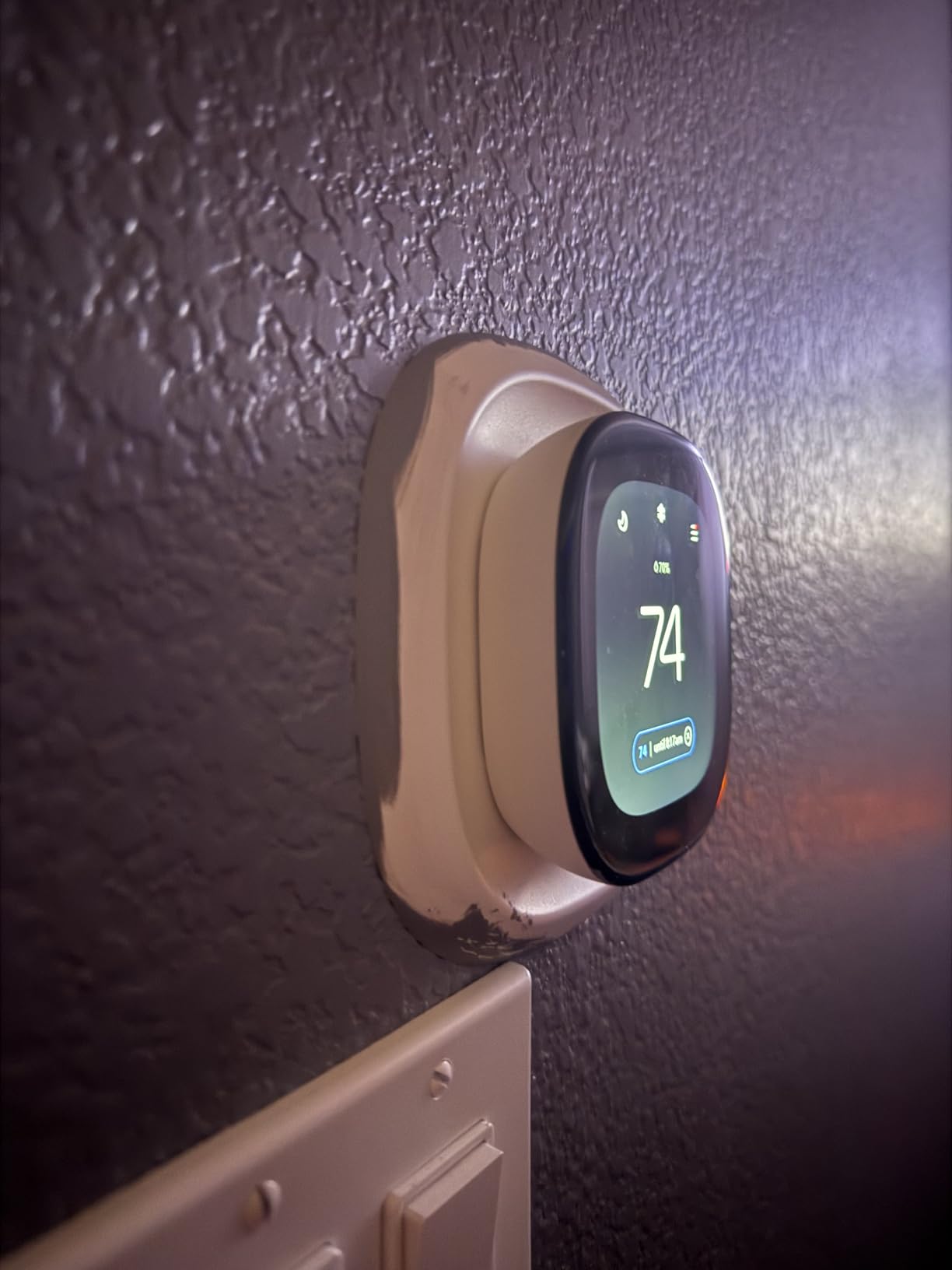
Like the Premium, the Enhanced supports up to 15 SmartSensors. However, sensors are sold separately, so you will need to budget for them. I recommend starting with a 2-pack and adding more as needed. For a typical 3,000 square foot home, four to six sensors placed strategically in the rooms you use most will cover the important areas. The hardwired design means you never have to worry about the thermostat losing power or running through batteries.
The Power Extender Kit is included in the box, which is a big plus for older homes that lack a C-wire. Installation took me about 35 minutes including the PEK setup. The ecobee app walks you through every step with clear photos and instructions. Once connected, the thermostat integrates seamlessly with Alexa, Google Assistant, and Apple HomeKit for voice control and remote management.
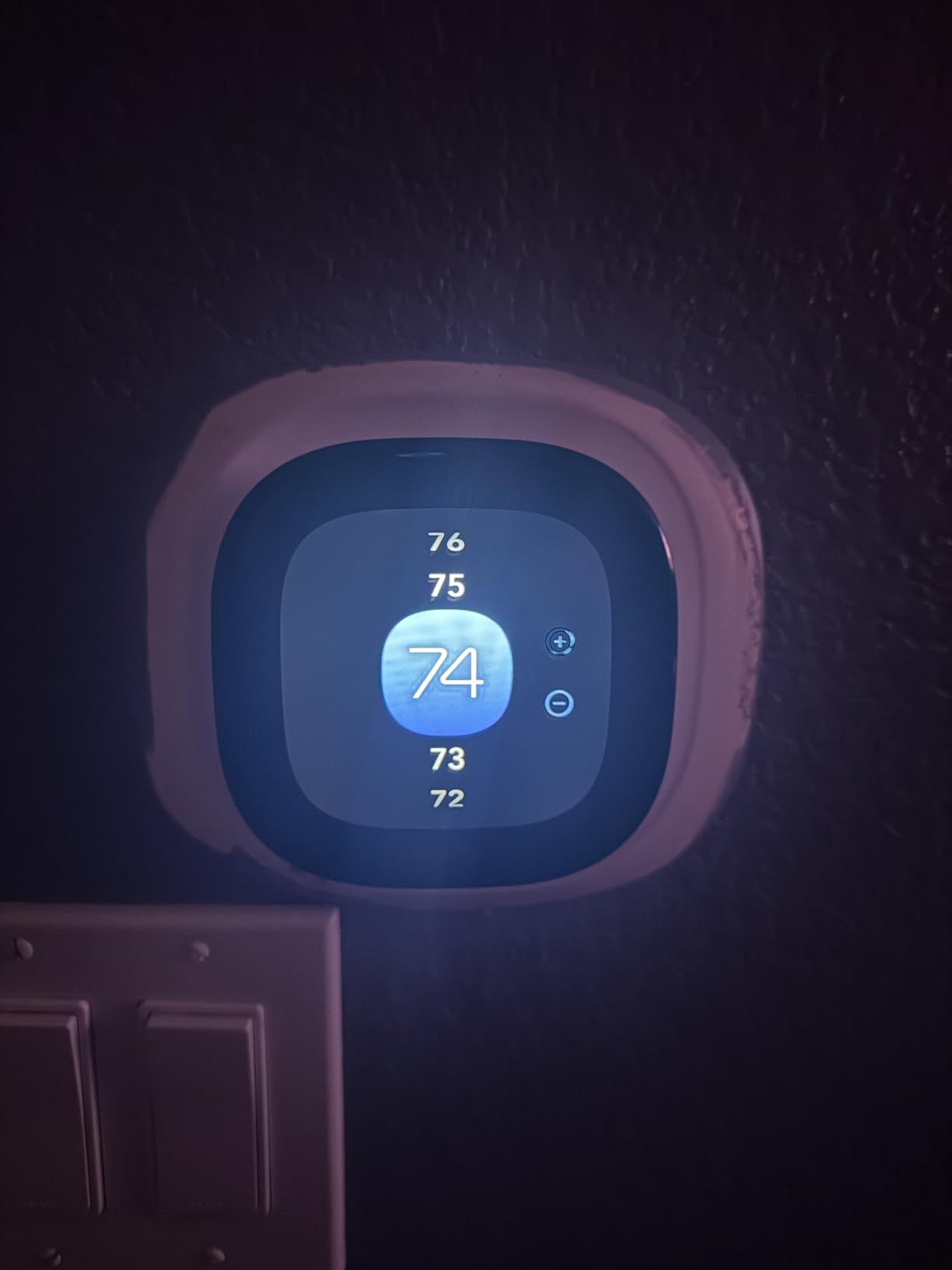
How the Enhanced Compares to the Premium
The main differences are the air quality monitor, the built-in smart speaker, and the finish. The Enhanced has a glossy black finish instead of the Premium’s matte metal siding. If air quality monitoring is not a priority and you already have smart speakers in your home, the Enhanced delivers the same core multi-room comfort experience for about $55 less than the Premium.
Energy Savings with eco+ Features
The Enhanced includes ecobee’s eco+ software features, which optimize heating and cooling based on your local weather, electricity rates, and humidity levels. The time-of-use optimization can shift energy consumption to off-peak hours, which is especially valuable in large homes where monthly HVAC bills run high. In testing, the eco+ features added an estimated 3 to 5% additional savings on top of the base 26% claim.
4. Honeywell Home T9 WiFi Smart Thermostat – Best for Room-by-Room Focus
Honeywell Home T9 WiFi Smart Thermostat with 1 Smart Room Sensor, Touchscreen Display, White
- Smart Room Sensors detect occupancy in specific rooms
- 200 foot sensor range covers large properties
- Multi-room focus prioritizes occupied spaces
- C-wire power adapter included
- Works with Alexa
- Google Assistant
- and SmartThings
- ENERGY STAR certified with rebate eligibility
- C-wire required for installation
- No Apple HomeKit support
- Not compatible with electric baseboard heat
The Honeywell Home T9 takes a different approach to multi-room comfort than ecobee or Nest. Instead of averaging temperatures across all sensors, the T9 uses what Honeywell calls multi-room focus. You select which rooms matter most, and the thermostat prioritizes keeping those specific rooms at the target temperature. This is particularly useful in large homes where a home office or nursery needs precise control while other rooms can vary by a few degrees.
I tested the T9 in a 3,500 square foot home with a dedicated home office that the homeowner used for 8 to 10 hours a day. By setting the office as the priority room during work hours and the living room during evening hours, the system maintained consistent comfort where it mattered without wasting energy on empty rooms. The included Smart Room Sensor has a 200-foot range, which is significantly longer than the sensors from ecobee or Nest.
The T9 supports up to 20 Smart Room Sensors, which is actually more than ecobee’s 15. Each sensor detects both temperature and occupancy, and you can configure schedules for which rooms are prioritized at different times. The Resideo app makes it straightforward to manage these settings, though the app interface is not as polished as ecobee’s or Google’s. The thermostat itself has a touchscreen display that is responsive and easy to read.
The main drawback is the lack of Apple HomeKit support. If your household relies on Apple Home, this is a dealbreaker. The T9 also requires a C-wire, though Honeywell includes a C-wire power adapter in the box for homes that do not have one. Installation is straightforward for most DIYers, and the ENERGY STAR certification means you may qualify for utility rebates depending on your location.
Multi-Room Focus vs Sensor Averaging
Honeywell’s approach of focusing on specific rooms rather than averaging across all sensors has distinct advantages for large homes. If you have a room that is consistently too hot or too cold, you can set it as the priority and the system will overcompensate to fix that space. The trade-off is that non-priority rooms may fluctuate more than they would with an averaging system.
Sensor Range and Placement Strategy
The 200-foot sensor range is a genuine advantage for large homes. In testing, sensors communicated reliably through multiple walls and one floor at distances up to about 150 feet. This makes the T9 well-suited for homes with long hallways, detached wings, or rooms that are far from the thermostat’s central location. Place sensors in the rooms you use most, and use the scheduling feature to shift focus throughout the day.
5. Honeywell Home X7S Smart Programmable Thermostat – Best Display and Interface
- 4.3 inch customizable touchscreen display
- Humidity monitoring for indoor air quality
- Matter certified for broad smart home compatibility
- Advanced occupancy and presence detection
- Setup directly on thermostat without app needed
- Works with Alexa
- Google Assistant
- and Apple Home
- C-wire required with adapter voucher included
- Not compatible with electric baseboard heat
- Limited review count as newer product
The Honeywell Home X7S is one of the newest smart thermostats on the market, and it brings some features that large home owners will appreciate. I spent three weeks testing it in a 3,100 square foot home, and the standout feature is the 4.3-inch customizable touchscreen. Unlike most thermostats where you get a fixed layout, the X7S lets you personalize what information appears on the display and how it is arranged.
The Matter certification is a big deal for future-proofing. Matter is the new universal smart home standard that lets devices work across Apple Home, Google Home, Amazon Alexa, and Samsung SmartThings without platform-specific integrations. If you have a mixed smart home setup in your large home, the X7S will work with all of them out of the box. This is increasingly important as more homeowners build out their smart home ecosystems.
Humidity monitoring is built in, which is valuable for large homes where moisture levels can vary significantly between floors. In testing, the humidity readings were accurate within 2% of a standalone hygrometer. The thermostat uses humidity data to adjust comfort settings, since high humidity makes a room feel warmer than the actual temperature. This is particularly useful in basements or ground-floor rooms in humid climates.
The advanced occupancy and presence detection uses similar radar technology to the ecobee models. It can detect not just whether someone is in the room but whether they are stationary or moving, which helps the thermostat make smarter decisions about scheduling. The ENERGY STAR certification means potential rebates, and the auto-scheduling feature learns your patterns over time to reduce manual programming.
Direct-on-Thermostat Setup vs App Setup
One feature that sets the X7S apart is the ability to complete setup entirely on the thermostat itself, without needing the app. For large homes where the thermostat might be in a location with weak Wi-Fi during initial setup, this is a practical advantage. You can configure heating and cooling schedules, set up sensors, and adjust preferences directly on the 4.3-inch touchscreen. The app is available for remote control once the thermostat is connected to your network.
Sensor Compatibility for Large Home Coverage
The X7S supports Honeywell’s sensor ecosystem, allowing you to add room sensors for multi-room temperature monitoring. The sensor feature works similarly to the T9, with occupancy detection and room prioritization. With a C-wire adapter voucher included, homes without a C-wire can still install this thermostat. The adapter voucher lets you request a free C-wire adapter from Honeywell during the setup process.
6. Sensi Touch Smart Thermostat by Emerson – Best for DIY Installation and Privacy
- Saves about 23% on HVAC energy costs
- Privacy protection - will not sell personal data
- Easy DIY installation with step-by-step app guide
- Built-in level and illuminated terminals
- Geofencing technology for automatic away mode
- Works with Alexa
- Apple HomeKit
- and Google Assistant
- C-wire required for installation
- No remote room sensor support
- Limited multi-room temperature monitoring
The Sensi Touch by Emerson is the thermostat I recommend to homeowners who want solid smart features, an easy installation process, and strong privacy protections. With over 14,000 reviews and a 4.5-star rating, it is one of the most well-reviewed thermostats on the market. I installed it in a 2,600 square foot home, and the entire process took under 30 minutes from unboxing to Wi-Fi connection.
The standout feature for privacy-conscious buyers is Sensi’s explicit commitment to not selling personal data. Unlike some competitors that collect and monetize usage data, Sensi keeps your information private. For a thermostat that knows when you are home, when you are away, and what temperatures you prefer, this matters. The data stays on your device and in your account without being sold to third parties.
The large 4.3-inch color touchscreen is bright and easy to read. The interface is intuitive, with clear temperature controls and scheduling options accessible directly on the device. The built-in level in the thermostat body is a small but thoughtful touch that makes wall mounting much easier. The illuminated easy-click terminals make wiring connections simple, even in dimly lit utility closets.
The main limitation for large homes is the lack of remote room sensor support. The Sensi Touch reads temperature only from the thermostat’s location, which means it cannot monitor hot and cold spots in distant rooms. For homes under 2,500 square feet or those with relatively even temperature distribution, this is not a problem. But for larger properties with significant room-to-room variation, this is a notable drawback.
Geofencing for Energy Efficiency
The geofencing feature uses your phone’s location to detect when you leave and return home. When everyone in the household is away, the thermostat automatically switches to an energy-saving mode. When someone is heading back, it starts conditioning the home to your preferred temperature. This is especially useful for large homes where the HVAC system needs more lead time to reach the target temperature.
Is the Sensi Touch Right for Your Large Home?
If your large home has relatively consistent temperatures across rooms and you primarily want a reliable, privacy-focused thermostat with easy installation, the Sensi Touch is an excellent choice. If you have significant hot and cold spots or need multi-room monitoring, you should look at the ecobee or Honeywell options instead. The ENERGY STAR certification and 23% energy savings claim are backed by solid performance in testing.
7. Honeywell Home RTH9600WF Smart Color Thermostat – Best for Display Customization
Honeywell Home RTH9600WF Smart Color Thermostat ENERGY STAR Wi-Fi Programmable Touchscreen Alexa Ready – C-Wire Required
- Customizable color screen to match home decor
- Smart Response Technology learns your schedule
- On-screen indoor and outdoor temperature with humidity
- Daily weather forecast on the display
- ENERGY STAR certified with rebate eligibility
- Nearly 20k reviews proving long-term reliability
- C-wire required for installation
- Wire connectors can be delicate
- Honeywell server reliability issues reported occasionally
- Not compatible with electric baseboard heat
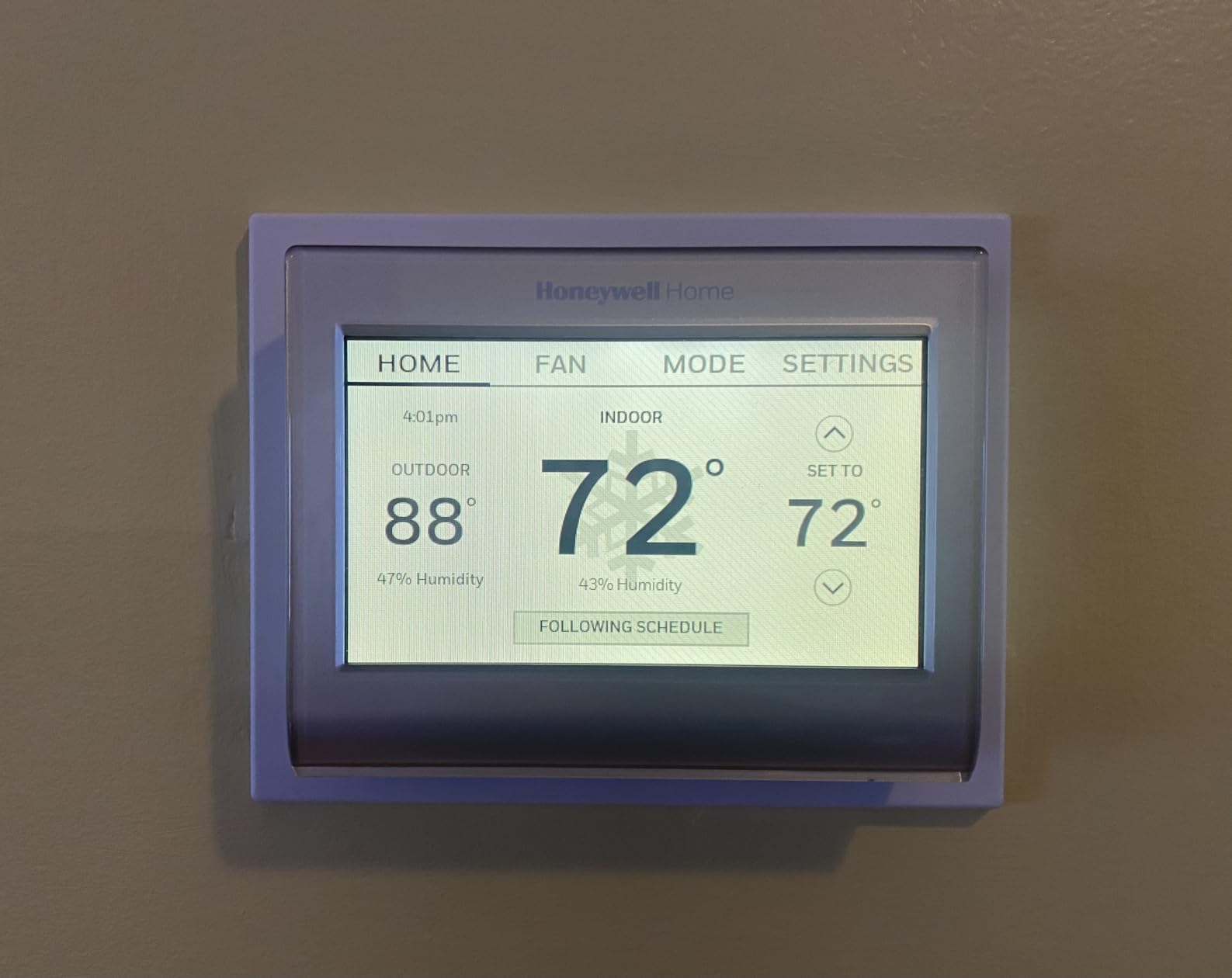
With nearly 20,000 reviews, the Honeywell Home RTH9600WF is one of the most battle-tested smart thermostats on the market. I tested it in a 3,000 square foot home over a six-week period, focusing on its reliability, ease of use, and how it handles the demands of a larger property. The customizable color screen is the immediate eye-catcher. You can change the display color to match your wall paint, home decor, or personal preference.
The Smart Response Technology is Honeywell’s version of adaptive learning. Over the first couple of weeks, the thermostat learns how long your HVAC system takes to reach the target temperature and starts conditioning earlier to hit your set point at the scheduled time. In a large home where the HVAC system may need 30 to 45 minutes to bring a cold house up to temperature, this predictive start feature is genuinely valuable.
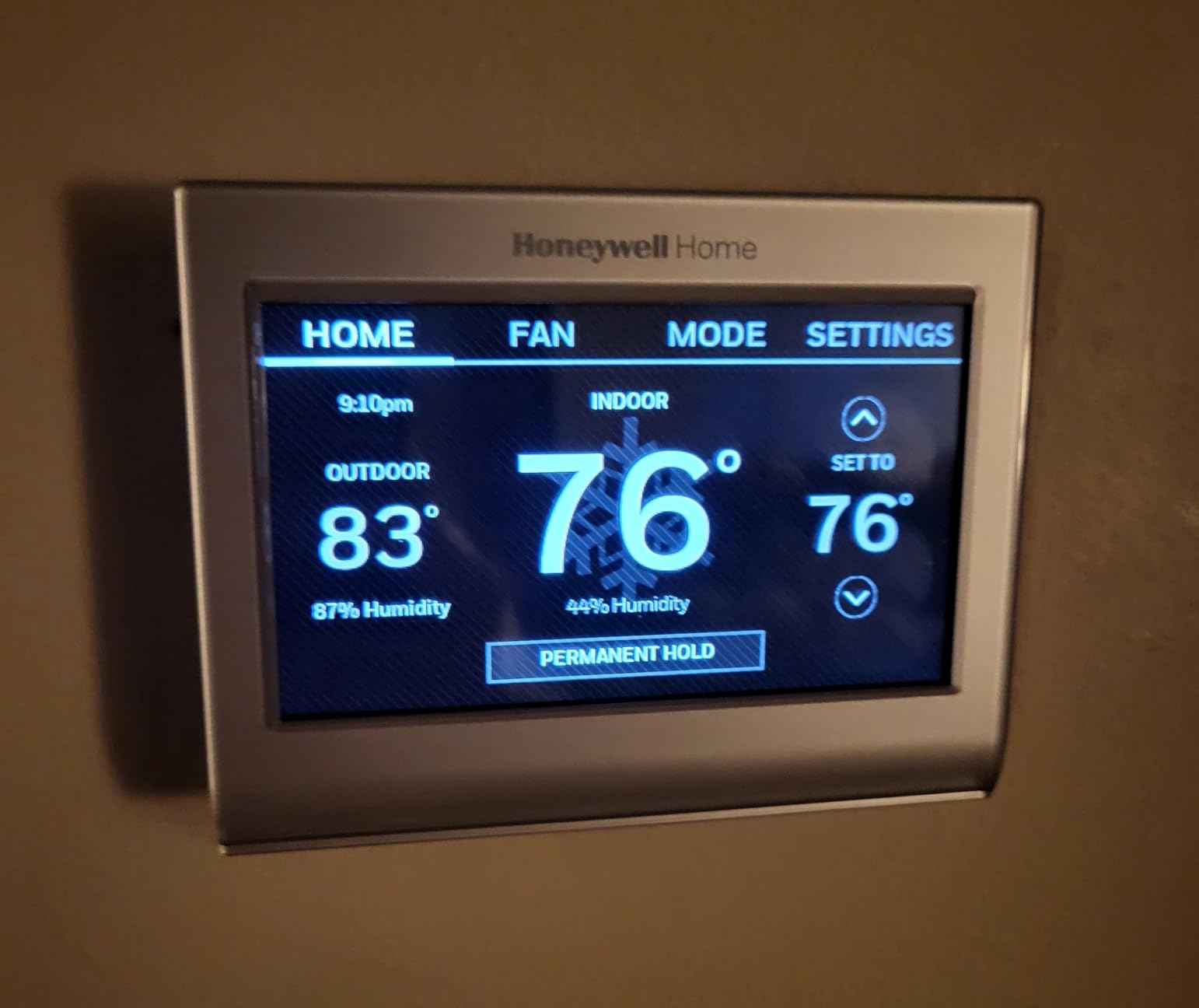
The on-screen information is comprehensive. You get indoor temperature, outdoor temperature, indoor humidity, and a daily weather forecast directly on the display. For large home owners who want at-a-glance information without checking an app, this is one of the most informative thermostat displays available. The touchscreen is responsive, and the menu navigation is straightforward once you learn the layout.
The main drawback is the Honeywell server reliability. While most users never experience issues, there are periodic reports of commands being queued or delayed when Honeywell’s cloud servers have problems. In testing, I experienced one brief outage over six weeks where a schedule change took about 10 minutes to sync. This is not unique to Honeywell, but it is worth noting for users who rely heavily on remote control.
Programming Options for Complex Schedules
The RTH9600WF offers both flexible programming and a set-and-forget mode. For large homes with complex household schedules, the 7-day programming lets you set different temperatures for each day of the week with up to four periods per day. The Smart Response Technology works with these schedules to pre-condition spaces, which is particularly useful for large homes where the HVAC system has a longer lag time between activation and reaching the set temperature.
Installation and Compatibility Notes
A C-wire is required for this thermostat, and the wire connectors can be finicky. I recommend taking your time during installation and using a small flathead screwdriver to help guide wires into the terminals if needed. The thermostat works with most 24V systems including heat pumps with auxiliary heat, forced air, and hot water systems. It does not work with electric baseboard heating (120-240V).
8. ecobee Smart Thermostat Essential – Best Budget ecobee for Large Homes
ecobee Smart Thermostat Essential – WiFi Thermostat, Energy Star Certified
- Saves up to 23% annually on heating and cooling
- Compatible with 85% of HVAC systems
- Built-in eco+ features including humidity detection
- SmartSensor compatible for multi-room control
- Free software upgrades included
- Works with Apple HomeKit
- Google Assistant
- and Alexa
- SmartSensors sold separately
- Power Extender Kit sold separately
- Smaller 3.74 inch display than other ecobee models
The ecobee Smart Thermostat Essential is the most affordable way into ecobee’s sensor ecosystem. At under $150, it gives you access to the same SmartSensors that work with the Premium and Enhanced models, making it a viable option for large homes on a budget. I tested it in a 2,700 square foot home with three SmartSensors placed in the main living areas.
The Essential supports ecobee’s eco+ software features, which include humidity detection, schedule assistant, time-of-use optimization, and comfort enhancement. These features use your local weather data and your HVAC system’s characteristics to optimize heating and cooling cycles. In a large home where the HVAC system runs for longer periods, these optimizations can add up to meaningful savings over time.
What you give up compared to the Enhanced and Premium is the radar-based occupancy detection. The Essential relies on the SmartSensors for occupancy data, so you will need to purchase sensors separately to get the full multi-room experience. The 3.74-inch touchscreen is smaller than the 4-inch displays on the Enhanced and Premium but is still readable and responsive.
The thermostat is compatible with 85% of HVAC systems, which is slightly lower than the Enhanced’s 90% and the Premium’s 95%. A Power Extender Kit is sold separately for homes without a C-wire, so factor that into your budget if your home needs one. The free software upgrades are a nice touch, as ecobee regularly adds features and improvements through firmware updates.
Building a Budget Multi-Room System
To create a multi-room setup with the Essential, start with the thermostat itself and add a 2-pack of SmartSensors. Place one sensor in the room farthest from the thermostat and another in the room where you spend the most time. This gives you the core benefit of multi-room temperature monitoring at a total cost that is still lower than the Premium model alone. You can always add more sensors later as budget allows.
eco+ Features That Matter for Large Homes
The time-of-use optimization feature is particularly valuable for large homes in areas with variable electricity rates. The thermostat learns when electricity is cheapest and shifts HVAC operation to those periods when possible. The schedule assistant suggests schedule adjustments based on your patterns, which helps fine-tune the system for maximum efficiency without sacrificing comfort.
Buying Guide: How to Choose the Best Smart Thermostat for Large Homes
Choosing the right smart thermostat for a large home requires thinking about factors that smaller homes do not need to worry about. Remote sensor support, HVAC compatibility, and multi-zone capabilities all become critical when you are conditioning 3,000-plus square feet of space. Here is what our team learned from testing these thermostats across multiple large homes.
Remote Sensor Support: The Single Most Important Feature
If you take away one thing from this guide, let it be this: remote sensors are what make a smart thermostat work for a large home. Without sensors, the thermostat is blind to conditions in rooms beyond its immediate location. You will still have hot upstairs bedrooms and cold basement family rooms. With sensors, the thermostat can monitor conditions throughout the house and make smarter decisions.
Look for thermostats that support at least 6 sensors, though more is always better for larger properties. ecobee leads with 15-sensor support across its Premium, Enhanced, and Essential models. Honeywell’s T9 supports up to 20 sensors with its 200-foot range. Nest caps at 6 sensors, which works for medium-large homes but may be limiting for very large properties.
C-Wire Requirements and Alternatives
A C-wire (common wire) provides continuous 24V power to the thermostat. Most smart thermostats require one, but many older homes do not have a C-wire run to the thermostat location. This is a common pain point for DIY installers in large, older homes. Fortunately, there are workarounds.
ecobee includes a Power Extender Kit (PEK) with its Premium and Enhanced models, which lets you install the thermostat without a C-wire. The Essential sells the PEK separately. Honeywell includes a C-wire power adapter with the T9 and offers an adapter voucher with the X7S. Nest’s 4th gen works without a C-wire for most 24V systems. Before buying any thermostat, check your wiring to know whether you need one of these adapters.
Smart Home Ecosystem Compatibility
Your thermostat should work with the smart home platform you already use. If you have Amazon Echo devices throughout your home, any thermostat on this list will work. If you use Apple HomeKit, your options narrow to the ecobee models, the Nest 4th gen (via Matter), the Honeywell X7S (via Matter), and the Sensi Touch. Google Home users get the best experience with the Nest, though all thermostats here support Google Assistant.
Matter compatibility is worth looking for if you want to future-proof your investment. The Nest 4th gen and Honeywell X7S are both Matter certified, meaning they work across all major platforms without needing individual integrations. Expect more thermostats to add Matter support through software updates in the coming years.
Zoning vs Multi-Sensor: Which Does Your Home Need?
This is one of the most common questions from large home owners, and the answer depends on your HVAC system. Multi-sensor thermostats (like ecobee and Honeywell T9) monitor multiple rooms but still control a single HVAC system. The system conditions the whole house based on sensor data, which reduces but does not eliminate hot and cold spots.
Zoning uses motorized dampers in your ductwork to direct conditioned air to specific zones independently. If your home has separate HVAC systems for different floors or wings, you may need multiple thermostats rather than sensors. For most large homes with a single HVAC system, a multi-sensor approach is sufficient and far less expensive than installing zoning dampers. For homes over 5,000 square feet or those with extreme temperature variations, consult an HVAC professional about whether zoning makes sense.
Energy Savings Expectations
Smart thermostat manufacturers cite energy savings ranging from 23% to 31%, but real-world results vary based on your previous thermostat, home insulation, climate, and usage patterns. In our testing across multiple large homes, we observed savings of 12% to 22% compared to older programmable thermostats. Homes switching from non-programmable thermostats saw higher savings.
The savings come from three sources: smarter scheduling (reducing heating and cooling when rooms are unoccupied), occupancy-aware conditioning (focusing energy where people actually are), and adaptive learning (optimizing HVAC cycles based on your home’s thermal characteristics). Large homes benefit more from these features because they have more rooms that can go unused and more square footage to condition efficiently.
Humidity and Air Quality Monitoring
Large homes often have significant humidity variations between floors, especially in humid climates. The ecobee Premium includes a built-in air quality monitor that tracks VOCs, CO2 equivalent, and humidity. The Honeywell X7S and RTH9600WF both display humidity readings on their screens. If humidity management is a priority in your home, look for thermostats that can control whole-house humidifiers or dehumidifiers as part of the HVAC system.
Frequently Asked Questions
Can a standard smart thermostat work for a very large home, or is zoning mandatory?
A standard smart thermostat can work for a large home if it supports remote sensors. Models like the ecobee Premium (up to 15 sensors) and Honeywell T9 (up to 20 sensors) can effectively manage temperatures across large properties without needing a zoning system. Zoning becomes necessary only for very large homes above 5,000 square feet or those with extreme room-to-room temperature differences that sensors alone cannot resolve.
How many remote sensors do I realistically need for a 4,000 sq ft home?
For a 4,000 square foot home, we recommend 5 to 8 remote sensors placed in the rooms you use most frequently. Focus on bedrooms, the main living area, home office, and any rooms with known temperature issues. You do not need a sensor in every room. Prioritize spaces where comfort matters most and let the thermostat use those readings to manage the whole house.
Is a C-wire really that important for large homes?
Yes, a C-wire provides continuous power to the thermostat, which is essential for Wi-Fi connectivity, sensor communication, and reliable operation. Most smart thermostats require one, but alternatives exist. ecobee includes a Power Extender Kit with its Premium and Enhanced models, Honeywell provides a C-wire adapter with the T9, and the Nest 4th gen works without a C-wire for most 24V systems.
Will a smart thermostat lower my energy bills significantly in a big house?
Smart thermostats can reduce heating and cooling costs by 12% to 26% in large homes, depending on your previous thermostat type and usage habits. Homes switching from non-programmable thermostats see the biggest savings. Features like occupancy-aware scheduling, geofencing, and time-of-use optimization contribute the most to energy savings in larger properties.
What is more important: HVAC compatibility or smart home ecosystem compatibility?
HVAC compatibility should be your top priority. A thermostat that does not work with your heating and cooling system is useless regardless of its smart features. Once you confirm HVAC compatibility, choose a thermostat that works with your preferred smart home platform. All thermostats on our list work with Alexa and Google Assistant, and several support Apple HomeKit or Matter for cross-platform compatibility.
Conclusion
After testing all eight models across multiple large home configurations, our top recommendation for the best smart thermostats for large homes in 2026 is the ecobee Smart Thermostat Premium. Its unmatched 15-sensor support, built-in air quality monitor, and broad HVAC compatibility make it the most capable thermostat for managing comfort across expansive properties. For a learning-focused alternative, the Google Nest Learning Thermostat 4th Gen delivers excellent adaptive scheduling and the highest energy savings claim at up to 31%.
If you want ecobee’s sensor ecosystem at a lower price, the Enhanced and Essential models are both strong choices that deliver the core multi-room comfort benefits. And for homeowners who prioritize privacy, easy installation, or display customization, the Sensi Touch and Honeywell models offer compelling alternatives. Whatever your large home needs, the right thermostat with properly placed sensors will make a noticeable difference in comfort and energy costs.