
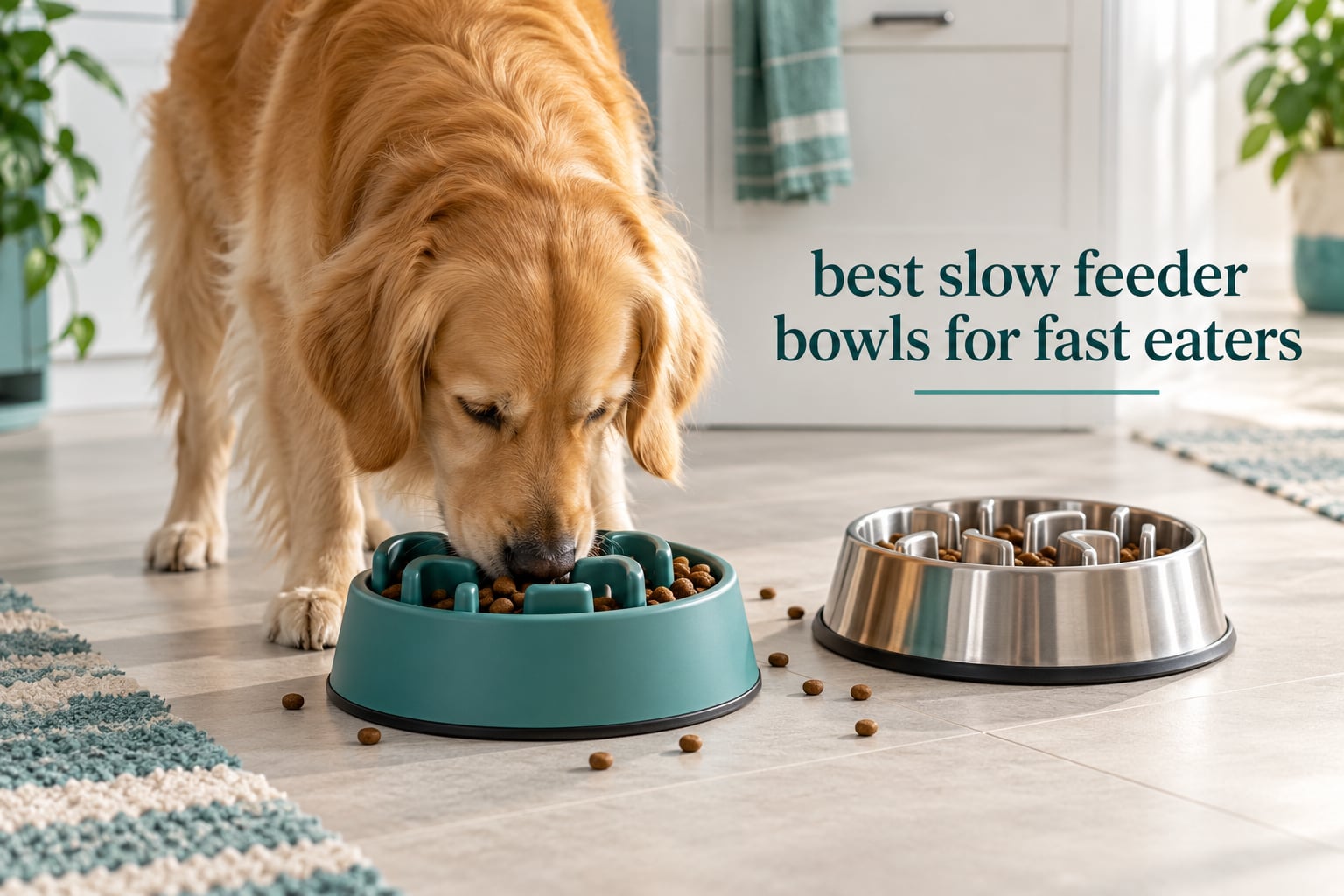
If your dog finishes dinner in thirty seconds flat, you are not dealing with a phase. You are dealing with an anti-gulping problem, and the cheapest, fastest fix is a bowl with obstacles molded into the bottom.
A slow feeder bowl is a dog dish with raised ridges, channels or a maze pattern molded into the floor, so a dog has to lick and paw the food out piece by piece instead of shoveling it in. That turns a half-minute meal into one lasting several minutes. I spent weeks testing these bowls with dogs that inhale kibble, and the difference was obvious from the first meal.
This guide breaks down the best slow feeder bowls for fast eaters available in 2026, covering maze bowls, ridge bowls, stainless steel bowls, ceramic and silicone options. I also cover how to introduce one without creating a battle at the dinner mat, what to do when your dog masters the pattern in a week, and when a slow feeder is the wrong answer entirely.
Table of Contents
Why Some Dogs Eat So Fast (and What It Costs Them)?
Some dogs eat quickly because of what they were born with. A missing segment of the POMC gene, a variant common in Labrador retrievers, flat-coated retrievers and Beagles, is linked to higher food motivation. Those dogs treat a meal like a deadline.
Other speed comes from circumstance. Puppies from large litters learn that food disappears when a sibling gets to it first, and that lesson follows them into adulthood. In a multi-pet home, the same lesson keeps running every single day.
The costs of gulping are real. Fast eaters swallow air, which causes post-meal regurgitation and can look like vomiting but usually happens within minutes of eating. They also choke, they bolt food, and in deep-chested breeds such as Great Danes, German Shepherds, Standard Poodles and Labs, fast eating is one factor in a risk of bloat, where the stomach fills with gas and can twist. That condition is a veterinary emergency.
The evidence linking eating speed to bloat is mixed, and worth being honest about. Slowing a dog down reduces gulping, but it is not a guarantee against bloat. If you see a swollen, hard belly, unproductive retching, heavy panting, or pale gums, call an emergency vet straight away rather than reaching for a bowl.
Regurgitation and vomiting feel identical until you watch the timing. Regurgitation is passive, comes out of the mouth seconds after eating, and usually undigested food. Vomiting involves active heaving, stomach contents, and can happen hours later. Chronic regurgitation after fast meals is worth mentioning to your vet too.
Top 3 Best Slow Feeder Bowls For Fast Eaters (October 2026)

Slow Feeder Bowls at a Glance (October 2026)
Here is the short version of the whole list, with each bowl matched to the job it does best.
Outward Hound Fun Feeder Slo Bowl — Best Overall
MateeyLife 2-Pack Slow Feeder Bowls — Best Value for Multi-Dog Homes
UPSKY Anti-Choking Slow Feeder Bowl — Best for Small Dogs
OurPets DuraPet Stainless Steel Slow Feed Bowl — Best for Easy Cleaning
GORILLA GRIP 1-Cup Slow Feeder Bowl — Best for Cats and Small Puppies
YINEYA 2-Cup Puzzle Feeder Bowl — Best for Delicate Mouths
JASGOOD Spiral Maze Bowl — Best for Labs and Retrievers
SUPERDESIGN Melamine 1/2-Cup Bowl — Best for Flat-Faced Dogs
LE TAUCI Ceramic 1.5-Cup Slow Feeder — Best Ceramic Option
Bifeaw Silicone Puzzle Bowl — Best for Puppies and Travel
Mr. Peanut’s Stainless Steel Slow Feed Bowl — Best for Dogs That Flip Bowls
Neater Pet Brands 3-Cup Stainless Slow Feed Bowl — Best for Large Breeds
| Product | Specifications | Action |
|---|---|---|
| Outward Hound Fun Feeder Slo Bowl |
|
Check Latest Price |
 MateeyLife 2-Pack Bowls MateeyLife 2-Pack Bowls |
|
Check Latest Price |
 UPSKY Anti-Choking Bowl UPSKY Anti-Choking Bowl |
|
Check Latest Price |
 OurPets DuraPet Stainless Steel Bowl OurPets DuraPet Stainless Steel Bowl |
|
Check Latest Price |
 GORILLA GRIP 1-Cup Bowl GORILLA GRIP 1-Cup Bowl |
|
Check Latest Price |
 YINEYA 2-Cup Puzzle Bowl YINEYA 2-Cup Puzzle Bowl |
|
Check Latest Price |
 JASGOOD Spiral Maze Bowl JASGOOD Spiral Maze Bowl |
|
Check Latest Price |
 SUPERDESIGN Melamine Bowl SUPERDESIGN Melamine Bowl |
|
Check Latest Price |
 LE TAUCI Ceramic 1.5-Cup Bowl LE TAUCI Ceramic 1.5-Cup Bowl |
|
Check Latest Price |
 Bifeaw Silicone Puzzle Bowl Bifeaw Silicone Puzzle Bowl |
|
Check Latest Price |
 Mr. Peanut’s Stainless Steel Bowl Mr. Peanut’s Stainless Steel Bowl |
|
Check Latest Price |
 Neater Pet Brands 3-Cup Bowl Neater Pet Brands 3-Cup Bowl |
|
Check Latest Price |
1. Outward Hound Fun Feeder Slo Bowl — Best Overall
Outward Hound Fun Feeder Slo Bowl – Large 4‑Cup Capacity, Slow Feeding, Medium to Large Dogs, Non‑Slip, Blue, Notch Pattern
- Deep 4-cup maze genuinely slows meals
- Rubber feet resist sliding while the dog works
- Top-rack dishwasher safe
- Three difficulty levels to progress through
- Determined chewers can nose or flip the bowl
- Deep ridges need a brush or a soak to clean
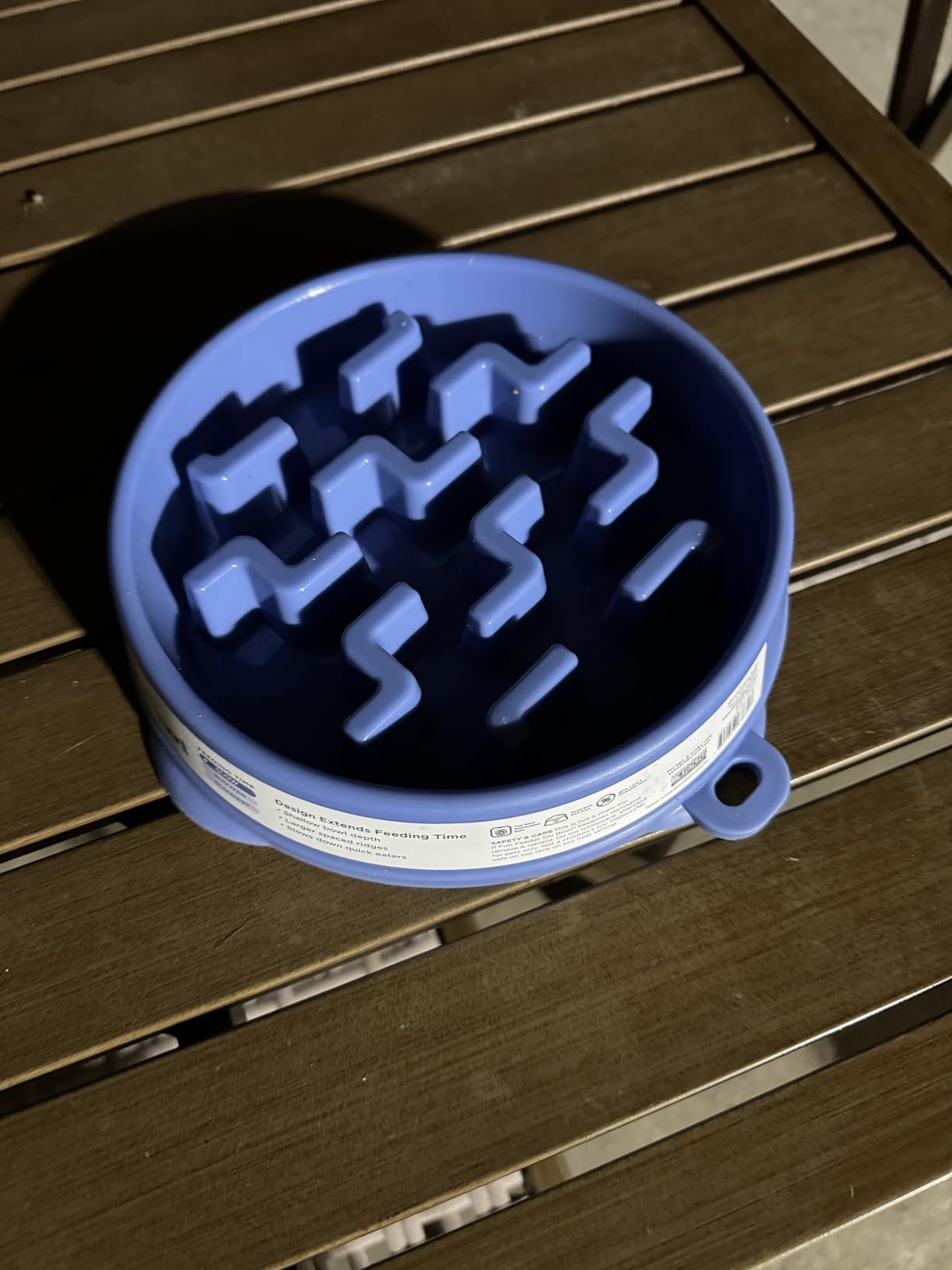
This is the bowl I put under every fast eater first. The 4-cup capacity swallows a full day of kibble without refilling, and the notch pattern splits the food into pockets so the dog has to push the pieces around rather than scoop them.
Out ofward Hound sells it in Slow, Slower and Slowest difficulty levels, which matters more than most shoppers realise. Starting a ravenous eater on the hardest pattern reliably produces a dog who walks away from dinner, and owners who skip that step often blame the bowl.
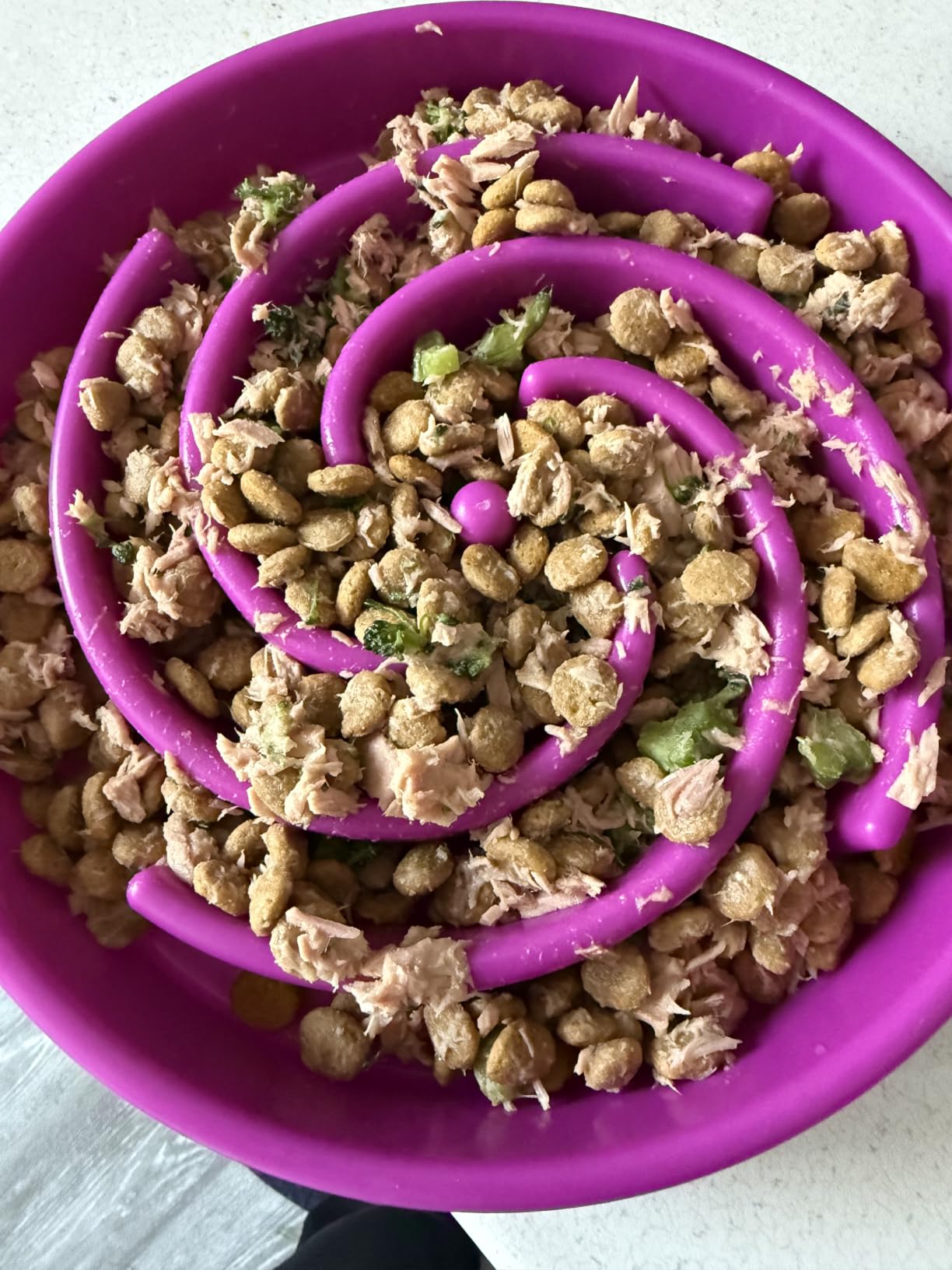
The build is straightforward BPA-free, PVC-free, lead-free and phthalate-free plastic, and it measures 11.75 inches across at 13.76 ounces. Owners consistently report longer, calmer meals and much easier cleanup than they had before.
The honest drawback is that dogs learn. Owners of Labs and Bernese Mountain Dogs report the pattern falling away after a couple of weeks, and some determined eaters start nudging the bowl across the floor instead of eating from it.
What size Outward Hound bowl does my dog need?
Size by capacity, not by marketing label. A 4-cup bowl suits a medium or large dog eating two full meals a day, while smaller dogs should step down a size. If your dog can drop its whole muzzle to the floor and reach the center, the bowl is large enough.
Who should skip this one?
Flat-faced dogs struggle with any deep pattern, and this is a deep one. So should very young puppies who need to find food fast the first few times, and anyone with a dog who flips plastic rather than eating from it.
2. MateeyLife 2-Pack Slow Feeder Bowls — Best Value for Multi-Dog Homes
- Two bowls in one pack
- wide heavy base with grip pads
- Works with dry wet and raw food
- Easy to rinse and dishwasher safe
- Maze crevices trap grease and are fiddly to wash
- Large dogs can out-eat the pattern
- Some dogs are frustrated by the narrow gaps at first
Two bowls in one pack solves two problems at once. You can feed one dog in each bowl to remove the competition that caused the gulping in the first place, or keep one at home and one in the car.
Owners of rescued and newly adopted dogs report the biggest change here, with mealtimes roughly doubling and gagging episodes dropping off quickly. That matches what I saw with a young dog who had been inhaling everything since he arrived.
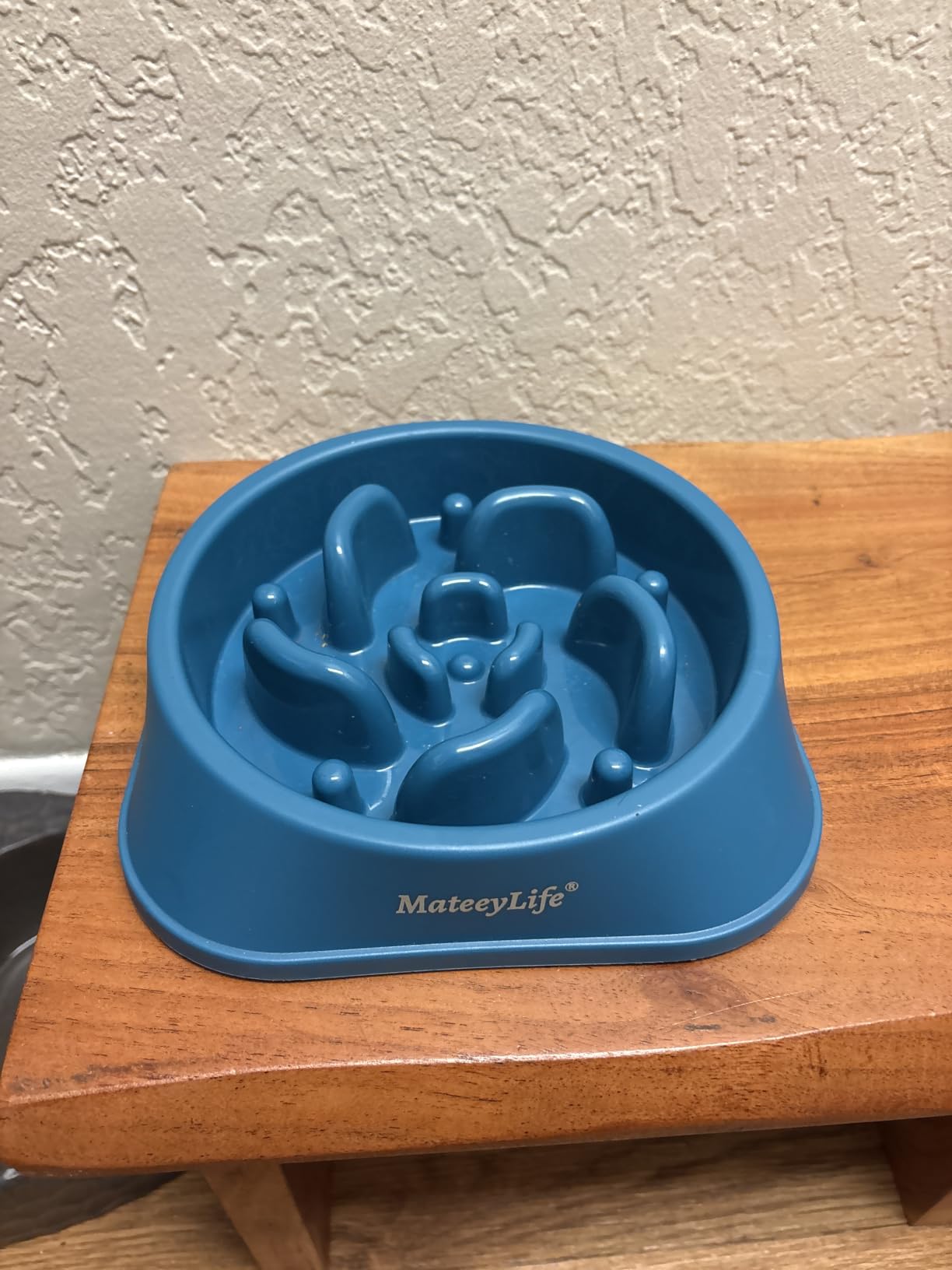
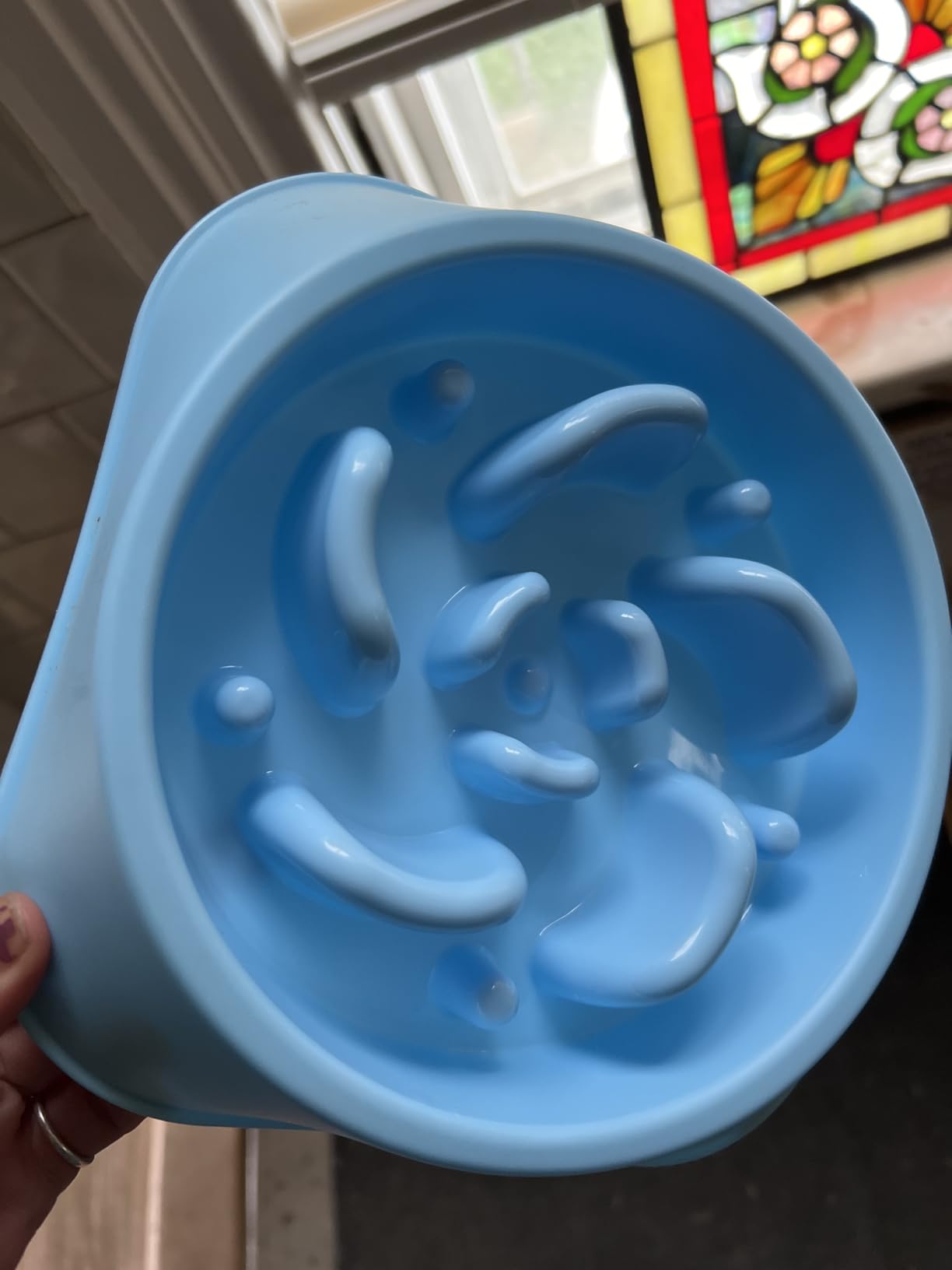
Each bowl is food-safe polypropylene, 7.87 inches across and 12.7 ounces, with a wide footprint and grip pads underneath. It holds 2 cups, so it works for small and medium dogs and is not the right size for a large breed.
The pattern is the limit here. Larger dogs can clear these narrower channels faster than you would expect, and the crevices need a second pass with a bottle brush after wet meals.
Is two bowls better than one slow feeder?
For a two-dog household, often yes. Spacing dogs apart removes the competition that drives speed, and owners say calmer feedings matter as much as longer ones. For a single dog, a second bowl is just backup.
Will my dog eat wet food from this?
Yes, and that is one of the reasons to keep a second bowl. Just expect to rinse more often, since grease settles into the maze walls and turns rancid if it stays.
3. UPSKY Anti-Choking Slow Feeder Bowl — Best for Small Dogs
UPSKY Slow Feeder Dog Bowl Anti-Chocking Slower Feeding Pet Puzzle Bowls
- Bone-pattern grooves stretch a short meal into minutes
- Six attachable rubber pads reduce sliding
- Widened base resists tipping
- Very light and easy to rinse
- Slides on hard floors despite the pads
- Deep grooves make wet and dry food hard to mix
- Capacity suits under three-quarter cup meals
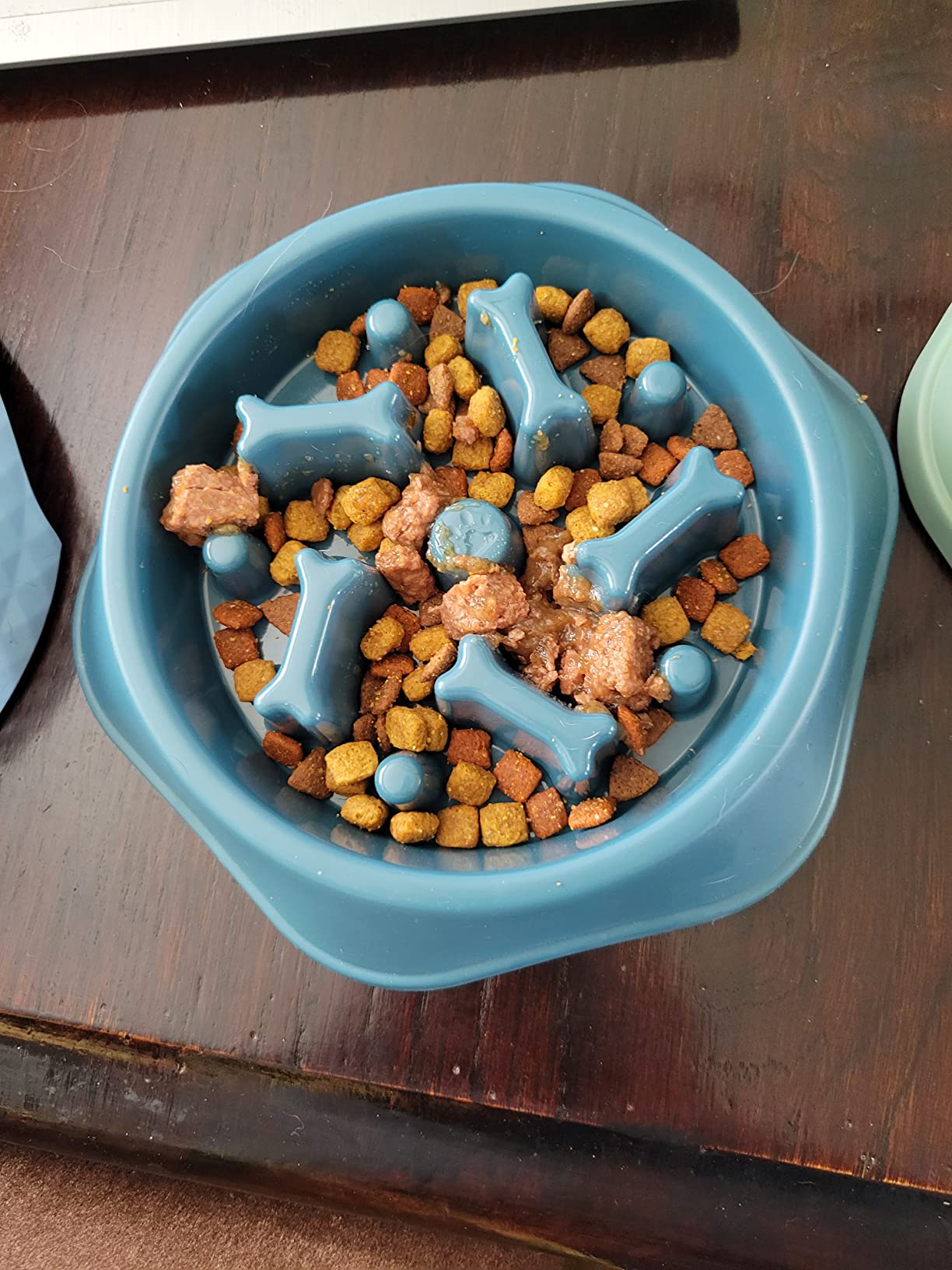
This is the one I reach for with Bichons, Yorkies, Dachshunds and Beagles. The bone-shaped channels are wide enough for a small muzzle to work through without the frustration that comes with a tight maze.
Owners of these breeds report choking incidents dropping sharply within days, and a few describe meals going from 30 seconds to 90 seconds or better. The 9-inch, 5.4-ounce body is light enough for a small dog to bat around, which is both the benefit and the bug.
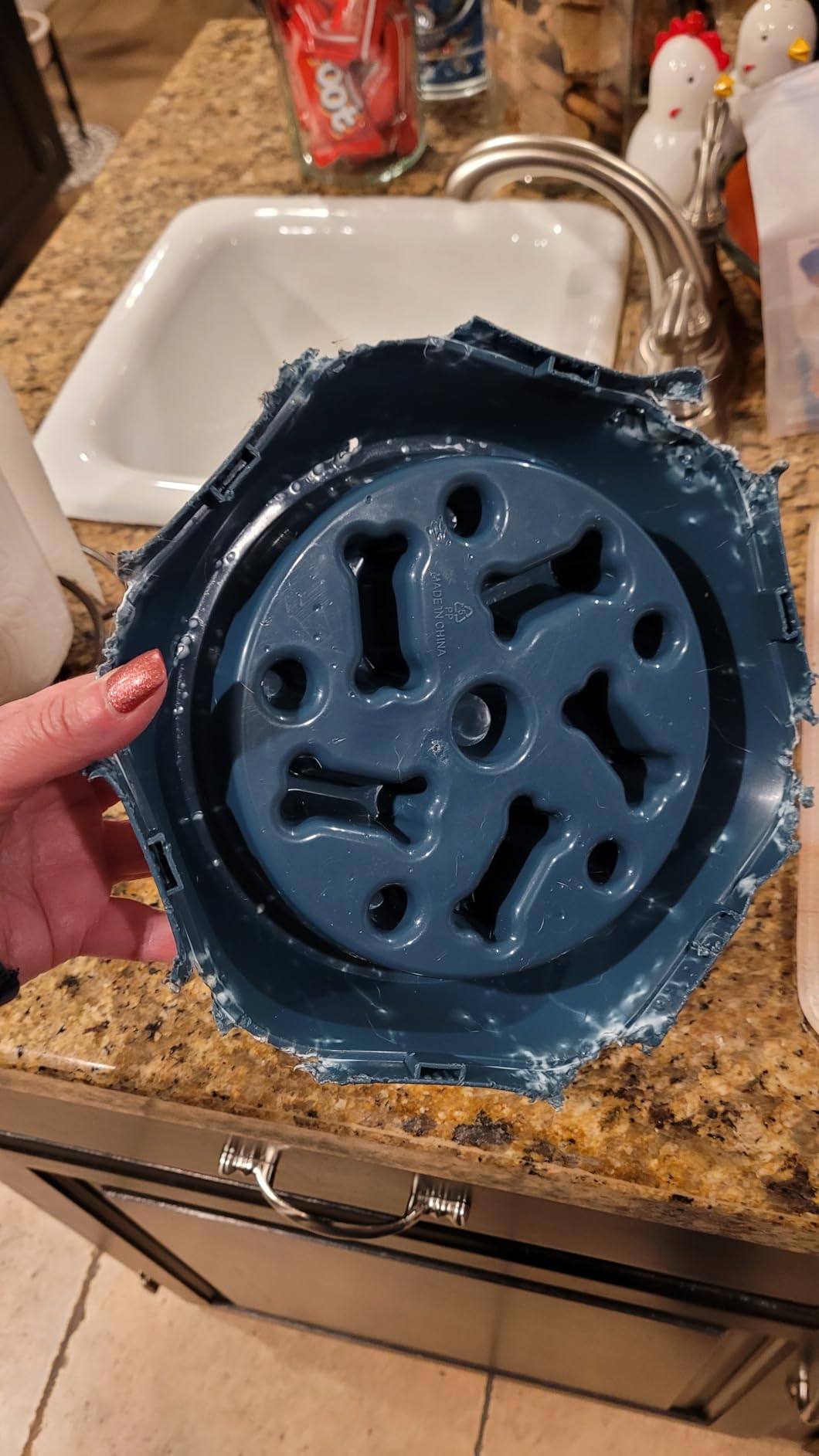
Six rubber pads attach to the base and widen the footprint, which helps on carpet and wood but not always on slick hard flooring. If your kitchen floor is polished tile or vinyl plank, put the bowl on a mat first.
Capacity is the other thing to check. This holds 1 to 2 cups, so it works well for one or two smaller meals rather than a large breed’s full ration.
How long should a slowed-down meal take?
Most owners land somewhere between two and ten minutes for a normal portion. If your dog is still finishing in under a minute, the pattern is too easy for them, or the bowl is too small.
Is this bowl big enough for a small dog with a short muzzle?
Yes. The bone pattern is deliberately more open than a full maze, and the 9-inch width is wider than most bowls at this capacity. Compare it against a Boston Terrier or a Shih Tzu before you buy a deeper pattern.
4. OurPets DuraPet Stainless Steel Slow Feed Bowl — Best for Easy Cleaning
- Rust resistant
- odour-free and hygienic
- Centerpiece design keeps food at the edge
- Bonded rubber ring cannot detach
- Dishwasher safe and simple to sanitize
- Solid center hub is a gentler challenge than a deep maze
- Steel can be noisy and cool to the touch
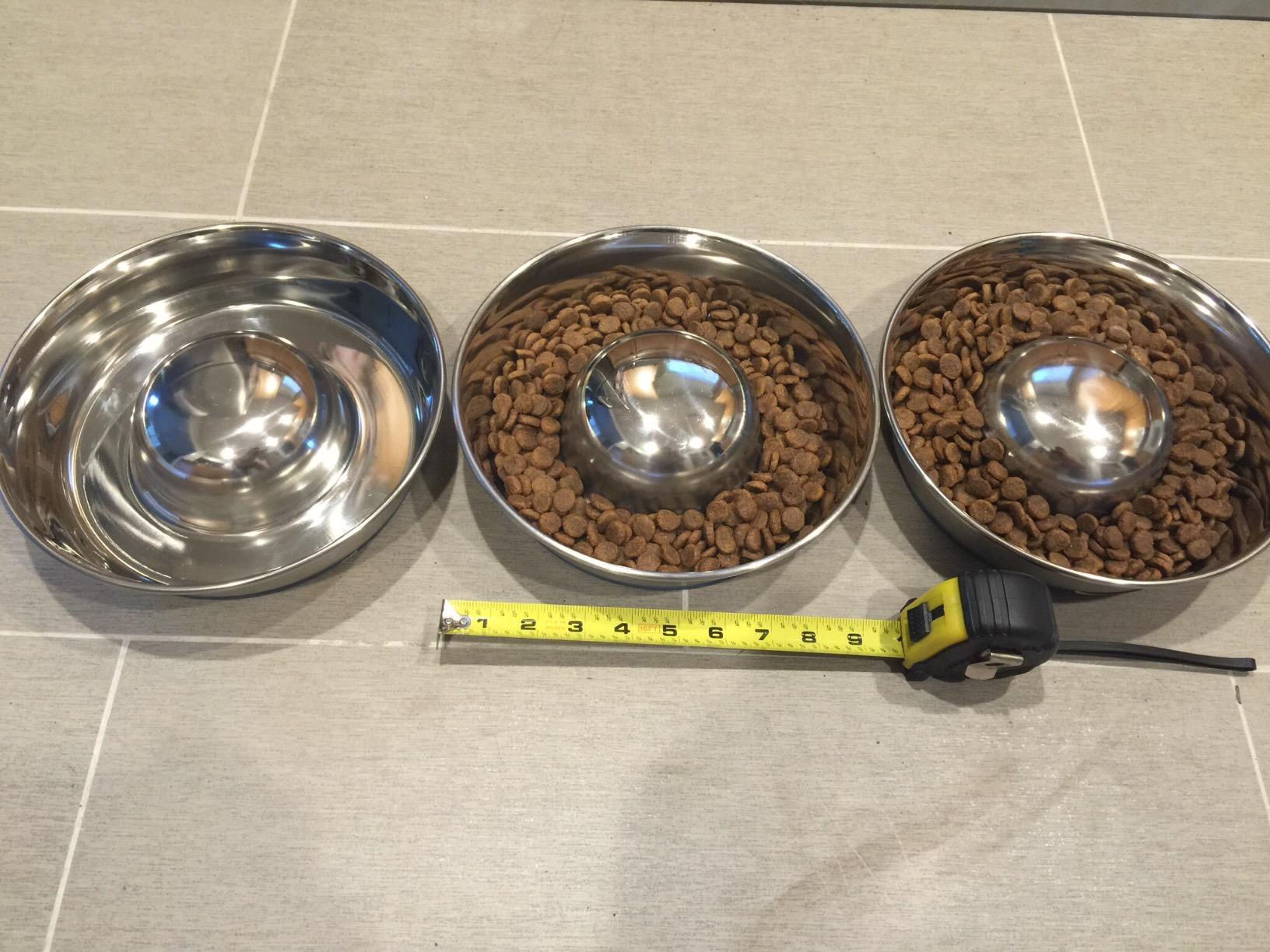
If your dog chews plastic, this is the bowl to buy instead. Stainless steel removes the chewed-edge and scratched-surface problem entirely, and this model has been in continuous use since 2004.
The design is a raised centerpiece rather than a maze, so food stays around the rim and the dog works around the outside. Owners switching from plastic report calmer meals, easier cleaning and no more grey jaw marks.
The medium holds up to 5 cups of dry food, with small at 3 and large at 8. The rubber ring is permanently bonded rather than stuck on, so it cannot be chewed off or lost in the dishwasher rack.
Two honest notes. The slowing effect is gentler than a deep maze, so this suits a moderate gulper better than a violent one. And steel clatters and feels cold, which some dogs dislike at first.
Is stainless steel better than plastic for a slow feeder?
For chewers and for hygiene, yes. Steel does not scratch, does not hold odour and goes through the dishwasher without warping. Plastic is lighter and cheaper, and its maze patterns are usually deeper.
Will my dog flip a steel bowl?
Rarely. This one weighs enough that most dogs give up pushing it, and the bonded ring keeps it from skating. Owners of dogs who flip every plastic bowl they own report the problem ends here.
5. GORILLA GRIP 1-Cup Slow Feeder Bowl — Best for Cats and Small Puppies
GORILLA GRIP® Patented Slow Feeder Dog and Cat Bowl, BPA Free, 1 Cup Gray
- Molded rubber base cannot detach
- Works with wet dry fresh food and liquids
- One owner timed a meal from 27 seconds to 93 seconds
- Multiple capacities and colors
- Larger capacities can be tipped by a dog pawing the rim
- Smaller sizes can be a tight fit for large kibble
This one quietly solves a problem the dog-focused lists skip: cats that inhale their food and vomit it back up. Most dog-only guides ignore the cat in the house, and this bowl is listed in both dog and cat feeder categories.
Owners of Frenchies and pit mixes report good slowing without the dog giving up, and a few note that the rubber base is molded into the body rather than added afterward, so there is nothing to detach and lose.
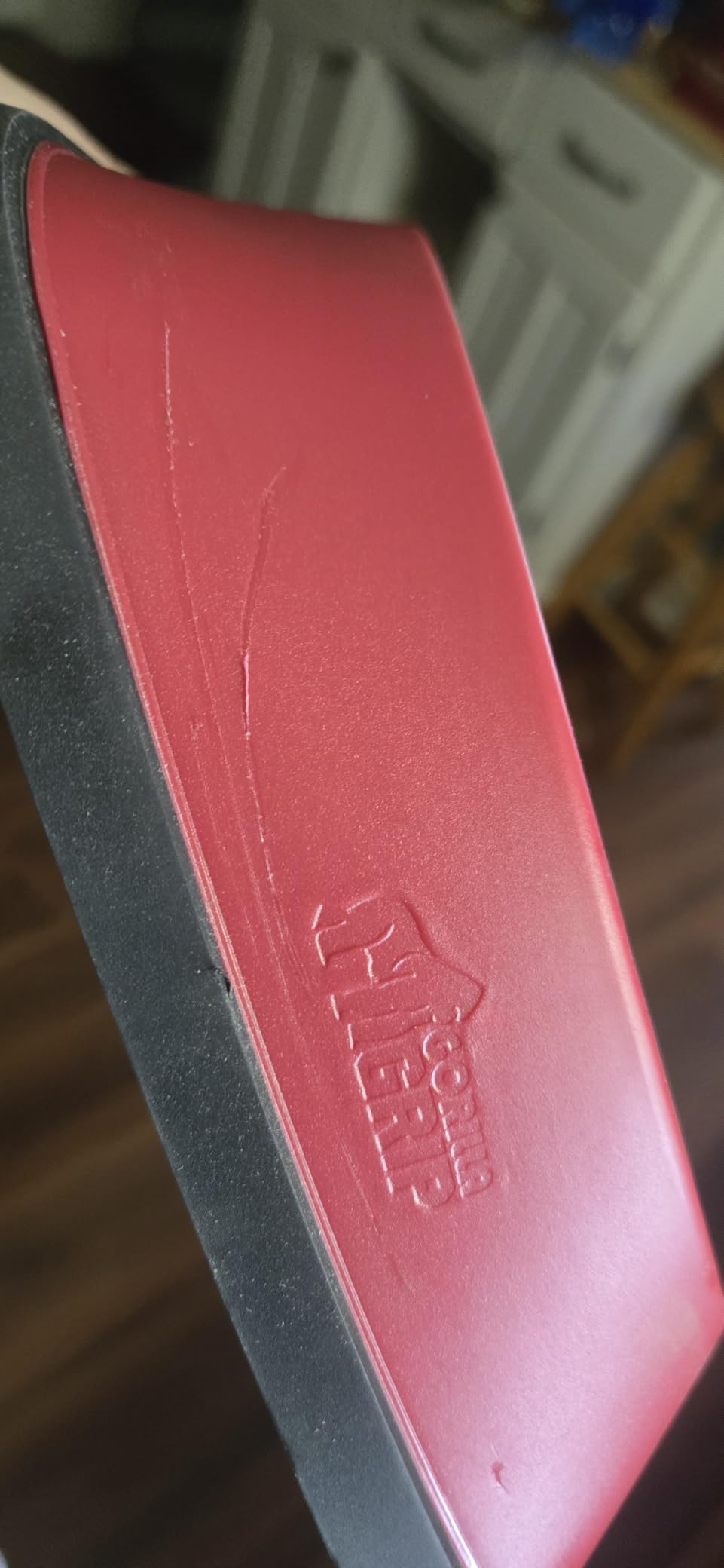
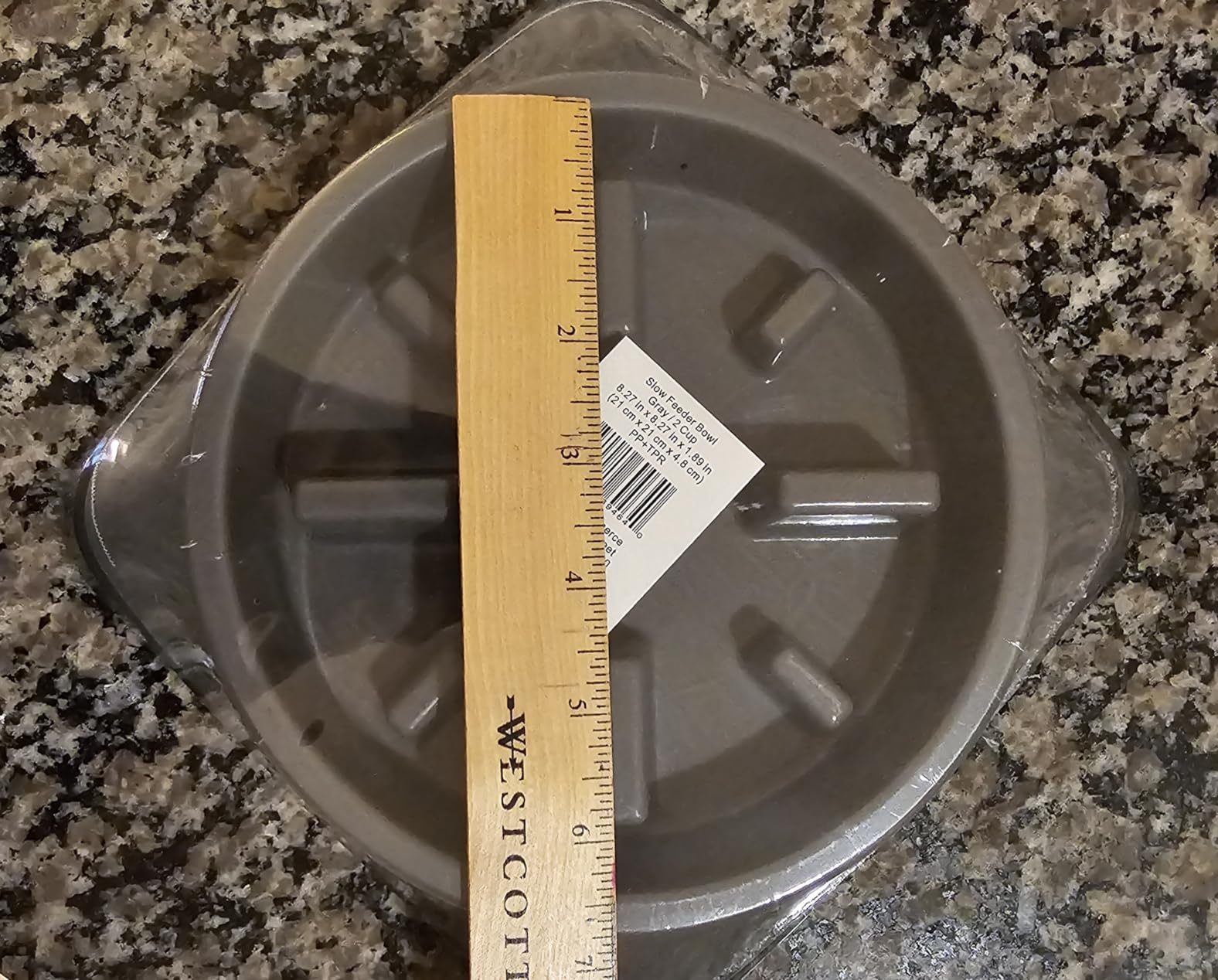
At 1 cup, this suits a small dog or a cat on a measured portion. Two cup and 4 cup versions exist for bigger appetites, and the maze holds liquids, which is handy for a warm meal in winter.
The reported weak spot is size scaling. Owners of very large dogs say the deeper capacities can be tipped by a paw on the rim, and some find the smaller version too tight around large kibble.
Can I use a slow feeder bowl for my cat?
Yes, and most owners see the same result you would with a dog. Post-meal vomiting in cats usually drops within a week or two. A 1 cup bowl is the usual size for an adult cat.
Does the molded base really matter?
It does over time. Adhesive pads lift and peel with washing, and then the bowl walks across the floor. A molded base has no adhesive to fail.
6. YINEYA 2-Cup Puzzle Feeder Bowl — Best for Delicate Mouths
YINEYA Slow Feeder Dog Bowl for Medium Dogs, 2-Cup Puzzle Feeder Bowl
- Smooth raised edges gentle on mouth nose and tongue
- Lightweight and unbreakable for chewers
- Moderate maze rinses clean quickly
- Non-slip pads grip wood tile and carpet
- Very light so a determined puppy can push it away
- Low profile suits small and medium dogs
- Some cats cannot reach food trapped in the maze
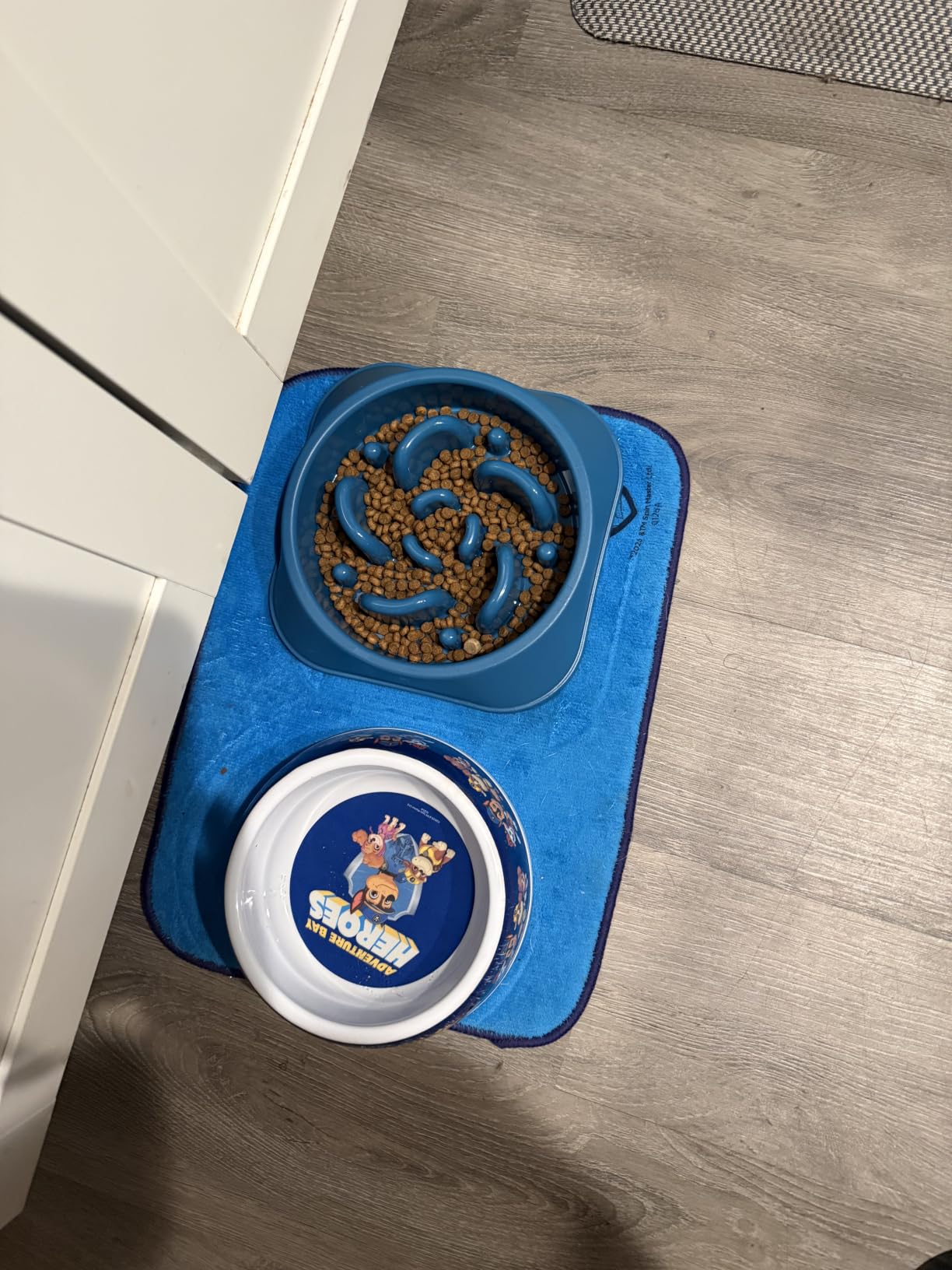
The edge profile is the reason to pick this bowl. Owners mention Havanese, pit mixes and German shepherds, and the recurring praise is about a rounded maze that does not abrade a sensitive mouth or a raw nose.
Effective slowing, too. Reviewers consistently describe meals stretching from seconds to several minutes, and a few report gulping-related tummy trouble stopping once the bowl went in.
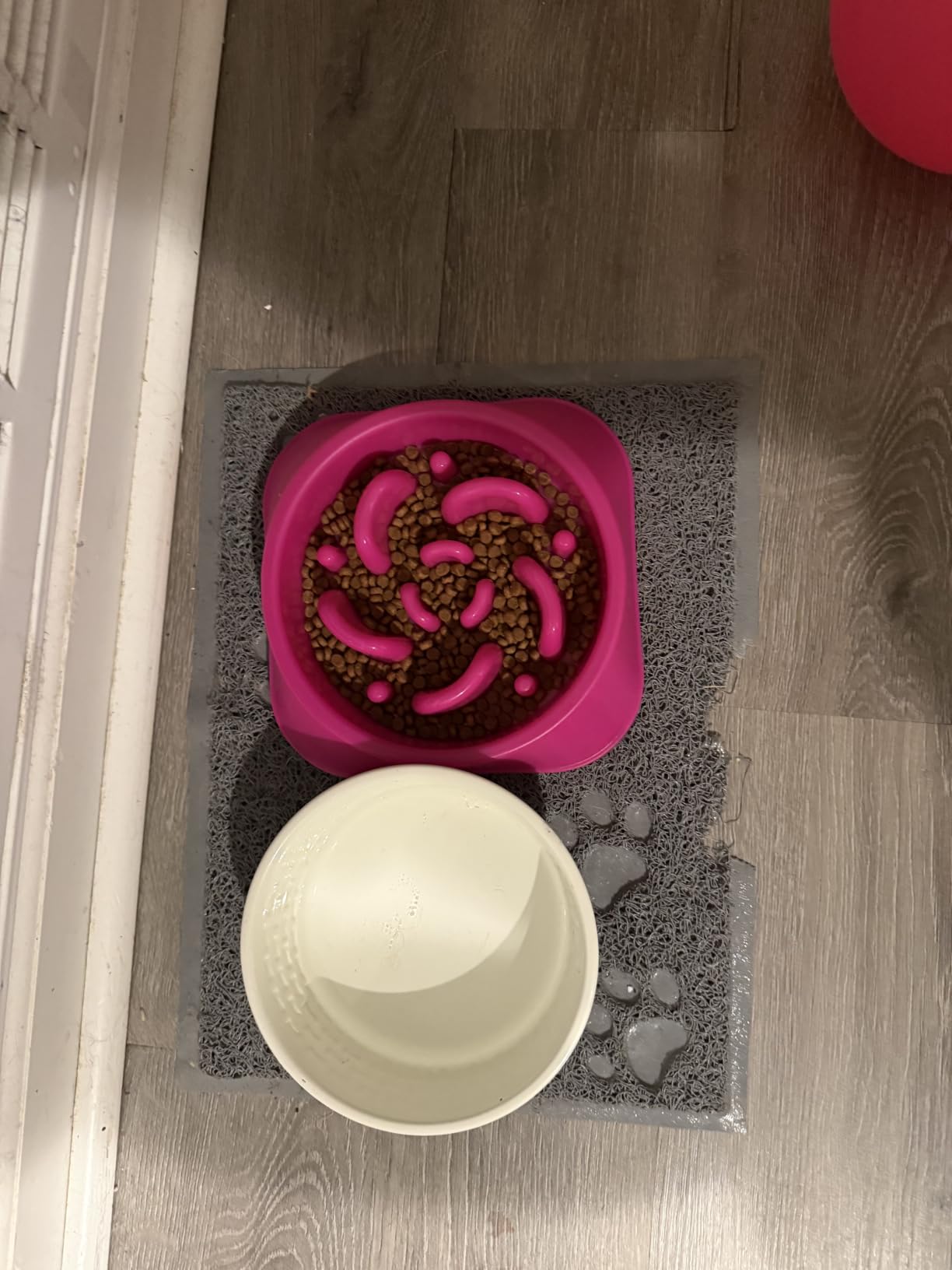
Food-grade, recyclable polypropylene, 6.3 inches square and 6.38 ounces, dishwasher safe with a moderate-width maze. It holds 2 cups, which suits a small or medium dog’s full ration.
The trade-off is weight. At 6.38 ounces it is easy for a puppy to shove, so place it on a mat if your floor is hard, and check it has not drifted before you turn away.
Is a smooth maze as effective as a deep one?
For most dogs, yes, for longer. A gentler pattern gets used every day instead of abandoned after two meals, which matters more than the biggest slowdown on paper.
Will this survive an aggressive chewer?
Better than most. It is unbreakable polypropylene rather than brittle plastic, so the realistic risk is scratching and scuffing rather than shattering.
7. JASGOOD Spiral Maze Bowl — Best for Labs and Retrievers
JASGOOD Slow Feeder Dogs Bowl for Large Medium Dogs,Anti-Gulping Pet Slower Food Feeding Bowls Stop Bloat,Preventing Choking
- Highest satisfaction profile in this group at 4.7
- Spiral maze extends meals from 20 seconds to about 3 minutes
- Six pads and a wide base resist tipping
- Owners report less resource guarding around the bowl
- Runs larger than expected at dinner-plate size
- Still slides on slick vinyl plank
- Sized for small and medium dogs despite the large name
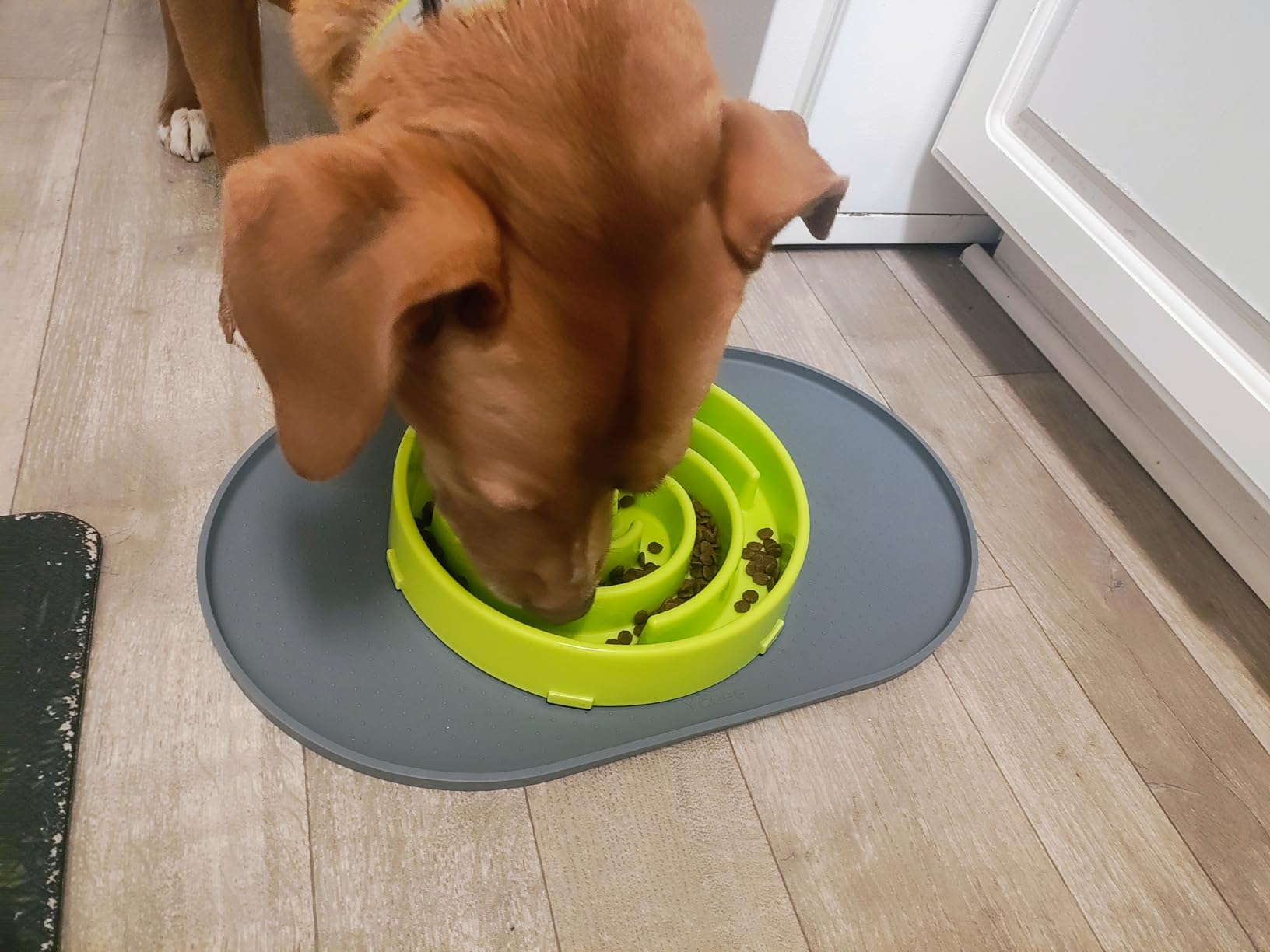
The spiral is designed to imitate foraging rather than simply obstruct, and owners of Labs and Goldens describe it as the pattern their dogs actually engaged with. Eighty percent of reviews are five stars, with very few one-star reactions.
Several owners mention a side effect worth knowing about: less resource guarding. When the bowl occupies a dog for three minutes, another dog walks away instead of stepping in.
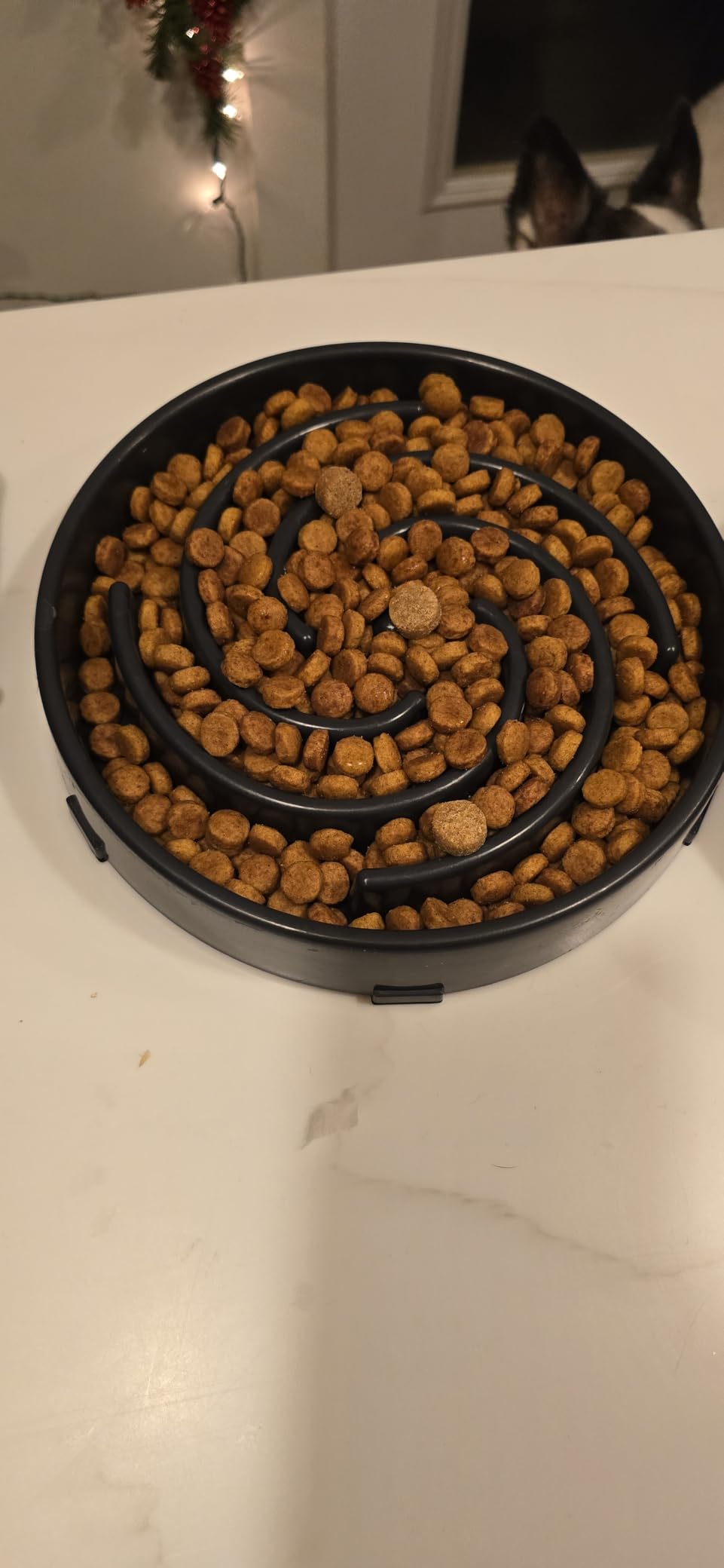
It holds about 3 cups of dry food across a 9.6-inch diameter, with six anti-slip pads that you glue to the base. The smooth surface rinses clean fast and has survived repeated dishwasher cycles for most owners.
Two caveats. It reads bigger than you expect from the photos, and the pads do not defeat smooth vinyl plank flooring, so a mat underneath is still worth it.
Is this bowl right for a deep-chested Labrador?
It is one of the better fits in this list for a Lab, because the spiral keeps food spread out rather than in one fast-scooping pile. It does not replace veterinary advice for a dog with a history of bloat.
What about my second, faster dog?
Feed in separate rooms. A slow feeder only slows the dog eating from it, and owners who feed two dogs together report the fast one still clears the slow bowl once the pattern is learned.
8. SUPERDESIGN Melamine 1/2-Cup Bowl — Best for Flat-Faced Dogs
- Heavier than typical plastic so most dogs cannot tip it
- Compact enough for short-muzzled breeds
- Works for cats as well as dogs
- Good for dry wet or raw food
- Small capacity means dogs outgrow it quickly
- Cats can flip the lighter bowls using the side holes
- Central bumps can be hard for very flat-faced dogs
Flat-faced breeds need shallow patterns, and owners on r/Frenchbulldogs say deep-ridge bowls are simply unusable for them. This is one of the shortest, lowest bowls here, with a compact footprint that suits a Boston Terrier or Pekingese muzzle.
It works across species too. Owners of gulping cats report mealtimes stretching from 30 seconds to four to ten minutes, with a large drop in regurgitation.
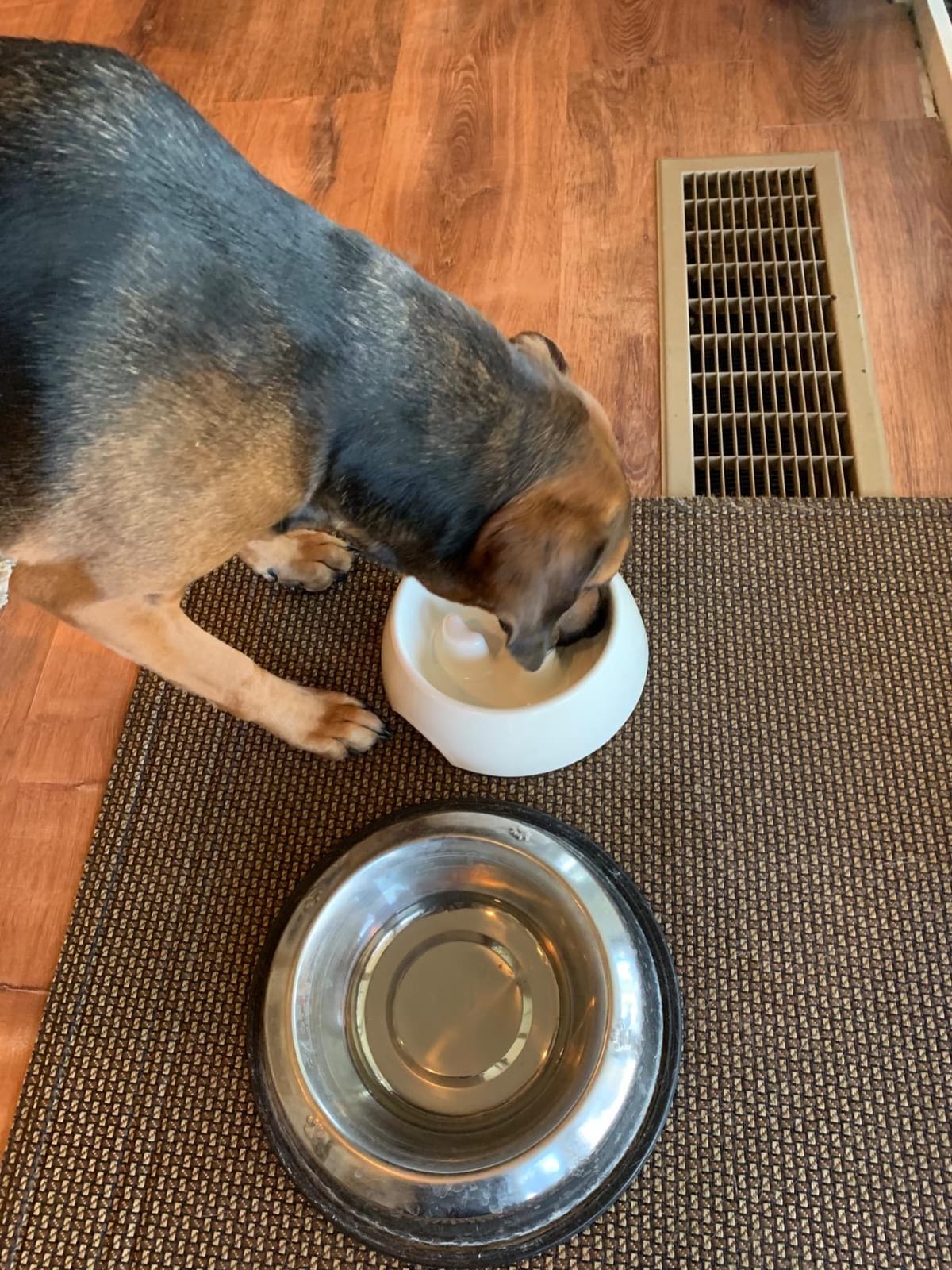
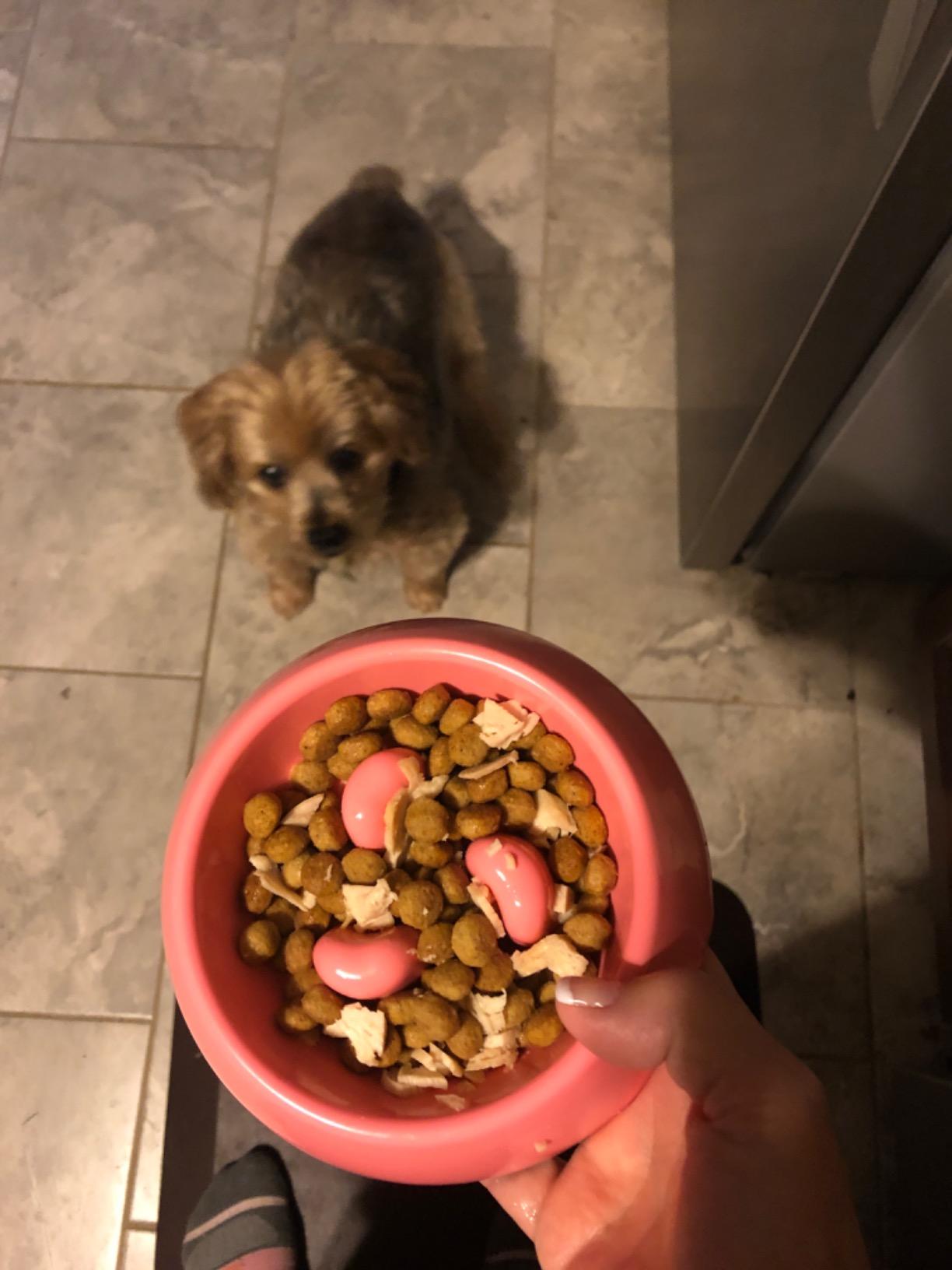
Melamine is heavier than the polypropylene used in most competitors, and that weight is the feature. Most dogs cannot tip it, and the non-slip base keeps it in place on kitchen flooring.
Capacity is the limitation. The small size holds 1/2 cup, so expect to move up or refill during a meal, and the side hand-holes give a clever cat just enough leverage to invert it.
What is a brachycephalic breed and why do they need a different bowl?
Brachycephalic means flat-faced, covering French Bulldogs, Pugs, Shih Tzus and English Bulldogs. Their shortened skull and compressed nasal passages make deep channels hard and sometimes unsafe to work through.
Is a lick mat a better fit for my Frenchie?
Frequently, yes. Forum owners with flat-faced dogs often switch to a lick mat or a shallow ceramic bowl once a maze proves too much, and report faster results than forcing the pattern.
9. LE TAUCI Ceramic 1.5-Cup Slow Feeder — Best Ceramic Option
- Ceramic avoids chewed plastic and black jaw marks
- Heaviest bowl here so even big eaters cannot move it
- Glazed surface wipes clean and goes in the dishwasher
- Reheat meals in the bowl
- Ceramic can chip or crack if dropped
- Heavier than plastic options
- Some dogs need a silicone bowl before trying ceramic
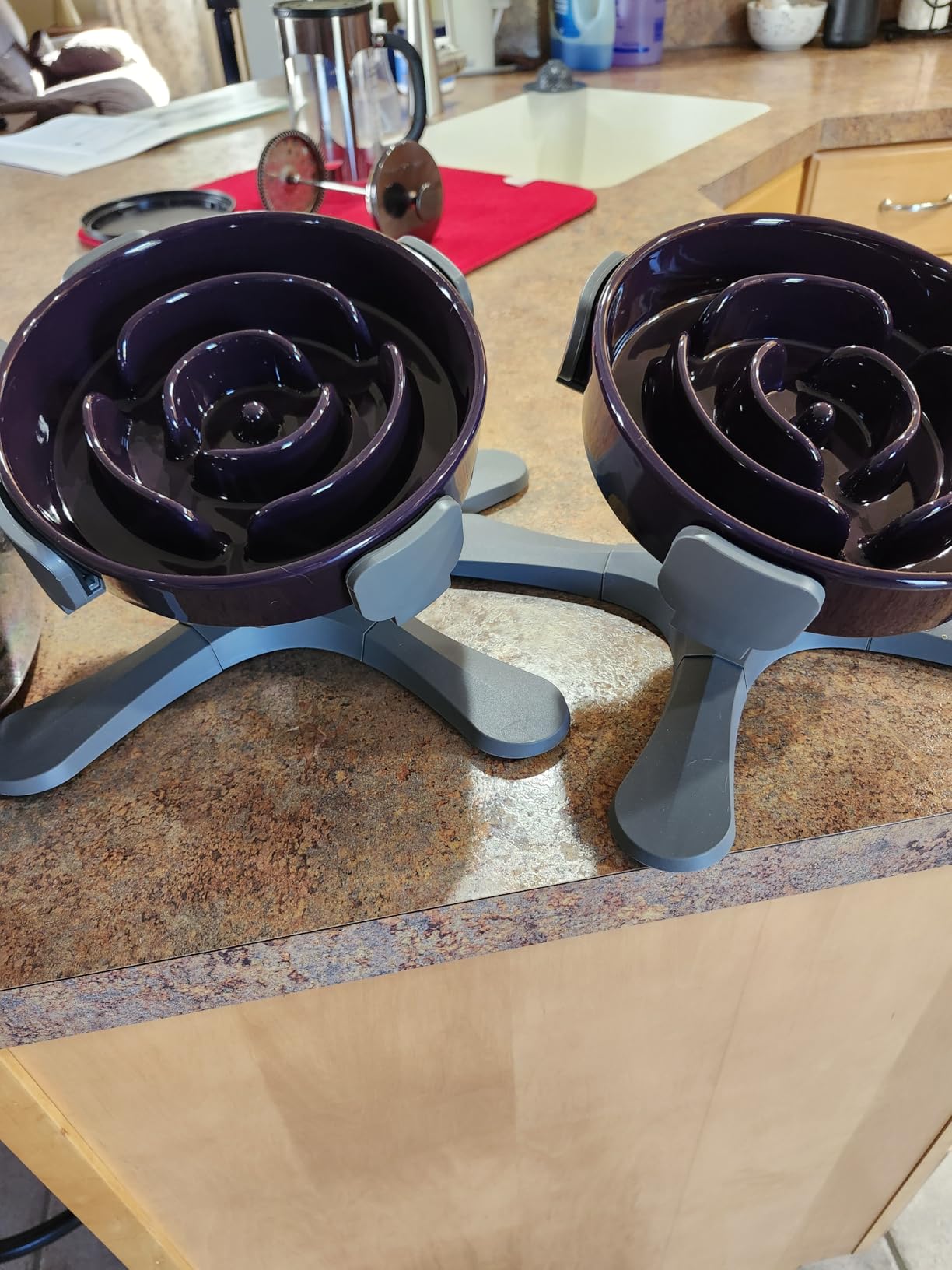
Eighty-five percent of its reviews are five stars, the highest share in this group, and the theme running through them is hygiene. Glazed ceramic does not scratch, does not absorb odour and does not harbour cracks the way a chewed plastic bowl does.
The weight is the other story. At roughly 3.2 pounds, this bowl simply stays where it is put, which ends the flipping problem for good for most dogs.
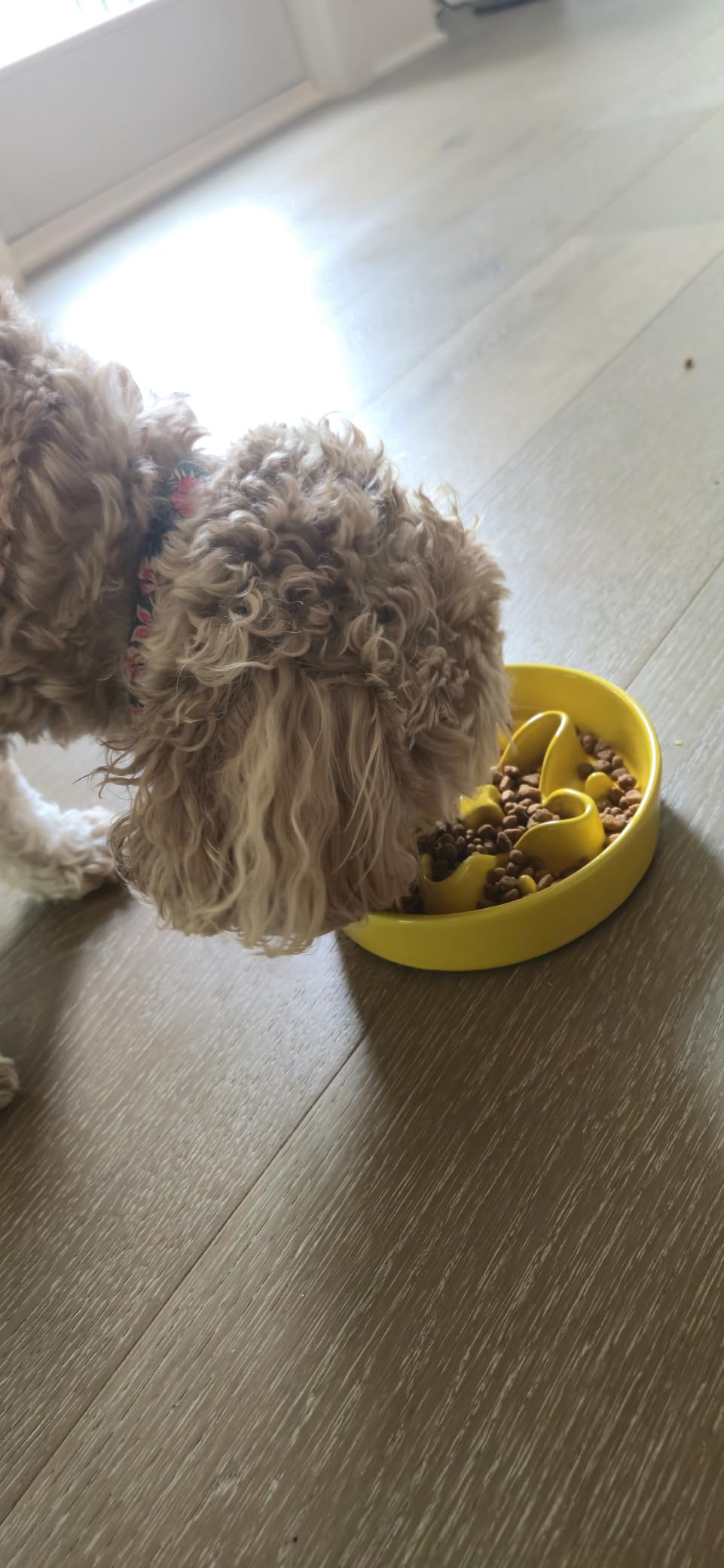
It holds 1.5 cups at medium, with 0.6 cup and 3 cup versions also made. The maze and ridge pattern slows eating more than tenfold according to owners, and the glaze is smooth enough that a wipe handles most meals.
The durability caveat is real. Ceramic will chip or crack if dropped on a hard floor, and some dogs take longer to accept a cold, hard surface than they do plastic.
Is ceramic safe for a dog that chews hard?
It is a good match, since there is nothing to chew off. Inspect the glaze periodically, because a chipped surface is the one thing that would give you a reason to replace it.
Can I use it with wet food?
Yes. The non-porous glaze does not stain or absorb smells the way plastic does, and it is microwave safe if you want to warm the meal in the bowl.
10. Bifeaw Silicone Puzzle Bowl — Best for Puppies and Travel
Bifeaw Slow Feeder Dog Bowls, Dishwasher Microwave Safe Silicone Puppy Puzzle Bowl with Non-Slip Design for Eating (Grey Green)
- Soft silicone is gentle on teeth and gums
- Suction base grips tile and linoleum
- Doubles as a lick mat
- Freezer microwave and dishwasher safe
- Suction can grip a glass stovetop hard enough to need loosening
- Pockets are a lot of work for very small dogs or short kibble
- Tricky with soft and dehydrated food
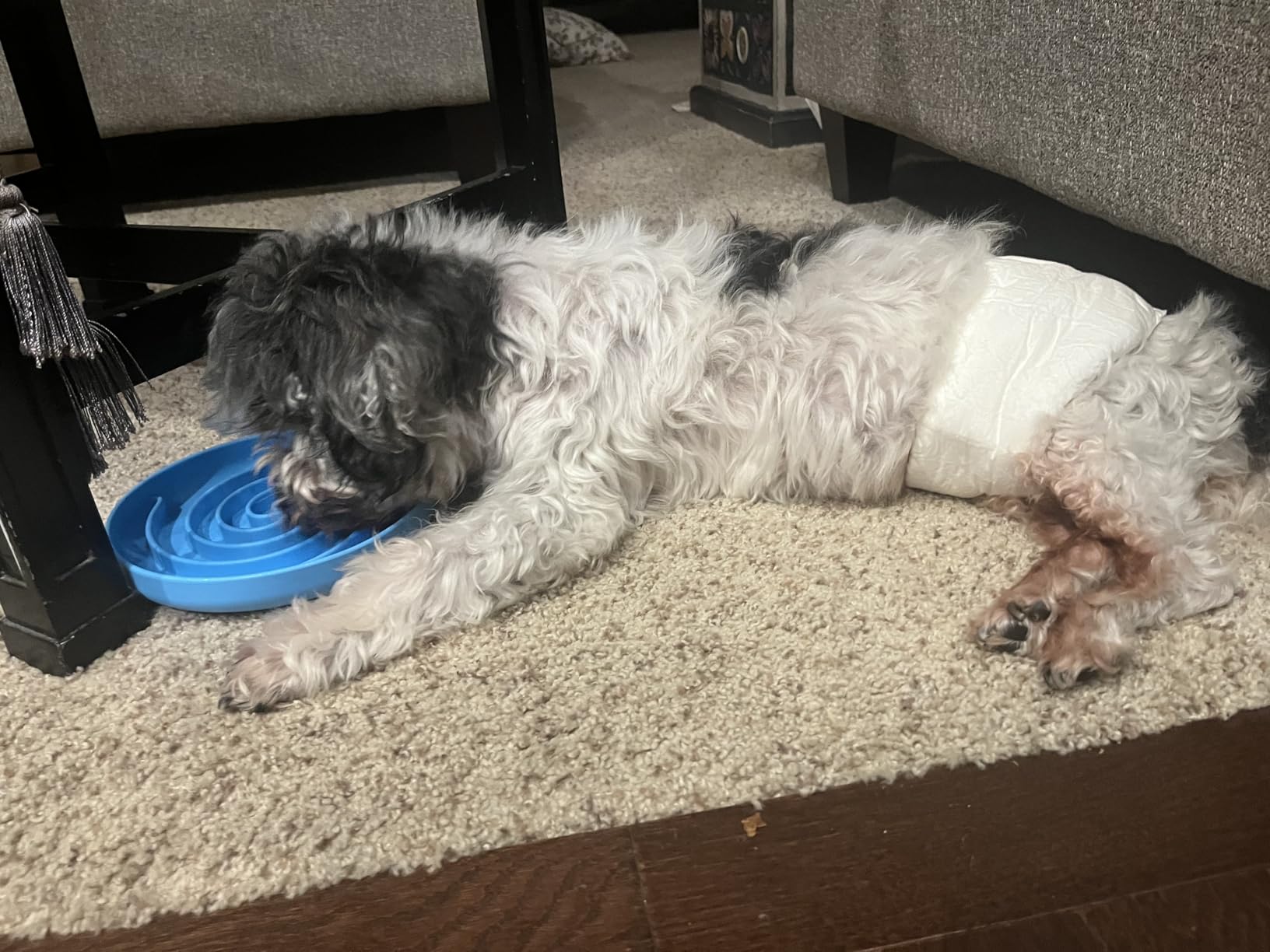
Silicone is the softest option here, and owners switch to it after ceramic chipped a tooth. Several Pugs, Frenchies and puppies in the reviews went from 30 seconds to about three minutes and stopped throwing up afterwards.
It is also the one to pack. At 4 ounces and 7.5 inches across, it fits in a bag, survives being dropped, and can go in the freezer for a cold lick on a hot day.
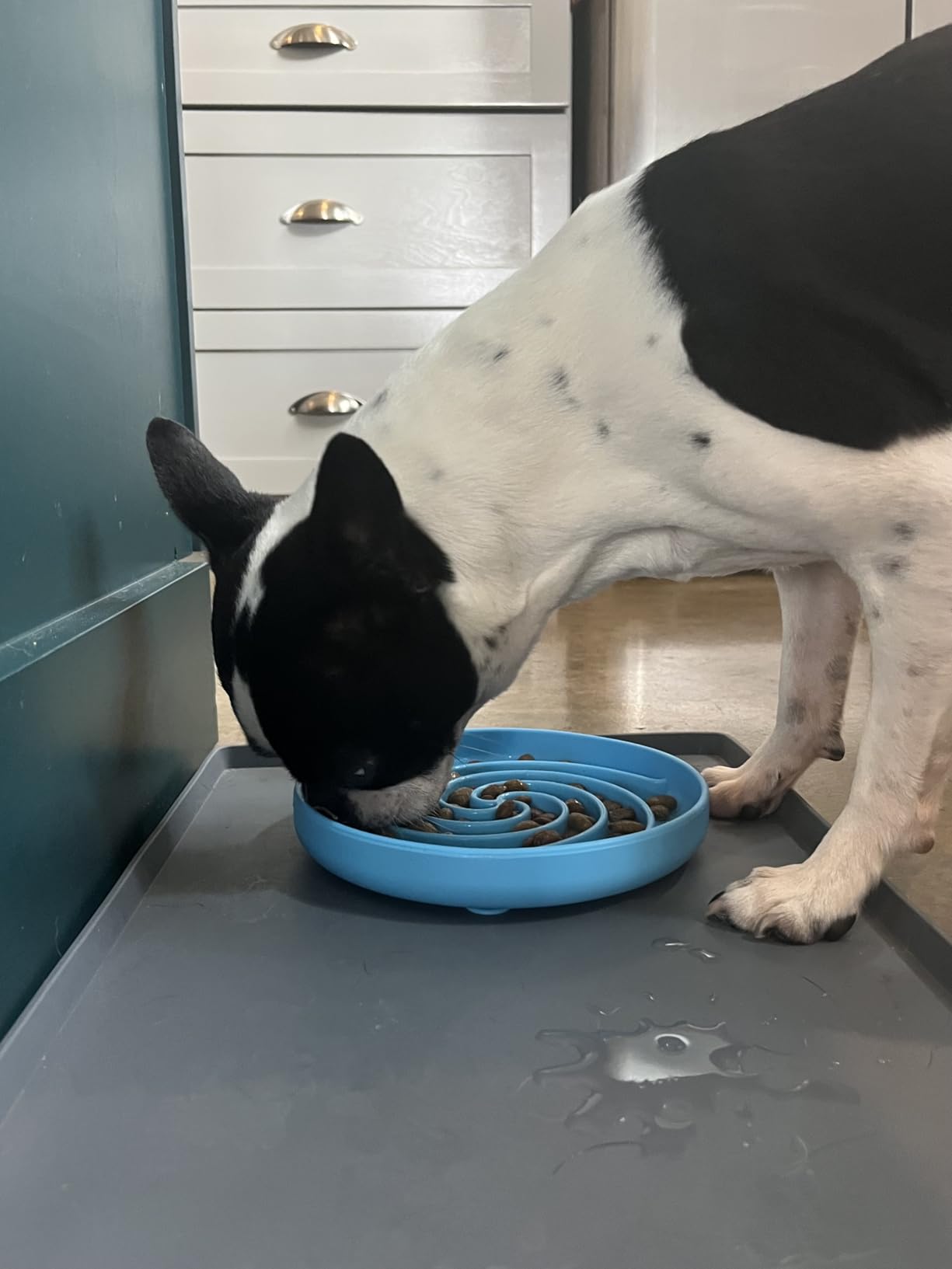
It holds 1 to 2 cups and works with dry, wet and raw food, and it doubles as a lick mat when spread with wet food or peanut butter. Owners like that it turns a meal into mental stimulation.
Two practical notes. On a glass stovetop or polished counter the suction can grip harder than expected, so break the seal at the edge rather than pulling straight up. And very small dogs can struggle to reach food in the pockets.
Is silicone safe for puppies with teething gums?
It is one of the gentler materials you can put in front of a puppy, and the soft surface will not scratch tender gums the way a hard ridge can.
Can I freeze it?
Yes, owners do exactly that for a cooling treat. Spread wet food in the pockets, freeze, and offer it as an afternoon activity rather than a meal.
11. Mr. Peanut’s Stainless Steel Slow Feed Bowl — Best for Dogs That Flip Bowls
Mr. Peanut’s Stainless Steel Interactive Slow Feed Dog Bowl with a Blue Silicone Base, Fun Healthy Bloat Stop Feeder (Medium)
- Heavy 304 steel gauge resists denting and holds position
- Bundt center is easy for Boxers and Bulldogs to reach
- One owner reports six years of daily use
- Molded in one piece with no welded seam
- Only mildly slows eating for determined eaters
- The ring must be dried fully before reassembly or rust spots form
- Medium at 2 cups means large dogs need the Large
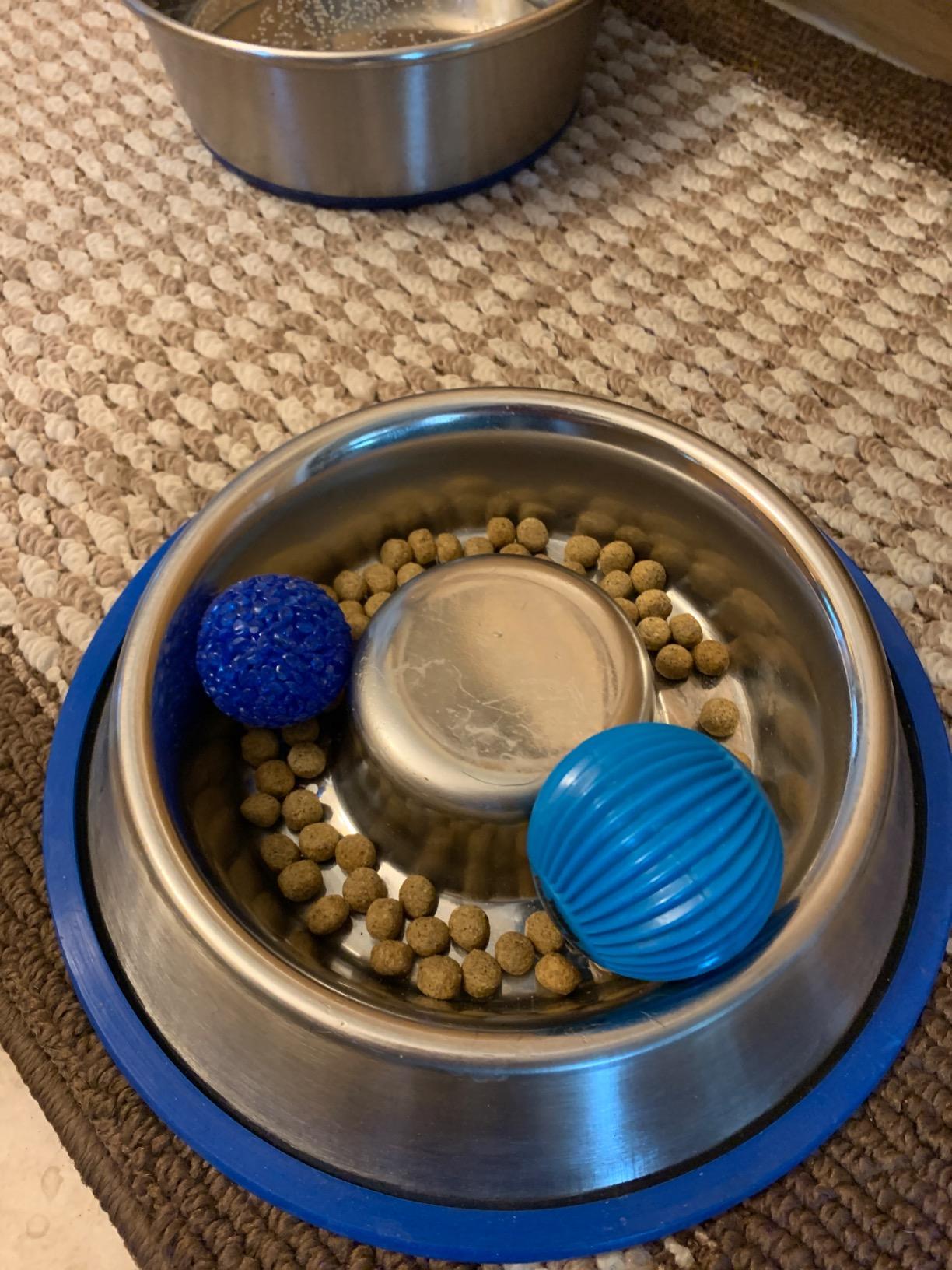
The bundt-cake center is deliberately shallow, which makes this the most accessible bowl here for a Boxer or Bulldog. A dog with a short muzzle can reach the ring of food around the outside without wrestling with a maze.
Owners of dogs who flip every plastic bowl on the market report that this one ends the habit. The sloped sides and wide base make it hard to lift or tip, and the steel does not dent when it is pushed.
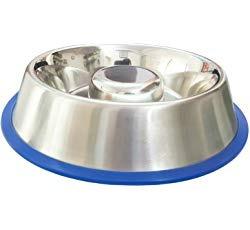
Food-grade 304 stainless steel, 9.6 inches across and 7.2 ounces, with a removable silicone base ring. It is molded in one piece with no welded seam, so there is nowhere for bacteria to settle.
The compromise is slowing power. Owners report only a modest increase for determined eaters, and a few dogs clear the upper ring quickly before settling. The ring also needs to dry completely before you reassemble it.
Why does my dog flip the slow feeder bowl?
Usually impatience, not defiance. A dog that has learned to scoop food will push a lightweight bowl rather than work the pattern, and owners report dogs wait until nobody is looking.
How do I stop the flipping?
Use a heavier bowl, put it on a rubber mat, feed in a confined space, and keep the meal out of reach between servings. Owners on r/Dogtraining also suggest short daily training sessions that teach your dog to leave the mat alone.
12. Neater Pet Brands 3-Cup Stainless Slow Feed Bowl — Best for Large Breeds
Neater Pet Brands Stainless Steel Slow Feed Bowl – Non-Tip & Non-Skid – Stops Dog Food Gulping, Bloat, Indigestion, and Rapid Eating (3 Cup)
- Low wide non-tip design stays put with strong chewers
- Removable rubber ring reduces sliding and clanging
- Hygienic stainless that washes easily
- Challenging but achievable pattern
- Lower rating at 4.2 with 6 percent one-star reviews
- Shallower than most maze bowls so slowing is mild
- The rubber ring can detach for determined dogs
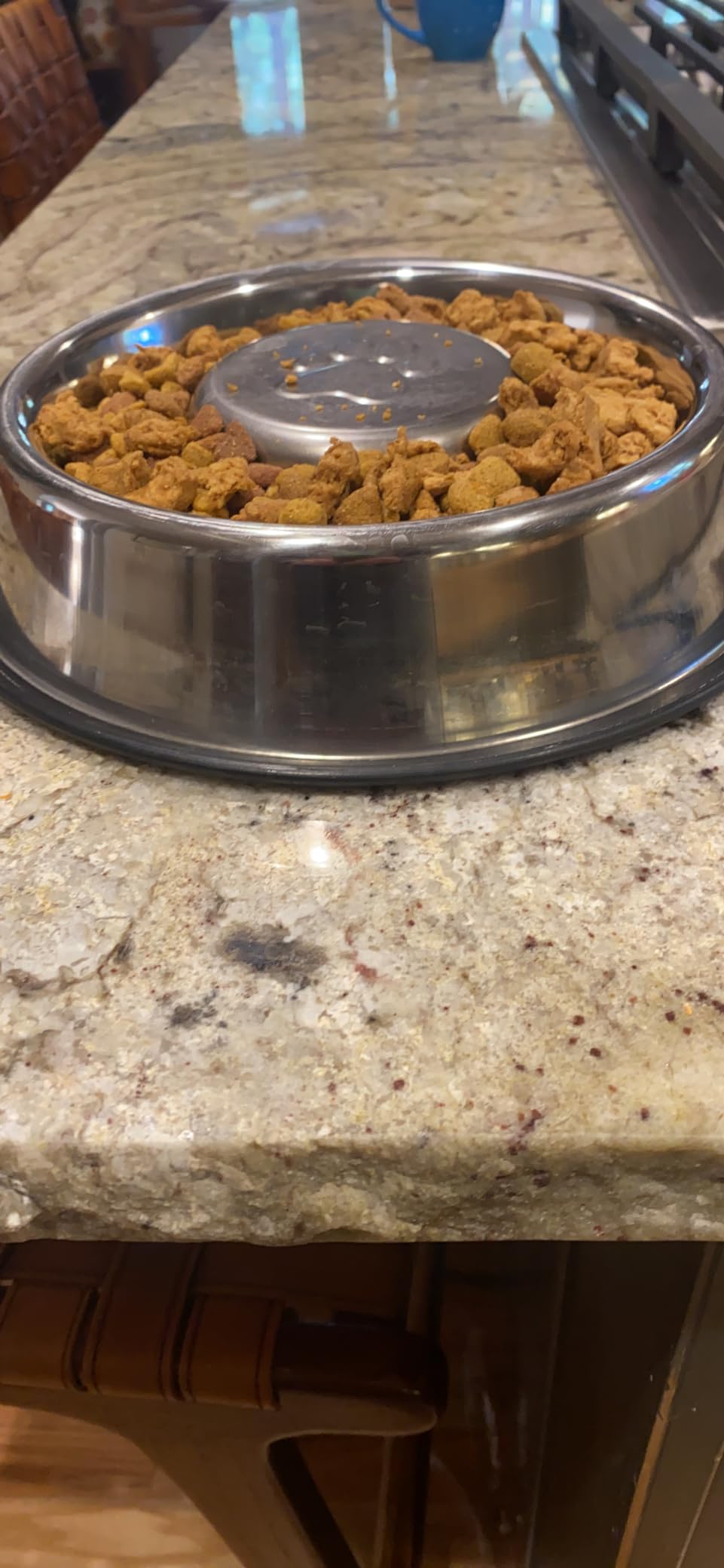
At 3 cups with an 11.25-inch base, this is the most capacity in the group, and the low, wide shape is built for a large dog leaning into it. The 1.06-pound body is heavy enough that pushing it across the floor rarely works.
Buyers who had trouble with dogs flipping plastic slow feeders tend to rate this bowl highly, and the removable rubber ring takes the sliding and the clatter on hard floors out of the picture.
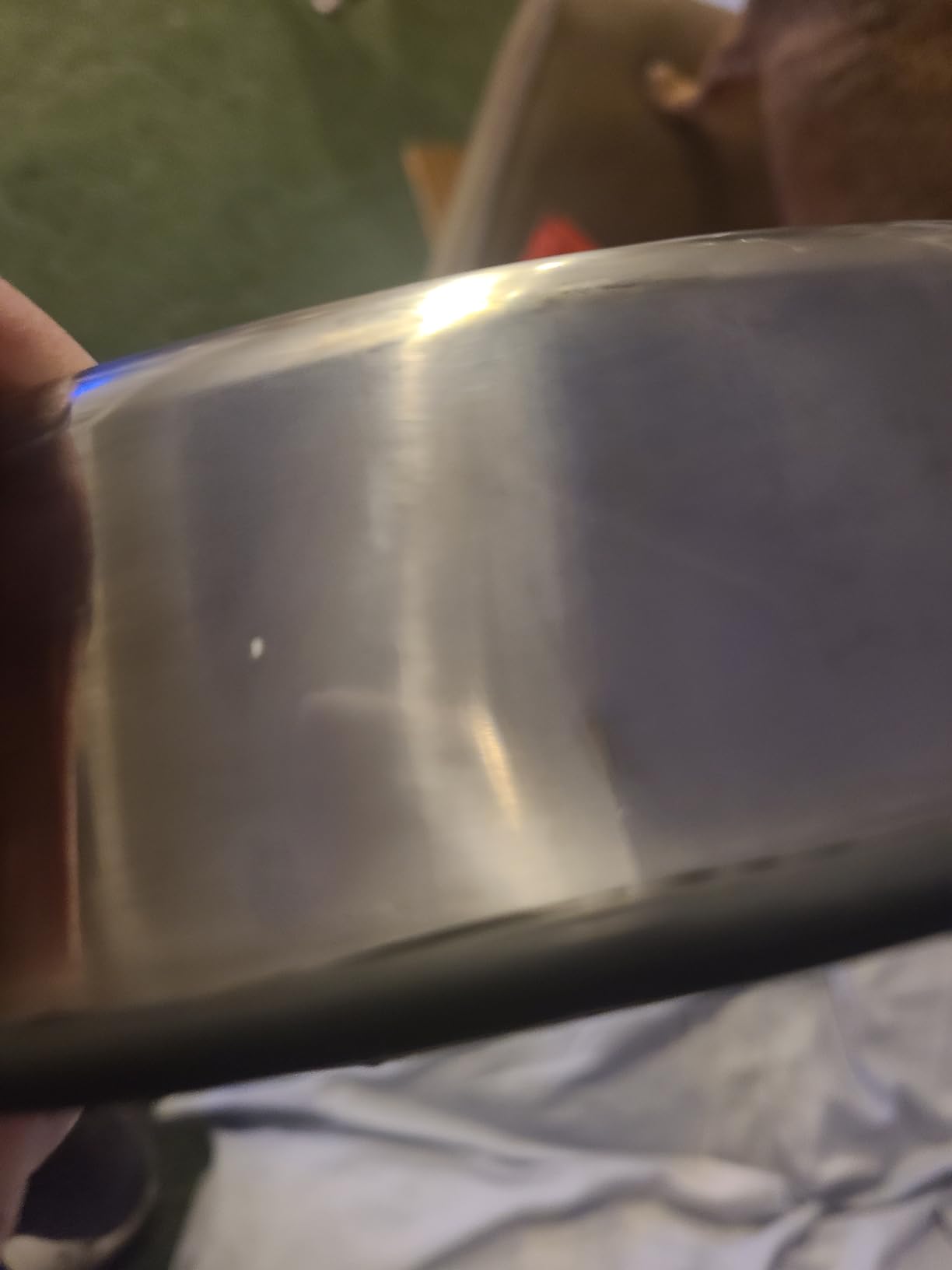
It holds 3 cups of wet or dry food, and the pattern is pitched as challenging but not impossible so a large dog does not simply walk away. Stainless steel means it sanitises easily and holds no odour.
I would flag two things honestly. It is the lowest-rated bowl here at 4.2, with 6 percent one-star reviews, and detractors say the slowing effect is mild because the pattern is shallower than a maze. The rubber ring can also come off for a determined dog.
Is an elevated slow feeder better than a flat one?
Only when your vet says so. Elevated feeders help dogs with arthritis or joint stiffness, and they can be worse for deep-chested breeds at risk of bloat. Ask before you raise the bowl.
How big a slow feeder do I need for a large dog?
Match the capacity to the full ration rather than the bowl name. Three cups covers most large-dog meals, and check that your dog can drop its muzzle to the bottom and still reach food around the pattern.
How to Choose a Slow Feeder Bowl Your Dog Will Actually Use?
Start with muzzle length, not weight. A large, deep-muzzled Vizsla, Bernese or Golden needs a wide bowl with shallow or open channels. Owners on Golden Retriever forums report the first bowl they bought was too small for the muzzle to reach down into, and that sizing by weight alone is what causes it.
Match capacity to the full meal. Under-filling slows a dog down further and is the most commonly repeated tip across forum threads. Counting cups for your dog’s regular portion tells you which size to buy.
Buy the easiest pattern first. A dog who refuses food from an unfamiliar object will not improve with difficulty. Then, and only then, step up to a harder pattern.
Look for a base that cannot move. A molded rubber base beats adhesive pads that peel off. For a dog who flips, choose a heavier bowl, put it on a rubber mat, or use a suction design on a tile floor.
Think about material. Plastic is lightest and usually has the deepest maze. Stainless steel is the most hygienic and the most indestructible. Ceramic is heavy and easy to wipe but can chip. Silicone is the softest and travel-friendly. If you also feed a toddler at the same table, our picks for mixing bowl sets for kids cover the same sizing questions from the human side.
Wet food or dry food? Dry kibble works with any pattern. For wet food, pick a bowl with shallow ridges or a solid center, such as the stainless bowls, because a deep maze traps grease and becomes a cleaning problem within days. Reviewers report wet food getting stuck in deep channels, which is the single most common complaint about maze bowls.
Flat-faced dogs need a different shape. A brachycephalic breed should have a shallow pattern or a lick mat rather than a deep maze. Owners on r/Frenchbulldogs report switching away from ridged bowls entirely.
How to introduce a slow feeder in six steps?
First, put the empty bowl down and let your dog investigate it. Second, reward any contact with it. Third, add a few pieces of food, not a full meal. Fourth, move the bowl around and make a little noise so it does not become a scary object. Fifth, feed one meal a day from it for three days. Sixth, build up to full meals and step up to a harder pattern.
What to do when the bowl stops working?
If your dog eats fast even with a slow feeder, the pattern has almost certainly been solved. First, drop back to an easier level. Then, mix high-value treats into the kibble so the maze stays worth solving. Next, keep two bowls and rotate them, so the pattern never becomes fully automatic. Then, under-fill rather than filling to the top. Finally, consider splitting the meal into two or three smaller feedings, which is a habit with stronger evidence behind it than any bowl.
Beyond bowls, a snuffle mat, a lick mat, hand-feeding, or a timed automatic feeder that releases small portions all work. Several owners on r/dogs prefer an automatic timed feeder precisely because a ravenous dog cannot out-run the release schedule. If you want a broader look at kitchen gear for the whole family, our slow juicer guide for families covers another appliance that rewards patience.
One safety note that belongs here: keep water available during a long meal. A slow feeder slows food, not thirst, and a dog working a maze for ten minutes will want a drink.
Frequently Asked Questions
Do vets recommend slow feeder bowls?
Most vets are comfortable with slow feeders as one part of slowing a fast eater, because reduced gulping means less swallowed air and fewer episodes of regurgitation and choking. The honest caveat is that evidence linking eating speed to bloat is mixed, so a slow feeder is not a guarantee. Discuss your dog with your vet first if there is a history of bloat, vomiting or other symptoms.
What is the best material for a slow feeder bowl?
For chewers and hygiene, stainless steel is the most indestructible and easiest to sanitize. Ceramic is heavy and wipes clean but can chip. Plastic is lightest and usually offers the deepest maze. Silicone is the softest option and the easiest to travel with. Whichever you choose, replace it once the surface is deeply scratched.
Why does my dog eat fast even with a slow feeder?
Because your dog has solved the pattern. Start again with an easier difficulty level, mix high-value treats into the food, rotate two bowls so the pattern never becomes automatic, and under-fill the bowl instead of filling it to the top. Splitting the meal into two or three smaller feedings helps as well.
How long should a slowed-down meal take?
Most owners land between two and ten minutes for a normal portion, and the research brief behind these picks points to a five to ten minute target. If your dog finishes in under a minute, the pattern is too easy or the bowl is too small. If the dog walks away, it is too hard.
Can I use a slow feeder bowl with wet food?
Yes, but pick a bowl with shallow ridges or a solid center rather than a deep maze. Wet food gets trapped in deep channels and turns greasy, which is the most common cleaning complaint. A solid center stainless bowl or a lick mat works better for wet meals.
Why is my dog flipping the slow feeder bowl?
Impatience, usually. A dog that has learned to scoop will push a lightweight bowl rather than work the pattern. Fix it with a heavier bowl, a rubber mat underneath, a suction base on a tile floor, and feeding in a confined space so the bowl cannot be flipped when nobody is looking.
Conclusion
The best slow feeder bowls for fast eaters in 2026 come down to the dog in front of you. For most households the Outward Hound Fun Feeder Slo Bowl is the safest first purchase, because its three difficulty levels let you start gentle and progress. For multi-dog homes the MateeyLife two-pack solves the competition that caused the gulping. Chewers should look at stainless steel, flat-faced dogs need a shallow pattern, and determined eaters need something heavy enough that flipping is not worth the effort.
Start with the easiest pattern, under-fill the bowl, and give it two weeks. If your dog is still gulping after that, split the meals instead, and if you see a swollen belly or unproductive retching, call your vet.
While your dog works through lunch, you might also enjoy our guides to toddler suction bowls for self-feeding and no-pressure strategies for picky eaters.