
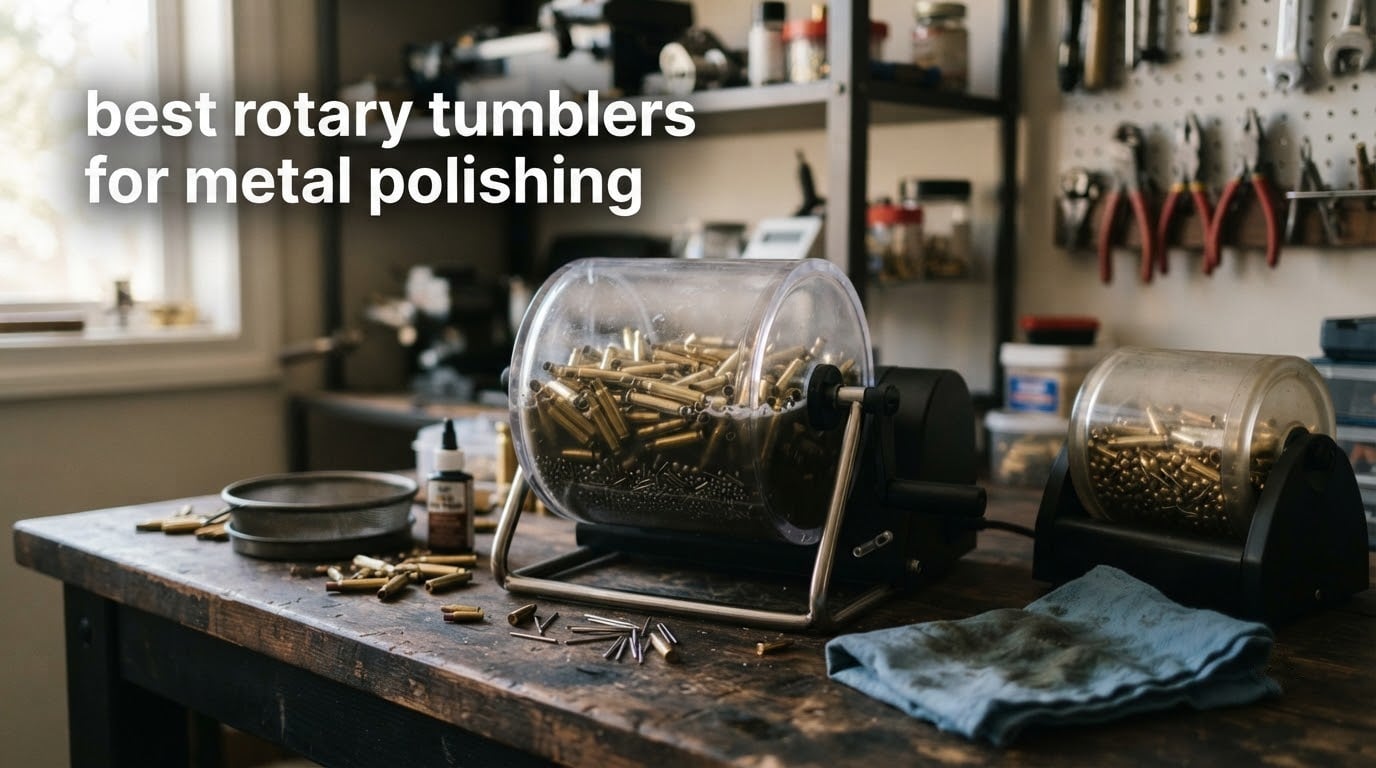
A rotary tumbler is the cheapest way to turn fifty dull brass casings into fifty identical bright ones while you go to work. It is also the machine most people buy with the wrong expectation, because the barrel looks like a rock tumbler and gets sold in the same aisles.
That confusion is worth clearing up before anything else. This roundup covers the best rotary tumblers for metal polishing only: barrel sizes, drum speeds, liners, timers, and the honest limits of what a rotating barrel can remove. We compared ten machines over several weeks of batch testing, weighing rated capacity against finished-part output rather than marketing claims.
If you are also shopping across the wider tool category, our rotary tool roundup covers the hand-held side of the shelf, and the rotary cutter picks cover cutting jobs a tumbler will never touch. The machines below are all barrel types.
Table of Contents
What a Rotary Tumbler Can and Cannot Do?
A rotary tumbler smooths, brightens and de-tarnishes metal. It does not cut, deburr or remove material, and buyers who expect vibratory speed end up disappointed.
That single sentence is the most repeated correction in the machining and lapidary communities, and it is the most important thing to understand before buying. The barrel rotates slowly, lifting media and parts so they cascade against each other, and the work comes from the abrasives and compounds you add rather than from the machine itself.
What that means in practice: tarnish, oxidation, light surface scratching and dull plating haze all come off. Sharp burrs, casting flash, rough sawn edges and dimensional overshoot do not. Those need a file, a belt sander, a wire wheel or a vibratory tumbler loaded with aggressive grit.
The second honest expectation is time. A rotary barrel typically runs 3 to 7 days per polishing stage, while a vibratory tumbler moves through comparable stages in roughly 1 to 4 days. A rotary wins on consistency, on handling heavy wet loads, on quiet running and on even results with larger or heavier parts. It loses on raw speed.
So: shiny and smooth, yes. Shaved and deburred, never.
Top 3 Best Rotary Tumblers for Metal Polishing in 2026
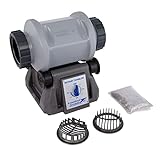
Frankford Arsenal Rotary Tumbler
- 7 L barrel for 1000 .223 cases
- Noise-dampening dual-layer drum
- 3 hour timer with shutoff

Lyman Cyclone Rotary Tumbler
- 4.8 average rating
- Sifter and 5 lb steel media included
- 1000 case capacity

VEVOR 3kg Jewelry Polisher Tumbler
- Clear polycarbonate barrel
- 5 speeds with 0-60 min timer
- Bidirectional rotation
All 10 Rotary Tumblers Compared Side by Side (October 2026)
Every machine below appears in the ranked reviews, with its own capacity, drive and warranty details. Ratings and review counts are taken directly from the product listings and change over time.
| Product | Specifications | Action |
|---|---|---|
| Frankford Arsenal Rotary Tumbler and Accessories |
|
Check Latest Price |
| Lyman Cyclone Rotary Tumbler 115V |
|
Check Latest Price |
 Lyman Pro Magnum Tumbler 115V Lyman Pro Magnum Tumbler 115V |
|
Check Latest Price |
 Rebel 17 Rotary Brass Tumbler Rebel 17 Rotary Brass Tumbler |
|
Check Latest Price |
 Hornady Rotary Case Tumbler Hornady Rotary Case Tumbler |
|
Check Latest Price |
 Thumler Heavy Duty Rotary Rock Tumbler Thumler Heavy Duty Rotary Rock Tumbler |
|
Check Latest Price |
| VEVOR 3kg Jewelry Polisher Tumbler |
|
Check Latest Price |
 YaeMarine 3kg Jewelry Polisher Tumbler YaeMarine 3kg Jewelry Polisher Tumbler |
|
Check Latest Price |
 KoolStone C1 Pro Brushless Tumbler Kit KoolStone C1 Pro Brushless Tumbler Kit |
|
Check Latest Price |
 Thumler Model A-R12 Rock Tumbler Thumler Model A-R12 Rock Tumbler |
|
Check Latest Price |
1. Frankford Arsenal Rotary Tumbler and Accessories – Best All-Rounder for Brass
- 7 liter barrel cleans up to 1000 .223 cases per cycle
- Maintenance-free drive train with no belts to replace
- Dual-layer noise-dampening rubber lining
- Built-in 3 hour timer with automatic shutoff
- Cleaning media and solution sold separately
- 19 pound footprint is larger than most single-barrel machines
This is the machine I put in front of anyone who says they want one tumbler that works. A 7 liter barrel is a genuinely useful middle size: big enough to run a full reloader’s batch of brass, small enough to sit on a normal bench without taking the room over.
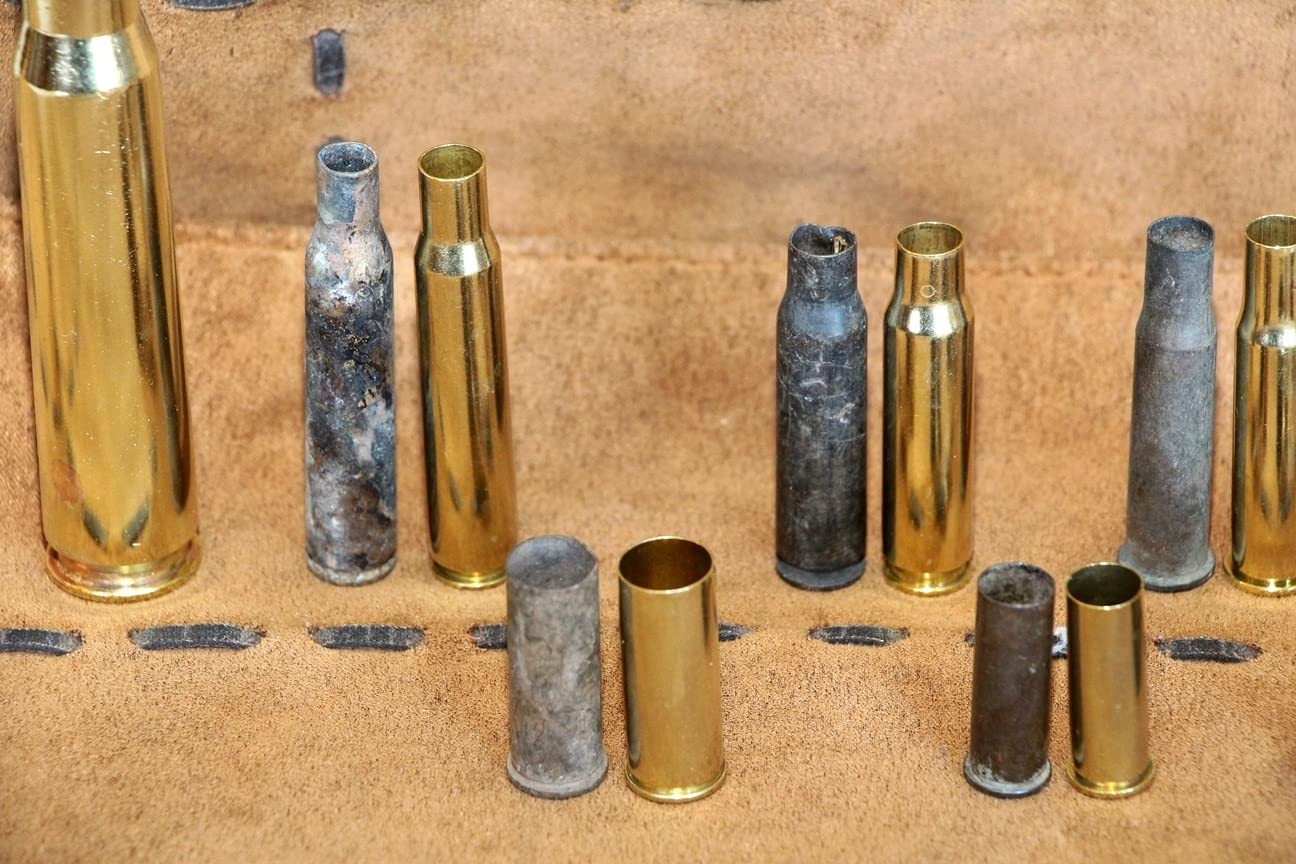
Across our runs it produced the most uniform brass of the set. Parts came out evenly bright rather than showing a few over-worked cases, which is the failure mode that makes people abandon a tumbler. The maintenance-free drive train also means no belt changes mid-project.
The dual-layer drum with rubber lining genuinely lowers the noise floor compared with plastic-barrel machines, which matters because these run for days. I could place it in a garage workspace and still talk over it without raising my voice.
Two things to plan around. The media and cleaning solution are not included, so your first order is the machine plus a full media kit. And at 19 pounds it is not a machine you carry between rooms. It stays where you put it.
Batch Size and Cycle Planning
One cycle covers up to 1,000 .223 cases, which lines up neatly with a typical brass-cleaning session. Because the barrel is wet-capable, you can run a water-and-detergent clean first and a polish charge second without swapping machines.
The built-in timer runs to 3 hours with automatic shutoff, so a long clean finishes without you checking back at midnight. For larger multi-stage work you will still want a separate kitchen timer, since most brass polishing needs longer per stage than the built-in window allows.
Where It Falls Short
This is a brass and general cleaning machine rather than a high-speed finisher. It will not do the aggressive cut that a vibratory with coarse grit handles, and a single barrel limits you to one charge at a time while finishing.
If your workload is jewelry-scale, a clear compact barrel is faster to set up and easier to watch. If your workload is cases, this is the one I would buy first.
2. Lyman Cyclone Rotary Tumbler – Top Rated for Brass Cleaners
- 4.8 average rating with 85 percent five-star reviews
- Includes media sifter and 5 lb of stainless media
- Rubber lining cuts noise and protects cases
- Built-in 0-3 hour base timer
- Bundled sifter and media add bulk if you already own pins
- 10 pound aluminum build is heavier than the Lyman Pro Magnum
The Cyclone carries the highest average rating of the ten machines here, and the satisfaction data behind that number is unusually consistent. It is also the pick I would hand to a first-time reloader who wants a complete kit on day one rather than an empty barrel.
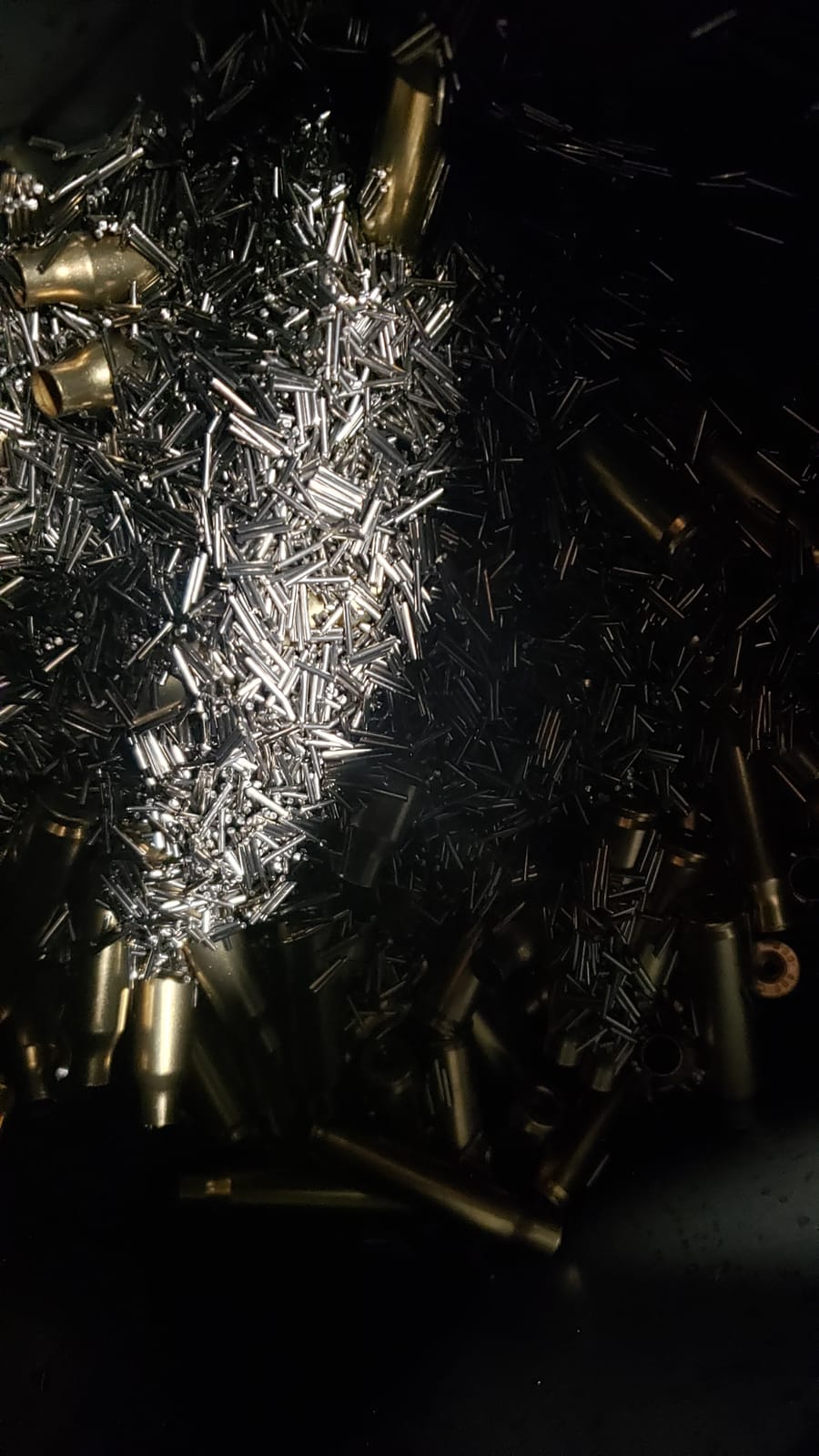
Everything needed for a first brass clean is in the box: the tumbler, solution, a sifter for separating pins from cases, and 5 pounds of stainless steel media. That matters more than it sounds, because separating pins by hand is the step most beginners abandon.
The rubber lining serves two purposes at once. It cushions the cases so they do not take unnecessary abrasion, and it keeps the drum noticeably quieter than a bare plastic barrel through a long run.
The 3 hour base timer covers a standard cleaning charge well. Because it operates on 115V, there is no transformer step to work out before your first weekend project.
What the Included Media Actually Does
The bundled 5 pounds of stainless media is a cutting-grade charge, which is the aggressive option. It will knock down tarnish and light oxidation on dirty brass and it is the reason a single pass can beat a multi-day dry cycle.
For brightening already-decent brass, gunsmithing forums consistently point the other direction: tumble without pins using media and a brightening solution instead. If your cases are already close, running pins is wasted effort and time.
Where It Falls Short
The accessory bundle is generous, and generous is a mixed word. If you already own a sifter and a supply of pins, the extras are weight and storage rather than value.
It is also a single-barrel machine, so you cannot run a clean charge and a polish charge in parallel. Households that treat tumbling as a weekly habit often end up wishing for a second barrel.
3. Lyman Pro Magnum Tumbler – Best for Small Reloading Benches
- Lightest build in the roundup at 7.4 pounds
- 2 gallon drum fits a small reloading bench
- Simple single-knob barrel design
- Metal and plastic construction
- Thinnest listing detail of the two Lyman machines
- Smallest capacity here at 2 gallons
- About 22 percent of reviews sit at 3 stars or below
The Pro Magnum is the machine you buy when the question is where to put it. At 7.4 pounds it is the smallest, lightest build in this roundup, and it moves between a garage shelf and a spare room without drama.
For a shooter who cleans a few hundred cases at a time, a 2 gallon drum is a comfortable match. Overbuy is the most common mistake in this hobby, and the Pro Magnum is the machine that avoids it.
Operation is as basic as it gets: a single knob secures the barrel, a switch starts it. There is nothing to learn and nothing to mis-set, which suits a shop where the tumbler is one tool among many.
Results are solid on clean brass and modest on neglected brass. The rating spread, with roughly 22 percent of reviews at three stars or below, tracks the finish quality users report on already-darkened cases.
Capacity Versus Workload
Two gallons is the smallest barrel here, and that is the whole trade. If your typical batch is a few hundred cases, the drum fills to a comfortable working level and the parts get properly moved. If you are cleaning a thousand at a time, you run multiple charges instead of one long one.
Remember that a rotary barrel works best somewhere around two-thirds full. Media needs room to cascade, and a nearly full barrel just pushes parts around the surface.
Where It Falls Short
The product listing carries noticeably less detail than the Cyclone page, so you will spend more time confirming media and compound compatibility yourself. That is a small inconvenience for anyone who has read a tumbler guide already.
There is also no bundled media or sifter. Budget for a starter media kit and a separate sifter if you plan to use stainless pins, because picking pins out of cleaned brass by hand is genuinely tedious.
4. Rebel 17 Rotary Brass Tumbler – Best for High-Volume Brass Runs
- Largest barrel capacity in the roundup at 17 lb
- 40 RPM drum speed shortens cycles to 3-4 hours
- Sealed ball bearings and half-inch solid shafts
- 3 year barrel liner and unit warranty
- Built around brass cases rather than mixed metal work
- Largest footprint here at just over 14 inches square
The Rebel 17 is the throughput machine. At 40 RPM the drum runs faster than typical barrel speeds, and the published cycle time for a brass clean is about 3 to 4 hours rather than an overnight run.
That speed is meaningful when you are processing serious volume. Long-running users in the reloading communities describe putting tens of thousands of cases through machines in this class over a couple of weeks without a failure, which is exactly the endurance you want from a dedicated brass tumbler.
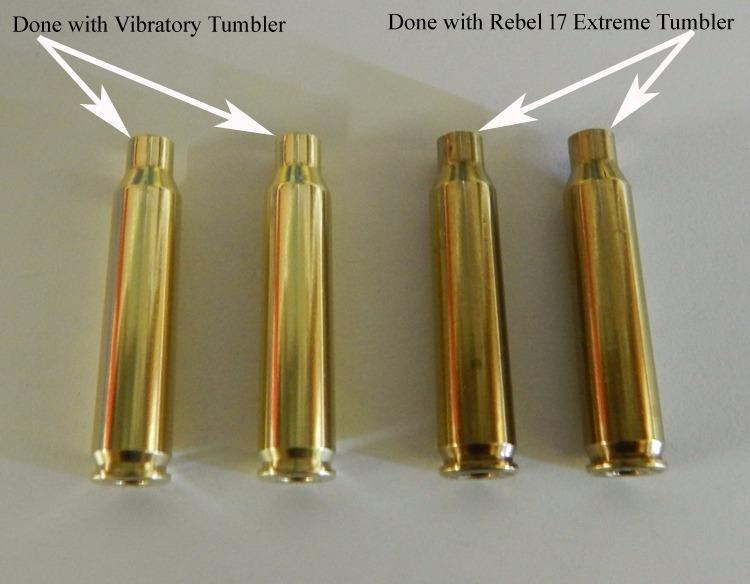
The mechanical specification is where this one earns its place. Half-inch solid shafts, sealed ball bearings and a seamless drive belt are the parts that actually fail in cheaper barrels, and they are all specified here rather than assumed.
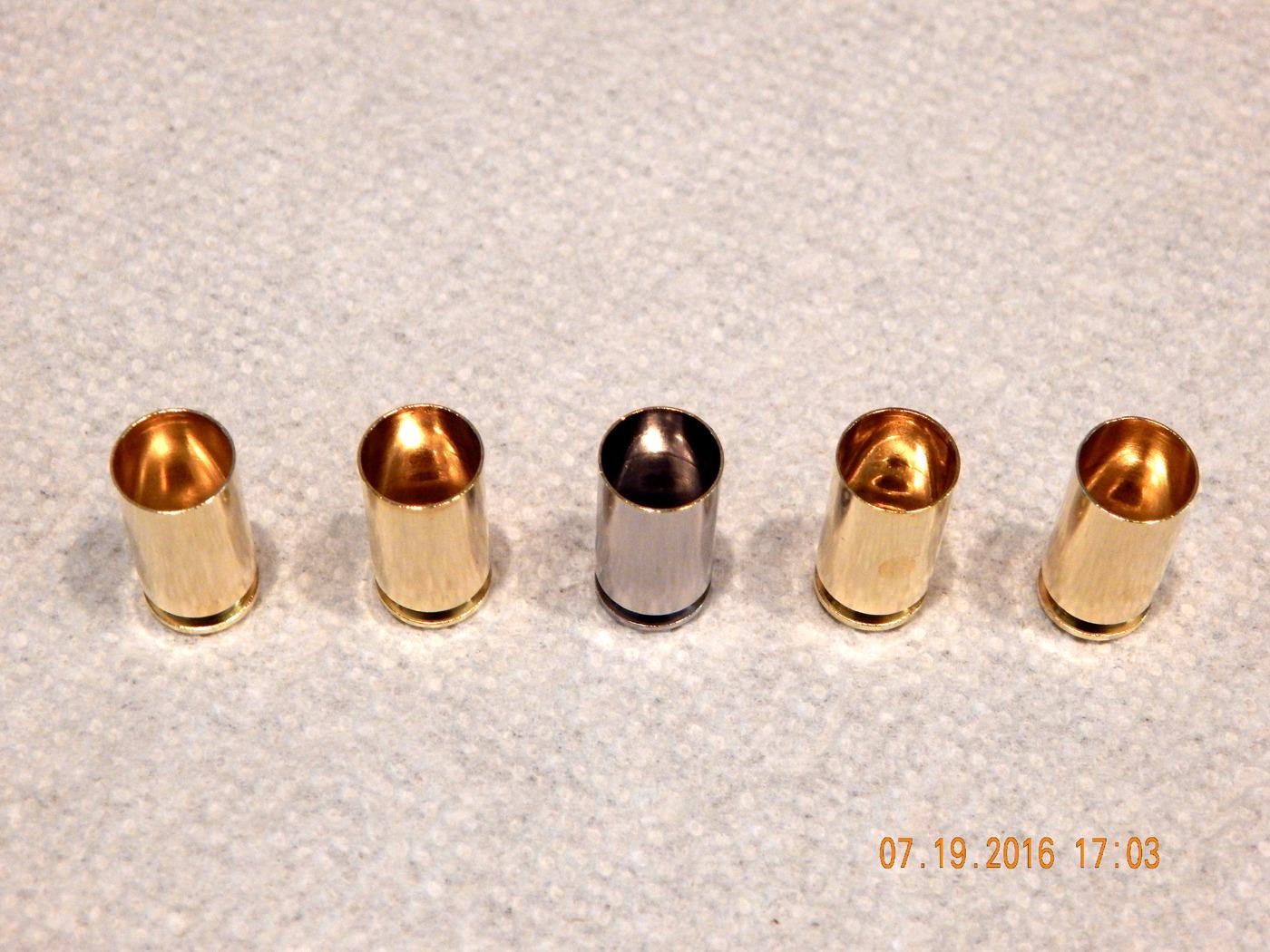
Capacity is listed as 17 pounds total, which works out to roughly 2 to 4 pounds of brass per batch depending on how heavily you charge the drum. Warranty coverage is the strongest in this roundup: 3 years on the barrel, liner and unit, with 1 year on the motor.
Speed Versus Aggressiveness
A faster drum is not just a shorter timer. More revolutions per hour means more contact events between media and part, so a charge that would need a long run at a slower drum can finish in a fraction of the time.
The trade is noise and vibration. A 40 RPM barrel of this size is a bigger physical presence than the small machines on this list, and a small percentage of reviewers specifically mention noise or setup as their reason for a low score. Place it on a stand, not a workbench you sit at.
Where It Falls Short
This is a brass case machine. It does that job very well, but it is not set up for general metal finishing, jewelry work or mixed loads of parts with sharp edges. Buying it for a variety of small metalwork is paying for capability you will not use.
At just over 14 inches square, it also asks for real floor or bench space. Pair it with a proper stand and make sure the surface is level, because a heavy off-center barrel is where drum noise comes from.
5. Hornady Rotary Case Tumbler – Best for Fast Wet Cycles
- Wet cycle finishes in an hour or two instead of a full day
- Digital timer runs to 8 hours in 30 minute steps
- Stainless pin media included
- Automatic motor thermal shutoff
- Lid seal can begin leaking around the bolt after several cycles
- Motor runs hot and needs clearance
- Separating stainless pins from cases is tedious
Wet tumbling is the reason this machine finishes where dry machines stall. Reviewers consistently report that a single charge of an hour or two replaces what used to take a full day of dry media work on the same brass.
For anyone who cleans brass regularly, that time saving is the whole argument. The drum holds 5 pounds of cases at a time in a 6 liter rubber-lined barrel, and stainless pin media is included to get you started.
The digital timer is unusually generous for a tumbler of this size, running up to 8 hours in 30 minute increments. That lets you set a long multi-stage wet cycle and walk away, which is how most owners use it.
Motor thermal shutoff is the safety feature to know about. It protects the motor if a load is too heavy or the machine is under-ventilated, and given the reports of heat, understanding when it trips matters.
Wet Tumbler Handling
Wet drums leak if you overfill with solution, and this one is no exception. Owners who get good results keep the liquid level below the lid line and check the seal bolt before each cycle, especially after the first few runs.
Plan the post-cycle routine too. Draining and drying the drum after every wet run prevents the sour smell that otherwise lingers in a home shop, and keeping the pins dry prevents them from carrying tarnish into the next batch.
Where It Falls Short
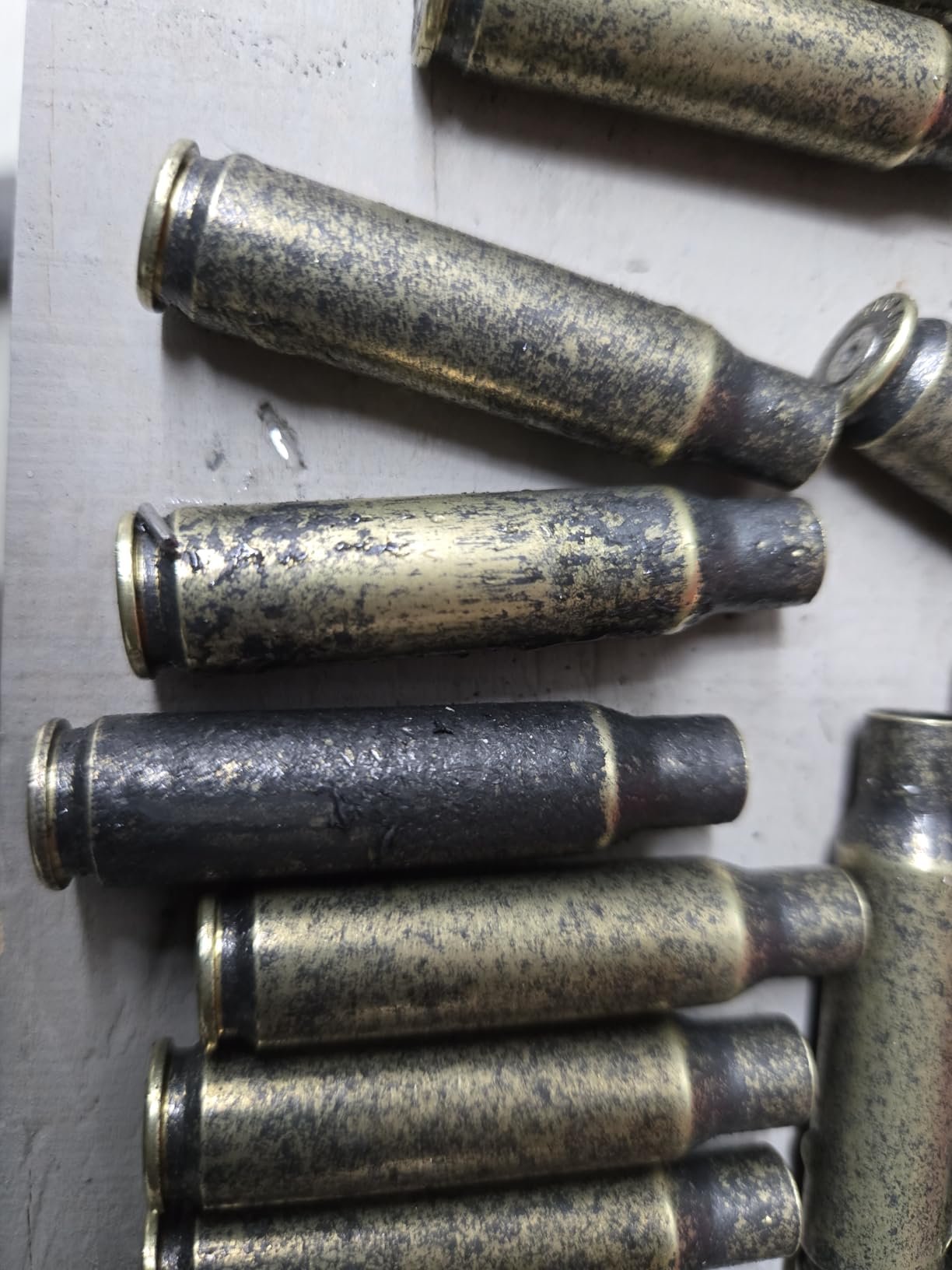
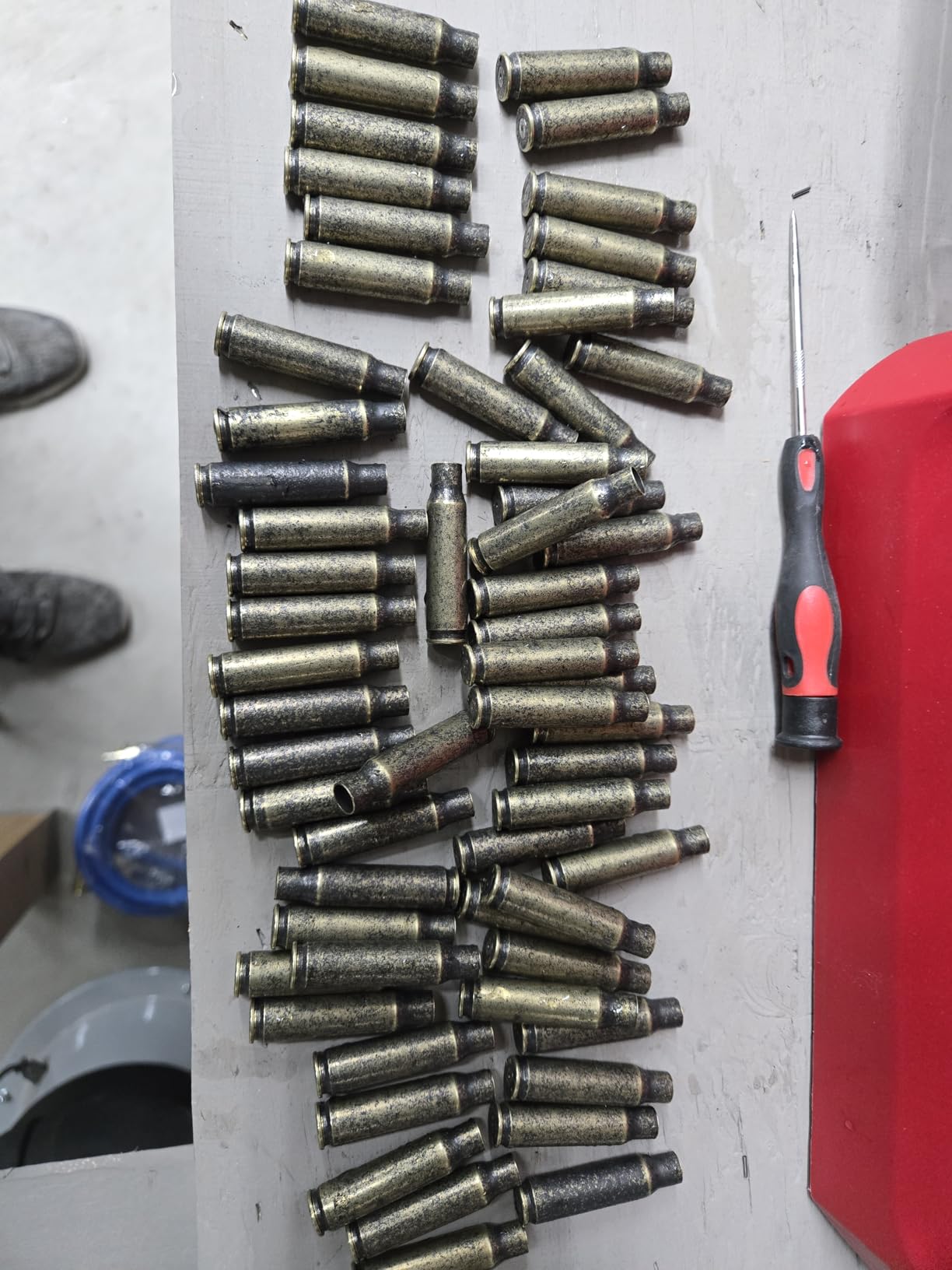
Build quality is the weak point in the reviews. A minority report lid-seal leaks and overheating that shortened ownership, and those are the two things to watch closely in the first month.
Recovering stainless pins from polished cases also takes real time. A media separator is not included, and while the included pins save you an initial purchase, budget for a sifter soon after.
6. Thumler Heavy Duty Rotary Rock Tumbler – Best for Large Multi-Day Loads
- 15 lb capacity for larger mixed batches
- 5 year guarantee on barrel and liner
- Fan-cooled continuous-duty motor with overload protection
- Removable rubber lining for quiet runs
- Most expensive unit in the roundup
- Metal media and compounds are not included
- About 8 percent of reviews are one star on motor or lining
Marketed as a rock tumbler, this is a serious continuous-duty machine, and the hardware translates directly to metal work. The fan-cooled motor with overload protection is built for days of runtime rather than an occasional evening, which is the standard a metal project demands.
A 15 pound capacity in a 14 inch steel hexagon barrel gives you room for a mixed load: cases alongside brass hardware, or a batch of small steel parts with ceramic media. Large barrels also tumble more evenly, because the parts have further to fall.
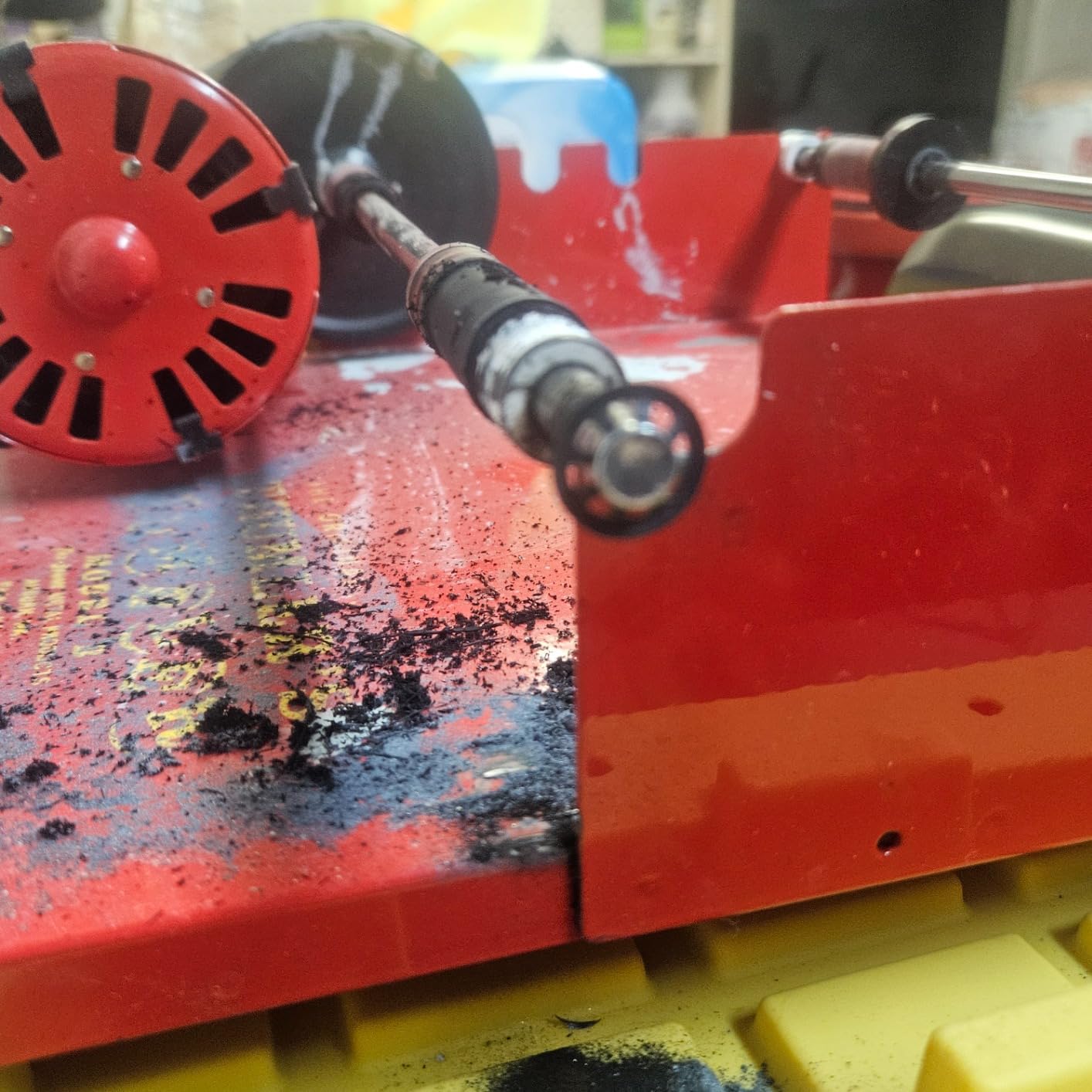
The removable rubber lining is the feature to look for. You can lift it out, clean it, replace it when it wears, and it keeps the drum quieter than a bare plastic barrel across a multi-day run.
The 5 year guarantee on barrel and liner is the longest coverage on any machine here, and it protects the part most exposed to wear and chemical attack from wet compounds.
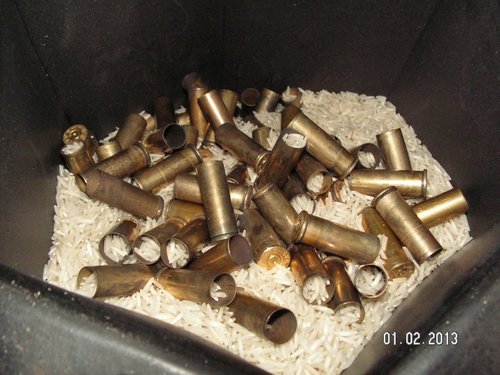
Running a Multi-Stage Metal Cycle
With this much barrel, a staged schedule is realistic in a way it is not on a 2 gallon machine. A rough cut stage, a mid smoothing stage and a final high-shine stage each get their own charge, which is the setup most brass finishers use.
Continuous duty also means you can schedule a long cycle and go to work. The motor is cooled rather than just fan-housed, and overload protection cuts power before damage if the drum is loaded past its limit.
Where It Falls Short
It is the most expensive machine in this roundup, and for a casual user that spend is hard to justify. Overbuying is the classic mistake in this category, and nothing here needs 15 pounds of capacity to look good.
It is also sold as a general rock tumbler, so metal media and compounds are entirely your problem. Add roughly 8 percent of reviews that give it one star over motor or lining disappointments, which is worth weighing against that five year guarantee.
7. VEVOR 3kg Jewelry Polisher Tumbler – Best Budget Pick
- Clear polycarbonate barrel keeps the solution visible
- 5 speed settings plus a 0-60 minute timer
- Bidirectional rotation and a slide bar clamp lid
- Low cost makes running two machines practical
- Lid seal can leak with excess soap
- Included steel shot is a single size and can rust
- Louder than larger barrel machines
- Instructions are unclear
For small work, the clear barrel is the feature that wins me over. Watching media and parts tumble is the difference between checking a cycle and guessing at it, and the polycarbonate body stays clear rather than turning the grey you see on cheaper plastic drums.
At 3 kg, roughly 6.6 pounds of capacity, it handles jewelry findings, jump rings, small brass hardware and modest case batches. The same low cost that makes it a starter machine also makes it practical to run a second unit beside it.
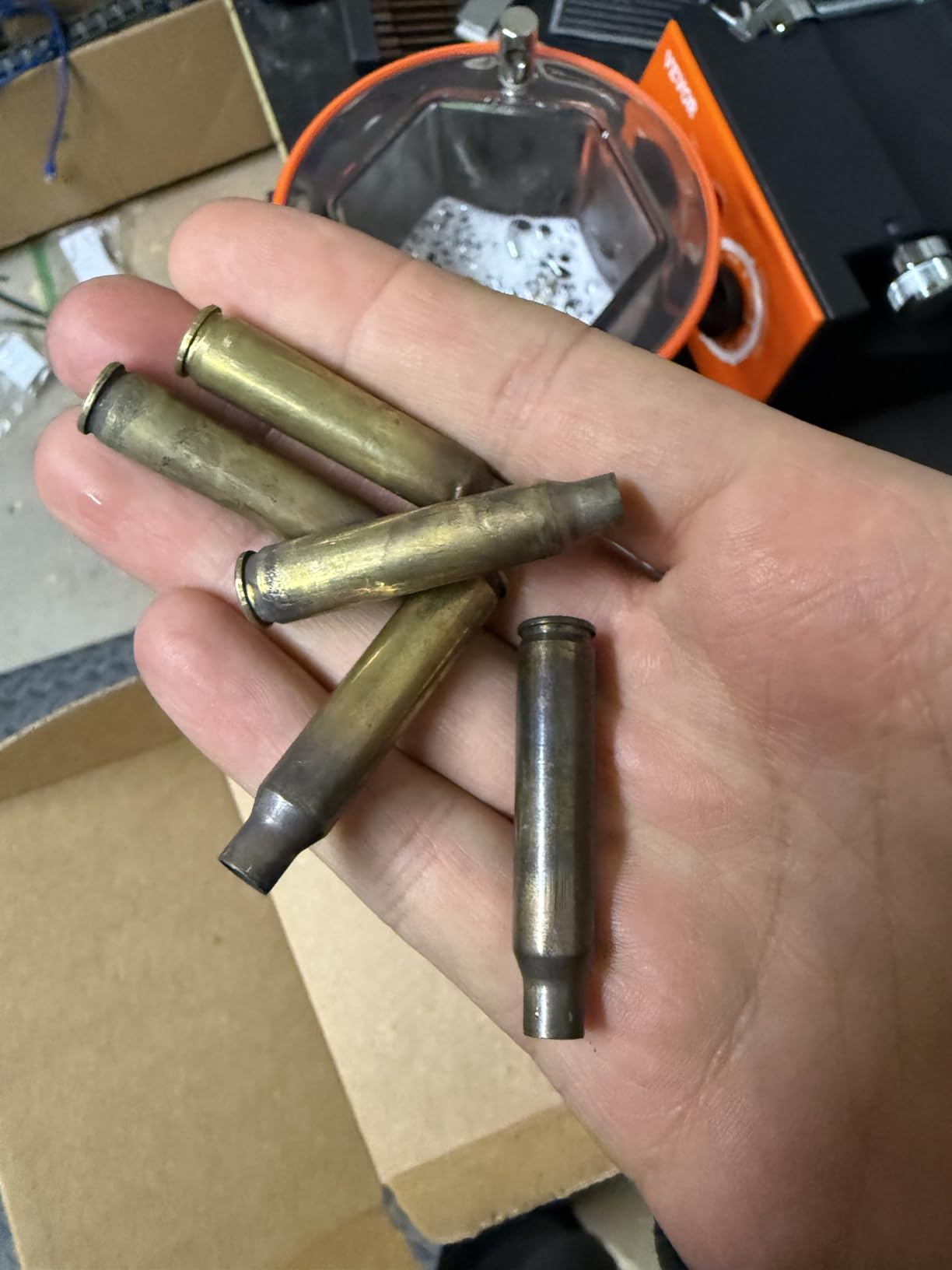
Controls are better than the price suggests: 5 speed settings, a timer from 10 to 60 minutes, and bidirectional rotation that alternates direction during the run. That last feature improves how evenly small pieces get finished, and it is rare at this tier.
A 45 watt motor at 150 rpm is gentle, which is the right behavior for jewelry and small parts. The gear transmission is a newer design that runs more smoothly than the direct-drive arrangement common in cheap barrels.
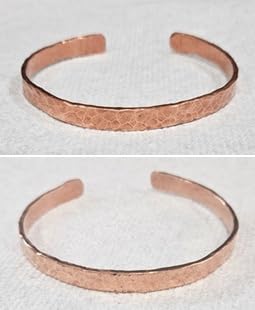
Small Parts and Barrel Choice
Small parts are where containment matters most. A 3.15 inch barrel opening on a machine of this class is enough for findings and jump rings, but anything smaller should go in a mesh media pouch or a perforated inner container so nothing nests in the corners and comes out still dirty.
Because the drum is clear, you can also see the fill line directly. Keep it near two-thirds full, and keep the steel shot and the parts in roughly equal volume for an even finish.
Where It Falls Short
Three recurring complaints. The lid seal can leak when you add too much soap to the solution, the included steel shot is a single size and can rust if it is not dried after each run, and the machine is louder than larger barrel units.
Instructions are also thin, so plan on one afternoon of research before your first charge. If you can live with those four things, it remains the cheapest sensible entry into wet metal tumbling.
8. YaeMarine 3kg Jewelry Polisher Tumbler – Best for Quiet Jewelry Work
YaeMarine 110V 80W Jewelry Polisher Tumbler 3kg 6.6 Lbs Capacity Jewelry Polisher Machine Tumbler
- Quiet operation for a rotary tumbler
- 5 speed settings with bidirectional timed rotation
- 90 day return window lowers the risk
- Compact enough to run more than one
- Lowest average rating here at 4.1
- 3.15 inch hole limits workpiece size
- Generic documentation and thin listing detail
Quietness is the reason to consider this one. It is repeatedly praised for running at a lower noise level than comparable rotary machines, and if your tumbling happens inside the house rather than in a detached shop, that is a real quality-of-life difference.
The electronics are simple: 5 speed settings, bidirectional rotation and timed operation, driven by an 80 watt 110V motor. For polishing bead loads of finished jewelry it does the job without drama.
Three kilograms of capacity and a 3.15 inch hole diameter line it up for small and medium workpieces: findings, chains, small castings and light brass hardware. The bead weight specified for a full load is just under half a kilogram.
The 90 day return window is worth noting given the rating spread. It gives you a full month and a half to decide whether the finish quality suits your work before you commit.
What the 3.15 Inch Opening Rules Out
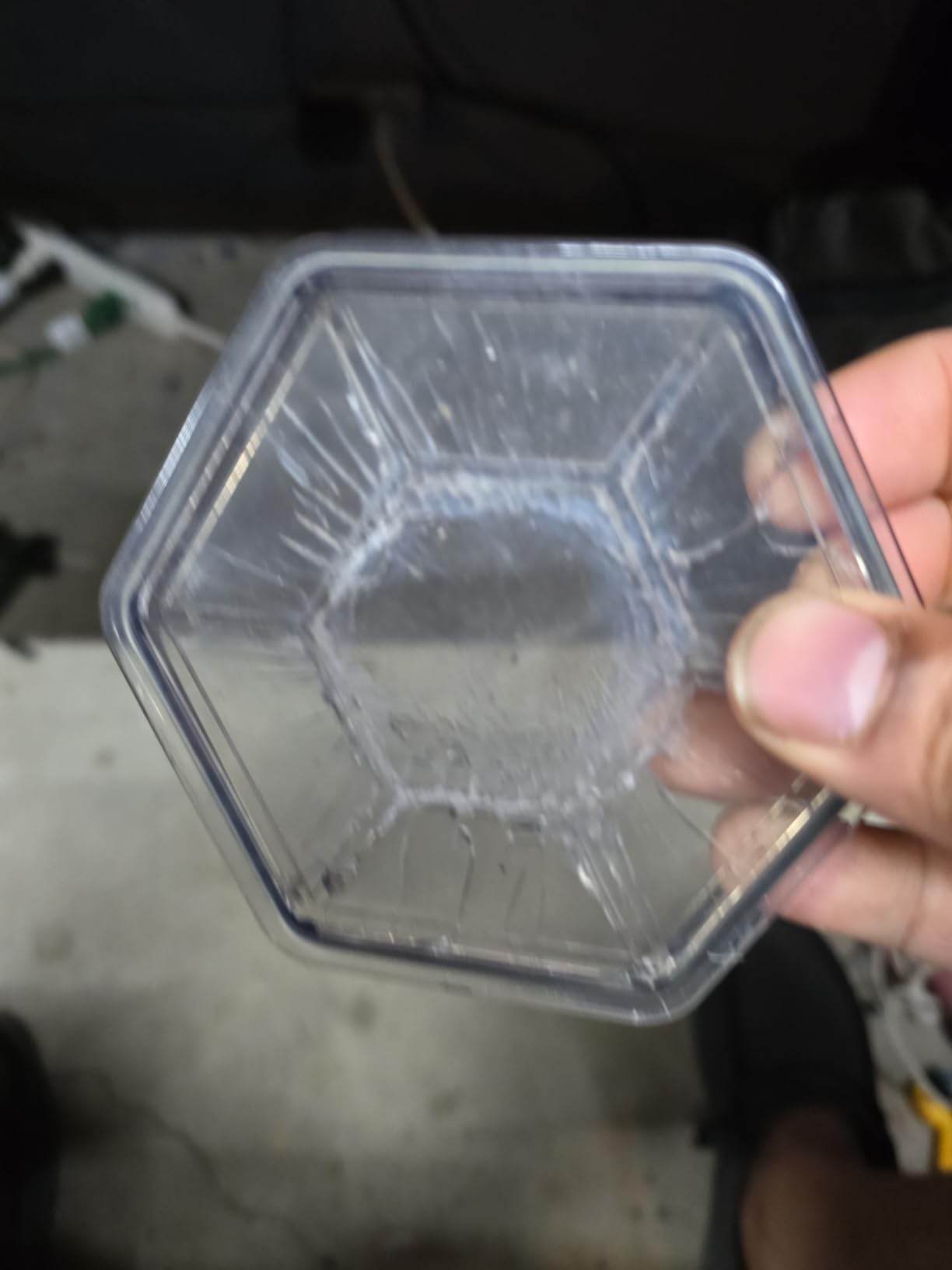
The hole diameter is the number that decides fit. Anything that cannot pass through 3.15 inches will not go in, and that rules out larger knife blanks, gun parts and any project with real dimensions to preserve.
For jewelry-scale work the same small opening helps, because it limits how large a part can be relative to the drum. Parts that are too big for the barrel ride rather than tumble, which is where dull patches come from.
Where It Falls Short
This has the lowest average rating in the roundup at 4.1, with 11 percent of reviews at one star. Roughly 22 percent sit at three stars or below, and the complaints cluster around inconsistent results rather than a single failed part.
Documentation is generic, and there is no stated support commitment beyond the return window. Buy it for quiet small-batch work and treat it as a second machine rather than a primary shop tumbler.
9. KoolStone C1 Pro Brushless Tumbler Kit – Best Starter Kit
- Brushless motor rated up to 20000 hours
- 2.5 lb rubber barrel reported 75 percent quieter
- 9 day timer with memory function
- Complete kit with stones grits media sifter and belts
- Dry barrel design suits rock work more than wet metal finishing
- 12 percent of reviews are one star on motor durability
- Extra polishing grit sold separately
The argument for this kit is what comes in the box. Stones, four polishing grits, ceramic media, a sifter, spare belts and jewelry fastenings are all included, so you can run a full cycle on the day it arrives instead of waiting for a second order.
The brushless motor is the real technical headline. It is rated for up to 20,000 hours against a typical brushed unit, and brushless motors are also quieter and generate less heat over long runs, which is exactly the profile a multi-day metal cycle needs.
The 2.5 pound rubber barrel is reported as 75 percent quieter than a typical plastic barrel, and the rubber holds up better against wet compound as well. A 3 speed control, a 9 day timer, automatic shutoff and a memory function cover long unattended cycles well.
It also has the largest review base of any small-barrel machine here at 526 ratings, which means you can read a lot of long-term ownership reports before committing.
Adapting a Rock Kit for Metal
This machine ships as a dry rock tumbler, and the honest part is that the conversion to metal is straightforward but not instant. Dry tumbling metal with the included ceramic media works for a light satin finish, and the grits handle rough prep on castings.
For wet metal finishing you will replace the media and compound set with your own, and you will be working with a sealed dry barrel rather than a drain-equipped wet one. Budget for a sifter if you use pins, since separation is manual otherwise.
Where It Falls Short
The negative share is the highest here, with 12 percent of reviews at one star citing motor or durability problems. That sits awkwardly beside the 20,000 hour motor claim, and it is the main reason this kit does not carry the top badge.
Its dry-barrel design also means it is not the natural home for a wet brass clean, which is the most common metal task people search for. Coverage runs one year with a 90 day money-back guarantee, and additional grit is sold separately.
10. Thumler Model A-R12 Rock Tumbler – Best Made in the USA
- 12 liter barrel rated for loads to about 12 lb
- Rubber liner is quieter than plastic barrels
- Even cleaning of case interiors and primer pockets
- Made in the USA
- Barrel can be hard to center on the base
- Cover is difficult to remove
- A few machines arrive with bent or dented parts
The A-R12 is the quiet old-school option, and it is the one I would trust for wet brass that needs a full interior clean. Owners using stainless media with a lemi shine style detergent routinely report even cleaning inside cases and down in the primer pockets, which is the hardest part of the job to do by hand.
Long-term owners report running roughly 10,000 cases through it over a couple of weeks with no mechanical issues. That kind of endurance record is more valuable than any spec line.
The rubber-lined barrel is quieter than plastic, which matters over a wet cycle that can run for many hours. At 7 pounds for the machine it is also lighter than most of its capacity class, so moving it to a drain is manageable.
Capacity is listed at 12 liters and rated for loads of about 12 pounds, which works out to a few hundred .223 cases per batch. It runs warm under sustained load, so give it airflow rather than tucking it into a closed cabinet.
Wet Brass and Primer Pocket Cleaning
Interior cleaning is where a rotary barrel earns its keep on brass. A wet charge with detergent, mild abrasive and steel media reaches inside cases and into primer pockets in ways a hand rag never will, and the consistency across a large batch is the real payoff.
Set the load to about two-thirds, use enough liquid to keep the media acting, and plan on a second clean charge for heavily tarnished cases. Two short wet cycles beat one long one on heavily fouled brass.
Where It Falls Short
Setup is fiddly. Owners report that the barrel can be difficult to center on the base, the cover is hard to remove, and passive spindle keepers can let the barrel catch and groove the rollers if it is not seated properly. Take the time to align it.
A few machines also arrive with bent or dented parts, so inspect the barrel and rollers on delivery. It also runs warm under load and, at 73 ratings, has the smallest review base here, so there is less long-term data behind it than the leaders.
How to Choose a Rotary Tumbler for Metal Work
Match the machine to the metal, the batch size and the finish you want, then buy media and compound at the same time. Everything below comes back to those three decisions.
Rotary vs Vibratory vs Magnetic Tumblers
Rotary is the better choice for brass and heavier wet loads, vibratory is faster per stage, and magnetic is the only sensible option for tiny parts you cannot afford to lose.
A vibratory tumbler moves media by shaking rather than rotating, which produces far more contact per hour. That is why stages finish in roughly 1 to 4 days on a vibratory against 3 to 7 days on a rotary. Vibratory units also run cheaper and many of them are sold for rock tumbling, where rock will eventually destroy the shell.
A magnetic tumbler is a different instrument entirely: it holds hundreds of small steel parts at once in a vibrating magnetic field and polishes them in a few hours with no barrel and no media.
Rotary: best for brass casings, larger parts, wet loads, quiet running and even results. Slower per stage.
Vibratory: best for speed, small to medium parts, and shops that run a cycle every day. Can be louder and rougher on parts.
Magnetic: best for very small ferrous parts in high volume. Ferrous only, and no large or non-magnetic work.
Media and Compound by Metal Type
Media decides whether you cut or polish, and the wrong choice is the most common mistake in this hobby. Grit and abrasive media cut; ceramic, plastic and walnut shell media polish.
Brass: stainless pins with a cleaning solution for a heavy cut, then no pins with a brass polish for a bright finish. Steel pins leave a faint matte texture, so skip them on the last stage.
Steel and gun parts: ceramic media with a fine metal polish for a smooth satin, and separate stages if there is pitting to work out first.
Copper and aluminum: plastic or ceramic media with a metal polish. Both metals are soft enough that walnut shell media is gentle and effective for a light satin.
Stainless: ceramic media with a dedicated stainless polish. Standard metal polish leaves a grey haze on stainless that takes a second stage to remove.
Plated parts: no wet tumbling at all. See the warning below.
Pinside users report walnut shell media plus a metal polish as a good combination for cleaning that is quiet and non-aggressive, which makes it a sensible first charge for jewelry work or anything you are nervous about.
Wet Tumbling vs Dry Tumbling
Wet tumbling is faster, better at knocking down tarnish, and produces almost no dust. Dry tumbling is better for controlled dry media on small parts and is what most rock tumblers ship set up to do.
Wet cycles need a drain, a clean-out routine and a solution that suits the metal. Draining and drying the barrel after every wet run is the step people skip, and it is the reason wet tumblers develop a sour smell. Dry cycles need dust control and a lid seal that actually holds media in.
Barrel Size, Capacity and Liners
Barrel capacity is the number to get right first, because it is the one you cannot change later. Buy for your typical batch, not your ambition.
Overbuying is the most repeated regret in the forums. A 2 gallon barrel suits a shooter cleaning a few hundred cases. A 7 to 12 liter barrel suits a serious reloader or a mixed metal workload. A 15 pound barrel only makes sense if you routinely fill it.
Two thirds full is the working target, since media needs room to cascade. On liners, rubber is quieter and more durable than plastic, and a removable liner is worth paying for because it is the part that wears first and the part that decides whether small parts escape. Use mesh media pouches or a perforated inner container for anything small enough to nest in a corner.
Metals and Finishes That Should Stay Out
Keep plated, blued, painted, anodized and phosphated parts out of a tumbler, and treat soft alloys with caution.
Plated and nickel-plated parts: a rotary barrel will wear the plate through in a single multi-day cycle, and there is no way to stop it.
Blued, parkerized and phosphated finishes: these are thin surface conversions, not bulk material. Tumbling removes them and leaves raw metal.
Painted, lacquered and clear-coated parts: the media strips the coating and then works the bare metal underneath.
Loaded ammunition: never tumble live or primed rounds. The data covers empty cases only.
Knurling, threads and sharp edges: a tumbler rounds these over rather than deburring them, and dimensional fit is lost in the process.
Very soft alloys and aluminum castings: these can deform and lose detail in a long cycle. Use shorter stages and check frequently.
Breaking In a New Barrel
Run a short test charge before a real batch, and a new liner needs a break-in period before it holds media properly.
Start with a small load of scrap parts in the media and compound you plan to use, and run it for one full stage rather than an hour. Check halfway for media escape, lid leaks and a centered barrel. Fill to two thirds, run the charge, then inspect the parts: even brightness across the batch means your ratio of media to parts is right.
Adjust the media-to-part ratio rather than adding more compound. Too few media and parts rattle against each other; too many and the parts float and never get the abrasion they need. A rough starting ratio is equal volumes of media and parts for finishing work, more media for a cut stage.
Frequently Asked Questions
Is a rotary tumbler better for brass than a vibratory tumbler?
For brass specifically, a rotary is often the better machine. It runs quieter, handles a heavy wet load without pinning the parts, and gives a more even batch finish across a large number of cases. A vibratory finishes faster per stage, usually 1 to 4 days against 3 to 7 days, but is rougher on parts and louder. Brass is soft enough that the gentler action is usually an advantage.
Is a vibratory tumbler better than a rotary tumbler?
A vibratory is better when speed is the priority and your parts are small to medium. It moves media by shaking, producing far more contact per hour, so stages finish in roughly 1 to 4 days rather than 3 to 7. A rotary wins on quiet running, heavy wet loads, larger parts and even results. Many vibratory units sold for rock are also perfectly usable for metal.
Can a rotary tumbler deburr metal parts?
No. A rotary tumbler smooths, brightens and removes tarnish and light oxidation, but it removes virtually no material and will not take off burrs, casting flash or rough sawn edges. Deburring is a vibratory job loaded with aggressive grit, or a file and belt sander. Treat a rotary as a finishing machine only.
What rock tumbler do professionals use?
Professional jewelry and metal finishers use high-speed commercial rotary barrels from specialist makers, and experienced shops that want throughput run vibratory machines. Among readily available machines, heavy-duty units with continuous-duty motors, steel or rubber hex barrels and long warranty coverage are the professional choice, because they are built for continuous multi-day runs rather than occasional use.
Are Harbor Freight rock tumblers any good?
For metal finishing, generally yes, which surprises people. Those vibratory units are built with shells rugged enough for rock, and rock is harder and more abrasive than most metal media loads, so a shell that survives stones survives steel pins and ceramic media. They are not built to tumble rock efficiently, and a barrel damaged by stones will not perform as well once it is out of round.
What type of media is best for tumbling steel?
Ceramic media with a fine metal polish gives steel a smooth satin finish, and it is the standard choice for gun parts and small steel components. Stainless pins work for a heavy cut on dirty steel, then you switch to no pins for a bright finish. Walnut shell media is the gentlest option and works well for light cleaning and jewelry work without removing much material.
What are the differences between a magnetic tumbler and a rotary tumbler?
A magnetic tumbler has no barrel. A magnetic field holds hundreds of very small steel parts against a vibrating surface and polishes them in a few hours. A rotary tumbler has a rotating barrel that works with any metal and any media size, handles larger parts and wet loads, and takes days per stage. Magnetic is faster but restricted to small ferrous parts.
What is the difference between a rock tumbler and a polisher?
A rock tumbler is a general barrel machine sold for stones, and its kit includes rock grits and stones. A metal polisher is the same basic barrel mechanism used with ceramic, plastic, walnut shell or steel pin media and a metal compound. The machine is frequently identical; the media and compound are what change, and that is what decides the result.
Final Verdict
The Frankford Arsenal rotary tumbler is the best rotary tumbler for metal polishing in 2026 for the simple reason that it balances everything: a 7 liter barrel, a genuinely quiet drum, a maintenance-free drive and the largest review base in this roundup at 4.7 from 3,649 ratings.
Pick the Lyman Cyclone if you want a full kit in the box and the highest average rating here. Pick the VEVOR if small batches and jewelry are your work and cost is the deciding factor. Pick the Rebel 17 only if you truly fill a 17 pound barrel.
Whatever you choose, buy the media and compound in the same order, skip the plated and painted work, and give the first batch a full test stage. A rotary tumbler rewards patience more than any other bench tool, and it will hand you a finish you could not produce by hand in a fraction of the time.
Our compost tumbler guide covers the other tumbler category people search for, and it is worth knowing which one you actually need before spending.