
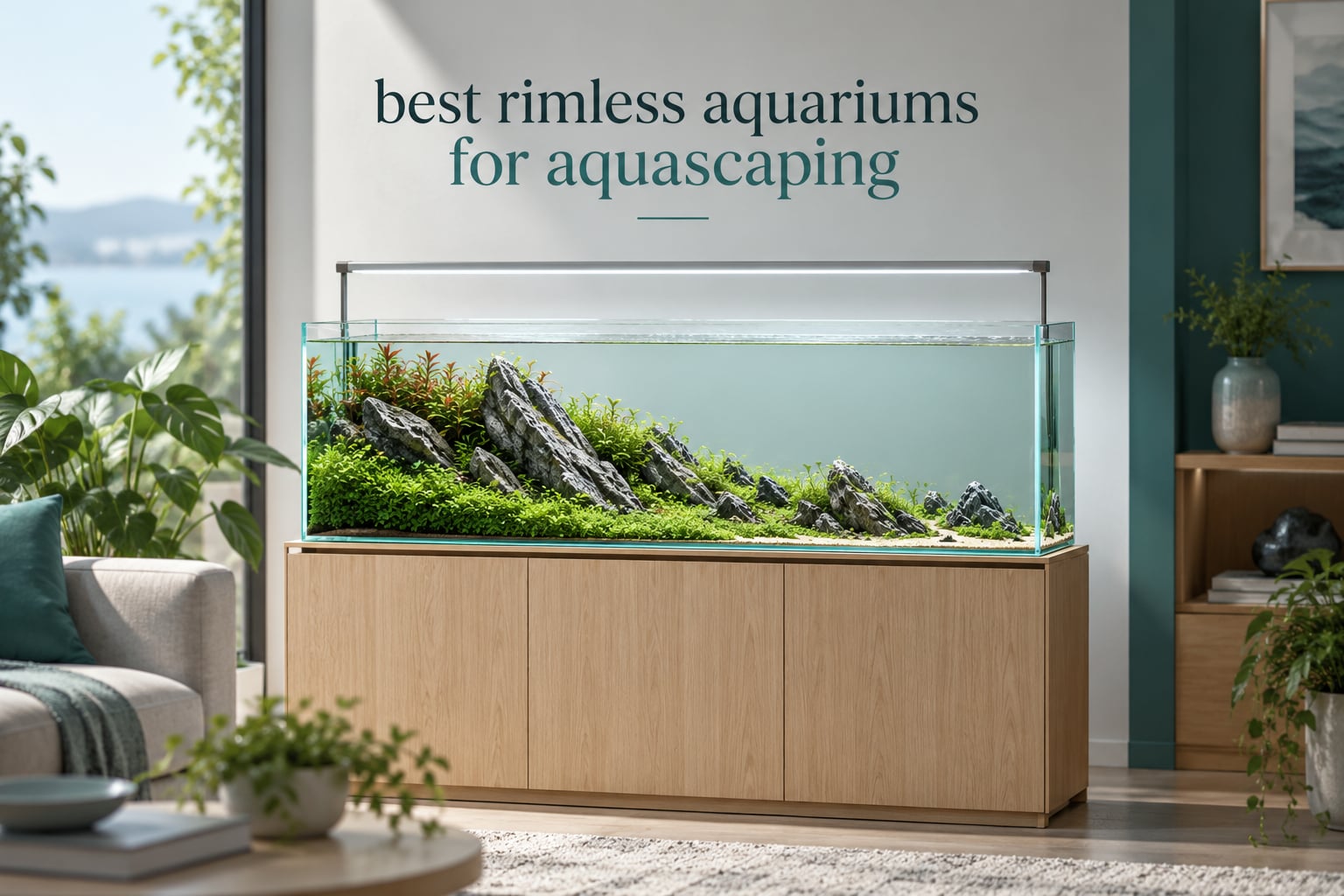
A rimless aquarium is a tank built with no black plastic top and bottom trim, using low-iron glass and precision-polished edges so the water looks like it is floating inside the pane. That clean look is why aquascapers reach for them, and why the best rimless aquariums for aquascaping keep showing up in scape photos with nothing else competing for attention. The trade is structural: with no frame to brace it, the glass carries more of the load, so a leveling mat is not optional.
Water weighs about 8.3 pounds per gallon. A 30 gallon rimless tank plus substrate, rock and glass can put well over 300 pounds on a stand, and every one of those pounds is concentrated on a small flat surface with no plastic trim to spread it. Across planted tank and aquascaping forums, the most repeated piece of advice is the same one: put a foam mat under the tank and make sure the stand is rated for the full filled weight. Skip that and the top edge becomes the weak point, which is how stress cracks show up months later instead of on day one.
We compared ten rimless tanks on the only things that matter for scaping: glass clarity, glass thickness for the stated volume, corner construction, whether a leveling mat is in the box, and how much working room the footprint gives you. We also looked hard at the trade-offs, because the cheapest cube and the heaviest display tank need very different scapes and very different stands. If you are still sizing up a general aquarium first, our aquarium picks guide covers the framed side of the market.
Table of Contents
Top 3 Best Rimless Aquariums For Aquascaping (October 2026)
These three cover the three shapes most scapers actually want: a true nano, a deep display tank, and a shallow panoramic layout.

Ultum Nature Systems 3N Nano
- Low-iron glass at 91% clarity
- 45-degree mitered corners
- Leveling mat included
- 3 gallon nano footprint
LANDEN 60H 30 Gallon
- 8 mm low-iron glass
- 17.7 inch depth for layered scapes
- EVA nano foam mat included

FZONE 9 Gallon Shallow
- Shallow 6.3 inch height
- 91.5% transmittance glass
- 72 hour factory water test
Rimless Aquariums at a Glance in 2026
All ten tanks below are built for aquascaping use. Eight of the ten tanks here list a leveling mat or base pad in the box, so check that line on any product page before you order. The two details that decide most purchases are glass thickness relative to volume and corner construction.
| Product | Specifications | Action |
|---|---|---|
| Ultum Nature Systems 3N Nano |
|
Check Latest Price |
| LANDEN 60H 30 Gallon |
|
Check Latest Price |
| FZONE 9 Gallon Shallow |
|
Check Latest Price |
 Allcolor 21 Gallon Low Iron Allcolor 21 Gallon Low Iron |
|
Check Latest Price |
 Lifegard Aquatics 15 Gallon Lifegard Aquatics 15 Gallon |
|
Check Latest Price |
 LYPHARD 9.5 Gallon Cube LYPHARD 9.5 Gallon Cube |
|
Check Latest Price |
 LAQUAL 10 Gallon LAQUAL 10 Gallon |
|
Check Latest Price |
 BEGONDIS 7.1 Gallon Cube BEGONDIS 7.1 Gallon Cube |
|
Check Latest Price |
 L60 Low Iron Rimless Tank L60 Low Iron Rimless Tank |
|
Check Latest Price |
 Coralland 8 Gallon All-In-One Coralland 8 Gallon All-In-One |
|
Check Latest Price |
The 10 Best Rimless Aquariums for Aquascaping in 2026
Ranking is based on glass clarity and thickness for the volume, corner construction, working footprint for a scape, what arrives in the box, and how reviewers describe the seams after the tank has been running. Volumes here run from 3 gallons to 30 gallons, so match the shape to the scape before you match the brand.
1. Ultum Nature Systems 3N Nano – Best Rimless Aquarium for Aquascaping Overall
- Low-iron glass rated at 91% clarity
- 45-degree mitered corners
- German-made silicone bonding
- Leveling mat included in the box
- Golden-ratio proportions for minimalist layouts
- Only small nano sizes in this listing
- No lid included
This is the tank that most often comes up when aquascapers name a brand they trust, and the 3N is the reason. The glass is low-iron at 91% clarity, which is the number that decides how greens and reds read through the front pane. Standard glass has a faint green cast from iron content; you notice it most on a bright carpet of Monte Carlo or on a red Bucephalandra, and this is the tank that removes it.
The 45-degree mitered edges are the second reason. Instead of two panes meeting at a blunt 90-degree joint, the glass is cut at 45 degrees and bonded, so the corner line is thinner and the view carries further around the edge. It also means a wider silicone surface, and the German-made silicone is what keeps the joint stable over years of temperature swings.

At 12.2 by 7.48 by 7.48 inches and 3 gallons, this is a nano tank and you should treat it like one. That is not a compromise for aquascaping; a small footprint forces a single strong focal point, which is exactly what a well-run iwagumi layout wants. Rock group on one third, carpet across the front, nothing else competing.
Reviewers report the 3N holding steady seams and clean optics over long ownership, and it holds the highest rating in this group at 4.8 stars. The two things you give up are size and a lid, and the size is the point rather than a problem.
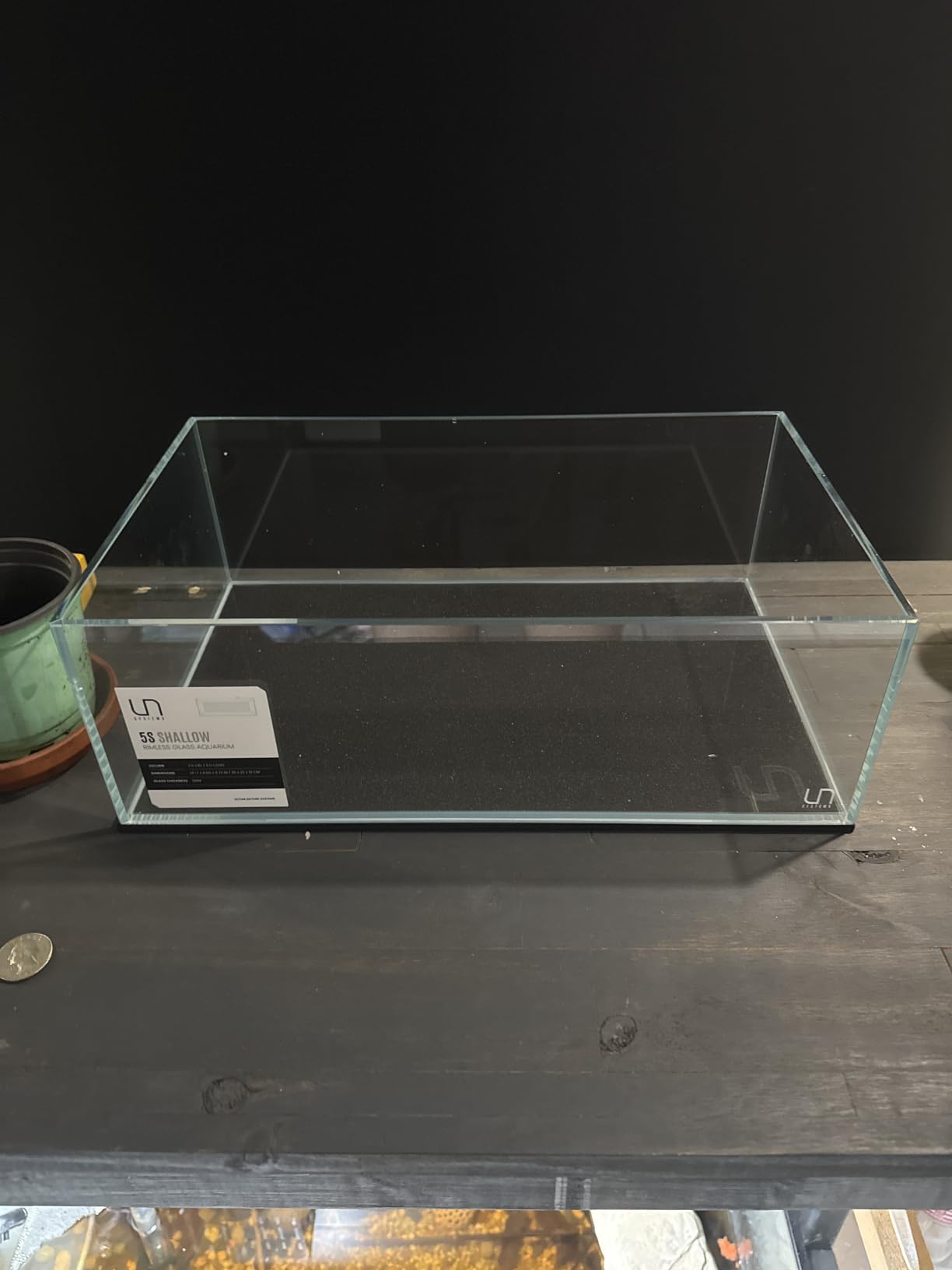
Who this tank suits?
It suits anyone building their first real scape who wants the best glass in the group and does not need volume. A shrimp colony with a small planted island, a betta display, or a desk show tank all work, and the weight is light enough that rescaping is a one-person job.
It also suits anyone who shoots contests or posts scape photos, because the mitered corners and the lack of a frame keep hardware out of the frame edges.
Who should pass?
Skip it if you keep fish that need swimming room or if evaporation is a concern, since there is no lid. Buyers who want the same mitered-edge look at display scale should look at the LANDEN or FZONE instead.
And if you are buying a single tank for a family household where hands and nets reach into the water often, a nano rimless cube is a harder first choice than a framed tank.
2. LANDEN 60H 30 Gallon – Best Rimless Tank for Layered Aquascapes
- 8 mm low-iron glass with high clarity
- 17.7 inch depth for layered layouts
- Polished edges and clean silicone seams
- EVA nano foam leveling mat included
- Long-standing display tank favorite
- Heavy glass makes moving a two-person job
- No built-in lid on the open top
This is the tank to buy when the scape is the point and the tank has to sit in a living room as furniture. Thirty gallons at 8 mm of low-iron glass is real structural glass, and 8.3 pounds per gallon of water means you are making a permanent commitment to wherever it goes. Plan the stand position before the tank arrives.
The 17.7 inch front-to-back depth is what separates it from the standard 12 inch rectangle. That depth is working space: a rock group at the back, a midground of medium stems, carpet and open foreground in front, with enough room to walk the substrate slope without it collapsing into the glass. Reviewers consistently single out the depth as the reason it plans well.
At 4.5 stars across more than 500 reviews, it is one of the most proven rimless displays available, and reviewers describe polished edges with clean, even silicone seams rather than the bubbly joints that show up on cheaper builds. The EVA nano foam leveling mat is in the box, which removes the single most common setup mistake.
What you give up is mobility. At 51 pounds empty, this is a two-person move even drained, and once substrate is in you are not moving it at all.
Who this tank suits?
It suits the aquascaper who wants a full nature aquarium or a high-tech planted display with CO2 injection and a serious light. Thirty gallons gives you room for a proper canister filter, a distribution pipe and enough open water for the fish to be part of the composition.
It also suits anyone moving up from a framed 20 or 30 gallon who wants the same footprint with a much cleaner front pane.
Who should pass?
Pass if your stand is not rated for well over 300 pounds, or if you live somewhere the tank would need to go up stairs. Reviewers also note the open top means no lid, so jumpers and evaporation are your problem to solve.
Our large aquarium picks cover the bigger framed options if you need more volume than 30 gallons.
3. FZONE 9 Gallon Shallow – Best Shallow Rimless Tank for Low Aquascapes
FZONE 9 Gal Shallow Aquarium, Low Iron Glass, Rimless Design (L60-W36)
- Shallow 6.3 inch height suits low-depth layouts
- NovaClear glass at 91.5% transmittance
- 45-degree mitered edges
- 72 hour factory water test on every tank
- Laser-etched logo embedded in the glass
- Shallow profile limits plant height
- Leveling mat is fixed rather than separate
Twenty-three inches long and only 6.3 inches tall changes what you can build. A shallow tank is a wide-format layout: one continuous rock line, a low carpet, maybe a short stem accent at the back. You are composing a horizontal scene rather than a vertical one, and very few rimmed tanks give you that shape.
The glass here is rated at 91.5% light transmittance, slightly above most of the group, and the edges are 45-degree clear-cut miters. The angled joints increase the silicone surface area, which is the mechanical reason a mitered joint holds better than a butt joint over time. Aquascapers name FZONE as a consistent staple for exactly this shape.
The 72 hour factory water test is the detail that should matter most to a nervous buyer. Every tank is filled and run before it is boxed, so a seam that is going to fail usually fails at the factory rather than in your living room.
Reviewers report 4.7 stars and a scape-friendly profile, with the shallow height as the one recurring trade-off. The black foam leveling mat is pre-installed, which means you cannot position it yourself.
Who this tank suits?
It suits anyone building a low panoramic layout, an iwagumi with a single long rock line, or a horizontal nature scape where the fish read as part of the composition. A shallow tank also photographs well, because the camera sees almost the whole scape from the front.
It suits small spaces too, since the footprint is wide rather than deep, which fits a shelf or a narrow console better than a cube.
Who should pass?
Pass if you want tall stems, floating plants with a full canopy, or a tank you can climb into for hardscape work. A 6.3 inch height rules out vertical compositions and wabi kusa displays.
Also pass if you want to choose and place your own leveling mat, because the foam here is fixed in place.
4. Allcolor 21 Gallon Low Iron – Best Rimless Tank With a Glass Canopy Included
Low Iron Glass Ultra Clear Rimless Aquarium Tank,Classic Silhouette (21Gal)
- Matching glass canopy with clips in the box
- Multi-step polished beveled edges
- Manually bonded near-invisible joints
- Large 21 gallon footprint for layered layouts
- One of the heavier glass builds in this group
- Glass canopy still needs careful handling
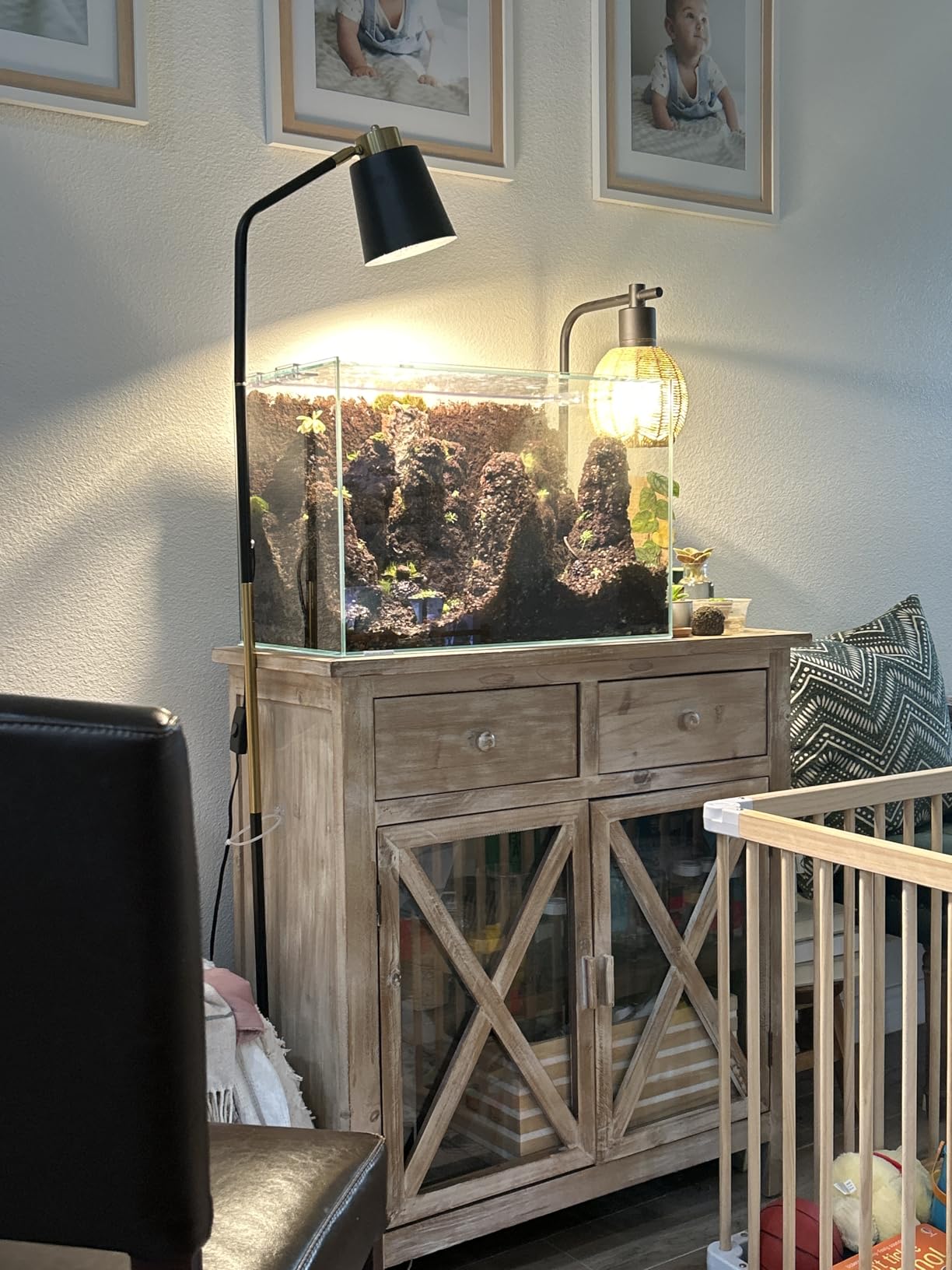
Most rimless tanks arrive as a tank and nothing else. This one comes with a matching top glass canopy, four clips and a protective bottom cushioning mat, which removes the single biggest extra purchase most rimless buyers face. If you keep jumpy fish or you simply do not want to top up water every other day, that canopy is the feature that decides it.
The edges go through a multi-step polishing process, and the panels are bonded manually by specialists to keep the silicone joints thin and uniform. For aquascaping work, that matters more than it sounds: you will be running an algae scraper, planting with tweezers and laying hardscape against these edges.
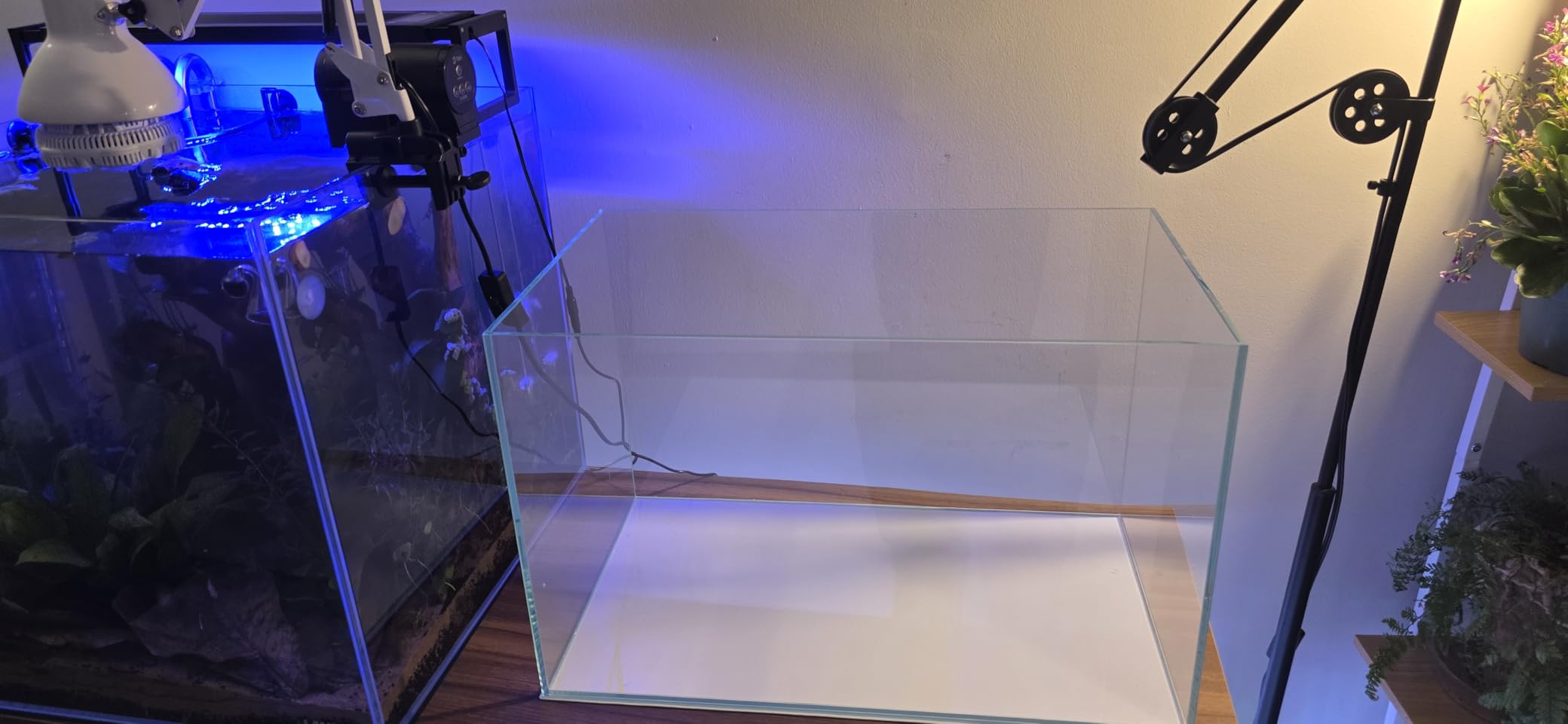
At 23.62 by 13.78 by 14.96 inches, 21 gallons is the middle of this group and the size most people end up at. Reviewers report near-invisible seams and smooth beveled edges, with ratings held back mainly by weight and by the general fragility of large glassware in transit.
The glass canopy keeps the rimless look from above while stopping jumpers, and it clips on rather than resting, so you can remove it for light changes or maintenance.
Who this tank suits?
It suits planted aquascapers who want a rimless look and a closed top, especially anyone with surface-dwelling fish or shrimp that jump. The 21 gallon footprint suits a layered nature aquarium with a midground.
It also suits anyone who wants one box on the porch instead of a tank, a mat, a lid and clips bought separately.
Who should pass?
Pass if weight is a factor. At 49.7 pounds empty this is one of the heavier glass builds in the group, and it stays that way once filled. Make sure the stand and the floor route can take it.
Also pass if you plan to hang a hang-on-back filter, because the canopy and the frameless glass leave nowhere to mount one. Plan on an in-tank or canister filter instead.
5. Lifegard Aquatics 15 Gallon – Best Rimless Tank for Freshwater and Marine Setups
- German engineered ultra clear glue joint
- Usable for freshwater or marine setups
- Black dense foam mat and base pad included
- Light enough to reposition while drained
- 5 mm glass is thinner than the larger builds here
- No lid included
Fifteen gallons at 25.95 pounds is a weight you can still move, which matters more for aquascaping than people expect. Rescaping is the thing you do constantly, and a tank you can lift onto a table with one other person turns a chore into a five-minute job. The largest glass does not get moved once it is full, it gets left where it is and regretted later.
The joint uses German engineered glue applied for an ultra clear seam, and the 23.22 by 11.02 by 13.38 inch footprint is a low, wide rectangle that suits a nature aquarium with a wide planting area. A dense black foam leveling mat and an insulation pad for the tank base both come in the box.
Reviewers from both freshwater and marine contexts like the clarity, the included mat and the straightforward dimensions, and the recurring note is the same: the tank arrives without a top and you need a separate canopy. It is also listed as usable for marine setups, which broadens it beyond planted work.
At 4.6 stars across more than 200 reviews, the seam quality comes up more positively than the thickness does. That is the trade to weigh.
Who this tank suits?
It suits aquascapers who rescape often and want a tank they can actually move. A 15 gallon low rectangle is also a good size for a nature aquarium with a full carpet and a few epiphytes.
It suits anyone who may move between fresh and marine later, since the same tank handles either.
Who should pass?
Pass if you plan a tall scape with heavy hardscape. At 5 mm this is on the thinner side of the group, and reviewers note that directly when comparing it to the 6 to 8 mm used by the larger rimless builds.
Pass if you need a lid, because you will be sourcing a canopy separately, and check that your stand rating covers the filled weight before you commit.
6. LYPHARD 9.5 Gallon Cube – Best Rimless Nano Tank for Compact Aquascapes
- Near-cube shape suits compact planted layouts
- Low-iron glass at 91.5% transmittance
- Wacker adhesive bonding
- Polished surface resists staining
- EVA foam leveling mats included
- 5 mm glass is light for larger scapes
- No lid or canopy included
A near-cube at 15.7 by 11.8 by 11.8 inches is a good middle ground between a nano bowl and a full display. You get enough height for a midground stem cluster and enough width to build a rock line, and the whole thing stays light enough to handle. Reviewers repeatedly mention how easy this size is to set up.
The glass is low-iron at 91.5% transmittance, and the bonding uses Wacker adhesive with professional seam technology. The polished surface is the underrated part here: it wipes clean without clouding and resists color shift, which is what keeps a small tank looking sharp over months.
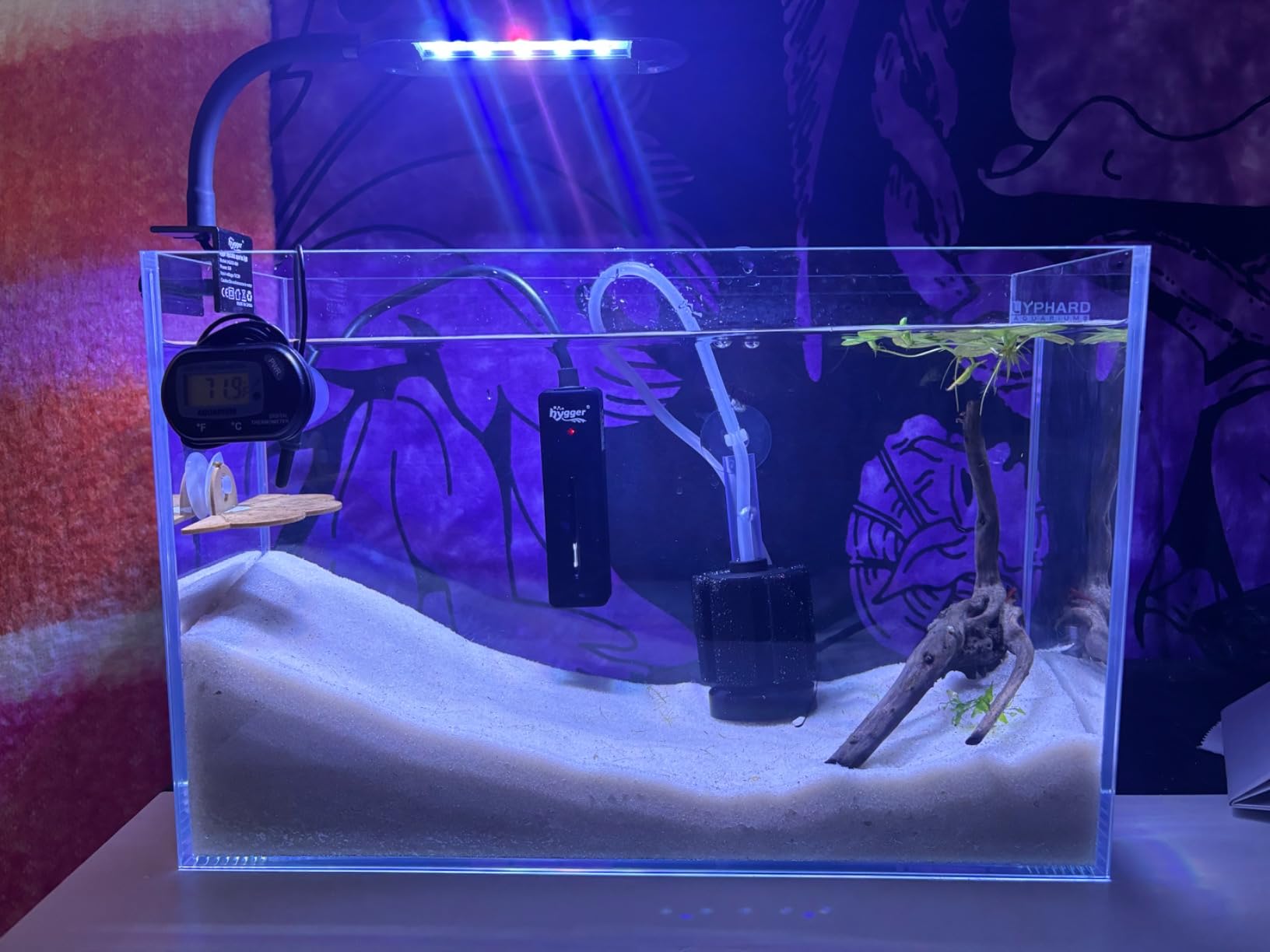
It is listed as usable for betta, shrimp, snails, plants and coral displays, and reviewers note the range of other sizes available, from 2.5 up to 39 gallons, so the same brand can carry you to a larger tank later. EVA foam leveling mats come in the box.
At 4.6 stars across more than 150 reviews, the complaints are narrow: thinner glass for heavier scapes, and no top included.
Who this tank suits?
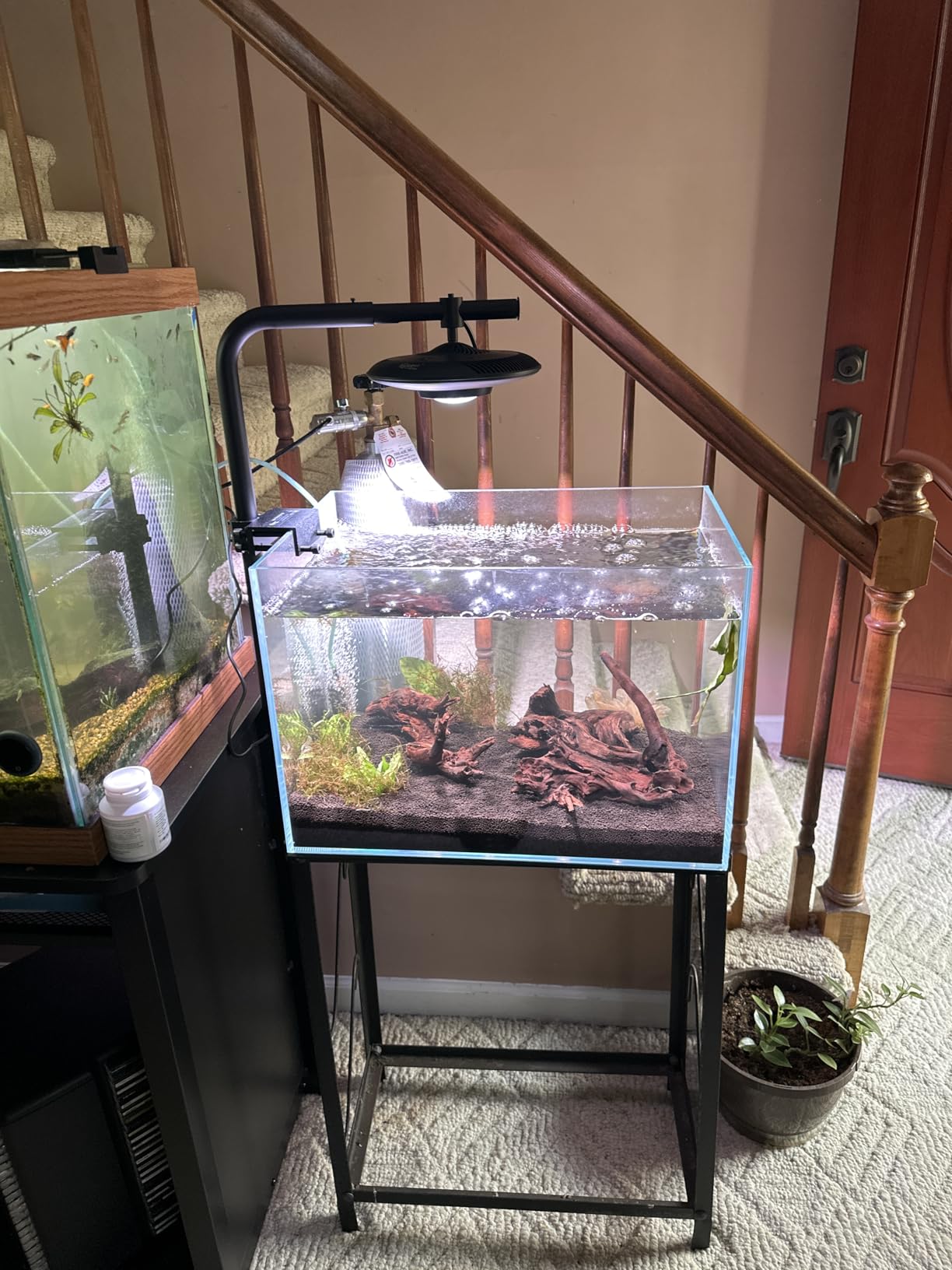
It suits nano aquascapers building a shrimp tank, a betta display or a small planted cube with a single stone group. The polished glass also makes it a good choice if you want a tank you can photograph close up.
It suits anyone who wants to learn scaping on a tank small enough to drain on a bench and start again.
Who should pass?
Pass if you want a deep scape. Reviewers note that 5 mm glass feels light for larger aquascapes with hardscape, and the 11.8 inch height limits vertical layouts.
Pass if you keep fish that jump and you are not ready to buy a separate lid, since none is included.
7. LAQUAL 10 Gallon – Best Rimless Starter Tank With the Full Accessory Set
LAQUAL 10 Gallon Ultra Clear Glass Fish Tank, Rimless Low Iron Aquarium for Betta/Nano/Goldfish/Snail/Shrimp, Big Fish Tank & Cover Set & Feeding Ring & Cleaning Tools
- Only tank here with a full accessory bundle
- Anti-jump net cover with four clips
- Low-iron glass with truer color
- Feeding ring and cleaning tools included
- Acrylic covers lack glass optical clarity
- Bundled tools are basic
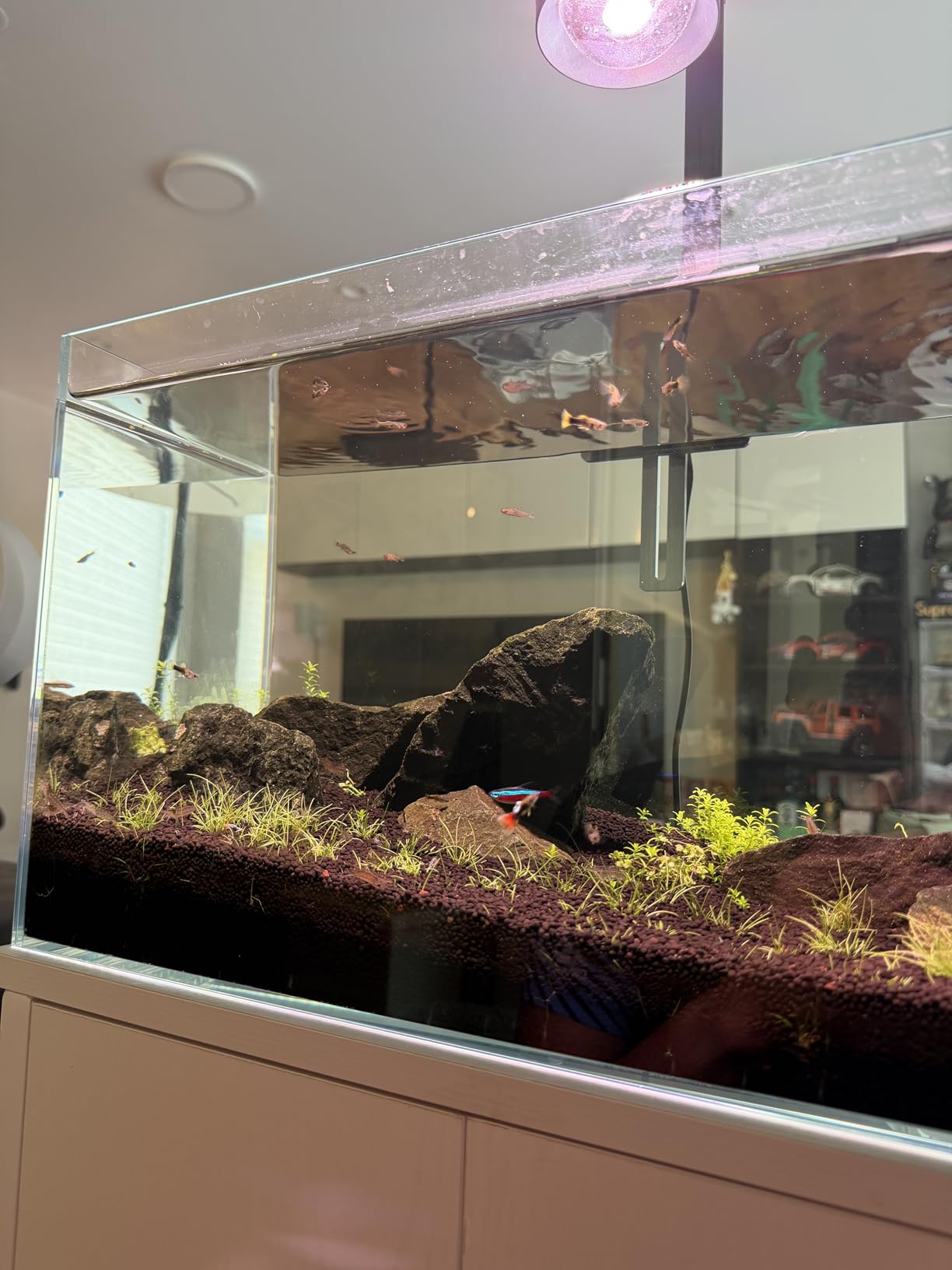
This is the tank for someone who opens one box and has a working setup. Alongside the 10 gallon tank you get four acrylic cover clips, three adjustable covers, a 3 inch floating feeding ring, two cleaning sponges, a sponge scraper, a 15 inch tweezer and a water-changing siphon. No other rimless tank in this roundup arrives with that much in the carton.
The glass is 5 mm low iron with a lower refractive index, which raises light transmission for a truer view, and the hand-finished edges are bonded with German Wacker glue. At 20 by 10.4 by 12 inches the footprint is a standard low rectangle that suits a carpet with a low feature rock.
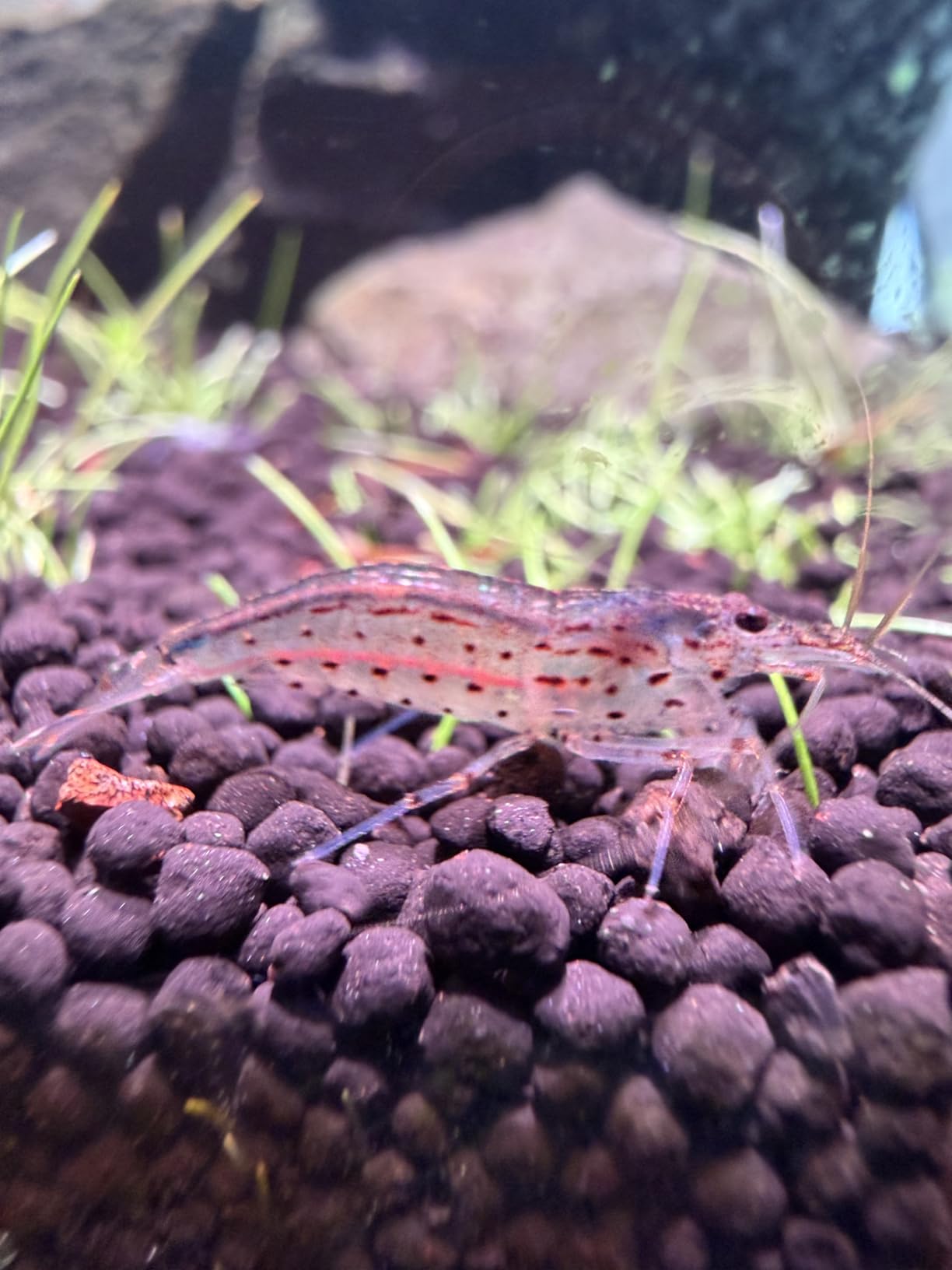
Reviewers like the inclusive package and the clarity, especially for betta and shrimp setups, and the anti-jump net cover is genuinely useful on an open top. The tempered criticism is that the acrylic covers are serviceable rather than premium, and the bundled tools are basic next to dedicated aquascaping tools.
It also lists a 90 day return policy and one year of quality service, which is worth factoring in for a first tank.
Who this tank suits?
It suits a first rimless tank for someone who wants to start a scape immediately without a second shopping trip. The cover set makes it practical for betta and shrimp where jumpers are the main risk.
It suits anyone who wants to test whether aquascaping is for them before committing to a display tank.
Who should pass?
Pass if optical clarity across the whole tank is your priority, because the acrylic covers will not match low-iron glass and you will see the difference from certain angles.
Pass if you already own proper planting tweezers and a decent scraper, because the included tools will not last a serious hardscape session.
8. BEGONDIS 7.1 Gallon Cube – Best Budget Rimless Cube for Small Aquascapes
BEGONDIS Rimless Low-Iron Glass Aquarium, 7.1 Gal, 11.8 × 11.8 × 11.8 in
- One of the most affordable rimless cubes here
- Clean frameless profile for nano aquascapes
- Well sealed seams and very clear glass
- Light at 14 lb for moving and rescaping
- 90-degree joints rather than mitered edges
- Occasional reports of chipped corners on arrival
Seven point one gallons at 14 pounds is one of the easiest rimless tanks here to move, and at a cube footprint it is a genuinely good aquascape shape rather than a compromise. A cube gives you equal width and depth, so a rock group can be read from the front and the side without a very long tank.
Construction is a true 90-degree bonded joint, which produces a straight corner line rather than the thinner mitered look. The glass itself is 5 mm low iron and reviewers describe the seams as well sealed and the view as clear, with several buyers comparing the look favorably to costlier mitered tanks.
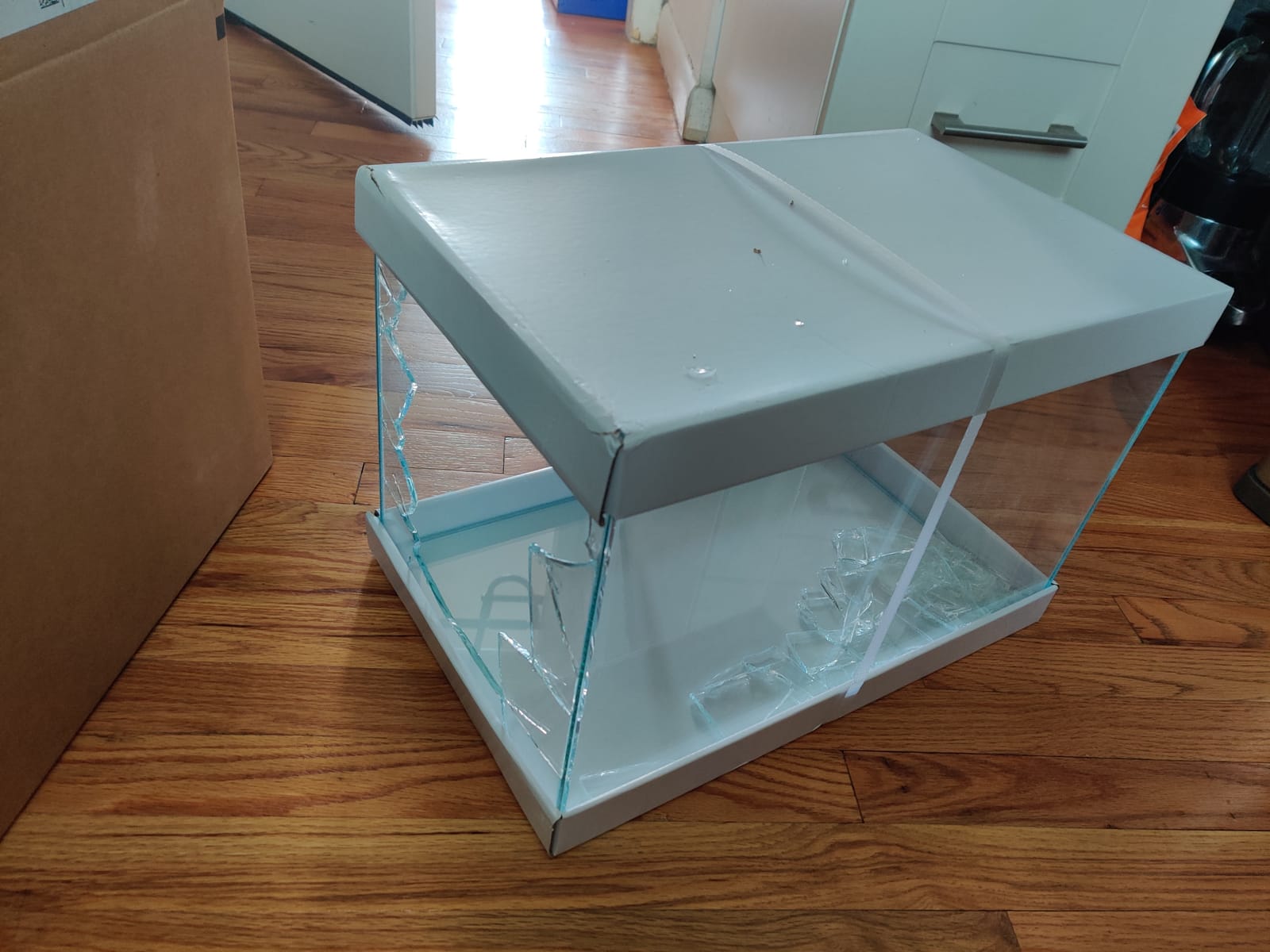
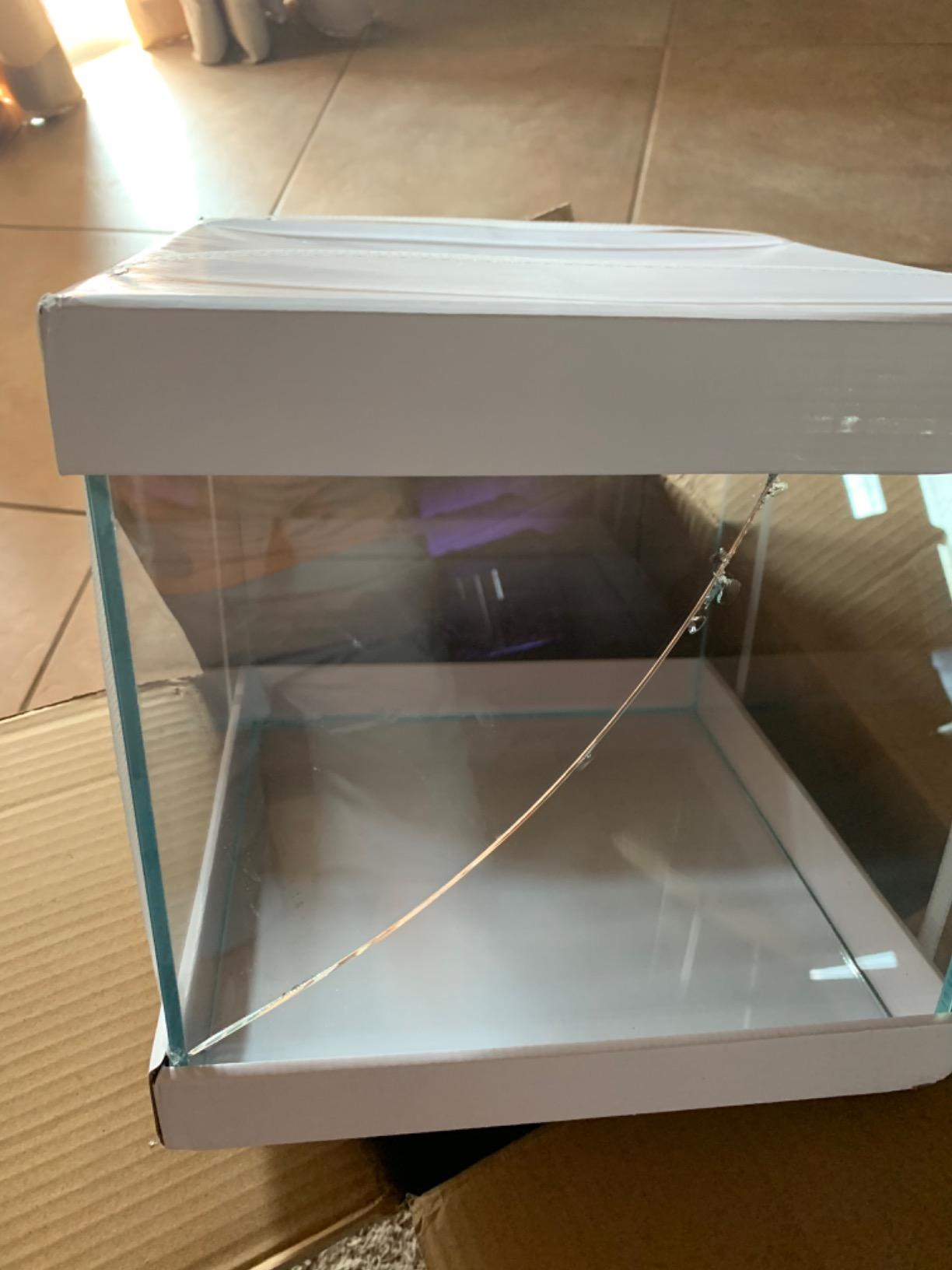
Be clear about what you are buying: the tank only. Plants, substrate, hardscape, lighting and filtration are all separate, so budget for a light and a filter before you commit. The recurring downsides in reviews are the non-mitered joints and a few reports of chipped corners from inadequate packaging.
At 4.2 stars across more than 120 reviews, the value is the point and the corners are the risk.
Who this tank suits?
It suits aquascapers on a budget who want the frameless look for a shrimp tank, a betta sorority display or a nano cube scape. At 14 pounds you can drain it, move it and rescape without recruiting help.
It also suits anyone who wants to test rimless ownership cheaply before committing to larger glass.
Who should pass?
Pass if corner aesthetics matter to you, because a 90-degree joint shows a wider silicone line than a 45-degree miter and it will look it in a photograph.
Pass if shipping damage would frustrate you. The corner chipping reports are not the majority, but with a cube the corners are more exposed than on a rectangular tank, so inspect the box on arrival before anything else.
9. L60 Low Iron Rimless Tank – Best Standard-Footprint Rimless Display
Ultra Clear Rimless Low Iron Glass Aquarium Tank (W23.62×D11.81×H14.17 inch(60x30x36cm)) 6mm Thickness Include Black Leveling Mat
- Leveling mat is actually included in the box
- Even silicone application with no scratches
- Eight foam corner guards in the carton
- Standard footprint suits a display stand
- Inconsistent outer packaging quality
- No lid or lighting included
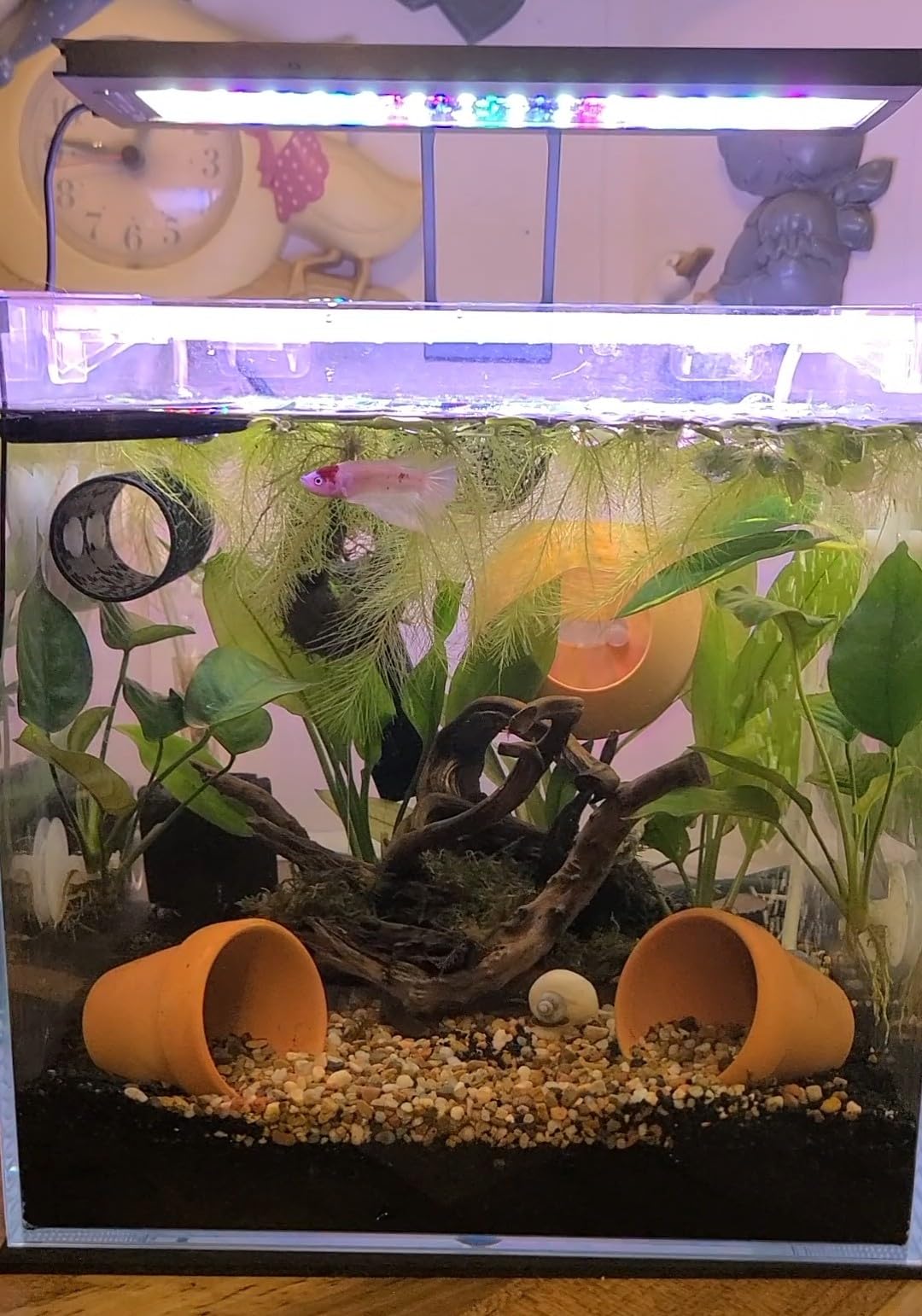
Twenty-three and a half inches by 11.8 by 14.2 inches is the footprint most furniture is built around, which is the practical appeal here. It sits on a standard display stand without overhang, and 6 mm of low-iron glass at 91% transmittance is a sensible pairing for a mid-size display tank.
The detail buyers most often forget to check is already handled: the black leveling mat is included, along with eight foam corner guards and a reinforced cardboard carton. Reviewers specifically call out that the mat is actually in the box, and report clear glass with even silicone application and no scratches.
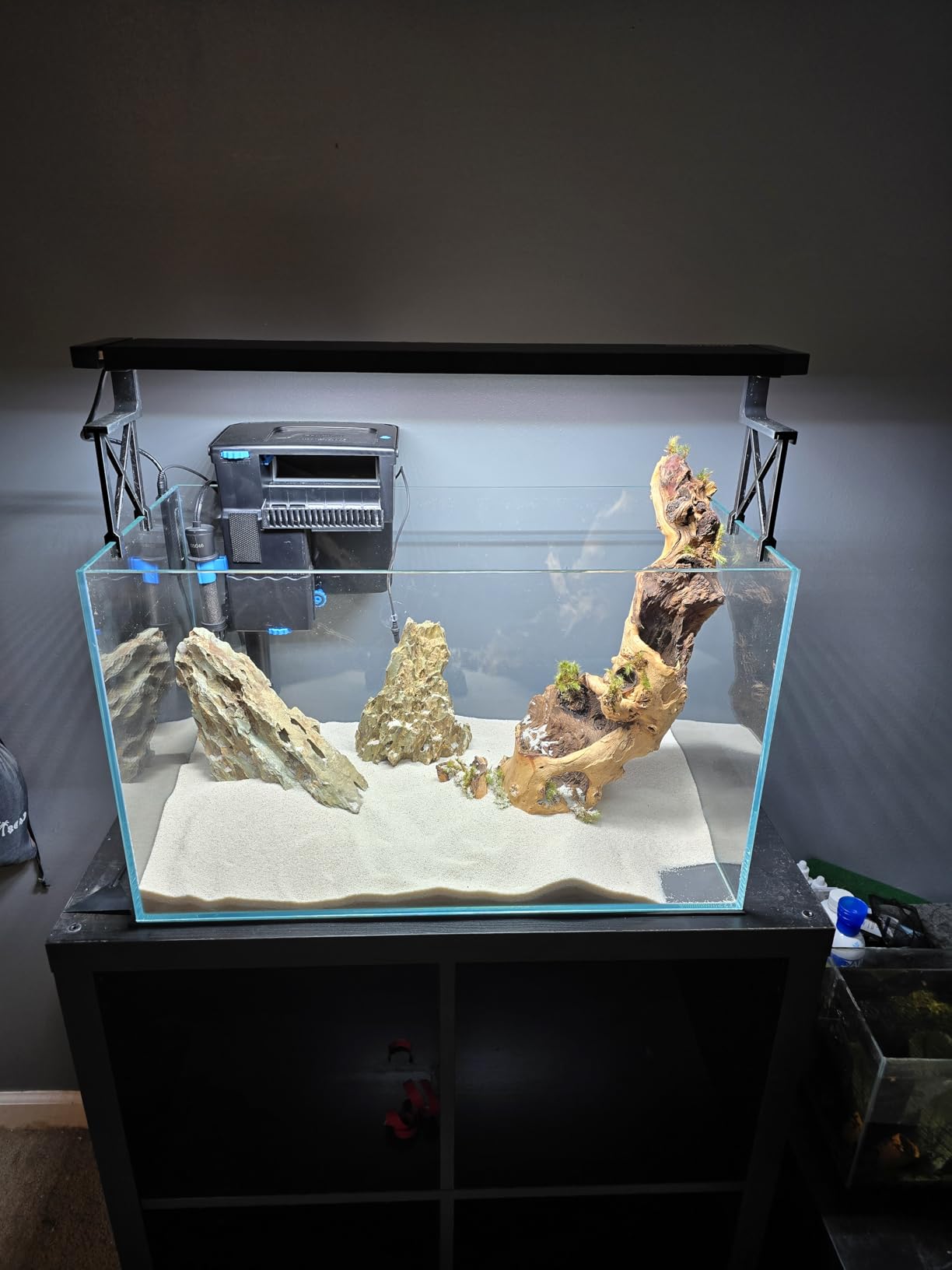
What holds the rating back is packaging, not glass. Owners report the outer carton sometimes arrives banged up, though replacements held up fine. At 4.6 stars across more than 70 reviews, this is a well-liked tank with a small sample size compared to the others here.
Branding is generic and no lid or lighting comes with it, so plan an open-top lighting solution and a canister or in-tank filter from the start.
Who this tank suits?
It suits anyone who already owns a display stand and wants a rimless tank that fits it exactly. The mid-size footprint works for a nature aquarium with a modest planting scheme and a small group of schooling fish.
It suits buyers who have been burned before by a tank that arrived without a mat, because this one includes one.
Who should pass?
Pass if you want a documented warranty from a brand you can contact, since the listing is generic branding with fewer owner reports behind it.
Pass if long-term seam history matters to you, because the owner reports behind this listing are among the thinnest in the group, and inspect the carton on arrival because of the packaging reports.
10. Coralland 8 Gallon All-In-One – Best Rimless Tank for a Nano Reef Scape
- Triple-wall carton with corner protectors and foam shell
- Low-iron glass with clean 45-degree miters
- Rear chambers fit heater
- pump and ATO sensor
- Filter sock and rotatable diffuser included
- Tank only
- so pumps and heater must be added
- Fixed filter sock holder limits filtration options
- Rear divider blocks fixed-mount light placement
This one is built around a split layout: 5.5 gallons of display with a 2.5 gallon rear sump behind a weir. That sump is the whole point for a reef scape, because it gives you a quiet chamber for a heater, a return pump and an automatic top-off sensor instead of hanging equipment in the display glass.
The glass is low-iron ultra clear with 45-degree angled joints, and reviewers describe clean miters and tidy silicone. The packaging is the standout detail: a triple-wall box with corner protectors and a foam shell, which is exactly the standard a large glass tank should meet.
A 2.75 inch filter sock and a rotatable outlet diffuser come included, and the water flow nozzle takes a 5/8 inch connection. Marine hobbyists describe it as an excellent nano reef base, with the recurring note that it is not beginner friendly.
Two planning details catch people out. The center divider in the rear chamber blocks fixed-mount light placement, and the sock holder is permanently silicone-mounted, which limits how you can change filtration later. The tank also arrives without pumps, heater or skimmer.
Who this tank suits?
It suits a marine hobbyist building a nano reef where equipment has to be hidden, because the rear chamber absorbs the pump, heater and top-off hardware. The angled joints and clear glass suit a display tank you want to look at closely.
It also suits anyone who cares more about packaging than they expect to, since the foam shell and corner protection reduce arrival risk.
Who should pass?
Pass if you want a freshwater planted aquascape, because the rear sump and center divider are wasted space and awkward footing for a substrate bed. It is also the smallest review sample here at 48 ratings, so the long-term record is still short.
Pass if you want to run different filtration later, since the permanently mounted sock holder limits that.
Rimless vs Rimmed Aquariums: What Actually Changes?
The question behind most searches is whether the rimless premium is worth it. For a planted tank that never gets moved, rimmed is cheaper and more forgiving. For a scape that has to look finished from across a room, rimless wins on sight alone.
Here is what changes in practice:
Structure. A rimmed tank gets bracing from the plastic top and bottom trim. A rimless tank has no frame, so it relies on glass thickness, polished edges and a tight silicone seam, and it needs a leveling mat underneath to spread the load evenly.
View. Rimmed tanks lose a strip of view at the top and bottom. Rimless tanks have an uninterrupted pane, and mitered corners keep the corner line thin so the eye reads straight through.
Glass. Framed tanks ship in standard float glass with a green cast. Nine of the ten tanks here use low-iron glass, and the listed transmittance figures run from 91% to 91.5%, which is what makes plant color read true.
Corners. Butt-joint tanks meet at a blunt 90 degrees and show a wider silicone line. Mitered tanks cut both panes at 45 degrees, which widens the bonding surface and makes the corner visually thinner and stronger.
Top. A framed tank usually comes with a plastic hood that clips on and carries the light. A rimless tank has an open top, so you need a separate light, and many owners add a glass canopy or acrylic cover to slow evaporation and stop jumpers.
Filtration. The frame is the usual mount for a hang-on-back filter. Without it you move to a canister filter, an in-tank filter or an all-in-one layout, which is often a bigger cost jump than the tank itself.
Weight and risk. Rimless glass is heavier and has exposed top edges with nothing to hide chips. It is more expensive and more sensitive to a bad stand, and it holds its value better on the secondhand market than a framed equivalent.
The honest summary is that a rimless aquarium is worth it when the scape is the centerpiece of a room and you will keep it in one place. It is not worth it if you are learning on a tight budget, moving tanks often, or want a fully enclosed setup with a hood and a hang-on-back filter.
Rimless Aquarium Buying Guide: Glass, Corners, Mats and Stands
Glass thickness and the volume it can carry
Glass thickness is the number to check first, and it should be read against the stated volume. A 5 mm panel is normal for tanks up to about 10 gallons. A 6 mm panel covers the mid range. Anything at 8 mm and above is built for display volumes, and that is the tier where heavy hardscape and a wide substrate bed are realistic.
In this roundup, the 3 gallon, 7.1 gallon, 9.5 gallon, 10 gallon and 15 gallon tanks all use 5 mm. The 9 gallon shallow, 21 gallon and the L60 standard footprint use 6 mm. The LANDEN 60H at 30 gallons uses 8 mm, and it is the only tank here at that thickness.
Safe fill level is the other half of the calculation. Leave a few inches of dry glass at the top rather than filling to the edge, keep hardscape off the pane walls so the glass is not taking lateral load, and never place rock directly against a corner seam.
Low-iron glass versus standard glass
Standard aquarium glass contains iron, which gives it a faint green tint that gets stronger as you look through more water and more glass. Low-iron glass, sometimes sold as ultra-clear or Starphire, removes most of that iron content. In this group the listed figures run 91% for the UNS 3N and the L60, and 91.5% for the FZONE and LYPHARD builds. The Allcolor 21 gallon is described as ultra clear low iron glass with no published figure, and the Lifegard 15 gallon is listed simply as clear glass with an ultra clear glue joint.
The practical difference shows up on red and orange plants, on pale gravel, and on any scape you photograph. It is not a dramatic difference in the first week, but it is the difference between a scape that looks slightly flat and one that looks saturated.
Mitered corners versus butt joints
A butt joint butts two panes of glass together at 90 degrees and bonds them on the inside corner. A mitered joint cuts both panes at 45 degrees so they meet along a diagonal face, which roughly doubles the bonding area and leaves a much thinner visible line of glass.
For aquascaping, the benefits are a cleaner corner in photographs, more strength at the seam, and a better edge for a scraper to run along. Mitered tanks in this roundup are the UNS 3N, the FZONE 9 gallon, and the Coralland 8 gallon. The BEGONDIS cube uses a true 90-degree bonded construction, and most of the other builds here use standard bonded corners.
For strength, a second layer of protection is Euro-bracing, a clear glass brace bonded across the top seam. It is not universal in this roundup, but on a large tank it is worth asking the seller about.
Support mats and stand weight math
Eight of the ten tanks here include a leveling mat, a base pad or pre-installed foam, and that is the minimum standard. The mat is not there to protect the glass from scratches. It is there to fill the tiny gap between an uneven stand top and a flat glass pane, so the load spreads across the whole base instead of concentrating on points. If your tank arrives without one, buy a cut-to-size closed-cell mat before you fill it.
Do the stand math before the tank arrives. Water is about 8.3 pounds per gallon, and the glass adds to that. A 15 gallon tank holds roughly 125 pounds of water, a 21 gallon tank roughly 175, and the 30 gallon LANDEN holds roughly 250 pounds of water before you add 51 pounds of glass, substrate and rock. Add a margin and you are asking a stand to hold 300 pounds or more, so check the stand’s own rating rather than assuming.
Also check that the stand surface is flat and level. A warped or flexing stand top is the most common cause of the stress cracks that show up months later, and no glass thickness fixes it.
Lids, lighting and filtration on an open top
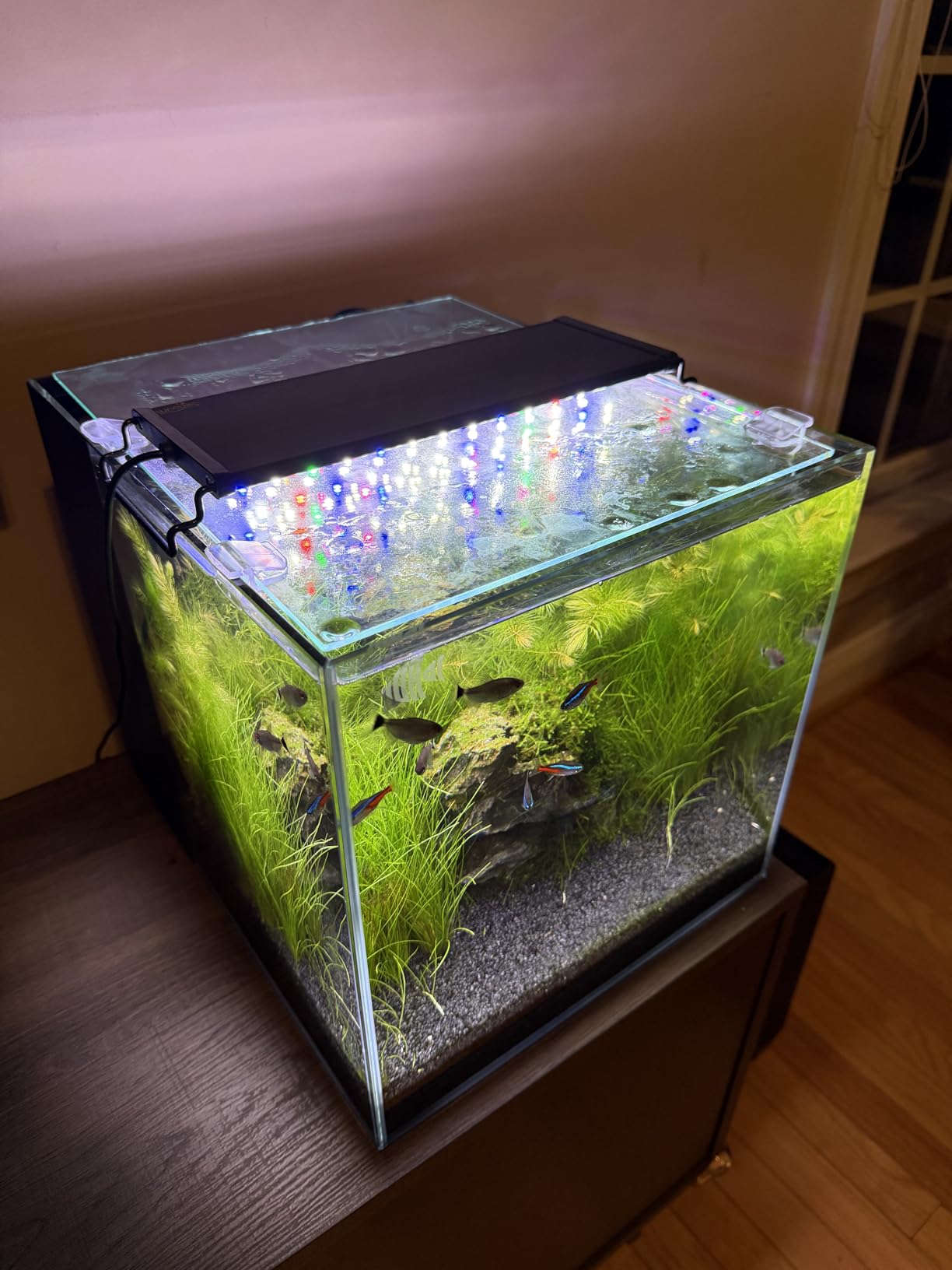
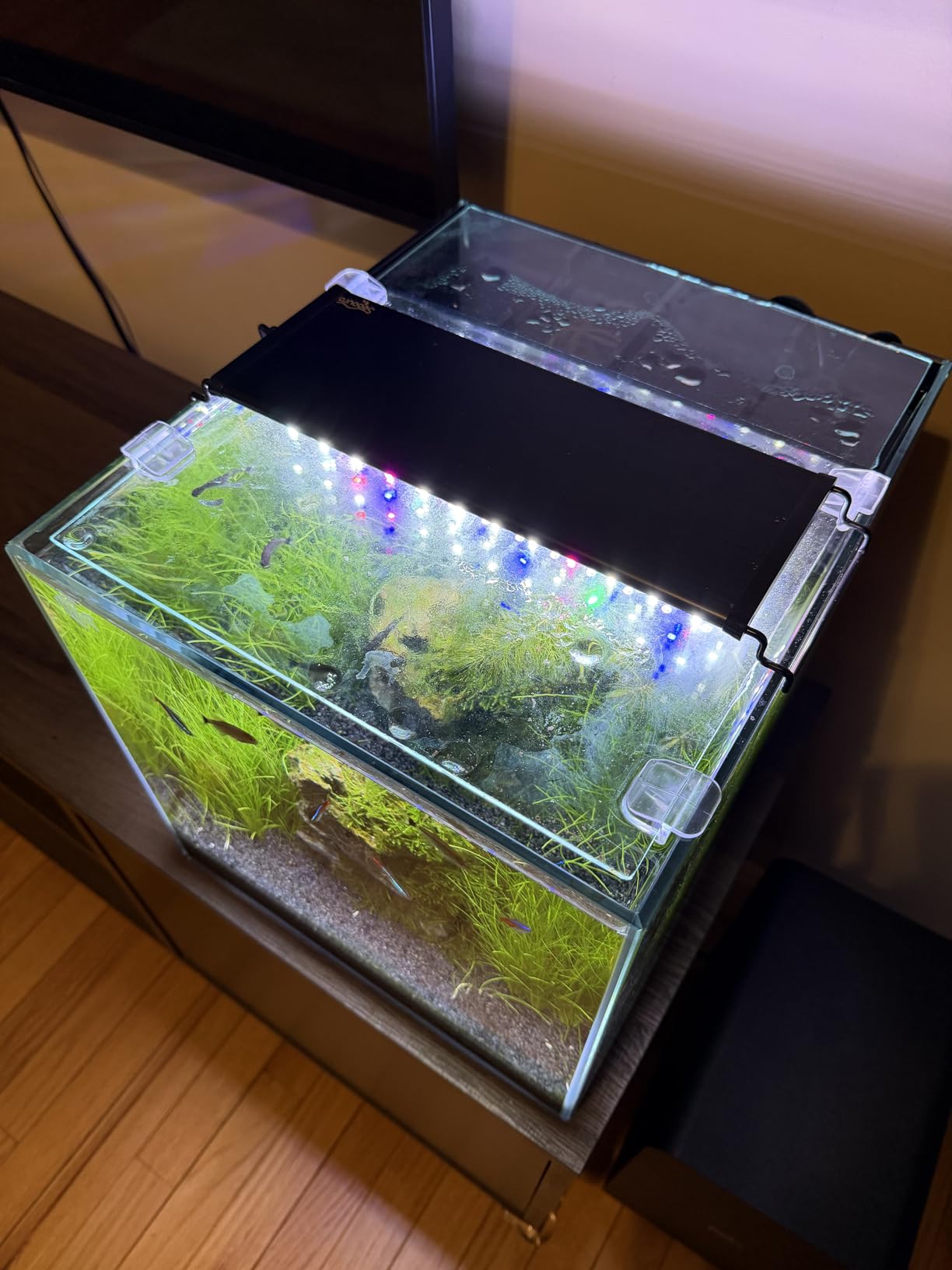
An open top has real consequences. Light reaches the whole tank instead of being shadowed by a hood, which is one of the better arguments for rimless in a planted scape. It also means evaporation is visible immediately, because there is no plastic rim hiding a waterline drop, and jumpers have nothing stopping them.
On lighting, plan for a fixture that sits above an open tank rather than one designed to clip to a hood bracket. On lids, a glass canopy is the closest match to the frameless look, and only the Allcolor in this roundup includes one; the LAQUAL includes acrylic covers with clips, and the rest need one sourced separately.
On filtration, the absence of a frame removes the usual hang-on-back mount, so budget for a canister or an in-tank filter. The Coralland solves this differently with a rear sump chamber, which is worth a look if you want equipment out of sight.
Who should not buy a rimless tank?
Rimless is the wrong first tank if you are on a tight budget, because the tank is only part of the cost. Add a stand, a mat if the tank does not include one, a light, a filter and a lid, and the total climbs quickly. A framed tank with a hood and a hang-on-back filter is a complete setup out of the box.
It is also the wrong choice if children or large pets share the room, because an open top and exposed glass edges are both harder to supervise. And if you plan to move the tank more than once, heavy glass is a real problem rather than a minor inconvenience.
Our aquarium picks for families covers setups built around safety and simplicity if that is your situation.
How to Inspect a Rimless Tank the Day It Arrives?
This is the check most people skip and most people regret skipping. Forum threads about rimless tanks are full of the same question, whether to trust the seams, and the answer is a five-minute inspection before the tank ever gets wet.
1. Photograph everything before you uncrate it. Record the carton, the foam and the corner guards on video before you touch the glass. If a corner arrives chipped, your claim depends entirely on having proof of the packaging state. Keep the box until the tank is running cleanly.
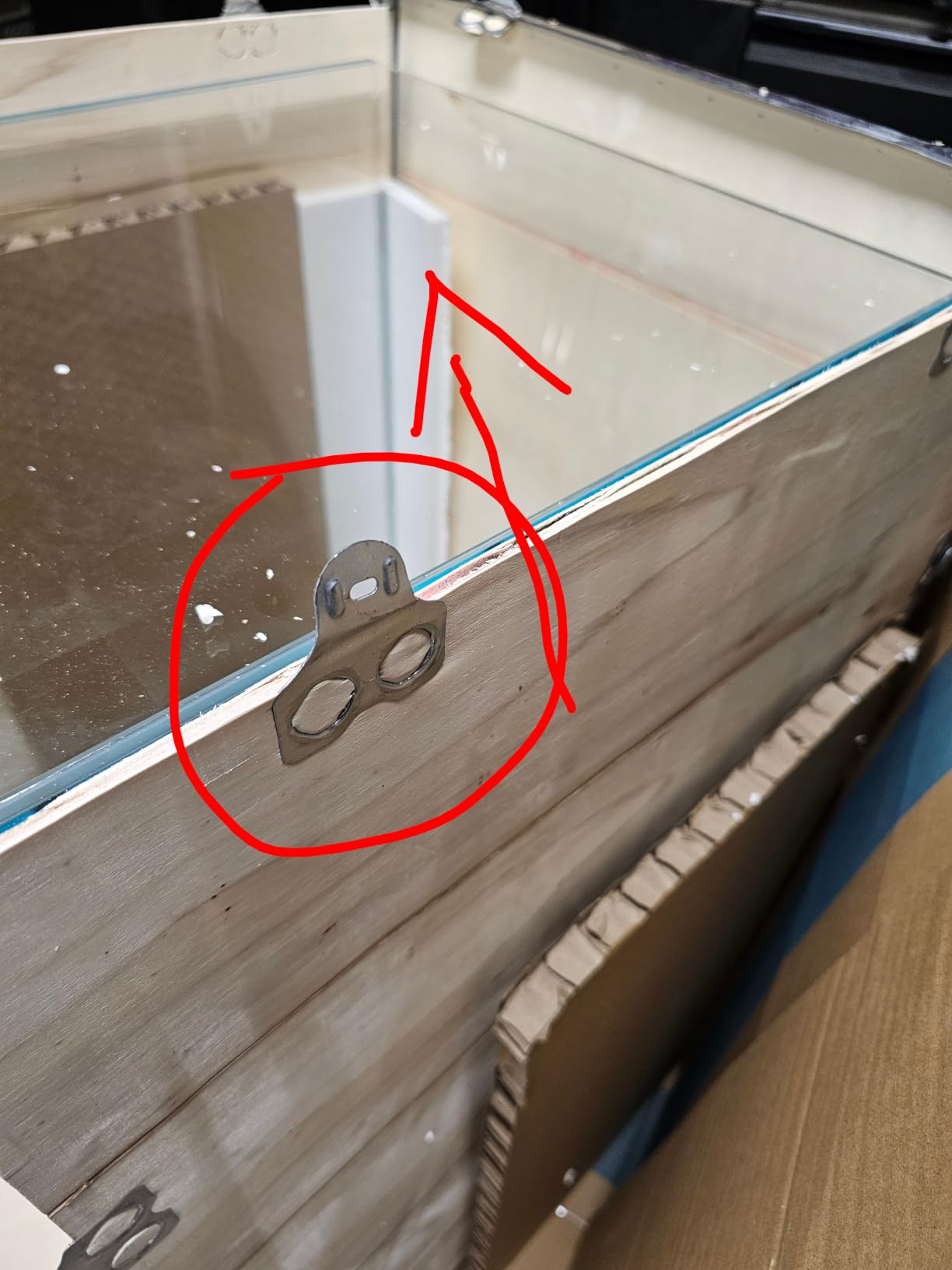
2. Check the silicone seams for bubbles and gaps. Run a fingertip along every interior seam. A few tiny bubbles in the bond line are normal from the bonding process. A seam with a run of bubbles, a visible gap, or a corner where the silicone pulls away from the glass is a defect, and that is exactly what a manufacturer defect claim covers.
3. Look at the top edges in good light. The exposed top edge is where chips happen and where they show. Hold the tank against a white background and look along all four top edges for nicks, and check the corners, which take the most handling. Polished beveled edges are safer to work with than raw cut glass.
4. Confirm the glass thickness and the volume. Compare the stated millimetre thickness against the stated volume, and check the fill line against the listed dimensions. If a 21 gallon tank turns up in 5 mm glass when the listing says 6 mm, stop and contact the seller before filling it.
5. Find the mat and the warranty paperwork. Confirm the leveling mat is actually in the box, since its absence is the leading cause of later problems. Then find the leak guarantee and warranty terms and read what they require, because most want you to report a leak promptly rather than months later.
Only after all five checks should you level the stand, place the mat, set the tank on top and begin a water test without livestock. The tank that arrives perfect and sits on an uneven stand is the tank that cracks, not the tank that arrived with a slightly bubbly seam.
Which Rimless Tank Shape Fits Your Aquascape Style?
Tank shape decides what you can plant more than any other single factor, and it is the part retail pages hint at without explaining. Here is the mapping we use.
Shallow and wide, roughly a 6 inch height. Horizontal scenes only. One long rock line, a full carpet, a low stem accent at the back. The FZONE 9 gallon is the clearest example in this roundup, and the panoramic view photographs well from the front.
Standard low rectangle, roughly 12 to 14 inches high. The most flexible shape. A carpet plus a midground plus a back row of stems all fit. The Lifegard 15 gallon, the LYPHARD 9.5 gallon cube and the L60 footprint all suit this, and it is the shape we would pick for a first serious scape.
Deep tank, roughly 17 to 18 inches front to back. Layered aquascapes with a sloped substrate, a rock group at the back and open foreground. The LANDEN 60H is the only tank here with this much working depth, and it is why that tank suits nature aquarium layouts better than anything else in the group.
Cube. Equal width and depth, so a composition reads from more than one angle. Good for a shrimp tank or a small display, less good for a long rock line. The BEGONDIS and LYPHARD are both cubes.
All-in-one with a rear chamber. The chamber is equipment space, not scape space. The Coralland 8 gallon uses it for a sump, which makes it a reef display rather than a planted scape.
Match the shape to the scape you already have in your head. A vertical wabi kusa composition needs a tall tank, and none of the tanks in this roundup is tall, so that style calls for a different category entirely.
Frequently Asked Questions
Who makes the best rimless aquariums?
Ultum Nature Systems is the most consistently recommended brand for aquascaping, largely for its 45-degree mitered edges and low-iron glass. Among the tanks we compared, the UNS 3N leads on clarity and edge construction, LANDEN leads at display volume with 8 mm glass, and FZONE leads on shallow panoramic formats. ADA is singled out on planted tank forums for silicone seam workmanship, and Aqueon frameless models are viewed as the weakest tier.
Is a rimless aquarium worth it?
A rimless aquarium is worth it when the scape is the centerpiece of a room and the tank will stay in one place. You gain an uninterrupted view, low-iron glass and full top access for trimming plants and repositioning hardscape. You give up the plastic frame that would have carried the load, so you need a leveling mat, a properly rated stand, and a separate light and filtration plan. Beginners on a budget are usually better served by a framed tank.
Do rimless tanks crack more easily than framed tanks?
Rimless tanks are more dependent on setup than framed ones, mostly because the plastic trim on a framed tank braces the glass. Rimless failures are usually linked to an uneven or under-rated stand, or to a missing leveling mat, not to the glass itself. Water weighs about 8.3 pounds per gallon, so check the stand rating against the filled weight, level the stand top, and place the mat. Chips on the exposed top edge are far more common than cracks.
Can you put a lid on a rimless tank?
Yes, and many owners do, but the options are limited because there is no hood bracket to hang from. A matching glass canopy is the most frameless-looking option, and only the Allcolor 21 gallon in this roundup includes one. Acrylic covers with clips, like the set on the LAQUAL 10 gallon, work for jump prevention and evaporation control. A glass canopy also gives a hang-on-back filter nowhere to mount, so plan on canister or in-tank filtration.
Why are rimless tanks so much more expensive than framed tanks?
Three things drive the gap. Low-iron glass costs more to produce than standard float glass, and it is the main visual reason for the rimless look. Precision-polished edges and a tighter, more evenly applied silicone bond take more labor than a rimmed build. Removing the plastic trim also removes the bracing, so more glass thickness is needed for the same volume, which adds weight and cost. You are paying for the view, and for the glass engineering that supports it.
What size rimless tank is best for a beginner aquascaper?
A standard low rectangle around 10 to 15 gallons is the most useful starting point. The Lifegard 15 gallon, LAQUAL 10 gallon and L60 footprint all fit a carpet plus a midground, and their weights are manageable enough that you can drain one and rescape it on a bench. Avoid the largest glass until you know your stand is rated for 300 pounds or more of filled weight. A nano cube is a cheaper way to learn, but it limits plant height.
Final Verdict on the Best Rimless Aquariums for Aquascaping in 2026
For most aquascapers in 2026, the Ultum Nature Systems 3N is the best rimless aquarium for aquascaping overall, because 91% clarity low-iron glass and 45-degree mitered edges are the two things you cannot add later. Buy the LANDEN 60H when you want a display tank with real working depth and 8 mm glass. Buy the FZONE 9 gallon when your scape is a low horizontal scene.
Two checks matter more than the brand. Confirm the leveling mat is in the box, and confirm your stand is rated for the full filled weight at 8.3 pounds per gallon. Get those right and the rest of the list is preference. If you want the broader picture, start with our aquarium buying guide, then come back here once you know whether a frameless scape is the direction you want.