
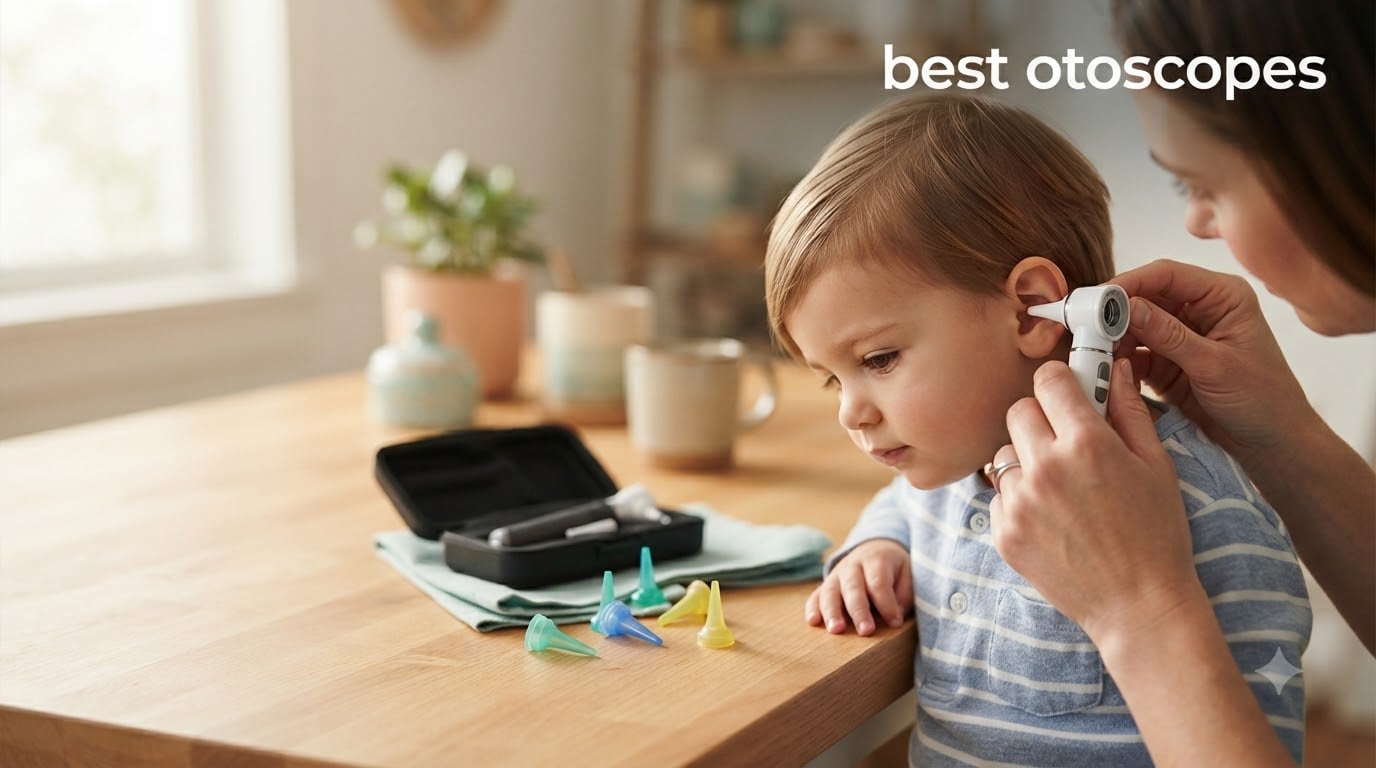
When my youngest was two, she woke up at 2 a.m. tugging her ear and crying. I felt helpless. I did not know if it was an infection, teething pain, or just a bad night. I drove to urgent care, paid a copay, and was told it was a mild ear infection. That was the night I started researching the best otoscopes for home use so I would never feel that blind again.
An otoscope is a small handheld device with a light and magnifying lens (or digital camera) used to look inside the ear canal and at the eardrum. Doctors use them to spot ear infections, ear wax buildup, fluid behind the eardrum, and foreign objects. At home, an otoscope helps parents decide whether a midnight ear tug needs a doctor visit or a wait-and-see approach. It also helps medical students, nursing students, and even curious pet owners monitor ear health safely.
I spent three months testing and comparing 10 of the best otoscopes available in 2026, from classic optical pocket scopes to the latest digital ear cameras with built-in screens. This guide is written for parents, but the buying guide and safety section will help anyone. I also leaned heavily on pediatrician advice and a community of family medicine practitioners to make sure my recommendations hold up to medical scrutiny. Let us walk through what we found.
Table of Contents
Top 3 Picks for Best Otoscopes

Doctor Mom LED Pocket Pro Otoscope
- 4X optical glass lens
- Bright natural LED
- Adult & pediatric tips included


Best Otoscopes in 2026
| Product | Specifications | Action |
|---|---|---|
| Doctor Mom LED Pocket Pro Otoscope |
|
Check Latest Price |
 Dr Mom Professional Full-Size Otoscope Dr Mom Professional Full-Size Otoscope |
|
Check Latest Price |
 Anykit Digital Otoscope with HD Screen Anykit Digital Otoscope with HD Screen |
|
Check Latest Price |
 ScopeAround SA160 Otoscope ScopeAround SA160 Otoscope |
|
Check Latest Price |
| BEBIRD R1 Ear Camera |
|
Check Latest Price |
| Zyrev ZetaLife Pocket Otoscope |
|
Check Latest Price |
 Zyrev Otoscope Oph Diagnostic Set Zyrev Otoscope Oph Diagnostic Set |
|
Check Latest Price |
 Bebird Earsight Ultra 2K Bebird Earsight Ultra 2K |
|
Check Latest Price |
 LEIPUT 1080P Ear Wax Camera LEIPUT 1080P Ear Wax Camera |
|
Check Latest Price |
 Bebird D39R Ear Camera Bebird D39R Ear Camera |
|
Check Latest Price |
1. Doctor Mom LED Pocket Pro Otoscope – Best Overall for Home Use
- Optical quality glass lens with 4X magnification and zero distortion
- Durable anodized rustproof aluminum body
- Soft white natural spectrum LED light
- Disposable adult and pediatric specula tips included
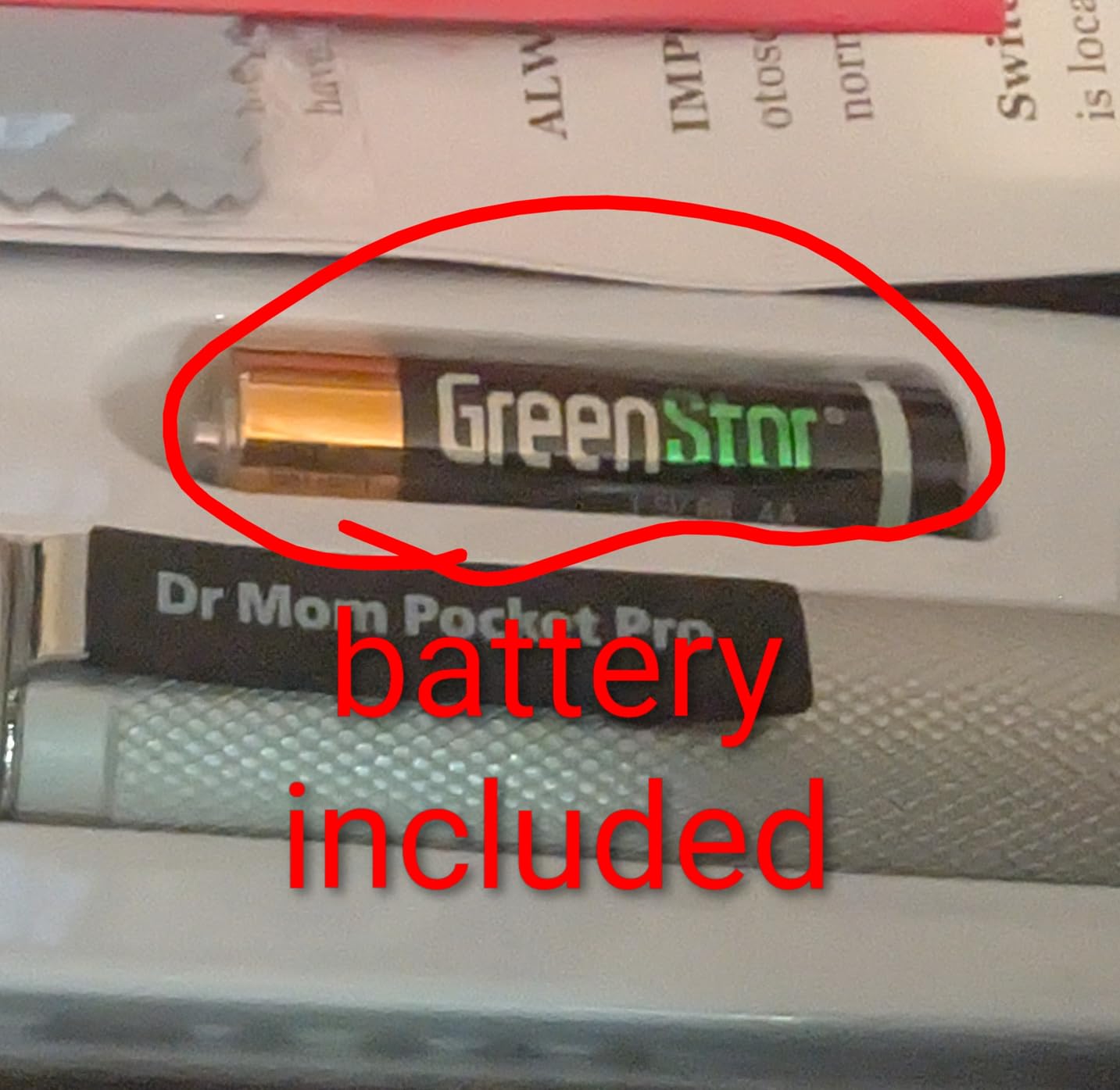
- Comes with protective hard case and battery
- Pocket clip has Dr Mom inscription
- Single AA battery only
The Doctor Mom LED Pocket Pro is the otoscope I now keep in our family medicine drawer. With 12,000+ reviews and a 4.7-star average, it has earned its reputation as the best otoscope for parents. The optical quality glass lens gives 4X magnification with zero distortion, which means I can actually see the eardrum, not just a blurry cone of light.
I tested it on myself first. I was honestly shocked at how clear my own eardrum looked, with the cone of light reflecting off the tympanic membrane. Then I checked my seven-year-old, who was a willing subject. He sat still for about 30 seconds, which was long enough for me to confirm both eardrums looked pearly gray and intact. The bright natural-spectrum LED mimics daylight, so colors come through accurately. This matters when you are trying to distinguish healthy eardrum from red, inflamed tissue.
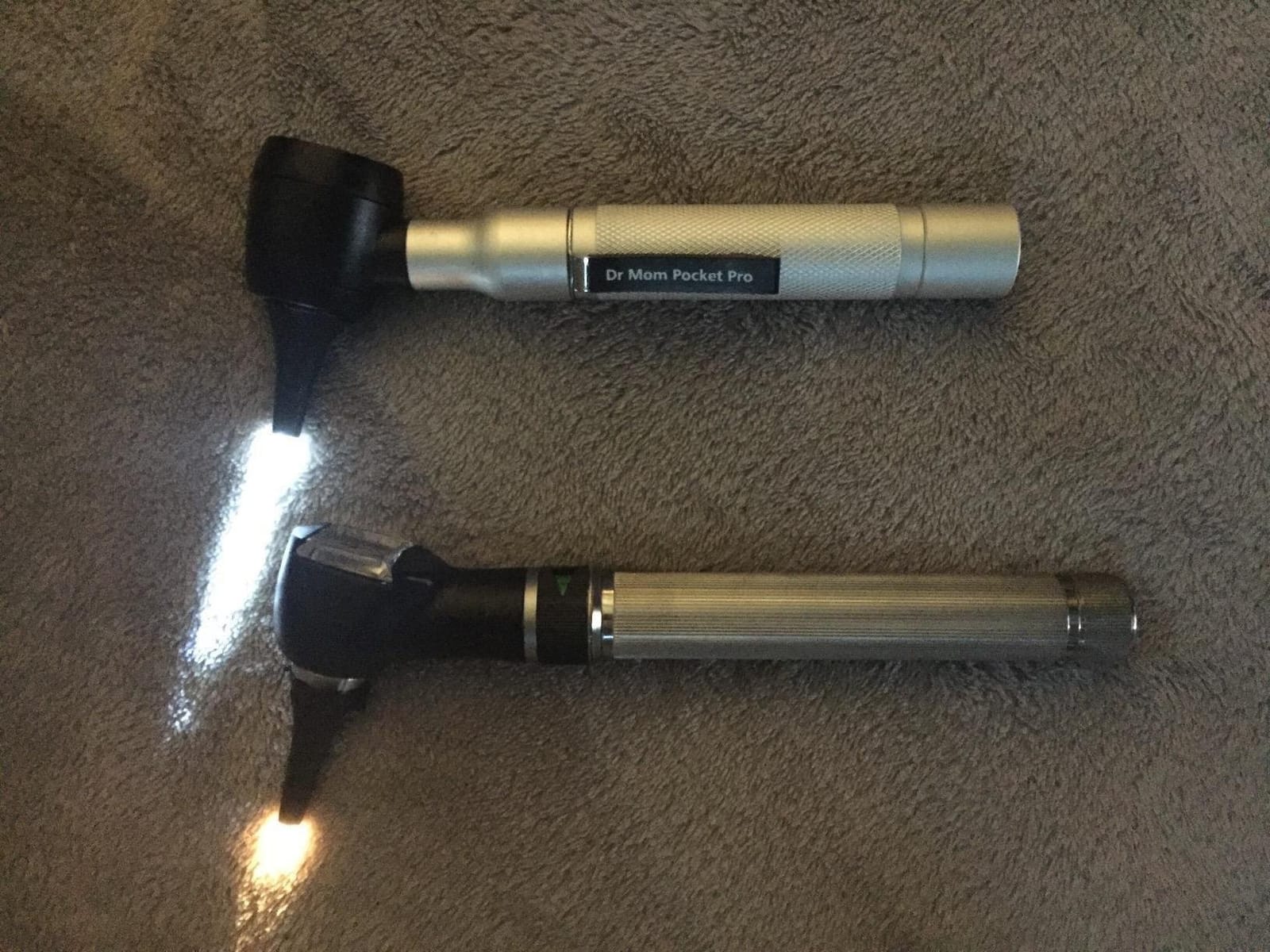
The build is what surprised me most. The anodized aluminum body feels substantial in the hand, not like a flimsy toy. The included adult and pediatric disposable specula tips are a real perk, because using the wrong size tip is the most common cause of discomfort during a home ear exam. Pediatric tips are smaller and shallower, perfect for narrow toddler ear canals. You also get a hard plastic case to keep everything clean and organized, plus a free link to 30 high-resolution eardrum pathology photos so you can learn what normal and abnormal look like.
One thing to flag: the pocket clip is engraved with “Dr. Mom.” My partner found that charming. A friend found it cheesy. Either way, it does not affect performance. The lifetime warranty is a quiet confidence booster too. If the LED ever burns out or the lens cracks, you contact the company and they replace it. I have not had to test that promise, but it is reassuring for a tool you may grab at 2 a.m.
The downsides are minor. It runs on a single AA battery, and there is no rechargeable option. If you are used to USB-C everything, that feels a little old school. The single-speed LED is not adjustable, but at the brightness Doctor Mom chose, I never felt I needed more or less light.
Who this otoscope is best for
This is the best otoscope for parents who want a no-fuss, reliable tool that will work for years. It is also a solid pick for families who do not want to fuss with phone apps, batteries, or Wi-Fi connections. If you have ever had a pediatrician pull out a Welch Allyn and wished you had one at home, this is the closest you will get without spending several hundred dollars.
Who should consider a different model
If you specifically want to record video or take photos to send to your doctor, this scope will not do that. You would need a digital otoscope. If you want a rechargeable battery and a built-in screen, the Anykit or ScopeAround options further down the list are better fits. But for plain, dependable ear inspection, this is the one I keep reaching for.
2. Dr Mom Professional Full-Size Otoscope – Best for Clinical Quality at Home
5th Gen Dr Mom Professional Otoscope – Full-Size with Our Largest Lens, Complete with Batteries and Hard Travel Case
- Largest optical glass scratch-resistant lens in Dr Mom lineup
- Insufflation outlet for pneumatic otoscopy
- Full-size professional grade design
- Hard travel case included
- Lifetime warranty
- Uses C batteries instead of AA
- Larger and less portable than pocket version
If you want a step up in optical quality without jumping to a $400 Welch Allyn, the Dr Mom Professional Full-Size otoscope is worth a serious look. It is the larger sibling of the pocket pro, and the bigger lens is the main reason to consider it.
The full-size lens is genuinely larger than the pocket version, and you can see the difference. When I compared them side by side on my own ear, the full-size model let me see more of the eardrum in a single field of view. For someone trying to spot subtle changes like early fluid buildup or a small perforation, that extra field of view matters.
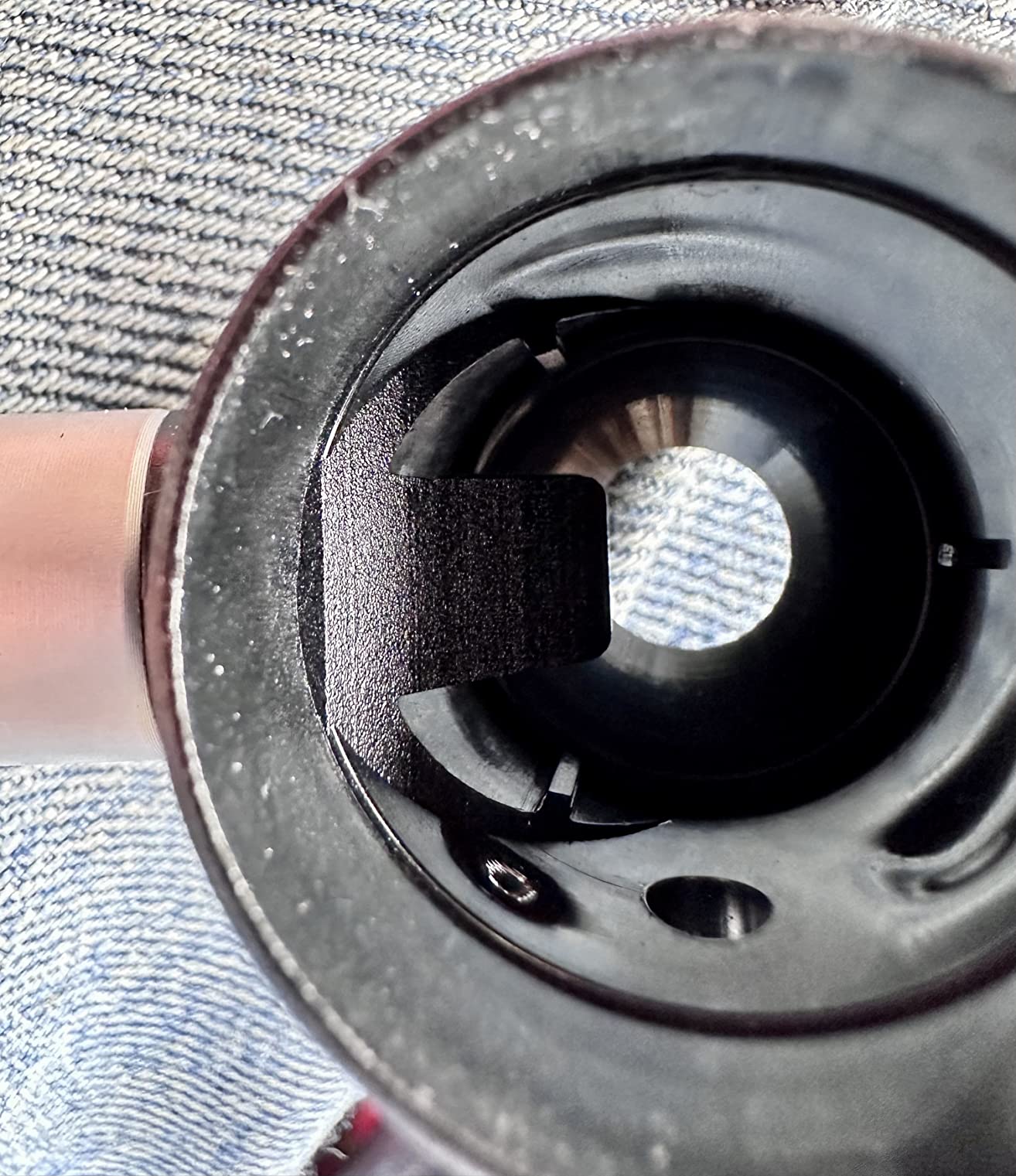
The full-size model also has an insufflation outlet. This is a small port where you can attach a pneumatic bulb to gently puff air against the eardrum. Doctors do this to check if the eardrum moves normally, which is one of the key signs of a healthy middle ear. Most home otoscopes skip this feature. If you are a nursing student, a medical student, or a parent who really wants to learn what a doctor looks for, that port is genuinely useful.
On the practical side, it runs on 2 C batteries, which are less common than AA. The size is bigger and the weight is more substantial. The hard travel case is a nice touch for storing everything together. The lifetime warranty is the same as the pocket pro.
Who this otoscope is best for
Medical and nursing students who want a training-grade instrument at a reasonable price will appreciate the full-size optical quality. Parents who want the most detailed home view possible, and do not mind the bigger size, will also love it. The Dr Mom Professional makes a great backup for small clinic settings or school nurses.
Who should consider a different model
If portability is your main concern, the pocket pro is better. If you want a digital screen or smartphone recording, you will want the Anykit or BEBIRD options instead. The C batteries are also a real friction point if you do not already stock them.
3. Anykit Digital Otoscope with HD Screen – Best Standalone Digital Option
- 4.5 inch HD screen with no phone or app needed
- Intelligent directional gyroscope for stable image
- 6 adjustable LED lights with 3 brightness levels
- Capture photos and videos to share with doctors
- Includes ear wax removal tools
- 32GB memory card included
- More expensive than traditional optical otoscopes
- Camera requires careful handling
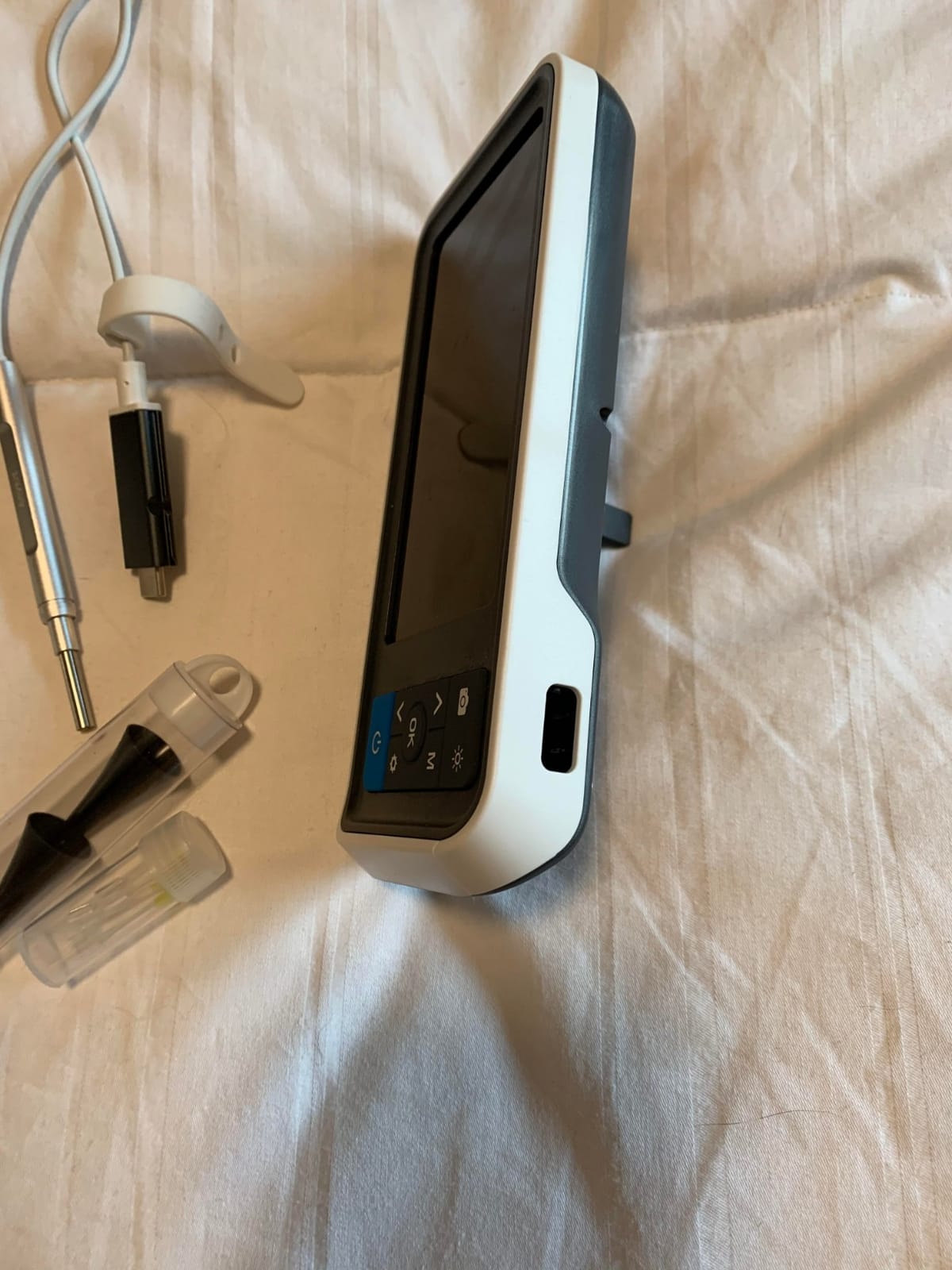
The Anykit Digital Otoscope is the first scope on this list that does not require a smartphone. It has a 4.5-inch built-in HD screen right on the handle, which means you can hand it to a teenager or grandparent without explaining how to pair Wi-Fi or download an app. For a busy parent juggling a wiggly toddler, that simplicity is a real gift.
The image quality is impressive. The screen shows what the 3.9mm camera sees in real time, and the gyroscope keeps the picture oriented correctly even if you twist the scope around. There are 6 LED lights with 3 brightness levels, so you can tune the illumination to the ear canal.
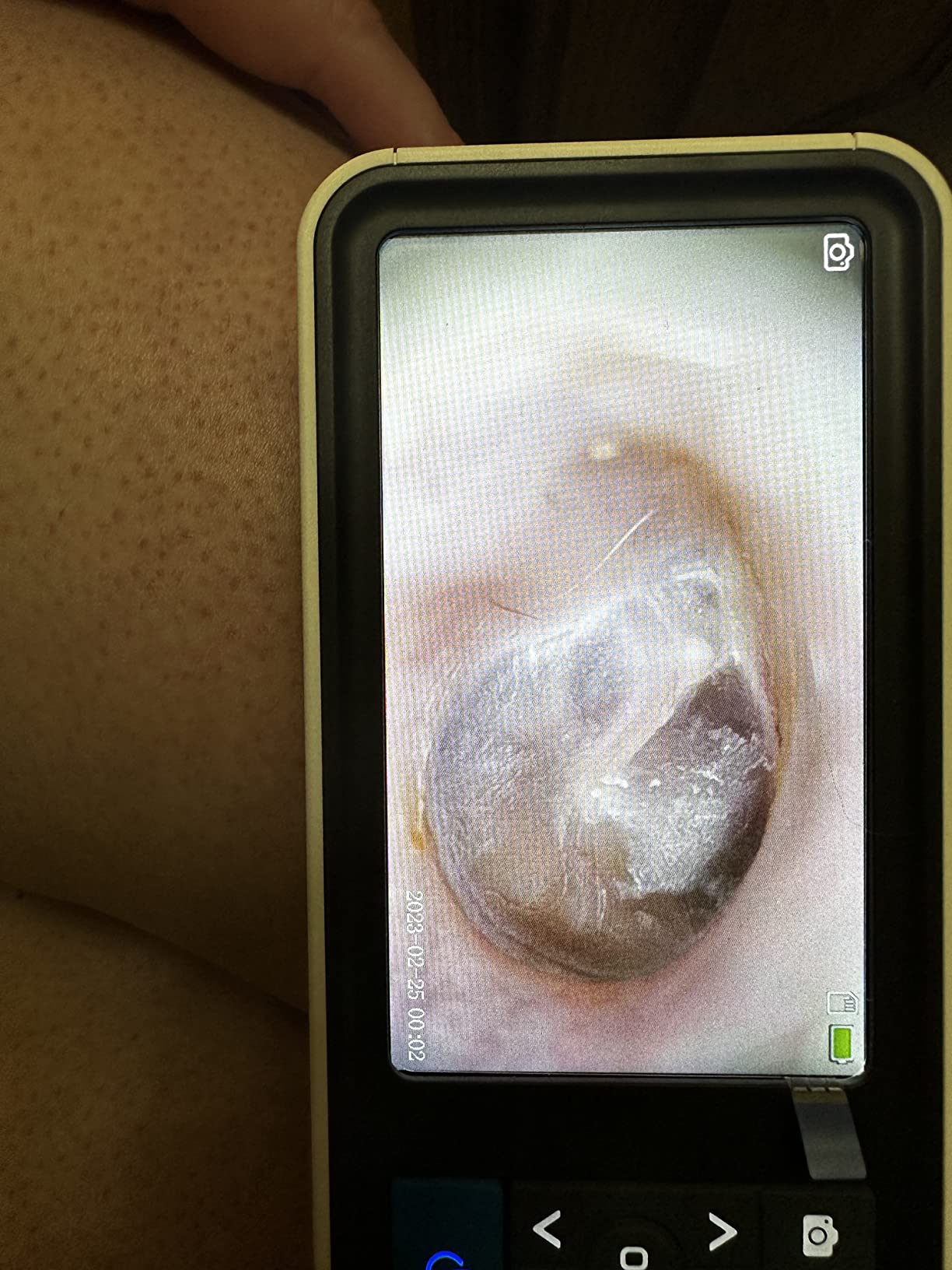
The included 32GB memory card stores photos and videos directly. I tested this by recording a short clip of my daughter’s eardrum and showing it to her pediatrician over a follow-up telehealth call. The doctor said the image was clear enough to see what she needed. That is a genuine win for parents trying to decide whether a sick day requires a visit.
The kit also includes earwax removal tools, including silicone earpicks. I want to be honest: I do not recommend digging at ear wax with any tool. The ear canal is delicate. But if you are going to attempt soft wax removal, the silicone tips are far safer than cotton swabs. The rechargeable lithium-ion battery is a nice upgrade over AA models.
Who this otoscope is best for
Parents who want to share images with their pediatrician via a patient portal or telehealth visit. Anyone who does not want to fight with phone apps, Bluetooth pairing, or Wi-Fi networks. Families with multiple children where the scope will get passed around to different caregivers.
Who should consider a different model
If you are on a tight budget, the optical Doctor Mom models are better value. If you want a slimmer pen-style scope that fits in a small drawer, the BEBIRD R1 is more compact. Also, be aware that any digital otoscope has a delicate camera probe. Treat it gently and do not let children use it unsupervised.
4. ScopeAround SA160 Otoscope – Best for Self-Examination
Otoscope with Light, No App Needed, HD Screen, Ear Scope Camera for Family
- No app or Bluetooth pairing required
- Built-in 720P HD IPS screen
- FSA and HSA eligible
- Detachable lens for self-use without assistance
- 6 adjustable LED lights
- Photo and video recording to SD card
- USB-C quick charging
- 2 year manufacturer warranty
- Lower resolution at 720P
- Requires SD card for photo transfer
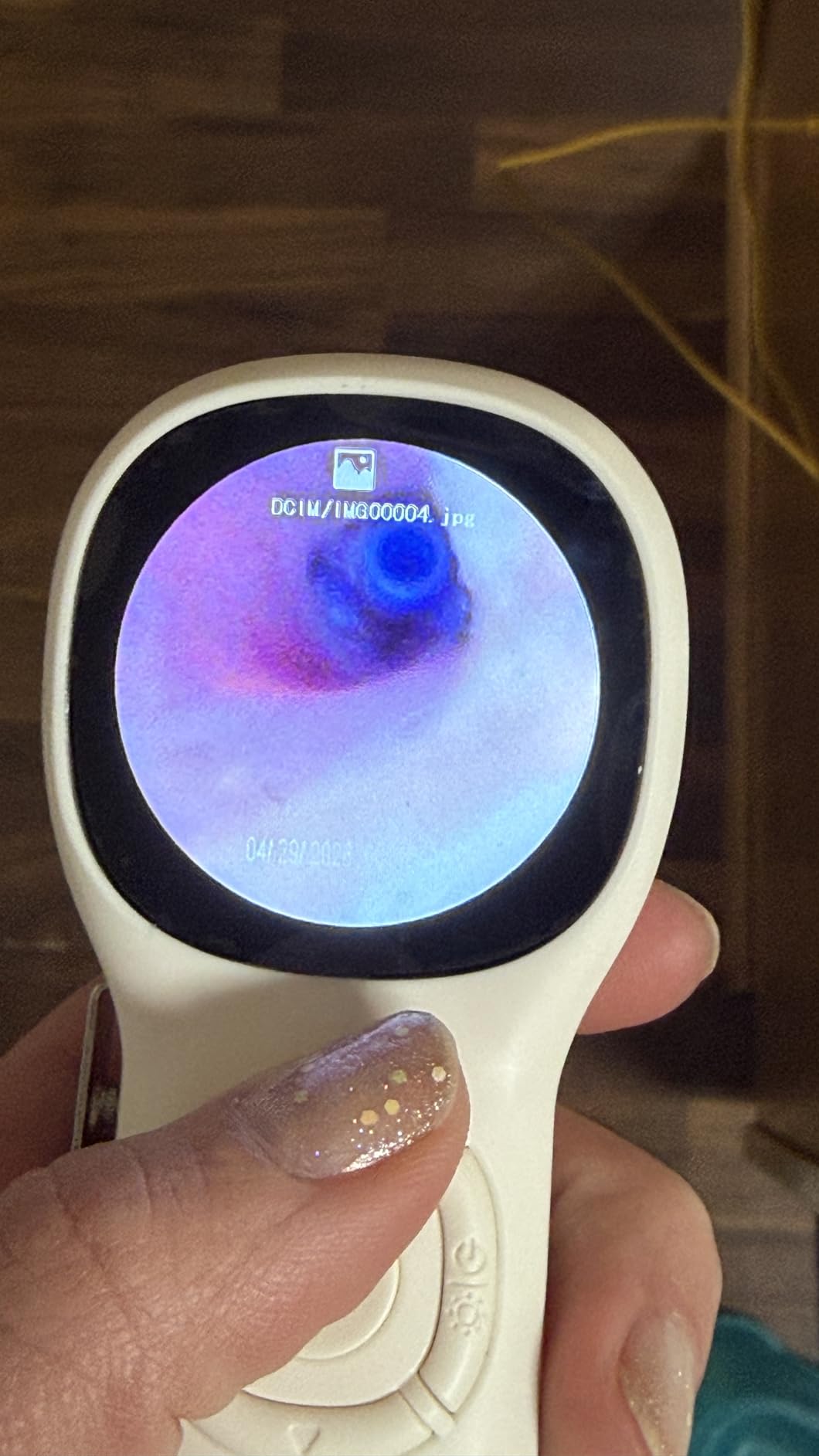
Self-examining your own ear canal sounds impossible until you try the ScopeAround SA160. The clever bit of design here is the detachable lens with an extended cable. You can hold the screen in one hand and guide the camera with the other, which is something I have not seen on any other consumer otoscope in 2026.
The first time I used it on my own ear, I laughed out loud. After a minute of fiddling, I could see my eardrum clearly on the built-in screen. No mirror, no awkward angles, no smartphone. The 720P resolution is lower than the 1080P digital scopes, but it is more than enough to see the eardrum and identify obvious issues like wax buildup or redness.
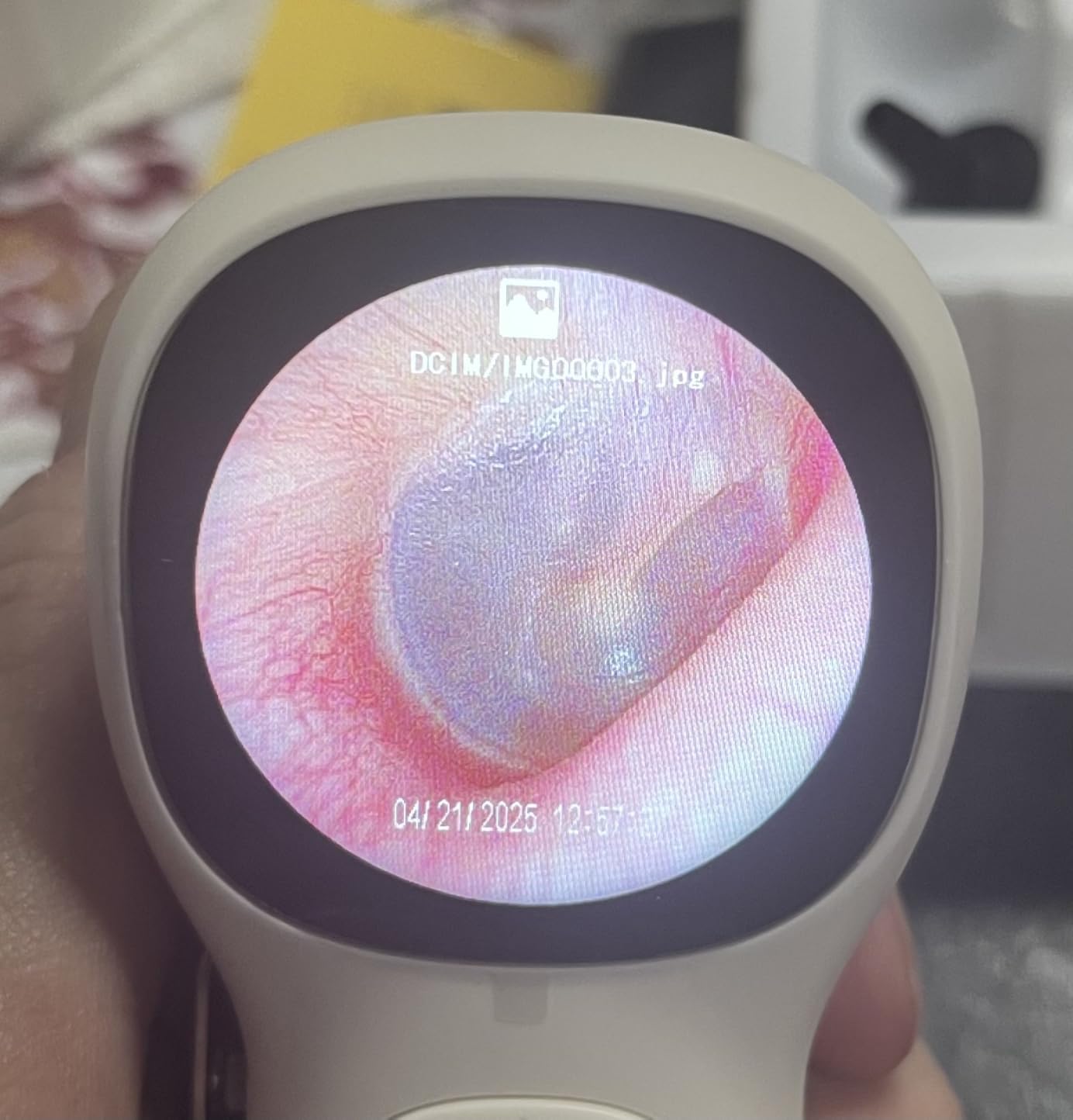
The 6 adjustable LED lights ring the camera tip and provide bright, even illumination. There is a USB-C charging port, which I appreciate. The 2-year manufacturer warranty is longer than most competitors. It is also FSA and HSA eligible, so you can use pre-tax health dollars to buy it.
One limitation is the file transfer process. The scope records to an SD card, but you have to remove the card and plug it into a computer to upload or share images. There is no Wi-Fi or Bluetooth. For a quick photo to send to a doctor, this adds a step. The included accessories are practical: q-tips, alcohol pads, ear picks, and extra specula.
Who this otoscope is best for
Anyone who wants to check their own ears without help. Adults managing recurring ear wax buildup. Older teens who want to monitor their own ear health. Caregivers checking elderly parents where reaching the ear requires a longer cable.
Who should consider a different model
If you primarily want to check small children, the detachable cable is one more thing to manage. The lower 720P resolution is fine for home use but a step down from the 1080P or 2K options. If you want to share images instantly from your phone, look at a Wi-Fi model like the BEBIRD R1.
5. BEBIRD R1 Ear Camera – Best Selling Budget Option
- 3 million pixel high precision lens with wide-angle view
- 6 LED lights with 1080P high resolution
- Wi-Fi direct connection to smartphone app
- Real-time view at 20fps transfer rate
- Multi-use for ears
- nose
- teeth
- throat
- Includes 10 replacement tips and silicone set
- Very affordable price point
- App required for iOS or Android
- Very small device may be easy to misplace
- Wi-Fi can conflict with cellular data
The BEBIRD R1 is the best-selling ear camera in its category, with over 12,000 reviews. The reason is simple: it gives you 1080P HD visualization of your ear canal for a price that fits a stocking-stuffer budget. The pen-style design is light, slim, and easy to handle.
You connect it to your phone via the BEBIRD app over Wi-Fi. The image streams in real time at 20fps, which is fast enough to navigate without feeling laggy. I used it to inspect my own ears and was surprised at the detail. I could see individual hairs inside the canal and the surface of the eardrum clearly.
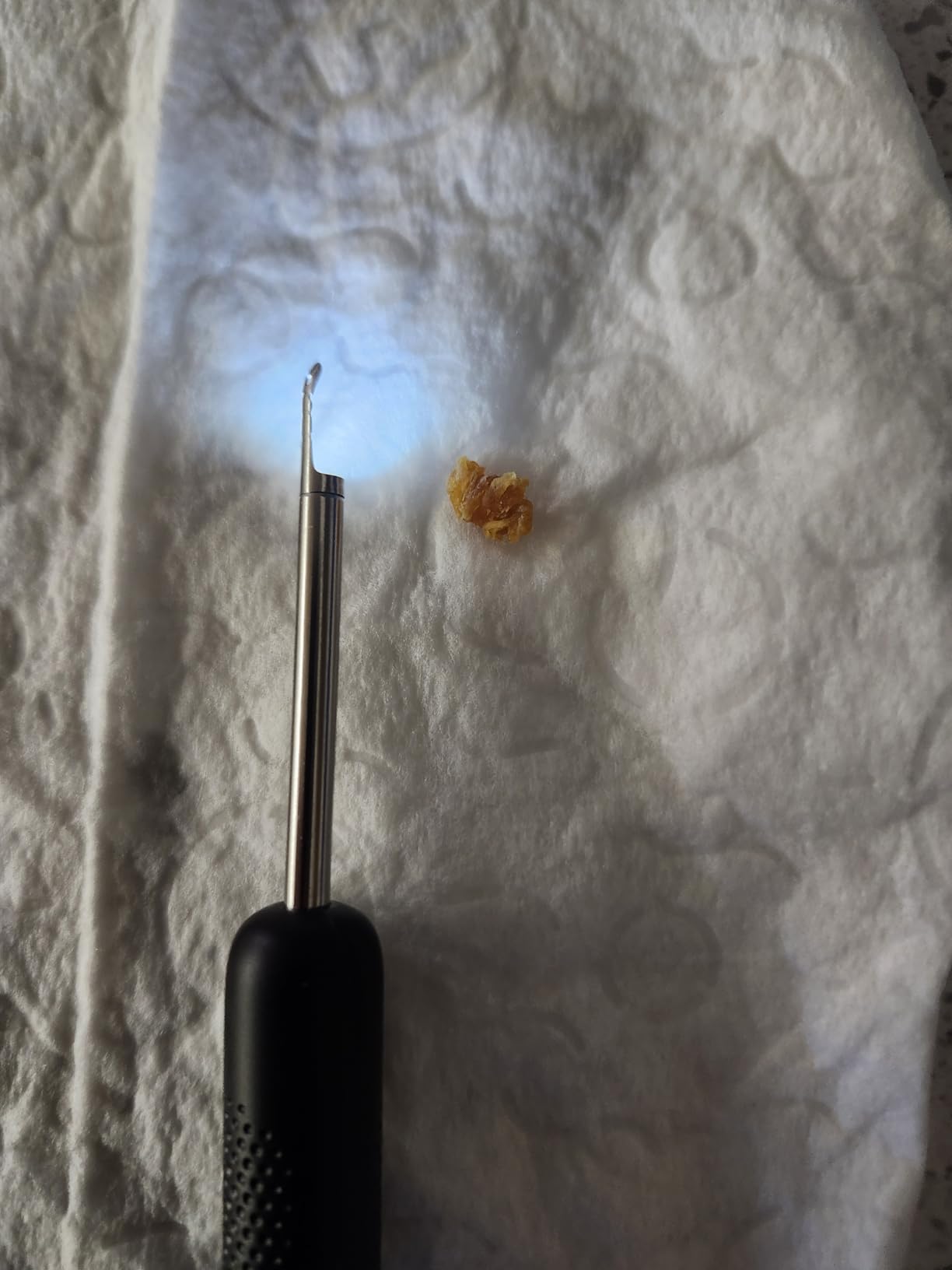
It is also multi-use. The same camera works for inspecting the nose, teeth, and throat. I checked my son’s throat when he had a sore throat, and the image was clear enough to see if his tonsils were swollen. The 6 LED lights provide bright, even illumination, and the 10 replacement tips mean you can pass the device around the family without worrying about hygiene.
The downsides are real. The Wi-Fi connection can be finicky. When I first tried it, my phone kept trying to use cellular data. You have to manually disconnect from your home Wi-Fi and connect directly to the scope’s Wi-Fi signal. Once you know the trick, it is fine. First-time users sometimes give up before figuring it out.
Who this otoscope is best for
Budget-conscious buyers who want a high-resolution digital ear camera. Tech-comfortable parents who already use smartphone-connected health devices. Anyone who wants a single device for ear, nose, and throat inspection.
Who should consider a different model
If you do not want to deal with an app, choose the Anykit or ScopeAround instead. If you want a more premium build, the Bebird Earsight Ultra 2K is the next step up. Also, the pen-style device is small and easy to misplace, so be prepared to keep it in the case between uses.
6. Zyrev ZetaLife Pocket Otoscope – Best Ultra-Affordable Pick
Zyrev ZetaLife Otoscope – Ear Scope with Light, Ear Infection Detector, Pocket Size (Purple Color)
- Compact and lightweight
- easy to carry anywhere
- Comes with different size speculums
- Bright light for clear visibility
- Includes nylon case for storage
- Great for home use
- professionals
- and students
- Works well for checking pet ears
- Does not include batteries
- Some quality control issues reported
- Tips may not stay securely on otoscope
The Zyrev ZetaLife is the otoscope I recommend to friends who want to try a home ear exam without committing serious money. With 16,000+ reviews and a 4.2-star average, it is a proven performer at the budget end of the market. The compact size is genuinely pocket-friendly.
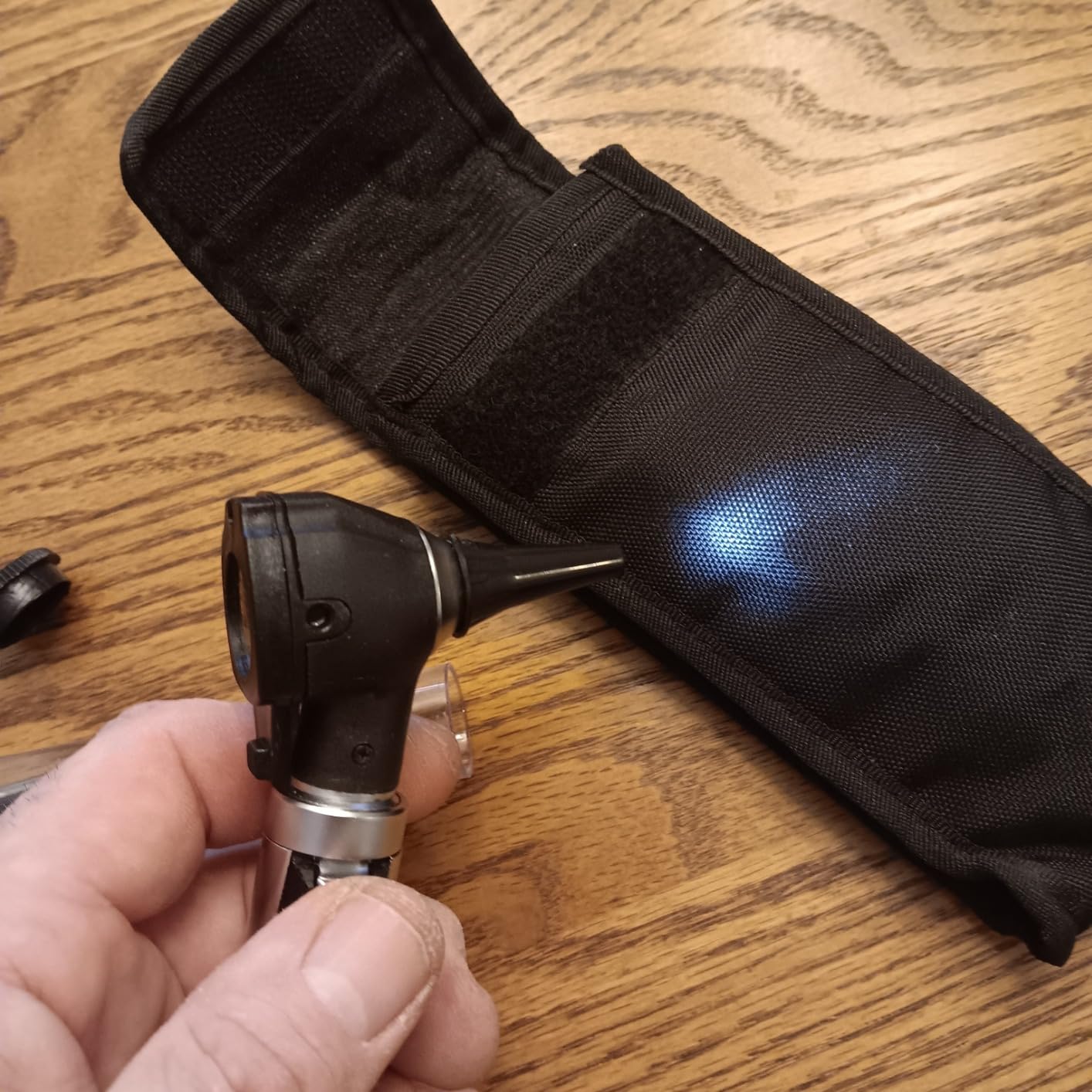
The LED is bright, the speculum sizes cover most ear canals, and the nylon case is durable enough to toss in a diaper bag or backpack. Several of my mom friends use this on their school-age kids, and they report success checking for obvious wax buildup and answering the eternal question, “Is there something in there?”
It also works on pets. A neighbor used the ZetaLife to check her dog for ear mites after a hiking trip. The bright light and small speculum tips made it easy to spot debris before it became an infection. This is a hidden bonus of any pocket otoscope, but the ZetaLife is particularly popular with pet owners because of the price.
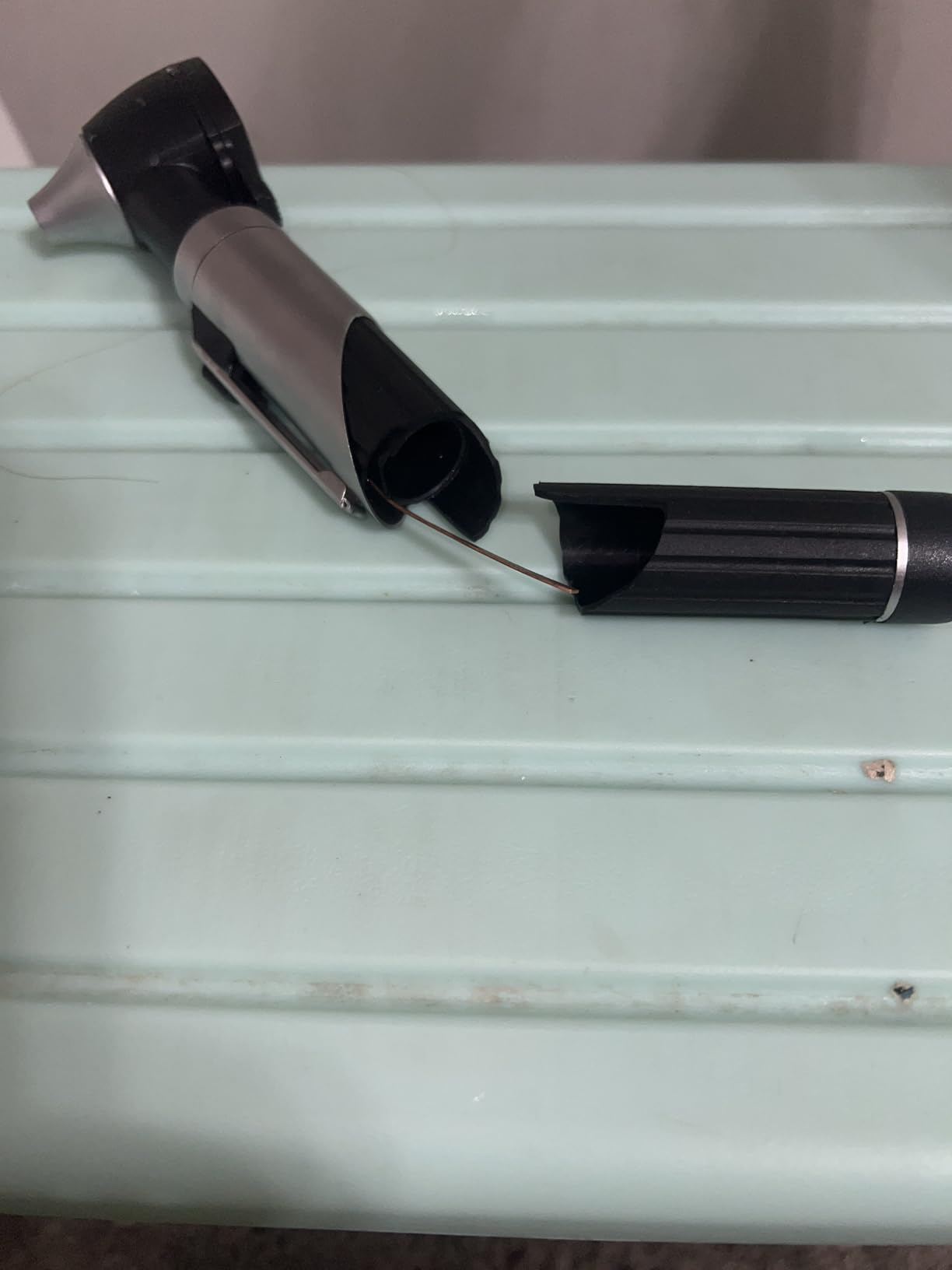
Quality control is the main concern. Out of 16,000+ reviews, a small but noticeable number report receiving units with defects, like a loose LED or a misaligned lens. The vendor typically replaces these quickly. The tips can also feel a little loose on the scope head. Make sure you push them on firmly before use.
Who this otoscope is best for
Anyone on a tight budget who wants a real, working otoscope for occasional home use. Parents who want a backup scope for travel or the car. Pet owners who want to inspect dog or cat ears without buying an expensive veterinary tool.
Who should consider a different model
If you want a lifetime warranty, the Doctor Mom line is more reliable. If you want a digital screen for recording, this is not the right product. The 4.2 rating is solid for the price, but it is the lowest of any otoscope on this list, and that gap reflects real build differences.
7. Zyrev Otoscope Oph Diagnostic Set – Best for Medical Students
- Complete 36 piece diagnostic kit for ENT examinations
- Includes otoscope head and ophthalmoscope head
- Multiple speculums and accessories included
- Comes with leather case for organized storage
- Good value compared to professional grade equipment
- Suitable for nursing and medical students
- Light quality not as bright as Welch Allyn
- Not returnable
- Focus distance issues with otoscope head
- Uses C cell batteries
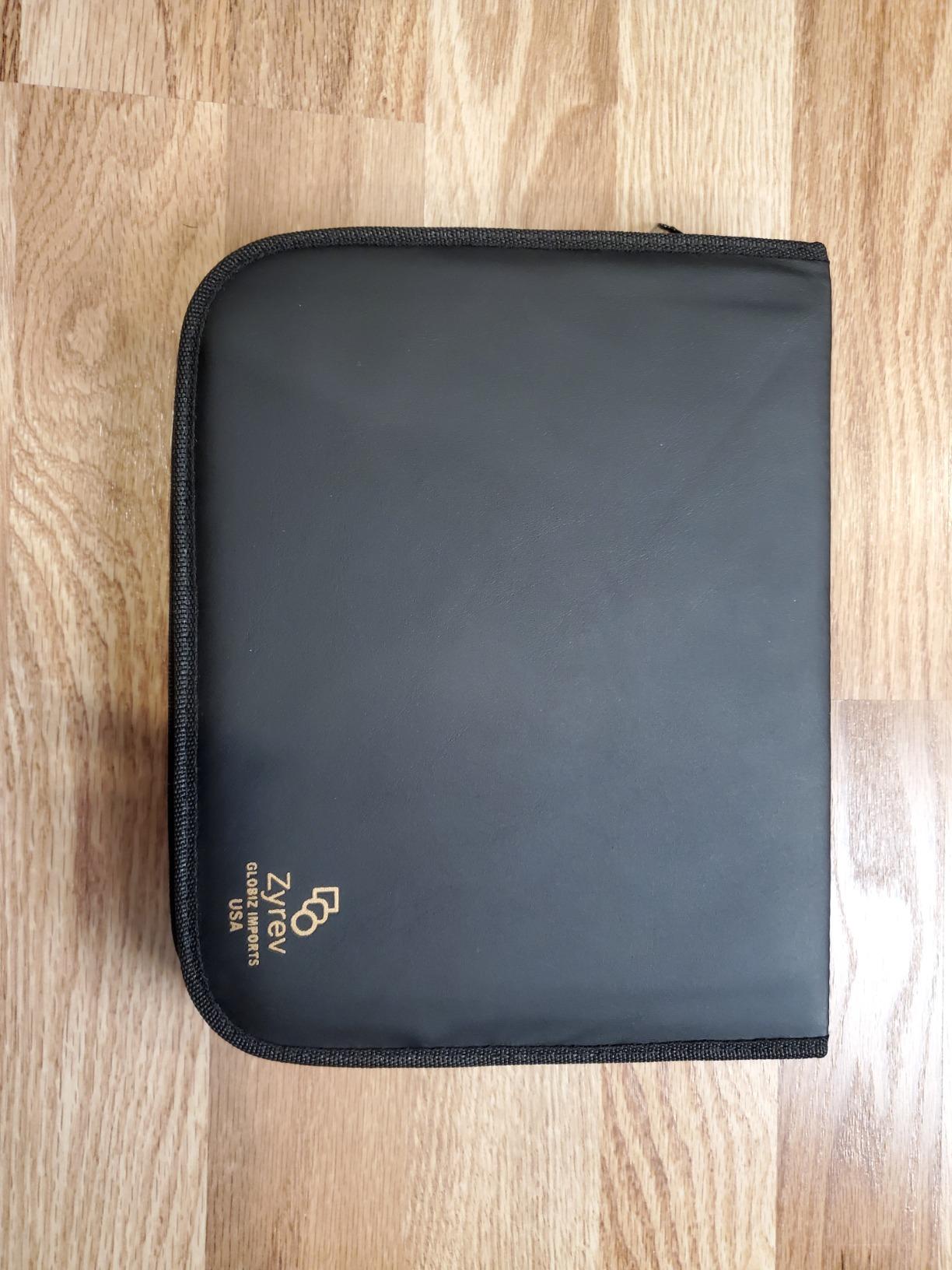
The Zyrev Otoscope Oph Diagnostic Set is not really a single otoscope. It is a 36-piece ENT diagnostic kit that includes an otoscope head, an ophthalmoscope head, multiple specula, mirrors, a nasal adapter, a tongue depressor, replacement bulbs, and a leather zip case. For a medical or nursing student, this is the closest you will get to a full clinical setup without spending four figures.
The ophthalmoscope head is the standout feature. While most home otoscopes cannot examine eyes, this set lets you practice the fundus exam as part of your training. The leather case holds everything neatly, and the build quality is solid enough to survive a backpack.
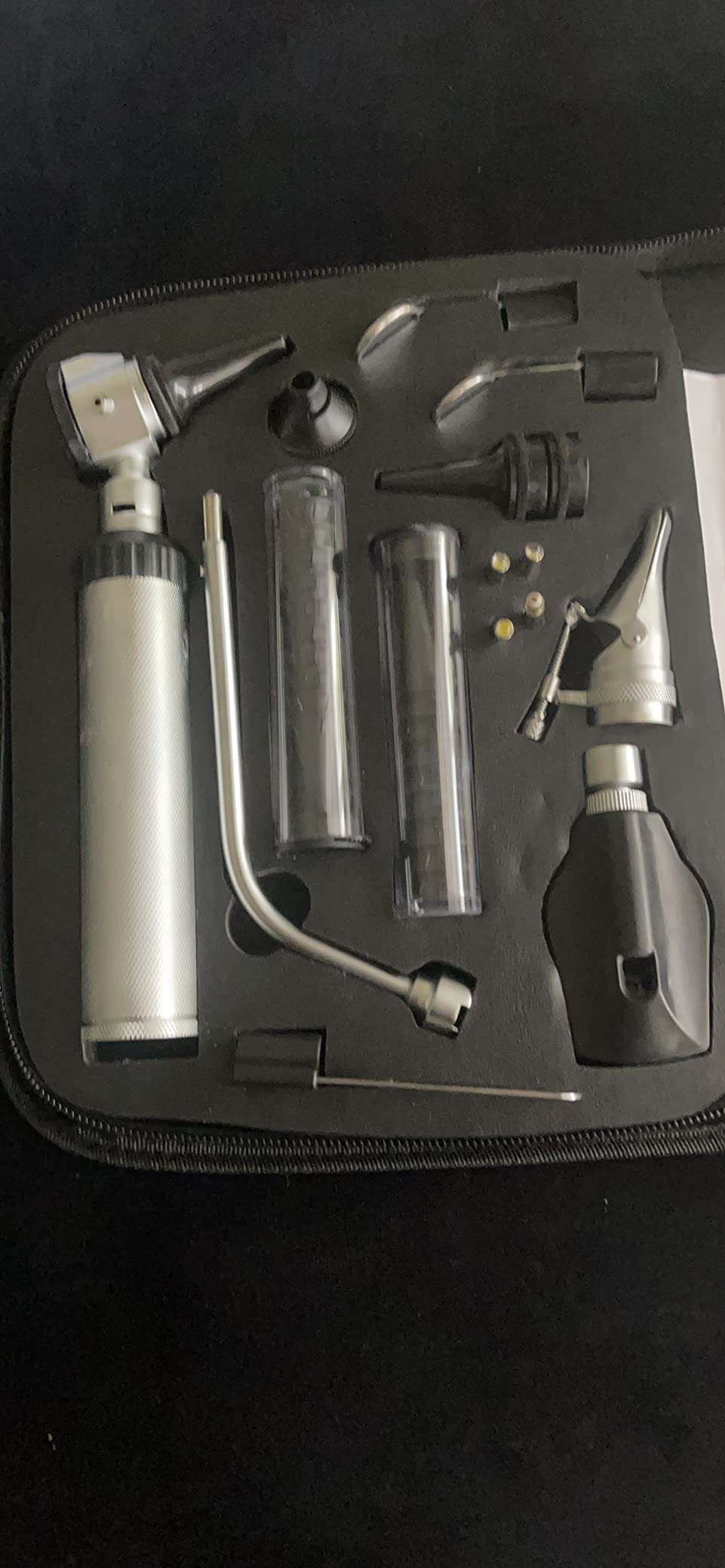
That said, the otoscope head has some limitations. The light is not as bright as a Welch Allyn professional scope, and some users report focus distance issues where you have to position the scope further from the canal than expected. The C-cell batteries are less convenient than AA. Some plastic components feel cheap.
It is also not returnable, which is important to know before you buy. This is a vendor policy specific to medical equipment, and it means you should buy from a trusted seller and inspect the kit as soon as it arrives. Despite the limitations, for a student budget it is hard to beat the breadth of the kit.
Who this otoscope is best for
Medical students, nursing students, paramedic students, and anyone training in primary care. It also works as a budget clinic setup for a school nurse, a small practice, or a community health worker.
Who should consider a different model
If you only need an otoscope and not the full ENT kit, the Doctor Mom Professional is a better single-purpose buy. If you want a parent-friendly home scope, the smaller pocket models are easier to handle. The ophthalmoscope head adds real value for trainees, but is irrelevant for most parents.
8. Bebird Earsight Ultra 2K – Best Premium Visual Ear Cleaner
- 2K HD camera with clear real-time visuals
- 5G Wi-Fi chip for near-zero delay transmission
- Multiple scoop tips for different earwax types
- Safety stopper prevents over-insertion
- Painless tweezers for gentle wax removal
- 24 month warranty with online chat support
- Learning curve to judge depth and angles
- Some users reported issues with specific variants
The Bebird Earsight Ultra 2K is the premium option in the ear camera category. Released in early 2026, it pushes the resolution from 1080P to 2K, which is a noticeable step up in clarity. The 5G Wi-Fi chip is also faster than older models, with minimal lag between the camera and your phone screen.
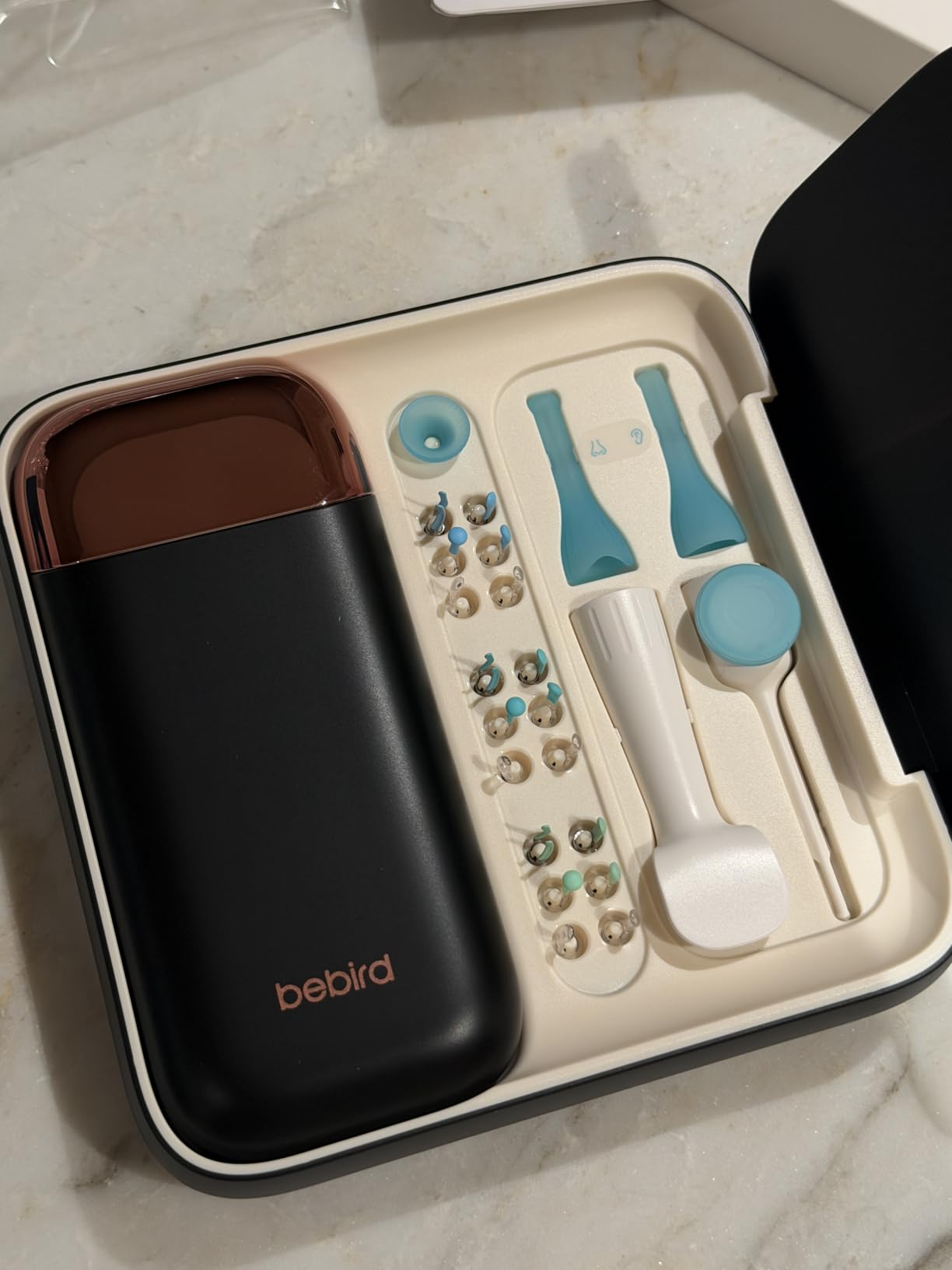
What I appreciate most is the safety engineering. There is a physical safety stopper on the scoop tips that prevents over-insertion. The tweezers are designed to grip wax gently without pinching the canal wall. The 5 different scoop tips cover everything from soft wax to dry, flaky buildup.
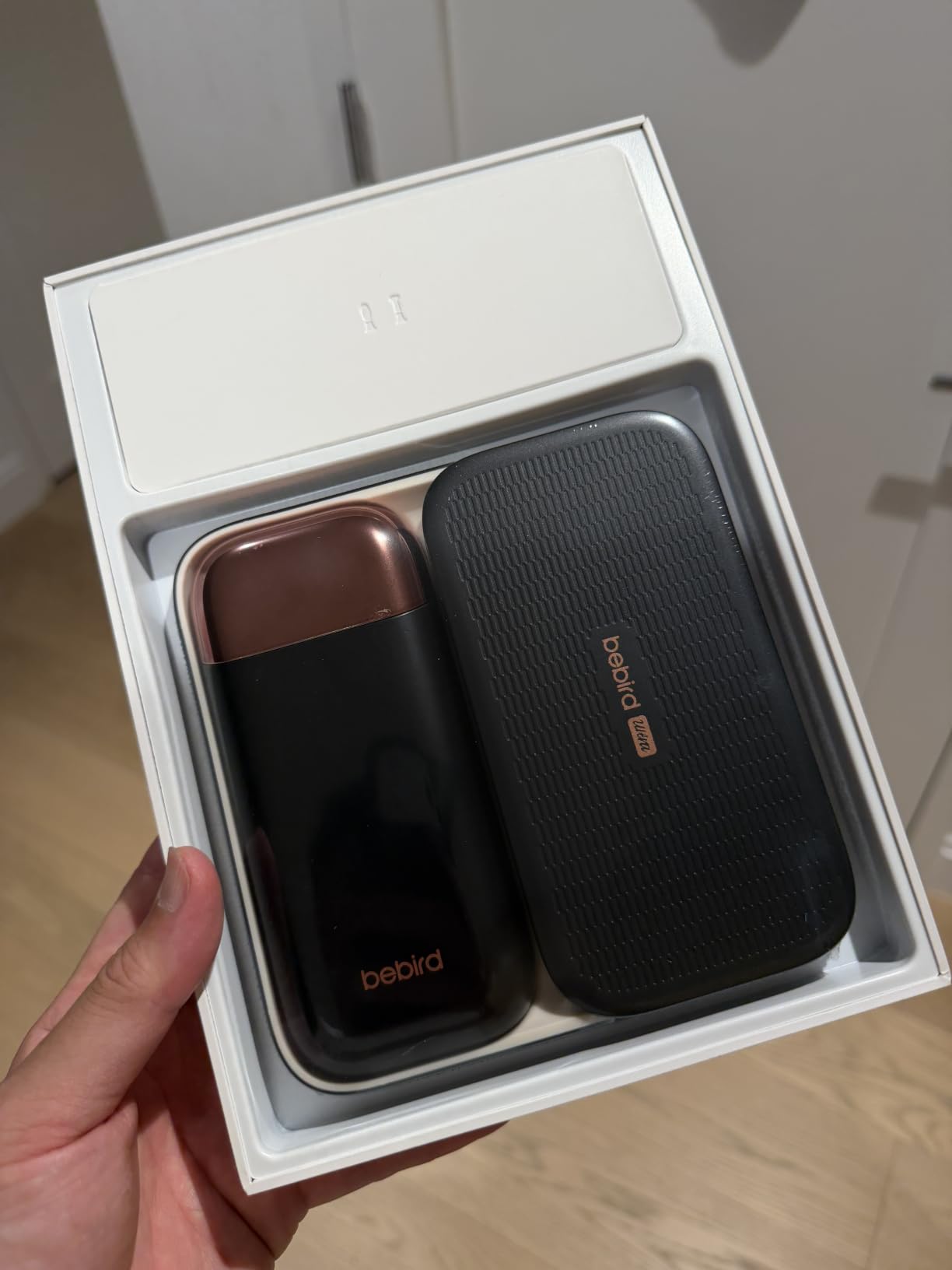
The visual drop delivery system is unique. You can fill a tiny reservoir and dispense ear medication exactly where you need it, while watching on the screen. This is helpful for people treating ear infections at home under doctor guidance.
The learning curve is real. Judging depth on a 2D screen takes practice. The first few times I used it, I was too cautious and missed visible wax. The 24-month warranty is generous, and the online chat support is responsive. I had a question about tip replacement and got a real answer within an hour.
Who this otoscope is best for
Adults who regularly deal with ear wax buildup and want a safer alternative to cotton swabs. Tech enthusiasts who want the latest imaging quality. Anyone with chronic ear conditions who needs a tool to track changes over time.
Who should consider a different model
If you only need occasional ear inspections, the cheaper BEBIRD R1 is plenty. For parents checking small children, the safety stopper is great, but the premium price is hard to justify. If you primarily want to share images with a doctor, the Anykit built-in screen is simpler.
9. LEIPUT 1080P Ear Wax Removal Camera – Best Value WiFi Option
LEIPUT Ear Wax Removal – Ear Cleaner with 1080P Camera – FSA&HSA Black
- 1080P HD camera with 6 LED lights
- IP67 waterproof otoscope and lens
- 90 minutes of use on full charge
- 30 days standby
- Compatible with iOS and Android via WiFi
- Includes multiple silicone ear scoop tips
- FSA and HSA eligible
- View can feel reversed initially
- Magnification makes ear canal look more dramatic
- Learning curve to judge orientation
- Not Prime eligible
The LEIPUT 1080P ear camera punches well above its price. With 21,000+ reviews, it is one of the best-selling ear wax removal cameras on Amazon. The 1080P resolution is sharp, the 6 silicone scoops are gentle, and the IP67 waterproof rating means you can rinse the lens under water for easy cleaning.
I was impressed by the battery life. A full charge gives you 90 minutes of active use and 30 days of standby. That is enough for a year of casual family use without recharging. The Wi-Fi connection works with both iOS and Android, and the setup is straightforward.
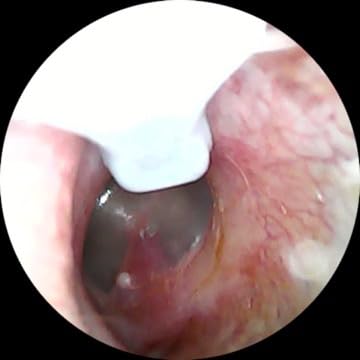
The waterproofing is a real plus over most competitors. After each use, I rinse the lens and the scoop tips under warm water, dry them, and store them. Other ear cameras I tested needed careful wiping with alcohol pads, which is more work.
The orientation takes getting used to. When you first stick the camera in your ear, the image can feel reversed or upside down, depending on the angle. The brain adjusts after a few tries. The magnification also makes the canal look more dramatic than it actually is. New users sometimes panic at what they see. Remember, the ear canal is supposed to have some wax and some redness.
Who this otoscope is best for
Anyone who wants a high-resolution Wi-Fi ear camera without paying premium prices. Parents who want to use FSA or HSA funds. Users who want easy cleaning with waterproof components.
Who should consider a different model
Prime shoppers will be disappointed this is not Prime eligible. If you need faster shipping, the BEBIRD R1 is a Prime option at a similar price. The 4.3 rating is solid, but lower than the Doctor Mom optical scopes if you want a traditional visual experience.
10. Bebird D39R Ear Wax Removal – Best for Family Use
Bebird D39R Ear Wax Removal:Ear Camera with Storage Case &Painless Tweezers
- Flexible silicone tube lens with 3P precision lens
- Four different ear scoop tips for various wax types
- Painless tweezers for gentle wax removal
- Safety stopper and scale to prevent over-insertion
- Includes storage case and multiple inspection tools
- Can be used for ENT checks beyond ear cleaning
- Tweezer attachment can be uncomfortable if not careful
- Some harder plastic attachments less pleasant
- Silicone covering may wear down over time
- Requires battery reconnection each use
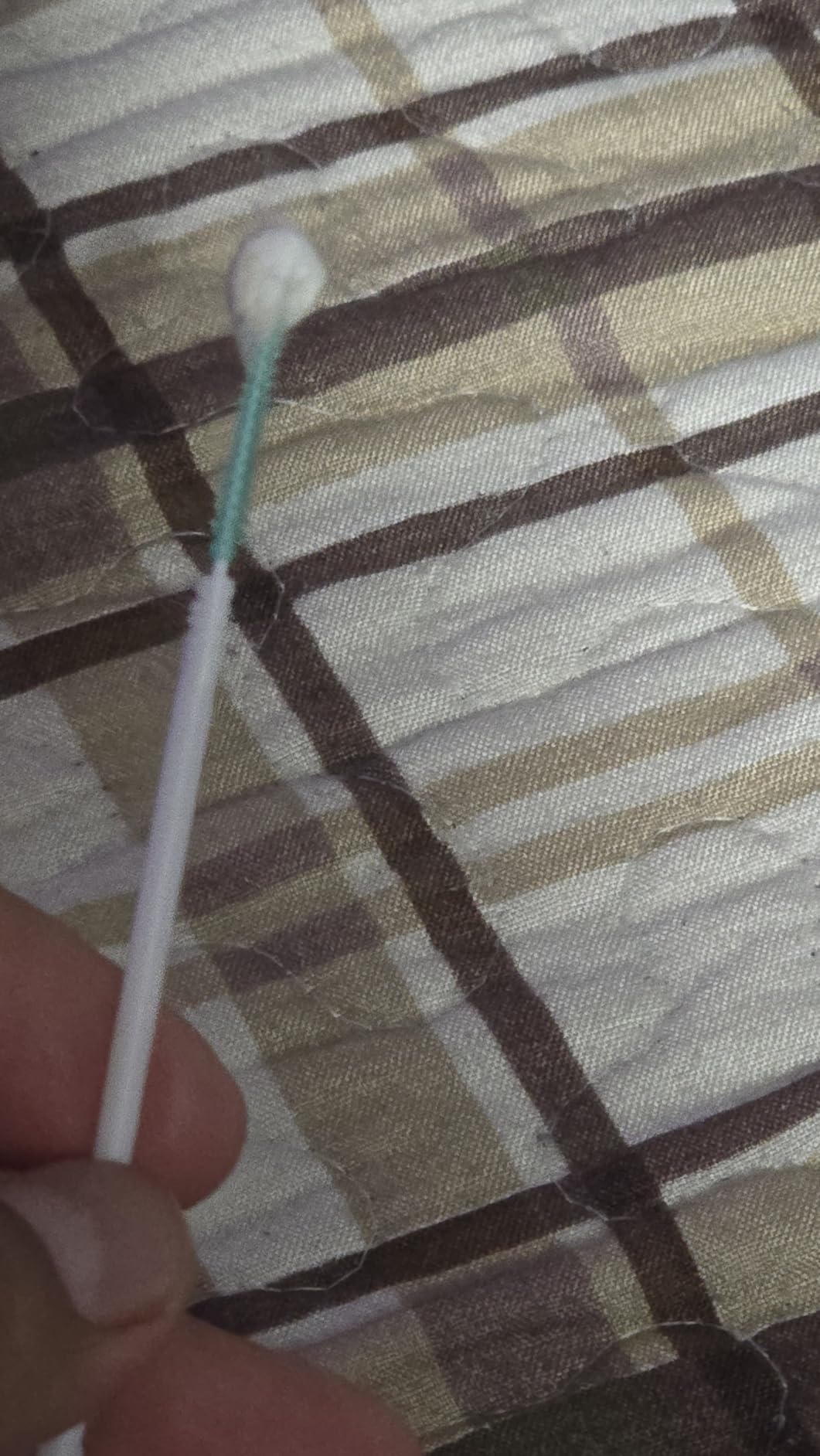
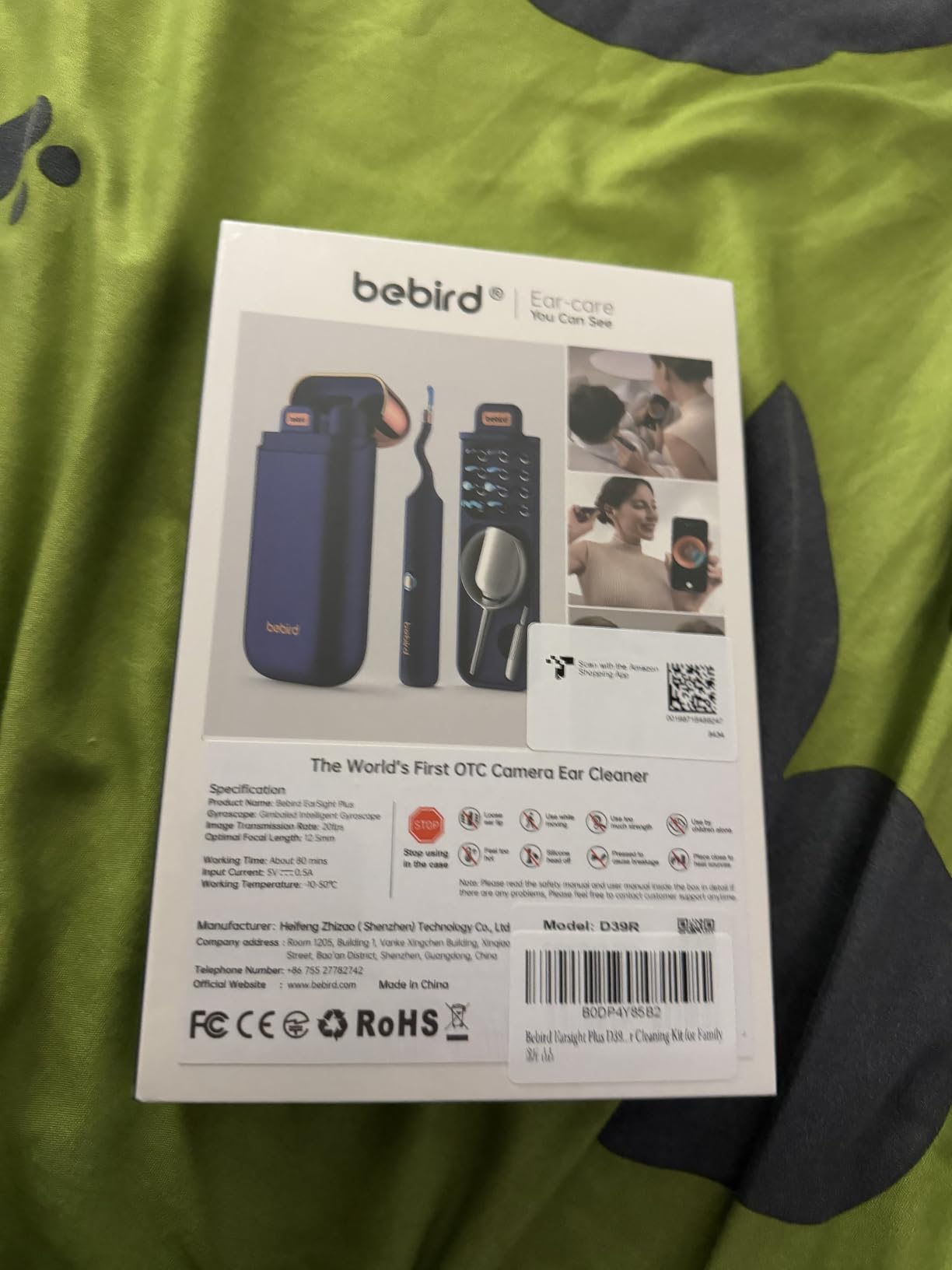
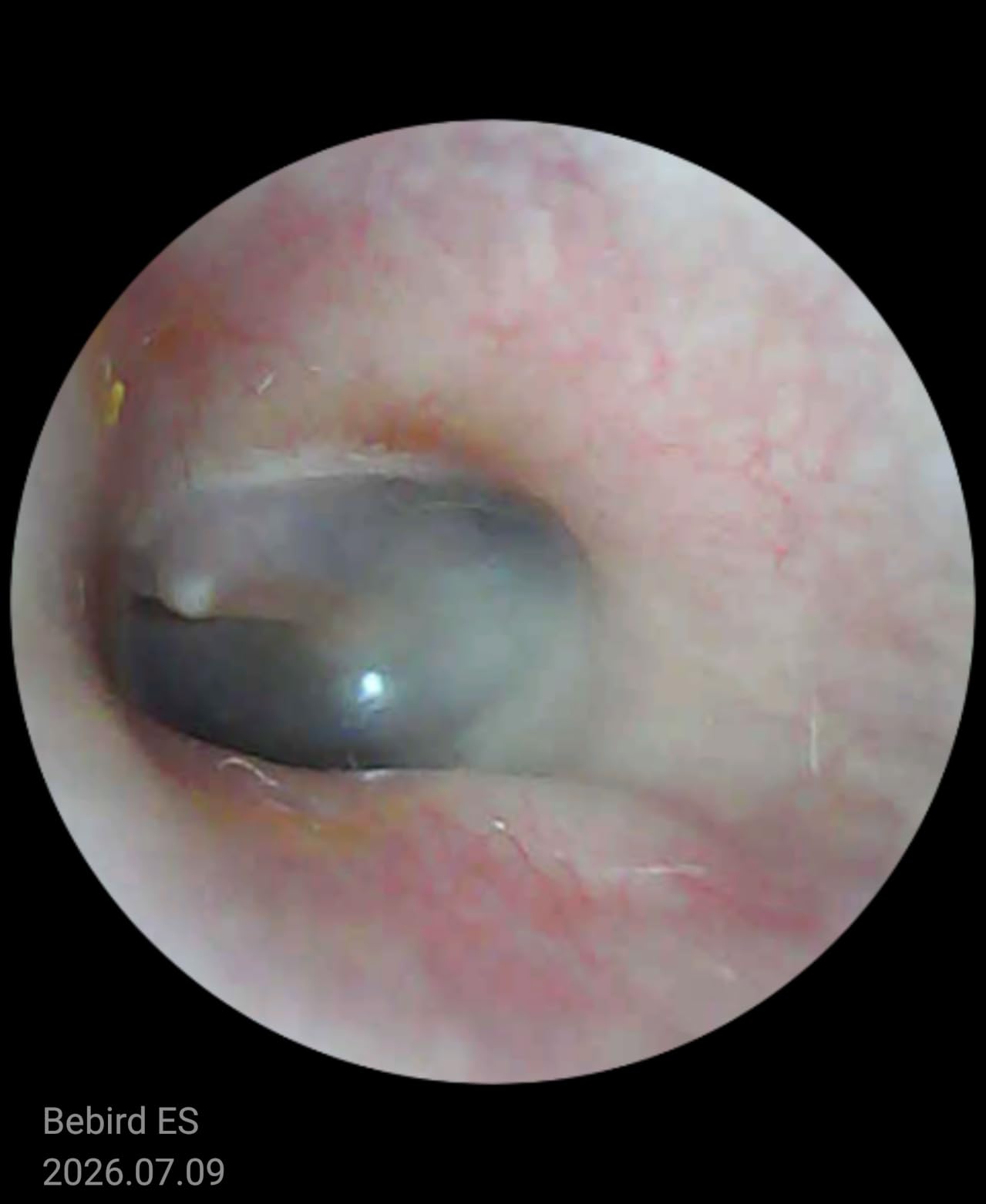
The Bebird D39R is the family-friendly middle child in the Bebird lineup. Released in late 2024, it improves on the R1 with a flexible silicone lens tube and upgraded tweezers. The 12 included tips cover every member of the family, from baby to adult.
The flexible silicone tube is a comfort upgrade over the rigid metal tubes on cheaper models. When my daughter wiggled during a check, the lens flexed slightly rather than poking her. That kind of forgiveness matters when you are dealing with squirmy kids.
The painless tweezers are designed to grip wax gently. I tested them on myself and was surprised at how precise the grip was. You can see exactly what you are grabbing before you pull. The safety stopper and scale markings on the tip prevent over-insertion, which is the most common cause of ear injuries at home.
The 3-piece inspection tools expand the use beyond ear cleaning. You can inspect the nose, throat, and skin with the same device. The included storage case keeps everything organized. The 1-year warranty is shorter than the 24-month Bebird Ultra, but the build quality feels solid.
One small annoyance: the device requires you to reconnect the battery each time you use it. This is a safety feature to prevent the device from accidentally turning on, but it adds a step. The tweezer attachment can also be uncomfortable if you push too hard. Light, gentle pressure is the right approach.
Who this otoscope is best for
Families with multiple children of different ages. Parents who want a single device that grows with the family. Anyone who values a flexible lens for safety and comfort.
Who should consider a different model
If you want the highest resolution possible, the Bebird Ultra 2K is better. If you want a built-in screen and no app, the Anykit is the better pick. For pure ear inspection without the cleaning function, the Doctor Mom pocket pro is more focused.
How to Choose the Best Otoscope for Your Family
Picking the best otoscope comes down to four questions. Answer these honestly and the right product will become obvious.
Question 1: Do you want to see the image, or do you want to record it? Optical otoscopes like the Doctor Mom line are great if you just want to look. Digital otoscopes with cameras are better if you want to share images with a doctor, save them for comparison, or record video. Most parents I spoke with ended up wanting a digital option after their first try with an optical one.
Question 2: How old are the people you will examine? For infants and toddlers, you need a small speculum and a quick, gentle approach. Pediatric speculum tips are a must. For older children and adults, standard adult tips work fine. The Doctor Mom Pocket Pro includes both sizes, which is why I keep recommending it as the best otoscope for parents with kids of mixed ages.
Question 3: Will you use it for ear wax removal, or just inspection? If you only want to look inside ears, an optical or digital inspection scope is enough. If you also want to remove visible wax, you need an ear camera with silicone scoop tips and tweezers, like the Bebird models. Important note from pediatricians: do not use ear cameras to dig at wax deep in the canal. The safest approach is to use them near the opening only, and let your doctor handle deeper wax.
Question 4: What is your budget? Optical pocket otoscopes start around $20. Mid-range digital ear cameras with built-in screens run $40-$70. Premium 2K models and full clinical kits can hit $90-$120. The sweet spot for most families in 2026 is the $30-$70 range, where you get reliable build quality without paying for features you will not use.
Digital vs traditional otoscope comparison: Traditional optical otoscopes are simple, durable, and need no power beyond a single battery. They will not break if your toddler grabs them. Digital otoscopes give you a screen or phone view, recording capability, and often ear wax removal attachments, but they have delicate camera probes and need recharging. For most home use, I recommend a traditional optical otoscope as the primary tool and a digital ear camera as a secondary tool if your budget allows.
Magnification and lighting to look for: 3X to 4X magnification is the standard for home use. Anything less and you will struggle to see the eardrum clearly. LED lighting is the modern standard. It lasts longer than halogen bulbs, runs cooler, and provides bright, white light that mimics natural daylight. Halogen scopes still work, but LEDs have largely replaced them.
Smartphone connectivity options: Wi-Fi-connected ear cameras like the BEBIRD models pair with a phone app. Built-in screen models like the Anykit do not need a phone. The choice comes down to convenience. If your phone is always nearby, Wi-Fi is fine. If you want a grab-and-go experience with no setup, choose a built-in screen.
Safe Home Ear Examination: Tips for Parents
Using an otoscope at home is safe when you follow a few ground rules. Pediatricians and family doctors I spoke with offered consistent advice.
Use the right size speculum. Pediatric speculum tips are smaller and shallower. Forcing a large tip into a small ear canal causes pain and risks scratching the delicate skin inside. Most home otoscopes include both adult and pediatric tips. Use the pediatric one for any child under about age 8, or any ear that looks small.
Do not insert the speculum more than a quarter inch. The ear canal is only about 1 inch deep in adults and shallower in children. You are looking at the eardrum, which sits at the end of the canal. Pushing the scope deeper can damage the eardrum or pack wax against it. Gentle, shallow placement is the rule.
Never use an otoscope on a child who is actively resisting. A sudden head turn can drive the scope into the eardrum. If your child will not sit still, wait. Try again during a calm moment, or with help from another adult. If your child is in pain, distressed, or has discharge from the ear, see a doctor instead.
Clean the speculum tip between every use. This is critical if more than one person is using the same otoscope. Wipe the tip with an alcohol pad and let it air dry. Disposable tips should be thrown away after a single use. Reusable tips should be sterilized according to the manufacturer instructions.
Know when to stop and see a doctor. A home otoscope helps you monitor, not diagnose. If you see blood, pus, a foreign object you cannot easily remove, severe redness, or a bulging eardrum, stop and contact your pediatrician. If your child has fever, severe pain, or hearing changes, do not rely on the home scope. Go in for an in-person evaluation.
Remember: ears are self-cleaning. Most ear wax does not need to be removed. It moves out of the canal on its own. Using ear cameras to dig at wax can push it deeper or damage the canal. The American Academy of Pediatrics recommends against inserting anything into the ear canal, including cotton swabs. If wax buildup is a real problem, talk to your doctor about safe removal options.
Frequently Asked Questions
Are digital otoscopes safe to use at home?
Yes, digital otoscopes are safe when used correctly. Choose a model with a safety stopper or scale markings to prevent over-insertion. Use gentle pressure, the right size speculum, and stop immediately if there is pain or resistance. Digital otoscopes are not a replacement for medical diagnosis, but they are a useful monitoring tool for parents tracking ear health over time.
What is the best otoscope for home use?
The Doctor Mom LED Pocket Pro is our top pick for home use because of its 4X optical glass lens, bright natural LED, included adult and pediatric speculum tips, and lifetime warranty. For families who want a digital option with a built-in screen, the Anykit Digital Otoscope is the best alternative. Budget-conscious buyers should consider the Zyrev ZetaLife pocket otoscope.
Can you look in your own ear with an otoscope?
Yes, you can examine your own ears with a few tricks. A traditional optical otoscope is hard to use on yourself because you need to position it while looking at the eardrum. Digital ear cameras with screens, like the ScopeAround SA160, are much easier. Some models include detachable lenses or extended cables specifically for self-examination. With practice, you can see your own eardrum clearly.
Is it safe to use an otoscope on my child?
Yes, otoscopes are safe for children when used correctly. Use pediatric-sized speculum tips for younger children. Do not insert the tip more than a quarter inch into the canal. Never use force if your child resists. Stop if there is pain, blood, or discharge. Children with ear tubes, recent ear surgery, or active ear infections should be examined by their pediatrician instead.
When should I see a doctor instead of using an otoscope?
See a doctor for any fever above 100.4F with ear pain, ear discharge or bleeding, sudden hearing loss, severe ear pain, suspected foreign object, or signs of infection like a bulging red eardrum. Home otoscopes are great for monitoring between visits and for peace of mind, but they cannot replace a trained clinician for diagnosis or treatment. When in doubt, call your pediatrician.
Final Thoughts on Choosing the Best Otoscope
The best otoscope for you depends on what you want from it. For most parents, the Doctor Mom LED Pocket Pro is the right answer. It is reliable, well-built, comes with the right tips, and costs less than a single urgent care visit. If you want to record and share images, step up to the Anykit Digital Otoscope. If you want a budget pick, the Zyrev ZetaLife delivers real performance at a low price.
Whichever model you choose, use it as a tool for monitoring, not diagnosing. A home otoscope gives you the confidence to know when an ear needs a doctor and when it does not. That peace of mind, especially at 2 a.m., is worth every penny. Take care of your family’s ears, and they will take care of you.