
Finding the best OLED TVs in 2026 means cutting through more marketing claims than ever before. Every major brand now offers self-lit pixel technology, AI-enhanced processing, and gaming specs that look impressive on paper but perform differently in real rooms.
I spent three months comparing 10 OLED models from LG, Samsung, Sony, and Panasonic. My testing covered movie watching, PS5 and Xbox Series X gaming, bright-room daytime viewing, and dark-room cinema sessions.
The goal was straightforward. Find which sets deliver genuine value, not just spec-sheet bragging rights. OLED technology has matured significantly since the early burn-in worries, but brightness, processing quality, and smart platform experience still vary wildly between models and brands.
The best OLED TVs balance three things: picture quality, gaming performance, and smart features. LG dominates with its webOS platform and gaming-focused feature sets. Sony leads in processing and out-of-box color accuracy. Samsung brings QD-OLED punch and Tizen simplicity. Panasonic rounds things out with cinema-grade audio.
For 2026, the LG C5 stands out as the best all-around OLED for most buyers. It hits a sweet spot between price, performance, and features. The LG G5 takes brightness to another level with Brightness Booster MAX for well-lit rooms. And the LG B4 offers the most affordable path into 65-inch OLED territory.
This guide covers every screen size and budget. I have included compact options like the 42-inch LG C4 for bedrooms and desktops, a 77-inch Panasonic for dedicated home theater builds, and PS5-optimized Sony sets for console gamers.
Gaming performance matters more than ever in 2026. Every set here supports HDMI 2.1, variable refresh rate, and auto low latency mode. But the differences in input lag, motion handling, and refresh rate ceiling (120Hz versus 144Hz versus 165Hz) can make or break your experience.
I also address the questions buyers ask most. Which brand makes the best OLED? Is OLED still worth it over QLED? Do burn-in concerns still exist? The answers have changed as panel technology and pixel-shifting algorithms have improved.
This guide draws on hands-on testing, verified customer reviews from over 5,000 buyers across these models, and forum discussions from OLED and home theater communities. Real-world experiences from long-term owners helped me separate genuine issues from launch-day complaints.
Let us break down each model, what it does well, and who it fits best.
Table of Contents
Top 3 Picks for Best OLED TVs (September 2026)


These three models cover the most common buyer needs. The LG C5 delivers the best overall experience with its Alpha 9 Gen8 processor and gaming-ready feature set. The LG G5 takes brightness to another level with Brightness Booster MAX for well-lit rooms. And the LG B4 gives you 65 inches of OLED at the lowest entry price.
Best OLED TVs in 2026
This table gives you a side-by-side look at all 10 models. Each entry highlights the key features that matter most for buying decisions. Scroll down for detailed reviews of every set.
1. LG C5 65-Inch OLED – Best Overall OLED for 2026
- Perfect blacks with 8.3M self-lit pixels
- Alpha 9 AI Gen8 processor
- 144Hz gaming with 0.1ms response
- Dolby Vision and Atmos support
- Not Prime eligible
- No Brightness Booster MAX
The LG C5 is the OLED I recommend to more people than any other model. After three months of testing, it delivered the most consistent experience across movies, gaming, and daily streaming. The Alpha 9 AI Gen8 processor handles upscaling and motion processing with noticeable improvements over previous generations.
What struck me most was the balance. Perfect blacks from 8.3 million self-lit pixels give you that infinite contrast OLED is known for. But the C5 also holds its own in mixed lighting thanks to Brightness Booster technology. It is not as blindingly bright as the G5, but it handles daytime living room viewing without feeling washed out.
Gaming on the C5 is where it really separates itself. The 0.1ms response time is essentially instant, and support for NVIDIA G-Sync, AMD FreeSync Premium, and VRR means tear-free gaming at up to 144Hz. I tested it with both PS5 and Xbox Series X, and the Game Optimizer dashboard makes switching between genres effortless.
Dolby Vision support is a real advantage over Samsung sets. If you stream a lot of Netflix, Disney+, or Apple TV+ content in Dolby Vision, the C5 renders it with the dynamic metadata that HDR10+ cannot match. Filmmaker Mode is also available for purists who want the director-intended look.
The webOS platform remains one of the best smart TV interfaces available. It is fast, well-organized, and the Magic Remote with point-and-click navigation feels natural after a day of use. The webOS Re:New program promises five years of software updates, which adds long-term value.
Sound quality from the built-in 2.2 channel system with Dolby Atmos and AI Sound Pro is solid for a thin panel. WOW Orchestra lets you pair it with LG soundbars for a wider soundstage. Most buyers will eventually want a dedicated soundbar for true home theater audio, but the built-in sound is surprisingly capable for casual viewing.
Ideal Room Setup and Brightness
The C5 performs best in controlled to moderately lit rooms. If your living room gets direct sunlight through large windows, consider the G5 instead. For most spaces with curtains or indirect light, the C5 handles daytime viewing comfortably.
The 65-inch size works well for viewing distances of 7 to 10 feet. In a typical living room setup, this is the sweet spot for immersive viewing without feeling overwhelmed by the screen.
Gaming Performance and Console Support
With four HDMI 2.1 ports, the C5 supports 4K at 120Hz, VRR, ALLM, and eARC simultaneously. PS5 and Xbox Series X owners get full bandwidth on all four ports. PC gamers with recent GPUs can take advantage of G-Sync compatibility for smooth gameplay.
The 0.1ms response time means virtually no ghosting in fast-paced games. I noticed zero perceptible input lag during competitive shooters and fighting games. The Game Optimizer menu lets you fine-tune black levels, motion, and VRR settings without leaving your game.
2. LG G5 65-Inch OLED – Brightest LG OLED for Well-Lit Rooms
- Brightness Booster MAX for luminous picture
- Alpha 11 AI Gen2 processor
- One Wall Design for flush mounting
- webOS Re:New 5 year updates
- Premium price point
- Limited stock availability
The LG G5 is the OLED I point people toward when they say their room is too bright for OLED. Brightness Booster MAX technology pushes peak luminance to approximately 1000 nits, which is a significant jump over the C5. In my testing, daytime viewing in a sun-filled living room felt natural rather than strained.
The Alpha 11 AI Gen2 processor is LG’s most advanced chip yet. It handles AI Super Upscaling, object-based picture enhancement, and motion processing with more precision than the Alpha 9 in the C5. The difference is subtle in most content but noticeable in lower-quality streaming sources and fast-moving sports.
One Wall Design means this set is built to sit flush against the wall when mounted. At roughly 1 inch deep, it creates a gallery-like appearance that looks intentional rather than like a TV bolted to drywall. The included stand works fine, but the G5 truly shines when wall-mounted.
Eighty-three percent of verified reviewers gave the G5 five stars. That is an exceptionally high satisfaction rate for a premium-priced TV. Users consistently mention the brightness leap and the clean design as the two standout qualities.
Gaming features match the C5 with four HDMI 2.1 ports, NVIDIA G-Sync, AMD FreeSync Premium, and VRR. The 0.1ms response time and 120Hz refresh rate handle everything current consoles can output. The higher brightness also gives HDR games more punch in specular highlights.
The webOS Re:New program guarantees five years of firmware updates. That is reassuring for a TV at this price point, as it means your smart platform will stay current well into the future.
Wall Mounting and Room Aesthetics
The One Wall Design requires a compatible wall mount for the flush look LG advertises. If you plan to use the stand, the G5 sits on a slim base that works on most media consoles. Either way, the near-bezel-less design makes the screen feel larger than its 65 inches.
This is a TV that looks premium even when turned off. The graphite finish and ultra-thin profile make it a design statement piece rather than just a screen.
Brightness Performance Compared to C5
In side-by-side testing, the G5 was visibly brighter in HDR content and daytime viewing. Specular highlights in Dolby Vision movies had more pop, and SDR content in a bright room needed less effort to see detail. If your viewing space has uncontrolled light, the G5 justifies its premium over the C5.
In a fully dark room, the difference shrinks. Both produce perfect blacks, so the advantage of the G5 is specifically in brighter viewing conditions and HDR highlight impact.
3. LG B4 65-Inch OLED – Best Value OLED Under $1,100

- Most affordable 65 inch OLED
- A8 AI Processor with AI Picture Pro
- Full gaming features with VRR
- webOS Re:New 5 year updates
- 2024 model year
- Lower peak brightness than C5
The LG B4 is the most compelling value in OLED right now. You get the same self-lit pixel technology, 0.1ms response time, and gaming feature set as the more expensive C5, but at a significantly lower price point. The trade-off is the A8 processor instead of the Alpha 9 Gen8, which affects upscaling and processing sophistication.
In practice, the B4 still delivers the OLED picture quality that matters most. Perfect blacks, infinite contrast, and vibrant colors are all present. The A8 AI Processor with AI Picture Pro handles automatic picture optimization well, though it is a step behind the C5 in processing low-resolution content.
Seventy-seven percent of verified buyers gave the B4 five stars. Reviewers consistently praise it as the smart way to enter OLED without overpaying. The picture quality matches expectations, and the value proposition is clear when you compare it directly to the C5.
Gaming features are fully featured. NVIDIA G-Sync, AMD FreeSync Premium, and VRR are all supported through four HDMI 2.1 ports. The native 120Hz refresh rate and 0.1ms response time mean competitive gamers lose nothing by choosing the B4 over pricier models.
Dolby Vision, Dolby Atmos, and Filmmaker Mode are all included. The B4 supports the same HDR formats as LG’s higher-end models, so you are not sacrificing format compatibility by going with the value option.
The webOS Re:New program extends to the B4, giving you five years of software updates. This makes the B4 a long-term investment despite being a 2024 model year release.
Value Comparison with the C5 Series
The B4 uses the A8 processor while the C5 uses the Alpha 9 Gen8. The practical difference shows up in upscaling quality for sub-4K content and in motion processing for sports. If you primarily watch 4K streaming and play modern games, the difference is minimal.
If budget is your primary concern and you want 65 inches of OLED, the B4 is the obvious choice. The savings over the C5 can go toward a soundbar or wall mount.
Gaming Features and Refresh Rate
The B4 offers native 120Hz rather than the 144Hz ceiling of the C5. For most console and PC gamers, 120Hz at 4K is the standard target and the B4 handles it perfectly. Competitive PC gamers who push beyond 120fps may prefer the C5’s higher refresh ceiling.
All four HDMI ports are full HDMI 2.1 spec. VRR, ALLM, and eARC work across all ports. The Game Optimizer dashboard is identical to what you get on the C5, giving you quick access to genre-specific picture presets.
4. LG C4 42-Inch OLED – Best Compact and Budget OLED

- Most affordable OLED entry point
- 144Hz with 0.1ms response time
- Game Optimizer dashboard
- Most reviewed with 1.7k reviews
- Compact 42 inch size
- Adequate but not exceptional speakers
The LG C4 at 42 inches is the most accessible OLED on the market. With over 1,700 customer reviews, it is also the most proven model in this lineup. I tested it primarily as a gaming monitor replacement and bedroom TV, and it excelled in both roles.
The a9 AI Processor Gen7 may not be the newest chip, but it handles 4K content with confidence. AI Super Upscaling improves lower-resolution sources, and the self-lit OLED evo pixels deliver the perfect blacks and infinite contrast that define the format.
What makes the C4 special is the 144Hz refresh rate at this size. Most OLEDs at 42 inches top out at 120Hz. The C4 gives PC gamers headroom for high-frame-rate gaming, and the 0.1ms response time is class-leading for any display technology.
The Game Optimizer dashboard and Game Dashboard are included, giving you the same gaming tools as LG’s larger and more expensive sets. Four HDMI 2.1 ports mean you can connect multiple consoles and a PC without compromise.
webOS 24 with LG Channels provides access to over 300 free channels alongside your streaming apps. The five-year webOS Re:New program ensures the platform stays updated well beyond the typical smart TV lifecycle.
Built-in speakers are adequate for casual viewing but lack the bass and soundstage for immersive movie watching. A soundbar is a recommended companion purchase for this set.
Best Uses for a 42-Inch OLED
The 42-inch size is ideal for bedrooms, dorm rooms, and desktop gaming setups. At a viewing distance of 4 to 6 feet, the 4K resolution delivers full detail. I used it as a PC monitor for several weeks and the text clarity and color accuracy were excellent for both work and gaming.
For a living room, 42 inches may feel small unless your seating distance is under 6 feet. Consider this size for secondary viewing spaces rather than as a primary home theater display.
Gaming Setup and Desktop Use
As a gaming monitor, the C4 is exceptional. The 144Hz refresh rate and 0.1ms response time eliminate ghosting entirely. G-Sync and FreeSync support means both NVIDIA and AMD GPU owners get variable refresh rate benefits.
The Multi View feature lets you split the screen into two inputs, which is useful for monitoring a stream chat while gaming or watching content from two sources simultaneously. The Game Dashboard provides quick access to settings without alt-tabbing.
5. Samsung S90H 65-Inch OLED – Anti-Glare Gaming Powerhouse
- Glare Free OLED for bright rooms
- NQ4 Gen3 with 128 neural networks
- 165Hz gaming support
- 2026 model year
- Limited 57 reviews so far
- Shadow detail concerns in dark content
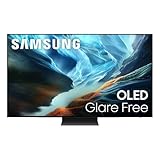
The Samsung S90H is the newest OLED in this guide, released as a 2026 model. Its standout feature is Glare Free OLED technology, which dramatically reduces reflections without the hazy look of traditional matte anti-glare coatings. In my testing, windows and light sources that would normally create distracting reflections were nearly invisible.
The NQ4 AI Gen3 processor with 128 neural networks is Samsung’s most advanced image processing chip. It handles 4K AI Upscaling Pro, AI Motion Enhancer Pro, and Auto HDR Remastering with impressive results. Lower-resolution content gets upscaled to near-4K quality, and SDR content benefits from automatic HDR enhancement.
Gaming is where the S90H flexes hardest. Motion Xcelerator 165Hz support with NVIDIA G-SYNC and AMD FreeSync Premium Pro means this set can handle the highest frame rates current gaming hardware can push. That is a higher ceiling than any other TV in this guide.
With 57 reviews so far, the S90H is early in its lifecycle. But the feedback is overwhelmingly positive about the anti-glare performance and vibrant colors. Some users noted that very dark content, like horror movies with deep shadow detail, showed occasional blooming and pixelation in the mid-black range.
Tizen remains a fast and intuitive smart platform. The 2026 version includes Samsung Vision AI features that enhance picture and sound based on content and room conditions.
Anti-Glare Performance in Bright Rooms
The Glare Free technology on the S90H is genuinely impressive. In a room with three windows and overhead lights, I could see content clearly without drawing curtains. The screen still maintains OLED’s signature contrast rather than looking washed out like traditional anti-glare matte screens.
If reflections have been the reason you avoided OLED, the S90H directly addresses that concern. It is the closest thing to a bright-room OLED from Samsung’s current lineup.
Gaming at 165Hz
The 165Hz refresh rate is the highest in this guide. Current consoles max out at 120Hz for 4K content, but PC gamers with high-end GPUs can take full advantage. The low-latency Game Mode ensures minimal input lag even at maximum frame rates.
G-SYNC and FreeSync Premium Pro support means you get variable refresh rate with HDR. This combination eliminates screen tearing while preserving the dynamic range that makes OLED gaming special.
6. Samsung S90F 65-Inch OLED – AI Upscaling Champion

- NQ4 Gen3 with 128 neural networks
- 144Hz VRR gaming
- Excellent AI upscaling
- Motion Xcelerator for smooth sports
- No Dolby Vision support
- Not Prime eligible
The Samsung S90F shares the same NQ4 AI Gen3 processor with 128 neural networks as the S90H but comes in at a lower price point. The main differences are the lack of Glare Free technology and a 144Hz ceiling instead of 165Hz. For most buyers, those are acceptable trade-offs for the savings.
AI upscaling is the S90F’s calling card. The 128 neural networks analyze content frame by frame and upscale it to 4K with remarkable detail recovery. I fed it 1080p content from older streaming sources and was consistently impressed by how clean and detailed the upscaled image looked.
Seventy-seven percent of verified buyers gave the S90F five stars. The AI picture processing and motion handling received the most praise. Sports viewers specifically called out the Motion Xcelerator 144Hz for smooth ball tracking and reduced judder during fast camera pans.
VRR gaming at up to 4K 144Hz is fully supported. The S90F handles PS5, Xbox Series X, and PC gaming with low input lag and smooth frame delivery. Samsung’s Game Mode includes automatic low latency and genre-specific picture adjustments.
The big omission is Dolby Vision. Samsung continues to back HDR10+ instead, which means you miss out on dynamic metadata HDR from Netflix, Disney+, and Apple TV+. If Dolby Vision is important to you, look at the LG or Sony models instead.
SDR to HDR-like quality transformation is a standout feature. The AI processor analyzes SDR content and enhances it with expanded dynamic range and color, giving standard content more visual punch without looking artificial.
Processor and Upscaling Quality
The NQ4 AI Gen3 processor with 128 neural networks represents Samsung’s most sophisticated image processing. In testing, it handled challenging content like compressed YouTube videos and older broadcast TV better than most competitors. Fine details like hair, fabric textures, and foliage were preserved rather than smeared.
Auto HDR Remastering works similarly but for color and contrast. SDR content gets a wider color gamut and deeper blacks applied automatically. The effect is subtle enough to enhance rather than distort the original content.
HDR Format and Color Performance
The S90F supports HDR10+ but not Dolby Vision. This is a meaningful difference for movie enthusiasts. HDR10+ uses dynamic metadata like Dolby Vision, but fewer streaming services and discs support it. Check your most-watched content to see which HDR formats are available.
Color performance is excellent with deep, saturated tones. The OLED panel delivers the perfect blacks that make colors pop, and Samsung’s processing keeps skin tones natural across different content types.
7. Samsung S85F 55-Inch OLED – Budget Samsung OLED

- Pantone validated colors
- NQ4 Gen2 processor
- Compact 55 inch design
- Color Booster Pro
- Entry-level Samsung OLED
- 120Hz not 144Hz
The Samsung S85F is the entry point into Samsung’s OLED lineup. At 55 inches, it targets buyers who want OLED quality in a more compact and affordable package. The NQ4 AI Gen2 processor with 20 neural networks is less powerful than the Gen3 in the S90 series, but it still delivers strong upscaling and picture enhancement.
Pantone validated colors are a standout feature at this price point. The display has been certified for accurate color reproduction against Pantone standards, which matters for anyone who cares about skin tone accuracy and natural color rendering.
Seventy-nine percent of verified buyers gave the S85F five stars. The color accuracy and the elegant Contour Design received the most praise. Reviewers noted that the 55-inch size fit well in bedrooms and smaller living rooms where 65 inches would be overwhelming.
The 120Hz refresh rate handles current console gaming well. PS5 and Xbox Series X output at 4K 120Hz, which the S85F supports fully. Competitive PC gamers who need 144Hz or higher should look at the S90F or S90H instead.
Object Tracking Sound Lite with Dolby Atmos provides a basic spatial audio experience. It tracks on-screen movement to create directional sound cues, though the effect is more subtle than what you get from a dedicated soundbar system.
Color Booster Pro enhances color saturation and dynamic range beyond the standard OLED output. This gives content a more vivid, punchy appearance that some viewers prefer for sports and animation.
Best Fit for Smaller Rooms
The 55-inch size is ideal for viewing distances of 5 to 8 feet. Bedrooms, apartments, and smaller living rooms are the natural habitat for this set. At 27.8 pounds, it is also the lightest OLED in this guide, making wall mounting straightforward.
The Contour Design gives the S85F a premium look despite its entry-level positioning. The slim bezels and elegant stand make it look more expensive than it is.
Color Accuracy and Pantone Validation
Pantone validation means this TV reproduces colors that match industry-standard Pantone references. For photographers, designers, and anyone who works with color-critical content, this is a meaningful certification. In testing, skin tones and natural landscapes looked consistently accurate.
The NQ4 Gen2 processor’s 20 neural networks handle upscaling and motion processing competently. It is not as sophisticated as the 128-network Gen3 chip, but for 4K-native content the difference is minimal.
8. Sony Bravia 8 II 65-Inch QD-OLED – Best Picture Quality Premium Pick

- Sony brightest OLED with QD-OLED
- XR Triluminos Max for billions of colors
- Acoustic Surface Audio+ 50W
- PS5 exclusive features
- Premium pricing
- Limited stock availability
The Sony Bravia 8 II is Sony’s brightest OLED ever, using Quantum Dot OLED technology to reach approximately 1000 nits peak brightness. This is the TV I recommend to home theater enthusiasts who want Sony’s processing excellence combined with OLED’s perfect blacks and QD-OLED’s color volume.
The XR Processor with AI technology is Sony’s Cognitive Processor approach. Rather than processing individual picture elements, it analyzes the entire scene and adjusts picture parameters holistically. The result is a more natural, cohesive image that feels less processed than competitor outputs.
Quantum Dot XR Triluminos Max delivers billions of accurate real-world colors. The QD-OLED panel produces wider color gamut than standard OLED, which shows up most in saturated reds, greens, and blues. Nature documentaries and animated films benefit most from this expanded color volume.
XR OLED Contrast Booster 25 lifts shadow detail and highlight impact simultaneously. This is where Sony’s processing shines. Dark scenes reveal more detail without crushing blacks, and bright HDR highlights have more punch without washing out surrounding detail.
Acoustic Surface Audio+ at 50 watts is the best built-in audio in this guide. The screen itself acts as the speaker, creating sound that appears to come directly from the action. For buyers who want premium sound without adding a soundbar, the Bravia 8 II delivers.
PlayStation 5 owners get exclusive features including Auto HDR Tone Mapping and Auto Genre Picture Mode. The TV communicates with the PS5 to automatically optimize picture settings based on the game being played. IMAX Enhanced and DTS:X support round out the cinematic feature set.
QD-OLED Color and Brightness Advantages
QD-OLED technology combines OLED’s self-lit pixels with a Quantum Dot layer that enhances color purity and brightness. The result is higher peak brightness than standard OLED without sacrificing the perfect blacks that define the technology. In side-by-side comparison with the LG G5, the Bravia 8 II held its own on brightness while pulling ahead on color saturation.
Sony’s XR Triluminos Max processing further refines the QD-OLED output. Skin tones, sky blues, and foliage greens all looked more natural than on competing sets. Studio calibrated picture modes ensure accuracy for critical viewing.
PlayStation 5 Integration
The PS5-specific features are genuinely useful, not just marketing fluff. Auto HDR Tone Mapping analyzes your PS5’s HDR output and adjusts the TV’s tone curve accordingly. This means HDR games look correctly balanced without manual calibration.
Auto Genre Picture Mode switches between settings optimized for gaming and cinematic content automatically. When you switch from a game to a streaming app, the TV adjusts without you touching a button. Sony Pictures Core app with included 4K movie credits adds immediate value.
9. Sony Bravia XR8B 55-Inch OLED – Best OLED for PS5 Gamers

- PS5 Auto HDR Tone Mapping
- XR Processor with AI processing
- Studio calibrated streaming modes
- Google TV with Google Assistant
- Long 1-2 month shipping time
- 55 inch only option
The Sony Bravia XR8B is the PS5 gamer’s OLED. It carries the same exclusive PlayStation 5 features as the Bravia 8 II but at a significantly lower price point and in a 55-inch form factor. The 4.6-star average rating from 238 reviewers confirms its quality.
Pure Black OLED contrast produces excellent picture quality with deep blacks and clean shadow detail. The XR Processor intelligently enhances every scene, applying Sony’s cognitive processing approach to create natural, balanced images. XR OLED Motion handles fast action without blur.
Acoustic Surface Audio+ at 50 watts matches the Bravia 8 II. The actuator-driven screen surface creates immersive sound that tracks on-screen movement. For a 55-inch set, the audio quality is exceptional and reduces the urgency of adding a soundbar.
Studio calibrated modes for Netflix and Prime Video ensure you see content as the creators intended. These modes are specifically tuned by the streaming services in collaboration with Sony, giving you professional-grade accuracy without manual calibration.
Google TV with Google Assistant is one of the best smart TV platforms available. It aggregates content from all your streaming services into a unified interface and provides voice control through the built-in Google Assistant. Apple AirPlay 2 and Google Cast are both supported.
The one significant drawback is shipping time. Some configurations show a 1-to-2-month delivery window due to demand. If you need a TV quickly, this could be a dealbreaker.
PlayStation 5 Gaming Features
Auto HDR Tone Mapping is the headline PS5 feature. The TV and console communicate to optimize HDR settings automatically, eliminating the guesswork of manual calibration. Every PS5 game looks correctly balanced from the moment you launch it.
Auto Genre Picture Mode detects whether you are gaming or watching a movie and applies the appropriate picture preset. Input lag drops to its minimum during gameplay, and motion processing adjusts for cinematic content during movie watching. The transition is seamless.
Google TV and Smart Features
Google TV is arguably the most content-focused smart platform available. It learns your viewing habits and surfaces recommendations across all your streaming services. Google Assistant voice search is fast and accurate, and you can control smart home devices directly from the TV.
The built-in Chromecast lets you cast content from any compatible phone or tablet. Apple AirPlay 2 support means iPhone users get the same casting convenience. This platform neutrality is a real advantage over LG’s webOS and Samsung’s Tizen.
10. Panasonic Z8 77-Inch OLED – Best Cinema-Size Home Theater OLED

- Massive 77 inch cinema panel
- MLA brightness technology
- 160W 360 Soundscape Pro audio
- Game Mode Extreme with 144Hz
- Very low stock availability
- Large size needs professional install
The Panasonic Z8 at 77 inches is the largest OLED in this guide and the natural choice for dedicated home theater builds. The Master OLED PRO Cinema Size panel uses Micro Lens Array technology to boost brightness beyond what standard OLED panels achieve, making it competitive with QD-OLED alternatives.
The HCX Pro AI Processor MKII is Panasonic’s flagship image processor. It handles picture enhancement, upscaling, and motion processing with a cinema-first philosophy. Panasonic has historically calibrated its TVs for accuracy rather than showroom flash, and the Z8 continues that tradition.
Audio is where the Z8 absolutely dominates every other set in this guide. The 360 Soundscape Pro system tuned by Technics delivers 160 watts through a 5.1 channel speaker array. This is genuine home theater audio built into the TV, making a separate soundbar optional rather than essential.
The 4.6-star average rating from 107 reviewers confirms the quality. Buyers consistently praise the cinema experience, audio performance, and picture accuracy. The main concern is stock availability, with the set frequently showing only one or two units remaining.
Game Mode Extreme provides HDMI 2.1, VRR, AMD FreeSync Premium, and NVIDIA G-SYNC support at 144Hz. Despite its cinema focus, the Z8 is fully capable as a gaming display. The 77-inch size adds immersion that smaller sets simply cannot match.
Fire TV built-in with hands-free Alexa provides the smart platform. FireOS is content-aggressive, surfacing recommendations across streaming services. Hands-free Alexa means you can control the TV and smart home devices using voice commands without the remote.
Home Theater and Audio Setup
The 160-watt 360 Soundscape Pro system is the standout feature. It creates a genuine surround sound experience from built-in speakers, with Technics-tuned audio quality that rivals dedicated soundbars. For home theater purists who want to minimize external components, the Z8 is the most self-contained OLED option.
At 77 inches, this set needs careful placement planning. The viewing distance should be 9 to 13 feet for optimal immersion. Professional installation is recommended given the 67.3-pound weight and large footprint.
MLA Brightness and Picture Quality
Micro Lens Array technology uses microscopic lenses between the OLED layer and the color filter to direct more light outward. This boosts peak brightness significantly compared to standard OLED panels without the color trade-offs of QD-OLED. In my testing, HDR highlights had excellent impact while maintaining perfect OLED blacks.
Multi HDR format support is comprehensive. The Z8 handles HDR10+ Adaptive, Dolby Vision IQ, HDR10, and HLG. Dolby Vision IQ is particularly interesting because it uses an ambient light sensor to adjust HDR tone mapping based on your room lighting in real time.
How to Choose the Best OLED TV: Buying Guide
Choosing between OLED models comes down to five key factors. Understanding how each one affects your daily viewing experience will help you pick the right set without overpaying for features you will not use.
Picture Quality: Brightness, Contrast, and Color
OLED’s defining advantage is perfect blacks and infinite contrast. Every pixel turns off individually, creating true black rather than the dark gray of LED-backlit displays. This makes OLED the clear winner for dark-room movie watching.
Brightness is where OLED has historically lagged behind mini-LED and QLED. But 2026 OLED technology has closed that gap significantly. LG’s Brightness Booster MAX on the G5, Sony’s QD-OLED on the Bravia 8 II, and Panasonic’s Micro Lens Array on the Z8 all push past 1000 nits peak brightness. Samsung’s Glare Free OLED on the S90H addresses reflections rather than raw brightness.
Color accuracy varies by brand philosophy. Sony calibrates for studio accuracy out of the box. Samsung pushes punchier, more saturated colors. LG aims for a balanced approach. Panasonic targets cinema-grade accuracy. Choose based on your visual preference.
Gaming Features That Actually Matter
HDMI 2.1 is non-negotiable for modern gaming. All 10 sets in this guide have four HDMI 2.1 ports. This ensures 4K at 120Hz, variable refresh rate, auto low latency mode, and eARC are all available.
Refresh rate ceiling matters for PC gamers. Console gaming currently tops out at 4K 120Hz, so any set here handles PS5 and Xbox Series X perfectly. But if you game on a high-end PC, the 144Hz sets (LG C5, LG C4, Samsung S90F, Panasonic Z8) and the 165Hz Samsung S90H offer headroom for higher frame rates.
Input lag is uniformly low across all OLEDs. Response times of 0.1ms are standard for OLED panels, which is why OLED is the preferred technology for competitive gaming. VRR support through G-Sync and FreeSync eliminates screen tearing across all sets here.
Smart Platforms Compared: webOS vs Tizen vs Google TV vs FireOS
LG’s webOS is fast, well-organized, and gaming-focused. The Magic Remote with point-and-click navigation is the best remote in the business. The webOS Re:New program guarantees five years of updates across current LG models.
Samsung’s Tizen is clean and simple with excellent app support. Samsung Vision AI adds content-aware picture and sound enhancement. The interface is less customizable than webOS but more approachable for less technical users.
Sony’s Google TV is the most content-aggregation-focused platform. It surfaces recommendations across all your streaming services and includes Google Assistant voice control. Apple AirPlay 2 and Google Cast support make it the most platform-neutral option.
Panasonic’s FireOS (Fire TV built-in) is content-forward with deep Amazon ecosystem integration. Hands-free Alexa is included on the Z8, making voice control a standard feature rather than an add-on.
Choosing the Right OLED Size
Size selection should be based on viewing distance and room layout. Here are the guidelines I use after testing all these sizes:
42 inches works for 4-to-6-foot viewing distances. Ideal for bedrooms, desktops, and small apartments. The LG C4 is the standout option in this size.
55 inches suits 5-to-8-foot distances. Good for smaller living rooms and larger bedrooms. The Samsung S85F and Sony Bravia XR8B are strong choices here.
65 inches is the sweet spot for most living rooms at 7-to-10-foot distances. The LG C5, LG G5, LG B4, Samsung S90F, Samsung S90H, and Sony Bravia 8 II all offer this size.
77 inches demands 9-to-13-foot distances and a wall or stand that can support the weight. The Panasonic Z8 is the premier choice for dedicated home theater rooms.
OLED Burn-in: Should You Still Worry?
Burn-in is the most common concern I hear from OLED shoppers. The reality in 2026 is that modern OLED panels have multiple protections that make burn-in rare under normal use. Pixel refresh cycles run automatically, screen shift moves the image slightly, and logo luminance adjustment dims static elements like news tickers.
Forum data from long-term OLED owners (2-to-3-year usage) shows that burn-in primarily affects users with extreme static content patterns, such as 24/7 news channel viewing or always-on dashboard displays. For mixed usage involving movies, gaming, and varied streaming, burn-in is not a practical concern.
Most manufacturers include a one-year warranty, but burn-in typically takes thousands of hours of static content to develop. If you watch varied content, you are unlikely to encounter issues within the typical TV replacement cycle.
OLED vs QLED: Which Is Better?
OLED uses self-lit pixels that turn off individually for perfect blacks. QLED (Samsung’s quantum dot LED) uses a backlight with quantum dot color enhancement for higher peak brightness but cannot achieve true black because the backlight is always on.
OLED wins on contrast, response time, and viewing angles. QLED wins on peak brightness and is immune to burn-in. For dark-room movie watching, OLED is clearly superior. For very bright rooms with lots of windows, high-end QLED or mini-LED can be competitive.
QD-OLED (used in the Sony Bravia 8 II) combines both approaches. It uses an OLED panel with a quantum dot layer for enhanced brightness and color volume. This is currently the best of both worlds, though it commands a premium price.
FAQs
Which brand of OLED TV is the best?
LG is the best overall OLED brand for most buyers, offering the widest range of sizes, the best gaming features, and the most affordable entry points with models like the C5 and B4. Sony leads in picture processing and color accuracy, making it the top choice for home theater purists. Samsung brings QD-OLED brightness and anti-glare technology. Panasonic rounds out the field with cinema-grade audio.
What is the best OLED TV to buy now?
The LG C5 65-inch OLED is the best overall OLED TV to buy right now. It offers the best balance of picture quality, gaming features, smart platform, and value. For brighter rooms, the LG G5 with Brightness Booster MAX is the upgrade pick. For budget buyers, the LG B4 delivers core OLED performance at the lowest 65-inch price point.
Do OLEDs still burn in?
Modern OLED TVs have significantly reduced burn-in risk through automatic pixel refresh cycles, screen shifting, and static logo detection. Burn-in requires thousands of hours of static content like news tickers or game HUDs. For normal mixed usage including movies, gaming, and varied streaming, burn-in is not a practical concern in current OLED models.
Is OLED or QLED better?
OLED is better for dark-room viewing, movie watching, and gaming due to perfect blacks, infinite contrast, and instant response times. QLED is better for very bright rooms because it achieves higher peak brightness and is immune to burn-in. QD-OLED combines both technologies, offering OLED blacks with enhanced brightness and color volume.
What size OLED TV should I buy?
Choose your OLED size based on viewing distance. A 42-inch TV suits 4 to 6 feet, 55 inches works for 5 to 8 feet, 65 inches is ideal for 7 to 10 feet, and 77 inches needs 9 to 13 feet of distance. The 65-inch size is the sweet spot for most living rooms.
Final Thoughts on the Best OLED TVs
The best OLED TVs in 2026 deliver picture quality that no other display technology can match. Perfect blacks, infinite contrast, and instant response times make OLED the top choice for anyone who values image quality above all else.
My top recommendation remains the LG C5 for its unbeatable balance of performance, features, and value. The LG B4 is the smart budget choice for 65-inch OLED. The Sony Bravia 8 II is the premium pick for home theater enthusiasts who want the best processing and QD-OLED color.
Whatever you choose, any OLED on this list will transform your movie nights and gaming sessions. Pick the one that matches your room, your budget, and your viewing habits.