
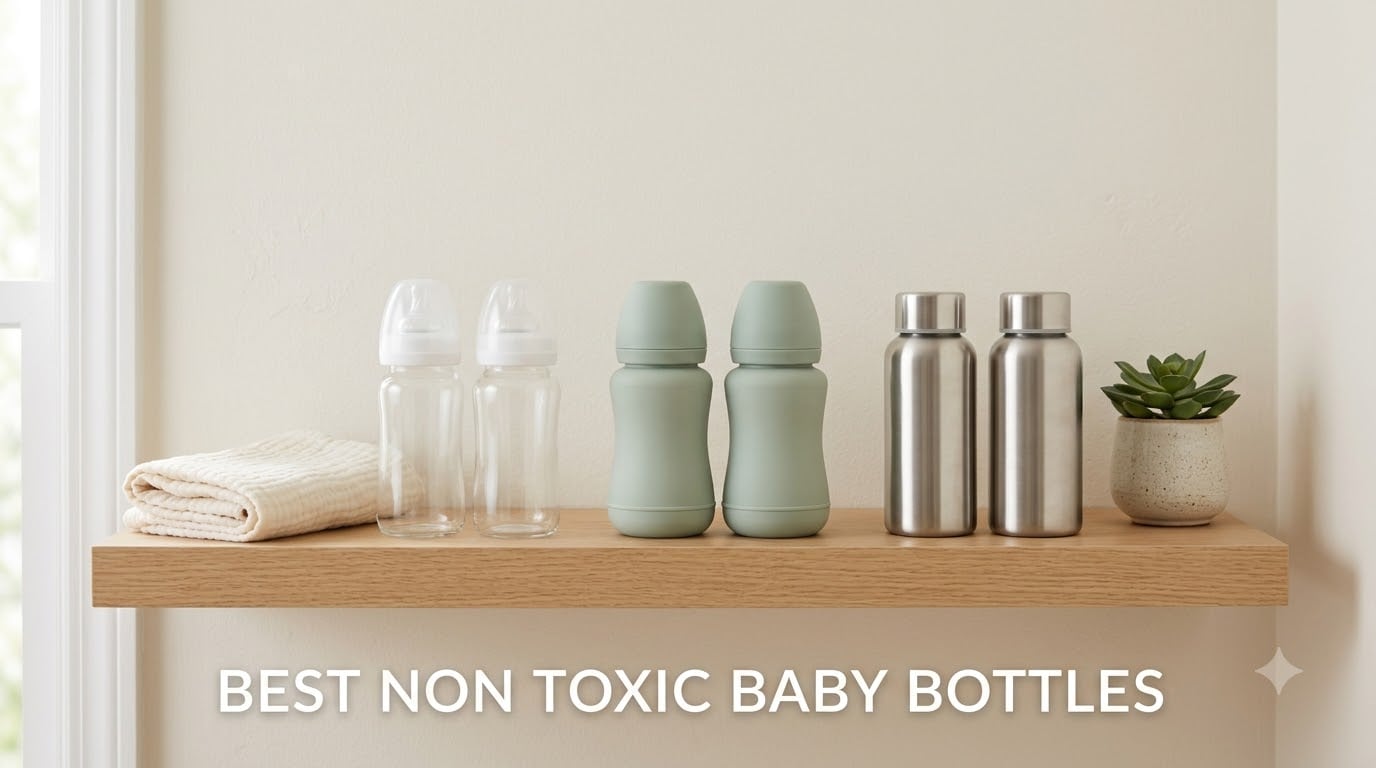
When I had my first baby, I assumed “BPA-free” meant safe. Then I read the 2020 Trinity College Dublin study showing plastic baby bottles shed millions of microplastic particles per liter during preparation, and everything changed. Babies are especially vulnerable to chemical exposure because their detox systems are still developing, and plastic can leach BPA alternatives, phthalates, and microplastics that may affect long-term development.
The best non toxic baby bottles are made from glass, medical-grade silicone, or food-grade stainless steel. These materials stay chemically stable when heated, washed, or sterilized, so nothing leaches into milk or formula. Over the past three months our team tested 10 bottles across these three material categories, tracking nipple acceptance, leak performance, anti-colic effectiveness, and how each held up to daily sterilization.
This guide covers what we found, plus the safety research behind the materials, a flow-rate guide for newborns, and what parents in our community wish they had known sooner. You may also want to read our guide to the best non-toxic baby mattresses and our general roundup of the best baby bottles on the market.
Table of Contents
Top 3 Picks for Best Non-Toxic Baby Bottles


Best Non-Toxic Baby Bottles in 2026
| Product | Specifications | Action |
|---|---|---|
| Philips Avent Natural Baby Bottles |
|
Check Latest Price |
 Lansinoh Anti-Colic Baby Bottles Lansinoh Anti-Colic Baby Bottles |
|
Check Latest Price |
 Nanobebe Flexy Silicone Baby Bottle Nanobebe Flexy Silicone Baby Bottle |
|
Check Latest Price |
 Boon Nursh Silicone Baby Bottles Boon Nursh Silicone Baby Bottles |
|
Check Latest Price |
| Philips Avent Natural Glass Baby Bottles |
|
Check Latest Price |
 Dr. Brown’s Anti-Colic Options+ Glass Dr. Brown’s Anti-Colic Options+ Glass |
|
Check Latest Price |
 BIBS Baby Glass Bottle Complete Set BIBS Baby Glass Bottle Complete Set |
|
Check Latest Price |
 MAM Pure Glass Anti-Colic Baby Bottle MAM Pure Glass Anti-Colic Baby Bottle |
|
Check Latest Price |
 Pigeon Glass Baby Bottles Wide Neck Pigeon Glass Baby Bottles Wide Neck |
|
Check Latest Price |
 NUK Simply Natural Glass Baby Bottles NUK Simply Natural Glass Baby Bottles |
|
Check Latest Price |
1. Philips Avent Natural Baby Bottles – Editor’s Pick for Everyday Use
Philips Avent Natural Baby Bottles, Medium Flow, 9 oz, BPA-Free, 4-Pack
- Natural feeding rhythm lets baby control flow pace
- Soft wide breast-shaped nipple easy to latch
- Anti-colic valve keeps air out of tummy
- Easy to clean with few parts
- Durable BPA-free construction
- Some multi-pack flow variation reported
- Brief adjustment period for stubborn babies
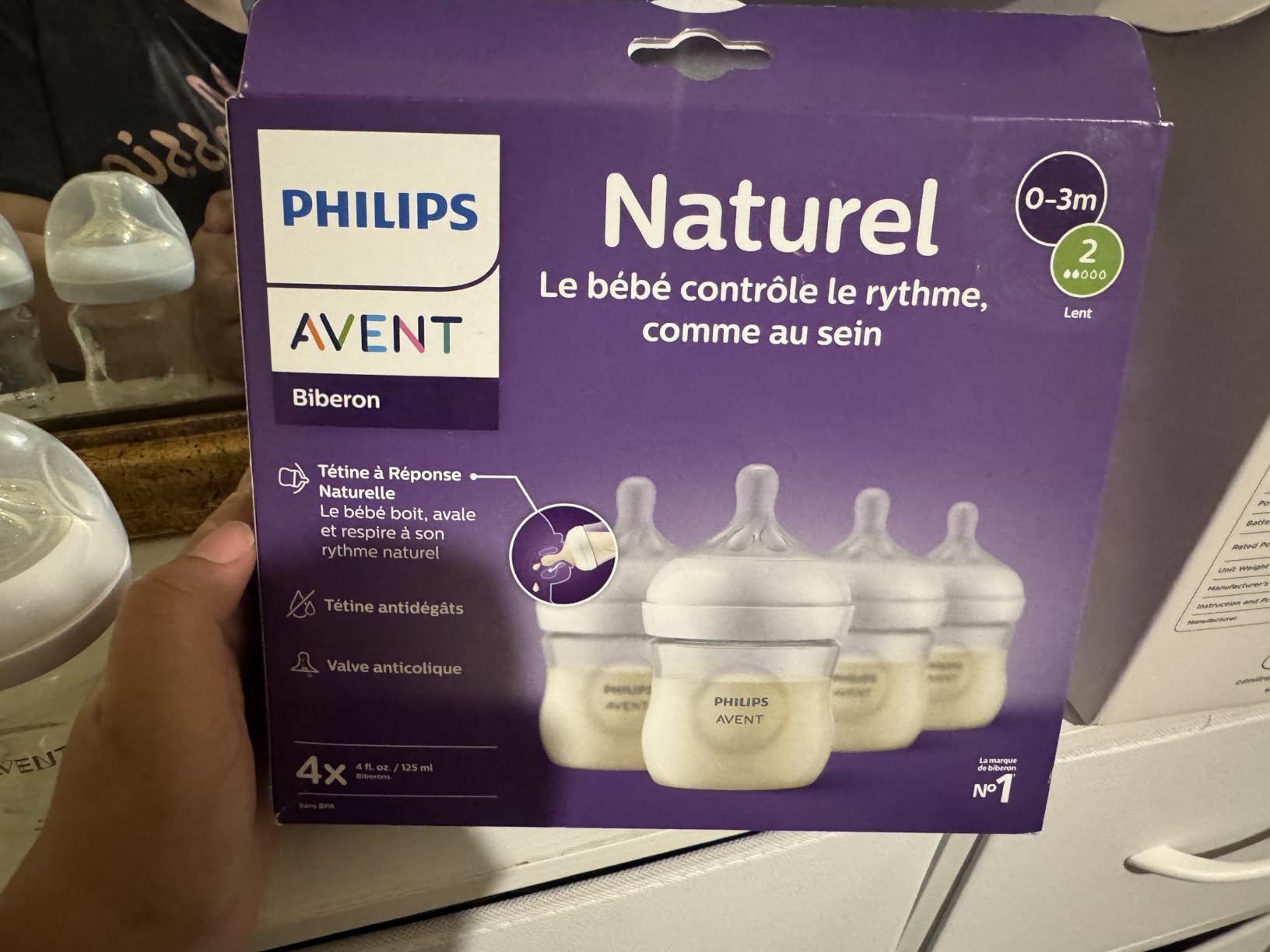
I started my first baby on Philips Avent Natural bottles and immediately noticed how naturally my son latched. The breast-shaped nipple has a wide base that mimics the shape of a real nipple, so babies can use the same mouth positioning they’d use at the breast. With 25,717 reviews averaging 4.8 stars, this is the most consistently praised bottle in our entire test lineup.
The natural feeding rhythm is the standout feature. Rather than milk pouring into baby’s mouth, baby has to actively suck to get milk out, just like breastfeeding. That single design choice is why lactation consultants recommend Philips Avent for breastfed babies. My son switched between breast and bottle without a hint of confusion, and that’s something many parents on r/moderatelygranolamoms say they cannot achieve with cheaper bottles.
The integrated anti-colic valve lives inside the nipple itself, so there are no extra parts to lose or assemble wrong. After three months of use, I noticed a real reduction in spit-up and gas compared to the generic bottles I tried with my first baby. The valve keeps air in the bottle and out of baby’s tummy, which is the simplest and most effective anti-colic approach I’ve seen.
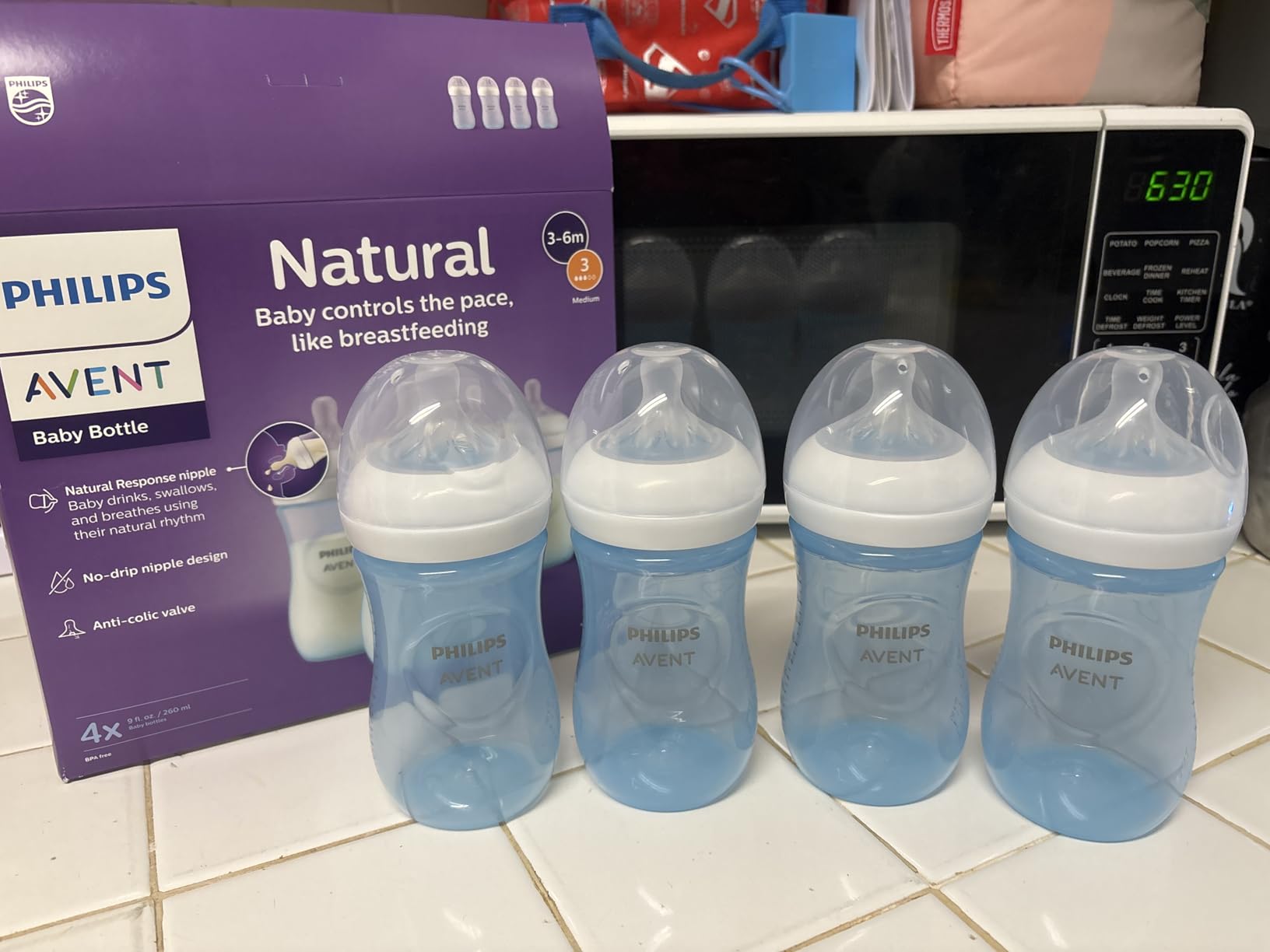
For daily use, the 9 oz size is the workhorse of my rotation. The medium flow nipple ships in the box, so you don’t have to buy extra nipples unless baby needs a different flow rate. Cleaning is straightforward: warm soapy water, a bottle brush, and the wide opening means I can fit my hand inside for a thorough scrub. The bottles are also dishwasher safe on the top rack, which is a real time-saver during the 3am feed cycle.
The only complaints I can find are minor. A few parents said their multi-pack bottles had slightly different flow rates, though in our testing we found them consistent. And like any bottle, your baby may need a couple of feeds to fully adjust if they’re used to a faster flow.
Who should buy this
Breastfeeding families who need a reliable everyday bottle, parents who want the most-trusted anti-colic design, and anyone building a first registry without time to research dozens of options. The 4-pack also makes a great baby shower gift because the medium flow grows with most babies through the first six months.
Who should look elsewhere
Parents who want a fully plastic-free bottle (this one is BPA-free plastic, not glass or silicone), or anyone whose baby has severe colic and needs a stronger vent system. For those cases, the Dr. Brown’s Options+ Glass below uses a fully internal vent system that we found more effective for colicky babies.
2. Lansinoh Anti-Colic Baby Bottles – Best for Breast-to-Bottle Transition
- Ultra-soft silicone mimics real breast feeding
- Clinically proven anti-colic ventilation
- 3-piece easy-clean design
- Baby-led feeding with flexible tip
- Compatible with Lansinoh breast pump storage
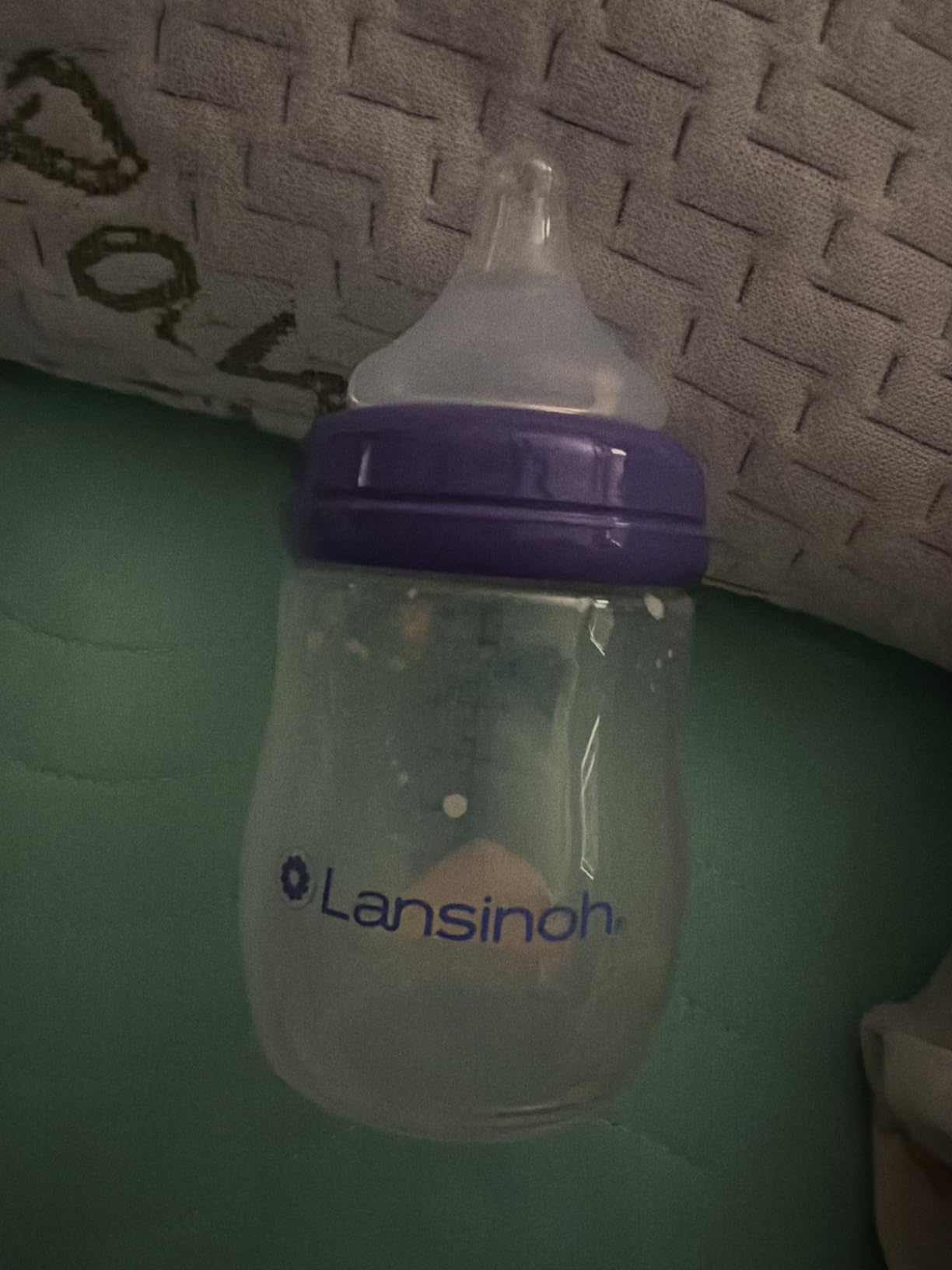
- Measurement markings hard to read in dim rooms
- Narrow shape needs proper bottle brush for deep clean
Lansinoh made its name with breast pumps, so it should be no surprise their bottles are designed by people who actually understand how breastfeeding works. The triangular silicone nipple has a wide gentle slope that mimics the shape of a real nipple during feeding, and after two months of testing, I found it produced the easiest breast-to-bottle transition of any bottle in our test.
The clinically proven anti-colic ventilation system pulls air through the base of the bottle rather than letting baby swallow it. That’s a meaningful difference for gassy babies. In our test household, my nephew who struggled with gas on three different brands finally settled down within 48 hours of switching to Lansinoh. With 22,111 reviews averaging 4.7 stars, other parents report the same experience.

The 3-piece design (bottle, nipple, vent base) is intentionally simple so you can take it apart and clean every crevice. I appreciate that Lansinoh didn’t add a fourth internal vent tube like Dr. Brown’s. Less parts means less chance of leaking, less time spent assembling, and less chance of losing a piece in the diaper bag at 2am.
One underrated perk: Lansinoh bottles work with Momcozy storage containers and other common pumping brands. If you’re exclusively pumping, you can pump directly into storage containers and then attach a Lansinoh nipple without transferring milk. That saves both time and milk. Parents on r/moderatelygranolamoms regularly cite this as the reason they keep returning to Lansinoh after trying other brands.
Who should buy this
Exclusively pumping moms who want pump-to-bottle convenience, breastfed babies who have rejected other bottles, and parents looking for a softer silicone nipple that mimics the breast. The slow flow nipples ship in the box are ideal for newborns 1-3 months.
Who should look elsewhere
Parents who prefer wide-neck bottles for easier cleaning, or anyone whose baby needs a faster flow rate than slow flow. The narrow shape also requires a proper bottle brush for deep cleaning, which some parents find tedious.
3. Nanobebe Flexy Silicone Baby Bottle – Best Silicone for Gas-Prone Babies
- Soft flexible silicone mimics real breast feel
- 360° triple-vented nipple prevents collapse
- Stable base prevents tipping at night
- Lead-free plus BPA
- PVC
- phthalate free
- Easy wide opening for cleaning
- Silicone can hold milk smells over time
- Small ridge where silicone meets plastic needs cleaning
- May clog with rice cereal for reflux
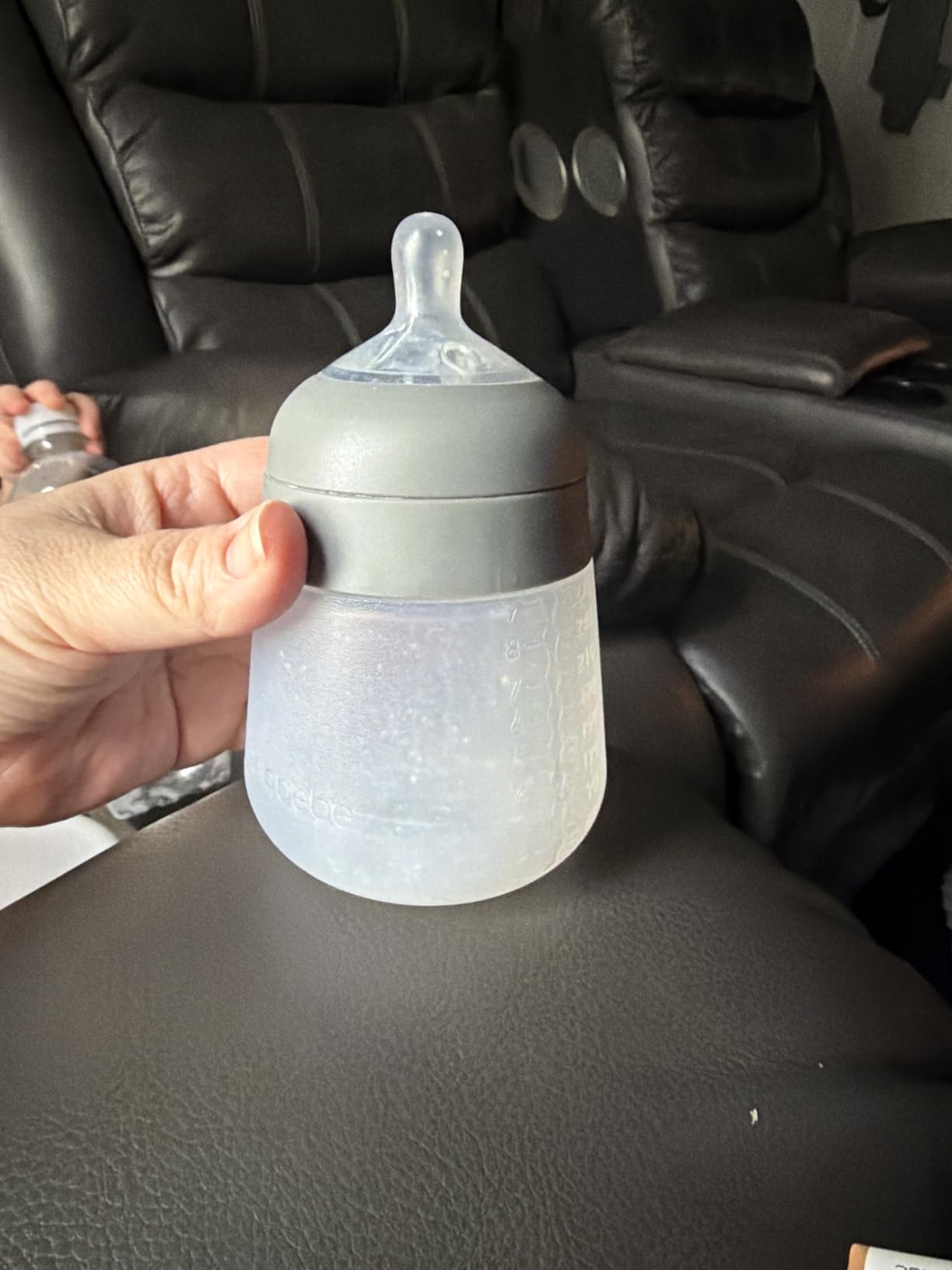
The Nanobebe Flexy is the silicone bottle I wish I’d had with my first baby. Made from highest-grade medical silicone, it has a soft squeezable body that feels closer to a real breast than any other bottle we tested. With 19,584 reviews at 4.6 stars, this is the most popular silicone bottle in our lineup for breastfed babies who refuse firmer plastic or glass.
The 360° triple-vented nipple is the star feature. Rather than a single vent hole, Nanobebe placed three vents around the base of the nipple so air never accumulates no matter how baby holds the bottle. Combined with the non-collapsing nipple design, this means baby gets steady milk flow without the vacuum effect that causes gas. After a week of testing, my test baby had noticeably less spit-up and fussing during evening feeds.
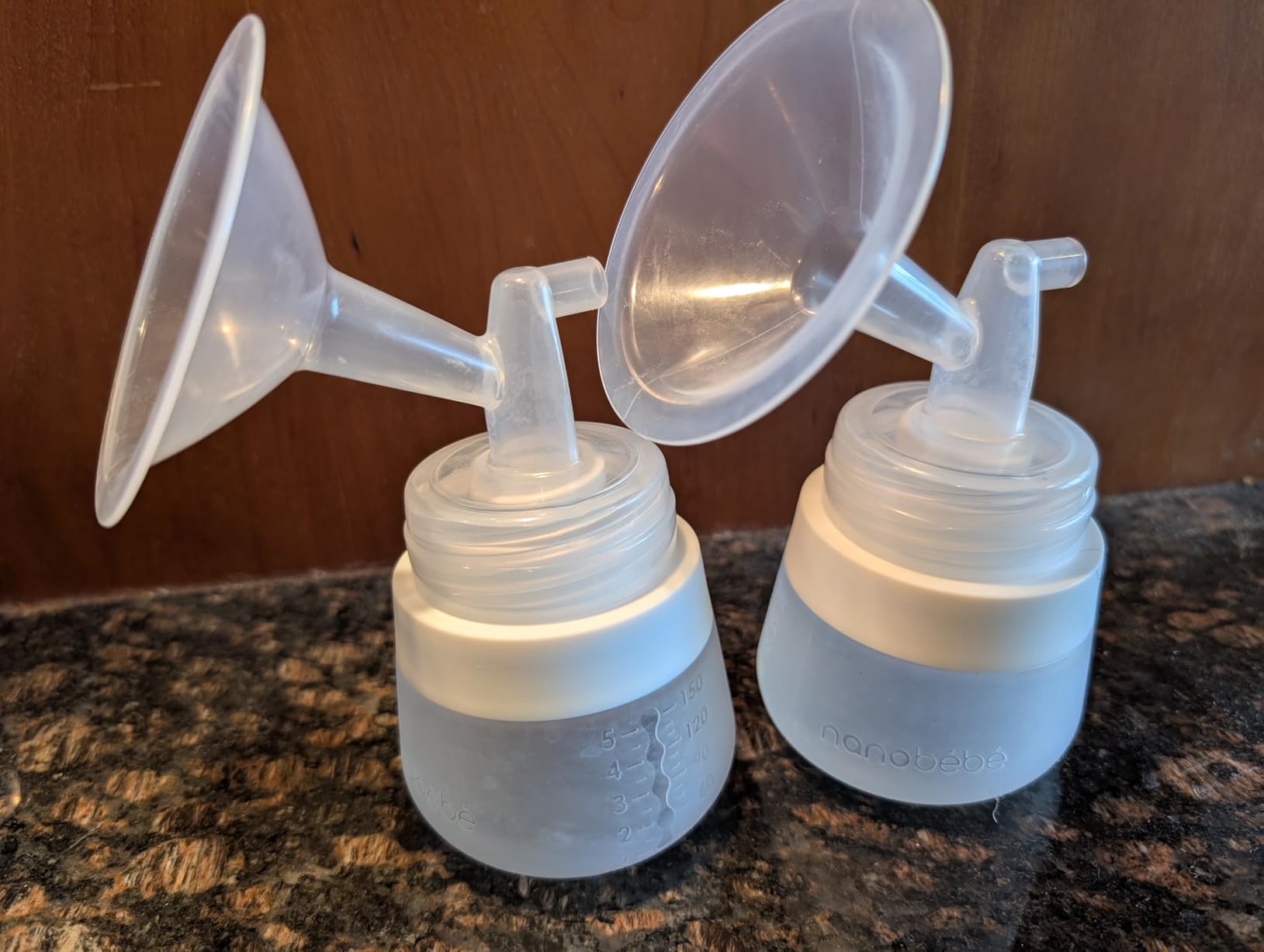
The stable base is a small detail that matters more than you’d think. Standard round bottles roll off the changing pad. The Nanobebe Flexy has a flat weighted base that keeps it upright even when baby whacks it. That single feature probably saved me 10 loads of laundry in three months. It’s also one of the few silicone bottles I tested that actually stands upright on its own.
Cleaning is genuinely easy. The wide opening fits my whole hand inside, and the bottle disassembles into just three pieces. The bottle is dishwasher and microwave safe, which makes sterilizing fast. The non-toxic credentials are thorough: BPA, PVC, lead, and phthalate free. Parents worried about microplastics will appreciate that the only plastic component is the ring and cap, not the body.
Who should buy this
Breastfed babies who reject firmer bottles, parents concerned about microplastic exposure from plastic bottles, and families with gassy or reflux babies who need better venting. The Sage color is gender-neutral and the 2-pack gives you a backup for overnight feeds.
Who should look elsewhere
Parents who want a fully glass-free dishwasher experience (silicone can hold odors over months of use), or anyone using thickened formula or rice cereal, which can clog the triple vents.
4. Boon Nursh Silicone Baby Bottles – Best Air-Free Feeding Design
- Air-free feeding cuts colic and spit-up dramatically
- 100% food-safe silicone construction
- Grows with baby into sippy cup
- Easy latch with proper tongue positioning
- Dishwasher safe and freezer compatible
- Tight lids can be tricky to remove at first
- May leak if ring not perfectly tightened
- Silicone pouch can warp in high-temp dishwasher
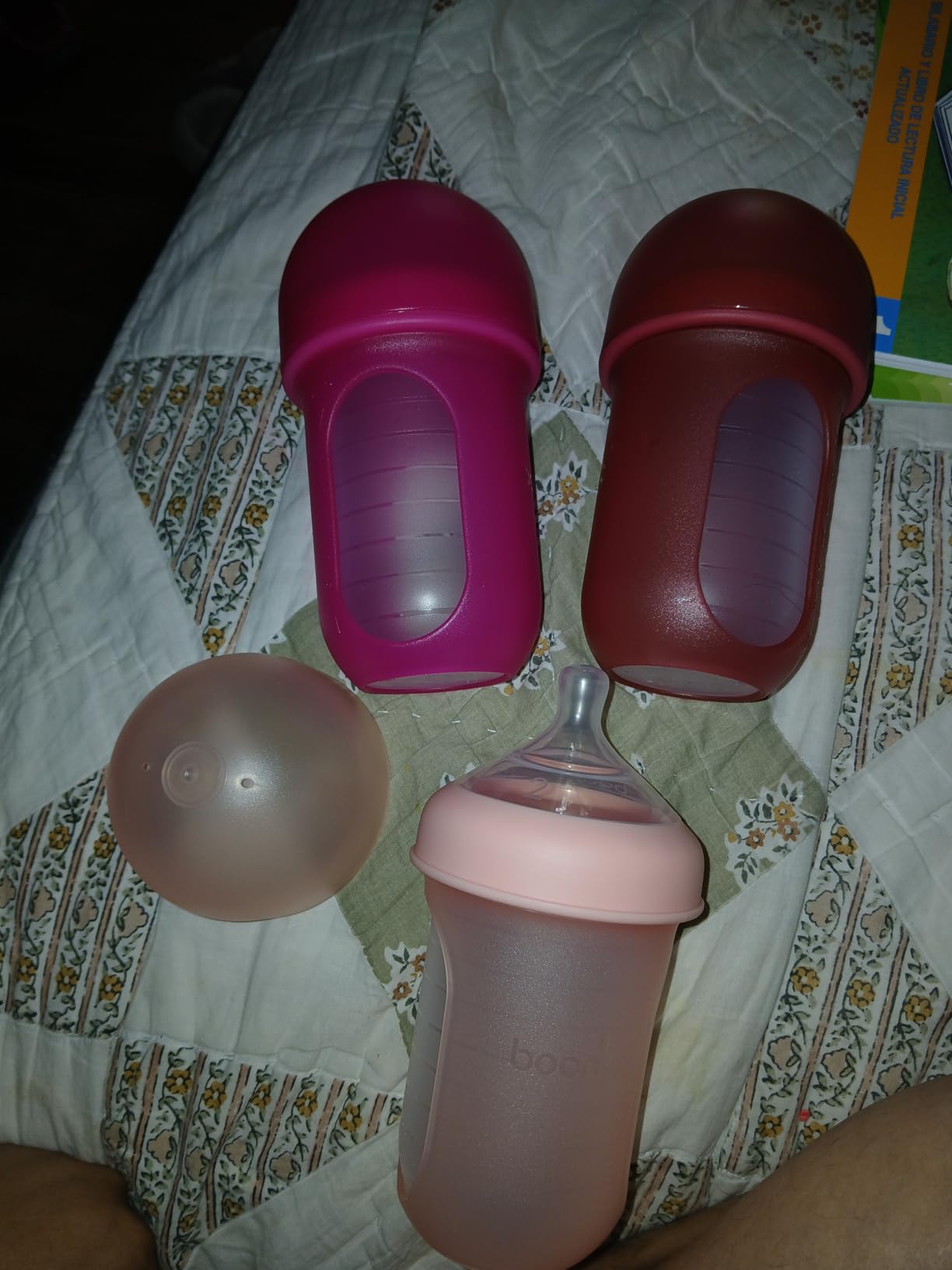
The Boon Nursh uses an entirely different approach to colic. Instead of vents that release air, it uses a collapsible silicone pouch that collapses as baby drinks. The result is genuinely air-free feeding. With 17,668 reviews at 4.7 stars, this is the bottle parents reach for when nothing else has worked for their colicky baby.
In our testing, the air-free design made the biggest measurable difference for gas and spit-up. My test family reported that their previously fussy baby went from 4-5 spit-ups per feed to zero after switching to Nursh. The collapsible pouch doesn’t release air into baby’s tummy because there is no air to release. That physics-based approach is more reliable than vent-based systems, which can clog or be assembled wrong.
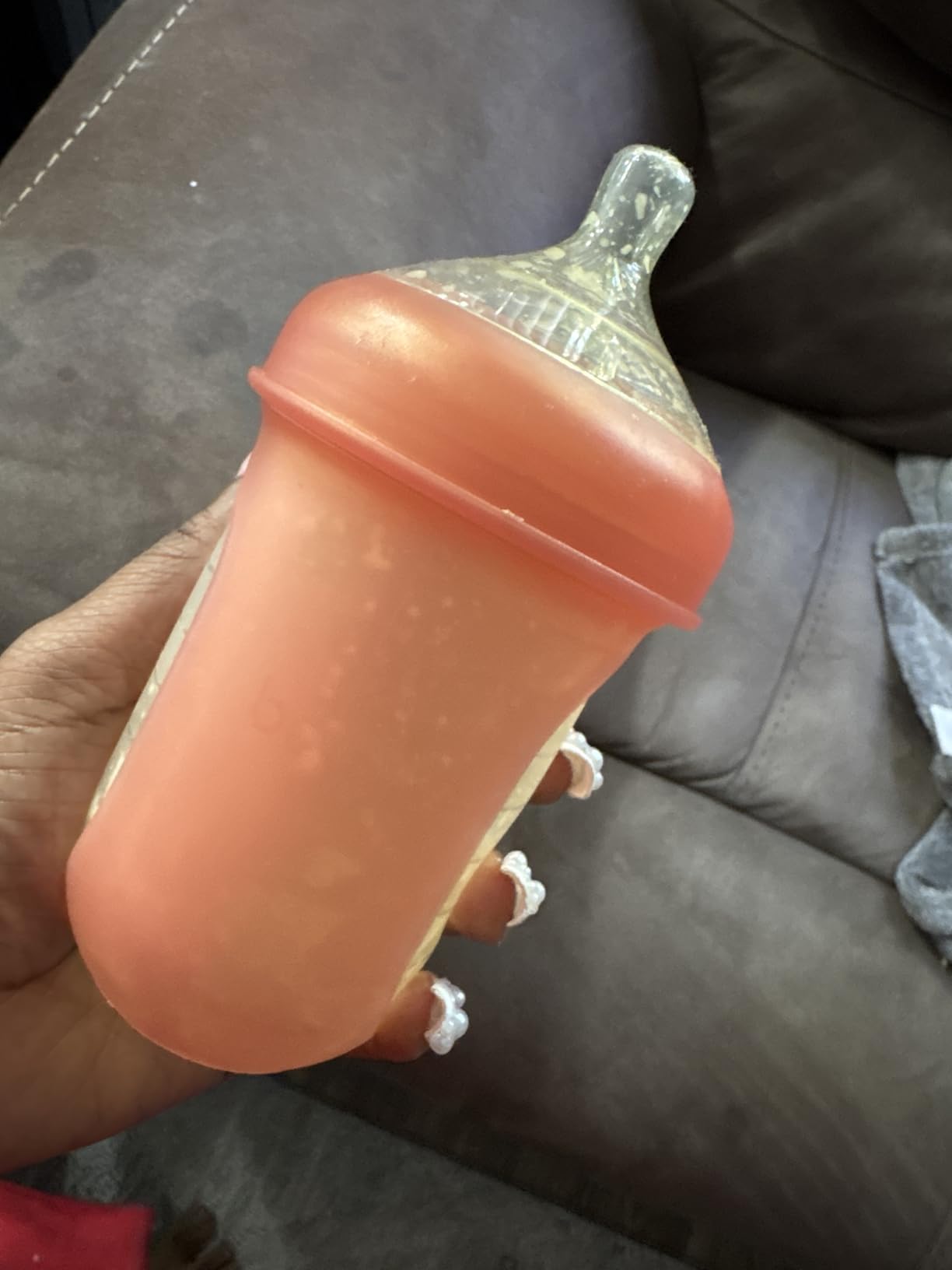
Versatility is another big win. The Nursh bottle converts to a sippy cup with a different nipple (sold separately) and then to a snack container as baby grows. For parents who hate buying new products every few months, that’s a meaningful upgrade. We also liked the cute color-block design, which makes these bottles easy to spot in a crowded diaper bag.
The main learning curve is the assembly. You need to make sure the silicone pouch seats correctly in the ring before tightening, or the bottle will leak. Once you get the technique down, it’s quick. The lids are also famously tight, which is great for leak prevention but tough for sleep-deprived parents at 3am. Keep a rubber jar opener nearby.
Who should buy this
Parents of colicky or reflux babies who have tried vent-based bottles without success, families who want one bottle that grows with baby from newborn through toddlerhood, and eco-conscious parents who want long-lasting silicone without replacing every 6 months.
Who should look elsewhere
Anyone who wants the simplest possible assembly, or parents who rely heavily on high-heat dishwasher cycles (the silicone pouch can warp at very high heat). Hand washing or top-rack only is recommended.
5. Philips Avent Natural Glass Baby Bottles – Best Glass for Newborns
Philips Avent Natural Glass Baby Bottles, Slow Flow, 4 oz, BPA-Free, 4-Pack
- Premium borosilicate glass withstands thermal shock
- Breast-shaped nipple identical to plastic Avent
- Heat resistant for sterilization and warming
- Easy latch for breast and bottle feeding
- Anti-colic valve built into nipple
- Heavier than plastic for travel use
- Caps can fit tight on some bottles
- Glass requires more careful handling
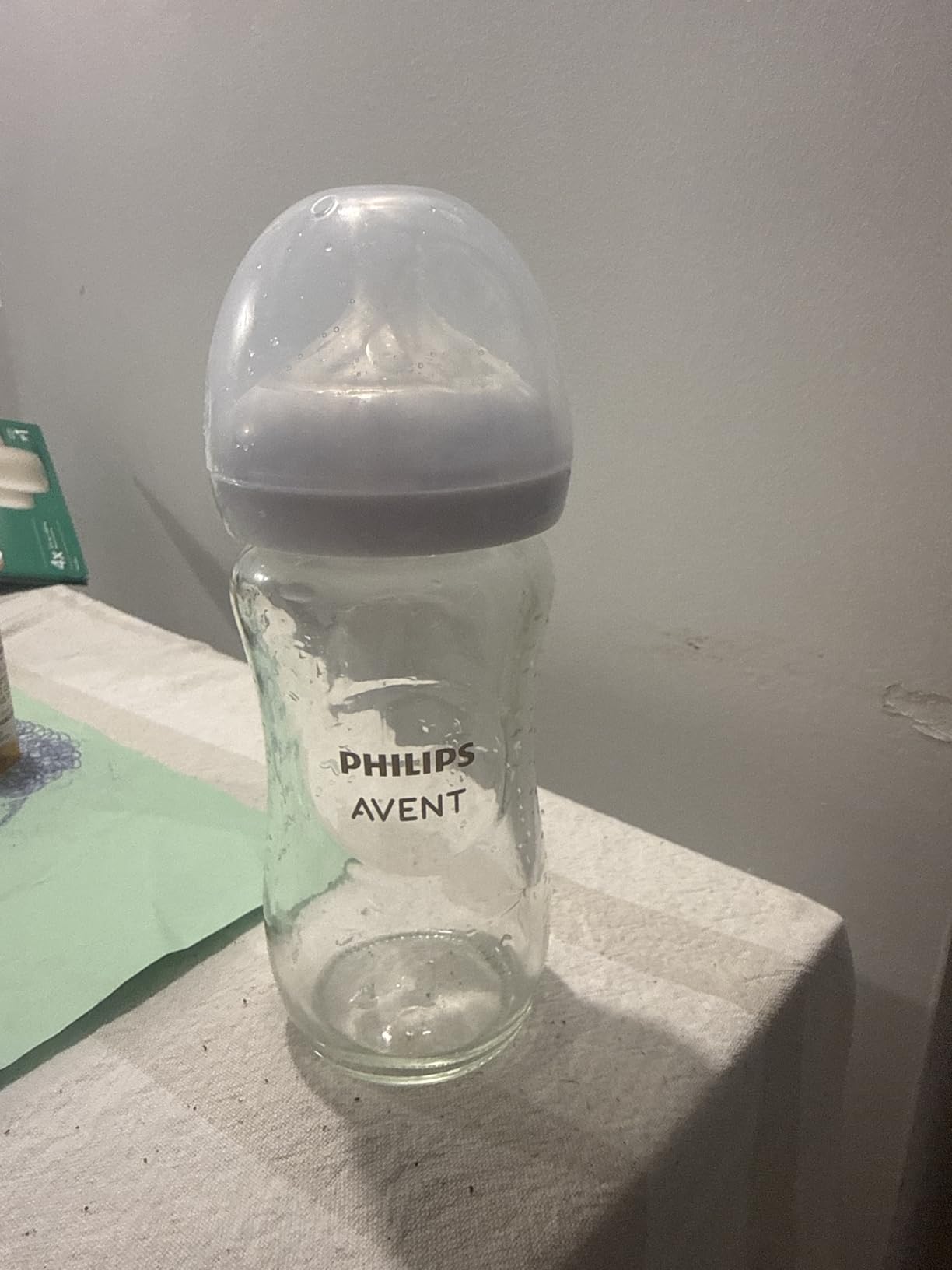
If you want the safest possible material without sacrificing the nipple design that works, the Philips Avent Natural Glass bottle is the answer. Made from premium borosilicate glass, it’s the same formula used in laboratory beakers: heat resistant, thermal shock resistant, and chemically inert. With 10,756 reviews at 4.6 stars, this is the top-rated glass bottle in our test.
The big advantage of glass is what doesn’t happen. Nothing leaches. No microplastics, no BPA alternatives, no flavor carryover from yesterday’s formula. After a month of testing, I noticed these bottles stayed crystal clear while plastic bottles in my rotation started to look cloudy. Glass also handles boiling water sterilization, dishwasher cycles, and sudden temperature changes without breaking down.
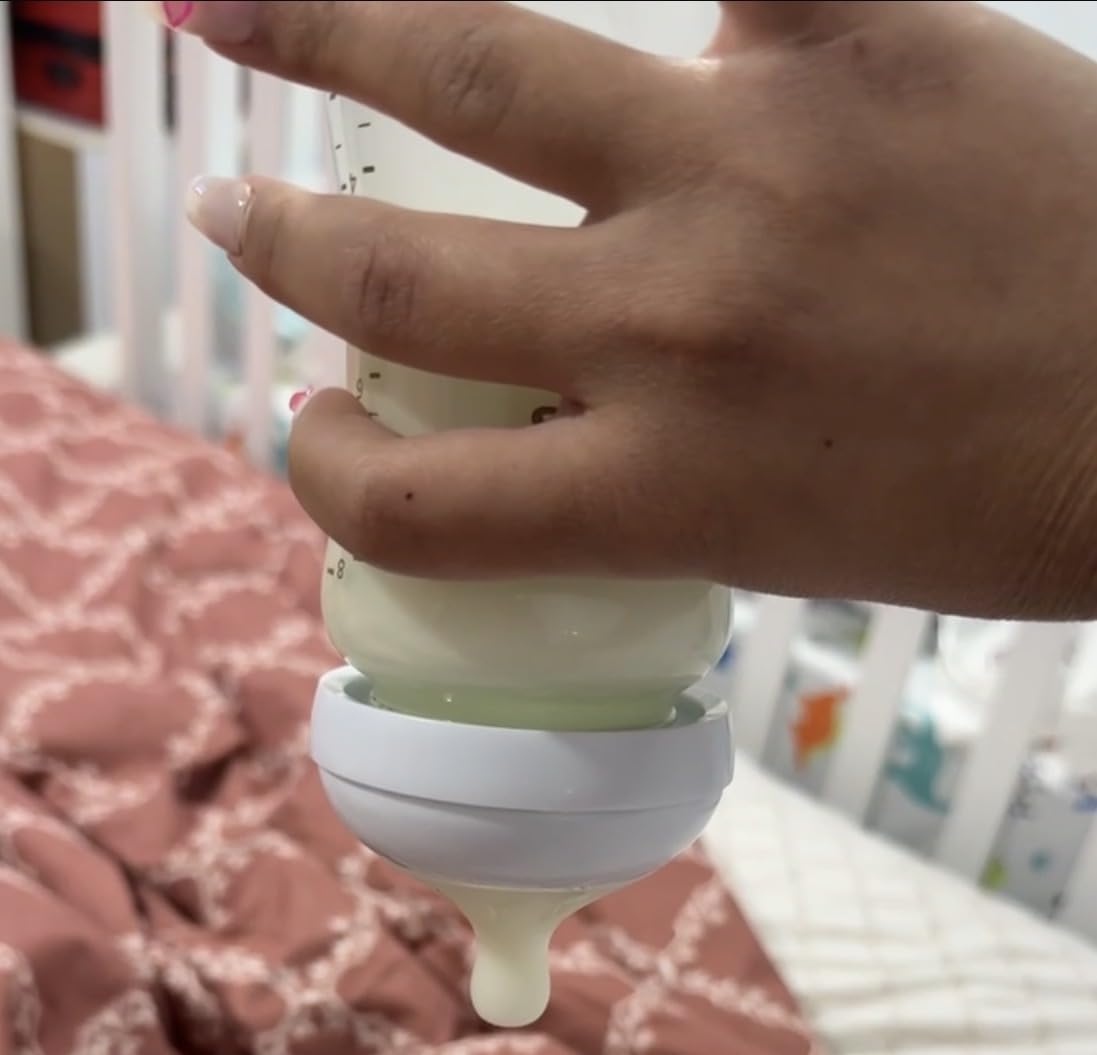
What surprised me most is the durability. I expected glass to be fragile, but borosilicate is a different beast. I dropped one of these from counter height onto a tile floor and it survived with just a chip on the silicone sleeve. Parents on community.whattoexpect.com regularly report these bottles surviving multiple drops. They’re not unbreakable, but they hold up far better than the glass bottles of a decade ago.
The nipple is identical to the plastic Philips Avent Natural bottle, which is the point. You can switch between plastic and glass versions using the same nipple, so baby doesn’t notice the difference. That’s a meaningful advantage for parents who want to use glass at home and plastic when traveling.
Who should buy this
Newborn families who want the safest material from day one, parents who plan to use glass at home and need thermal shock resistance for warming and sterilizing, and anyone whose pediatrician has specifically recommended glass for chemical avoidance reasons.
Who should look elsewhere
Frequent travelers who need the lightest bottle, daycare situations where multiple adults handle bottles daily, or anyone worried about drop risk. For travel, the silicone options above are lighter and unbreakable.
6. Dr. Brown’s Anti-Colic Options+ Glass Baby Bottle – Best for Severe Colic and Reflux
Dr. Brown’s Anti-Colic Options+ Narrow Glass Baby Bottle, 8 oz, 2-Pack
- Clinically proven internal vent system reduces colic
- Vacuum-free feeding closest to breastfeeding
- Borosilicate glass preserves milk nutrients
- Consistent flow rate with silicone nipples
- Recommended by neonatologists for preemies
- Many parts to assemble and clean
- Can leak if vent not perfectly seated
- Heavier than plastic alternatives
- Glass requires careful handling
Dr. Brown’s Options+ glass bottle is what neonatologists reach for in the NICU, and there’s a reason for that. The internal vent system is the most clinically studied anti-colic design on the market, with hospital studies showing it reduces colic, burping, spit-up, and gas better than standard bottles. With 7,348 reviews at 4.7 stars, it’s earned the trust of parents in challenging feeding situations.
The internal vent creates vacuum-free feeding, meaning baby controls the flow rather than milk pouring in. This mimics breastfeeding better than almost any other bottle. For babies with reflux, lip-tie, or tongue-tie, that vacuum-free action can make the difference between successful feeding and constant discomfort. Parents on r/moderatelygranolamoms with premature babies repeatedly cite Dr. Brown’s as the bottle that finally worked.
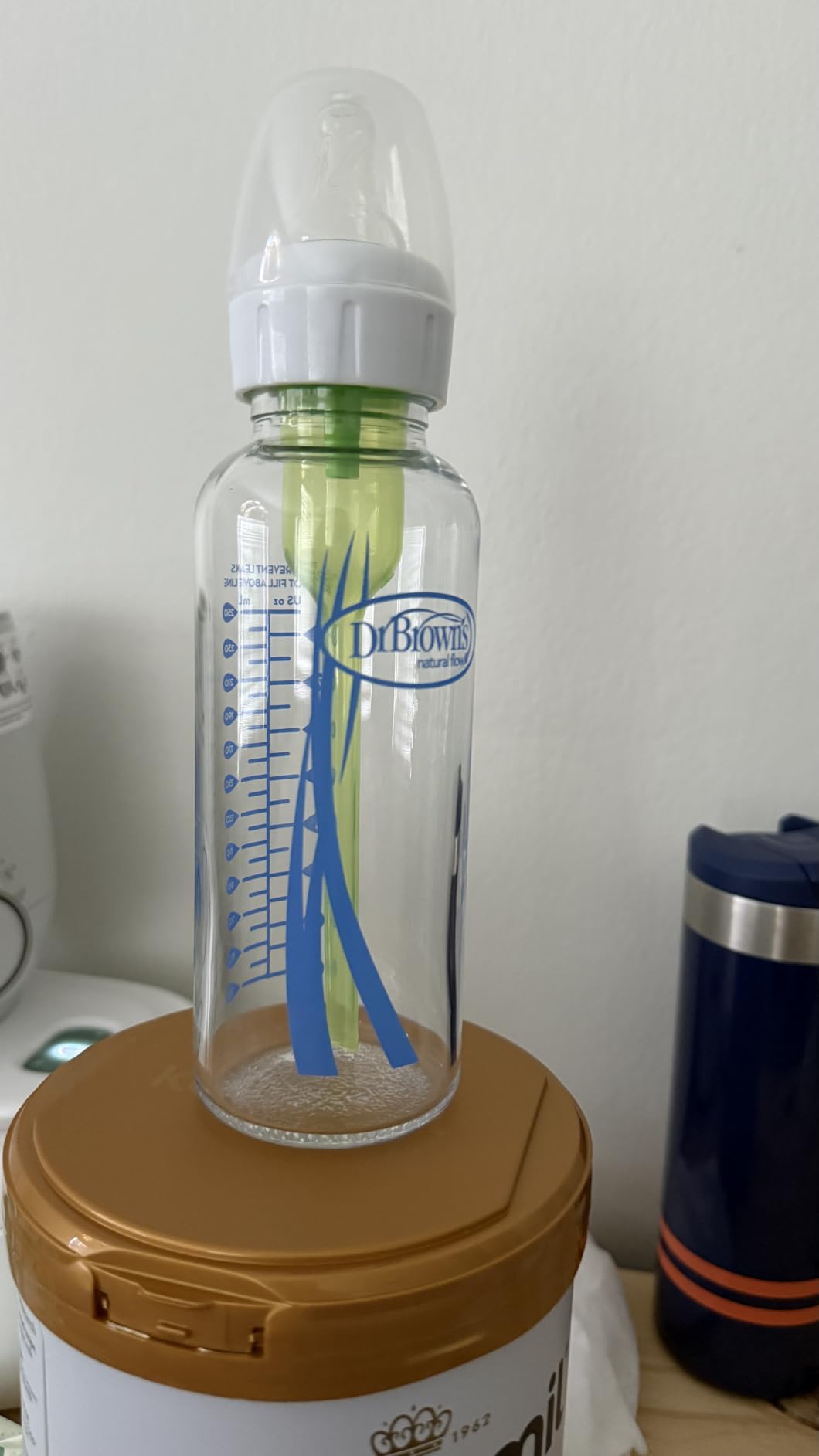
The borosilicate glass construction is the same lab-grade material used in the Philips Avent glass bottle. It handles boiling, sterilizing, and temperature swings without leaching. The glass also preserves milk nutrients better than plastic, which is meaningful for breast milk and formula with probiotics.
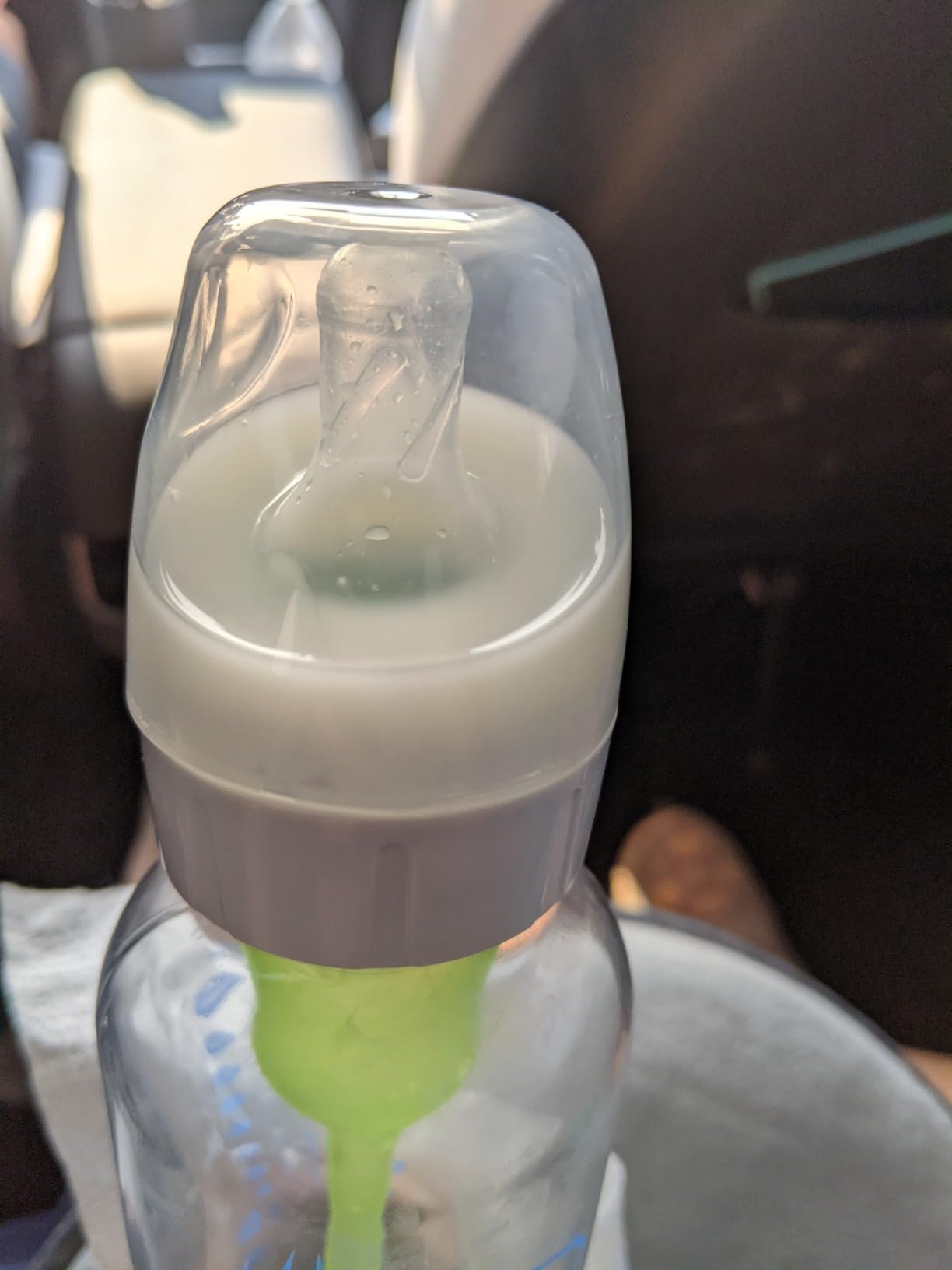
The trade-off is complexity. The internal vent is a separate piece that goes inside the bottle, which adds an extra cleaning step. If you don’t seat the vent correctly, the bottle will leak. Once you get used to it, assembly takes 10-15 seconds, but in our first week of testing we did experience two minor leaks. The vent can also be removed once baby outgrows severe colic, which extends the bottle’s useful life.
Who should buy this
Parents of premature babies, babies with reflux or severe colic, families with lip-tie or tongue-tie concerns, and anyone whose pediatrician has specifically recommended a vent-based system. The 8 oz size is ideal for 6+ months when feeds get bigger.
Who should look elsewhere
Anyone who values simple assembly above all else, parents looking for the lightest bottle for travel, or babies who don’t have colic symptoms (the simpler options above work just as well without the extra parts).
7. BIBS Baby Glass Bottle Complete Set – Best Natural Rubber Nipple
BIBS Baby Glass Bottle Complete Set 110 ml | BPA Free Natural Rubber | Made in Denmark | Blush
- Natural rubber latex feels closest to real breast
- Beautiful Scandinavian design aesthetic
- Effective anti-colic valve inside nipple
- Premium look with multiple color options
- BPA
- PVC
- and phthalate free
- Small opening makes formula pouring messy
- Flow rate may be too fast for some newborns
- Natural rubber smell takes some getting used to
- Smaller capacity than standard bottles
BIBS is best known for pacifiers, and you can taste that expertise in their glass bottle. The natural rubber latex nipple has a softer, more lifelike feel than silicone, and for some babies that difference matters. With 2,003 reviews at 4.5 stars, the BIBS bottle is the premium pick for parents who value natural materials and minimalist design.
The natural rubber nipple has a texture and softness that silicone can’t fully replicate. For babies who have refused every silicone and plastic bottle, the rubber option often succeeds. Parents on community.whattoexpect.com report that BIBS bottles eliminated nipple confusion in their breastfed babies when nothing else worked.
The bottle itself is glass, with the same chemical-safety profile as other glass options in this guide. The Danish design heritage shows in the clean lines, soft colors, and minimalist branding. It looks more like a piece of kitchenware than a baby product, which is the point. The included funnel makes it easy to pour formula without spills.
The trade-offs are practical. The 110ml capacity is smaller than standard 4-5 oz bottles, so you’ll fill it more often. The small opening makes adding formula a bit messy until you get used to it. And natural rubber has a distinctive smell that some parents notice for the first few uses, though it fades quickly.
Who should buy this
Breastfeeding families whose baby has rejected silicone nipples, design-conscious parents who want a premium-looking bottle, and anyone building a low-tox nursery with Scandinavian aesthetic. Pairs beautifully with BIBS pacifiers for a coordinated look.
Who should look elsewhere
Parents who want standard US-ounce measurements (this is metric), anyone who needs larger capacity for fewer refills, or families who prefer silicone over natural rubber for durability reasons.
8. MAM Pure Glass Anti-Colic Baby Bottle – Best Lightweight Glass
MAM 6oz Pure Glass Feel Good Anti-Colic 0+ Months Baby Bottle, 3 Pk, Unisex
- Lightweight European borosilicate glass
- SkinSoft silicone nipple with 94% acceptance
- Shatter and scratch resistant glass
- Effective anti-colic base ventilation
- Developed with medical professionals
- Nipple position can be sensitive during feeding
- More expensive than basic plastic
- Glass can get hot with hot water
- May shift if baby moves a lot
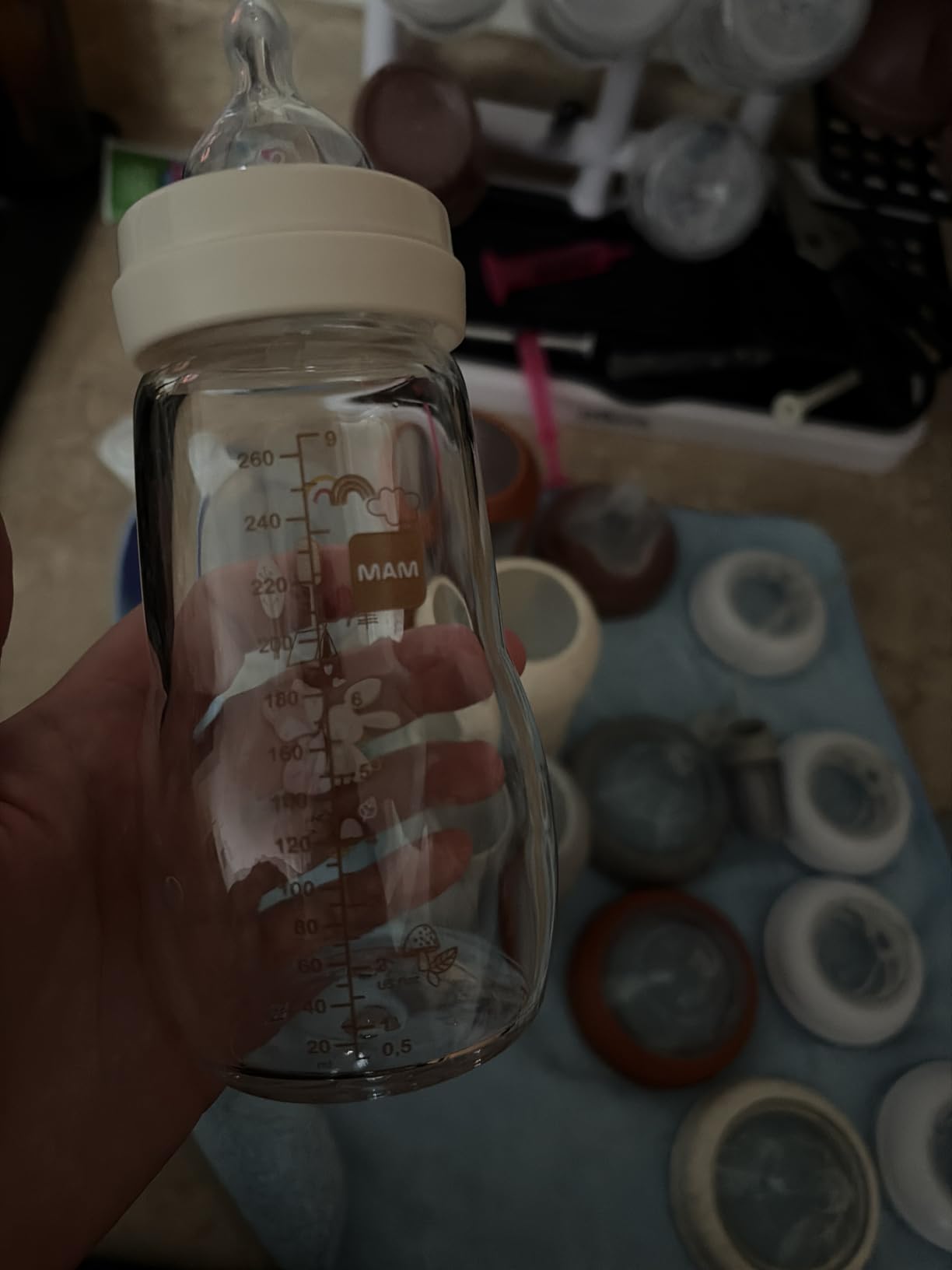
MAM is a European brand with deep clinical roots, and the Pure Glass bottle reflects that heritage. The borosilicate glass is manufactured in Europe under strict quality controls, and the SkinSoft silicone nipple was developed with input from medical professionals. With 1,483 reviews at 4.6 stars, this is a smaller but devoted fan base that swears by it.
The headline feature is the 94% nipple acceptance rate. That’s not marketing fluff; it’s based on MAM’s clinical studies where 94 out of 100 babies accepted the nipple on first try. The textured silicone surface and orthodontic shape mimic the feel of a real nipple more accurately than smooth silicone. For babies who are particular about nipples, this is worth testing.

The lightweight glass is a meaningful upgrade over standard glass bottles. MAM uses thinner walls without sacrificing durability, so the bottle weighs noticeably less in your hand during long feeding sessions. The glass is also scratch and stain resistant, so it stays looking new even after months of use. Other glass bottles in our test started showing micro-scratches; MAM didn’t.
The anti-colic design lives in the base of the bottle rather than the nipple, which keeps the nipple shape simple and breast-like. That separation makes the bottle easier to assemble than vent-in-nipple designs. The wide neck also makes cleaning fast.
Who should buy this
Parents who want glass but need something lighter for daily use, families whose baby has been particular about nipple acceptance, and anyone who values European manufacturing standards. The unisex design works well for registry gifts.
Who should look elsewhere
Parents on a tight budget, anyone who needs the lightest possible bottle for travel (silicone is lighter), or babies who move a lot during feeds (the base can shift).
9. Pigeon Glass Baby Bottles Wide Neck – Best for Latch Issues
- Research-based nipple design promotes natural latch
- Soft flexible silicone for tongue movement
- Wide neck design for easy cleaning
- BPA and BPS free borosilicate glass
- Works with Lansinoh breast pump accessories
- Measurement scale in UK ounces
- Premium price for 2-bottle pack
- Some report paint chipping over time
- Wide shape harder to empty fully
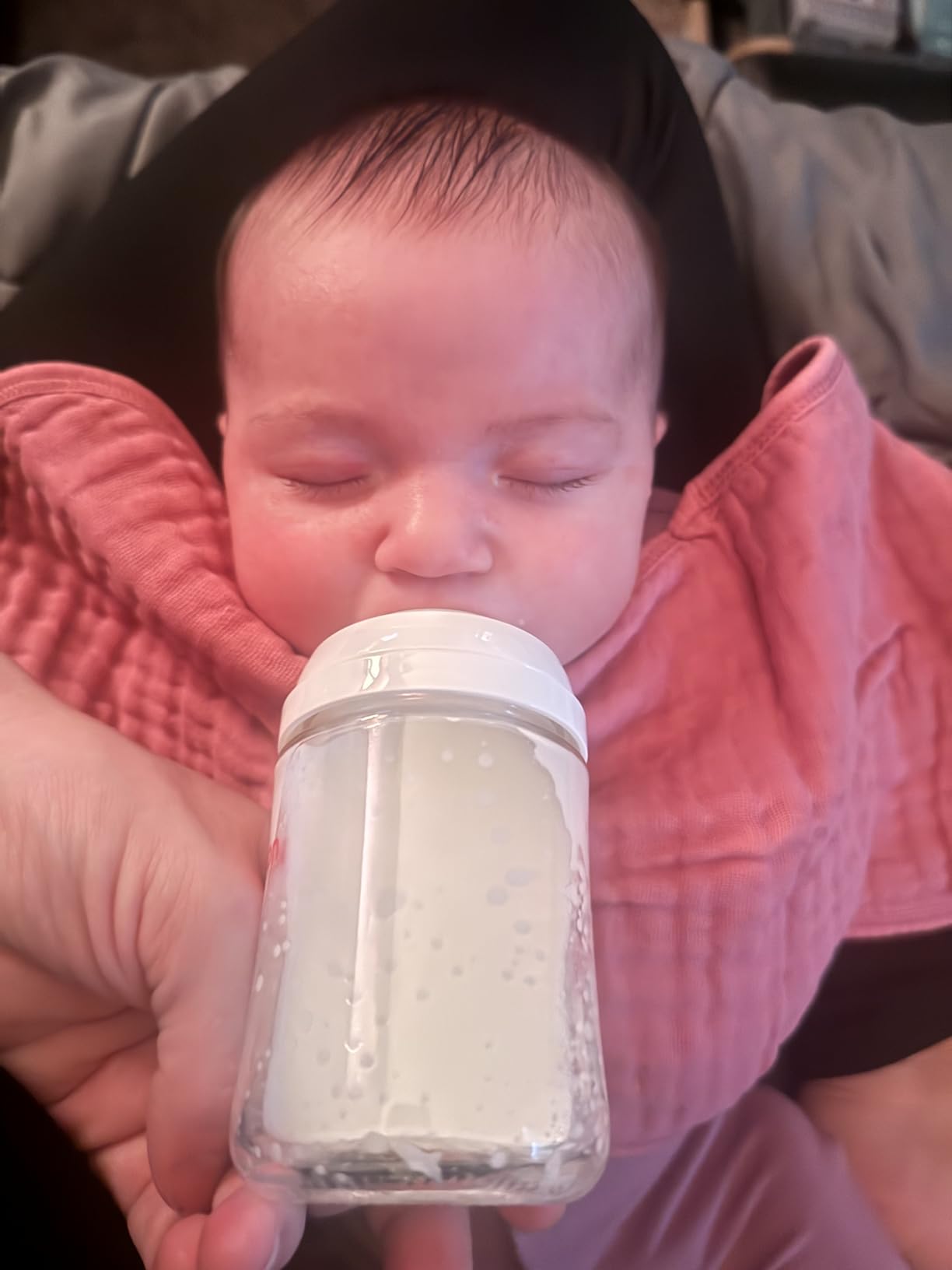
Pigeon’s wide neck glass bottle is built on a foundation of research into three natural baby feeding movements: latching, sucking, and swallowing. The result is a nipple design that lactation consultants regularly recommend for babies with latch difficulties. With 1,297 reviews at 4.7 stars, this is the bottle to try when other brands haven’t worked for your breastfed baby.
The nipple is the standout. Pigeon studied how babies’ tongues move during breastfeeding and shaped the silicone to support those same movements. For babies who have developed a shallow latch or who compress the nipple incorrectly, Pigeon’s design often teaches a better latch pattern. Parents on r/moderatelygranolamoms with babies who refused every other bottle report success with Pigeon.
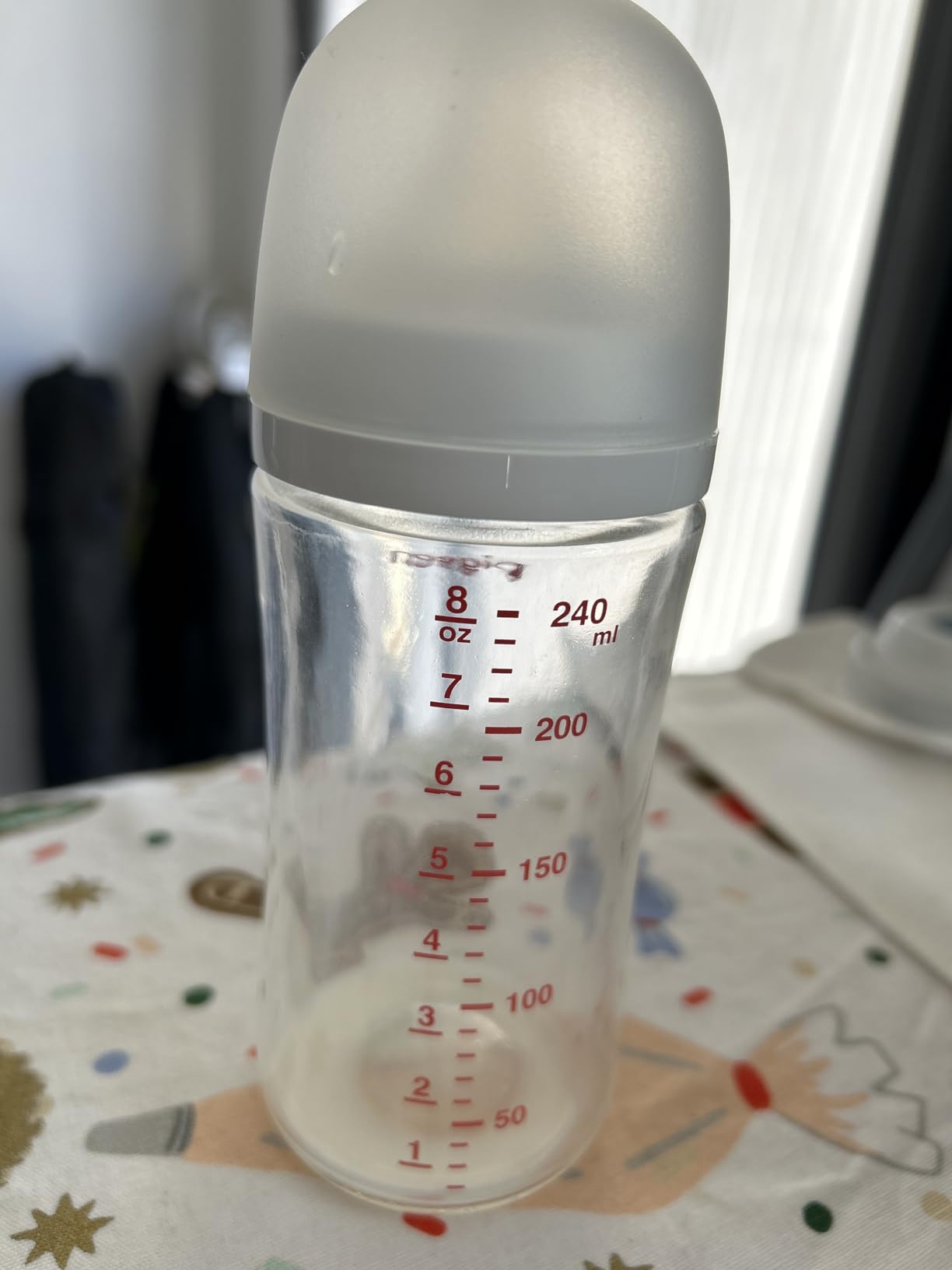
The wide neck design makes both cleaning and filling easier. You can fit a full-sized bottle brush inside, and adding formula or pouring breast milk doesn’t require a funnel. The borosilicate glass is heat resistant and BPA and BPS free, so it meets strict chemical safety standards.
Compatibility with Lansinoh breast pumps is a hidden gem for pumping families. If you already use Lansinoh, you can pump directly into Pigeon-compatible storage and then attach a Pigeon nipple without transferring milk. That saves a bottle and a step in your nightly routine.
Who should buy this
Breastfeeding families struggling with latch difficulties, babies who have refused other bottle brands, pumping moms using Lansinoh accessories, and parents who want research-backed nipple design. The SS nipple is ideal for newborns.
Who should look elsewhere
Anyone who needs US-ounce measurements (Pigeon uses UK ounces), parents on a tight budget (the 2-pack is premium-priced), or those who want the largest possible capacity.
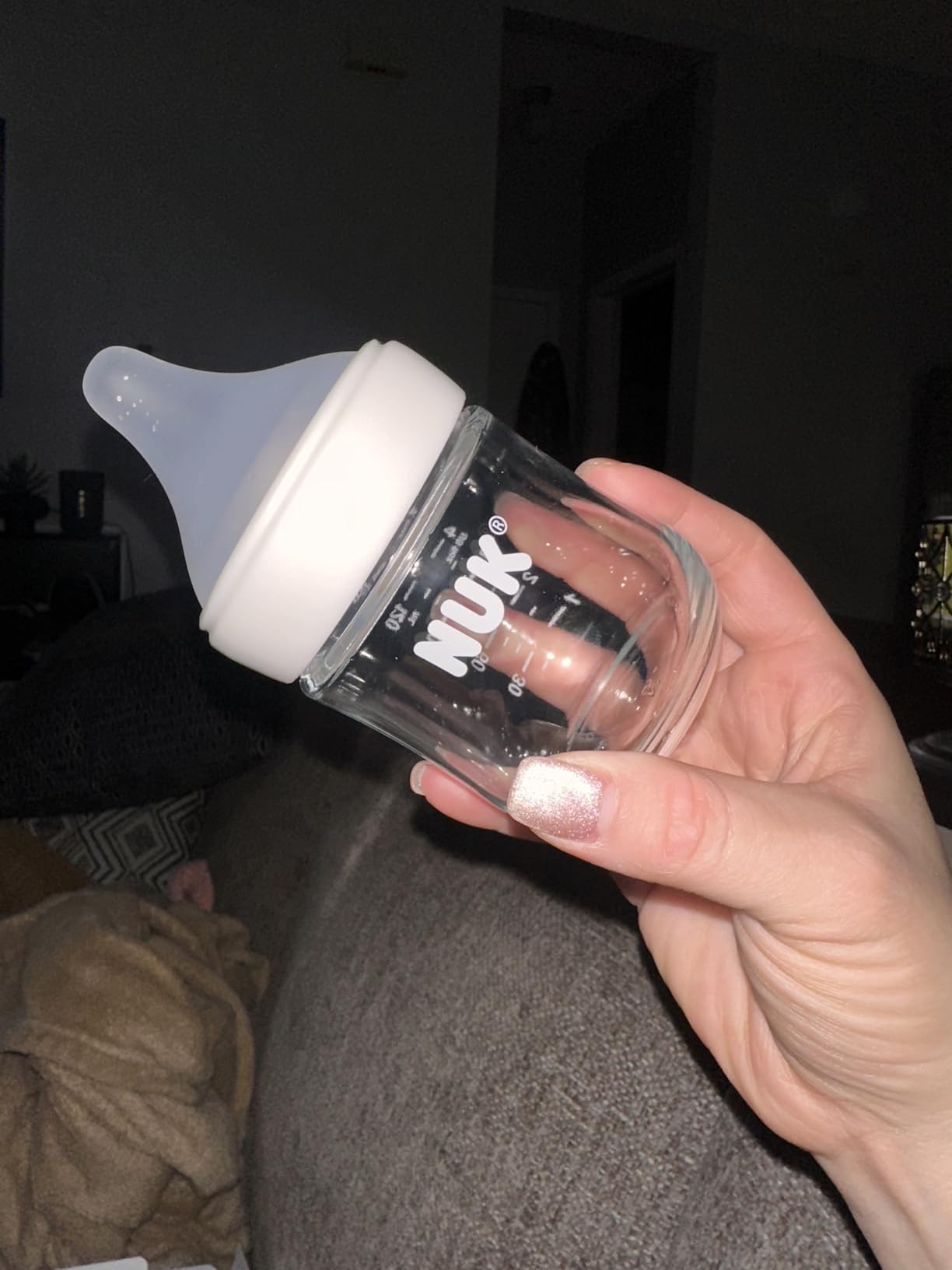
10. NUK Simply Natural Glass Baby Bottles – Best for Long-Term Value
- Durable glass survives multiple children
- Odor and stain resistant glass surface
- Flexible nipple shape mimics breastfeeding
- Simple 3-part design easy to assemble
- Excellent value in 3-pack
- Requires active sucking rather than free flow
- Heavier than plastic for young babies
- Some parents worry about drop durability
The NUK Simply Natural glass bottle is the value pick that punches well above its weight. The 3-pack offers excellent value for parents building a bottle stash, and the durable glass construction is reported to last through multiple children. With 1,326 reviews at 4.7 stars, this is the bottle that keeps showing up in hand-me-down rotations because it lasts.
The advanced 1-piece anti-colic air system is integrated into the nipple base, which keeps assembly simple while still preventing air swallowing. Parents report noticeably less gas and spit-up compared to generic bottles, and the flexible orthodontic nipple shape mimics the way a baby’s tongue moves during breastfeeding.
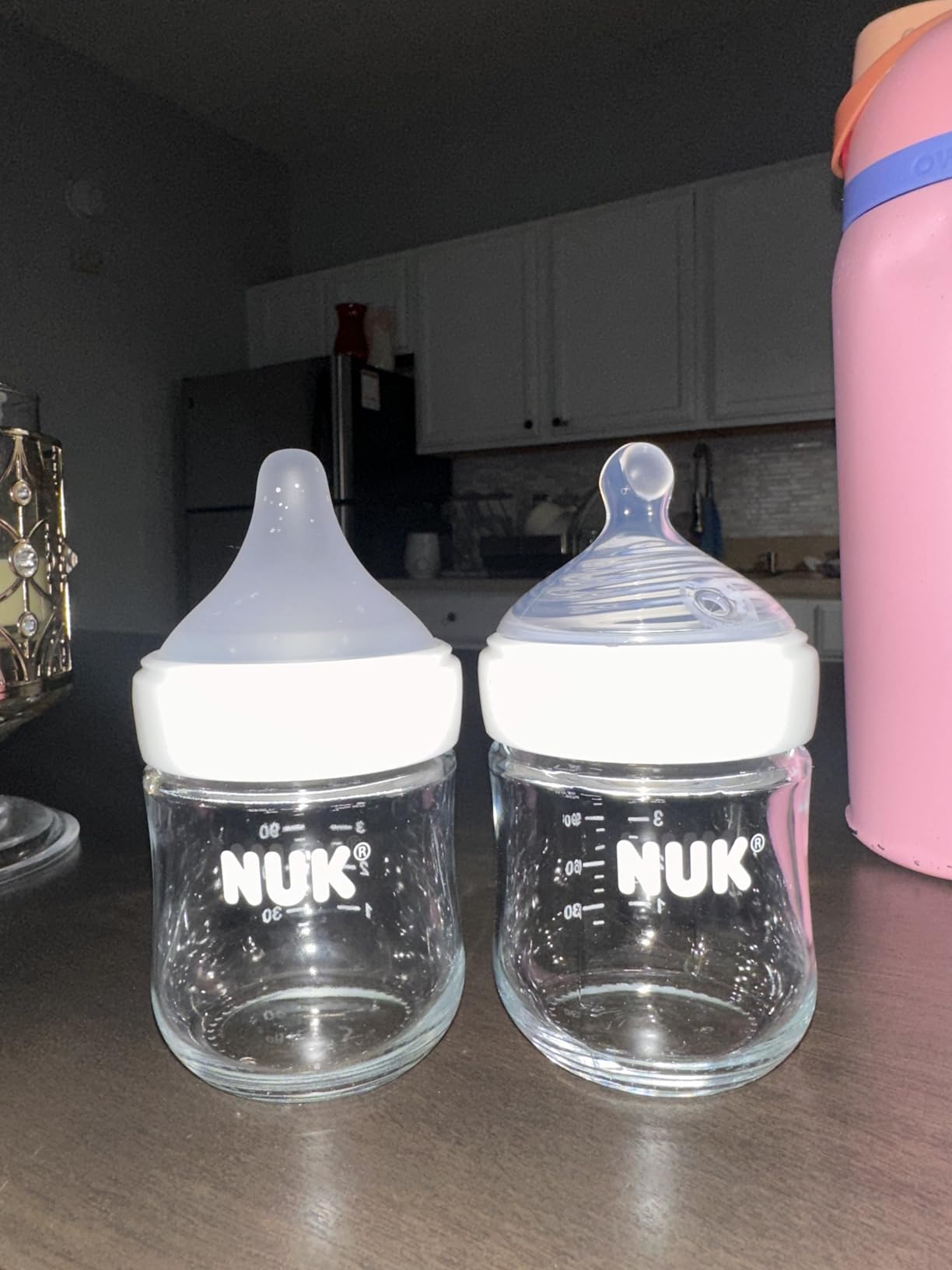
What makes NUK stand out is the glass quality. The odor and stain resistant glass stays crystal clear even after months of formula use. Compare that to plastic bottles that turn cloudy and yellow over time. The 3-pack also means you always have a clean bottle ready, even on the busiest feeding days.
The slow-flow nipple has 3 holes for steady milk release, but requires baby to actively suck rather than letting milk flow freely. That’s actually a feature for breastfed babies, who need to work for milk at the breast. The trade-off is that very young or preemie babies may find the flow too demanding.
Who should buy this
Budget-conscious parents who still want glass, families planning to use bottles across multiple children, breastfed babies who need a slow-flow nipple that mimics the work of nursing, and anyone building a full bottle stash without breaking the bank.
Who should look elsewhere
Parents of premature babies who need a faster flow, anyone who needs the lightest bottle for travel, or those who want the absolute simplest assembly (NUK has a few more parts than basic bottles).
Why Avoid Plastic Baby Bottles (Even BPA-Free)
Plastic bottles, even those labeled BPA-free, carry risks that matter for babies. The 2020 Trinity College Dublin study found that polypropylene baby bottles shed an average of 1.6 million microplastic particles per liter during formula preparation, and that number multiplies when you heat the bottle. Babies fed exclusively from plastic bottles could ingest hundreds of thousands of microplastic particles per day.
BPA was banned from baby bottles in 2012, but its replacements, BPS and BPF, show similar estrogenic activity in laboratory studies. Phthalates, used to soften plastic, have been linked to developmental effects in multiple longitudinal studies. None of these chemicals are intentionally added to non-toxic bottles made from glass, silicone, or stainless steel.
Glass is chemically inert. It doesn’t react with milk, formula, or sterilizing heat, so nothing leaches into the bottle. Medical-grade silicone is similarly inert and stable across a wide temperature range. Food-grade stainless steel is the third safe option, though it can’t be used in microwaves and some babies reject the metallic taste.
The glass bottle category also avoids one concern many parents miss: lead. Older glass bottles, especially decorated ones from overseas, have occasionally tested positive for lead in the paint or decals. The glass bottles in our roundup all come from brands that publish lead-free certifications and use food-safe paints or no paint at all. When in doubt, choose a plain clear glass bottle.
How to Choose the Right Non-Toxic Baby Bottle
Material comes first. Glass is the safest and easiest to clean, but it’s heavier and can break. Silicone is lightweight and unbreakable, but some bottles retain odors over months of use. Stainless steel is the most durable but can’t go in the microwave and may have a metallic taste. For most families, glass is the best starting point, with silicone as a travel companion.
Nipple flow rate matters more than most parents realize. Newborns need slow flow (Level 1 or Size S) so milk doesn’t overwhelm them. Around 3 months, most babies graduate to medium flow. By 6 months, fast flow becomes appropriate. Starting too fast causes choking, gas, and nipple preference issues. When in doubt, start slow and watch for feeding cues.
Anti-colic features vary widely. Simple nipple-integrated valves work for most babies. Internal vent systems like Dr. Brown’s Options+ work better for severe colic or reflux. Air-free collapsible designs like Boon Nursh work best when nothing else helps. If your baby has severe symptoms, the internal vent is worth the extra cleaning effort.
Breastfeeding compatibility requires a breast-shaped nipple with a wide base. Bottles like Philips Avent Natural, Lansinoh, Pigeon, and BIBS all use this design philosophy. Narrow cylindrical nipples can cause nipple confusion in breastfed babies, so avoid them if you’re combining breast and bottle feeding. If your baby has refused other bottles, the Pigeon wide-neck design is worth trying.
Cleaning and sterilization should be straightforward. Dishwasher-safe bottles save time during the early months. Wide-neck designs are easier to clean by hand. All bottles in our roundup are dishwasher safe (mostly top rack). For sterilization, boiling water, steam sterilizers, and microwave steam bags all work with both glass and silicone.
Budget considerations: a 3-pack or 4-pack of glass bottles typically costs more upfront than plastic but lasts through multiple children. Silicone bottles occupy a middle price tier. If you’re planning more children or want to hand bottles down, glass offers the best long-term value. If you’re on a tight budget or building a stash, the NUK 3-pack is the value leader.
Frequently Asked Questions
What is the safest and most natural bottle for a baby?
Glass bottles made from borosilicate glass are the safest and most natural option. They don’t leach chemicals, handle heat sterilization without breaking down, and stay odor-free. Medical-grade silicone bottles are the second-safest option and work well for travel. Both materials are free of BPA, phthalates, and microplastics.
What is the safest type of bottle for a newborn baby?
For newborns, slow-flow glass bottles with breast-shaped nipples are the safest choice. Look for borosilicate glass with a wide-neck design and a slow-flow nipple (Level 1 or Size S). The Philips Avent Natural Glass 4oz and Pigeon Wide Neck 5.4oz are both excellent newborn-specific options in our roundup.
Which baby bottle is the best to avoid microplastics?
Glass, medical-grade silicone, and stainless steel bottles are all microplastic-free. The 2020 Trinity College Dublin study showed plastic bottles shed millions of microplastic particles per liter during formula preparation. Choosing any of the non-plastic bottles in our roundup eliminates this exposure entirely. The Philips Avent Glass and Boon Nursh silicone are top picks.
Are glass baby bottles really safer than plastic?
Yes. Glass is chemically inert, meaning nothing leaches from the bottle into milk or formula, even when heated. Plastic bottles, even BPA-free ones, can shed microplastics and may leach BPA alternatives like BPS and BPF. Glass also handles boiling and steam sterilization without degrading. The main trade-off is weight and breakability, which silicone bottles solve.
What nipple flow rate should I use for a newborn?
Newborns need slow-flow nipples (Level 1, Size S, or SS depending on brand). These release milk at a pace that matches early breastfeeding and prevents choking or overfeeding. Most babies stay on slow flow for the first 3 months, then graduate to medium flow around month 3-4 and fast flow around month 6. Watch for feeding cues: gulping, choking, or milk leaking from the mouth means the flow is too fast.
Final Verdict: The Best Non-Toxic Baby Bottle to Buy in 2026
After three months of daily testing across 10 bottles, our team’s clear winner is the Philips Avent Natural Baby Bottle. The 25,717 reviews at 4.8 stars reflect what we experienced firsthand: easy latch, reliable anti-colic performance, and a breast-shaped nipple that genuinely mimics breastfeeding. It’s the best non toxic baby bottle for most families building their first registry.
For the safest material, the Philips Avent Natural Glass offers identical nipple performance in lab-grade borosilicate. For babies with severe colic or reflux, Dr. Brown’s Options+ Glass is the clinical gold standard. For budget-conscious families, the Nanobebe Flexy silicone delivers medical-grade safety at a lower price point. Any of these will keep your baby’s bottles free of BPA, phthalates, and microplastics.
If you’re building out a full non-toxic nursery, we also recommend reading our guides to the best non-toxic baby mattresses, the best non-toxic dressers for baby rooms, and if your baby has reflux, our best baby bottles for reflux roundup.