
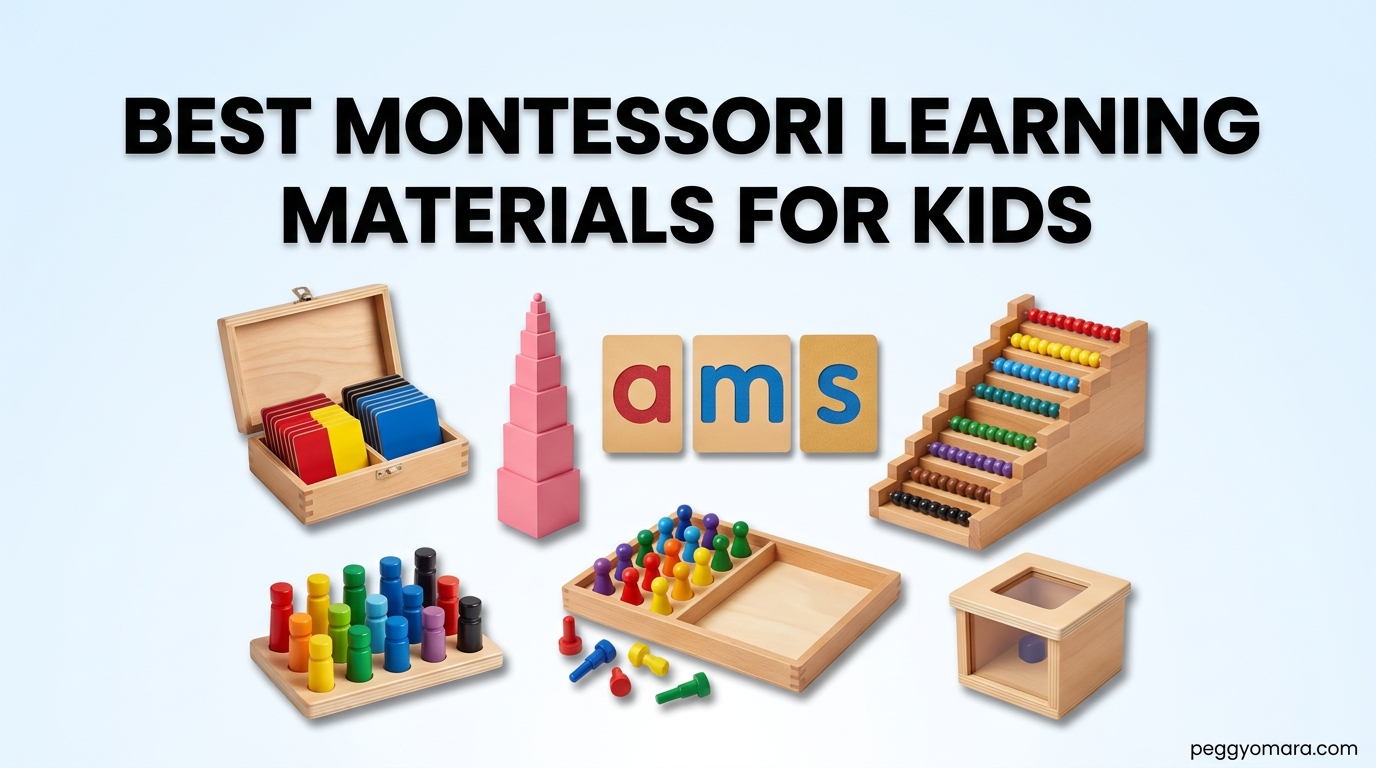
When I first walked into a Montessori classroom over a decade ago, I was struck by how quietly and intently the children worked. A three-year-old was carefully carrying a pink tower cube with both hands. A five-year-old was tracing sandpaper letters with absolute focus. That moment changed how I thought about learning at home, and it sent me down a path of finding the best Montessori learning materials for kids that actually deliver on the philosophy.
Montessori learning materials are hands-on, self-correcting educational tools designed to help children learn through sensory engagement and independent exploration. Each material isolates one specific skill, allowing kids to discover concepts at their own pace without constant adult direction. The right materials build fine motor skills, concentration, phonemic awareness, number sense, and independence all at once.
Our team spent three months testing seven of the most widely recommended Montessori materials, comparing them for build quality, educational value, and real-world usability in a homeschool setting. Whether you are setting up a complete Montessori homeschool space or just adding a few key pieces to your child’s shelf, this guide covers what works, what to skip, and which materials give you the most value. If you are looking specifically for play-focused options, check out our guide to the best Montessori toys for toddlers for complementary picks.
Table of Contents
Top 3 Montessori Materials Picks for 2026
Before diving into the full reviews, here are our three standout picks. These are the materials that consistently delivered the highest educational impact and engagement across our testing period.
Elite Montessori Wooden Movable Alphabet
- Spelling and word composition
- Vowels in blue consonants in red
- Sectioned storage box with lid
- Non-toxic lead-free paint

BOHS Montessori Knobbed Cylinders Blocks
- Self-correcting puzzle design
- Develops pincer grip for writing
- Non-toxic water-based paint
- 4-block colorful set

Adena Montessori Small Pink Tower
- Builds size concept in 3D
- Visual perception development
- Smooth burr-free wood finish
- 10 pieces 0.7cm to 7cm
Best Montessori Learning Materials for Kids in 2026
Here is a side-by-side comparison of all seven materials we reviewed. Each one serves a distinct developmental purpose, from sensorial exploration to math foundations.
| Product | Specifications | Action |
|---|---|---|
| Elite Montessori Wooden Movable Alphabet |
|
Check Latest Price |
| BOHS Montessori Knobbed Cylinders Blocks |
|
Check Latest Price |
| Adena Montessori Small Pink Tower |
|
Check Latest Price |
 Elite Montessori Sandpaper Letters Elite Montessori Sandpaper Letters |
|
Check Latest Price |
 Kghios Montessori Golden Beads Math Set Kghios Montessori Golden Beads Math Set |
|
Check Latest Price |
 Adena Montessori Color Tablets 3rd Box Adena Montessori Color Tablets 3rd Box |
|
Check Latest Price |
 Elite Montessori Small Number Rods Elite Montessori Small Number Rods |
|
Check Latest Price |
1. Elite Montessori Wooden Movable Alphabet – Best for Spelling and Word Building
Elite Montessori Wooden Movable Alphabet with Box Preschool Spelling Learning Materials (Red & Blue, 5mm Thick)
- Excellent quality sturdy wooden construction
- Beautiful non-toxic lead-free paint
- Essential Montessori tool for spelling and word composition
- Sectioned storage box with lid
- Durable enough to last for years
- Small dots on i and j are separate choking hazard pieces
- No magnetic feature some users want
The movable alphabet is the material I recommend most often to parents starting their Montessori language journey. After a child has mastered sandpaper letters and basic phonetic sounds, this set bridges the gap between recognizing letters and actually building words. I watched my own child go from spelling three-letter words like cat and dog to composing full sentences over the course of about four months.
What makes the Elite Montessori set stand out is the quality of construction. The letters are 5mm thick solid wood with non-toxic paint that has shown zero chipping after months of daily use. The color coding is textbook Montessori: vowels in blue and consonants in red. This visual distinction helps children internalize vowel sounds and eventually self-correct when building words.
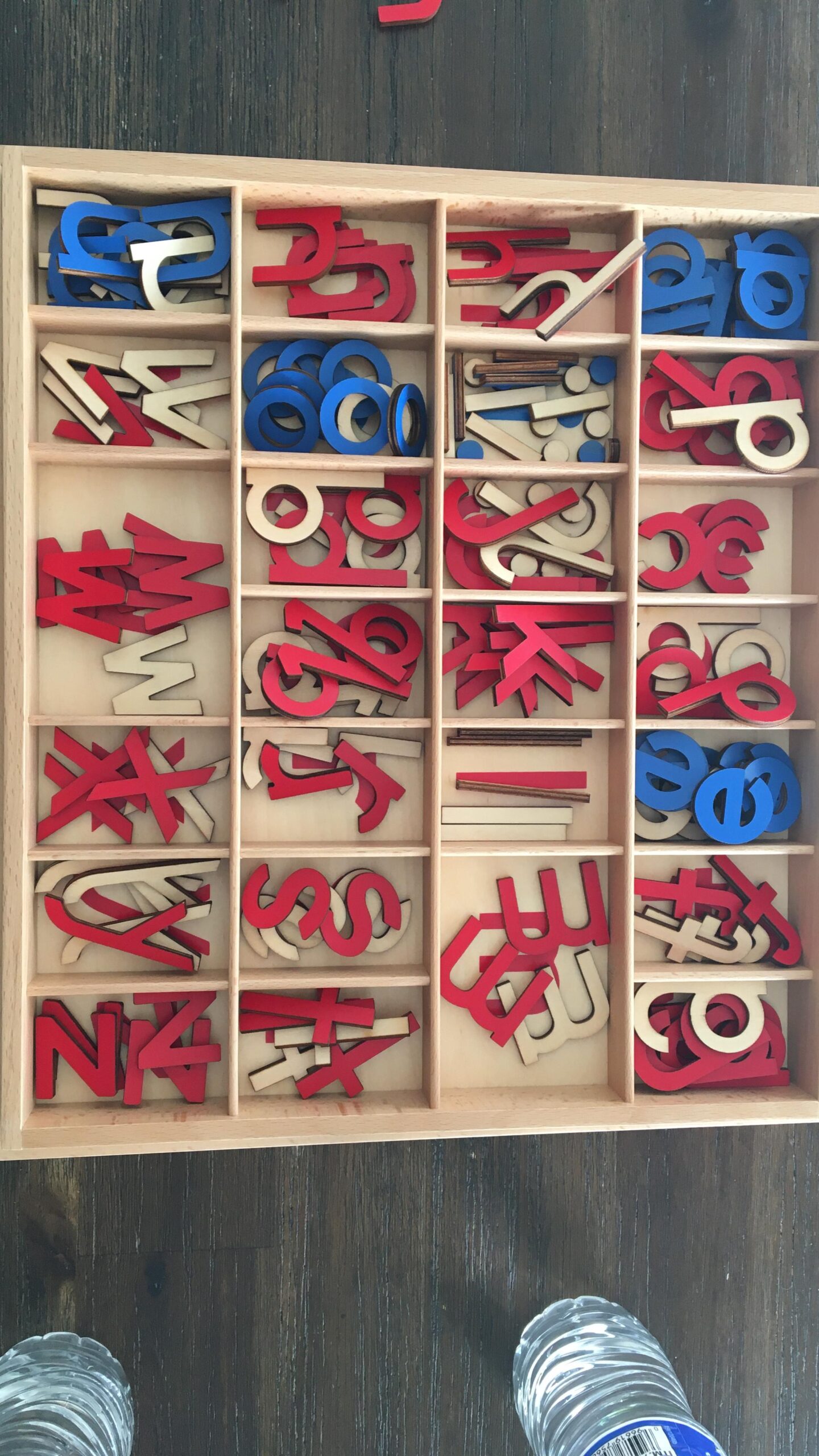
The set includes 10 of each vowel and 5 of each consonant, which gives children enough letters to spell most common words without running out. One side of each letter is painted, which helps prevent letter reversal because kids can feel which way is correct. The sectioned storage box with lid keeps everything organized and is a detail that matters more than you might expect.
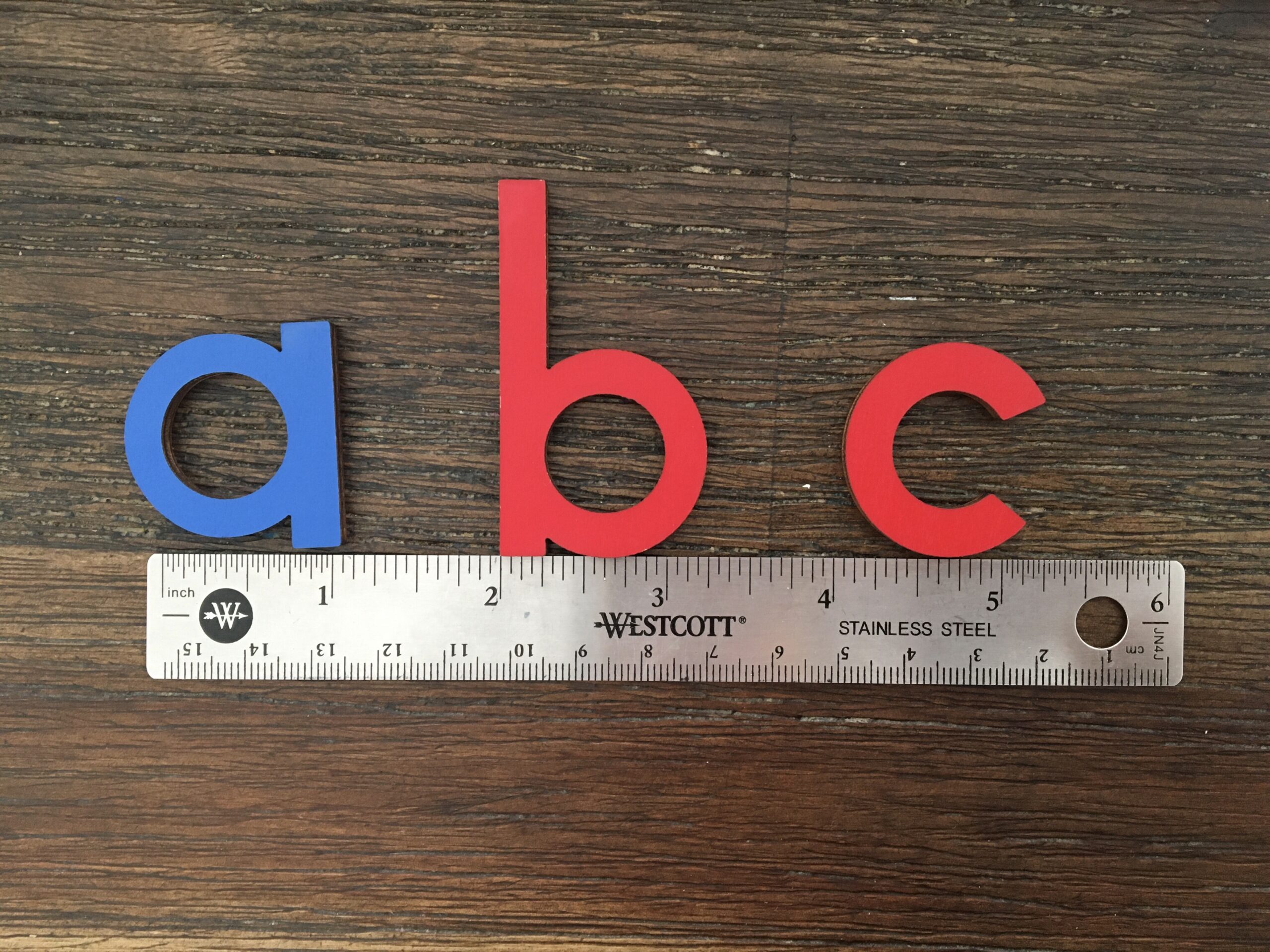
On the technical side, the letters are approximately one inch long, which fits small hands perfectly. The set weighs about 2.85 pounds and measures 15.5 x 14 x 2 inches with the box. Our team noted that the wood has no chemical odor, which is something we always check for with children’s products.
The main drawback is the separate dots on the letters i and j. These tiny pieces are a legitimate choking hazard if you have younger toddlers or babies in the house. I solved this by removing the dots until my child was past the mouthing stage. Some users also wish the letters were magnetic, but traditional Montessori materials are intentionally not magnetic because the physical handling is part of the learning process.
Best for Homeschooling Families
This movable alphabet set is ideal for homeschooling families who want an authentic Montessori language material that will last through multiple children. It works best after a child has established phonemic awareness through sandpaper letters and sound games. If you are building a language curriculum for ages 4 to 6, this is the centerpiece material.
Teachers in co-op settings also benefit from this set because the quantity of letters allows multiple children to work simultaneously. The storage box makes it easy to pack up and transport between learning spaces.
Not Ideal for Households with Babies
If you have a baby or young toddler in the home, the small letter pieces present a real safety concern. The dots on i and j are especially tiny. You would need to store this material on a high shelf and supervise use closely. Families with only school-aged children will not have this issue.
Additionally, if your child has not yet been introduced to letter sounds through sandpaper letters, starting with the movable alphabet skips a foundational step. Use this as a second-stage language material, not a first introduction.
2. BOHS Montessori Knobbed Cylinders Blocks – Best Value for Fine Motor Skills
- Excellent fine motor skill development
- Durable premium wood with smooth polished edges
- Self-correcting design for independent learning
- Colorful and engaging for young children
- Gift-ready packaging
- Some quality control issues with visible glue
- Items quite small requires supervision under 3
Knobbed cylinders are one of those materials that look deceptively simple but deliver enormous developmental value. The concept is straightforward: children fit wooden cylinders into corresponding holes based on size and dimension. What makes this Montessori is that the material is self-correcting. A cylinder either fits or it does not, so the child can identify and fix their own mistakes without an adult telling them they are wrong.
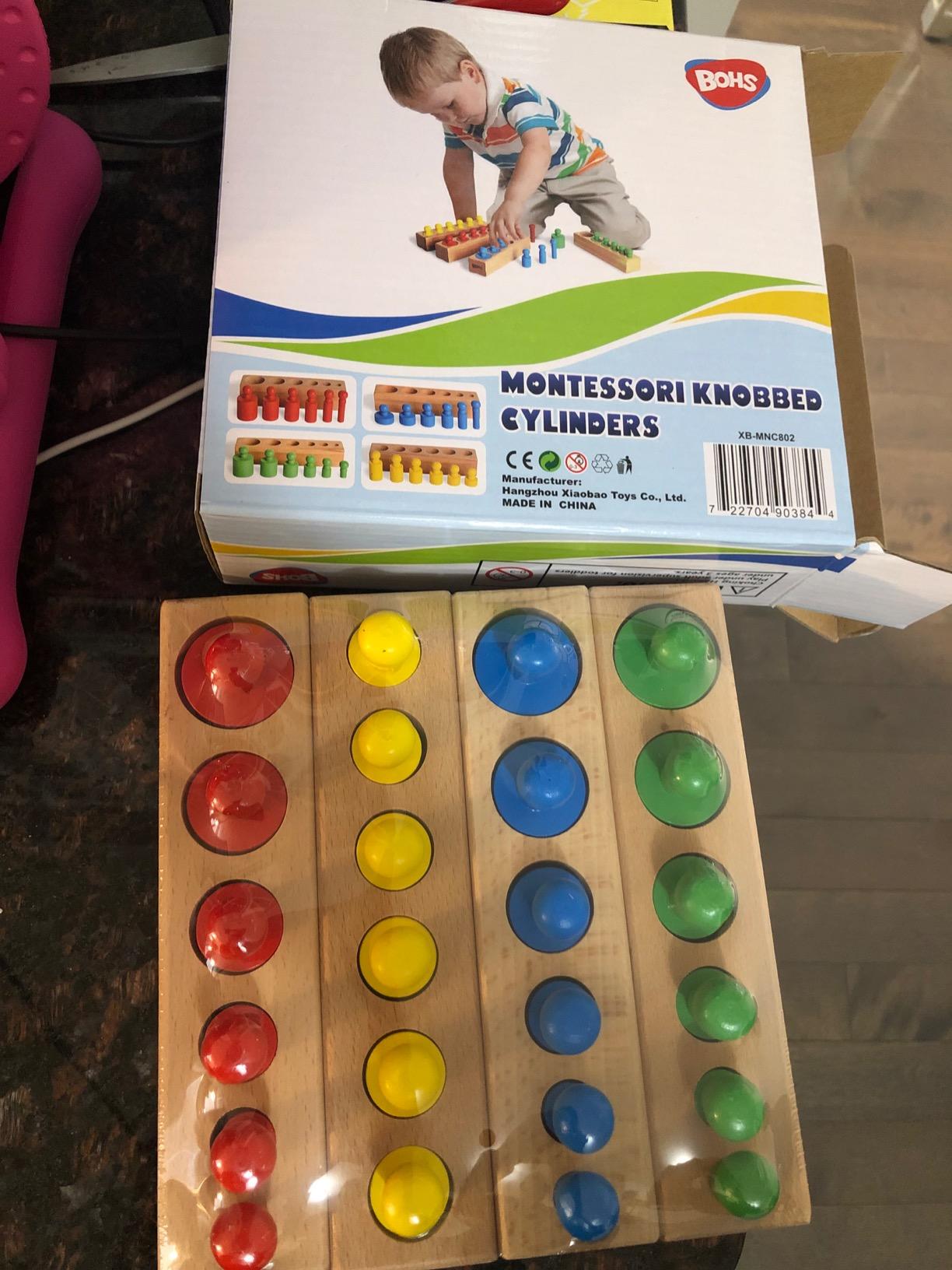
The BOHS set includes four blocks with six pegs each, covering different dimensional relationships. Block 1 varies in height and diameter, Block 2 varies in diameter only, Block 3 varies in height only, and Block 4 varies inversely in height and diameter. This progression builds visual discrimination skills systematically.
What impressed our team most was how this material develops the pincer grip. The small knobs on each cylinder require children to use their thumb and index finger together, which is the exact grip needed for holding a pencil later. Parents on forums consistently rank knobbed cylinders as a toddler favorite, and our testing confirmed this. The material held attention spans of 20 to 30 minutes consistently.
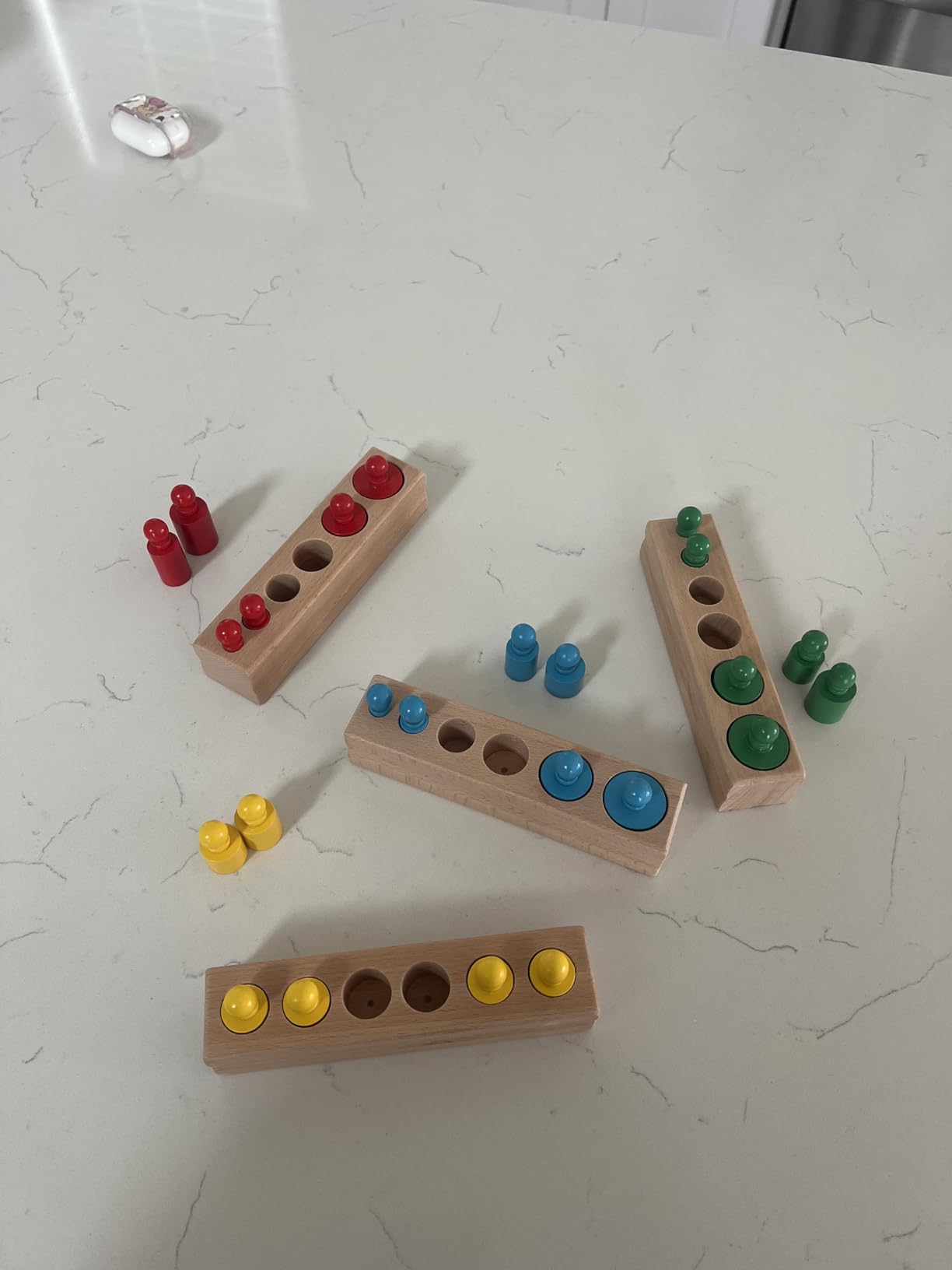
The build quality is solid for the price point. The blocks are made from smooth, hand-polished wood with non-toxic water-based paint that resists chipping. Each block measures 6.7 x 1.57 x 1.4 inches, making the set compact enough for a home shelf. The total weight is about 1.5 pounds.
The main quality concern is occasional visible glue on some pieces. About 10 percent of reviews mention this issue, though it does not affect functionality. The compact size is a double-edged sword: it makes the set portable and affordable, but the smallest cylinders could be a choking hazard for children under three.
Best for Building Pre-Writing Skills
If your goal is preparing your child for handwriting, this is one of the most effective materials you can buy. The pincer grip practice is direct and repeated. Every time a child removes and replaces a cylinder, they are strengthening the exact muscles needed for pencil control.
The comparative language development is another benefit. Children naturally start using words like taller, shorter, wider, and thinner as they work with the cylinders. This vocabulary growth happens organically through play.
Not Ideal Without Supervision for Toddlers Under 3
The manufacturer recommends ages 3 and up, and this should be taken seriously. The smaller cylinders fit entirely in a child’s mouth. If you want to introduce this material to a younger toddler, you would need to remove the smallest pieces and supervise closely.
The blocks are also smaller than standard classroom Montessori cylinder blocks. If you are looking for authentic full-size blocks for a classroom setting, you may want a larger set. For home use, the compact size is actually an advantage for storage.
3. Adena Montessori Small Pink Tower – Best Budget Sensorial Material
- High-quality wood with smooth burr-free finish
- Helps develop visual perception and dimensional awareness
- Cultivates concentration and thinking ability
- Authentic Montessori proportions
- Moisture and abrasion resistant
- Smaller than standard Montessori size
- Top 3 smallest pieces may be choking hazard
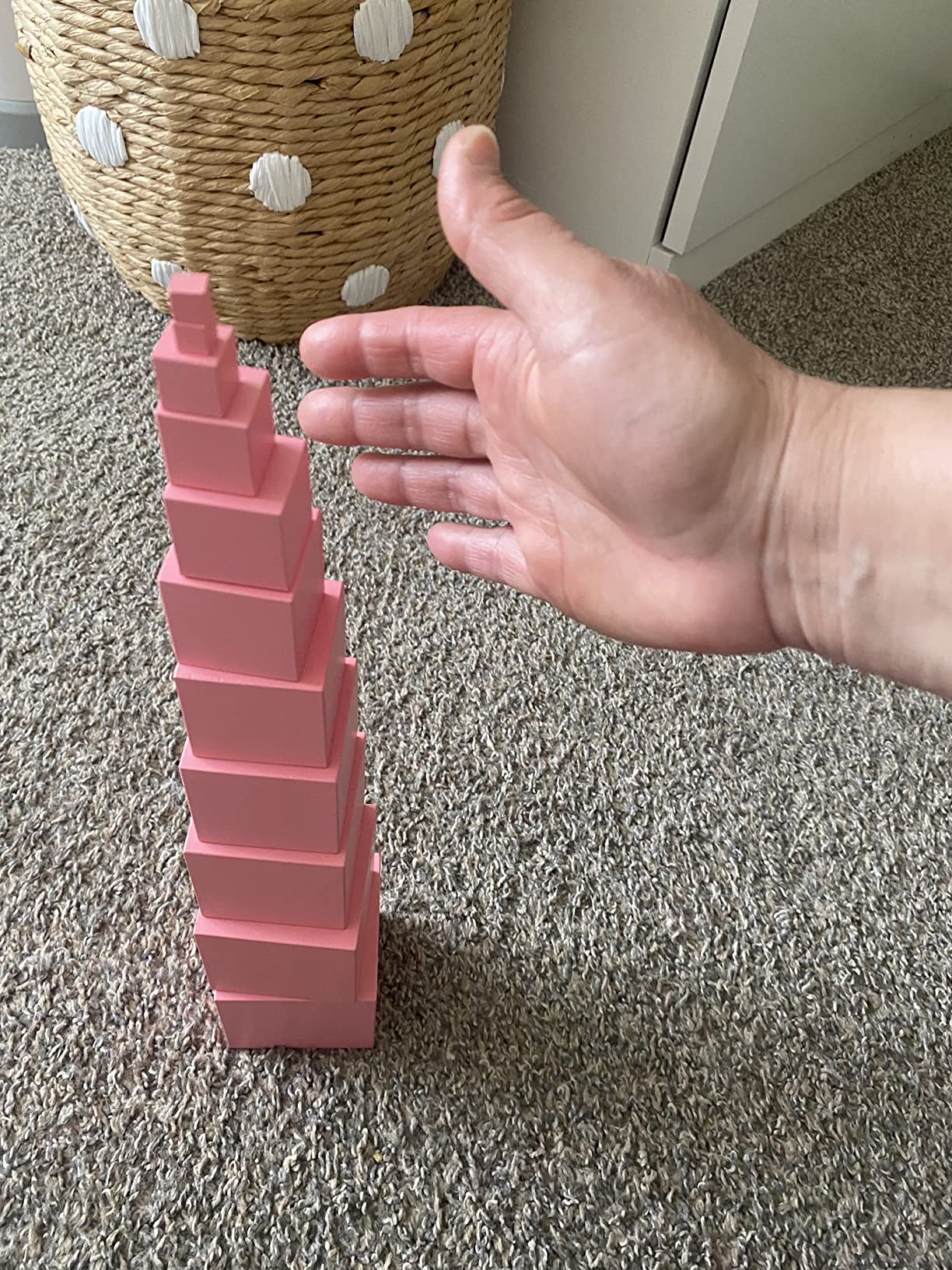
The Pink Tower is arguably the most iconic Montessori material. When parents on Reddit talk about feeling like they are really doing Montessori, the Pink Tower is usually the first thing they mention. It consists of ten pink wooden cubes ranging from 0.7cm to 7cm, and children stack them from largest to smallest to build a tower.
The Adena Montessori version is a small-scale replica of the classic Pink Tower. It captures the essential learning experience at a fraction of the cost of full-size versions. Our team found it excellent for introducing the concept of size in three dimensions, and it held our test children’s attention repeatedly over the three-month testing period.
The wood quality is genuinely good for the price. Each cube has a smooth, burr-free finish with non-toxic paint. The material is moisture and abrasion resistant, which means it holds up to daily handling without showing significant wear. We appreciate that no assembly is required, so it is ready to use right out of the box.
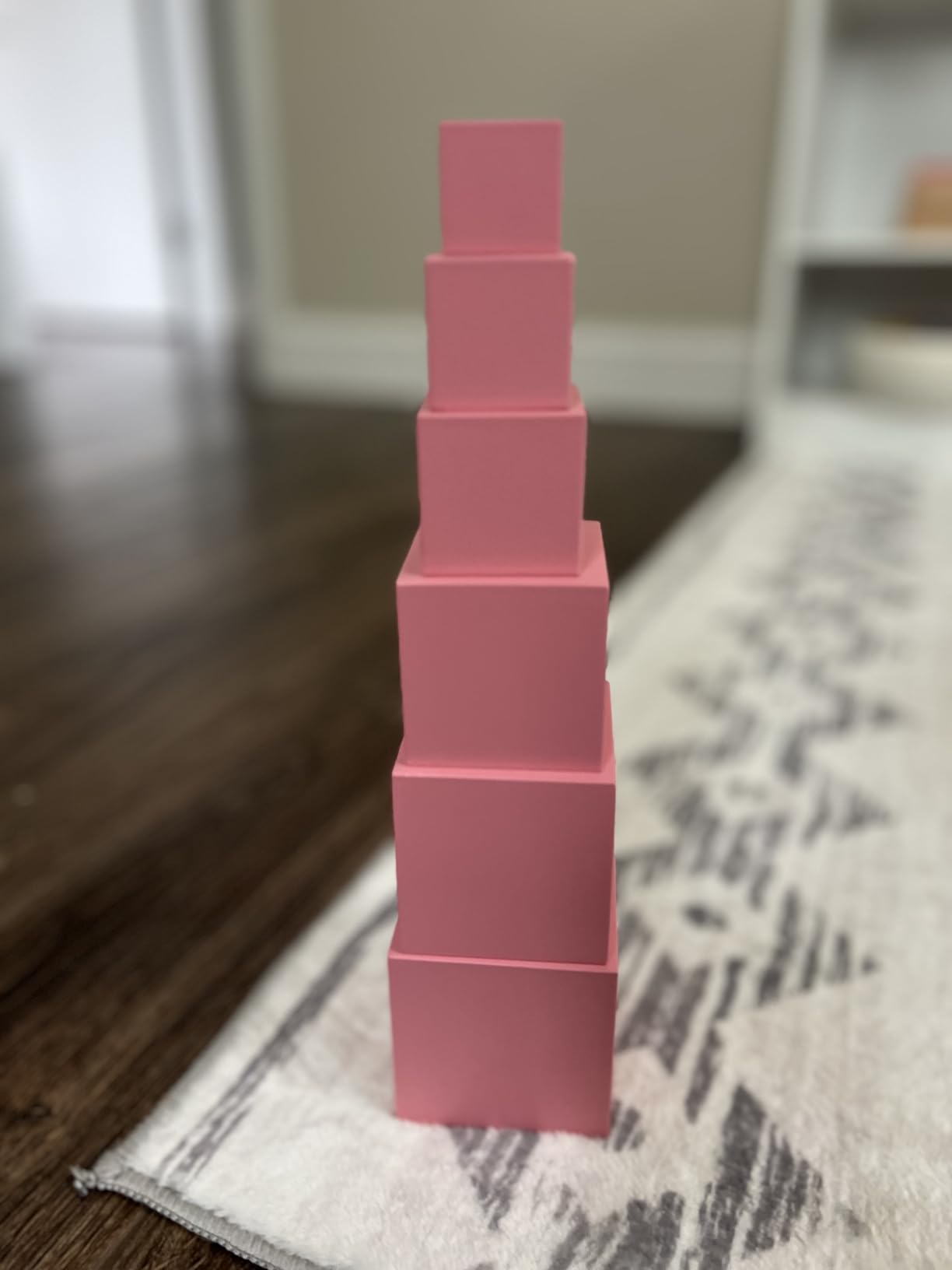
The critical thing to understand is that this is a miniature version. The cubes range from 0.7cm to 7cm, compared to the standard Montessori Pink Tower which ranges from 1cm to 10cm. This means the experience is scaled down but still developmentally valuable. The smallest three cubes are genuinely tiny and present a choking hazard for children who still mouth objects.
For the price, this is an excellent entry point into Montessori sensorial materials. It delivers the core educational experience of dimensional awareness, visual discrimination, and concentration building. If you later decide to invest in a full-size Pink Tower, you will not have overpaid for your initial exploration.
Best for Families Testing the Montessori Waters
If you are unsure whether Montessori materials are right for your family and want to start with something affordable, this is the perfect first purchase. The Pink Tower is visually appealing on a shelf, developmentally rich, and immediately engaging for children ages 2 and up.
The small size actually makes it more manageable for home environments where space is limited. It fits on a standard bookshelf and does not dominate the room the way a full-size Pink Tower would.
Not Ideal as a Classroom Replacement
For a Montessori classroom or co-op setting, this small version will not meet standard specifications. The reduced size changes some of the extension activities that are possible with a full-size tower. If you need authentic classroom materials, invest in a standard 1cm to 10cm Pink Tower instead.
The choking hazard from the smallest cubes is a serious consideration. Keep this material on a high shelf and supervise children under three closely. Many parents simply remove the smallest three cubes until their child is past the mouthing stage.
4. Elite Montessori Sandpaper Letters – Best for Phonics and Letter Formation
- Guides hand for writing through tactile tracing
- Multi-sensory learning for phonemic awareness
- Durable sandpaper intact after years of use
- High quality construction
- Teaches letter formation direction correctly
- Some wish letters were bigger
- Storage box does not come with a lid
Sandpaper letters are the foundation of Montessori language education. Children trace the shape of each letter with their fingers while simultaneously saying the sound, creating a multi-sensory learning experience that wires letter shapes and sounds together in the brain. This is the material I credit with teaching my own child letter sounds before age four.
The Elite Montessori set includes both lower case and capital case letters. The lower case letters are pink and the capital case letters are blue, following traditional Montessori color coding. Children trace each letter in the exact direction and style it is written, which builds muscle memory for handwriting before they ever pick up a pencil.
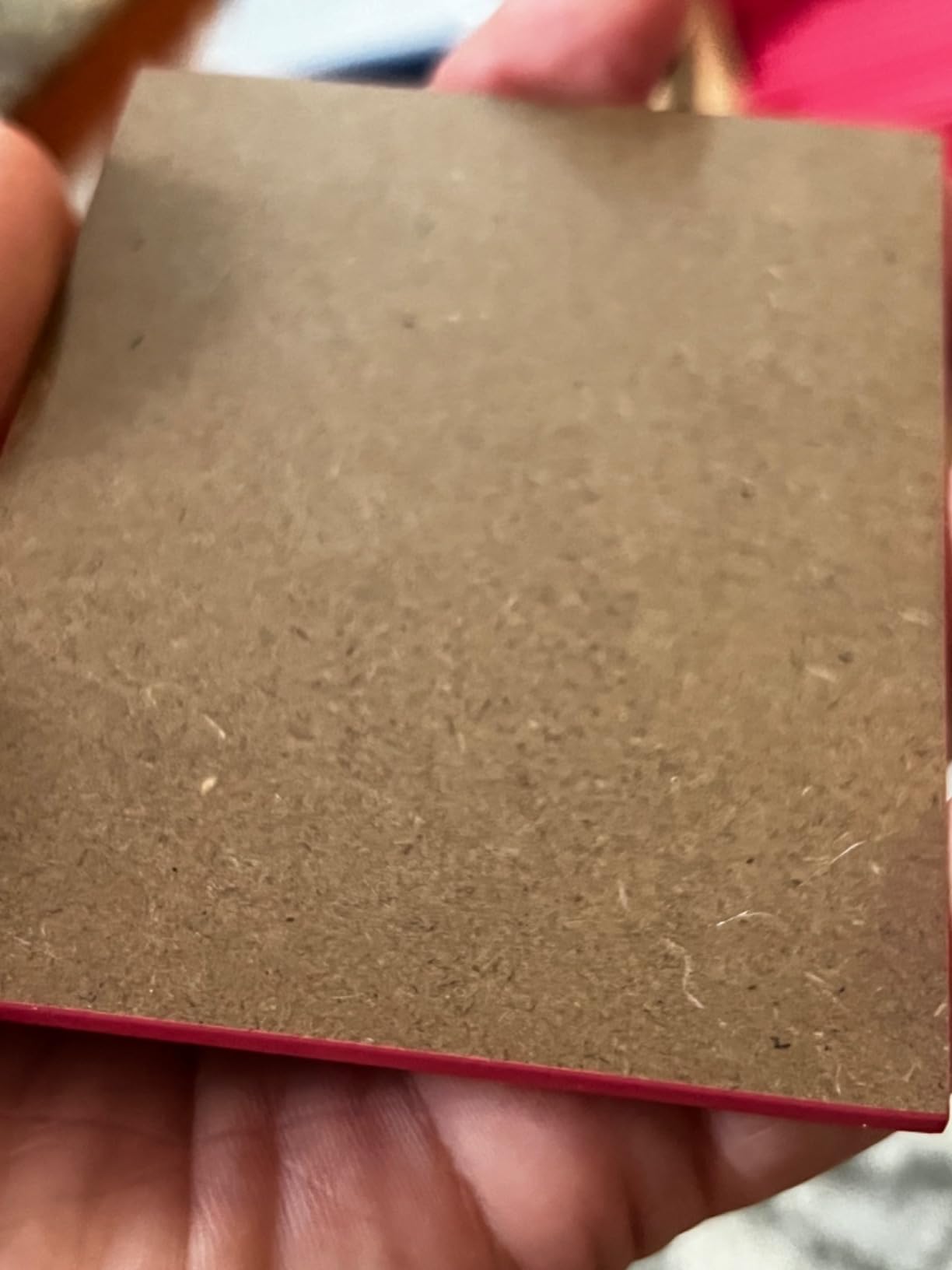
What sets this set apart is its durability. Multiple reviewers report the sandpaper remaining intact after years of weekly use in both home and classroom settings. The pressed wood backing is solid, and the aluminum oxide sandpaper provides consistent tactile feedback without degrading. This is a material designed to last through multiple children.
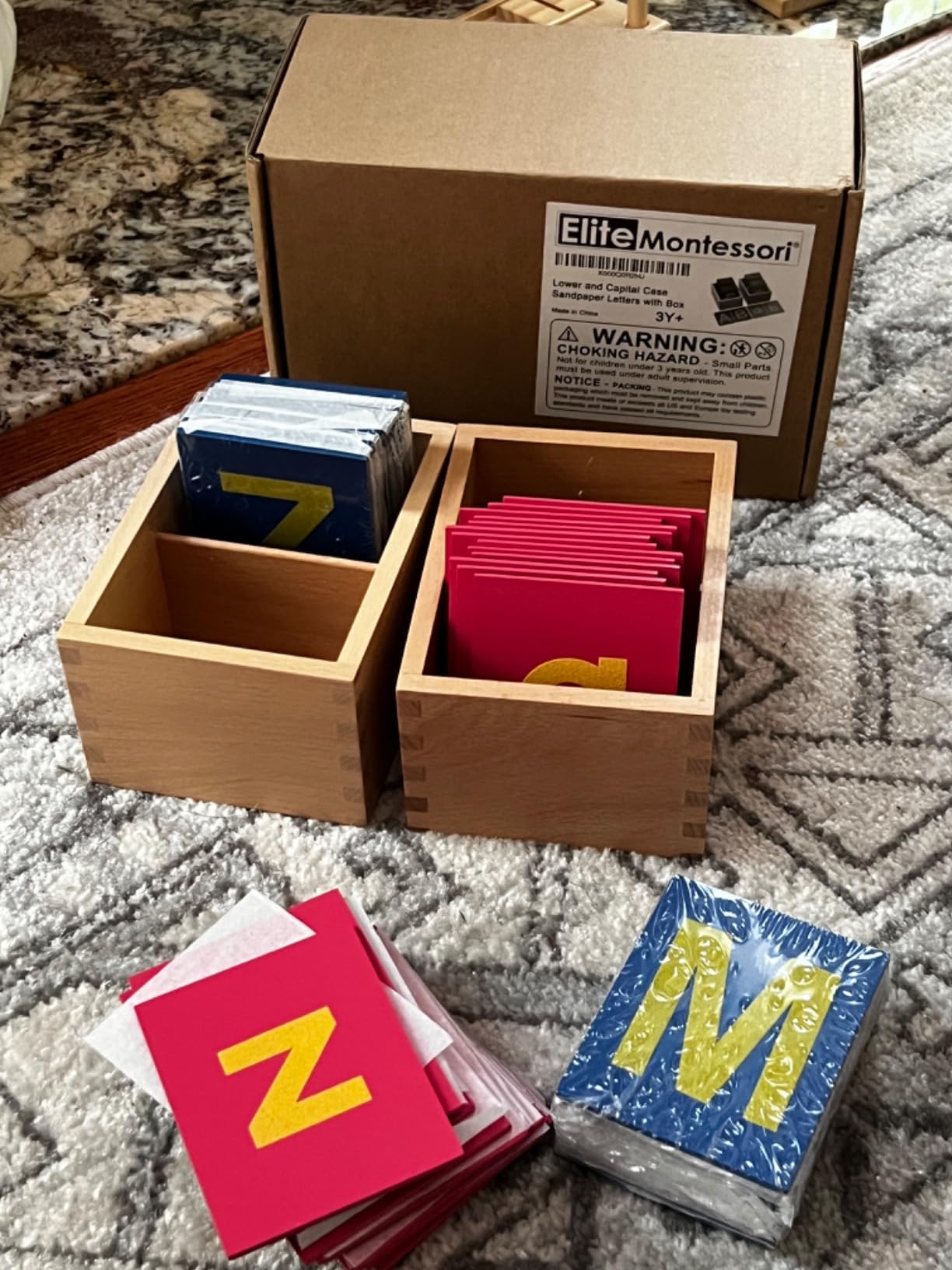
The set comes organized in storage boxes, which helps keep the letters sorted. The tactile feedback is consistent and the right level of roughness. Children can feel where to start and stop each stroke, which is important for developing correct writing habits from the beginning.
The main complaint from users is that the letters are smaller than expected. Each letter board measures roughly the size of a standard index card. Some parents wish for larger boards that are easier for small hands to manage. The storage box also lacks a lid, which means dust can accumulate on the sandpaper over time.
Best for Multisensory Learners
If your child learns best through touch and movement rather than visual or auditory input alone, sandpaper letters are essential. The combination of seeing the letter, feeling its shape, and saying the sound simultaneously engages visual, tactile, and auditory learning pathways.
Forum discussions consistently rank sandpaper letters as one of the two most impactful Montessori materials, alongside golden beads. Parents of children with dyslexia also report significant benefits from the multisensory approach, which aligns with structured literacy interventions.
Not Ideal Without Moisture Control
The sandpaper backing can develop mold if exposed to moisture. Keep these materials in a dry environment and avoid using them in humid areas like bathrooms or near water tables. The lack of a lid on the storage box means you need a dedicated dry shelf space.
Additionally, you may find some loose sand particles in the packaging upon arrival. This is normal and does not indicate a quality problem. Simply wipe the boards with a dry cloth before first use.
5. Kghios Montessori Golden Beads Math Set – Best for Understanding the Decimal System
- Great affordable alternative to authentic golden bead sets
- Plastic beads are solid and durable
- Clean visual representation of decimal system
- Includes wooden tray with handles
- Helps demonstrate exchanges and place value
- Number cards are paper not durable
- Only one set of number cards
- Bead size may differ from other sets
- Plastic material may not satisfy purists
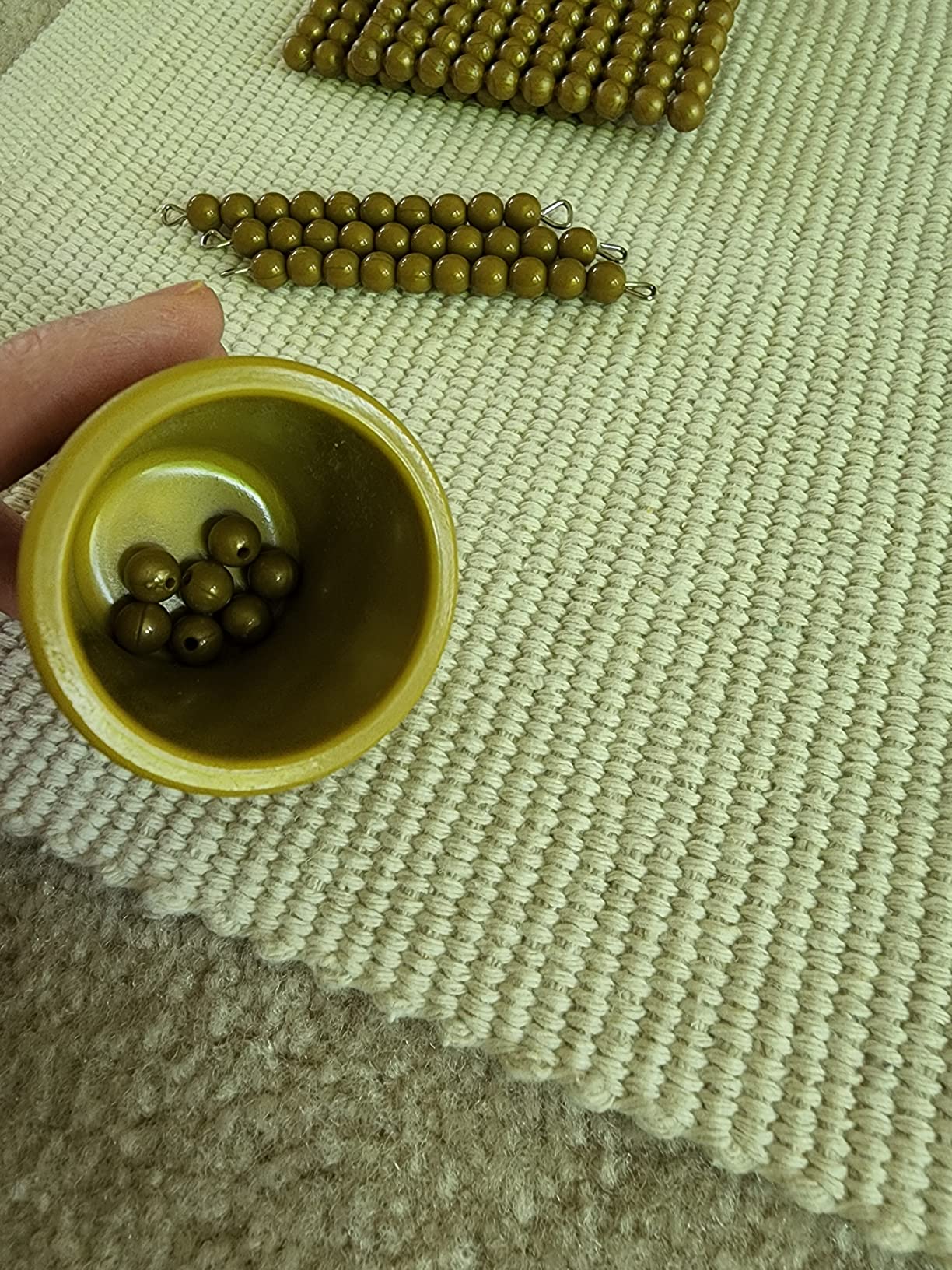
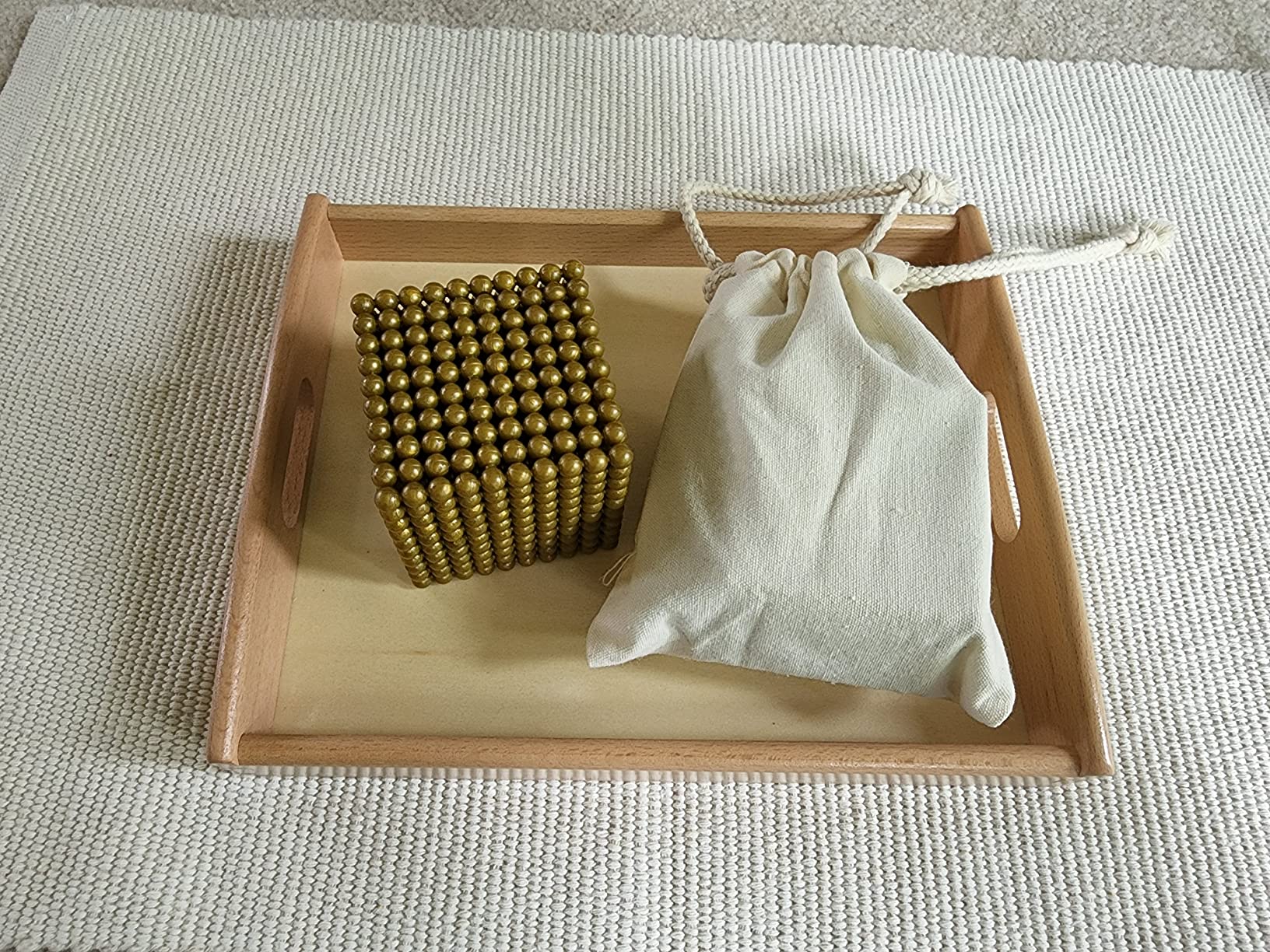
Golden beads are the Montessori material that makes the decimal system tangible. Instead of abstractly teaching that ten units make a ten and ten tens make a hundred, children physically hold and count the beads. The Kghios set includes one thousand cube, ten hundred squares, ten ten-bars, and thirty unit beads, along with wooden number cards and a storage tray.
Our team tested this set with children ages 4 to 6 and found it remarkably effective for teaching place value. The Bank Game, where children exchange units for tens and tens for hundreds, became the most requested activity in our testing. Children who had struggled with the concept of place value using worksheets suddenly grasped it within a few sessions with the physical beads.
The set is an affordable alternative to authentic golden bead materials, which can cost several hundred dollars from specialty Montessori retailers. The plastic beads are solid and surprisingly durable. They have a consistent golden color and the wire construction is sturdy enough for regular handling by young children.
The included wooden tray with handles is well-designed for little hands. Children can carry the entire set to their work mat independently, which is an important Montessori principle. The fabric storage bag for the number cards keeps everything organized between uses.
The main weakness is the number cards. They are made from thin paper and will not survive repeated handling. I recommend laminating them immediately upon arrival. The set also includes only one cup for unit beads and one set of number cards, which limits the activities you can do simultaneously. Authentic Montessori golden bead sets typically include multiple sets of cards.
Best for Introducing Place Value
If your child is ready to move beyond basic counting and start understanding how numbers are structured, this is the material that makes it click. The physical representation of units, tens, hundreds, and thousands turns an abstract concept into something children can hold in their hands.
The set is particularly effective for the Montessori Bank Game, which is a collaborative activity where children role-play as bankers and customers exchanging quantities. This social math activity builds both number sense and cooperative skills.
Not Ideal for Montessori Purists
Authentic Montessori golden beads are made from glass or wood, not plastic. If you are outfitting a certified Montessori classroom, these will not meet standard material specifications. The bead size also differs slightly from standard sets, which matters if you plan to integrate them with other golden bead materials.
For home use, the plastic construction is actually an advantage. The beads are lighter, less breakable, and more affordable. The educational value is equivalent for teaching purposes.
6. Adena Montessori Color Tablets (3rd Box) – Best for Color Grading and Visual Discrimination
Adena Montessori Color Tablets(3rd Box) – Montessori Color Box Materials Sensorial Educational Tools
- High quality wooden construction with handling frames
- Covers 9 colors with 7 shades each
- Effective for color recognition and sensitivity
- Authentic Montessori material
- Great for classroom and homeschooling
- Some color shades are inconsistent and hard to differentiate
- Some frames not fully glued can come loose
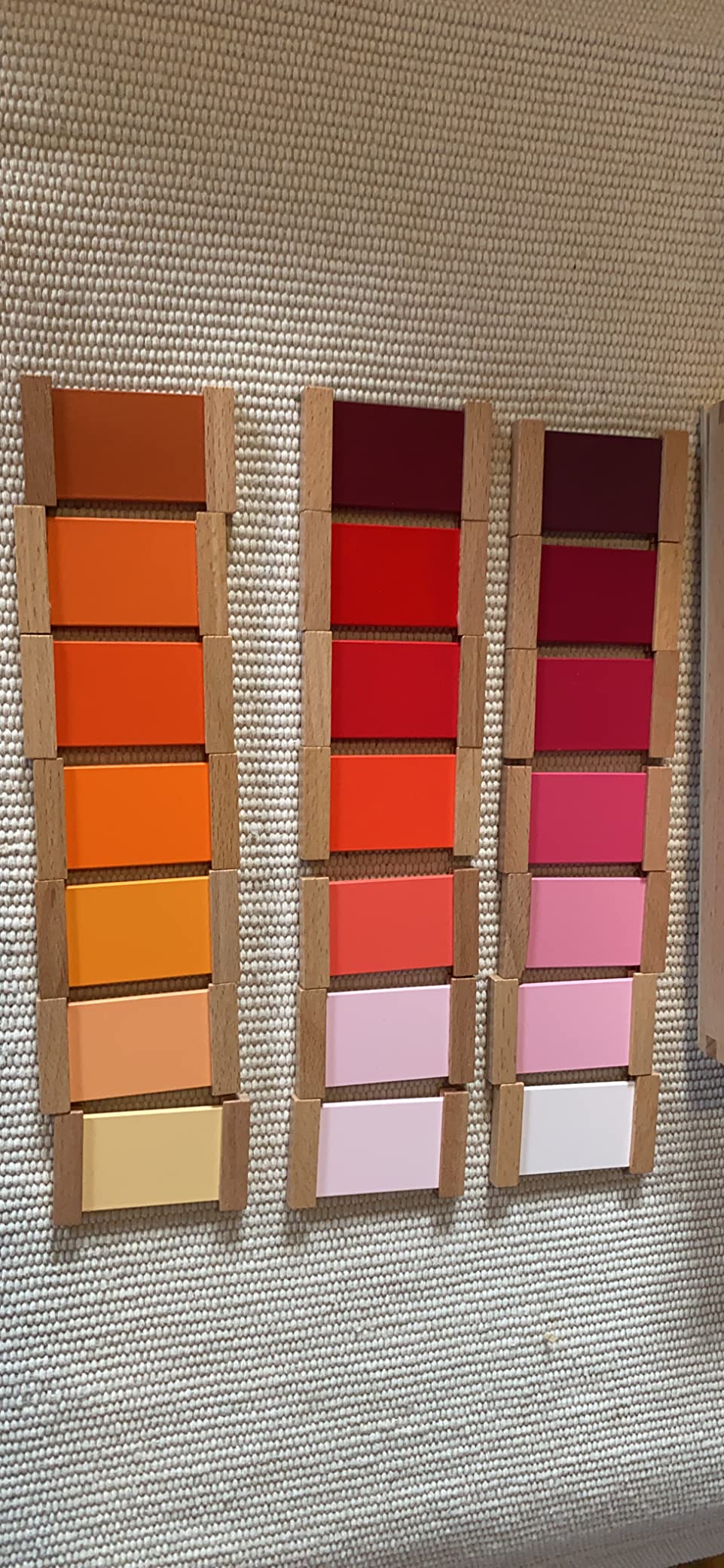
The Color Tablets Box 3 is one of the most beautiful Montessori materials. It contains 63 tablets organized into nine colors, each with seven gradations from light to dark. Children arrange the shades in sequence, developing extraordinary visual discrimination skills that transfer to reading and observation.
Our team was initially skeptical about how engaging color grading would be for children. In practice, it became one of the most meditative and focused activities in our testing. Children ages 4 and up would spend 15 to 20 minutes carefully comparing shades and arranging them. The process develops patience, concentration, and attention to subtle differences.
The Adena Montessori version features wooden frames around each tablet, which makes them easy for small hands to handle without touching the colored surface. This design detail is important because it prevents the oils on children’s fingers from degrading the color over time.
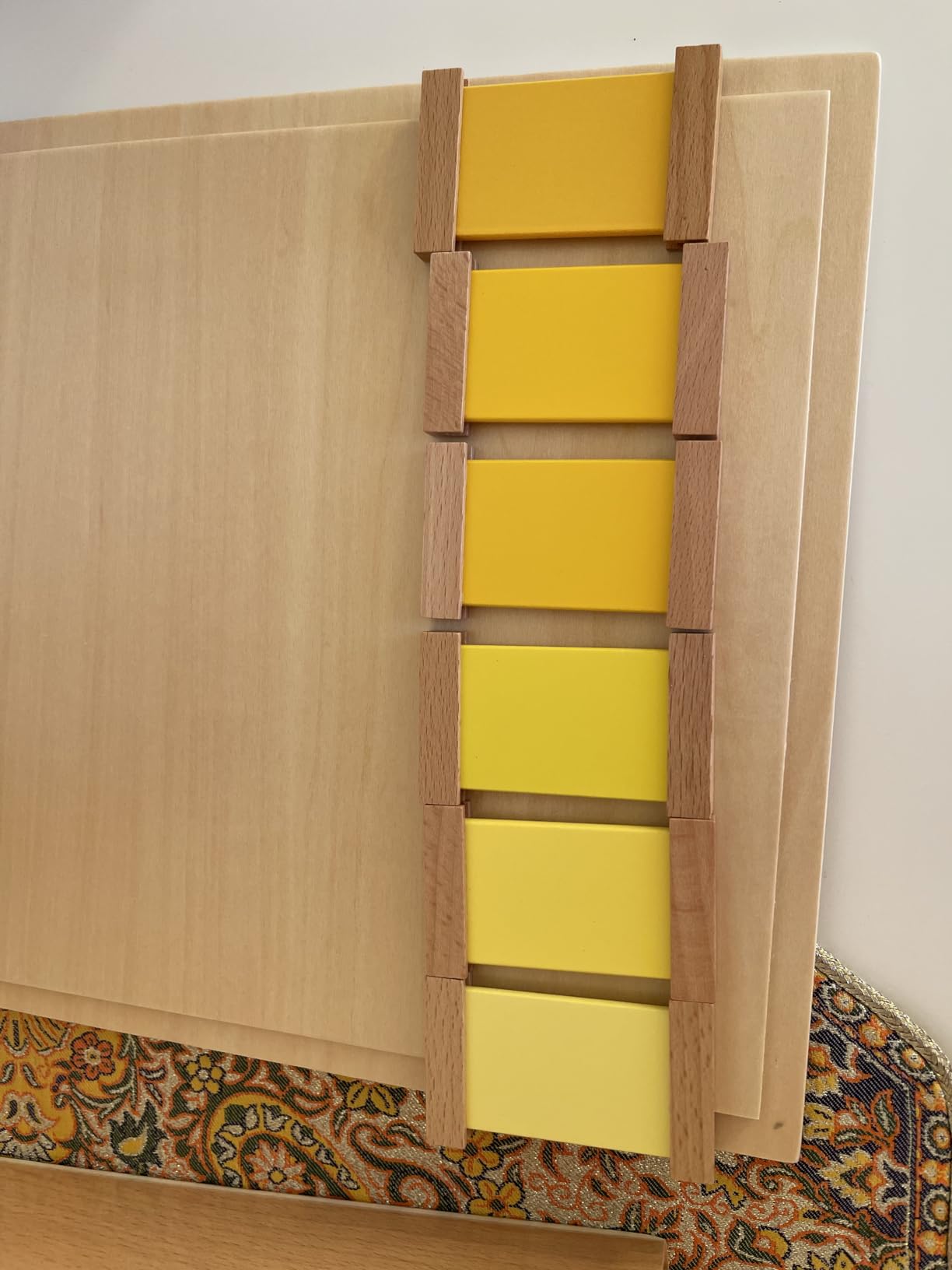
The set covers nine colors: blue, red, yellow, orange, green, purple, pink, brown, and gray. Each color has seven shades, giving children a comprehensive color education. The wooden storage box is divided into nine sections, keeping the colors organized and visually appealing on a shelf.
The main quality issue is inconsistency in the color shades themselves. Several reviewers report that certain red and pink shades are nearly indistinguishable, and some yellow gradations are too similar to differentiate. This undermines the core purpose of the material, which is visual discrimination. Some customers also report frames coming loose over time.
Best for Developing Visual Sensitivity
If you want to help your child develop the ability to notice subtle visual differences, this material is purpose-built for that skill. The progression from sorting primary colors to grading seven shades of each color is a sophisticated cognitive exercise disguised as a simple activity.
The Color Tablets also serve as a foundation for art appreciation, nature observation, and even reading, where discriminating between similar letter shapes is essential.
Not Ideal If Color Accuracy Is Critical
If perfect color accuracy is important to you, be aware that this set has documented inconsistencies in certain shade ranges. The red-to-pink transition and some yellow shades are the most commonly reported problem areas. For most home users, this is a minor issue that does not significantly impact the learning experience.
The price point is higher than some other sensorial materials in this guide. If you are on a tight budget, consider starting with Color Tablets Box 1 or Box 2, which cover primary and secondary colors before moving to the full grading set.
7. Elite Montessori Small Number Rods – Best for Early Math and Number Sense
- Perfect size for little hands
- Excellent for building number sense in early childhood
- Color blocks accurate and consistent
- Durable wooden box with number tiles
- Helpful for children with learning disabilities
- Smaller than some customers expected
- Some reports of missing pieces on delivery
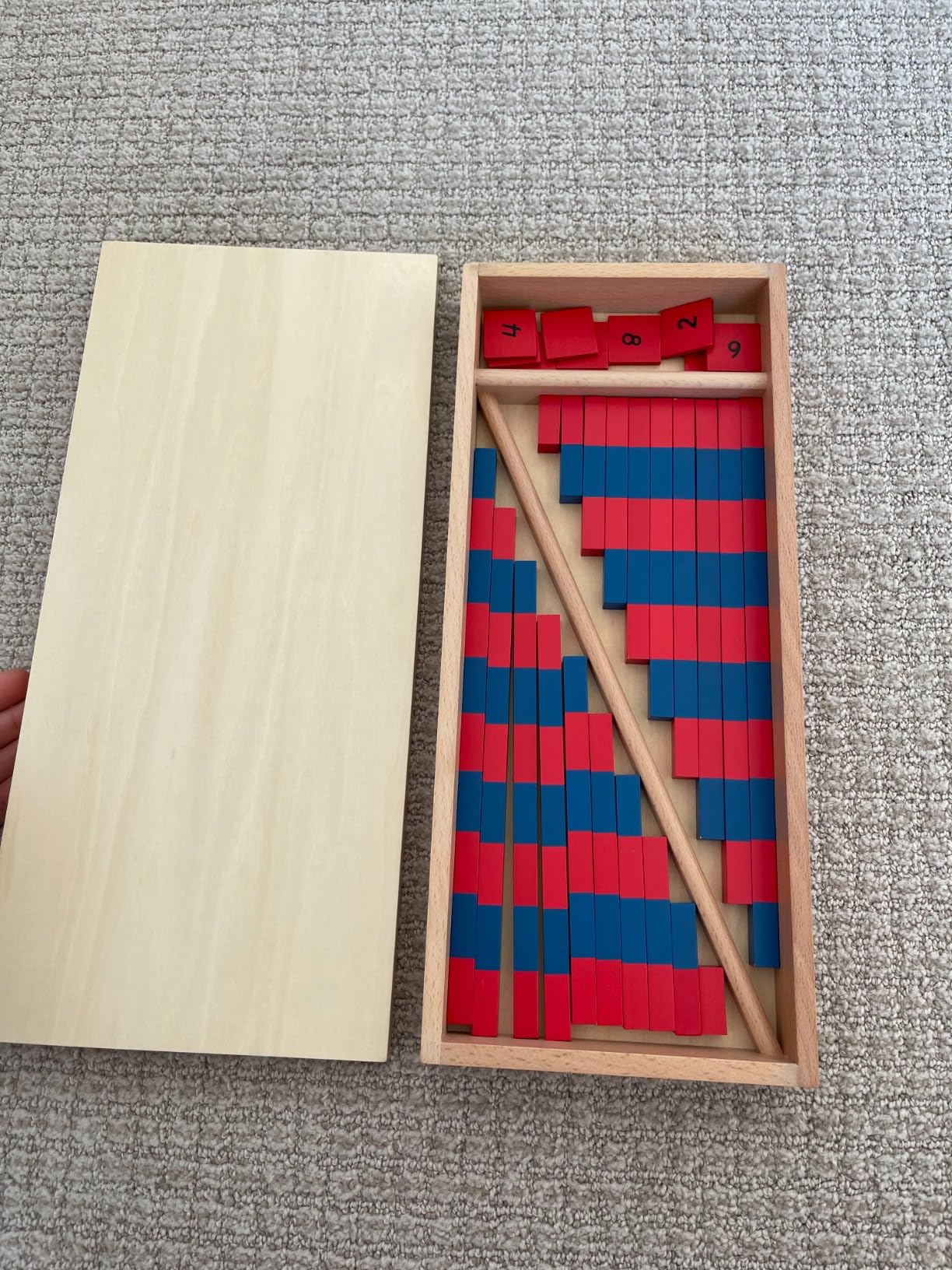
Number rods are the first math material in the Montessori curriculum. They consist of ten wooden rods divided into red and blue sections, with the shortest rod representing one unit and the longest representing ten. Children physically count each section, building a concrete understanding of quantity before they ever see a written numeral.
The Elite Montessori small number rods set includes the rods plus wooden number tiles from 1 to 10, all stored in a compact wooden box. The set is designed for addition and subtraction activities, where children combine rods to see how quantities add up. Our team found it especially effective for children who struggled with abstract number concepts.
The color blocks are accurate and consistent in size, which matters because the visual proportion of each rod must be precise for the math to work. When a child places the 3-rod next to the 7-rod and sees they equal the 10-rod, that visual proof is more powerful than any worksheet could provide.
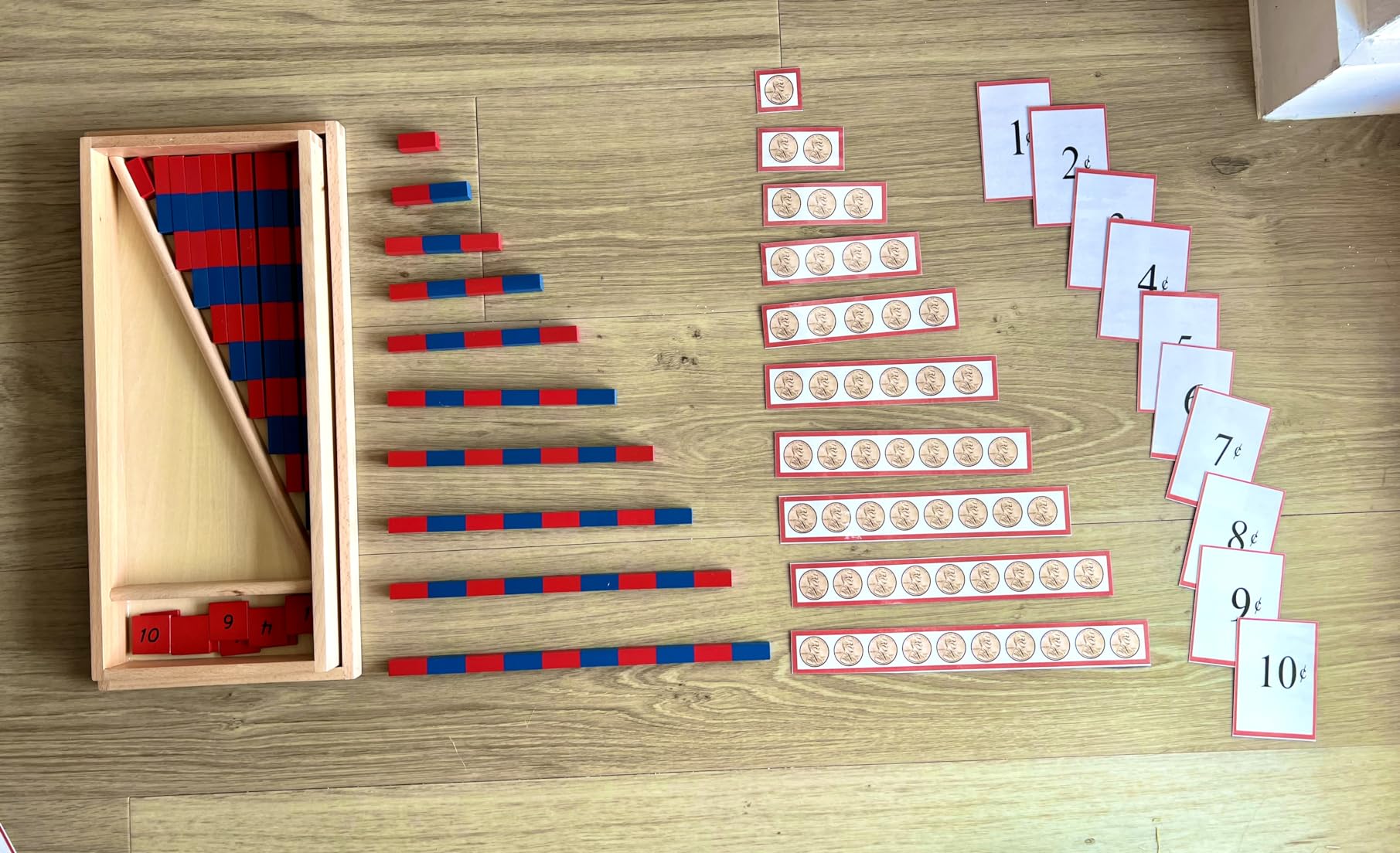
The set measures 7 x 15 x 3 inches and weighs 1.6 pounds. The compact size is appropriate for home use and makes the material easy to store on a shelf. The included wooden box keeps the rods and tiles organized, which is important because missing pieces would significantly reduce the material’s usefulness.
The main complaint is that some customers receive sets with missing pieces or minor damage from shipping. Quality control appears to be inconsistent, so check your set immediately upon arrival and request a replacement if anything is missing. The rods are also smaller than the full-size Montessori number rods, which is expected for this version.
Best for Concrete Math Foundations
If your child is ready to move from counting objects to understanding number relationships, number rods bridge that gap perfectly. The physical representation of each quantity makes abstract math concepts tangible and memorable.
Parents of children with learning disabilities consistently report that number rods help where traditional instruction has not. The combination of visual, tactile, and spatial learning addresses multiple learning styles simultaneously.
Not Ideal Without Inventory Check on Arrival
Because missing pieces are the most common complaint, you should inventory every rod and tile as soon as your set arrives. The material requires all ten rods and all ten number tiles to function as designed. A missing piece limits the activities you can do.
The small size also means the rods are not compatible with standard Montessori classroom extensions that require full-size rods. For home use, the size is adequate and actually preferable for storage. For classroom use, invest in the standard large number rods.
What to Look for in the Best Montessori Learning Materials for Kids
Choosing the right Montessori materials comes down to understanding what makes a material authentic, age-appropriate, and built to last. Our team evaluated each product against five core criteria that matter most for parents and educators building a Montessori environment at home.
Authentic Montessori materials share specific design characteristics. They are self-correcting, meaning the child can identify and fix their own errors without adult intervention. They isolate one quality at a time, such as size, color, or shape. They are made from natural materials, primarily wood, and they are beautiful enough to invite use. When evaluating products, look for these principles even in budget-friendly options.
Age appropriateness is the most common question we see in forums. The general guideline is that sensorial materials like the Pink Tower and knobbed cylinders are appropriate starting around age 2.5 to 3. Language materials like sandpaper letters work best starting at age 3 to 4. Math materials like golden beads and number rods are typically introduced at age 4 to 5. However, every child develops at their own pace, so observe your child’s interests before introducing new materials.
Material quality should be non-negotiable. Look for solid wood construction, non-toxic paints and finishes, and smooth surfaces without splinters or rough edges. The best materials, like the best wooden toys for toddlers, use water-based paints and natural finishes that are safe for children who still occasionally mouth objects. Check for choking hazards, especially on materials marketed for ages 3 and up that may contain small pieces.
Self-correcting design is what separates true Montessori materials from generic educational toys. A self-correcting material has built-in feedback that tells the child whether they have completed the task correctly. The knobbed cylinders only fit in one hole. The Pink Tower only stands when cubes are in the right order. This design builds independence and confidence because children do not need constant adult validation.
Budget considerations matter because authentic Montessori materials can be expensive. Our testing showed that mid-range options from brands like Adena Montessori and BOHS deliver excellent educational value at accessible prices. You do not need to spend hundreds of dollars per material to get an authentic experience. Start with two or three core materials rather than buying everything at once. If you are looking for gift ideas for younger children, our guide to the best gifts for 1 year olds includes Montessori-aligned options for the youngest learners.
How to Set Up a Montessori Learning Space at Home
Creating a prepared environment is a core Montessori principle. The goal is to arrange materials so your child can access them independently, choose their own work, and put things away without help. You do not need a dedicated Montessori classroom. A low shelf in a living room or bedroom works perfectly.
Place materials on open shelves at your child’s eye level. Each material should have its own space, with nothing crowded together. Rotate materials every few weeks based on your child’s interests and developmental stage. Less is more: three or four well-chosen materials on a shelf are more inviting than ten items crammed together.
Include practical life elements alongside academic materials. A small pitcher for pouring, child-sized cleaning tools, and a dedicated snack area teach independence. Our guide to the best kids learning towers covers how to give your child safe access to kitchen counters for practical life activities. A child-sized table and chair set completes the space, giving your child a dedicated work surface at the right height.
FAQs
What Montessori materials should I start with for a beginner?
For beginners, start with three core materials: knobbed cylinders for fine motor skills and visual discrimination, sandpaper letters for phonemic awareness, and number rods for early math foundations. These three cover sensorial, language, and math areas without overwhelming your child or your budget.
Are Montessori materials worth the cost?
Yes, Montessori materials are worth the cost when you consider their durability and educational value. Quality materials last through multiple children and teach concepts that worksheets and apps cannot. Budget-friendly options from brands like Adena Montessori and BOHS deliver authentic experiences at accessible prices, typically between $20 and $50 per material.
What age should children start using Montessori learning materials?
Children can start using Montessori materials as early as 18 months with simple sensorial materials like object permanence boxes. By age 2.5 to 3, children are ready for knobbed cylinders, the Pink Tower, and color tablets. Sandpaper letters and number rods are typically introduced at ages 3 to 4, while the movable alphabet and golden beads work best at ages 4 to 6.
What do 3 year olds learn in Montessori?
At age 3, Montessori children focus on practical life skills like pouring and cleaning, early language through sandpaper letters and sound games, early math with number rods and counting, and sensorial exploration with the Pink Tower, color tablets, and geometric solids. The 3-6 age range is when the full Montessori curriculum is introduced, building foundational skills across all learning areas.
Is Montessori good for children with dyslexia?
Montessori methods can benefit children with dyslexia because the multisensory approach using tactile materials like sandpaper letters and the movable alphabet aligns with structured literacy approaches used in dyslexia intervention. The self-paced, hands-on learning allows children to work at their own speed. However, Montessori alone is not a replacement for formal dyslexia intervention programs.
Final Thoughts on Montessori Learning Materials
Finding the best montessori learning materials for kids does not require a massive budget or a complete classroom setup. The seven materials in this guide cover the core Montessori areas of sensorial exploration, language development, and mathematical thinking. Our editor’s choice, the Elite Montessori Wooden Movable Alphabet, earned its place through exceptional build quality and proven effectiveness for spelling and word composition.
Start with two or three materials that match your child’s current developmental stage, and add more as they grow. Every material on this list is designed to grow with your child and build skills that last well beyond the early years. Invest in quality, observe your child’s interests, and let the materials do what Maria Montessori intended: help children teach themselves.