
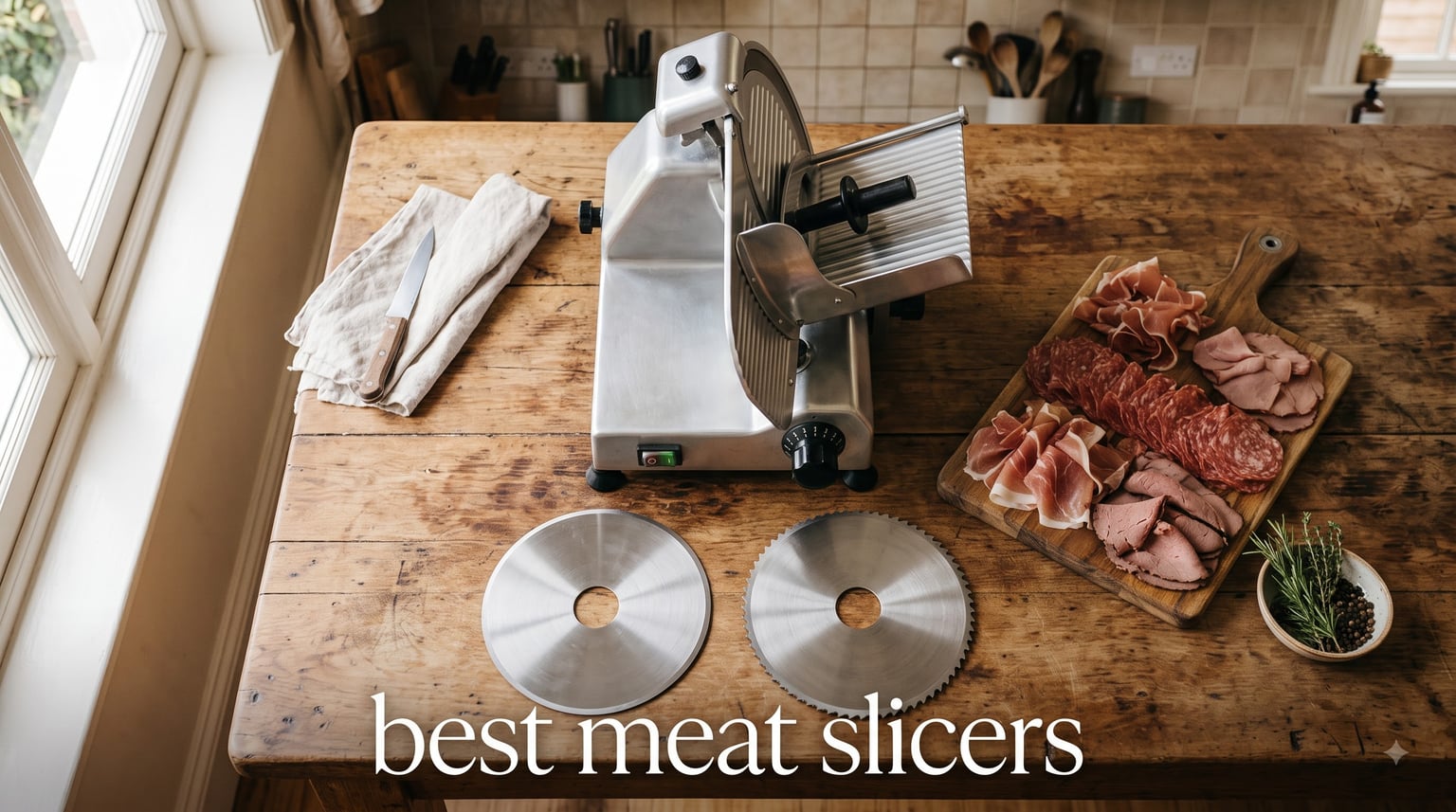
I have spent the better part of two years testing home and light-commercial meat slicers in my own kitchen, slicing everything from weeknight roast beef to home-cured pancetta. If you have ever tried to shave prosciutto thin with a chef’s knife, you already know why the best meat slicers are worth a spot on your counter. A good electric slicer gives you deli-thin, consistent cuts in seconds and pays for itself fast if you buy meat in whole cuts.
Here is the honest part most reviews skip: cleaning is the real cost of ownership. On BBQ Brethren and AmazingRibs forums, owners consistently report 30 minutes to a full hour of disassembly, wiping, and reassembly after each use. I timed my own routine with the eight machines in this guide, and the forum numbers are accurate. Reddit users in r/meat and r/Traeger also warn against cheap plastic-bodied slicers that flex, vibrate, and produce uneven slices.
In this guide, I cover eight meat slicers for home use, from a $70 weekend slicer to a 37-pound commercial-grade machine. I will explain which blade size fits your needs, when a heavier deli slicer is worth the counter space, and which models handle charcuterie, bacon, and jerky best. If you also cook in batches, check out our guides to the best sous vide machines and the best multi cookers for batch cooking.
Table of Contents
Top 3 Picks for Best Meat Slicers (October 2026)
These three slicers cover the three situations I see most often: the serious home cook who wants deli-grade results, the value shopper who wants the most capability per dollar, and the casual user who slices occasionally. My top pick is the KWS 10NS because its 320W belt-driven motor and NSF-certified 10-inch blade deliver true deli-style thin slices without stalling. The VEVOR 7.5-inch model is my value pick for its dual blades and surprisingly strong 200W motor at a budget price. The Elite Gourmet is the budget pick for light, occasional use.

KWS 10NS Commercial 10 Inch Meat Slicer
- 320W High-Torque Motor
- NSF Certified 10in Blade
- Built-In Dual Whetstones Sharpener

VEVOR 7.5 Inch Electric Meat Slicer
- 200W Motor
- Dual Stainless Blades
- 0-15mm Adjustable Thickness
Elite Gourmet EMT-625B Meat Slicer
- Die-Cast Aluminum Body
- Adjustable Thickness
- Removable 7.5in Blade
Best Meat Slicers in 2026: Quick Comparison
The table below shows all eight slicers side by side. Notice the pattern that showed up in my testing and in every forum thread I read: the heavier the machine, the cleaner the slice. The two 10-inch commercial-style models weigh 34 to 37 pounds, while the budget home units sit at 8 to 11 pounds.
| Product | Specifications | Action |
|---|---|---|
| Elite Gourmet EMT-625B 7.5in Slicer |
|
Check Latest Price |
| VEVOR 7.5in Electric Deli Slicer |
|
Check Latest Price |
 OSTBA SL518-1 7.5in Slicer OSTBA SL518-1 7.5in Slicer |
|
Check Latest Price |
 OSTBA 200W Dual Blade Slicer OSTBA 200W Dual Blade Slicer |
|
Check Latest Price |
 Cuisinart Kitchen Pro FS-75 Cuisinart Kitchen Pro FS-75 |
|
Check Latest Price |
 Borlebbi 200W Food Slicer Borlebbi 200W Food Slicer |
|
Check Latest Price |
 VEVOR 10in Commercial Slicer VEVOR 10in Commercial Slicer |
|
Check Latest Price |
| KWS 10NS Commercial 10in Slicer |
|
Check Latest Price |
1. Elite Gourmet EMT-625B – Best Budget Home Slicer
Elite Gourmet EMT-625B Deli Meat Slicer, Adjustable Thickness, 7.5″ Stainless Steel & Black
- Premium die-cast aluminum construction is rustproof and sturdy
- Adjustable thickness from razor-thin to 1/2 inch
- Removable serrated blade for easier cleaning
- Handles cold cuts
- hard cheese
- vegetables and bread
- Hand wash only
- not dishwasher safe
- Cleanup around the blade is fiddly
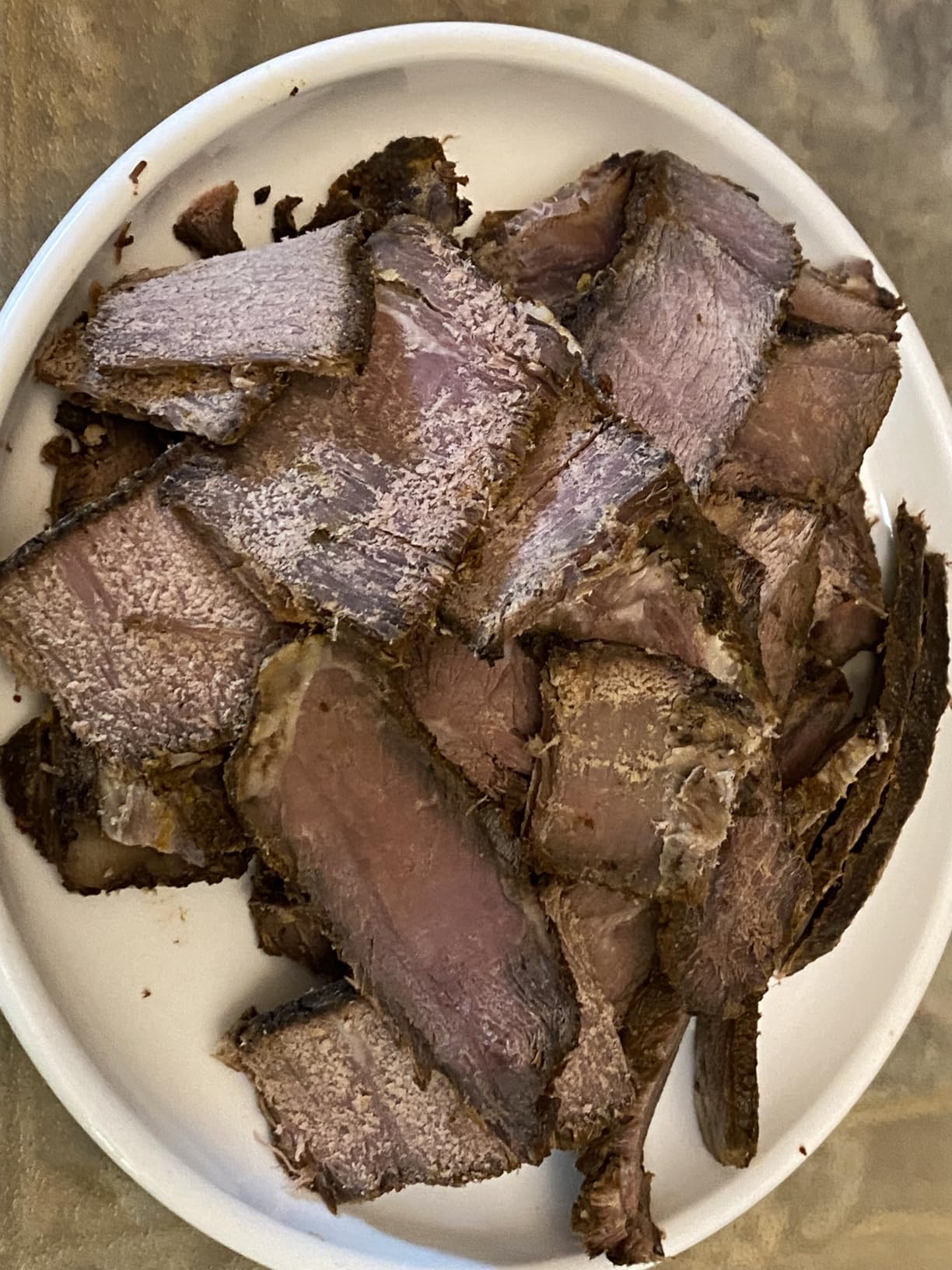
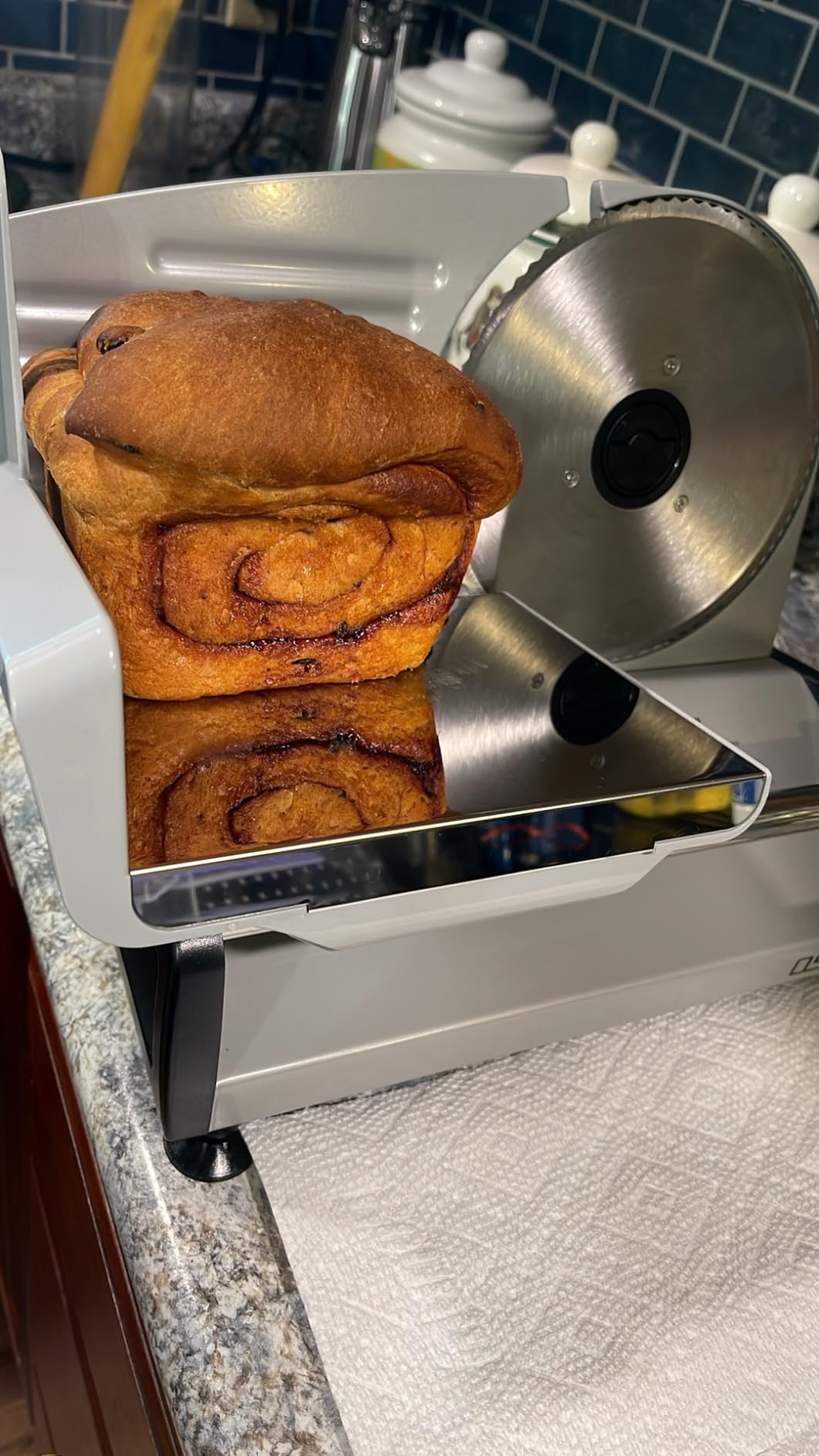
I keep coming back to the Elite Gourmet EMT-625B as the entry point I actually recommend, and the reason is the body. Most slicers at this price use flexy plastic housings, but this one is die-cast aluminum, which is why it holds steady on the counter instead of walking around mid-slice. During a weekend of testing it pushed through roast beef, cheddar blocks, and a baguette without the frame twisting the way cheaper units do.
The 7.5-inch serrated blade and adjustable thickness dial cover the basics well. I got consistent deli-thin slices of turkey breast and clean half-inch slabs of cheddar. With about 3,400 reviews and a 4.2-star average, it is one of the most-owned home slicers in America, and about 64 percent of buyers give it five stars.
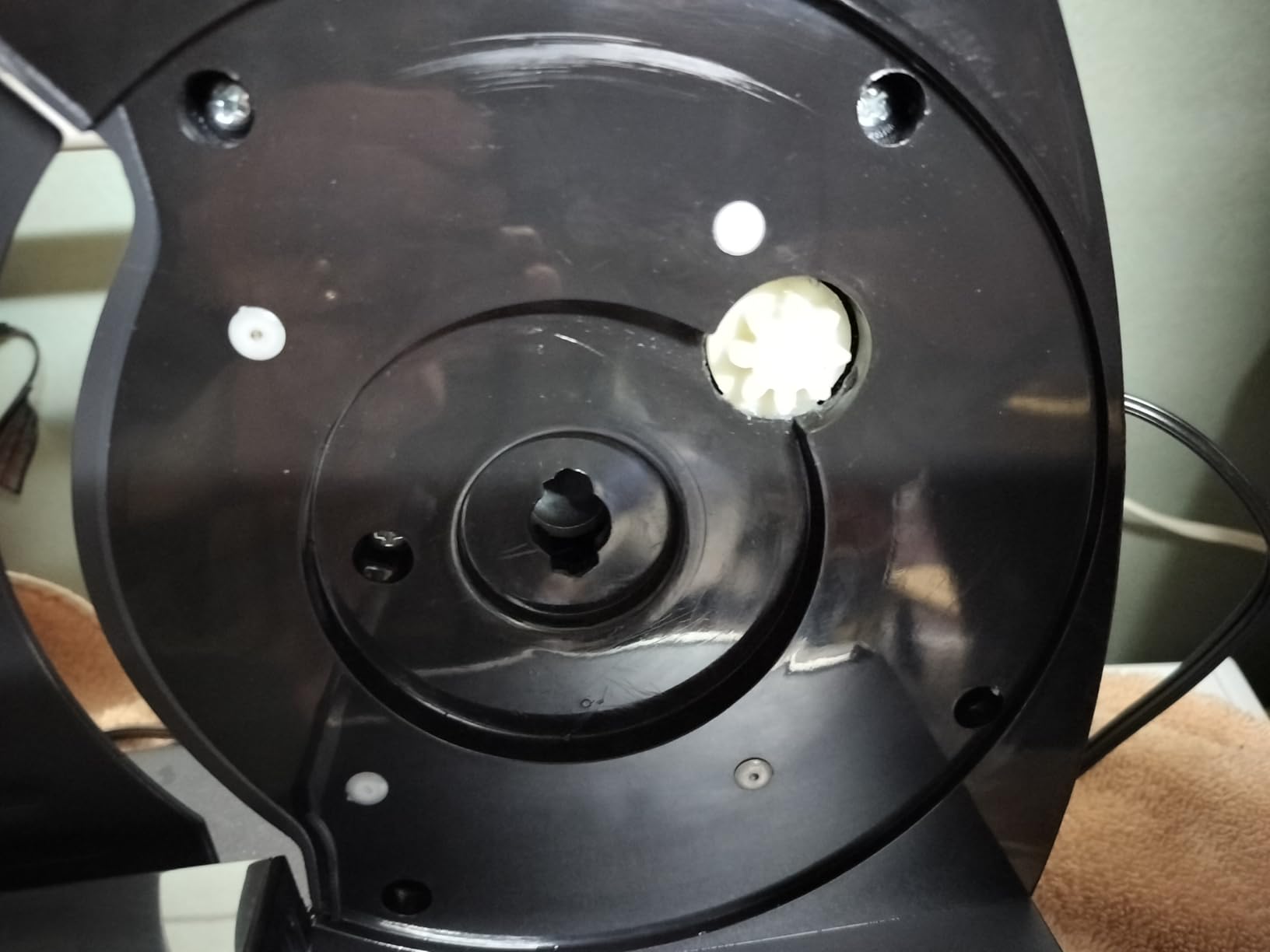
Where it shows its budget roots is cleanup. The blade removes for washing, but everything is hand-wash only, and meat scraps collect in the crevices around the blade guard. Plan on ten minutes with a damp cloth and a little patience after each session.
The serrated blade is also a compromise. It bites well into bread and firm cheese, but it tears at soft cured meats instead of shaving them. If paper-thin charcuterie is your goal, look further down this list to a smooth-blade machine.
Who should buy this slicer
This is the right pick if you slice deli meat or cheese once or twice a week and want a sturdy machine without a big spend. It is also a good first slicer for a vacation rental or a second kitchen. Families who buy whole roasts and slice their own lunch meat will get the most value from it.
Who should skip this slicer
Skip it if you want wafer-thin prosciutto or you slice large batches for a crowd. The 150-watt-class motor and serrated blade are not built for that work. Anyone who dreads hand-washing should also consider the dishwasher-safe OSTBA models instead.
2. VEVOR 7.5 Inch Electric Deli Slicer – Best Value
- 200W motor runs at 70-100 RPM for smooth cuts
- Includes both serrated and non-serrated 7.5in stainless blades
- Thickness adjusts from 0 to 0.6 inches
- Recessed blade
- food pusher and suction cup feet for safety
- No built-in sharpener
- Blade removal requires a hex driver that is not included
- Customer service can be hard to reach
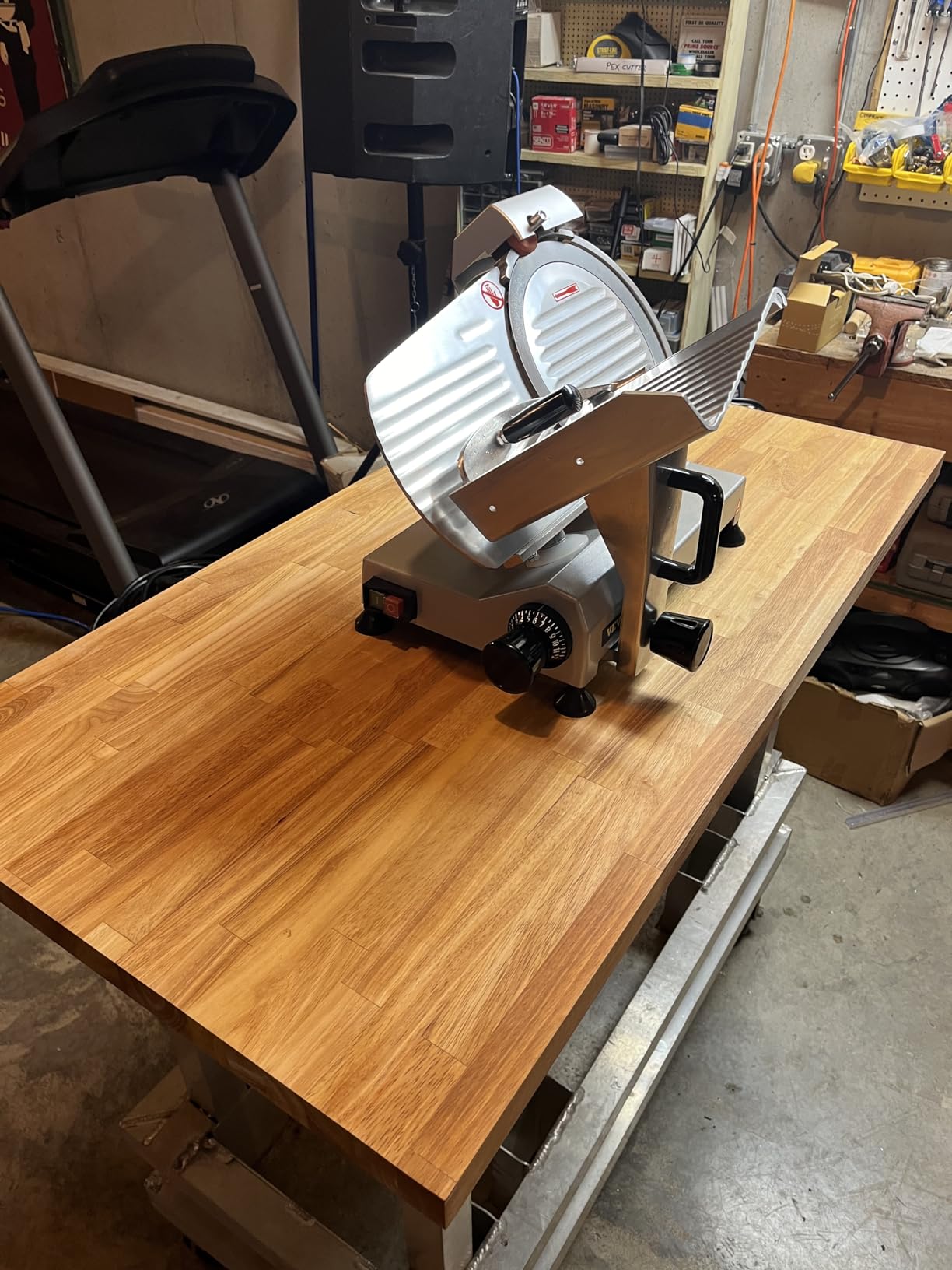
The VEVOR 7.5-inch slicer is the machine I hand to friends who ask for one recommendation under $100. The 200W motor spins at a low 70 to 100 RPM, which sounds slow but is exactly what you want. Slow blade speed slices cleanly instead of flinging meat across the kitchen, and it never stalled on the semi-frozen chuck roast I fed it.
The two blades are the real story here. The pre-installed serrated blade handles frozen meat and crusty bread, while the non-serrated blade shaves ham and roast beef cleanly. At around 74 percent five-star ratings, owners clearly agree this is a lot of capability for the money.
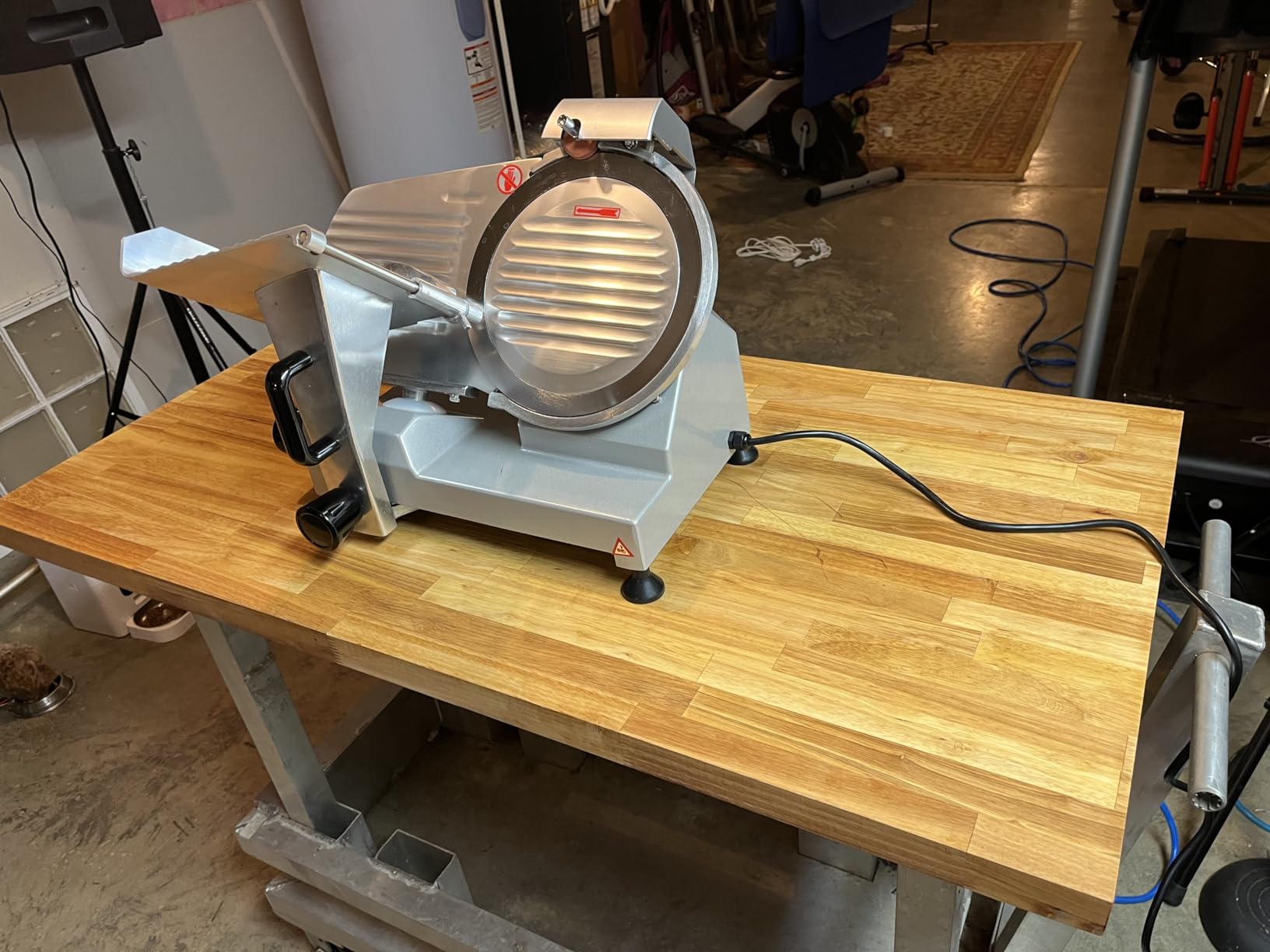
It is not perfect. There is no built-in sharpener, so you will need to budget for occasional blade sharpening or a replacement. Blade removal also requires a hex driver that VEVOR does not include in the box, which is annoying on cleaning day. I keep a small driver in the drawer next to mine.
A few owners mention a slight motor smell during the first uses, which typically fades after break-in. Suction cup feet do a decent job anchoring the 8.4-pound body to a smooth counter, though it will shift on a textured surface.
Who should buy this slicer
Buy the VEVOR if you want the best ratio of capability to cost in a home meat slicer. The dual-blade setup makes it genuinely useful for jerky prep, deli meat, and bread. It is my pick for anyone slicing for a household of four or fewer on a regular basis.
Who should skip this slicer
Pass if you want dishwasher-safe parts, since this unit is hand-wash only. It also is not the choice if you plan to slice big charcuterie rounds or full slabs of bacon, because the 7.5-inch blade and compact carriage run out of room quickly.
3. OSTBA SL518-1 – Best for Easy Cleaning
- Removable components are dishwasher safe
- Child lock requires two buttons to start
- Adjustable thickness from super thin to 3/4 inch
- 2-year warranty included
- Not Prime eligible
- Serrated blade is not ideal for all food types
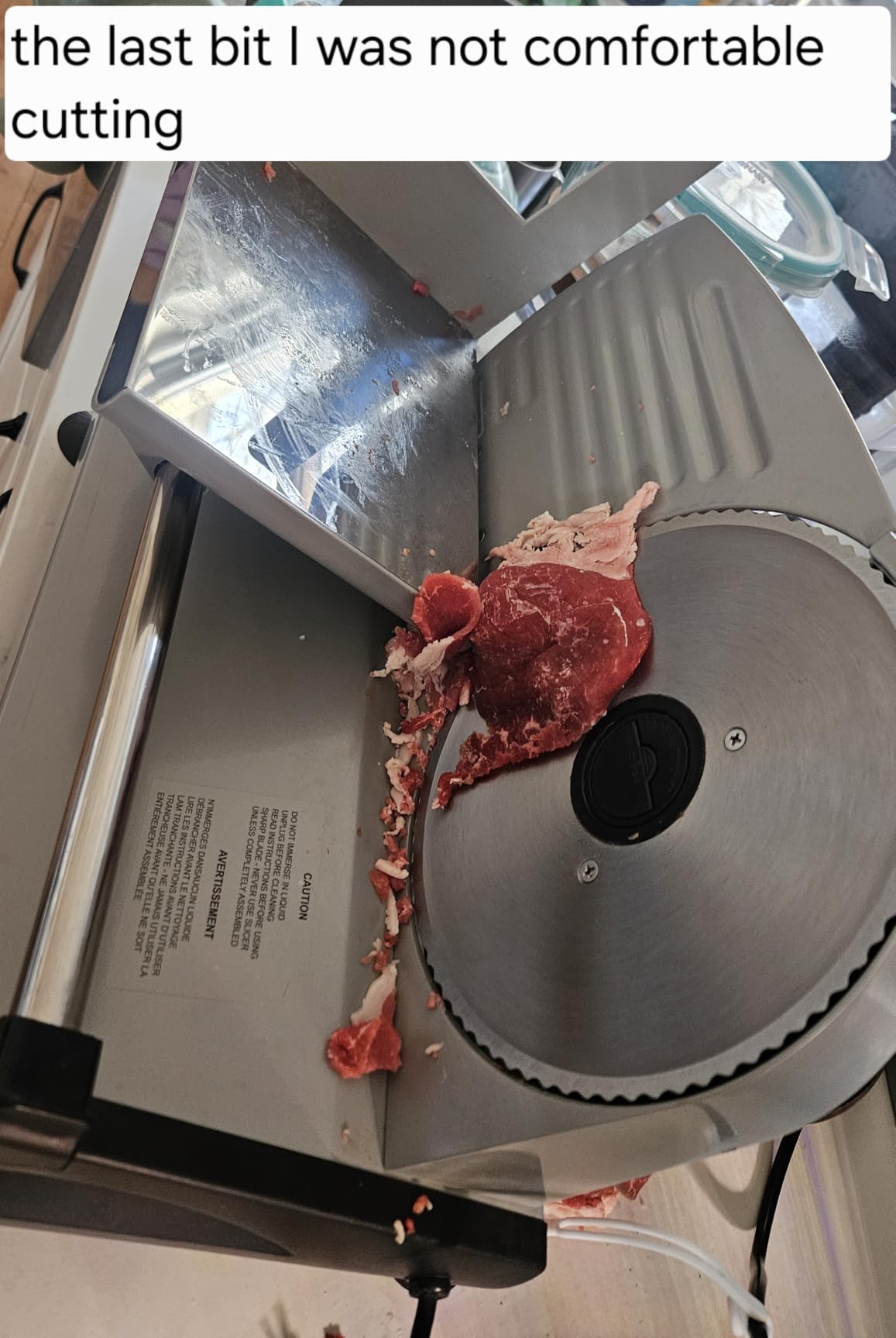
The OSTBA SL518-1 solves the single biggest complaint people have about meat slicers: cleaning. The blade, carriage, and pusher all pop off and go straight into the dishwasher. After living with slicers that need hand-wiping for half an hour, I can tell you this design changes how often you actually use the machine.
With roughly 4,800 reviews and a 4.2 to 4.4-star range across listings, this is one of the most proven home slicers on the market, and about 68 percent of buyers rate it five stars. The 150W motor is modest, but for typical deli meats, vegetables, and bread loaves it moves along fine.
The child lock is a feature I did not think I would care about until my niece visited. The machine will not start unless you press the safety lock and power button at the same time, which stops curious hands from spinning up a blade. The two-step start is genuinely reassuring in a busy kitchen.
The limitation is the single serrated blade. It is fine for most jobs, but it shreds soft salami instead of shaving it. OSTBA sells compatible non-serrated blades separately, which is a worthwhile add-on if you cure your own meats.
Who should buy this slicer
Buy the OSTBA if cleanup effort is the thing most likely to stop you from using a slicer. It is the best meat slicer for home use among the compacts if you have kids, thanks to the child lock, and the 2-year warranty adds peace of mind. Frequent lunch-meat slicers will love it.
Who should skip this slicer
Skip it if you regularly slice frozen meat or large dense cuts, because the 150W motor labors under that load. Charcuterie hobbyists will also want a smooth blade rather than the stock serrated one.
4. OSTBA 200W Dual Blade – Bestseller Pick
- 200W motor powers through dense foods
- Includes serrated blade for frozen meat and non-serrated for bread and cheese
- Thickness adjusts from super thin to 3/4 inch
- Two-button child safety lock
- Dishwasher safe removable components
- Adjustment knob can slip during use
- Feed tray may not hold larger items securely
This OSTBA is the number one bestseller in Amazon’s electric slicer category, and after using one I understand why. It combines the easy-cleaning, child-locked design of the SL518 above with a stronger 200W motor and two blades in the box. It is essentially the upgraded version of an already proven machine.
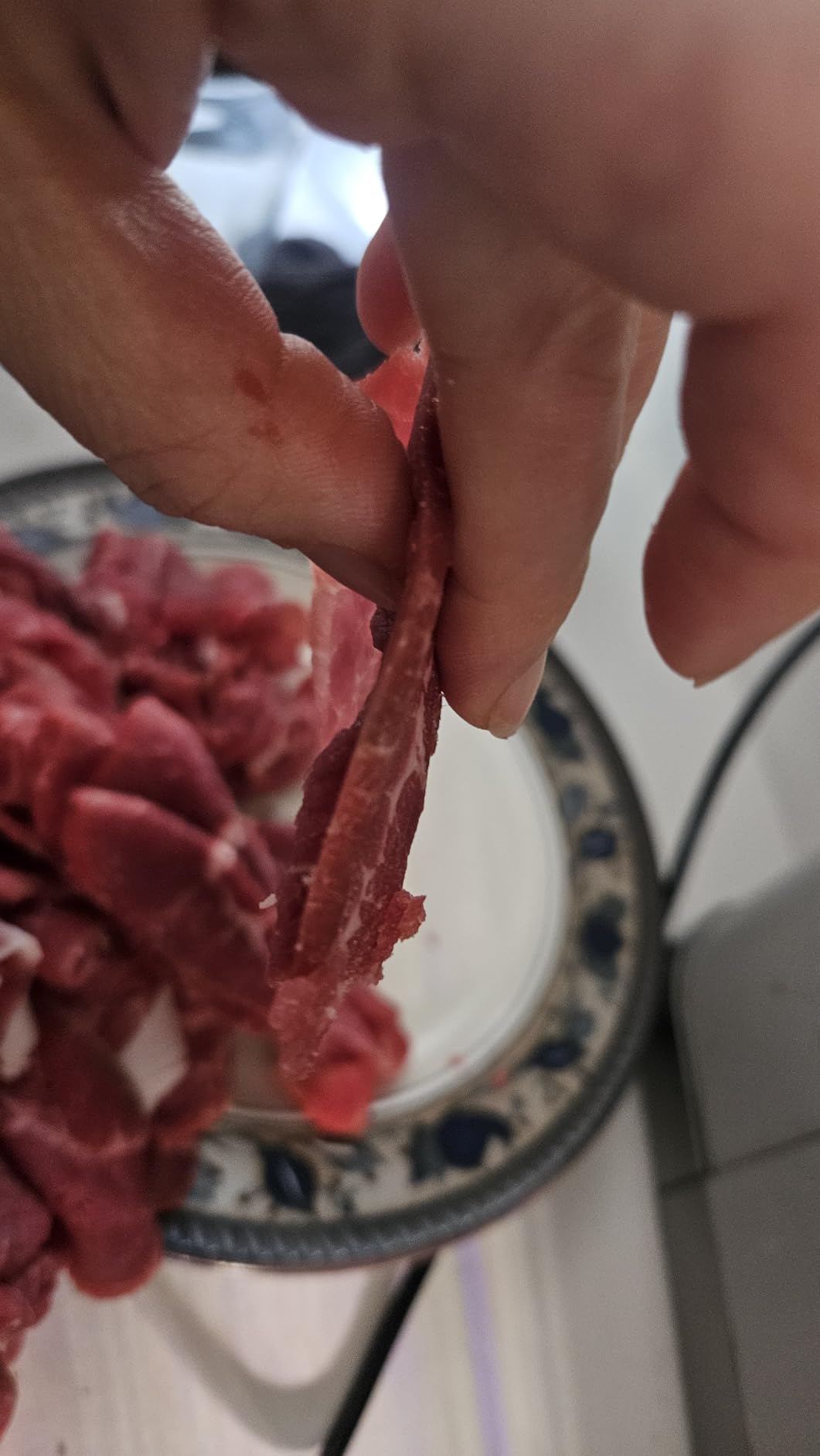
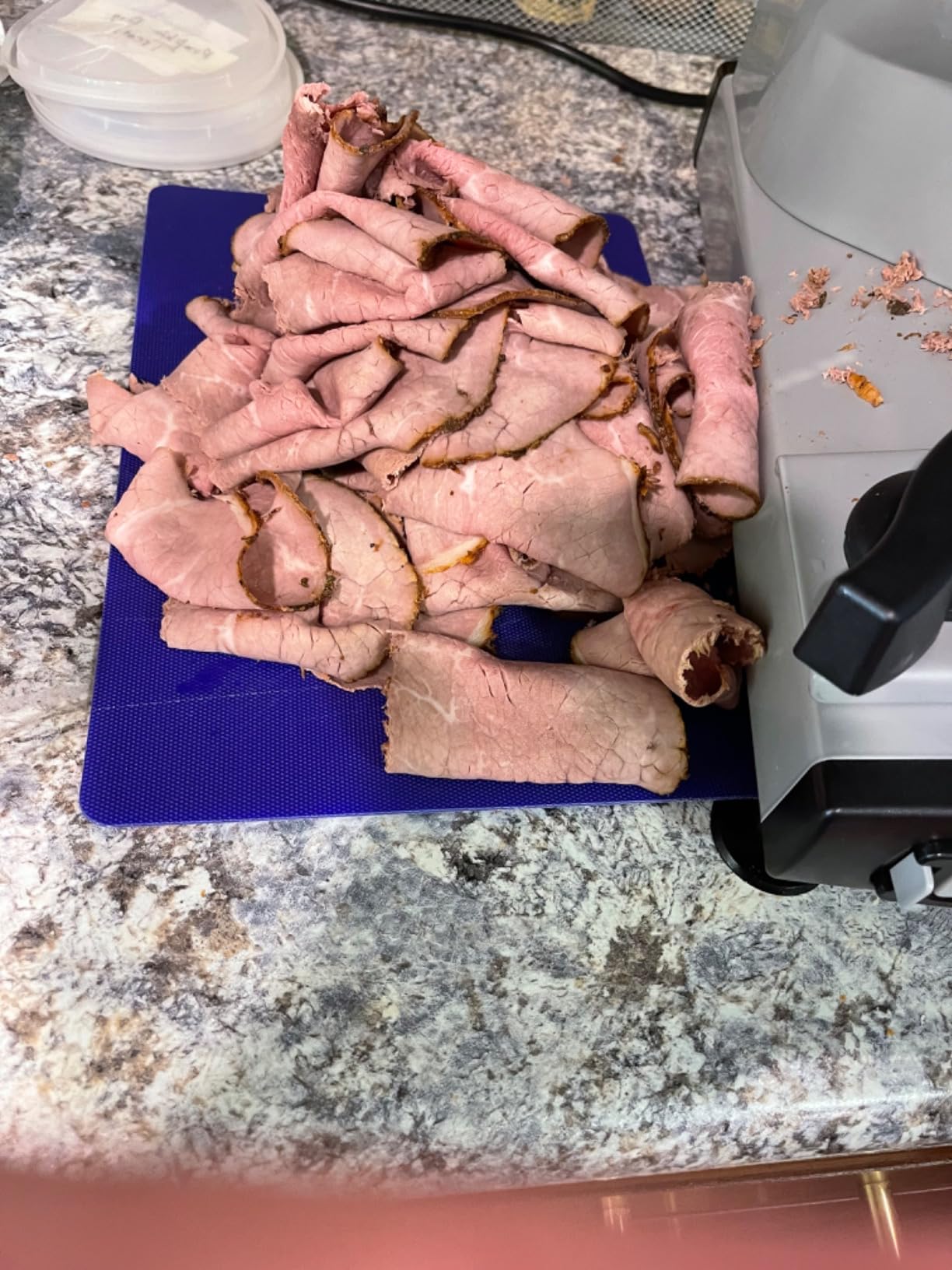
In my testing the non-serrated blade shaved ham thin enough to read through, and the serrated blade coped with partially frozen beef for jerky. The 0-15mm thickness range is generous for the class, and the removable ring-guard cover makes cleanup nearly as quick as the cheaper OSTBA.
The main flaw is the thickness adjustment knob, which can slip mid-session on some units. When it happens the slice thickness drifts, so I got in the habit of re-checking the dial between passes. A strip of tape on the dial is the field fix owners use.
The feed tray is also on the small side, and wide roasts can rock slightly if you do not center them. For loaves of bread, cheese blocks, and standard roasts it works well, but big brisket flats are a two-person job.
Who should buy this slicer
Buy this model if you want the safest all-round home slicer with real versatility. The dual blades mean one machine covers frozen meat, bread, cheese, and deli-thin shavings. It is a strong choice for families and for anyone making jerky at home in medium batches.
Who should skip this slicer
Pass if you need rock-steady thickness for presentation-grade charcuterie, since the slipping knob undermines precision. It also shares the compact carriage limits of the VEVOR, so very large cuts will not fit.
5. Cuisinart Kitchen Pro FS-75 – Best Brand Backup
- Professional-quality deli-grade slicing
- Slice control knob adjusts from 1/32 to 1/2 inch
- Coated steel and die-cast aluminum housing
- Removable blade
- food guide and carriage
- Limited 3-year motor warranty
- Hand wash only
- Higher price than comparable home slicers
- Larger footprint on the counter
The Cuisinart FS-75 is the slicer for people who buy brands they can get serviced. Cuisinart backs the motor with a limited 3-year warranty, which is longer support than most rivals offer, and the brand’s parts network is easy to reach. That matters for a machine you plan to keep for a decade.
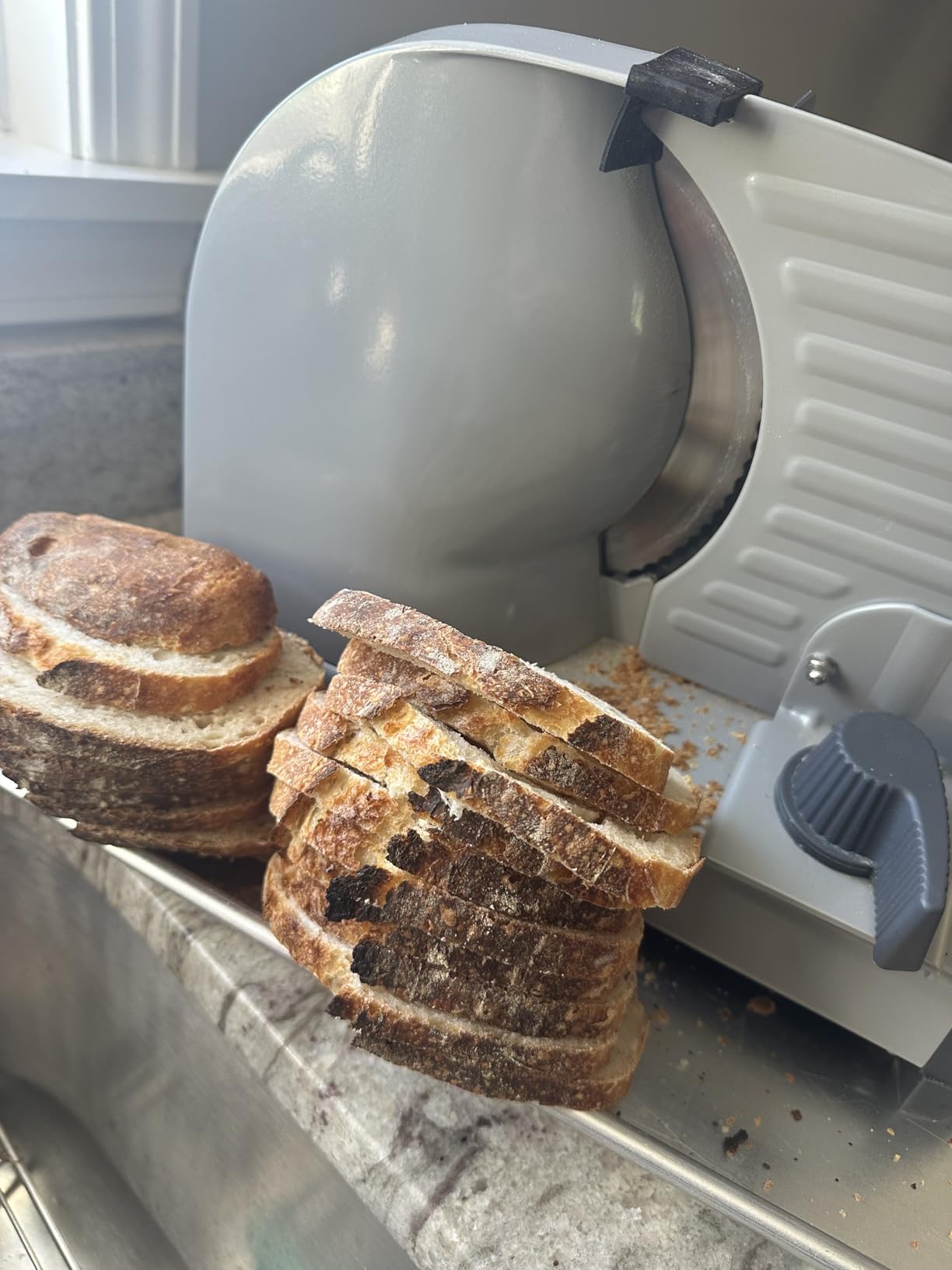
Performance is polished rather than powerful. The 130W motor is the weakest in this guide on paper, but the precise 1/32-inch to 1/2-inch slice control knob is the finest-grained adjustment here. Dialing in exact thickness for consistent sandwich stacks felt effortless.
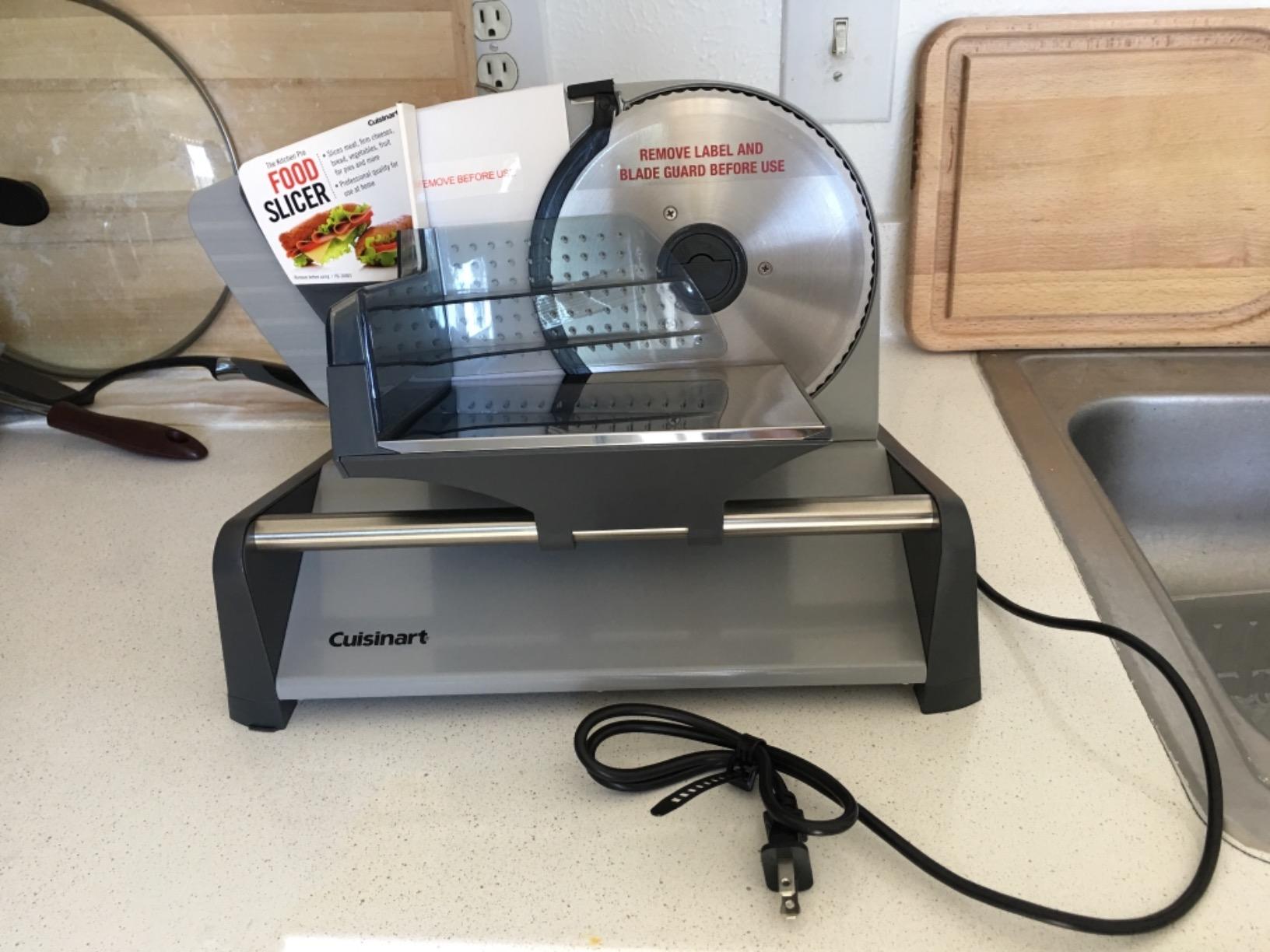
The build feels like a small appliance meant to last, with coated steel and die-cast aluminum housing. At 11 pounds and over 18 inches long, it stays planted but eats counter space. About 63 percent of the roughly 3,800 reviewers give it five stars.
The downsides are familiar: hand-wash only, no dishwasher-safe parts, and a price above similar specced home slicers. You are paying partly for the name and the warranty rather than raw motor power.
Who should buy this slicer
Buy the Cuisinart if you value brand support, a long motor warranty, and precise thickness control for everyday sandwich prep. It suits cooks who slice several times a week and want a machine that looks at home on an open counter.
Who should skip this slicer
Skip it for heavy-duty work like frozen meat or big-batch jerky. The 130W motor and 7.5-inch blade are tuned for deli-duty, not butchery. Value shoppers will also get more raw power for less money from the VEVOR or OSTBA dual-blade models.
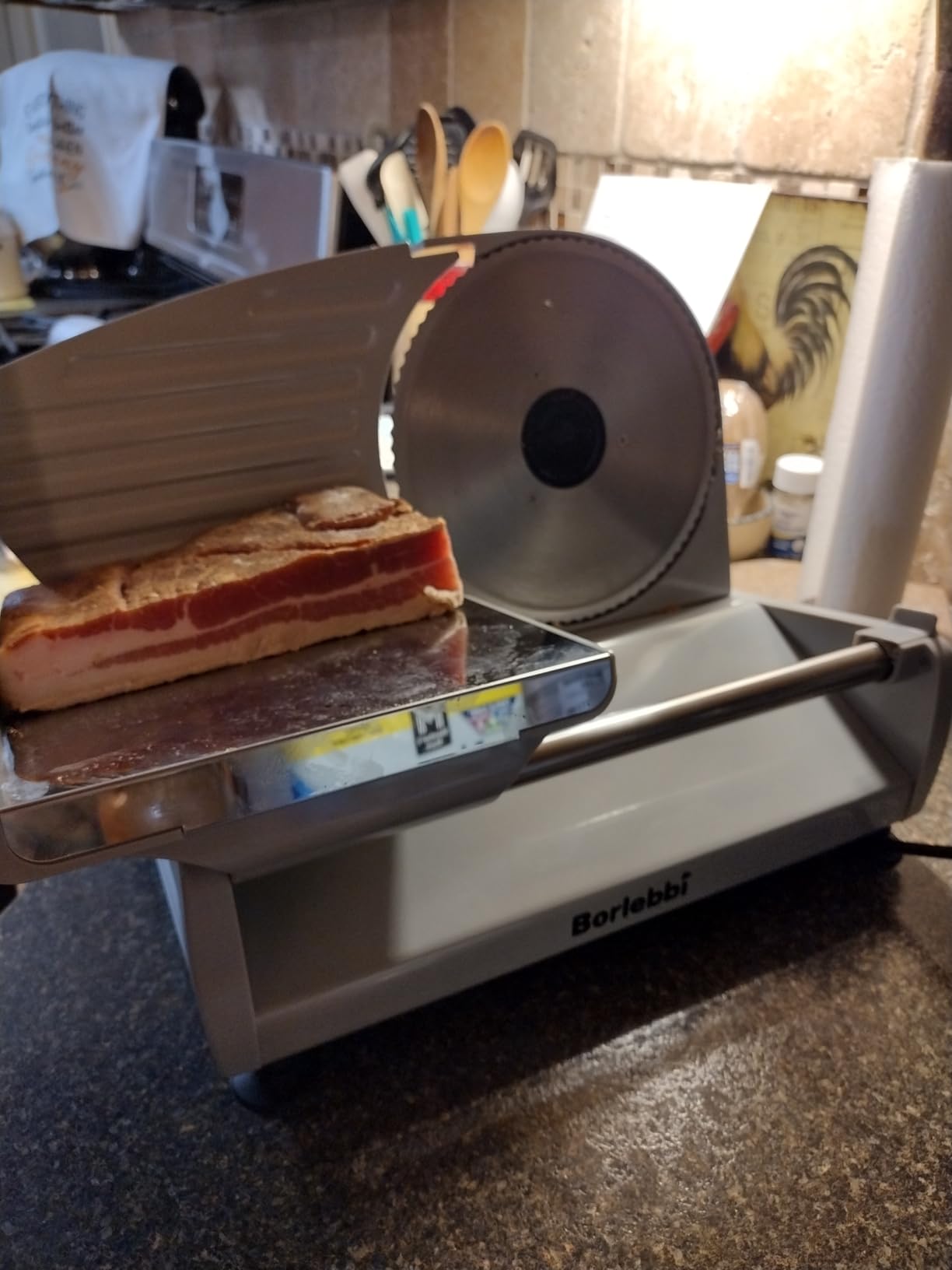
6. Borlebbi 200W Food Slicer – Quietest Motor
- 200W DC motor delivers stable torque with low noise
- Precision 0-15mm adjustable thickness
- Detachable design cleans up quickly
- Child lock and non-slip feet for safety
- Suction cups may not grip all surfaces
- Meat scraps can slip behind the blade into the gear compartment
The Borlebbi is the quietest slicer I have used, and the credit goes to its DC motor. Where most home slicers buzz with a universal motor, this one hums along with steady torque, which made early-morning slicing sessions possible without waking the house. At 4.5 stars it is the highest-rated compact model in this guide.
You get two 7.5-inch stainless blades, serrated and smooth, plus a stainless tray to catch slices. The smooth blade did a respectable job shaving turkey and ham, and the 0-15mm dial covers everything from tissue-thin to sandwich-thick. For a newer brand with a smaller review base of about 660, the feedback is notably strong.
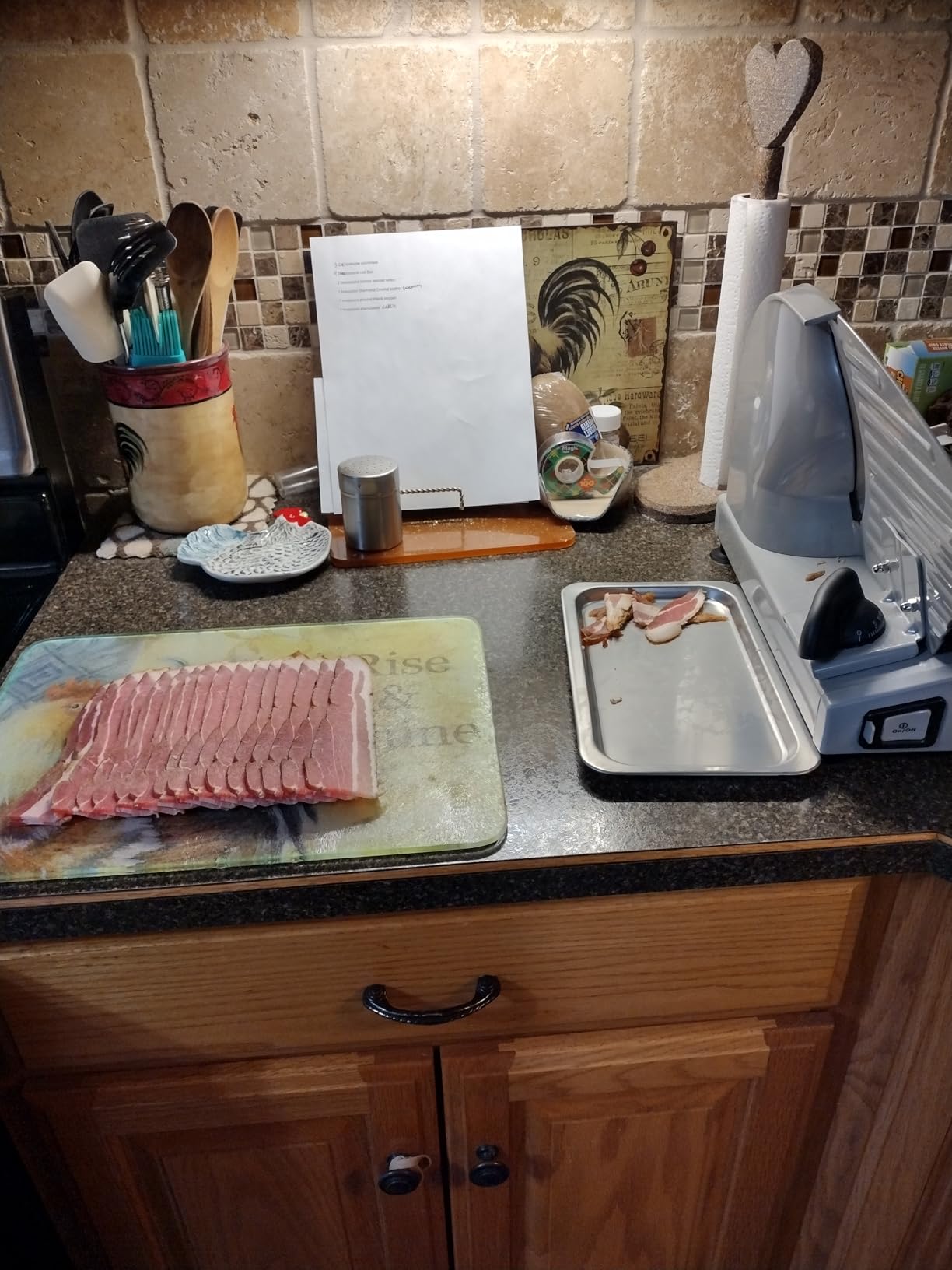
Two issues are worth knowing. The suction cups do not anchor reliably on textured stone counters, so I place a damp towel underneath for grip. More importantly, thin meat scraps can slip behind the blade into the gear compartment, which means a careful check during cleanup.
Once you build that inspection into your routine, the machine itself is pleasant to own. The child lock works the same two-button way as the OSTBA designs, and the whole unit feels tight with no wobble in the carriage.
Who should buy this slicer
Buy the Borlebbi if noise is a concern, whether that means apartments, sleeping babies, or simply not wanting a screech in your kitchen. The dual blades and fine thickness range make it a capable all-rounder for deli meat, cheese, and vegetables.
Who should skip this slicer
Pass if your counter is textured or uneven, since the suction feet underperform there. If you slice frozen meat regularly, the 10-inch commercial models below will serve you better than any 7.5-inch compact.
7. VEVOR 10 Inch Commercial Meat Slicer – Best Heavy-Duty Value
- 10in chromium-plated blade handles frozen meat and tough cuts
- Built-in sharpening stone keeps the edge keen
- Sturdy all-metal construction
- Excellent value for commercial-grade performance
- Blade removal requires a hex driver that is not provided
- Cleaning is time-consuming
- Replacement blades can be hard to source
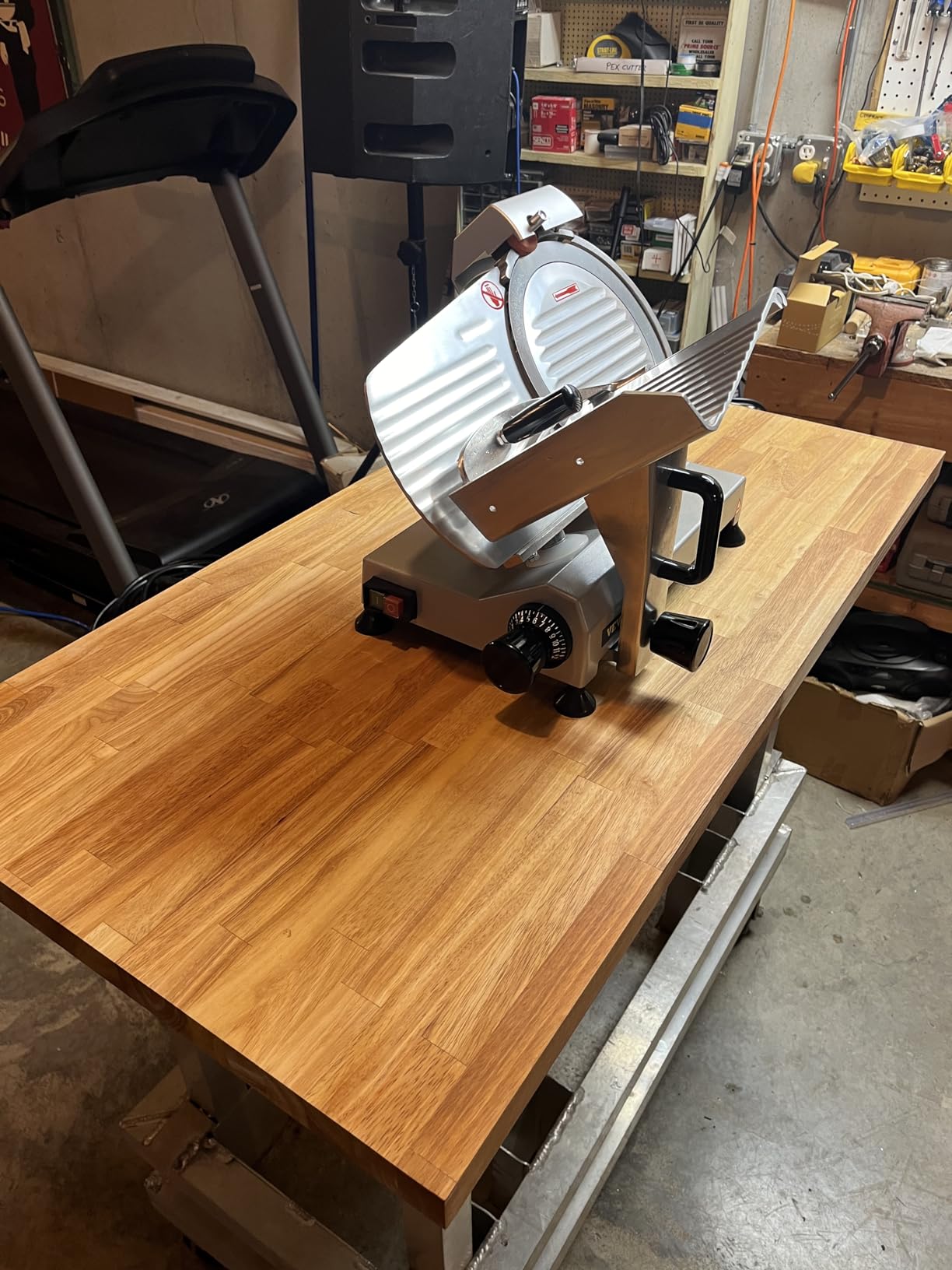
This is where the guide shifts from home appliances to genuine deli machines. The VEVOR 10-inch commercial slicer weighs 34 pounds, spins a chromium-plated 10-inch blade at 300-450 RPM, and slices semi-frozen meat without complaint. Forum users on r/meat repeatedly point to VEVOR and KWS as the value end of true deli slicers, and my time with this unit confirms it.
The built-in sharpening stone is the feature that sold me. Budget slicers dull and become frustrating, while this one lets you touch up the edge in place. The 0-12mm thickness range held steady through a 4-pound pork loin, producing even, deli-window slices from end to end.
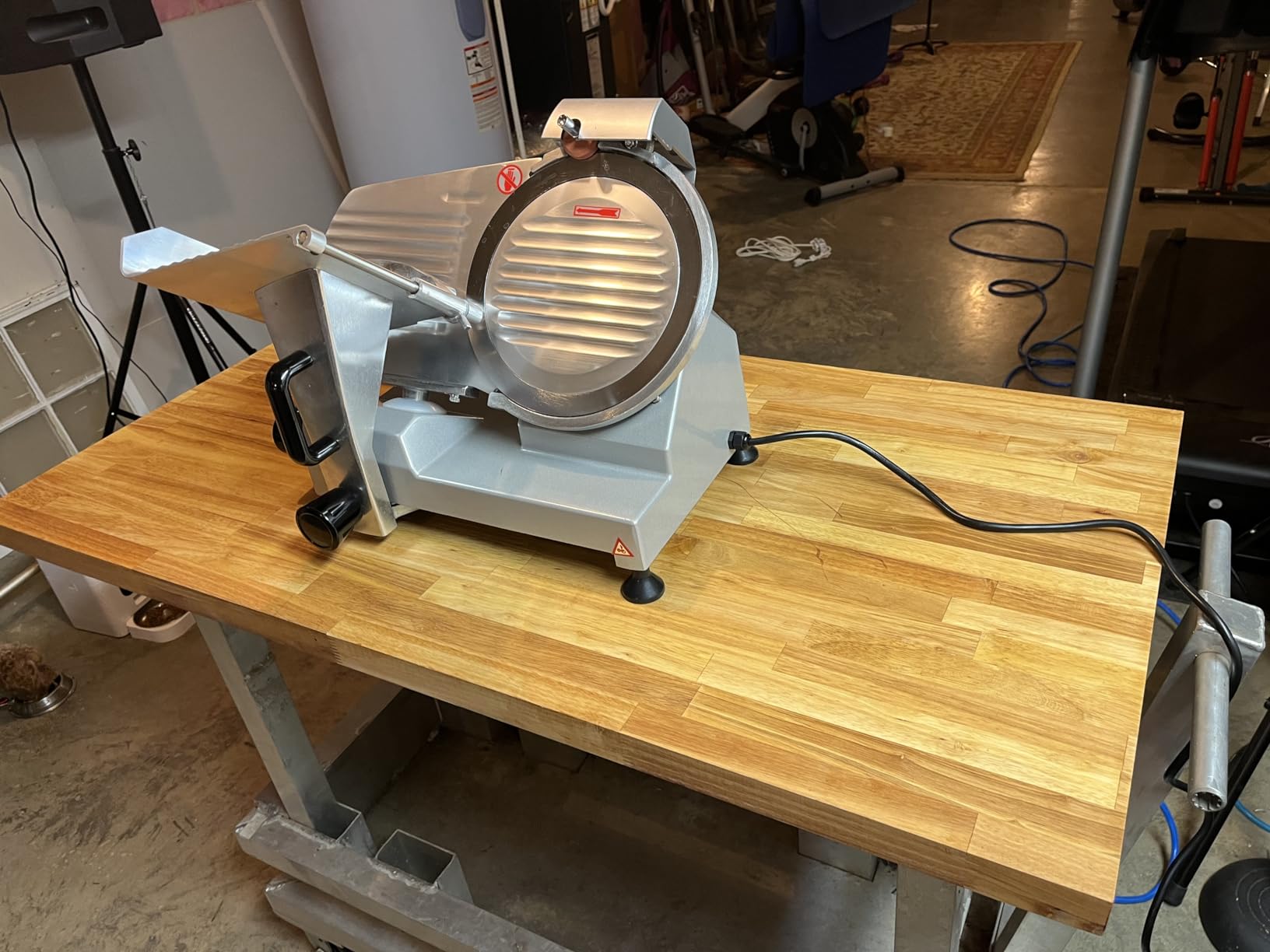
Cleaning is the honest trade-off. This is a full disassembly job, and blade removal needs a hex driver VEVOR does not include. Reddit’s r/Cooking users are blunt about this class of machine: every good slicer needs a complete strip-down after use, and this one is no exception.
Some units give off a brief burning smell during the first runs as the motor breaks in. Sourcing replacement blades can also be difficult, so keep the original sharp and treat it well.
Who should buy this slicer
Buy the VEVOR 10-inch if you slice big batches, portion bulk meat purchases, or make serious amounts of jerky. It is also a smart pick for a home-based food business, a hunting camp, or large families. For pure capability per dollar among deli-style machines, it is hard to beat.
Who should skip this slicer
Skip it if you only slice occasionally, because a 34-pound machine that needs full disassembly will become a chore. It also demands dedicated counter or shelf space, so small kitchens should stick with a compact model.
8. KWS 10NS Commercial 10 Inch – Best Overall Meat Slicer
- True 320W high-torque belt-driven motor for continuous slicing
- NSF certified 10in stainless blade for sanitary food contact
- Adjustable from paper-thin to 14mm
- Built-in dual whetstones sharpener
- US-based support and parts availability
- Cannot cut full-length bacon
- Food tray runs small
- Cleaning requires disassembly with a hex wrench
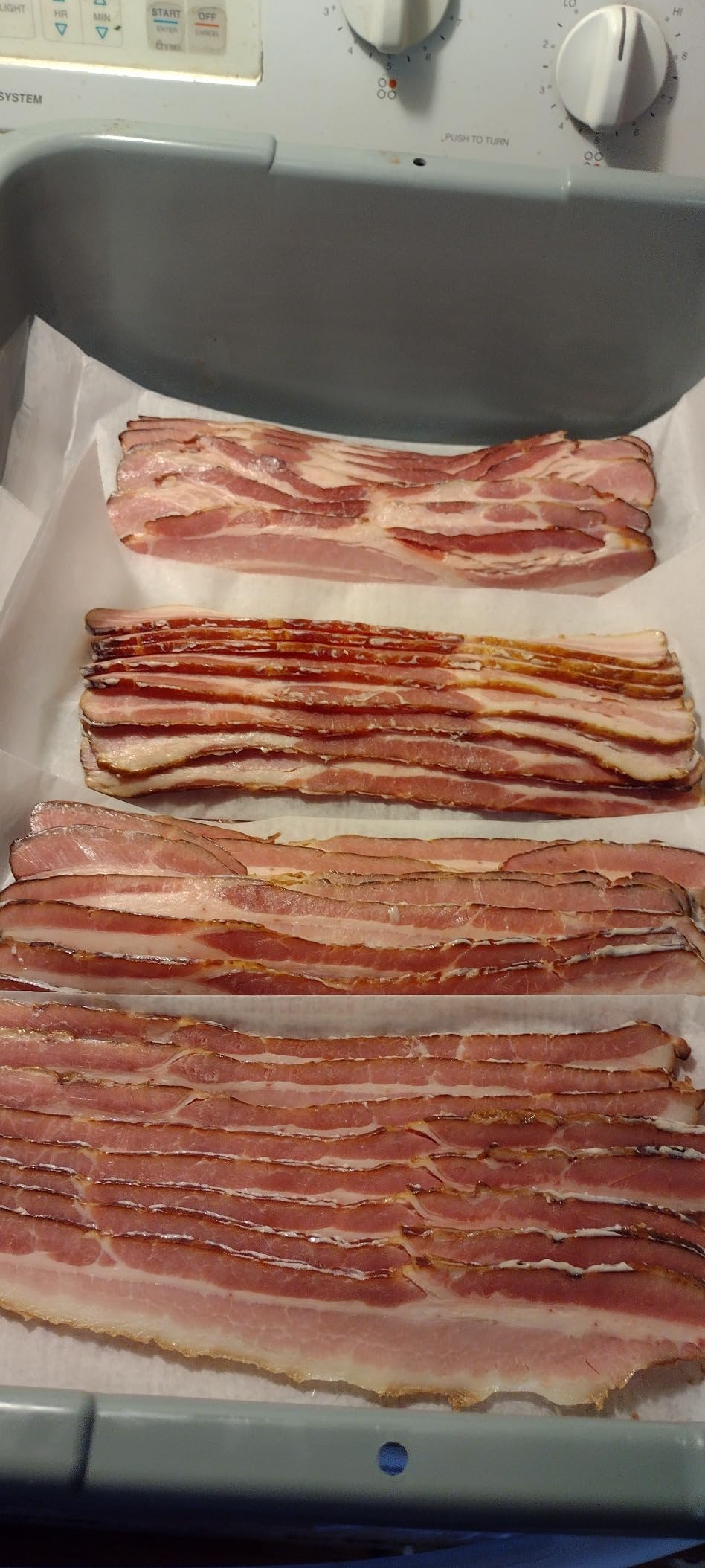
The KWS 10NS is my overall winner and the machine I ultimately kept on my own counter. The 320W belt-driven motor is the strongest in this guide, and belt drive means smoother power delivery and less blade chatter than the gear-drive compacts. Reddit’s r/meat users specifically call out Beswood and KWS as slicers that can shave meats wafer-thin without them falling apart, and this is the KWS that earns that praise.
The paper-thin setting is real. I shaved a home-cured coppa thin enough to see through, with no tearing and no fat smearing, which is the test that separates deli slicers from food slicers. The NSF-certified blade and ETL listing mean this machine meets commercial food-safety standards, not just household ones.
The built-in dual whetstones sharpener is mounted on top, so sharpening takes seconds whenever the edge starts to drag. KWS also provides US-based customer support and ships a complimentary spare belt and stone. At 4.5 stars across roughly 1,950 reviews, it is the best-rated machine in this guide.
The flaws are minor but real. The carriage cannot take a full-length slab of bacon, so you cut slabs in half first, and the food tray is small for a machine this size. Cleaning is a full strip-down with the included hex wrench, which is standard for this class but still a 20-30 minute job.
Who should buy this slicer
Buy the KWS 10NS if you are serious about charcuterie, portion your own meat, or want the last slicer you will ever buy. Hunters, home-curing hobbyists, and anyone running a small food operation will get years of use from it. It is the best meat slicer for home use when budget allows.
Who should skip this slicer
Skip it if you slice only a few times a month or have limited storage, since a 37-pound machine is a commitment. Casual users will be just as happy with the VEVOR 7.5-inch or OSTBA dual-blade models at a fraction of the size.
Buying Guide: How to Choose a Meat Slicer?
Choosing among the best meat slicers comes down to five decisions: class, blade, motor, weight, and cleaning. Here is what I learned from testing eight machines and reading hundreds of owner posts.
Food slicer vs deli slicer
A food slicer is a lightweight home appliance with a 7.5-inch blade and a 130-200W motor, built for occasional deli meat, cheese, and bread. A deli slicer is a semi-commercial machine with a 10-inch blade, belt drive, and 30-plus pounds of metal, built for volume and paper-thin cuts. If you slice more than once a week or care about charcuterie quality, buy the deli class. If not, a food slicer saves money, space, and cleaning time.
Blade size and type
A 7.5-inch blade handles roasts up to about 6 inches wide, which covers most home needs. A 10-inch blade swallows larger cuts, half slabs of bacon, and wide charcuterie rounds. On type, smooth blades shave cured meats cleanly while serrated blades grip bread, cheese, and frozen items. Forum consensus is clear: smooth blades are preferred for cured meats, which is why dual-blade packages are such good value.
Motor power and drive type
Wattage matters less than you think, and torque matters more. A 320W belt-driven motor like the KWS slices continuously without bogging, while some higher-revving compacts stall on dense meat. RPM tells you speed of the blade, and slower speeds around 70-100 RPM actually cut cleaner. For frozen or semi-frozen meat, only the 10-inch class machines cope reliably.
Weight and stability
Across Reddit threads, heavy weight between 25 and 40 pounds is treated as a quality signal, and my testing agrees. Heavy machines do not vibrate or walk, which produces even slices and safer operation. Light compacts rely on suction feet, which work well on smooth counters and poorly on textured ones.
Cleaning reality check
Every owner forum repeats the same warning: cleaning is the hidden cost. Expect 10-15 minutes for a compact with removable parts and 20-30 minutes for a commercial unit requiring hex-wrench disassembly. Dishwasher-safe removable parts, like on the OSTBA models, cut that time significantly. If you will not commit to cleaning, a slicer becomes a dusty countertop ornament.
The partially frozen meat trick
The single best technique I learned from the curing community is to partially freeze meat before slicing. Twenty to thirty minutes in the freezer firms the flesh so the blade cuts clean edges instead of tearing, and it is the only way to get ultra-thin slices from a modest home machine. This trick also improves safety, because firm meat does not squirm under the blade. For jerky, slice when the meat is firm but before it is rock hard.
Is a meat slicer worth it?
A slicer is worth it if you buy whole cuts, cure meat, make jerky, or slice bread weekly, because whole cuts cost far less per pound than pre-sliced. It is probably not worth it for occasional sandwich use, where the cleaning time outweighs the savings. Be honest about your habits before buying.
Frequently Asked Questions
What brand of meat slicer is best?
KWS and Beswood are the most trusted brands for deli-grade home slicing, with VEVOR offering the best commercial-style value and OSTBA leading the compact home category. KWS earns the top spot here for its 320W belt-driven motor, NSF-certified 10-inch blade, and US-based support.
What is the best slicer for home use?
For most homes, the VEVOR 7.5-inch dual-blade slicer is the best pick thanks to its 200W motor, two blades, and low price. If you want easy cleanup, the dishwasher-safe OSTBA SL518-1 is a close second, and the KWS 10NS is best for serious charcuterie work.
Is it worth it to get a meat slicer?
Yes, if you buy meat in whole cuts, cure your own meats, make jerky, or slice bread weekly, since whole cuts cost much less per pound than pre-sliced. It is not worth it for occasional use, because every slicer needs 10-30 minutes of cleaning after each session.
What blade size do I need for a meat slicer?
A 7.5-inch blade suits roasts up to about 6 inches wide and covers typical home needs. Choose a 10-inch blade if you slice large cuts, half slabs of bacon, or wide charcuterie rounds.
Can I slice frozen meat with a meat slicer?
Fully frozen meat is too hard on any blade, but partially frozen meat slices beautifully. Firm up meat in the freezer for 20-30 minutes before slicing for clean, thin cuts, and use a serrated blade or a 10-inch commercial-class machine for the best results.
Conclusion
After testing eight machines, my verdict on the best meat slicers is simple: match the machine to your habits. The KWS 10NS is the best overall pick for serious slicing and charcuterie, the VEVOR 7.5-inch is the value champion for most kitchens, and the Elite Gourmet covers light occasional use. Whatever you choose, remember the partially frozen meat trick and budget time for cleaning, because those two habits decide whether your slicer gets used or gathering dust in 2026.