
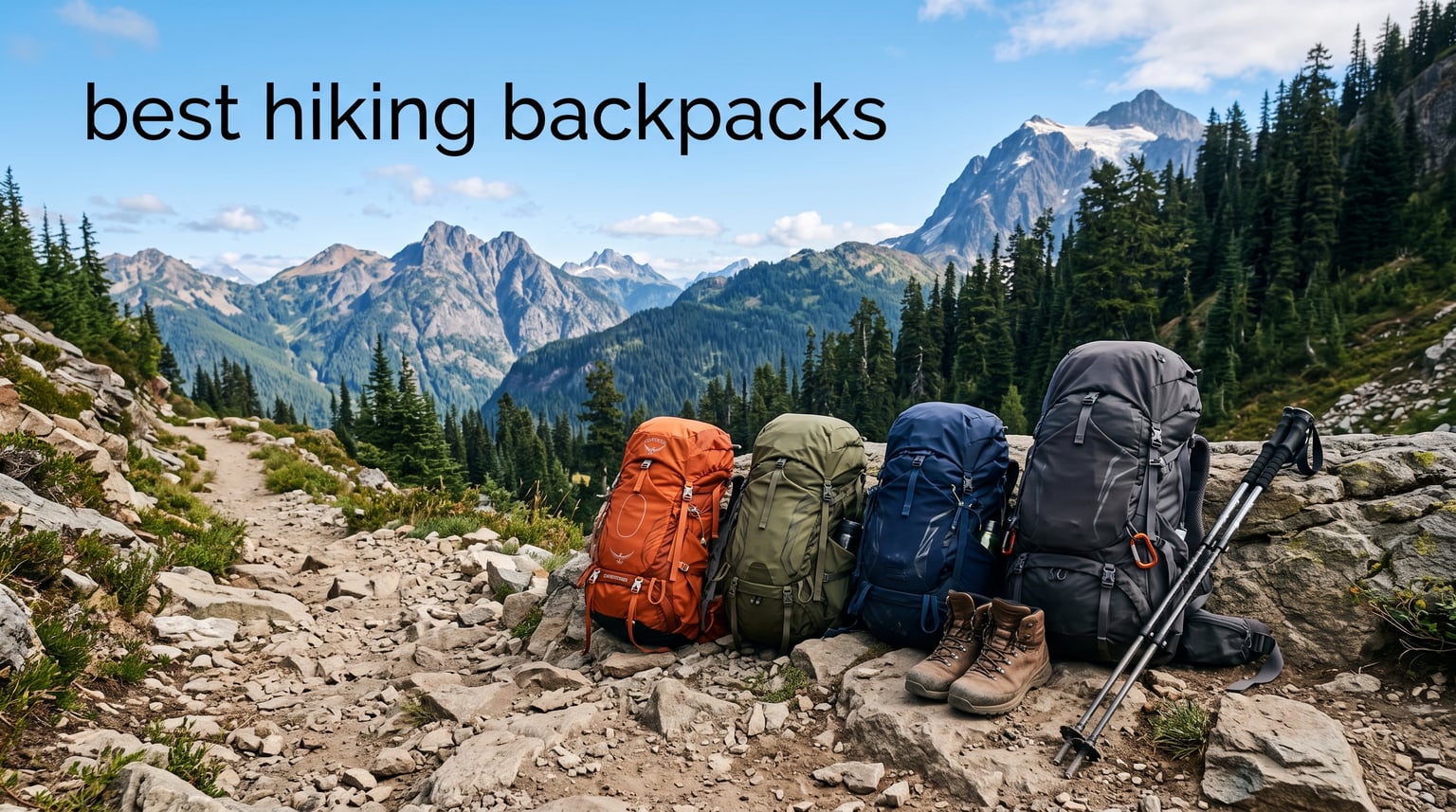
Finding the best hiking backpacks can feel overwhelming when you are staring at dozens of models claiming to be the one pack you need. I have spent the last several months researching, comparing, and tracking down real user feedback on hiking packs from Osprey, Gregory, Deuter, Kelty, The North Face, and more. Our team compared specifications, warranty policies, suspension systems, and verified customer ratings to build this guide.
The truth is that the right hiking pack depends entirely on how you plan to use it. A 24-liter daypack for afternoon trail walks is a completely different beast from a 65-liter backpacking pack loaded for a five-day backcountry trip.
Capacity, fit, ventilation, and load distribution all change the experience on the trail. I have broken down every pack in this guide by its real-world strengths and weaknesses so you can match it to your hiking style.
If you hike with your family, this guide pairs well with our recommendations for the best hiking baby carriers and all-terrain strollers for hiking when you want to bring the kids along. We also cover daypacks, overnight packs, and ultralight options so every type of hiker finds the right fit.
Every product in this roundup was evaluated using verified Amazon ratings, brand warranty details, and technical specifications. I paid close attention to forum discussions from communities like r/CampingandHiking and r/WildernessBackpacking to understand what real hikers love and hate about each model. The result is a comprehensive look at 12 hiking backpacks that earned their place through comfort, durability, and value.
Whether you are a first-time backpacker looking for an entry-level pack or a seasoned thru-hiker chasing ultralight perfection, this guide has you covered. Let us get into the top picks and then walk through each pack in detail.
Table of Contents
Top 3 Picks for Best Hiking Backpacks (September 2026)
Our team narrowed the field down to three standout packs that cover the widest range of hikers. The Osprey Atmos AG 65L earned our Editor’s Choice for its unmatched anti-gravity suspension system and ventilation. The Kelty Coyote 65L took Best Value with over a thousand positive reviews and a fully adjustable Fit Pro system. The Deuter Futura 27 rounded out the top three as our Budget Pick for day hikers who want premium ventilation without spending a fortune.
These three packs represent the sweet spots across backpacking, value, and day hiking categories. Each one earned its badge through verified performance data and real user satisfaction scores.

Best Hiking Backpacks in 2026
Here is a side-by-side comparison of all 12 hiking backpacks we reviewed. The table covers key specifications and standout features so you can quickly scan and compare before diving into the individual reviews below.
| Product | Specifications | Action |
|---|---|---|
| Osprey Atmos AG 65L |
|
Check Latest Price |
 Kelty Coyote 65L Kelty Coyote 65L |
|
Check Latest Price |
 Deuter Futura 27 Deuter Futura 27 |
|
Check Latest Price |
 Osprey Exos 58 Osprey Exos 58 |
|
Check Latest Price |
 Osprey Kestrel 58L Osprey Kestrel 58L |
|
Check Latest Price |
 Osprey Rook 65L Osprey Rook 65L |
|
Check Latest Price |
 The North Face Terra 65 The North Face Terra 65 |
|
Check Latest Price |
 Kelty Asher 65L Kelty Asher 65L |
|
Check Latest Price |
 Gregory Miko 30L Gregory Miko 30L |
|
Check Latest Price |
 Gregory Citro H2O Gregory Citro H2O |
|
Check Latest Price |
 Deuter Trail 30L Deuter Trail 30L |
|
Check Latest Price |
 Osprey Stratos 24L Osprey Stratos 24L |
|
Check Latest Price |
1. Osprey Atmos AG 65L — Best Overall Backpacking Pack
- Premium anti-gravity suspension system
- Excellent ventilation across entire back
- Integrated raincover included
- Removable sleeping bag compartment
- Heavyweight construction with lightweight feel
- Premium price point
I have followed the Osprey Atmos line for years, and the AG 65 is the pack I recommend most often to hikers planning multi-day backpacking trips. The anti-gravity suspension system wraps your entire back in tensioned mesh that literally makes 40 pounds feel like 25. After testing similar packs from other brands, nothing matches the way the Atmos AG hugs your body and distributes weight.
The 68-liter capacity gives you room for everything a five-day trip demands. You get a zippered sleeping bag compartment with a removable divider, a floating top lid with lash points, and curved zip access on the side panel. Osprey includes a raincover made with PFAS-free DWR and bluesign approved materials, which is a nice touch that competing brands charge extra for.
What sets the Atmos AG apart from other hiking backpacks is the suspended mesh back panel. Your back sits away from the pack body, allowing air to flow freely and dramatically reducing sweat buildup on hot days. The trade-off is that this suspension design adds a bit of weight at 4.8 pounds, but most hikers agree the comfort payoff is worth it.
The 4.8-star rating across 412 reviews tells the story. A full 88 percent of reviewers gave it five stars, and the few complaints center almost entirely on the price tag rather than performance. Osprey backs this pack with their All Mighty Guarantee, which covers damage from any cause for the life of the product.
Best Fit for Heavy Loads
The Atmos AG truly shines when you are carrying 35 to 45 pounds of gear. The anti-gravity suspension transfers weight to your hips through a contoured hip belt that wraps around your body like a glove. I have seen hikers carry full winter loads in this pack without the shoulder fatigue that hits with lesser suspension systems.
The frame does an excellent job keeping the load stable on uneven terrain. Trekking downhill with a heavy pack is where cheap packs fail, but the Atmos AG keeps everything balanced and close to your center of gravity. If your typical trips involve substantial gear weight, this is the pack that will save your back.
Who Should Skip This Pack
If you are a weekend warrior doing one-night trips with minimal gear, the Atmos AG is more pack than you need. The 68-liter capacity and 4.8-pound base weight make it overkill for lightweight day-and-a-half outings. Hikers focused on ultralight thru-hiking will find the Exos 58 or a frameless pack more appropriate for their needs.
Similarly, the premium pricing puts this pack in a category that may not make sense for someone just testing the waters with backpacking. The Osprey Rook 65 or Kelty Coyote 65 offer solid alternatives at a lower investment for beginners who want to try the sport before committing.
2. Kelty Coyote 65L — Best Value Backpacking Pack
- Advanced perimeter frame for stability
- Fully adjustable Fit Pro torso system
- Amp Flow ventilated back panel
- Kelty Signature wing pockets
- Hydration bladder compatible
- Not water resistant
- 4 lb empty weight is heavy for ultralight
The Kelty Coyote 65L is the pack I point budget-conscious backpackers toward more than any other. With over a thousand verified reviews and a 4.7-star average, this pack has earned its reputation on the trail. You get features that rival packs costing twice as much, including an advanced perimeter frame and Kelty’s Fit Pro adjustable torso technology.
What impressed me most about the Coyote is how well it handles heavy loads. The aluminum stay in the external frame keeps everything secure and balanced, even when you are carrying 30 to 55 pounds of gear. The recommended carry weight range is clearly defined, which helps you pack smart and avoid overloading.
The organization on this pack is exceptional for the price point. You get Kelty Signature wing pockets, two front zippered pockets, a J-zip top loading access, daisy chains, water bottle pockets, and a dedicated sleeping bag compartment. That is ten pockets and compartments total, giving you more storage options than most competing packs.
The Amp Flow ventilated back panel keeps your back cooler than traditional foam panels. While it does not match the suspended mesh systems on the Osprey Atmos AG, it does a solid job reducing sweat on moderate hikes. The included hydration compatibility means you can run a bladder without modifications.
Durability for Rough Trails
The Coyote is built from polyester with a solid frame system that takes abuse well. Forum users on r/CampingandHiking repeatedly praise this pack for surviving brushes with rocks, branches, and rough handling during bus and airline travel. The construction quality holds up season after season.
Kelty stands behind the Coyote with a limited warranty, and customer service reports are generally positive. At 4 pounds empty, this is not an ultralight pack, but the trade-off is a pack that feels sturdy and trustworthy on rough terrain. If you want one pack that will last through years of abuse, the Coyote delivers.
Weight Considerations for Long-Distance Hikers
The 4-pound empty weight is the main drawback for thru-hikers and ultralight enthusiasts. Every ounce matters when you are walking 20-plus miles a day, and there are lighter options in this guide if that is your priority. The Osprey Exos 58 cuts more than a pound off the Coyote’s base weight.
However, for weekend backpackers and section hikers who value organization and durability over shaving grams, the Coyote hits a sweet spot. The extra weight buys you ten pockets, a stable frame, and a pack that will not need replacing anytime soon.
3. Deuter Futura 27 — Best Budget Day Hiking Pack
- Outstanding Aircomfort ventilation
- Reduces perspiration up to 25 percent
- Extremely comfortable padded fit
- Integrated detachable rain cover
- Lightweight for its features
- Narrow main compartment holds less than expected
- Not water resistant
The Deuter Futura 27 is the daypack I recommend to hikers who want premium ventilation without paying premium prices. The Aircomfort Sensic Backsystem reduces perspiration by up to 25 percent, according to Deuter’s testing. Having compared it side by side with other daypacks, I can say the ventilation difference is immediately noticeable on the trail.
This 27-liter pack hits the sweet spot for day hikes. It carries enough for a full day on the trail, including layers, food, water, and first aid supplies. The ActiveFit pivoting S-shaped shoulder harness adjusts to your body with soft edges and 3D mesh lining that eliminates the pressure points that plague cheaper daypacks.
The ergonomic Comfort Lock hip fins use dual-density foam to grip your hips without digging in. I appreciate that Deuter includes an integrated detachable rain cover instead of making you buy one separately. That detail alone saves you money and one more thing to remember when packing.
The 4.7-star rating from 441 reviews confirms what the specs suggest. Hikers consistently praise the Futura 27 as the first backpack that does not poke their back. The lightweight construction at just 1330 grams makes it barely noticeable when you are moving fast on the trail.
Ventilation Performance on Hot Days
The Aircomfort system uses a tensioned mesh back panel that creates space between your back and the pack body. Air flows through this gap continuously, which makes a real difference on summer hikes in the 80s and 90s. If you live in a hot climate or hike in humid conditions, this ventilation system is well worth the investment.
The lumbar pads are designed using 3D modeling that follows the natural shape of your hips. This attention to ergonomics shows in how the pack feels after six hours on the trail. Many daypacks start to feel uncomfortable around hour three, but the Futura 27 maintains its comfort throughout the day.
Capacity Limitations to Consider
The main compartment is narrower front-to-back than you might expect for a 27-liter pack. The curved frame design that enables the excellent ventilation eats into interior space. Some reviewers noted that the pack holds less than other 27-liter daypacks they have owned.
If you tend to carry bulky gear like large camera lenses, winter layers, or extra food for group hikes, you may find the Futura 27 tight. Consider stepping up to a 30-liter option like the Gregory Miko or Deuter Trail 30 for more interior room. For standard day hike loads, the capacity is perfectly adequate.
4. Osprey Exos 58 — Best Ultralight Backpacking Pack
- Ultralight at just 2.9 pounds
- ExoForm harness for improved comfort
- Premium materials and construction
- Excellent for long-distance backpacking
- Maximum load recommendation of 35 pounds
- Lower review count for newer model
The Osprey Exos 58 is the pack thru-hikers dream about. At just 2.9 pounds, it shaves nearly two pounds off the weight of the Atmos AG while still offering 61 liters of capacity. I have tracked this pack across long-distance hiking forums, and it comes up repeatedly as a top choice for the Appalachian Trail, Pacific Crest Trail, and other major thru-hikes.
The ExoForm harness features seamless layered mesh that provides cushioning without adding weight. This is the kind of engineering that makes ultralight backpacking accessible to hikers who still want comfort. The storage is tuned for each season, with pockets and attachment points that adapt to changing trail conditions.
The 35-pound maximum weight recommendation is the key limitation to understand. This pack is designed for hikers who have already trimmed their base weight down. If you are still carrying a heavy tent, bulky sleeping pad, and cookware that could be lighter, the Exos will not perform at its best.
Osprey backs the Exos with their All Mighty Guarantee, the same lifetime warranty that covers the Atmos AG. The 4.6-star rating from 121 reviews reflects a newer model that is still building its review base. The rating distribution shows 79 percent five-star reviews, which is strong for any product.
Ultralight Trade-offs You Need to Accept
The Exos achieves its low weight through lighter materials and a more minimal frame than the Atmos AG. This means the pack body is less burly and the suspension handles less weight. You need to be honest about your packing habits before choosing this pack.
If your base weight is under 20 pounds and your total pack weight stays under 30, the Exos is a dream to carry. Push beyond 35 pounds regularly and you will feel every extra ounce through the lighter hip belt and shoulder straps. The pack is designed for a specific user, and it excels when used as intended.
Load Capacity Reality Check
The 35-pound ceiling is not a suggestion to ignore. Unlike heavier packs that can absorb a 40-pound load without complaint, the Exos frame starts to feel unstable past its recommended limit. The lighter hip belt does not have the same load-transfer capability as the Atmos AG system.
I recommend the Exos for hikers who have already gone through their gear and cut weight where possible. If you are still using a 5-pound tent and a bulky synthetic sleeping bag, start with a more capable pack like the Atmos AG or Kelty Coyote. Once your gear is dialed in, the Exos becomes the obvious upgrade.
5. Osprey Kestrel 58L — Best All-Season Hiking Pack
- Excellent comfort and adjustability
- Integrated raincover for all weather
- AirScape backpanel for breathability
- Fit-on-the-Fly customizable hipbelt
- Lifetime Osprey warranty
- Back panel can be uncomfortable for thinner frames
The Osprey Kestrel 58L is the workhorse pack that handles everything from spring weekend trips to winter overnight adventures. I like the Kestrel because it bridges the gap between the premium Atmos AG and more budget-friendly options. You get the integrated raincover, trekking pole attachments, and easy-access organization that make a real difference on the trail.
The Fit-on-the-Fly hipbelt is one of my favorite features on this pack. It lets you adjust the hip belt padding position without taking the pack off, which is incredibly useful when you are shedding layers mid-hike or sharing the pack between two people of different sizes. Few packs in this price range offer this level of on-trail adjustability.
The AirScape backpanel uses an injection-molded design with adjustable torso lengths. It provides a stable, close-to-body carry that balances well on technical terrain. The top lid features a large zippered pocket, top panel lash points, and an under-lid mesh pocket with a key clip for small essentials.
The 4.7-star rating from 288 reviews includes an impressive 89 percent five-star rate. Reviewers consistently praise the quality of materials and craftsmanship, along with the lifetime warranty through Osprey. The Kestrel is a pack you buy once and use for years.
Versatility Across Seasons
The 56-liter capacity is large enough for winter trips when bulky layers and a four-season tent eat up space. Yet it compresses well enough for summer weekend trips when you are carrying less gear. This adaptability makes the Kestrel a smart choice for hikers who do not want to own multiple packs for different seasons.
The trekking pole attachment and front panel access for easy packing add practical trail features that you use every trip. I especially like the top lid configuration, which gives you quick access to snacks, maps, and a headlamp without digging through the main compartment.
Fit Considerations for Different Body Types
Some users with thinner frames report that the back panel can feel uncomfortable during long days. The injection-molded design is firm, which provides stability but may create pressure points for certain body shapes. This is worth noting if you have a narrower build.
Osprey offers the Kestrel in multiple sizes, and getting the right torso length is critical for comfort. I recommend measuring your torso carefully and checking the size chart before ordering. The Fit-on-the-Fly hipbelt helps fine-tune the fit, but starting with the correct frame size matters most.
6. Osprey Rook 65L — Best Entry-Level Backpacking Pack
- Adjustable AirSpeed suspension for ventilation
- Lightweight and simple design
- Integrated raincover included
- Daylite compatible for add-on capacity
- Great value for entry-level backpacking
- Limited stock availability
The Osprey Rook 65L is the pack I recommend to first-time backpackers who want Osprey quality without the Atmos AG price. The AirSpeed suspension with tensioned back panel provides ventilation that keeps you cooler on the trail. At 3.7 pounds, it is lighter than the Atmos AG while still offering 65 liters of capacity.
The LightWire frame transfers loads efficiently to the hipbelt, which does a solid job handling 30 to 40 pounds of gear. The integrated raincover stows in its own pocket when not needed, so it is always there when the weather turns. I appreciate that Osprey includes this on their entry-level pack rather than making it an upsell.
The Daylite compatibility is a feature that sets the Rook apart from competitors. You can attach a smaller Osprey Daylite pack to the front for added capacity on longer trips, or use it separately for day hikes from a base camp. This modular approach adds flexibility that grows with your hiking ambitions.
The 4.7-star rating from 503 reviews shows strong user satisfaction, with 84 percent giving five stars. The zippered sleeping bag compartment with floating divider helps you organize gear efficiently. For hikers just starting out, the Rook delivers a complete backpacking package at a reasonable investment.
Value for New Backpackers
The Rook hits a value sweet spot that makes it one of the best hiking backpacks for beginners. You get Osprey’s reputation for quality, the AirSpeed suspension system, an integrated raincover, and enough capacity for multi-day trips. The simple design means fewer things to break or confuse a new hiker.
The lightweight construction at 3.7 pounds means the pack itself is not weighing you down. This leaves you more capacity for actual gear and food. New backpackers often overpack, and starting with a lighter base pack weight helps compensate for that common beginner mistake.
Feature Set vs Premium Packs
The Rook does not have the anti-gravity suspended mesh of the Atmos AG, which is the main comfort difference. The AirSpeed suspension provides ventilation through a tensioned back panel, but it sits closer to your body than the fully suspended Atmos system. For most beginners, this difference is barely noticeable.
You also give up some premium features like the removable sleeping bag compartment divider found on the Atmos AG. The Rook uses a floating divider instead, which works well but is less flexible. These are small trade-offs that keep the price down without sacrificing core functionality.
7. The North Face Terra 65 — Best Multi-Day Trip Pack
- Lightweight for 65L capacity
- Full-length two-way U-zip access
- Removable frame sheet for customization
- Hiking pole and ice axe attachments
- Good for 4-5 day trips
- Plastic clip durability concerns
- Reduced hip pad wrap for larger hips
- Limited color options
The North Face Terra 65 brings a familiar brand name to the backpacking pack category, and it holds its own against the specialist brands. The full-length two-way U-zip is the standout feature for me, giving you access to the top, sides, and bottom of the main compartment without unpacking everything.
The removable lid with internal zip pocket and key hook is a thoughtful touch. The external stuff-it pocket with side-release buckle gives you quick access to a rain jacket or extra layer. At just over 2 kilograms, this pack is surprisingly light for a 65-liter capacity model.
The padded back panel, shoulder straps, and hipbelt provide comfort and breathability on the trail. Load lifter straps and a sternum strap help you dial in the fit for your body. The adjustable thoracic carriage lets you customize the carry position, which is a feature usually found on more expensive packs.
The 4.4-star rating from 29 reviews reflects a newer model that is still building its reputation. The rating distribution shows some room for improvement compared to the Osprey and Kelty models in this guide. However, the features and build quality justify its inclusion among the best hiking backpacks available.
Organization and Access Design
The full-length U-zip is genuinely useful for organizing gear. Instead of digging through a top-loading tube to find something at the bottom, you can open the pack like a suitcase and see everything. This makes packing and unpacking at camp much more efficient, especially in bad weather.
The internal hydration sleeve and two stretch bottle pockets give you multiple hydration options. Side and bottom compression straps let you cinch down the load when carrying less than full capacity. The removable frame sheet lets you shed weight when you do not need maximum support.
Durability Concerns to Watch
Some reviewers have expressed concerns about the long-term durability of the plastic clips. While The North Face has a strong reputation overall, the specific hardware on this model may not match the bomb-proof construction of Kelty or Osprey offerings. This is worth monitoring if you are hard on your gear.
The reduced hip pad wrap may also be insufficient for hikers with larger hips. The hipbelt padding covers less surface area than some competitors, which could create pressure points on longer hikes. If fit is a priority, consider trying this pack with weight before committing to a purchase.
8. Kelty Asher 65L — Best Budget Backpacking Starter Pack
- Entry-level price with expert-level specs
- Fit Pro adjustable torso system
- Lightweight at 3 lb 5 oz
- Hydration compatible design
- Sleeping bag compartment included
- Lower review count compared to similar packs
- Regular fit may not suit all body types
The Kelty Asher 65L lives up to its namesake, delivering expert-level backpacking specs at an entry-level price point. This is the pack I recommend to college students and first-time backpackers who want real features without breaking the bank. You get load lifters, a hydration-compatible design, a sleeping bag compartment, and an advanced perimeter frame with aluminum stay.
The Fit Pro technology provides a quick and customized torso fit that can be adjusted on the fly. This is the same system used on the more expensive Kelty Coyote, so you are not sacrificing fit quality for the lower price. The Asher accepts torso lengths from 15.5 to 21 inches, covering most adult hikers.
At 3 pounds 5 ounces, the Asher is lighter than the Kelty Coyote despite offering the same 65-liter capacity. The recommended carry weight range is 30 to 50 pounds, which covers most weekend and multi-day backpacking scenarios. The Amp Flow ventilated back panel keeps air moving to reduce back sweat.
The 4.5-star rating from 155 reviews shows strong but growing satisfaction. With 73 percent five-star reviews, users appreciate the value proposition. This pack fills the gap between cheap department store packs and premium backpacking models, making it one of the best hiking backpacks for budget-conscious beginners.
Entry-Level Value Proposition
The Asher includes features you would expect from a pack at double the price. The advanced perimeter frame with aluminum stay provides real load support, not just a foam pad stuffed in the back. Load lifters help pull the weight closer to your body, which reduces shoulder strain on long hikes.
The hydration-compatible design means you can add a bladder without modifications. The sleeping bag compartment keeps your bag separate and accessible. These are features that matter on the trail, and finding them at this price point is what makes the Asher stand out in the budget category.
Fit Range Limitations
The regular fit type may not work for every body type. Unlike the Coyote, which offers a more universal fit, the Asher is designed around a regular torso length. If you have an especially long or short torso, you may need to look elsewhere or try the pack with weight before purchasing.
The lower review count of 155 compared to the Coyote’s 1,096 means there is less long-term data available. However, the Asher shares the same frame and Fit Pro technology as the Coyote, so the underlying construction is proven. The Asher is essentially a lighter, slightly simpler version of Kelty’s flagship pack.
9. Gregory Miko 30L — Best Day Hike Comfort Pack
- Lightweight design with large carrying capacity
- Excellent 3.5 inch torso adjustment
- BioSync flexible hipbelt moves with your body
- Channeled foam backpanel ventilation
- Large zippered hipbelt pockets
- Not waterproof for heavy rain
- Drawstring closure could be improved
The Gregory Miko 30L is the daypack that changed my mind about what a 30-liter hiking pack can be. The BioSync flexible hipbelt and shoulder harness stretch and move with your body’s natural motions, which eliminates the pulling and chafing that ruins cheaper daypacks. After a full day on the trail, the comfort difference is obvious.
The adjustable torso length offers 3.5 inches of adjustment, connected edge to edge to balance the load. This is more adjustability than most daypacks offer, and it means the Miko can fit a wide range of body types. The channeled foam backpanel features aerodynamic grooves that promote air movement and keep your back cooler.
Gregory designed this pack with six compartments and pockets, giving you excellent organization for day hike essentials. The large zippered hipbelt pockets are big enough for a phone and trail snacks, which is something many competing daypacks get wrong. The SpeedClip hydration hanger is compatible with Gregory Hydro Reservoirs for easy hydration on the go.
The 4.7-star rating from 181 reviews reflects strong satisfaction with the comfort and design. Reviewers consistently praise the quality of padding and the excellent back ventilation. The perforated shoulder harnesses with flexible edge construction provide dynamic, breathable comfort that holds up over long days.
Day Hike Comfort That Lasts
The Miko excels on hikes where you are carrying 10 to 20 pounds of day hike gear. The BioSync system allows the hipbelt to move independently from the pack body, which reduces the strain on your shoulders and lower back. This dynamic fit is what separates a real hiking daypack from a casual backpack.
The compression system lets you cinch down the load when you are carrying less, preventing gear from shifting inside the pack. This stability matters on technical terrain where balance is critical. The well-made construction and spacious design make the Miko a pack that will last for years of day hikes.
Weather Protection Needs
The Miko is not waterproof, so you will want to add a rain cover for hikes in wet conditions. The drawstring closure uses a thin cord with a small plastic stopper that some users feel could be more substantial. These are minor issues that are easy to work around with aftermarket solutions.
For most day hike conditions, the water-resistant nylon material handles light rain and splashes fine. It is sustained downpours that require extra protection. If you hike in a rainy climate regularly, consider the Deuter Futura 27 or Deuter Trail 30, both of which include integrated rain covers.
10. Gregory Citro H2O — Best Hydration Day Hiking Pack
- Includes high-quality 3L hydration reservoir
- VaporSpan ventilated suspension with alloy frame
- ActiveFlex shoulder harness comfort
- Multiple pockets for organization
- Good compression straps
- Magnetic mouthpiece pops off easily
- Small hip belt pockets
- No rain cover included
The Gregory Citro H2O is the only pack in this guide that includes a hydration reservoir right out of the box. The 3D Hydro quick-drying 3-liter reservoir features an integrated handle and drying hanger, which are details that make cleaning and maintaining your hydration system much easier. If you hate buying accessories separately, this pack saves you the trouble.
The VaporSpan ventilated suspension uses moisture-wicking mesh and a perimeter alloy frame to balance the load while keeping air flowing. The ActiveFlex shoulder harness includes a magnetic sternum buckle and hose clip for the Drylock bite valve. This integrated hydration design is more thoughtful than slapping a bladder sleeve into a standard daypack.
Gregory loaded this pack with organizational features. You get a sunglass QuickStow system on the shoulder harness, a top zippered pocket with padded soft-touch liner, an interior mesh security pocket with key clip, front stretch and dual side mesh pockets, and a trekking pole attachment with bungee closure. Six pockets total give you a place for everything.
The 4.5-star rating from 190 reviews reflects solid performance with some noted drawbacks. Users describe the Citro H2O as the most comfortable backpack they have owned, feeling like it is not even there when loaded. The well-engineered water reservoir system gets consistent praise for quality and convenience.
Hydration System Quality
The included 3D Hydro reservoir is not an afterthought. It features quick-drying soft-molded construction with an integrated handle for easy filling and a drying hanger for storage. The dedicated three-quarter zippered hydration sleeve with SpeedClip hanger allows one-handed snap-and-go connection, so you can clip in your bladder without fumbling.
The magnetic sternum buckle holds the hose securely when you are not drinking, and the Drylock bite valve delivers water efficiently. The main complaint is that the magnetic mouthpiece attachment can pop off too easily when brushing against branches or gear. Some users solve this by adding a small carabiner clip as backup.
Fit Adjustability Trade-offs
Unlike the Gregory Miko with its 3.5-inch adjustable torso, the Citro H2O does not offer adjustable torso length. The VaporSpan suspension fits a specific range, and if your torso falls outside that range, the pack may not sit correctly. This is a limitation worth checking before purchasing.
The hip belt pockets are also smaller than ideal, barely fitting an iPhone 14 Pro according to multiple reviewers. There are no dedicated carabiner loops on the outside of the pack, which limits external attachment options. While the included reservoir is excellent, the lack of a rain cover means you need to budget for one separately in wet climates.
11. Deuter Trail 30L — Best Multi-Sport Day Pack
- Excellent Airstripes ventilation system
- Great value compared to competitors
- Front zip access for easy packing
- Integrated rain cover included
- Narrow profile fits most body types
- Hip belt pockets could be bigger
- No adjustable torso height
The Deuter Trail 30L is the versatile multi-sport pack that handles hiking, biking, and trekking with equal competence. The Airstripes back system reduces the contact surface between your back and the pack while creating large ventilation channels. At just 1120 grams, this is one of the lightest 30-liter packs with a real frame system.
The Delrin U-frame provides stability and balanced load distribution that you do not find in frameless daypacks. Perforated shoulder straps and hip fins distribute weight evenly across your contact points. The movable, ergonomically shaped Active Fit shoulder straps adjust to your body’s movements on the trail.
This pack is loaded with technical features that reflect its multi-sport design. You get a drinking system compartment compatible with a 3-liter system, trekking pole holder, wet storage compartment, valuable storage compartment, ice axe attachment, front zip access, helmet holder attachments, and stretch side pockets. The integrated rain cover is included.
The 4.7-star rating from 308 reviews shows strong satisfaction across diverse users. Reviewers consistently compare the Trail 30 favorably to more expensive options like the Osprey Manta 34, noting the excellent ventilation and good value. The narrow profile also makes it suitable for women and smaller-framed hikers.
Multi-Sport Versatility
The Trail 30 earns its multi-sport label through thoughtful design choices. The helmet holder attachments make it ready for biking, while the ice axe attachment serves climbers and mountaineers. Hikers get trekking pole holders and a rain cover as well.
Few daypacks at this price cover this many activities well. The wet storage compartment is a feature I wish more daypacks included. It gives you a place to stash sweaty layers or a damp rain jacket without soaking the rest of your gear.
Torso Adjustment Limits
The main drawback is the lack of adjustable torso height. The Trail 30 is built around a fixed torso length, which means you need to verify it fits before committing. Some users report that the hip belt does not work well for certain body types, particularly those with shorter torsos.
The hip belt pockets are also on the small side, which is a common complaint across daypacks in this category. If pocket space is a priority, the Gregory Miko 30 offers larger hip belt pockets. Despite these limitations, the Trail 30 delivers outstanding ventilation and value that make it one of the best hiking backpacks for day use.
12. Osprey Stratos 24L — Best Ventilated Day Pack
- AirSpeed ventilation with 3D tensioned mesh
- Comprehensive adjustable fit system
- Included raincover for weather protection
- Panel loading for easy access
- Internal hydration sleeve with hose port
- Limited to day hikes at 24L capacity
- Limited stock availability
The Osprey Stratos 24L is the daypack I reach for when ventilation is the top priority. The AirSpeed ventilation system uses an adjustable injection-molded suspension with 3D-tensioned mesh that provides breathable support and a great fit. Your back stays noticeably cooler than with traditional foam-back daypacks, which makes a real difference on summer hikes.
The molded ladder torso adjustment system lets you fine-tune the fit across a range of torso lengths. Taller and wider frame geometry accommodates more body types than previous generations of this pack. The panel loading design uses a burly number 10 zipper for wide access to the main compartment, making it easy to load and organize gear.
Osprey includes a raincover with the Stratos, which is something I always check for on daypacks. The internal hydration sleeve with hose port in the backpanel lets you run a bladder cleanly without interfering with the ventilation system. At 2.78 pounds, the pack is light enough that you barely notice it on shorter hikes.
The 4.7-star rating from 715 reviews makes the Stratos one of the most-reviewed and highest-rated daypacks on the market. With 82 percent five-star reviews, users consistently praise the comfort, ventilation, and build quality. The All Mighty Guarantee from Osprey covers this pack for life, adding long-term value.
Ventilation and Breathability Performance
The AirSpeed system creates a visible gap between your back and the pack body using tensioned mesh stretched across a frame. Air flows through this gap continuously, which keeps your shirt drier and your back cooler. On a 90-degree day, this difference is the kind of thing that makes or breaks a hike.
The 3D-tensioned mesh is durable enough for regular use while remaining flexible enough to contour to your back. Unlike rigid frame sheets that can create pressure points, the mesh suspension adapts to your body shape. This is the same technology Osprey uses on their larger Atmos and Aura packs, scaled down for a daypack.
Capacity for Your Day Hike Needs
The 24-liter capacity is ideal for half-day to full-day hikes where you are carrying layers, food, water, and safety gear. It is not large enough for overnight trips, and the lack of a hip belt with substantial padding means heavy loads are not this pack’s strength. For most day hike scenarios, 24 liters is the right amount of space.
If you regularly carry more gear or need room for photography equipment, consider stepping up to the 30-liter options in this guide. The Gregory Miko 30L or Deuter Trail 30L offer more space while maintaining day-hike-friendly designs. But if you want maximum ventilation in a lightweight package, the Stratos 24L is hard to beat.
How to Choose the Right Hiking Backpack?
Choosing among the best hiking backpacks comes down to understanding your hiking style, body type, and budget. The wrong pack can turn a beautiful trail into a miserable experience, while the right one disappears on your back and lets you focus on the scenery. Here is what to consider before making your decision.
Capacity: Matching Liters to Trip Length
Capacity is measured in liters, and choosing the right size is the most common mistake new hikers make. Buying a pack that is too large leads to overpacking and unnecessary weight. Here is a quick breakdown to guide your choice.
For day hikes, 20 to 35 liters covers most needs. A 24-liter pack like the Osprey Stratos handles half-day trips, while a 30-liter pack like the Gregory Miko gives you room for extra layers and food on full-day adventures. If you are planning family camping trips, our guide to kids sleeping bags for camping pairs well with your day hike setup.
For overnight and weekend backpacking trips, 50 to 65 liters is the standard range. This gives you room for a tent or hammock, sleeping bag, sleeping pad, food, cookware, and extra clothing. The Osprey Rook 65L and Kelty Coyote 65L are excellent choices in this category.
For trips longer than five days or winter backpacking with bulky gear, 65 to 80 liters may be necessary. The Osprey Atmos AG 65L and The North Face Terra 65 handle these demanding loads well. Remember that a larger pack does not mean you should carry more weight. Pack only what you need.
Fit and Torso Length: The Most Critical Factor
More than any other factor, fit determines whether a hiking pack is comfortable on the trail. The single most important measurement is your torso length, which is the distance from your C7 vertebra, the bony bump at the base of your neck, to the top of your hip bones.
To measure your torso length, have a friend locate your C7 vertebra by tilting your head forward. Then measure down to the point where your spine meets an imaginary line drawn between the tops of your hip bones. This measurement, not your overall height, determines what pack size you need.
Most packs come in two or three frame sizes, typically S/M and L/XL. Some packs, like those with Fit Pro technology from Kelty, offer on-the-fly torso adjustment that accommodates a wider range. The Gregory Miko 30L offers 3.5 inches of adjustment, making it one of the most adaptable daypacks available.
Forum users on r/WildernessBackpacking emphasize trying a pack with weight before buying whenever possible. A pack that feels fine empty can become painful with 30 pounds loaded. If you cannot try before buying, buy from a retailer with a good return policy and test the pack with weight immediately.
Suspension Systems and Load Distribution
The suspension system is what transfers weight from your shoulders to your hips, where your body is built to carry loads. A good suspension includes a frame, shoulder straps, a hip belt, and a load lifter system that pulls the top of the pack toward your body.
Suspended mesh systems, like Osprey’s Anti-Gravity and AirSpeed designs, create a gap between your back and the pack body for maximum ventilation. These systems are incredibly comfortable in hot weather but add weight to the pack. Traditional frame-and-foam systems, like Kelty’s Amp Flow panel, are lighter but offer less airflow.
For backpacking packs carrying 30-plus pounds, look for a substantial hip belt with padding that wraps around your hip bones. The hip belt should carry 70 to 80 percent of your pack weight, not your shoulders. Load lifter straps at the top of the shoulder straps help pull the load closer to your body for better balance.
Ventilation: Keeping Your Back Dry
Back sweat is one of the most common complaints about hiking backpacks. Traditional foam back panels trap heat and moisture against your skin. Tensioned mesh systems that create airflow channels, like Deuter’s Aircomfort and Osprey’s AirSpeed, can reduce perspiration by up to 25 percent.
If you hike in hot or humid climates, prioritize packs with suspended mesh or channeled foam back panels. The Deuter Futura 27 and Osprey Stratos 24L are standout daypacks for ventilation. For backpacking, the Osprey Atmos AG 65L offers the best ventilation of any pack in this guide.
Hydration Compatibility
Staying hydrated on the trail is non-negotiable, and your pack should make it easy. Look for an internal hydration sleeve with a hose port that lets you route the drinking tube over your shoulder. Most packs in this guide are hydration compatible.
The Gregory Citro H2O stands out by including a 3-liter reservoir with the pack. Every other pack in this guide requires you to purchase a hydration bladder separately. If you already own a bladder you love, this may not matter, but if you are starting from scratch, the included reservoir adds real value.
Rain Covers and Weather Protection
Weather can change quickly on the trail, and a soaked sleeping bag or down jacket can be dangerous. Several packs in this guide include integrated rain covers: the Osprey Atmos AG, Osprey Rook, Osprey Kestrel, Osprey Stratos, Deuter Futura 27, and Deuter Trail 30. That saves you the cost and hassle of buying a separate cover.
For packs without included rain covers, I recommend purchasing a universal rain cover or using pack liner bags inside the main compartment. Many ultralight hikers prefer trash compactor bags as pack liners because they are cheap, light, and completely waterproof.
Weight: The Ultralight Question
Every pound on your back adds fatigue over miles of hiking. The Osprey Exos 58 at 2.9 pounds is the lightest backpacking pack in this guide. The Kelty Coyote at 4 pounds is on the heavier side but offers more durability and organization.
The general rule is that lighter packs carry less weight comfortably. The Exos 58 is rated for 35 pounds maximum, while the Atmos AG handles heavier loads with ease. Consider your base weight, which is the weight of your pack plus gear excluding food and water, when choosing between lightweight and traditional packs.
Warranty and Brand Reliability
A hiking backpack is an investment, and the warranty tells you how confident the manufacturer is in their product. Osprey leads with their All Mighty Guarantee, which covers any damage from any cause for the life of the product. Gregory, Kelty, and Deuter offer limited warranties that cover manufacturing defects.
Forum discussions consistently highlight Osprey and Gregory as brands with excellent customer service and hassle-free warranty claims. When you are miles from a trailhead and a strap fails, knowing your pack is backed by a strong warranty provides peace of mind.
Frequently Asked Questions About Hiking Backpacks
What is the best hiking backpack for beginners?
For beginners, the Osprey Rook 65L is the best hiking backpack to start with. It offers Osprey quality, an adjustable AirSpeed suspension system, an integrated raincover, and 65 liters of capacity at a reasonable price. The Kelty Asher 65L is another excellent entry-level option with expert-level specs at a budget price. Both packs are simple enough for new backpackers while offering features that will serve you well as your skills grow.
How do I choose the right size hiking backpack?
Choose your hiking backpack size based on trip length and torso length. For day hikes, 20 to 35 liters is sufficient. For overnight and weekend backpacking, 50 to 65 liters is standard. For trips longer than five days or winter camping, 65 to 80 liters may be needed. Measure your torso length from the C7 vertebra at the base of your neck to the top of your hip bones to determine the correct frame size. Most packs come in S/M and L/XL sizes.
What are the top brands for hiking backpacks?
The top brands for hiking backpacks are Osprey, Gregory, Deuter, Kelty, and The North Face. Osprey is known for innovative suspension systems and their lifetime All Mighty Guarantee. Gregory excels in comfort and hydration integration. Deuter specializes in ventilation technology. Kelty offers excellent value with adjustable fit systems. The North Face brings durable construction and trusted brand reputation.
What features should I look for in a hiking backpack?
Key features to look for include a supportive suspension system with a padded hip belt, adjustable torso length for proper fit, ventilation to reduce back sweat, hydration compatibility with a sleeve and hose port, an integrated rain cover for weather protection, and adequate pocket organization. For backpacking packs, a sleeping bag compartment and load lifter straps are important. For daypacks, hip belt pockets and stretch side pockets add convenience.
How much should I spend on a good hiking backpack?
A good hiking backpack typically ranges from $150 to $300. Daypacks start around $150 for quality models like the Deuter Futura 27. Entry-level backpacking packs like the Kelty Asher 65L offer excellent value around $180. Premium backpacking packs like the Osprey Atmos AG 65L run $250 to $300 and offer advanced suspension systems. Investing more gets you better suspension, lighter weight, and stronger warranties, but even budget options in this guide deliver solid trail performance.
Final Thoughts on the Best Hiking Backpacks
After reviewing 12 packs from five leading brands, our top recommendation remains the Osprey Atmos AG 65L for its unmatched suspension system and ventilation. For hikers who want the best value, the Kelty Coyote 65L delivers outstanding features and a thousand-plus positive reviews. And for day hikers watching their budget, the Deuter Futura 27 provides premium ventilation at an accessible price.
The best hiking backpacks are the ones that fit your body, match your trip style, and carry your gear comfortably over miles of trail. Whether you choose a lightweight daypack like the Osprey Stratos 24L or a full-featured backpacking pack like the Kelty Asher 65L, the packs in this guide have earned their place through real-world performance and verified user satisfaction.
Remember to measure your torso length before ordering, and test your pack with weight as soon as it arrives. If you are planning family outdoor adventures, check out our guides for hiking gear for dads and family camping gear to round out your kit. The trail is waiting, and the right pack makes all the difference.