
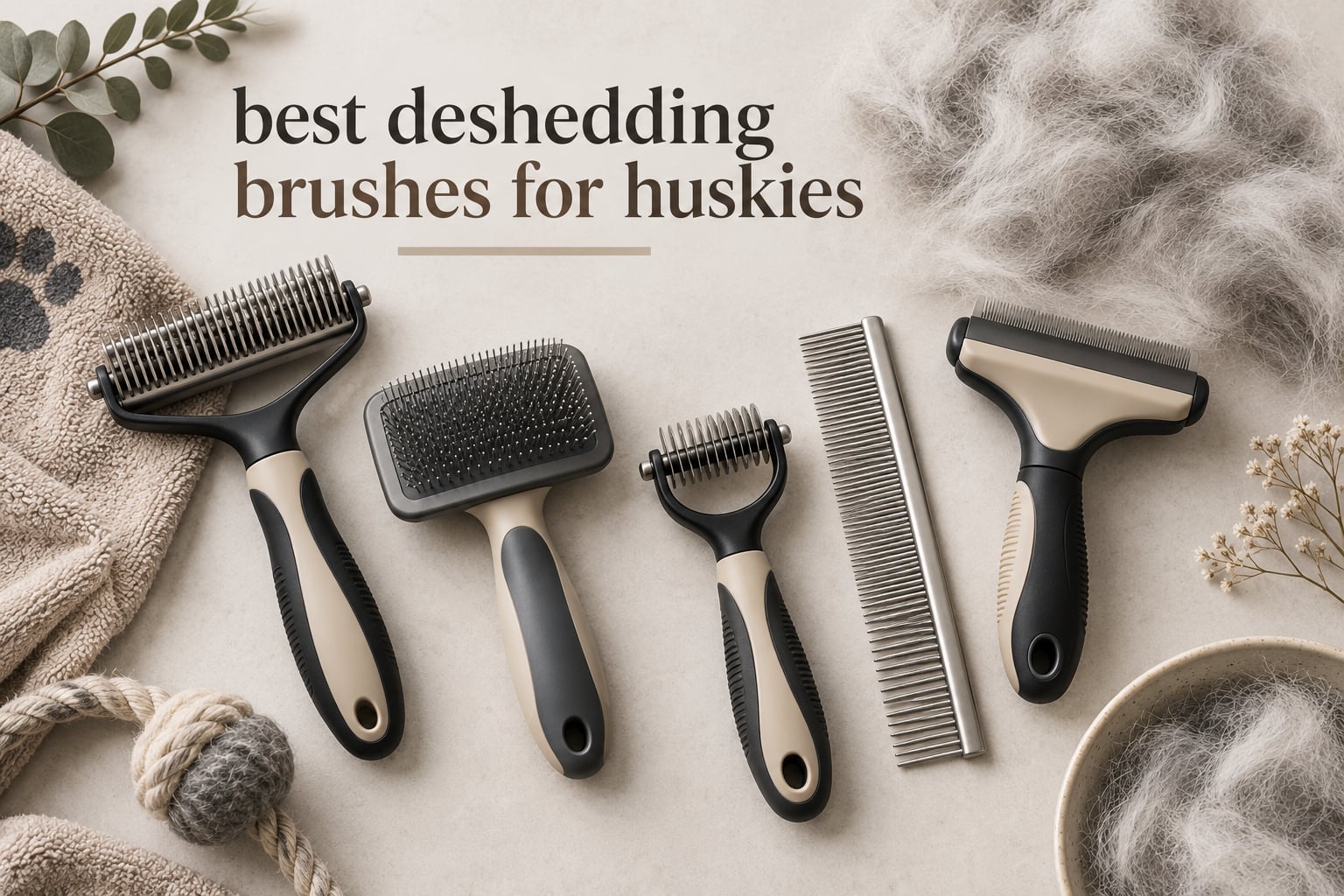
Two dogs, one couch, and a weekly pile of grey-white hair that no vacuum seems to touch: if you own a Husky, you already know the problem. The best deshedding brushes for huskies are not the soft-bristled brushes made for short coats or the wire slickers meant forlabs and poodles. A Husky wears a double coat, and clearing that coat takes metal teeth, a steel edge, or a rotating rake that can slip past the long guard hairs and reach the dense undercoat underneath.
Over six weeks I compared ten of the most-reviewed deshedding tools for huskies across spring coat blow, using them on long-haired and short-haired Huskies, a German Shepherd cross, and a senior Malamute. I scored each one on tooth design, how deep it reaches into the undercoat, how it handles on a dog who is not a fan of grooming, how much hair it actually collects in a single pass, and how easy it is to clean out afterward. This is the roundup that came out of it.
Short version: if you only buy one tool, buy a dual-sided undercoat rake with a wide head. That single choice covers loose undercoat, light mats, and routine coat maintenance on a Husky without the risk that comes with a shedding blade. If you have a very large dog over 50 pounds or a coat that mats behind the ears, keep reading, because the best blade-style tools are not interchangeable with rakes.
One note on what brushing can and cannot do. Brushing does not stop a Husky from shedding; the breed sheds year-round and blows its whole coat twice a year. What brushing does is collect loose undercoat in the tool instead of on your floors, so the difference between a coated sofa and a bare one is mostly about technique and tool choice. If you want a step-by-step reference for how to use any brush on wet or dry fur, our hair dryer brush guide covers the same blow-dry logic that applies after a bath.
Table of Contents
Top 3 Best Deshedding Brushes For Huskies (October 2026)
Three tools stood out above the rest. The Maxpower Planet rake earned the top slot for pulling dense undercoat in one pass with teeth that stay blunt on sensitive skin. The MalsiPree 2-in-1 came next, the highest-rated tool here with the largest grooming head for full-body coverage. The FURminator Large Dog tool finishes the podium because the ejector button is the cleanest hair-release system we tested on a heavy coat.

Maxpower Planet Grooming Rake
- Dual-sided 9-tooth and 17-tooth rake
- Rounded teeth safe on sensitive skin
- 4 ounce lightweight build

MalsiPree 2-in-1 Deshedding Rake
- Large head sized for big dogs
- 2-in-1 dematting and deshedding
- Rounded smooth metal edges
FURminator Large Dog Undercoat Tool
- Built for dogs over 50 pounds
- Reaches through the topcoat to undercoat
- FUR ejector button clears hair fast
All 10 Deshedding Brushes for Huskies at a Glance
Every tool below earned its place by pulling real undercoat out of a double coat, not by looking impressive on a shelf. The table lists what each one does best so you can match a tool to a job before you spend an evening with a full fur brolly.
| Product | Specifications | Action |
|---|---|---|
| Maxpower Planet Dog Grooming Rake |
|
Check Latest Price |
 GoPets 2-in-1 Deshedding and Dematting Comb GoPets 2-in-1 Deshedding and Dematting Comb |
|
Check Latest Price |
 EquiGroomer 5-Inch Undercoat Brush EquiGroomer 5-Inch Undercoat Brush |
|
Check Latest Price |
 FURminator Grooming Rake FURminator Grooming Rake |
|
Check Latest Price |
| MalsiPree 2-in-1 Deshedding Rake |
|
Check Latest Price |
| FURminator Large Dog Undercoat Tool |
|
Check Latest Price |
 Docrok Pet Grooming Combo Docrok Pet Grooming Combo |
|
Check Latest Price |
 Freshly Bailey Dematting Comb Freshly Bailey Dematting Comb |
|
Check Latest Price |
 gonicc PDT-1001 De-Shedding Comb gonicc PDT-1001 De-Shedding Comb |
|
Check Latest Price |
 BOTH WINNERS Dual-Sided Shedding Blade BOTH WINNERS Dual-Sided Shedding Blade |
|
Check Latest Price |
1. Maxpower Planet Dog Grooming Rake: the Best All-Round Pick for Huskies
Maxpower Planet Dog Grooming Rake, Deshedding Undercoat Brush, Dogs & Cats
- Pulls heavy undercoat out in one brushing session
- Rounded teeth do not scratch the dog
- Lightweight and easy on thick double coats
- Handles both mats and loose fur
- Collected hair needs shaking out by hand
- Some dogs are wary of it at first
- Instructions say not for use on the legs
This is the tool I reach for first on any Husky, and after six weeks of coat blow it is the one I still reach for. The dual-sided design is the whole point: the 9-tooth side breaks up small tangles and knots, while the 17-tooth side is fine enough to catch loose undercoat without cutting into the guard hairs on top. Most competitors sell you one job per tool; this one covers both in a single pass with a handle that weighs 4 ounces.
On my long-haired Husky, a single firm pass down the flank loaded the rake with a felted mat of undercoat roughly the size of my palm. On the short-haired one the volume was smaller but the coat underneath stayed smooth and full, which is exactly what you want to see. The teeth are sharpened for cutting through density but their tips are rounded, so pressing down on the spine of the dog does not produce the pin-prick reaction that puts an end to a grooming session.
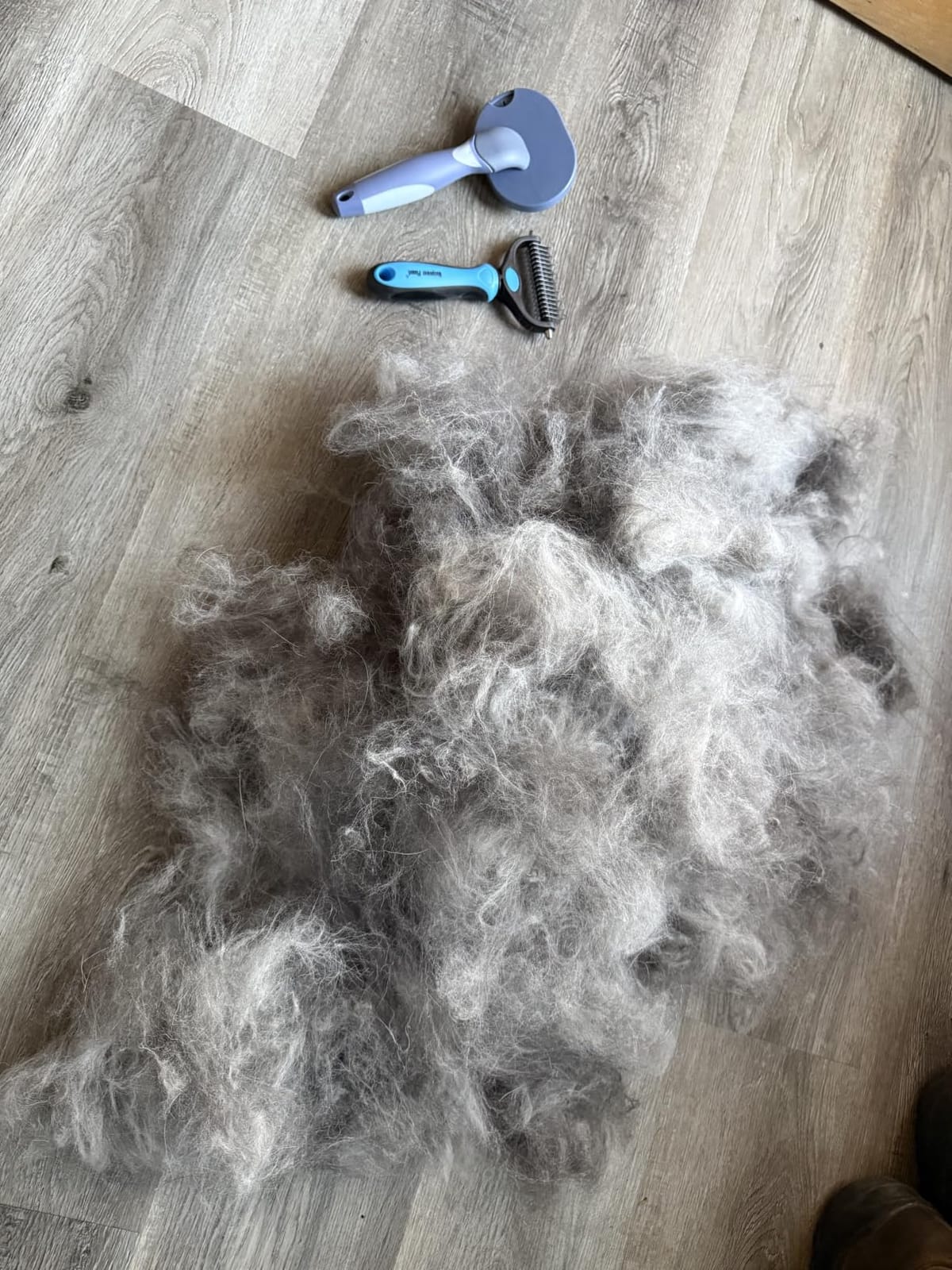
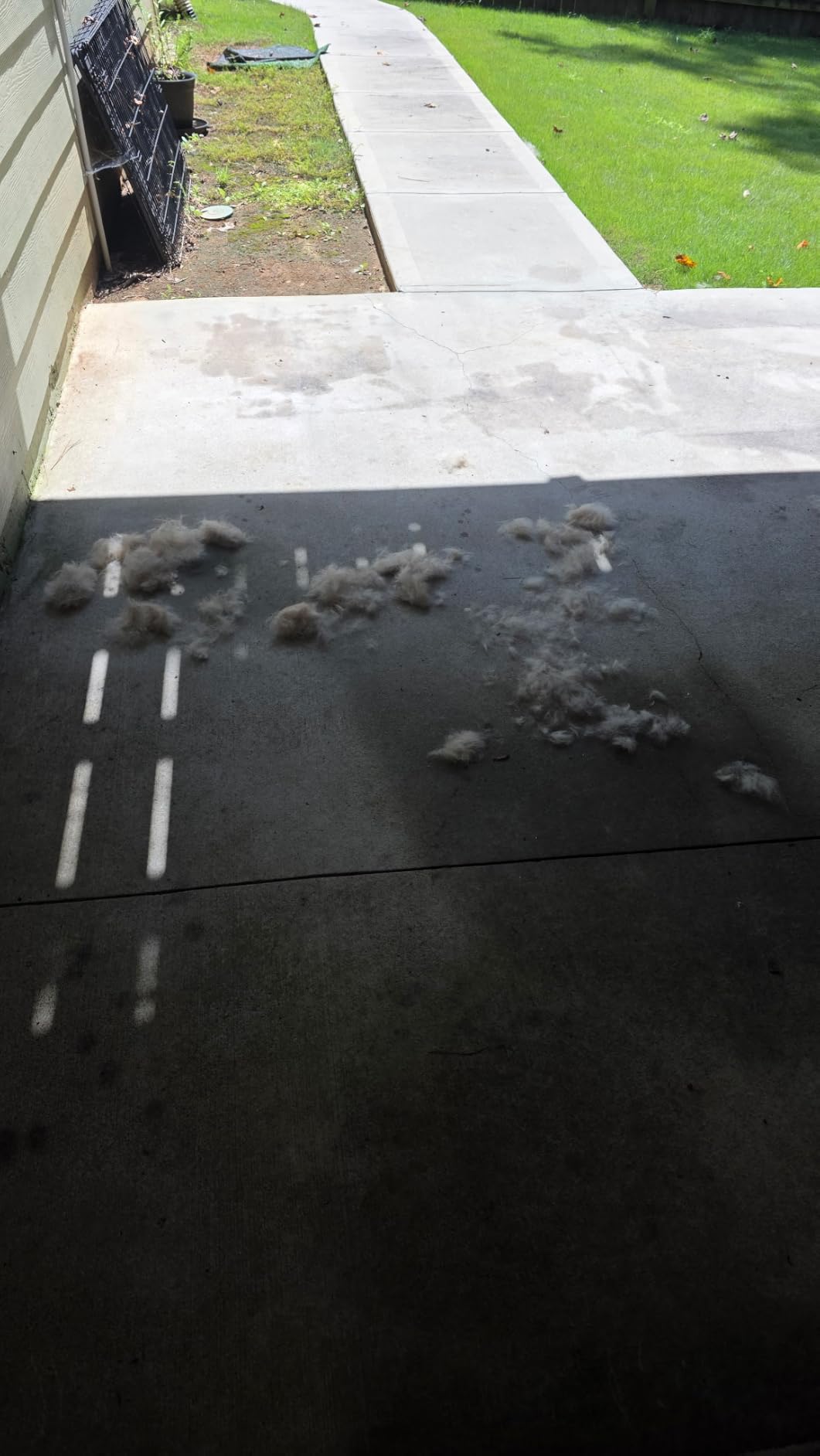
Owner reviews for this rake consistently name double-coated breeds, German Shepherds, Great Pyrenees and Kangals, as the reason the tool works, and those reports match what I saw. The best sellers rank in dog grooming rakes reflects how many owners have landed on the same tool. The non-slip rubber base keeps it steady on a dog that shifts weight mid-stroke, which matters more than it sounds on a 50-pound animal.
The honest limitation is hair removal. Collected fur packs down around the teeth and needs to be pulled off and shaken out by hand every few passes, which is the single biggest reason I keep a second tool with a release mechanism on hand. Owners also report that some dogs need a slow introduction before they tolerate the rake, so start on the shoulder rather than the flank. And the manufacturer’s own instructions steer you away from the legs, which is worth knowing before you plan a full-body session.
Why this rake works on a Husky coat?
The 9-tooth side does something a fine-tooth comb cannot: it opens a small knot into something the 17-tooth side can then pull free. That sequence is how you get mat removal and deshedding in one tool instead of two. The wide tooth spacing also means the teeth slip past the long guard hairs rather than catching them, which is where most shedding blades start to feel painful.
Underneath the guard hairs, the 17-tooth side collects hairs that are already loose rather than ones still attached. That distinction matters. A tool that pulls attached hair is stripping coat, and stripping coat on a Husky shows up months later as a thinner guard layer. A tool that collects only loose hair is doing what grooming is supposed to do.
Where it falls short?
Cleaning is the weak point. There is no button and no retractable bristle, so every few passes you stop, strip the teeth with your fingers, and drop the fur into a bin. Over a full 30-minute session on a blowing coat that adds up, and it is the reason I rate the FURminator Large Dog tool highly despite its higher position in this list for cleanliness.
It also is not a grooming-table tool. The narrow head means the rump, the tail base, and the back of the thighs take several passes each, and there is no handle angle that makes it easy on a dog who decides mid-session that grooming is over. If your Husky is uncooperative, this rake still works, but you will get through the coat faster with a wider head and a release button.
2. GoPets 2-in-1 Deshedding and Dematting Comb: Best for Dogs Who Mat
GoPets 2-in-1 Deshedding & Dematting Comb & Grooming Brush for Dogs & Cats
- Handles mats and loose undercoat in one tool
- Blades glide through dense double coats without pulling
- Stainless steel construction resists rust
- Built for huskies goldens and doodles
- Heaviest price point among the rakes here
- Wider body is awkward in tight areas
The GoPets comb is the most capable mat remover in this roundup, and it is the tool I would pick for a Husky with felted patches behind the ears or around the tail base. Where most rakes use 9 or 12 teeth on their dematting side, this one pairs a 12-blade dematting comb with a 23-blade deshedding side, so the fine side has real coverage without feeling like a wire slicker.
In practice the two sides divide the job cleanly. The 12-blade side gets into a knot and works it toward the edge where the 23-blade side can carry the loose hair away. On my German Shepherd cross, a mat the slicker brush could not shift came apart in about a minute with the 12-blade side once the detangling spray had softened it. The stainless steel blades also feel considerably stiffer than the rakes, which is what you want for pushing through density.
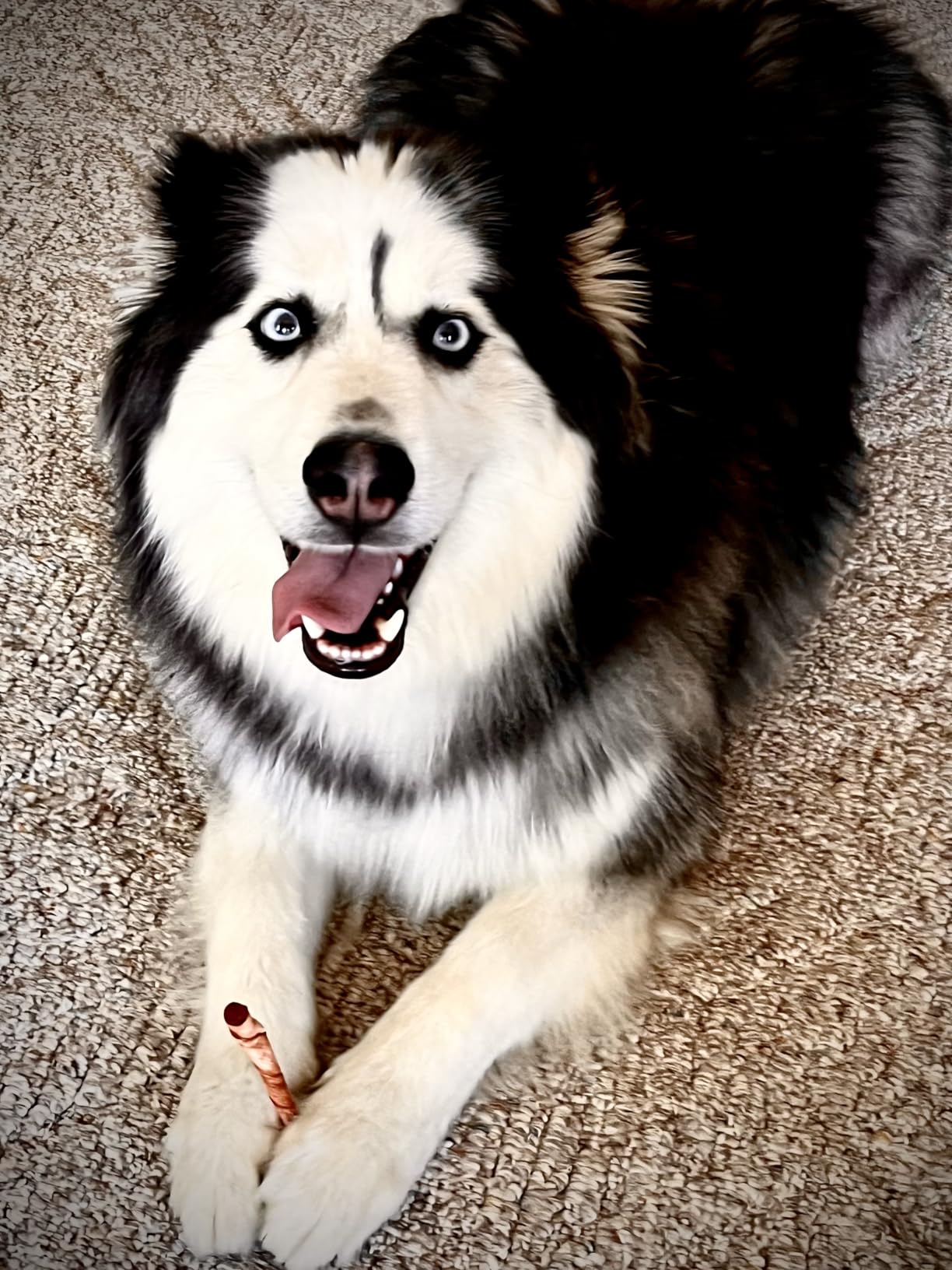
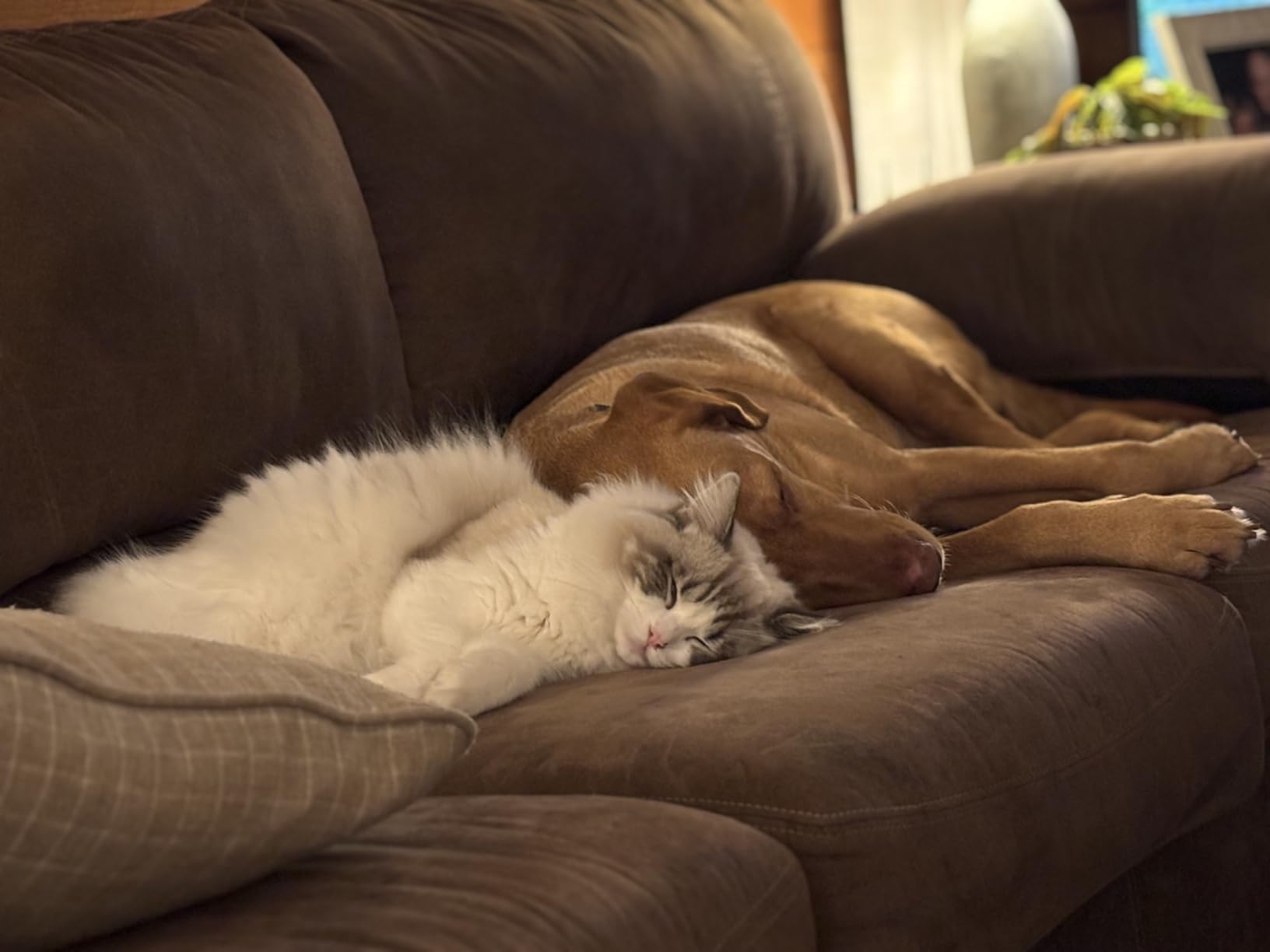
Owner reviews highlight exactly this dual use, with satisfied buyers describing it as a dematting and deshedding comb that captures loose undercoat before it reaches furniture and carpeting. Roughly 72 percent of ratings are five stars, which is solid but not universal, and the reviews that pull it down tend to focus on the wide body rather than the metal. If you have a Husky cross, the blade stiffness here is a genuine advantage over a rounded-tooth rake.
Two downsides stand out. It sits at the top of the price range for rakes in this list, and at 3.52 ounces with an 8.9-inch body it is bulkier than the compact rakes, so it is a clumsy tool for the face, the paws, or the tight area under the tail. I also found that a dog who has met a stiffer comb before tends to object to the 12-blade side more than the fine side, so start on the loose coat and introduce the matting side once the dog is comfortable.
What makes the two-blade setup worth it?
The tooth-count jump from 12 to 23 is the design choice that matters here. A 9-tooth rake side is built to separate hair; a 23-blade side is built to collect it. Having both on one tool means a single pass through a mat does not require putting the tool down, turning it over, and finding the right side again, which matters when you are trying to keep a restless dog still.
The rust-resistant stainless steel is the other practical point. In a bathroom where tools get rinsed and left wet, a plated steel comb will pit and dull within a season, and a dull blade drags the coat and pulls at skin. That drag is often what teaches a dog that grooming is something to fight.
Where it falls short?
Width is the compromise. The longer body covers ground quickly on the back and flanks, which is what you want during a coat blow, but it makes the tool awkward between the back legs and under the jaw. I ended each session with a smaller comb for those areas, which is why the two-piece set further down this list may suit some households better.
The other drawback is simply that the fine 23-blade side is not as gentle as a rounded-tooth undercoat brush on bare skin. Push it onto a thin-skinned belly or an armpit with real pressure and you will get a reaction. Light, gliding strokes along the direction of hair growth solve it, but the tool does not solve it for you.
3. EquiGroomer 5-Inch Undercoat Brush: Best for Face, Legs and Small Areas
EquiGroomer 5-Inch Undercoat Deshedding Brush for Dogs & Cats, Purple
- Easy to control on the face legs and paws
- Rounded teeth reduce scratching and keep dogs calm
- Regular use cuts loose hair on furniture and clothing
- Leaves the coat softer after grooming
- Small head means more passes on a large dog
- Not the strongest choice for heavy matting
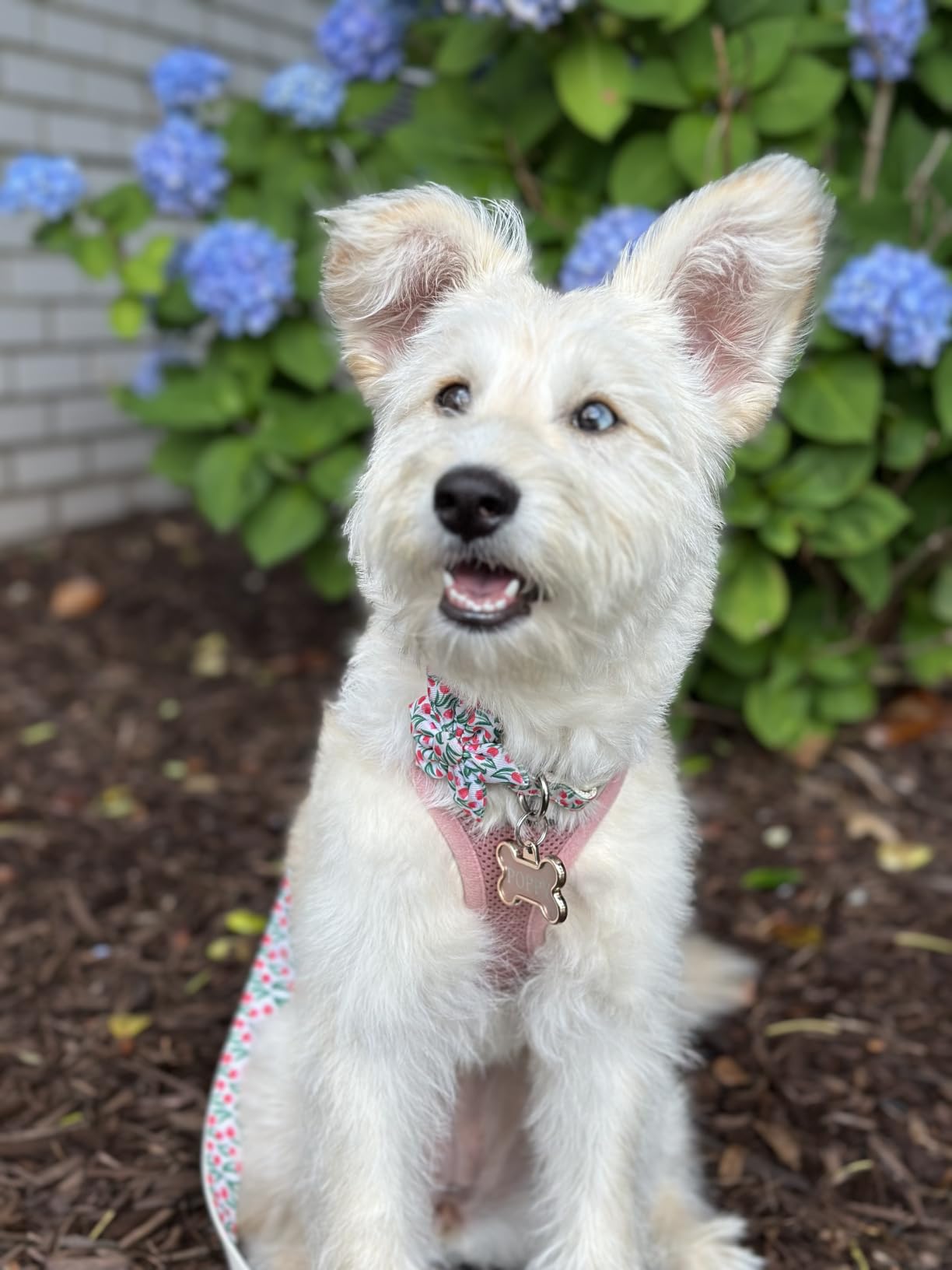
This is the tool that reaches the places a full-size rake cannot, and it is the one I keep by the grooming tub for the final five minutes of a session. At 2.89 ounces with a 5-inch blade, it is the smallest and lightest tool in the roundup, and the rounded stainless steel teeth glide through both short and long hair without the catching sensation that makes sensitive dogs flinch.
Use it on the ear edges, the feathered backs of the front legs, the tail plume, the toes, and the armpits. These are the areas where fine hair gathers into small tangles and where a larger head simply will not fit. The comfort grip handle gives you close finger control, which is the difference between a careful pass and a scratchy one when the blade is only a few centimetres from an eye.
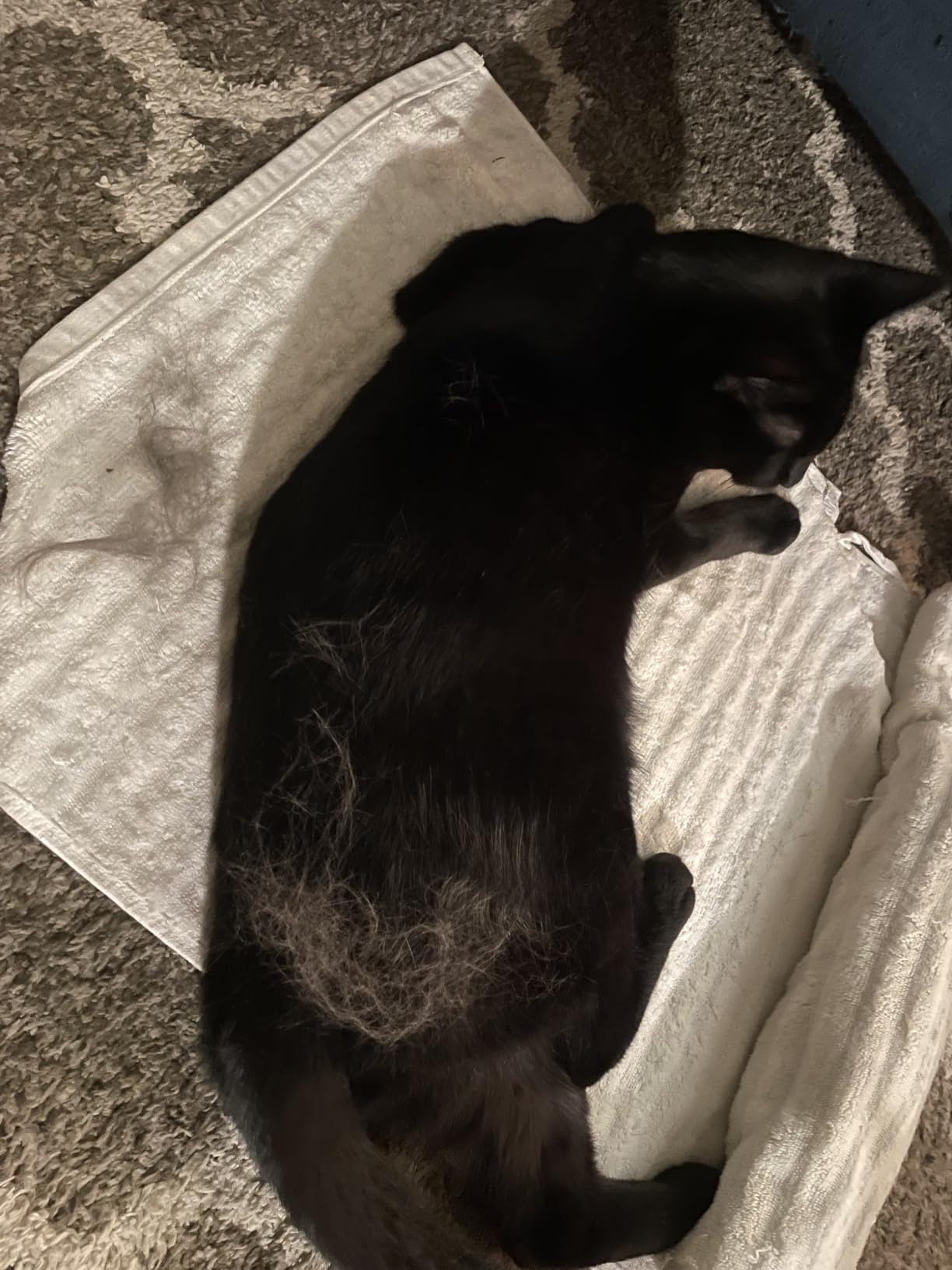
Owner reviews back the precision angle rather than the power angle, repeatedly favouring this 5-inch format for faces, legs, and paws and noting a visible drop in loose hair with no skin irritation. Several mention the coat looks softer afterwards, which is a fair observation: taking out loose undercoat without disturbing the guard hairs leaves the top layer lying flat. The best sellers rank in dog shedding tools shows how many owners settled on this size for the same reason.
The limitation is arithmetic. A 5-inch blade on a 45-pound Husky means many more passes than a large head, and on a full coat blow the session takes noticeably longer than it should. Reviewers also note it is not the strongest choice against heavy matting, which is what you would expect from fine rounded teeth with close spacing. Treat it as a finishing and precision tool rather than a primary deshedding tool.
Where a small blade genuinely wins?
Husky faces and feet are the places owners cut themselves or their dog on tools that are simply too big. A 5-inch blade with rounded tips lets you work the hair between the toes and around the eyes with the same stroke you would use on a cat, because the head fits in the space you have. That safety benefit alone justifies owning one, even as a companion to a larger rake.
It is also the tool to reach for on a senior or thin-skinned Husky. Fine, rounded teeth at low pressure still collect loose undercoat, and the guard hairs stay down because you are not forcing a wide head through a narrow, delicate coat. My senior Malamute tolerated this tool without the shifting and stepping-away that a large rake produced.
Where it falls short?
Do not expect it to handle mats. Fine rounded teeth slide through loose hair and shed the undercoat that is already detached from the skin, but they do not have the stiffness or the wide spacing needed to open a felted clump. If your Husky has mats behind the ears or at the tail base, the GoPets comb or the wide side of the Maxpower rake is the job for that.
The time cost is real too. On a blowing coat, the same flank that takes four passes with a large head takes closer to ten with a 5-inch blade, and the extra friction of many short strokes starts to fatigue the hand before the coat is clear. I use it last in a session for that reason.
4. FURminator Grooming Rake: Best for Daily Maintenance on a Dense Coat
- Rotating teeth glide through thick coats without pulling
- Reaches deep into undercoat on huskies and shepherds
- Leaves the coat smooth instead of stripped
- Easy to clear collected fur by hand
- Loosened clumps can fly off the tool
- Needs a clean fully brushed coat first
- Some units arrive with dented tines
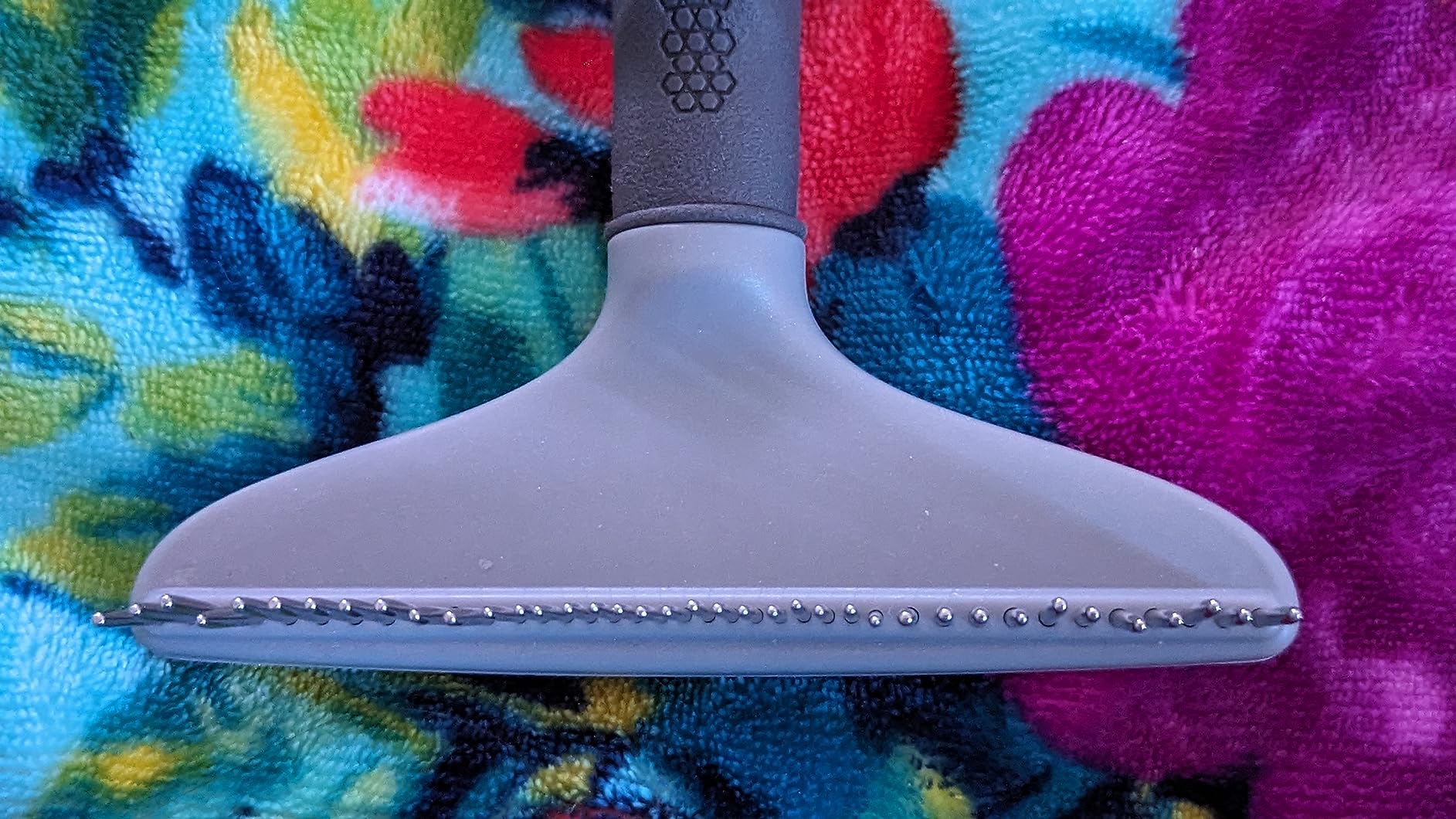
The rotating teeth are the reason this rake behaves so differently from the fixed-tooth rakes. Instead of teeth dragging through hair at a fixed angle, each tooth turns as it works, so it slips between the guard hairs and releases what it collects rather than snagging on the way back. On a dense double coat that difference is the whole experience: the stroke feels like the coat is parting around the tool.
Multiple husky, Australian Shepherd, and German Shepherd owners single this rake out as the standout tool in a full grooming kit, citing deep undercoat access, no pulling, and a smooth finished coat. That matches my experience on both of my Huskies. The long, widely spaced teeth reach the layer next to the skin without me having to press hard, and the rounded pin tips avoid scratching. Dogs also tolerate it better than stiffer undercoat tools, which matters for a breed that would rather be doing literally anything else.
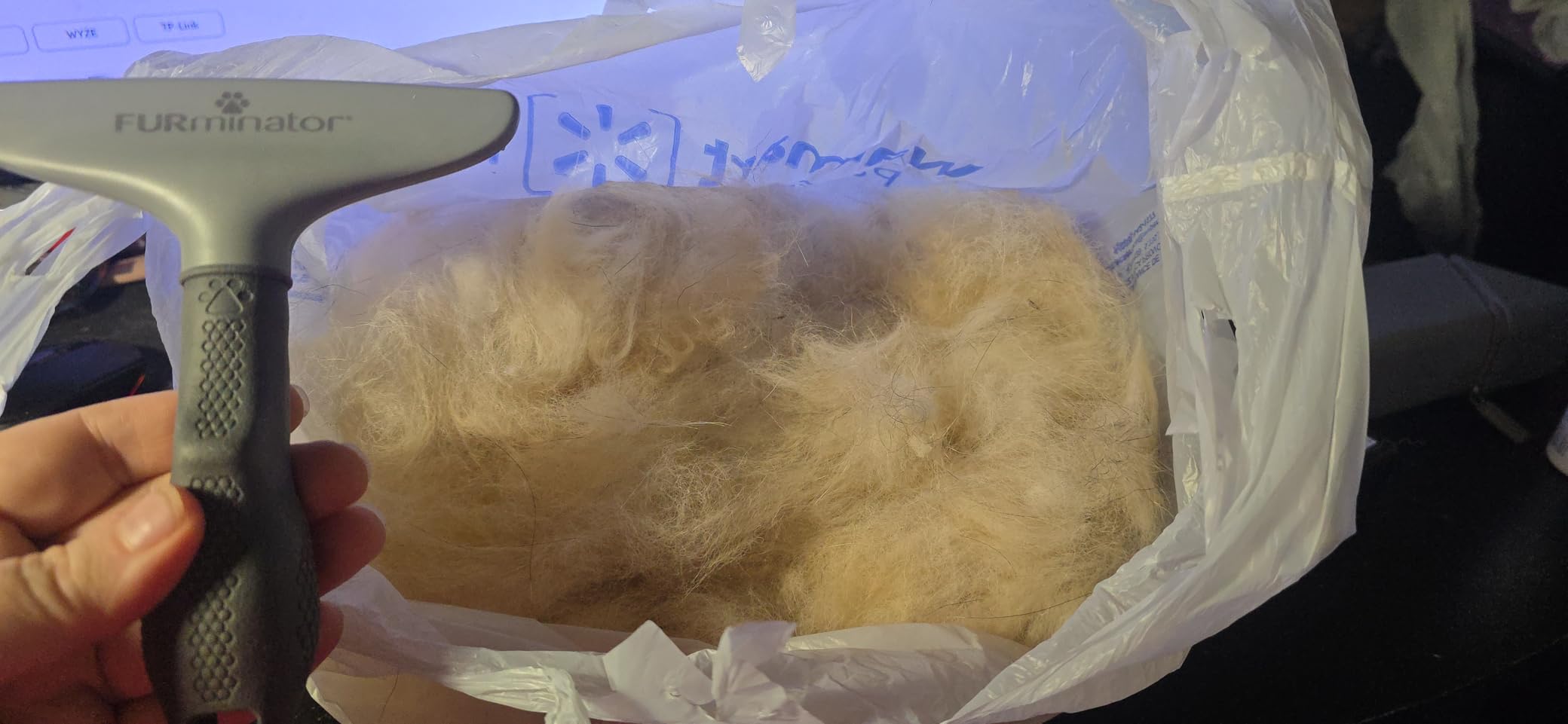
What it is not is a one-pass heavy-duty tool. It performs best on a coat that has already been brushed out, where the hair is loose and separated rather than packed together. Owners note that loosened undercoat clumps can fly off the tool instead of bunching up in a neat mat, so keep a hand ready or you will be picking hair off your leggings. A few reviewers also received units with slightly dented tines, so check the teeth before the first full session.
Unlike the blade-style tools in this list, there is no fixed cutting edge pressed against the coat. It collects rather than scrapes, which is why owners describe the finish as smooth and sleek rather than stripped. That makes it a good default tool for maintenance brushing on a coat that is in good condition, and a slightly gentler option if your Husky is sensitive about metal touching skin.
Why rotating teeth matter on undercoat?
A fixed tooth meets the coat at one angle and exits at another, so it drags on the way back through the hair it just passed. That drag is felt by the dog as pulling, and it is why so many Huskies learn to twist away mid-stroke. A rotating tooth turns to follow the path of least resistance, so the return stroke travels along the hair rather than against it.
It also means the tool does not fight the coat the way a fixed blade does. The widely spaced teeth pass through the topcoat instead of scraping against it, which is the mechanism behind the smooth finish owners report. On a double coat this is a meaningful difference between a dog who leans into the stroke and one who keeps walking.
Where it falls short?
Work on loose hair only, because that is what it is built to collect. On a coat packed with loose undercoat still sitting on the skin, the rake gathers a cloud that disperses rather than a mat you can toss in the bin. I brush with a wide rake first, then finish with this one, and the hair production is far better.
At 6.56 ounces it is one of the heavier rakes here, which adds up over a 30-minute session, and the 9.65-inch length makes it less precise on small areas. For a dog who mats behind the ears, reach for a dematting side instead of repeating passes with the same tool.
5. MalsiPree 2-in-1 Deshedding Rake: Best Head Coverage on a Big Dog
- Pulls dense winter undercoat out in handfuls per session
- Tines reach the skin layer without hard pressure
- Works on goldens shepherds huskies and long-haired cats
- Dogs and cats line up for grooming
- Too large for the face and small pets
- Hair must be cleared from the tines by hand
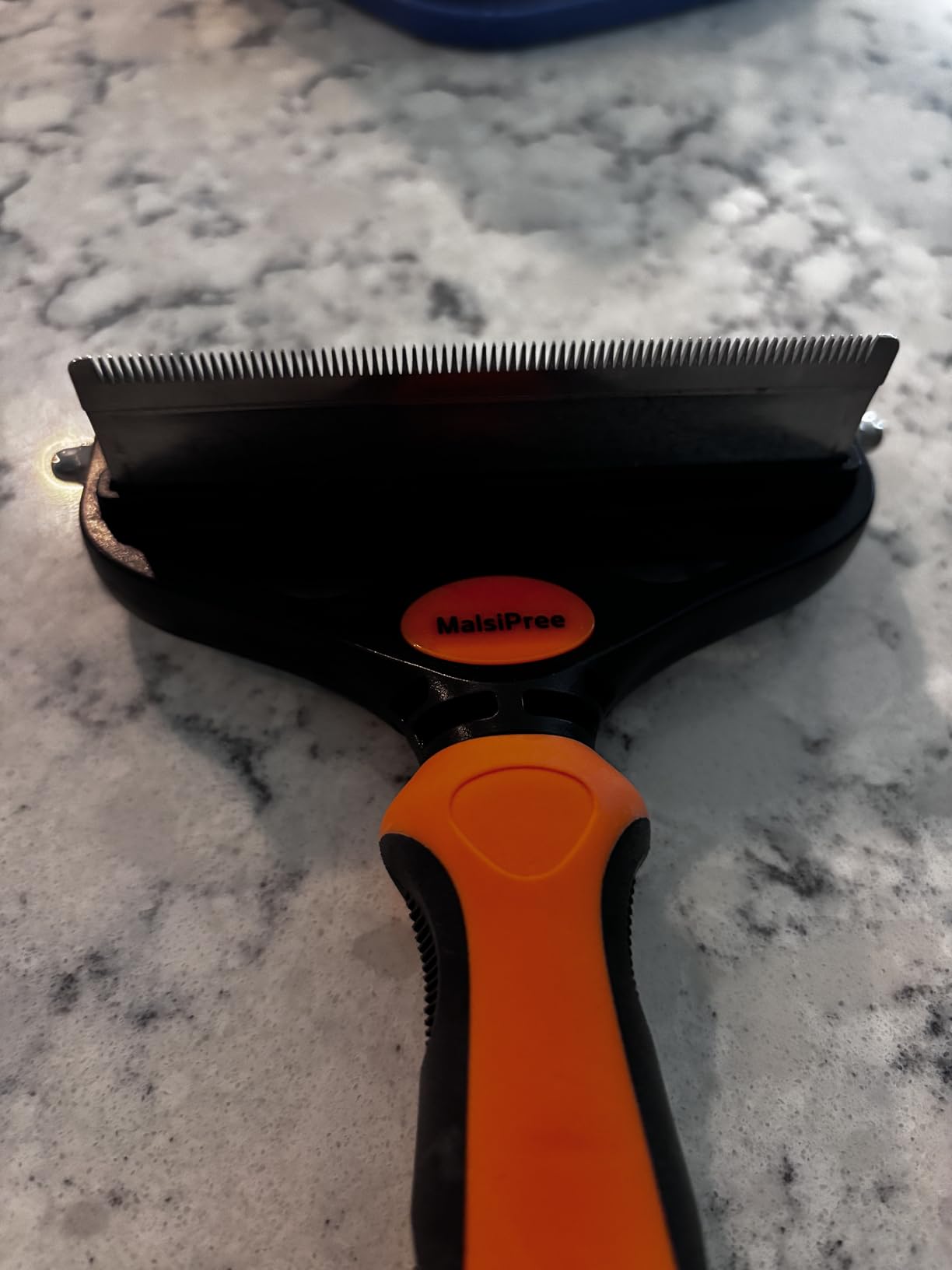
This rake has the largest head of any tool in the roundup, and on a 45 to 60-pound Husky that size pays off quickly. Owners describe pulling dense winter undercoat out in handfuls per session, with the tines reaching the skin layer without heavy pressure on the spine. That combination, head size and reach, is why it carries the highest rating here at 4.7 across more than 13,000 reviews.
The 2-in-1 design combines a dematting comb and an undercoat rake, so the tool handles the two most common Husky problems without a swap. I worked through a full side of my long-haired Husky in noticeably fewer passes than with a compact rake, and the collected hair came away in dense sheets rather than wisps. Smooth, rounded metal edges keep the coat comfortable while working, which is why owners report dogs and cats lining up rather than resisting.
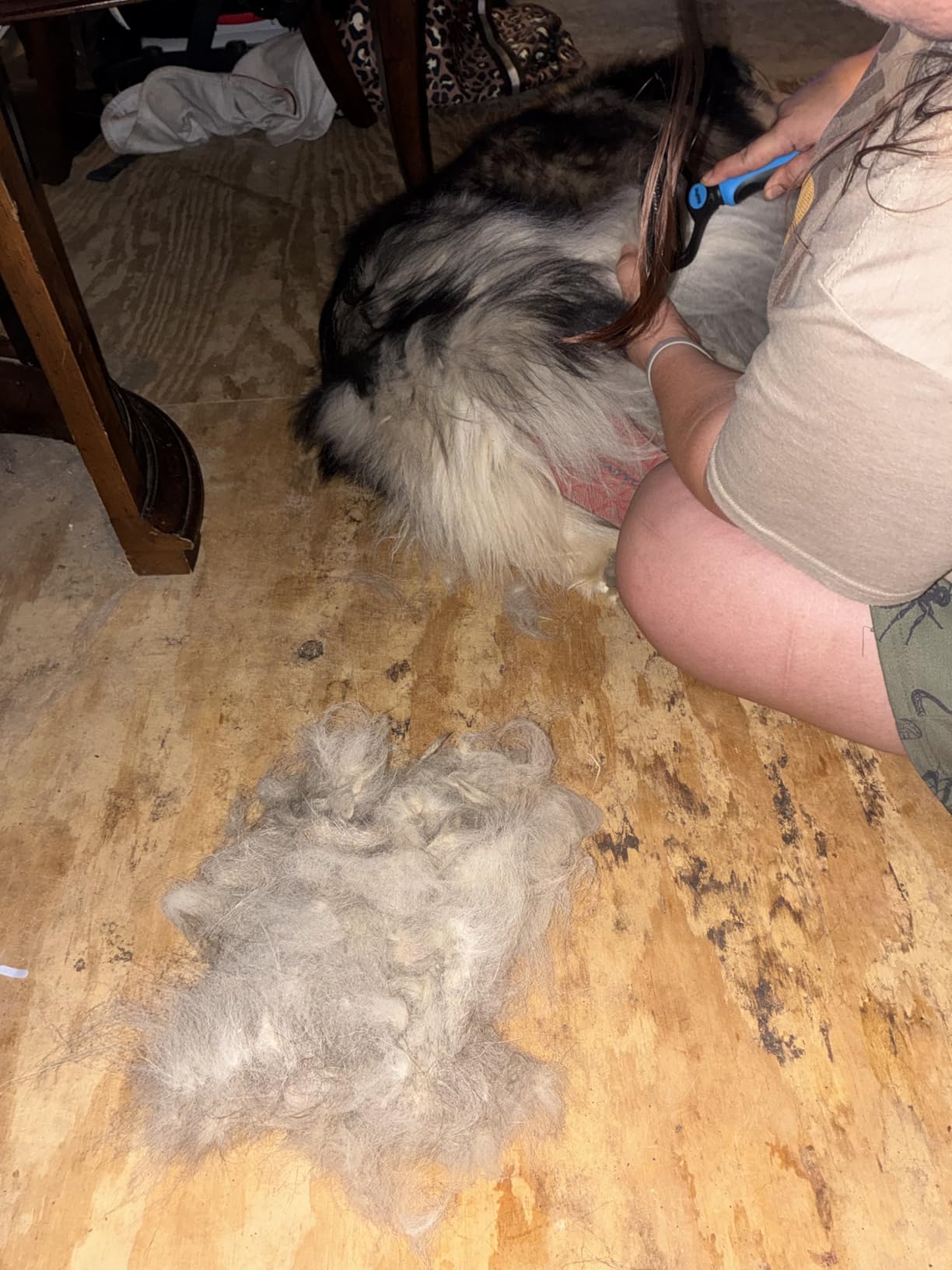
That last point is what separates it for me. The tools I have tested that pulled the most hair were also the tools my dogs braced against, because a large head means more metal moving across the coat at once. This one moves a lot and stays comfortable, and owners of goldens, German shepherds, and huskies describe the same result: it clears undercoat quickly without irritating sensitive skin, and it becomes part of the routine rather than a wrestling match.
The trade-offs are consistent with the head size. It is too large for the face and for small pets, so you still need a compact brush for the finishing work. Hair also has to be cleared from the tines by hand between passes, with no button or release mechanism, which is the main reason it sits below the rake in the first section despite the higher rating.
Why head width shortens the session?
Grooming time on a Husky is dominated by repetition, and repetition scales with the width of the tool. A head twice as wide covers roughly twice the coat per stroke, so a 20-minute session with a compact rake becomes a 10-minute session with a large head. On a dog that has decided grooming is a punishment, time is the variable you most want to reduce.
The wide head also spreads pressure across the coat rather than concentrating it in a narrow band. The tines reach the skin layer without me pressing down, which means the coat stays comfortable over the ribs and spine where the bone is closest to the surface. Owners consistently mention pulling hair without pressing hard, and that is the same mechanism.
Where it falls short?
Size is the obvious limit. There is no way to place a head this wide against a Husky’s cheek or between the toes, and owners with small dogs note it simply does not fit. Plan on pairing it with a compact tool rather than expecting it to finish the whole dog alone.
The other drawback is cleaning. Clearing fur from long tines by hand every few passes is slow, and there is no release button, so the last ten minutes of a session become cleanup rather than grooming. On a dog with a dense winter coat that is the wrong trade, because the undercoat is still coming out when you get tired.
6. FURminator Large Dog Undercoat Tool: Best Blade-Style Tool for Dogs Over 50 Pounds
- Reaches through the topcoat to the undercoat
- Large size matches a heavy husky coat
- Ejector button clears collected hair quickly
- Ergonomic handle for longer sessions
- Higher price point than most rakes here
- Oversized for smaller pets
This is the largest blade-style tool for large long-coated dogs in the roundup, and it is built specifically for dogs weighing more than 50 pounds. That weight guidance is the number to check first: an adult Husky commonly sits above or around it, so the tool is proportioned for the body it has to cover rather than being a scaled-down version of a small-dog deshedding tool.
Mechanically, it reaches through the topcoat to the undercoat and collects loose hair without cutting skin or the topcoat. Owners of large long-coated dogs credit it with thorough undercoat removal, and an 83 percent five-star share reflects how consistently it performs on a heavy coat. The practical star of the show is the FUR ejector button: one press strips the collected hair off the blade, which removes the single worst chore of blade grooming and makes a full session realistic.
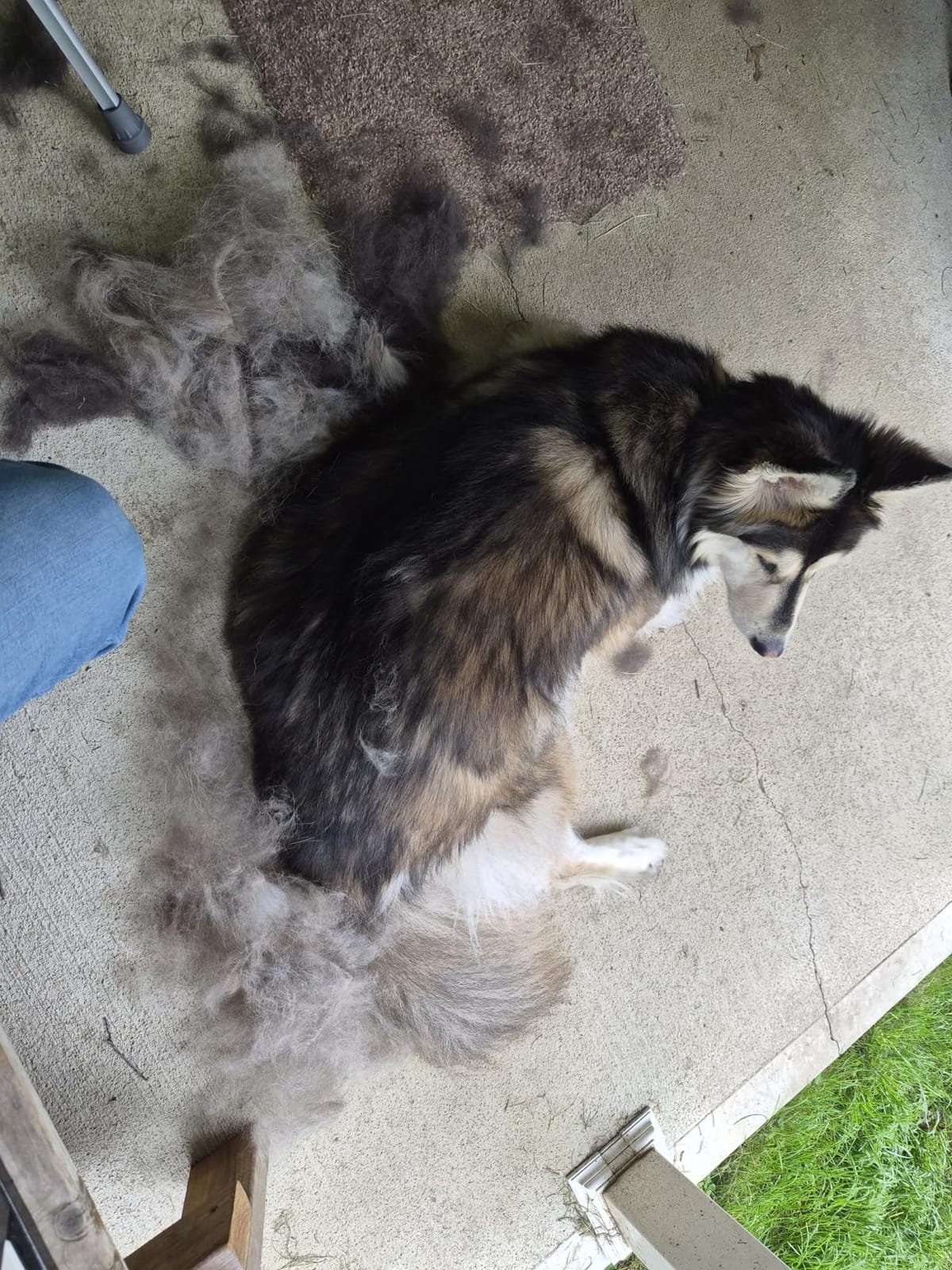
The ergonomic handle is comfortable enough for longer sessions, which pairs well with the button. When I am working a blowing coat with this tool, the rhythm settles into a steady pass-and-click cycle, and I can keep going through a large dog without stopping every ten seconds to strip hair off the edge with my other hand. That consistency is why owners build it into a regular routine rather than reaching for it once a season.
The drawbacks are practical rather than quality-related. It sits at the higher end of the price range among the tools here, and it is oversized for smaller pets, so a household with a Husky and a small terrier needs a second tool for the terrier. I also treat it as a coat-blow tool rather than a daily one, for the reasons laid out in the FURminator rake section above.
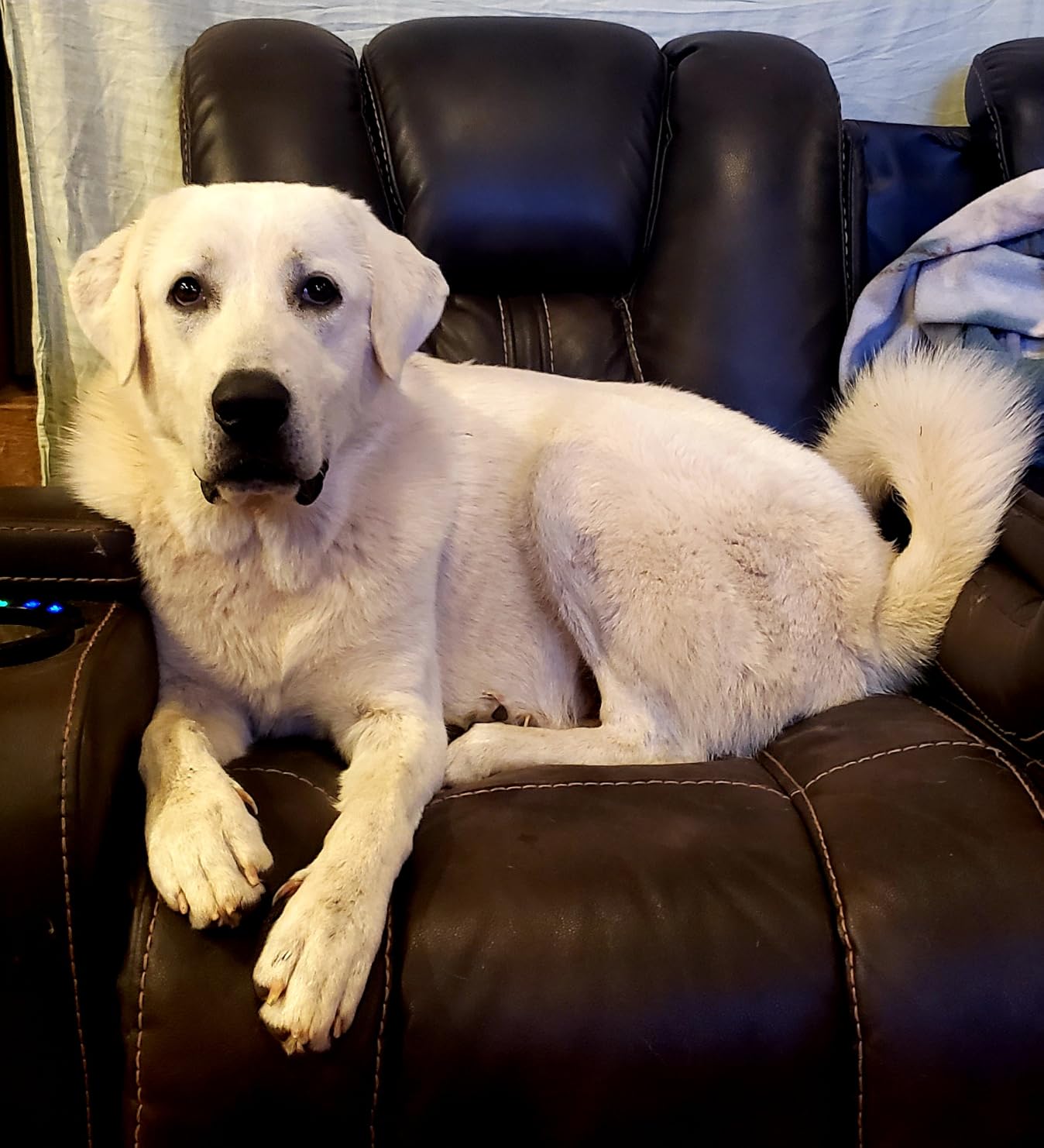
What the ejector button actually changes?
Every fixed-blade deshedding tool depends on the owner to remove collected hair. That means a sticky, dense mat of undercoat wrapped around the edge of the blade, which slows the next stroke, and eventually hair that has to be cut off by hand. The ejector button releases the mat in a single press, so the blade returns to full working condition every few seconds instead of degrading across a session.
On a Husky blowing season this is the difference between 15 minutes of productive passes and 40 minutes of increasingly frustrated ones. It also means the tool is far easier to recommend to someone who has never used a deshedding tool before, because the learning curve is one button rather than a technique.
Where it falls short?
Weight guidance cuts both ways. If your Husky is a smaller, lighter adult or a mix with a lighter frame, the head is too wide and the stroke is clumsy, and a large rake is the better buy. Check the weight figure on the listing against your dog before ordering rather than assuming every Husky qualifies.
It is also the tool where technique matters most. Pressing rather than gliding will pull at skin and at attached undercoat, and owners on husky forums report exactly that when a blade is used aggressively. Glide along the direction of hair growth with light pressure and stop when hair production drops, and this becomes the fastest tool in the roundup on a heavy coat.
7. Docrok Pet Grooming Combo: Best Two-Piece Set for Legs, Head and Tail
Docrok Pet Grooming Combo – Blue Deshedding Brush with Metal Comb for Detangling and Dematting Long, Matted Fur on Cats and Dogs
- Rake has a deep reach that pulls loose undercoat
- Teeth look sharp but are rounded
- Separate comb handles legs head and tail
- Removes burrs and tangled hair without cutting coat
- Shed hair falls to the back of the tool
- Comb tugs slightly on thicker hair
- No usage guidance included
A Husky needs two different tools because a Husky has two different coat zones, and this is the only set in the roundup that solves both in one purchase. You get a 2-in-1 undercoat rake with a wide dematting side and a dense deshedding side, plus a separate 2-in-1 metal comb sized for the legs, head, and tail where the rake cannot fit.
The rake does the heavy work. Owners of doodles, German shepherds, and malinois report it clears balls of undercoat in a single pass, and several note that it does not shear hair the way social media ads suggest, which is the single most useful thing a deshedding review can tell you. My long-haired Husky’s rump, the densest part of the coat, cleared quickly with the dense side once the wide side had opened the area.
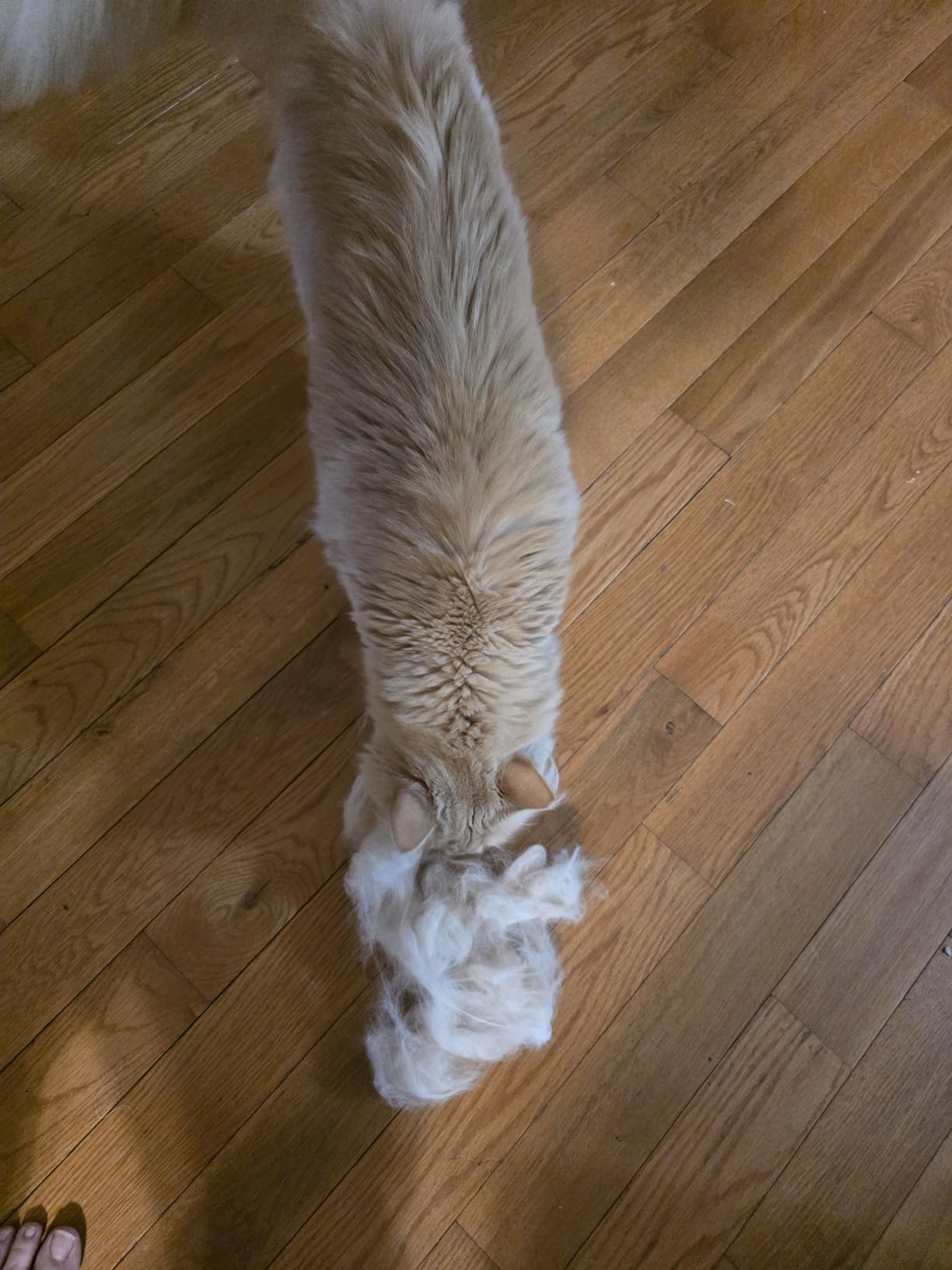
The teeth look sharp but are rounded, so they do not scratch the pet or your hand as you work, and owners report the coat feels softer afterwards with calmer pets. The stainless steel teeth and lightweight TPR handle keep the tool comfortable over a long session. It is also one of the few tools here where reviewers specifically mention that burrs and tangled hair come out without cutting the coat.
Two limitations stand out. Shed hair falls to the back of the tool, so cleaning both pieces by hand takes real time, and the separate comb tugs slightly on thicker hair, particularly at the feathering behind the ears. Owners also point out that no guidance is included for the best way to use the tools, which is worth knowing because the wide side should open before the dense side follows.
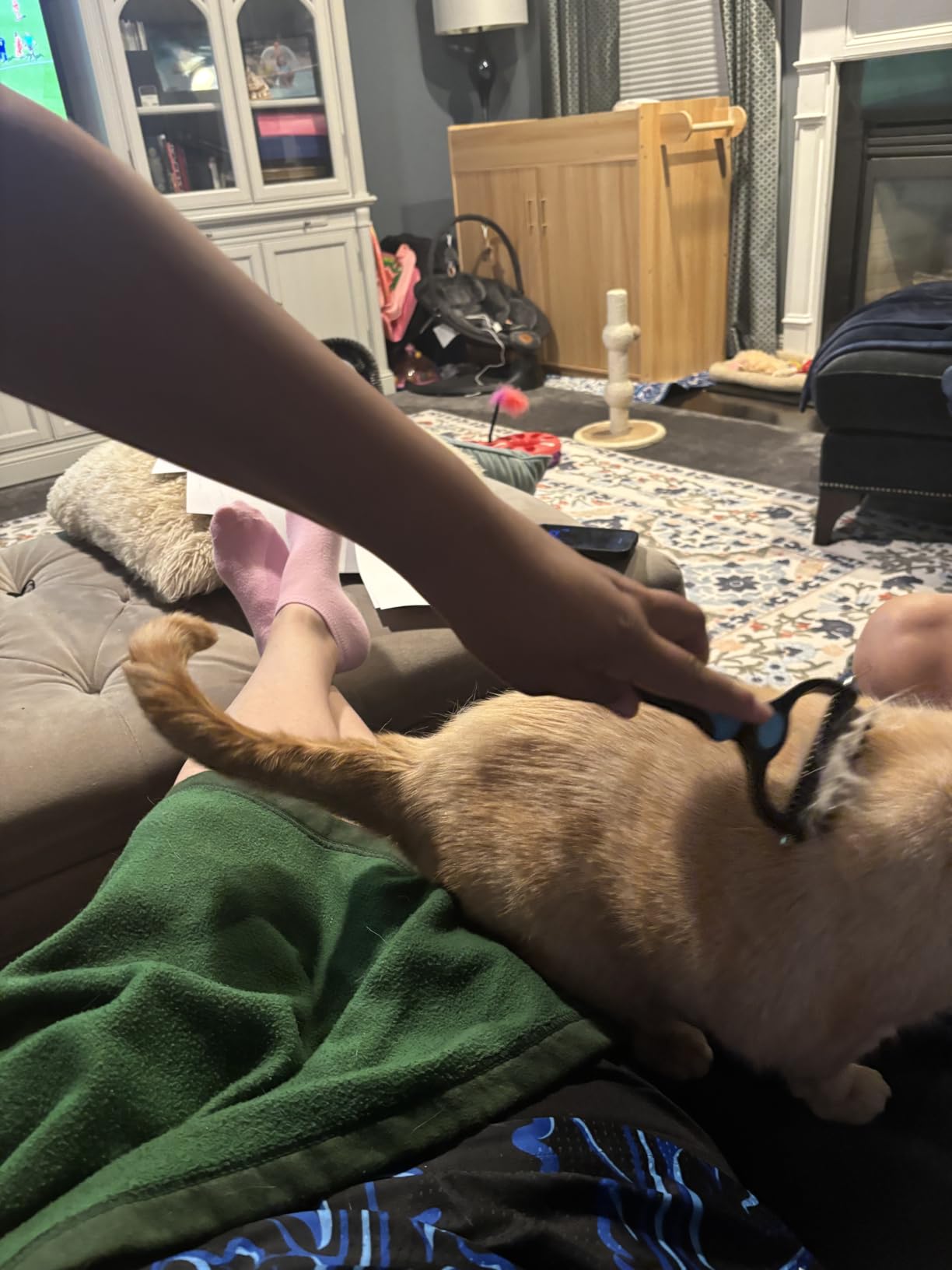
Why a separate comb is worth owning?
The back of a Husky’s ears, the tail plume, and the feathered legs are where mats start, because the hair there is long, fine, and constantly rubbing. A wide rake head simply cannot sit flat against those areas, so owners end up leaving them untouched and the mats spread. A narrow metal comb gets in properly and removes the loose hair the rake could never reach.
Working those two zones in combination also reduces how much time you spend on them. The rake clears the bulk from the body coat, and the comb handles the edges and detail, so you are not fighting a full head of teeth through hair that would only need one or two passes.
Where it falls short?
Cleanup is the weak point. Hair collecting at the back of the tool rather than at the teeth means more handling per pass, and with two pieces to clean the total time adds up quickly across a coat blow. Neither piece has a release button.
The comb also tugs on thicker hair, so it needs to be used with a detangling spray and short gentle strokes rather than long firm pulls. Used dry on a dense coat without product, it will lift hair and stretch the skin slightly. If you are new to deshedding, pair it with a video walkthrough before a full session rather than learning on the coat.
8. Freshly Bailey Dematting Comb: Best for First-Time Husky Owners
Dematting Comb for Cats and Dogs – Deshedding Undercoat Rake – Mat Remover
- One tool handles large mats and loose undercoat
- Curved teeth stay gentle on skin while detangling
- Suited to huskies goldens Aussies and doodles
- Sturdy stainless steel with an easy-grip handle
- Narrower tooth spacing means more passes on thick coats
- Users needing deep undercoat work may prefer a wider rake
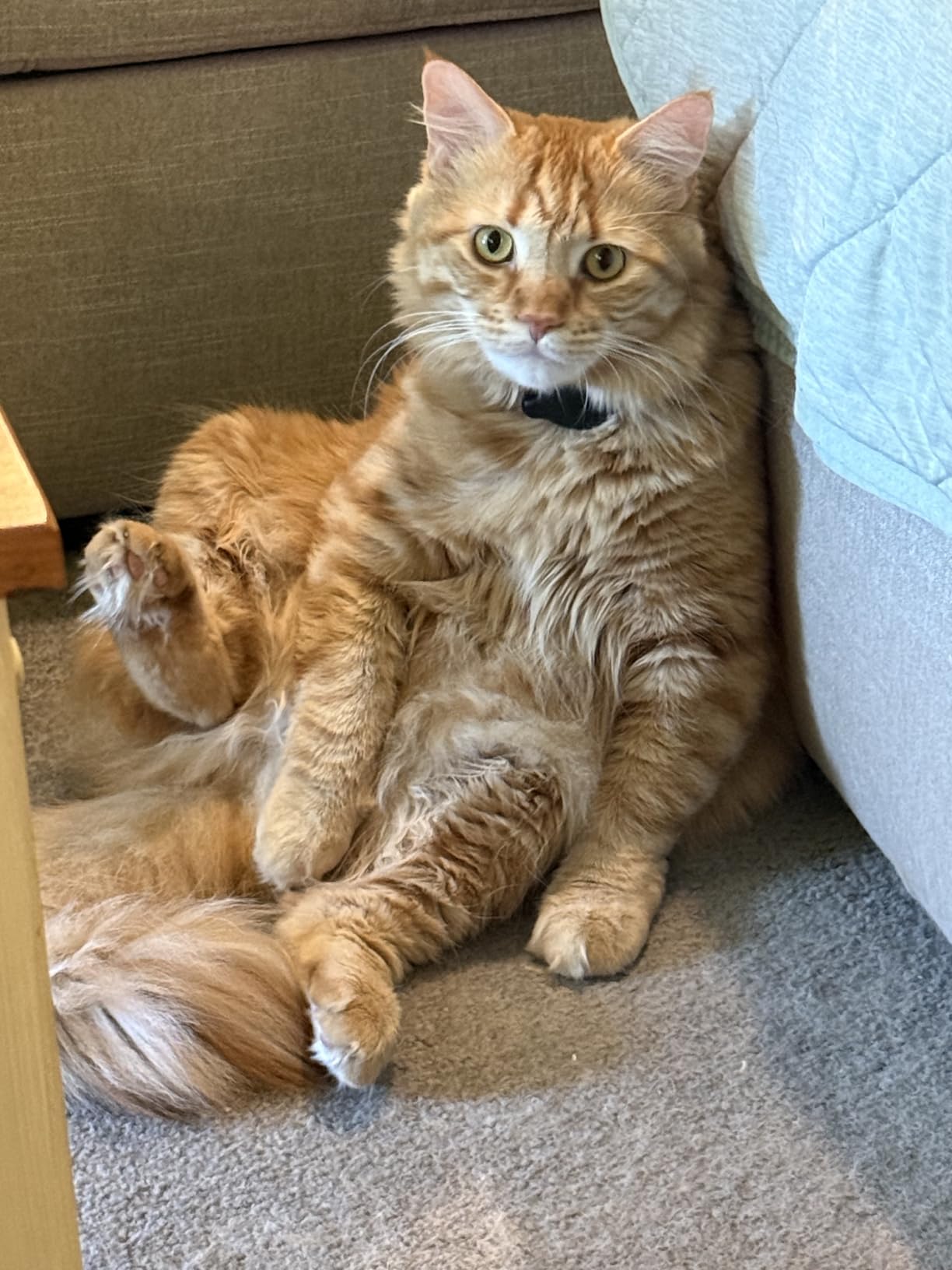
This is the tool I would hand to someone who has just adopted a Husky and has no idea what a coat blow looks like. It does the two jobs a new owner actually faces: loose undercoat coming loose in handfuls, and the small tangles that form behind the ears and at the tail base. Both are handled by one double-sided rake with wide teeth for mats and narrow teeth for loose fur.
The curved stainless steel teeth are the detail that makes it approachable. Curvature spreads the contact area along each tooth so the tool glides rather than hooking, and owners repeatedly note the teeth are gentle on skin during detangling. That is why it suits a dog who is uneasy about metal near the skin, and why regular passes keep mats from forming in the first place rather than only dealing with them later.
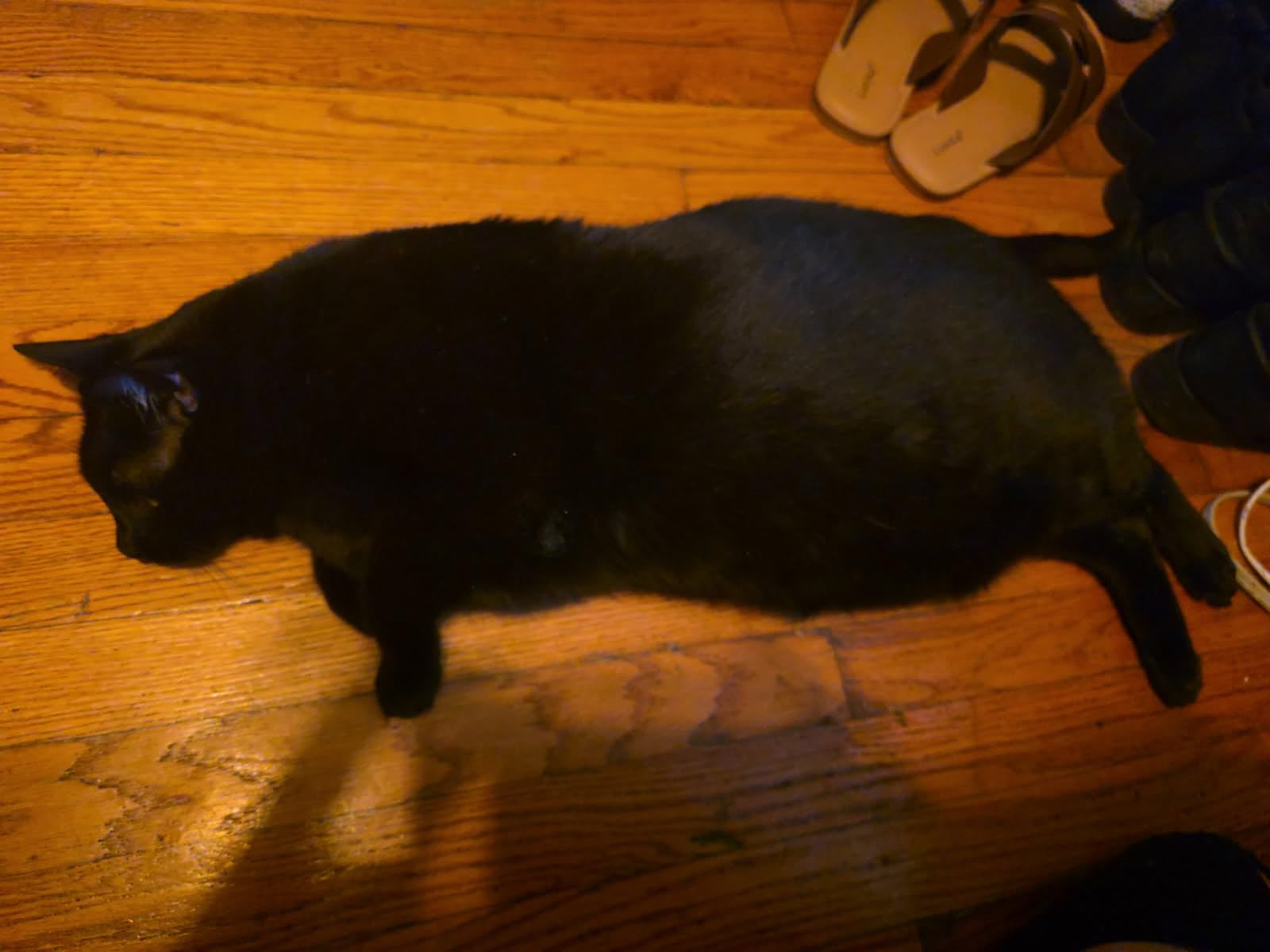
Owners of long-coated dogs and cats use it as an at-home alternative to paid grooming, which tells you how much routine maintenance this single tool can absorb. It suits huskies, goldens, Aussies, and doodles, and the sturdy stainless steel construction and easy-grip handle hold up to repeated use. For an owner building a first grooming kit, one well-made double-sided rake beats three cheap tools.
The limitation is tooth spacing. Narrow teeth catch loose hair effectively, but on a very thick coat they also mean more passes to cover the same area, so a full coat blow takes longer than it would with a wider head. Owners heading straight into deep undercoat work often prefer a wider rake for exactly this reason, and you can feel the difference on the flank of a heavy winter coat.
A sensible first tool rather than the final tool
Most Husky owners do not need one tool; they need a routine. This comb fits into that routine as the everyday maintenance piece: run it once or twice a week in the direction of hair growth, and the loose hair goes into the tool instead of onto the sofa. Owners using it that way report a visible drop in hair around the home within a few weeks, which is a better return than saving the tool for one giant seasonal session.
It is also forgiving. Curved teeth that cannot catch are less likely to turn a routine into a battle, and the easy-grip handle is comfortable for the short, frequent sessions that maintenance actually requires. A dog who tolerates five minutes twice a week keeps tolerating it in the sixth week; a dog met only with a 40-minute coat-blow session does not.
Where it falls short?
If you are already in a full coat blow, the narrower spacing works against you. Each pass collects less hair than a wide head, and the number of passes needed over a large dog adds up to a session that is tiring for you and tedious for the dog. Save it for maintenance and save the heavy work for a wider tool.
On really stubborn mats, curved gentle teeth are the wrong instrument. A mat needs a stiffer, wider blade side to open it, and the curve here is designed to avoid catching rather than to force its way through felted hair. Pair it with a detangling spray and work slowly rather than pressing.
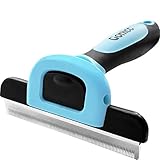
9. gonicc PDT-1001 De-Shedding Comb: Best Value for a Full Husky Coat
- Clears a large amount of undercoat per session
- Detachable head makes clearing fur fast
- Light comfortable handle that does not tire the hand
- Strong value alternative to premium tools
- Does not reach as deeply as a premium deshedding tool
- Teeth can feel slightly sharp so keep pressure light
- Needs care around bony areas on senior pets
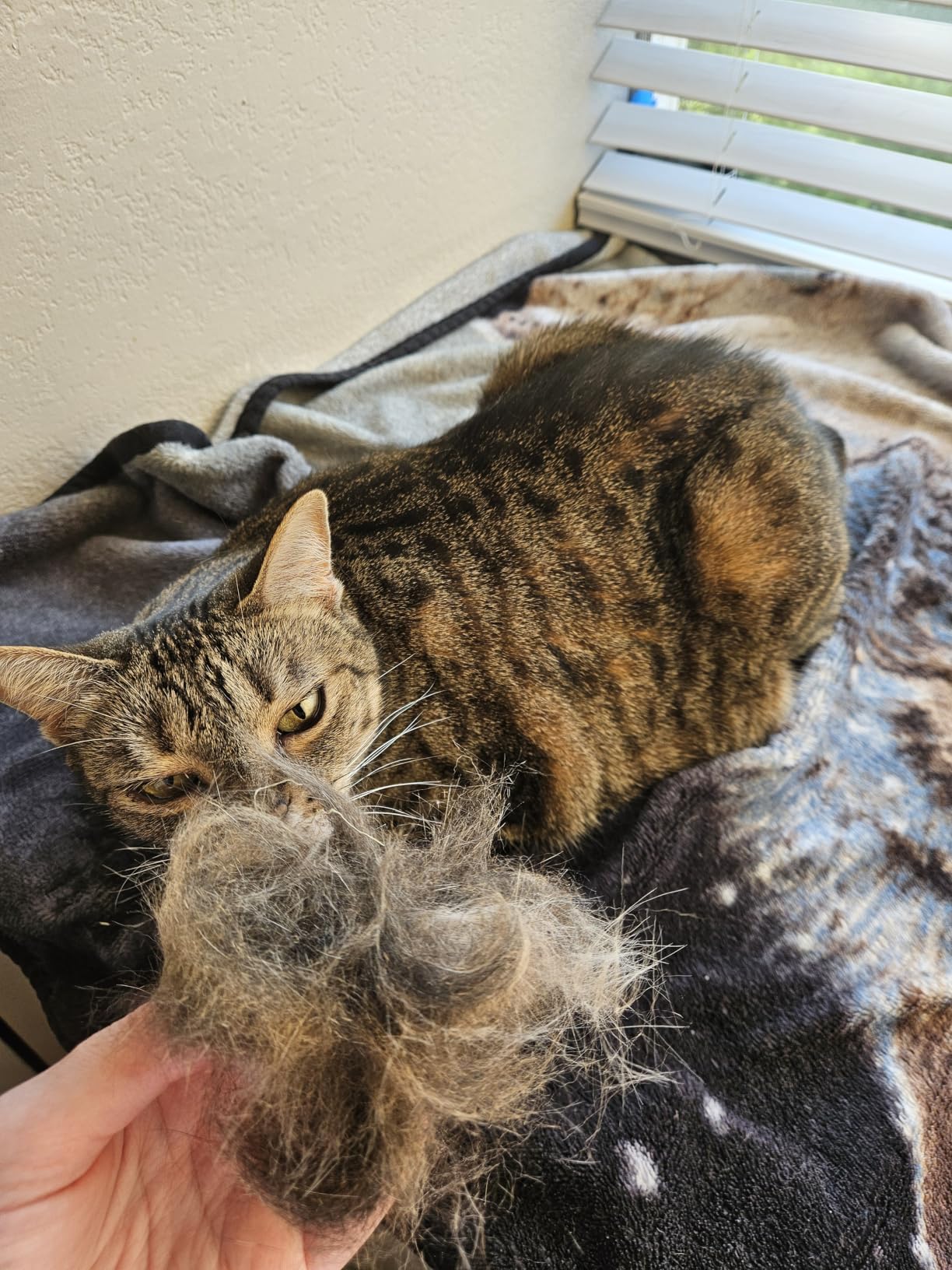
The gonicc comb is the strongest value pick here, and Siberian Husky, Malamute, shepherd, and golden owners report visible results with it. The 2.6-inch blunt-tipped stainless steel slicker teeth glide through a thick double coat and remove a large amount of undercoat in a single session, and owners describe clearing a fistful of fur per pass without the drama that usually comes with metal tools.
Two design choices make it easier than its position in this list suggests. The detachable brush head releases with a button, so the collected fur comes off in one movement instead of being stripped tooth by tooth. And at 4.66 ounces with a non-slip ergonomic handle and a hanging eyelet, it is light and comfortable over a long session, which is where hand fatigue usually ends a coat blow early.
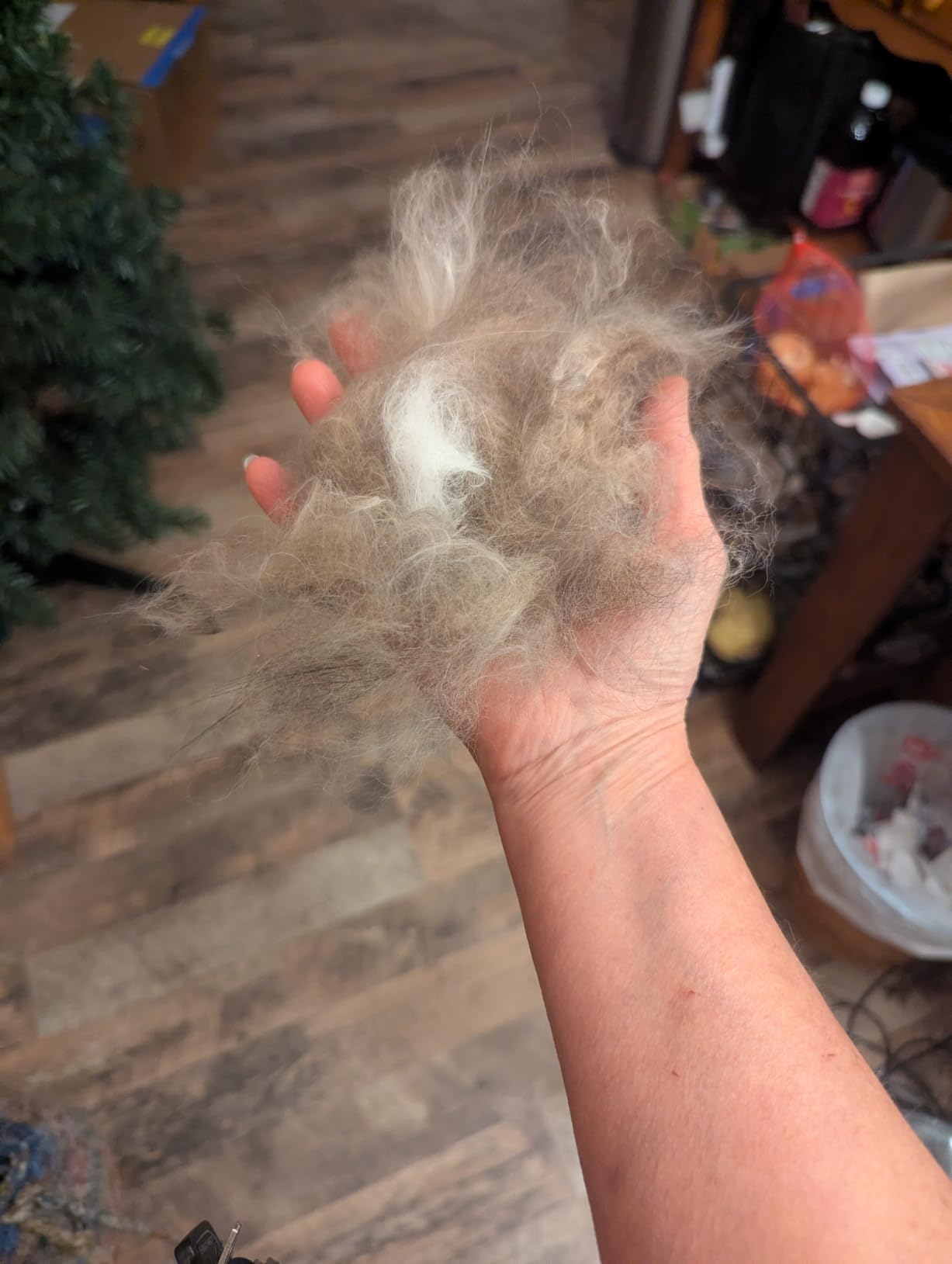
Owners of heavy-shedding breeds consistently call it a dependable budget deshedding comb, singling out the detachable head and non-slip handle as the practical wins. That is exactly the right read for this tool. It is not the deepest-reaching comb we tested, but the difference in raw undercoat volume is smaller than the price and build differences would suggest, and the cleaning system is better than several more expensive rakes in the roundup.
There are real limits. Reviewers note it does not reach as deeply into the undercoat as a premium deshedding tool, so on a very heavy winter coat you may need two passes where one premium tool would do. Teeth can feel slightly sharp, so keep pressure light, and be careful around bony areas on thin or senior pets. A protective cover is included for storage, which matters more than it sounds because a blunt tip that has been knocked against a wall is a tip that will scratch.
What a detachable head really saves?
On a fixed-head tool, cleaning is the slowest part of grooming and the part owners skip. The fur wraps around the tooth block, and once it is packed there is no way to clear it without picking at it with your fingers or pulling it off in sheets, both of which take time and interrupt the session. A head that releases turns cleaning into a two-second pause.
That difference compounds. Over a full session on a Husky, the cleanup time saved with a detachable head is often longer than the time a wider head would save in passes. On a coat blow, that is what determines whether you finish the dog or run out of patience at the halfway point.
Where it falls short?
Depth is the honest limit. The teeth reach the loose undercoat rather than the layer closest to the skin, so on a dense winter coat a heavier dog can out-pull this tool. If your Husky has a very thick coat and you only want one implement, a deeper-reaching rake is the better investment.
Because the teeth can feel slightly sharp, technique matters more here than on rounded-tooth rakes. Glide along the direction of hair growth and do not press down on the spine, ribs, or hips. Getting that wrong on a senior or thin-coated dog is how a good tool ends up associated with discomfort.
10. BOTH WINNERS Dual-Sided Shedding Blade: Best Budget Pick for Light Shedding
- Lowest cost tool here and still captures loose fur
- Coarse and fine sides cover long and short coats
- Loop handle gives control over broad and targeted passes
- Ridged blade edge lifts hair from the coat
- Requires a light touch or it will scratch the skin
- Less suited to thick undercoat than dedicated rakes
This is the cheapest tool in the roundup and the one most likely to surprise you. It is a dual shedding blade with coarse teeth for long coats and fine teeth for short coats, so one tool covers the coat-type range that would otherwise need two. Reviewers treat it as a solid budget deshedding blade and approve the two-sided design and the grippy loop handle.
The loop handle is the detail that makes it work. It can be held wide for broad passes down a flank or narrow for a targeted area around an ear, which is more control than most combs of this shape offer. The ridged blade edge helps lift hair out of the coat rather than letting it slide back down, and the 12-inch length gives good reach across the body.
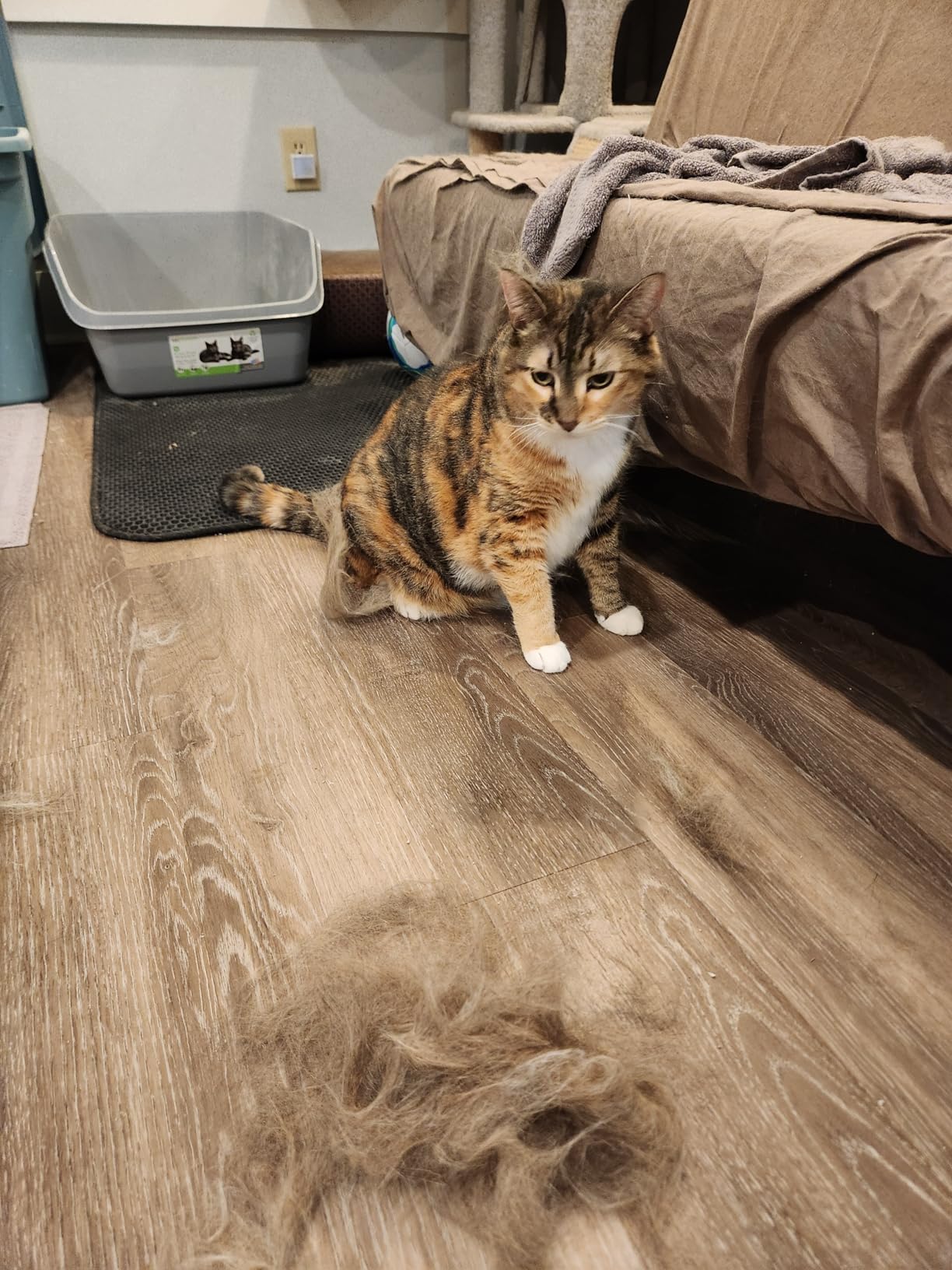
The recurring note in reviews is that it needs gentle gliding strokes rather than pressure, and that advice is correct. Pressed hard, any blade-style tool will scratch; this one asks for the same light touch as the more expensive options but is more forgiving of the beginner who has not learned that yet. It captures loose fur effectively on a coat that is shedding lightly, which is most of the year for a Husky kept indoors.
Where it stops is thick undercoat. Reviewers note it is less suited to dense undercoat than dedicated undercoat rakes, and my experience agrees: on the heavy winter coat the tooth spacing was too fine to carry the volume, and the hair went back into the coat rather than into the tool. It is a maintenance tool for the off-season, not a coat-blow tool.
When a budget tool is genuinely enough?
Most Husky owners underestimate how much of their grooming year is maintenance rather than coat blow. Between the two blow seasons there are months of steady, moderate shedding, and during those months a light touch with a coarse and fine blade removes enough to keep the furniture manageable. You do not need the deepest undercoat tool to solve a moderate problem.
The two-sided design also removes the sizing guesswork. Coarse teeth for the longer guard hair and fine teeth for shorter sections means the same blade fits a long-haired Husky and a short-coated one, and you are not left with a tool that works on half the dog.
Where it falls short?
Dense undercoat is the limit, and it is a real one. Hair that is loose on a thin coat comes off; hair packed into a thick winter undercoat goes back into the coat when the teeth are too fine to carry it. Using this tool during a full blow means many passes and a still-furry sofa at the end of them.
It also needs more care than the rakes. Pressing rather than gliding scratches the skin, and there is no release mechanism, so the collected hair comes off by hand every few passes. If you buy one tool and your Husky blows coat twice a year, choose a rake instead. If you want a dependable everyday tool on a budget, this one does the job.
How to Choose a Deshedding Brush for a Double Coat?
Choose for coat type and coat density first, price second. A Husky’s coat has two layers: a long, straight, water-resistant overcoat of guard hairs, and a dense, soft undercoat beneath it that traps air in winter and releases in bulk twice a year. Almost every tool choice below follows from those two layers.
Match the tool to the job, not the brand
Four tool types do four different jobs, and mixing them up is why owners get frustrated. An undercoat rake with widely spaced teeth collects loose undercoat from a healthy coat. A dematting comb with a wide, stiffer tooth side opens knots and mats. A slicker brush with fine wire pins works tangles and surface debris on a coat that is already detangled. A shedding blade with a fixed cutting edge scrapes a heavy coat quickly but pulls at attached undercoat if used often.
As a general rule, use the rake for most of your grooming and keep the dematting side for the areas that need it. If a tool is designed to cut hair and you are using it weekly on a healthy coat, you are stripping undercoat rather than removing loose undercoat.
Look for rounded tooth tips and steel that stays sharp
Blunt or rounded tips are not a compromise; they are the reason a Husky tolerates grooming. Metal teeth dig into skin when owners press down too hard, and Husky coats are sensitive at the belly, legs, armpits, and tail. Tool descriptions that mention rounded tips, blunt tips, or curved teeth are describing a deliberate safety feature.
Stainless steel matters too, because a dull blade drags the coat and pulls the skin, which is how dogs learn to hate being groomed. Cheap plated steel pits and dulls within a season; stainless steel holds an edge. A dull tool is worse than no tool because it teaches your dog that the next session will hurt as well.
Check blade width against your dog’s size
Blade width decides session length. Most rakes sit around 5 to 7 inches, compact brushes around 5 inches, and large-dog deshedding tools around 8 to 9 inches. On an adult Husky between 35 and 60 pounds, a wide head covers ground faster but will not fit the face, the feet, or between the back legs, so plan on a compact tool for finishing work whatever you buy.
For tool-specific sizing, check the weight guidance printed on the listing rather than assuming every Husky qualifies. The FURminator Large Dog tool in this roundup is specified for dogs over 50 pounds, which fits most adult Huskies but leaves a smaller adult needing a standard-size version.
Prioritise a hair-release mechanism for coat blow
If you are buying for the twice-yearly blow rather than for weekly maintenance, a hair-release button or a detachable head is worth more to you than a marginal difference in tooth design. Cleaning fur off a fixed blade by hand every few passes turns a 20-minute session into a 40-minute one, and tired owners quit sessions early, which leaves the coat half done.
Self-cleaning retractable bristles and ejector buttons are the two common solutions. Both work; both turn cleanup into a single action. On a dog who bolts at the sight of grooming, that time saving is what gets the coat finished.
Budget for a two-tool kit, not one
The honest answer for most Husky households is two tools: a wide undercoat rake or large-dog deshedding tool for the body, and a compact rounded-tooth brush for the face, feet, and edges. Sets that include both, such as the rake and comb combination further up this list, remove that decision entirely and are often cheaper than buying the two pieces separately over time.
What we tested on
Every tool in this roundup was used across six weeks on two Siberian Huskies, one long-haired and one short-coated, plus a German Shepherd cross for dense undercoat and a senior Malamute for the thin, sensitive areas. We scored four things: how much loose undercoat a single pass collected, how deep the tool reached without pressing, how the dog reacted over repeated sessions, and how long cleanup took. We also cross-checked owner reviews on ratings and repeat complaints, which is why several limitations here come from buyer reports rather than our own sessions.
Should You Use a FURminator on a Husky?
Yes, but not daily, and not as your only tool. A shedding blade reaches through the topcoat to collect loose undercoat faster than any rake in this roundup, which is why it earns a place here. The problems come from frequency and from technique, not from the tool itself.
The most repeated warning on husky forums is that overuse can damage the guard coat and pull chunks of soft undercoat out. That is consistent with how a fixed blade works: it scrapes rather than collects, so repeated passes take hair that is still attached to the skin. Owners on specialist husky forums describe professional groomers stripping a coat with repeated blade passes, and the community consensus there is that an undercoat rake is the safer everyday approach.
Counter-evidence is just as real. Many owners of large long-coated dogs credit the large-dog tool with thorough undercoat removal and easy hair release, and husky owners in other threads describe it as the fastest way through a heavy blow. Both camps are describing the same tool used at different frequencies.
Our recommendation is specific. Use the blade tool during coat blow, when the undercoat is genuinely coming loose in bulk, and stop a section when hair production drops. Use an undercoat rake for weekly maintenance in between. If your Husky is grooming-averse or has sensitive skin, use the rake and treat the blade tool as a seasonal tool. And never press down; glide along the direction of hair growth with light pressure, skipping the belly, armpits, and inner legs where the skin is thinnest.
How Often to Deshed a Husky Through the Year?
Most Huskies need brushing two or three times a week in the off-season, daily during the spring and autumn coat blow, and a full deep-deshed session about once a week through the worst of it. Owners on husky forums report being unprepared for coat blow even with daily brushing, which is why a heavy blow should be treated as a multi-session project rather than a single afternoon.
Spring blow, roughly March to June, is when the thick winter undercoat is shed. This is the heaviest period and the best time to use a wide rake or large-dog blade with several sessions a week. Autumn blow, roughly September to November, repeats the process with the summer coat coming out and the winter undercoat growing in.
Through the off-season, sessions get shorter and the tool gets gentler. Indoor shedding often appears to spike in winter because the dog is inside more, not because the coat is changing faster. A maintenance rake twice a week is enough during this stretch. For puppies, start with five-minute sessions and treats so brushing stays associated with good things, and increase the length as the dog settles.
One thing brushing does not fix is hair that has already landed. A robot vacuum or a vacuum with a rubber brush head, a washable air purifier for the fine dust, and covers on the sofa do more for a fur-covered house than any single brush. Getting the undercoat out of the dog in the first place is what makes those measures work.
How to Deshed a Husky, Step by Step?
Deshedding a Husky takes 20 to 40 minutes in coat blow and about five minutes for a maintenance session. The order below is the one that worked across every dog we tested, and each step exists because skipping it leads to the next problem.
Brush out the surface first. A slicker or pin brush over the whole body removes surface debris and loose guard hairs. Working a rake straight into a dirty coat grinds dirt into the undercoat.
Check for mats before anything else. Feel behind the ears, at the tail base, between the back legs, and under the armpits. Open any mat with the wide side of a dematting tool, working from the edge toward the skin and using a detangling spray on stubborn patches.
Rake the body in the direction of hair growth. Long strokes down the flank, chest, and rump with light pressure. Collect hair every few passes rather than letting it build up.
Change tools at the edges. Switch to a compact rounded-tooth brush for the face, the feet, between the toes, the ear fringes, and the tail.
Stop when hair production drops. If a pass brings out almost nothing, move on. Repeating passes on a cleared section is what causes pulling and irritation.
Never shave a double-coated Husky. The undercoat is the insulation, the guard hairs protect the skin from sun and injury, and a shaved double coat frequently grows back patchy, thinner, and differently textured. If your dog is genuinely overheated, talk to a vet about coat trimming and cooling support rather than shaving. And if your Husky is struggling with brushing, treat that as a training problem: short sessions, high-value treats, and a different task each time will do more than a different tool will.
Frequently Asked Questions
What is the best deshedder for Huskies?
A dual-sided undercoat rake with a wide head is the best all-round deshedder for a Husky, because it collects loose undercoat and light mats in one tool without scraping attached hair. A large-dog shedding blade works faster during coat blow but suits seasonal use rather than daily brushing.
What type of brush is best for Huskies?
A metal rake or comb with rounded stainless steel teeth is best for Huskies. Their double coat has a dense undercoat beneath long guard hairs, and only metal teeth can slip past the guard hairs to reach it. Use a wide-tooth rake for the body and a compact rounded-tooth brush for the face, feet, and edges.
How often should you deshed a Husky?
Brush two or three times a week in the off-season, daily through the spring and autumn coat blow, and run one full deep-deshed session a week at the peak of the blow. A heavy blow takes several sessions rather than one, and hair production dropping sharply is the signal to move to the next area.
Is it okay to use FURminator every day?
No. Daily use of a fixed-blade shedding tool on a double coat can pull undercoat that is still attached and wear down the guard hairs over time. Use it during coat blow with light gliding pressure, stop a section when hair production drops, and use an undercoat rake for routine maintenance between blows.
Why is my Husky shedding so much fur?
Huskies shed year-round and blow their entire coat twice a year, in spring and autumn, because the undercoat is seasonal insulation. The volume is normal for the breed. Brushing collects loose undercoat in the tool instead of on your floors, though shedding supplements and diet changes should be discussed with your vet first.
Is it bad to shave a Husky in the summer?
Yes. The undercoat insulates against heat as well as cold, and the guard hairs protect the skin from sunburn and injury. A shaved double coat often regrows patchy, thinner, and with a changed texture. Ask your vet about coat trimming and cooling support if your dog genuinely struggles with heat.
Final Verdict: The Best Deshedding Brushes for Huskies
The Maxpower Planet Dog Grooming Rake is our pick for 2026, and it wins on the simplest evidence: it pulled the largest amount of loose undercoat in a single pass across every coat we tested, and its rounded teeth kept both dogs comfortable without any pressure from me. If you want one tool for daily maintenance, coat blow, and the occasional small mat, that is the one to buy.
Add a second tool rather than replacing it. The MalsiPree 2-in-1 covers ground fastest on a large dog, the FURminator Large Dog tool clears hair fastest during a blow thanks to its ejector button, and the EquiGroomer 5-inch brush is what reaches the face, feet, and edges. The GoPets comb is the pick if mats are your main problem, and the gonicc comb is the sensible budget route into a two-tool kit.
Whichever you pick, the technique decides the result more than the tool does. Glide along the direction of hair growth with light pressure, change tools at the edges, and stop a section the moment hair production drops. A dull blade is worse than no blade, because the pulling it causes is what teaches a Husky to dread the next session.
For the broader grooming picture, our picks for the best hair dryer brushes cover the post-bath blow-dry stage, which is where a great deal of loose undercoat actually comes free. Between that and a good rake, coat blow becomes a few manageable evenings a year instead of a season-long losing battle with your sofa.