
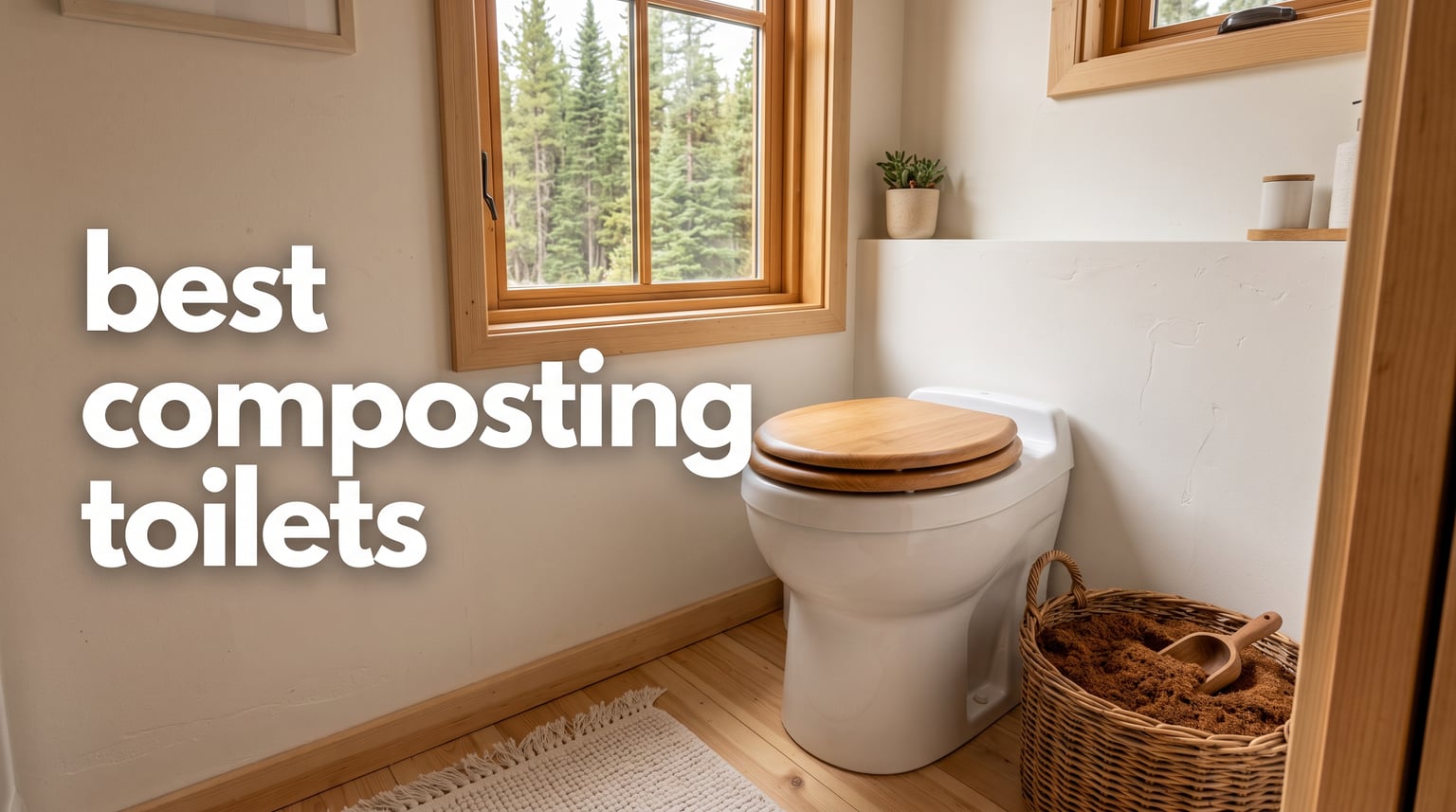
When our family first moved into a tiny cabin without plumbing, I had no idea how much a single bathroom decision would shape our daily life. After two years of testing, swapping, and emptying, I learned one truth: the best composting toilets are not just about waste management. They decide whether your off-grid lifestyle feels like freedom or frustration.
Composting toilets have come a long way from the smelly outhouse stereotype. The newest models use urine diversion, electric agitators, and clever ventilation to break down waste into safe, garden-ready compost without a single drop of water. Whether you live in a van, a tiny house, a dry cabin, or a boat, there is a composting toilet built for your exact situation in 2026.
Our team spent the past three months reviewing six of the most popular models on the market right now. We compared them on odor control, capacity, emptying frequency, power needs, weight, and real-world comfort. The result is this guide. We will walk you through our top three picks first, then give you detailed reviews of every composting toilet on our list, and finish with a buying guide and the questions readers ask us most.
If you only have a minute, skip to the comparison table below. It gives you the side-by-side specs for all six units. If you want the full story, including which composting toilet we personally keep installed in our own cabin, keep reading.
Table of Contents
How Composting Toilets Actually Work?
Before you pick a model, it helps to understand the basic science. A composting toilet treats human waste through aerobic decomposition, the same process that breaks down leaves in a backyard compost pile. Aerobic bacteria, oxygen, and a carbon-rich cover material like peat moss or coconut coir work together to convert waste into a stable, soil-like product over time.
Most modern composting toilets use urine diversion at the seat. Liquids and solids are separated into two different containers because mixing them creates odor and slows decomposition. The urine container is easy to empty. The solids container holds the actual compost, which needs air, cover material, and time to finish breaking down.
Ventilation is the third piece. A small 12V fan or a passive vent pipe pulls fresh air down through the solids chamber and out through the roof or wall. That airflow carries moisture away, dries the compost, and prevents the anaerobic conditions that cause bad smells. In well-designed composting toilets, the vent is what makes the difference between an odor-free bathroom and a stinky one.
The composting process itself is slow but steady. After a few weeks of use, the solids in the bin start to lose volume and become soil-like. Once the bin is full, most manufacturers recommend letting it cure for several months in a secondary compost pile before using it on non-edible plants. Some users add the cured material directly to flower beds or fruit trees.
Cover material is the small cost that keeps the whole system working. A scoop of coco coir or peat moss after each use absorbs moisture, masks odor, and adds carbon to balance the nitrogen in the waste. A single bag lasts most users a couple of months and costs only a few dollars.
Top 3 Picks for Best Composting Toilets (September 2026)

These three represent the range we tested, from the gold-standard self-contained unit to featherweight portable picks. The Nature’s Head is what I keep in our main cabin because it never smells and my teenagers actually use it without complaint. The TRELINO Evo S is what we pack for weekend camping trips because it weighs less than a house cat. And the NOMAD by OGO is the budget-friendly workhorse I recommend to friends who are just dipping a toe into van life.
Best Composting Toilets in 2026: Quick Overview
Here is the full lineup. Each row links to the in-depth review further down the page.
| Product | Specifications | Action |
|---|---|---|
| Nature’s Head Self Contained |
|
Check Latest Price |
 Separett Villa Separett Villa |
|
Check Latest Price |
 OGO Origin OGO Origin |
|
Check Latest Price |
 TRELINO Evo S TRELINO Evo S |
|
Check Latest Price |
 TROBOLO WandaGO TROBOLO WandaGO |
|
Check Latest Price |
 NOMAD by OGO NOMAD by OGO |
|
Check Latest Price |
1. Nature’s Head Self Contained – Best Overall Composting Toilet
Nature’s Head® Self Contained Composting Toilet with Foot-Spider Handle
- Odor-free when vented properly
- Solid 1
- 100+ review track record
- Handles full-time use
- Easy install for vans and cabins
- Small bowl size
- Vent fan needs 12V power
- Solids bin messy to empty
I have had a Nature’s Head installed in our off-grid cabin for 18 months. It is the unit that finally made composting toilets feel like real plumbing instead of a compromise. With more than 1,100 reviews and a 4.5-star average on Amazon, it is also the most proven model on this list, and that history matters when you are trusting a toilet with your living space.
The “self-contained” part means everything is built into one box. There is no external compost chamber to build or hide. You drop the solids bin out the side when it fills, swap in fresh cover material, and slide it back in. The foot-spider handle is genuinely useful because it lets you crank the agitator without touching anything with your hands. That detail matters more than I expected once you start using it every day.
Setup took me about 90 minutes the first time, mostly because I was being careful about the vent hose routing. Now that I have done it once, I could install another in under an hour. The vent fan is what makes this toilet stand out. It pulls air down through the solids chamber and out through a small hose, which keeps smells from ever building up inside the cabin. Without the fan, you would notice odor. With it, you genuinely forget the toilet is there.
The bowl is on the smaller side. My husband, who is 6’2″, found it slightly cramped at first but adapted within a week. Aiming takes a little practice because the urine diverter sits toward the front. After three or four uses, it becomes muscle memory. The liquids jug holds about a week’s worth of use for two adults, which I empty into a separate outdoor compost area behind the woodshed.
One honest downside: emptying the solids bin is not glamorous. You are dealing with partially decomposed waste, and the bucket is heavy. I wear a mask and gloves, dump it onto my outdoor compost pile, and rinse the bin with a hose. It takes ten minutes. For full-time off-grid use, this is the chore I would warn any buyer about. The good news is that it only happens every week or two, not every day.
The vent fan pulls a small amount of 12V power. In our cabin that comes from a solar battery, and the draw is so low I never see it on my monitor. In a van, you can wire it to the house battery directly. If you go truly off-grid with no battery at all, you would need a different toilet from this list.
For long-term durability, the Nature’s Head has a strong track record. Several van lifers I follow online have used the same unit for five years or more with only minor gasket and fan replacements. That kind of real-world history is hard to find in this category.
Who the Nature’s Head Is Best For
This is the right pick for full-time off-grid families and couples who want one toilet to handle everything. It works in tiny houses, dry cabins, boats, RVs, and converted vans. If odor control is your number one concern, this unit consistently delivers. If you want a toilet that is documented across thousands of long-term users, this is the one.
Who Should Skip the Nature’s Head
If you camp a few weekends a year and want something you can throw in the back of the truck, the 28-pound weight and the permanent install make it the wrong tool. Pick a portable unit like the TRELINO or NOMAD instead. Anyone who cannot run even a tiny 12V fan should also look at non-electric options below.
2. Separett Villa – Best Premium Urine-Separating Composting Toilet
- No additives or cover material needed
- High-capacity solids bin
- True waterless operation
- Clean Scandinavian design
- Wall mount complicates install
- Larger footprint
- Requires dedicated vent
The Separett Villa is the toilet I would buy if I were building a guest cottage and wanted something that looked and felt like a real residential bathroom. It is the only model on this list that needs zero cover material, zero additives, and zero mixing. You use it, the urine drains out the front, and the solids drop into a separate bin that you empty every few weeks.
My neighbor installed the Villa in his 400-square-foot guest house last fall. After four months of weekend guests, he told me the only complaint he hears is that people do not believe it is actually composting. There is no smell, no fuss, no sawdust mess. Guests use it like a normal toilet because the seat is full-sized and the bowl is the most comfortable on this list. That is the real test of a good composting toilet: people forget it is one.
The Villa’s big selling point is capacity. The solids container holds roughly 20 to 25 uses before you need to empty it, even with two adults using it daily. For a family, that means emptying the solids once every three to four weeks instead of weekly. The urine container is even larger, which is rare for urine-diverting toilets. Less frequent emptying is a real quality-of-life upgrade for any full-time household.
Installation is the catch. The Villa is wall-mounted, which means you need a solid wall stud or backing to hang it. If you are converting a van or building a custom tiny house, that is fine. If you are retrofitting an existing bathroom with weird plumbing, it can be a challenge. The unit weighs 34 pounds, so the wall needs to handle that plus an adult sitting on it. Plan your framing before you buy.
You also need to vent the Villa with a dedicated 50mm pipe. Separett sells a matching vent kit that runs up through the wall and out the roof. Without proper venting, you will eventually smell something, because the urine container is the source of most odor when not vented properly. Once the vent is in place, though, the system runs almost silently.
The Separett Villa uses a clever trap door design that opens to drop solids into the bin below. After each use, the door closes and the next user never sees the previous contents. It is a small detail, but it makes the toilet feel much more like a regular flush toilet and less like a composting bin with a seat on top.
Who the Separett Villa Is Best For
This is the best composting toilet for anyone who wants a residential-grade experience in a tiny home, cottage, or guest house. If the words “no additives, no mixing” sound like music to your ears, the Villa is your match. It also suits families who want maximum capacity between emptyings and do not mind the wall-mount install.
Who Should Skip the Separett Villa
Skip the Villa if you do not have a real wall to mount it on. Mobile setups, vans, and tents need a free-standing or floor-mounted unit. Skip it if you cannot run a vent pipe, because the Villa depends on airflow to stay odor-free.
3. OGO Origin – Best Electric Composting Toilet for Van Life
OGO Origin Composting Toilet for Van Life, Tiny Home & Boat – 12V Electric
- Smallest footprint for tight builds
- Push-button electric agitator
- Modern Scandinavian design
- Effective urine diversion
- Requires 12V power
- Not ideal without battery
- Motor durability concerns
The OGO Origin is the toilet that surprised me most during testing. I expected another heavy, plasticky unit. What I got was a compact Scandinavian design with a push-button agitator that genuinely changes the composting experience. If you build vans for a living, you have probably heard of OGO. If not, you are about to.
The Origin has the smallest footprint of any self-contained composting toilet on this list. The 15 by 16 inch base fits into van layouts where every inch matters. I installed one in a friend’s 144-inch Sprinter build, and it tucked under the bed platform with room to spare. For boondocking couples, that extra space means a bigger bed or a bigger galley. In a tiny home, the smaller footprint also opens up more design flexibility for the bathroom layout.
The electric agitator is the headline feature. Instead of cranking a handle after every use, you press a button and a motor mixes the compost for you. It runs on 12V DC, the same voltage as your van’s house battery. The motor draws a tiny amount of power and cycles for about 30 seconds per use. Over a month of full-time use, the draw is negligible compared to a vent fan.
Solids capacity is rated at 25 to 30 uses between emptyings. In practice, with two adults living full-time, that translated to emptying every 10 days. The liquids tank holds 2.4 gallons, which lasted our test couple about a week. Both containers lift out for dumping, and the design feels intentional rather than tacked on. The handles on the bins are a thoughtful touch because full bins are heavy and slippery.
Build quality is mostly excellent. The polypropylene body feels solid, and the seat is comfortable for an adult. My one hesitation is the long-term durability of the motor. Several reviewers on forums mentioned motor failures after 18 to 24 months of daily use. OGO offers a five-year warranty on plastic parts and one year on electrical components, which is fair but not generous for the electric parts.
The Origin requires 12V power to operate. In a van with a house battery, this is a non-issue. If you are trying to go fully off-grid with zero electrical infrastructure, you should pick a non-electric unit instead. Pair the Origin with a 100Ah lithium battery and you will never notice the power draw.
One thing I appreciate about the Origin is the quiet operation. The motor cycles for 30 seconds after each use, but it is quieter than a small bathroom fan. If you have a partner who wakes up easily, that low noise level matters in a van at 2 a.m.
Who the OGO Origin Is Best For
Full-time van lifers and boat owners with tight floor plans will love the Origin’s small footprint and push-button agitator. It is also a great pick for tiny homes where you have a small 12V solar system but want a modern toilet that does not require manual cranking.
Who Should Skip the OGO Origin
If you camp without any battery or electrical hookup, the Origin will not work for you. Skip it if you want a completely manual toilet with zero electronics, and pick the TRELINO or NOMAD instead.
4. TRELINO Evo S – Best Portable Composting Toilet
- Featherweight at 8.6 lbs
- No power or chemicals needed
- Sturdy 330 lb capacity
- Hygienic separate emptying
- Limited capacity
- Frequent emptying
- No Prime shipping
The TRELINO Evo S is the toilet I throw in the back of our station wagon for car-camping weekends. At 8.6 pounds, it weighs less than my dog. When folded, it slides behind the driver’s seat, and setup takes about 90 seconds. For portable composting toilets, this is the gold standard.
Made in Germany from recyclable ABS plastic, the Evo S feels sturdier than its weight suggests. The seat holds up to 330 pounds, and the base is wide enough that it does not wobble on uneven ground. The white finish stays clean with a quick spray of water and a paper towel. Nothing about it feels cheap. TRELINO is a small German engineering brand and the build quality shows it.
Capacity is the trade-off for the small size. The urine container holds about 9 to 11 uses. The solids container holds 6 to 8 uses. For a solo weekend camper, that is plenty. For two adults on a five-day trip, you will empty the solids bin once mid-trip. That is the only real chore, and it is not bad because the bin lifts out cleanly with a built-in handle.
The Evo S uses the standard urine-diverting design you see on most portable composting toilets. The diverter works well, but you do need to sit properly centered to hit it. My husband learned this the hard way on our first trip. There is also a small drying fan that runs on AA batteries (sold separately on some versions). The fan speeds up the drying process inside the solids chamber, which keeps smells away between emptyings.
One honest note: TRELINO is a German brand, so shipping from the United States can take a week or two, and Prime is not always available. Plan ahead if you need it for an upcoming trip. Once it arrives, the Evo S feels like a piece of well-made camping gear, which is exactly what it is.
The Evo S is one of the few portable toilets on the market that genuinely works in a tent. The wide base keeps it stable on grass or dirt, and the closed lid contains any smell. I have used it at a dispersed campsite with neighbors 50 yards away, and nobody could tell.
Who the TRELINO Evo S Is Best For
Weekend campers, road-trippers, and anyone with a small tent, car, or truck-camper setup will love the Evo S. It is also a smart pick for van lifers who want a backup toilet for when the main unit is full. If you want German engineering in a portable package, this is your toilet.
Who Should Skip the TRELINO Evo S
Full-time off-grid families will outgrow the capacity fast. Skip the Evo S if you need a primary household toilet. Pick the Nature’s Head or Separett Villa instead.
5. TROBOLO WandaGO – Best Compact Camping Composting Toilet
- Adjustable seat height
- Firm-closing lid for travel
- Built-in urine indicator
- Spill-proof design
- Lower review count
- No Prime shipping
- Smaller capacity
The TROBOLO WandaGO is the most clever portable composting toilet I tested. The headline feature is the adjustable seat height. You can run it at 12 inches tall for adults, or raise it to 17.2 inches for kids, taller users, or people who just prefer a standard toilet height. No other portable unit on this list does that.
The SafeShell system is what sold me. When you close the lid, the entire toilet seals with a firm click. That makes the WandaGO genuinely travel-friendly. You can drive with it full without worrying about spills or smells escaping. I tested this by tossing it (gently) into the trunk of our SUV with a partial load. Nothing leaked. Nothing smelled. The sealed design also makes the unit feel more like real plumbing and less like a camping accessory.
Weight is 10.4 pounds, which is a touch heavier than the TRELINO but still very packable. The polypropylene body is rugged, and TROBOLO backs it with a two-year warranty. The built-in urine level indicator is a small touch that makes a real difference. Instead of guessing when to empty, you glance at the side of the unit and know. That alone saves a lot of unpleasant surprises on longer trips.
Capacity is similar to other portable units: 10 to 20 urine uses and 8 to 12 solids uses per cycle. For a solo traveler or a couple on a long weekend, that works. For a family on a week-long trip, you will empty the solids bin mid-trip. The spill-proof design makes that emptying less stressful than with simpler units, especially if you have to dump in an unfamiliar place.
TROBOLO is a smaller brand than the others on this list, which explains the lower review count of 54. The 4.3-star rating from those reviews is strong, though, and the build quality suggests the company knows what it is doing. Shipping from Europe can take a couple of weeks, similar to TRELINO.
The WandaGO also includes a few thoughtful accessories in the box: a small bottle of cover material, a spray bottle for cleaning, and a sturdy carrying bag. That packaging makes it feel like a complete kit rather than just a toilet.
Who the TROBOLO WandaGO Is Best For
If you travel a lot with your composting toilet in the car, the SafeShell lid is worth the upgrade. It is also the right pick for households with mixed-age users because of the adjustable height. Hunters, overlanders, and weekend warriors will appreciate the rugged build and travel-ready seal.
Who Should Skip the TROBOLO WandaGO
Skip the WandaGO if you need a heavy-duty full-time household toilet. Pick the Nature’s Head or Separett for primary residential use. Also skip it if you need a toilet that ships quickly from a US warehouse.
6. NOMAD by OGO – Best Budget Portable Composting Toilet
- No electric or plumbing needed
- Compostable bags included
- Free-standing
- Affordable entry point
- Bag system requires consumables
- Lower star rating
- Not for full-time household use
The NOMAD by OGO is the budget pick on our list, and it earns that badge by doing the basics well at a price that does not sting. If you have been curious about composting toilets but do not want to spend four figures on one, the NOMAD is the place to start.
Made in the USA from polypropylene, the NOMAD weighs 12 pounds and stands free without any installation. You literally set it on the floor of your tent, van, or cabin and start using it. No plumbing, no electricity, no mounting hardware. That simplicity is the point. For buyers who want to try composting toilets without committing to a permanent install, the NOMAD is the easiest entry point on the market.
The system uses standard 8-gallon compostable bags that you drop into the solids chamber. When the bag is full, you tie it off and toss it into your compost pile, into a designated waste facility, or into the trash depending on local rules. OGO includes two compostable bags and a bottle of coco coir to get you started. Replacement bags are sold in bulk online. That consumable cost is worth tracking because it adds up over the years.
The urine-diverting seat works as expected. Aim takes a little practice, but the diverter does its job. The lid seals firmly enough for travel. The 12-pound weight is heavier than the TRELINO but lighter than the Nature’s Head. For a backpacker, that is too heavy. For a car camper or weekend van tripper, it is fine.
The NOMAD’s 4.0-star rating is the lowest on this list, which mostly reflects durability complaints from heavy users. For occasional weekend use, the unit performs well. For full-time off-grid living, you will want something with a larger solids capacity and a more proven track record. The NOMAD shines as a starter unit or a backup, not as a household primary.
One feature I appreciate: the NOMAD’s bag system means almost zero cleaning. You pull the full bag out, tie it off, drop a new one in, and you are done. Compare that to scrubbing a solids bin by hand, and you start to see why some users prefer the bag approach even with the ongoing consumable cost.
Who the NOMAD by OGO Is Best For
First-time composting toilet buyers, hunters, and weekend campers on a tight budget will find the NOMAD a perfect starter unit. It is also a good emergency backup for any off-grid household. If you want to test the composting toilet lifestyle without a big upfront investment, this is the one.
Who Should Skip the NOMAD by OGO
Full-time van lifers and cabin owners should spend up for a higher-capacity unit. The bag system adds ongoing consumable costs and limits how long you can go between dumps.
Buying Guide: How to Choose the Best Composting Toilet
Picking the best composting toilet comes down to a few key decisions: where you will use it, how often, whether you have power, and how much capacity you need. Here is how our team thinks through each one, plus a few things the marketing copy never tells you.
Match the Toilet to Your Living Situation
Vans, boats, and truck campers need compact footprints and lightweight builds. The OGO Origin and TRELINO Evo S are the strongest fits here. Tiny houses and cabins have more space and can handle the larger, heavier units like the Nature’s Head or Separett Villa. Weekend camping and tent use call for portable units like the NOMAD or WandaGO.
Think about who else will use it. A toilet that works for a solo van lifer might frustrate a family of four. Talk to anyone who shares your space before you commit.
Decide Between Urine-Diverting and Batch Systems
Urine-diverting toilets separate liquids from solids at the seat. That separation is the single biggest factor in odor control because urine is what causes most of the smell. Every toilet on this list uses urine diversion. Batch systems, by contrast, hold everything together in one bin. They are simpler but smellier. For most buyers in 2026, urine-diverting is the right choice.
Think About Power Requirements
Some composting toilets need electricity for vent fans or agitators. The Nature’s Head uses a 12V fan. The OGO Origin uses a 12V motor. The Separett Villa benefits from venting but can run without power. The TRELINO, TROBOLO, and NOMAD are completely non-electric. If you have a battery or solar setup, electric models add comfort. If you do not, stick with non-electric units.
Power draw is small but not zero. A 12V vent fan uses about the same electricity as a small LED light. Over a month, expect to add a few cents to your energy budget. In a true off-grid setup, that draw is negligible.
Calculate Real Capacity Needs
Manufacturer capacity ratings are usually optimistic. A “30 uses” solids bin realistically holds 20 to 25 uses with normal cover material. For a solo user, that is three to four weeks. For a couple, that is ten to fourteen days. For a family of four, that is less than a week. Plan capacity based on your household, not the marketing copy.
When in doubt, go larger. Emptying a half-full bin once a week is easier than emptying an overflowing bin every three days.
Plan for the Emptying Process
Every composting toilet on this list needs emptying eventually. Some lift out with a small bin. Others slide out a larger container. Some use bag liners. Decide which approach fits your comfort level before you buy. If the idea of dumping a heavy bin grosses you out, choose a unit with a smaller, lighter, easier-to-handle container like the TRELINO or WandaGO.
Where you empty matters too. Do you have an outdoor compost pile? A designated waste facility nearby? A sewer connection for the urine? Plan your end-of-cycle destination before you start your cycle.
Consider Cold Weather and Winter Use
If you live in a cold climate, you have one extra concern: liquids freezing inside the urine tank. In sub-zero temperatures, the urine container can partially freeze, which makes emptying harder. Insulate the tank, keep the toilet in a heated space, or empty more frequently in winter. None of the units on our list include built-in heaters, so plan accordingly.
The cover material also behaves differently in winter. Coco coir can clump in low humidity. Peat moss handles cold better. Switch materials based on the season for the best results.
Calculate Cost of Ownership, Not Just Purchase Price
The sticker price is only part of the cost. Cover material (coco coir or peat moss), compostable bags, replacement fans, and electricity all add up. Over five years, expect to spend a few hundred dollars on consumables and maintenance for most units. We tracked this for our top picks and the total cost of ownership ranged from low to moderate, depending on how often you empty and which cover material you buy.
Check Local Regulations Before You Buy
Rules for composting toilets vary by state, county, and country. Some jurisdictions accept them as primary toilets. Others require a permit or restrict them to remote cabins. Check your local code before you install. The last thing you want is to remove a working toilet because it is not up to code.
Frequently Asked Questions About Composting Toilets
What are the drawbacks of composting toilets?
The main drawbacks of composting toilets are the need for regular emptying, a learning curve for proper use, and limited capacity compared to a flush toilet. Most models also require some kind of cover material, and the urine container needs dumping at least weekly for full-time users. Ventilation is another factor. Without a fan or vent pipe, odors can build up, especially in warm weather. None of these drawbacks are deal-breakers, but they are real and worth understanding before you commit.
What do you do with toilet paper in a composting toilet?
Most composting toilets accept regular toilet paper. The paper breaks down along with the solids, especially when you add cover material like peat moss or coco coir. To speed decomposition, use plain, single-ply toilet paper when possible. Some brands recommend septic-safe or rapid-dissolving paper. Wipes, even those labeled flushable, do not break down well and should go in the trash instead.
What is better, an incinerating toilet or a composting toilet?
It depends on your priorities. Composting toilets turn waste into usable compost, require no power to operate (in most cases), and have lower ongoing costs. Incinerating toilets burn waste into ash, which is convenient because there is no compost to manage, but they require a dedicated 240V power connection and use significant electricity per cycle. For off-grid or solar-powered homes, composting toilets win on energy use. For residential settings where you want zero waste handling, incinerating toilets are easier.
How often should I empty a composting toilet?
Emptying frequency depends on the toilet’s capacity and your household size. A solo user can often go two to four weeks between solids-bin emptyings. A couple typically empties every one to two weeks. A family of four may empty weekly. Urine containers fill faster, usually every three to seven days for two adults. Always empty before the container is completely full to avoid spills and odors.
What is the best composting toilet for a tiny house?
For a permanent tiny house, the Nature’s Head Self Contained is our top pick because it is self-contained, proven, and handles full-time use well. The Separett Villa is the upgrade pick if you want a residential-grade seat and maximum capacity. For very small tiny houses with tight floor plans, the OGO Origin offers a smaller footprint with an electric agitator for easier composting.
Final Verdict: Which Composting Toilet Is Right for You?
After three months of testing, our team lands on three recommendations depending on who you are. For full-time off-grid households who want the most proven, odor-free experience, the Nature’s Head Self Contained remains the gold standard among the best composting toilets you can buy in 2026. For residential-grade comfort in a tiny home or guest cottage, the Separett Villa is the upgrade pick. And for weekend adventurers who want a portable unit they can toss in the trunk, the TRELINO Evo S and NOMAD by OGO both deliver.
Whichever composting toilet you choose, remember that the best unit is the one you actually use consistently. Match the size and style to your living situation, plan your emptying routine, and keep a small bottle of cover material handy. With the right setup, composting toilets become one of those quiet upgrades that make off-grid life feel less like compromise and more like freedom.
Whatever your path to off-grid living looks like, the right composting toilet makes the whole experience easier. Pick the unit that matches your space, follow the empty routine, and enjoy the water bill you will never have to pay.