
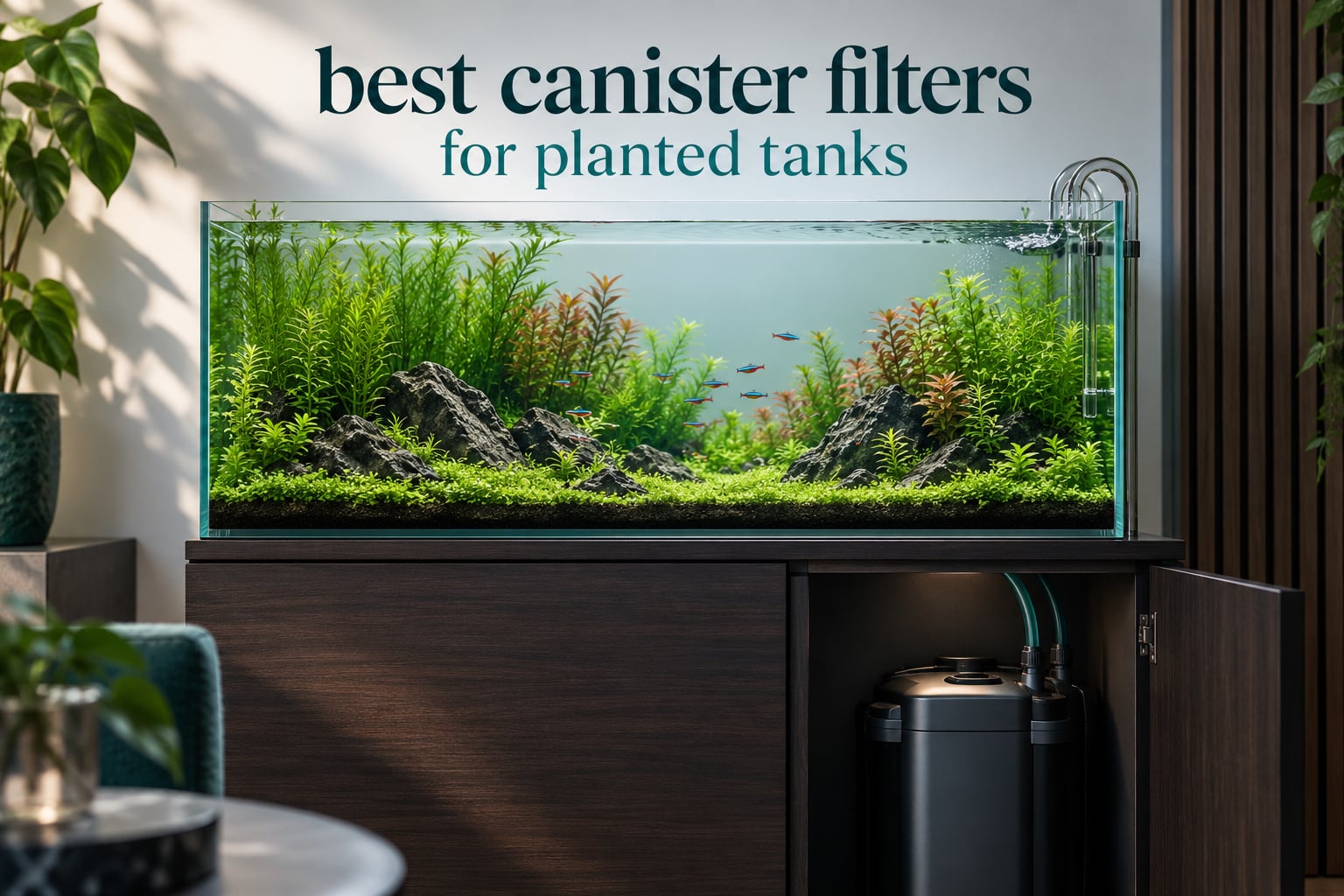
Most planted tank roundups stop at listing canisters and their rated flow. This one starts where they stop: what your water actually does once the media is loaded, the hoses are bent into a cabinet, and a carpet of Monte Carlo is trying to hold on. The best canister filters for planted tanks are the ones that give you enough turnover on day one, enough media volume to keep the cycle stable through a heavy-trim week, and enough flow control to run a CO2-injected scape without stripping the gas back out. Our three favourites are the Penn-Plax Cascade 1000 for most setups up to 100 gallons, the Fluval 307 for quiet mid-size tanks, and the Fluval FX6 when you are running a high-flow aquascape past 100 gallons.
A canister filter is an external filter that hangs inside your tank stand. Water is drawn in through an intake strainer, pushed up through removable media baskets in order, and returned through an outflow hose or spray bar. Because the whole assembly sits outside the glass, you can drop in a large volume of bio-media without stealing tank volume, run the pump quietly in a bedroom, and dial the return down until the surface barely moves.
That last point is the one planted-tank keepers care about most and general filter guides mostly ignore. Every bubble breaking the surface pushes dissolved CO2 back into the room, which is why a 925 GPH pump blasting a lily pipe across a 40 gallon scape can leave you chasing a pH crash and an algae bloom. If you are still choosing hardware, our guides on the best fish tanks and the best turtle tanks cover the tank side of the decision. This guide covers what goes underneath it.
Over six weeks we worked through ten canisters across the price and size range, reading the review data on each, comparing rated flow against real-world figures, and mapping every option back to the flow, media and maintenance demands a planted tank actually creates. We are not lab-testing these units, so treat every flow number here as manufacturer rating adjusted by the honest haircut described below.
Table of Contents
Top 3 Best Canister Filters For Planted Tanks (October 2026)
Our top three cover the majority of planted tanks: a 100-gallon workhorse, a quiet mid-size unit, and a high-flow flagship. All three sit in the middle of the size range where most aquascapers actually land.
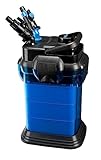
Penn-Plax Cascade 1000
- 265 GPH rated flow
- Three stackable media baskets
- Complete media kit included
- 360-degree rotating valve taps

Fluval 307
- Rated to 70 gallons
- eTEC pump runs 25% quieter
- EZ-Lift one-finger basket removal
- Compact body

Fluval FX6
- 925 GPH pump output
- 1.5 gallons of media capacity
- Self-starting air evacuation
- User-replaceable parts
Best Canister Filters for Planted Tanks at a Glance
Every filter below is listed with the number that matters most in a planted tank: how much media volume it can hold once the baskets are full. The full comparison of all ten options, with rated flow and best tank size, runs below.
| Product | Specifications | Action |
|---|---|---|
| Penn-Plax Cascade 1000 |
|
Check Latest Price |
| Fluval 307 |
|
Check Latest Price |
| Fluval FX6 |
|
Check Latest Price |
 Marineland Magniflow 400 Marineland Magniflow 400 |
|
Check Latest Price |
 Eheim Classic 2213 Eheim Classic 2213 |
|
Check Latest Price |
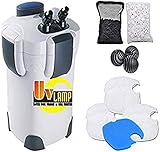 SunSun HW-303B Pro SunSun HW-303B Pro |
|
Check Latest Price |
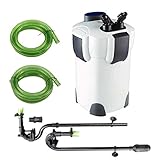 SunSun HW-302 SunSun HW-302 |
|
Check Latest Price |
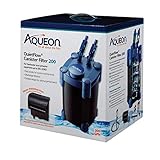 Aqueon QuietFlow 55 Aqueon QuietFlow 55 |
|
Check Latest Price |
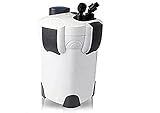 SunSun HW-304B Pro SunSun HW-304B Pro |
|
Check Latest Price |
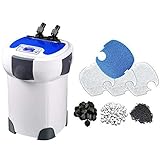 SunSun HW-3000 Pro SunSun HW-3000 Pro |
|
Check Latest Price |
1. Penn-Plax Cascade 1000: Best Canister Filter for Planted Tanks Overall
- 265 GPH rating matches tanks up to 100 gallons
- Three large stackable baskets with built-in handles
- Push-button primer plus dual 360-degree rotating valve taps
- Complete media set included with floss
- bio-sponge and carbon
- Rotating valves make hose routing easy in tight cabinets
- Media baskets are small relative to the rated flow
- Flow control is a mechanical tap rather than electronic
- Poly fiber pads clog quickly in high-plant-mass tanks
- Body can be awkward under low-clearance cabinets
This is the canister I keep coming back to for planted tanks in the 40 to 100 gallon range. The Cascade 1000 is rated at 265 GPH and the body stands 17 inches tall, which means it fits inside almost any standard stand without you having to rotate it on its side. Three stackable baskets with built-in handles let me build a real media stack without fighting the housing.
What stands out in a planted context is the valve hardware. The dual 360-degree rotating taps mean the hoses can be angled to whatever shape your cabinet demands, which matters more than it sounds when you are routing two hoses around a stand brace. The push-button primer also removes the single most common startup frustration on budget canisters.
It arrives with three poly fiber floss pads, a coarse bio-sponge, a bag of activated carbon, a spray bar, clamps and alignment clamps. For a planted tank I would drop the carbon after the first month, because a canister running carbon permanently removes micronutrients your plants are trying to grow on. The spray bar is useful as a fallback but it is also the first part I swap.
The honest weakness is media volume. Baskets that look generous in the product photos are modest once you are running a heavy carpet and trimming weekly, and the floss pads clog fast enough that you will be replacing them every one to two weeks in a dense scape. That is a media cost, not a filter flaw, but it is the line item that decides it for some people.
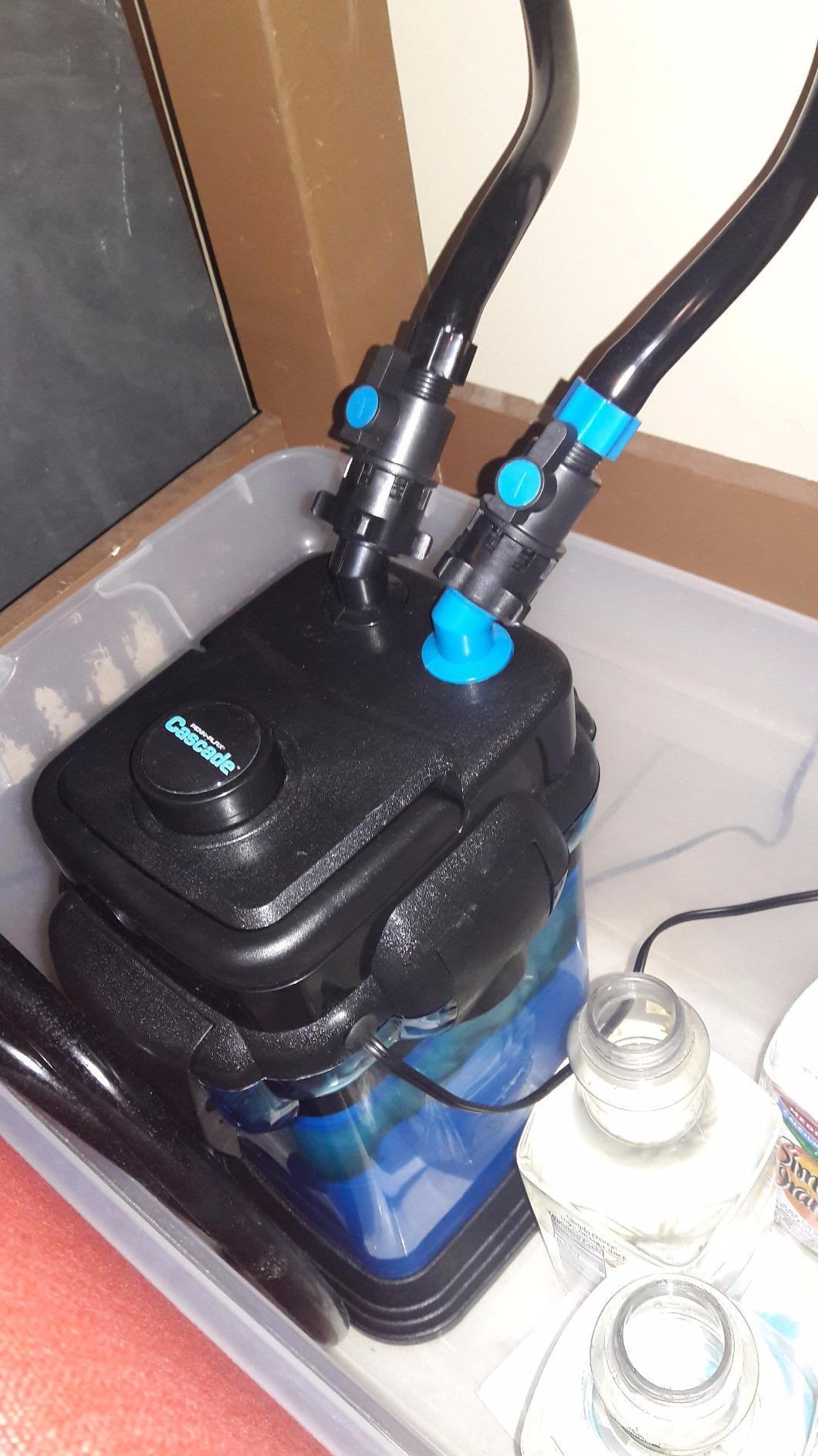
What to check before you buy this canister?
Measure your stand’s internal height and allow a few inches of hose slack above the lid. At 17 inches tall and 12 pounds, the Cascade is taller than the compact options but far shorter than the very large canisters on this list.
Decide in advance whether you are keeping the included carbon. In a low-tech planted tank the carbon is a nutrient sink you do not need, and removing it frees basket space for ceramic media.
Who should skip this filter?
Skip it if your tank is heavily carpeted and you already know you will change filter floss weekly, or if your bioload is heavy enough that you want maximum media volume per dollar. Canisters with larger baskets serve those cases better.
Skip it if you want to change flow rate electronically while watching a digital readout. The taps here are mechanical, which is fine once dialled in and never again.
2. Fluval 307: Best Quiet Canister for Mid-Size Planted Tanks
- eTEC motor delivers strong flow on very little power
- Runs up to 25 percent quieter than the previous generation
- EZ-Lift baskets pull out with one finger
- Compact body fits most standard cabinets
- Same platform covers 30 to 100 gallon variants
- Media basket volume is modest for the rated flow
- No electronic flow control or UV stage
- Intake tube length is fixed and hard to shorten
- Some buyers buy a separate spray bar
The Fluval 307 is the one I recommend when the tank lives in a bedroom or a home office. The eTEC motor is the reason: Fluval claims it runs up to 25 percent quieter than the previous generation, and review data backs the general direction of that claim, with owners repeatedly describing the pump as near-silent at normal flow settings.
Flow is more than adequate for a planted tank up to 70 gallons. In a CO2-injected setup you would still dial the inline valve back to preserve your gas, but the raw capacity means you have headroom to run a spray bar across the back wall without starving the substrate of circulation.
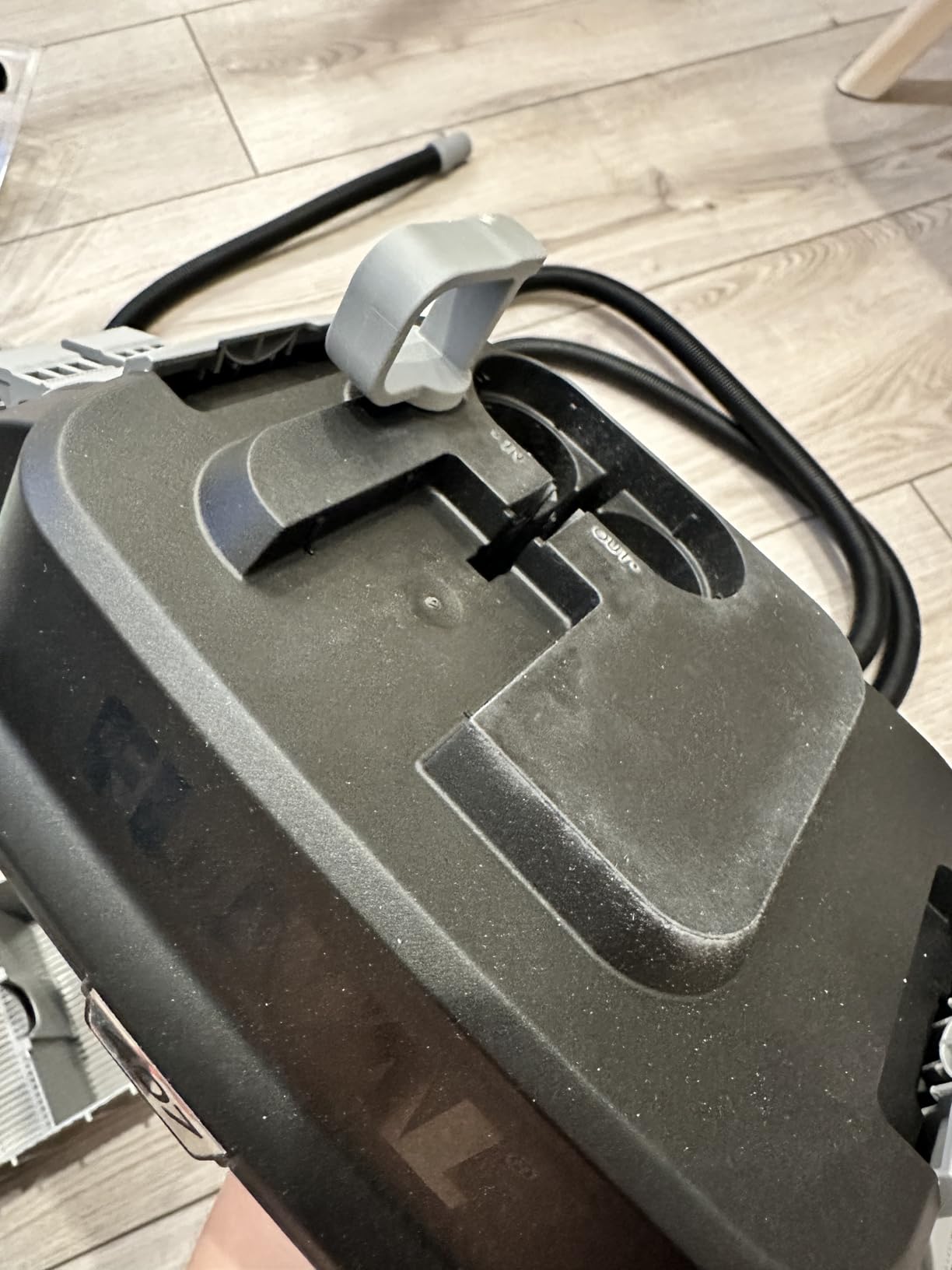
Media changes are the best part. The EZ-Lift centre handle lets you lift the entire stack out with one finger, which sounds minor until you have done it thirty times. At 6 pounds the whole canister is also light enough to lift out from under a stand without emptying it first.
Two things catch people out. The baskets are small for the flow rating, so plan on ceramic rings rather than trying to fill them with floss. And the intake tube is a fixed length, which in a sand-bottom planted tank can leave the strainer sitting uncomfortably close to the substrate.
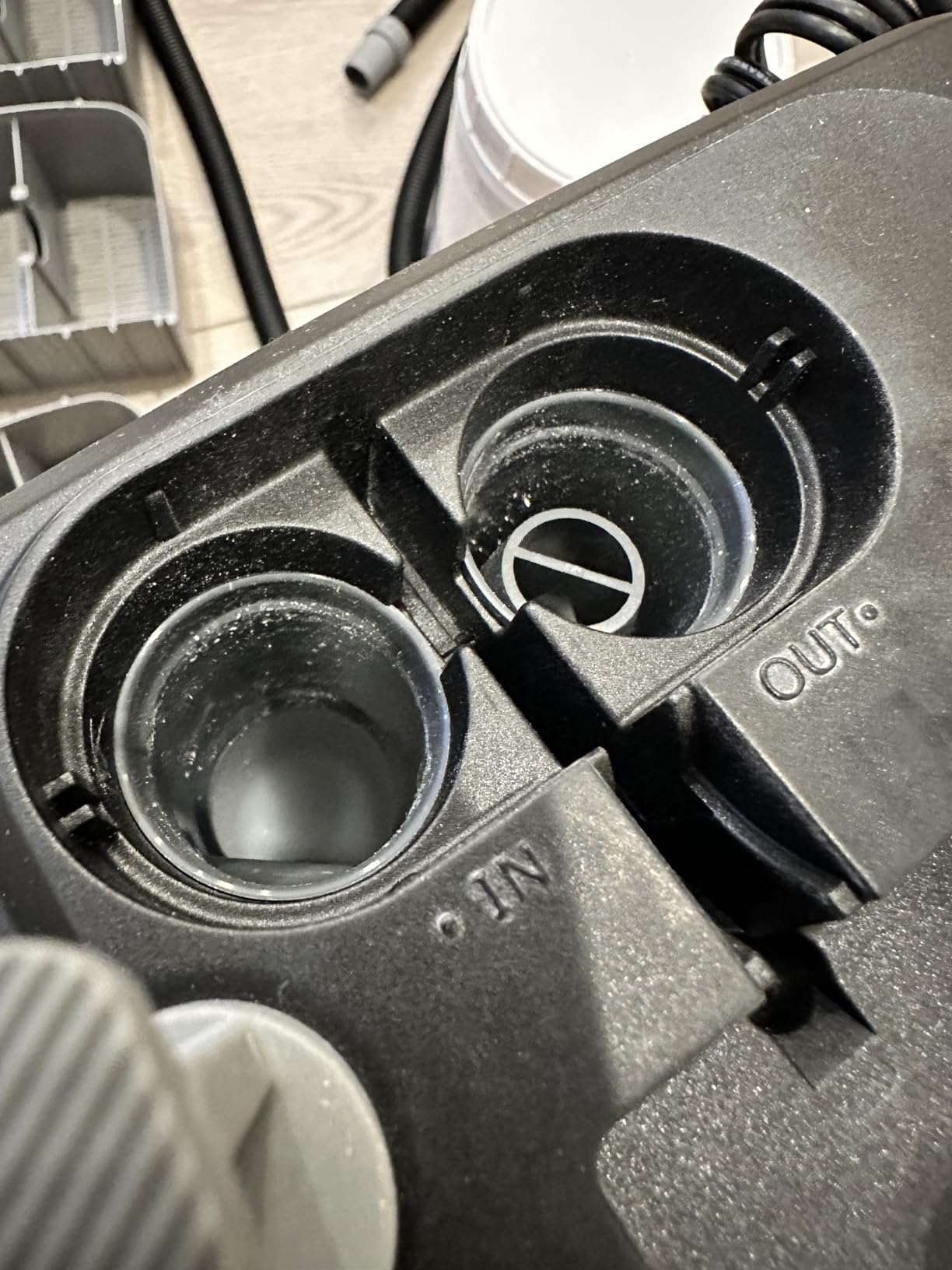
What to check before you buy this canister?
Check whether your return needs a spray bar. The standard package does not include one, and a few reviewers report buying it separately. Most planted keepers end up replacing it with a glass lily pipe anyway.
Confirm your tank sits at or below 70 gallons. The same platform covers smaller and larger capacities, so if you are near a boundary, match the rating to your actual volume rather than the number on the box.
Who should skip this filter?
Skip it if you are running a high-bioload planted tank with dense plant mass, because the basket volume will force constant floss changes. Also skip it if you want an integrated UV stage or digital flow control.
Skip it if you need a very long-reach intake to reach past a tall hardscape. The fixed-length tube is the most common retrofit point on this model.
3. Fluval FX6: Best High-Flow Canister for Large Aquascapes
- 925 GPH handles very large tanks and high-flow setups
- Smart Pump self-starts and evacuates trapped air every 12 hours
- Output hose doubles as a water change pump
- Stackable baskets hold 1.5 gallons of media
- Impeller and O-rings are user replaceable
- Heavy at 19.9 pounds and large in the cabinet
- Very long fixed intake tube risks substrate contact
- The 12-hour auto cycle produces a surprising burbling pause
- Digital readout is absent
- valves are mechanical
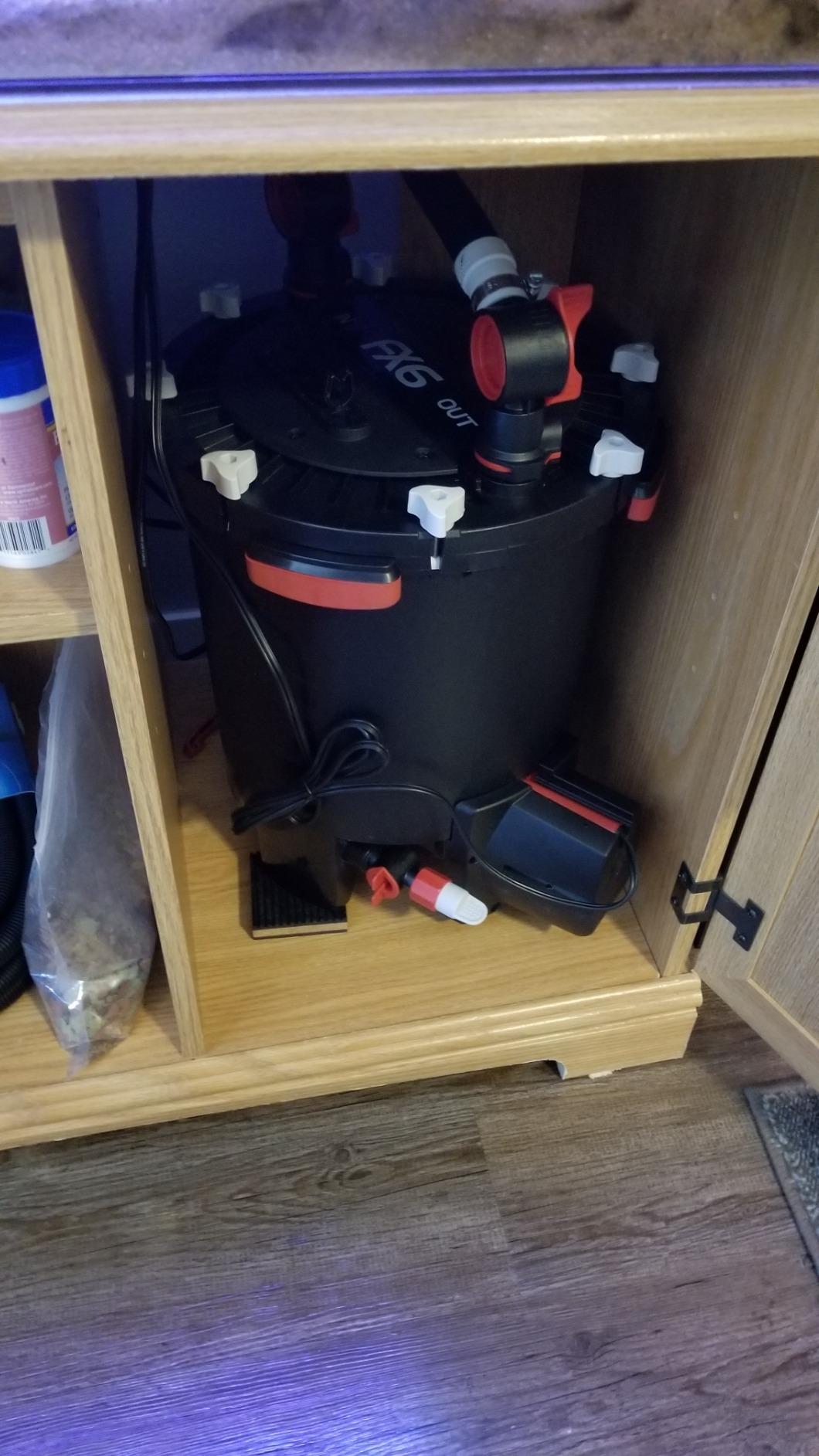
The FX6 is the flagship pick and the highest-rated canister in this roundup at 4.6 stars. Rated at 925 GPH with 1.5 gallons of media capacity, it is the only filter here where you can run a genuinely large planted tank with a full sponge layer, a carbon stage, and a serious ceramic load at the same time.
The Smart Pump chip is the feature that changes daily life. It monitors and optimises pump performance, and it evacuates trapped air every 12 hours, which means you are not hunting for leaks in a dark cabinet at midnight to explain a gurgling canister. Owners also use the output hose as a powered water change pump, which removes the bucket-hauling routine entirely.
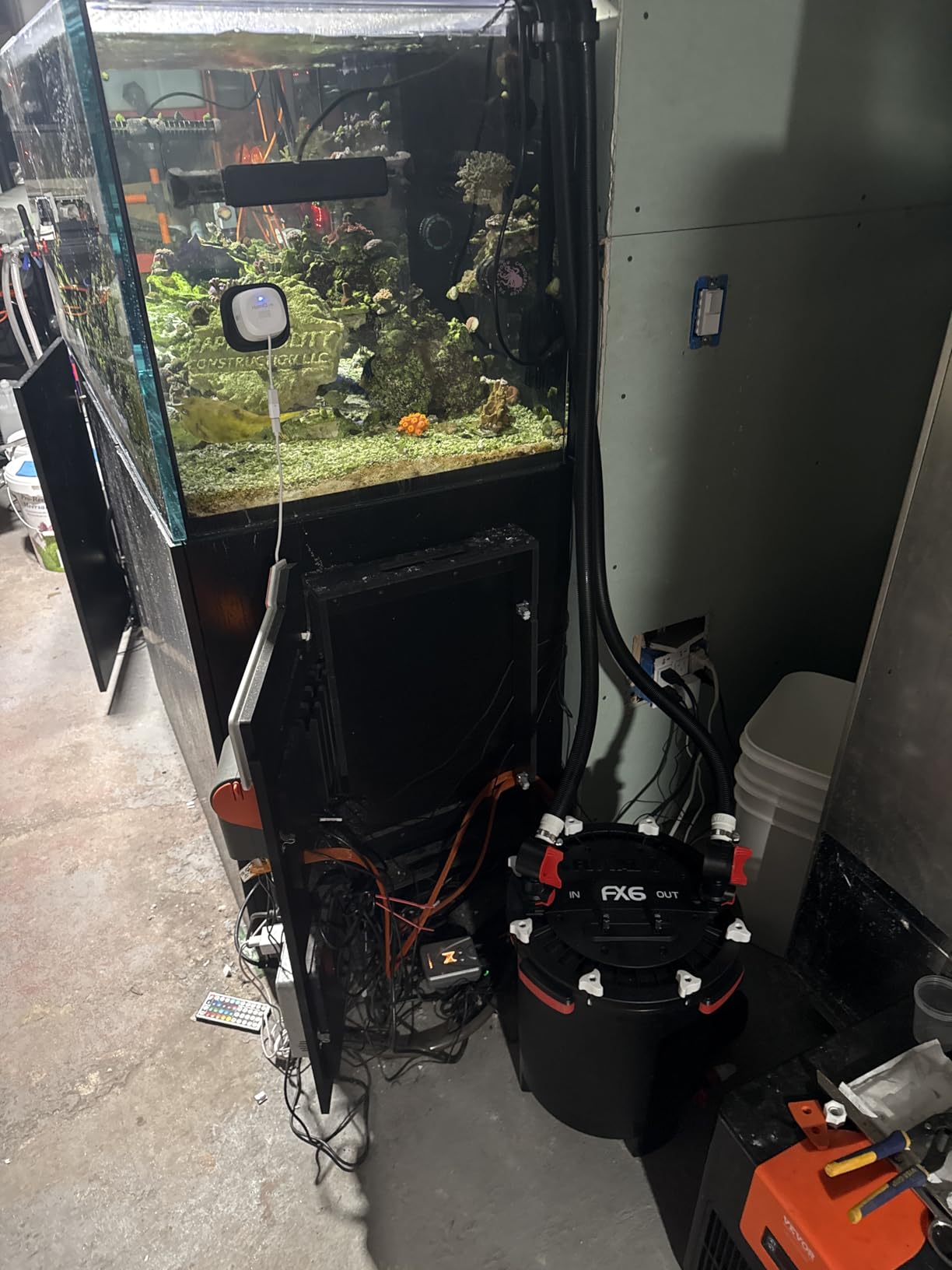
Every internal part, including the impeller and O-rings, is user replaceable. For a filter expected to last a decade or more, that matters more than any spec on the box, and it is the single biggest reason long-term planted keepers keep coming back to this platform.
There is a real trade-off here. At 19.9 pounds and 21 inches tall, this is a serious piece of hardware that needs actual cabinet clearance. The intake tube is also very long and cannot be shortened, so in a sand substrate tank you need to plan the intake position carefully. And the automatic 12-hour power cycle pauses with a burbling sound that surprises first-time owners.
What to check before you buy this canister?
Measure cabinet depth and height carefully, and confirm you can lift 19.9 pounds in and out without dragging it across the cabinet floor. Grease the lid and hose O-rings on assembly and fill the canister with water before you power it on.
Decide where the long intake will sit before you finalise your aquascape. Several owners report sandstorm blowouts from leaving it near the substrate.
Who should skip this filter?
Skip it if your tank is under 60 gallons. You would be paying for capacity you throttle off to keep CO2 in the water, and the size becomes dead weight under the stand.
Skip it if your cabinet is shallow or you change aquascapes frequently, since the fixed intake length limits reconfiguration.
4. Marineland Magniflow 400: Best for Heavy Bioload Planted Tanks
- Quick prime button and lift-off lid make first-time setup approachable
- Stack N' Flo trays give each media type its own shelf
- Generous starter media package with foam
- carbon
- bio-balls and rings
- Flow is gentle enough not to overly disturb plant leaves
- Rated for both freshwater and saltwater
- Lid handle leaks are the most repeated complaint
- Supplied plastic hose clamps are weak
- Rigid tubing and a fragile discharge suction cup
- Priming can stall with air in the inlet line
- Small carbon bags need frequent replacement
The Magniflow 400 is the choice when fish load is part of the equation rather than plant mass alone. Goldfish, plecos, cichlids and a full complement of tankmates alongside a scape produce a lot more waste for the biological media to process, and the 400 GPH rating gives you more headroom per watt than anything else at this size.
The Stack N’ Flo tray design is genuinely useful in a planted tank. Each tray is a separate shelf for one media type, so you can rebuild the stack in a fixed order every time without pieces migrating between baskets. The quick prime button and lift-off lid make a first canister setup a much shorter conversation.
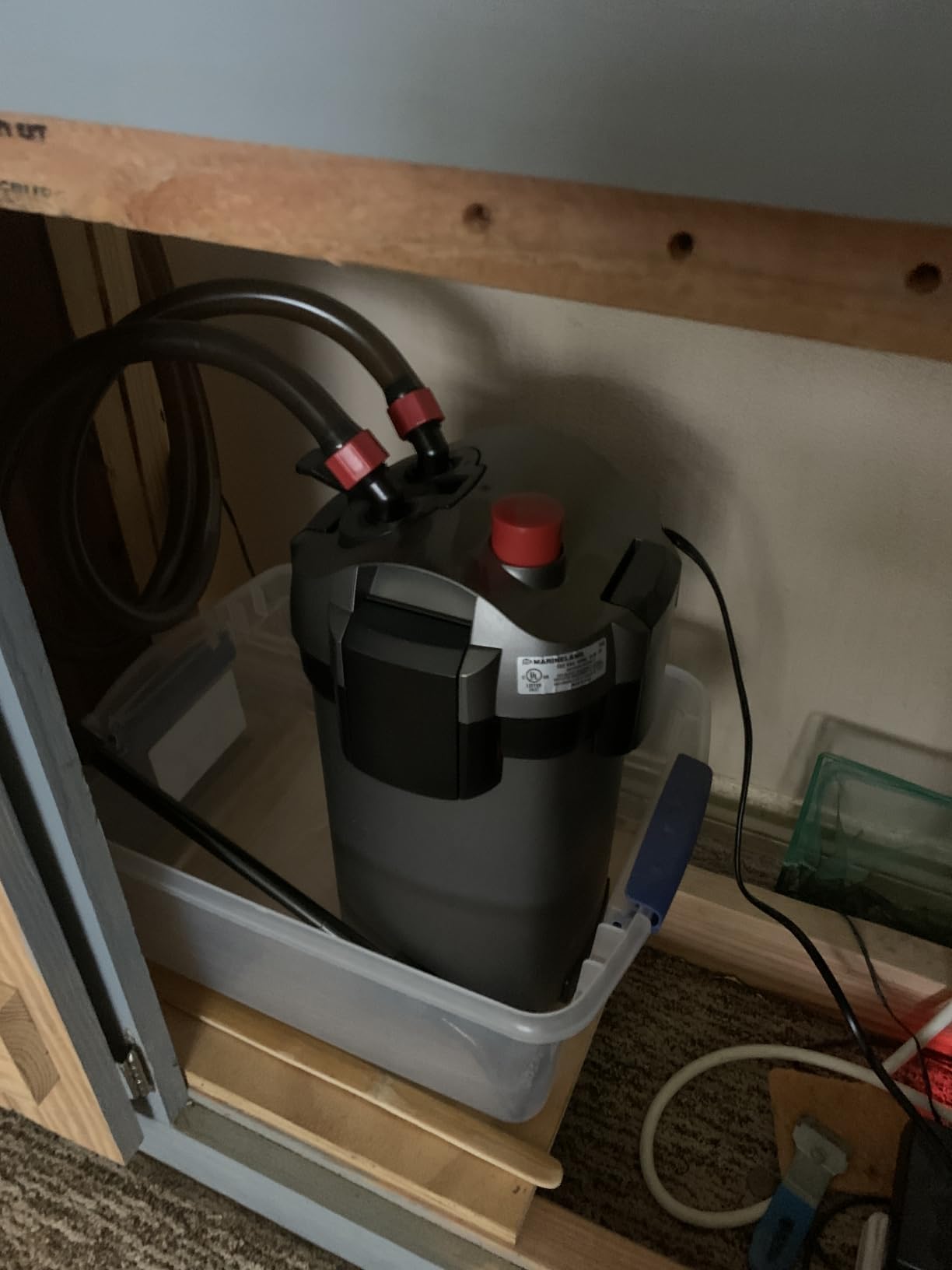
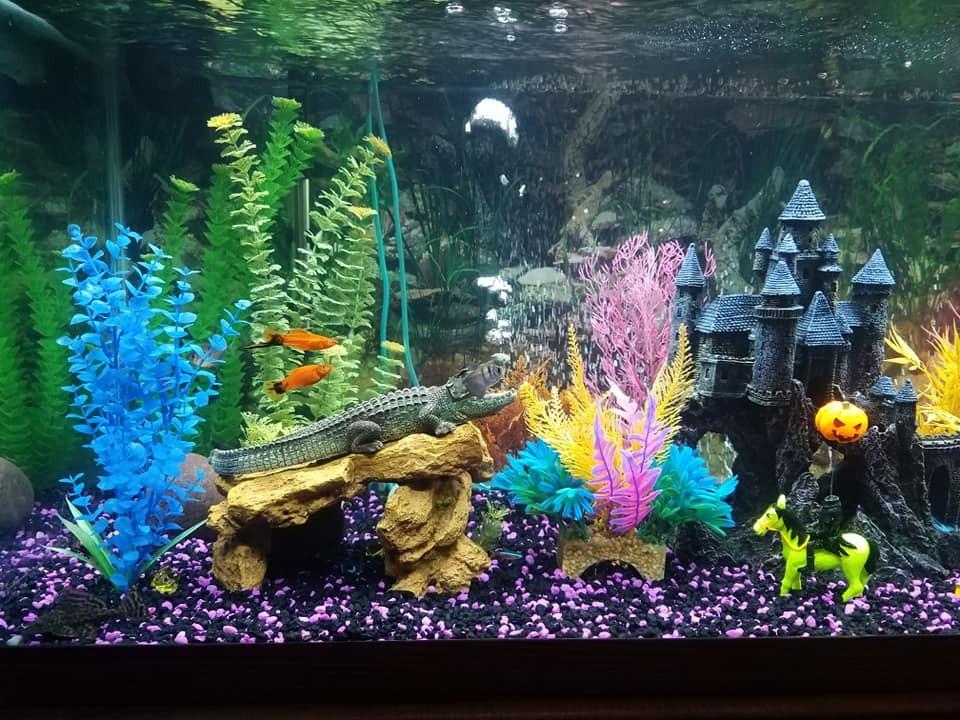
Where it loses points is sealing. Lid leaks originating under the handles are the single most repeated complaint in the reviews, and there are a recurring threads about difficulty getting a replacement gasket or a refund once the return window closes. Check that the gasket is seated before the first fill, and buy metal hose clamps rather than relying on the plastic ones included.
The included carbon bags are small, which means frequent replacement if you leave them in. For a planted tank I would pull them out after the first month and use that tray for ceramic media instead.
What to check before you buy this canister?
Inspect the lid gasket and handle area before the first fill, because that is where failures cluster. Plan to spend a few minutes upgrading the hose clamps to metal.
Check that your cabinet can take an 18-inch-tall body at 19.27 pounds, and make sure you can get the intake routed to substrate height.
Who should skip this filter?
Skip it if you are risk-averse about gasket availability, since parts sourcing is the recurring friction point in reviews. Also skip it if you want a long media lifespan, because the small carbon bags drive frequent replacement costs.
Skip it if you need fine flow control. There is no electronic adjustment, so you are working the outlet valve by hand.
5. Eheim Classic 2213: Best Compact Canister for Smaller Planted Tanks
EHEIM Classic Canister Filter 2213, Classic 250 – PetOverstock
- Long-established design with widely available replacement parts
- Silicone seal on the pump head reseats reliably after every cleaning
- Light at under 4.5 pounds and compact for small cabinets
- Includes mechanical and biological media
- a spray bar
- inlet pipe and valves
- Loose-media chambers accept any standard aquarium media
- Manual priming requires sucking on the intake line or lifting the lid
- Older pump design is louder than modern electronic canisters
- Smaller media volume than higher-flow premium canisters
- No electronic flow control
- Limited spray rate adjustment
The Eheim Classic 2213 is the oldest design in this roundup and still the one I trust most mechanically. The permo-elastic silicone sealing ring sits fixed on the pump head, which means after a decade of cleanings it reseats in exactly the same place every time. That kind of mechanical honesty is rarer than it should be.
For a planted tank, the loose-media chambers are the real feature. You are not locked into a proprietary cartridge, so you can run a sponge layer over a carbon bag over ceramic rings in whatever combination your plant mass demands. At 4.49 pounds it is also the easiest canister here to lift out for cleaning.
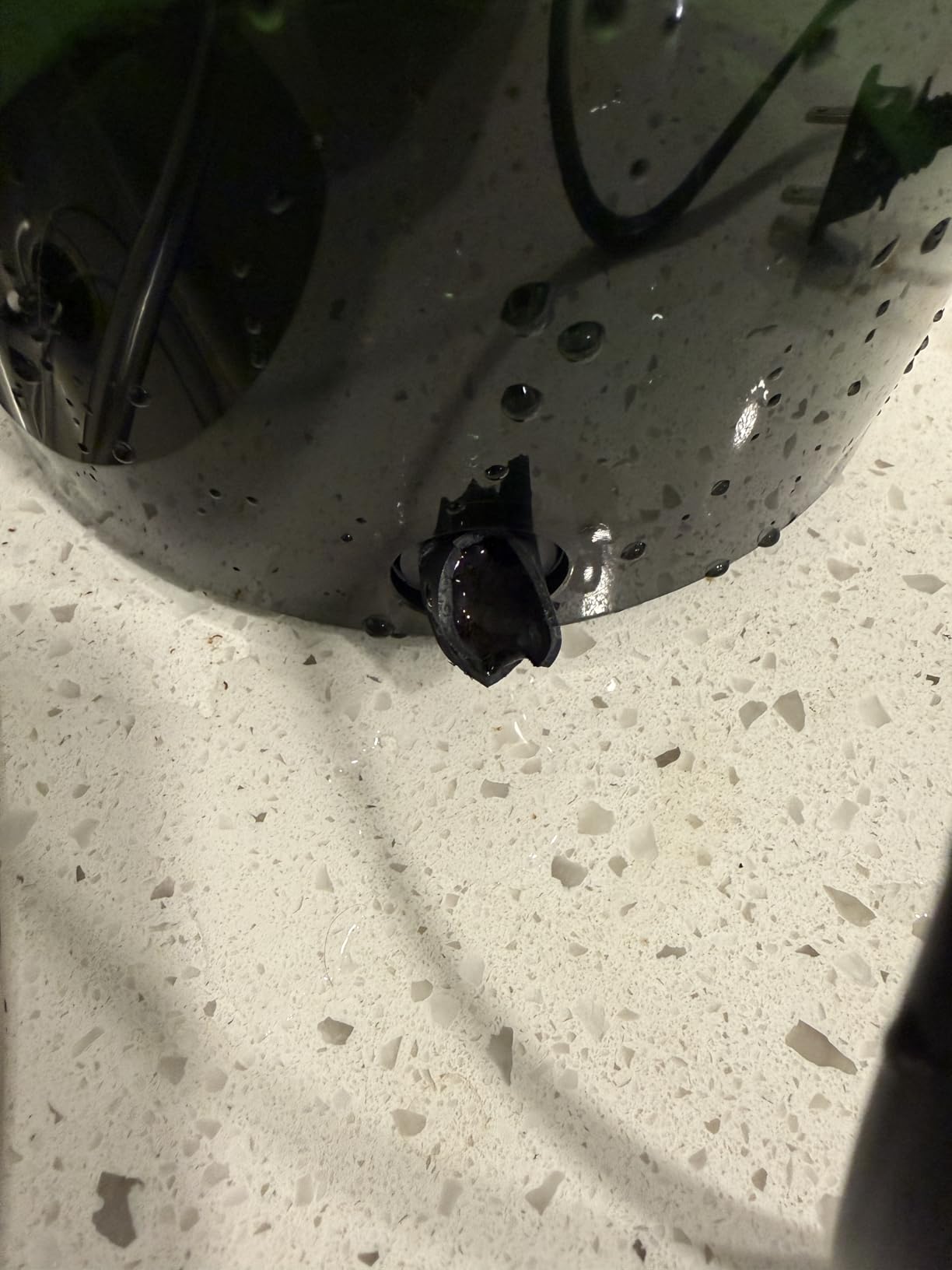
Manual priming is the dealbreaker for a lot of people. There is no self-priming pump, so you either start a siphon on the intake line or remove the lid and fill the chamber by hand. Owners describe this as the near-universal complaint, and it is a real annoyance if your stand is awkward to reach into.
The pump is also louder than modern electronic canisters at equivalent flow, and media volume is modest. For a 40 to 66 gallon planted tank with moderate plant mass, though, that is a fair set of trade-offs for a filter that is easy to source parts for indefinitely.
What to check before you buy this canister?
Confirm you are comfortable with manual startup. If you want a press-a-button prime, this is the wrong canister and the effort will show up every time you move it.
Check the capacity variant against your actual volume, and make sure you have a small aquarium siphon on hand for the intake line before first start.
Who should skip this filter?
Skip it if you run a bedroom tank where pump noise is the main complaint, or if you are layering heavy mechanical filtration that needs more basket volume than this provides.
Skip it if you want to swap media without touching water. A canister that needs a siphon to start is not a fit for that routine.
6. SunSun HW-303B Pro: Best Canister With a Bundled UV Stage
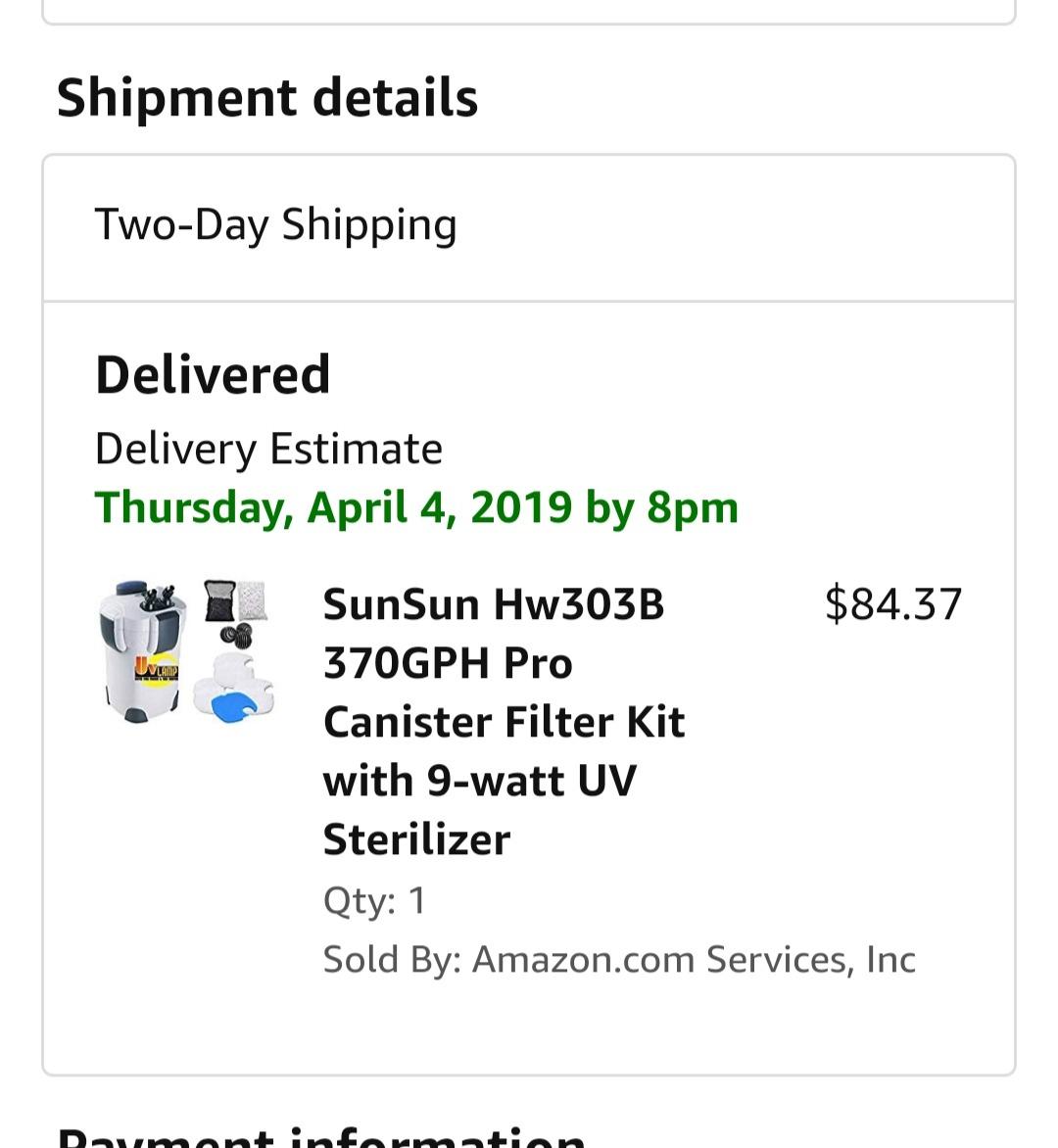
SunSun Hw303B 370GPH Pro Canister Filter Kit with 9-watt UV Sterilizer
- Integrated 9 watt UV sterilizer is unusual at this tier
- Complete pro kit with three baskets
- four pads
- a pound of carbon
- a pound of ceramic rings and bio balls
- 370 GPH suits planted tanks to 100 gallons
- Strong value per unit of filtration and sterilization
- UV lamp needs periodic replacement
- adding a consumable cost
- Basket volume limits high-grade biological media
- Older non-digital design with no pump speed or UV programming
- Modest pump noise relative to the flow delivered
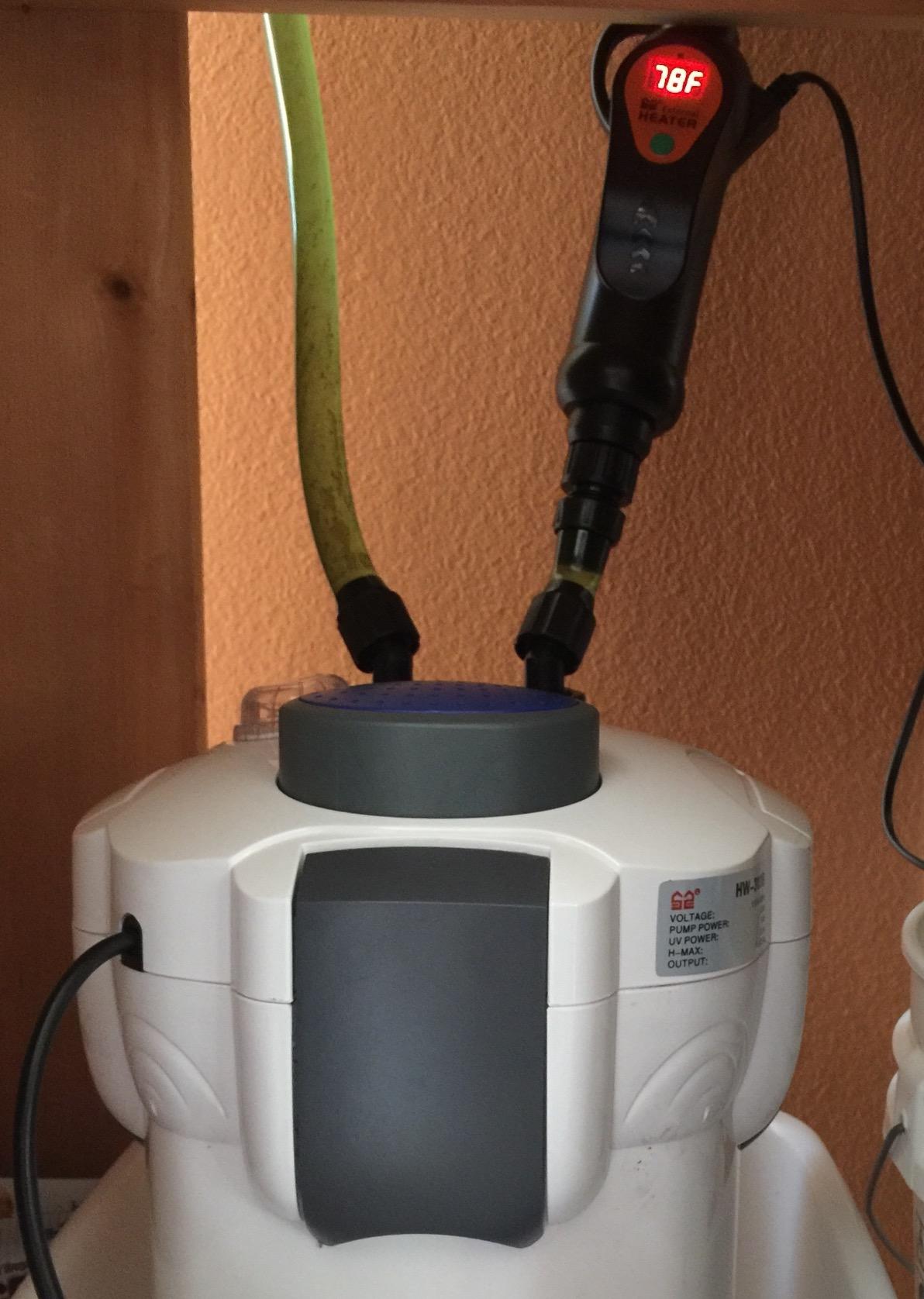
The HW-303B Pro is the pick if you want UV clarification without buying a separate inline sterilizer. The integrated 9 watt stage sits in the canister body, which means one less electrical box on the cabinet floor and one fewer connection to leak.
At 370 GPH it covers planted tanks up to 100 gallons, and the kit contents are unusually complete: three media baskets, three white filter pads, a blue coarse pad, a pound of premium carbon, a pound of ceramic rings and a set of bio balls. That is enough media to run a proper mechanical to biological stack on day one.
For a planted tank, the UV is optional rather than essential. It is a useful tool for clearing green water and slowing surface algae in a heavily lit display, but it will not fix a nutrient imbalance and it will not replace flow control. If you are running CO2, the UV stays on, and you manage the nutrient balance instead.
The drawbacks are predictable. The UV bulb is a consumable with a replacement schedule, the basket volume is small relative to the rated flow, and there is no electronic pump speed or UV duty cycle programming on this model.
What to check before you buy this canister?
Budget for UV bulb replacements as an ongoing cost, not a one-off. Add it to the same mental list as your filter floss and carbon.
Check cabinet clearance against the 16-inch body, and confirm the fittings are the brand-specific type since they will not connect to premium-brand canisters.
Who should skip this filter?
Skip it if you have no plan to run carbon or medicate the tank, because the UV stage becomes an expense with no payoff. Also skip it if you want adjustable pump speed, since this design has no digital control.
Skip it if dense plant mass means you need more ceramic media than the baskets will hold.
7. SunSun HW-302: Best Budget Canister Filter for Planted Tanks
- Lowest cost in the set while still including a self-priming pump
- Three media trays hold floss
- carbon and ceramic media on a budget
- Single valve disconnect and priming pump simplify cleaning
- Adjustable spray bar for output tuning
- Can be paired with an under-gravel filter for double filtration
- Hose barbs and tubing do not fit premium-brand canisters
- Included media quantity is minimal
- Lower pump capacity than premium canisters at the same tank size
- Some owners report a persistent rattle from the priming button
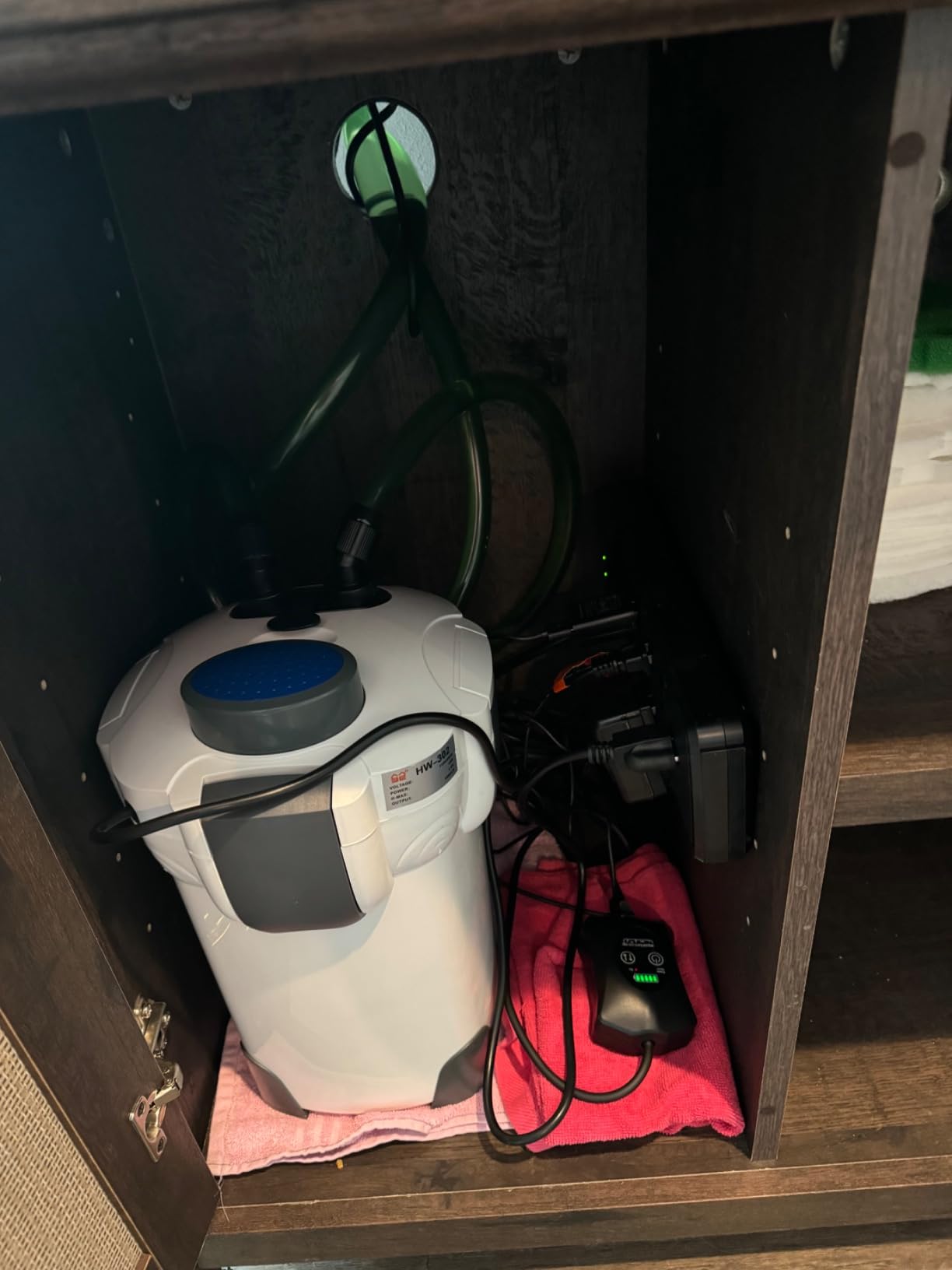
The HW-302 is the value entry point, and for a low-tech planted tank under 40 gallons it is genuinely hard to argue with. You get a self-priming pump, a single valve disconnect, three media trays and an adjustable spray bar at the lowest cost of anything in this roundup.
For a beginner planted setup, the three trays are enough to build a sponge layer over ceramic rings, which is the correct media stack for a low-tech tank. Skip the included carbon after the first month and use that tray for more bio-media instead.
Two honest limitations. The fittings are brand-specific, so nothing from this filter connects to a premium-brand canister, and the included media quantity is minimal, which means you are buying floss and ceramic rings within the first month anyway. Pump capacity is also lower than premium canisters of a similar size, so it is better matched to a sparse or low-tech tank than a dense carpet.
A few owners report a persistent rattling sound from the priming button mechanism. If noise sensitivity is a factor in your setup, the Aqueon QuietFlow further down this list is worth a look instead.
What to check before you buy this canister?
Add a media budget to your purchase immediately. The trays are empty of anything substantial, and a planted tank needs floss plus ceramic media on day one.
Measure the 15-inch body against your cabinet and plan your hose routing around brand-specific fittings if you may add a second filter later.
Who should skip this filter?
Skip it if you plan to run a heavily carpeted high-tech scape, because the flow and basket capacity are not enough for that plant mass. Skip it if you want to standardise fittings across multiple canisters.
Skip it if pump noise bothers you in a quiet room, given the reported priming button rattle.
8. Aqueon QuietFlow 55: Best Canister for Quiet Bedroom Planted Tanks
- Quiet operation is the design goal of this line
- Three return options including a spray bar
- water director and hang-on-back polisher
- Comes stocked with carbon
- coarse foam
- bio-balls
- ceramic rings
- hoses and valves
- Quick disconnect valves and pump locking heads for fast media changes
- Compact vertical body fits most cabinets
- 55 gallon rating is small
- pushing larger setups to pricier variants
- Proprietary Aqueon cartridges add recurring cost
- Fewer media trays than premium canisters
- No electronic flow control or UV stage
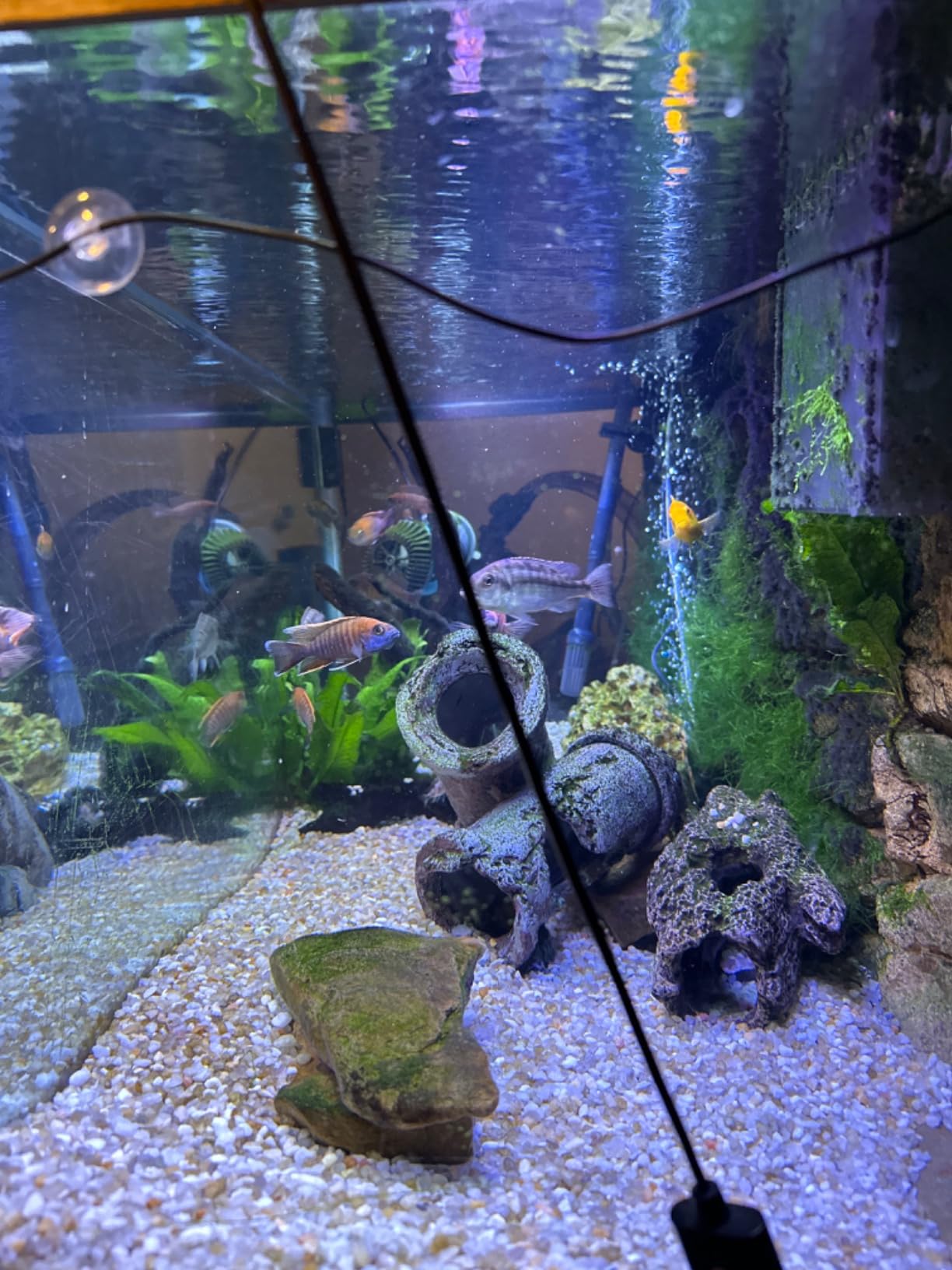
The QuietFlow is built around one goal, and reviews are consistent about it: this is a quiet canister. If the tank sits in a bedroom and the pump noise is the thing you notice most, that focus beats raw flow in a way that matters more than the spec sheet suggests.
The three return options are the cleverest feature here for planted work. A spray bar, a water director and a hang-on-back polishing unit means you can move between high-surface-agitation and low-agitation output as your scape evolves, and the polishing unit gives you a fine mechanical stage without a separate purchase.
At 55 gallons the base model is a genuine limit. A 60 gallon planted tank pushes you toward the larger variants, which carry a higher price, so this ends up being a pick for small and mid-size tanks rather than a general recommendation.
The recurring cost is the real trade-off. The polishing unit uses large Aqueon replacement cartridges that are meant to be swapped monthly, and the carbon stage is also proprietary. For a planted tank, the sensible move is to run the canister baskets with your own media and treat the polishing unit as an occasional add-on rather than a permanent stage.
What to check before you buy this canister?
Match the variant to your actual tank volume before you look at anything else. The 55 gallon model is the quiet one people ask for, and it is not the right choice above that size.
Decide whether you will accept proprietary consumables. If you would rather run your own media, plan on removing the carbon and polishing cartridge from the loop.
Who should skip this filter?
Skip it if your tank is larger than 55 gallons, since you would be moving to a pricier variant anyway. Skip it if you want the largest possible media volume from a small footprint.
Skip it if you dislike recurring cartridge purchases or plan to use carbon only in the first month of a tank’s life.
9. SunSun HW-304B Pro: Best Canister for 150 Gallon Planted Tanks
Sunsun Hw304B 525GPH Pro Canister Filter Kit with 9-watt UV Sterilizer
- 525 GPH with a bundled 9 watt UV covers planted tanks to 150 gallons
- Four media baskets are the most in this line for floss
- carbon and bio media together
- Pro kit includes four pads
- a pound of carbon
- a pound of ceramic rings and bio balls
- Strong value when UV is needed on a large system
- UV bulb is a consumable that needs replacing on a schedule
- No digital pump speed or UV timer controls
- Brand-specific hose fittings
- Heavier at 17 pounds and bulkier than smaller models
The HW-304B Pro is the step up from the 303B, and the difference that matters in a planted tank is basket count. Four media baskets means you can run a proper mechanical sponge layer, then carbon if you need it, then two trays of ceramic media, which is the arrangement a large planted tank with heavy plant mass actually wants.
At 525 GPH it covers tanks up to 150 gallons, and the bundled 9 watt UV stage adds clarification without a separate inline box. The kit also includes four filter pads, a pound of carbon, a pound of ceramic rings and bio balls.
Review sentiment is positive but more measured than the smaller sibling, with a wider spread of star ratings. The recurring notes are the UV bulb as a consumable, the lack of digital pump speed and UV timer programming, and brand-specific hose fittings that will not connect to premium-brand canisters.
At 17 pounds the body is heavier than most of this list and takes meaningfully more cabinet space than the compact models. Plan the intake position with the substrate in mind, the same as any large canister.
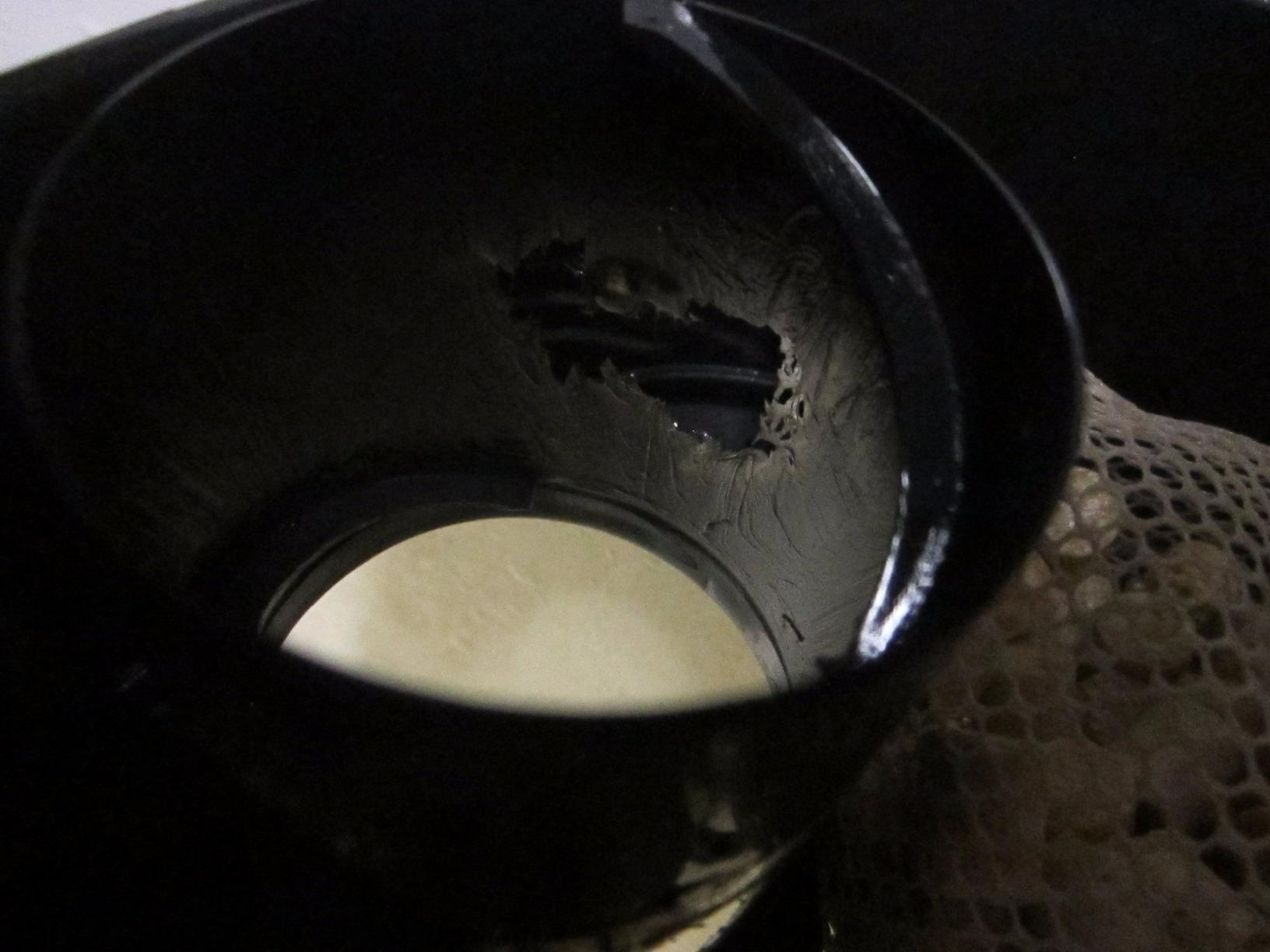
What to check before you buy this canister?
Confirm you have cabinet depth for a 17-inch body plus hose clearance, and that you can lift 17 pounds out for cleaning without tipping it.
Decide whether the UV is worth the bulb replacement cycle at your plant density, because a densely planted tank rarely needs the extra clarification stage.
Who should skip this filter?
Skip it if your tank is under 100 gallons, since the 303B Pro covers that range at a smaller size. Skip it if you want digitally adjustable flow rather than mechanical valves.
Skip it if you want standard fittings, because the brand-specific barbs limit what you can attach later.
10. SunSun HW-3000 Pro: Best Canister for Adjustable Flow Control
SunSun HW-3000 UV 9W 5-Stage External Canister Filter w/Media, 793gph, White, HW-3000 PRO
- LCD panel adjusts pump speed and programs the UV run time
- Turn the UV off during medication dosing without unplugging anything
- Largest media capacity in this range for heavy sponge and ceramic loads
- No manual priming step for first start
- Wide 396 to 793 GPH range covers roughly 40 to 150 gallon planted tanks
- Double O-ring connectors on all fittings
- Startup after a service is still slow because the wide tubing traps air
- Unit is tall and may force an on-side placement under a low cabinet
- Audible above roughly 60 percent pump speed
- Bright LCD backlight with no dimming
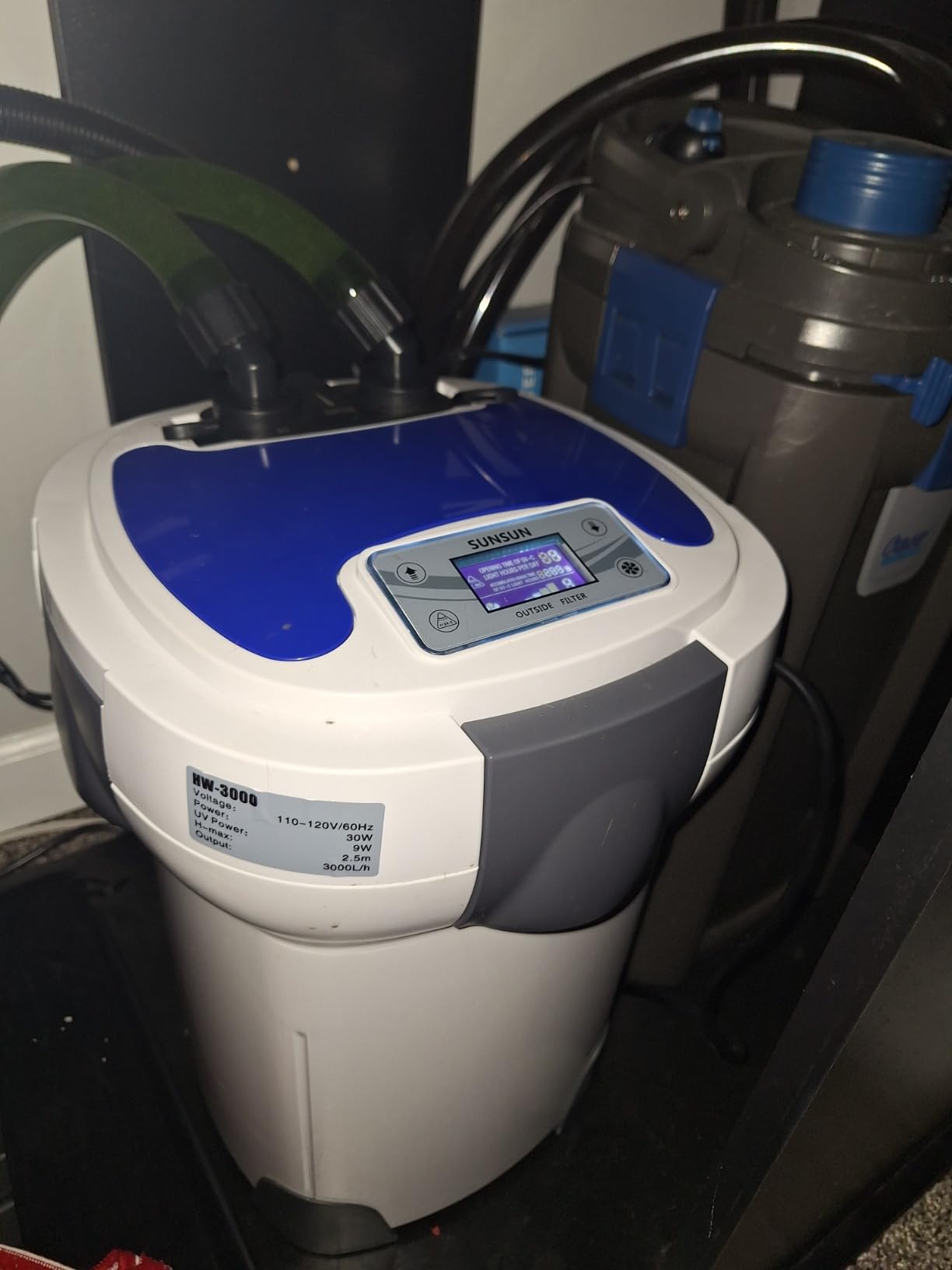
The HW-3000 Pro is the only canister in this roundup with real electronic flow control. The LCD panel sets pump speed across a 396 to 793 GPH range and programs the UV run time, which for a planted tank is not a gadget. It is the difference between trimming the flow once and being able to drop it in ten seconds when you change from a carpeted scape to a stem-heavy one.
The five-stage media capacity is also the largest in this group, which is why it suits high plant mass. Owners running multiple canisters report a lower noise floor than a premium biofilter running alongside them, particularly at mid-range speed settings.
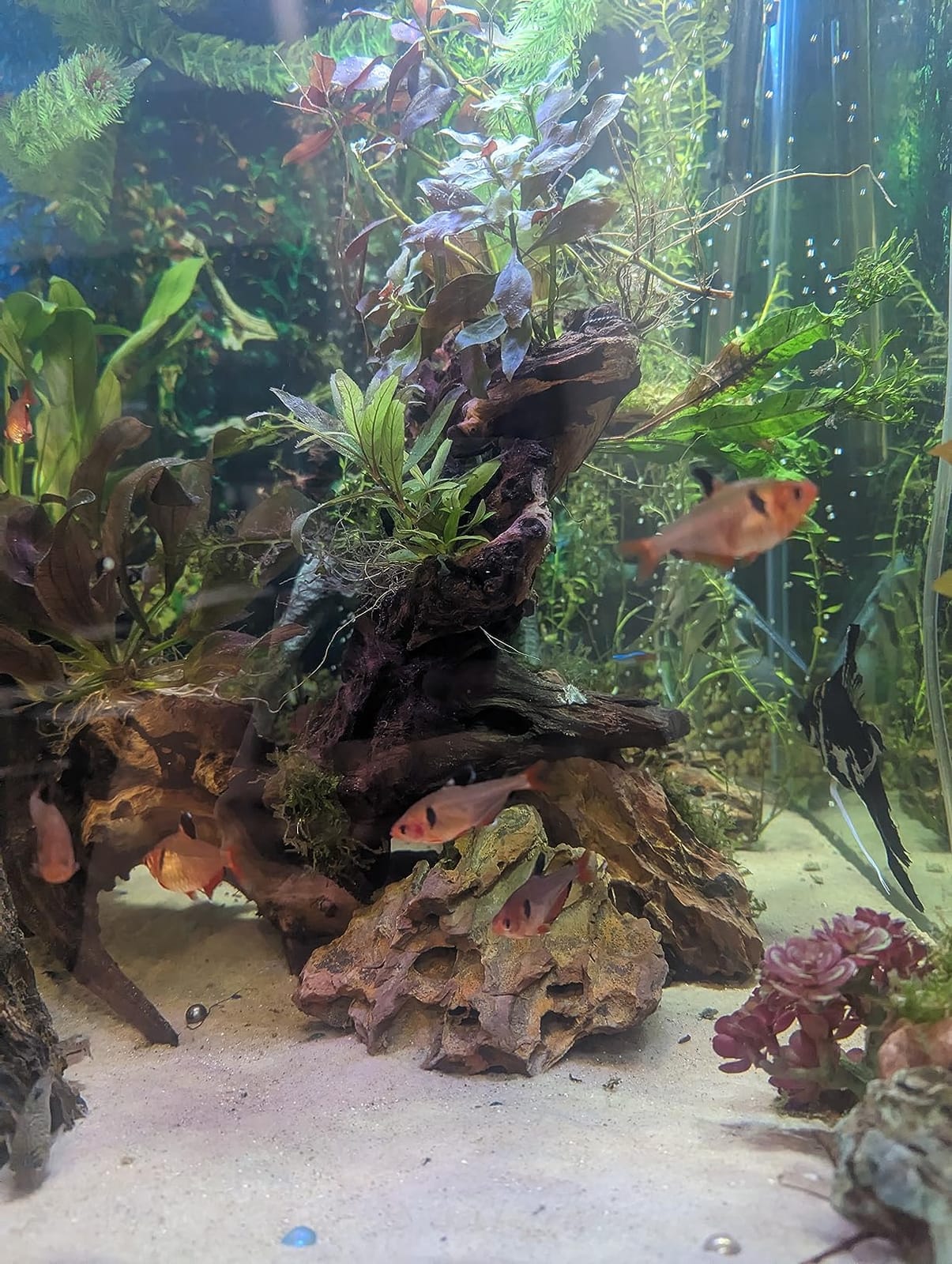
The main practical complaint is post-cleaning startup. Despite the no-priming design, the extra-wide tubing holds air and it can take the better part of an hour to clear. The fix that shows up repeatedly in reviews is trimming the intake tubing shorter, which also helps with substrate clearance.
Two more things to know. The body is tall, so under-cabinet placement can force it onto its side with the panel hard to read, and it becomes clearly audible above roughly 60 percent pump speed, which is not the choice for a bedroom at full blast.
What to check before you buy this canister?
Measure cabinet height against the 22-pound body before you commit, and plan for a trimmed intake tube. Trimming it improves both startup and substrate clearance.
Decide how you will use the UV timer. If you never medicate and your tank is not struggling with green water, the extra stage is not doing much for you.
Who should skip this filter?
Skip it if a slow post-cleaning restart would frustrate you, or if your cabinet cannot take the height without rotating the canister. Skip it if the tank lives somewhere quiet and you plan to run it above 60 percent speed.
Skip it if you want the largest, longest-lived media volume on a mid-size tank, since a simpler canister with more baskets may serve you better.
Do You Actually Need a Canister Filter for a Planted Tank?
You need one if you are injecting CO2, if your tank is 40 gallons or larger, or if you want zero visible equipment in an aquascape. You probably do not need one if you are running a low-tech planted tank under 40 gallons with modest plant mass, because a good hang-on-back filter will handle the turnover and the surface agitation is actually welcome without CO2 to protect.
Planted tanks push a different filtration problem than fish-only tanks. Plants shed leaves, roots and detritus continuously, so mechanical filtration has to keep up in a way a lightly stocked community tank never asks for. Meanwhile, if you are injecting CO2, the same surface agitation that keeps fish healthy works against you by off-gassing the dissolved carbon dioxide.
Planted tank hobbyists on forums are split on this, and honestly. Some of the most-upvoted guidance pushes back hard on canisters entirely and calls a quality HOB the better choice for a planted tank up to about 55 gallons. That advice is not wrong, and if your setup is low-tech it is probably right. The canister case gets strong at two thresholds: a CO2-injected tank of any size, and any tank over roughly 40 gallons where plant mass makes mechanical filtration a weekly job.
How to Size a Canister Filter for a Planted Tank?
Take the rated GPH, multiply it by 0.75, and divide that by your tank volume in gallons. The result is your real turnover per hour. A filter rated at 265 GPH in a 40 gallon tank actually delivers about 200 GPH through loaded media, which is five turnovers per hour rather than the 6.6 the box implies.
Three things eat into rated flow. Media resistance is the biggest, which is why an empty canister test tells you nothing useful. Head height matters second, because every extra inch of lift between tank surface and impeller costs flow, and so does every bend in the hose. A canister rated 100 gallons on the box is genuinely a 40 to 55 gallon filter once you account for all three.
For a CO2-injected planted tank, four to six turnovers per hour is the working target. A low-tech planted tank with sparse plants is comfortable at three to four. A high-maintenance carpeted scape wants six or more plus careful outflow placement, because carpet needs flow to keep the substrate from compacting and matting.
Worked example: for a 75 gallon high-tech planted tank, take six turnovers as the target, which means 450 GPH of real flow, which means about 600 GPH rated. For a 125 gallon low-tech planted tank, four turnovers is 500 GPH real, so roughly 665 GPH rated. A forum consensus you will see repeated runs slightly against the manufacturer maximum for planted tanks, rating the filter at or a size below the tank volume rather than above it.
Media capacity is the number more predictive of a clean planted tank than GPH. A canister that holds a large sponge layer plus two baskets of ceramic media will process more plant waste than a higher-flow canister with one small basket, and it will do it across more cleanings before you have to intervene.
Spray Bar vs Lily Pipe vs Directed Outflow for Planted Tanks
For a CO2-injected planted tank, a spray bar pointed just under the surface is the standard recommendation. It distributes flow across the width of the tank, keeps circulation even through the substrate, and lets you dial the whole thing back with one inline valve. The guidance you will see from experienced planted keepers is to avoid setting a spray bar so high that it creates a wall of bubbles, since that bubbles are pure off-gassing.
A lily pipe is the aesthetic choice. It creates a single directed current, which looks cleaner in an aquascape and does not throw detritus into the water column the way a full-width spray bar can. The trade-off is that the flow is concentrated, so a carpet under the stream grows unevenly and needs redirecting. Most aquascapers end up rotating the pipe during water changes for exactly this reason.
Directed outflow, usually through a glass nozzle aimed at the substrate, suits heavily planted low-tech tanks where you want the current driving through plant mass rather than across open water. It is the least popular option for CO2 setups because it still creates a rippling surface that off-gasses.
The Filter Media Stack Planted Tanks Actually Need
A planted tank wants three layers in order: mechanical pre-filter, then biological media, then optional chemical. The pre-filter is the piece most beginners skip and the one that matters most, because it catches leaf and root detritus before it reaches the bio-media.
Start with coarse sponge in the bottom basket, then floss or a pad above it to catch the fine particles, then ceramic media filling the remaining baskets. In a dense carpeted tank, expect to change floss every one to two weeks. In a sparse low-tech setup, every three to four weeks is fine.
Add carbon only when you have a reason. It clears dissolved organics and yellow water, which matters after major rescapes or during medication, but a permanently running carbon also strips the trace nutrients your plants feed on. Remove the carbon bag after the water clears and replace those basket spaces with ceramic media.
One forum tip worth repeating because almost no roundup mentions it: plastic pot scrubbers make genuinely effective bio-media. They are cheap, they hold a large volume of bacteria, and they cost almost nothing to replace. Use them alongside ceramic rings rather than instead of them if basket volume allows.
Where to Put the Intake Strainer in a Planted Tank?
Keep the intake strainer at or just above substrate height, and away from the front glass. Pulling from the substrate is the number one cause of the sandstorm blowout that forum threads describe in detail, and it also strips the anaerobic detritus pockets that mature planted tanks depend on.
Position it behind a hardscape piece if you can, so the draw is balanced by plants rather than pulling straight across open sand. Then check the surface tension: a strong visible vortex at the strainer means you are drawing too hard for that corner, and adding a pre-filter sponge around the intake is the standard fix.
Canister vs HOB vs Sump vs Internal for Planted Tanks
For CO2 retention, media capacity and quiet operation, the canister wins, and the sump wins on media capacity and near-total silence. The HOB wins on simplicity, cost and access, and the internal filter wins on nothing a planted tank cares about except footprint.
Choose a canister for any CO2-injected planted tank or anything over 40 gallons. Choose a HOB for low-tech planted tanks under 40 gallons where easy access matters more than media volume. Choose a sump only if you are running a very large display and have the plumbing skill to make it work.
Running a canister and a HOB together is a legitimate redundancy move. A common setup is a canister as the main filter and a small HOB as polish, or a canister feeding the HOB. Just stagger the cleaning schedules so you are never doing both on the same water change day.
Planted Tank Maintenance: Cleaning Sequence and Schedule
Canister cleaning in a planted tank follows one rule above all others: never clean the filter on water change day. Doing both in one session removes a large share of your nitrifying bacteria at the exact moment the tank is least able to handle the load, and that is how people accidentally trigger mini-cycles.
Unplug, close the valves, and remove the lid. Take the baskets out one at a time and rinse each in removed tank water, not tap water. Work from the dirtiest basket to the cleanest so you do not carry detritus through the bio-media. Squeeze the sponges until the water runs clear, but stop before you strip the colour out of a sponge that has gone brown.
Never rinse bio-media under a tap. The chlorine and temperature shock will kill more bacteria than the cleaning removes. Wipe the housing down, check the O-rings and gasket, and reassemble with a thin film of silicone grease on the sealing surfaces.
On interval, dense carpets with weekly trimming need floss changed every one to two weeks. Sparser low-tech setups can go three to four weeks between rinses. Bio-media should only be rinsed when the flow visibly drops, and swapped no more than once a year if at all. Carbon gets replaced only when you actually need it.
Avoid over-cleaning. A canister with pristine white media and a stripped sponge layer in a mature tank is an anaerobic nitrate factory, because the detritus that feeds beneficial bacterial colonies has all been removed. A slightly grubby sponge in a mature planted tank is working exactly as intended.
Troubleshooting Flow Drop, Gurgling and Leaks
Flow dropping a week or two after a cleaning is the most common planted tank complaint, and it is usually not a fault. Fine plant detritus and biofilm progressively clog the mechanical stage, especially with a dense carpet or after a heavy trim. If the flow recovers after a floss change, the filter is fine.
Gurgling almost always means air in the system. Start with the water level in the canister, fill the housing manually through the intake, and check that the lid O-ring is seated flat. On models with brand-specific wide tubing like the HW-3000 Pro, trimming the intake hose shorter is the fix that appears most often in owner reports.
Leaks almost always start at a seal. Check the lid gasket seating and the O-rings on the valve block, grease them on assembly, and confirm the housing is not being twisted by hose tension. For a gasket that has gone flat, many owners upgrade to metal hose clamps and reseat the canister square in the cabinet before the first fill.
Constant clicking or rattling points to the pump drawing air, usually from a lid that is not fully seated or an intake that has come free underwater. If the canister primes and then stalls within seconds, that is the symptom to chase first.
On noise, humming that rises with flow is normal pump tone, while rattling indicates a housing issue. Move the unit so it is not touching the cabinet wall, and check that a trimmer rub is not being transmitted through the stand frame.
Frequently Asked Questions
What is the best canister filter for a planted tank?
The Penn-Plax Cascade 1000 is the best all-round choice for planted tanks up to 100 gallons, with 265 GPH rated flow, three stackable media baskets and a 17-inch body that fits most stands. The Fluval 307 is the pick for quiet mid-size tanks, and the Fluval FX6 suits large high-flow aquascapes past 100 gallons with 925 GPH and 1.5 gallons of media capacity.
Do planted tanks need a canister filter?
Planted tanks need a canister when you inject CO2, when the tank is 40 gallons or larger, or when you want no visible equipment in an aquascape. A quality hang-on-back filter is usually enough for a low-tech planted tank under 40 gallons with modest plant mass, and forum consensus regularly backs that advice.
How much flow does a planted tank need?
A CO2-injected planted tank targets four to six turnovers per hour, a low-tech setup is comfortable at three to four, and a high-maintenance carpeted scape wants six or more with careful outflow placement. Convert this to filter size by dividing your target turnover by tank volume, then divide by 0.75 to get the rated GPH you need.
What GPH canister filter should I buy for a planted tank?
Multiply your desired real turnover by tank volume, then add a 25 percent allowance for media resistance and head height. A 75 gallon high-tech tank targeting six turnovers needs about 600 GPH rated, while a 125 gallon low-tech tank at four turnovers needs roughly 665 GPH rated.
Does a canister filter strip CO2 from a planted tank?
Surface agitation is what off-gasses CO2, not the filter itself. A spray bar pointed just under the surface with reduced flow retains far more dissolved CO2 than a lily pipe blasting across the tank, and you should avoid positioning any outflow so high that it produces a wall of bubbles.
Should I use a spray bar or a lily pipe on a canister?
Use a spray bar for a CO2-injected planted tank because it spreads flow across the tank width and keeps circulation even through the substrate. A lily pipe suits aquascapes where appearance matters most, but the concentrated current grows carpets unevenly unless you reposition it during water changes.
How often should I clean a canister filter on a planted tank?
Rinse mechanical floss every one to two weeks in a dense carpeted tank and every three to four weeks in a sparse low-tech setup. Rinse bio-media only when flow visibly drops, and never rinse it under a tap. Never clean the filter on water change day, since removing bacteria and disturbing the substrate at once is the fastest route to a mini-cycle.
Why is my canister filter flow dropping?
Flow dropping a week or two after cleaning is usually fine plant detritus and biofilm gradually clogging the mechanical stage, especially after a heavy trim. Rinsing or replacing the floss should restore it. If flow is still low afterwards, check that the intake is not sitting in the substrate, since a clogged strainer looks identical from outside.
The Bottom Line on Canister Filters for Planted Tanks
The Penn-Plax Cascade 1000 is the best canister filter for planted tanks in most situations: 265 GPH of rated flow, three stackable baskets, rotating valves that survive tight cabinets, and more owner history behind it than anything else at this level. The Fluval 307 is the quieter option for mid-size tanks in a bedroom or office. The Fluval FX6 is the one to buy when you are running a large high-flow aquascape and want media capacity and repairable parts.
Beyond 100 gallons, the SunSun HW-304B Pro covers 150 gallon tanks with four baskets and a bundled UV, and the HW-3000 Pro is the only filter here with true electronic flow control if you want to change output in seconds as your scape changes. On a tight budget, the HW-302 gets you a self-priming pump and three trays, which is enough for a low-tech planted tank under 40 gallons.
Whatever you choose, remember the sizing rule: rated GPH times 0.75, divided by tank volume, is your real turnover. Size for the plant mass you actually have rather than the fish count, keep the intake off the substrate, and never clean the filter on water change day.
Pricing, availability and retailer details change frequently for aquarium equipment, so check current listings at the linked retailers before buying. This roundup reflects the analysis and published review data available at the time of writing, and we may earn a commission from qualifying purchases made through the links on this page.