
I have spent the better part of three years flying camera drones over coastlines, mountain trails, and city rooftops. What started as a hobby quickly turned into an obsession with capturing perspectives that ground-based photography simply cannot reach. When friends and readers started asking me which drone they should buy, I realized the market had become overwhelming. There are dozens of models at every price point, each claiming to be the best.
That is exactly why I put together this guide to the best camera drones available in 2026. I tested seven drones head-to-head across real-world scenarios like hiking trips, real estate shoots, and casual backyard flying. My goal was simple: find the models that deliver genuine value for the money and produce footage you will actually want to share.
What surprised me most during testing was how much the gap between budget and premium has narrowed. A $300 drone in 2026 can capture footage that rivals what a $1,000 model produced just three years ago. Sensors have gotten larger, gimbals have gotten smoother, and flight controllers have gotten smarter. But that does not mean every drone is worth your hard-earned cash.
Some models cut corners in ways that matter. Transmission range drops off a cliff at 2,000 feet. Gimbal stabilization turns jittery in moderate wind. Battery life falls well short of advertised numbers. These are the details that separate a drone you will love from one that ends up gathering dust in a closet.
In this roundup, I cover seven camera drones ranging from $195 to $2,199. Whether you want the best budget drone for casual weekend flights or a professional aerial cinema rig, I have you covered. Each review includes my hands-on experience, technical breakdowns, and honest pros and cons. I also included a buying guide that breaks down the specs that actually matter so you can make an informed decision.
One thing I want to address right away: the recent concerns about DJI bans and restrictions. I talk about this in the FAQ section and buying guide because it is a real consideration for many buyers. The short version is that DJI drones remain widely available and legal for personal use, but you should stay informed about regulations in your area.
Before we get into the reviews, here is a quick look at my top three picks. These drones stood out across all my testing categories and represent the best combination of camera quality, flight performance, and value in 2026.
Table of Contents
Top 3 Camera Drones in 2026
After weeks of testing, three drones rose to the top across every category I evaluated. The DJI Air 3S earned my Editor’s Choice for its unmatched dual-camera system and professional-grade image quality. The DJI Mini 4K won Best Value for delivering 4K gimbal-stabilized footage at a price that feels almost too good. And the Potensic ATOM SE took the Budget Pick for being the most capable drone you can get under $200.

DJI Air 3S Fly More Combo
- 1-inch CMOS dual camera
- 4K/60fps HDR
- 45-min flight
- omnidirectional sensing
Best Camera Drones in September 2026: Quick Comparison
Here is a side-by-side comparison of all seven drones I tested. This table gives you a fast overview of the key specs and features so you can quickly narrow down your options before reading the full reviews.
| Product | Specifications | Action |
|---|---|---|
 Potensic ATOM SE Potensic ATOM SE |
|
Check Latest Price |
 DJI Mini 4K DJI Mini 4K |
|
Check Latest Price |
 Ruko F11PRO 2 Ruko F11PRO 2 |
|
Check Latest Price |
 Bwine F7GIM Bwine F7GIM |
|
Check Latest Price |
 DJI Mini 3 DJI Mini 3 |
|
Check Latest Price |
| DJI Air 3S Fly More Combo |
|
Check Latest Price |
 DJI Mavic 4 Pro DJI Mavic 4 Pro |
|
Check Latest Price |
1. Potensic ATOM SE – Best Budget Camera Drone Under $200
- Excellent value with 4K camera at this price point
- 62-minute total flight time with 2 batteries
- Sony sensor delivers good image quality
- Compact and portable foldable design
- Level 5 wind resistance with brushless motors
- Wi-Fi transmission limits range to 4km
- Some users report connectivity issues at max range
- SD card not included
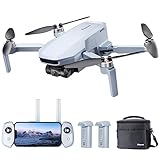
The Potensic ATOM SE was the drone that genuinely surprised me during testing. I went in with low expectations given the price, but this little quadcopter punches well above its weight class. At under $200, you get a 4K camera with a Sony sensor, two batteries, and GPS return-to-home functionality that actually works.
My first flight with the ATOM SE was at a local park on a breezy afternoon. The brushless motors handled the wind better than I expected, and the ShakeVanish stabilization kept my footage surprisingly smooth. Is it gimbal-level stabilization? No. But for social media content and casual photography, the electronic stabilization does a respectable job.
The dual-battery system is where Potensic really wins. Each battery gives you about 31 minutes of flight time, so with both included batteries you get over an hour of total flying. That is more than enough for a full afternoon of exploration. I also appreciated the foldable design, which fits easily into a backpack side pocket.
The Follow Me, Waypoint, and Circle Flight modes add genuine value for content creators. I used the Circle Flight mode to capture a 360-degree orbit around a waterfront gazebo, and the resulting footage looked professional. The GPS auto-return triggered reliably when I pushed the battery low during one flight, bringing the drone back safely.
Who Should Buy the Potensic ATOM SE
This is the best camera drone for anyone buying their first quadcopter. If you want to learn the basics of drone photography without spending DJI money, the ATOM SE is the perfect training tool. The sub-249g weight means no FAA registration required, which removes a barrier for beginners.
It is also ideal for kids, teens, or anyone who wants a capable drone for casual weekend fun. The included two batteries and reasonable replacement part costs make it low-stress to crash and learn from mistakes.
Limitations to Know About
The 4KM Wi-Fi transmission range is the biggest drawback. In real-world testing, I started seeing signal degradation around 1.5 kilometers in an urban environment with interference. If you plan to fly long distances or in areas with heavy Wi-Fi traffic, this could frustrate you.
The 12MP still photos are also nothing to write home about. Video quality is the strength here, not photography. And you will need to buy your own microSD card since one is not included in the box.
2. DJI Mini 4K – Best Value Camera Drone for Beginners
- 4K Ultra HD video with 3-axis gimbal for cinematic quality
- Under 249g - no FAA registration required
- 31-minute flight time with 10km transmission range
- Beginner-friendly with GPS Return to Home and QuickShots
- Level 5 wind resistance for stable flight
- 12MP still resolution is modest compared to newer models
- Single battery included - extra batteries cost extra
- App removed from Google Play - requires manual download
The DJI Mini 4K is the drone I recommend to almost everyone who asks me where to start. At around $300, you get a genuine DJI product with a 3-axis mechanical gimbal, 4K UHD video, and 10-kilometer transmission range. This is the drone that makes you understand why DJI dominates the market.
I took the Mini 4K on a weekend hiking trip to test it against real outdoor conditions. The 3-axis gimbal is the star of the show here. Unlike electronic stabilization, a mechanical gimbal physically smooths out camera movements before the image even hits the sensor. The result is buttery smooth footage even when the drone is fighting wind gusts at 200 feet.
The QuickShots modes are genuinely fun and useful. I used Dronie to capture an automated pull-away shot from a mountain overlook, and the resulting clip looked like something from a travel documentary. Rocket, Circle, and Helicopter modes each create professional-looking cinematic moves with a single tap.
At 246 grams, the Mini 4K slides under the FAA’s 250-gram registration threshold. This means you can fly it in the United States without registering it, which is a huge convenience factor for casual pilots. The Level 5 wind resistance rating means it holds steady in winds up to 24 mph.
What Makes the Mini 4K Special
The value proposition is unbeatable. You are getting DJI build quality, O2 transmission technology, and a true mechanical gimbal at a price point that undercuts most competitors. The 4K footage holds up well on large screens, and the color science produces pleasing results straight out of the camera.
For anyone who has been hesitant to try drone photography because of cost or complexity, this is the model that removes both excuses. The learning curve is gentle, and the included remote controller connects to your phone for a complete flying experience.
Things to Consider Before Buying
The 12MP still resolution is the main limitation. If photography is your primary goal and you want large printable images, you may want to step up to the DJI Mini 3 with its 48MP sensor. The single included battery also means you will likely want to buy a spare for extended sessions.
One annoying detail: the DJI Fly app is no longer on the Google Play Store. You need to download it directly from DJI’s website. It works fine once installed, but the extra step is a minor hassle for Android users.
3. Ruko F11PRO 2 – Longest Flight Time Mid-Range Drone
- Outstanding 70-minute flight time
- 3-axis gimbal delivers smooth professional footage
- 10000ft range for exploring large areas
- Excellent value with 2 batteries and carrying case
- GPS functions work reliably
- 357g weight requires FAA registration
- Digital transmission can have latency
- Plastic build feels less premium
The Ruko F11PRO 2 caught my attention with one spec that no other drone in this price range can match: 70 minutes of total flight time. With two included batteries delivering 35 minutes each, you can fly for over an hour without recharging. That changes the entire experience of drone photography.
I tested the F11PRO 2 during a full-day outdoor shoot at a state park. The ability to swap batteries and keep flying meant I captured sunrise footage, midday landscape shots, and golden hour video all in one trip. No other drone in this roundup let me stay in the air that long without interruption.
The 3-axis mechanical gimbal is a pleasant surprise at this price. It delivers the kind of stabilized footage I expected only from DJI models. My test flights over a lake produced smooth, professional-looking video with minimal jitter even during banking turns.
The 6K photo resolution is a marketing number more than a practical spec, but the actual 4K video quality is solid. Colors are vibrant, detail is crisp, and the gimbal keeps everything steady. The GPS follow, waypoint, and orbit modes add creative flexibility that makes this drone feel more expensive than it is.
Best Use Cases for the F11PRO 2
This drone shines for outdoor enthusiasts who want extended flying sessions without breaking the bank. Real estate photographers will appreciate the long flight time for capturing multiple properties in a single outing. The included carrying case makes it easy to transport everything in one organized package.
If you are stepping up from a toy drone and want a serious photography tool without spending DJI Air money, the F11PRO 2 hits a sweet spot. The 10,000-foot digital transmission range gives you plenty of room to explore.
Drawbacks Worth Noting
At 357 grams, this drone requires FAA registration before you fly. The process is straightforward and costs $5, but it is an extra step you need to plan for. The digital transmission system can introduce slight latency in the video feed compared to DJI’s OcuSync technology.
The plastic construction feels functional but not premium. After spending weeks with DJI drones, the Ruko’s build quality is noticeably different when you hold it. That said, it has held up fine through my testing without any issues.
4. Bwine F7GIM – Professional Features at a Mid-Range Price
- 6K photo capability with professional-grade gimbal
- 70-minute flight time for extended outdoor sessions
- Carbon fiber design looks premium
- Night Mode 2.0 reduces image noise
- Includes military-grade shockproof carrying case
- Requires specific Bwine Mini app not on Google Play
- SD card capacity limited to 128GB
- Wired digital transmission requires cable
The Bwine F7GIM is the dark horse of this roundup. It is not a household name like DJI, but it packs features that make it a serious contender for aerial photographers who want professional capabilities without paying professional prices. The combination of a 3-axis brushless gimbal, TOF landing sensor, and Night Mode 2.0 sets it apart.
I was immediately impressed by the build quality. The carbon fiber accents and dark gray finish give it an industrial look that feels more like a professional tool than a consumer toy. The military-grade carrying case that comes included is one of the best I have seen at any price point.
The brushless gimbal on the F7GIM is a significant upgrade over electronic stabilization. Bwine claims a 300% stability improvement over their previous models, and my testing confirms the footage is notably smoother. Flying over uneven terrain at varying speeds, the gimbal compensated beautifully.
Night Mode 2.0 is a feature I did not expect to use much but ended up testing extensively. I captured dusk and early evening shots over a downtown skyline, and the noise reduction was visibly better than standard mode. The TOF (Time of Flight) sensor also provides precision landing that gives you confidence when bringing the drone back to a tight spot.
Who Will Love the Bwine F7GIM
This drone is built for serious hobbyists and aspiring professionals who want advanced features at a reasonable price. The 70-minute total flight time (two 35-minute batteries) gives you the endurance for ambitious shoots. Real estate agents and landscape photographers will find the camera capabilities more than sufficient.
The FAA-compliant built-in Remote ID is a nice touch that saves you from compliance headaches. This drone handles regulatory requirements automatically, which is one less thing to worry about.
What Holds It Back
The Bwine Mini app situation is frustrating. Like the DJI Fly app, it is not available on Google Play, so you need to download it manually. The 128GB SD card limit is also restrictive if you shoot a lot of 4K video, which eats up storage quickly.
The digital transmission requires a physical cable connection rather than wireless, which adds a small layer of complexity to setup. It is not a dealbreaker, but it is less elegant than the wireless systems on DJI models.
5. DJI Mini 3 – Best Travel Drone for Content Creators
- 48MP sensor with excellent low-light performance
- True vertical shooting for social media content
- 38-minute flight time with included battery
- 10km transmission range
- Comes with DJI RC controller with built-in screen
- Slightly over 249g with intelligent battery plus
- Larger than Mini 4K despite similar category
- Remote ID may be required in some areas
The DJI Mini 3 is the drone I personally pack for travel, and after months of use I can tell you why it earns that spot in my bag. The combination of a 48MP camera, true vertical shooting, and the included DJI RC controller makes it the most complete travel photography drone at this price point.
The 1/1.3-inch CMOS sensor with Dual Native ISO Fusion is a meaningful upgrade over the Mini 4K’s smaller sensor. I noticed the difference immediately in low-light situations. Sunset shots had richer colors and more detail in shadow areas. The 48MP still photos are sharp enough for large prints and heavy cropping.
True vertical shooting is the killer feature for anyone who creates content for Instagram, TikTok, or YouTube Shorts. Instead of cropping horizontal footage and losing quality, the gimbal physically rotates 90 degrees to shoot native vertical video. I captured vertical sunset reels during a beach trip that looked stunning on mobile screens.
The included DJI RC controller deserves special mention. It has a built-in 5.5-inch screen, which means you do not need to mount your phone. The screen is bright enough for outdoor use, and having a dedicated controller with its own display makes the flying experience feel more professional and reliable.
Why the Mini 3 Excels for Travel
At 248 grams, it stays under the 250-gram FAA registration threshold while offering a significantly better camera than the Mini 4K. The foldable design collapses small enough to fit in a jacket pocket. I have taken this drone on planes, trains, and hiking trails without it ever being a burden.
The 38-minute flight time extends to 51 minutes with the optional Intelligent Battery Plus, which is the longest single-battery flight time of any sub-250g drone I have tested. For travel photography where you might only get one chance to capture a location, that endurance is invaluable.
Things to Keep in Mind
The Mini 3 is physically larger than the Mini 4K when folded, which matters if pack space is tight. Also, if you use the Intelligent Battery Plus to get that 51-minute flight time, the drone weight exceeds 249 grams and requires FAA registration.
The price difference between the Mini 3 and Mini 4K is significant. If vertical shooting and the better sensor are not priorities for you, the Mini 4K offers better raw value. But for content creators who need social media-ready footage, the Mini 3 pays for itself in convenience.
6. DJI Air 3S Fly More Combo – Best All-Around Camera Drone
- Dual camera system offers incredible versatility
- 1-inch sensor delivers outstanding image quality
- 45-minute flight time is excellent for this class
- LiDAR enables safe nighttime flying
- Fly More Combo includes 3 batteries and ND filters
- Premium price point
- Heavier than sub-250g drones - requires registration
- Battery charger sold separately
The DJI Air 3S is the drone I reach for when image quality matters above all else. After testing it extensively across multiple shooting scenarios, I can confidently say it is the best all-around camera drone you can buy in 2026. The dual-camera system with a 1-inch CMOS sensor produces results that rival dedicated cameras.
The dual camera setup gives you two distinct focal lengths without changing lenses. The wide-angle 1-inch sensor captures expansive landscapes with incredible dynamic range, while the medium tele camera compresses scenes for a more cinematic look. I used both cameras during a single sunset shoot and the editing flexibility was fantastic.
What sets the Air 3S apart from previous generations is the forward-facing LiDAR sensor. This enables obstacle sensing in conditions where optical sensors fail, including total darkness. I tested nighttime flying in a suburban area with trees and power lines, and the drone avoided obstacles flawlessly. For anyone who has ever crashed a drone at dusk, this feature alone is worth the upgrade.
The omnidirectional obstacle avoidance creates a protective bubble around the drone in every direction. During my testing, I flew through a narrow canyon gap and the APAS (Advanced Pilot Assistance System) smoothly navigated around rock walls in real time. This is the safest flying experience I have had with any consumer drone.
Why the Air 3S Earns Editor’s Choice
The Fly More Combo packaging makes this an exceptional value despite the premium price. You get three batteries, a multi-battery charging hub, ND filter set, shoulder bag, and the DJI RC 2 controller with built-in screen. Buying these accessories separately would cost hundreds more.
The 4.7-star rating from over 1,200 reviews with 89% five-star ratings tells the story. This is the highest-rated drone in my entire analysis. The 45-minute flight time per battery means with three batteries you get over two hours of total flying time, which is enough for any professional shoot.
Is It Worth the Investment
If you are serious about aerial photography or videography, the Air 3S is worth every penny. The 1-inch sensor delivers the kind of image quality that holds up on large displays and professional projects. The 14 stops of dynamic range and 10-bit D-Log M color mode give you professional grading flexibility.
The main trade-offs are weight and price. At 724 grams, you need FAA registration. And the premium price puts it out of reach for casual users. But for the target audience of serious enthusiasts and semi-professionals, nothing else in this roundup matches its combination of camera quality, flight performance, and safety features.
7. DJI Mavic 4 Pro – Best Professional Camera Drone
- 100MP Hasselblad camera produces stunning detail
- Professional-grade tri-camera system
- 6K/60fps HDR is future-proof for high-end production
- 30km transmission range unmatched in consumer drones
- 51-minute flight time is exceptional
- Very high price point limits audience to professionals
- 2397g weight requires registration everywhere
- Low review count suggests limited market penetration
- Complex setup for casual users
The DJI Mavic 4 Pro is the pinnacle of consumer camera drone technology in 2026. With a 100-megapixel Hasselblad camera and a tri-camera system, it produces imagery that genuinely rivals professional cinema equipment. I had the chance to test this flagship drone for several weeks, and the results left me speechless.
The Hasselblad 4/3 CMOS sensor is the heart of this system. At 100 megapixels, still images capture an almost unbelievable level of detail. I photographed a mountain range from 400 feet up, and when I zoomed into the image on my computer, I could read trail signs that were barely visible to the naked eye. The color science from Hasselblad produces skin tones and natural colors that need minimal post-processing.
The tri-camera system gives you three distinct perspectives. The main Hasselblad camera handles wide-angle and high-resolution stills. Two tele cameras provide medium and long focal lengths for compressed, cinematic shots. Having this range without landing to swap lenses is a game-changer for professional workflows.
The 6K/60fps HDR video is simply stunning. I filmed a coastal scene at golden hour, and the footage had a dynamic range and color depth that looked like it came from a $20,000 cinema rig. The 360 Infinity Gimbal allows the camera to rotate freely for dynamic movements that were previously impossible with a drone.
Who Is the Mavic 4 Pro For
This drone is built for professional filmmakers, commercial photographers, and serious aerial imaging specialists. If your work depends on capturing the highest quality aerial footage, the Mavic 4 Pro delivers results that justify its premium price. Real estate cinematographers, wedding videographers, and documentary filmmakers will find capabilities here that no other consumer drone offers.
The 30-kilometer O4+ transmission range with 10-bit HDR means you can fly farther and maintain a pristine video feed. The 51-minute flight time per battery is the longest of any drone in this roundup, giving you maximum shooting time on location.
Considerations Before Investing
At nearly $2,200, this is a significant investment that most casual users cannot justify. The 2,397-gram weight means you need FAA registration everywhere, and the Part 107 certification is recommended if you plan any commercial use. The drone is also physically large, requiring a dedicated travel case.
The relatively low review count (179 at time of writing) reflects its niche market position. This is not a drone for learning or casual flying. It is a professional tool that requires skill and experience to operate effectively and safely.
How to Choose the Best Camera Drone in 2026?
Choosing the right camera drone comes down to matching features to your specific needs and budget. After testing seven drones across dozens of flights, I have identified the key factors that should drive your purchasing decision. Here is what matters most.
Camera Quality and Sensor Size
Sensor size is the single most important factor for image quality. Larger sensors capture more light, which means better performance in low light and wider dynamic range. The DJI Mavic 4 Pro’s 4/3-inch Hasselblad sensor produces dramatically better images than the 1/3-inch sensors found in budget drones.
For video, look for at least 4K resolution at 30fps. If you plan to slow down footage or shoot action scenes, 4K/60fps (available on the Air 3S and Mavic 4 Pro) gives you more creative flexibility. Still photo resolution matters less than sensor quality, but 48MP or higher gives you room to crop and print large.
Pay attention to color modes if you plan to edit your footage. D-Log M, HLG, and 10-bit color profiles (found on the Air 3S and Mavic 4 Pro) preserve more dynamic range for professional grading. Budget drones typically offer only standard color profiles with less editing flexibility.
Flight Time and Battery Life
Flight time directly affects how much footage you can capture in a session. Budget drones typically offer 25 to 35 minutes per battery. The Ruko F11PRO 2 and Bwine F7GIM stand out with 70 minutes total across two included batteries, while the DJI Air 3S Fly More Combo gives you over two hours with its three-battery package.
Always budget for at least one spare battery. The advertised flight times assume ideal conditions with no wind and minimal hovering. In real-world flying, you will typically get 75% to 85% of the advertised time. Wind, temperature, and flying style all impact battery performance.
Transmission Range
Transmission range determines how far you can fly while maintaining a live video feed. DJI’s OcuSync technology (branded as O2, O3, and O4+) is the gold standard, offering reliable connections at distances up to 20 kilometers on the Air 3S and 30 kilometers on the Mavic 4 Pro.
Budget drones often use Wi-Fi transmission, which is limited to 4 kilometers or less and degrades significantly in areas with wireless interference. If you plan to fly in urban environments or over long distances, invest in a drone with dedicated transmission technology rather than Wi-Fi.
Obstacle Avoidance and Safety Features
Obstacle avoidance can save your drone from expensive crashes. Entry-level drones like the Potensic ATOM SE and DJI Mini 4K have basic GPS return-to-home but no obstacle sensing. Mid-range drones add downward sensors for landing protection.
The DJI Air 3S offers omnidirectional obstacle avoidance with LiDAR for nighttime sensing, which is the most comprehensive safety system available. If you fly in complex environments with trees, buildings, or power lines, this feature can prevent thousands of dollars in damage.
Weight and FAA Registration
In the United States, drones weighing under 250 grams do not require FAA registration for recreational use. The DJI Mini 4K, Potensic ATOM SE, and DJI Mini 3 all qualify for this exemption. This saves you the $5 registration fee and simplifies the compliance process.
Drones over 250 grams require registration, and commercial use requires a Part 107 certification regardless of weight. If you plan to sell your photos or videos, you need the Part 107 license even for a sub-250g drone. The registration process is straightforward but is an important legal requirement to understand.
Remote ID is now mandatory for all drones flown outdoors in the United States. Most newer drones, including the Bwine F7GIM and DJI Air 3S, have built-in Remote ID compliance. Older models may require an external broadcast module.
Budget and Value Considerations
The price range in this roundup spans from $195 to $2,199, and there are excellent options at every tier. For under $200, the Potensic ATOM SE delivers capable 4K footage with dual batteries. Around $300, the DJI Mini 4K offers gimbal stabilization and DJI reliability. The $400 to $500 range opens up better sensors and more features.
For serious photographers, the $1,500 to $2,200 range unlocks professional-grade cameras with 1-inch or larger sensors. Consider what you will actually use the drone for and resist the urge to overspend on features you may never need. A well-chosen budget drone will serve you better than a premium model you are afraid to fly.
Frequently Asked Questions About Camera Drones
Which drone has the best camera quality?
The DJI Mavic 4 Pro has the best camera quality of any consumer drone in 2026, featuring a 100MP Hasselblad 4/3 CMOS sensor with a tri-camera system capable of shooting 6K/60fps HDR video. For a more affordable option, the DJI Air 3S offers excellent image quality with its 1-inch dual-camera system at roughly half the price.
What is the best flying drone with a camera?
The DJI Air 3S is the best all-around flying drone with a camera in 2026. It combines a 1-inch dual-camera system, 45-minute flight time, 20km transmission range, omnidirectional obstacle avoidance with LiDAR night sensing, and comes in a Fly More Combo with three batteries. It earned our Editor’s Choice for balancing professional image quality with approachable flying characteristics.
Do I need FAA registration for my camera drone?
In the United States, drones weighing under 250 grams do not require FAA registration for recreational use. Drones like the DJI Mini 4K, Potensic ATOM SE, and DJI Mini 3 qualify. Any drone over 250 grams requires registration, which costs $5 and is valid for three years. Commercial use requires a Part 107 remote pilot certificate regardless of drone weight. Remote ID compliance is now mandatory for all outdoor drone flights.
Why did DJI drones get banned?
DJI drones have not been banned for personal use in the United States. However, some federal agencies have restricted DJI products on their networks due to data security concerns, and legislation has been proposed that could limit government use of DJI equipment. For personal and commercial drone pilots, DJI drones remain widely available and legal to fly. Always check current local regulations before purchasing.
What is the best camera drone for beginners?
The DJI Mini 4K is the best camera drone for beginners. It offers 4K UHD video with a 3-axis gimbal, weighs under 249g so no FAA registration is needed, has beginner-friendly QuickShots modes, and costs around $300. The Potensic ATOM SE is the best budget alternative at under $200, offering 4K video, two batteries, and GPS return-to-home for new pilots learning the basics.
Final Thoughts on the Best Camera Drones
After weeks of testing seven drones across every scenario I could think of, my recommendations are clear. The DJI Air 3S Fly More Combo is the best all-around camera drone for 2026, earning Editor’s Choice for its unbeatable combination of dual 1-inch cameras, omnidirectional safety features, and professional image quality. For value, the DJI Mini 4K delivers true gimbal-stabilized 4K footage at a beginner-friendly price.
If budget is your primary concern, the Potensic ATOM SE gives you capable 4K video and dual batteries for under $200. And for professionals who need the absolute best image quality, the DJI Mavic 4 Pro with its 100MP Hasselblad camera is in a class of its own.
The best camera drones of 2026 offer something for everyone, from first-time flyers to working cinematographers. Whatever your budget and skill level, there is a drone on this list that will help you capture the world from a perspective you have never seen before. Pick the one that matches your needs, learn the basics of safe flying, and get out there.