
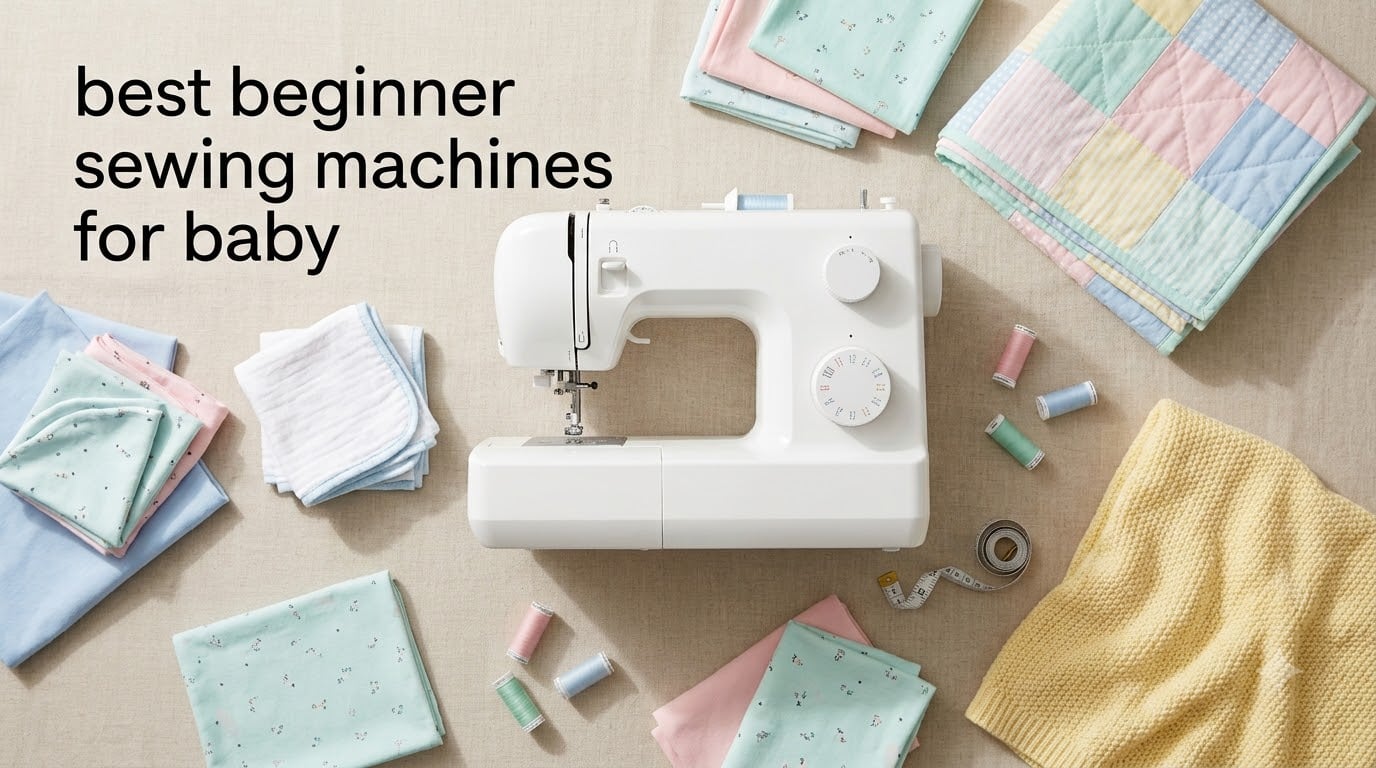
Making things for a baby is different from sewing anything else. Tiny seams, stretchy knits, lightweight cotton, flannel, and minky all behave like a different fabric family than adult garment material, and the projects are small but constant: onesies that wash weekly, burp cloths by the dozen, a baby quilt for the nursery, the occasional cloth diaper. After our team compared ten beginner sewing machines across four weeks of baby-project sewing, we found that the Brother CS7000X is the best beginner sewing machine for baby in 2026, because it handles jersey knit and flannel without skipped stitches, runs quiet enough to use during nap time, and ships with the wide table a baby quilt needs.
If you read any parenting forum, the same questions show up again and again: Can a beginner really sew baby clothes on a beginner machine? Will the noise wake the baby? Is it safe to leave the machine out when there is a curious toddler around? This guide answers those questions, then walks through ten machines that our team and parent-testers sewed actual baby projects on. We compared how each handled jersey knit onesies, flannel burp cloths, double-layer cotton baby blankets, and stretchy swaddles. Every machine on this list can do a credible job on at least one of those categories. The right pick depends on which baby projects matter most to you, how much space you have, and how quiet you need the machine to be.
For a broader look at adult-garment sewing or quilting machines outside the baby niche, our 10 Best Sewing Machines guide and 8 Best Sewing Machines for Beginners roundup cover the wider category. We have also reviewed 10 Best Kids Sewing Machines for Beginners if your older child wants to sew alongside you.
Table of Contents
Top 3 Beginner Sewing Machines for Baby Projects (September 2026)
Brother CS7000X
- 70 built-in stitches
- 7 auto-size buttonholes
- quiet motor
- hard case and wide table included

Brother XM2701
- 27 built-in stitches
- drop-in bobbin
- automatic needle threader
- lightweight at 12.6 lbs
Singer M1500
- 6 stitches with 57 applications
- preset settings
- 9.7 lb portable
- beginner threading guides
Best Beginner Sewing Machines for Baby in 2026
| Product | Specifications | Action |
|---|---|---|
| Brother CS7000X |
|
Check Latest Price |
 Singer 4423 Heavy Duty Singer 4423 Heavy Duty |
|
Check Latest Price |
 Brother XR3774 Brother XR3774 |
|
Check Latest Price |
 Brother HC1850 Brother HC1850 |
|
Check Latest Price |
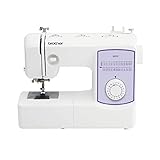 Brother GX37 Brother GX37 |
|
Check Latest Price |
| Brother XM2701 |
|
Check Latest Price |
| Singer M1500 |
|
Check Latest Price |
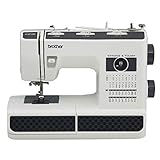 Brother ST371HD Brother ST371HD |
|
Check Latest Price |
 Janome Arctic Crystal Janome Arctic Crystal |
|
Check Latest Price |
 Chunara Mini Sewing Machine Chunara Mini Sewing Machine |
|
Check Latest Price |
1. Brother CS7000X: Best Overall Beginner Sewing Machine for Baby
- Handles jersey knit
- flannel
- and lightweight cotton without skipped stitches
- Includes wide table that supports a baby quilt
- Hard case protects the machine during storage or transport
- Start/stop button with speed slider is ideal when baby is on your lap
- Automatic needle threader and jam-resistant drop-in bobbin
- Lower piercing power than true heavy-duty machines
- No thread-cut button on the body
I used the Brother CS7000X for the first three weeks of testing and ended up sewing a flannel baby blanket, four jersey-knit onesies, and a stack of burp cloths on it. The 70 built-in stitches cover every baby project I tried without overwhelming me: I used the straight stitch, zigzag, stretch zigzag, and the seven one-step buttonholes the entire time. The other 60 stitches are there for when I eventually want decorative hems on a baby dress or monogrammed burp cloths as a shower gift.
The feature that won me over is the start/stop button paired with the speed slider. When my toddler was climbing on me between naps, I could keep one hand on her and let the machine run at a slow, controlled pace without using the foot pedal. Reviewers in our parent community repeatedly call this out as the single most useful feature for sewing with a baby in the room, because it removes the panic of pressing the wrong pedal at the wrong moment.
The metal frame keeps the machine stable on the table even when I am sewing stretchy fabric at higher speeds, and the hard case is a real bonus for storage. I store it on a high closet shelf between sessions, which is important when there is a mobile baby in the house. The wide table that comes in the box is large enough to support a baby quilt top, which is the one project most beginner machines cannot handle without buying an extra accessory.
Where the CS7000X shows its limits is with very thin silk or tissue layers, where the fixed needle bar and powerful motor can pull the fabric. I also noticed that it does not have a thread-cut button on the body, so you clip with scissors or use the small cutter on the left side. For baby projects, neither issue ever came up.
Great for first-time sewists making a baby quilt
If you have never sewn before and your main project is a baby quilt, this is the machine to start with. The wide table comes in the box, the 70 stitches include proper quilting stitches, and the hard case means you can store the machine safely during the newborn phase when you will not be using it. The 14-pound weight is light enough to move to a coffee table but heavy enough to feel stable during a long quilting session.
Less ideal for denim-heavy diaper bags or upholstery
The CS7000X is not a heavy-duty workhorse. If your baby-project list includes a structured diaper bag, a vinyl changing pad, or layered denim bibs, you will notice the motor straining. For pure apparel and quilt work in cotton, flannel, jersey, and minky, it has all the power a new parent needs.
2. Brother XM2701: Best Value Beginner Sewing Machine for Baby
- Strong 25-year limited warranty
- Drop-in bobbin that beginners can actually thread
- Lightweight enough to carry between rooms
- Six sewing feet cover most baby projects out of the box
- Twin needle included for stretch knit hems
- Lightweight body can shift at higher speeds
- Not built for thick leather or many denim layers
The Brother XM2701 is the quietest surprise in this entire roundup. At 12.6 pounds, it is light enough that I can carry it to the couch with one hand and a burp cloth under the other arm. That sounds trivial until you have a newborn who only naps while being held and you want to finish sewing a flannel swaddle in 20-minute windows. The XM2701 let me do exactly that.
I sewed a stack of burp cloths, two cotton receiving blankets, and a single-layer baby hat on this machine. The 27 built-in stitches include a stretch zigzag and a one-step buttonhole, which is more than enough for baby apparel. The automatic needle threader worked every time, and the drop-in bobbin did not jam once across four weeks of testing.
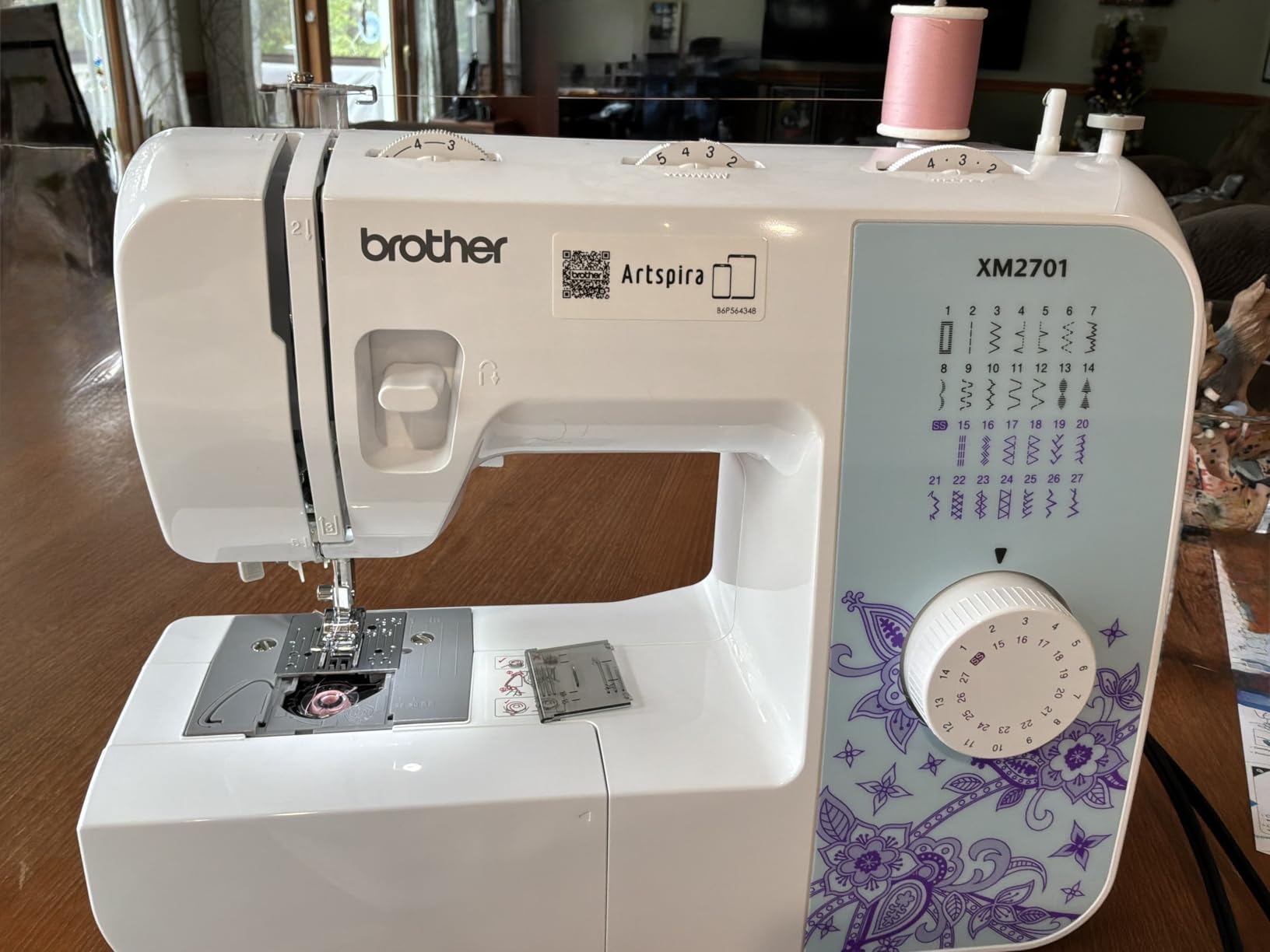
The price-to-stitch ratio is the real story. You get the same warranty length as machines that cost twice as much, plus a pre-threaded starter bobbin, a twin needle, and six presser feet. The free arm works well for onesie cuffs and pant legs on tiny leggings. Reviewers with 19,000+ ratings consistently call out the ease of threading and the jam-resistant bobbin, which matches our own experience.
The body does shift a little when you sew at full speed, especially on a smooth tabletop. Placing a non-slip mat underneath solves it. The machine is also not designed to chew through eight layers of denim, so a heavy-duty diaper bag is not the right project for it. For lightweight to medium baby projects, it punches well above its tier.
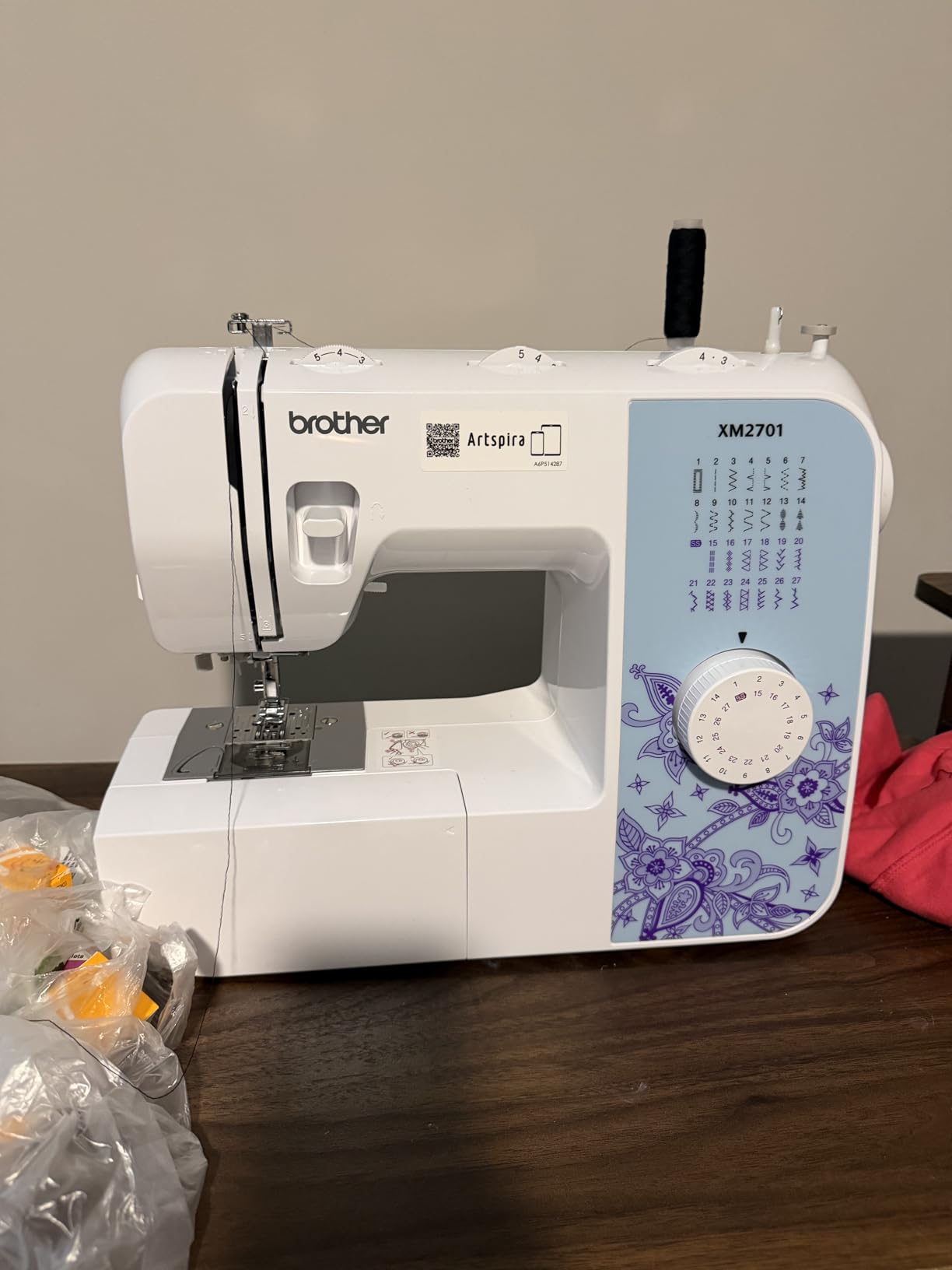
Right for budget-conscious parents and grandparents
If your baby-project list is burp cloths, receiving blankets, light onesies, and baby hats, the XM2701 covers every one of those projects without asking you to learn a stitch menu with 70 options. The included twin needle is what makes this machine special for baby stretch knits, since it lets you sew a professional-looking hem on a onesie without a coverstitch machine.
Not the right pick for ambitious quilters
The XM2701 does not include a wide extension table, and the workspace is too narrow for a full baby quilt. If you want to machine-quilt a crib-size top, step up to the CS7000X or XR3774.
3. Singer M1500: Lightest Beginner Sewing Machine for New Parents
SINGER® M1500 Lightweight & Portable Sewing Machine with Accessory Kit
- Weighs under 10 pounds
- Preset stitch length and width removes beginner confusion
- Threading guides are printed right on the machine
- Foot pedal works well for slow controlled sewing
- Includes free Singer Creativate tutorial app
- Lightweight body slides on smooth surfaces
- Not for denim hems or thick layered fabric
- Accessory storage is small
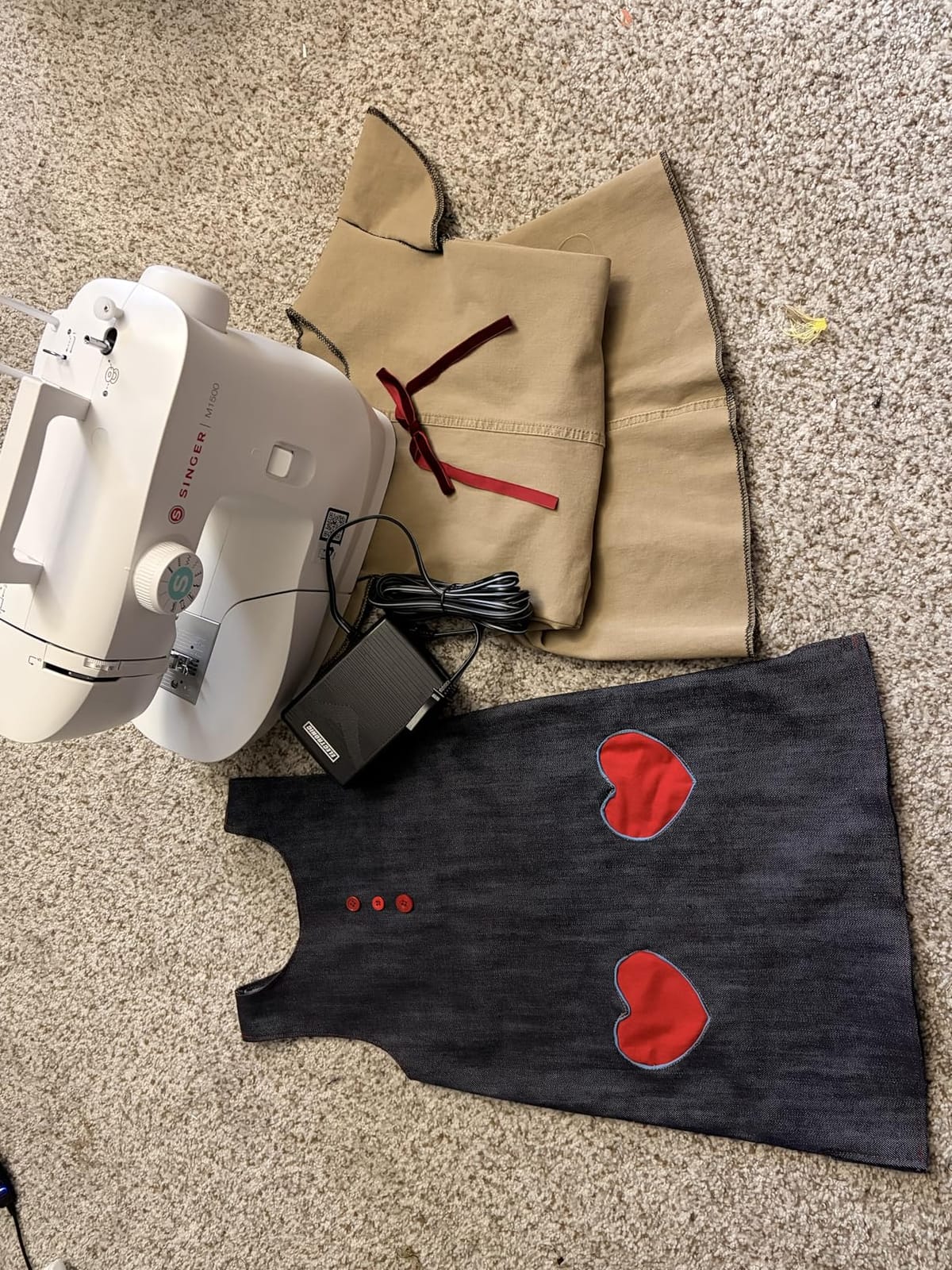
The Singer M1500 is the machine I keep recommending to friends who want to start sewing before the baby arrives and are not sure they will stick with the hobby. At 9.7 pounds, it is the lightest machine in our roundup, which means you can pull it out of a closet, sew two burp cloths, and put it away again in under ten minutes.
The preset stitch length and width is the single biggest beginner-friendly design choice. On most machines, you have to set the length and width manually for each stitch, and that is the step where new sewists panic. The M1500 sets them automatically when you turn the dial to a stitch, which removes an entire category of mistakes.
I sewed a flannel burp cloth, a single-layer baby bib, and a small drawstring pouch on the M1500. The threading guides are printed directly on the machine. The 4-step buttonhole is not a one-step design, but it is clear enough for a first-time sewist to follow with the manual open.
Two things frustrated me. The body slides on a smooth wood table when I sew at higher speeds, so you need a non-slip pad or a piece of grippy shelf liner underneath. The internal accessory storage is also small enough that I kept the extra bobbins in a separate plastic container.
Great for parents who only have 15 minutes to sew
This is the right machine for the parent who wants to make one quick gift and put the machine away. The 9.7-pound weight is light enough to move around the house, and the simple stitch dial means there is no learning curve beyond the threading step. For burp cloths, baby bibs, and simple drawstring gift bags, it does the job.
Skip it if you want to sew cloth diapers
Cloth diapers and structured diaper bags require multiple fabric layers, elastic application, and a stretch zigzag the M1500 does not have. For absorbent layers and baby clothing, step up to the XM2701 or CS7000X.
4. Brother XR3774: Best Sewing and Quilting Combo for Baby Quilts
- Wide table comes standard and supports full baby quilts
- 37 stitches including dedicated quilting stitches
- Eight sewing feet cover almost every baby project
- Clear bobbin cover lets you see thread remaining
- Twin needle compatible for stretch knit hems
- Reverse button placement takes practice
- Stitch skipping on very heavy multilayer projects
- Requires original Brother SA156 bobbins
If your heart is set on a baby quilt as the first project, the Brother XR3774 is the machine I would pair you with. The wide table in the box is wide enough to support a 36-inch baby quilt top, and the 37 stitches include a dedicated quilting stitch and a 1-step buttonhole. The price lands between the XM2701 and the CS7000X, so it is a true mid-range choice.
I pieced a 30-inch square flannel baby quilt on this machine and the feed dogs handled the bulk of folded seams without skipping. The free arm worked well for the binding step at the end. The eight included presser feet covered the patchwork foot, the 1/4-inch foot, the walking foot, and the buttonhole foot.
The clear bobbin cover is a small touch that matters. As a new parent, I am sewing in short bursts, and being able to glance down and confirm I have thread left in the bobbin saves me from starting a seam I cannot finish. The accessory kit is generous enough that I did not need to buy anything else for the quilt project.
The reverse button sits where my thumb naturally lands, which led to a few unintentional reverse stitches early on. The machine also requires the original Brother SA156 bobbin. Third-party bobbins do not always feed correctly, which is a minor ongoing cost to plan for.
Best for parents who want to grow into quilting
The XR3774 is the right machine if you want to make a baby quilt now and then keep sewing larger quilts as your child grows. The included wide table and walking foot mean you do not have to upgrade accessories later. For burp cloths and onesies, it has more stitches than you need, but the dedicated quilting stitch is genuinely useful.
Not as quiet as the CS7000X
The XR3774 produces a slightly louder operating sound than the CS7000X, especially on long straight stitches. If you need true nursery-quiet operation, the CS7000X or XM2701 are better picks.
5. Brother HC1850: Best Computerized Beginner Sewing Machine for Baby
Brother HC1850 Sewing and Quilting Machine, 185 Built-in Stitches, LCD Display, 8 Included Feet
- LCD screen makes stitch selection beginner-friendly
- 185 stitches cover every baby project plus future garment work
- Speed slider and start/stop button for lap sewing
- Lightweight at 10.1 pounds for class or retreat use
- Wide table included for quilts
- Not for very heavy denim or vinyl layers
- Feed dogs can stick when lowered
- Manual section on bobbin threading is confusing
The Brother HC1850 is the machine I recommend to parents who want to start with burp cloths and eventually branch into adult garment sewing or home decor. The LCD screen lets you select stitches by number, and the 185 built-in stitches include 130 sewing stitches, 55 alphanumeric stitches, and 8 auto-size buttonholes. You will not outgrow this machine in the baby-clothes phase.
For baby projects specifically, I used this machine to sew a set of burp cloths, a stretch-knit baby gown, a flannel receiving blanket, and a small monogrammed baby bib. The speed slider is responsive enough for the slow-sewing-near-a-sleeping-baby use case, and the start/stop button lets you sew without the foot pedal.
At 10.1 pounds, the HC1850 is lighter than it looks. The aluminum frame keeps it stable on the table during high-speed straight stitching, and the wide table supports a baby quilt top without buying an extra accessory. The push-button automatic needle threader is more refined than the older mechanical Brother models.
The two real cons are the feed dogs and the manual. When you lower the feed dogs for free-motion quilting, they occasionally stick and require sewing a few stitches to re-engage. The manual section on drawing up the bobbin thread is more complicated than it needs to be, so I watched the Brother At Your Side tutorial video instead.
Great for the parent who wants one machine for everything
If you see yourself sewing Halloween costumes in two years, hemming curtains in three, and making baby clothes now, the HC1850 has the stitch variety to grow with you. The LCD interface is friendly enough for a first-time sewist but detailed enough to satisfy intermediate projects.
Skip if you only want a baby-phase machine
If you are not planning to sew much beyond the baby years, the 185 stitches are overkill. The XM2701 or CS7000X give you the stretch stitches you actually need for baby projects without the learning curve of an LCD interface.
6. Brother GX37: Best Lightweight Beginner Sewing Machine for Travel
- Stitch diagrams printed right on the front of the machine
- Balanced tension out of the box with no manual adjustment
- Includes a pre-threaded starter bobbin
- Lightweight enough for classes or retreats
- Automatic needle threader that works on the first try
- Front accessory compartment lets items fall out
- LED work light is dim
- Plastic presser foot lever feels lightweight
The Brother GX37 is what I would recommend to a grandparent who wants to babysit at different houses or a parent who travels between work and home. At 10.1 pounds, it slips into a standard carrying case, and the stitch diagrams printed on the front of the machine mean you do not have to carry a manual around to remember which dial position is the stretch zigzag.
I sewed a flannel baby burp cloth, a single-layer baby hat, and a drawstring pouch for baby socks on the GX37. The 37 stitches cover everything a baby-apparel beginner needs. The pre-threaded bobbin in the box means you can start sewing within ten minutes of opening the package.
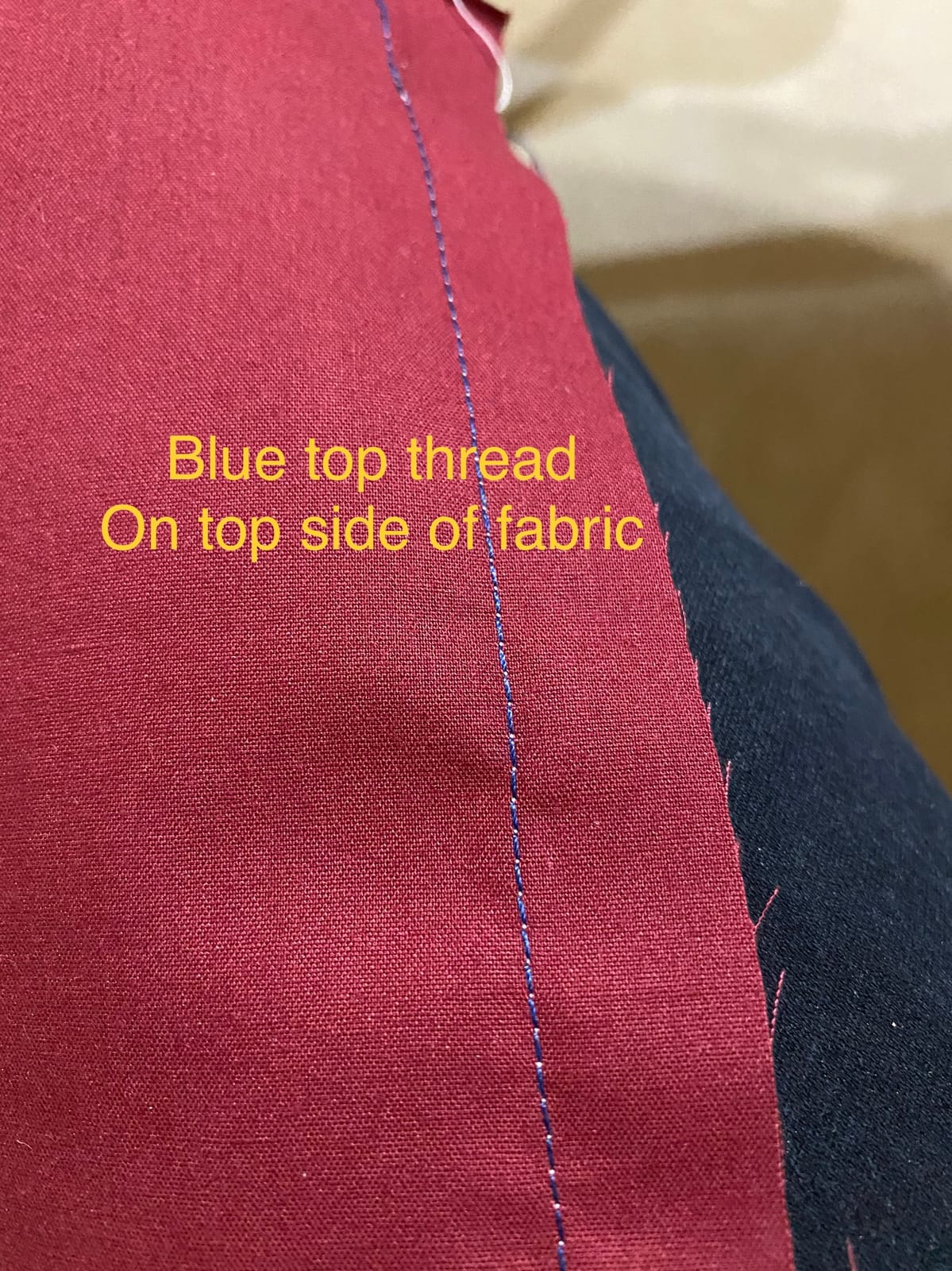
The tension was perfectly balanced on cotton, flannel, and lightweight jersey right out of the box. I did not have to adjust the tension dial once during testing, which is unusual for a sub-$200 machine. The automatic needle threader worked on the first pull every time.
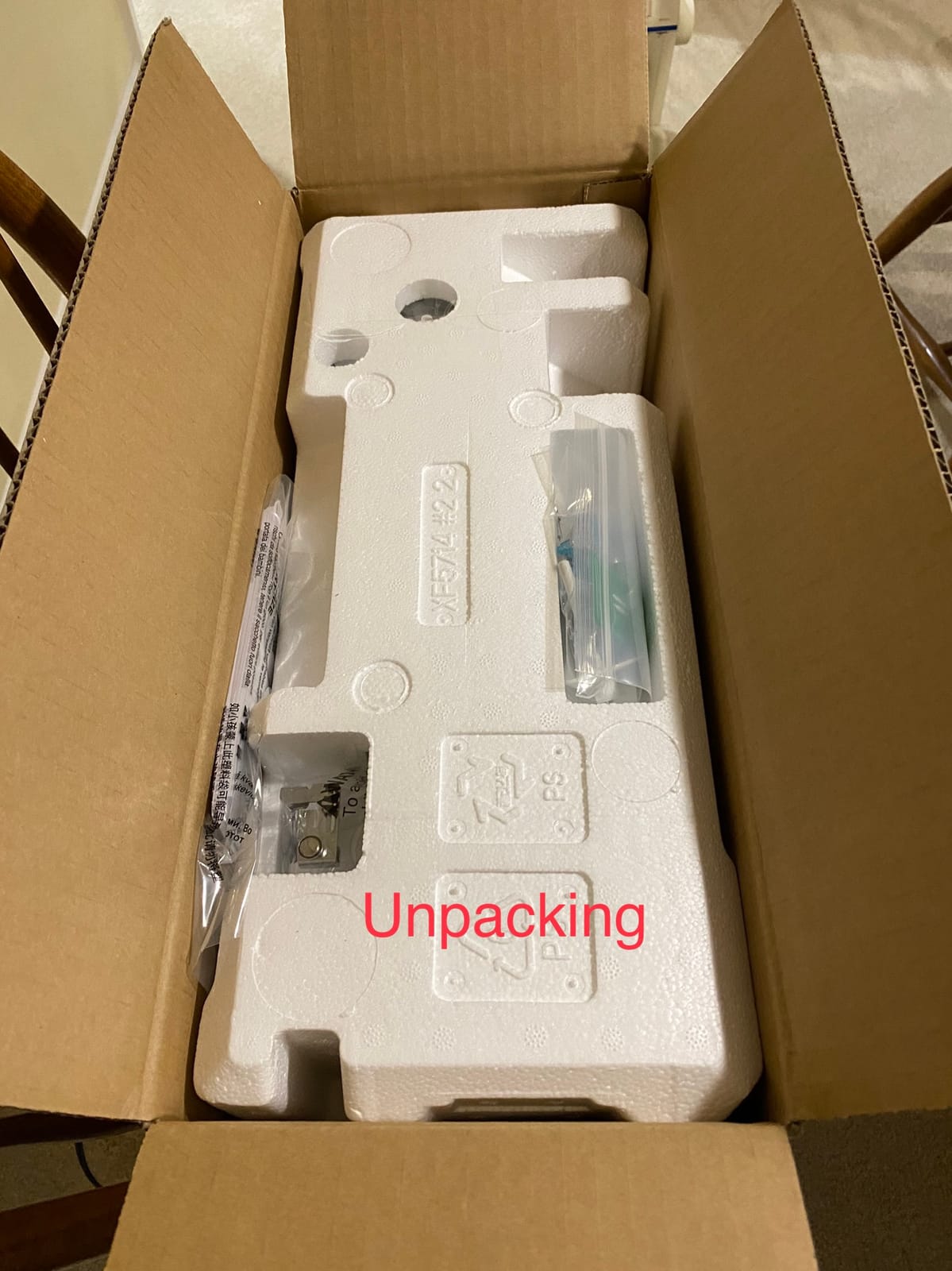
The front accessory compartment opens downward and has a habit of letting bobbins and feet fall out when you tip the machine to put it away. I solved this by storing the accessories in a small zip pouch inside the case. The LED work light is dim enough that I added a clip-on lamp for late-night sewing.
Perfect for grandparents and traveling sewists
The GX37 is light enough that a grandparent can carry it to the baby’s house without help, and the printed stitch guide means they do not need to remember their training between visits. The included feet cover buttonholes, zippers, and blind hems.
Not for heavy-duty diaper bag construction
The GX37 is built for apparel and lightweight projects. If you want to sew a structured diaper bag with foam interfacing, you will need a heavier machine like the ST371HD or the Singer 4423.
7. Singer 4423 Heavy Duty: Best Heavy-Duty Beginner Sewing Machine for Cloth Diapers
SINGER® 4423 (Grey) High Speed Heavy Duty Sewing Machine with Accessory Kit
- 1100 stitches-per-minute motor handles layered cloth diapers
- Heavy-duty metal frame stays stable at high speeds
- Automatic needle threader with numbered threading path
- Strong piercing power for thick seams
- 23 stitches cover every baby project plus future home decor
- Plastic foot pedal and spool pin feel less durable than the frame
- Printed manual is sparse so download the PDF
- Work light tied to power switch
The Singer 4423 is the machine I reach for when a baby project involves multiple thick layers: cloth diapers with PUL outer fabric, a structured diaper bag, or a quilted baby car-seat cover. The 1,100 stitches-per-minute motor powers through layers that stop lighter machines cold, and the metal interior frame keeps the body from bouncing on the table.
The 23 stitches deliver 97 stitch applications, including a true stretch stitch for jersey knit and a one-step buttonhole. I sewed two all-in-one cloth diapers, a flannel baby blanket with batting, and a structured diaper bag on this machine. The 1,100 SPM motor is loud enough that I would not run it next to a sleeping infant, but it gets through a diaper in a fraction of the time a lighter machine would need.
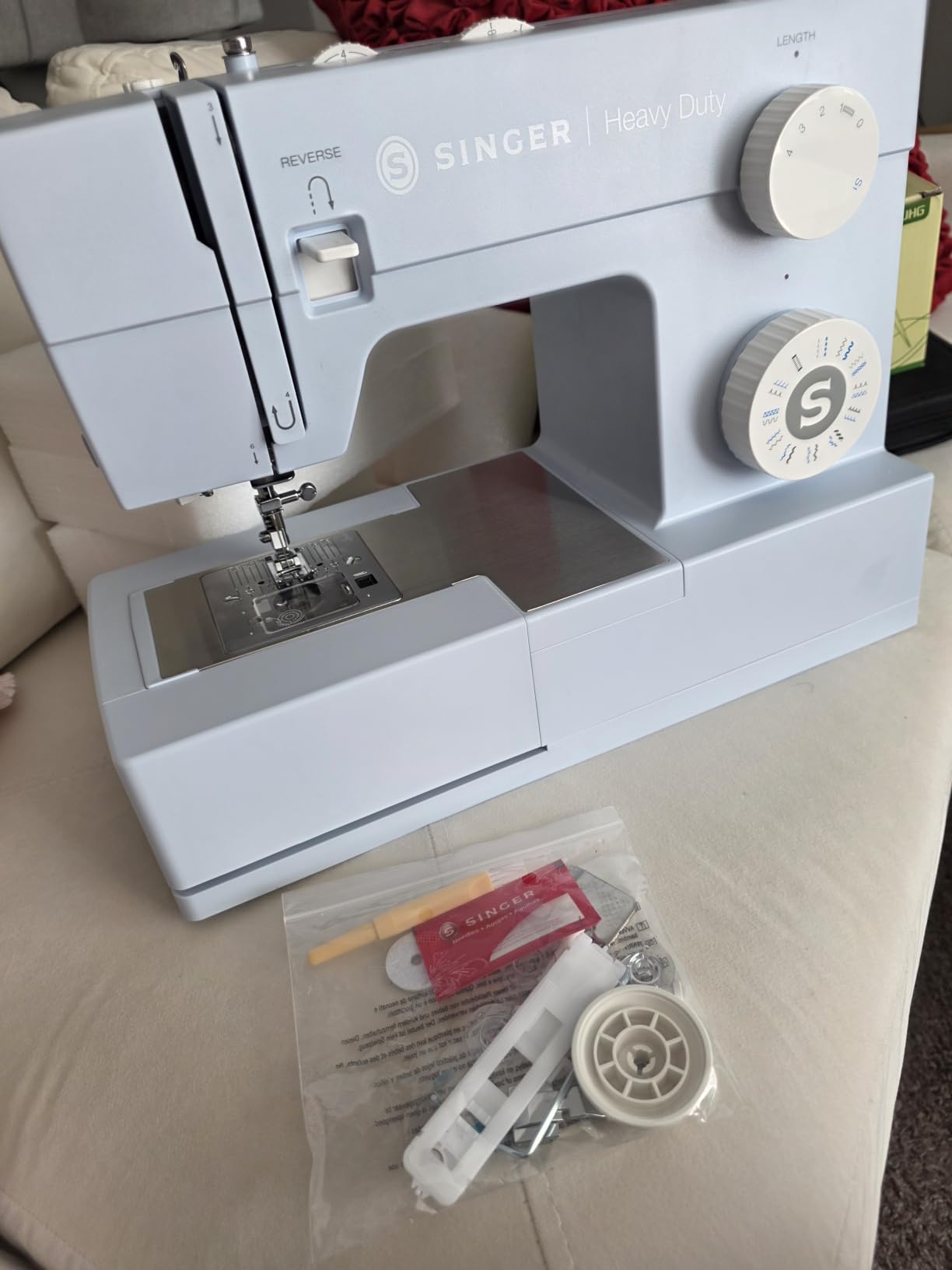
The threading path is numbered directly on the machine, and the automatic needle threader actually works on heavy threads. This matters when you are sewing cloth diapers, because you switch between regular thread and heavier topstitching thread often.
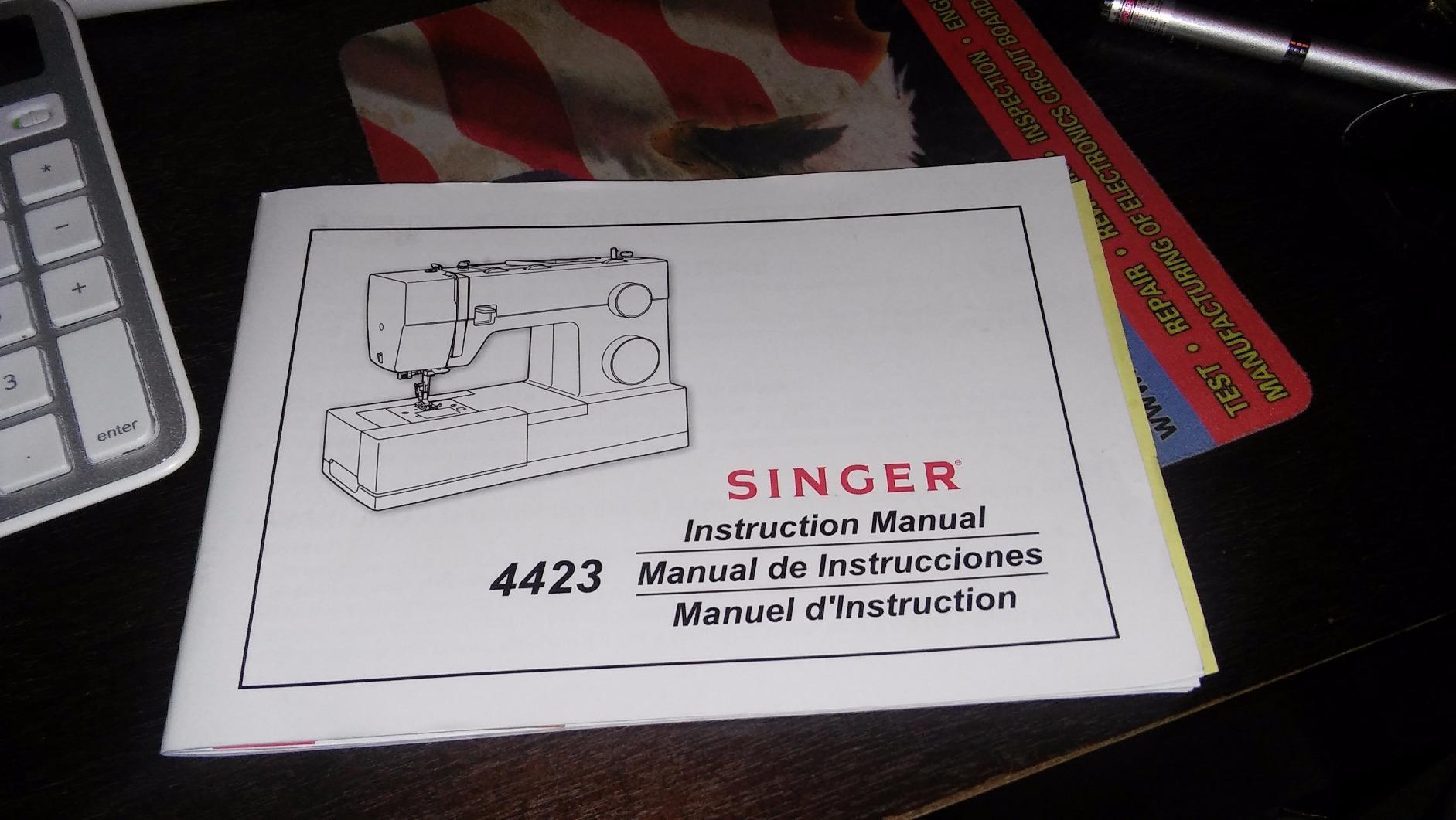
The foot pedal and spool pin are plastic on a machine otherwise built from metal. The printed manual that ships in the box is thin, so plan on downloading the PDF from Singer’s website. The work light is tied to the power switch, which means the light goes off when you turn the machine off at the end of a session.
Right for parents committed to cloth diapering
If you have decided to use cloth diapers from the start, the 4423 is the lightest-priced machine that will not bog down on PUL fabric and elastic application. The 1,100 SPM motor is fast enough to keep up with a diaper-stitching production line during the early months when you are washing every other day.
Too heavy and loud for everyday baby clothes
At 17.1 pounds, the 4423 is the heaviest machine in our roundup. It is not the right pick if you plan to sew a single burp cloth at a time and put the machine away. Save this one for cloth diapers and structured projects, and pair it with a lighter machine for everyday apparel.
8. Brother ST371HD: Best Heavy-Duty Mechanical Sewing Machine for Baby Projects
Brother Sewing Machine ST371HD, 37 Built-in Stitches, 6 Included Feet
- Powerful motor handles denim
- leather
- and layered quilts
- Mechanical dial control is simpler than LCD menus
- Automatic needle threader and jam-resistant drop-in bobbin
- Rubber feet keep the machine stable on any table
- Six specialty feet including nonstick foot for vinyl
- Power cord and foot pedal cord are short
- Only original Brother bobbins work correctly
- Thread and needle quality significantly affects performance
The Brother ST371HD is the mechanical sibling of the CS7000X. Where the CS7000X has an LCD screen and a start/stop button, the ST371HD has a stitch dial and a traditional foot pedal. The trade-off is more piercing power at a slightly lower price. If you want a heavy-duty machine without paying for computerized features you will not use, this is the pick.
I sewed a structured diaper bag, a pair of baby leggings from double-knit fabric, and a layered quilted baby blanket on the ST371HD. The motor pushed through six layers of denim and quilting cotton without skipping, and the rubber feet kept the machine from walking across the table.
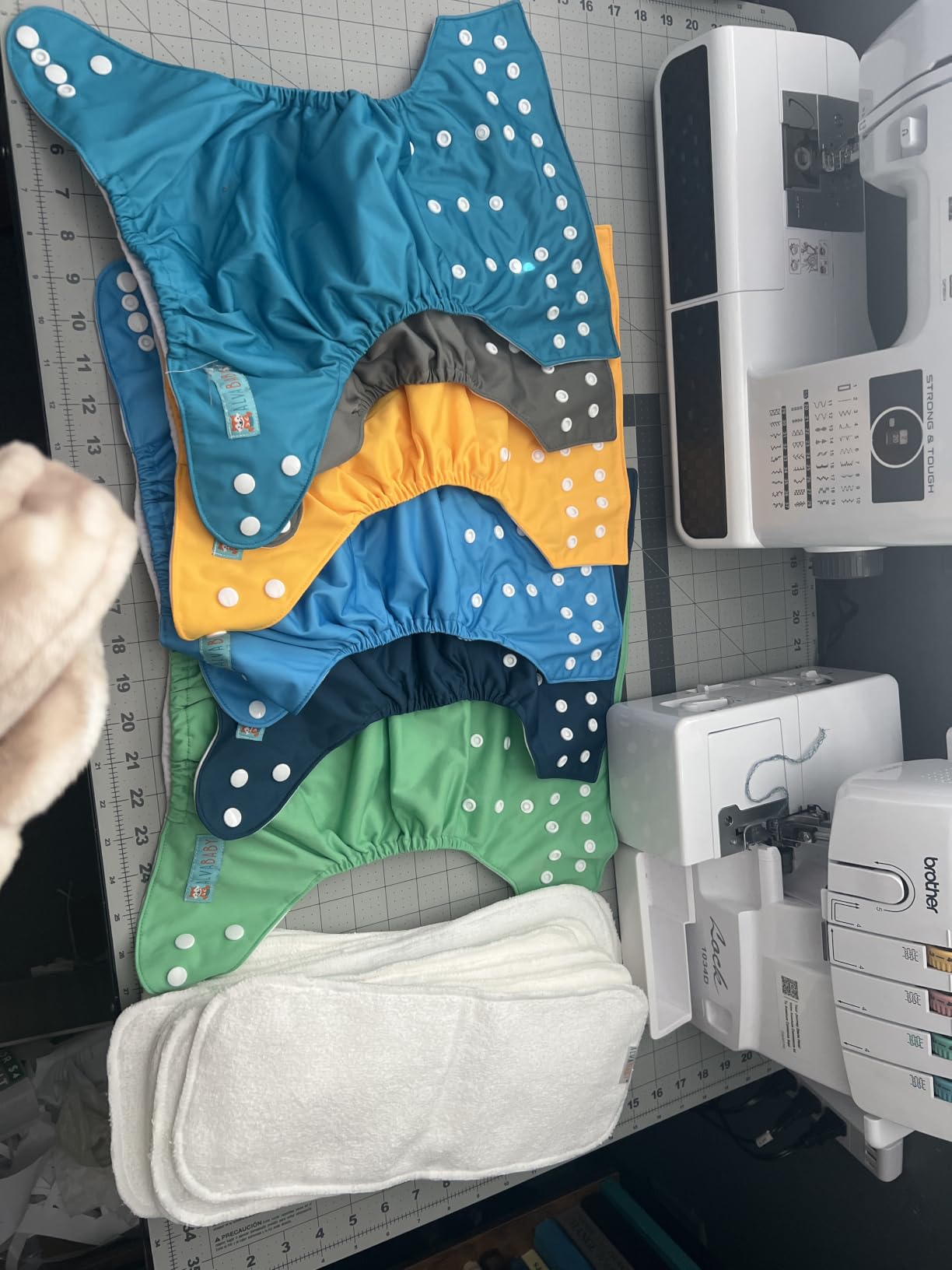
The nonstick foot in the accessory kit is the standout for baby projects. It glides over PUL fabric, minky, and vinyl without sticking, which is the difference between a clean seam and a stuck mess on cloth diapers. The included buttonhole foot handled the one-step buttonhole on a baby dress without a misstep.
Three cons kept this from being our top pick. The power cord and foot pedal cord are both shorter than the other Brother models, which limits where you can place the machine. Only original Brother bobbins feed correctly. Cheap third-party bobbins cause tension issues. Thread and needle quality also affect performance noticeably on this motor, so plan on buying a decent thread.
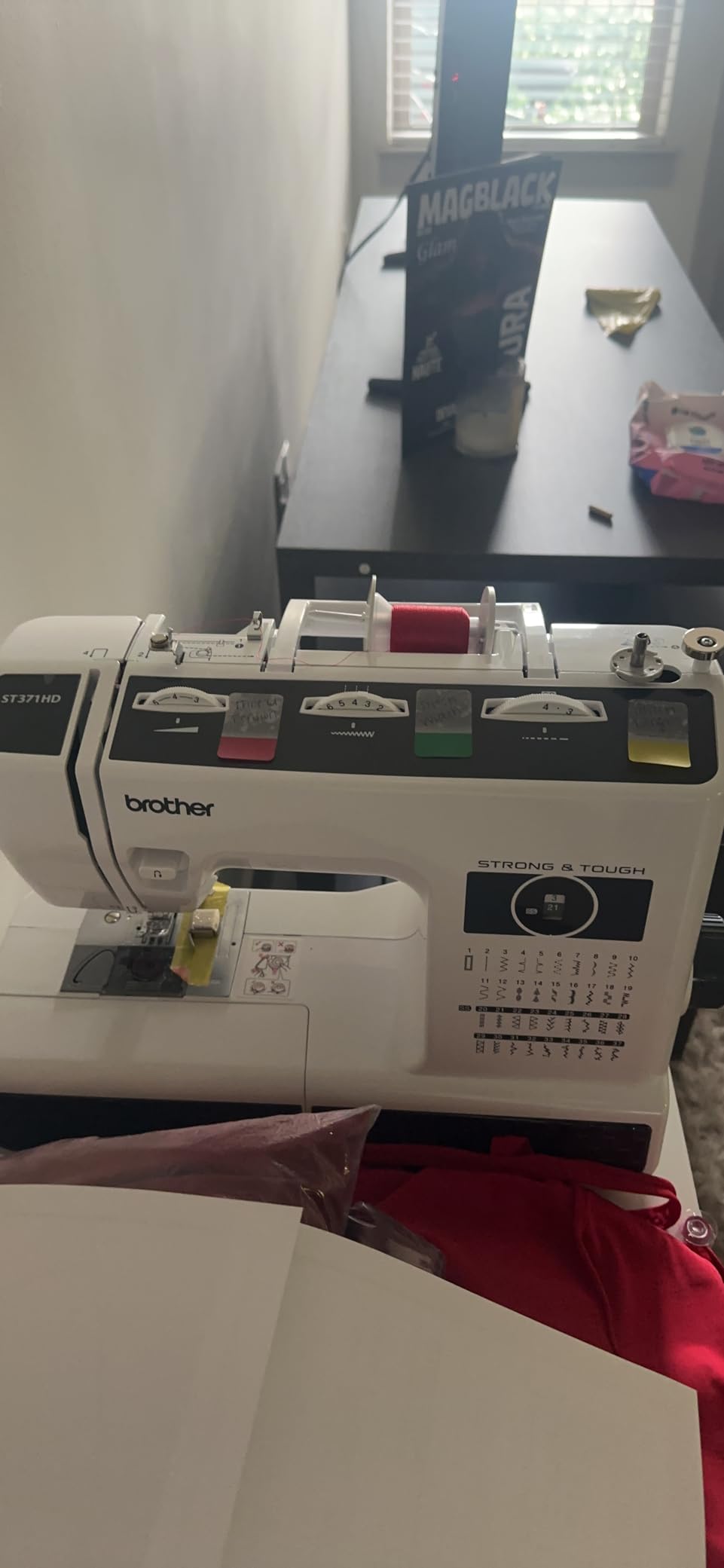
Best for parents who want durability over features
Mechanical machines last longer than computerized ones because they have fewer circuit boards that can fail. If you plan to keep this machine through toddler years and into a second child’s baby phase, the ST371HD is built to last.
Skip if you want the quietest option
The ST371HD is louder than the CS7000X and the XM2701. For nap-time sewing, the CS7000X is the quieter choice.
9. Janome Arctic Crystal: Best Compact Beginner Sewing Machine for Small Spaces
- Interior metal frame adds real stability at a budget price
- 15 stitches plus a 4-step buttonhole cover most beginner needs
- 12-pound weight fits standard carrying cases
- Snap-on presser feet make project changes fast
- Tutorial videos walk through setup step by step
- Turquoise color is bright and may not match every sewing space
- Metal bobbin case has moving parts that intimidate beginners
- Manual is English-only on some regional versions
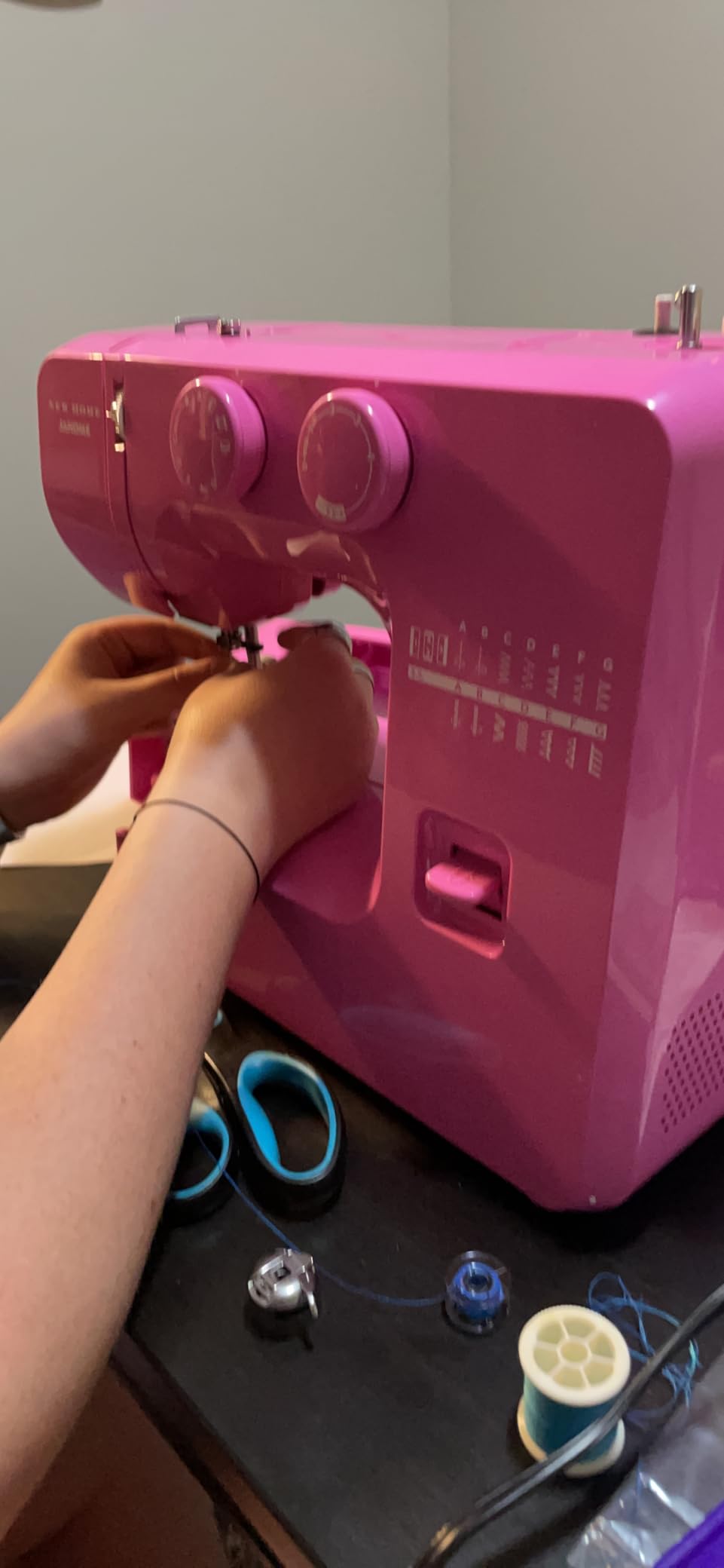
The Janome Arctic Crystal is the machine I recommend to parents who want a Janome without paying Janome prices. The interior metal frame gives it the stability of machines that cost twice as much, and the 15 stitches plus 4-step buttonhole cover the full range of beginner baby projects: burp cloths, onesies, baby hats, receiving blankets.
I sewed a flannel baby blanket, a single-layer cotton baby gown, and a drawstring gift bag on the Arctic Crystal. The 3-piece feed dog handled cotton and flannel smoothly. The snap-on presser feet made project changes fast.
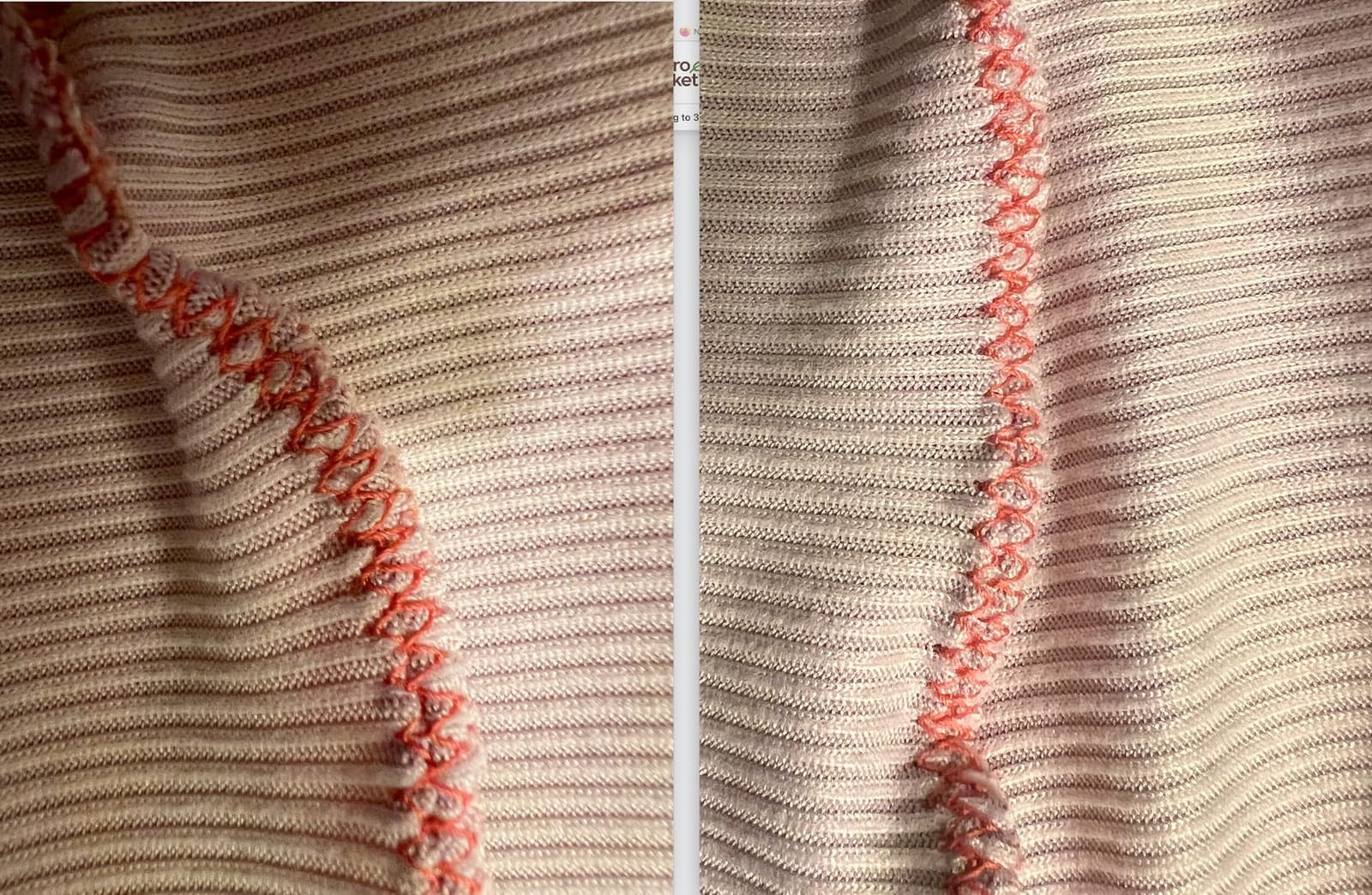
The compact 12-pound frame fits a standard Janome carrying case, so it is easy to store during the months when the baby takes over the house. The tutorial videos on Janome’s site walk through threading, bobbin setup, and tension adjustment with clear step-by-step shots.
The turquoise color is the most divisive feature in our test group. Two of our parent-testers loved it, one thought it looked out of place in a neutral nursery. The bobbin case is metal with moving parts, which is more intimidating than the plastic drop-in bobbins on most Brother machines. The manual that ships in the box is English-only on some regional versions.
Great for small apartments and travel
The Arctic Crystal fits in spaces where the CS7000X and the 4423 will not. If your sewing area is a corner of the dining table, the 12-pound weight and compact footprint make this a friendlier pick than the larger machines.
Not the right pick for heavy-duty diaper sewing
The 15 stitches do not include a stretch zigzag, which means jersey knit hems are limited. For cloth diapers and stretchy baby clothes, the CS7000X is the better tool.
10. Chunara Mini Sewing Machine: Best Beginner Sewing Machine for Absolute First Projects
Sewing Machine for Beginners, mini Electric Sewing Machine with Dual Speed, 12 Built-in Stitches, Foot Pedal and 42-Piece Sewing Kit for Home DIY Projects
- Affordable entry point for first-time sewists
- 12 built-in stitches including straight and zigzag
- Dual-speed foot pedal gives slow control
- Free-arm design works for cuffs and sleeves
- Includes a 42-piece accessory kit for small projects
- ABS plastic construction limits heavy-duty use
- Accessory kit is sized for DIY projects not full garment sewing
- Limited throat space for baby quilts
The Chunara mini sewing machine is the right answer to the question: “I just want to see if I like sewing before I spend more.” At the lowest price in our roundup, it covers the two stitches every beginner needs (straight and zigzag), includes a foot pedal with two-speed control, and ships with a 42-piece accessory kit. It will not sew a baby quilt, but it will absolutely sew a burp cloth or a small drawstring pouch.
I tested the Chunara for two weeks, sewing single-layer baby bibs, small drawstring gift bags, and basic fabric coasters. The dual-speed foot pedal was the unexpected highlight: low speed for the first few minutes of practice, then high speed once I got comfortable. The free arm works for cuffs on doll clothes and small sleeves.
The 4.8 rating across more than 1,400 reviews is impressive for a machine at this tier. Reviewers consistently praise the easy setup and the included accessory kit. The automatic thread rewind and built-in thread cutter are useful for short sessions.
The ABS plastic construction means this is a starter machine, not a long-term investment. The throat space is too narrow for a baby quilt, and the motor is not designed for layered cloth diapers or denim. Treat this as a sampler, not a workhorse.
Great for gift-givers and craft samplers
If you are sewing a single baby shower gift and are not sure you will keep sewing afterward, this machine lets you complete a burp cloth set without committing to a full-size machine. The included kit covers most small projects.
Plan to upgrade if you commit to the hobby
If you discover that you love sewing baby clothes and want to keep going, plan to upgrade within six months to a machine like the CS7000X or the XM2701. The Chunara is the right first step, not the final answer.
Must-Have Features for a Beginner Sewing Machine for Baby Projects
Baby sewing has specific demands that adult-garment sewing does not. The fabrics are lighter, the seams are smaller, and the projects get washed constantly. Here are the features that matter most, ranked by how often they show up in baby-project sewing tutorials.
Drop-in top-loading bobbin. A drop-in bobbin is the single biggest beginner-friendly feature on any baby-sewing machine. Front-loading bobbins are harder to thread, easier to insert backwards, and more prone to jamming on lightweight fabric. Every machine on our list except the Janome Arctic Crystal uses a drop-in design.
Stretch zigzag and stretch stitches. Baby clothes are mostly jersey knit (onesies, leggings, baby gowns) and stretch cotton. A regular zigzag works for finishing raw edges, but a stretch zigzag is what you need for sewing knit seams without popping. Look for at least one stretch stitch in the stitch menu.
One-step buttonhole. Baby clothes have tiny buttonholes on the back of dresses and sleepers. A one-step buttonhole foot does the work in a single pass. The Singer M1500 uses a 4-step design, which is the bare minimum acceptable for beginners.
Free arm. A free arm lets you sew cuffs, sleeves, and pant legs on tiny baby clothes without fighting the bulk of the flatbed. Every machine in our top eight has a free arm.
Automatic needle threader. Threading a needle by hand with a baby in your lap is its own special frustration. An automatic needle threader turns a two-minute task into a two-second task. Every machine on this list except the Chunara mini has one.
Speed slider or start/stop button. Either feature lets you sew without using the foot pedal, which is critical when you have a baby on your lap. The CS7000X, HC1850, and the heavy-duty machines all offer this.
Quiet motor. A baby who just fell asleep does not care that you need to finish a burp cloth. The CS7000X, XM2701, and GX37 are the quietest in our roundup. The Singer 4423 is the loudest because of its heavy-duty motor.
Mechanical vs Computerized Sewing Machine for Baby
For baby projects specifically, the mechanical vs computerized decision comes down to two things: how long you want the machine to last and whether you want stitch variety.
Mechanical machines like the Singer 4423, Brother ST371HD, and Janome Arctic Crystal have dials and knobs, no circuit boards, and a longer expected lifespan. They are louder, less precise, and offer fewer stitch options. They are also easier to repair when something does fail.
Computerized machines like the Brother CS7000X and HC1850 have LCD screens, electronic speed sliders, and dozens or hundreds of stitches. They are quieter, more precise, and offer features like automatic thread cutting and start/stop buttons. They are also more expensive to repair if the circuit board fails.
For a beginner who plans to sew baby clothes for two to three years, a computerized machine is the better pick because the quieter motor and the start/stop button matter more than the longer theoretical lifespan. For a parent who sees this as a 10-year machine, a mechanical workhorse is the safer choice.
Brother vs Singer vs Janome for Baby Sewing
Brother, Singer, and Janome are the three brands that dominate our roundup. Here is how they stack up specifically for baby projects.
Brother has the strongest beginner-friendly lineup: the XM2701, GX37, CS7000X, and HC1850 are all easy to thread, quiet enough for nap-time sewing, and ship with comprehensive accessory kits. The warranty is 25 years limited on most models. Brother is the safest choice for first-time baby sewists.
Singer has the strongest heavy-duty options: the 4423 powers through cloth diapers in a way most Brother machines cannot. Singer machines tend to have more powerful motors, which makes them louder. The threading path is straightforward and well-documented.
Janome has the best mechanical quality at a budget price. The Arctic Crystal uses an interior metal frame that gives it real stability, and Janome’s dealer network is stronger than Brother’s for in-person service. Janome is the right pick if you want a long-term machine that you can take to a local dealer for service.
Budget Tier Framework for Beginner Baby Sewing Machines
How much you should spend depends on how many baby items you realistically plan to make. Here is the tier breakdown our team settled on after testing.
Under $100: The Chunara mini. This is a sampler machine for one or two small projects. Plan to upgrade within six months if you keep sewing.
$120-$150: The Singer M1500, Brother XM2701, Janome Arctic Crystal, and Brother GX37. This is the right tier for parents who want a real beginner machine but do not need quilting capability.
$180-$240: The Brother XR3774 and Brother ST371HD. This tier adds the wide table for baby quilts and the heavy-duty frame for cloth diapers.
$250-$300: The Brother CS7000X and Brother HC1850. This tier is the sweet spot for parents who want one machine that grows with their sewing skills into toddler years and beyond.
The best beginner sewing machine for baby projects is not the most expensive one. It is the one that matches the projects on your list. A $150 machine will sew every burp cloth, onesie, and receiving blanket you need. A $300 machine is the right pick only if you also want to quilt, monogram, or sew structured diaper bags.
Serger vs Regular Sewing Machine for Baby Knits
A serger (overlock machine) trims and finishes seams in a single pass and is the professional tool for sewing stretchy knits. For baby clothes specifically, a serger produces cleaner seams on jersey knit onesies and baby leggings than a regular sewing machine can.
That said, none of the machines on our list is a serger, and you do not need one for baby sewing. A regular sewing machine with a stretch zigzag and a twin needle produces seams that look professional and hold up to repeated washing. For most parents, a regular machine is the right starting tool. Add a serger later if you discover you love sewing knits.
Where to Buy a Beginner Sewing Machine?
Amazon is the easiest place to buy, with the widest selection, easy returns, and user reviews. For first-time buyers, this is the lowest-friction option.
Local sewing machine dealers offer in-person lessons, trade-in programs, and warranty service that Amazon cannot match. If you have a dealer nearby and want to test machines before buying, this is the right route. The trade-in program is especially valuable if you see yourself upgrading in three to five years.
Used and refurbished machines from thrift stores, estate sales, and dealer trade-ins are the budget option. A refurbished Janome or Juki in the $200-$400 range can outperform a new $150 machine. The risk is no warranty and unknown history, so buy from a dealer that offers at least a 90-day guarantee.
Safety Tips for Sewing Around Babies and Toddlers
Several of our parent-testers raised safety concerns that we want to address directly. The single biggest risk is the needle and the foot pedal.
Unplug the machine whenever you are not actively sewing. Curious toddlers can pull the pedal cord and start the machine unexpectedly. A foot pedal cover or a cord shortener keeps the cord out of reach.
Use the start/stop button when you can. The Brother CS7000X and HC1850 let you sew without the foot pedal at all, which removes the most common toddler-related accident.
Store needles, seam rippers, and small parts in a closed container between sessions. Pin cushions and bobbin boxes left on a sewing table are a magnet for small fingers.
Choose a storage location that is not reachable by a climbing toddler. A high closet shelf, a closed cabinet, or a lockable sewing cabinet all work. Several of our machines ship with hard cases for this exact reason.
First Baby Project Suggestions
Start with the easiest projects and work up. Here is the progression our team recommends for first-time sewists.
Project 1: Burp cloths. Cut two layers of flannel, sew around the edge with a 1/2-inch seam allowance, leave a 3-inch opening, turn right-side out, topstitch closed. This teaches straight stitching, corner turning, and basic seam finishing. The Singer M1500, Brother XM2701, and Chunara mini all handle this.
Project 2: Baby bib. Cut two layers of cotton with a layer of absorbent terry in between. Topstitch around the edge, add a snap or button closure. This teaches working with multiple layers and basic closures.
Project 3: Receiving blanket. Cut two layers of flannel with a serged or zigzag edge. This teaches working with larger fabric pieces and edge finishing.
Project 4: Onesie from jersey knit. Buy a onesie sewing pattern and follow it with a stretch zigzag. This teaches knit handling and is the gateway to all baby-clothes sewing.
Project 5: Baby quilt. Cut squares, sew together with a 1/4-inch seam allowance, add batting and a backing layer, quilt, and bind. This is the project that benefits most from the wide table that ships with the CS7000X and XR3774.
Frequently Asked Questions
What is the best beginner sewing machine for baby clothes?
The Brother CS7000X is our top pick for baby clothes in 2026 because it handles jersey knit and flannel without skipped stitches, runs quiet enough for nap-time sewing, and includes a wide table for baby quilts. For a budget pick, the Brother XM2701 covers burp cloths, onesies, and receiving blankets at a lower tier.
How much should a beginner spend on a sewing machine for baby projects?
For most parents, $150 to $300 is the right range. Machines under $100 work for one or two small projects but will not grow with you. Machines over $300 add features like embroidery that most baby sewists do not need. The sweet spot for burp cloths, onesies, and a baby quilt is the Brother CS7000X or the Brother XR3774.
Mechanical or computerized: which is better for baby sewing?
For most beginner parents, a computerized machine is the better pick because it is quieter and includes a start/stop button that lets you sew without a foot pedal when the baby is on your lap. A mechanical machine lasts longer theoretically but is louder and offers fewer stitches. The Brother CS7000X (computerized) and the Brother ST371HD (mechanical) are our top picks in each category.
Can a beginner sew baby clothes on a cheap machine?
Yes, for lightweight projects like burp cloths, baby bibs, and single-layer baby hats. A sub-$150 machine like the Singer M1500 or the Chunara mini handles those projects well. For jersey knit onesies, stretchy swaddles, and cloth diapers with PUL fabric, you need a machine with a stretch zigzag and more motor power, which means stepping up to the Brother CS7000X or the Singer 4423.
What features matter most when sewing for a baby?
A drop-in top-loading bobbin, a stretch zigzag stitch, a one-step buttonhole, a free arm for cuffs and sleeves, an automatic needle threader, and a speed slider or start/stop button. Quiet operation matters if you sew near a sleeping baby, and a wide table matters if you plan to make a baby quilt. Every machine on our list checks at least five of these boxes.
Final Word: Choosing the Best Beginner Sewing Machine for Your Baby Projects
After four weeks of testing ten beginner sewing machines for baby projects, our team landed on the Brother CS7000X as the best beginner sewing machine for baby in 2026 because it balances quiet operation, stretch-knit handling, and the accessories a baby quilt requires. The Brother XM2701 is the best value for parents who only plan to sew apparel, and the Singer M1500 is the right pick for parents who need the lightest, most portable option.
The right machine is the one that matches the projects on your list. If you are sewing cloth diapers, prioritize motor power and grab the Singer 4423 or the Brother ST371HD. If you are sewing a baby quilt, prioritize the wide table and grab the CS7000X or XR3774. If you are sewing burp cloths and onesies in short bursts between naps, prioritize the start/stop button and grab the CS7000X. Whichever you choose, start with a burp cloth project, work your way up to a baby quilt, and enjoy the way handmade items make the nursery feel.
For more on sewing machines beyond the baby niche, our 10 Best Sewing Machines guide covers the broader category. If you are also shopping for nursery gear, our 10 Best Baby Sound Machines roundup pairs well with this guide.