
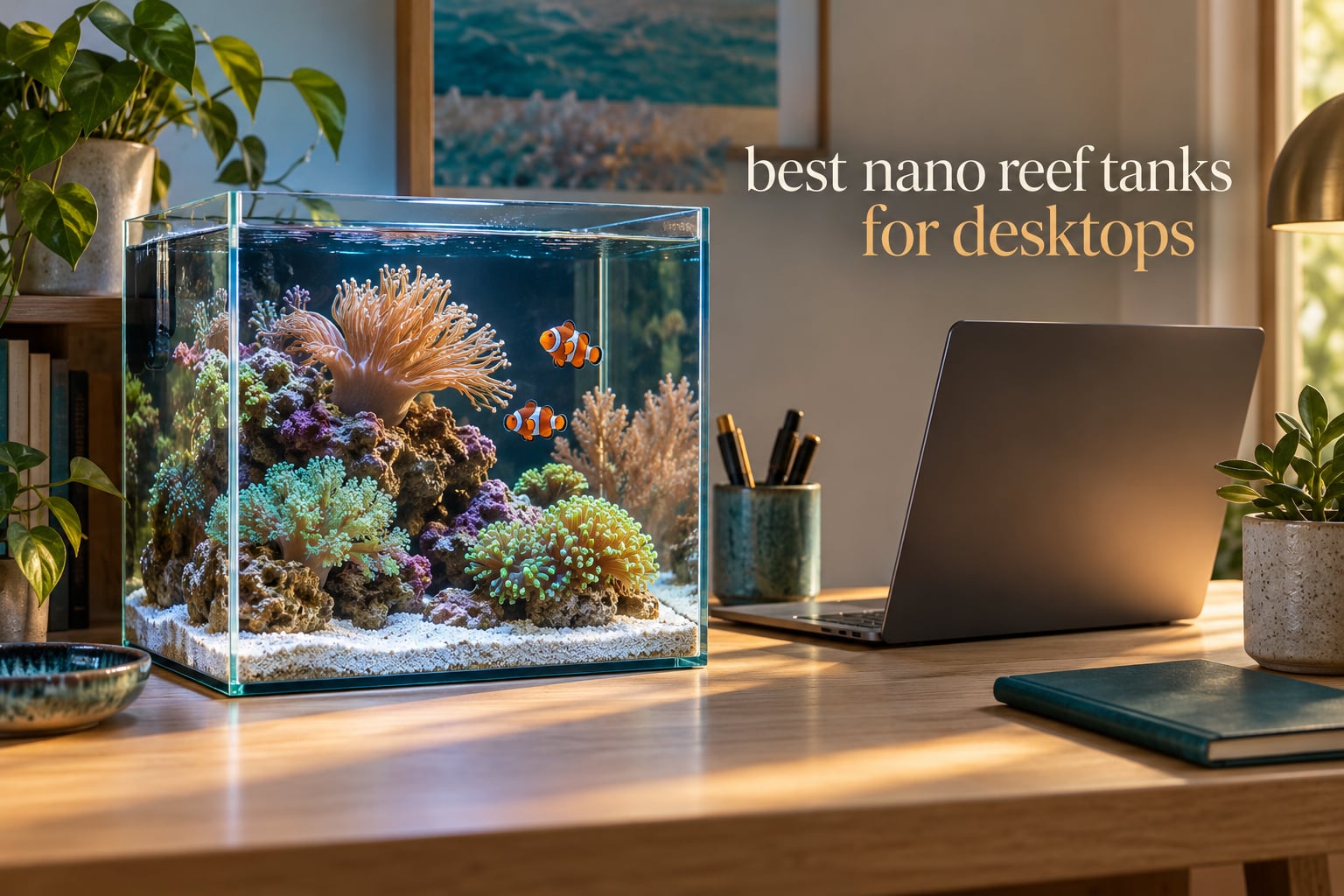
A nano reef tank is a small saltwater aquarium built to hold live rock and corals, usually between 5 and 20 gallons, and the best nano reef tanks for desktops are the rimless cubes and all-in-one kits that filter themselves without a sump, need no stand, and measure under 18 inches across. That combination is what makes a reef practical on a work desk: you set one box down, plug it in, and there is no cabinet to level and no plumbing to run.
We spent weeks reading the spec sheets, the long-term owner reports and the build-quality threads that hobbyists use to judge these tanks, then narrowed the field to eight that genuinely suit a desktop footprint. Three of them ship as complete kits with light and filtration. The rest are tank-only glass, which suits experienced reefers who already own a return pump, heater and light.
One thing the forums get right: in this category, glasswork and silicone matter far more than bundled features. A tank that leaks onto a desk costs more than any equipment you can add later, so build quality led our ranking. We also weighed dry weight, because most office desks were not built for a filled aquarium. If you want a broader look at tank sizes for smaller spaces, our fish tank roundup covers the freshwater side of the same footprint problem.
Table of Contents
Top 3 Best Nano Reef Tanks For Desktops (October 2026)
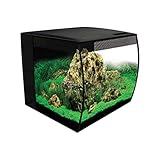
Fluval Flex 57 Nano Kit
- 15 gallon all-in-one kit
- Adjustable 7500K white and RGB LEDs
- 3-stage filtration with oversized media

LANDEN Cube 6.6
- 6.6 gallon rimless cube
- 5mm low-iron glass at 91 percent clarity
- Only 12.13 lb dry
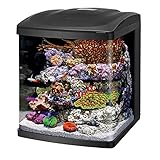
Corallife LED BioCube 16
- 16 gallon kit with rear filter chamber
- Three channel LED with moonrise simulation
- Two decades of owner reports
Every Pick at a Glance in 2026
| Product | Specifications | Action |
|---|---|---|
| Fluval Flex 57 Nano Kit |
|
Check Latest Price |
 Allcolor 7 Gallon Rimless Allcolor 7 Gallon Rimless |
|
Check Latest Price |
| Corallife LED BioCube 16 |
|
Check Latest Price |
| LANDEN Cube 6.6 |
|
Check Latest Price |
 Aquatop High Clarity Cube Aquatop High Clarity Cube |
|
Check Latest Price |
 Fluval Flex 2.0 Fluval Flex 2.0 |
|
Check Latest Price |
 IOAOI Coralland 8 IOAOI Coralland 8 |
|
Check Latest Price |
 Minilake 7 Gallon Cube Minilake 7 Gallon Cube |
|
Check Latest Price |
What Counts as a Nano Reef Tank?
The hobby uses four size bands, and mixing them up is the most common reason buyers end up with the wrong tank for a desk. Pico sits under 3 gallons, micro runs 3 to 5 gallons, nano covers 6 to 15 gallons, and a standard nano all-in-one sits at 15 to 20 gallons. For a desk, 6 to 15 gallons is the range where you get enough water to be forgiving without needing a floor stand.
Second piece of terminology worth learning: system volume versus nominal volume. The nominal number is what the marketing calls the tank. System volume counts the water actually in the display plus the water trapped in the filter chambers, and it is the number reefers use when planning stocking and water change volume. The IOAOI Coralland 8 is the clearest example in our lineup, rated at 8 gallons but split into a 5.5 gallon display and a 2.5 gallon rear sump.
All-in-one, or AIO, simply means the filtration lives inside the tank. Water is lifted into a rear or side chamber by a return pump, passes over media baskets and often a protein skimmer, then falls back into the display. That is why an AIO needs no sump, no stand and no plumbing, which is exactly what a desk requires.
1. Fluval Flex 57 Nano Kit – Best All-in-One for a Desk
- Curved front and honeycomb wrap hide the water line and filter
- RGB and white LEDs adjustable from a remote
- Oversized mechanical chemical and biological media
- Two adjustable output directions for shaping flow
- Feed port built into the top cover
- Heaviest kit here at 28.04 lb dry
- Rear filter uses cartridges rather than an open reef chamber
- Filter occupies real space inside the footprint
The Flex 57 is the easiest path from an empty desk to a lit, filtered saltwater tank. It arrives as one unit with the light, the filter and the pump already fitted, which removes the two decisions that trip up most beginners: what light to buy and where the water goes. For a first reef on a desk, that packaging convenience is worth a lot.
Weighing in at 28.04 pounds dry and measuring 16.14 by 15.35 by 15.35 inches, it is also the heaviest kit in this group. Glass plus water puts the filled weight far above that, so it needs a desk with a solid top and enough vertical clearance for the hinged cover to open. It is not a small-footprint choice.
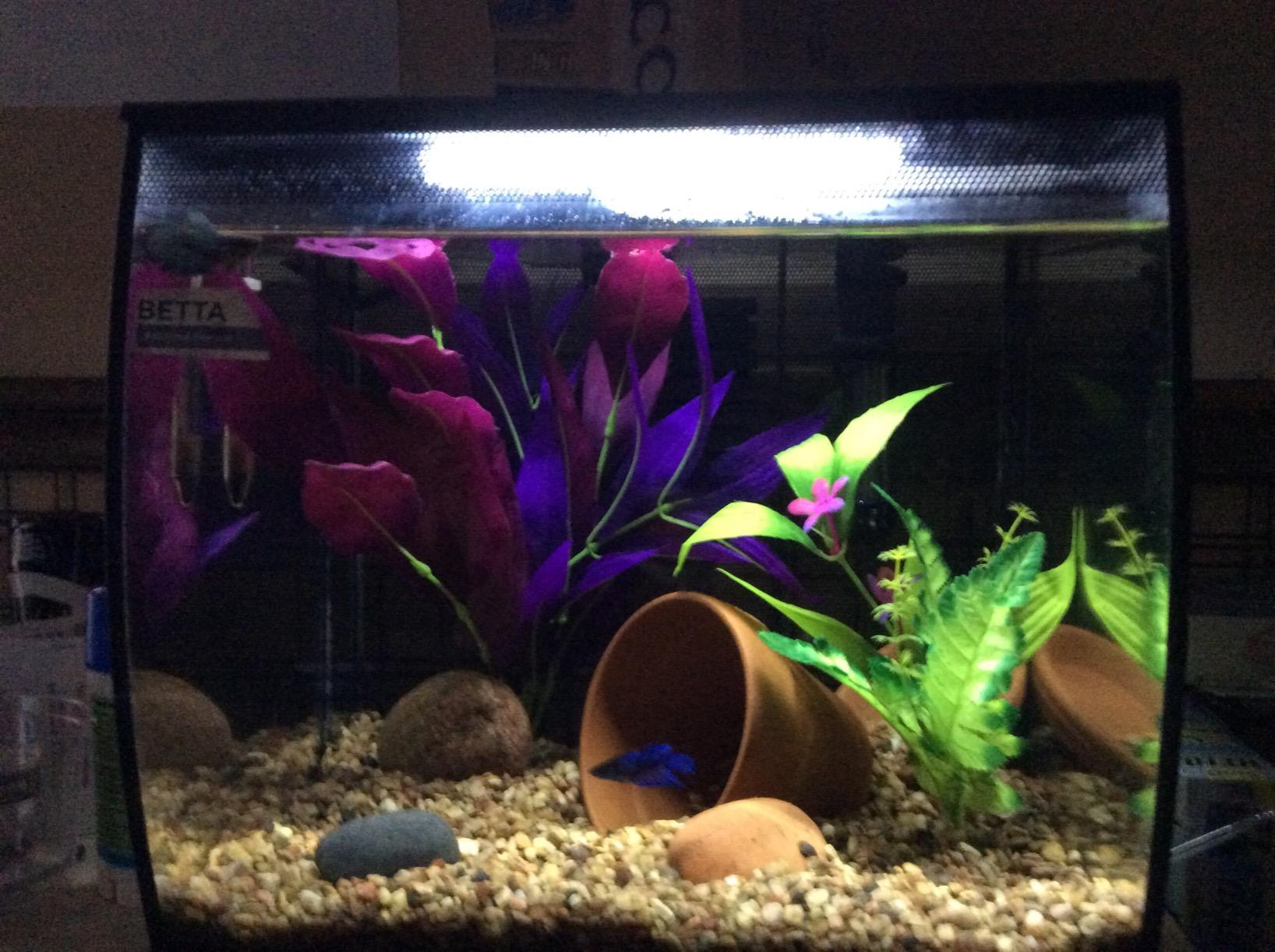
The lighting is where this tank earns its reputation. Fully adjustable 7500K white and RGB LEDs with a FLEXPad remote let you dial intensity and colour for corals, and reviewers single out that control as the reason they rate it so highly across thousands of reviews. For a reef, being able to push blue-heavy white light during acclimation and dial back at night matters more than it does for a freshwater tank.
Flow comes from multi-directional dual outputs, so you can aim one nozzle along the front glass and one into the middle of the display. That is enough to keep detritus moving without the blast that would strip coral tissue. The 3-stage filter with oversized media cartridges handles mechanical, chemical and biological stages in one stack.
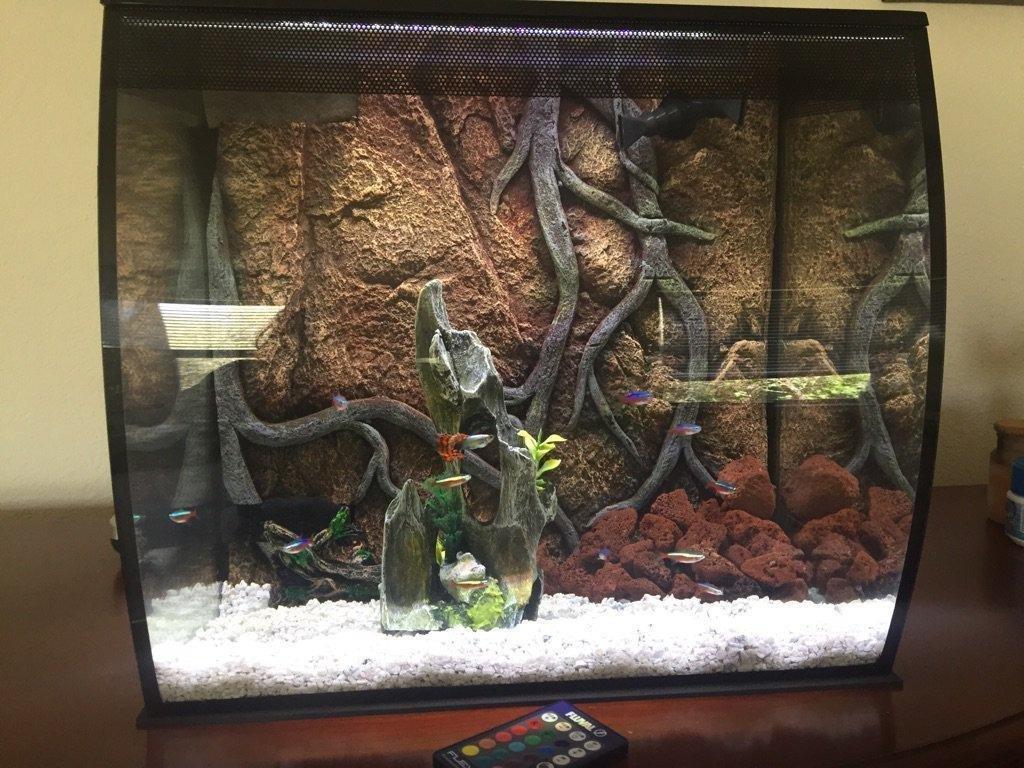
What fits inside a 15 gallon reef?
Fifteen gallons of system volume comfortably holds a small mixed reef: a few soft corals, some LPS heads once the tank is established, a couple of clean-up crew members and a modest fish load. It is the size at which weekly water changes of a gallon or two stop feeling like a chore.
The honeycomb wrap on the sides is genuinely useful here, because it hides the water line and the filter cartridges from the front view. You get the look of a rimless display tank even though the tank itself has a moulded top and a curved front panel.
Who should pick a different tank?
Skip it if your desk is a small sit-stand unit or anything on casters. The footprint is nearly square, the dry weight is the highest here, and a 28 pound glass box that slides is a real hazard. It also has no open rear chamber, so it is not the right home for a drop-in skimmer you might want to add later.
2. Allcolor 7 Gallon Low Iron Rimless Tank – Tank Only, You Supply the Gear
Low Iron Glass Ultra Clear Rimless Aquarium Tank,Classic Silhouette (7Gal)
- Near-invisible silicone joints look clean from every angle
- Low-iron glass cuts the green tint other glass shows
- German silicone chosen for tensile strength and anti-aging
- Polished beveled edges reduce cuts during maintenance
- Top glass canopy and bottom mat included
- Tank only
- no light or filtration of any kind
- Reef setup needs a return pump heater light and skimmer
- Small 7 gallon volume moves fast when chemistry shifts
This is the build-quality pick. Where most rimless cubes hide their joints with a thin bead and a dark silicone line, this one uses near-invisible silicone with a seamless rimless design, and owners consistently point to the clean glasswork as the reason to buy. On a desk where the tank is the decoration, that difference shows every time the lights come on.
At 11.81 inches on each side and 15.4 pounds dry, it is a true desktop cube. The square footprint wastes no desk depth, and the low-iron glass rated at 91 percent transparency gives you a much cleaner view of corals than standard float glass, which adds a green cast and dulls reds.
What you have to add for a reef?
Plan on a heater, a return pump sized for the display, an LED light and, if you want one, a small skimmer or filter floss in a media basket. A 7 gallon cube with light, pump and heater is a workable reef once rock and coral are added, but it is not a plug-and-play tank, and you should budget for that equipment before ordering.
The included top glass canopy with clips is a nice touch for a saltwater system because it slows evaporation and cuts down salt spray on the desk surface. Polished beveled edges also matter more than they sound: you will be putting hands in this tank weekly, and sharp raw glass edges are a genuine cut risk.
Who should pick a different tank?
Do not buy this as your first tank unless you already know what a return pump GPH rating means and you are comfortable dialing in alkalinity on a small volume. Seven gallons swings quickly, and hobbyists on reef forums are consistent about the fact that a nano has no buffer against mistakes.
3. Corallife LED BioCube 16 – Best Known for Longevity
- Owners report twenty plus years of continuous use
- Built-in rear chamber hides pump and media
- Rounded edge design suits a modern desk
- LED timer runs sunrise sunset and moonrise
- Compatible with existing BioCube accessories
- Heaviest tank here at 31.8 lb dry
- Rear chamber is narrow and awkward to service
- Heater not included
- Fan noise from the LED hood reported by some users
The BioCube 16 has the longest service life of anything in this roundup, and that is not marketing language. Owners on reef forums describe units that have run for two decades with the same pump and the same light, which for a tank you intend to keep on a desk for years is the single most useful trait you can buy.
It is also the largest and heaviest option here at 16.75 by 15 by 17.5 inches and 31.8 pounds dry. Filled, that is a serious load, and it is the pick only if your desk is a sturdy dedicated unit rather than a lightweight work surface. Check the leg thickness before you commit.
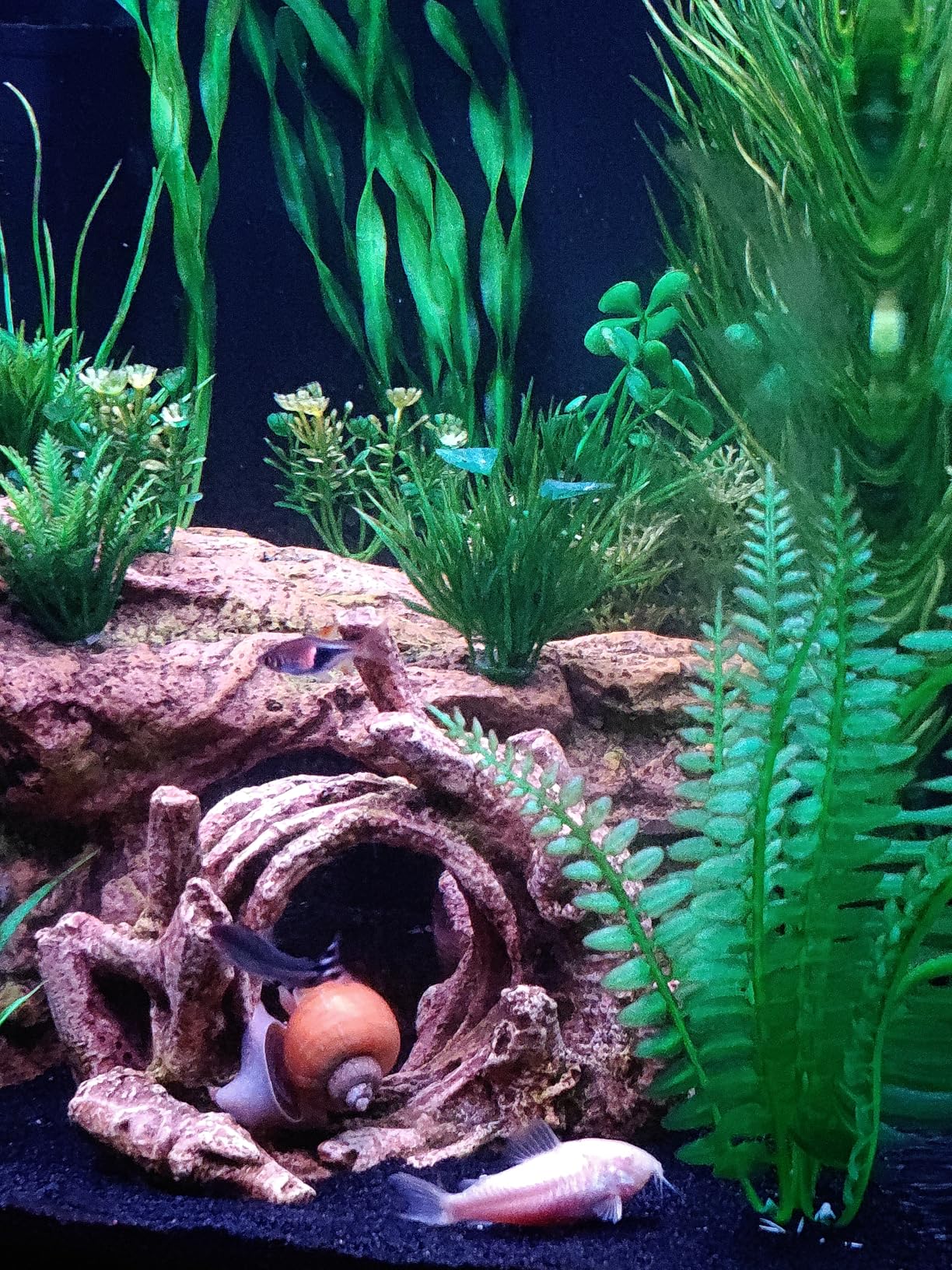
The lighting runs three independent channels, white, blue and colour enhancing, on a 24-hour timer with sunrise, sunset and moonrise functions. On a desk that gets used at night, the moonlight simulation is a small detail that makes the tank feel far less like a fluorescent light box.
The built-in customizable filtration chamber uses a quiet submersible pump with dual intakes and an adjustable return nozzle, and it accepts existing BioCube accessories, so replacement media and add-on parts are easy to source. One practical warning from owners: small fry can get pulled into those intakes, so keep an eye on any nano fish that spawn in the display.
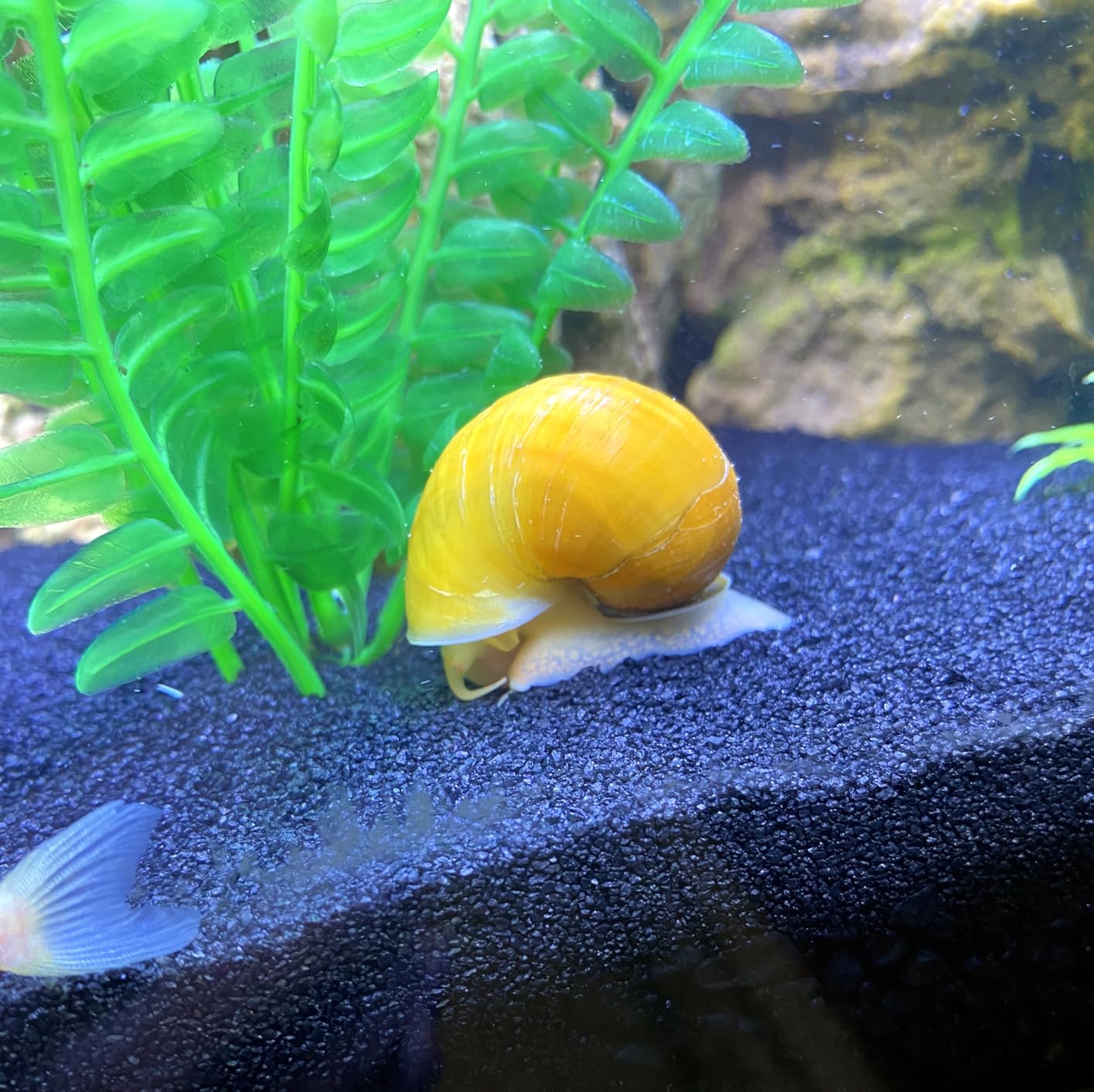
What fits inside a 16 gallon reef?
Sixteen gallons is the most forgiving volume in this roundup. It gives you a weekly water change you can actually carry out, enough rockwork to build proper three-dimensional structure, and headroom for a mixed soft coral and LPS collection once the tank is past its first year.
Because the rear chamber is a moulded BioCube design, it is not an open reef chamber. You can run floss and a small carbon bag, but a drop-in skimmer is a stretch, so plan on chemical filtration rather than protein skimming.
Who should pick a different tank?
Skip it if maintenance access matters to you. Reviewers repeatedly call the back chamber narrow and difficult to service, and if you are the kind of owner who wants to open the filter weekly and swap media baskets, this tank will frustrate you. It is also the only kit here that does not include a heater.
4. LANDEN Cube 6.6 – Precision Glass Cube for a Small Footprint
- Mirror edge grinding and uniform silicone joints
- Lightest dry weight in the lineup at 12.13 lb
- 91 percent light transmittance keeps colours true
- Ships with an EVA cushioning pad
- Best seller rank of number ten in Aquariums
- Tank only with no lid filtration or light
- Matching lid sold separately
- Rimless design gives you no mounting points for equipment
The LANDEN is the value pick here, and the value is in the glass rather than the box. Five millimetre ultra-white low-iron glass at 91 percent transmittance, mirror edge grinding and accurate sizing with uniform joints is a level of finish that costs more in dedicated rimless tanks. At 12.13 pounds dry it is also the lightest tank we tested, which matters on a desk.
At 11.81 inches square, it fits where nothing else fits, and the cube shape gives you maximum viewing area for the footprint. Owners rate the consistency of the joints highly, and the included EVA cushioning pad protects the bottom edge during transit.
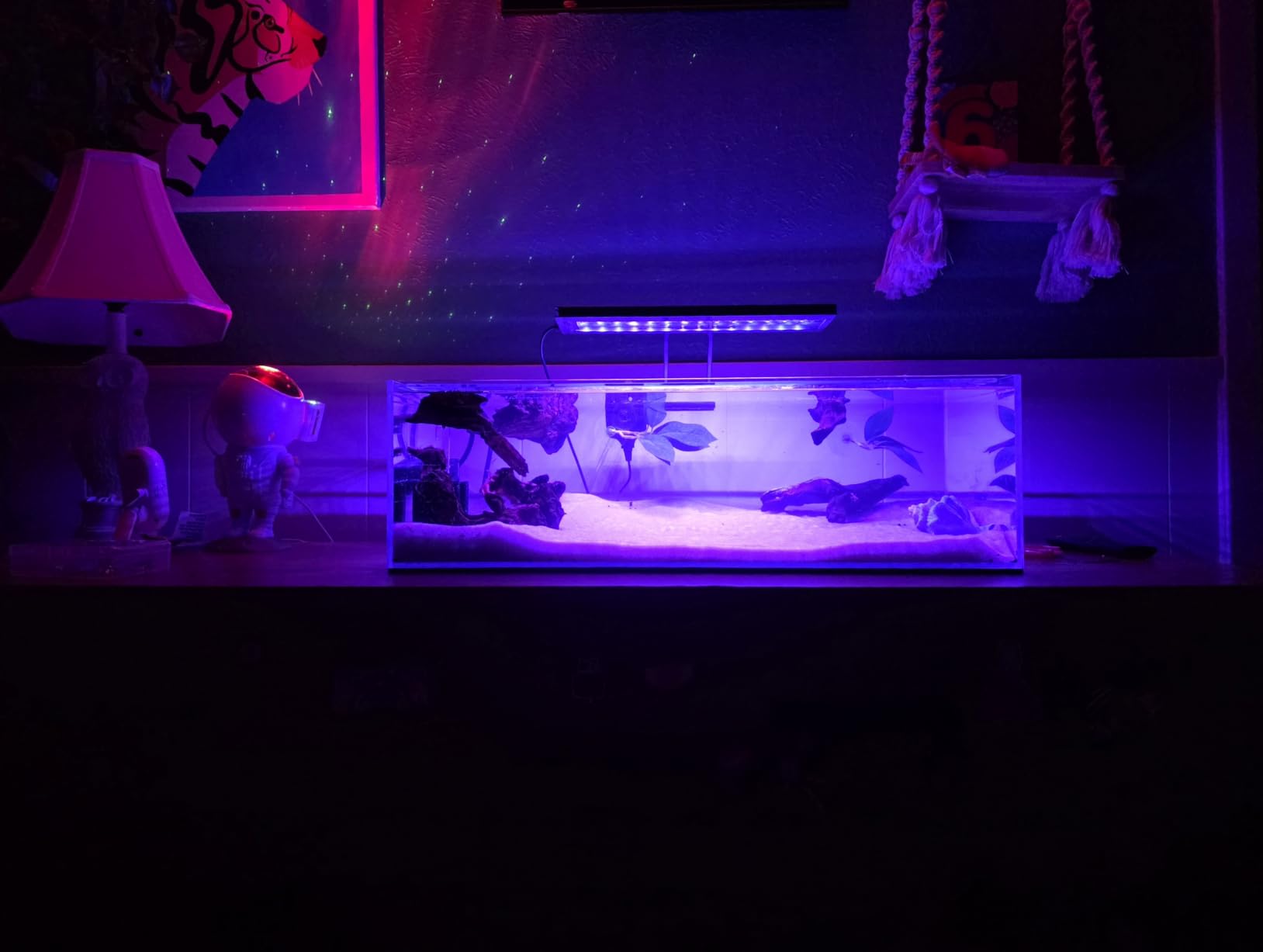
One structural detail worth explaining: this is a standard right angle with mirror edge grinding rather than a 45 degree miter. In reef circles the mitre is considered the premium construction, and the difference shows at the corner profile, where a standard right angle leaves a slightly wider seam than a mitered join. It is still a well-made tank, just one step below a mitered cube in the way the corner catches light.
Because the design is tank only with no mounting points, you will need to think about how your light and any wavemaker get attached. A small articulating arm clamp or a glass bridge clamp is the usual answer, and it is worth budgeting for at the same time as the pump and heater.
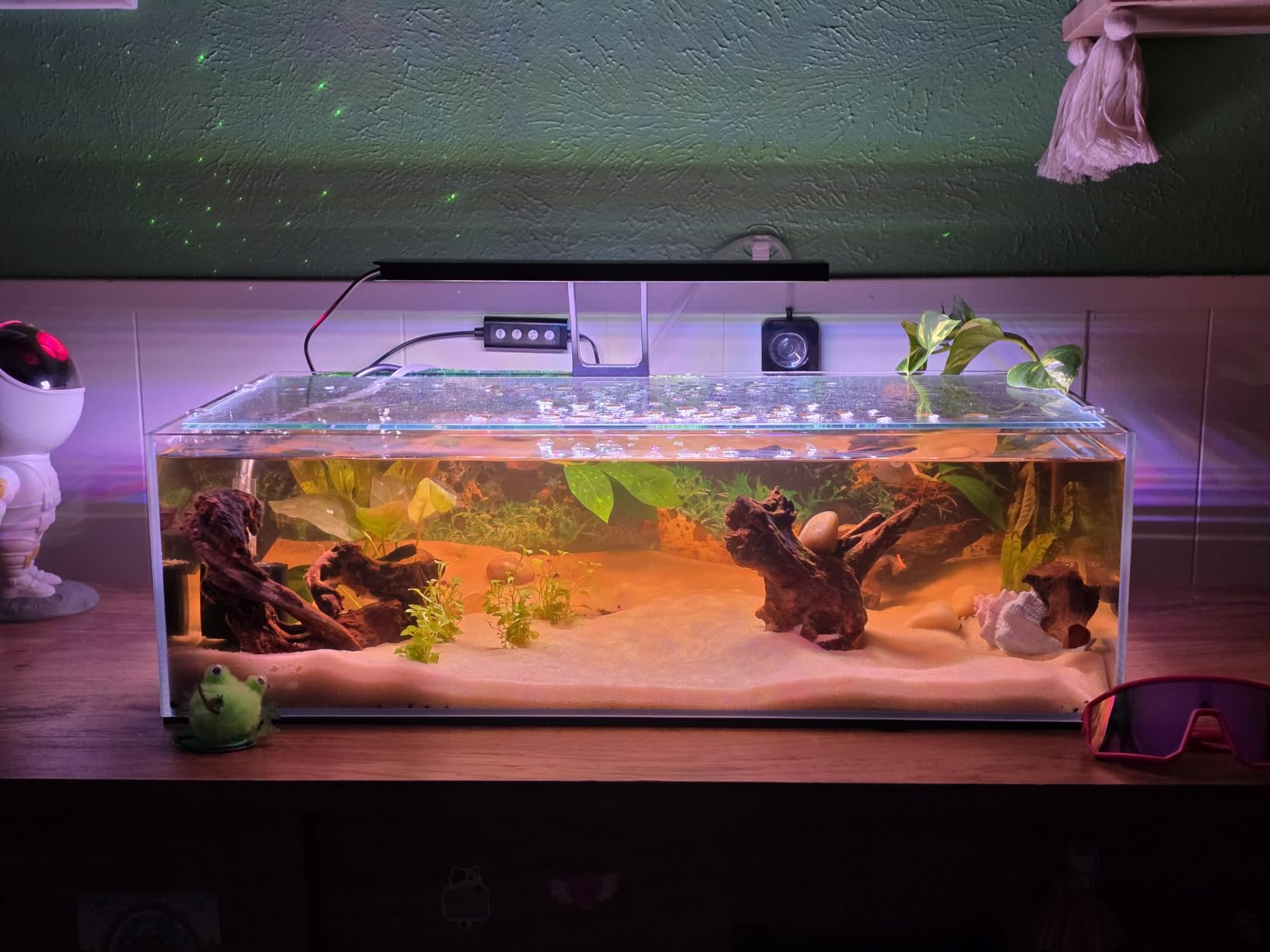
What fits inside a 6.6 gallon reef?
Six point six gallons is a micro to nano reef. It handles soft corals, a small piece of LPS and a cleanup crew comfortably, and it can run a single SPS frag if you keep water movement high. It is not a tank for a school of fish or a mixed collection.
The 6.6 gallon size is genuinely the practical floor for a reef. Below roughly 5 gallons, hobbyists on reef forums warn that temperature and alkalinity swings become daily events rather than weekly ones, and the tank becomes work instead of relaxation.
Who should pick a different tank?
Choose the Fluval Flex 2.0 instead if you want equipment included and quiet from day one. This cube gives you nothing but glass, so the total build is larger and less forgiving than it looks on the product page.
5. Aquatop High Clarity Cube to 11.3 Gallons – Cube Display Volume
Aquatop High Clarity Low Iron Glass Cube Aquarium – Up to 11.3 Gallons – High-Grade German Silicone – Ideal for Salt and Freshwater Aquariums
- Largest display volume available in a cube footprint at 13.78 inches
- High-grade German silicone built for leak resistance
- Suitable for both saltwater and freshwater setups
- Clean low-iron glass simplifies maintenance
- Available in 2.1 4.1 7.1 and 11.3 gallon sizes
- Tank only with no light filter or accessories
- Heavier than smaller rimless cubes at 17.79 lb
- No built-in equipment mounting points
The Aquatop is the pick when the desk has depth to spare but not width. At 13.78 inches on each side it still reads as a compact cube on a desk, yet it stretches to 11.3 gallons, which puts it into nano territory where water changes stop feeling daily.
Build quality is the selling point, with high-grade German silicone chosen for durability and leak resistance, and high clarity low-iron glass that reviewers single out for making cleaning easy. Owners rate it highly for the build, and several describe it as the tank they would pick again purely on glass clarity.
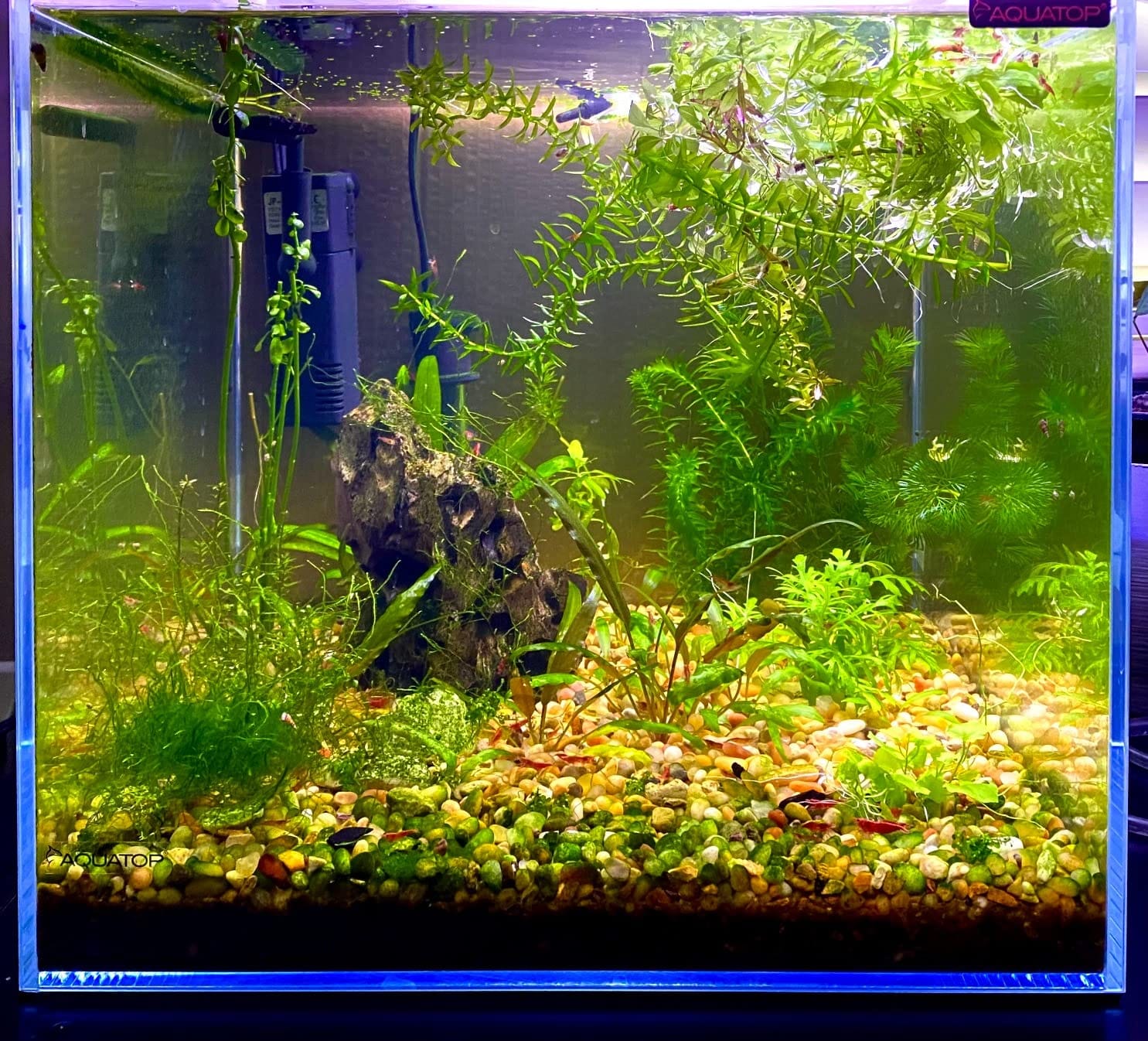
Being explicitly suitable for salt and freshwater matters more than it sounds. Many rimless cubes in this class were designed around planted freshwater aquascaping and then adapted, which is why the reef community warns that the best-built nano tanks are often marketed to freshwater hobbyists first. Glass that resists corrosion in salt is a different spec than glass that looks clear under a light.
At 17.79 pounds dry, the filled weight is meaningfully heavier than the smaller cubes. Plan for a desk surface with a solid core rather than a hollow-core or particle board top, and leave room above the tank for the light mount and a lifting hand.
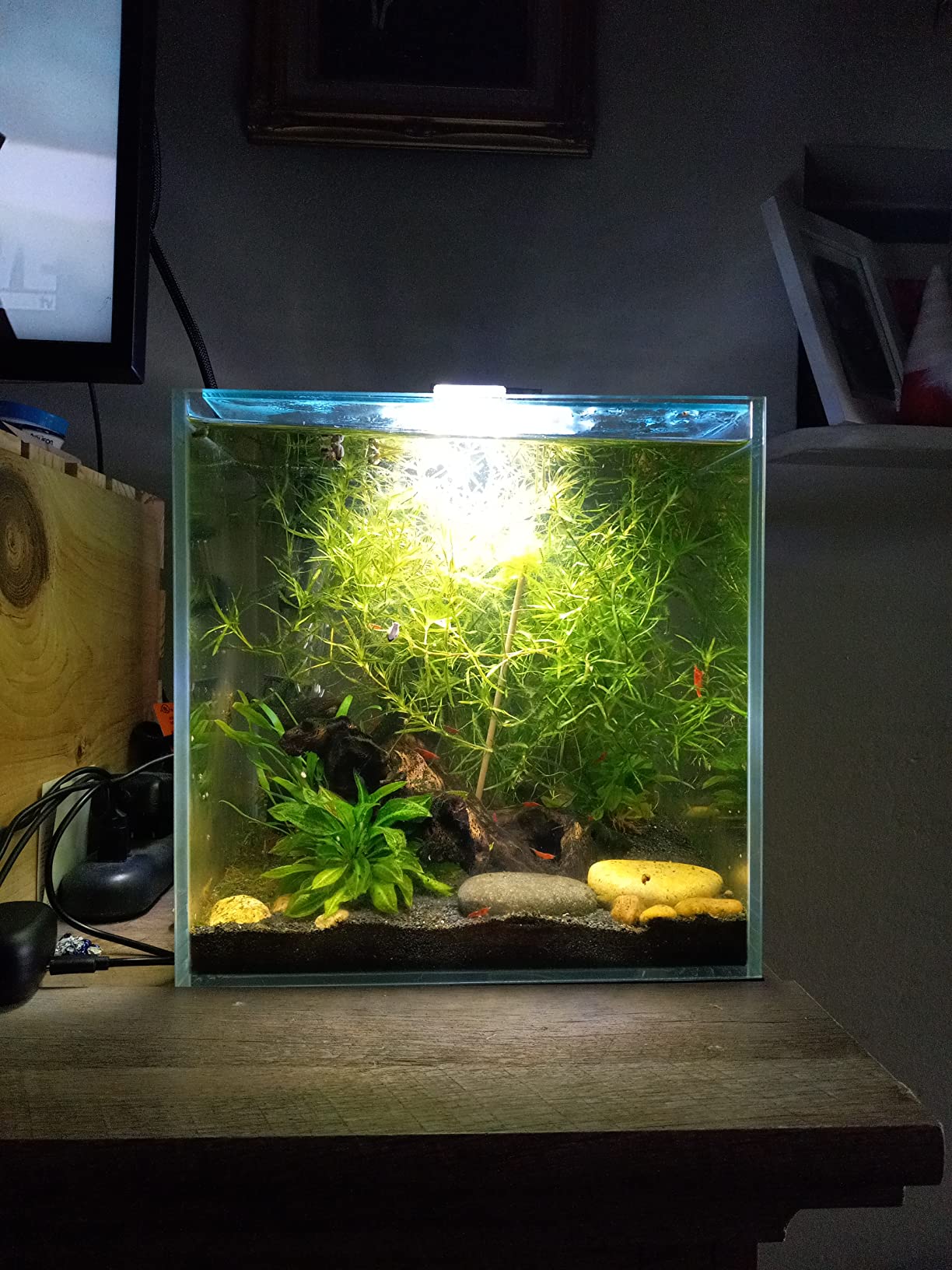
What fits inside an 11.3 gallon reef?
Just under 12 gallons of system volume supports a proper small reef: soft corals in the first year, LPS after that, and enough rockwork for a real scape. It is also large enough that a small drop-in skimmer becomes a realistic purchase once the tank is mature.
Because the tank is sold as a cube family in 2.1, 4.1, 7.1 and 11.3 gallons, you can buy the same glass footprint in a smaller size if you are unsure about volume. That consistency of sizing is genuinely useful when you are measuring desk clearance.
Who should pick a different tank?
Skip it if you want a turn-key setup, because this is glass only. It also has no mounting points, so budget for a clamp arm or a bridge for your light. For the largest desktop reef in this roundup, the Coralife BioCube 16 does the same job with filtration already fitted.
6. Fluval Flex 2.0 – Compact 9 Gallon Kit With RGB Lighting
- Lightest complete kit here at 11.02 lb dry
- Remote controlled RGB and white lighting on 6500 to 7000K
- Rubberized stabilizers keep pump noise down
- Organized cord channel behind the tank
- Dual nozzles plus an optional spray bar
- Newer model with a limited long-term record
- Heater sold separately
- Slightly wider footprint than a cube
The Flex 2.0 is the newest kit here and the lightest complete one. At 11.02 pounds dry and 13.78 by 13.39 by 12.99 inches, it puts a working filter and an RGB light on a desk where a 28 pound kit would be a problem. For a shared office desk or a small home setup, that combination is hard to find.
The lighting upgraded to customizable RGB plus white at 6500 to 7000K with remote control and dynamic effects, which is a genuine step up for corals from the earlier Flex model. Flow is adjustable through dual output nozzles, and there is a spray bar option if you want softer, more even movement.
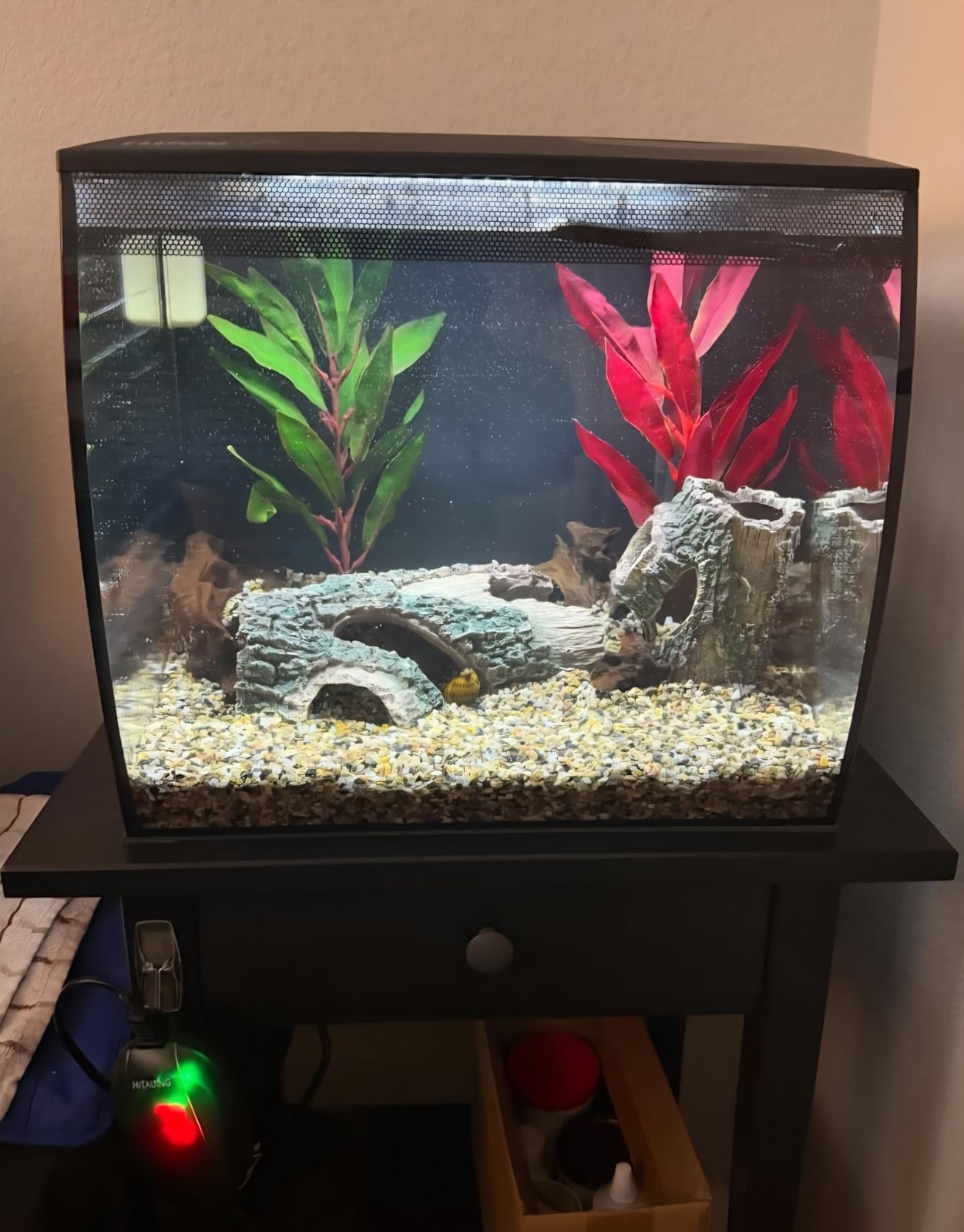
The quiet-operation details are the ones that matter on a desk: rubberized stabilizers damp the pump, and the organized power cord channel keeps wiring behind the tank instead of across it. On a workspace where salt and cables are both unwelcome, that is worth more than another feature on the light.
The honest caveat is tenure. Owners rate it very highly, but the review base is still small because the model is recent, and long-term reports are exactly the currency reefers trust on forums. Treat the early rating as promising rather than proven.
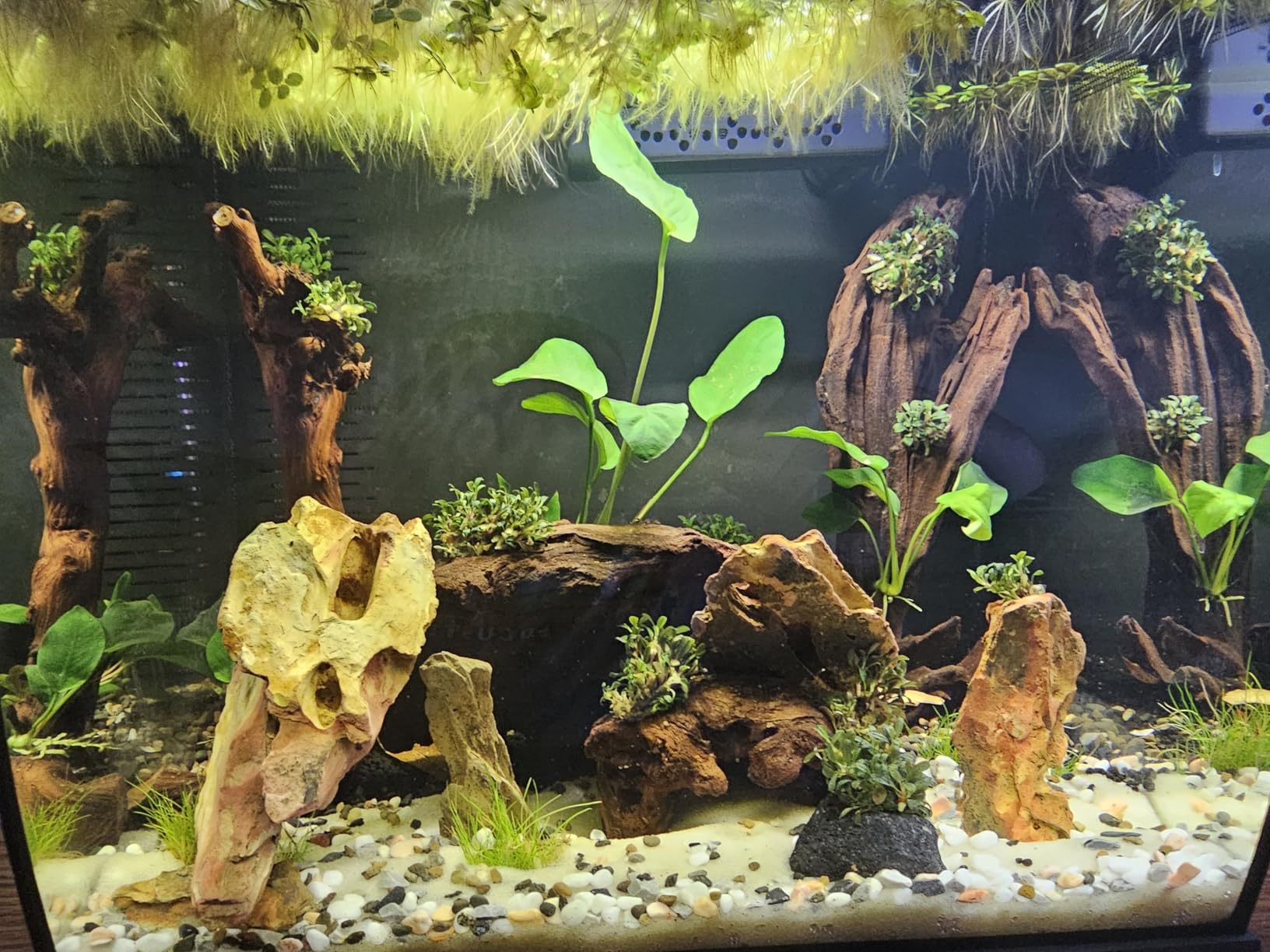
What fits inside a 9 gallon reef?
Nine gallons sits comfortably in the nano band. It holds soft corals, a couple of LPS, a small cleanup crew and one or two fish, with a weekly water change of about a gallon that is easy to carry from a kitchen sink.
Filtration is a 3-stage stack of foam block, Poly-Carb cartridge and BioMax media. That is a freshwater-oriented media chain, so on a reef you would swap in chemical filtration of your choice and add carbon if you need it.
Who should pick a different tank?
Pick the Fluval Flex 57 instead if you want a much larger volume and a longer track record. Pick the BioCube 16 if you need an open rear chamber. The Flex 2.0 is the pick when desk load and desk noise are your binding constraints.
7. IOAOI Coralland 8 – Four Rear Chambers for Coral Grow-Out
- 45 degree angled joints give the premium mitre profile
- Four separate rear chambers suit mechanical biological and chemical media
- 2.5 gallon rear sump increases true system volume
- Felt base protects the desk surface from slipping
- Filter sock and rotatable diffuser included
- Tank only with no pump heater light or skimmer
- Filter sock holder is fixed so media baskets do not fit
- Center divider blocks a centred light mount
- No accessories or setup guide included
This is the reef-specific pick. Where most cubes in this class are freshwater tanks hoping to be adapted, the Coralland 8 is designed around a rear sump and sold for marine fish and reef setups, and that shows in the details that matter: a 5/8 inch water flow nozzle sized for standard tubing, four filter chambers and a filter sock.
The 45 degree angled joint design with reinforced corners is the construction reef buyers look for. Mitred corners leave a narrow seam of silicone and a clean light line around the tank, and owners reviewing this tank specifically mention perfect mitres and clean silicone.
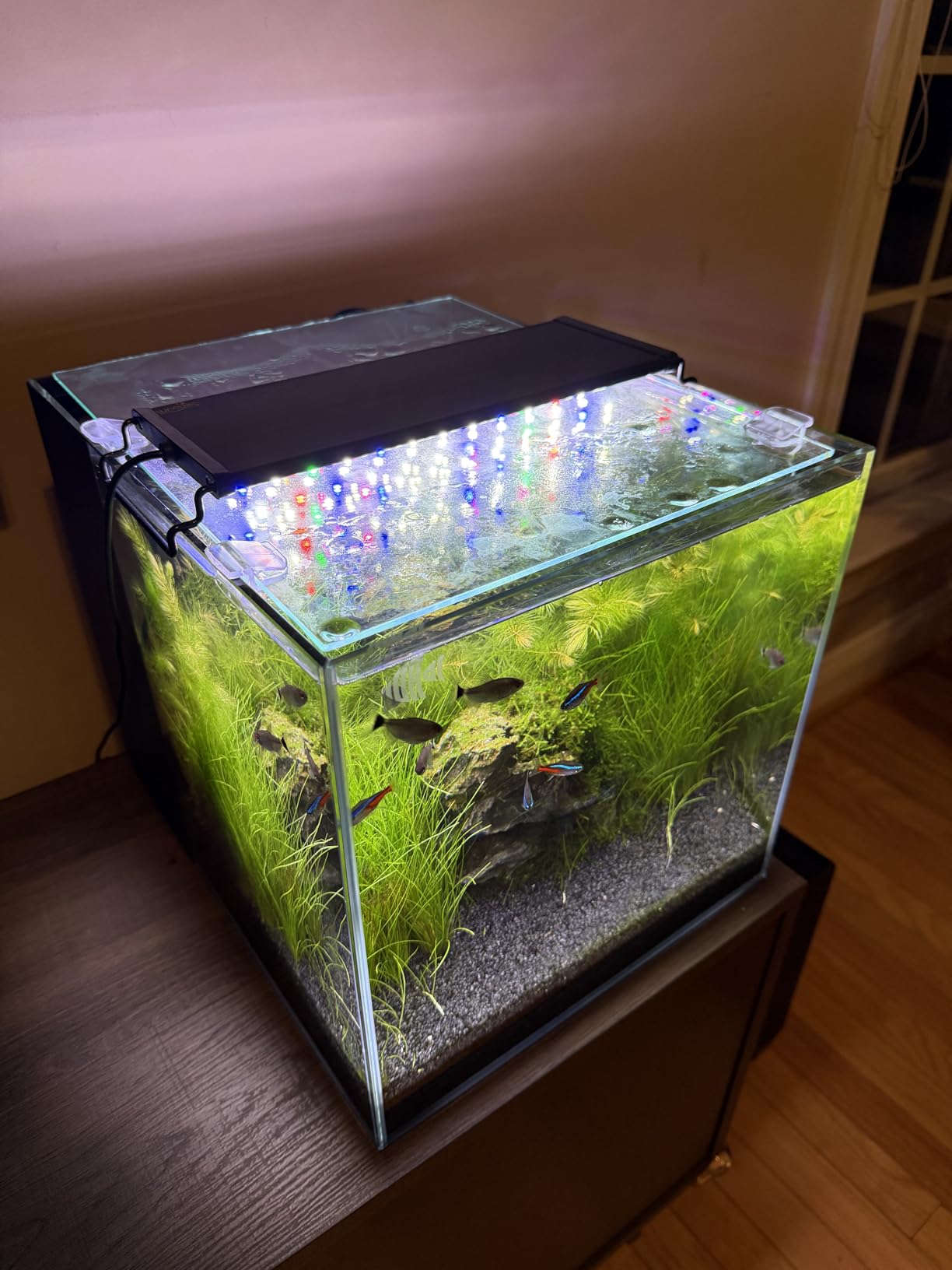
Four rear chambers is a lot of filtration space for eight gallons. Mechanical, biological and chemical media each get their own compartment, which is why this tank works as a frag station. Owners also report that the four-chamber layout gives good bubble dissipation when a skimmer is added later, and several note the dead-silent nano pump fits the chamber cleanly.
Packaging matters more than most roundups admit, and this tank is triple-boxed with foam protection. A rimless glass tank that arrives with a cracked corner is a total loss, and owners single this one out for how well it survived delivery.
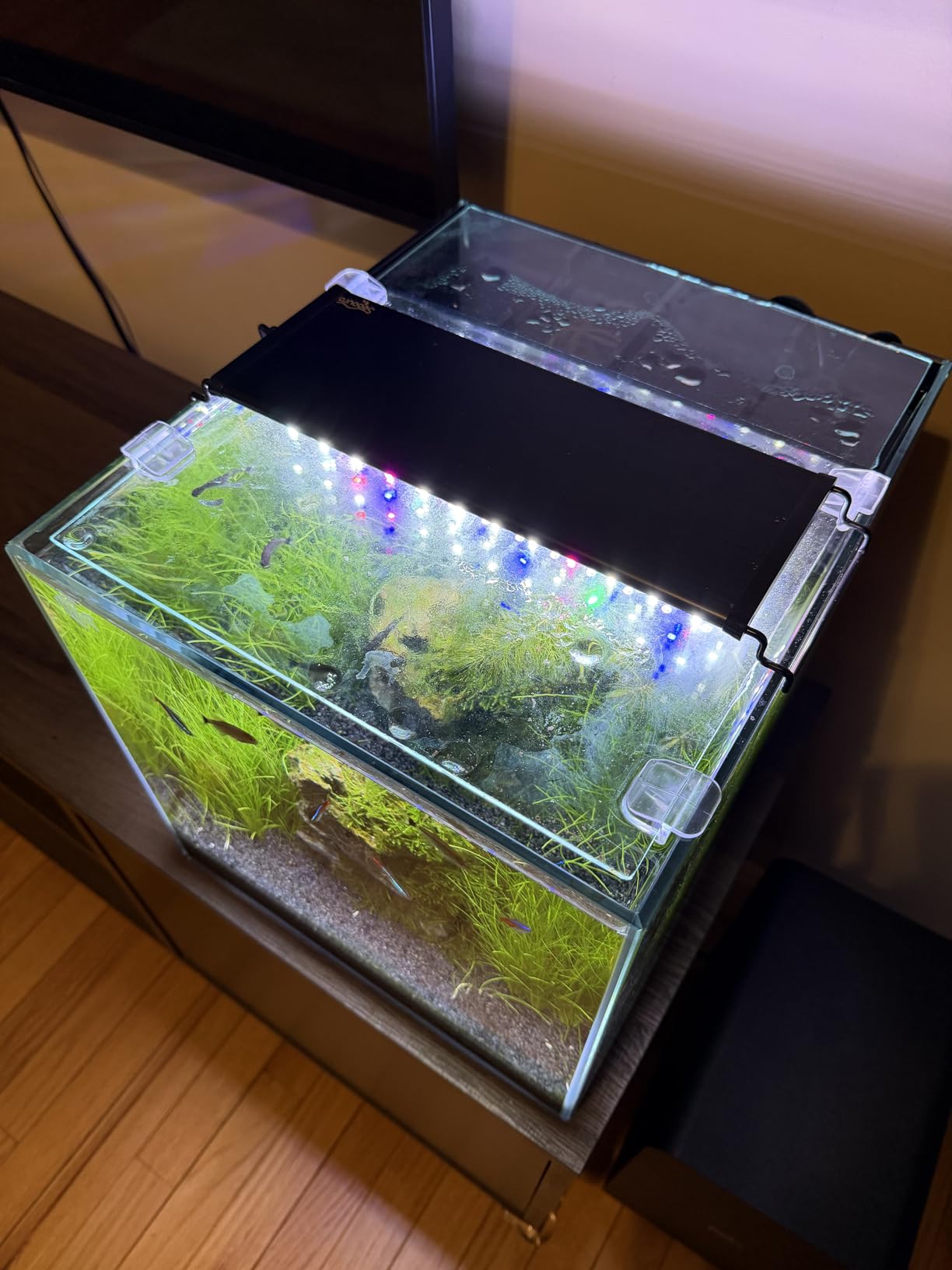
What fits inside an 8 gallon reef?
Eight gallons of system volume, split between a 5.5 gallon display and a 2.5 gallon rear sump, holds a mixed soft coral collection, several frags and a working cleanup crew. The rear sump volume genuinely helps, because it buffers temperature and dilutes nitrates the way extra display volume does not.
It is not a beginner package. There is no pump, heater, light or skimmer in the box, and no setup guide, so you need to know how to plumb a return, size tubing to 5/8 inch and balance a light on an arm.
Who should pick a different tank?
Choose a kit if you are starting from nothing. Also be aware of two design limits owners flag: the filter sock holder is permanently silicone-mounted so you cannot drop in media baskets, and the centre divider blocks a centred light mounting point, so an off-centre clamp is required.
8. Minilake 7 Gallon Rimless Cube – Lightest Load on a Desk
7 Gallon Rimless Cube Fish Tank, Ultra-Clear Glass Aquarium
- 91.5 percent light transmittance is among the highest in the lineup
- Lightweight at 13.2 lb dry for a 7 gallon cube
- Square footprint maximises viewing area
- Standard shape fits common filters and heaters
- Manufacturer has been responsive about replacing damaged parts
- Tank only with no filtration or light in the base configuration
- Lid warping reported by some owners within a week
- Newer brand with limited long-term history
The Minilake is the option when desk real estate and desk load are both tight. Eleven point eight inches square with 13.2 pounds dry gives you a genuine rimless nano tank in a footprint that fits beside a monitor arm, and the 5mm low-iron glass rated at 91.5 percent light transmittance is among the most transparent we looked at.
The standard rectangular shape is a quiet advantage over cubes with angled corners, because most common nano filters, sponge filters and small heaters fit against a flat wall without an adapter. That cuts down on the fittings you need to buy.
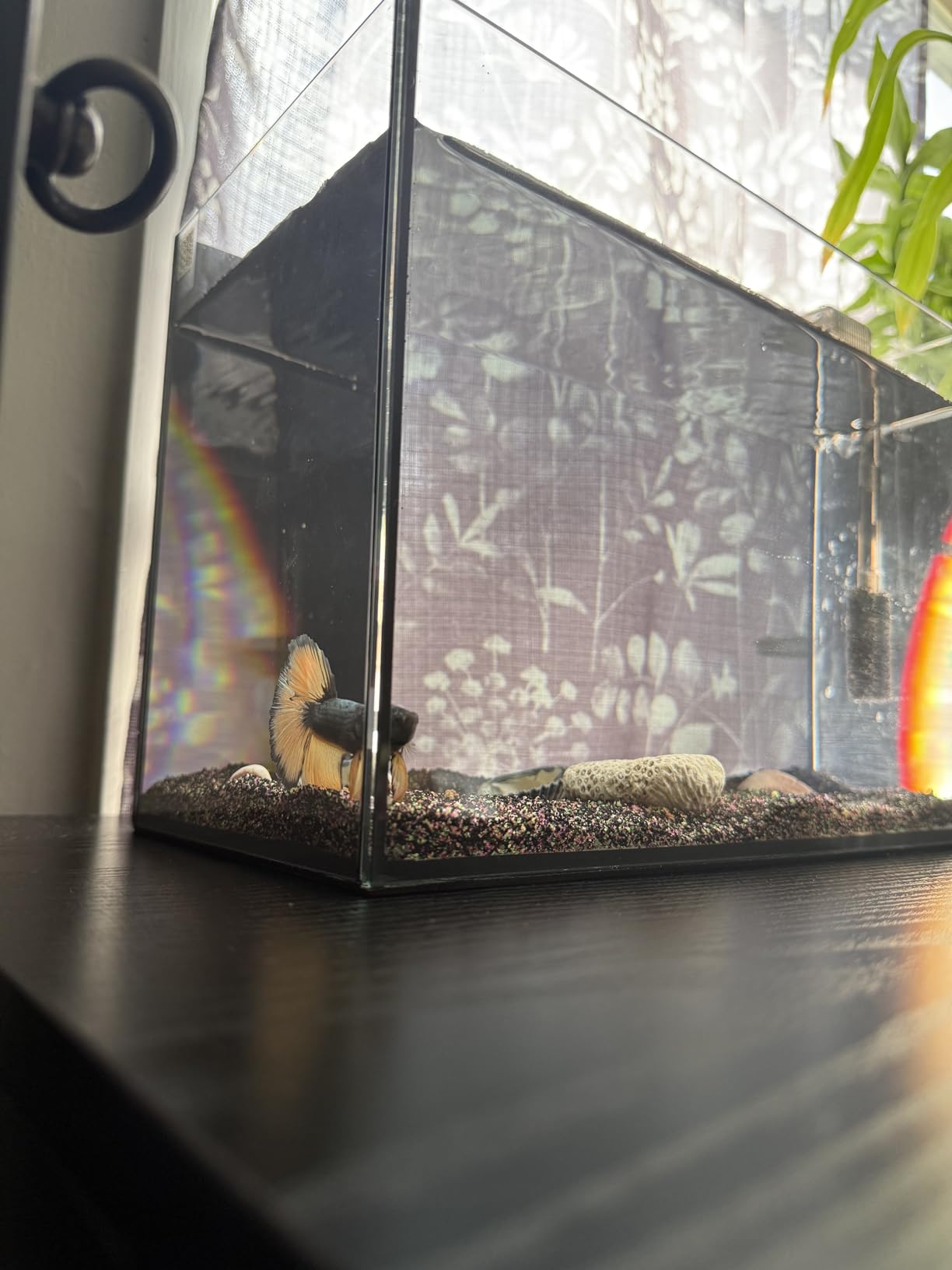
Two things temper the rating. Owners report lid warping within about a week on some units, which matters for a saltwater system where a hopping shrimp or a mantis shrimp makes a broken lid an instant problem. There are also reports that some configurations do not match their advertised gallon capacity, so measure the actual internal volume before you plan livestock.
On the positive side, the manufacturer has been quick to replace damaged parts, which is the kind of service that matters more than any spec when glass is involved.
What fits inside a 7 gallon reef?
Seven gallons supports a soft coral dominated reef with a couple of LPS and a small cleanup crew. Keep stocking modest, because the same 2.5 gallon weekly water change that keeps a bigger tank stable will swing a 7 gallon tank noticeably if you miss it.
Verify the lid fit before you buy. If you plan to keep shrimp, check the seam and closure carefully, because a warped lid is a common report and shrimp are excellent at finding that gap.
Who should pick a different tank?
Pick the LANDEN Cube 6.6 instead if glass finish is your priority, since it carries mirror edge grinding and a longer review history. Pick the Coralland 8 if you want an actual reef-oriented chamber layout rather than a display cube you equip yourself.
Why Build Quality Matters More Than Features?
Ask ten reef hobbyists how to choose a nano tank and nine will talk about silicone before they talk about filtration. It is the correct priority, because a leak on a desk destroys furniture and electronics, and because a bad seam rarely fails in the first year. It fails in year four.
Two construction terms decide most of this. Mitered 45 degree corners mean the glass panels are cut at an angle and joined, leaving a narrow, nearly invisible seam. Butt-end glass means the panels meet square and rely on a thicker bead of silicone to fill the joint. Freshwater-first brands such as UNS and ADA are the reference point on reef forums for mitered construction, and hobbyists frequently note that many marine-branded tanks are built with standard right angles and visible black silicone instead.
On the adhesive itself, use only 100 percent silicone rated for aquariums, with no acrylic, latex or paint additives. Aquarium-rated silicone is chemically inert and cures to a flexible bond; general purpose sealants and kitchen silicones can leach and never fully cure. If you ever need to reseal a seam yourself, remove every trace of the old bead first, since silicone will not bond to cured silicone.
Silicone colour tells you something too. Black and clear seams are standard, and clear seams on a rimless tank are what produce the floating look where the glass appears to hold itself. That is a visual preference, but it also means you can see a developing gap or a fishy bloom in the joint, which is a practical benefit on a small tank.
The best advice from the hobby communities is simple: go look at the tank in person before you commit, because that is where you can see the seam width, the polish on the edges and whether the panels sit flush. Brand reputation helps, but a five-minute inspection in a shop does more.
Desk Reality Check: Footprint, Weight and Clearance
Here are the numbers that decide whether any of these tanks works in your space, and they are the figures most roundups skip. Dry weight is the empty tank on your desk. Filled weight is dry weight plus roughly 8.34 pounds per gallon of water, plus rockwork, plus sand, plus glass-supported live rock weight. A 15 gallon tank with 20 pounds of rock lands well north of 150 pounds.
The light desks in this lineup are the Fluval Flex 2.0 at 11.02 pounds dry and the LANDEN Cube 6.6 at 12.13 pounds, both under 12.8 inches wide. The heavy end is the Corallife BioCube 16 at 31.8 pounds dry across a 16.75 by 15 inch footprint, and the Fluval Flex 57 at 28.04 pounds across 16.14 by 15.35 inches. Between them sit the Allcolor 7 gallon cube at 15.4 pounds, the Aquatop cube at 17.79 pounds, the Minilake 7 gallon cube at 13.2 pounds, and the IOAOI Coralland 8 at 21.35 pounds across 13.8 by 11.8 inches.
Vertical clearance is the constraint people forget. Sump-free tanks need no stand, but a rear AIO chamber still needs headroom above the water line for a light arm, and a lid has to open far enough to drop in rock and reach a wavemaker. Leave at least six inches above the tank’s stated height.
Then check the desk itself. Particle board and hollow-core tops flex, and a flexing surface under a glass tank leads to stress on the seams. Look for a solid core, solid legs and no casters. If the desk is on a sit-stand frame, stay under the lightest picks and confirm the vertical travel does not lift the tank off the surface.
AIO, DWC and Sump: Which Filtration Style Suits a Desk?
AIO puts the filter chambers inside the tank, which is what eight of our eight picks are built around. It is the only style that suits a desk, because there is no sump cabinet to level, no plumbing through a stand, and no risk of a slow leak inside furniture you cannot inspect.
DWCs, or deep water culture, and sumps give you far more filtration volume and better gas exchange per gallon, which is why serious reefers use them. They also require a stand with a sump cutout, a level floor, and a way to route the return. None of that belongs on a desk.
The compromise inside an AIO is chamber layout. The BioCube and Flex kits use a moulded hang-on-back style filter with cartridges, which is easy to service but does not scale to reef media. The Coralland 8 gives you four separate rear chambers and a filter sock, which is the closest a desk tank gets to a real reef filtration layout.
One more practical note on pumps. Return pump sizing is measured in GPH, and in an AIO you want enough turnover to keep detritus suspended without blasting rockwork. A pump rated far beyond the display will create a visible current jet that makes coral placement difficult, and in a small tank an oversized pump is the most common source of noise.
The Gear You Still Have to Buy for Each Tier
The tank is the smallest part of the budget. Five of our eight picks are tank only, which means light, heater, return pump and either skimming or chemical filtration all sit on top of the glass cost. That is why forum advice treats a nano reef as running well beyond the tank figure, and why buyers feel caught out after the tank arrives.
For a 6 to 8 gallon reef you are looking at a small LED, a 50 to 75 watt heater, a nano return pump rated in the low hundreds of GPH, floss and a chemical bag, and a cup of RODI water. Add a dosing pump only once you are keeping corals that need it, such as SPS or demanding LPS.
For a 9 to 16 gallon reef, add a proper skimmer option, a wavemaker, carbon for clarity if your system needs it, and enough RODI supply to cover weekly water changes. If you skip RODI and top off with tap water, salinity drift is the fastest route to a failed nano.
Our broader guide to tank sizing covers the clearance thinking that applies to any small glass tank, and it is worth reading before you measure.
Maintenance Reality for a Desktop Reef
A desktop reef in an office is not a low-maintenance aquarium, and the difference from a freshwater desktop tank is mostly about salt. Salt spray migrates. It gets on the tank rim, the light arm, the desk surface and eventually the keyboard, so wipe the rim and the surrounding desk down weekly, and expect to clean a salt film off the outside of the glass.
Daily tasks are simple: check temperature, top off evaporated water, and feed. Top off with RODI water rather than letting salinity climb, because evaporation leaves salt behind and a nano has no margin for error.
Weekly tasks are a water change sized by system volume. On a 6.6 gallon cube that is roughly a gallon and a half, on a 15 gallon system around 3 gallons. Replace the filter floss, wipe the glass, siphon detritus from the sand and clean the skimmer cup if you run one. Monthly, rinse your RODI cartridge and check alkalinity, calcium and magnesium rather than guessing.
Salt creep management is easier than it sounds. Keep the water line a centimetre or two below the rim so splash has nowhere to go, use a lid where the tank has one, and put a mat or tray under the tank in case of a splash event.
Cycling is not optional. A nano with live rock and a small chunk of rock seeded in a bag can be running in four to six weeks, and dry rock systems take considerably longer. Either way, resist adding livestock on a calendar schedule rather than a measured one.
Who Should Not Buy a Nano Reef Tank?
If your desk is glass, hollow-core, on casters, or a small sit-stand unit, a filled glass reef is the wrong purchase. The glass tanks here are honest pieces of equipment, but none of them are designed to be moved while full.
If you are looking for your first aquarium and want a low-effort pet, a nano reef is not it. Hobbyists on reef forums are blunt about this: it is very difficult to stop the spread of a big problem in a small tank. A disease outbreak, a heater failure or an ammonia spike in 7 gallons moves faster than you can respond to it, and coral losses are rarely reversible.
If your tolerance for weekly chores is low, choose a freshwater tank instead. Reef keeping means testing water chemistry, mixing salt correctly, and diagnosing problems that freshwater owners never encounter.
If you are on a strict budget, remember that five of the eight tanks here need roughly a tank’s worth of additional equipment. The complete kits give you a realistic entry point; the tank-only cubes are cheaper to start and more expensive to finish.
What to Inspect Before You Pay?
Look at the corners first. A mitred 45 degree corner shows a narrow, consistent seam line. Butt-end glass shows a wider bead, often in black silicone. Run a fingernail lightly along the join: any gap, ripple or sticky section is a defect, and a tank with a defective seam should not go on your desk.
Check the glass itself for chips at the edges and for waviness in the panes when you look straight through at a light source. Low-iron glass should look almost colourless; a green cast means standard float glass.
Then check the base and the fittings. Confirm the tank sits flat with no rocking, look at the polish on the top edge where your hands go, and verify the outlet nozzle and any overflow fittings are present and unblocked.
Finally, if the tank has a rear chamber, open the lid and put your hand inside with the tank on the counter. You want to know now, not after it is full of water, whether you can reach the intake and swap media with a pair of wet hands. For live rock and livestock sized for small tanks, our tank roundup has the same clearance checks.
Frequently Asked Questions
What is the best saltwater nano tank?
The Fluval Flex 57 is the best saltwater nano tank for a desk because it arrives with a filter, pump and adjustable 7500K white plus RGB lighting already fitted, so nothing has to be added before you can start. The IOAOI Coralland 8 is the better choice if you already own reef gear and want a real rear sump with four filter chambers, and the LANDEN Cube 6.6 wins on glass finish and light weight for a very small footprint.
What size nano reef tank is best for a desk?
For a desk, 9 to 16 gallons of system volume is the practical range. It gives you enough water to survive a missed water change, keeps the filled weight within what a sturdy desk carries, and fits under 18 inches wide. Below about 5 gallons, temperature and alkalinity swings become daily problems rather than weekly ones.
Are nano reef tanks hard to keep?
They are harder than freshwater tanks of the same size. Water chemistry changes fast in a small volume, a heater failure can heat the tank within hours, and disease spreads quickly when there is little water to dilute it. Most hobbyists recommend a nano as a second aquarium rather than a first one, unless you already understand salinity, alkalinity and water change discipline.
How often do you water change a nano reef tank?
Most nano reefers do a partial water change weekly, sized to system volume: roughly a gallon and a half on a 6 to 7 gallon cube and about three gallons on a 15 gallon system. Replace your filter floss at the same time and top off daily with RODI water, because evaporation raises salinity even when evaporation is hard to see.
What brands of silicone are safe for aquariums?
Use only 100 percent silicone rated for aquariums, with no acrylic, latex or paint additives. Aquarium-rated silicone is chemically inert and cures to a flexible bond that tolerates the small flexing glass panels experience. Avoid general purpose sealants, kitchen silicones and anything labelled for construction, and never reseal over an old bead because new silicone will not bond to cured silicone.
Which silicone sealant is the best for an aquarium?
The best sealant for an aquarium is a pure silicone product labelled aquarium safe or fish tank safe, ideally clear so you can see the seam on a rimless tank. Brands such as ChemProof and Sestone are the ones reef hobbyists name most often. Confirm the label states no acrylic or latex additives, and let it cure fully for the stated period before adding water.
Conclusion: The One Tank to Buy for a Desk
If you buy only one, take the Fluval Flex 57. It is the best nano reef tank for desktops because the filter, pump and adjustable RGB lighting all arrive fitted, the 15 gallon volume is the most forgiving in this roundup, and thousands of owners have proven the platform holds up over time. Just check your desk can carry 28 pounds dry plus water and rock before you order it.
If your desk is smaller or lighter, the Fluval Flex 2.0 at 9 gallons and 11.02 pounds gives you the same all-in-one logic in a footprint that fits beside a monitor. If you already own reef equipment and care more about glasswork than convenience, the Allcolor 7 gallon rimless cube with its near-invisible silicone joints is the one people keep.
Measure first, then buy. The best nano reef tank for desktops in 2026 is the one whose footprint, dry weight and ceiling clearance already match the space you have.