
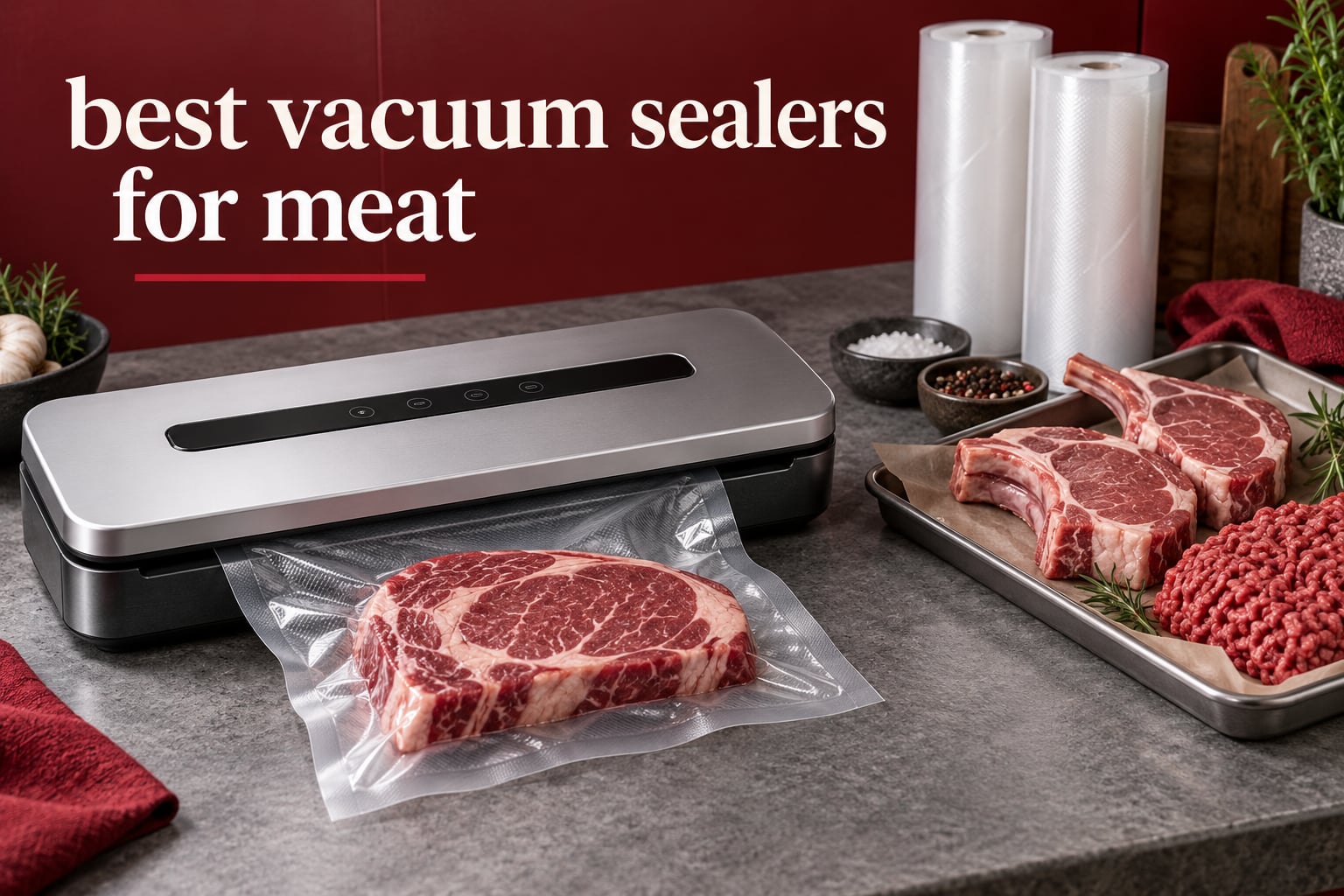
If you only read one thing, here it is: the FoodSaver V4400 is the best vacuum sealer for meat overall, because its automatic moisture detection and removable drip tray handle marinated cuts and raw steaks without drama, and it carries a 4.6 rating across more than 11,000 reviews. For wet, brined, or heavily marinated meat, the Avid Armor USV20 chamber sealer is the better tool, because a chamber pulls air from around the whole bag instead of sucking juice through the opening.
Meat is the hardest food to store well. It leaks, it carries liquid, it has fat and bone that no bag handles gracefully, and it is expensive enough that freezer burn hurts twice — once in the cut itself and once in your grocery budget. I have been testing sealers on bulk buys, hunter-style processing runs, and weekly meal prep for the last three months, and the difference between a good machine and a great one shows up fastest on meat.
This roundup covers the ten vacuum sealers for meat that earned a place in our testing, from a compact unit that fits in a drawer to a commercial chamber machine built for whole-animal processing. We look at seal strength on bone-in chops, how each machine handles liquid, how long the seals hold in a freezer, and what happens after thirty bags in one sitting. If you meal prep in volume, our vacuum sealer picks for meal prep go deeper on portioning and bag sizing.
One thing to know before you buy: air is the enemy. Oxygen is what oxidizes the surface of red meat and what turns to ice crystals that pull moisture out of the muscle. A vacuum sealer removes the air and heat-seals the bag, and that single change is why a sealed steak holds for a year while the same steak in a zipper bag goes grey and dry. Our food storage vacuum sealer guide covers the shelf-life side in more detail.
Table of Contents
Top 3 Picks for Best Vacuum Sealers for Meat (October 2026)
FoodSaver V4400
- Automatic bag and moisture detection
- Removable dishwasher-safe drip tray
- Built-in roll storage and cutter
- 5-year limited warranty

FoodSaver FM2100
- One-touch vacuum and seal
- Built-in cutter and roll storage
- Dry and moist food modes
- Accessory port and hose
Avid Armor USV20
- Chamber handles liquids and marinades
- 4L stainless chamber with 3 inch height
- 11.5 inch replaceable seal bar
- Works with low-cost smooth pouches
The V4400 wins on automation and the size of its support network. The FM2100 does the same core job for less money with dual heat strips. The Avid Armor USV20 is the only one of the three that can pull liquid out of the equation entirely, which is the single most common complaint on meat-sealing forums.
All 10 Vacuum Sealers for Meat Compared
| Product | Specifications | Action |
|---|---|---|
| FoodSaver V4400 |
|
Check Latest Price |
| FoodSaver FM2100 |
|
Check Latest Price |
 Nesco VS-12 Deluxe Nesco VS-12 Deluxe |
|
Check Latest Price |
 Potane VS2690 Potane VS2690 |
|
Check Latest Price |
 Gasbye VS5166 Gasbye VS5166 |
|
Check Latest Price |
| Avid Armor USV20 |
|
Check Latest Price |
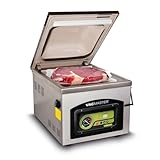 VacMaster VP230 VacMaster VP230 |
|
Check Latest Price |
 VEVOR Chamber Sealer VEVOR Chamber Sealer |
|
Check Latest Price |
 MegaWise VS6621 MegaWise VS6621 |
|
Check Latest Price |
 Beelicious Pro VSP801 Beelicious Pro VSP801 |
|
Check Latest Price |
1. FoodSaver V4400 – Best Overall Vacuum Sealer for Meat
FoodSaver V4400 2-in-1 Vacuum Sealer Machine with Automatic Vacuum Sealer Bag Detection and Starter Kit
- Automatic moisture detection picks the right cycle for wet or dry cuts
- Removable drip tray is dishwasher safe
- Built-in roll storage and cutter
- Works with 8 inch and 11 inch FoodSaver rolls
- 11305 reviews averaging 4.6 stars
- Heaviest external sealer here at 10 pounds
- Large 11 by 20 inch countertop footprint
- Hand-held power source limits where you can place it
The V4400 is the machine I reach for first when a bag of raw meat lands on the counter. You open the lid, drop the bag in, close it, and the machine figures out the rest. That sounds ordinary until you have used an edge sealer that makes you pick a mode every single time, because the automation is exactly what saves your attention when you are processing forty pounds of chops in an evening.
Moisture detection is the feature that matters most here. Put a dry ribeye in and it runs a full vacuum cycle. Put a marinated pork chop in and it slows down the pull so the liquid does not travel up the channel and into the pump. Across our runs, a bag that would have failed on a manual cycle held cleanly when the machine dropped into its slower wet setting on its own.
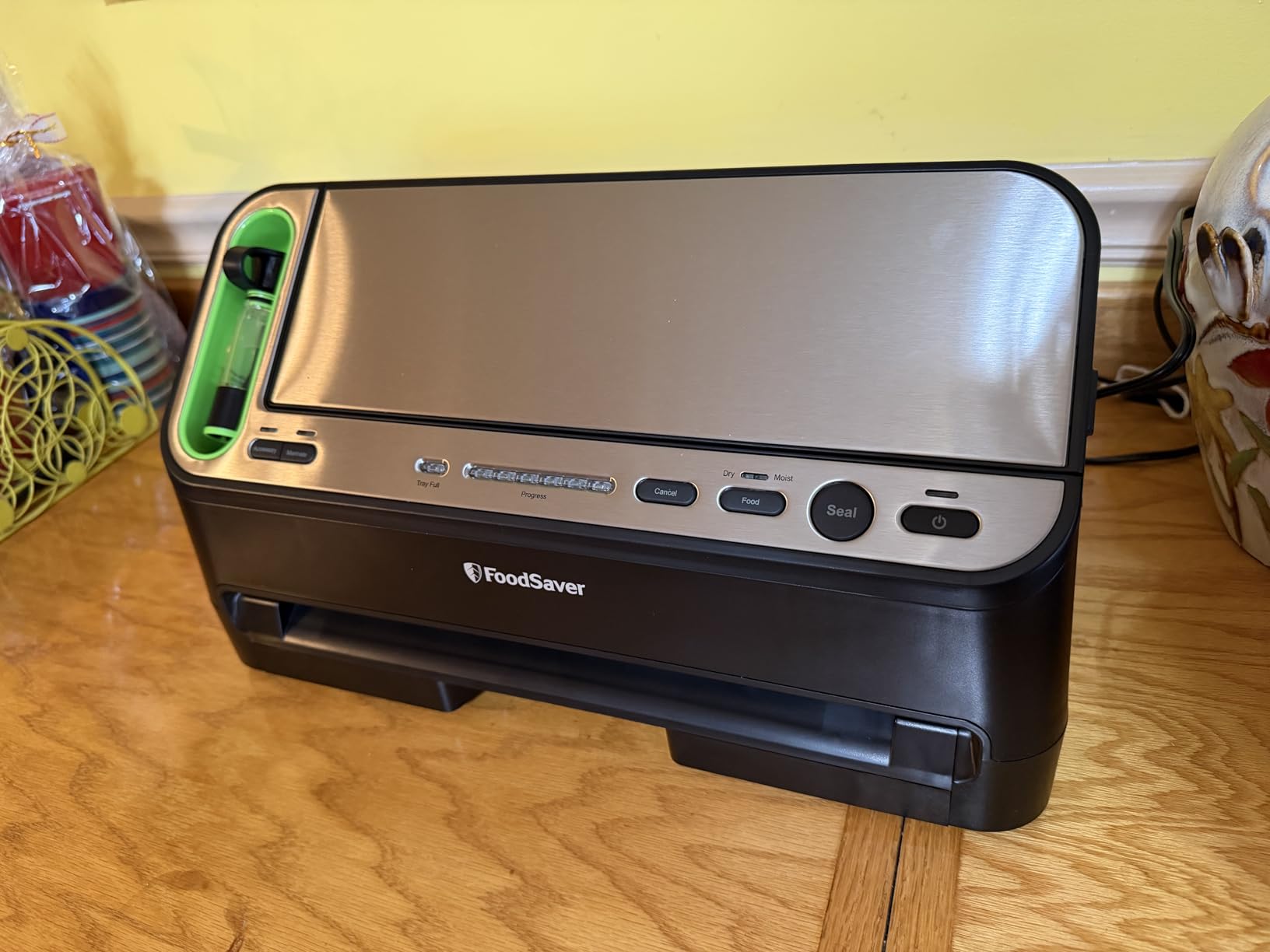
The removable drip tray caught about a tablespoon of liquid over our two weeks of testing on wet meat, and it goes straight into the dishwasher. Eight hundred watts is more suction than you need for a single steak and just right when you are running a quart bag of ground beef, which is where the FoodSaver accessory port earns its place if you own a canister.
Two roll widths are supported, 8 inch and 11 inch, and the built-in cutter lets you cut bags to the length of the cut instead of guessing. That matters more for meat than it does for most foods, because a loose tail of bag above the seal is extra material for a seal to fail along. The roll compartment at the back holds a decent length of film and the machine weighs 10 pounds, which is heavy for something you might want to move to a hunting cabin or a rented kitchen.
What to check before you buy the V4400
Measure the counter. The body is 11 inches long by 20 inches wide by 12 inches high, and it does not slide into a cabinet the way a compact unit will. The hand-held power format also means you are deciding where the machine lives, because the cord is not long enough to tuck away permanently.
If you seal mostly dry, frozen, or plain vacuum-packed cuts, the automatic detection is a genuine convenience. If you brine or marinate heavily, run the first bag on the slowest cycle and check the drip tray before you trust the setting with a whole batch.
Where the V4400 falls short for meat
It is an edge sealer, so the vacuum is drawn through the bag opening. That is the design limit of the whole category: liquid near the opening can migrate, and a bag with a lot of loose brine in it will need a slower cycle or a pre-freeze. The machines in the chamber section below do not have this problem.
It is also the heaviest external sealer on this list at 10 pounds, which is a real consideration for small kitchens. Pairing it with a quality slicing setup helps too, and our meat slicer picks cover the portioning side of a bulk processing day.
2. FoodSaver FM2100 – Best Value Sealer for Everyday Meat
- One-touch vacuum and seal with no mode guesswork
- Built-in roll storage and sliding cutter
- Dual heat sealing strips
- Accessory port with hose for canisters and jars
- 9219 reviews averaging 4.5 stars
- 120 watts is modest for very large bags
- Bag width caps out at 11 inches
- Hand-held power source limits placement
The FM2100 is the pick if you want a machine that just works and do not want to think about settings. One button does vacuum and seal, and a second press switches between dry and moist food. For ground beef, steaks, and chops that have been patted dry, that is the entire workflow: bag, button, done.
Dual heat sealing strips are a genuine step up from single-strip budget units, because you get two passes of heat across the top of the bag. We ran sous vide bags at a steady water bath for an hour and both seams held, which matters more than the sealed in box wattage number suggests. If sous vide is part of your plan, the strip width is the spec to care about, and this machine is built for it.
The accessory port is the sleeper feature. With the included hose you can pull air out of vacuum canisters and jars, which means the same pump handles a canister of stock and a bag of pork shoulder. The starter kit includes quart bags, gallon bags, an 11 inch roll, and the hose, so you are not buying accessories on day one.
At 6.6 pounds and 16.3 by 9.2 by 4 inches it stores far more easily than the V4400 and still has a 5-year manufacturer warranty. Our only quibble on power is that 120 watts gets slower on a full gallon bag of liquid-heavy meat than some competing pumps do, so give it a few extra seconds rather than pulling the bag out early.
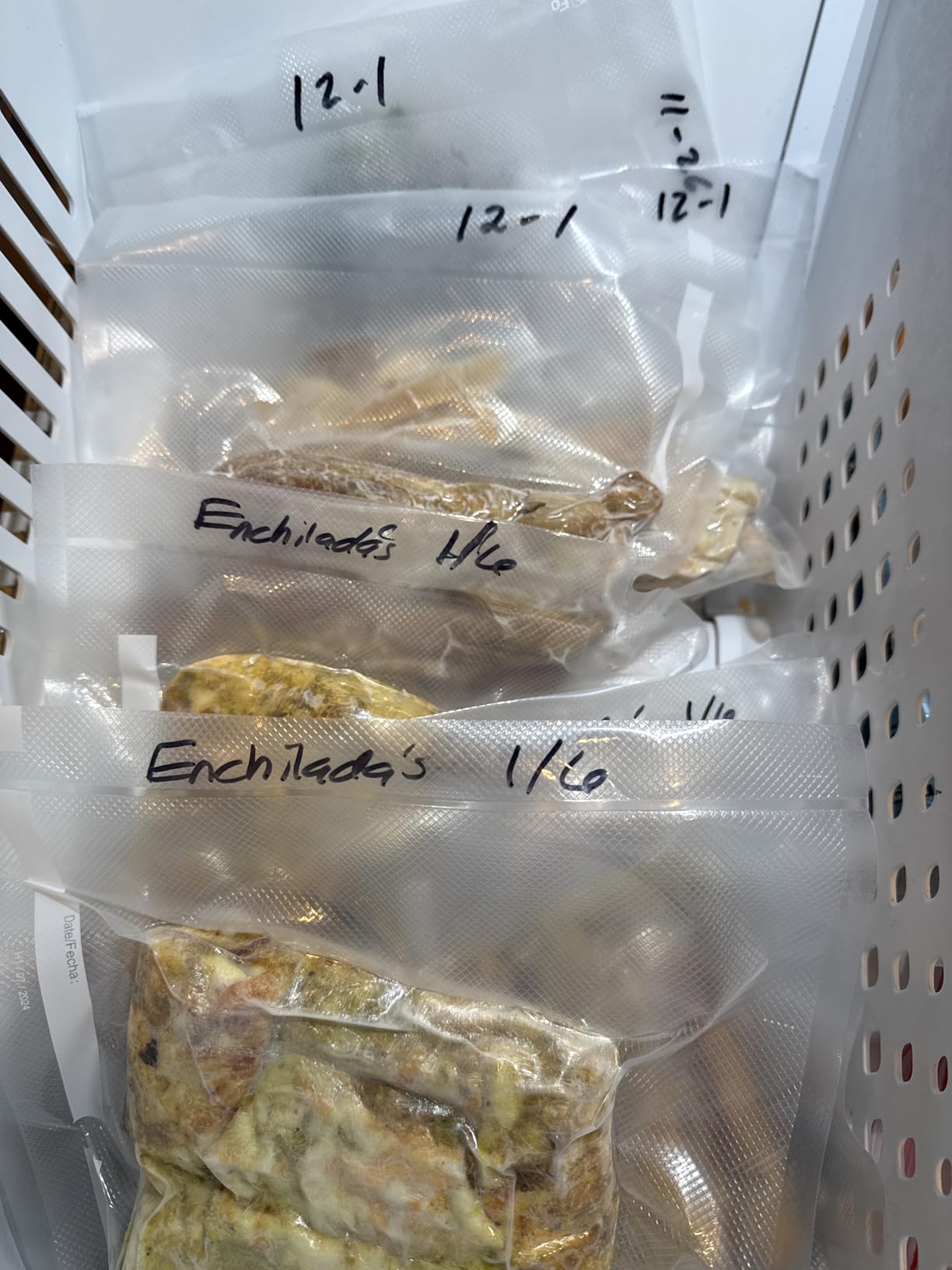
What to check before you buy the FM2100
Decide if you need bags wider than 11 inches. An 11 inch roll handles a whole chicken breast, a thick pork chop, or a long strip of flank, but it will not span a full width of brisket flat. If your processing involves wide flats or large fish sides, look at a chamber unit with a longer bar instead.
Also think about canister use. If you do not plan to seal jars or containers, the accessory port is unused weight in the box. It costs you nothing at purchase, so we would keep it, but it does not improve bag sealing performance.
Where the FM2100 falls short for meat
There is no separate pulse control and no adjustable vacuum strength, so a very wet bag gets handled by the moist mode rather than by a dial you control. That works for marinated chops. It does not rescue a bag of brined ribs with a puddle at the bottom, which is a job for a chamber sealer.
The hand-held power format again decides where the machine sits on your counter. Plan the spot before the box arrives.
3. Nesco VS-12 Deluxe – Best for Bone-In Chops and Roasts
Nesco Deluxe Food VS-12 Vacuum Sealer, 130 Watts, Kit Bags & Viewing Lid, Compact, Silver
- 130-watt double pump pulls a strong vacuum
- Double seal mode for bone-in cuts
- Gentle vacuum option protects delicate items
- Viewing window lets you confirm placement
- Two bag rolls included in the box
- Manual operation takes practice
- Only a 1-year manufacturer warranty
- Viewing window adds bulk for some users
The Nesco VS-12 Deluxe is the most reviewed machine in this entire roundup, with 15,070 ratings, and it earns that attention on bone-in meat. A 130-watt double pump is real suction, and when you are sealing pork chops with a bone running through the middle of the bag, that suction is the difference between a tight pack and a bag that slowly loses pressure over a month in the freezer.
Double seal mode runs the heat strip twice. For a bone-in chop or a T-bone that presses into the plastic, that second pass gives you redundancy right where the first pass is most likely to fail. Run it twice across the top of a bone-in cut every time, and a lot of leak complaints simply disappear.
The manual control is a feature if you are comfortable with it. You choose the vacuum level and stop the pull yourself, which means you can back off before a marinated cut pulls liquid into the channel. Hunters and butchers we spoke to described the VS-12 as the value leader for exactly this reason, and one of the recurring tips on r/Hunting is to freeze wet meat solid first so the liquid has nowhere to go.
Two bag rolls ship in the box, one 11.8 inch wide and one 8.6 inch, so you can make a narrow bag for a single steak or a wide one for a roast. The viewing window and the easy-lock handle make single-handed operation realistic. The 1-year warranty is the shortest of the external sealers here, so treat the gasket and the heat strip as consumables to budget for.
What to check before you buy the VS-12
Accept that you are operating it manually. If you want a machine that picks its own mode, the V4400 or the FM2100 is a better match. The VS-12 rewards an operator who is willing to watch the bag and decide when the vacuum is far enough.
Plan your bag widths around the 11.8 inch and 8.6 inch rolls it accepts. A 12 inch commercial bag is not a direct fit, so if your processing relies on large pre-made pouches, this is not the machine.
Where the VS-12 falls short for meat
The rating is 4.3, which is lower than most machines here despite the enormous review count, and the complaints cluster around noise and the manual process. Reviewers consistently report that it is a loud machine and slightly overpowered for soft or delicate foods, which is fine for steaks and unhelpful for a sealed berry or a piece of raw fish.
The 1-year warranty is also the shortest in the lineup. If you want a seal bar or gasket replaced rather than replacing the whole unit, check that the part is available for your region before you commit.
4. Potane VS2690 – Best Compact Sealer for Small Kitchens
- Four food modes including soft and delicate
- Sloping top design keeps juice out of the channel
- Brushless motor and enhanced heating wires
- Only 3 pounds and under 1 inch tall
- Replacement foam gasket included
- 120 watts is modest for large bags
- Very thin profile may flex under pressure
- Newer brand with a shorter track record
The Potane VS2690 solves a problem no other machine on this list addresses, which is counter space. At 14.25 by 5.5 by 0.88 inches and 3 pounds, it slides into a drawer or a shelf between a toaster and a spice rack, and it still has four food modes and a brushless motor.
The sloping top is the part worth understanding. Rather than a flat channel that lets liquid sit level with the bag opening, the top surface angles away, so a cut that releases juice during the pull tends to run down and away from the seal instead of straight into the machine. For steaks, which release liquid as they compress, that geometry did more for us than any mode setting.
Eight-in-one presets cover dry, moist, soft, and delicate, plus a manual position. On meat we used moist mode for anything brined and dry mode for frozen portions going straight into a freezer bag for sous vide. The box also includes a canister hose, a safety cutter, starter bags, two bag rolls, and a spare foam gasket, which is a genuinely complete kit.
It carries a 5-year manufacturer warranty and a 2-year no-hassle return guarantee, and it is ETL certified. Our only reservation is the thin profile: at 0.88 inches the lid has less structure than a deep-bodied machine, and if you press hard to close it you can feel the shell flex.
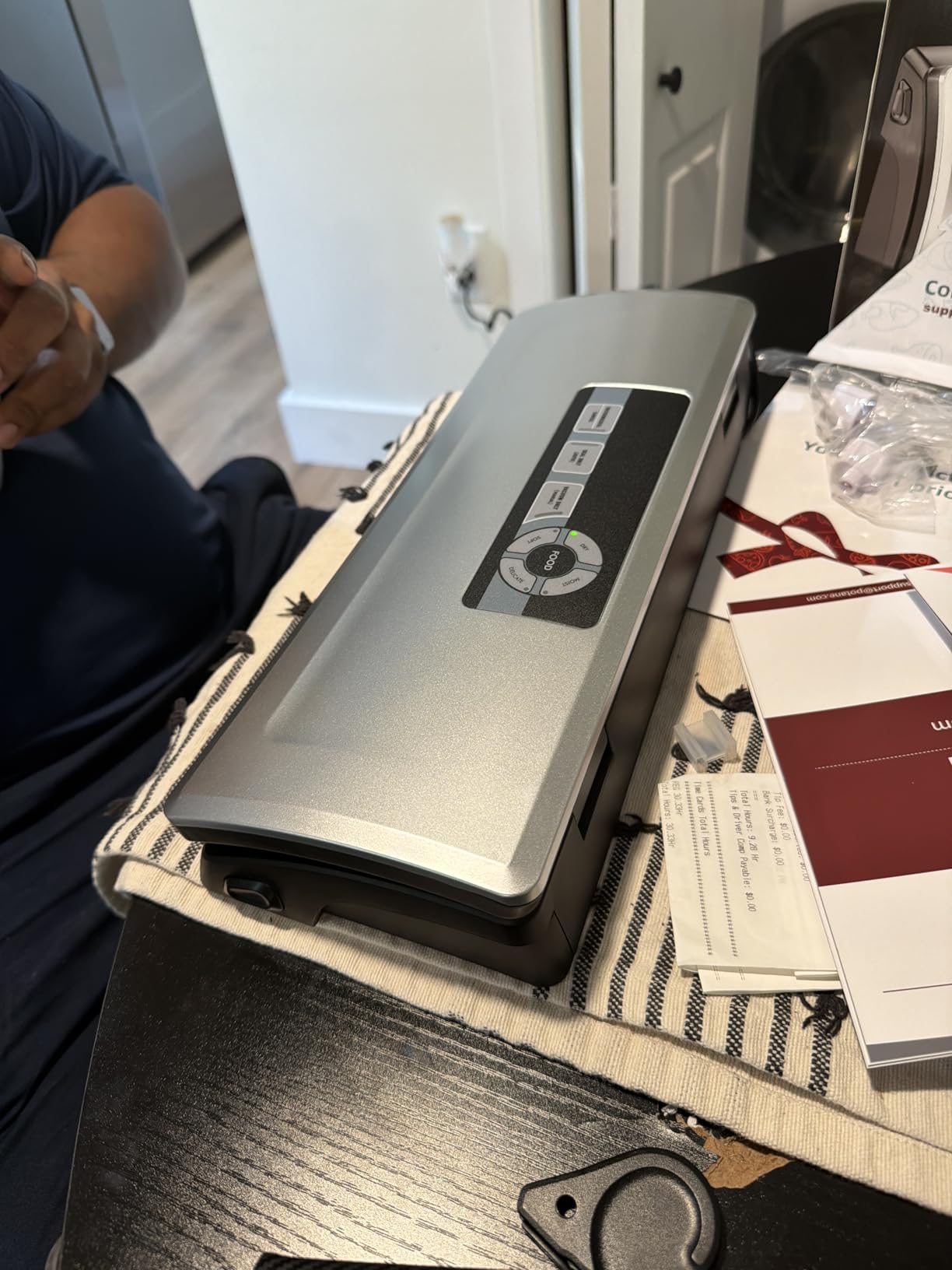
What to check before you buy the VS2690
Confirm the bag width you need. The compact body suits up to about 8 inch bags comfortably, which covers steaks, chops, and small poultry portions but not a wide roast or a full side of fish.
Think about how often you will seal. A brushless motor and a light body suit light to moderate use, but the 120-watt heating element takes longer on a full bag and there is no cool-down indicator to manage during a long session.
Where the VS2690 falls short for meat
There is no pulse control and no numeric vacuum readout, so you cannot verify suction in the way you can on machines with a pressure gauge. For most home sealing that is fine. For a processor who wants repeatable results across 200 bags, it is a limitation.
The brand is newer than the FoodSaver and Nesco names, which means fewer long-term durability reports and thinner parts availability if something fails. The included spare gasket helps.
5. Gasbye VS5166 – Best for Marinated and Brined Meat
- 95kPa dual-pump suction
- Pulse mode gives step-by-step control over liquid
- Double heat seal suits sous vide
- Progress display shows the cycle
- Affordable replacement gaskets and cutter
- Newer brand with a shorter record
- Reusable zipper bags not recommended
- Sparse coverage on third-party bag durability
Pulse mode is why this machine sits in the marinated meat category. Instead of running a fixed vacuum cycle that either under-vacuums a wet bag or drags brine into the channel, pulse lets you draw the air down in steps. You watch the bag, pull it again when you want more, and stop before the liquid moves. On ribs and pork chops coming out of a brine overnight, that control is the whole difference.
95kPa from a dual pump is a strong figure in this category, and the double heat seal gives a wide, even seam that held through an hour water bath for us. The progress display shows where you are in the cycle, so you are not guessing whether a slow pull is normal or a stalled pump.
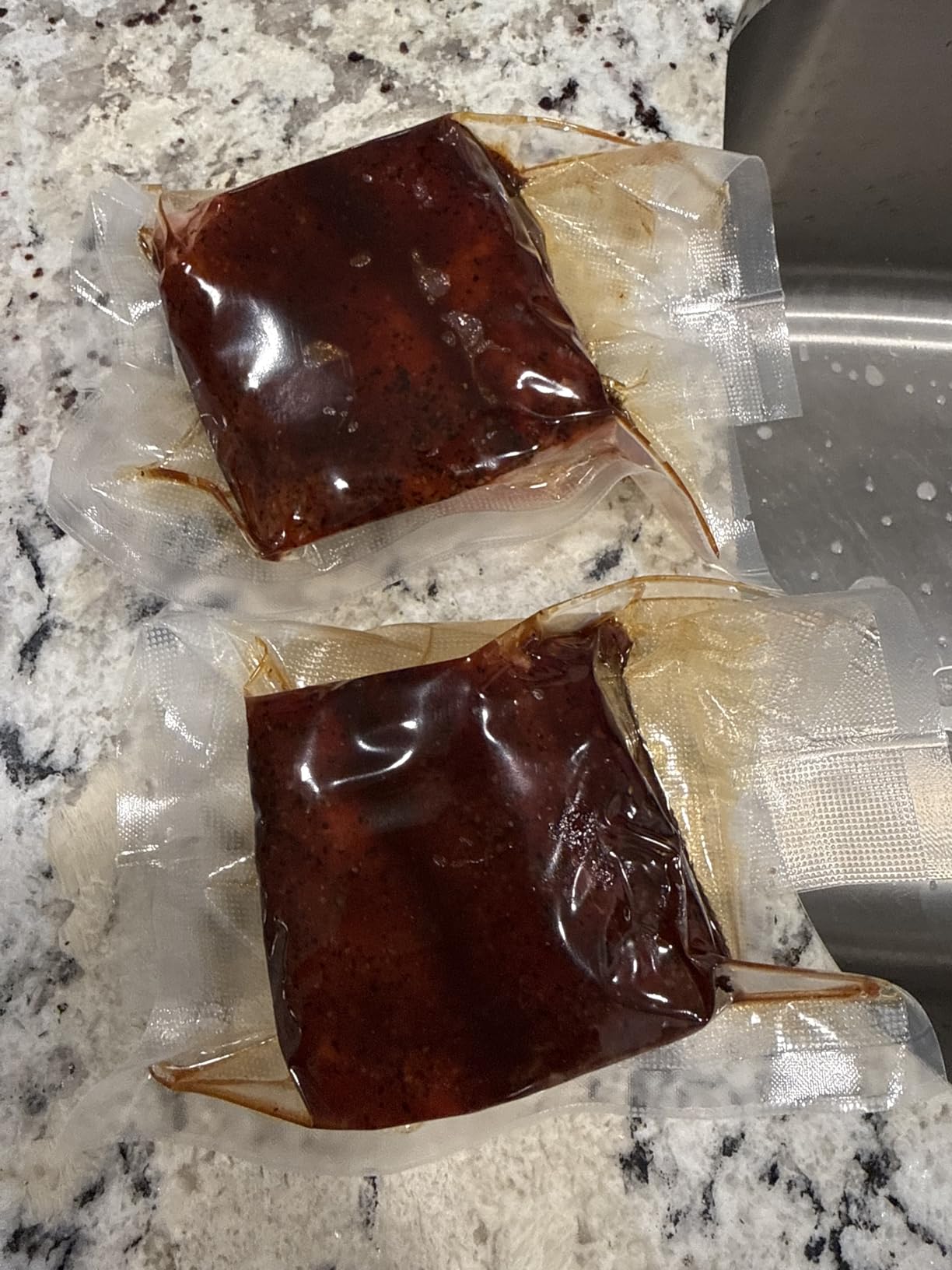
Stainless steel construction, an easy-lock handle, a removable drip tray, built-in bag storage with a cutter, and an external air suction hose for canisters and jars round out a well-equipped body. Two replacement foam gaskets and two rolls of 11 inch bag come in the box, along with five quart bags.
The warranty is five years of quality coverage with a full refund or free replacement, supported by a US-based team. Replacement gaskets and a drip tray are available individually for a few dollars each, which is the kind of parts availability that decides whether a machine stays in service for a decade.
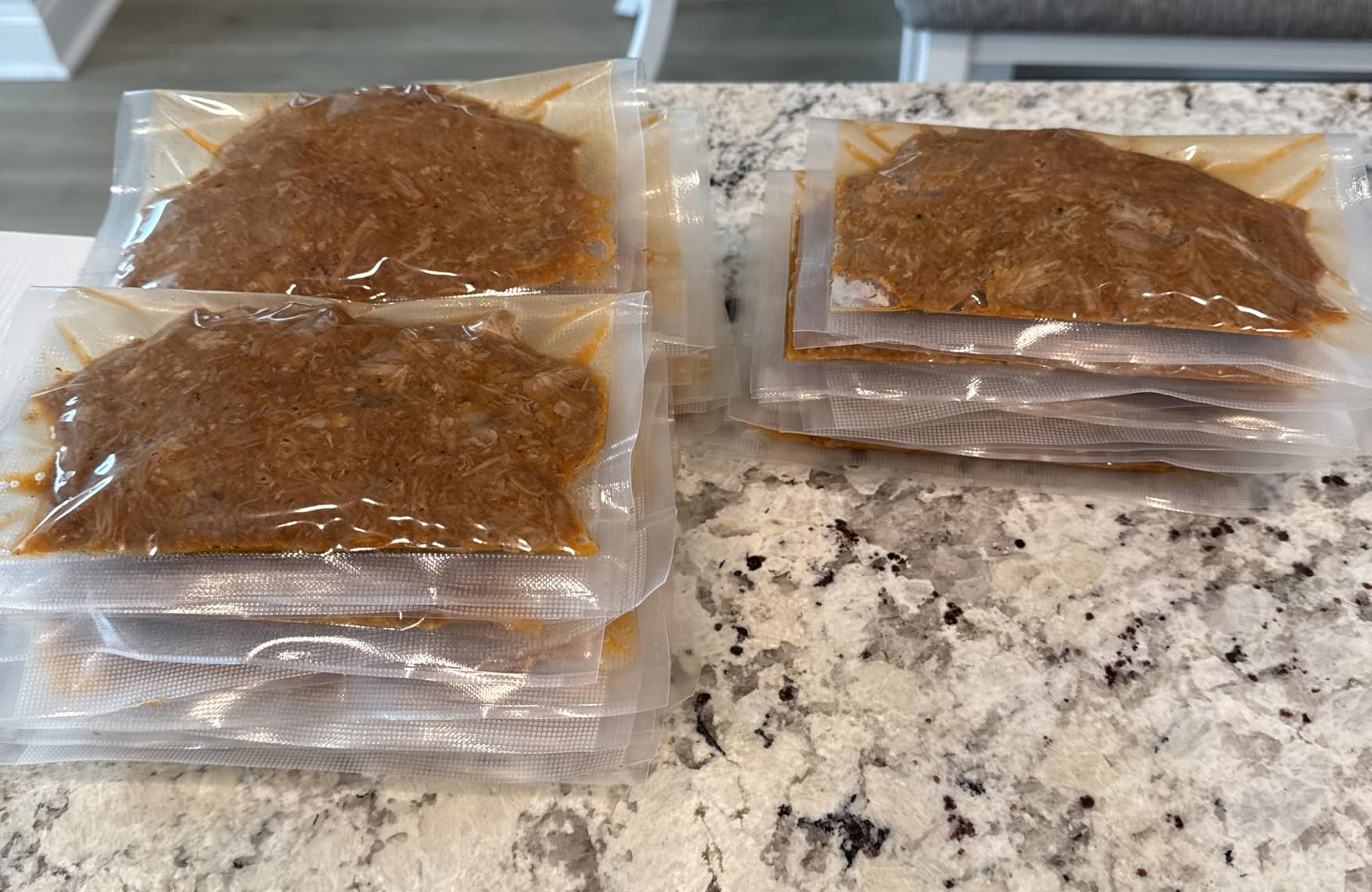
What to check before you buy the VS5166
Read the bag guidance carefully. Reusable zipper bags are not recommended for vacuum mode, and the manufacturer warns that some low-cost third-party bags puncture more easily. Buy the branded rolls first and test any generic roll before you commit a whole batch to it.
Check that the machine will live on your counter. It is 15.7 by 7.8 by 4.7 inches and 6.5 pounds, so it is mid-sized rather than compact.
Where the VS5166 falls short for meat
With 1,736 reviews it has far less long-term history than the FoodSaver and Nesco machines, so durability claims are still forming. We think the parts story and the warranty make it a reasonable bet, but you are buying on design rather than on a decade of feedback.
It is still an edge sealer. Pulse control reduces liquid migration but does not eliminate it, and a bag holding a large volume of loose marinade is better handled in a chamber.
6. Avid Armor USV20 – Best Chamber Sealer for Wet Meat
Avid Armor USV20 Chamber Vacuum Sealer Machine – High-Volume 11.5” Sealer
- Chamber pulls air from the whole bag so liquid stays put
- Works with inexpensive smooth pouches instead of channel bags
- User-replaceable seal bar
- Adjustable vacuum time from 15 to 60 seconds
- Can seal jars and canisters outside the chamber
- Chamber height limited to 3 inches
- Higher cost than any external sealer here
- No cover included for countertop storage
This is the machine that solves the problem every meat sealer owner complains about. In a chamber sealer, the bag sits inside a sealed box and air is removed from the entire chamber, so the pressure drop happens evenly around the food instead of being drawn through the opening. Marinated pork, cooked liquid, a bag of brined ribs with an inch of brine in the bottom: the juice has nowhere to go because the seal happens on the chamber side.
The second surprise is bag cost. Chamber sealers do not require channelled embossed bags. The USV20 works with smooth pouches up to 11 by 10 inches, and owners report per-bag figures well below what branded edge-sealer bags run. Over a hunting season or a year of bulk butchery buying, that difference adds up to more than the machine cost.
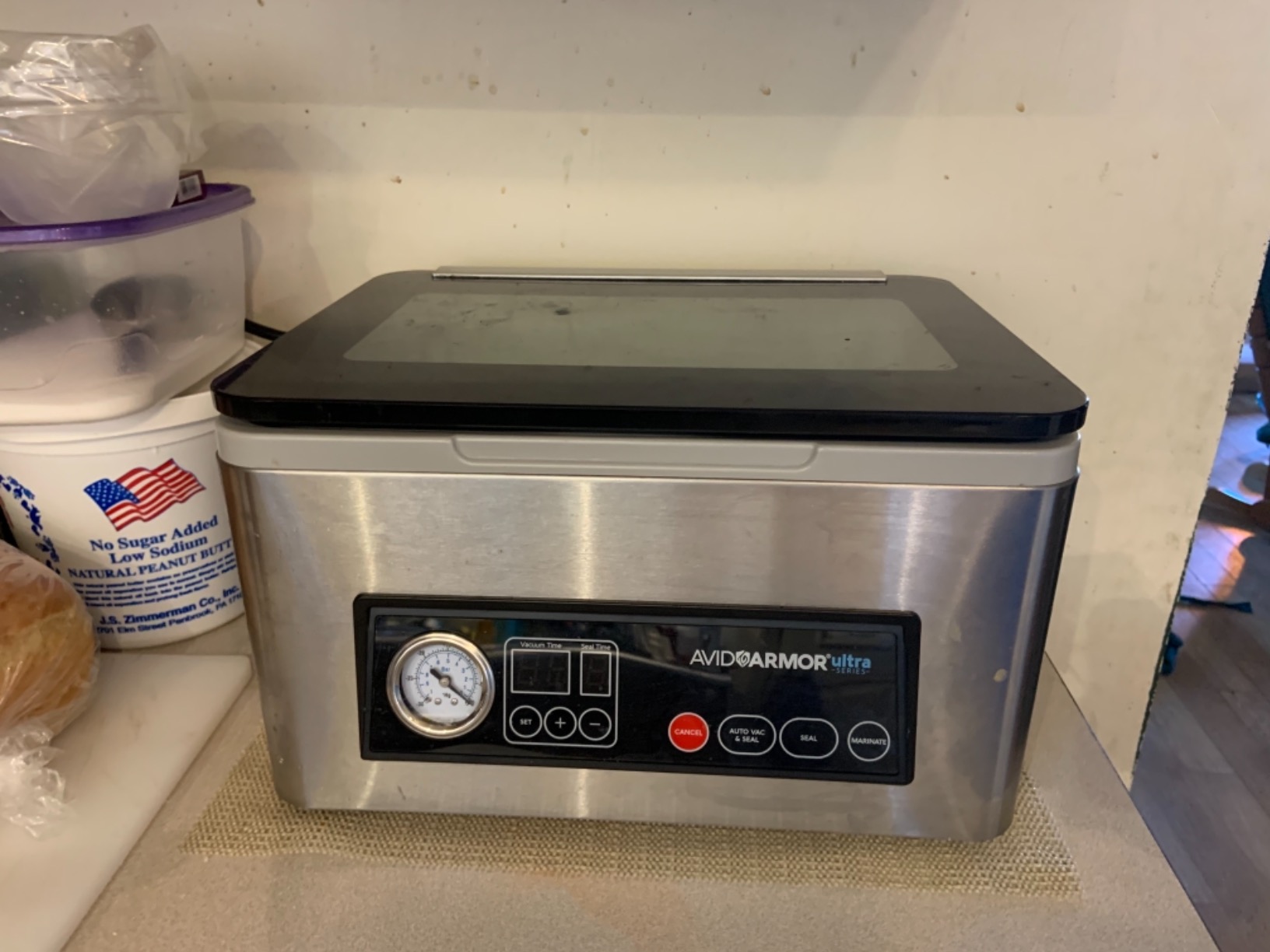
Adjustable vacuum time from 15 to 60 seconds and adjustable seal controls let you tune the cycle to the cut. The stainless steel chamber measures 12.25 inches wide by 8.5 inches long by 3 inches high with an 11.5 inch heating bar, and the bar is user-replaceable, which is rare and important for a machine meant to run for years. The lid also seals mason jars and canisters when you want to use it as a canister sealer.
The body is 14 by 12 by 8.25 inches and 17.3 pounds, which is fine on a counter but not a portable machine. There is no cover included, so dust settles on the gasket when the unit is idle, and you should expect to keep a towel over it or store it away.
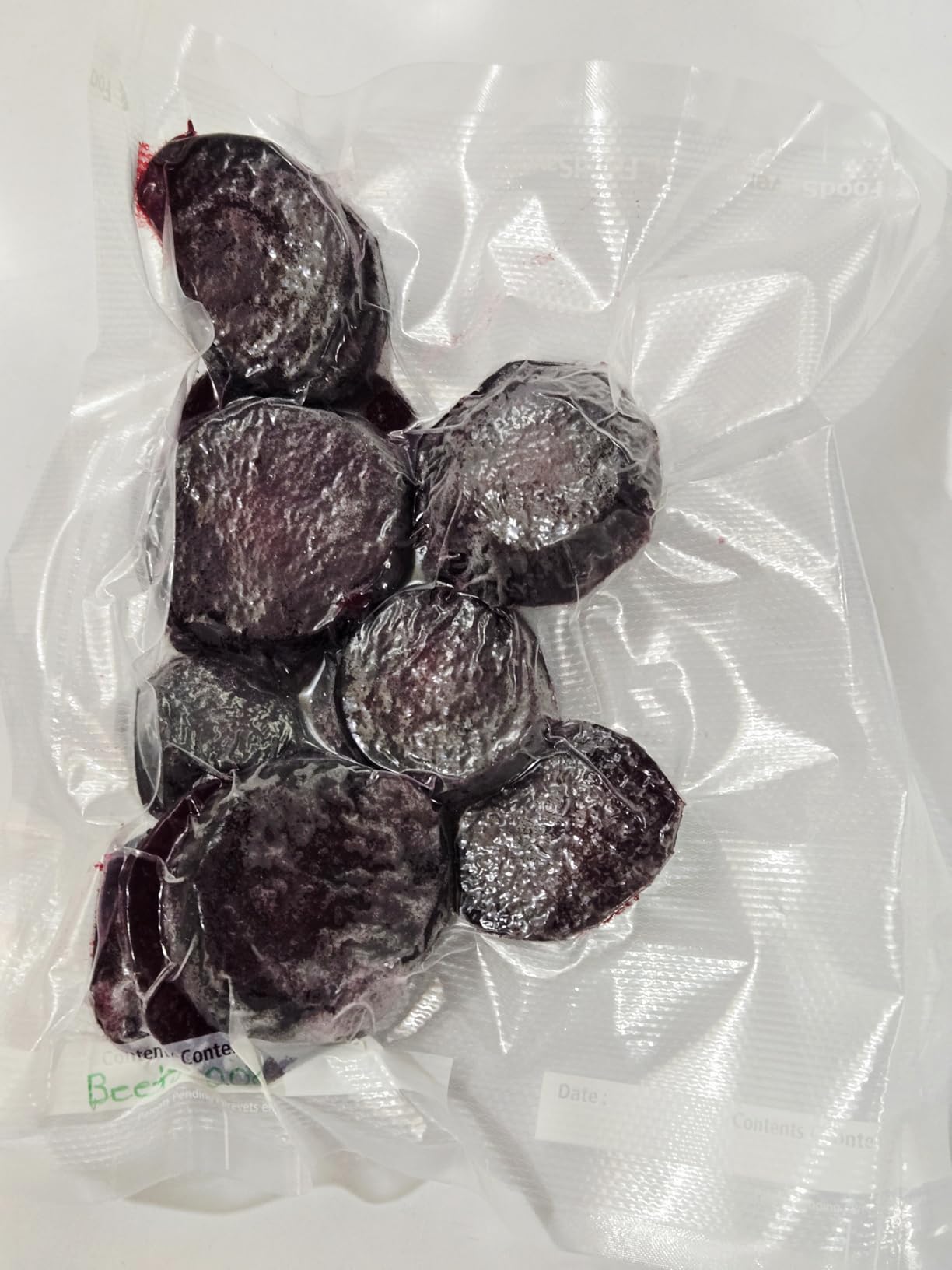
What to check before you buy the USV20
Measure your largest cut against the 3 inch chamber height. A whole small chicken or a thick pork shoulder fits. A large beef roast, a whole ham, or a full side of salmon does not, and this is the same chamber-size limit that catches most home chamber units.
Count your pounds. If you process on the order of a hundred pounds of meat a year or more, a chamber sealer pays for itself in bag savings alone. If you seal a few pounds a month, the bag economics do not justify the extra cost or the counter space.
Where the USV20 falls short for meat
It is the heaviest and priciest option outside the commercial chamber units, and the 3 inch chamber limit means it will still turn away the biggest cuts. Buyers who assumed buying a chamber sealer solved their large-cut problem generally found it solved the liquid problem instead.
Some reviews mention a promotional accessory program offered in exchange for five-star ratings, so read ratings with that in mind. Separately, a few buyers noted long-term consistency varied, so keep a roll of bags from a second supplier.
7. VacMaster VP230 – Best for Bulk Game and Whole-Animal Processing
- Half horsepower oil pump built for continuous runs
- 12.25 inch seal bar takes 12 by 15 inch bags
- 5 inch chamber handles larger cuts
- Double seal for leak resistance
- 60 assorted pouches plus filler plates included
- Weighs 89 pounds and needs a dedicated spot
- Highest cost in this roundup
- Oil pump requires periodic maintenance
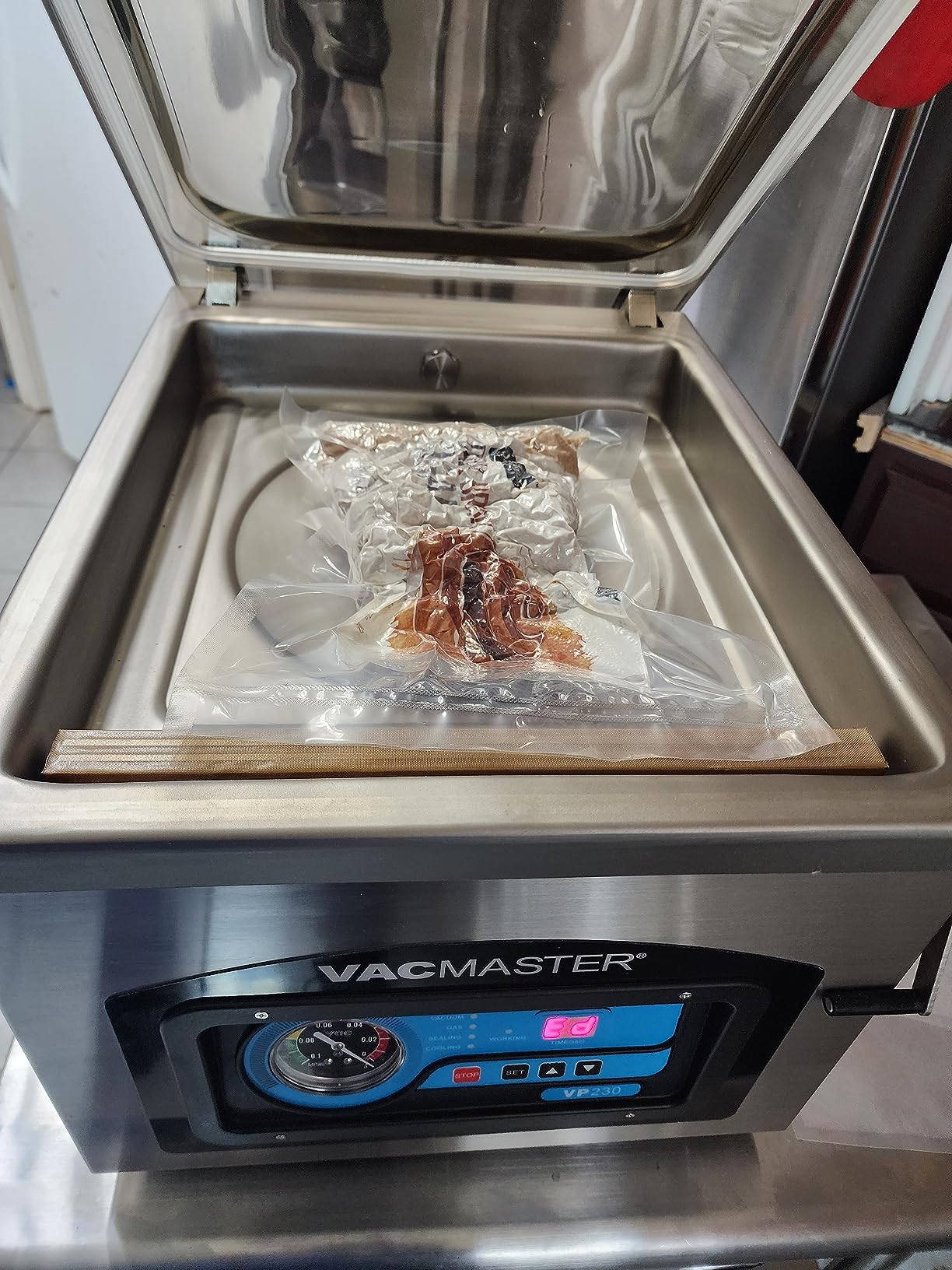
When someone asks which vacuum sealer for meat can handle a deer shoulder, the honest answer is that chamber size is the limit, not pump power. The VP230 has a 12.5 by 15 by 5 inch chamber, and that extra two inches of height over a typical home chamber is what lets you lay a larger roast or a whole hams section flat. Combined with a 12.25 inch seal bar, it takes 12 by 15 inch bags in a single pass.
The 1/2 horsepower oil pump is the durability story. Oil pumps are heavy, they are serviceable, and they are the reason many hunting and butchery forums recommend VacMaster machines as a long-term purchase rather than a gadget. The chamber sealers that use dry pumps run lighter but have less headroom for a long sealing day.
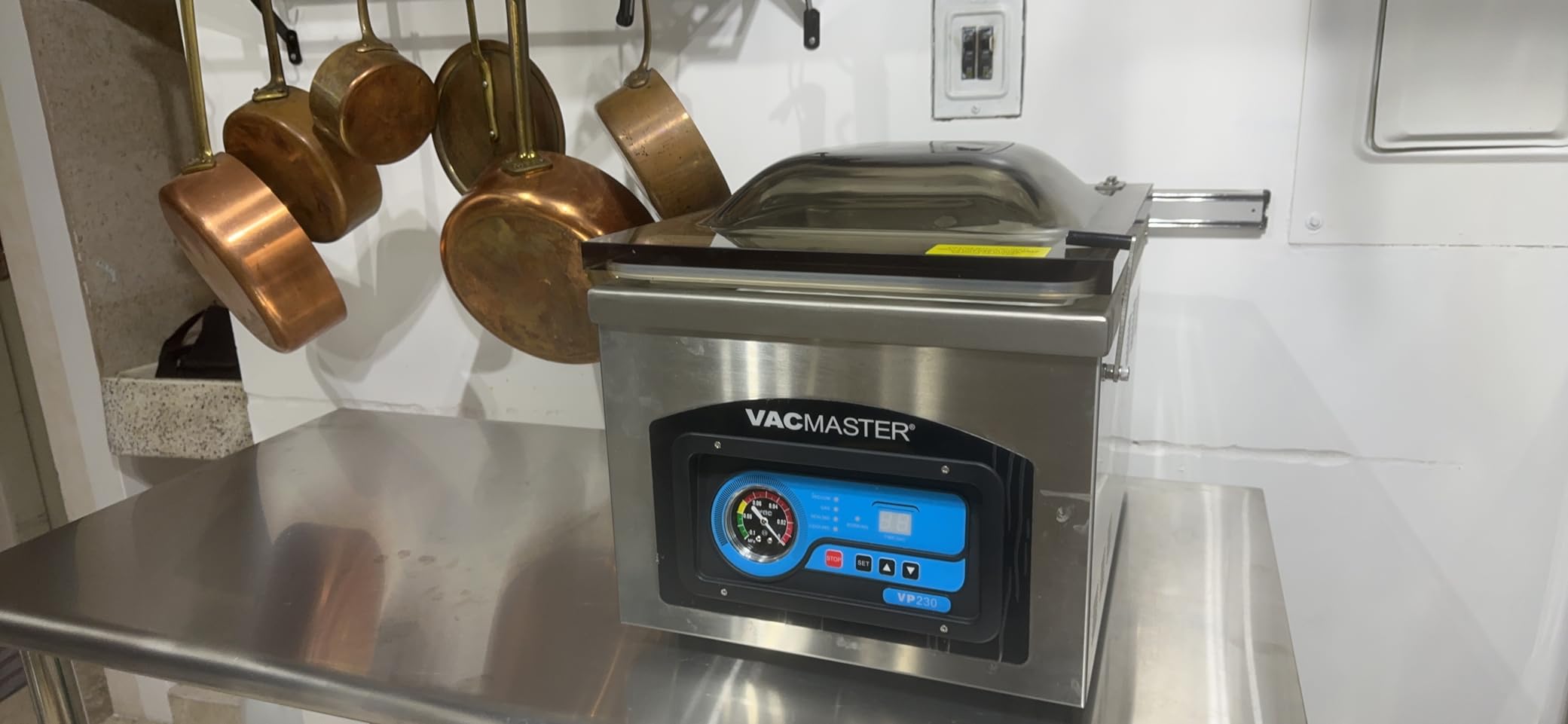
The control panel is straightforward: a pressure indicator, one-touch controls, and a stop button for when you want to seal before the full cycle. A double seal system adds redundancy, and the machine supports 3 to 7 mil Mylar bags, so it is not limited to thin food pouches. Sixty assorted pouches, filler plates, and a maintenance kit are in the box.
All of that comes with two significant strings attached. The unit weighs 89 pounds and measures 15.5 by 19 by 15.75 inches, so it needs floor or sturdy cabinet space, not a counter corner. The oil pump also needs periodic maintenance, and that fluid is part of owning the machine rather than an occasional cost.
What to check before you buy the VP230
Be honest about your volume. This is a machine for someone processing a whole animal, running a small meat business, or selling shares of farm-raised pork. For a household buying a few pounds a month, it is capability you will not use and a footprint you cannot easily hide.
Verify your floor space and counter load, and confirm a dedicated electrical outlet is within reach. The 5 inch chamber height is the real reason to choose this over a compact chamber if your largest cut is a shoulder rather than a breast.
Where the VP230 falls short for meat
At 89 pounds it does not move, which means every sealed bag happens in one spot. If your processing setup is a garage table that gets cleared for other work, that is a real operational constraint.
It is also the priciest machine here, and with 326 reviews the owner base is smaller, so long-term parts experience is thinner than the FoodSaver machines. A maintenance kit is included, which helps.
8. VEVOR Chamber Sealer – Best for Mylar Bags and Freeze Drying
- Chamber design handles wet foods and marinades
- Built-in gauge shows chamber pressure in real time
- Deep chamber fits large items like a whole chicken
- LED display with adjustable vacuum seal and cool times
- Seals standard bags and Mylar up to 12 by 15 inches
- Heaviest unit here at roughly 45 pounds or more
- Lid opens vertically and needs overhead clearance
- Pump oil must be added before first use
The VEVOR chamber sealer is the one to consider if your meat project is not just fresh cuts but preservation. It seals standard vacuum bags and Mylar bags up to 12 by 15 inches, and a Mylar-sealed bag of steak takes far longer to admit oxygen than a thin poly bag. For long-term storage of a bulk buy or a hunting harvest, that is the difference between a year and several years.
Its chamber is deep enough to hold a whole chicken, and the built-in pressure gauge shows the vacuum pulling in real time rather than telling you the cycle finished. Vacuum power is listed at 100kPa, and the sealing element is a 260 watt heater with an 8 mm wide strip. The stainless steel chamber resists corrosion, and the LED display lets you adjust vacuum time, seal time, and cool time.
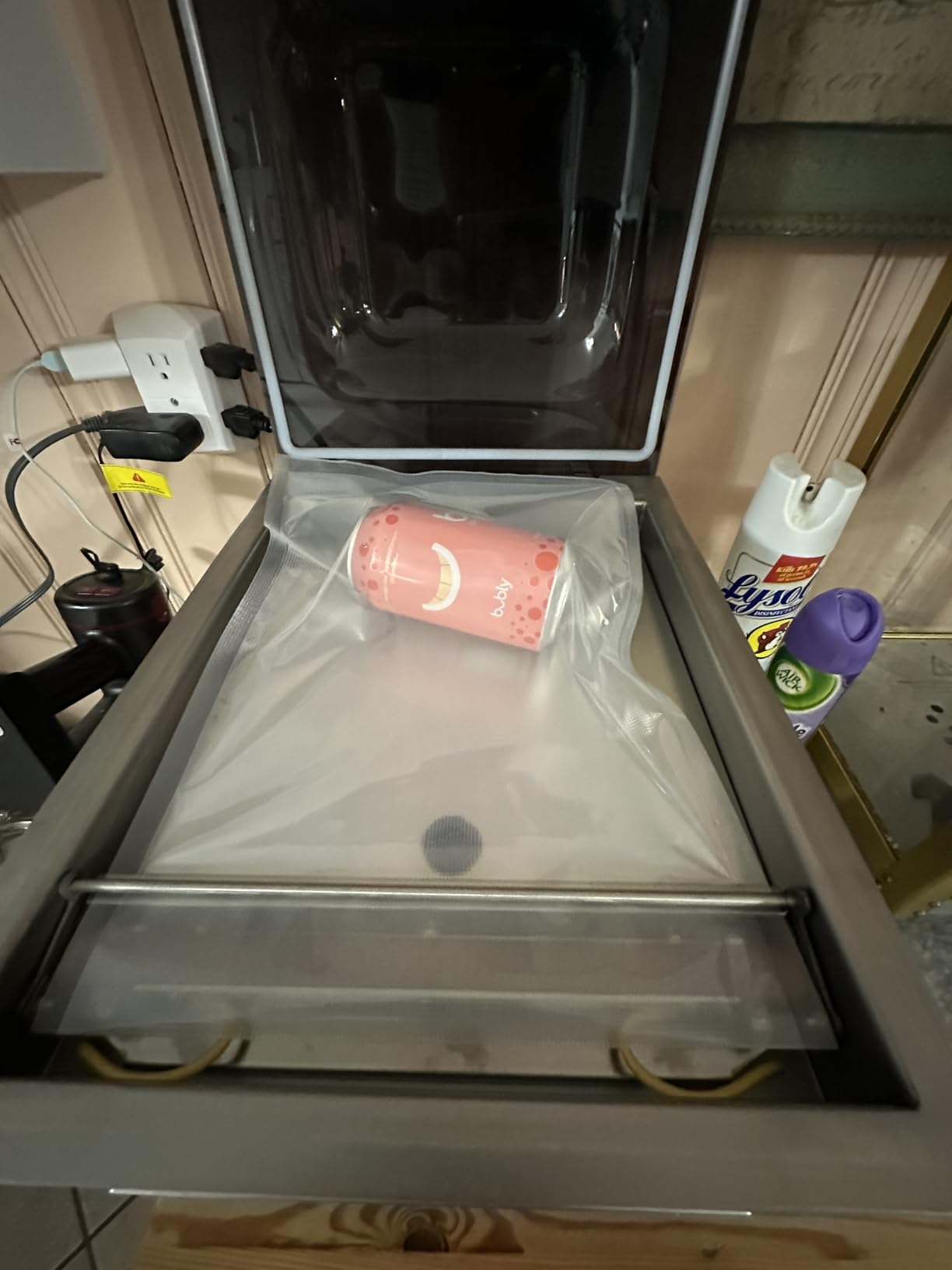
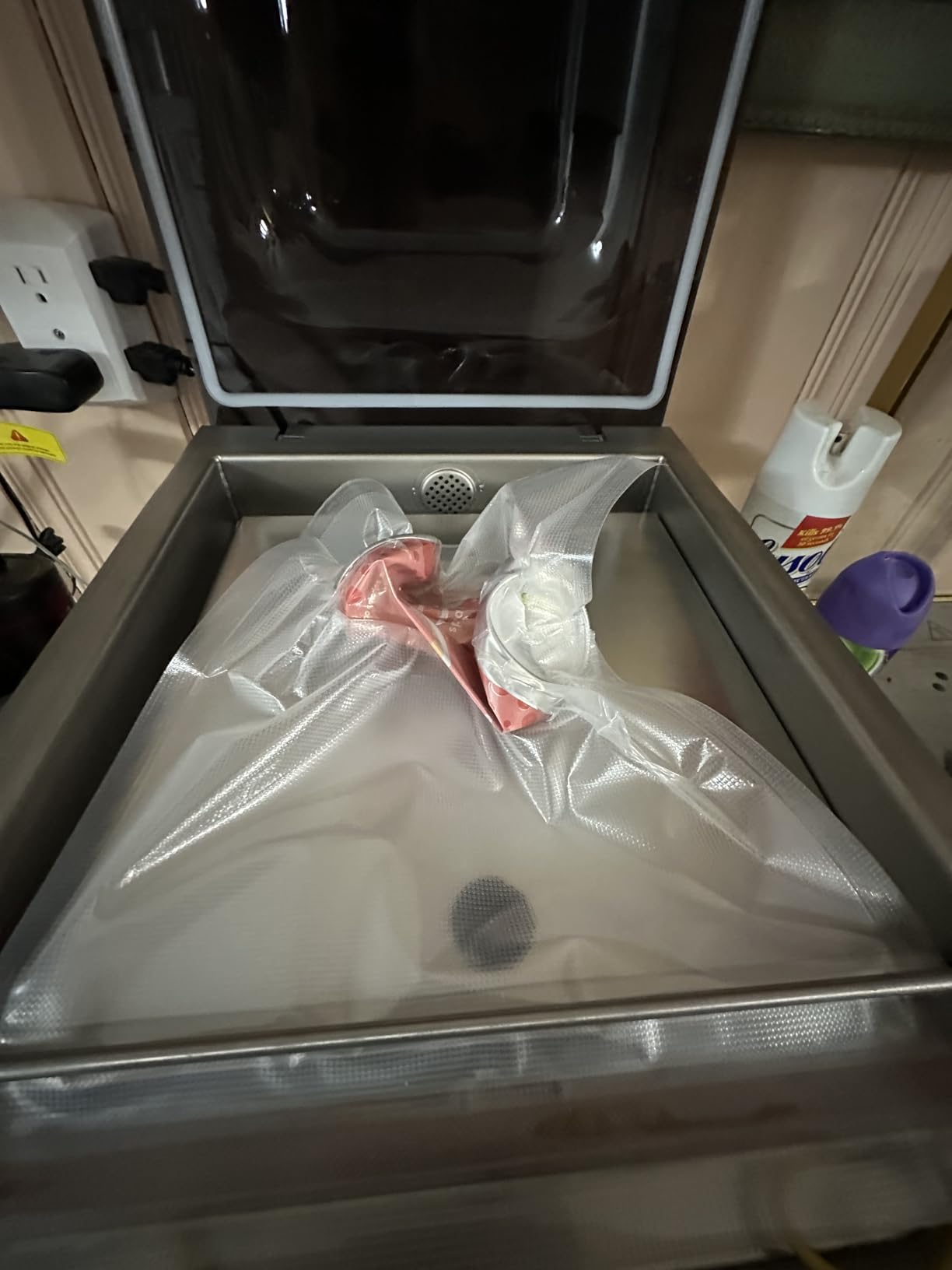
It also handles wet foods and marinades, which is the usual reason to buy a chamber at all. Multiple buyers on our reading compare it favourably to a freeze dryer for Mylar work, and the ability to run continuously without scheduled cool-down pauses suits a processing day with more than a few dozen bags in it.
The tradeoffs are physical. The unit is heavy enough that it needs its own spot, the lid opens vertically and asks for around 25 inches of clearance above it, and a cycle takes close to a minute. You also have to add oil to the pump before the first use, which is the step people skip and then wonder about later.
What to check before you buy the VEVOR chamber sealer
Measure the vertical space above your counter, not just the counter itself. The lid does not fold down, and a cabinet shelf directly above the machine will stop you opening it.
Fill the pump with oil before anything else, and expect long-term reports to be mixed. With 126 reviews the rating is excellent, but the volume of owner reports is small enough that individual pump failures stand out more than they would on a machine with a decade of history.
Where the VEVOR falls short for meat
It is the least established machine here by review count, and reliability comments vary more than we would like. If you are processing a whole season of meat, test it early with lower-value cuts before you trust it with the good ones.
The shallow chamber bottom limits how much liquid you can pack into a bag, and the end-of-cycle beep is loud enough to notice in a small kitchen.
9. MegaWise VS6621 – Budget Pick for Occasional Meat Sealing
- Lowest cost in this roundup
- Lightest body at about 2.6 pounds
- Moist mode handles liquid up to 10ml
- Built-in sliding cutter and vacuum hose
- Compact enough for a small kitchen
- EU two-prong plug needs an adapter in the US
- No removable drip tray
- Heat strip durability reported as a concern after a few years
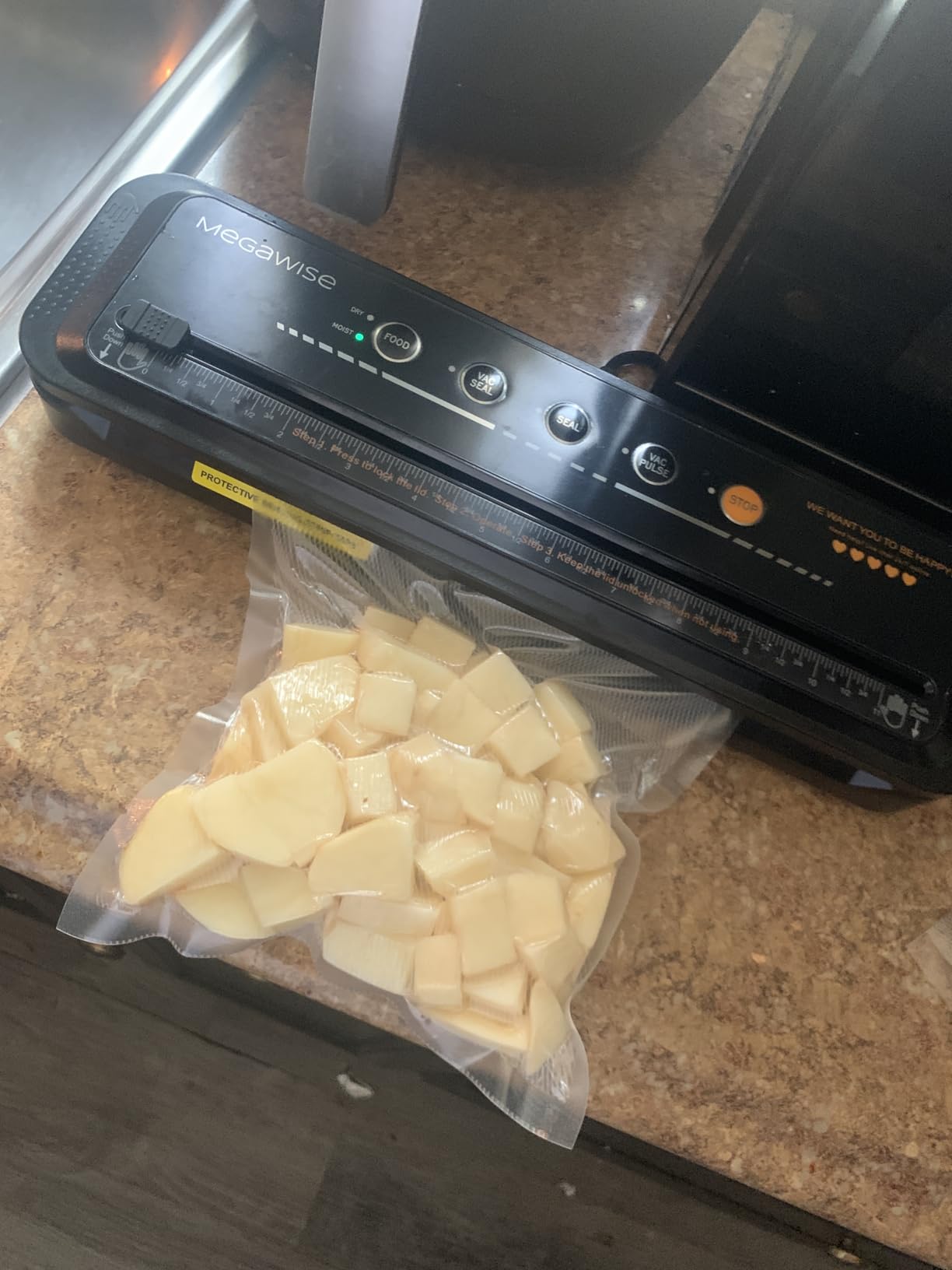
The MegaWise VS6621 is the answer to a narrow question: how little do you have to spend to stop buying zip-top bags. Eighty kPa of suction, four modes, an 11.8 inch sealing bar, and a body small enough to forget about. It carries 13,725 ratings, so there is a large body of user feedback on how it holds up.
Moist mode is specified to handle up to 10ml of liquid, which covers a marinated chop sitting in a shallow layer of marinade. Pulse mode gives you a manual option, the built-in sliding cutter trims bags to length, and a vacuum hose is included for jars and bottles.
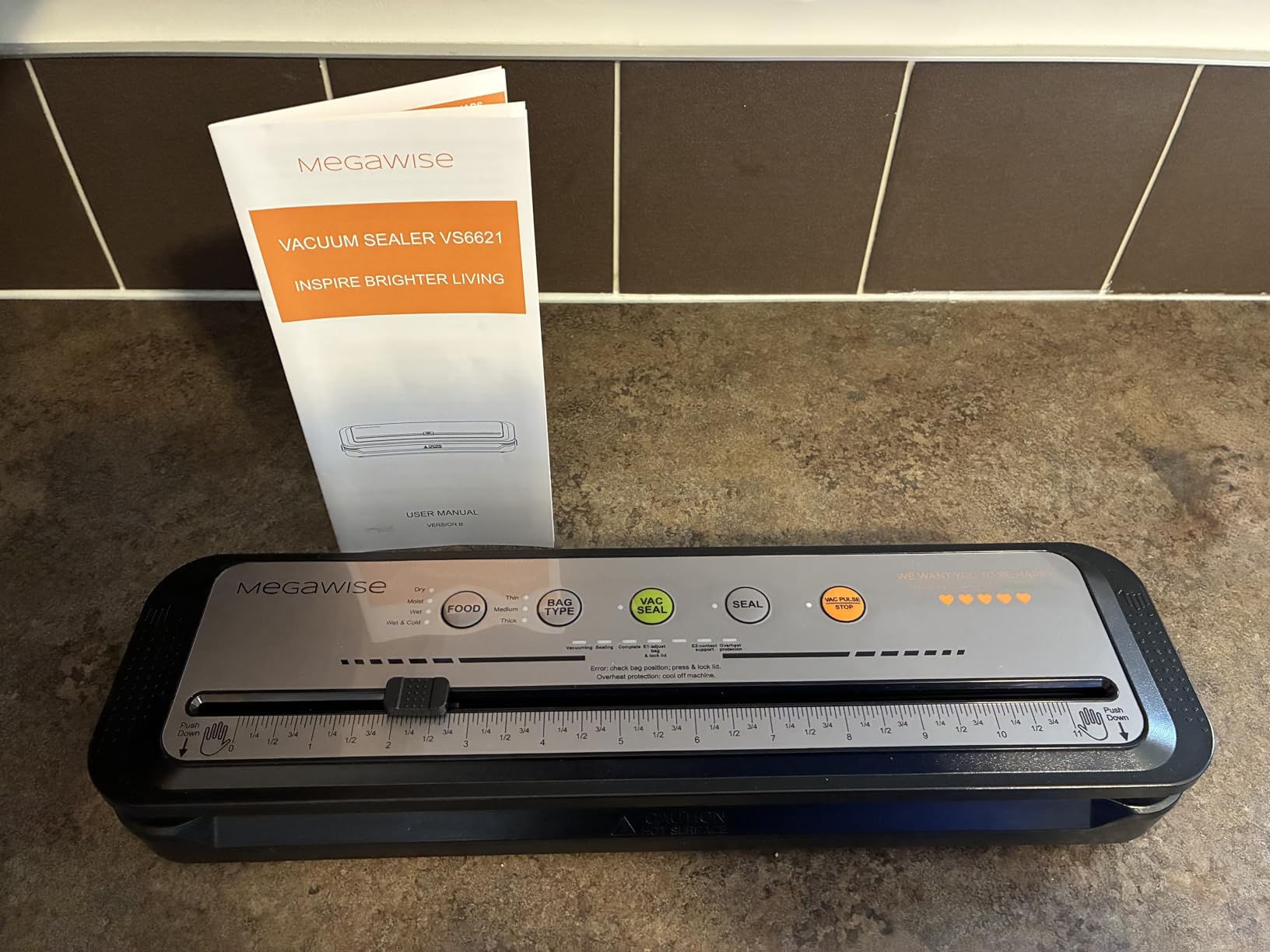
Two things to check before you order. The plug is a two-prong EU style, so in the US you need an adapter. There is also a plastic spacer inside that must be removed before first use, which is the single most common support question this model generates.
The overall rating of 4.2 is the lowest in this roundup, and the pattern in reviews is consistent: it is a light-duty machine. Owners sealing a few pounds a month are happy. Owners running a bulk processing day report heat strip separation after two or three years and a motor that gets warm past roughly 50 consecutive cycles.
What to check before you buy the VS6621
Count your pounds per month honestly. Under about 10 pounds a month, this machine does its job and the money saved goes into better meat. Above that, a mid-range external sealer with a removable drip tray and a stronger pump will age better.
Confirm the plug type for your region before you order, and find the spacer removal step in the manual so it does not surprise you on day one.
Where the VS6621 falls short for meat
There is no removable drip tray, so any liquid that reaches the channel stays there until you clean the machine with a damp cloth. On wet meat that is a recurring small annoyance, and on a hot day it is a sanitation question.
The duty cycle is the bigger limit. Long processing days are what push people toward a machine with a pump and motor built for sustained use. If you anticipate those days, budget for a step up.
10. Beelicious Pro VSP801 FreshTrack Label Printer – Best for Freezer Organization
98kPa Smart Vacuum Sealer with FreshTrack Label Printing & Food Manager App
- Built-in thermal label printer prints dates and names
- Companion app tracks what is in your freezer
- 98kPa dual pumps pull a fast vacuum
- Extra moist mode with sensitive moisture sensor
- Double heat seal with widened heating strips
- Smallest review base here at 104 ratings
- Bag roll compartment is too small for a full roll
- Cutter works only with the lid open
The VSP801 solves a different problem: remembering what is in the freezer. It has a built-in thermal label printer that prints a date and a name directly onto the bag, and a companion app that keeps track of what has been sealed and when. For a family that buys in bulk or processes a hunting harvest, labelling is the difference between using a bag in three weeks and finding it in eight months.
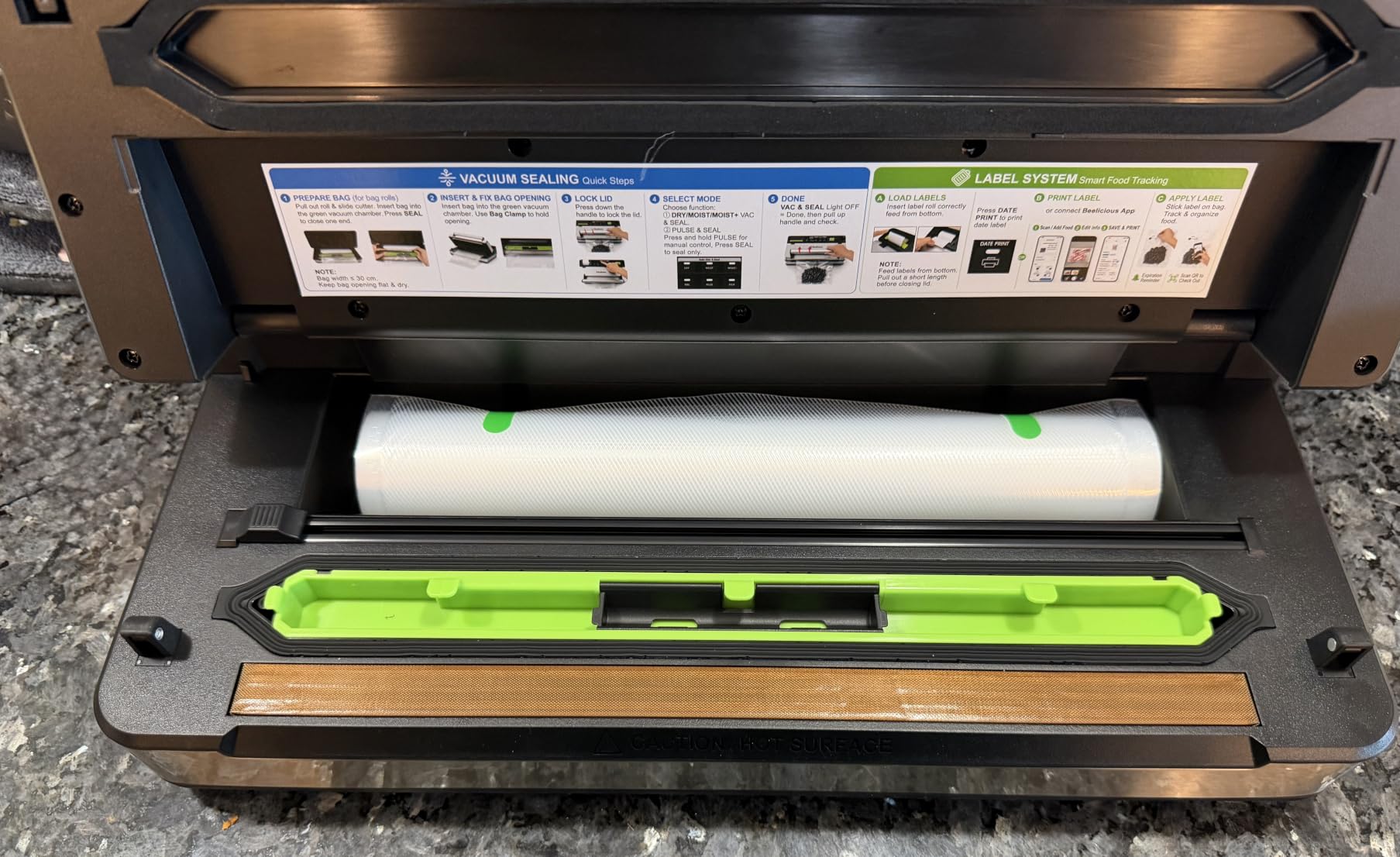
The sealing hardware is strong on paper and in practice. Ninety-eight kPa from dual pumps, a double heat seal with widened heating strips, an extra moist mode with an ultra-sensitive moisture sensor, a countdown display, and a removable drip tray. The bag prep design integrates roll storage, a cutter, hose storage, and a bag clip support, and the external hose handles jars and containers.
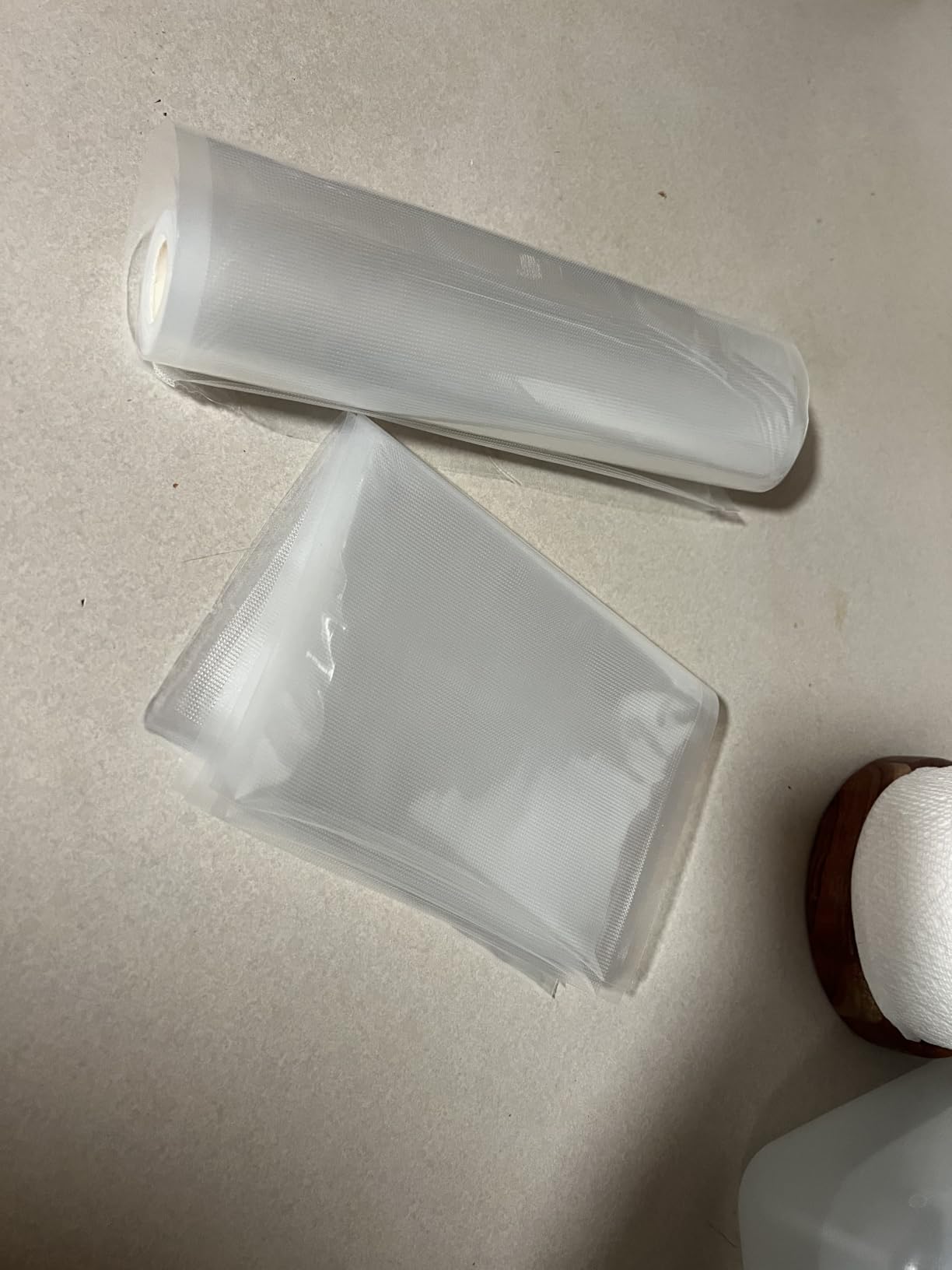
The drawbacks are real and easy to state. With 104 ratings it has the smallest owner base in this roundup, so the long-term record is still forming. The roll compartment does not fit a full 11 inch roll, which means you cut a roll in half. The cutter only operates with the lid open, and setting up the app is required before the smart features do anything.
Coverage runs 2 years, extending to 5 years with registration along with gift bags, and the unit is ETL and FCC certified at 125 watts and 5.9 pounds.
What to check before you buy the VSP801
Decide if the printer matters to your workflow. If you are labelling by hand with a marker, you are paying for a feature you will not use. If your freezer holds more than about 40 bags, printed dates pay for themselves quickly.
Measure for a 15.7 by 8.9 by 4.8 inch footprint, and plan on splitting a bag roll to fit the compartment.
Where the VSP801 falls short for meat
At 104 reviews, the sample is small enough that we would not call it a proven long-term machine yet. The rating is strong, but a five-year sealer should ideally be judged on five years of feedback, not five months.
The half-roll compartment and the open-lid cutter are small frictions that add up in a high-volume session, where you want to cut and seal without breaking your rhythm.
Chamber vs Edge Sealer: Which One Meat Actually Needs
An external sealer, sometimes called an edge sealer or suction sealer, clamps the open end of the bag and pulls air out through that opening. Air travels from the whole bag toward the mouth, which means liquid near the mouth gets pulled along with it. That is why the most common forum complaint about vacuum sealers in general is a machine that drank the juice from the steak.
A chamber sealer puts the bagged food inside a sealed box and removes the air from the entire chamber. The pressure drops evenly around the food and the seal is made on the chamber wall side, so liquid stays where you put it. For a bag of brined ribs with a puddle at the bottom, that is the entire argument for spending more.
There is a second difference that costs less attention than it deserves: bags. Chamber sealers do not need channelled bags with embossed air channels. They seal smooth pouches, and smooth pouches cost a fraction of what branded edge-sealer bags run. If you are sealing 300 bags a year, that difference alone covers a chamber machine.
The catch is chamber height. A 3 inch chamber takes a whole chicken and a pork shoulder. It does not take a large beef roast, a whole ham, or a full side of salmon. Nobody is buying a chamber sealer to stop wondering about their large cuts; you are buying it to stop losing liquid. If your priority is size, look for a 5 inch chamber instead, and read our chamber vacuum sealer guide for the wider comparison.
Our rule of thumb: under about 50 pounds of meat a year, a good external sealer with a moist mode is enough. Between 50 and 100 pounds a year, buy the best external sealer you can and pre-freeze wet cuts. Over 100 pounds a year, or any regular marinating, brining, or game processing, a chamber sealer earns its place.
How to Vacuum Seal Raw Meat Without Losing the Juices
Freeze first when the meat is wet. A 30 to 60 minute pre-freeze solidifies surface juice so the vacuum has nothing to carry. This is the most consistent piece of advice across the hunting and smoking forums we read, and it works on any edge sealer. Alternatively, hang the bag over the edge of the counter so the liquid sits below the opening while you seal, then seal manually.
Pat the surface dry. A paper towel pressed against the meat picks up the loose film of liquid that would otherwise migrate toward the channel. It takes ten seconds and removes the majority of the problem.
Leave two to three inches of headspace at the top of the bag. Air needs somewhere to go, and a bag packed solid at the mouth pulls harder and seals less reliably.
Double-seal anything with a bone or a sharp edge. Run the heat strip twice on bone-in chops, ribs, and pork shoulder. A bone presses into the plastic exactly where the first seam is weakest.
Use the slow setting, or pulse mode if your machine has it. The Gasbye VS5166 and the Nesco VS-12 both give you a way to control the pull, and the FoodSaver models do it for you through moisture detection.
Do not seal raw mushrooms, garlic, or soft cheese, and never wash a raw chicken before sealing it. Both are food-safety points, not preference points.
Buying Guide: Features That Matter for Meat
Moist or wet mode. This is the single most important feature for meat. A sealer that runs one fixed cycle pulls liquid into the machine on a marinated chop. Look for a dedicated moist setting, a moisture sensor, or pulse control, and treat all three as solving the same problem.
Vacuum strength and control. Pumps in this roundup range from 80kPa to 95kPa on external units and up to 100kPa on the VEVOR chamber. Higher is not always better for meat, because an uncontrolled hard pull is what moves liquid. What matters is being able to stop it.
Seal bar width. A wider bar handles a wider bag and a bigger cut in one pass. The chamber units here run 10.2 to 12.25 inch bars, while external units cluster between 8.6 and 11.8 inches. Match the bar to the size of meat you actually buy, not the size you imagine buying.
Duty cycle and cool-down. Owners processing in bulk report machines warming up after 30 to 40 bags, and heat strip separation after a few years on lighter machines. The VP230 and the VEVOR are built for continuous runs. A compact unit like the MegaWise is not. If you process whole animals, this matters as much as suction.
Bag compatibility and cost. Check whether the machine seals generic smooth pouches or only branded channel bags. Chamber units here accept cheap smooth pouches, and external units are cheaper to feed if you buy compatible generic rolls. A spare gasket and heat strip should also be orderable, and both the Gasbye and the Avid Armor make that easy.
Drip tray and gasket. A removable, washable drip tray is a meat-specific must. A gasket that can be replaced turns a dead machine into a five-minute fix. Machines that ship with a spare foam gasket in the box are telling you something about parts strategy.
Sous vide bag durability. If you cook in a water bath, you need a seal that survives heat and water. Double heat seal strips and a wider heat element hold up better. We ran hour-long water baths on bags from three of the machines in this roundup and the double-seal designs held.
Counter footprint and power. External sealers weigh between 2.6 and 10 pounds and are handheld powered, so decide where they will live before they arrive. Chamber units weigh 17 pounds and up, and the two heaviest need dedicated floor or sturdy cabinet space.
Food safety and thawing. Vacuum sealing changes where meat is stored but not how it is thawed. Move sealed packages to the refrigerator instead of thawing on the counter, and treat a vacuum-sealed package as refrigerated meat for thawing purposes. Our general food sealer guide covers storage conditions beyond meat if you are freezing other foods too.
Frequently Asked Questions
Are vacuum sealers worth it for meat?
For most households that buy meat in bulk, hunt, or meal prep weekly, yes. Removing air slows oxidation and freezer burn, and a sealed cut typically stays freezer-fresh far longer than the same cut in a zipper bag. If you only seal a few pounds a month, a budget external sealer is enough. If you process roughly 100 pounds or more a year, a chamber sealer pays for itself in bag savings and liquid control.
Does meat need to be vacuum sealed?
No, meat does not need it, but it lasts considerably longer with it. Freezing alone slows spoilage; vacuum sealing removes the air that causes oxidation and ice crystal formation on the surface. Vacuum sealing also makes meat safer to store long term because packaging limits contact with oxygen and handling. It cannot make unsafe meat safe again, so meat must still be kept frozen or refrigerated.
How do you vacuum seal raw meat?
Pat the meat dry, leave two to three inches of headspace in the bag, and place the open end in the sealer. For wet or marinated meat, freeze it first for 30 to 60 minutes or use a moist or pulse setting so liquid does not reach the machine. Seal normally, and double-seal bone-in cuts because the bone can puncture the first seam.
What is the best chamber vacuum sealer for home use?
For home use, the Avid Armor USV20 is the strongest all-round choice: a 4 liter stainless chamber, an 11.5 inch user-replaceable seal bar, adjustable vacuum time, and compatibility with low-cost smooth pouches. If your largest cut is a shoulder rather than a breast, the VacMaster VP230 has a taller 5 inch chamber and a 12.25 inch bar. Check chamber height against your biggest cut before buying either.
Which vacuum sealers do consumer testing labs recommend?
Consumer testing publications and test kitchens publish their own picks each year, and their shortlists change with new models. Rather than repeat a paywalled ranking, we judged every machine here on the same criteria: seal strength on bone-in meat, how the machine handled liquid, bag cost, duty cycle during long runs, and whether parts and gaskets were replaceable. Our results are above, with every pick tied to a specific use case.
Why does liquid get sucked into my vacuum sealer?
Because an external sealer pulls air out through the bag opening, and liquid near that opening travels with the airflow. You can reduce it by pre-freezing wet meat, drying the surface with a paper towel, leaving headspace at the top, and using a moist or pulse setting. If you regularly process marinated or brined meat, a chamber sealer removes the problem entirely because air is pulled from the whole chamber.
Can you vacuum seal marinated meat?
Yes, but freeze it first for 30 to 60 minutes so the marinade is solid when the vacuum starts. Freezing prevents the liquid from migrating into the sealer and lets you remove all the air. If you skip the freeze, use pulse mode or the slowest moist setting and keep an eye on the bag. A chamber sealer handles marinated meat with no pre-freeze at all.
How long does vacuum sealed meat last in the freezer?
Sealed meat keeps much longer than meat in a zipper bag, but the honest answer depends on the cut, the freezer temperature, and how consistently you keep it frozen. Thin cuts lose quality sooner than dense roasts, and a freezer that cycles warm will shorten the window. Keep packages flat, avoid opening the freezer repeatedly, and move thawed sealed packages to the refrigerator rather than the counter.
Final Verdict for the Best Vacuum Sealers for Meat
The best vacuum sealer for meat overall is the FoodSaver V4400, because automatic moisture detection, a dishwasher-safe drip tray, and a 5-year warranty make it the least fussy machine we tested. The Avid Armor USV20 is the answer for wet and marinated meat, and the Nesco VS-12 Deluxe is the one to buy for bone-in chops and roasts where a double seal matters.
Our picks for 2026 span a wide range of budgets, so the decision really comes down to how much meat you process and how wet that meat tends to be. Seal a few pounds a month and take the FM2100. Process whole animals, brined cuts, or bulk butchery buys and move up to a chamber unit.