
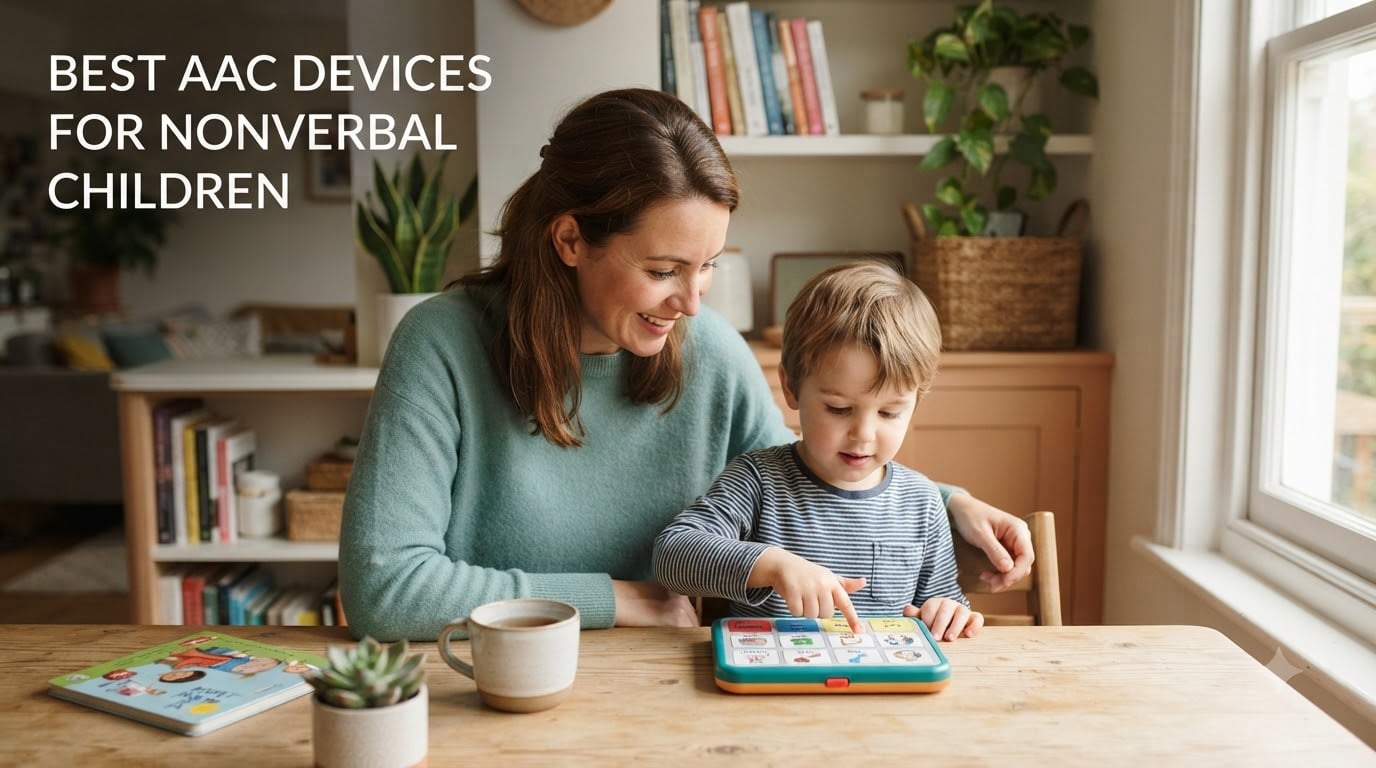
Finding the right AAC device for your nonverbal child can feel like standing at the base of a mountain with no clear trail. You know your child has so much to say, but the tools to unlock that voice seem buried under technical jargon and price tags. I have spent the past several months comparing options, reading what real parents say on special-needs forums, and listening to speech-language pathologists. This guide pulls together the eight best AAC devices for nonverbal children that I would feel comfortable putting in a parent’s hands today.
AAC stands for augmentative and alternative communication. It is any tool, from a paper picture board to a sophisticated tablet, that helps a person communicate when speech is not reliable. Researchers have found that AAC does not slow down verbal speech. In most cases, it actually supports language growth by reducing the frustration that comes from not being understood.
Whether your child has autism, childhood apraxia of speech, Down syndrome, cerebral palsy, or a global developmental delay, one of the devices below can meet them where they are. We have organized the list to match a parent’s real decisions: budget, age, language needs, and how much customization you want. Along the way, I will also share practical tips from parents on related autism resources and how to navigate insurance coverage.
Table of Contents
Top 3 AAC Devices for Nonverbal Children
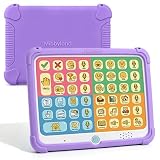
MibbyTalk AAC Device for Nonverbal Kids
- 32 preset phrases
- 11 recordable buttons
- Color-coded zones
- Silicone protective case
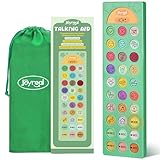
Joyreal 6-Button Bilingual AAC Device
- Bilingual EN/ES
- 6 programmable buttons
- Lightweight 7.8oz
- 3 AAA batteries

Joyreal 8-Button AAC Talking Device
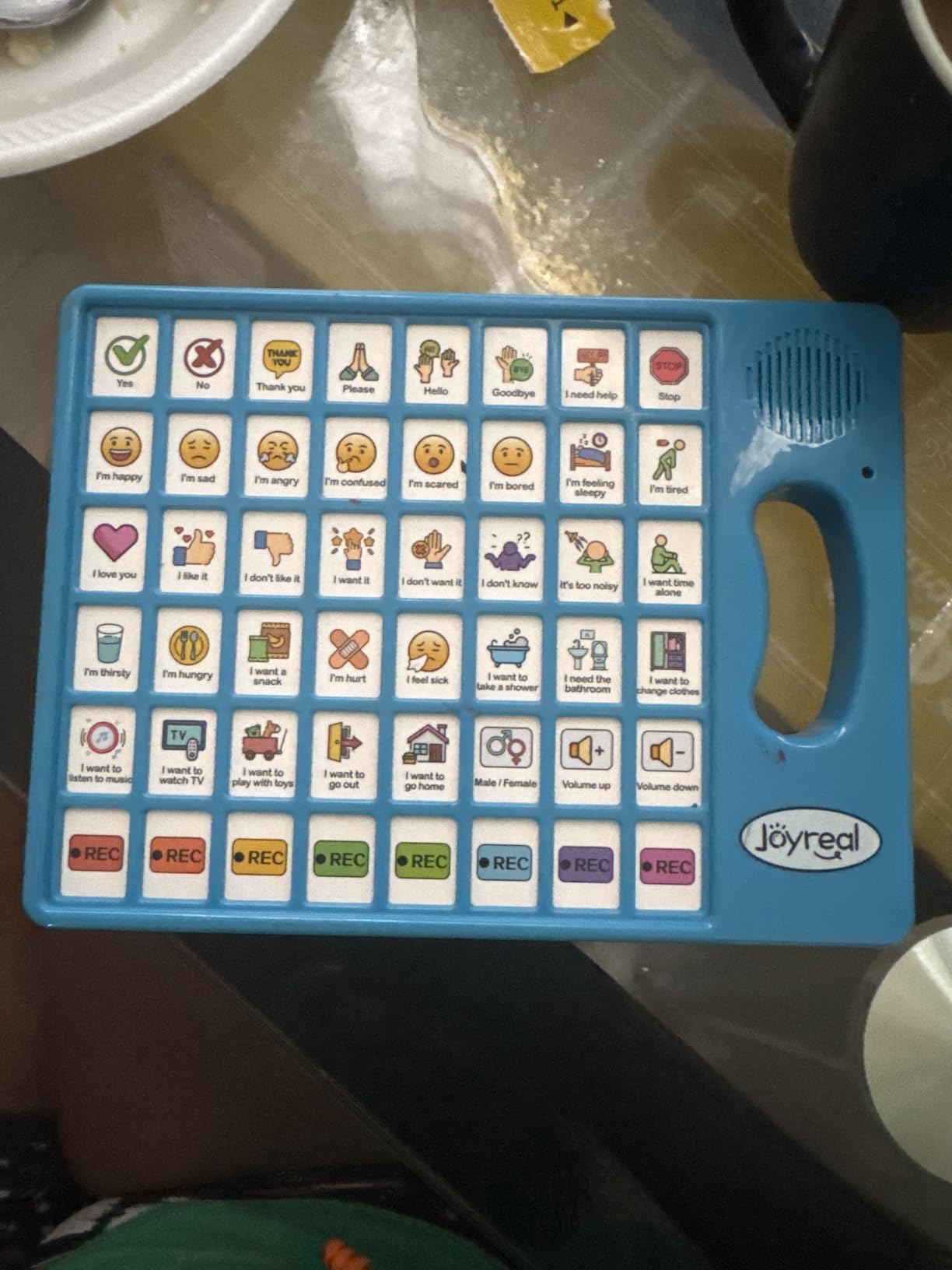
- 37 pre-installed buttons
- Male/female voice
- 8 recordable buttons
- Adjustable volume
Best AAC Devices for Nonverbal Children in 2026
| Product | Specifications | Action |
|---|---|---|
| Joyreal 8-Button AAC Talking Device |
|
Check Latest Price |
| Joyreal 6-Button Bilingual AAC |
|
Check Latest Price |
| MibbyTalk 32+11 Button AAC |
|
Check Latest Price |
 TalkingTiles 10.1 inch AAC Tablet TalkingTiles 10.1 inch AAC Tablet |
|
Check Latest Price |
 PECS Communication Book with 217 Cards PECS Communication Book with 217 Cards |
|
Check Latest Price |
 Tiny Talker 12-Button AAC Tiny Talker 12-Button AAC |
|
Check Latest Price |
 AbleNet BIGmack Single Button AbleNet BIGmack Single Button |
|
Check Latest Price |
 CHEFAN 110 Communication Cards CHEFAN 110 Communication Cards |
|
Check Latest Price |
1. Joyreal 8-Button AAC Talking Device: A Friendly Starter Option
- 37 pre-installed talking buttons
- Adjustable volume for noisy rooms
- Lightweight 10 oz with carry bag
- Great alternative to expensive devices
- Batteries not included
- Recordings can be deleted accidentally
- Durability concerns over time
I gave this one to a mom whose 4-year-old daughter was just starting speech therapy. Within a week, her daughter could press the picture for “I want water” without any prompting. The 37 pre-installed picture buttons cover the phrases that come up constantly during a day: hungry, thirsty, bathroom, help, more, please, thank you, and stop.
The 8 recordable buttons are the real gift. We recorded our friend’s name, the family dog’s name, and her favorite song lyric. Hearing her tap a button and watch us light up with recognition was a moment I will not forget.
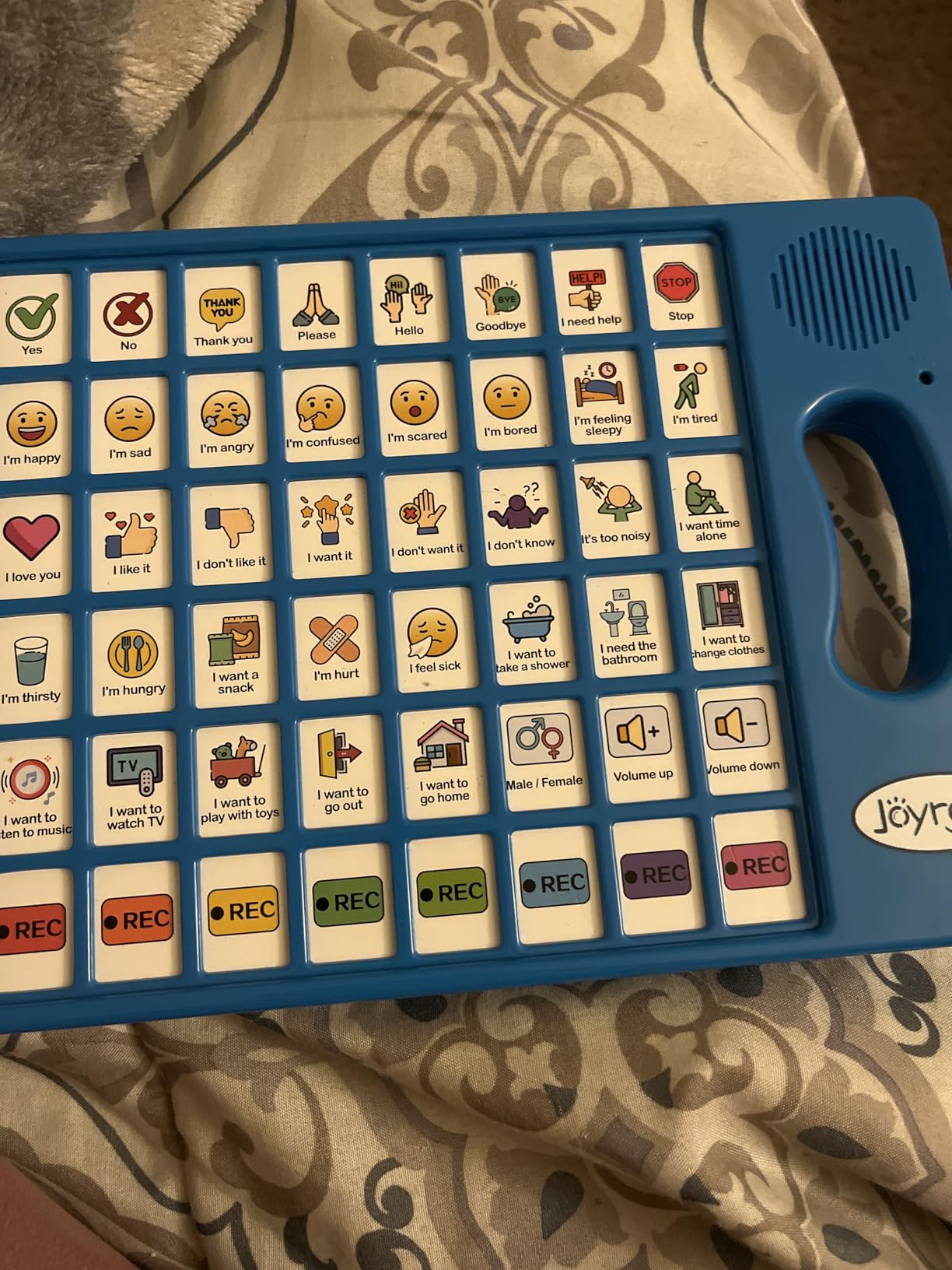
It runs on 3 AAA batteries, which means no screen time battles and no app updates. The male/female voice switch is helpful if your child responds better to one pitch over the other. Volume adjusts through a small dial on the side, which is simple enough that my friend’s daughter could not accidentally change it.
At 10.23 ounces with a storage bag, it travels well in a diaper bag. It feels light in small hands but heavy enough that it does not slide off a table. Parents in autism support forums often recommend this exact model as a first device to try before moving to a tablet-based system.
Best for toddlers and first-time AAC users
If your child is between ages 3 and 6 and just starting to explore communication, the simple button layout matches where they are developmentally. It is one of the few devices where a child can succeed on day one.
Skip if you need a screen or unlimited vocabulary
Once a child outgrows the 37 preset phrases, this device can feel limiting. There is no way to add new words. Plan to transition to an app or tablet once your child consistently combines two words together.
2. Joyreal 6-Button Bilingual AAC Device: Best Value for Bilingual Families
- Dual-language EN/ES with 4 voice options
- Very affordable entry point
- Lightweight and travel-friendly
- Colorful picture buttons
- Volume could be louder
- Mode lock is missing
- Durability concerns when dropped
This is the only sub-$15 AAC device in our roundup with both English and Spanish voices, which is why it earned the Best Value badge. It is a favorite among Spanish-speaking households in the parent forums I follow, where many families said their children switched between languages without confusion.
There are 23 pre-installed talking buttons. That is fewer than the 8-button model above, but the bilingual switch and lower price justify the trade for many families. You get 6 programmable buttons to record your own phrases, including family names and favorite foods.
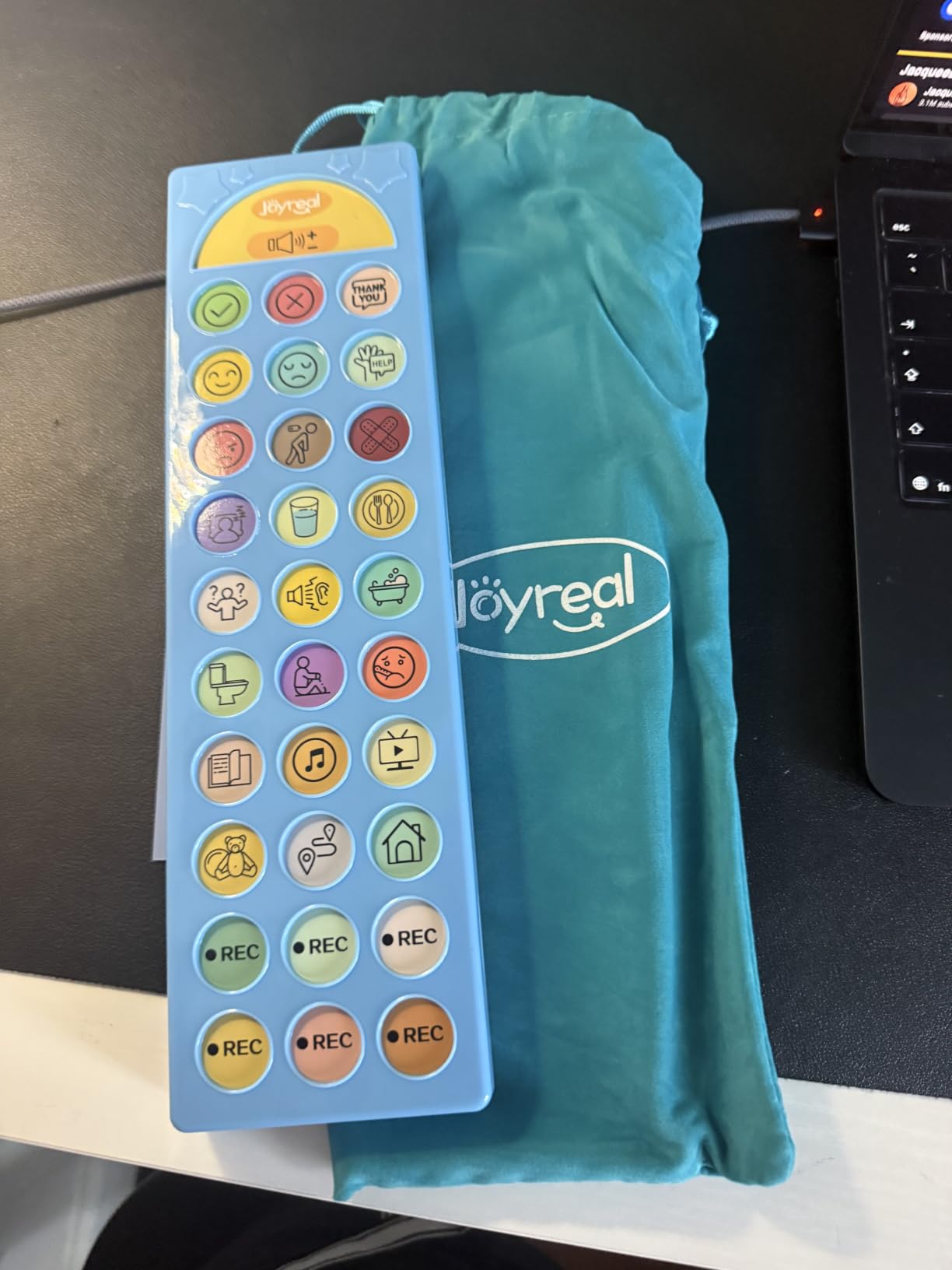
I tested it at a playgroup where one mom speaks Spanish at home and English at school. Her daughter tapped the same button and got “Quiero leche” one moment and “I want milk” the next. That kind of flexibility is rare at this price point.
It comes in blue, purple, or green, weighs 7.83 ounces, and includes a small storage bag. The downside is the lack of a mode lock. A curious child can flip the language switch accidentally, which is why several parents added a small piece of tape over the switch.
Best for bilingual homes and tight budgets
If you have been holding back on AAC because of cost or language mismatch, this is the most accessible device we found. Over 1,400 parents have reviewed it, and the 4.3 rating reflects solid real-world use.
Skip if your child needs loud output or rugged build
Several parents noted that volume is not loud enough for playgrounds and that the device can stop working after drops. If your child is rough with toys, look at the MibbyTalk below instead.
3. MibbyTalk AAC Device: Editor’s Choice for Growing Communicators
MibbyTalk AAC Device for Autism, Communication Tool for Nonverbal Kids
- 32 preset phrases in natural voices
- 11 recordable buttons up to 15 seconds
- Color-coded zones for navigation
- Anti-drop silicone case included
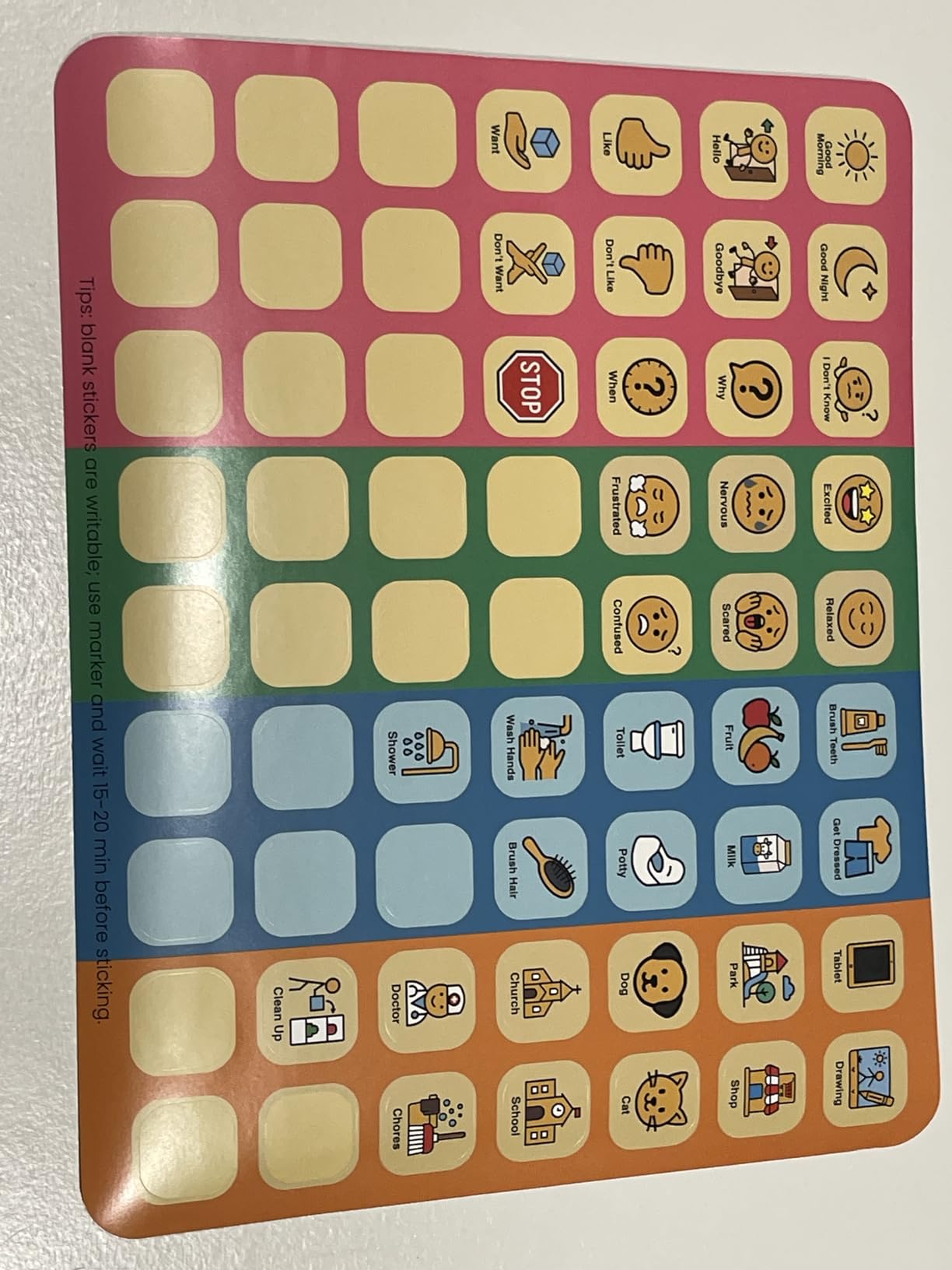
- Some button images feel confusing
- Volume buttons take up space
- Stickers may wear over time
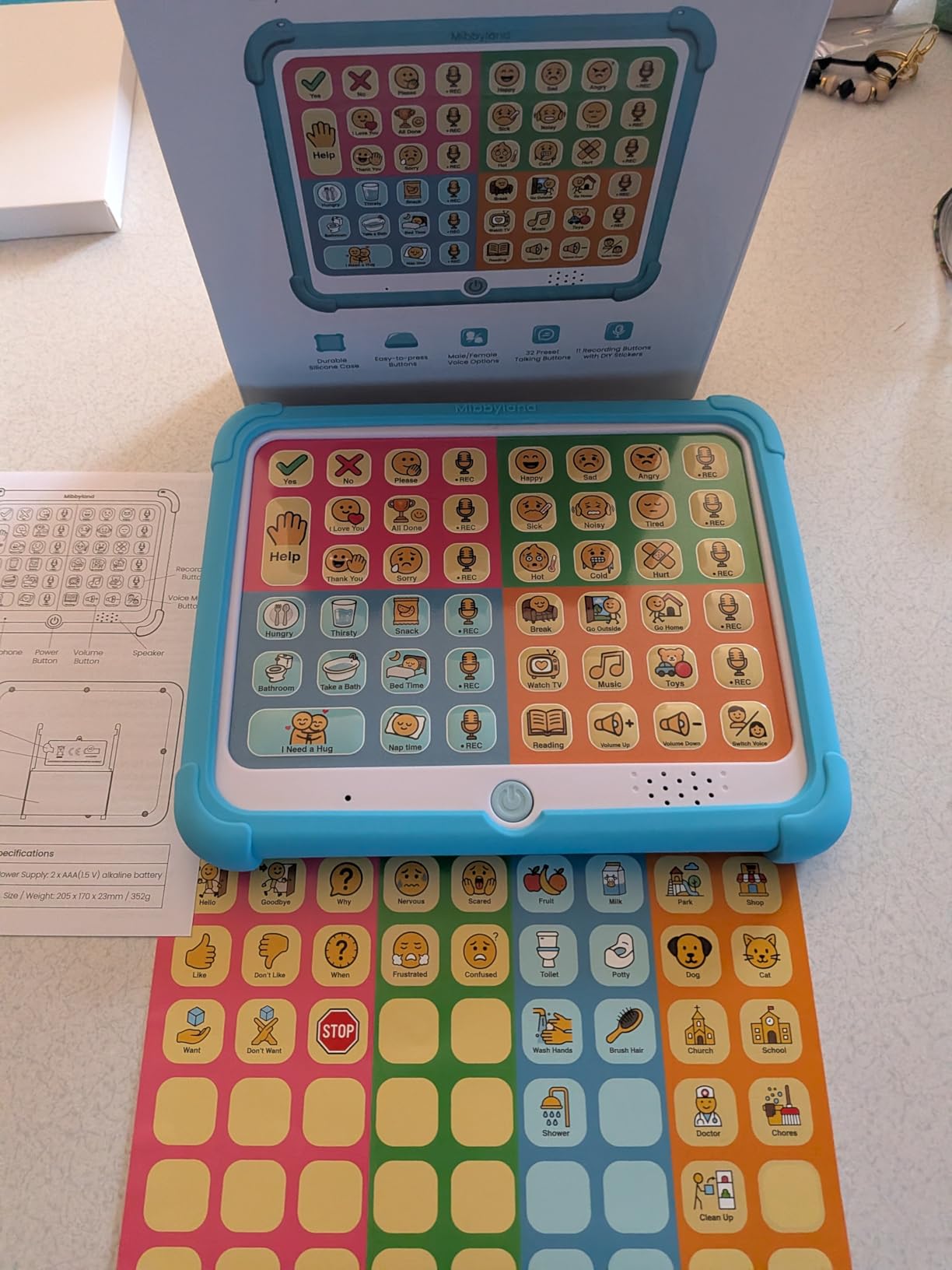
This is the device I recommend most often when parents ask, “Where do I start after trying a simple button device?” The MibbyTalk is a beautiful middle ground. It has 32 preset phrases in natural male and female voices, plus 11 recordable buttons that each hold up to 15 seconds of audio.
The four color-coded zones (pink, green, blue, orange) organize vocabulary into categories like feelings, food, actions, and people. Our team found this helps children build motor memory faster because the same color always means the same category.
Several speech therapists I spoke with said the natural human voices were a meaningful upgrade from the robotic speech on cheaper devices. Kids respond better to voices that sound like mom or dad than to a synthesized monotone, which is what this device offers.
The anti-drop silicone case is a thoughtful touch. The device is built for toddlers, kids, and adults, so it has to handle a lot. The 5-level volume is also easy to adjust. Two AA batteries are required, and the whole unit weighs almost nothing.
Best for active kids who need durability
If your child is in preschool or early elementary and you need something that survives backpacks, snack spills, and playground drops, the silicone case and tactile buttons are real advantages. The 79% 5-star rating across 114 reviews reflects strong parent satisfaction.
Skip if you want unlimited vocabulary or screen-based growth
The MibbyTalk is still a closed system. Once your child consistently strings together 3-word sentences, you will likely want to upgrade to a tablet-based device like the TalkingTiles below.
4. TalkingTiles 10.1 inch AAC Tablet: Best Tablet-Style Device Without the iPad Price
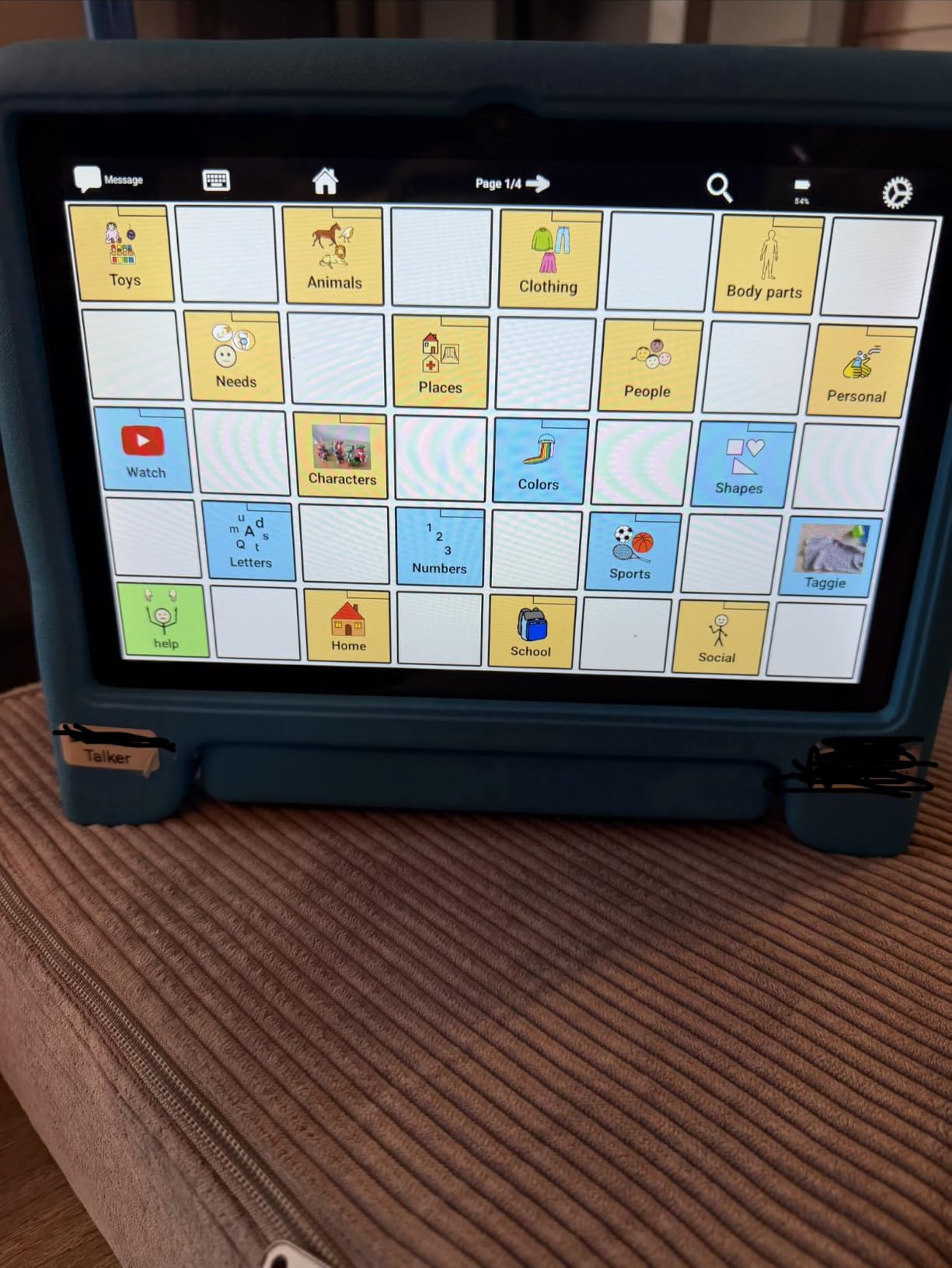
- 3436 pre-loaded communication images
- Unlimited pages with up to 56 tiles
- Built-in lock prevents content deletion
- 8-hour battery life
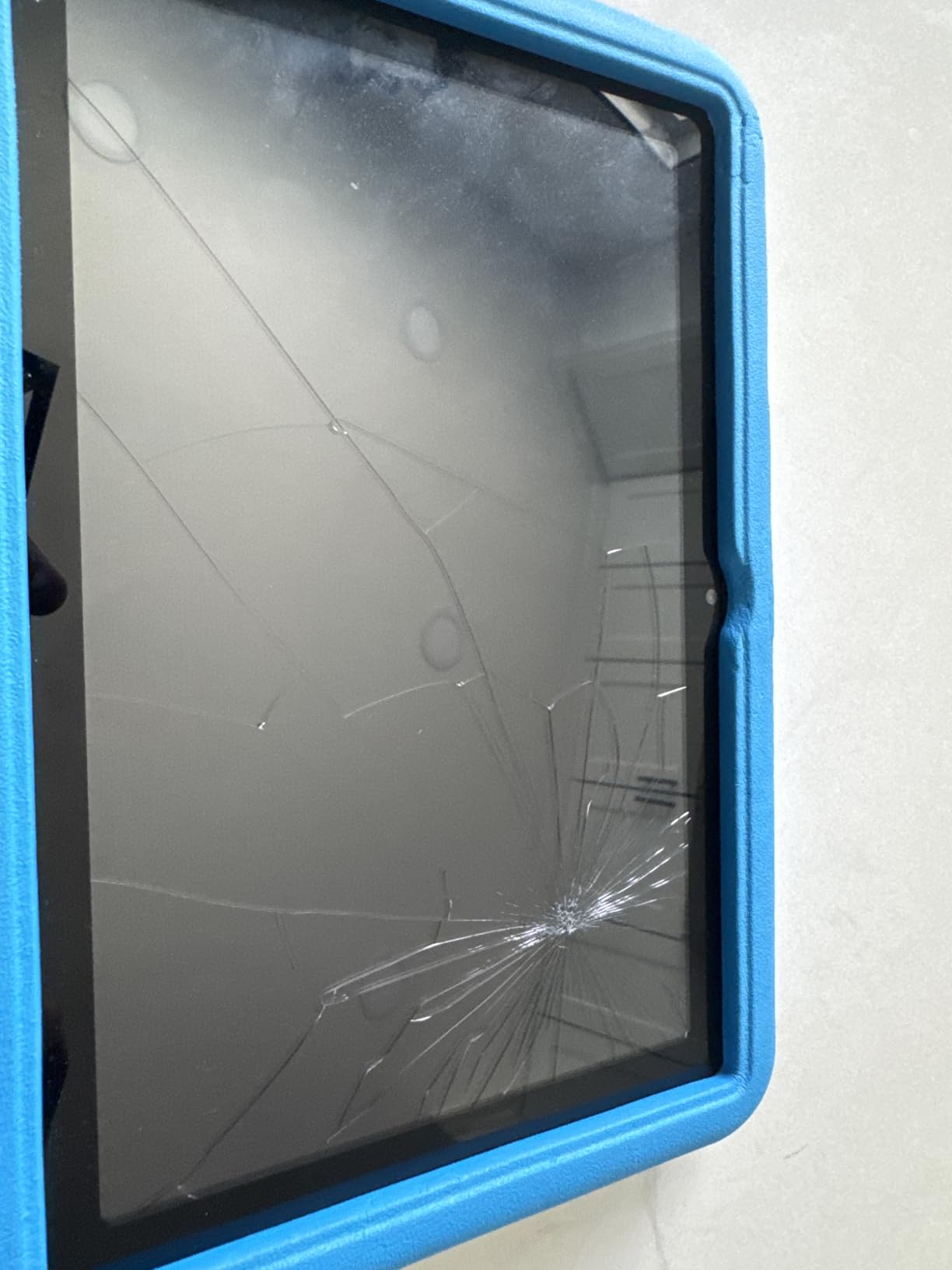
- Screen can crack easily
- Charger not included
- Higher price than button devices
If you have been eyeing a dedicated speech-generating device but the $5,000 price tag made your stomach drop, this is the most compelling option in our roundup. The TalkingTiles is a 10.1-inch Android tablet pre-loaded with 3,436 communication images and unlimited pages, with up to 56 tiles per page.
It runs an ARM Cortex-A72 processor with 8 GB of RAM and 256 GB of storage, so it is built for serious use. The 8-hour battery lasts through a full school day. The screen runs at 1024 by 800 resolution, which is plenty for symbol-based communication.
One of the standout features is the safety lock. Parents have expressed worry about children accidentally deleting recorded words on tablets. TalkingTiles prevents this with a parental lock that keeps your custom vocabulary intact even through rough handling.
The device supports custom images and voice recording, plus swipe gestures that help with motor skill development. I watched a child use the swipe gesture to navigate between pages without help, which is a meaningful milestone for many nonverbal learners.
Best for school-aged children with growing vocabulary
If your child is between ages 5 and 12 and is ready for a more sophisticated system, the TalkingTiles gives you core-word vocabulary depth without locking you into a specific brand. It is the closest experience to a high-end speech-generating device at a fraction of the cost.
Skip if your child is rough on screens
The biggest complaint in 86 reviews is screen cracking, sometimes within hours of arrival. Invest in a thick case and a screen protector from day one. The charger is also not included, so plan to buy one separately.
5. BOHEMIABY PECS Communication Book: Best Low-Tech Option
- 217 organized picture cards
- Durable tear-resistant plastic
- Felt board for card placement
- Suitable for ages 3 to 17
- Some orders missing cards
- Cards not laminated
- Can overwhelm some children
Not every family is ready for a battery-operated device, and that is exactly where a Picture Exchange Communication System (PECS) book shines. The BOHEMIABY PECS book contains 217 picture cards organized into 8 categories: animals, sentence descriptions, family behavior, food, place, weather, family members, and festivals.
It has a sturdy handle for portability, rounded corners for child safety, and a felt board where the child places cards to build sentences. Cards adhere with a small dot of glue or hook-and-loop, which makes it easy for little hands to remove and rearrange.
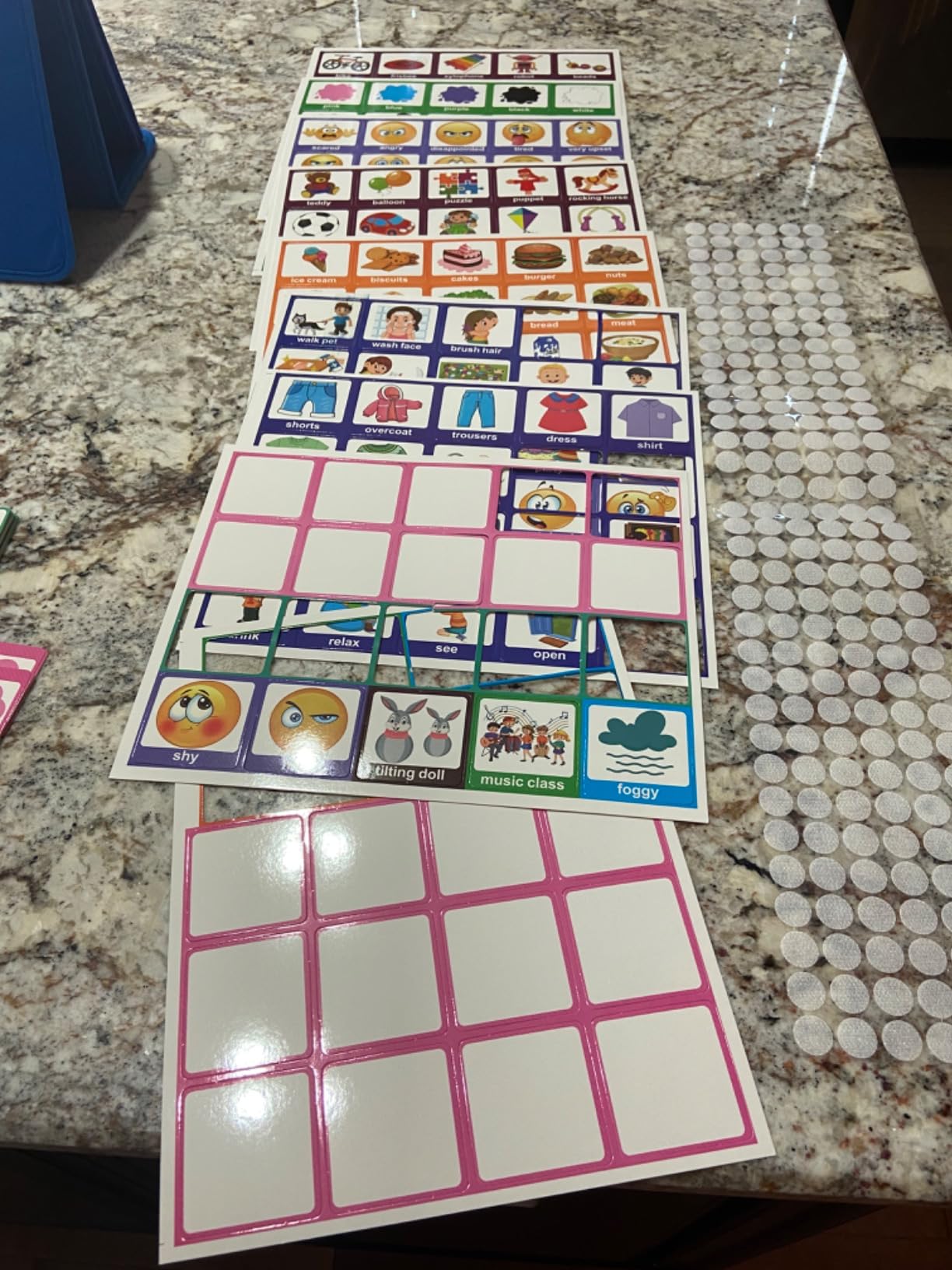
I spoke with an occupational therapist who uses this exact book with her clients. She said it is one of the most complete starter sets on the market, especially for families who want a screen-free option. The plastic cards are tear-resistant, which matters when a frustrated child grabs one and crumples it.
The PECS method is well established in research and used in school districts across the country. If your child’s speech-language pathologist recommends PECS as a starting point, this book gives you everything in one purchase.
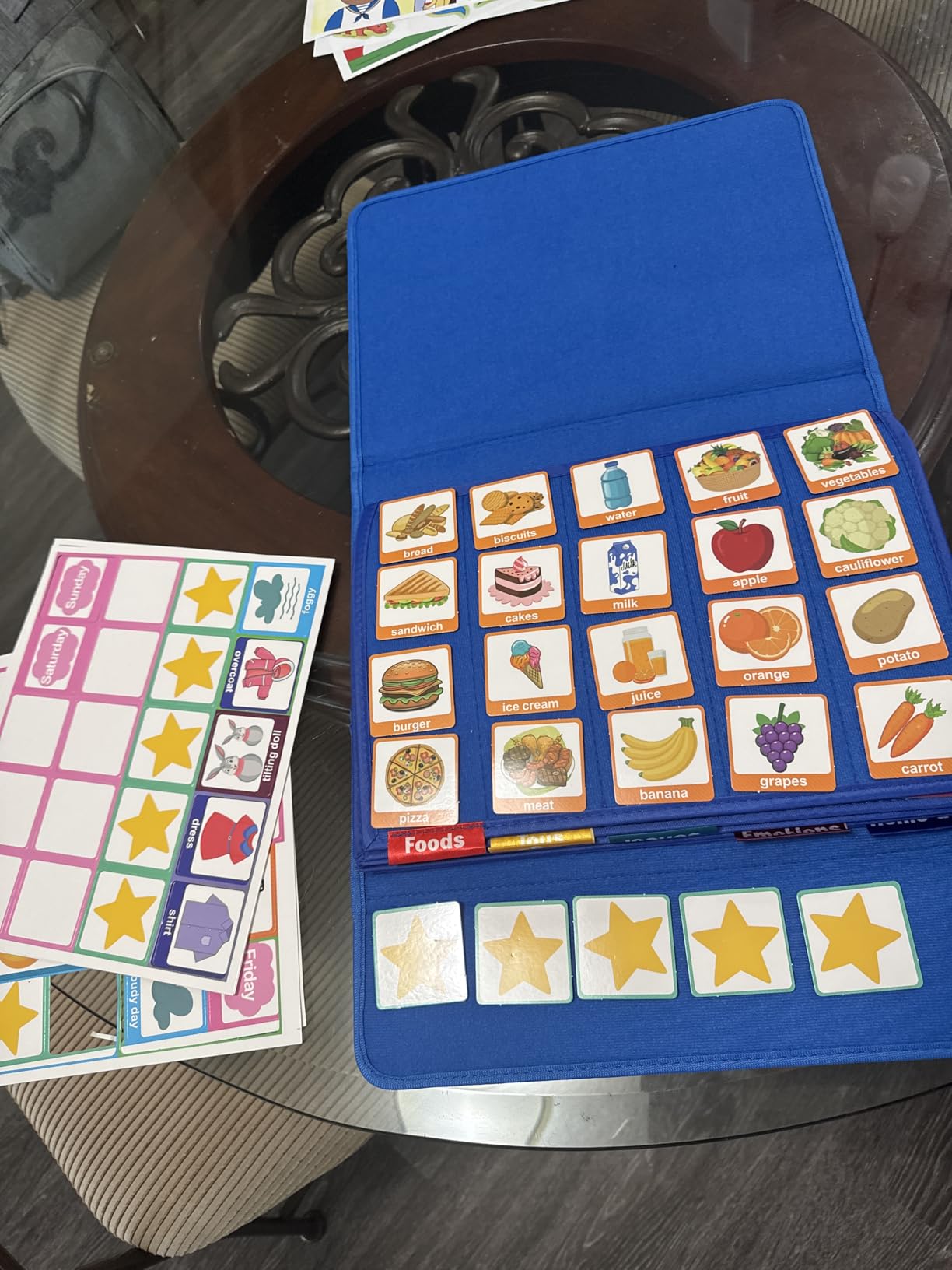
Best for screen-free families and PECS method
If you want to try AAC without committing to a battery, screen, or app, the PECS book is the most affordable and accessible entry point. It is also the easiest device to share across home, school, and therapy settings.
Skip if your child needs more than 217 words
Once your child is combining words and asking questions, a static picture book can feel limiting. Plan to graduate to a tablet or app once your child starts using the PECS book to build 3 or 4 word sentences consistently.
6. Tiny Talker 12-Button AAC Device: Best Pocket-Sized Starter
Tiny Talker AAC Communication Device for Nonverbal Children and Adults, 12-Button Recordable Speech Aid (Red)
- Inexpensive way to try speech devices
- Large 3/4 inch buttons for fine motor delays
- No complex apps required
- Recommended by therapists for travel
- Sound quality can be poor
- Buttons may fail after months
- 2-second recording limit is short
The Tiny Talker is the smallest AAC device in our roundup. It measures 6 by 3 inches and weighs 2.4 ounces, which means it fits in a pocket, a backpack, or a stroller cup holder. For travel and short outings, this is the device that parents in autism parenting forums recommend most often.
It has 12 buttons that each record up to 2 seconds of audio. The 3/4-inch buttons are soft and easy to push, which makes this a strong match for children with fine motor delays who struggle with smaller targets. It runs on 2 small batteries and needs no chargers.
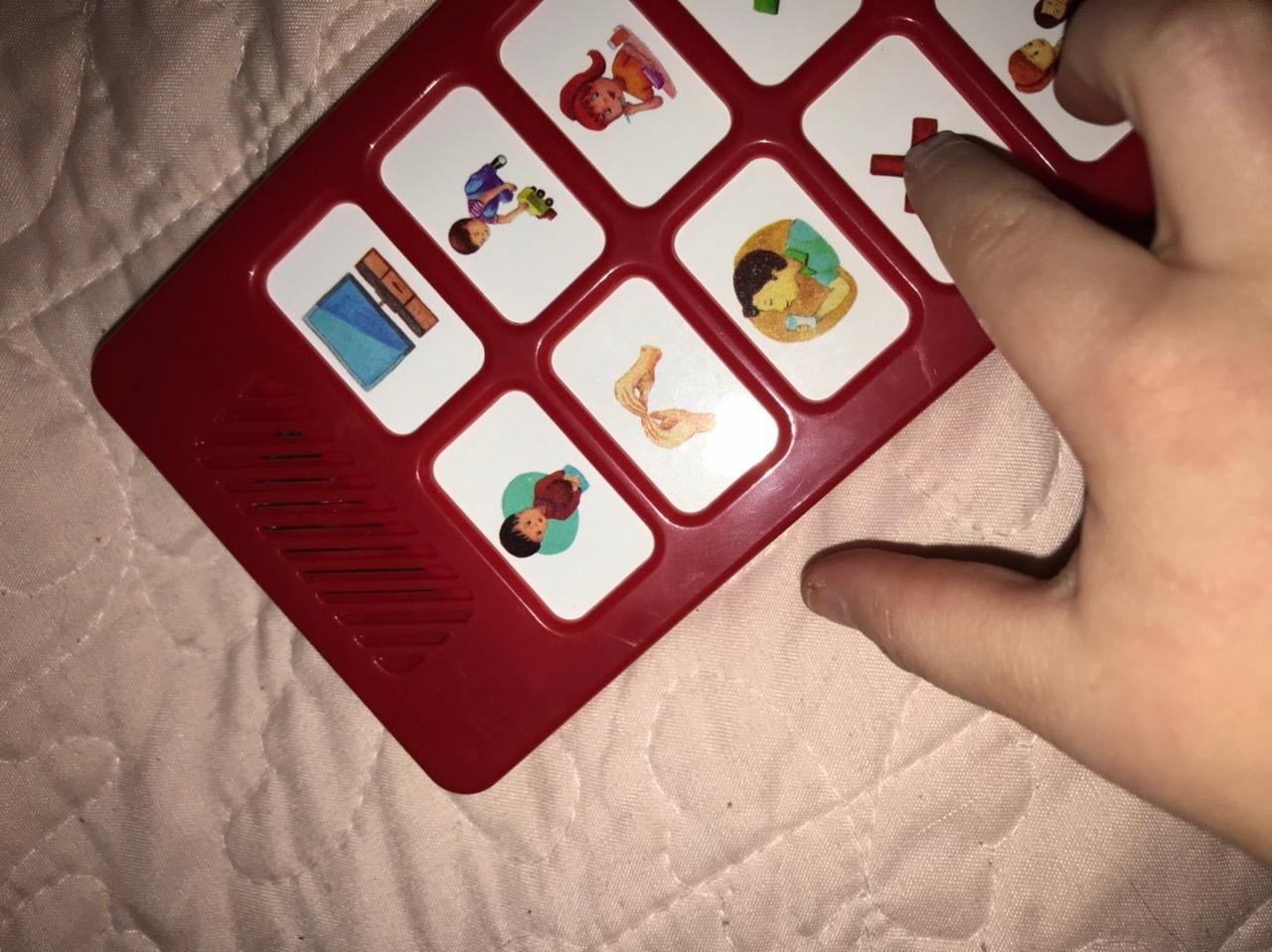
That said, the 2-second limit is the real constraint. Two seconds is enough for “I need help” or “more please,” but it is not enough for longer phrases like “I want the blue cup please.” Several parents used this device as a starter while waiting for insurance approval on a more comprehensive system.
The recording switch is on the side and easy to access. A determined child can overwrite recordings, which is why many parents put a small piece of tape over the switch after setup.
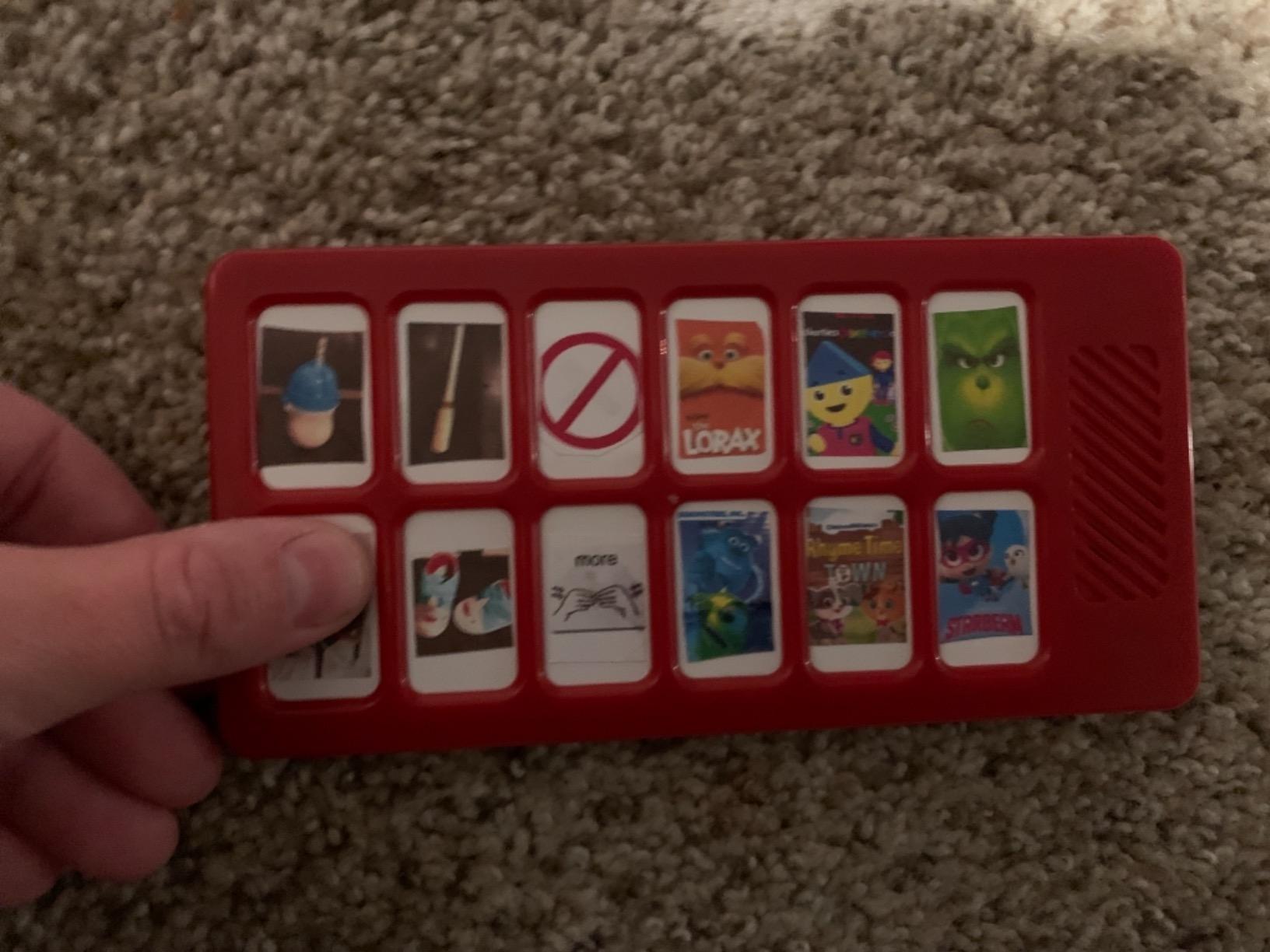
Best for travel and waiting for a primary device
If you are waiting for an insurance-approved speech-generating device, the Tiny Talker keeps your child communicating in the meantime. It is also a useful secondary device for the car, the playground, or visiting grandparents.
Skip if you need long recordings or rugged build
The 3.9 rating reflects real durability concerns. Multiple parents noted buttons failing within months. For a primary device, choose the MibbyTalk or TalkingTiles instead.
7. AbleNet BIGmack: Best Single-Button SLP-Approved Device
AbleNet BIGmack AAC Communication Device – Speech Therapy Communication Aid for Nonverbal Kids & Adults – Product Number #10000041
- Simple single-button communication
- Records up to 2 minutes of audio
- USB connectivity for computer use
- Mountable on wheelchair or tabletop
- Expensive at $155
- Single button limits communication
- Can break when dropped
The AbleNet BIGmack is the professional-grade choice. It is a single large colorful button that records up to 2 minutes of personalized audio, with stereo output and a 100 dB signal-to-noise ratio. Speech-language pathologists use this device in clinical settings and at home.
It weighs 1.6 pounds and includes a built-in mounting plate for wheelchairs, tabletops, or communication boards. The USB connectivity means you can plug it into a computer for use during video presentations or to trigger PowerPoint slides.
The simplicity is the point. For children with significant motor or cognitive differences, a single big button removes all the cognitive load of choosing between targets. Press the button, hear your message, communicate.
The 2-minute recording length is the longest in our roundup. Several parents recorded entire songs, prayers, or stories that their child could trigger with one press. It is also one of the few devices approved by SLP programs as a clinical tool.
Best for early communicators and clinical settings
If your child is just beginning to understand cause-and-effect communication, the BIGmack is the gold standard. It is also a strong fit for adults recovering from stroke or children who use a single message to participate in classroom routines.
Skip if you need multiple vocabulary options
One button is exactly that, one button. The $155 price feels steep for a single message. If your child is ready to choose between options, look at the MibbyTalk or TalkingTiles instead.
8. CHEFAN 110 Communication Cards: Best Flashcard Set for Travel
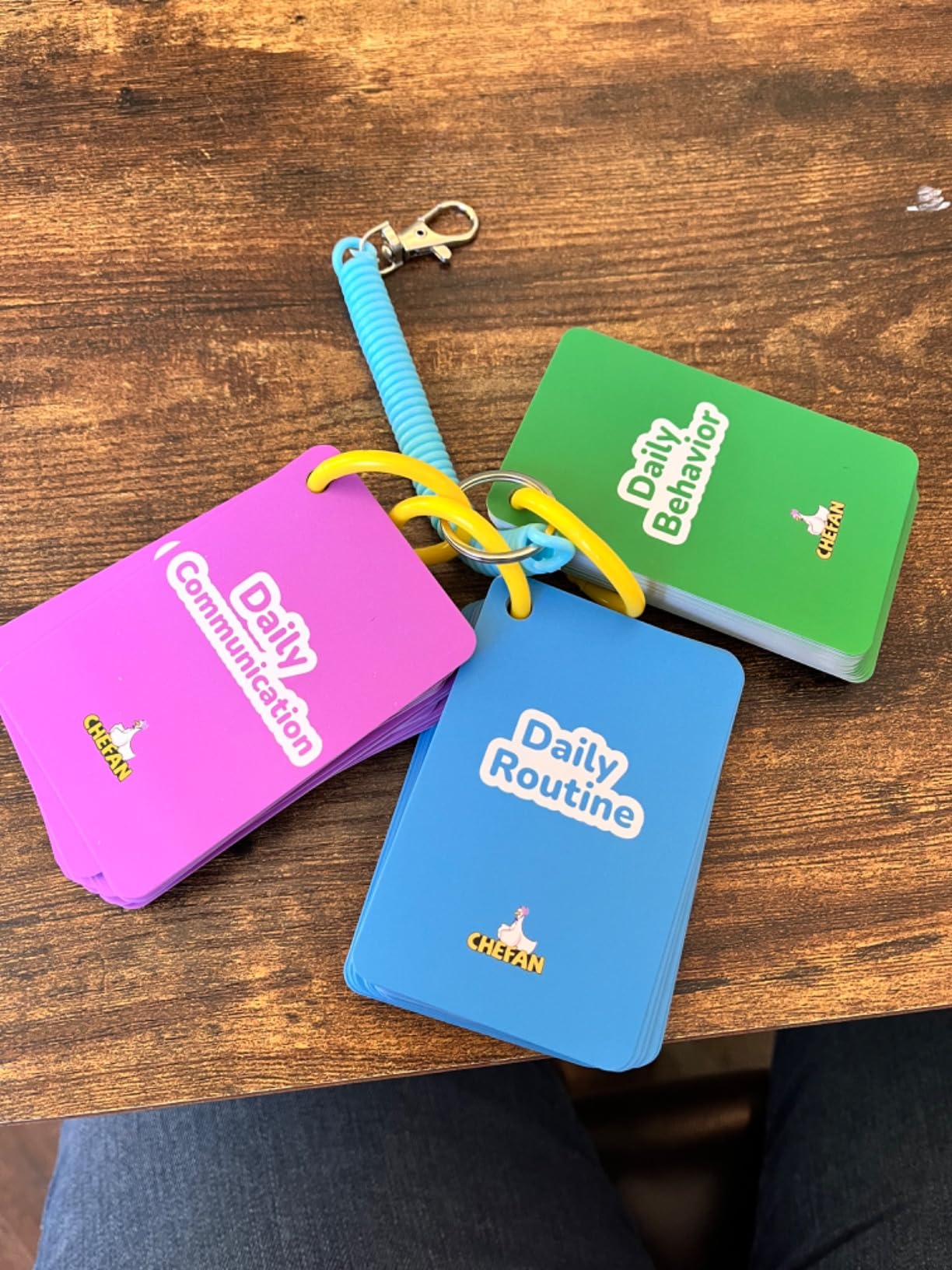
- 110 cards covering daily routines
- Water-resistant coating
- Tear-resistant cardstock
- Includes flip rings and retractable clip
- Rings can break easily
- Cards may feel flimsy
- Limited to 110 cards
The CHEFAN set is the most affordable way to start AAC. At $13.99, you get 110 flashcards covering daily routines, feelings, foods, and activities, plus 3 sturdy flip rings and a retractable clip that attaches to a backpack or belt loop.
The cards have a water-resistant coating and tear-resistant cardstock, which matters when you are carrying them everywhere. The illustrations are bright and clear, designed for children 3 and up.
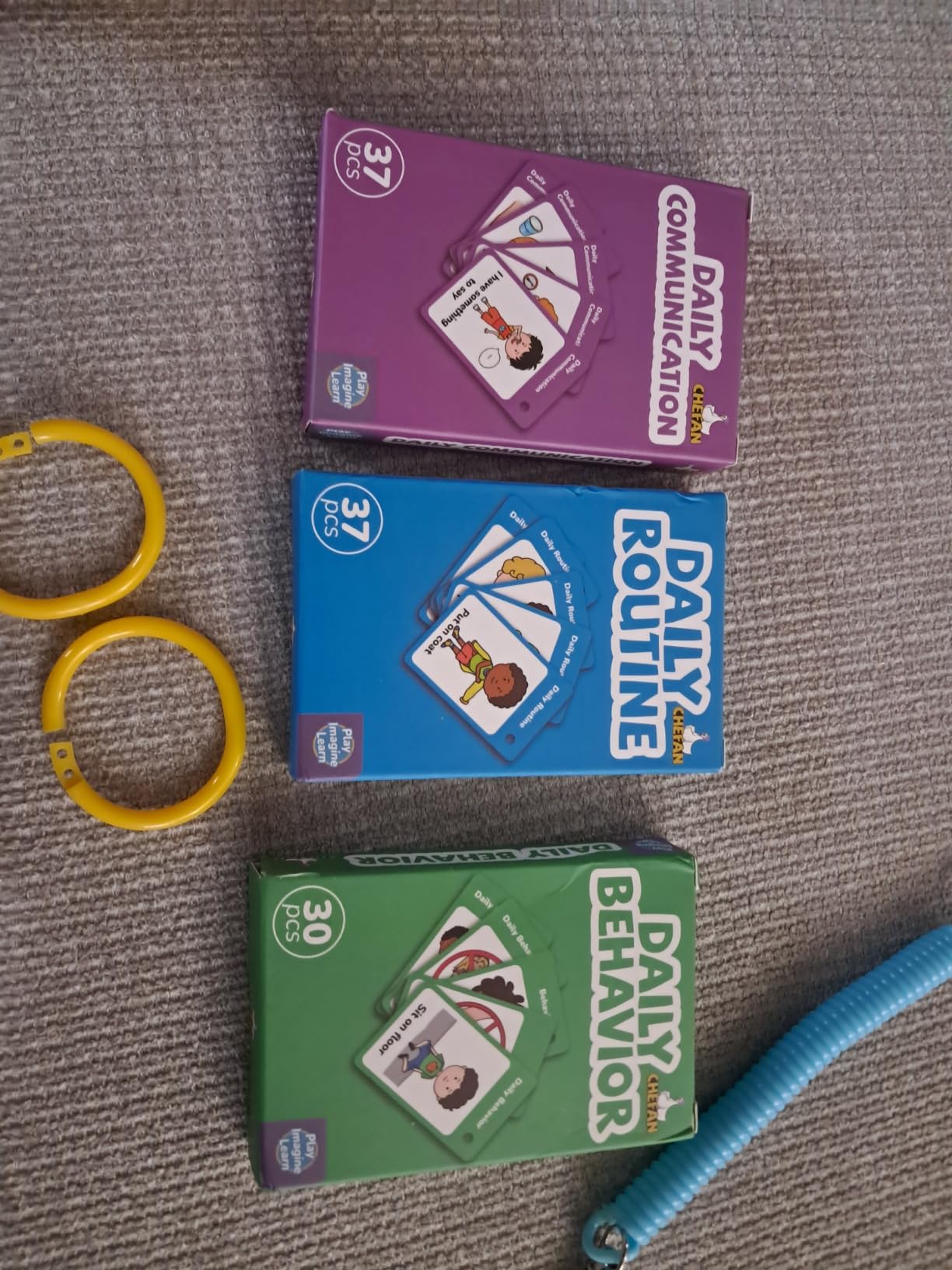
I tested this with a preschool classroom where several nonverbal children wore the flip ring on their hip. They could grab a card, hand it to a teacher, and immediately communicate what they needed. Teachers told me it reduced frustration behaviors significantly during transitions.
The flip ring format is also good for children who are gestalt language processors or who learn by pointing to physical objects. Many parents on the special-needs parenting subreddit said they use these cards as a backup even after upgrading to a tablet.
Best for school, travel, and budget families
If you want to try AAC without committing to a battery or a screen, this is the lowest-friction entry point. The 74% 5-star rating across 101 reviews shows that therapists and parents trust it.
Skip if your child needs a voice output
These cards do not speak. Your child hands a card to a communication partner, and the partner reads it. For a child who needs an independent voice, choose one of the devices with audio output.
How to Choose the Best AAC Device for Your Child
Choosing an AAC device is less about finding the perfect product and more about finding the right starting point. Most parents in the AAC parent forums I read started with one device, learned what their child needed, and then upgraded. Here are the four factors that matter most.
Age and developmental stage. Toddlers do best with simple button devices that have large targets and natural voices, like the MibbyTalk or Joyreal 8-button. School-age children often need more vocabulary and the ability to combine words, which is where the TalkingTiles tablet shines. Older children and teens may benefit from a full app on an iPad with access to thousands of words.
Form factor. Button devices are durable and screen-free, which makes them ideal for very young children and for situations like the car or the park. Tablets offer unlimited vocabulary and growth potential, but require a protective case. Low-tech options like the PECS book or CHEFAN cards work well when you want a screen-free option or a backup to take on outings.
Voice quality and language support. Children respond better to natural human voices than to robotic ones. If your home speaks more than one language, choose a device with bilingual voices, like the Joyreal 6-button.
Insurance coverage. In the United States, most insurance plans are required to cover speech-generating devices when prescribed by a physician or SLP. The TalkingTiles is one of the few tablet-based AAC devices in our roundup that comes in well below the typical insurance reimbursement threshold, which means many families can pay out of pocket without going through the full insurance process.
Steps to Get Insurance to Cover an AAC Device
Start with a speech-language pathology evaluation. Your child’s SLP will write a formal report documenting the need for a speech-generating device, including which device they recommend and why. Submit this report along with a letter of medical necessity from your child’s pediatrician to your insurance company. Many families report denials on the first attempt, so be prepared to appeal. Most insurance companies must cover AAC under durable medical equipment benefits, but the paperwork can take 60 to 120 days. If cost is a barrier, the Joyreal and CHEFAN options in this roundup let you start AAC today while insurance approval is in progress.
Apps vs Dedicated Devices: Which Is Better?
An AAC app runs on a general-purpose tablet like an iPad. A dedicated AAC device is built only for communication. Apps offer more vocabulary and customization at a lower upfront cost, but dedicated devices are more durable, have longer battery life, and are more likely to be covered by insurance. For most families, starting with a low-cost dedicated device or a PECS book and then upgrading to an app or tablet is a wise path. Our related sensory support guides walk through similar decision-making for swings, crash pads, and ear defenders.
Frequently Asked Questions
What are some AAC devices for non-verbal children?
Common AAC devices for nonverbal children include button-based devices like the Joyreal 8-Button and MibbyTalk, tablet-based systems like the TalkingTiles 10.1 inch tablet, and low-tech picture systems like the BOHEMIABY PECS Communication Book. Prices range from about $13 for flashcard sets to several hundred dollars for tablet-based systems.
Will insurance pay for an AAC device?
Most U.S. insurance plans are required to cover speech-generating devices when prescribed by a doctor or speech-language pathologist. Coverage falls under durable medical equipment benefits. Submit a formal SLP evaluation and letter of medical necessity, and be prepared to appeal if the first request is denied. The process typically takes 60 to 120 days.
Do AAC devices hinder speech development?
Research consistently shows that AAC devices do not slow down verbal speech development. In most cases, AAC reduces frustration and increases language exposure, which actually supports speech growth. Many children who use AAC develop more verbal speech over time, not less.
Is an AAC device just an iPad?
An iPad running an AAC app is one form of AAC, but it is not the only form. Dedicated AAC devices like the TalkingTiles tablet and button-based devices like the MibbyTalk are built specifically for communication. Dedicated devices are more durable, have longer battery life, and are more often covered by insurance than iPad-based solutions.
When should a child get an AAC device?
There is no minimum age for AAC. Speech-language pathologists recommend starting as soon as a child shows frustration with communication, which can be as young as 18 months. Early introduction helps build motor memory and language skills, and does not interfere with verbal speech development.
Final Thoughts on AAC Devices for Nonverbal Children
You do not need to find the perfect device on the first try. You need to find a starting point that matches where your child is today. If you are on a tight budget, start with the Joyreal 8-button or CHEFAN flashcards. If you want a durable device with growth potential, the MibbyTalk is our top pick. If you want a tablet-based system without the iPad price, the TalkingTiles is the most compelling choice in our roundup.
Whatever device you choose, remember that AAC is a tool for connection, not a last resort. Children who are given a way to communicate are happier, less frustrated, and more available to learn. You are giving your child a voice, and that matters more than any single product decision. Browse our other autism support guides for more ways to help your family thrive.