
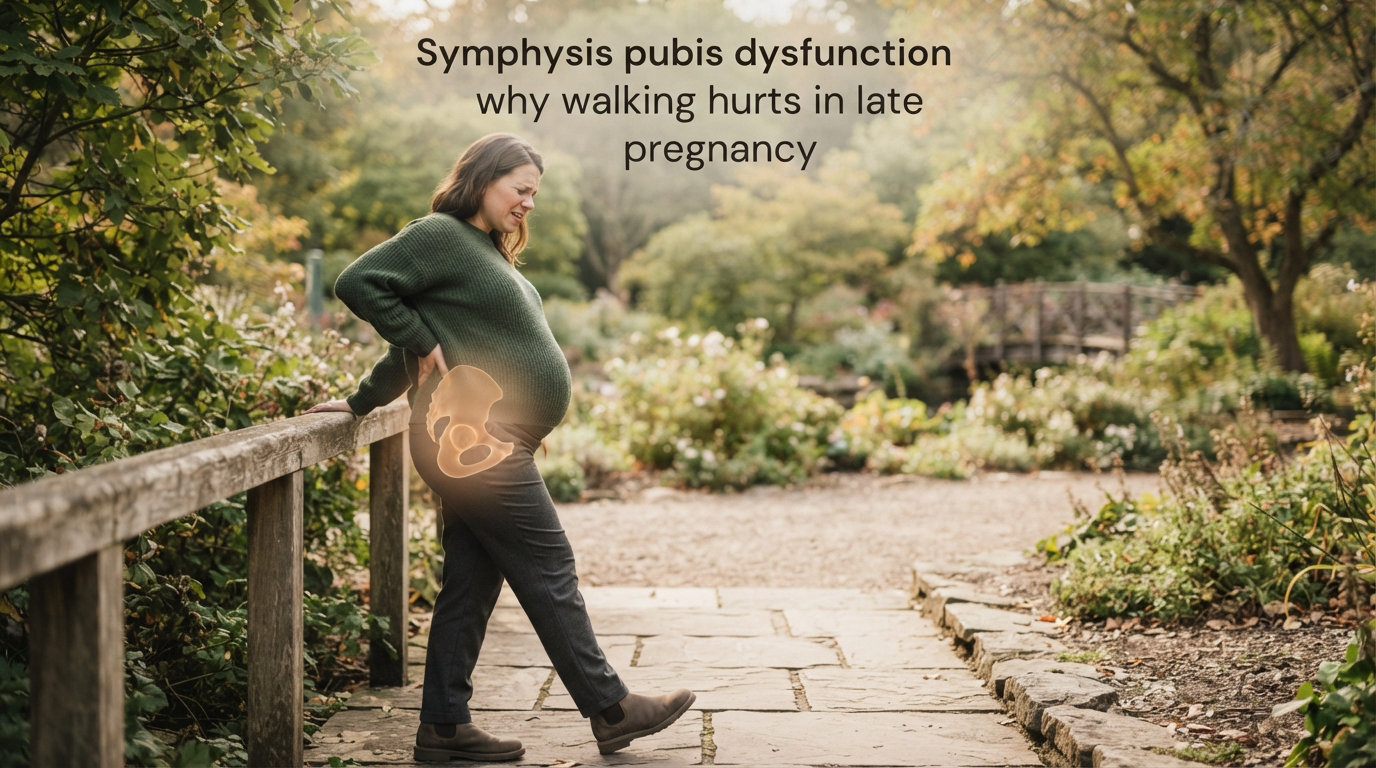
Symphysis pubis dysfunction makes walking hurt in late pregnancy because the hormone relaxin loosens your pelvic ligaments beyond normal levels, causing the pubic joint to become unstable and painful when bearing weight. By the third trimester, your growing baby adds significant pressure to this already compromised joint, making every step feel like your pelvis is grinding or splitting apart. This condition affects 1 in 5 pregnant women, yet many suffer in silence because they do not realize help is available.
In this guide, I will explain exactly why walking becomes painful with SPD, what the condition feels like, and most importantly, practical strategies that can help you move through your day with less pain. You are not alone in this experience, and there are real solutions that can make a difference.
Table of Contents
What Is Symphysis Pubis Dysfunction (SPD)?
Symphysis pubis dysfunction, also called pelvic girdle pain or PGP, occurs when the ligaments that normally keep your pelvic bones stable become too relaxed during pregnancy. The front of your pelvis contains a joint called the symphysis pubis, which connects your two pubic bones. In SPD, this joint moves more than it should, causing pain and instability.
The condition typically appears between 14 and 30 weeks of pregnancy, though it can start earlier or later. For many women, symptoms intensify significantly in the third trimester as fetal weight increases and the hormone relaxin continues to loosen ligaments.
You may hear doctors use the terms SPD and PGP interchangeably. PGP is the broader term that includes pain from both the symphysis pubis joint and the sacroiliac joints at the back of your pelvis. Both conditions share similar causes and treatments.
Understanding Your Pelvic Anatomy
Your pelvis is not one solid bone but a ring of bones held together by strong ligaments. During pregnancy, these ligaments naturally soften to allow your pelvis to expand for childbirth. For most women, this process happens gradually and without pain. With SPD, the relaxation happens too much or too unevenly, causing one side of your pelvis to move differently from the other when you walk, stand, or change positions.
Symptoms of SPD: What Does the Pain Feel Like?
SPD pain feels different for every woman, but most describe a sharp, shooting, or grinding sensation in the pubic area that radiates outward. The pain often worsens with movement and can range from mildly uncomfortable to completely debilitating.
Common symptoms include:
Pain in the front center of your pelvis, directly over the pubic bone. Many women describe this as feeling like their pelvis is splitting in two or like they have been kicked in the groin.
Pain that spreads to your lower back, hips, groin, inner thighs, or perineum. The radiating nature of this pain can make it difficult to pinpoint exactly where the problem originates.
A grinding, clicking, or popping sensation in your pubic area when you walk, turn over in bed, or climb stairs. Some women actually hear audible clicks from their pelvis.
Pain that flares with specific movements: walking, climbing stairs, getting in and out of a car, turning over in bed, standing on one leg, or moving your legs apart.
Difficulty walking normally. Many women develop a waddling gait or find themselves unable to walk without significant pain. Some need crutches or mobility aids during severe flare-ups.
Pain during everyday activities like getting dressed, getting out of bed, or even rolling over at night. Simple tasks become exhausting when every movement triggers pain.
Increased pain after activity or by the end of the day. Many women report that their symptoms build throughout the day, making evenings particularly difficult.
Real Experiences from Women with SPD
One mother on Reddit described her experience: “I could barely walk to the bathroom without crying. It felt like someone was stabbing me in the crotch with every step.” Another shared: “Turning over in bed at night was the worst. I had to plan my position changes like a military operation.”
These stories reflect what many women experience but rarely discuss openly. The pain is real, it is physical, and it can severely impact your quality of life during what should be an exciting time.
Why Does Walking Hurt in Late Pregnancy?
Walking hurts with SPD because every step creates shearing forces across an unstable pelvic joint. When your ligaments are too relaxed, your symphysis pubis joint moves unevenly with each step instead of staying stable. This abnormal movement irritates the joint surfaces and surrounding tissues, triggering pain signals.
In late pregnancy, three factors combine to make walking particularly painful:
Fetal weight increases pressure. By 36 weeks, your baby may weigh 6 pounds or more, adding significant downward pressure on your pelvis with every step you take. This compression forces the unstable pubic joint to bear weight it cannot properly support.
Relaxin hormone peaks. While relaxin levels vary throughout pregnancy, the cumulative effect of months of ligament loosening means your pelvic stability is at its lowest point in the third trimester.
Altered gait mechanics. As your belly grows, your center of gravity shifts forward. You naturally adjust your walking pattern to compensate, often taking shorter steps or waddling. These gait changes place uneven stress on the symphysis pubis, aggravating the dysfunction.
The Biomechanics of SPD Pain
During normal walking, your pelvis acts as a stable base that transfers force from your legs to your spine. With SPD, that stability disappears. Each step causes micro-movements at the pubic joint that the surrounding muscles try to compensate for, leading to muscle fatigue and increased pain.
The asymmetry is particularly problematic. If one side of your pelvis moves more than the other, every step creates a shearing motion across the joint. This is why activities that require single-leg support, like climbing stairs or getting out of a car, often hurt more than walking on flat ground.
What Causes SPD and Who Is at Risk?
The primary cause of SPD is the pregnancy hormone relaxin, which loosens ligaments throughout your body to prepare for childbirth. In most women, this process happens gradually and symmetrically. With SPD, the relaxation is excessive, uneven, or happens too quickly for your muscles to compensate.
Certain factors increase your risk of developing SPD:
Previous pelvic injury. If you have ever injured your pelvis, tailbone, or hips, the ligaments in that area may already be compromised, making them more susceptible to excessive relaxation.
Joint hypermobility. Women with naturally flexible joints or conditions like Ehlers-Danlos syndrome are more likely to develop SPD because their ligaments are already more lax than average.
History of lower back pain or pelvic girdle pain. Previous episodes of back or pelvic pain suggest your pelvic stability may already be vulnerable.
Carrying multiples. Twins or triplets mean higher relaxin levels and more weight on your pelvis, significantly increasing SPD risk.
Previous SPD in another pregnancy. If you had SPD before, you have a 50% chance or higher of experiencing it again in subsequent pregnancies, often earlier and more severely.
Physically demanding work. Jobs that involve heavy lifting, prolonged standing, or frequent position changes may strain pelvic ligaments already loosened by pregnancy hormones.
When Does SPD Start?
SPD can begin at any point during pregnancy. For some women, symptoms appear as early as the first trimester, particularly if they have had SPD in a previous pregnancy. The most common onset is between 14 and 30 weeks. However, even women who feel fine throughout most of pregnancy may develop symptoms in the final weeks as fetal weight peaks.
Treatment Options for SPD Relief
While SPD cannot be completely cured until after delivery, several treatment options can significantly reduce your pain and improve your mobility. Working with healthcare providers who understand SPD is essential.
Physiotherapy with a pelvic health specialist. A physiotherapist trained in pregnancy-related pelvic pain can assess your specific movement patterns and create a customized treatment plan. They may use manual therapy, recommend specific exercises, and teach you how to move in ways that protect your pelvis.
Manual therapy. Techniques like massage, joint mobilization, and muscle energy techniques can help realign your pelvis and reduce muscle tension that contributes to pain. Many women find significant relief from regular manual therapy sessions.
Pelvic support belts. A properly fitted support belt can compress your pelvis, providing stability that your ligaments no longer offer. These belts come in different styles, some focusing on the front of the pelvis and others wrapping around the entire pelvic girdle.
Acupuncture. Some women find relief through pregnancy-safe acupuncture, which may help reduce pain perception and muscle tension.
Hydrotherapy. Water exercises take pressure off your joints while allowing you to maintain strength and mobility. The buoyancy of water supports your weight, reducing the shearing forces that cause pain.
Pain relief medication. Paracetamol (acetaminophen) is generally considered safe during pregnancy and can help manage pain. Always consult your healthcare provider before taking any medication.
Cold and heat therapy. Ice packs can reduce inflammation, while heat can relax tense muscles around your pelvis. Many women alternate between the two for maximum relief.
When to Seek Medical Help
Contact your healthcare provider if pain makes it difficult to walk or perform daily activities, if you experience sudden severe pain, or if you notice any changes in your baby’s movements. While SPD does not harm your baby, severe pain can indicate other conditions that need attention.
Seek immediate care if you have pain accompanied by fever, vaginal bleeding, or regular contractions before 37 weeks, as these could indicate complications unrelated to SPD.
Self-Help Tips: Managing SPD Pain Daily
Small changes to how you move through your day can make a significant difference in your pain levels. These practical strategies come from both healthcare providers and women who have lived with SPD.
Walking Techniques
Take smaller steps and walk more slowly than usual. Shorter steps reduce the shearing forces across your pubic joint. Imagine you are wearing a tight pencil skirt and need to keep your legs close together with each step.
Avoid uneven surfaces when possible. Walking on flat, stable ground puts less stress on your pelvis than navigating curbs, gravel, or hills.
Consider using a rolling walker or crutches during severe flare-ups. Some women need mobility aids for part of their pregnancy, and that is okay. The goal is to keep you moving safely.
Getting In and Out of Bed
Keep your knees together when rolling over or changing positions. Many women find it helpful to squeeze a pillow between their knees while sleeping and keep it there when turning.
Log roll out of bed. Instead of sitting straight up, roll onto your side, drop your legs off the edge together, and push yourself up with your arms. This avoids the single-leg stance that triggers pain.
Place a pillow between your knees and ankles when sleeping on your side. This keeps your pelvis in better alignment and reduces strain on the symphysis pubis.
Car Entry and Exit
Sit down first, then swing your legs in together. Never try to step into a car one leg at a time. Keep a plastic bag on your car seat to help you swivel without separating your legs.
Reverse the process when getting out. Swing your legs out together while sitting, then stand up using the car door for support.
Stair Climbing
Take stairs one step at a time, leading with the same leg each time if that feels better. Use the handrail for support and avoid carrying items that throw off your balance.
Some women find it easier to go up stairs backwards or sideways. Experiment to find what works for your body.
Dressing and Daily Tasks
Sit down to put on pants, underwear, and socks. Never try to dress while standing on one leg. Consider slip-on shoes so you do not need to bend forward or balance on one foot.
Keep your legs together when getting out of the bath or shower. Use a non-slip mat and consider installing grab bars if your bathroom setup allows.
Avoid lifting heavy objects or twisting while holding weight. Ask for help with tasks that strain your pelvis.
Heat and Ice Therapy
Apply heat to your lower back, hips, or pubic area before bed to relax tight muscles. A warm bath or shower can also help, though be careful getting in and out.
Use ice packs on particularly painful spots for 15-20 minutes to reduce inflammation. Many women find alternating heat and ice provides the best relief.
Exercises to Try
Pelvic tilts while lying on your back or side can help strengthen the muscles supporting your pelvis. Focus on quality over quantity.
Kegel exercises strengthen your pelvic floor, which provides additional support to unstable joints. Practice contracting and relaxing these muscles throughout the day.
Swimming or water walking offer excellent exercise without the joint stress of land-based activities. The water supports your weight while you move.
Exercises to Avoid
Avoid movements that separate your legs widely or bear weight on one leg. This includes lunges, squats, leg lifts, and any exercise that involves straddling or stretching your inner thighs.
High-impact activities like running or jumping are generally too stressful for an unstable pelvis. Listen to your body and stop any activity that causes pain.
The Emotional Impact of SPD
Living with SPD affects more than your body. The constant pain and mobility limitations can take a serious toll on your mental health during what is already an emotionally intense time.
Many women report feeling frustrated, isolated, or even depressed as they struggle with basic activities others take for granted. You may grieve the loss of the active pregnancy you envisioned or worry about how you will care for your baby if you cannot even walk comfortably.
These feelings are valid and normal. Chronic pain is exhausting, and pregnancy already brings enough physical and emotional challenges without adding pelvic dysfunction to the mix.
Coping Strategies
Connect with others who understand. Online communities, local support groups, or even just one friend who has experienced SPD can provide validation and practical tips. Sometimes simply hearing “I have been there, and it gets better” is enough to lift your spirits.
Accept help when offered. This is not the time to prove your independence. Let your partner, family, or friends assist with shopping, childcare, cooking, or housework.
Practice self-compassion. You are not failing because you need to rest or use mobility aids. Your body is doing the remarkable work of growing a human while managing a legitimate medical condition.
Talk to your healthcare provider if you notice signs of depression or anxiety. They can offer resources, referrals, or treatments that are safe during pregnancy.
SPD and Labor: What to Expect
One of the most common questions women with SPD ask is how the condition will affect labor and delivery. The good news is that most women with SPD can still have a vaginal birth, though planning and positioning require extra consideration.
The pain of labor is different from SPD pain. Many women find that once active labor begins, their focus shifts and the pelvic pain becomes less noticeable. However, certain positions and movements during labor can aggravate SPD, so having a birth plan that addresses your needs is important.
Positions that keep your legs together or supported tend to work best. Side-lying, hands-and-knees, or supported squatting with your knees touching may be more comfortable than positions that require wide leg separation. Avoid lithotomy position (flat on your back with legs in stirrups) if possible, as this places significant stress on the symphysis pubis.
Some women worry that vaginal delivery will worsen their SPD. While labor can temporarily increase pelvic instability, the removal of fetal weight and the natural tightening of ligaments after delivery typically brings relief rather than lasting damage.
When Caesarean Section May Be Considered
In rare cases of severe SPD where a woman cannot open her legs enough for a safe vaginal delivery, or when the pain is so debilitating that labor seems impossible, doctors may discuss caesarean section as an option. This is not common, and most women with SPD can deliver vaginally with proper support and positioning.
Recovery: When Does SPD Go Away After Birth?
For most women, SPD improves dramatically within days or weeks after delivery. The combination of removed fetal weight and the gradual return of normal hormone levels allows pelvic ligaments to tighten and stabilize.
However, recovery is not instant for everyone. Some women continue to experience symptoms for several months postpartum, particularly if they had severe SPD during pregnancy or delayed seeking treatment.
Factors that affect recovery time include the severity of SPD during pregnancy, whether you received treatment, how quickly your hormone levels normalize, and whether you rest adequately in the early postpartum period.
To support recovery, continue using the movement strategies that protected your pelvis during pregnancy. Avoid wide leg positions and heavy lifting while your body heals. Gradually return to exercise, starting with gentle walking and pelvic floor exercises before attempting higher-impact activities.
If symptoms persist beyond three months postpartum, consult a pelvic health physiotherapist. Postpartum pelvic girdle pain is treatable, and you do not need to accept ongoing pain as your new normal.
Future Pregnancies
If you had SPD in one pregnancy, you have a higher chance of experiencing it again. However, being prepared can make a significant difference. Start pelvic floor exercises early, consider wearing a support belt from the beginning of pregnancy, and establish care with a pelvic health physiotherapist before symptoms develop.
Some women report that subsequent pregnancies are actually easier because they know what to expect and how to manage symptoms from the start.
Frequently Asked Questions
How to get rid of pubic symphysis pain during pregnancy?
While SPD cannot be completely cured until after delivery, you can reduce pain through several strategies: wear a pelvic support belt, keep your legs together when moving, take smaller steps when walking, sleep with a pillow between your knees, apply heat or ice to painful areas, and work with a pelvic health physiotherapist for customized exercises and manual therapy.
What does symphysis pubis dysfunction pain feel like?
SPD pain typically feels like a sharp, shooting, or grinding sensation in the center front of your pelvis, directly over the pubic bone. Many women describe it as feeling like their pelvis is splitting in two, or like they have been kicked in the groin. The pain often radiates to the lower back, hips, inner thighs, or perineum and worsens with walking, climbing stairs, turning in bed, or standing on one leg.
How bad can SPD get in pregnancy?
SPD can range from mild discomfort to completely debilitating. In severe cases, women may be unable to walk without crutches or a wheelchair, struggle to care for themselves or other children, and experience significant sleep disruption due to pain. While the condition does not harm the baby, severe SPD can greatly impact quality of life and mental health, requiring medical intervention and mobility aids.
What are the first signs of SPD in pregnancy?
The first signs of SPD often include pain in the front center of your pelvis when walking, climbing stairs, or turning over in bed. You may notice a grinding or clicking sensation in your pubic area, difficulty walking normally, or pain when moving your legs apart. Many women first notice symptoms between 14 and 30 weeks, though SPD can begin earlier or later in pregnancy.
Can SPD harm my baby?
No, SPD does not harm your baby. The condition affects your pelvic joints and ligaments but does not impact fetal development, growth, or wellbeing. However, severe SPD can affect your mobility and mental health, so seeking treatment is important for your own health and ability to care for yourself during pregnancy and after delivery.
How long does SPD last after pregnancy?
Most women experience significant improvement within days or weeks after delivery as fetal weight is removed and hormone levels normalize. However, some women continue to have symptoms for several months postpartum. Recovery time depends on severity during pregnancy, treatment received, and postpartum rest. If symptoms persist beyond three months, consult a pelvic health physiotherapist for continued care.
Conclusion
Symphysis pubis dysfunction walking hurts in late pregnancy because relaxin hormone, combined with increasing fetal weight, creates an unstable pelvic joint that cannot properly support normal movement. Understanding why this happens is the first step toward finding relief.
The good news is that SPD is manageable with the right strategies. From wearing a support belt to modifying how you move through daily activities, small changes can significantly reduce your pain. Working with healthcare providers who understand pelvic girdle pain, connecting with others who have been there, and being gentle with yourself emotionally are all part of navigating this challenging condition.
Remember that SPD is temporary. For most women, symptoms resolve within weeks after delivery, leaving only memories of the challenge you overcame while growing your baby. Until then, take it one step at a time, keep your legs together, and know that you are not walking this path alone.