
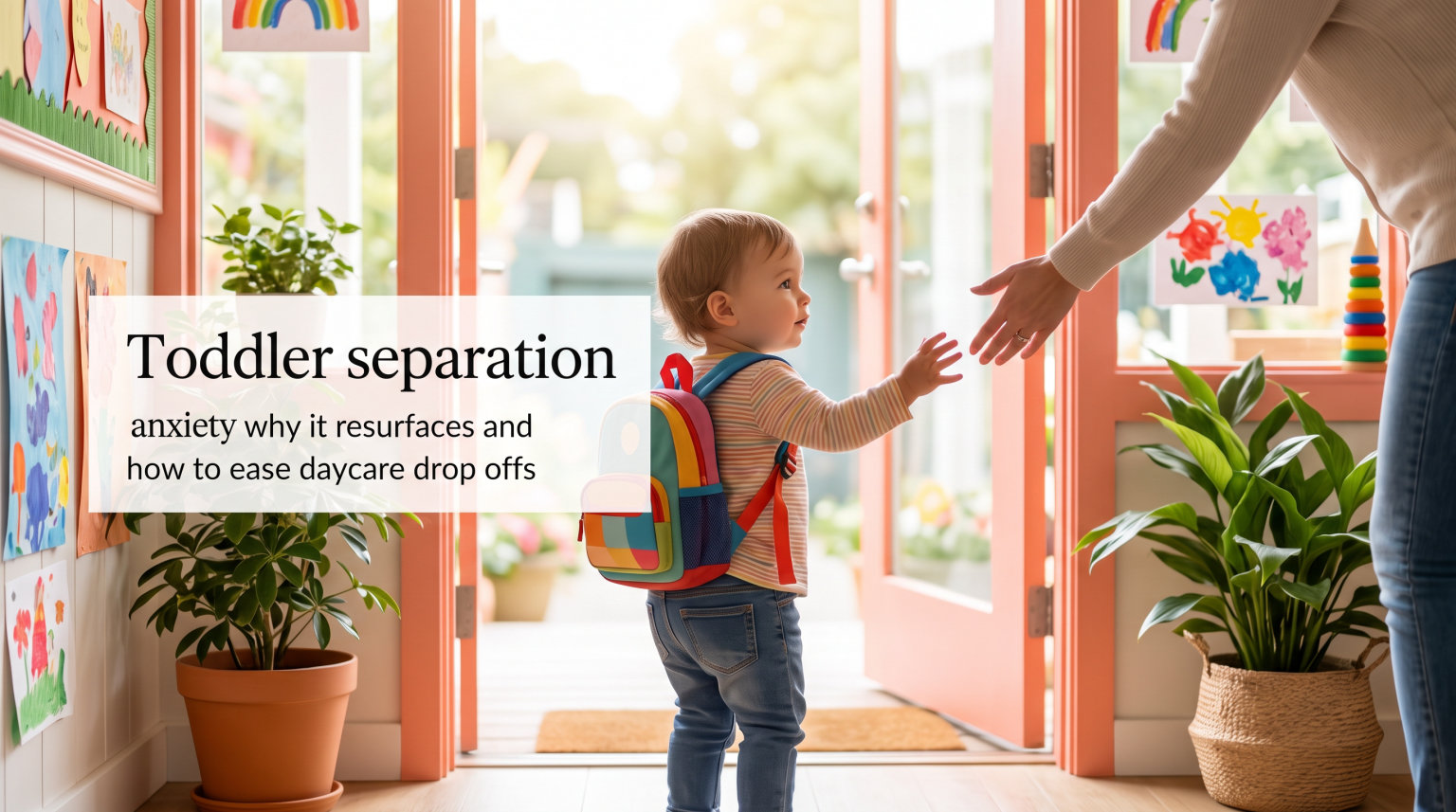
Watching your toddler scream and cling to your leg at daycare drop-off is heartbreaking. Especially when they were perfectly fine just last week. This sudden resurgence of separation anxiety leaves many parents wondering what went wrong and if they are doing something to cause it.
I have worked with hundreds of families navigating this exact challenge. The good news is that separation anxiety is completely normal. It actually signals healthy attachment and developmental progress. In this guide, I will explain exactly why toddler separation anxiety resurfaces even after your child was previously comfortable, and share proven strategies to make daycare drop-offs easier for both of you.
Table of Contents
Why Toddler Separation Anxiety Resurfaces (Even After Being Fine)
Your child attended daycare happily for three months, then suddenly started crying at the door. This regression confuses and frustrates parents. Understanding why it happens helps you respond with patience instead of worry.
Developmental Leaps Trigger New Waves of Anxiety
Separation anxiety is not a one-time event children outgrow permanently. It surfaces repeatedly as their brains develop new capabilities. When toddlers gain a deeper understanding of time, relationships, or their own independence, they process these changes through fresh anxiety about separation.
Object permanence develops in stages. Around 9 months, babies first realize you exist even when they cannot see you. Between 18 months and 2 years, toddlers develop a more sophisticated understanding that you are separate from them. This deeper comprehension often triggers the most intense wave of separation anxiety. Later, at ages 3 and 4, preschoolers understand time better. They know you will return but worry about how long that actually means.
Environmental Changes Disrupt Established Comfort
Children who previously handled daycare well may regress when their environment changes. Based on forum discussions with working parents, these triggers commonly cause anxiety to resurface:
New room transitions at daycare often spark anxiety. Moving from the toddler room to the preschool room means unfamiliar teachers, different routines, and new children. Even positive changes feel unsettling to young children.
Staff turnover creates attachment disruptions. When a beloved teacher leaves, children mourn that relationship. Parents on Reddit report their children took 3-4 weeks to attach to a new key worker after a staff change.
Schedule changes at home affect daycare behavior. A new sibling, a parent returning to work, moving houses, or even toilet training can trigger renewed clinginess. Children process stress through separation anxiety.
Your Child Is Testing Consistency
Sometimes anxiety resurfaces because your child is checking whether your response remains consistent. They need to verify that you still return every time, that your goodbye ritual stays the same, and that their feelings are still valid. This testing behavior is developmentally appropriate, even when exhausting for parents.
Signs and Symptoms to Watch For
Recognizing separation anxiety helps you distinguish between normal adjustment struggles and concerning behavior. Most symptoms appear during transitions but some extend throughout the day.
Emotional and Behavioral Signs
Crying, screaming, or tantrums at drop-off are the most obvious indicators. Your child may cling to your legs, hide behind you, or physically resist being handed to the caregiver. Some children become completely silent and withdrawn instead of crying.
Nighttime anxiety often accompanies daycare separation issues. Your toddler may resist bedtime, wake more frequently, or ask repeatedly about going to daycare tomorrow. They process separation fears during quiet evening hours.
Physical complaints without medical cause signal anxiety. Stomach aches, headaches, or nausea on daycare mornings are common. These are real physical stress responses, not manipulation.
When Symptoms Extend Beyond Drop-Off
Typical separation anxiety subsides within minutes of your departure. Children stop crying and engage in activities. However, some children continue struggling throughout the day.
Refusing to eat or sleep at daycare indicates significant anxiety. One parent on a working moms forum shared that her daughter would not eat lunch at daycare for three weeks. This level of distress requires additional support strategies.
Withdrawal from activities and other children suggests your child is not settling after you leave. They may sit alone, refuse to participate in group activities, or seek constant proximity to teachers instead of playing.
Separation Anxiety by Age: What to Expect
Separation anxiety manifests differently at each developmental stage. Understanding age-specific patterns helps set realistic expectations and choose appropriate strategies.
Infants (6-12 Months): The First Wave
Babies begin showing separation anxiety around 6 months as object permanence develops. They cry when you leave the room because they now understand you exist somewhere else. This first wave typically peaks at 9 months.
At this age, brief separations are hardest. Infants respond best to consistent caregivers and quick, calm goodbyes. They generally settle within 5-10 minutes after parents leave, though that feels like an eternity to a parent hearing crying as they walk away.
Toddlers (1-2 Years): Peak Intensity
This age brings the most dramatic separation anxiety for many families. Toddlers understand you are separate from them but cannot yet comprehend time. They know you are leaving but cannot grasp that you will return.
Tantrums at drop off reach peak intensity between 18 months and 2 years. This developmental stage combines separation anxiety with limited emotional regulation. Toddlers genuinely feel distress and express it through the only tools they have: crying, screaming, and physical resistance.
The intensity typically lasts 2-4 weeks when starting daycare. If your child has been attending for months and suddenly regresses, expect 1-2 weeks of renewed adjustment.
Preschoolers (3-4 Years): Resurgence During Transitions
Many parents assume separation anxiety ends by age 3. This misconception causes surprise when 3-year-olds suddenly resist preschool drop-offs. Preschoolers experience separation anxiety differently than toddlers.
They understand you will return but worry about how long. A four-hour preschool morning feels abstract to a 3-year-old. They also fear missing out on home activities. Why does the baby get to stay with you? Will you do something fun without me?
Separation anxiety in 3 year olds at preschool often links to specific fears rather than general distress. They may worry about bathroom accidents, missing their favorite toy, or a specific child at preschool. Identifying the specific concern helps address it directly.
How to Ease Daycare Drop-Offs: 7 Proven Strategies
These strategies come from child development research and real parent experiences shared in parenting forums. Each technique addresses a specific aspect of separation anxiety.
1. Create a Consistent Goodbye Ritual
A predictable ritual signals transitions and provides comfort through familiarity. The ritual should be special but brief. Complicated routines extend the goodbye process and increase anxiety.
Effective rituals include: two kisses and a high-five, a special handshake, a countdown hug (squeeze for 5, 4, 3, 2, 1), or a secret family goodbye phrase. Whatever you choose, use it every single time.
Never add extra hugs or prolong the goodbye because your child is crying. This teaches that crying keeps you longer, reinforcing the behavior. Stick to your ritual even when it feels heartless to walk away from tears.
2. Keep Goodbyes Brief and Positive
Your emotional state directly affects your child. If you hesitate, look worried, or offer multiple goodbye attempts, your child senses your anxiety. They conclude: if Mom is scared to leave, maybe I should be scared too.
Project confidence even when you feel guilty. Smile, use a cheerful voice, and avoid phrases like “I will miss you so much” or “I hate leaving you.” Instead try: “I love you. You are going to have a great day. I will see you after naptime.”
Trust the daycare staff to handle the transition once you leave. Experienced teachers have comforted hundreds of crying children. Your child will stop crying faster if you actually leave rather than lingering in the doorway.
3. Use Transition Objects From Home
A physical connection to home provides comfort throughout the day. Transition objects work because they carry familiar scents and associations that remind children of security.
Effective transition objects include: a family photo in their backpack, a small stuffed animal that stays at daycare, a scarf that smells like you, or a special stone or shell they can hold. Some parents record short voice messages their child can listen to at difficult moments.
Check daycare policies about personal items. Many centers allow comfort objects during the adjustment period but encourage children to participate in activities without them eventually.
4. Practice Short Separations at Home
Build your child’s confidence in your return through practice. Start with separations in your own home where the environment feels safe.
Practice strategies include: leaving the room for 2-3 minutes while your child plays, having your partner handle bedtime while you go for a short walk, or letting your child stay with a grandparent while you run errands. Always return exactly when you promised.
Role playing with stuffed animals also helps. Have a doll “go to daycare” while the stuffed animal parent leaves, then return at the end of the day. Narrate the process so your child hears the story of separation and reunion repeatedly.
5. Arrive During Calm Activities
Timing affects drop-off success. Arriving during chaotic transitions like outdoor playtime change or snack cleanup adds sensory overwhelm to separation anxiety.
Ask your daycare about quieter transition windows. Many centers have morning activities specifically designed for arriving children. Books, puzzles, or sensory tables provide engaging distractions that make your goodbye easier.
Some parents find arriving slightly earlier, when fewer children are present, reduces anxiety. Other children do better arriving when the room is already busy and active. Observe your child to determine which environment suits them.
6. Communicate Specific Return Times
Young children do not understand clocks but comprehend routines. Instead of saying “I will pick you up at 3 PM,” connect your return to their schedule.
Effective phrases include: “I will be back after your nap,” “I will pick you up after afternoon snack,” or “I will see you after you play outside.” These concrete anchors help children track time through activities rather than hours.
Always follow through exactly as promised. If you say after naptime, arrive promptly. If you are unavoidably delayed, call the center so staff can reassure your child that you are coming, just running a bit late.
7. Build Relationship with Key Daycare Staff
Your child needs to trust their caregivers before they can comfortably separate from you. Invest time in building that relationship deliberately.
Share information about your child’s preferences, fears, and comfort strategies. Let them know what works at home. Ask for their observations about what calms your child fastest at daycare.
When possible, have the same staff member handle drop-off consistently. Attachment to a specific caregiver typically takes about 3 weeks to develop. Once your child bonds with their key worker, separation from you becomes easier because they are transferring attachment rather than losing it.
Building Trust: The Foundation of Easier Transitions
Trust makes separation possible. When children trust that you will return and trust that their caregivers will keep them safe, they can tolerate the discomfort of goodbye.
Never Sneak Away
Sneaking out while your child is distracted seems like avoiding tears. It actually damages trust and increases future anxiety. When children realize you disappeared without warning, they become hypervigilant. They stop trusting that goodbyes are predictable.
Always say goodbye, even when your child is crying. Even when it would be easier to slip out during snack time. The brief distress of a proper goodbye prevents the deeper anxiety of unpredictable disappearances.
Follow Through on Every Promise
Your return is the most important promise you make. Be absolutely reliable about when you will be back. If you say after lunch, be there after lunch. Not after your errands, not when traffic clears, not when you finish that call.
Children learn your reliability through experience. Each on-time pickup builds their confidence for the next separation. Each delay or broken promise increases anxiety for future goodbyes.
Validate Feelings Without Indulging Them
Your child’s anxiety is real and valid. They are not manipulating you. They are genuinely experiencing distress. Acknowledge their feelings without making the goodbye conditional on their happiness.
Effective validation sounds like: “I know you are sad that I am leaving. It is hard to say goodbye. I love you and I will be back after rest time.” Then leave. Do not negotiate, delay, or offer treats for stopping tears. Validation does not mean extending the goodbye indefinitely.
Managing Your Own Emotions (and Guilt)
Parents experience their own separation anxiety and guilt. Acknowledging your emotions helps you manage them appropriately rather than projecting them onto your child.
Children Pick Up on Parent Anxiety
Your body language speaks louder than your words. If you hesitate at the door, offer multiple comfort attempts, or leave with tears in your own eyes, your child absorbs that anxiety. They interpret your behavior as evidence that separation truly is dangerous.
Practice projecting calm confidence even when you feel guilty. Your confident departure teaches your child that daycare is safe and that they can handle the transition. This confidence becomes a self-fulfilling prophecy.
Separating Parent Guilt From Reality
The working parent guilt is intense. Social media feeds full of stay-at-home moms, judgmental relatives, and your own tired toddler screaming at the door create a narrative that you are abandoning your child.
Reframe the experience. Research consistently shows that quality daycare benefits children’s social development, independence, and school readiness. You are not damaging your child. You are providing them with valuable experiences and social connections.
Forum discussions with experienced parents consistently confirm that children adapt quickly once parents actually leave. The crying at the door rarely lasts more than 5-10 minutes. Your child probably transitions to playing happily within moments of your departure.
Trust the Process
Multiple parents on toddler forums shared the same pattern: weeks of heartbreaking drop-offs followed by sudden, dramatic improvement. One day your child will walk through the door with minimal fuss. Then one day they will actually wave goodbye with a smile.
That transition happens because of the trust and consistency you built during the difficult weeks. Your steady presence through their distress teaches them that emotions are manageable and that you are reliable. That lesson serves them throughout their life.
When to Seek Professional Help
Most separation anxiety resolves with time and consistent strategies. Some situations warrant professional evaluation.
Signs of Separation Anxiety Disorder
Typical separation anxiety lasts 1-4 weeks for initial adjustment or 1-2 weeks for regression after being fine. If intense anxiety persists beyond 4-6 weeks despite consistent strategies, consult your pediatrician.
Severe physical symptoms that interfere with health require attention. If your child truly cannot eat or sleep at daycare for weeks, they are not adapting. This level of distress indicates they need different support or a different environment.
Anxiety that extends into all areas of life suggests broader concerns. If your child shows extreme distress during any separation, not just daycare, this may indicate separation anxiety disorder rather than typical developmental anxiety.
Trust Your Instincts
You know your child best. If daycare staff suggest your child needs to be removed but your instincts disagree, seek a second opinion. Some children need more time and different strategies rather than withdrawal from care.
Conversely, if your instincts say something is wrong beyond typical anxiety, listen. Switching daycares, adjusting schedules, or seeking evaluation are valid responses to your parental intuition.
Frequently Asked Questions
How to help separation anxiety at daycare drop off?
Create a consistent goodbye ritual and keep departures brief and positive. Use transition objects from home, practice short separations, and connect your return to their daily schedule. Trust the daycare staff to handle the transition once you leave.
Is it normal for toddlers to cry when dropped off at daycare?
Yes, crying at daycare drop-off is completely normal and indicates healthy attachment. Most children stop crying within 5-10 minutes of the parent leaving. This behavior typically improves within 1-4 weeks of consistent attendance.
How long does separation anxiety last in 3 year olds?
For initial daycare starts, separation anxiety typically lasts 1-4 weeks. For preschoolers aged 3-4, resurgence of anxiety during transitions usually resolves within 1-2 weeks with consistent routines.
Why does separation anxiety come back after my child was fine?
Separation anxiety resurfaces due to developmental leaps, environmental changes like staff turnover or room transitions, schedule changes at home, or your child testing consistency. Each wave represents developmental progress even when exhausting for parents.
What is the 3-3-3 rule for anxiety in children?
The 3-3-3 rule is a grounding technique where children name 3 things they can see, 3 things they can hear, and 3 things they can touch. This brings attention back to the present moment during anxious feelings.
Remember that toddler separation anxiety at daycare drop-offs is a phase. It feels permanent when you are living through it daily, but children adapt remarkably well with consistent support. The strategies in this guide work because they build trust, honor your child’s feelings, and maintain the boundaries children need to feel secure.
Your steady presence through this challenging period teaches your child that they can handle difficult emotions. That lesson stays with them long after daycare drop-offs become routine. Stay consistent, trust the process, and know that easier mornings are ahead.