
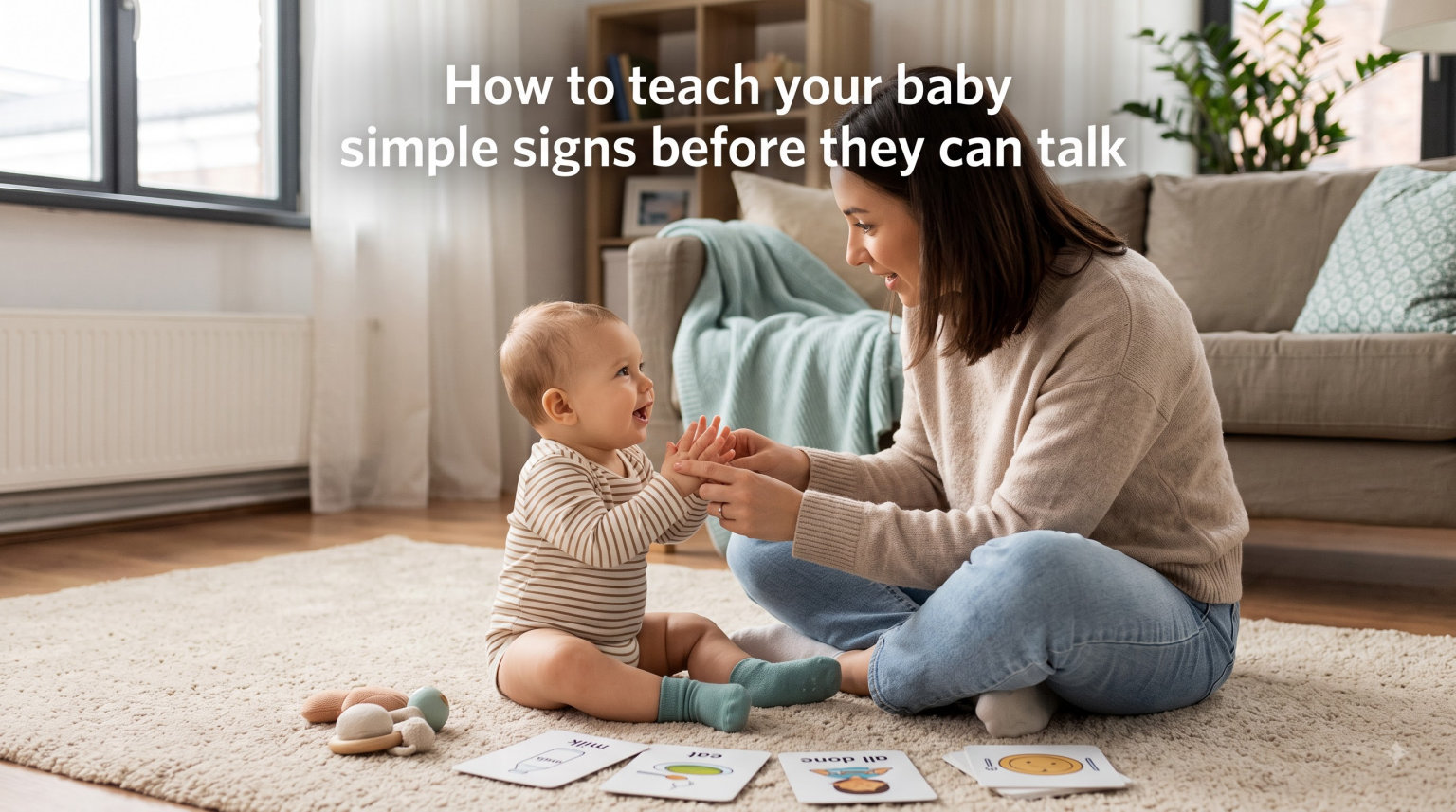
Babies have a lot to say long before they have the words for it, and learning how to teach your baby simple signs before they can talk can turn those fussy months into a calmer, more connected chapter. Signing is not about pushing language milestones or hurrying your baby to grow up. It is a small daily habit that helps your baby share what they need, want, or feel, while their mouth is still catching up to their bright little mind.
I have worked with families for more than two decades, and the parents who find the most success with signing are not the ones following a strict curriculum. They are the ones who slow down, look their baby in the eyes, and repeat one or two signs during routines they already share. This guide pulls together what speech-language pathologists, Deaf community educators, and thousands of parents have learned, so you can decide what fits your family.
You will find a clear answer to what baby sign language is, the benefits and the realistic limits, an age-by-age plan, the step-by-step teaching method, the first signs I recommend, and troubleshooting for the moments when your baby seems uninterested. I have also answered the most common questions from parents on our forums, including how to handle family members who are skeptical and when to phase signs out as words arrive.
Table of Contents
What Is Baby Sign Language and How Does It Work
Baby sign language is a small set of simple hand gestures that stand in for spoken words during the months before a child can say them aloud. Most families borrow from American Sign Language, then simplify the movements so they fit tiny hands and early motor skills. The purpose is communication, not fluency. Think of it as a bridge between the cry and the conversation.
The process is gentle and predictable. You say the word while you make the sign, every time, in the same context. Your baby watches your face and your hands, copies what they can, and over weeks begins to link the gesture with the meaning. Once the link is solid, they use the gesture to tell you things instead of fussing, pointing, or melting down.
One quick distinction matters here. Modified baby signs and full ASL are both valid. If your child has a Deaf family member or grows up around ASL, full ASL is the richer and more inclusive choice. If you are just looking for a way to pass milk without a tantrum, a few modified signs used consistently at home is plenty. If you want a foundation in encouraging speech development in toddlers, signing alongside spoken words is one of the most effective tools we have.
Realistic Benefits and Honest Limits
The benefits people talk about are real, but they come with caveats. Knowing both sides helps you set realistic expectations and stay patient through the quiet weeks before your baby signs back.
What the research and parents actually see
Babies who sign reliably communicate basic needs like hunger, tiredness, thirst, and pain weeks or months before they can say those words. That alone often cuts daily frustration in half for both baby and parent. Several longitudinal studies have found that signing babies tend to have larger spoken vocabularies once words arrive, not smaller ones.
Signing also builds connection. You slow down, you look at your baby, and you narrate the moment with your hands and your voice. That small ritual is a kind of gentle parenting strategies for babies practice, and it tends to strengthen the everyday bond you are already working on.
What baby signs will not do
Signing will not make your baby smarter, earlier, or ahead of schedule. It will not prevent every tantrum, especially the ones driven by two-year-old emotions. It will not replace the need to read, talk, and play with your child in dozens of other ways. If you are exhausted, overwhelmed, or just not interested, that is okay too. Signing is a tool, not a parenting grade.
It is also worth saying that signing is not a substitute for evaluation if you have concerns about your child’s hearing, language, or development. If your baby is not making eye contact, not responding to their name, or not babbling by 9 months, please talk with your pediatrician. Our guide to signs of speech delay in toddlers can help you know what to look for.
When to Start Teaching Baby Signs
Most families begin between 6 and 9 months, but the window is wider than you might think. The right time depends less on a calendar and more on a few readiness cues you can watch for at home.
Signs your baby is ready
Look for these together rather than checking them off one at a time:
- Your baby can sit supported and hold their head steady.
- They watch your hands when you gesture, point, or wave.
- They bring both hands to midline to play with a toy.
- They can grasp with a full hand, even before a true pincer grasp.
- They are starting to babble with intent, as if practicing a conversation.
Age-by-age progression
Babies develop at different speeds, so treat these as gentle ranges, not test scores.
6 to 9 months: introduction phase
Babies this age are mostly absorbing. Choose two to three signs tied to feeding or sleep, model them often, and let your baby watch. Most babies will not sign back yet, and that is fine. The work at this stage is building the memory link.
9 to 12 months: first signs appear
Many babies produce their first sign somewhere in this window, often between 10 and 14 months from the start of consistent modeling. A sign attempt can look like an open hand pushing toward you, or a fist opening and closing. Treat any hand movement that looks intentional as a real sign and respond warmly.
12 to 18 months: vocabulary grows
Once your toddler has two or three reliable signs, you can add one or two new signs a month. They may also start combining a sign with a sound, which is the bridge to spoken language.
18 to 24 months: signs fade, words take over
Toddlers usually begin dropping signs as their spoken vocabulary expands. You can support that by saying the word clearly while making the sign, then quietly dropping the hand motion as the word becomes reliable.
If you are reading this with a baby who is already 9 or 10 months old, take a breath. Starting later is absolutely fine. Older babies often sign back sooner because their motor skills are more developed, even if they missed the earliest modeling window.
How to Teach Baby Sign Language Step by Step
This is the method I share in workshops and what most speech-language pathologists recommend. It is built on three ideas: choose signs that match real needs, model them consistently, and respond to every attempt.
Step 1: Choose 3 to 5 first signs
Start small. Pick signs that connect to the moments when frustration tends to spike, such as feeding, naps, and play. The most useful starter signs are milk, eat, more, sleep, and all done. They each solve a real problem in your day.
Step 2: Model the sign while you say the word
Every single time you say the word, make the sign at the same moment. Keep your hands near your chest or face so your baby can see them easily. Use a natural, slightly exaggerated motion at first, then relax into your usual rhythm once your baby learns it.
Step 3: Repeat the sign during daily routines
The magic happens in repetition. Sign milk at every bottle or nursing session. Sign more when you offer another bite. Sign sleep when you start the bedtime routine. The more often a sign shows up in the same context, the faster your baby links the gesture to the meaning.
Step 4: Watch for attempts and respond warmly
A sign attempt might look like a hand opening toward you, a fist pumping, or fingers tapping together. It will not be perfect, and that is the whole point. Smile, say the word, and give your baby what they asked for. That response is the reward that locks the learning in.
Step 5: Add signs gradually
Once your baby uses two or three signs reliably, introduce one or two new signs each month. Pick signs that match new interests, like dog, book, or outside. Avoid adding more than two at once, because the goal is depth, not breadth.
Step 6: Fade signs as spoken words appear
When your toddler starts saying a word, even as a baby version, begin to drop the sign. Pair the spoken word with the sign for a week or two, then quietly stop making the gesture. Most children naturally stop signing once their spoken vocabulary grows.
First Signs to Teach and How to Do Them
Here are the eight signs I suggest most families start with, along with simple descriptions you can practice in front of a mirror. The exact motion matters less than the consistency of everyone in your home using the same one.
Milk
Squeeze your fist, as if milking a cow. Use it whenever you offer a bottle, breast, or cup of milk. Babies usually catch on to this one quickly because feeding happens so often.
Eat
Bring your fingertips to your lips, as if putting food in your mouth. Use it at meals and snack times. Pair it with the word every time, even when your baby is just watching you eat.
More
Tap the fingertips of both hands together. This is the universal toddler favorite, partly because it works for nearly anything they want more of, including cuddles, songs, and the same squeaky toy ten times in a row.
All done
Hold both hands up, palms out, and give a small wave. Use it to signal the end of a meal, a diaper change, or any activity. It is a graceful way to give your baby a way to say they are finished without a meltdown.
Sleep
Pull your open hand down over your closed fist, as if closing sleepy eyes. Use it during the bedtime routine, in the crib, and during nap transitions.
Help
Rest one thumb on your flat palm and lift it up, like a tiny hand reaching. Use it whenever you offer assistance, such as reaching a toy or opening a container. It is one of the most useful signs for reducing frustration.
Please and thank you
Please is the flat hand circling the chest. Thank you is the fingertips touching the chin and moving outward. These signs lay an early foundation for manners without the pressure of saying the words yet.
Hot
Pull the fingers of one hand quickly back from the mouth, as if fanning heat. Use it when touching or blowing on warm food, when you wave your hand near something hot, and during safety moments. It is a real-world safety sign, not just a polite gesture.
If your family’s signs do not match these motions exactly, that is fine. The only rule is that the people caring for your child use the same sign for the same word, every time.
Fitting Signing Into Real Family Routines
The biggest reason signing fails is not lack of interest. It is the feeling that one more thing has been added to an already full plate. The fix is to attach signs to habits you already have, not to create new ones.
Morning routine
Sign milk during the first feeding. Sign eat at breakfast. Sign all done when the high chair empties. These three moments give you at least five repetitions without changing how you parent.
Meal and snack times
Sign eat when you sit down and more whenever you offer another bite or sip. Use all done when the meal ends. Snack time is a quiet goldmine for repetition because there are usually multiple rounds of wanting more.
Diaper changes and bath time
Use the more sign when your baby reaches for a favorite bath toy. Use all done when you lift them out. These are the routines where signing often gets forgotten, so writing them on a sticky note can help until they feel automatic.
Outdoor play
Sign outside when you open the door and again when you come back in. Sign dog if you see one, and sign more if your baby wants another push on the swing. Outside time is rich with repetition because the world keeps introducing new things to name.
Bedtime
Sign sleep, book, and all done as part of your bedtime routine. The repetition at this hour is powerful because your baby is calm, attentive, and snuggled close, which makes it easier for them to watch your hands and face.
Working parents and shared caregivers
If your baby spends part of the day with a partner, grandparent, or daycare provider, choose three signs together and make sure everyone uses the same motion. A short video or printed chart on the fridge can keep the whole team aligned without long meetings.
Milestone Tracker and Realistic Timeline
Parents often expect signs to show up in a week or two. The honest timeline is longer, and knowing that upfront saves you from quitting too soon.
- Weeks 1 to 2: Your baby watches your hands more than usual.
- Weeks 2 to 4: Your baby reaches for your hands when you sign, or pauses feeding when you sign milk.
- Weeks 4 to 8: A first sign attempt appears. It might be a fist, a wave, or a hand reaching toward the food.
- Months 2 to 4: Reliable use of the first one or two signs in the right context.
- Months 4 to 8: A small vocabulary of five to ten signs, often with attempts at new words.
- Months 8 to 12: Signs begin to fade as spoken words take over, especially after the 18-month mark.
Every baby is different. If your child is later on this list but is babbling, pointing, and engaging with you, they are on their own timeline. If your child is also delayed in those areas, please bring it up with your pediatrician.
Troubleshooting When Baby Is Not Signing Back
This is the most common worry I hear from parents, and the answer is almost always more consistency and more patience, not a different method.
Make sure every caregiver is signing
If you model milk twenty times a day but your partner never signs, your baby is getting mixed signals. Pick a tiny starter set and ask every caregiver to commit to those few signs for at least a month.
Check that your signs match your moments
Signing milk in the middle of an unrelated play session teaches your baby that the sign is meaningless. Save the sign for the actual context, and use it every time that moment comes up.
Slow down your hands
Most parents sign too fast, especially once the sign feels familiar. Slow, exaggerated motions near your chest or face give a young baby more chances to see and copy.
Celebrate tiny attempts
An open hand reaching toward a bottle counts as a sign. A finger pointing toward the snack bowl counts. Treat any hand movement that happens at the right moment as the real thing, and respond with a smile and the item they wanted.
Drop the pressure
If signing starts to feel like a test you are running on your baby, take a break. Signing should feel like play, not a curriculum. A few weeks off does not undo the learning that has already happened.
Common Mistakes to Avoid
Most of the bumps parents run into with baby sign language come from a handful of predictable mistakes. Skipping them gives your baby a much smoother start.
- Signing without speaking. The sign and the word must always travel together so your baby hears the language they will eventually use.
- Teaching too many signs at once. Three to five signs done consistently beats twenty signs done inconsistently.
- Changing the motion. Every caregiver should use the same sign for the same word. Switching motions confuses a baby who is just building the link.
- Quitting after two weeks. Most babies need a month or more of consistent modeling before their first real attempt.
- Ignoring fusses that are not about signing. Signing is for the moments of need, not the moments of big emotion. Hold, soothe, and connect first.
- Comparing your baby to other babies. Every child follows their own developmental path.
Handling Family Skepticism and Outside Voices
It is common for a partner, parent, or pediatrician to gently question whether signing is necessary or whether it might delay speech. A few calm responses usually do the trick.
You can share that research consistently shows signing does not delay speech, and many studies find it slightly speeds up spoken vocabulary once words arrive. You can also point out that signing is optional and pressure-free, and that you are simply offering your baby another way to communicate during a frustrating window of development.
If your baby is biting, hitting, or melting down more than usual, signing can also be a practical bridge. Our article on why toddlers bite and prevention strategies explores how giving toddlers a way to ask for what they need often lowers the moments that lead to biting.
Special Considerations: Multilingual Homes, Deaf Family, and Developmental Differences
Signing works beautifully alongside the spoken languages in your home. If you speak Spanish at home and English at daycare, you can sign milk while saying leche in one setting and milk in the other. The sign is the same, and your baby will link it to both words.
If a close family member is Deaf or uses ASL, learn and use full ASL signs rather than modified baby versions. Your child will grow up bilingual in a way that honors their family and community, and you will be giving them access to a rich visual language from day one.
For babies with hearing differences, motor delays, or Down syndrome, signing can be especially powerful. Many families of children with language delays report that signs reduce frustration long before words arrive. Work with your speech-language pathologist or early intervention team to choose the signs that match your child’s motor abilities.
When to Transition From Signs to Spoken Words
The best part of baby sign language is that it teaches itself out of a job. As your toddler’s spoken vocabulary grows, they will naturally stop signing and reach for words instead. You can help that transition by following your child’s lead.
Watch for these signals: your toddler says a word, even imperfectly, while also signing. They stop signing the words they can say. They try to copy your spoken words with more interest. When you see any of these, fade the sign by pairing it with the spoken word for a week, then quietly stop making the gesture. Most children stop signing entirely between 18 and 30 months.
If your child keeps signing past age 3 and is not using many spoken words, talk with your pediatrician or a speech-language pathologist. Continued signing can still be helpful, but a professional evaluation can rule out underlying issues.
Quick Reference: Your First Week of Signing
If you only have a few minutes, here is a tiny starter plan you can begin this week.
- Pick three signs from the list above, ideally milk, more, and all done.
- Post the descriptions on the fridge or save them in your phone.
- Sign and say the word together every time the moment comes up.
- Watch for any hand movement that looks like an attempt, even on day three.
- At the end of the week, share the signs with one other caregiver.
That is enough. You do not need a curriculum, a class, or a perfect system. You just need a few signs, a few routines, and the patience to repeat them until your baby finds their voice.
Frequently Asked Questions
When is the best age to start teaching baby signs?
Most families start between 6 and 9 months, when babies can sit up, watch your hands, and use a pincer grasp. You can absolutely begin at 9, 10, or even 12 months. Older babies may sign back sooner because their motor skills are more developed, even if they start later.
Does baby sign language delay speech?
Research consistently shows that signing does not delay speech. In fact, most studies find that babies who sign tend to have larger vocabularies when they begin talking. Signs give babies a bridge to spoken language, not a replacement for it.
How long until my baby signs back?
Most babies take 2-8 weeks of consistent modeling before their first sign attempt, and 2-4 months before their first reliable sign. Every baby is different, so celebrate any hand movement that looks intentional.
Do I need to use real ASL or can I make up my own signs?
Either approach is fine for everyday family use. Many parents borrow from ASL because the signs are widely recognized. As long as everyone in the home uses the same gesture for the same word, your baby will learn it.
What if my baby uses one sign for everything?
This is a normal stage. When your baby over-uses a sign like ‘more,’ gently model the correct sign for the specific thing they want, while saying the word clearly. Repetition and patience are the tools that work.
How do I get my partner, grandparents, and daycare on board?
Pick 3-5 signs that matter most to daily care, share a short video, and keep a printed chart where caregivers can see it. Consistency across caregivers is the single biggest predictor of success.
When should I stop using signs?
Begin fading signs once your toddler starts saying the spoken word, even in a baby version. Pair the spoken word with the sign for a few weeks, then quietly drop the hand motion. Most children naturally stop signing by age 2-3.
Final Thoughts on Teaching Your Baby Simple Signs Before They Can Talk
Learning how to teach your baby simple signs before they can talk is really about giving your baby a small, loving voice during the long months between babbling and first words. It is not a test, a race, or a parenting credential. It is a way to slow down, look at your baby, and respond to what they are already trying to tell you.
Pick three signs, attach them to moments you already share, and keep going for a month. If your baby signs back, wonderful. If they take longer than you hoped, that is okay too. The work you are doing is laying a foundation of communication that will grow well past the baby years, into toddlerhood and beyond.
If you want to keep learning, our guide on encouraging speech development in toddlers pairs naturally with the signing approach, and our guide on gentle parenting strategies for babies shares the broader philosophy behind this kind of responsive, connection-first care. You are doing a good job, and your baby is lucky to have a parent who is asking these questions.