
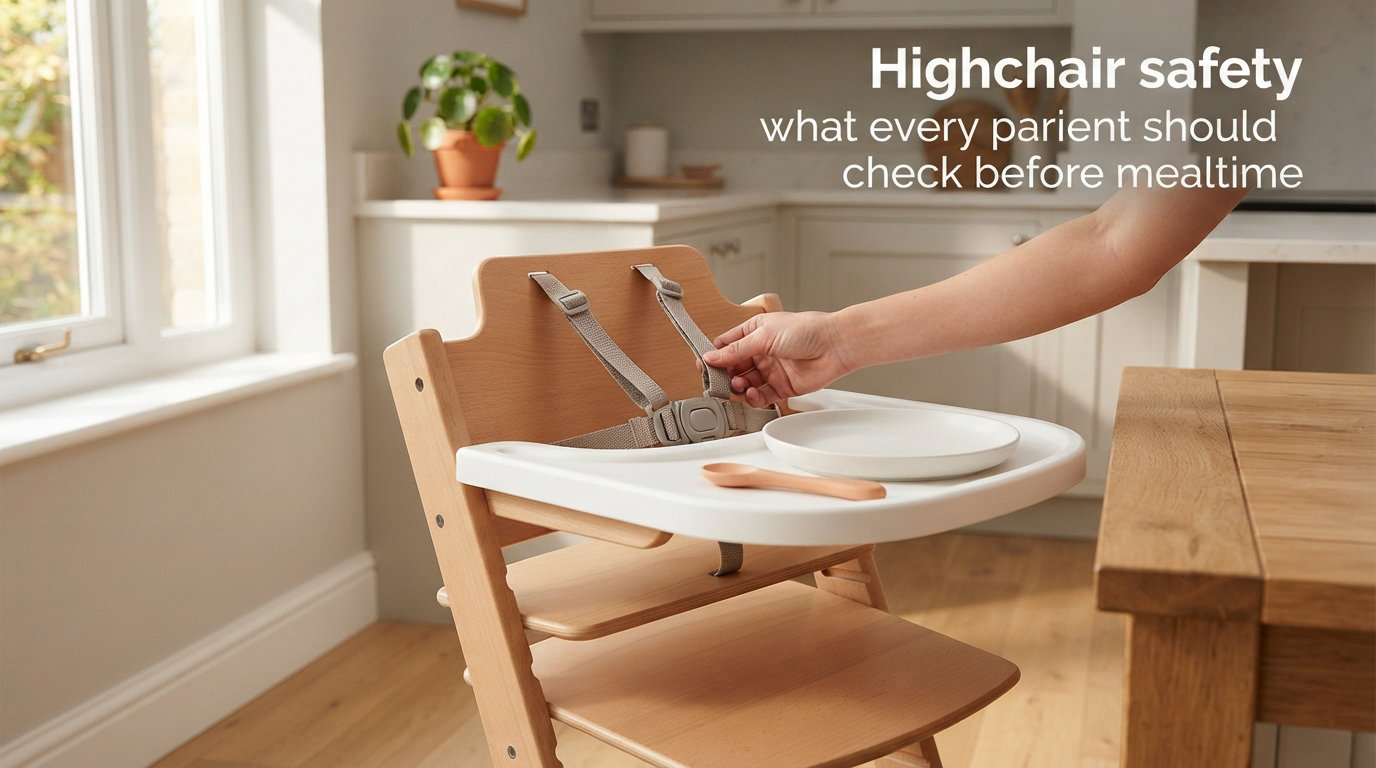
Every day, 24 children are treated in emergency departments across the United States for injuries related to highchairs and booster seats. Most of these injuries are preventable with a simple 60-second safety check before mealtime begins. If you have ever wondered what you should be checking each time you strap your child in, this guide walks you through exactly what to look for.
I have spoken with dozens of parents who experienced that heart-stopping moment when their child fell or nearly fell from a highchair. The guilt and fear that follow can feel overwhelming. What I want you to know is this: accidents happen to careful, loving parents every single day, and the goal here is not perfection but building a consistent routine that keeps your little one safe.
Highchair safety is not complicated, but it does require diligence. The routine you establish now will become second nature, protecting your child through the messy, wonderful years of family mealtimes. Let us walk through what every parent should check before mealtime.
Table of Contents
Highchair Safety: What Every Parent Should Check Before Mealtime
The foundation of highchair safety is a simple pre-mealtime checklist that takes less than a minute to complete. Think of it as your pre-flight safety routine, the same way you would buckle a car seat without question. Each item on this list addresses one of the most common causes of highchair-related injuries.
Research from the Center for Injury Research and Policy shows that falls account for the vast majority of highchair injuries, with most occurring when children are not properly restrained or when the chair tips over. By checking these 10 items before every meal, you dramatically reduce your child’s risk.
The 10-Point Pre-Mealtime Safety Checklist
1. Verify the crotch strap is attached and functional.
The crotch strap is the single most overlooked safety feature on highchairs. Without it, your baby can slide downward and become trapped, or wiggle out from under the waist straps. Check that the strap clicks securely into place and shows no signs of fraying or cracking.
2. Confirm the full harness system is properly buckled.
Whether your chair has a three-point or five-point harness, every strap should be fastened. The chest clip should sit at armpit level, not down near the belly. Tighten straps so you can fit one finger between the strap and your child’s body, no looser.
3. Check that all locking mechanisms are fully engaged.
If your highchair folds for storage, verify that the lock is completely secure before placing your child in the seat. Test the tray lock as well. A tray that detaches unexpectedly can cause your child to fall forward.
4. Inspect the base for stability on a wide, sturdy foundation.
Press down on the sides of the highchair to test for tipping. The base should feel solid and resist movement. Avoid placing highchairs on uneven surfaces or rugs that could cause wobbling.
5. Lock the wheels if your highchair has them.
Many highchairs come with wheels for convenience, but an unlocked wheel is a hazard. Verify that each wheel is in the locked position before lifting your child into the seat. Never move a highchair with your child in it.
6. Position the chair away from walls, counters, and tables.
Children push against nearby surfaces with their feet, which can cause the chair to tip backward. Maintain at least two feet of clearance behind and to the sides of the highchair. Never position a highchair where a child could push off a counter or wall.
7. Clear the area of hazards including tablecloths and cords.
Remove tablecloths and placemats that your child could grab and pull. Keep hot liquids, sharp utensils, and heavy dishes out of reach. Check for electrical cords, blind cords, or anything else that could cause entanglement or pull objects down.
8. Examine the seat and frame for damage or wear.
Look for cracks in the plastic, loose screws, or frayed straps. Check that the seat insert, if removable, is securely attached. Any damage means the highchair should be taken out of service immediately until repaired or replaced.
9. Verify your highchair model has no active recalls.
Before using a new or secondhand highchair, and quarterly thereafter, check recalls.gov for your specific model. Many parents never think to check, but defective highchairs are recalled regularly for serious safety issues including seats that detach without warning.
10. Prepare food and utensils before seating your child.
Get everything ready before you buckle your child in. This minimizes the time your baby sits unattended and reduces the temptation to leave them “just for a second” while you grab something from another room.
Understanding High Chair Safety Standards and Certification
Not all highchairs meet the same safety standards. Understanding what certifications mean can help you make informed decisions when purchasing or accepting a secondhand chair. The two key standards to look for are JPMA certification and ASTM International compliance.
JPMA stands for the Juvenile Products Manufacturers Association. A JPMA Certified label means the product has been tested by an independent laboratory and meets or exceeds all applicable safety standards. This certification is voluntary, so manufacturers who pursue it are demonstrating an extra commitment to safety.
ASTM International develops technical standards for products and systems. For highchairs, ASTM standards cover stability, restraint system effectiveness, tray security, and warning label requirements. A highchair that meets ASTM standards has been tested for tipping resistance and structural integrity.
The 90-90-90 Rule for Proper Positioning
You may have heard occupational therapists mention the 90-90-90 rule for highchair positioning. This refers to three angles that promote proper posture and safety during meals. The hips should be at a 90-degree angle, knees at a 90-degree angle, and ankles at a 90-degree angle relative to the floor.
Proper positioning matters for safety because a child who is slouching or sliding is more likely to escape restraints or become uncomfortable and squirm. Many modern highchairs have adjustable footrests that help achieve this positioning. If your child’s legs dangle freely, consider adding a foot support.
Five-Point vs Three-Point Harness: What is the Difference?
A five-point harness has straps over both shoulders, both hips, and a crotch strap. A three-point harness typically has straps over both shoulders and a crotch strap. Both are safe when used correctly, but five-point harnesses provide more security for active toddlers.
The key with any harness system is consistent use. Many parents get comfortable and stop buckling the chest clip or crotch strap after the early months. This is when accidents happen. Use every component of the harness every single time, even for a quick snack.
Restaurant and Away-From-Home High Chair Safety
Restaurant highchairs present unique challenges that parents often overlook in the rush to get seated and fed. These chairs see heavy use from countless families and may not receive the same maintenance scrutiny as your chair at home. A quick inspection can prevent a scary incident in public.
Before placing your child in a restaurant highchair, check that the crotch strap is present and functional. Many restaurants remove these straps because they become damaged or dirty, but they are essential for safety. If the strap is missing, ask for a different chair or bring a portable harness.
Test the stability of the chair by pressing gently on the sides. Restaurant floors are often uneven tile, which can create tipping hazards. Position the highchair away from traffic lanes where servers with hot plates are walking. Never allow your child to stand or climb in a restaurant highchair.
Hook-On Chair Safety Considerations
Hook-on chairs that clamp to table edges are popular for travel and small spaces, but they require extra vigilance. These chairs are only as stable as the table they attach to. Before using one, check that the table is heavy enough to support your child’s weight without tipping.
Verify that the clamps are tightened fully and that the rubber grips are in good condition. Never use a hook-on chair on a glass table, folding table, or table with a pedestal base. Watch for tablecloths or placemats that could create slipping surfaces between the clamps and table edge.
At grandparents’ houses or when visiting friends, resist the pressure to accept an old highchair from the basement without inspection. Older models may not meet current safety standards and often lack the crotch straps that prevent falls. Bring your own portable highchair or do the full 10-point checklist before using borrowed equipment.
When to Transition to a Booster Seat
One of the most common questions parents ask is when their child should move from a highchair to a booster seat. The answer depends more on developmental readiness than age alone, though most children make this transition between two and three years of age.
Your child is ready for a booster seat when they can sit upright unsupported for an entire meal, have outgrown the height or weight limits of their highchair, and show consistent ability to follow sitting rules without attempting to stand or climb. Some signs include your child’s chest reaching above the highchair tray or their knees bending at the edge of the seat rather than fitting comfortably.
Booster seats raise a child to table height while allowing them to sit in a regular dining chair. Look for boosters with a three-point harness or waist belt for younger toddlers. The booster should attach securely to the dining chair with straps that prevent both tipping and sliding.
Transition gradually if your child is resistant. Some families keep the highchair for dinner when everyone is tired and use the booster for breakfast when energy is higher. There is no rush to move a child who is still happy and secure in their highchair.
What to Do If a Fall Happens
Despite our best efforts, accidents can still occur. If your child falls from a highchair, knowing how to respond can make a critical difference. The first priority is to stay calm and assess your child for immediate signs of serious injury.
Check for responsiveness, bleeding, or obvious deformity. If your child is unconscious, not breathing, or has a suspected neck or spine injury, call 911 immediately. Do not move your child unless they are in immediate danger from their surroundings.
For falls onto hard flooring like tile or wood, watch carefully for signs of concussion even if your child seems fine initially. Symptoms can appear hours later. Watch for excessive crying that cannot be comforted, vomiting, unusual sleepiness, difficulty walking, or changes in pupil size.
If your child fell because the highchair tipped or a component failed, stop using the chair immediately and report the incident to the Consumer Product Safety Commission at CPSC.gov. Your report could prevent another child from being injured.
Addressing Parent Guilt After an Accident
If you are reading this after your child has already fallen, you may be struggling with intense guilt and shame. Please hear this: you are not a bad parent. Highchair accidents happen to careful, attentive parents every single day. The fact that you are researching safety now shows how much you care.
I have read countless forum posts from parents who say “I only turned away for a second” or “I thought they were strapped in.” These moments of distraction are human and normal. What matters now is learning from the experience and establishing new routines that prevent future incidents.
Talk to your pediatrician if you are struggling with anxiety after a fall. They can help you process what happened and assess whether your child needs any follow-up care. Do not let shame prevent you from seeking help or information.
Frequently Asked Questions About Highchair Safety
What is the 90-90-90 rule for high chairs?
The 90-90-90 rule refers to three angles that promote proper posture and safety: hips at 90 degrees, knees at 90 degrees, and ankles at 90 degrees relative to the floor. This positioning helps prevent slouching and keeps your child secure in their harness.
What are the safety standards for high chairs?
Look for JPMA Certification and ASTM International compliance. JPMA means the product was independently tested and meets safety standards. ASTM standards cover stability, restraint effectiveness, tray security, and warning labels. Both indicate a highchair has been tested for tipping resistance and structural integrity.
What is the most common hazard in a highchair?
Falls are the most common highchair hazard, accounting for the vast majority of injuries. Falls typically occur when children are not properly restrained, when chairs tip over, or when children climb out. Using the crotch strap and maintaining proper supervision prevents most fall injuries.
Should a 2 year old still be in a high chair?
Many 2-year-olds still use highchairs safely and appropriately. The transition to a booster seat depends on developmental readiness rather than age alone. Signs your child has outgrown their highchair include their chest reaching above the tray, knees bending uncomfortably at the seat edge, or consistent attempts to climb out despite proper restraint.
What is the alternative to a high chair for a toddler?
The main alternatives are booster seats that attach to regular dining chairs, hook-on chairs that clamp to table edges, or learning towers for children who can stand safely. Booster seats are the most common next step after highchairs and typically include safety straps for younger toddlers.
Conclusion: Highchair Safety is About Consistency, Not Perfection
Highchair safety what every parent should check before mealtime comes down to building consistent habits. The 10-point checklist takes less than 60 seconds but creates a protective routine that serves your family through the toddler years and beyond. Every time you verify that crotch strap, check those locks, and clear the surrounding area, you are preventing one of the 24 daily emergency room visits that happen when parents skip these steps.
Remember that safety is not about being a perfect parent who never makes mistakes. It is about creating systems and routines that protect your child even on hard days when you are tired or distracted. The checklist becomes automatic over time, just like buckling a seatbelt.
If you are dealing with the aftermath of an accident, be gentle with yourself. Learn from what happened, adjust your routine, and move forward with confidence. Your child needs a parent who feels capable and informed, not one paralyzed by guilt. Start fresh with the next meal, run through your checklist, and know that you are doing the most important job in the world.