
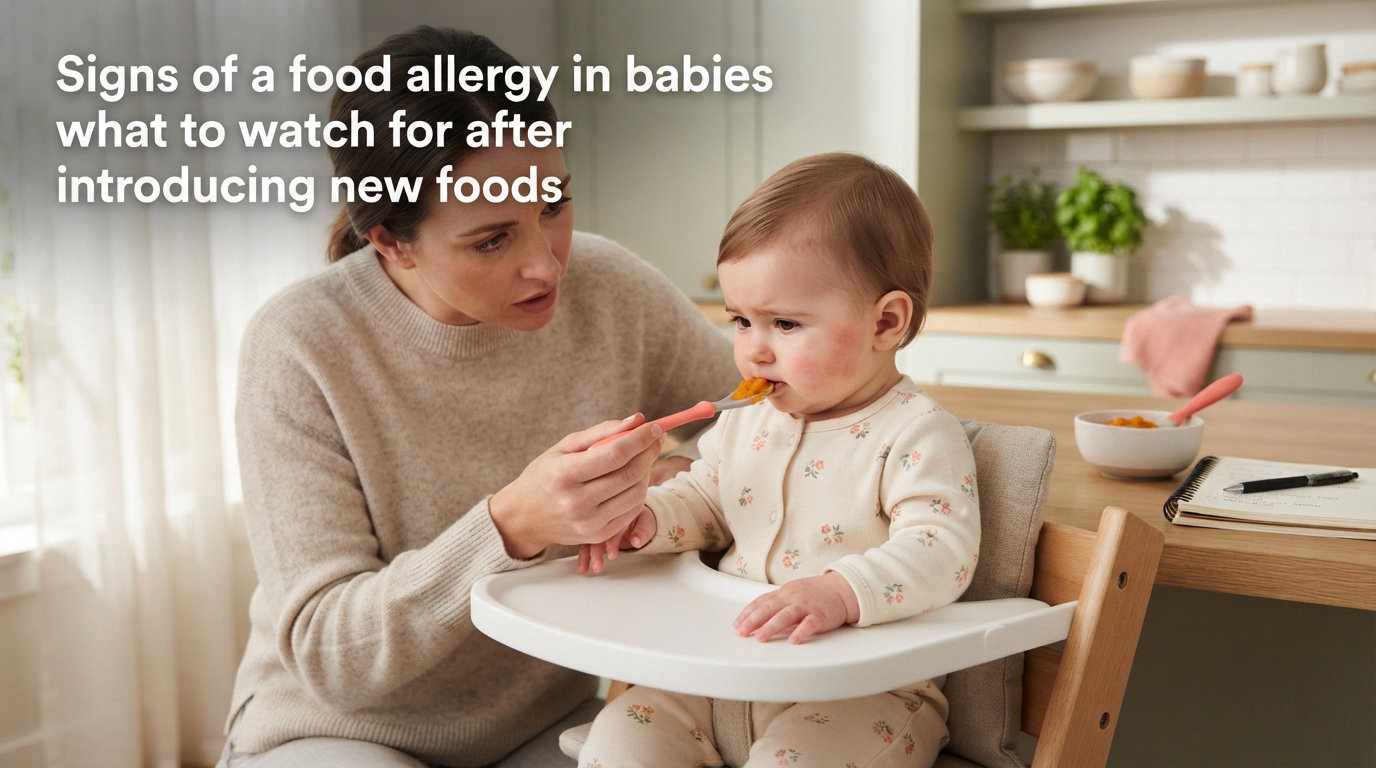
Introducing solid foods to your baby is an exciting milestone. It is also a time when many parents feel anxious about potential allergic reactions. Understanding the signs of a food allergy in babies helps you respond quickly and confidently when introducing new foods.
I have worked with thousands of families navigating this transition. The good news is that most babies tolerate new foods without any issues. When reactions do occur, knowing what to look for makes all the difference in keeping your little one safe.
A food allergy happens when your baby’s immune system mistakenly identifies a food protein as harmful. This triggers a release of chemicals like histamine, causing allergic symptoms. These reactions can range from mild hives to severe breathing difficulties requiring immediate medical attention.
Food allergies differ from food intolerances. An intolerance, like lactose intolerance, involves digestion issues without immune system involvement. Allergies can be life-threatening. Intolerances are uncomfortable but not dangerous.
Table of Contents
The 9 Major Food Allergens to Know
Nine foods account for approximately 90% of all allergic reactions in babies and children. Health authorities require these allergens to be clearly labeled on food packaging.
The major allergens include milk, eggs, peanuts, tree nuts (such as almonds, walnuts, cashews), fish, shellfish, soy, wheat, and sesame. Milk and egg allergies are most common in infants and often outgrown by school age. Peanut and tree nut allergies tend to persist longer and require lifelong management.
Many parents worry about introducing these foods. However, pediatric guidelines now recommend early introduction of allergens, often between 4-6 months, rather than delaying them. Research shows this approach may actually reduce allergy development.
How to Tell if Baby Has an Allergic Reaction to New Food: Mild Symptoms
Mild allergic reactions are the most common type parents encounter. These symptoms typically appear within minutes to two hours after eating the problematic food. Most mild reactions resolve on their own or with minimal intervention.
I always tell parents to watch for these key indicators during and after new food introductions:
Skin changes: Hives appear as raised, pink or red bumps with pale centers. They may look like welts and often spread across the body. An itchy rash or eczema flare-up in a new pattern can also signal a reaction.
Facial symptoms: Swelling of the lips, tongue, or around the eyes is a telltale sign. Red, watery, or itchy eyes often accompany other symptoms.
Respiratory signs: A runny nose, sneezing, or nasal congestion that starts suddenly after eating can indicate an allergy. Some babies develop a dry cough or clear their throat repeatedly.
Gastrointestinal issues: Mild nausea, tummy pain, or one episode of vomiting may occur. Diaper changes might show looser stools than usual.
Behavioral changes: Your baby might become unusually fussy or appear uncomfortable. Some infants pull at their tongue or mouth area.
One parent I spoke with described their 7-month-old’s first reaction to peanut butter. Within five minutes, red blotches appeared around the baby’s mouth. Small hives spread across the cheeks and chest over the next hour. The baby was fussy but breathing normally. This is a textbook example of a mild, localized reaction.
Another common scenario involves dairy introduction. Babies with milk protein allergy may show symptoms like acid-smelling spit-up, back arching, or changes in stool consistency. These signs can be subtler than hives but still indicate an immune response.
Severe Allergic Reaction Signs That Need Immediate Attention
Anaphylaxis is a severe, life-threatening allergic reaction that demands immediate emergency care. This reaction can progress rapidly, sometimes within minutes. Every parent introducing new foods should recognize these warning signs.
Watch for these severe symptoms that require calling 911 immediately:
Breathing difficulties: Wheezing, persistent coughing, noisy breathing, or any struggle to breathe indicates airway swelling. This is a medical emergency.
Swelling beyond the face: Widespread hives covering large portions of the body, or swelling of the throat, hands, or feet signals a systemic reaction.
Gastrointestinal distress: Repetitive vomiting, especially projectile vomiting, combined with other symptoms suggests anaphylaxis.
Circulation problems: Pale or bluish skin color, sudden lethargy, limpness, or loss of consciousness indicates dangerously low blood pressure.
Excessive drooling: Trouble swallowing or unusual drooling may indicate throat swelling.
Mental status changes: Sudden quietness, inconsolable crying, or unresponsiveness warrants immediate action.
If you suspect anaphylaxis, administer epinephrine immediately if available, then call emergency services. Do not wait to see if symptoms improve. Rapid treatment saves lives.
Parents often ask how to distinguish between a mild reaction getting worse versus a severe reaction from the start. The presence of any breathing difficulty, widespread hives with other symptoms, or sudden behavioral changes always indicates severity requiring emergency care.
How Long to Watch Baby After Introducing Allergen
Timing is everything when monitoring for allergic reactions. Understanding the reaction window helps parents stay vigilant without becoming overwhelmed.
Most IgE-mediated allergic reactions occur within minutes to two hours after eating the allergenic food. This is the critical window when parents should watch most carefully. Keep your baby nearby and observe for any changes during this period.
Some reactions follow a biphasic pattern. Symptoms improve initially, then return hours later without additional exposure. This is why medical observation continues even after apparent recovery from severe reactions.
Delayed reactions present a different challenge. Non-IgE-mediated allergies, including FPIES (Food Protein-Induced Enterocolitis Syndrome), can take 2-4 hours or longer to appear. These reactions primarily affect the gastrointestinal system.
Understanding FPIES: Delayed Allergic Reactions in Babies
FPIES is a delayed food allergy condition that many parents have never heard of until their child experiences it. This non-IgE-mediated reaction typically occurs 1-4 hours after eating the trigger food.
Symptoms of FPIES include repetitive vomiting, often severe, starting hours after the meal. Babies become lethargic, pale, and may have diarrhea. Some infants show signs of dehydration or low blood pressure. These episodes can be frightening and sometimes lead to emergency room visits.
Common FPIES triggers include milk, soy, oats, rice, and other grains. Unlike typical allergies, FPIES does not cause hives or breathing difficulties. The delayed onset often confuses parents and healthcare providers alike.
One mother shared her experience with oat cereal. Her 8-month-old seemed fine during breakfast. Three hours later, violent vomiting began. The baby became limp and pale. After hospitalization and testing, FPIES to oats was diagnosed.
If you suspect FPIES, consult a pediatric allergist. Management involves strict avoidance of trigger foods. Most children outgrow FPIES by age 3-5, but professional guidance is essential throughout.
Eczema Flare-Up vs Allergic Reaction vs Contact Rash
Skin symptoms cause the most confusion for parents. Not every rash or skin change indicates a food allergy. Understanding the differences helps you respond appropriately.
| Feature | Eczema Flare-Up | Allergic Reaction | Contact Rash |
|---|---|---|---|
| Timing | Gradual, often unrelated to meals | Minutes to 2 hours after eating | Minutes to hours after skin contact |
| Appearance | Dry, scaly patches in usual eczema areas | Raised hives, widespread or localized | Redness only where skin touched irritant |
| Associated symptoms | Itching, usually skin-only | May include swelling, breathing issues, vomiting | Localized discomfort only |
| Location | Face, elbows, knees, hands | Can appear anywhere, often near mouth first | Exactly where food touched skin |
| Duration | Days to weeks without treatment | Hours to days depending on severity | Hours, resolves when irritant removed |
| Examples | Winter dryness, stress triggers | Hives after peanut butter, swelling after egg | Red chin from acidic tomato sauce |
Contact rashes are common and harmless. Acidic foods like tomato, citrus, or berries often cause temporary redness where they touch the skin. This is not an allergy and does not require avoidance of the food.
True allergic reactions involve the immune system and may spread beyond contact points. A rash that appears around the mouth but then spreads to the chest, back, or limbs suggests an allergy rather than simple contact irritation.
If your baby has existing eczema, new food introductions can temporarily worsen skin condition. This does not necessarily mean an allergy exists. However, significant or sudden eczema flares after specific foods warrant discussion with your pediatrician.
What to Do if Baby Has Allergic Reaction When Starting Solids
Having a clear action plan reduces panic and ensures appropriate response. Every caregiver should know these steps before introducing new foods.
Step 1: Stop Feeding Immediately
Remove the food from your baby’s mouth if safe to do so. Do not offer any additional bites. Note exactly what was eaten and how much.
Step 2: Assess Severity
Check for the severe warning signs mentioned earlier. Is your baby breathing normally? Are there widespread hives? Is swelling progressing? Trust your instincts. When in doubt, treat as severe.
Step 3: For Mild Reactions
If symptoms are limited to a few hives or mild facial redness, stop the food and observe closely. Wash the affected skin with mild soap and water. A dose of children’s antihistamine may help with discomfort if recommended by your doctor.
Continue monitoring for at least two hours. Mild reactions can progress, though this is uncommon. Call your pediatrician to report the reaction and discuss next steps.
Step 4: For Severe Reactions
If any severe symptoms appear, call 911 immediately. If you have an epinephrine auto-injector prescribed for your child, administer it without hesitation. Epinephrine is life-saving and has minimal side effects.
Keep your baby lying down with legs elevated unless vomiting or having trouble breathing. Stay with them until emergency services arrive. Be prepared to tell responders exactly what food was consumed and when.
Step 5: Follow Up
Even after mild reactions, schedule a pediatrician appointment. Your doctor may refer you to an allergist for testing. Keep a detailed food diary including what was eaten, timing, and all symptoms observed.
Never re-challenge a food at home after any reaction without medical guidance. Your healthcare team will advise on when and how to safely reintroduce the food, if appropriate.
Safe Ways to Introduce Allergenic Foods
Prevention and preparation make introducing new foods less stressful. Current guidelines support early allergen introduction rather than avoidance.
Introduce new foods one at a time, waiting 3-5 days between each new item. This makes identifying triggers straightforward. Start with a small amount, about the size of a pea, and watch closely.
Morning feedings are ideal for first introductions. You will be alert and awake, and medical offices are open if concerns arise. Avoid introducing new foods right before bedtime or when your baby is overtired or sick.
Keep allergen foods in rotation once tolerated. Regular exposure to tolerated foods helps maintain tolerance. Do not eliminate foods from your baby’s diet without a confirmed allergy diagnosis.
Feed allergenic foods at home initially, not at restaurants or other people’s homes. You want access to your baby’s medical history, medications, and a comfortable environment for observation.
Have your phone nearby with emergency numbers pre-programmed. Keep a notebook ready to document timing and symptoms. If you have a history of anxiety around allergies, consider having another adult present for support.
Frequently Asked Questions
How long after eating can an allergic reaction occur?
Most allergic reactions happen within minutes to 2 hours after eating. Mild symptoms like hives or facial swelling typically appear quickly. However, FPIES (Food Protein-Induced Enterocolitis Syndrome) causes delayed reactions 2-4 hours after eating, primarily involving repetitive vomiting and lethargy.
Are red cheeks a sign of food allergy in babies?
Red cheeks alone are usually not a food allergy sign. They more commonly indicate contact irritation from acidic foods like tomatoes or citrus, teething, temperature changes, or eczema. True food allergies cause raised hives, swelling, or other symptoms beyond simple redness.
Can babies have seasonal allergies?
Seasonal allergies (hay fever) are uncommon in babies under 1 year. Babies need repeated seasonal exposure to develop these allergies, so they typically appear after age 2-3. Year-round symptoms in infants are more likely due to indoor allergens like dust mites or pet dander rather than seasonal pollen.
What is FPIES in babies?
FPIES (Food Protein-Induced Enterocolitis Syndrome) is a delayed food allergy affecting the gastrointestinal system. Symptoms appear 1-4 hours after eating and include repetitive vomiting, lethargy, pallor, and sometimes diarrhea. Unlike typical allergies, FPIES does not cause hives or breathing problems. Common triggers include milk, soy, oats, and rice.
Should I stop feeding if I suspect an allergy?
Stop feeding the suspected food immediately if you notice any reaction symptoms. However, do not eliminate other foods from your baby’s diet without medical guidance. Over-restriction can cause nutritional deficiencies and is unnecessary unless a true allergy is confirmed through testing.
How do doctors test for food allergies in babies?
Doctors use several methods: skin prick tests (small amounts of allergen introduced to the skin), blood tests measuring IgE antibodies, oral food challenges (medically supervised feeding), and detailed clinical history. For FPIES and non-IgE allergies, history and elimination diets are primary diagnostic tools since standard tests may be negative.
When to Consult Your Pediatrician?
Trust your parental instincts when it comes to your baby’s health. Any concerning symptoms after introducing new foods warrant professional consultation.
Contact your pediatrician if your baby develops any reaction symptoms, even if they resolve quickly. Schedule an appointment promptly if reactions involve more than isolated hives, if symptoms recur with the same food, or if you notice patterns developing.
Seek emergency care immediately for breathing difficulties, widespread hives with other symptoms, repetitive vomiting, lethargy, or any signs of anaphylaxis. Do not wait to see if symptoms improve on their own.
Ask your doctor about referral to a pediatric allergist if reactions are significant or involve multiple foods. Allergists provide specialized testing, management plans, and long-term guidance for children with food allergies.
Remember that most babies tolerate new foods without problems. Food allergies affect approximately 5-8% of children, meaning the vast majority of babies eat freely without restrictions. Stay informed, stay prepared, but do not let fear overshadow this important developmental milestone.
Conclusion
Recognizing the signs of a food allergy in babies empowers you to introduce new foods with confidence. Watch for the two-hour reaction window after introducing allergens. Know the difference between mild symptoms that need observation and severe symptoms that demand emergency care.
Keep the major allergens in mind: milk, eggs, peanuts, tree nuts, fish, shellfish, soy, wheat, and sesame. Introduce foods one at a time during morning hours when you are alert and medical help is available. Document everything and follow up with your pediatrician about any concerns.
Your attentiveness and preparation create the safest environment for your baby to explore the world of solid foods. With knowledge and vigilance, you can navigate this exciting phase while keeping your little one protected.