
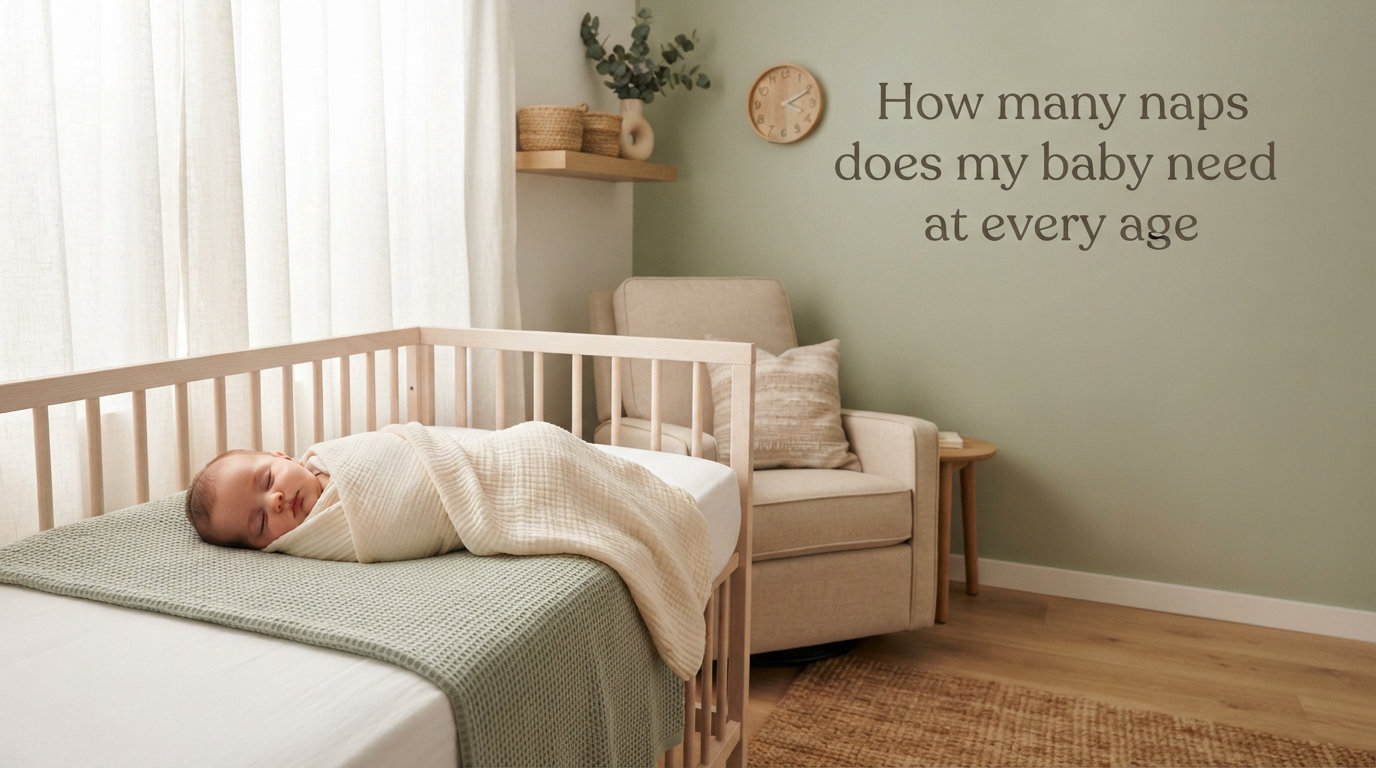
If you are wondering how many naps does my baby need at every age, you are not alone. I have spent the last 15 years helping exhausted parents understand their baby’s sleep needs, and nap questions are by far the most common concern I hear. The short answer is that nap needs change dramatically as your baby grows, from 6-8 naps in the newborn stage down to just 1 nap by toddlerhood.
But here is what I want you to know first: every baby is different. The charts and schedules I share below are guidelines, not rigid rules. Your baby might nap more or less than the “average” and still be perfectly healthy. What matters most is that your baby is well-rested, growing appropriately, and happy.
In this guide, I will walk you through exactly how many naps babies need at every age, from newborn through age 3. You will find detailed schedules, wake windows, transition timelines, and solutions for common nap problems. I have also included real insights from parents in our community to help you feel less alone in this journey.
Table of Contents
Baby Nap Chart by Age: Quick Reference
Here is the at-a-glance baby nap chart I wish I had when my own children were small. This covers ages 0 through 36 months with nap counts, total daytime sleep, and typical wake windows between sleeps.
| Age Range | Number of Naps | Total Daytime Sleep | Wake Windows | Typical Nap Length |
|---|---|---|---|---|
| 0-3 months | 6-8 naps | 4-6 hours | 45-90 minutes | 20-120 minutes |
| 4-6 months | 3-4 naps | 3-4 hours | 1.5-2.5 hours | 30-120 minutes |
| 7-9 months | 2-3 naps | 2.5-3.5 hours | 2-3 hours | 45-120 minutes |
| 10-12 months | 2 naps | 2.5-3 hours | 3-4 hours | 1-2 hours each |
| 13-18 months | 1-2 naps | 2-3 hours | 3.5-5 hours | 1-2 hours each |
| 19-24 months | 1 nap | 1.5-2.5 hours | 5-6 hours | 1.5-3 hours |
| 2-3 years | 0-1 nap | 0-2 hours | 5-7 hours | 1-2 hours (if napping) |
Keep this chart bookmarked for reference. I recommend coming back to it whenever your baby seems to be resisting naps or waking early from them. These transitions can sneak up on you, and knowing what to expect helps you stay ahead of overtiredness.
Now let us dive into each age range in detail so you understand not just the numbers, but the why behind your baby’s changing sleep needs.
Newborn Nap Schedule: 0-3 Months
Newborns take 6 to 8 naps per day with no predictable schedule. In the first three months, your baby is biologically incapable of following a clock-based routine. Their tiny stomachs need frequent feeding, and their sleep cycles are not yet mature enough to consolidate into longer stretches.
I remember feeling like I was feeding or soothing my baby to sleep constantly during this stage. That is completely normal. Newborns have wake windows of just 45 to 90 minutes, and that includes feeding time. By the time you finish a nursing or bottle session, your baby may be ready to sleep again.
What Newborn Naps Look Like
During the 0-3 month period, nap lengths vary wildly. One nap might last 20 minutes, the next 2 hours. There is no pattern because your baby’s circadian rhythm has not developed yet. This irregularity is healthy and expected.
Total daytime sleep for newborns ranges from 4 to 6 hours, in addition to 8-10 hours of nighttime sleep (though not consecutive). Your baby may sleep anywhere from 14 to 17 hours total in a 24-hour period.
Focus on Sleep Cues, Not Schedules
At this age, forget about the clock. Instead, watch for sleepy cues: eye rubbing, yawning, staring off into space, or sudden fussiness. These signals mean your baby needs sleep soon. Waiting too long leads to overtiredness, which makes falling asleep harder.
Many parents worry they are doing something wrong when their newborn will not nap in the crib. The truth is, contact naps, carrier naps, and stroller naps are all perfectly valid at this stage. Your newborn needs closeness and security more than independent sleep right now.
Baby Nap Schedule: 4-6 Months
Most babies need 3 to 4 naps per day between 4 and 6 months old. This is when you might start seeing the first glimpses of a predictable pattern emerging. However, the 4-month sleep regression often hits during this window and can temporarily disrupt everything.
Wake windows stretch to 1.5 to 2.5 hours at this age. Your baby can now stay awake longer, which means fewer but potentially longer naps. Total daytime sleep typically ranges from 3 to 4 hours.
Navigating the 4-Month Sleep Regression
The 4-month sleep regression is actually a permanent neurological change. Your baby’s sleep cycles mature to become more like adult sleep, with distinct REM and deep sleep phases. This often causes more frequent waking and shorter naps for several weeks.
I always tell parents: this is not a setback, it is development. Your baby is growing exactly as they should. The regression typically lasts 2 to 6 weeks. During this time, prioritize rest however you can get it, and do not stress about “bad habits.”
Sample 4-6 Month Schedule
Here is what a typical day might look like for a 5-month-old:
- 7:00 AM – Wake up
- 8:30 AM – First nap (45-90 minutes)
- 11:00 AM – Second nap (45-90 minutes)
- 1:30 PM – Third nap (30-60 minutes)
- 4:00 PM – Fourth catnap (20-30 minutes)
- 7:30 PM – Bedtime
Remember that the last nap of the day is often just a bridge to bedtime. It might be only 20-30 minutes, and that is fine. The goal is preventing overtiredness before the nighttime routine.
Baby Nap Schedule: 7-9 Months
Babies typically need 2 to 3 naps per day between 7 and 9 months. This period often brings the first major nap transition: dropping from 3 naps down to 2. Many parents find this transition challenging because it happens right when separation anxiety peaks and babies become more mobile.
Wake windows extend to 2 to 3 hours. Your baby can now comfortably stay awake through a feeding, some playtime, and a diaper change before showing sleep cues again. Total daytime sleep should be around 2.5 to 3.5 hours.
The 3-to-2 Nap Transition
Most babies drop their third nap between 7 and 9 months. Signs your baby is ready include: consistently refusing the third nap for a week or more, taking longer to fall asleep for naps, or bedtime becoming very late because the last nap pushes it back.
To transition, gradually extend morning wake time by 15 minutes every few days until your baby can make it to the first nap without being overtired. The new schedule typically settles into a morning nap around 9:30-10:00 AM and an afternoon nap around 1:30-2:00 PM.
Crawling and Sleep Disruptions
Developmental milestones like crawling can temporarily disrupt naps. Your baby might practice their new skills in the crib instead of sleeping. This is frustrating but normal. I recommend giving your baby plenty of floor time during wake windows to practice, so they are less tempted to do it at naptime.
Baby Nap Schedule: 10-12 Months
By 10-12 months, most babies settle into a solid 2-nap schedule. This is often called the “sweet spot” of baby sleep. Wake windows stretch to 3-4 hours, and naps become more predictable in length and timing.
Total daytime sleep at this age is typically 2.5 to 3 hours, usually split as a 1-1.5 hour morning nap and a 1-2 hour afternoon nap. Many parents tell me this is their favorite stage because the schedule feels manageable and nights are often more settled too.
Solid Food and Nap Timing
By 10-12 months, solid food intake increases and can affect nap patterns. Some babies sleep better with a small snack before naps, while others do best on an empty stomach. Watch your individual baby’s cues.
I recommend offering solids about 30-60 minutes before a nap so digestion does not interfere with sleep. Avoid heavy meals right before naptime, as these can cause discomfort.
Watch for the 12-Month Transition Signs
Toward the end of this window, some babies show signs of being ready to drop to one nap. However, most babies are not truly ready until closer to 14-18 months. If your 12-month-old suddenly resists naps, it is often a temporary regression rather than a true readiness to transition.
Wait for consistent resistance over 2+ weeks before considering a nap drop. Prematurely dropping to one nap usually results in an overtired, cranky baby who wakes frequently at night.
Toddler Nap Schedule: 13-18 Months
Most toddlers transition from 2 naps to 1 nap between 13 and 18 months. This transition is often the most difficult one for parents because the afternoon nap is a beloved break time, and losing it feels like a loss for everyone.
During this transition period, some days will be 2-nap days and others will be 1-nap days. This inconsistency is normal and can last several weeks. Your toddler needs time to build stamina for longer wake windows.
Signs Your Toddler Is Ready for One Nap
Look for these readiness signs: consistently refusing the morning or afternoon nap for 10-14 days, taking longer than 20 minutes to fall asleep for naps, or the afternoon nap pushing bedtime past 8:30 PM consistently.
Another sign is shorter naps overall. If both naps shrink to 45 minutes or less, your toddler may be ready to consolidate into one longer nap instead.
Managing the 18-Month Sleep Regression
The 18-month sleep regression can temporarily disrupt even well-established nap routines. This regression is tied to separation anxiety, language development, and emerging independence. Your toddler might suddenly protest naps despite being tired.
Maintain your nap routine during this phase. Offer quiet time in the crib even if sleep does not happen. Most toddlers come back to napping normally within 2-4 weeks if the routine stays consistent.
Toddler Nap Schedule: 19-24 Months
By 19-24 months, most toddlers are firmly on a one-nap schedule. This single nap typically lasts 1.5 to 3 hours and happens right after lunch. Wake windows stretch to 5-6 hours, with the morning window usually being slightly shorter than the afternoon one.
Total daytime sleep at this age ranges from 1.5 to 2.5 hours. Most toddlers nap from approximately 12:30 PM to 2:30-3:00 PM, though timing varies based on when your toddler wakes in the morning.
The Midday Nap Sweet Spot
The single midday nap aligns beautifully with natural circadian rhythms. This nap helps your toddler reset for the afternoon and evening without interfering with nighttime sleep the way a late afternoon nap would.
I recommend starting the nap between 12:00 PM and 1:00 PM for most toddlers this age. Napping much later can push bedtime too late or cause early morning wakings.
When the One Nap Gets Shorter
Some toddlers start taking shorter single naps around 22-24 months. If the nap drops below 90 minutes consistently, your toddler might be approaching the final nap transition. However, many toddlers continue taking 2-hour naps well past age 2.
Toddler Nap Schedule: 2-3 Years
Between ages 2 and 3, most children drop their last nap entirely. This transition happens gradually, often with naps becoming less frequent before disappearing completely. By age 3, about 75% of children no longer nap regularly.
Wake windows stretch to 5-7 hours for toddlers who have dropped their nap. Many parents find this stage exhausting because there is no longer a guaranteed break in the day.
Quiet Time: The Nap Replacement
Even when naps end, quiet time remains valuable. Offer 60-90 minutes of quiet, calm activities in a dim room after lunch. Your child might sleep some days and not others, or they might simply rest while looking at books.
Quiet time provides a mental and physical reset that helps prevent the afternoon meltdowns common in this age group. It also gives parents a much-needed break.
Signs Your Toddler Is Done Napping
Consistently refusing naps for 2+ weeks, taking longer than 30 minutes to fall asleep for naps, or bedtime becoming a battle because your child is not tired enough are all signs the nap may be ending.
However, if dropping the nap causes afternoon meltdowns, early bedtime crashes, or early morning wakings, your child likely still needs it. You might need to cap the nap at 60-90 minutes instead of eliminating it entirely.
Nap Transitions: When and How to Drop Naps
Nap transitions happen three times in the first three years: from 3 naps to 2, from 2 naps to 1, and from 1 nap to none. Each transition requires your child to build stamina for longer awake periods while still getting enough total sleep.
The 3-to-2 Nap Transition (7-9 Months)
Most babies drop their third catnap between 7 and 9 months. To transition successfully, gradually extend the morning wake window by 15 minutes every 3-4 days. Move the morning nap later until it naturally merges with what was the second nap.
Expect bedtime to temporarily move earlier during this transition. A 6:00 or 6:30 PM bedtime is completely appropriate while your baby adjusts to longer awake stretches.
The 2-to-1 Nap Transition (12-18 Months)
This transition typically takes 4-6 weeks to complete fully. Start by pushing the morning nap 15 minutes later every few days. Eventually, this nap will happen around 11:00 AM and become the single midday nap.
Some parents opt for a “forced” transition by simply skipping the morning nap and offering only an afternoon nap. This can work but often results in a very overtired toddler for the first week. A gradual approach is usually gentler.
The 1-to-0 Nap Transition (2.5-3 Years)
This is the final nap transition and often the hardest emotionally for parents. Start by offering quiet time instead of demanding a nap. If your child falls asleep, great. If not, they still get a rest period.
During this transition, bedtime will likely need to move earlier, sometimes as early as 6:30 PM. The goal is preventing overtiredness while your child adjusts to a full day of wakefulness.
Why Naps Matter for Your Baby’s Development
Naps are not just breaks in the day for parents. They serve critical biological functions for your baby’s developing brain and body. Understanding why naps matter can help you prioritize them even when life gets busy.
Naps Reduce Cortisol and Stress
Yes, naps do help lower cortisol. Research shows that babies who nap regularly have lower stress hormone levels throughout the day. Sleep allows the body to reset and prevents the accumulation of cortisol that happens when babies stay awake too long.
Overtired babies often appear wired or hyper, which is actually a cortisol response. That second wind your baby gets at 7 PM is stress hormones at work, not genuine energy.
Memory Consolidation and Learning
During naps, babies process and store the information they learned while awake. Studies show that babies who nap after learning new skills remember them better than babies who stay awake. Naps literally help cement learning.
This is why naps are especially important during developmental leaps. Your baby’s brain is working overtime to master new skills, and sleep is when that work gets processed and stored.
Nighttime Sleep Quality
Counterintuitively, good naps lead to good nighttime sleep. An overtired baby produces more cortisol, which makes it harder to fall asleep and stay asleep. Well-rested babies typically sleep better at night because their sleep pressure is appropriately balanced.
If your baby is waking frequently at night, look at daytime sleep first. Often, adding just 30 more minutes of daytime sleep can dramatically improve nights.
Common Nap Problems and Solutions
Even with the perfect schedule on paper, nap problems happen. Here are solutions for the most common issues parents face.
Short Naps (The 45-Minute Intruder)
Babies often wake after exactly one sleep cycle (45-50 minutes) and cannot transition into the next one. This is especially common between 4-6 months when sleep cycles mature.
To extend naps, try the “crib hour” approach: leave your baby in the crib for a full hour even if they wake early. This gives them the opportunity to fall back asleep. It does not work for every baby, but many will eventually learn to connect sleep cycles.
Also check sleep environment. A room that is too bright or noisy can cause waking between cycles. Blackout curtains and white noise help many babies extend their naps.
Nap Refusal
Babies refuse naps for many reasons: overtiredness, undertiredness, approaching transitions, or simply wanting to practice new skills. When refusal happens, check the wake window first. Often babies are either not tired enough or are overtired and wired.
If refusal persists for more than a few days, consider whether a nap transition is coming. Your baby might be telling you they are ready to drop a nap or move to fewer, longer sleeps.
Overtired vs Undertired
Telling these apart is tricky. Overtired babies often cry intensely, rub their eyes frantically, or get hyper and silly. Undertired babies might babble, play, or simply lie awake calmly in the crib.
If your baby is overtired, move bedtime earlier that night and watch wake windows more carefully tomorrow. If undertired, extend the wake window by 15 minutes before the next nap attempt.
Early Waking from Naps
If your baby consistently wakes after 30-45 minutes, they may be hungry, uncomfortable, or unable to connect sleep cycles. Try feeding a bit closer to naptime, checking for teeth coming in, or improving the sleep environment.
Some babies are simply short-nappers, and that is okay. A baby who takes three 45-minute naps is getting similar total sleep to one who takes two 90-minute naps. Total daily sleep matters more than individual nap length.
Frequently Asked Questions About Baby Naps
What is the 5 3 3 rule for babies?
The 5 3 3 rule refers to a sleep schedule pattern where babies sleep for 5 hours, are awake for 3 hours, sleep for 3 hours, and then have a final sleep period. However, this is not a standard recommendation from pediatric sleep experts. Most babies do best with age-appropriate wake windows rather than rigid time blocks. The 5 3 3 pattern might work for some older infants but is not suitable for newborns who need much more frequent sleep.
Do naps help lower cortisol?
Yes, naps help lower cortisol levels in babies. Research shows that regular daytime sleep prevents the buildup of stress hormones that occurs when babies stay awake too long. Overtired babies actually produce more cortisol, which makes them appear wired or hyper. This is why well-timed naps are important for emotional regulation and stress management in infants and toddlers.
How many naps should babies take by age?
Babies need different numbers of naps as they grow: newborns (0-3 months) need 6-8 naps daily, infants 4-6 months need 3-4 naps, babies 7-9 months typically take 2-3 naps, babies 10-18 months need 1-2 naps, toddlers 18-24 months take 1 nap, and children 2-3 years may take 0-1 naps as they transition away from daytime sleep entirely.
What is the hardest month for a baby?
Many parents find months 4 and 8 to be particularly challenging due to sleep regressions. The 4-month sleep regression coincides with permanent neurological changes in sleep cycles, while the 8-month regression often aligns with crawling, separation anxiety, and teething. However, every baby is different, and some parents find other months more difficult based on their individual circumstances and baby’s temperament.
Why is my baby only taking 30 minute naps?
Thirty-minute naps usually mean your baby is waking after one sleep cycle and cannot transition into the next. This is common between 4-6 months when sleep cycles mature. Causes include overtiredness, undertiredness, light sleep environment, or simply needing time to learn to connect cycles. Try the crib hour method, adjust wake windows, and ensure a dark, quiet room to help extend naps.
When do babies drop to one nap?
Most babies drop to one nap between 12 and 18 months of age, with the average being around 15 months. Signs of readiness include consistently refusing the morning or afternoon nap for 10-14 days, taking longer than 20 minutes to fall asleep, or the afternoon nap pushing bedtime too late. The transition typically takes 4-6 weeks to complete fully.
Conclusion: How Many Naps Does My Baby Need at Every Age
Understanding how many naps does my baby need at every age helps you navigate the ever-changing landscape of infant and toddler sleep. From 6-8 newborn naps down to none by age 3, your baby’s sleep needs evolve constantly. Trust the process, follow your baby’s cues, and remember that flexibility matters more than perfection.
You know your baby better than any chart or schedule. Use this guide as a roadmap, but feel free to adjust based on what your unique child needs. Some babies nap more, some nap less, and all can thrive when their individual sleep needs are met.