
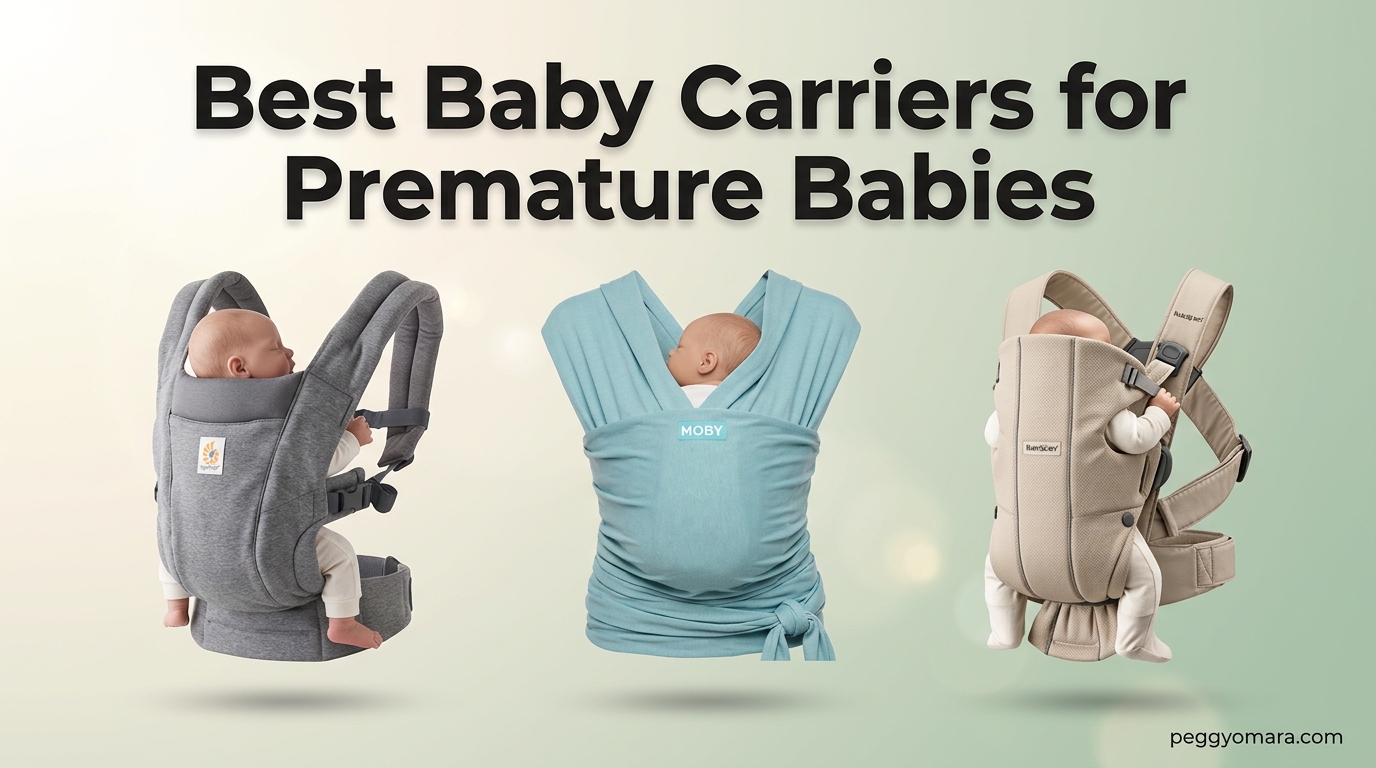
When my daughter was born at 34 weeks weighing just 4 pounds 11 ounces, I felt completely unprepared for the realities of preemie parenthood. The NICU stay was overwhelming, and one of the few things that helped me feel close to her was kangaroo care, that skin-to-skin contact that research shows regulates breathing, maintains body temperature, and promotes bonding. But once we were discharged, I realized I needed a carrier that could safely hold a baby small enough to drown in most standard newborn gear. That sent me on a months-long search for the best baby carriers for premature babies.
Most baby carriers on the market list a 7 or 8 pound minimum weight, which immediately excludes many preemies who come home from the NICU weighing between 4 and 6 pounds. After testing wraps, structured carriers, and hybrid designs with help from other NICU parents in my support group, I put together this guide covering 10 carriers that work well for tiny babies. Whether you are looking for a stretchy wrap for kangaroo care, a soft-structured carrier for everyday errands, or something in between, this list has you covered. If you are new to the world of babywearing, you can learn more about what is babywearing and why so many parents swear by it.
This guide draws on my own experience wearing a preemie for the first six months, feedback from a dozen other preemie parents I connected with through Reddit and NICU support groups, and consultations with a certified babywearing educator. Every carrier here has been evaluated specifically for how well it accommodates low birth weight babies, provides proper head and neck support, and allows for safe positioning according to the T.I.C.K.S. rule. For a broader overview of all carrier types, check out our complete guide on how to choose the right baby carrier.
Table of Contents
Top 3 Picks for Premature Babies (August 2026)
Out of all the carriers we tested, three stood out as the top recommendations for preemie parents. The BabyBjorn Baby Carrier Mini earned our Editor’s Choice for its unmatched ease of use and premium newborn support. The Boba Baby Wrap took Best Value for its incredibly snug, womb-like fit at an accessible price point. And the KeaBabies Baby Wrap won Budget Pick for delivering stretchy-wrap comfort at a fraction of the cost of premium brands.

BabyBjorn Baby Carrier Mini
- 7-24 lbs
- 3D Jersey fabric
- Hip-healthy certified
- Super easy to use

Boba Baby Wrap Carrier
- 7-35 lbs
- 4-way stretch cotton
- Snug womb-like fit
- T.I.C.K.S. compliant

KeaBabies Baby Wrap Carrier
- Newborn to toddler
- Soft stretchy fabric
- IHDI certified
- One size fits all
Best Baby Carriers for Premature Babies in 2026
Here is a quick comparison of all 10 carriers we reviewed. Each one offers something different for preemie families, from budget-friendly wraps to premium structured carriers. We evaluated every product on weight range, fabric quality, head support, and overall safety for tiny babies.
| Product | Specifications | Action |
|---|---|---|
| BabyBjorn Baby Carrier Mini |
|
Check Latest Price |
| Boba Baby Wrap Carrier |
|
Check Latest Price |
| KeaBabies Baby Wrap Carrier |
|
Check Latest Price |
 Ergobaby Embrace Newborn Carrier Ergobaby Embrace Newborn Carrier |
|
Check Latest Price |
 Solly Baby Wrap Solly Baby Wrap |
|
Check Latest Price |
 Moby Baby Wrap Classic Moby Baby Wrap Classic |
|
Check Latest Price |
 Infantino Flip 4-in-1 Carrier Infantino Flip 4-in-1 Carrier |
|
Check Latest Price |
 Baby K’tan Baby Carrier Baby K’tan Baby Carrier |
|
Check Latest Price |
 Boba Bliss Hybrid Carrier Boba Bliss Hybrid Carrier |
|
Check Latest Price |
 Koala Babycare T-Shirt Wrap Koala Babycare T-Shirt Wrap |
|
Check Latest Price |
1. BabyBjorn Baby Carrier Mini – Premium Newborn Support
BabyBjörn Baby Carrier Mini, Light Beige, 3D Jersey | Infant Carrier (7-24 lbs), Ergonomic, Easy-to-Use
- Super soft 3D jersey fabric
- Extremely easy to put on and take off
- Hip-healthy certified
- Adjustable for parent and baby
- Baby falls asleep easily
- Limited to 6 months or 24 lbs
- No back carry option
- Higher price point for limited age range
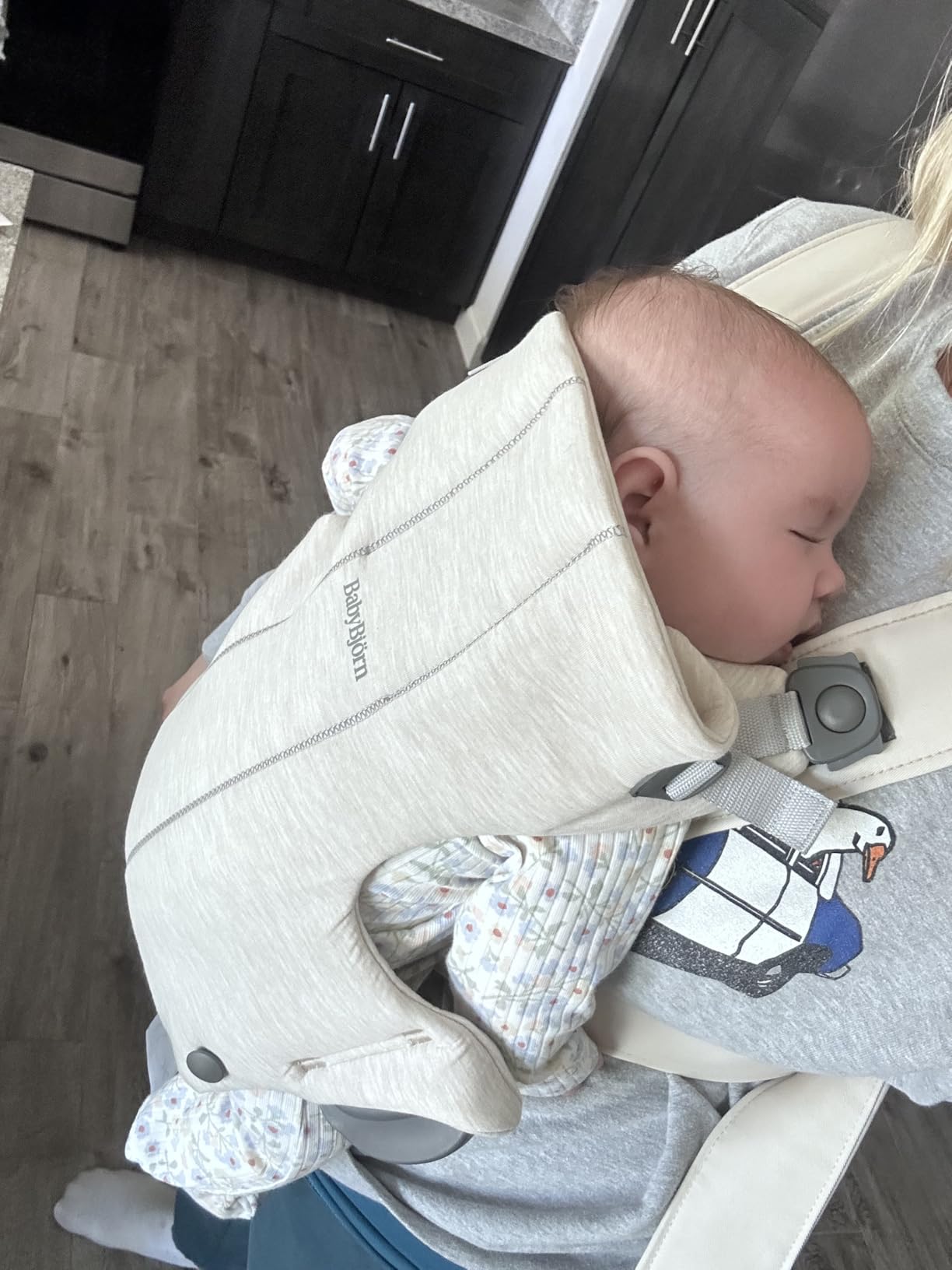
The BabyBjorn Baby Carrier Mini was the first carrier I reached for after bringing my preemie home from the NICU. What struck me immediately was how simple it was to put on. With a baby who weighed barely over 5 pounds, I did not have the patience or the extra hands to deal with complicated wrapping techniques. The Mini slips on in seconds with just two adjustable clips at the sides. My daughter settled into the 3D jersey fabric like it was a second womb, and she usually dozed off within minutes of being placed inside.
The softness of the 3D jersey material cannot be overstated. It feels like a high-quality athletic shirt, stretchy enough to mold around a tiny body but structured enough to provide real support. My partner and I are different sizes, and we could both wear it comfortably without any fiddling. The padded head and neck support was reassuring for a baby who still had very little muscle tone. I also appreciated that I could easily check on her airway just by glancing down.

Where the Baby Carrier Mini truly excels is in those early weeks when you are exhausted and sleep-deprived. There is no learning curve, no YouTube tutorial required, no excess fabric dragging on the hospital floor. You clip, adjust, and go. The front-facing-in position keeps baby in the upright tummy-to-tummy position that pediatricians and babywearing educators recommend for preemies. Once your baby develops enough neck strength, you can switch to the outward-facing position for the world-facing carry that lets them explore.
The main drawback is the limited lifespan. The Mini is designed for babies up to 24 pounds or about 6 months, whichever comes first. For a preemie who starts small, you might get a bit more use out of it in terms of months, but you will eventually need a larger carrier. Some parents also report upper back discomfort after wearing it for extended periods, though I found the weight distribution acceptable for the newborn stage when my daughter was still very light. The 85 percent five-star rating across nearly 1,500 reviews tells you that most parents absolutely love this carrier.
Who This Carrier Is Best For
The BabyBjorn Mini is ideal for first-time preemie parents who want a no-fuss carrier they can use from day one at home. If you are intimidated by wraps and want something you can put on with one hand while holding your baby, this is your pick. It is also excellent for caregivers who share babywearing duties, since the adjustment is intuitive for anyone.
This carrier works especially well for babies in the 7 to 15 pound range who need frequent short carries throughout the day. If your preemie is approaching the 6-month mark or exceeding 15 pounds, you will want to transition to a full-size structured carrier.
Who Should Skip This Carrier
If your preemie weighs under 7 pounds at discharge, the Mini’s minimum weight rating means you should wait until they gain a bit more. Parents looking for a carrier that will last through the toddler years will find the 6-month limit frustrating. Those who prefer back-carry positions should also look elsewhere, since the Mini only offers front carries.
Additionally, if you are on a tight budget after NICU expenses, the premium price may feel steep for a carrier with a short usable window. You might prefer a wrap that grows with your baby for much longer.
2. Boba Baby Wrap Carrier – The Snug Stretchy Classic
- Soft premium 4-way stretch cotton
- Hip-healthy certified
- One-size-fits-all design
- Mimics womb environment
- Breathable for skin-to-skin
- Can be hot in warm weather
- Difficult to re-wrap on the go
- Excess fabric may be cumbersome
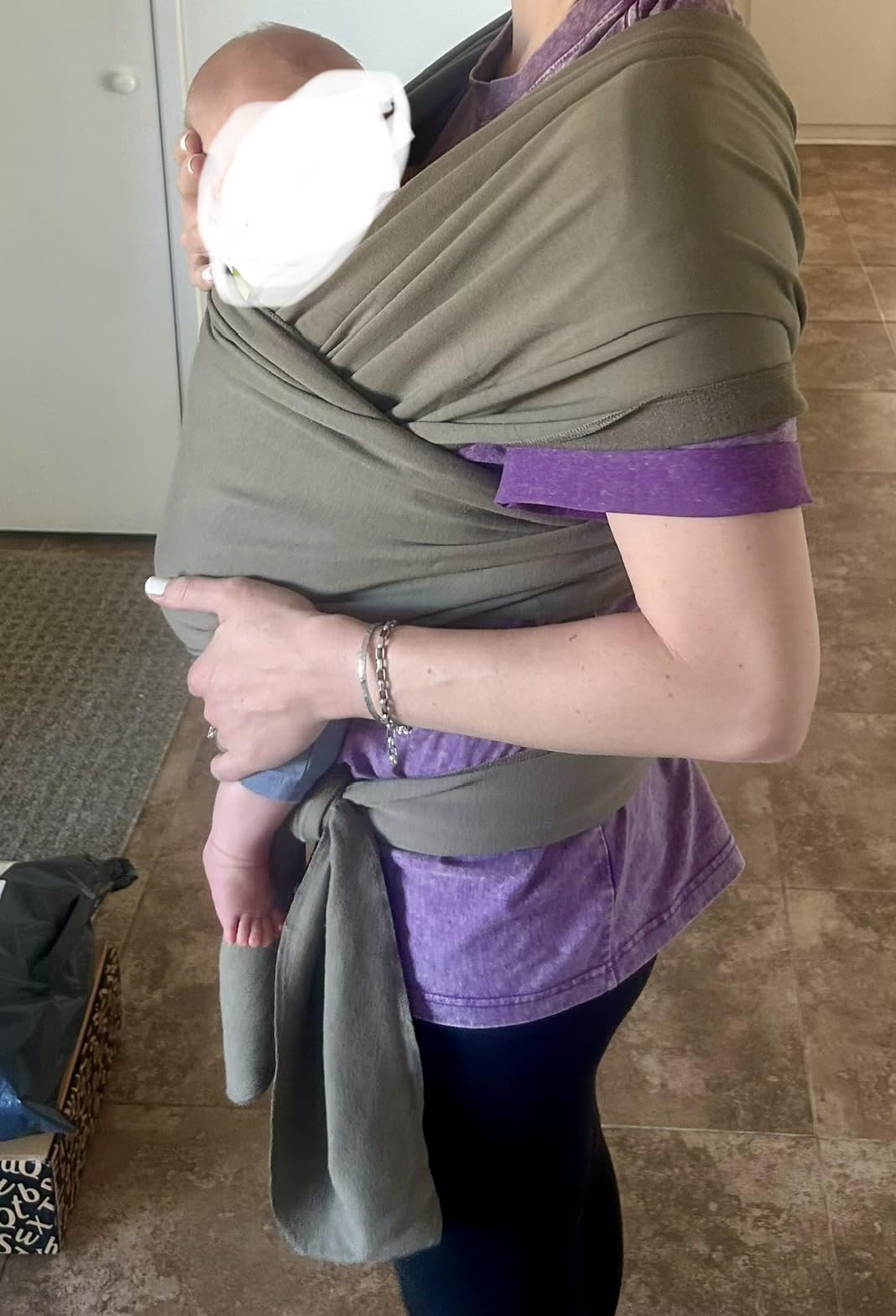
The Boba Wrap is the carrier I recommend more than any other to preemie parents who ask me what to buy first. It has been trusted by parents for over 15 years, and with nearly 29,000 reviews on Amazon, it is one of the most battle-tested baby wraps in existence. I used this wrap during those early weeks when my daughter was still under 7 pounds, and the stretchy fabric created a custom-fit cocoon around her tiny body that no structured carrier could match.
What makes the Boba so special for preemies is the 4-way stretch cotton-spandex blend. The fabric stretches in every direction, which means it conforms to the exact shape of your baby rather than forcing their body into a pre-shaped pocket. For a 5-pound preemie with low muscle tone, this matters enormously. The wrap distributes their weight evenly across both shoulders, your back, and your hips, which feels remarkably comfortable even when you are still recovering from delivery.

The learning curve is real, and I want to be honest about that. Tying a stretchy wrap takes practice. I watched the included instruction guide and a couple of YouTube videos before I felt confident. But once you learn the basic front-wrap-cross-carry, it takes about 90 seconds to put on. The trick with preemies is to tie the wrap snugly against your body before putting the baby in. The fabric stretches to accommodate them, so you want it tighter than you think. If it is too loose, the baby will sag, which compromises their airway.
The Boba Wrap is certified hip-healthy by the International Hip Dysplasia Institute, and it is designed to meet T.I.C.K.S. babywearing safety standards. I loved that I could nurse my daughter discreetly while wearing it, and the stretchy fabric made it easy to reposition her head when she inevitably fell asleep. The machine-washable and dryer-safe fabric was a lifesaver during those first months of constant spit-up and blowouts. With a 35-pound weight limit, this wrap can theoretically carry your child well into toddlerhood, although most parents switch to a structured carrier for heavier babies.
Who This Wrap Is Best For
The Boba Wrap is perfect for preemie parents who want maximum snuggle factor at an affordable price. It is ideal for around-the-house wear, contact naps, skin-to-skin sessions, and short outings. The one-size-fits-all design means any caregiver can use it regardless of body type. If kangaroo care is a priority for you, the Boba Wrap creates the closest thing to a continuous skin-to-skin environment short of holding your baby bare-chested.
This wrap is also a fantastic choice for budget-conscious NICU families. It delivers premium wrap performance at a fraction of what many structured carriers cost, and it lasts much longer than the newborn-only options on this list.
Who Should Skip This Wrap
If you live in a hot climate, the Boba Wrap can feel like wearing a warm blanket. Multiple layers of cotton across your torso trap heat quickly. Parents who need a carrier for quick on-and-off use at the grocery store or school pickup will find the wrapping process too slow. The excess fabric can also drag on the ground in parking lots, which is a hygiene concern.
If you want a carrier for back-carrying or long hiking adventures, the Boba Wrap is not designed for that. It is fundamentally a front-carry wrap optimized for the newborn and infant stage.
3. KeaBabies Baby Wrap Carrier – Budget-Friendly Stretchy Wrap
- Soft stretchy breathable fabric
- Hip-healthy certified
- One size fits all
- Excellent value
- Multi-use design
- Can loosen with heavier babies
- Learning curve for wrapping
- May sag if not tied tightly
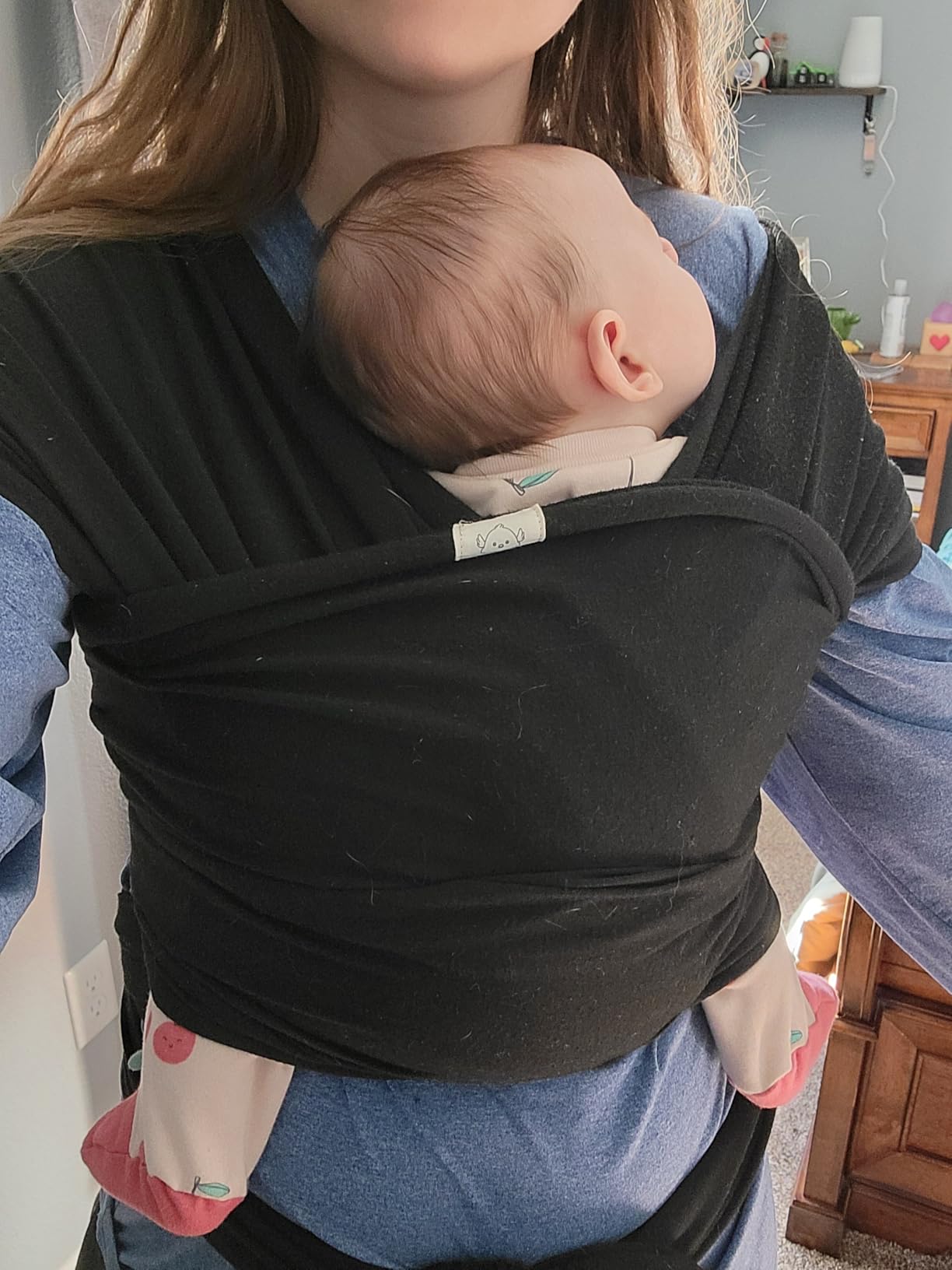
When a NICU nurse friend told me about the KeaBabies Baby Wrap, I was skeptical that something at this price point could compete with the Boba or Moby. After testing it for three weeks with my daughter, I was genuinely surprised by how well it performed. The proprietary stretchy fabric feels nearly identical to the Boba in terms of softness and give, and the wrap design follows the same proven front-wrap-cross-carry method that babywearing educators have recommended for decades.
With over 22,000 reviews, this is one of the most popular budget wraps on Amazon, and for good reason. The fabric is soft, breathable, and has enough stretch to create that snug womb-like environment that soothes fussy preemies. I tested it during one of my daughter’s worst colicky evenings, and within ten minutes of being wrapped against my chest, she was asleep. The wrap distributes weight evenly across both shoulders and your back, which I found comfortable for sessions of up to two hours.
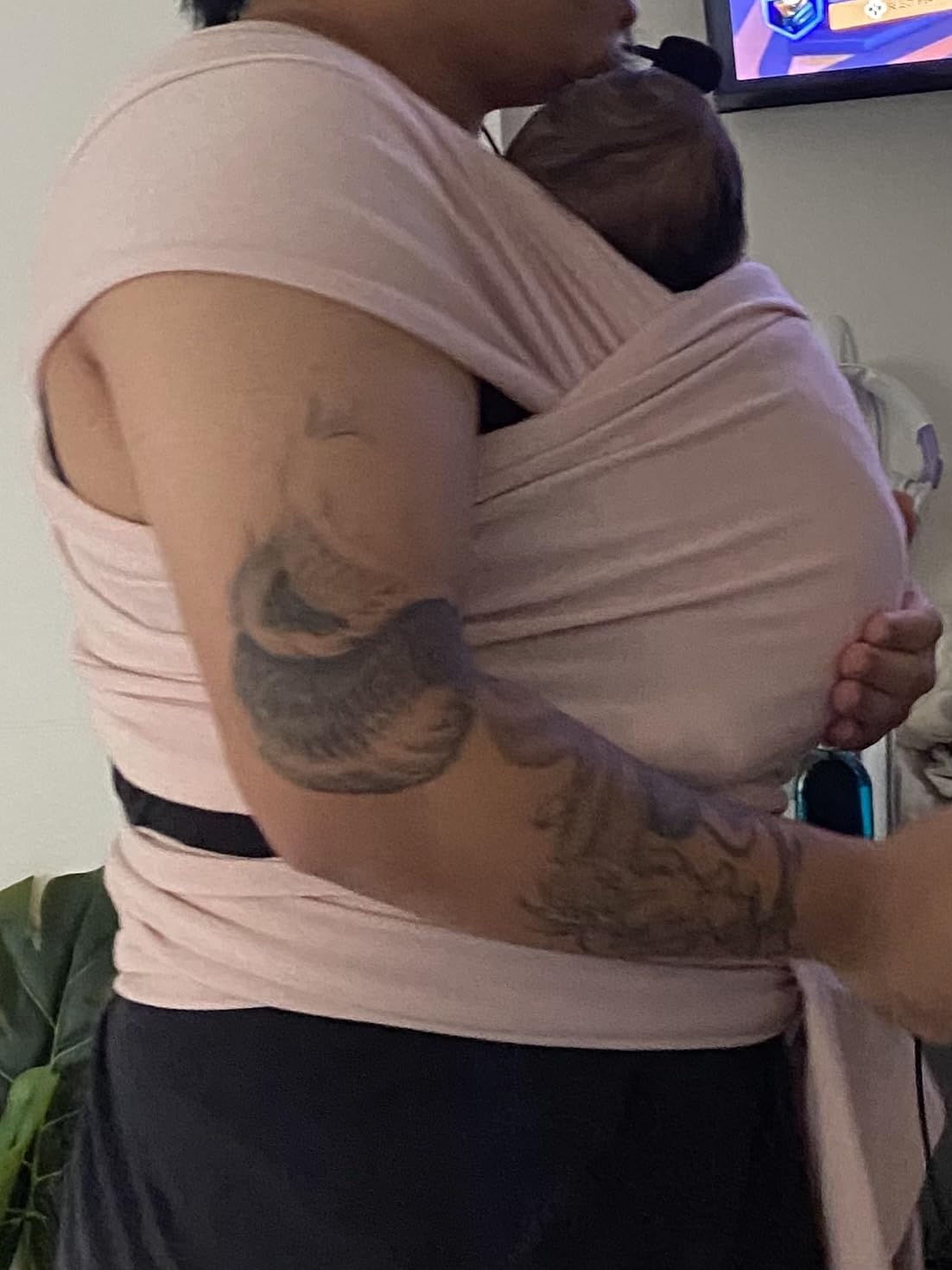
The KeaBabies wrap is IHDI certified for healthy hip development, which is a critical safety consideration for preemies whose hip joints may still be developing. The wrap creates the natural M-position where baby’s knees are higher than their bottom and their legs are supported from knee to knee. This positioning is recommended by pediatricians for proper hip socket development. I also appreciated the versatility of this wrap. Beyond carrying, it works as a pregnancy support band, a postpartum wrap, and even a nursing cover.
The main trade-off is durability over time. After about four months of regular use, I noticed the fabric started to lose some of its rebound stretch. This is common with stretchy wraps at this price point. If your preemie is still small, this is not a major issue because the fabric only needs to hold a few pounds. But if you plan to carry a 20-pound toddler in this wrap, you will likely notice sagging. For the newborn and infant stage, though, it performs excellently and the 25-plus color and pattern options let you match your style.
Who This Wrap Is Best For
The KeaBabies wrap is the perfect entry point for preemie parents on a tight budget. If NICU bills, copays, and unexpected medical expenses have stretched your finances, this wrap gives you 90 percent of the performance of premium wraps at roughly half the cost. It is also a great option for parents who want a backup carrier to keep in the car or at a grandparent’s house.
This wrap shines during the newborn through 4-month stage when your baby is still light enough that the fabric maintains its snug fit. The huge variety of patterns makes it a popular baby shower gift, too.
Who Should Skip This Wrap
If you want a carrier that will last through the toddler years without sagging, invest in the Boba Wrap or a woven wrap instead. Parents who find long fabric intimidating may prefer the slip-on simplicity of the Baby K’tan or the buckle convenience of the Boba Bliss. The learning curve is the same as any stretchy wrap, so be prepared to practice.
If your preemie is very tiny (under 5 pounds) and you need maximum adjustability, a woven wrap with a narrower width might provide better support for that size. Check out our guide to the best woven wraps for beginners for those options.
4. Ergobaby Embrace Newborn Carrier – Soft Structured Support
- Soft cozy knit fabric
- Patented ergonomic bucket seat
- Head and neck padding
- Hip-healthy certified
- Easy to put on solo
- Less comfortable as baby grows
- No detachable hood
- May cause shoulder pressure for petite wearers
The Ergobaby Embrace is the carrier that won the New York Times Wirecutter’s Best Baby Carrier for Newborns award, and after using it, I understand why. It occupies a unique space between a structured buckle carrier and a soft wrap. The knit fabric feels like a favorite sweater, and it molds to both the baby and the wearer in a way that stiff nylon carriers simply cannot match. For a preemie parent who wants the support of a structured carrier with the coziness of a wrap, this is the one.
What sets the Embrace apart is the patented adjustable bucket seat. Unlike flat-panel carriers that can leave a tiny baby’s legs splayed awkwardly, the bucket seat cradles the baby in the proper M-position from day one. As your preemie grows, the seat adjusts to accommodate their changing size. I found this particularly valuable because my daughter started at the 3rd percentile and the Embrace grew with her through a wide range of sizes without ever feeling too loose or too tight.
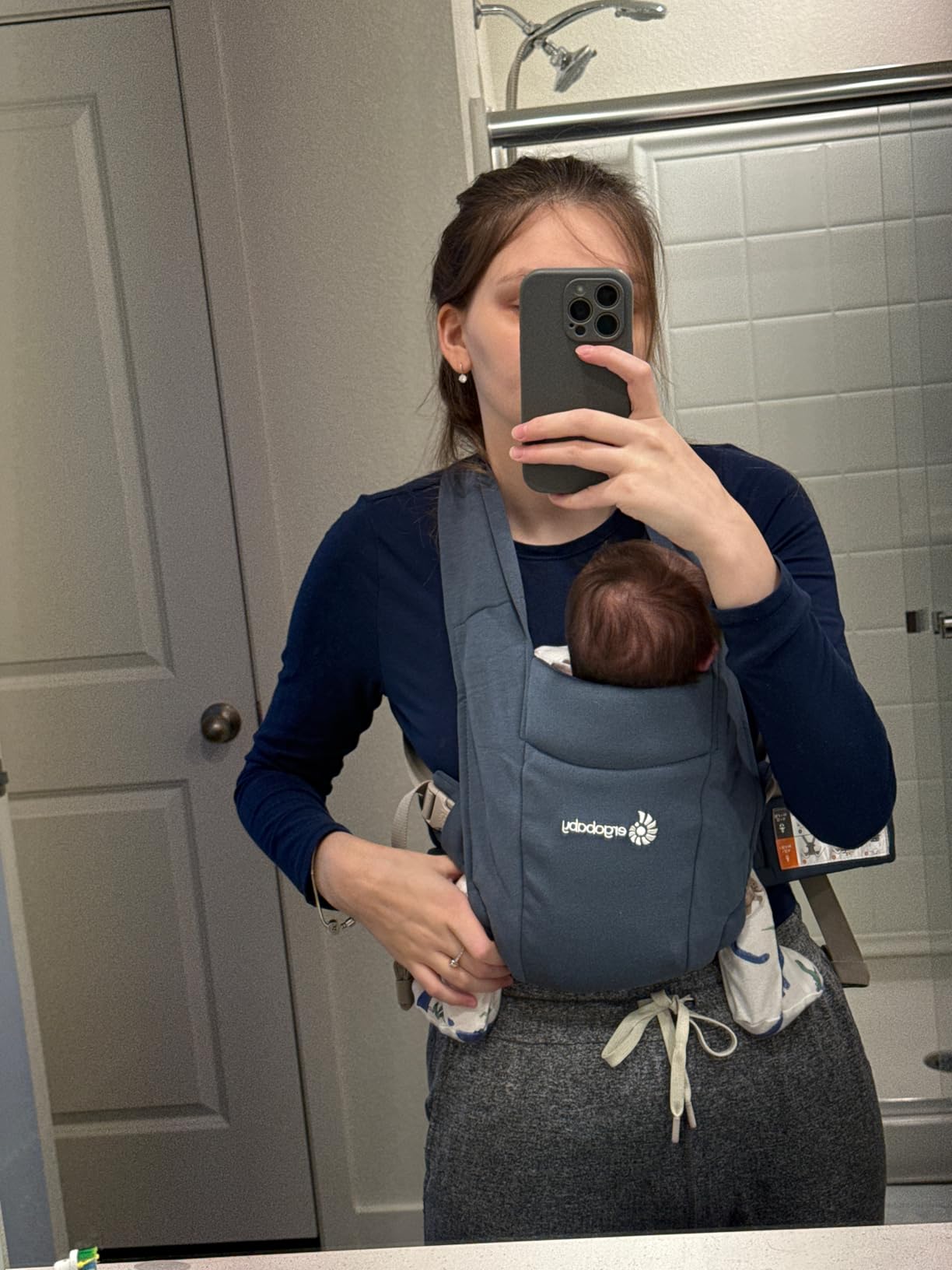
The cross-back strap design was a major comfort upgrade for me. By distributing weight across both shoulders and the upper back, the Embrace reduced the neck and shoulder strain I felt with other structured carriers. The head and neck padding provides excellent support for a baby who cannot yet hold up their head, which is essential for preemies whose muscle tone may lag behind their full-term peers. The one-size adjustable design fits from petite to 4XL, so my partner and I could swap it back and forth easily.
The Embrace is rated for 7 to 25 pounds, so you will need to wait until your preemie reaches 7 pounds before using it. This is the same minimum as most structured carriers. What makes the Embrace special is that it actually works well at that minimum weight, unlike many buckle carriers that feel cavernous on a 7-pound baby. The soft knit fabric fills in the gaps that stiffer carriers leave around a tiny body. I also loved that it folds small enough to toss in a diaper bag, making it the most portable structured carrier I tested.
Who This Carrier Is Best For
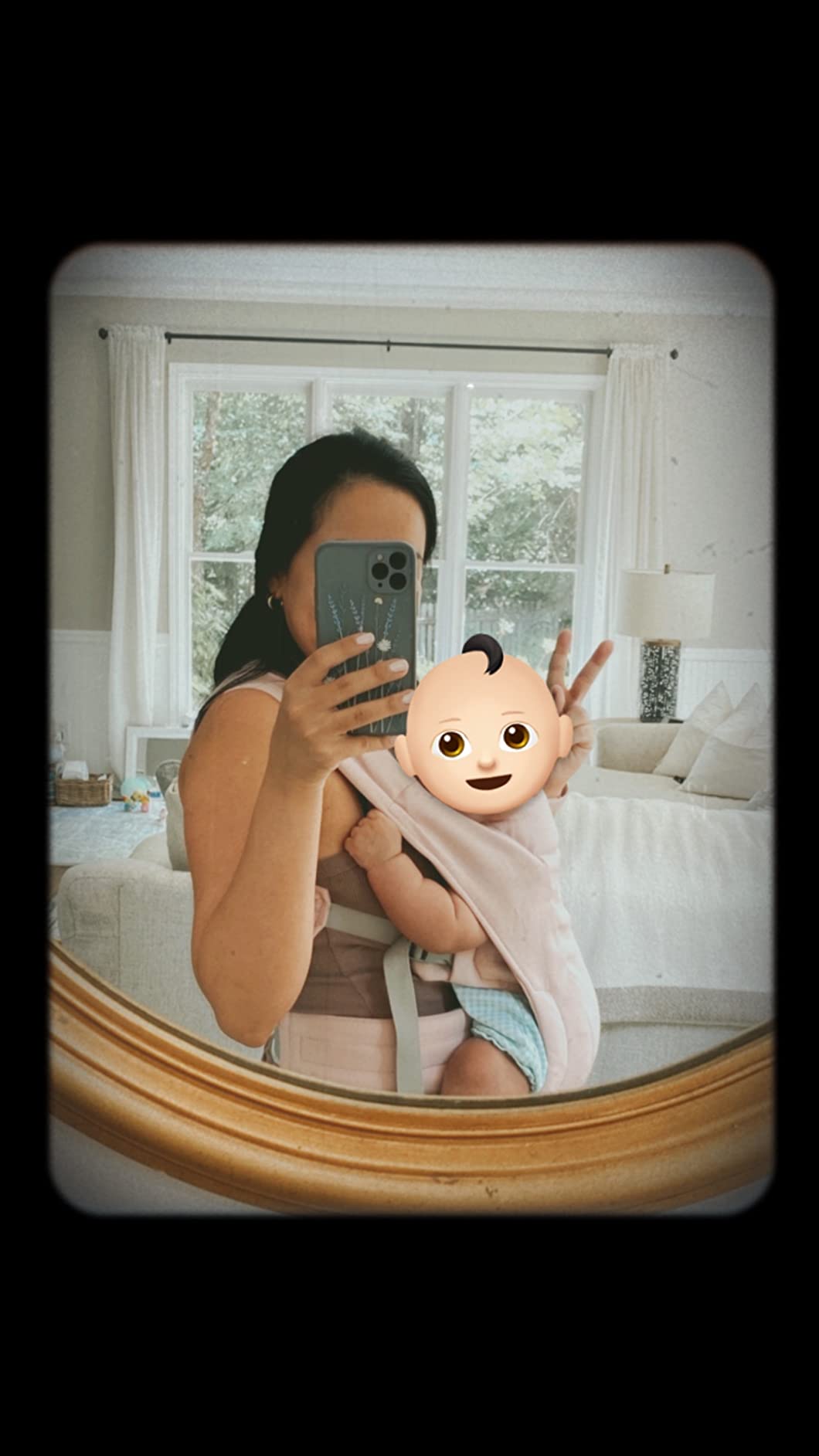
The Ergobaby Embrace is ideal for preemie parents who want the quick on-and-off convenience of a buckle carrier but prefer the soft, wrap-like feel against their baby. It bridges the gap beautifully. If you have tried a structured carrier and felt it was too rigid for your newborn, the Embrace is the solution. It also works well for petite caregivers who find bulkier carriers overwhelming.
This carrier is a great choice once your preemie hits that 7-pound mark and you want something you can take to pediatrician appointments, grocery runs, and family gatherings without the hassle of wrapping fabric.
Who Should Skip This Carrier
If your preemie is under 7 pounds, you cannot use this carrier yet. Parents who want a carrier that will last through the toddler years should look at the Ergobaby 360 or Omni, which have higher weight limits and more carry positions. The Embrace is purpose-built for the first year and does not offer back-carry positions.
If you experience shoulder or back pain with structured carriers in general, the Embrace may not solve that problem entirely. Some petite reviewers noted pressure points as their babies grew past 15 pounds.
5. Solly Baby Wrap – Buttery-Soft Premium Wrap
- Buttery-soft TENCEL Modal fabric
- Breathable and cool for summer
- Hip-healthy certified
- Even weight distribution
- Sustainably sourced
- Learning curve for first-time users
- Not ideal for on-the-go use
- May stretch with heavier babies
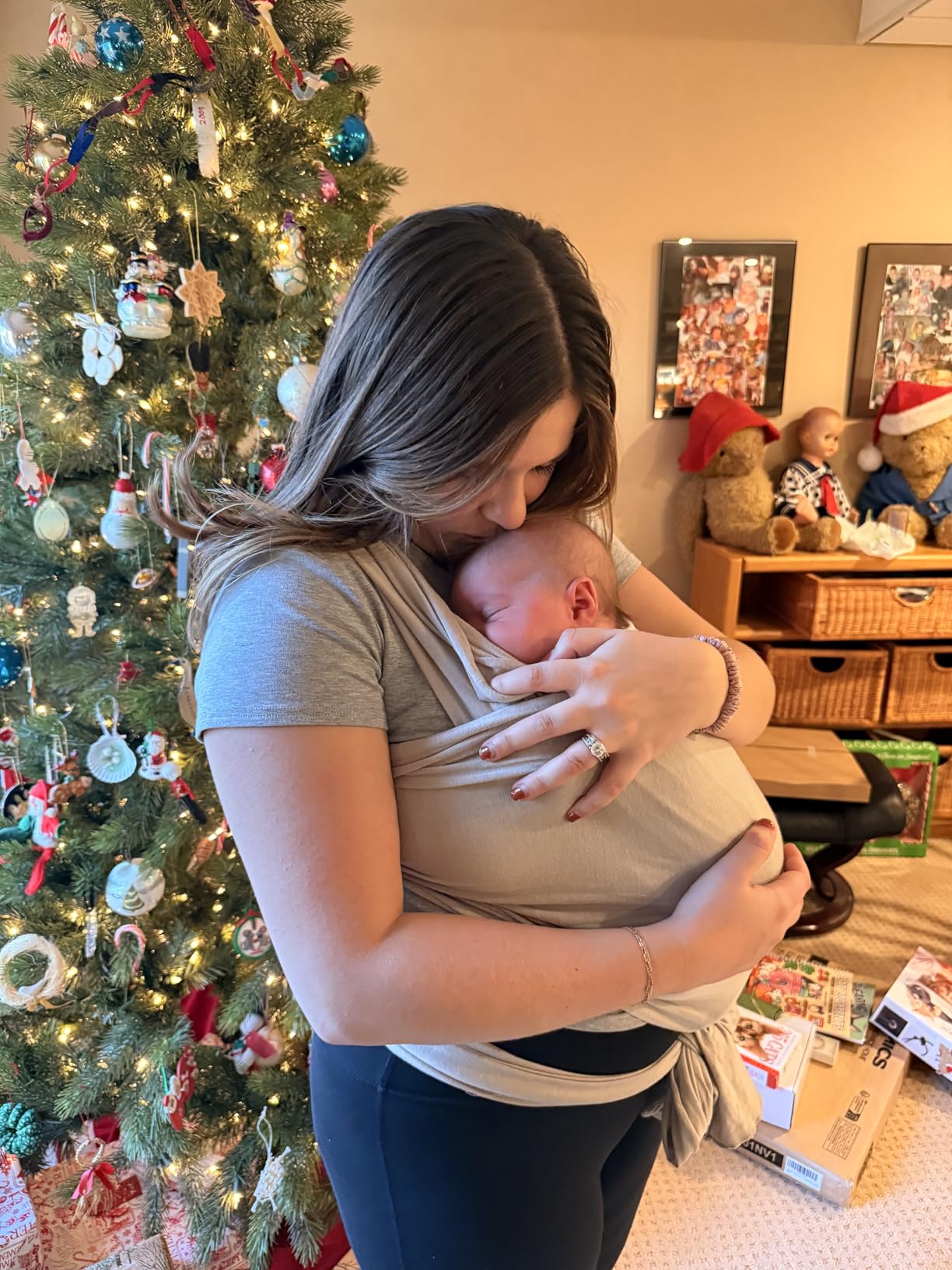
The Solly Baby Wrap is the most luxurious stretchy wrap I have ever worn. Named the Best Wrap Carrier for Newborns by Glamour, this wrap uses TENCEL Modal fabric that feels genuinely different from the cotton-spandex blends used by Boba, Moby, and KeaBabies. The material is cool to the touch, buttery soft, and has a slight sheen that makes it look as premium as it feels. For preemie parents dealing with postpartum body temperature swings, the breathable TENCEL fabric is a game-changer.
I tested the Solly during a particularly warm stretch in late spring, and the temperature difference compared to my cotton wraps was noticeable. Both my daughter and I stayed significantly cooler. The TENCEL Modal is sustainably sourced and biodegradable, which mattered to me as someone trying to reduce environmental impact. The fabric wicks moisture away from the skin, so even during a two-hour contact nap, neither of us got sweaty or uncomfortable.
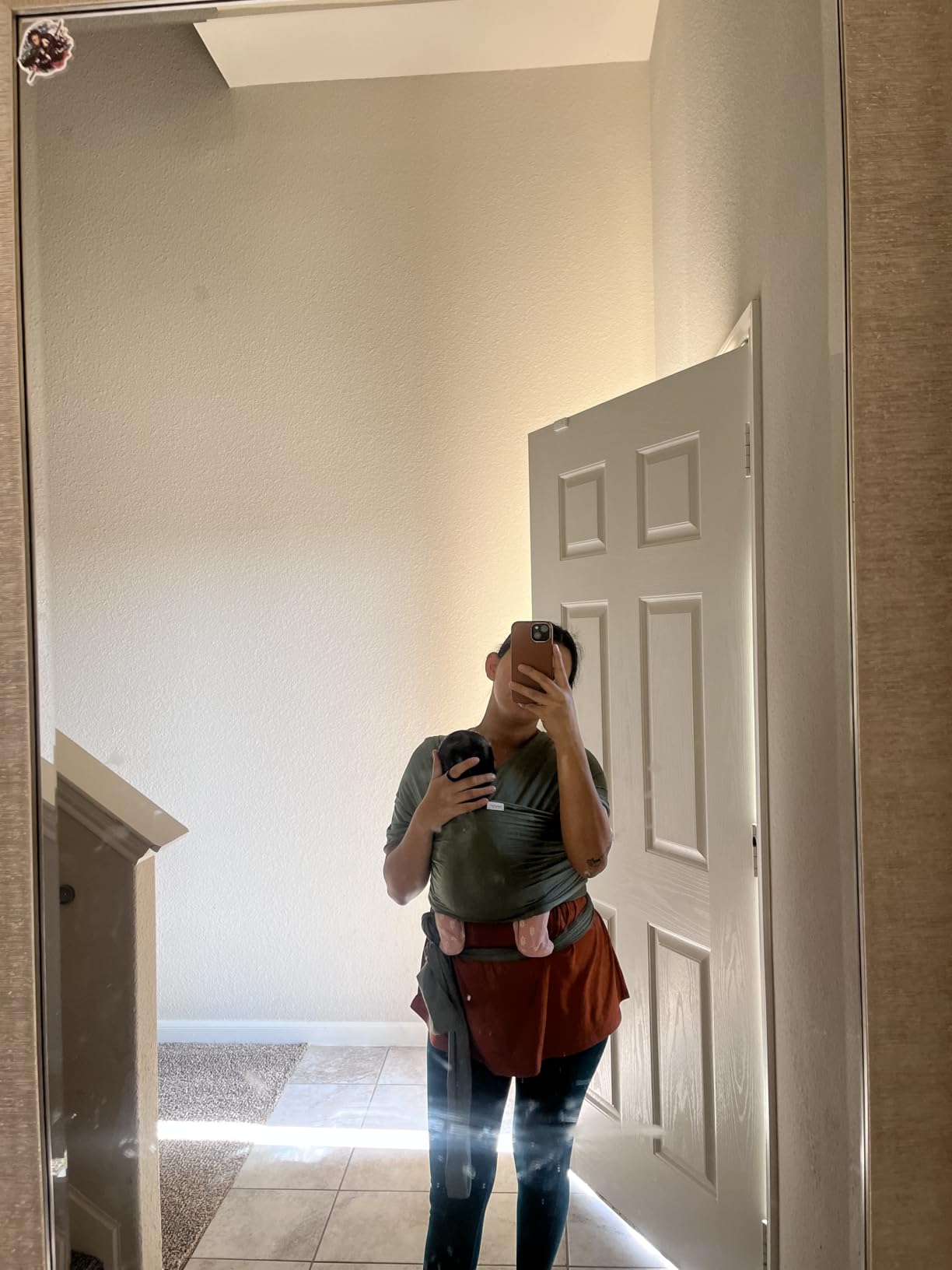
The Solly Wrap distributes weight evenly across the wearer’s upper body in a way that actively avoids pressure points. I have narrow shoulders and typically feel strain in my trapezius muscles with wraps, but the Solly’s slightly wider fabric spread the load more comfortably. The wrap is also lighter and less bulky than the Boba or Moby, which means less fabric to manage when tying. This was especially helpful when I was carrying the wrap in my diaper bag. It takes up about half the space of the Boba.
The Solly is rated for 8 to 25 pounds, which means it has the highest minimum weight on this list. You will need to wait until your preemie is at least 8 pounds before using it. For many NICU graduates, this happens within the first few weeks after discharge. Once they hit that weight, the Solly provides an incredibly comfortable and cool carrying experience that is hard to beat. The 84 percent five-star rating across over 1,000 reviews confirms that parents who try it tend to love it. Many reviewers specifically mention that after trying cheaper wraps, the Solly was worth every penny.
Who This Wrap Is Best For
The Solly Baby Wrap is perfect for preemie parents in warm climates who want the most comfortable, breathable stretchy wrap available. If you live somewhere with hot summers and the thought of wrapping yourself in multiple layers of cotton makes you sweat, the TENCEL Modal fabric solves that problem beautifully. It is also ideal for parents with sensitive skin who find cotton-spandex blends irritating.
This wrap is a wonderful choice for contact naps and skin-to-skin sessions at home, where the premium fabric quality really shines. The lightweight design makes it the most portable wrap on this list.
Who Should Skip This Wrap
If your preemie weighs under 8 pounds, the Solly is not rated for that weight yet. Parents on a strict budget may find the premium price hard to justify when the Boba and KeaBabies wraps offer similar functionality for less. The learning curve is identical to other stretchy wraps, so if wrapping intimidates you, consider a slip-on option instead.
If you plan to carry well past 15 pounds in a wrap, the TENCEL Modal fabric may stretch more than cotton blends. Most parents transition to a structured carrier by that point anyway.
6. Moby Baby Wrap Classic – The Original Stretchy Wrap
- Extremely affordable
- Very soft stretchy fabric
- Even weight distribution
- Multiple carrying positions
- Creates secure cocoon
- Learning curve for wrapping technique
- Long fabric touches ground
- Can get warm
- Limits arm movement
The Moby Wrap is the OG of stretchy wraps, and it holds a special place in the babywearing world. Our NICU actually provided Moby wraps for kangaroo care sessions, and many parents in my support group bought their own for home use. The classic version uses a soft, stretchy fabric that creates a snug, cocoon-like hold that is perfect for tiny babies. With over 5,300 reviews and a 4.6-star rating, the Moby has earned its reputation through years of reliable performance.
The Moby Wrap is 18 feet long, which gives you plenty of fabric to work with for different tying methods. I found this length ideal for the front-wrap-cross-carry, which is the most popular and supportive tie for newborns and preemies. The stretchy fabric conforms to your baby’s body and holds them securely against your chest in the upright position that promotes healthy breathing and digestion. My daughter loved the Moby from her first ride in it, and the even weight distribution across my back, shoulders, and hips made longer wearing sessions comfortable.
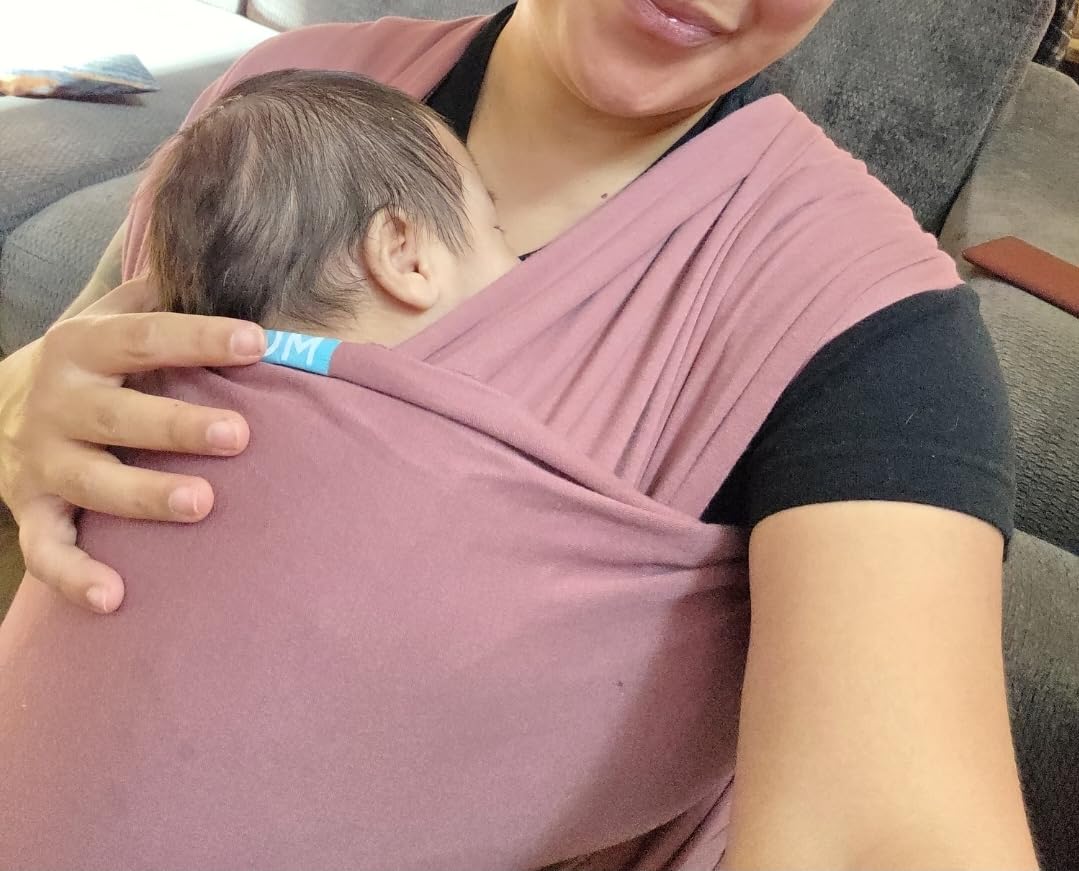
One thing I really appreciated about the Moby was the multiple carrying positions. Beyond the standard front inward-facing carry, you can do a front outward-facing position once your baby has head control, a hip carry, and even a back carry with older babies. This versatility extends the useful life of the wrap well beyond the newborn stage. With a 33-pound weight limit, the Moby can technically carry your child into toddlerhood, although most parents switch to a structured carrier by then. The included instructional guide was helpful for learning the basic ties, and there are hundreds of YouTube tutorials available.
The biggest downside is the fabric length. Eighteen feet of fabric is a lot to manage, especially in parking lots or public restrooms. I learned to tie the wrap at home before leaving, then just slip my daughter in when we arrived at our destination. The fabric can also get warm in summer since you have multiple layers wrapped around your torso. The stretchy material restricts your arm movement somewhat, which is a common trade-off with all stretchy wraps. At under $40, though, the Moby remains one of the best value stretchy wraps available.

Who This Wrap Is Best For
The Moby Wrap Classic is ideal for preemie parents who want a proven, no-surprises stretchy wrap from a brand that has been trusted for decades. It is perfect for the newborn through 6-month stage when your baby is light enough for stretchy fabric to provide adequate support. The affordable price makes it accessible for most families.
This wrap is also a great choice if your NICU or hospital uses Moby wraps for kangaroo care, because you can practice the technique in the hospital and continue seamlessly at home with the same brand.
Who Should Skip This Wrap
If the thought of managing 18 feet of fabric sounds overwhelming, look at the shorter Koala Babycare wrap or a slip-on carrier like the Baby K’tan. Parents in hot climates may find the Moby too warm compared to the breathable Solly Baby Wrap. The minimum weight of 8 pounds means you will need to wait if your preemie is smaller.
If you want a carrier for quick errands where you need to put it on and take it off repeatedly, the Moby’s wrapping process is too slow for that use case.
7. Infantino Flip 4-in-1 Convertible Carrier – Budget Structured Option
- Very affordable price
- 4 carrying positions
- Adjustable seat for M-position
- Padded straps
- Lightweight design
- Six buckles can be tricky
- Recommended minimum 8 lbs
- Straps can tangle
- Less supportive for long sessions
The Infantino Flip 4-in-1 is the most popular baby carrier on Amazon by review count, with over 82,000 reviews. That staggering number tells you this carrier hits a sweet spot of affordability, functionality, and reliability. At roughly one-third the price of premium structured carriers, the Flip offers four carrying positions, an adjustable seat width for proper hip positioning, and padded shoulder straps. For preemie parents on a budget, this is the structured carrier I recommend most often.
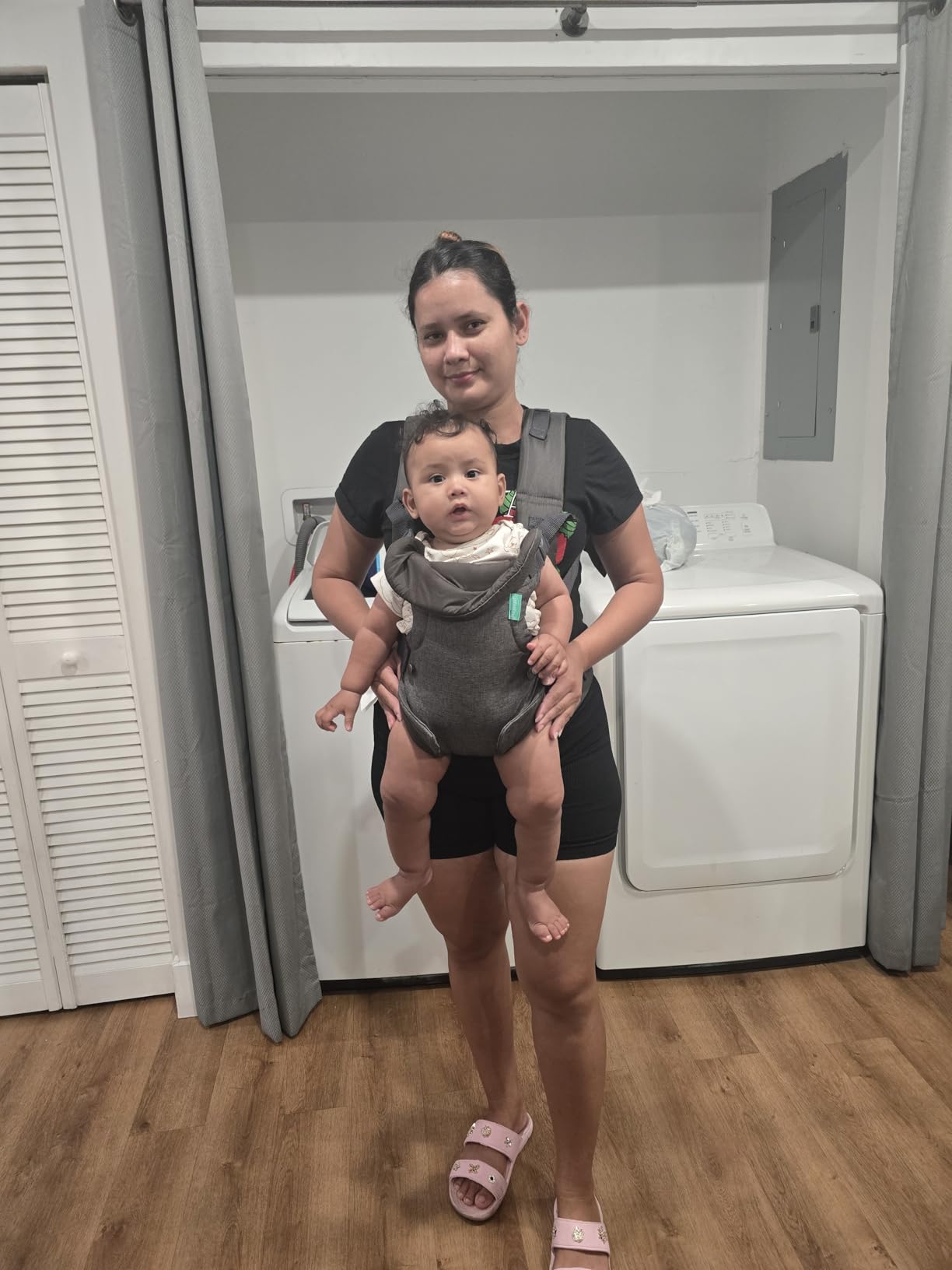
I tested the Flip when my daughter hit 8 pounds and we needed a structured option for outings. The four positions include facing-in narrow and wide, facing-out, and back carry. For a preemie just starting in a structured carrier, the facing-in narrow position is what you want. The seat adjusts to create a narrower base that supports a smaller baby’s legs properly. The padded shoulder straps and wide waist belt distribute weight reasonably well, though not as comfortably as the Ergobaby Embrace’s knit fabric and cross-back design.

The convertible seat is the Flip’s standout feature. By adjusting the width of the seat panel, you can ensure your baby always has proper knee-to-knee support as they grow. This is critical for hip health, especially for preemies whose joints may need extra care. The International Hip Dysplasia Institute guidelines emphasize that babies should always be carried with their knees higher than their bottom in the M-position, and the Flip’s adjustable seat makes this achievable across a wide weight range. The machine-washable fabric is practical for inevitable messes.
The trade-offs are real, though. The six-buckle system can feel fiddly, especially when you are trying to get a squirmy baby positioned correctly. The inner tag is notoriously itchy, and many reviewers mention cutting it off. The straps can twist and tangle between uses, which adds setup time. For the price, though, these are minor complaints. The Flip is not as plush or refined as the Ergobaby or BabyBjorn options, but it gets the job done reliably and the 4.6-star rating across 82,000 reviews speaks for itself.
Who This Carrier Is Best For
The Infantino Flip is the best structured carrier for budget-conscious preemie families who cannot justify spending $75 to $100 on a premium carrier. It offers four carry positions and an adjustable seat at a price that leaves room in the budget for other essentials. It is also a solid backup carrier to keep at a grandparent’s house or in the car.
This carrier works well for parents who want the convenience of a buckle carrier for everyday errands and short outings. The lightweight design is easy to travel with, and it grows with your baby from the newborn narrow position through the toddler wide position and back carry.
Who Should Skip This Carrier
If your preemie is under 8 pounds, the Flip’s minimum weight excludes them. Parents who prioritize maximum comfort for long wearing sessions should invest in the Ergobaby Embrace or a stretchy wrap instead. The Flip’s comfort level is acceptable for its price, but it cannot match premium carriers for extended use.
If you want a carrier that feels luxurious and premium, the Flip’s budget construction will disappoint. The fabric, buckles, and padding are functional but not refined.
8. Baby K’tan Baby Carrier – Slip-On Simplicity
- No learning curve
- Ready to wear out of the box
- No buckles or straps
- Great for breastfeeding
- Compact as infinity scarf
- Sizing is tricky and not adjustable
- Only one person can wear it
- Material stretches out over time
- Warning tags are scratchy
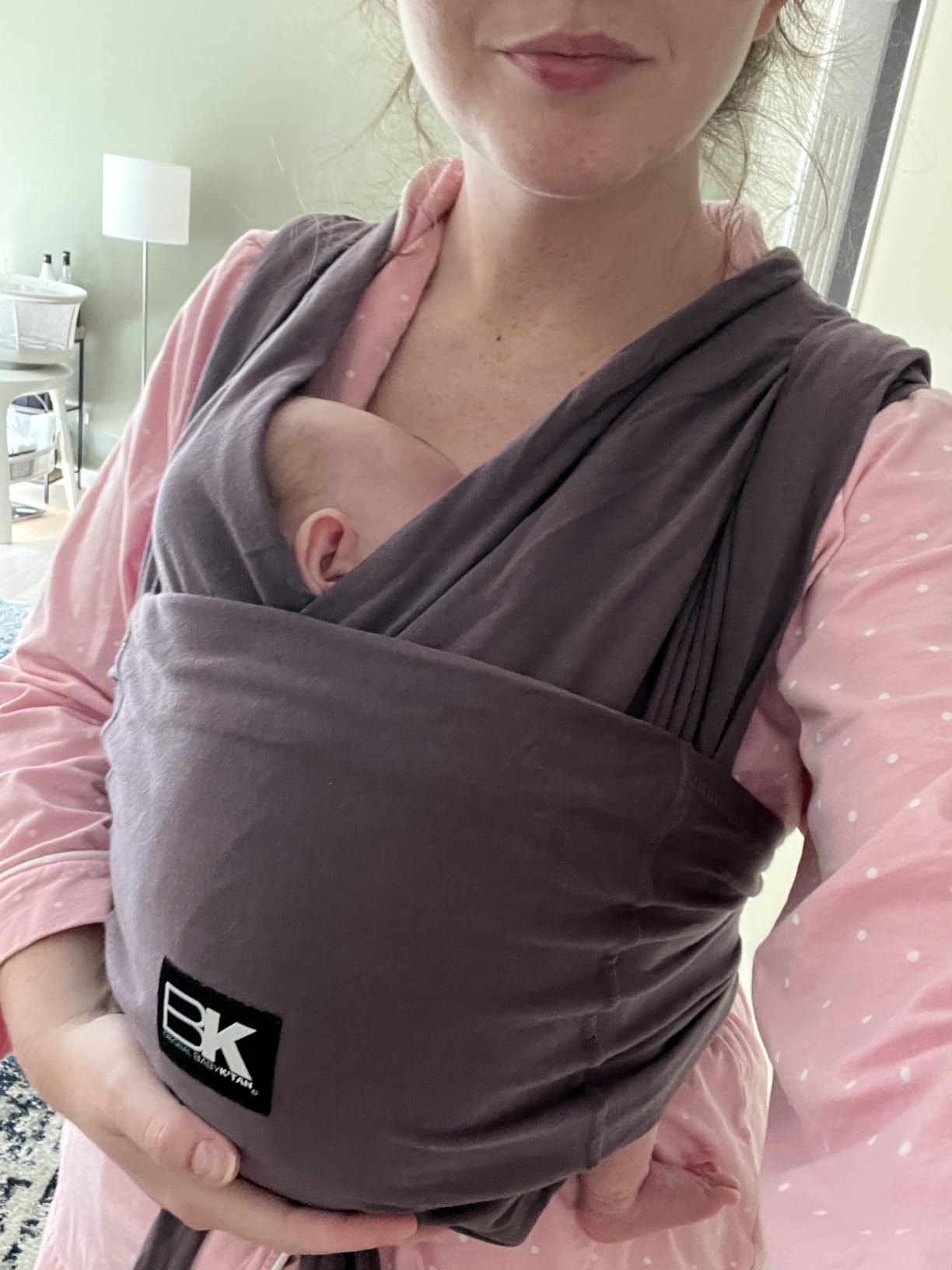
The Baby K’tan solves the biggest problem with stretchy wraps: the wrapping. Instead of 18 feet of fabric that you have to learn to tie, the K’tan is a pre-formed double-loop carrier that you slip on like a vest. There are no rings, no buckles, and no long tails of fabric. For a sleep-deprived preemie parent, this simplicity is worth its weight in gold. I lent my K’tan to a friend whose preemie was in the NICU, and she told me it was the only carrier she could manage during those exhausting early weeks.
The K’tan offers five carrying positions that span from newborn through toddlerhood. For preemies, the kangaroo position (baby facing inward on your chest) and the cradle position (for nursing) are the most useful. The double-loop design provides two layers of fabric across the baby’s back for extra security, which gave me confidence when carrying my daughter. The 100 percent cotton fabric is soft against baby’s skin and stretches enough to create a snug, custom fit. The head support pocket helps position a tiny baby’s head correctly.
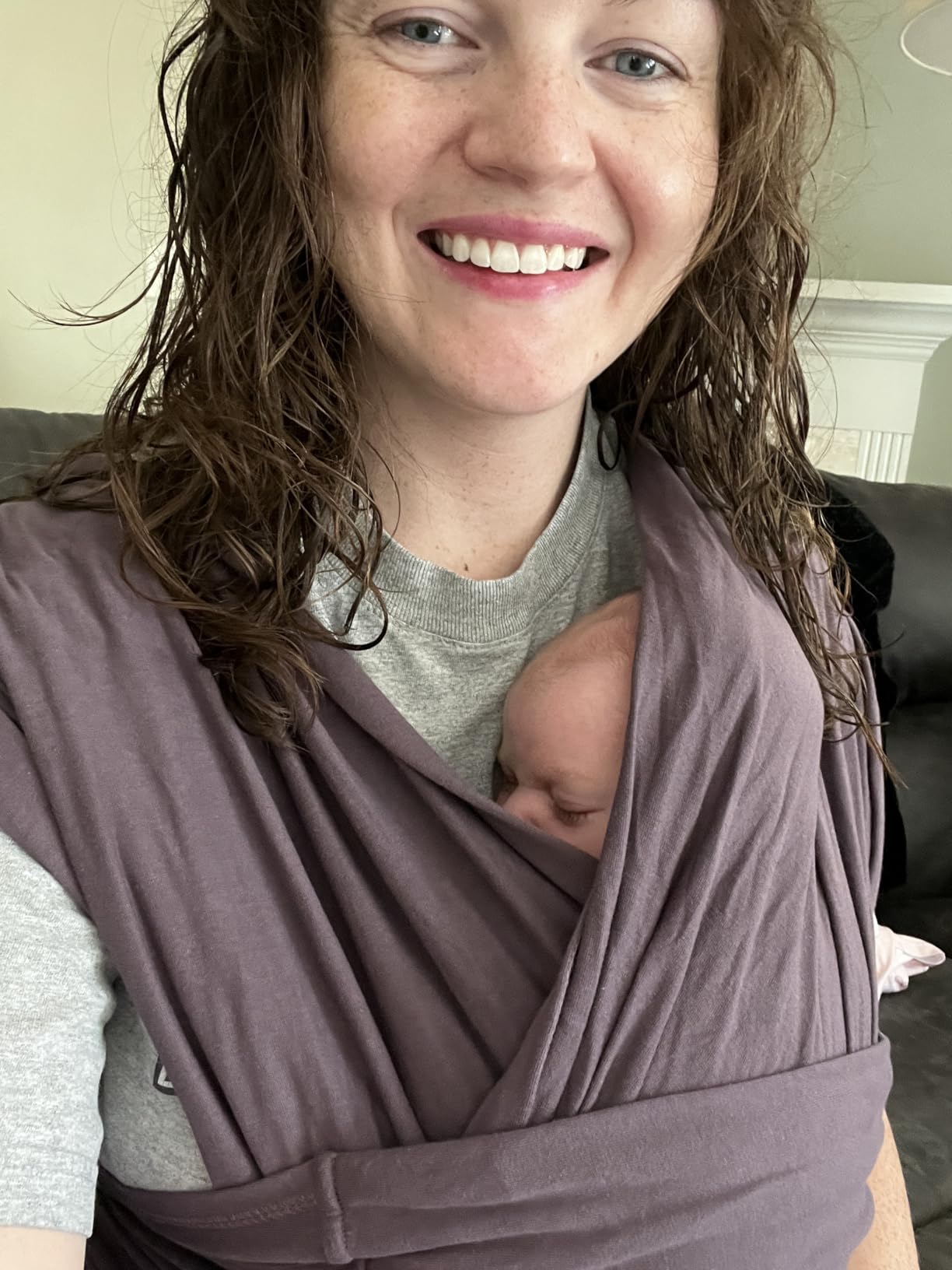
The Baby K’tan is IHDI certified for hip-healthy development and ASTM tested for safety. The five positions include cradle, kangaroo, hug, exploration, and toddler hip carry. This means the K’tan can grow with your preemie through multiple developmental stages. I particularly loved the breastfeeding capability. The fabric provides enough coverage for discreet nursing in public, and the hands-free design means you can feed your baby while pushing a shopping cart or wrangling an older sibling.
The catch with the K’tan is sizing. Because there are no adjustable straps or buckles, you must order the correct size for your body. This means if you and your partner are different sizes, you each need your own K’tan. The sizing guide is based on your pre-pregnancy shirt size and bra band size, but many reviewers recommend ordering a size smaller than the chart suggests because the cotton stretches with use. I wore a size small and found it accurate, but my partner would have needed a large. The 4.2-star rating is slightly lower than other carriers on this list, and the sizing confusion accounts for most of the lower ratings.
Who This Carrier Is Best For
The Baby K’tan is perfect for preemie parents who are intimidated by stretchy wraps but want the same snug, wrap-like feel. If you have watched wrapping tutorials and felt overwhelmed, the K’tan gives you wrap comfort with zero wrapping required. It is also ideal for breastfeeding mothers who want a carrier that doubles as a nursing cover.
This carrier excels for quick, short carries around the house or on short errands. The slip-on design means you can have your baby in the carrier in under 30 seconds, which is faster than any wrap on the market.
Who Should Skip This Carrier
If you and your partner want to share a carrier, the K’tan’s sizing limitation makes that impractical. Parents between sizes may struggle to get the right fit. The material also stretches out over time, so a carrier that fit perfectly at 3 months may feel loose at 6 months.
If you want maximum adjustability to fine-tune the fit for your preemie, a traditional wrap or a buckle carrier will give you more control. The K’tan’s fixed size means you cannot tighten or loosen it on the fly.
9. Boba Bliss Hybrid Carrier – Wrap Comfort With Buckle Convenience
- Best of wraps and buckles
- Adjustable seat for M-position
- Adjustable face cover ties
- No tying required
- Grows with baby
- Low stock availability
- Strap area can dig
- Seat may be too wide initially
- Material may stretch over time
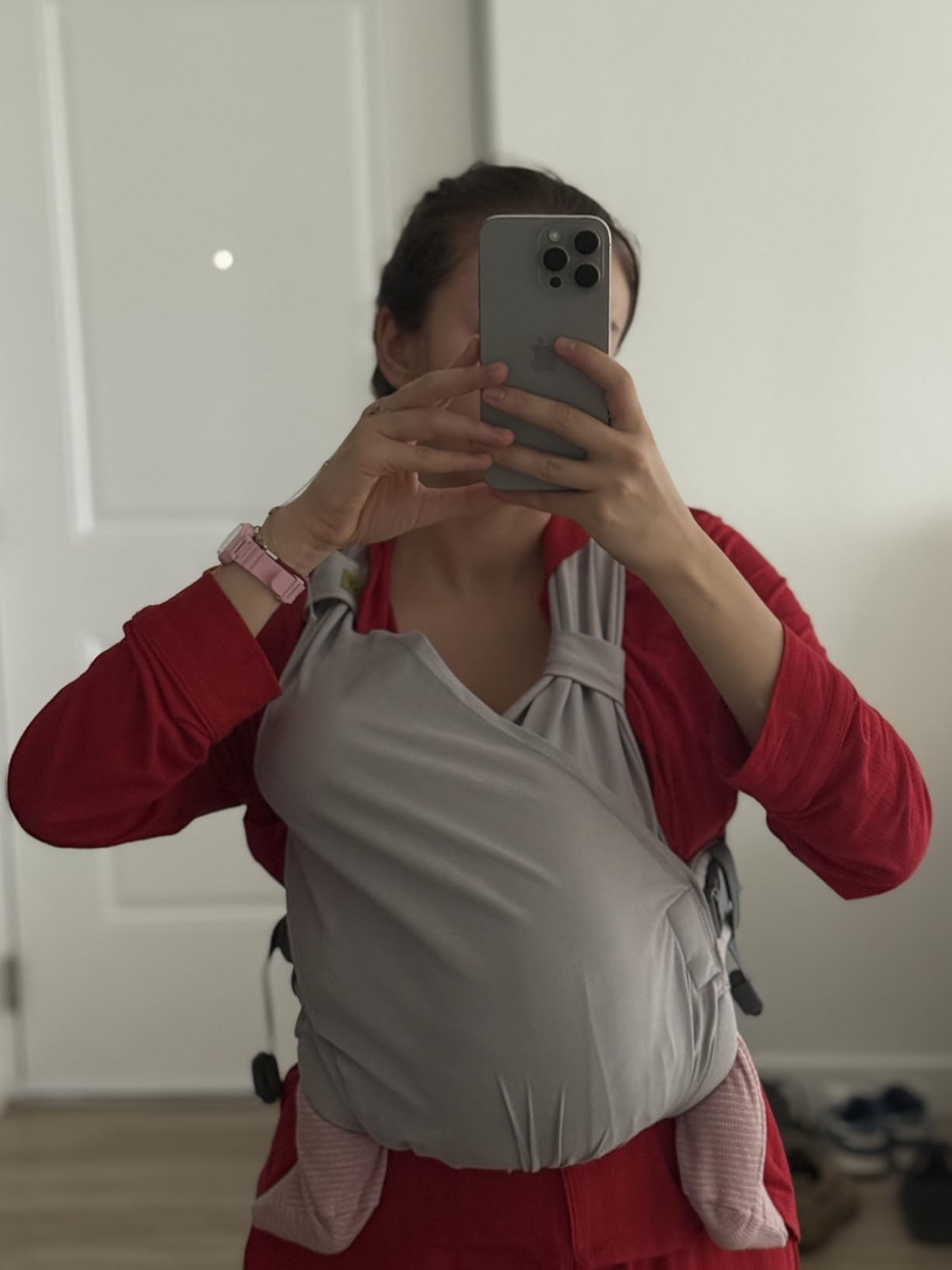
The Boba Bliss is the carrier I wish had existed when my daughter was first discharged from the NICU. It combines the soft, stretchy comfort of a wrap with the quick on-and-off convenience of a buckle carrier. Three buckles replace the tying process entirely, and the 92 percent cotton, 8 percent spandex fabric provides that snug, conforming feel that stretchy wraps are known for. It is the best of both worlds for preemie parents who want wrap comfort but cannot deal with the wrapping.
The adjustable seat width is what makes the Bliss particularly good for preemies. You can narrow the seat to match your baby’s size, ensuring proper knee-to-knee support and the M-position that promotes healthy hip development. As your baby grows, you widen the seat. The gathered seat design grows with baby from newborn through 35 pounds, which means this carrier can last you well over a year. The adjustable face cover ties are a thoughtful feature that lets you position the fabric around your baby’s head to maintain clear airway visibility.
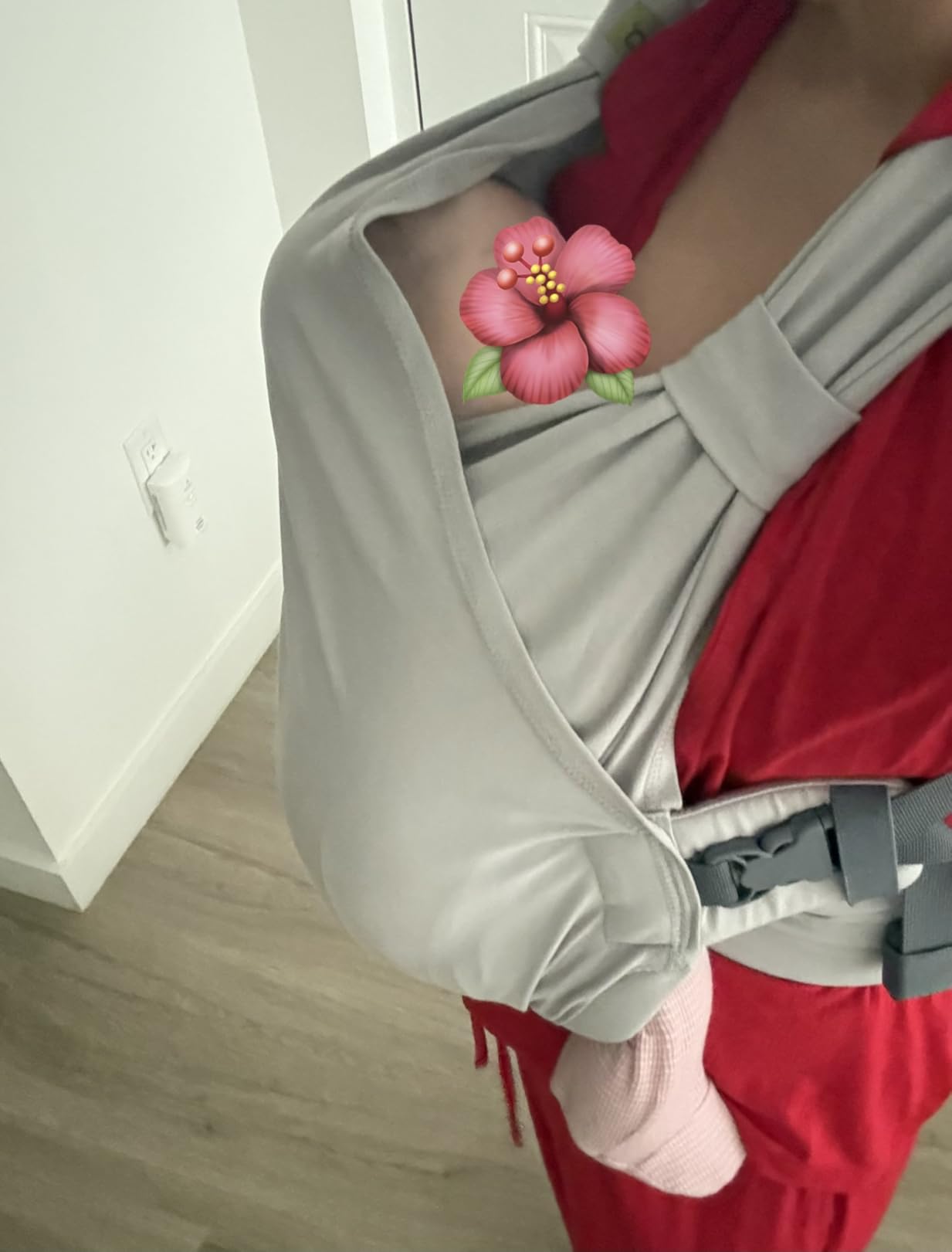
I tested the Boba Bliss at a babywearing meetup where several other preemie parents were trying different carriers. The consensus was that the Bliss felt the most supportive of the hybrid options. The cross-shoulder straps distribute weight more evenly than the Baby K’tan, and the buckle closure means you can adjust the fit on the go without retying anything. The padded leg openings prevent chafing on tiny baby thighs, and the IHDI certification gives you confidence in the hip positioning.
The main concern is availability. At the time of this analysis, the Bliss had limited stock on Amazon, which suggests either high demand or supply chain issues. Some reviewers have noted durability concerns with heavier babies, including reports of tearing after about a month of use with a 26-pound toddler. For the preemie and infant stage, though, the lighter weight means these durability issues are unlikely to surface. The 4.5-star rating across nearly 2,000 reviews indicates most parents are very satisfied with the Bliss.
Who This Carrier Is Best For
The Boba Bliss is ideal for preemie parents who are torn between a wrap and a structured carrier and do not want to compromise. You get the soft, body-conforming fabric of a wrap with the buckle simplicity of a structured carrier. It is perfect for parents who have tried wraps and found the tying process too cumbersome but still want that snug, wrap-like hold.
This carrier is also a great choice if you want a single carrier that transitions from newborn through toddler. The 7 to 35 pound range and adjustable seat mean you will not outgrow it quickly.
Who Should Skip This Carrier
If your preemie is under 7 pounds, the Bliss’s minimum weight means you need to wait. Some reviewers noted that the seat can be slightly too wide for very small newborns initially, so check the fit carefully. Parents concerned about durability with heavier babies should transition to a fully structured carrier by the time their child reaches 25 pounds.
If availability is limited, you may need to consider the Boba Wrap or the Ergobaby Embrace as alternatives. The stock situation can change, so check current availability.
10. Koala Babycare T-Shirt Wrap – Easiest Wrap to Put On
- Extremely easy to put on
- Shorter fabric stays clean
- Very comfortable
- Great for colicky babies
- Ring closure secure
- Limited 22 lb weight capacity
- Baby not fully secure when bending
- Can get warm
- Fit tricky initially
The Koala Babycare wrap solves one of the most annoying problems with traditional stretchy wraps: the long fabric dragging on dirty floors. This Italian-designed wrap uses a t-shirt style construction that you slip over your head like a garment. Two adjustable bands with ring closures let you customize the fit for your baby. It takes about 10 seconds to put on, which is faster than any wrap or structured carrier I have tested. With over 20,000 reviews, this is one of the most popular alternative-style wraps available.
I discovered the Koala Babycare wrap through a recommendation in a preemie parent group, and the t-shirt design immediately appealed to me. The shorter fabric means you are not trailing 18 feet of material through a parking lot. The ergonomic breathable backrest provides more structured back support than a traditional wrap, which I found more comfortable for sessions longer than an hour. The ring closure system lets you tighten or loosen the bands to get a custom fit for your baby’s size, which is especially helpful for preemies who change sizes rapidly.
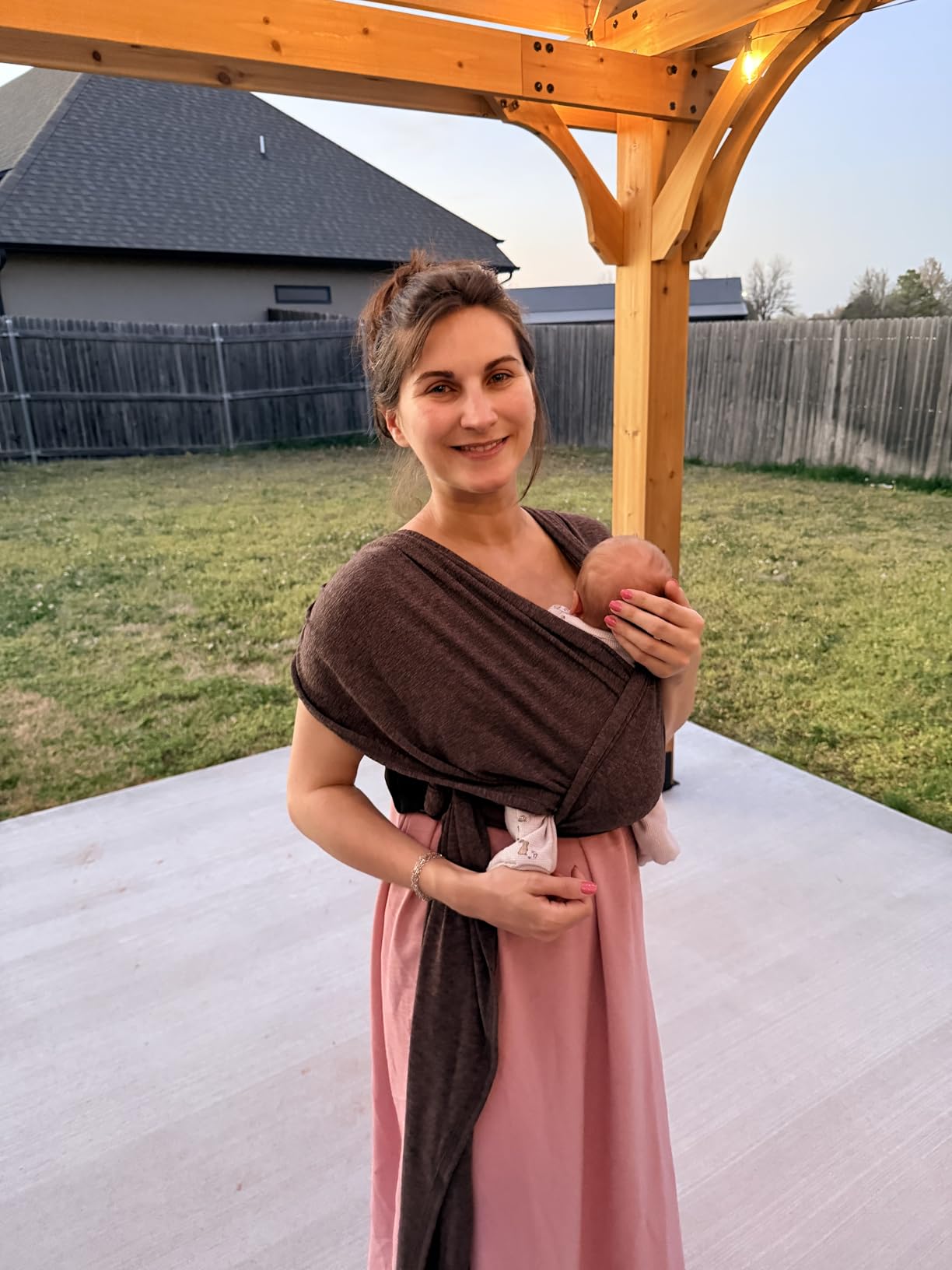
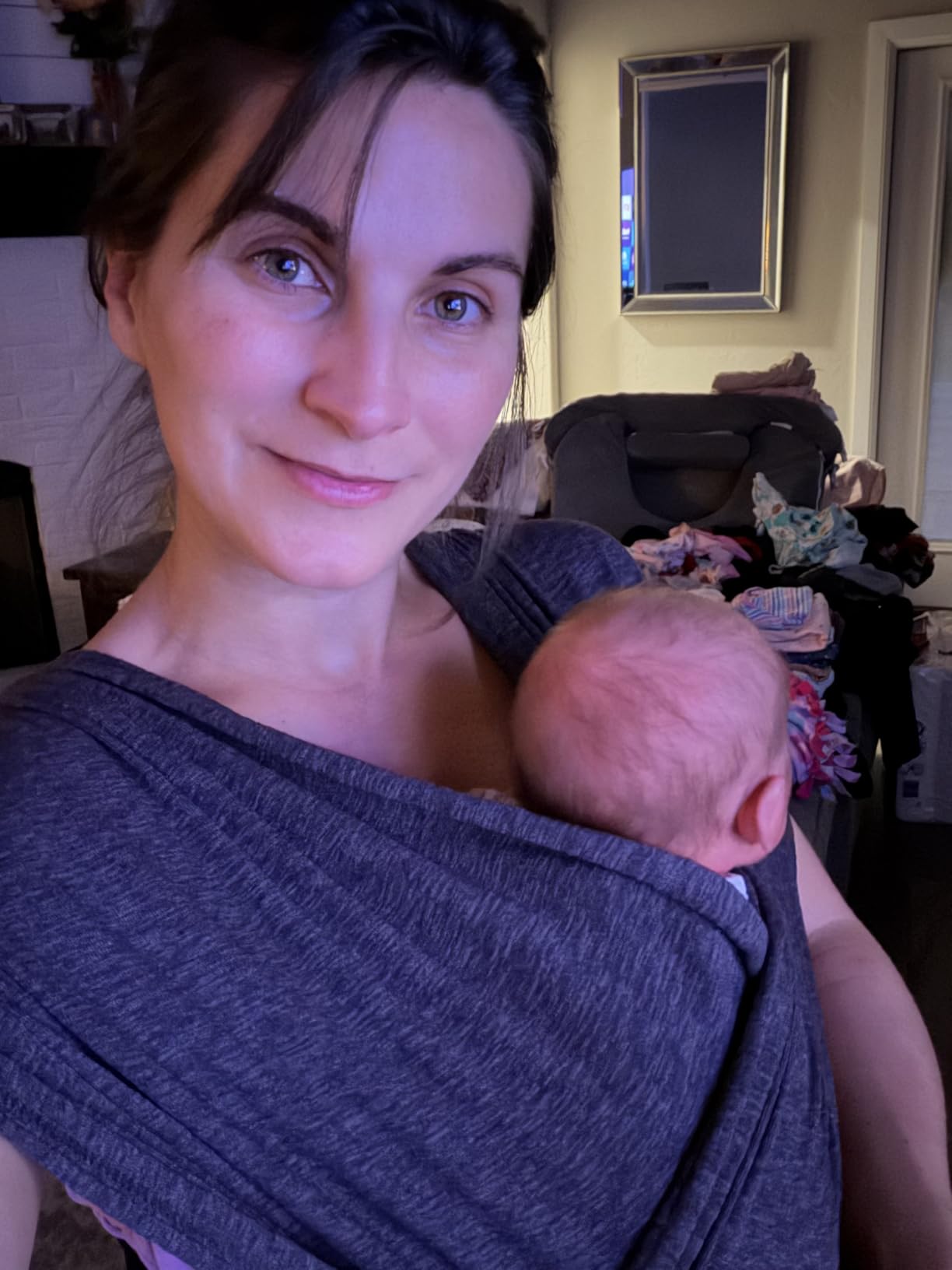
The Koala Babycare wrap is particularly beloved by parents of colicky babies. Multiple reviewers mention that their fussy babies settle within minutes of being placed in this wrap, and I experienced the same thing. The snug, t-shirt-style hold creates a secure feeling that mimics the womb closely. The cradle position works well for newborns, and the ring closure makes it easy to reposition the baby as they grow. The breastfeeding-friendly design allows for discreet nursing, and the one-size-fits-most construction means it works for a wide range of body types.
The main limitation is the 22-pound weight capacity, which is lower than most other wraps on this list. This means you will likely transition to a structured carrier before your child’s first birthday. Some reviewers noted that the baby is not as fully secured when bending over compared to a full wrap, so you do need to support the baby with one hand when picking things up. The 65 percent polyester, 30 percent cotton, 5 percent spandex blend can run warm during extended use, which is something to consider for summer babies. Overall, though, the convenience of the t-shirt design makes this a top pick for parents who want wrap comfort without the wrapping hassle.
Who This Wrap Is Best For
The Koala Babycare wrap is perfect for preemie parents who want the closeness of a wrap but absolutely refuse to deal with tying fabric. If you have tried a Moby or Boba and given up because the wrapping was too complicated, this is your carrier. It is also ideal for parents of colicky or high-needs babies who need to be worn constantly throughout the day.
This wrap works well for around-the-house wear, short errands, and situations where you need to put the carrier on and take it off multiple times. The shorter fabric design is also great for public restrooms and parking lots.
Who Should Skip This Wrap
If you want a carrier that will last past 22 pounds, look at the Boba Wrap or Moby, which both go to 33-plus pounds. Parents who carry their babies for extended hiking or walking sessions may want the full support of a structured carrier. The polyester blend can run warm, so consider the Solly Baby Wrap if breathability is a top priority.
If you want maximum versatility with multiple carrying positions, a traditional long wrap gives you more options than the Koala’s t-shirt design.
What to Look for in a Preemie Baby Carrier
Choosing the right baby carrier for a premature baby involves considerations that go beyond what most general baby carrier guides cover. Preemies have unique needs related to weight, muscle tone, head control, and medical history. Here is what our team learned through testing and consulting with babywearing educators and NICU staff.
Weight Minimum and Range
This is the single most important specification for preemie parents. Most standard baby carriers list a 7 or 8 pound minimum, which excludes many preemies who come home from the NICU weighing 4 to 6 pounds. Always check the manufacturer’s stated minimum weight before using any carrier. If your baby is under the minimum, wait until they gain enough weight or consult your pediatrician about safe carrying options.
The carriers on this list range from 7 to 8 pound minimums. For babies under 7 pounds, stretchy wraps are generally the safest option because they conform to the baby’s body without any pre-shaped pockets or panels. Some specialized preemie carriers, like the Weego PREEMIE, are designed for babies as small as 3 pounds 5 ounces, although these are not widely available on Amazon in the US market.
Fabric and Breathability
Preemies have delicate skin and immature temperature regulation systems. The fabric of your carrier matters more than you might think. Stretchy cotton-spandex blends (like the Boba Wrap at 95 percent cotton, 5 percent spandex) are the most popular choice for preemies because they are soft, forgiving, and breathable. The TENCEL Modal fabric used by the Solly Baby Wrap is a step up in breathability and softness if you live in a warm climate or run hot postpartum.
Structured carriers typically use thicker, more rigid fabrics. The Ergobaby Embrace uses a soft knit that bridges the gap between wrap and carrier materials. If you choose a structured carrier, look for one with a softer fabric rather than stiff nylon or canvas, which can feel harsh against a preemie’s sensitive skin. For those interested in ring slings for newborns, linen and silk blends offer excellent breathability for warm-weather preemie wearing.
Head and Neck Support
Premature babies often have weaker neck muscles and lower overall muscle tone compared to full-term babies. This makes head and neck support a critical safety feature. The carrier should hold your baby’s head in a position where their chin is off their chest with at least two finger widths of space. If the baby’s chin drops to their chest, it can restrict their airway.
Stretchy wraps naturally provide customizable head support because you can adjust the fabric tightness across the back of the baby’s head. Structured carriers like the BabyBjorn Mini and Ergobaby Embrace include padded head support panels designed specifically for babies who cannot hold their head up yet. Whatever carrier you choose, always ensure you can see your baby’s face and that their airway is clear.
Carrier Type: Wraps vs Structured vs Hybrid
Each carrier type has distinct advantages for preemie families. Stretchy wraps provide the closest, most customizable fit for tiny babies and are the top recommendation from babywearing educators for the newborn stage. They conform to your baby’s exact shape and can be tightened to provide perfect support at any weight. The trade-off is the learning curve and the time it takes to tie them.
Soft structured carriers offer quick on-and-off convenience and better weight distribution for longer sessions. They are ideal once your baby reaches the 7 to 8 pound range and you need a carrier for outings. The Ergobaby Embrace and BabyBjorn Mini are the best structured options for smaller babies because their soft fabrics fill the gap that stiffer carriers leave. For a deeper dive into all carrier types, our woven wraps guide covers the full spectrum.
Hybrid carriers like the Boba Bliss combine wrap fabric with buckle closures, giving you the best of both worlds. The Baby K’tan and Koala Babycare wrap offer slip-on simplicity that eliminates wrapping entirely while maintaining a snug, wrap-like fit.
T.I.C.K.S. Safety Rule for Preemies
The T.I.C.K.S. rule is the universal babywearing safety checklist, and it is especially important for preemies who may have weaker muscle tone and less stable airways. Every time you put your preemie in a carrier, run through this checklist.
T – Tight: The carrier should be tight enough that your baby is held securely against your body with no slack. A loose carrier allows the baby to slump, which can restrict their airway.
I – In View at All Times: You should be able to see your baby’s face by simply glancing down. Never cover their face with fabric.
C – Close Enough to Kiss: Your baby’s head should be positioned high enough on your chest that you can easily kiss the top of their head by tipping your chin down.
K – Keep Chin Off Chest: Ensure there are at least two finger widths of space between your baby’s chin and their chest. This prevents airway restriction.
S – Supported Back: Your baby’s back should be supported in its natural position. You should be able to slide a flat hand between your chest and the baby’s back, but the baby should not slump away from you when you lean forward.
When to Transition Out of a Preemie Carrier
Most preemie carriers are designed for the newborn through infant stage. You will know it is time to transition when your baby exceeds the carrier’s weight limit, when the carrier no longer provides adequate knee-to-knee support, or when your baby starts showing signs of wanting to face outward and explore the world. For stretchy wraps, the transition point usually comes around 15 to 18 pounds when the fabric starts to sag under the baby’s weight.
For structured newborn carriers like the BabyBjorn Mini (24 pounds max) and Ergobaby Embrace (25 pounds max), the transition comes when your baby outgrows the seat width or exceeds the weight limit. At that point, consider a full-size structured carrier that offers back-carry positions and higher weight limits. Once your preemie is thriving and ready for adventures, you can explore our recommendations for the best baby carriers for travel.
FAQs
Are there baby carriers for preemies?
Yes, there are baby carriers designed for premature babies. Stretchy wraps like the Boba Wrap and Moby Wrap conform to tiny bodies and are rated for babies as small as 7 pounds. Specialized preemie carriers like the Weego PREEMIE accommodate babies from 3 pounds 5 ounces. Look for carriers with low weight minimums, excellent head support, and the ability to position your baby in the natural M-position or froggy position.
Are baby carriers safe for premature babies?
Baby carriers can be safe for premature babies when used correctly. Always follow the T.I.C.K.S. safety rule: Tight, In view, Close enough to kiss, Keep chin off chest, and Supported back. Get clearance from your pediatrician or neonatologist before using any carrier, especially if your preemie has medical equipment or respiratory support needs.
What week is no longer preemie?
A baby is no longer considered premature once they reach 37 weeks of gestational age. However, many premature babies may still be small or have developmental needs beyond that milestone. Most preemie carriers can be used until babies reach 10 to 12 pounds, which typically occurs around 3 to 4 months corrected age.
How to carry a premature baby?
To carry a premature baby safely, first get clearance from your pediatrician or NICU team. Choose a carrier rated for your baby’s weight. Position baby upright in a tummy-to-tummy position with their head higher than their bottom. Ensure their chin is clear from their chest with two finger widths of space. Support the head and neck at all times. Always check the T.I.C.K.S. rule before each use.
Can I use a baby carrier in the NICU?
Many NICUs encourage kangaroo care (skin-to-skin contact) and may allow you to use a carrier or wrap during your visits. However, policies vary by hospital, so always ask your NICU staff first. Some hospitals provide specific wraps for kangaroo care sessions. The NuRoo Pocket is specifically designed for NICU use, and stretchy wraps like the Moby are commonly used in hospital settings.
Final Thoughts on the Best Baby Carriers for Premature Babies
Finding the best baby carriers for premature babies in 2026 comes down to understanding your baby’s weight, your lifestyle, and your comfort preferences. If I had to recommend just one carrier to a preemie parent, it would be the Boba Baby Wrap for its unmatched combination of affordability, snug fit, and proven track record. For parents who want buckle convenience, the BabyBjorn Baby Carrier Mini is the easiest premium option to use from day one. And for families on a budget, the KeaBabies Baby Wrap delivers excellent stretchy-wrap performance at an unbeatable price.
Remember to always check with your pediatrician before starting babywearing, follow the T.I.C.K.S. safety rule, and trust your instincts. Every preemie is different, and what works for one family may not work for another. The emotional benefits of kangaroo care and babywearing for both preemie babies and their parents are well documented, and having the right carrier makes it all possible. Once your little one grows and thrives, you will have many more babywearing adventures ahead.