
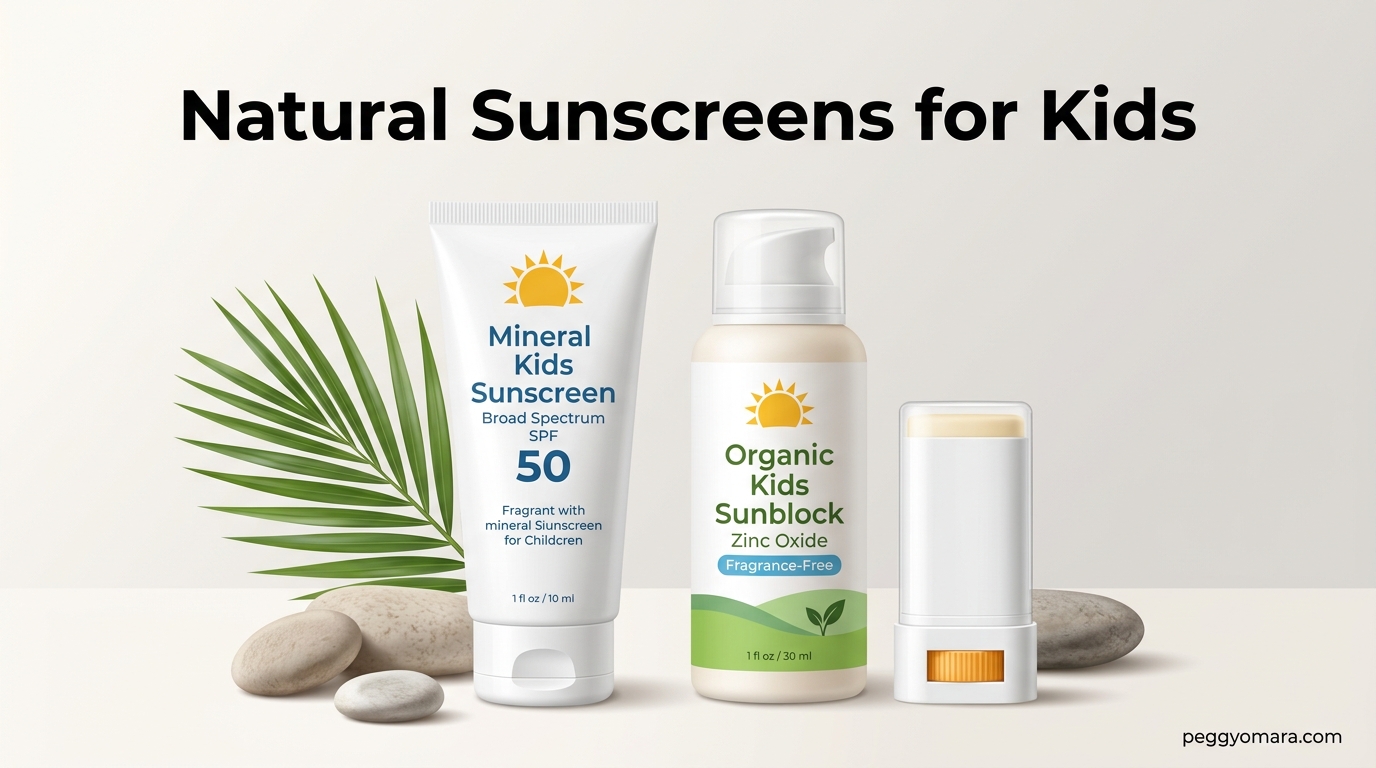
Standing in the sunscreen aisle with a squirming toddler on your hip, you grab a bottle labeled “natural,” “gentle,” and “pediatrician recommended.” You flip it over to check the ingredients list and find yourself staring at a wall of chemical names you cannot pronounce. This is the exact moment every parent faces when trying to protect their child’s skin from the sun while also protecting them from potentially harmful ingredients.
Children’s skin is thinner and more permeable than adult skin, which means whatever you apply gets absorbed faster and goes deeper. The Environmental Working Group notes that early-life exposure to certain sunscreen chemicals may have greater health impacts than exposure later in life. That ingredient list on the back of the bottle is not just fine print. It is a roadmap to what you are really putting on your child’s body.
In this guide, I will walk you through exactly how to decode those labels. You will learn which ingredients offer safe, effective protection and which ones researchers and pediatric dermatologists recommend avoiding for children. By the end, you will be able to pick up any sunscreen bottle and know within seconds whether it deserves a place in your beach bag or should stay on the shelf.
Table of Contents
What Natural Sunscreen Ingredients Actually Mean?
When you see “natural” on a sunscreen label, it helps to know what that term actually means in the context of sun protection. The word is not strictly regulated by the FDA, so manufacturers can use it fairly loosely. What parents really need to understand is the fundamental difference between mineral and chemical sunscreens.
Mineral sunscreens, also called physical sunscreens, use zinc oxide and/or titanium dioxide as their active ingredients. These minerals sit on top of the skin and physically block or reflect UV rays away from the body. They are not absorbed into the bloodstream, which is why pediatricians and dermatologists consistently recommend them for children.
Chemical sunscreens work differently. They contain ingredients like oxybenzone, octinoxate, homosalate, and octocrylene that absorb UV radiation and convert it into heat, which is then released from the skin. The FDA has recognized only two ingredients as generally recognized as safe and effective (GRASE) for sunscreen: zinc oxide and titanium dioxide. All other active ingredients, including the chemical filters commonly used, require more safety data according to the FDA’s 2026 sunscreen monograph update.
Here is what happens when you apply each type. Mineral sunscreens create a visible or invisible barrier on the skin’s surface. Some formulations using non-nano particles may leave a slight white cast, though many modern formulations have improved significantly. Chemical sunscreens typically rub in clear because they are designed to penetrate the outer skin layer to function.
Understanding this distinction matters because absorption is the key concern for children’s health. A study published in JAMA found that several chemical sunscreen ingredients were detected in the bloodstream after just one day of use at levels that exceeded the FDA’s threshold for requiring further safety testing. For children with developing endocrine systems, this absorption raises legitimate questions that parents deserve answers to.
The Safe Ingredients: What You Want to See on Labels
Now let us focus on what you actually want to find when you turn that bottle around. Safe sunscreen ingredients for kids come down to two mineral actives that have decades of safety research behind them. These are the ingredients the FDA considers GRASE and what pediatric dermatologists consistently recommend.
Zinc Oxide: The Gold Standard
Zinc oxide is the single best sunscreen ingredient for children. It provides broad spectrum protection against both UVA and UVB rays, which means it blocks the rays that burn (UVB) and the rays that cause deeper skin damage and premature aging (UVA). No other single ingredient offers this complete protection profile.
The safety profile of zinc oxide is exceptional. Because it sits on top of the skin rather than absorbing into it, the body does not metabolize or process it. It is not associated with hormone disruption, allergic reactions are rare, and it is even used in diaper rash creams for the most sensitive newborn skin. The National Institutes of Health’s Toxicology Data Network lists zinc oxide with a high safety rating for topical use.
When you see zinc oxide on a label, look for the term “non-nano” alongside it. This refers to the particle size of the mineral. Non-nano zinc oxide particles are larger than 100 nanometers, which means they sit even more reliably on the skin surface without the theoretical risk of absorption. Nano particles are smaller and may penetrate skin barriers more easily, though research on whether this causes harm is still ongoing. For parents who want the safest option, non-nano is the conservative choice.
Titanium Dioxide: The Secondary Protector
Titanium dioxide is the second mineral sunscreen ingredient recognized as safe and effective by the FDA. It primarily protects against UVB rays, which are responsible for sunburns. Most high-quality mineral sunscreens for kids use a combination of zinc oxide and titanium dioxide to achieve full broad spectrum coverage.
Like zinc oxide, titanium dioxide is a physical blocker that sits on the skin surface. It has been used safely in cosmetics and sunscreens for decades. The International Agency for Research on Cancer has classified titanium dioxide as “not classifiable as to its carcinogenicity to humans” when used in consumer products, which is the classification given to substances with insufficient evidence of cancer risk.
Some parents express concern about titanium dioxide because it has been associated with respiratory concerns when inhaled in powder form by industrial workers. This is why spray sunscreens containing titanium dioxide raise additional questions. For lotion and cream formulations applied to intact skin, the evidence supports safety. The ingredient does not penetrate the skin barrier in amounts that would cause systemic exposure.
Non-Nano vs Nano: What the Label Really Means
Particle size is one of the most confusing aspects of mineral sunscreen labels. Here is what you need to know in simple terms. Nanoparticles are smaller than 100 nanometers in diameter. Non-nano particles are larger than that threshold. The concern with nanoparticles is theoretical: particles small enough might penetrate the skin barrier and enter the bloodstream or organs.
The research on whether this actually happens is mixed. Some studies suggest nano zinc oxide and titanium dioxide do not penetrate the stratum corneum, the outermost layer of skin. Other research indicates limited penetration that may not reach systemic circulation. What is clear is that non-nano particles are too large to pass through intact skin.
When a label says “non-nano zinc oxide,” the manufacturer is making a claim about particle size that appeals to safety-conscious parents. This claim is not independently verified by the FDA, so you are trusting the brand’s testing. Reputable mineral sunscreen brands typically provide transparency about their particle size testing. If a brand makes the non-nano claim without being able to explain their testing methodology, that might be a red flag.
Ingredients to Avoid: The Chemical Red Flags
Now we come to the part every parent needs to understand: which ingredients warrant caution or avoidance. The sunscreen aisle is full of products containing chemical UV filters that research increasingly suggests may not be ideal for children’s developing bodies. Here is what to watch for on labels.
Oxybenzone: The Most Concerning Chemical
Oxybenzone, also listed as benzophenone-3, is the chemical sunscreen ingredient that generates the most concern among researchers and health advocates. It is a known endocrine disruptor, meaning it can interfere with the body’s hormone systems. Studies have linked oxybenzone exposure to altered birth weights, allergic reactions, and potential impacts on testosterone levels.
The research on oxybenzone is substantial enough that Hawaii and Key West have banned sunscreens containing it to protect coral reefs. While environmental concerns drove those bans, the human health research is equally troubling. The Centers for Disease Control and Prevention has detected oxybenzone in the urine of nearly all Americans tested, indicating widespread exposure.
For children specifically, the concern is heightened because their endocrine systems are still developing. The Environmental Working Group gives oxybenzone one of its highest hazard ratings for sunscreen ingredients. When you see this on a label, especially for a product marketed to babies or children, that should be a hard pass.
Other Chemical UV Filters to Watch For
Beyond oxybenzone, several other chemical sunscreen ingredients raise flags. Octinoxate, also called octyl methoxycinnamate, is another hormone disruptor that studies have shown can mimic estrogen in the body. It has been detected in breast milk, indicating systemic absorption and potential transmission to nursing infants.
Homosalate is a chemical UVB filter that accumulates in the body faster than it can be eliminated. Research published in the Journal of the American Academy of Dermatology found that homosalate, along with several other chemical filters, was detected in blood plasma at levels exceeding the FDA’s safety thresholds after just a few days of typical use.
Octocrylene is another common chemical filter that can penetrate the skin and has been found in blood plasma after application. It is also photosensitizing for some people, meaning it can actually increase the risk of skin irritation or allergic reactions when combined with sun exposure. For children with sensitive skin, this is a particularly problematic ingredient.
Avobenzone is a UVA filter often used in combination with other chemicals because it breaks down quickly in sunlight. While less concerning than oxybenzone, it still requires chemical stabilizers and has been detected in blood plasma after use. The FDA has called for more safety data on avobenzone as part of its ongoing sunscreen review.
Hidden Additives: Parabens, Fragrances, and Preservatives
The active ingredients get most of the attention, but the inactive ingredient list matters too. Parabens, used as preservatives in many cosmetic products including some sunscreens, are endocrine disruptors that mimic estrogen. Look for ingredients ending in “-paraben” such as methylparaben, propylparaben, and butylparaben.
Synthetic fragrances are another concern. The term “fragrance” on a label can represent dozens or even hundreds of undisclosed chemicals, some of which are known allergens or irritants. For children with eczema, asthma, or sensitive skin, fragrance-free formulations are the safer choice. If a sunscreen smells strongly of coconut, tropical fruit, or baby powder, that scent is coming from added fragrance chemicals unless the label specifically states the scent comes from natural essential oils.
Retinyl palmitate, a form of vitamin A, is sometimes added to sunscreens with the idea that it provides antioxidant benefits. However, research from the National Toxicology Program suggests that retinyl palmitate may actually speed the development of skin tumors and lesions when applied to sun-exposed skin. The Environmental Working Group recommends avoiding this ingredient in sunscreens.
How to Read a Sunscreen Ingredient Label Step-by-Step
Now you know what to look for and what to avoid. Let me walk you through exactly how to apply this knowledge when you are standing in the store with a bottle in your hand. This is the practical skill that will serve you every time you shop for sunscreen.
Step 1: Turn to the drug facts panel. All sunscreens sold in the United States must have a standardized drug facts panel. Look for the section labeled “Active Ingredients.” This is where you will find the UV filters that provide sun protection. What you want to see: zinc oxide, possibly combined with titanium dioxide. What you do not want to see: oxybenzone, octinoxate, homosalate, octocrylene, avobenzone, or any other chemical filter names you cannot pronounce.
Step 2: Check for the non-nano claim. If the active ingredients list shows zinc oxide or titanium dioxide, look elsewhere on the label for terms like “non-nano,” “non-nanoparticle,” or “micronized mineral.” These indicate larger particle sizes that are less likely to be absorbed. Be aware that “micronized” technically refers to particles between 1 and 100 microns, which are larger than nanoparticles but smaller than traditional non-nano particles.
Step 3: Verify broad spectrum protection. The label should clearly state “broad spectrum” or “broad spectrum SPF.” This indicates the product protects against both UVA and UVB rays. Mineral sunscreens with adequate zinc oxide content (typically 20% or more) naturally provide broad spectrum protection. If the product only contains titanium dioxide without zinc oxide, it may not provide adequate UVA protection.
Step 4: Scan the inactive ingredients. Below the active ingredients, you will find a list of inactive ingredients that make up the bulk of the product. Watch for parabens, fragrance or parfum, retinyl palmitate, and other chemical additives. Look for simpler formulations with recognizable ingredients like sunflower oil, coconut oil, shea butter, and beeswax. These are emollient bases that moisturize while the minerals protect.
Step 5: Decode the marketing claims. Terms like “natural,” “organic,” “reef safe,” and “hypoallergenic” are not strictly regulated. A product can be “reef safe” but still contain chemical ingredients that are questionable for human health. A product can say “organic” but only have a few organic ingredients mixed with concerning synthetics. Trust the ingredient list over the front-of-bottle marketing every time.
Step 6: Check the SPF number. For children, dermatologists generally recommend SPF 30 to 50. Higher SPF numbers (70, 100) do not provide proportionally more protection and may create a false sense of security that leads to less frequent reapplication. SPF 30 blocks about 97% of UVB rays, SPF 50 blocks about 98%. The incremental gain above SPF 50 is minimal.
What the Research Says About Kids and Sunscreen Safety
Understanding the scientific foundation behind these recommendations helps you make confident choices. The FDA has been systematically reviewing sunscreen ingredients since 2019, and their findings support the preference for mineral actives.
The FDA’s proposed rule on sunscreen active ingredients classified zinc oxide and titanium dioxide as GRASE (generally recognized as safe and effective) based on existing data. They classified several chemical ingredients including oxybenzone, octinoxate, and others as requiring more safety data before they could be considered GRASE. This regulatory stance aligns with what pediatric dermatologists have been recommending for years.
Research on endocrine disruption continues to emerge. Studies have found that chemical sunscreen ingredients can act as hormone disruptors in laboratory settings, though translating those findings to real-world human exposure remains complex. What is clear is that mineral ingredients do not carry these theoretical risks because they are not systemically absorbed.
The American Academy of Pediatrics recommends mineral sunscreens for infants and children, particularly those with sensitive skin or eczema. Pediatric dermatologists note that children’s skin is more permeable and their surface area to body weight ratio is higher than adults, meaning any absorption represents a relatively larger dose for their size.
For parents worried about vitamin D deficiency from sun avoidance, the medical consensus is that diet and supplements are more reliable sources than unprotected sun exposure. The risks of sunburn and skin damage outweigh the vitamin D benefits, and children can get adequate vitamin D through fortified foods or supplements if needed.
FAQs
What is the healthiest sunscreen for children?
The healthiest sunscreens for children are mineral-based formulations containing non-nano zinc oxide as the primary active ingredient. Look for simple ingredient lists without chemical UV filters, parabens, synthetic fragrances, or retinyl palmitate. The best options have zinc oxide concentrations of 20% or higher and use natural emollients like sunflower oil or shea butter as the base. Pediatric dermatologists consistently recommend mineral sunscreens because they sit on the skin surface rather than absorbing into the bloodstream.
What is the most natural sunscreen without chemicals?
The most natural sunscreens use only zinc oxide and/or titanium dioxide as active ingredients, with no chemical UV filters whatsoever. These mineral sunscreens contain no oxybenzone, octinoxate, homosalate, or other synthetic filters. Look for the term non-nano zinc oxide to ensure larger particle sizes that stay on the skin surface. The inactive ingredients should also be simple and recognizable, such as plant oils and butters, without synthetic preservatives, fragrances, or dyes.
At what age can babies wear sunscreen?
The American Academy of Pediatrics recommends keeping babies under 6 months out of direct sunlight entirely. For infants 6 months and older, mineral sunscreen with zinc oxide can be applied to exposed skin. Before 6 months, use protective clothing, hats, shade, and stroller covers instead of sunscreen. When you do start using sunscreen on an older infant, choose a mineral-only formulation and apply a small test patch first to check for any reaction. Reapply every two hours and after swimming or sweating.
Is zinc oxide better than titanium dioxide for kids?
Zinc oxide is generally considered superior to titanium dioxide for children’s sunscreens because it provides complete broad spectrum protection on its own. Zinc oxide blocks both UVA and UVB rays, while titanium dioxide primarily protects against UVB. Many quality children’s sunscreens contain both minerals for optimal protection, but if choosing one, zinc oxide is the more complete single ingredient. Zinc oxide also has an even stronger safety profile and is used in diaper rash creams for newborn skin.
What does broad spectrum mean on sunscreen labels?
Broad spectrum on a sunscreen label means the product protects against both UVA and UVB rays. UVA rays penetrate deeper into the skin and cause premature aging and long-term damage. UVB rays are responsible for sunburns. Both types contribute to skin cancer risk. Only products that pass specific FDA testing can use the broad spectrum claim. Mineral sunscreens with adequate zinc oxide content naturally provide broad spectrum protection, while many chemical sunscreens must combine multiple ingredients to achieve the same coverage.
Are spray sunscreens safe for children?
Spray sunscreens, even mineral-based ones, are generally not recommended for children. Inhalation concerns are the primary issue, particularly with titanium dioxide nanoparticles which can irritate the lungs when inhaled. The FDA is currently reviewing the safety of spray sunscreens. Additionally, it is difficult to apply spray sunscreens evenly, leading to patchy coverage and sunburns. Stick with lotion or cream formulations that you can see and rub in thoroughly. If you must use spray sunscreen, spray it into your hands first, then apply to your child’s skin.
Conclusion: Natural Sunscreens for Kids What the Ingredients List Is Really Telling You
You now have the knowledge to decode any sunscreen label you encounter. The ingredients list is truly telling you a story about safety, absorption, and protection. Safe mineral sunscreens for kids contain zinc oxide and possibly titanium dioxide, sitting on the skin surface to physically block harmful rays without entering the bloodstream.
Ingredients to avoid include chemical UV filters like oxybenzone, octinoxate, homosalate, and octocrylene, along with hidden additives like parabens and synthetic fragrances. Your child’s developing body deserves protection that does not come with a side of hormone disruption concerns.
Armed with this step-by-step guide, you can confidently choose sunscreens that offer genuine protection without unnecessary chemical exposure. The best sunscreen is one that protects effectively and that you will actually use consistently. Mineral formulations fit both criteria for most families seeking the safest option for their children in 2026 and beyond.