
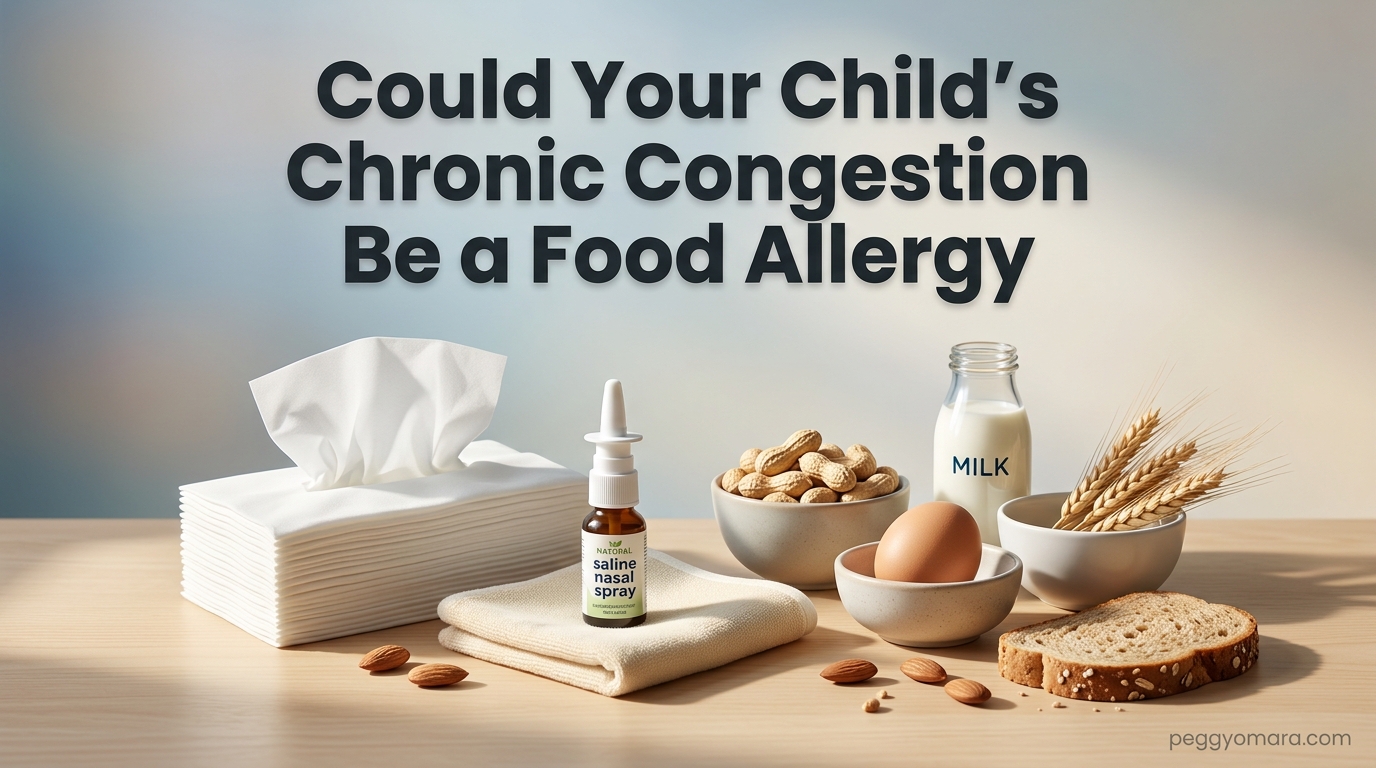
Every parent knows the sound. That stuffy, congested breathing that keeps your child up at night and makes mealtimes a struggle. You’ve tried the humidifier, the saline spray, even the over-the-counter allergy meds, but nothing seems to work long-term. Could your child’s chronic congestion be an undiagnosed food allergy?
As parents, we often assume chronic congestion means seasonal allergies or a lingering cold. But the connection between what our children eat and how they breathe is often overlooked. When I started researching this connection for my own family, I discovered that chronic nasal congestion can actually be one of the first signs of a hidden food allergy.
Understanding this connection has changed everything for families dealing with persistent congestion that doesn’t respond to typical treatments. Let me walk you through what I’ve learned about identifying when your child’s stuffy nose might actually be pointing to a food allergy.
Table of Contents
Understanding Your Child’s Chronic Congestion
Chronic congestion is different from the occasional stuffy nose that comes with a cold. When a child has chronic nasal congestion, they experience persistent blockage, runny nose, or postnasal drip that lasts for weeks or months without clear cause. This isn’t just annoying—it can affect sleep, learning, and overall quality of life.
What makes chronic congestion particularly frustrating for parents is that it often doesn’t respond to standard allergy treatments. If your child has been congested for months with no relief from medications, it’s worth looking beyond environmental triggers.
Food allergies cause chronic congestion through an immune response. When a child consumes a food they’re allergic to, their immune system produces antibodies that trigger histamine release throughout the body, including in the nasal passages. This inflammation creates the stuffy, runny nose that won’t go away.
The key difference between environmental allergies and food allergies is timing. Environmental allergies typically cause symptoms during specific seasons or when exposed to allergens like pollen or pet dander. Food-related congestion often happens year-round and may be worse shortly after eating certain foods.
Could Your Child’s Chronic Congestion Be an Undiagnosed Food Allergy?
Recognizing the connection between congestion and food allergies starts with looking at the full picture of your child’s symptoms. Rarely does a food allergy present with just one symptom. Instead, you’ll often see a pattern of issues that seem unrelated but all point to the same underlying cause.
Respiratory Symptoms Beyond Just Congestion
Chronic nasal congestion is often just the beginning. Children with food-related allergies may also experience frequent sneezing, postnasal drip that leads to coughing, and even wheezing in more severe cases. I’ve spoken with many parents who initially thought their child had asthma, only to discover the breathing issues were triggered by food allergies.
Postnasal drip is particularly telling. If your child constantly clears their throat, coughs more at night, or complains of something “stuck” in their throat, food allergies could be the culprit. This happens when excess mucus from nasal inflammation drips down the throat.
Chronic Ear Infections
One connection many parents miss is between chronic congestion and recurrent ear infections. The Eustachian tubes connect the middle ear to the back of the throat, and chronic inflammation from allergies can block these tubes. This creates the perfect environment for fluid buildup and infection.
If your child has had multiple ear infections in a year, especially if they’re also congested, consider whether food allergies might be contributing. I’ve seen families eliminate chronic ear problems entirely once they identified and removed trigger foods.
Nighttime Congestion Patterns
Many parents tell me their child’s congestion is significantly worse at night. This isn’t a coincidence. When we lie down, blood flow to the nasal passages increases, which can amplify existing inflammation. For children with food allergies, eating dinner foods that trigger reactions means their symptoms peak right at bedtime.
If your child sleeps with their mouth open, snores, or wakes up congested every morning, pay attention to what they ate the evening before. Tracking these patterns can reveal important connections between diet and nighttime breathing issues.
Digestive Symptoms That Accompany Congestion
Food allergies almost always affect the digestive system, even when congestion is the most noticeable symptom. Common digestive signs include stomach pain after eating, bloating, gas, diarrhea, or constipation. Some children experience nausea or even vomiting after consuming trigger foods.
What I find interesting is how often parents don’t connect the tummy troubles to the nasal issues. They might mention stomach aches to the pediatrician and congestion to the allergist, never realizing both symptoms stem from the same food allergy.
Skin Reactions
Our skin often reveals what’s happening internally. Children with food allergies may develop eczema, hives, or unexplained rashes. Eczema patches behind the knees, inside elbows, or on the face are particularly common with food sensitivities.
Some children develop a red, itchy ring around their mouth shortly after eating certain foods. This is called oral allergy syndrome and is a clear sign that the immune system is reacting to something in the meal.
Behavioral Changes and Irritability
This is the symptom that surprises many parents. Food allergies can cause significant behavioral changes in children. You might notice mood swings, increased irritability, hyperactivity, or even difficulty concentrating after eating certain foods.
I’ve worked with families who initially thought their child had behavioral issues or ADHD, only to discover dramatic improvements when food allergens were removed from the diet. The inflammation caused by food allergies affects the whole body, including the brain.
Fatigue and Low Energy
Constantly fighting an immune reaction is exhausting work for a child’s body. When food allergies go undiagnosed, children often experience persistent fatigue, low energy, and may even struggle with growth delays.
If your child seems tired despite getting adequate sleep, or if they’re not growing at the expected rate, consider whether chronic inflammation from food allergies might be draining their energy reserves.
Common Food Culprits Behind Chronic Congestion
While any food can potentially cause an allergic reaction, certain foods are more commonly associated with respiratory symptoms like chronic congestion. Understanding these common triggers can help narrow down what might be affecting your child.
Dairy Products
Dairy is perhaps the most common trigger for chronic congestion in children. Many parents report that milk, cheese, and yogurt increase mucus production and worsen nasal stuffiness. While some debate exists about whether dairy actually causes mucus or just makes existing mucus thicker, the connection is hard to ignore.
If your child consumes dairy daily and deals with constant congestion, trying a dairy elimination for 2-3 weeks can be revealing. I’ve seen children’s breathing improve dramatically within days of removing dairy from their diet.
Gluten and Wheat
Gluten sensitivity and wheat allergies can manifest with respiratory symptoms, not just digestive issues. Chronic congestion, sinus pressure, and even recurrent sinus infections have been linked to gluten reactions in sensitive children.
Wheat is also one of the top allergens for children, so it’s worth considering if your child eats bread, pasta, or cereal daily and experiences persistent congestion.
Eggs
Egg allergies are among the most common food allergies in children, and they can cause respiratory symptoms including chronic congestion. Some children react to eggs in baked goods while others only react to eggs in their whole form.
Tracking whether congestion worsens after breakfast (eggs) or after baked goods can help identify if eggs are a trigger.
Soy and Peanuts
Both soy and peanuts are common allergens that can cause respiratory symptoms. Soy is particularly tricky because it’s hidden in many processed foods, making it harder to identify as a trigger. Peanuts can cause more severe reactions, but chronic congestion is sometimes the only symptom in milder cases.
Less Common but Possible Triggers
While dairy, gluten, eggs, soy, and peanuts account for most food allergies, other foods can also cause chronic congestion. These include tree nuts, fish, shellfish, and increasingly, sesame. Some children even react to fruits and vegetables, particularly raw ones.
How to Identify If Food Is Causing Your Child’s Congestion
Identifying food allergies takes some detective work, but the process is straightforward when you know what to look for. Here’s how to determine whether your child’s chronic congestion stems from what they eat.
Keep a Detailed Food and Symptom Diary
Start by tracking everything your child eats and drinks for at least two weeks, along with their symptoms throughout the day. Note what time they eat, what foods they consume, and when congestion or other symptoms appear or worsen.
The key is to look for patterns. Does congestion always worsen 30-60 minutes after breakfast? Does it seem worse on days when they have cheese or milk? The diary will reveal connections you might otherwise miss.
Try an Elimination Diet
Once you have 2-3 weeks of diary data, you may notice potential triggers. The next step is an elimination diet, where you remove suspected foods completely for 2-3 weeks and observe whether symptoms improve.
Always work with your pediatrician or a registered dietitian when doing an elimination diet, especially with growing children. They can ensure your child still gets adequate nutrition while you test for food sensitivities.
Reintroduce Foods One at a Time
After the elimination phase, reintroduce one food at a time, waiting 3-4 days between each new food. This gives you time to observe whether symptoms return. If congestion returns after reintroducing a specific food, you’ve likely identified a trigger.
Document everything during this phase. The reintroduction period is often where parents finally get the answers they’ve been seeking.
Testing Options and When to See a Doctor
While food diaries and elimination diets can be revealing, medical testing provides definitive answers. If you suspect food allergies are causing your child’s chronic congestion, it’s important to work with healthcare professionals for proper diagnosis.
Skin Prick Testing
Skin prick tests involve placing small amounts of allergen extracts on the skin, then pricking the surface to allow a tiny amount to enter. If a raised, red bump (wheal) appears, it indicates an allergic reaction. This test is quick and results are available within 15-20 minutes.
Blood Tests
Blood tests measure the level of IgE antibodies to specific foods in your child’s blood. These tests can identify even mild sensitivities and are especially useful if skin testing isn’t possible. Results typically take a week or more to return from the lab.
Medical Supervision for Elimination Diets
While you can start a food diary on your own, elimination diets should always be done under medical supervision. Your pediatrician can refer you to an allergist or dietitian who specializes in food allergies in children. They’ll ensure the process is safe and that nutritional needs are met.
Warning Signs Requiring Immediate Care
While chronic congestion is concerning, certain symptoms require immediate medical attention. If your child experiences difficulty breathing, swelling of the face or throat, wheezing, or hives spreading across the body, seek emergency care. These could be signs of anaphylaxis, a severe and potentially life-threatening allergic reaction.
Also, if congestion is accompanied by high fever, severe headache, or facial pain, these could indicate a sinus infection requiring prompt medical treatment.
FAQs
Can food allergies cause chronic congestion?
Yes, food allergies can cause chronic nasal congestion. When a child consumes a food they’re allergic to, their immune system releases histamine, which causes inflammation in the nasal passages. This inflammation leads to persistent stuffiness, runny nose, and postnasal drip that doesn’t respond to typical allergy treatments.
What foods cause nasal congestion in children?
The most common food triggers for nasal congestion in children include dairy products, gluten and wheat, eggs, soy, and peanuts. Some children also react to tree nuts, fish, shellfish, and sesame. Keeping a food diary can help identify which specific foods worsen your child’s congestion.
How do I know if my child’s congestion is from allergies?
Allergy-related congestion often persists for weeks or months, doesn’t respond to cold treatments, and may be accompanied by other symptoms like sneezing, itchy eyes, eczema, or digestive issues. If congestion is year-round rather than seasonal, and if it worsens after eating certain foods, food allergies may be the cause.
Can dairy cause chronic nasal congestion?
Many parents and healthcare providers observe a connection between dairy consumption and increased nasal congestion in children. Dairy may increase mucus production or make existing mucus thicker, leading to worse stuffiness. Eliminating dairy for 2-3 weeks can help determine if it’s a trigger for your child.
When should I take my child to an allergist?
Consider seeing an allergist if your child has chronic congestion lasting more than 6 weeks, if congestion doesn’t respond to standard treatments, if there’s a family history of allergies, or if congestion is accompanied by other allergy symptoms like eczema, digestive issues, or recurrent ear infections. An allergist can perform testing to identify specific food triggers.
Conclusion
Chronic congestion doesn’t have to be your child’s new normal. By paying attention to patterns, keeping detailed records, and working with healthcare professionals, you can uncover whether an undiagnosed food allergy is at the root of the problem. The journey to clearer breathing might start with a simple question: Could your child’s chronic congestion be an undiagnosed food allergy? Taking action to find the answer could transform your child’s health and your whole family’s quality of life.