
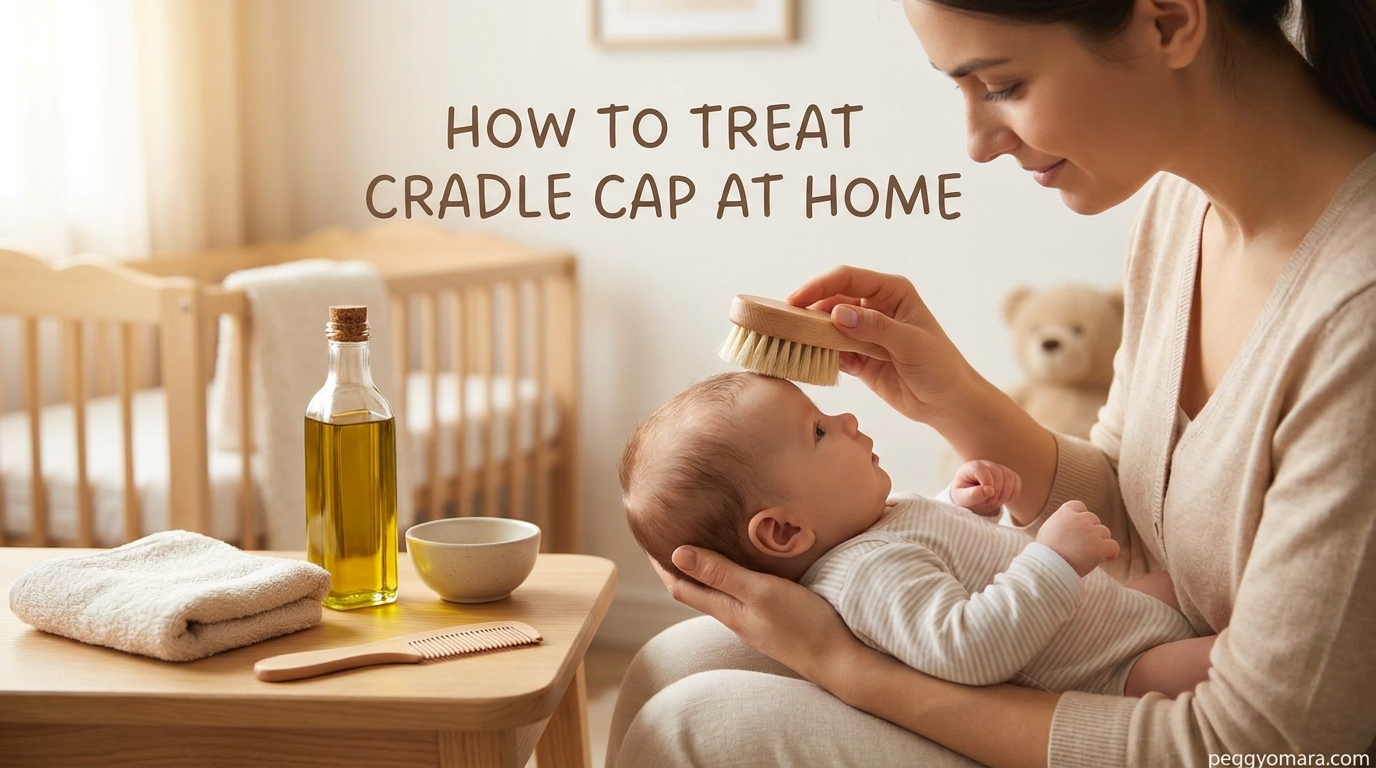
Noticing flaky, yellow patches on your baby’s scalp can be worrying. I remember staring at my daughter’s head during her third week of life, wondering if I had done something wrong. Those crusty scales looked uncomfortable, and I felt a pang of guilt even though she seemed perfectly content. Let me reassure you right away: cradle cap is one of the most common skin conditions in infants, affecting up to 70% of babies in their first few months. It is not contagious, not itchy, and definitely not your fault. Learning how to treat cradle cap at home is simpler than you might think, and most cases clear up completely with gentle, consistent care.
As you recover and care for your newborn, you will encounter many small challenges like this one. The good news is that cradle cap, medically known as infantile seborrheic dermatitis, requires nothing more than patience and a simple routine. In this guide, I will walk you through everything you need to know, from understanding what causes those scaly patches to a step-by-step treatment method that has worked for countless parents.
Table of Contents
What Is Cradle Cap?
Cradle cap is a harmless skin condition that causes yellow or white scaly patches on a baby’s scalp. The patches often look like thick, crusty scales or greasy flakes that can cover small areas or extend across the entire head. Despite its appearance, cradle cap is not painful or itchy for your baby, and it does not bother them in the slightest.
The condition typically appears between two weeks and six months of age. Some babies develop mild flaking that resembles dandruff, while others form thick, yellow-brown crusts that can look quite dramatic. The scales may feel slightly oily or dry to the touch, and they can sometimes extend beyond the hairline to the eyebrows, eyelids, ears, or even the diaper area.
How to Tell Cradle Cap Apart From Other Skin Conditions?
Many parents confuse cradle cap with eczema or simple dry skin. Understanding the differences helps you choose the right treatment approach and know when to seek medical advice.
Cradle cap appears as greasy, yellow or white scales that stick to the scalp. The skin underneath looks normal or slightly red, and your baby shows no signs of discomfort. Eczema, on the other hand, causes red, inflamed patches that are intensely itchy. Babies with eczema will often rub or scratch at affected areas and may seem distressed.
Dry skin presents as fine, white flakes without the thick, oily crusting characteristic of cradle cap. Dry skin may improve quickly with moisturizer, while cradle cap requires a different approach to loosen the scales. If you are unsure which condition your baby has, a quick conversation with your pediatrician can provide clarity and peace of mind.
What Causes Cradle Cap?
Cradle cap results from a combination of factors involving your baby’s developing skin and hormones passed from mother to baby. Understanding these causes helps you recognize that this condition is a normal part of infant development, not a reflection of your parenting.
Maternal Hormones and Overactive Oil Glands
Before birth, your baby is exposed to your hormones, which can stimulate their oil glands into overdrive. These sebaceous glands produce sebum, an oily substance meant to protect the skin. In newborns, this excess sebum production causes skin cells to stick to the scalp rather than shedding naturally, forming the characteristic scales of cradle cap.
The Role of Malassezia Yeast
Cradle cap is neither bacterial nor contagious. However, research suggests that a common skin yeast called Malassezia may play a role in some cases. This yeast naturally lives on human skin and feeds on sebum. When oil production increases, the yeast population can grow, potentially contributing to inflammation and scaling. This is not an infection requiring antifungal treatment in most cases, but rather an imbalance that resolves as your baby’s skin matures.
It Is Not Your Fault
Let me emphasize this point because so many parents carry unnecessary guilt. Cradle cap is not caused by poor hygiene, allergies, or anything you did or did not do. You cannot prevent it by washing your baby’s hair more frequently or using different products during pregnancy. It simply happens as part of your baby’s natural development, and it will resolve on its own as their hormone levels stabilize and their oil glands regulate.
How to Treat Cradle Cap at Home in 2026?
The fastest way to treat cradle cap involves a simple, gentle routine that loosens scales and keeps the scalp clean. Most parents see improvement within a week or two of consistent care. Here is the method I recommend, broken down into clear steps that fit easily into your existing bath time routine.
Step 1: Apply an Emollient to Soften Scales
Before washing your baby’s hair, apply a thin layer of petroleum jelly, mineral oil, or coconut oil to the affected areas. These emollients help soften the crusty patches, making them easier to remove gently. Massage the oil into the scalp using your fingertips in small circular motions. This massage not only distributes the oil but also stimulates blood flow to the scalp.
Leave the oil on for at least fifteen minutes before bathing. Some parents prefer to apply it before bedtime and let it work overnight for particularly thick scales. Keeping your baby close during daily routines like this allows you to integrate treatment seamlessly into bonding moments.
Step 2: Gently Brush or Comb the Scalp
Once the oil has had time to penetrate the scales, use a soft-bristled baby brush or a fine-toothed comb to gently loosen the flakes. Work in small sections, using light, circular motions with the brush or short, gentle strokes with the comb. The scales should lift away easily if they are ready to come off.
Never force scales that do not budge. If an area resists, simply move to another spot and try again during the next treatment session. Repeated gentle sessions work better than one aggressive attempt that could irritate your baby’s delicate skin.
Step 3: Wash With Gentle Baby Shampoo
After brushing, wash your baby’s hair with a mild, fragrance-free baby shampoo. Wet the scalp with warm water, then apply a small amount of shampoo. Use your fingers or a soft washcloth to gently massage the scalp in circular motions. This helps remove loosened scales and excess oil while cleansing the skin.
Rinse thoroughly with warm water, ensuring no shampoo residue remains. Residue can actually contribute to buildup and irritation. Pat the scalp dry with a soft towel rather than rubbing, which could cause friction and discomfort.
Step 4: Repeat Daily Until Clear
Consistency is key when treating cradle cap. Repeat this routine daily or every other day until the scales have cleared completely. Most cases improve significantly within one to two weeks, though some stubborn cases may take longer. Even after the visible scales disappear, continuing to brush your baby’s scalp gently during regular baths helps prevent recurrence.
Natural Remedy Alternatives
Many parents prefer natural alternatives to petroleum-based products. Here are options that research and parent experiences suggest may be effective:
Coconut oil remains a popular choice due to its moisturizing properties and natural antifungal benefits. Apply it the same way you would mineral oil, massaging into the scalp and leaving it on for fifteen to thirty minutes before washing.
A baking soda paste made with equal parts baking soda and water can help lift stubborn scales. Apply the paste to affected areas, let it sit for a few minutes, then gently brush and rinse thoroughly. Use this method no more than once or twice weekly to avoid drying the skin.
Chamomile tea, cooled to room temperature, can be used as a gentle scalp rinse after shampooing. The anti-inflammatory properties may soothe any mild redness while adding a pleasant ritual to your baby’s bath time.
What to Avoid When Treating Cradle Cap?
Knowing what not to do is just as important as knowing the right steps. Certain practices can worsen cradle cap or harm your baby’s sensitive skin. When choosing gentle, safe products for your baby, avoid these common mistakes.
Never pick or scratch at the scales with your fingernails. This can break the skin, leading to infection and scarring. It is tempting to peel off a loose flake, but let the brushing and washing routine do the work naturally.
Avoid using adult dandruff shampoos or products containing salicylic acid on your baby. These formulations are too harsh for infant skin and can cause chemical burns or severe irritation. Similarly, avoid olive oil, which some studies suggest may disrupt the skin barrier, and never use peanut oil due to allergy risks.
Do not over-wash your baby’s hair. While daily washing is fine during active treatment, excessive washing without the oil-softening step can strip natural oils and cause the skin to produce even more sebum in response. Stick to the balanced routine outlined above.
When to See a Doctor
Most cases of cradle cap respond well to home treatment and require no medical intervention. However, certain signs indicate it is time to consult your pediatrician for additional guidance.
Contact your doctor if the scales spread beyond the scalp to the face or body in a way that concerns you. While cradle cap can appear on eyebrows and behind ears, widespread rash may indicate a different condition requiring specific treatment.
Seek medical attention if you notice signs of infection, including redness that extends beyond the scales, warmth, swelling, or yellow fluid oozing from the affected areas. These symptoms suggest a secondary bacterial infection that may need antibiotic treatment.
If home treatment shows no improvement after several weeks of consistent care, your pediatrician may recommend a medicated shampoo containing ketoconazole or a mild hydrocortisone cream for inflammation. These treatments are safe for infants when used under medical guidance and for limited periods.
Finally, if your baby seems uncomfortable, fussy when you touch their scalp, or develops cradle cap after twelve months of age, a medical evaluation can rule out other skin conditions and ensure appropriate care.
How to Prevent Cradle Cap?
While you cannot always prevent cradle cap from developing, certain habits can reduce its severity and prevent recurrence after treatment. These simple practices support your baby’s overall skin health.
Brush your baby’s scalp gently every day, even after cradle cap clears. Use a soft baby brush during regular bath time or as a calming pre-sleep ritual. This keeps skin cells from building up and distributes natural oils evenly across the scalp.
Maintain a comfortable humidity level in your home, especially during dry winter months. A humidifier in your baby’s room adds moisture to the air, preventing the skin from becoming overly dry and potentially reducing oil gland overcompensation.
Consider the gut-skin connection that emerging research highlights. Supporting your baby’s gut health through breastfeeding when possible, or choosing formulas with prebiotics and probiotics, may contribute to balanced skin microbiome development. Some studies suggest that microbial balance plays a role in skin conditions like cradle cap.
Avoid harsh products and excessive heat. Use only fragrance-free, gentle baby products formulated specifically for infant skin. When washing hair, use lukewarm rather than hot water, and keep bath time brief to prevent moisture loss from the skin.
Frequently Asked Questions
What is the fastest way to get rid of cradle cap?
The fastest way to treat cradle cap is to apply petroleum jelly, mineral oil, or coconut oil to the scalp 15 minutes before bathing, then gently brush away loosened scales during shampooing. Repeat daily until clear.
Should you remove cradle cap or leave it alone?
You can safely remove cradle cap at home using gentle methods like oil treatment and soft brushing. It is not medically necessary to remove it as it will clear on its own within months, but gentle treatment can improve appearance and speed resolution. Never pick or scratch at scales.
What triggers cradle cap in babies?
Cradle cap is likely triggered by overactive oil glands from maternal hormones passed to baby before birth, excess sebum production, and possibly the Malassezia yeast that naturally lives on skin. It is not caused by poor hygiene or allergies.
Is cradle cap bacterial or fungal?
Cradle cap is neither bacterial nor contagious. It may involve fungal yeast (Malassezia) that naturally lives on skin, but it is not a true fungal infection requiring antifungal treatment in most cases.
Can cradle cap spread to the face?
Yes, cradle cap can appear on eyebrows, eyelids, behind the ears, and other oily areas. Use the same gentle treatment approach for these areas, taking extra care near the eyes.
How long does cradle cap last?
Cradle cap typically clears within a few weeks to months with treatment. Without treatment, it usually resolves on its own by baby’s first birthday as hormone levels stabilize and oil production normalizes.
Conclusion
Cradle cap may look alarming, but it is a temporary, harmless condition that affects the majority of infants. Learning how to treat cradle cap at home gives you the confidence to handle those scaly patches with gentle, effective care. Remember that your baby is not in discomfort, this is not your fault, and the condition will pass.
By following the simple steps outlined in this guide, applying oil to soften scales, gentle brushing, washing with mild shampoo, and maintaining consistent care, you can clear your baby’s scalp and prevent recurrence. Trust your instincts, be patient with the process, and do not hesitate to reach out to your pediatrician if you have any concerns. You are doing a wonderful job caring for your little one, and this too shall pass.