
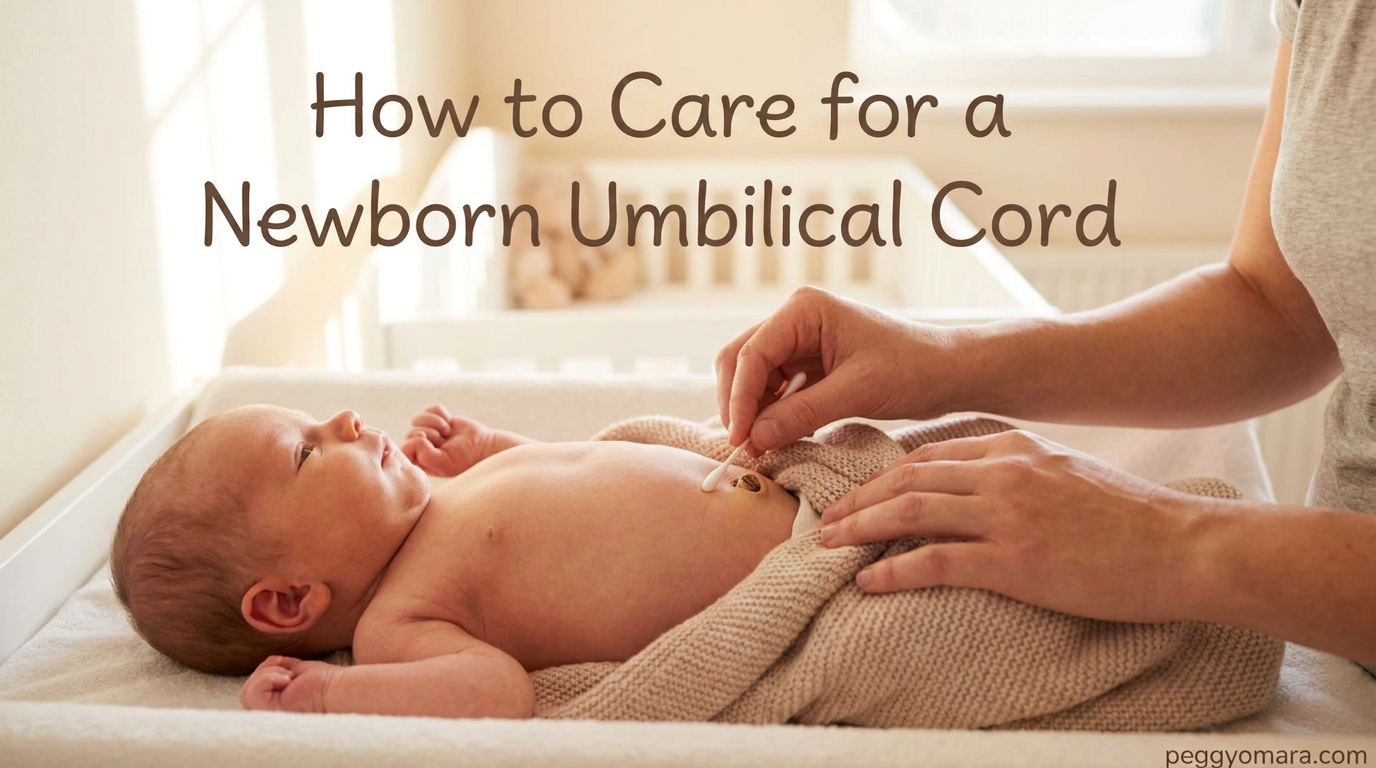
I remember standing over my daughter’s changing table, staring at that shriveled little umbilical cord stump and wondering if I was doing everything wrong. The hospital had given me a one-page handout, but here I was three days later, second-guessing every diaper change.
You’re not alone in feeling uncertain. Learning how to care for a newborn umbilical cord stump is one of those parenting tasks that seems simple until you’re actually doing it. This guide will walk you through exactly what you need to know, step by step.
By the end of this article, you’ll understand the healing process, know how to prevent infection, recognize warning signs, and feel confident that you’re giving your baby the best care possible. Let’s start with what that little stump actually is.
Table of Contents
Understanding Your Baby’s Umbilical Cord Stump (2026)
During pregnancy, the umbilical cord was your baby’s lifeline, carrying oxygen and nutrients from your placenta. This remarkable cord contains one vein and two arteries surrounded by a gelatinous substance called Wharton’s jelly, which protected those vital vessels.
When your baby was born, your healthcare provider clamped and cut the cord, leaving a small stump attached to your baby’s belly button. This stump contains no nerve endings, so your baby cannot feel it. The sensation parents sometimes worry about simply is not there.
The stump serves no purpose after birth. Your baby’s body is designed to let it dry out naturally until it shrivels and falls away. This process creates the belly button your child will have for life. Understanding this natural drying process helps explain why the care routine is simpler than many parents expect.
Why Dry Cord Care Works Best?
For decades, parents were told to swab the cord stump with rubbing alcohol at every diaper change. Medical guidance has shifted based on research showing that leaving the cord alone actually helps it heal faster. Hospitals across the United States now recommend dry cord care as the standard approach.
The old alcohol method kept the cord moist and actually delayed healing. Your baby’s skin naturally hosts beneficial bacteria that help protect against infection. Constant alcohol swabbing disrupted this natural defense system.
This shift in guidance confuses many parents, especially when grandparents insist alcohol is necessary. Current pediatric recommendations from the American Academy of Pediatrics clearly state that dry cord care is preferred for healthy newborns.
How to Care for a Newborn Umbilical Cord: Step-by-Step Process
The care routine for your baby’s umbilical cord stump is refreshingly simple. You do not need special products or complicated procedures. Following these straightforward steps will support natural healing and help prevent complications.
Step 1: Keep the Stump Dry
Moisture is the enemy of cord healing. Exposing the stump to air helps it dry out at the base where it attaches to the skin. Fold your baby’s diaper down below the cord stump so air can circulate freely.
Choose clothing that allows airflow around the belly area. Avoid tight onesies that press against the cord or trap moisture. In warm weather, letting your baby rest in just a diaper gives the cord excellent air exposure.
If the stump gets wet during a diaper change, gently pat it dry with a clean cloth. Never rub the area, as this could irritate the healing tissue or cause premature detachment.
Step 2: Stick with Sponge Baths
Until the cord stump falls off completely, give your baby sponge baths rather than tub baths. Submerging the cord in water keeps it too moist and can introduce bacteria. A simple sponge bath keeps your baby clean while protecting the healing area.
Fill a small basin with warm water and test the temperature on your wrist. Lay your baby on a soft towel in a warm room. Use a soft washcloth to gently clean their face, body, and diaper area, working from cleanest to dirtiest regions.
Pay special attention to cleaning skin folds where milk or formula might collect. Save the diaper area for last. Pat your baby completely dry, paying particular attention to the cord area before dressing them.
Most newborns only need sponge baths two to three times per week unless they have a messy diaper or spit up significantly. Daily full baths are unnecessary and can actually dry out sensitive newborn skin.
Step 3: Master the Diaper Fold
Keeping the diaper away from the cord stump prevents irritation and helps the healing process. Most disposable diapers now come with a special cutout or fold-down section designed specifically for newborns with cord stumps.
If your diapers do not have this feature, simply fold the front top edge of the diaper down before fastening. The waistband should sit well below the cord stump, leaving the area exposed to air. This simple adjustment makes a significant difference in healing time.
For cloth diapering families, the same principle applies. Fold the front of the cloth diaper down or choose newborn-sized diapers with a cord snap-down section. Some cloth diaper brands offer adjustable sizing that accommodates the cord area specifically for those first weeks.
Check the cord area at every diaper change. If you notice the diaper has shifted up and is touching the stump, readjust it. Consistency with diaper folding prevents friction and keeps the area properly exposed.
Step 4: Let It Fall Off Naturally
Resist the urge to pull, tug, or pick at the cord stump. Even if it looks like it is barely hanging on, allow it to detach completely on its own schedule. Pulling it prematurely can cause bleeding and create an open wound that may become infected.
The cord stump often falls off when you are not watching, sometimes during the night or while your baby is in a onesie. You might find it in the diaper or bedding. This is completely normal.
Occasionally parents worry when the cord seems to take longer than expected. As long as there are no signs of infection, waiting an extra week or two is fine. Every baby heals at their own pace.
Step 5: Handle Conflicting Advice Gracefully
You might receive well-meaning but outdated advice from older relatives who insist alcohol swabbing is essential. Remember that medical guidance has evolved based on new research. Your pediatrician’s current recommendations reflect what we now know promotes faster healing.
If family members pressure you about cord care, you can politely explain that your pediatrician recommended dry cord care. Many hospitals no longer even provide alcohol wipes for cord care because the evidence strongly supports letting nature take its course.
Trust the guidance you have received from your healthcare providers. They want your baby’s cord to heal quickly and safely just as much as you do.
What to Expect as the Cord Heals
Understanding the normal healing timeline helps reduce anxiety when you see changes in the cord’s appearance. The transformation from a fleshy stump to your baby’s permanent belly button follows a predictable pattern.
The Color Progression
Fresh umbilical cord stumps appear whitish-gray with a gelatinous texture. Over the first few days, the color shifts to yellowish-green as the tissue begins to dry. This color change is completely normal and not a sign of infection.
By the end of the first week, the stump typically turns brown or dark brown as drying continues. The texture becomes harder and more shriveled. The cord gradually transitions to black as it fully dries and prepares to detach.
These color changes happen from the tip toward the base. You might see the outer portion darkening while the area near the skin remains lighter. This progression indicates the natural healing process is working correctly.
The Timeline for Cord Separation
Most umbilical cord stumps fall off within 1 to 3 weeks after birth. Some babies lose their cords as early as day 5, while others take closer to 21 days. Both ends of this range fall within normal limits.
Premature babies sometimes take longer because their skin and tissue healing processes mature more gradually. The cord is also generally thinner in premature infants, which can affect the timeline slightly.
If the cord has not fallen off by 3 weeks, mention it at your next pediatrician appointment. While usually not concerning, your doctor may want to check that healing is progressing properly. Occasionally cords that persist beyond this timeframe need gentle evaluation.
Normal Bleeding and Discharge
Finding a small spot of blood on your baby’s diaper or clothing can be alarming, but a few drops of blood-tinged fluid are completely normal. The cord site is essentially a small wound healing closed, and minimal bleeding indicates the separation process has begun.
You might also notice a sticky, slightly smelly residue on the diaper where the cord touched. This dried drainage is normal as long as the amount is small and the cord base looks healthy. The odor comes from the dying tissue, not necessarily from infection.
Some yellowish crusting around the base of the cord stump is also normal. This is part of the natural scabbing process. Do not attempt to clean this away aggressively, as the body uses this material to protect the healing wound underneath.
Warning Signs of Infection: When to Call the Pediatrician
While infections are uncommon with proper dry cord care, recognizing warning signs early ensures your baby receives prompt treatment if needed. Most concerning symptoms are fairly obvious once you know what to look for.
Normal vs. Concerning Signs
| Normal Healing | Signs of Concern |
|---|---|
| Color changing from yellow-green to brown to black | Red, inflamed skin spreading around the base |
| Small spots of blood on diaper or clothing | Active bleeding or oozing that soaks through |
| Mild, slightly sweet or musty odor | Foul, rotten smell from the cord area |
| Small amount of yellow crusting | Thick yellow or green pus draining from base |
| Cord shriveling and hardening | Swelling, warmth, or tenderness of surrounding skin |
| Stump taking 1-3 weeks to fall off | Fever over 100.4 F rectal, lethargy, poor feeding |
Omphalitis: A Serious Infection
The medical term for umbilical cord infection is omphalitis. This condition is rare in developed countries but requires immediate medical attention when it occurs. Signs include significant redness spreading outward from the cord base, swelling, warmth, and pus.
Babies with omphalitis often develop fever and become unusually fussy or lethargic. They may refuse feedings or seem inconsolable. These systemic symptoms indicate the infection has spread beyond the local cord area.
If you notice any combination of these warning signs, contact your pediatrician immediately or seek emergency care. Early antibiotic treatment resolves most cases quickly and prevents serious complications.
Trust Your Parent Instincts
You know your baby better than anyone. If something about the cord area looks or smells wrong to you, call your pediatrician even if you are not sure. Medical professionals would rather evaluate a false alarm than miss a developing infection.
Take photos of the cord area if you are concerned. These images help you track changes over time and give your doctor a clear picture if you need to call. Most pediatric offices are happy to look at photos through their patient portals.
Common Complications and How to Handle Them
While most cord stumps heal without issues, two relatively common complications sometimes appear after the cord falls off. Understanding these conditions helps you respond appropriately if they occur.
Umbilical Granuloma
An umbilical granuloma is a small, pink, moist bump of scar tissue that forms in the belly button after the cord falls off. It happens when the body overproduces healing tissue rather than sealing the area completely. Granulomas are harmless but can drain clear or yellow fluid and require simple treatment.
Your pediatrician can apply a small amount of silver nitrate to dry out the granuloma. This painless in-office procedure typically resolves the issue in one or two visits. Home remedies are not recommended without medical guidance.
Granulomas affect approximately 1 in 500 newborns. They are more common in babies whose cords take longer to fall off or who had some drainage before detachment. The condition resolves completely with treatment and leaves no lasting effects.
Umbilical Hernia
An umbilical hernia appears as a soft bulge at the belly button, especially when your baby cries or strains. It occurs when abdominal muscles have not fully closed around the cord opening, allowing a small amount of intestine to push through.
These hernias look alarming but are extremely common and usually harmless. About 20% of newborns have some degree of umbilical hernia, with higher rates in premature babies and certain ethnic groups. Most close on their own by age 2 without any intervention.
Your pediatrician will monitor the hernia at regular checkups. Surgery is only considered if the hernia remains open after age 3-4 or if it becomes incarcerated, meaning tissue gets stuck and cannot be pushed back in. This complication is rare and would present with severe pain and vomiting.
Accidental Cord Pulling
Sometimes the cord gets caught on clothing or is accidentally pulled during dressing. If this happens and the cord detaches prematurely, apply gentle pressure with a clean cloth if there is active bleeding. Most small bleeds stop within a few minutes.
Clean the area with plain water and watch closely for signs of infection. Call your pediatrician if bleeding persists, the wound looks deep, or you notice any concerning changes in the days following the incident.
What to Do After the Umbilical Cord Falls Off in 2026?
The day the cord falls off feels significant for many parents. This small event represents the final physical separation between you and your baby, marking their complete independence as a separate person.
Caring for the New Belly Button
After the cord falls off, you will see what looks like a small open wound or raw area in your baby’s belly button. This is the remaining healing tissue that was underneath the stump. It may have slight drainage or a small amount of blood for a day or two.
Continue keeping the area clean and dry. You can now give normal tub baths if you prefer, though continuing sponge baths until the belly button looks fully healed is also fine. Pat the area thoroughly dry after any bathing.
A small amount of clear or yellowish drainage for several days after cord separation is normal. The belly button is sealing closed from the inside out, and this process takes about 7 to 10 days to complete fully.
What a Normal Healing Belly Button Looks Like
Normal belly buttons vary widely in appearance. Some are innies that dip inward, while others are outies that protrude slightly. Both are completely normal and result from how the underlying tissue healed, not from cord care practices.
The belly button might look red or raw initially, then develop a small scab. Eventually it settles into its permanent appearance, though this can take several weeks. There may be small amounts of lint or dried skin in the hollow of an innie belly button.
Honoring the Emotional Moment
For many parents, especially mothers, the cord falling off triggers unexpected emotions. This was your baby’s last physical connection to your body after nine months of shared existence. Feeling a sense of loss or bittersweetness is entirely normal.
Some families choose to save the cord stump as a keepsake. Others simply acknowledge the moment with a photo or a quiet acknowledgment of this transition. Do whatever feels right for your family without judgment.
After the cord heals, you have more freedom in how you dress and bathe your baby. You can put on regular onesies without folding diapers down. You might enjoy carrying your newborn in a ring sling with their belly fully exposed to your warmth.
Frequently Asked Questions
Should I put anything on my baby’s umbilical cord after it falls off?
No special treatment is needed after the umbilical cord falls off. Keep the belly button clean and dry, and it will heal naturally. A small amount of clear drainage is normal for a few days. If you notice significant redness, swelling, or pus, contact your pediatrician.
How do I know if my baby’s belly button is healing properly?
A healing belly button may look slightly red or raw immediately after the cord falls off. This is normal and should gradually improve over 7-10 days. The area should not be swollen, hot to touch, or draining pus. Small amounts of clear or yellowish fluid are normal during healing.
Are you supposed to clean the umbilical cord on a newborn?
Current medical guidance recommends dry cord care. You do not need to clean the umbilical cord stump with alcohol, soap, or water. Simply keep it dry and exposed to air. If stool gets on the cord, clean the area gently with plain water and pat completely dry.
Is it okay to cover the umbilical cord with a diaper?
You should fold the diaper down below the cord stump to keep the area exposed to air. Most newborn diapers have a cutout or fold-down section specifically for this purpose. Covering the cord traps moisture and can slow healing or increase infection risk.
Can diaper affect the umbilical cord?
Yes, the diaper can rub against and irritate the cord stump. Always fold the front of the diaper down to prevent contact with the healing area. This applies to both disposable and cloth diapers. Proper diaper folding helps the cord dry out faster and fall off naturally.
Can you put an onesie on a newborn with umbilical cord?
Yes, you can dress your newborn in onesies while the cord is still attached. Choose loose-fitting styles that do not press tightly against the cord area. Many parents prefer kimono-style shirts or loose gowns that allow maximum airflow to the healing stump.
How long does it take for a newborn baby’s umbilical cord to heal?
The umbilical cord stump typically falls off within 1 to 3 weeks after birth. After it falls off, the belly button underneath takes about 7 to 10 days to fully seal and heal. Complete healing can take up to 4 weeks from birth, though this varies by baby.
Is it normal for the umbilical cord to bleed when falling off?
Yes, small amounts of bleeding are completely normal as the cord separates. You might find a few drops of blood on the diaper or clothing. This happens because the cord base is essentially a small healing wound. Active bleeding or soaking through multiple layers requires medical attention.
Trusting Your Instincts as a Parent
Caring for your newborn’s umbilical cord is one of the first health tasks you will master as a parent. The simplicity of dry cord care might feel surprising after hearing stories from previous generations about complicated alcohol swabbing routines.
Remember that your baby was designed to handle this transition. The cord that nourished them for months now knows exactly how to detach and heal. Your job is primarily to stay out of the way and let nature do its work.
If you feel uncertain at any point, your pediatrician is there to help. No question is too small when it comes to your baby’s health. Trust the guidance of your healthcare team, trust the process of natural healing, and most importantly, trust yourself.
You’re doing great, and your baby is lucky to have you.