
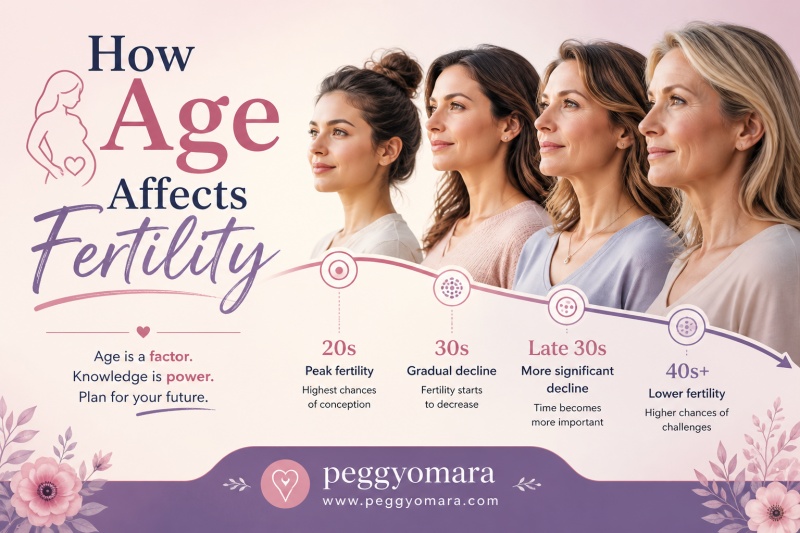
How age affects fertility is one of the most common concerns I hear from women in their 30s. The short answer is yes, age does affect fertility, but the “fertility cliff” at 35 that gets so much attention is largely overstated. Fertility begins a gradual decline around age 30, accelerates in your mid-30s, and drops more significantly after 40.
Understanding how age affects fertility matters because it helps you make informed decisions about family planning. Population statistics tell one story, but individual experiences vary widely. I have spoken with women who conceived naturally at 39 on their first try, and others who needed help at 32.
This guide explains what actually happens to fertility as you age. I will cover the science behind egg quantity and quality, give you real conception statistics by age, address the often-overlooked male fertility factor, and most importantly, tell you what you can actually do about it.
Table of Contents
How Age Affects Fertility: The Science in Plain Terms
Women are born with all the eggs they will ever have. At birth, you have roughly 1 to 2 million eggs. By puberty, that number drops to about 300,000. The decline continues throughout your reproductive years.
By age 30, approximately 90% of your eggs are already gone. This fact surprises many women. However, you still have thousands of eggs remaining at 30, and hundreds left even at menopause. The issue is not running out of eggs. The real challenge involves egg quality.
What Happens to Egg Quality as You Age
As eggs age, their DNA division process becomes less reliable. Young eggs typically divide cleanly during the formation of an embryo. Older eggs have higher rates of chromosomal abnormalities.
This DNA division error rate increases significantly after 35. Chromosomal abnormalities can prevent fertilization, cause early miscarriage, or lead to conditions like Down syndrome. The risk of chromosomal problems at age 25 is about 1 in 475. By age 40, it rises to approximately 1 in 65.
Ovarian Reserve: What It Means
Ovarian reserve refers to the remaining supply of eggs in your ovaries. Doctors can test this with blood work measuring AMH (Anti-Mullerian Hormone) and FSH (Follicle Stimulating Hormone). These tests give a snapshot of your remaining egg supply.
However, ovarian reserve testing has limitations. It tells you quantity, not quality. A woman with lower ovarian reserve at 30 might still have better quality eggs than a woman with higher reserve at 40. These tests work best for predicting response to fertility treatments, not natural conception chances.
Fertility by Age: What the Numbers Actually Show
The statistics can feel scary when you first see them. I remember reading conception rates by age and feeling a pit in my stomach. But numbers tell only part of the story. Here is what the data actually shows for healthy couples having regular unprotected intercourse.
Conception Rates by Age Group
In your early 20s, the probability of conceiving naturally each month is roughly 25%. Most couples in this age group conceive within three to six months of trying.
In your late 20s to early 30s, the monthly probability drops slightly to about 20-25%. This is still considered peak fertility for most women. Conception typically happens within six months to a year for healthy couples.
From ages 35 to 37, monthly conception probability falls to approximately 15-20%. Many women in this group conceive naturally, though it often takes six to twelve months rather than three to six.
Between ages 38 and 40, monthly probability drops further to roughly 10-15%. Natural conception remains possible but becomes less likely with each passing month. After six months of trying without success, most doctors recommend fertility testing.
After age 40, monthly conception probability falls below 10%. By 45, it drops to roughly 1%. While natural conception still happens, it becomes increasingly rare without medical assistance.
What These Numbers Mean for You
Remember that these figures represent population averages, not individual destinies. Your personal fertility depends on genetics, overall health, lifestyle factors, and elements we do not fully understand yet.
I have heard from dozens of women who conceived easily at 37, 38, even 40. I have also heard from women who struggled at 30. The statistics help set realistic expectations, but they do not predict your specific situation.
Male Fertility and Age: The Often Overlooked Factor
Most discussions about age and fertility focus entirely on women. This creates an incomplete picture. Male fertility also changes with age, and this affects couples trying to conceive.
Men continue producing sperm throughout life, unlike women who have a fixed egg supply. However, sperm quality declines gradually starting around age 40. Research in 2026 shows that paternal age affects conception and pregnancy outcomes too.
How Male Age Affects Conception
Sperm DNA fragmentation increases with age. This means the genetic material inside sperm becomes more likely to have breaks or damage. Higher DNA fragmentation can make conception harder and increase miscarriage risk.
Studies show that men over 45 take about five times longer to achieve pregnancy compared to men under 25. When the male partner is over 45, the female partner’s risk of miscarriage increases regardless of her age.
Paternal Age and Child Health
Advanced paternal age carries some increased risks for child health. Children of fathers over 40 have slightly higher chances of autism spectrum disorders, schizophrenia, and certain genetic conditions. The absolute risk remains low, but it increases gradually with paternal age.
For couples trying to conceive, both partners should consider age. If you are over 35 and your male partner is over 40, the combined factors may warrant earlier fertility evaluation than either age alone would suggest.
Pregnancy Risks at Advanced Maternal Age
Advanced maternal age refers to pregnancy at 35 or older. This medical term can feel clinical and even judgmental, but it simply identifies an age group with higher statistical risks. Most women in this category have healthy pregnancies and babies.
Risks do increase with age, but the increase is gradual rather than dramatic. Understanding these risks helps you and your doctor take appropriate precautions without unnecessary fear.
Miscarriage Risk by Age
Miscarriage risk rises with maternal age. In your 20s, the risk is roughly 10-15%. By age 35, it increases to about 20-25%. At 40, the risk reaches approximately 35-40%.
This increased risk connects directly to egg quality and chromosomal abnormalities. Many miscarriages after 35 result from chromosomal issues that prevent proper embryo development. While heartbreaking, this represents the body’s natural screening process.
Down Syndrome and Chromosomal Risk by Age
The risk of Down syndrome increases significantly with maternal age. At age 25, the risk is about 1 in 1,200. By age 35, it rises to roughly 1 in 350. At age 40, the risk is approximately 1 in 100.
Other chromosomal abnormalities also increase with age. Trisomy 18 and Trisomy 13 become more common, though they remain rare overall. Prenatal testing options have expanded significantly, allowing parents to understand their risks and make informed decisions.
Other Pregnancy Complications
Gestational diabetes risk increases after 35. This condition affects how your body processes sugar during pregnancy and requires careful monitoring. With proper management, most women with gestational diabetes deliver healthy babies.
Preeclampsia, a condition involving high blood pressure and potential organ damage, becomes more common with age. The risk roughly doubles for women over 35 compared to women in their 20s.
Preterm birth and low birth weight risks also rise with maternal age. Additionally, the likelihood of needing a C-section increases. At 35, the C-section rate is roughly 25-30%, higher than the 15-20% rate for women under 30.
Stillbirth Risk
Stillbirth risk increases with age, though it remains rare. The risk at age 35-39 is roughly 1 in 500. By age 40, it increases to about 1 in 250. Most doctors recommend increased fetal monitoring in the third trimester for women over 35.
What You Can Actually Do: Actionable Steps to Protect Your Fertility
Understanding how age affects fertility empowers you to take action. While you cannot stop the aging process, you can make choices that support your reproductive health at any age. Here are the steps that actually make a difference.
Preconception Planning Checklist
Start taking a prenatal vitamin with at least 400 micrograms of folic acid three months before trying to conceive. Folic acid prevents neural tube defects and supports early embryo development. Some doctors recommend 800 micrograms for women over 35.
Reach and maintain a healthy weight. Both underweight and overweight conditions affect fertility. A BMI between 18.5 and 24.9 optimizes conception chances. Weight loss of even 5-10% can improve fertility in women with higher BMI.
Stop smoking immediately if you currently smoke. Smoking accelerates ovarian aging and reduces egg quality. Women who smoke reach menopause about 1-4 years earlier than non-smokers. The damage is real and reversible only if you quit.
Limit alcohol consumption to occasional drinking or eliminate it entirely while trying to conceive. Heavy alcohol use affects fertility, and there is no known safe level during early pregnancy when you might not know you have conceived.
Manage stress through whatever methods work for you. Chronic stress disrupts hormonal balance and can interfere with ovulation. Exercise, meditation, therapy, or simply saying no to non-essential commitments all help.
Lifestyle Factors That Support Fertility
Regular moderate exercise improves fertility for most women. Aim for 30 minutes of activity most days. Avoid extreme exercise, which can actually suppress ovulation, especially if you are already lean.
Sleep matters more than many people realize. Aim for 7-9 hours nightly. Poor sleep disrupts the hormones that regulate your menstrual cycle. Establish a consistent bedtime routine and protect your sleep schedule.
Review your medications with your doctor. Some common medications affect fertility or are unsafe during pregnancy. This includes certain blood pressure medications, acne treatments, and psychiatric medications. Do not stop anything without medical guidance.
Limit exposure to environmental toxins when possible. Endocrine disruptors in some plastics, personal care products, and pesticides may affect fertility. Switch to glass food storage, choose organic produce when feasible, and use natural cleaning products.
Fertility Preservation Options
Egg freezing offers an option for women who want to preserve fertility potential for the future. The process involves hormone injections to stimulate egg production, surgical egg retrieval, and cryopreservation.
Success rates for frozen eggs depend heavily on the age when eggs were frozen. Eggs frozen before 35 have significantly better outcomes than eggs frozen after 38. The procedure is expensive, often costing $10,000-15,000 plus annual storage fees.
IVF becomes a consideration for many women over 35 who struggle to conceive naturally. IVF success rates vary dramatically by age. For women under 35, live birth rates per IVF cycle are roughly 40-50%. At 35-37, rates drop to about 30-35%. By 40-42, success falls to roughly 10-15%.
Embryo freezing generally has higher success rates than egg freezing because embryos survive the thawing process better than individual eggs. This requires sperm, either from a partner or donor.
Emotional Health Matters Too
The emotional toll of trying to conceive after 35 is real and often overlooked. Many women feel pressured by the “biological clock” narrative. Others feel judged for delaying pregnancy or for being anxious about it.
Seek support if you need it. Whether from a therapist, support group, trusted friends, or online communities, connecting with others helps. The fertility journey can feel isolating, but you are not alone in it.
Set boundaries around well-meaning but intrusive questions. You do not owe anyone explanations about your family planning timeline. Protect your emotional energy for what matters most to you.
When to See a Fertility Specialist: A Clear Timeline
Knowing when to seek help can save you months of unnecessary worry. The timeline for fertility evaluation differs based on your age and circumstances.
Age-Based Guidelines
If you are under 35 and have regular menstrual cycles, try for one year before seeking fertility evaluation. Most healthy couples in this age group conceive within this timeframe.
If you are 35 or older, seek evaluation after six months of trying without success. Fertility declines more rapidly in this age group, so earlier intervention provides better options.
If you are 40 or older, consider a fertility consultation before you even start trying. Preconception testing can identify issues and help you understand your specific situation. Some doctors recommend moving directly to fertility treatment at this age rather than waiting.
When to Seek Help Immediately
Do not wait the full six months or year if you have known risk factors. Irregular or absent periods suggest ovulation problems that require evaluation. A history of pelvic inflammatory disease, endometriosis, or multiple miscarriages warrants earlier assessment.
If you have known male factor infertility in your partner, seek help immediately. Low sperm count or poor motality significantly reduces conception chances and benefits from early intervention.
Previous cancer treatment affecting reproductive organs requires fertility specialist involvement before conception attempts. Chemotherapy and radiation can affect fertility in both women and men.
What to Expect at Your First Visit
A fertility evaluation typically starts with blood work checking hormone levels and ovarian reserve. An ultrasound examines your uterus and ovaries. Your partner will likely need a semen analysis.
Based on results, your doctor may recommend lifestyle changes, medication to stimulate ovulation, intrauterine insemination (IUI), or in vitro fertilization (IVF). Each option has different success rates, costs, and time requirements.
Frequently Asked Questions About Age and Fertility
Does age really affect fertility?
Yes, age affects fertility. Fertility begins declining around age 30 and accelerates after 35. However, the fertility cliff at 35 is overstated. Many women conceive naturally in their late 30s. The decline is gradual and varies by individual.
At what age are 90% of a woman’s eggs gone?
By age 30, approximately 90% of a woman’s eggs are gone. Women are born with 1-2 million eggs. About 300,000 remain at puberty. By menopause, only a few hundred remain. The quality of remaining eggs also declines with age.
Do I still have eggs at 35?
Yes, you still have eggs at 35. Most women have thousands of eggs remaining at 35. The challenge is not running out of eggs, but that egg quality declines. Older eggs have higher rates of chromosomal abnormalities, which affects conception and pregnancy outcomes.
How difficult is it to conceive after 35?
It can take longer to conceive after 35, but it is not necessarily difficult. At 35-37, monthly conception probability is about 15-20%. By 38-40, it drops to roughly 10-15%. Many women conceive naturally in their late 30s, though it may take 6-12 months instead of 3-6.
Is age 37 too old to have a baby?
No, 37 is not too old to have a baby. While fertility has declined from your 20s, many women have healthy pregnancies at 37. The risks are higher but still manageable with proper prenatal care. Consider speaking with your doctor about preconception planning.
Has anyone conceived naturally at 45?
Yes, natural conception at 45 happens but is rare. Monthly conception probability at 45 is roughly 1%. Most pregnancies at this age involve fertility treatments. If you want to conceive at 45, consult a fertility specialist immediately.
Moving Forward With Confidence
Understanding how age affects fertility empowers you to make informed decisions. The statistics provide context, but they do not define your individual journey. Fertility declines with age, yes, but the process is gradual and highly individual.
If you are concerned about your fertility, start with a preconception visit with your doctor. Simple blood work and an ultrasound can provide valuable information about your specific situation. Knowledge reduces anxiety and helps you plan.
Remember that many women have healthy pregnancies and babies well into their late 30s and early 40s. Focus on what you can control: your health, your lifestyle, your timing, and your support system. Take action from a place of empowerment rather than fear.
You have options at every age. Whether that means natural conception, fertility treatments, egg freezing, or alternative paths to parenthood, modern medicine offers more possibilities than ever before. Your age is one factor among many in your fertility story.