
When my husband and I decided to start our family, I thought I understood what to eat and avoid when trying to conceive. Like many couples, we focused on the obvious things. Cut out alcohol, take a prenatal vitamin, and hope for the best.
But after three months of no success, I dug deeper into the research. What I found surprised me. The foods we eat three to six months before conception can significantly impact both egg quality and sperm health.
Studies show that couples following a fertility-focused diet have up to a 66% lower risk of infertility due to ovulatory disorders. For men, dietary changes can improve sperm count and motility within 74 days. That is the timeline it takes for new sperm to fully develop.
This guide covers everything you need to know about what to eat and avoid when trying to conceive. Whether you are just starting to think about pregnancy or actively tracking ovulation, these evidence-based recommendations can help optimize your reproductive health.
Table of Contents
Quick Reference: Fertility Nutrition at a Glance
Before diving into the details, here is a quick summary you can bookmark or print for your kitchen.
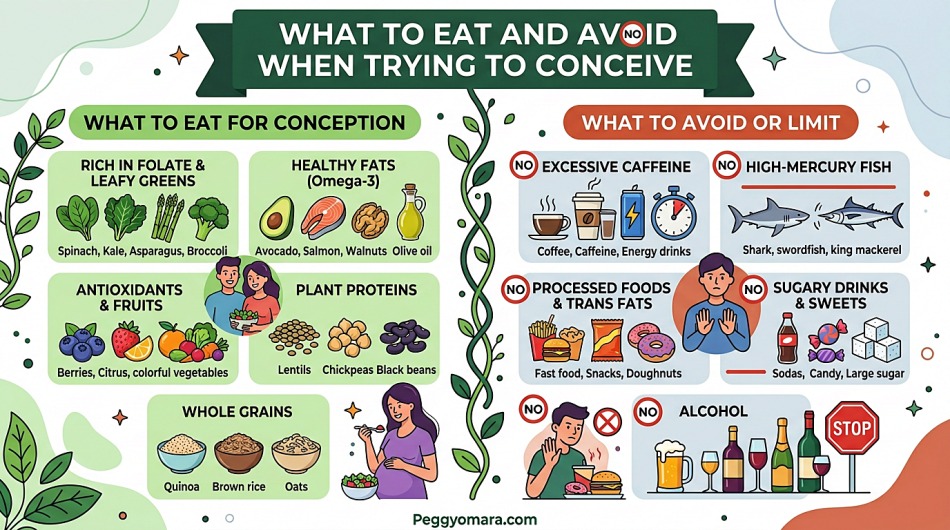
- Focus on eating: Whole grains like quinoa and brown rice, healthy fats from olive oil and avocados, lean proteins including fish and legumes, full-fat dairy products, and colorful fruits and vegetables rich in antioxidants.
- Limit or avoid: Processed and red meats, trans fats found in baked goods, sugary beverages, high-mercury fish including swordfish and shark, alcohol completely, and keep caffeine under 200 milligrams daily.
- Key supplements: Folic acid (400-800 micrograms), prenatal vitamins with iron and vitamin D, and omega-3 fatty acids.
Both partners should start these changes three to six months before trying to conceive. This allows time for eggs to mature and sperm to regenerate.
What to Eat When Trying to Conceive: Fertility-Boosting Foods
Most articles focus heavily on what to avoid when trying to conceive. I want to flip that script. Let us start with the delicious, nourishing foods that actively support your fertility.
The research consistently points to a Mediterranean-style eating pattern as the gold standard for fertility. This approach emphasizes whole foods, healthy fats, and plant-based nutrients that support hormone balance and reproductive health.
Whole Grains and Complex Carbohydrates
Your carbohydrate choices matter more than you might think. Foods with a low glycemic index help regulate blood sugar and insulin levels, which directly affects ovulation.
High insulin levels can disrupt reproductive hormones and lead to irregular cycles. This is particularly important for women with PCOS or those experiencing irregular ovulation.
Focus on quinoa, brown rice, steel-cut oats, barley, and whole grain bread. These foods provide steady energy and are rich in B vitamins and fiber that support hormone production.
Avoid refined carbohydrates like white bread, white rice, and pastries. These spike blood sugar and have been linked to ovulatory infertility in large studies.
Healthy Fats and Omega-3 Fatty Acids
Not all fats are created equal when it comes to fertility. The type of fat you consume can either support or hinder your reproductive health.
Monounsaturated and polyunsaturated fats, particularly omega-3 fatty acids, reduce inflammation and support hormone production. Research shows that women who consume more omega-3s have better egg quality and embryo implantation rates.
Excellent sources include extra virgin olive oil, avocados, walnuts, chia seeds, flaxseeds, and fatty fish like salmon and sardines. Aim for two to three servings of fatty fish per week.
One study found that women following a diet high in these healthy fats had a 40% lower risk of infertility compared to those consuming more trans fats and saturated fats.
Plant-Based and Lean Proteins
Protein is essential for cell growth and hormone production, but the source matters significantly. Plant-based proteins appear particularly beneficial for fertility.
A landmark study from Harvard found that women who got 5% of their calories from plant protein rather than animal protein had a 50% lower risk of ovulatory infertility. Beans, lentils, chickpeas, and tofu should become staples in your fertility diet.
When choosing animal proteins, opt for lean options like chicken, turkey, and fish. These provide essential nutrients without the inflammatory compounds found in red and processed meats.
Eggs are another excellent choice, providing choline and vitamin D that support early fetal development even before conception occurs.
Full-Fat Dairy Products
This recommendation often surprises people who have been choosing low-fat options for years. The research on dairy and fertility tells an interesting story.
A major study from the Nurses’ Health Study found that women who consumed one to two servings of full-fat dairy per day had a 27% lower risk of infertility compared to those eating low-fat dairy. The theory is that certain fatty acids in whole dairy support ovarian function.
Good choices include whole milk yogurt, full-fat cheese, and whole milk. One serving daily appears to be the sweet spot.
However, balance is key. More is not necessarily better, and those with dairy sensitivities should not force consumption. The benefits are modest and can be obtained through other healthy fats if needed.
Antioxidant-Rich Fruits and Vegetables
Think color when filling your plate. The vibrant pigments in fruits and vegetables represent antioxidants that protect eggs and sperm from oxidative damage.
Leafy greens like spinach, kale, and Swiss chard are fertility superstars. They provide folate, iron, and calcium that support ovulation and early pregnancy. Berries offer powerful antioxidants that protect developing eggs.
Orange and yellow vegetables like sweet potatoes, carrots, and bell peppers provide beta-carotene. Research links higher beta-carotene intake to improved fertility in women.
Citrus fruits offer vitamin C, which improves sperm quality in men and supports iron absorption in women. Aim for at least five servings of colorful produce daily, with extra emphasis on leafy greens.
What to Avoid When Trying to Conceive
Now let us address the foods and beverages that can work against your fertility goals. While perfection is not the goal, understanding these risks helps you make informed choices.
The good news is that most of these dietary changes benefit your overall health too. You are not just preparing for pregnancy, you are investing in long-term wellness.
Red and Processed Meats
Regular consumption of red and processed meats has been consistently linked to fertility issues in both men and women. These foods contain saturated fats and advanced glycation end products that promote inflammation.
In women, high intake of red meat is associated with ovulatory disorders. For men, processed meats may reduce sperm quality and motility. One study found that men eating the most processed meat had 23% fewer normal sperm than those eating the least.
Bacon, sausage, hot dogs, deli meats, and beef jerky fall into this category. If you eat red meat, choose grass-fed, organic options and limit servings to once or twice weekly.
Consider this a good opportunity to explore plant-based protein sources. Your body and future baby will thank you.
Trans Fats and Ultra-Processed Foods
Trans fats are perhaps the worst offenders for fertility. These artificial fats, found in margarine, shortening, and many commercially baked goods, increase inflammation and insulin resistance.
Research shows that every 2% increase in calories from trans fats rather than carbohydrates is associated with a 73% greater risk of ovulatory infertility. That is a dramatic effect from a relatively small dietary change.
Ultra-processed foods including packaged snacks, frozen meals, and fast food often contain hidden trans fats labeled as “partially hydrogenated oils.” Check ingredient lists carefully.
These foods also tend to be high in sodium, refined sugars, and preservatives that disrupt hormonal balance. Whole, minimally processed foods should form the foundation of your preconception diet.
Sugar-Sweetened Beverages
Soda, energy drinks, sweetened coffee beverages, and even fruit juices with added sugar can sabotage fertility efforts. These drinks cause rapid blood sugar spikes that affect ovulation.
Women who consume two or more sugar-sweetened beverages daily have a significantly higher risk of ovulatory infertility compared to those who rarely drink them. The effect appears independent of body weight, meaning even normal-weight women are affected.
Diet sodas are not necessarily better. Some research suggests artificial sweeteners may also affect gut health and glucose metabolism in ways that could impact fertility.
Water should be your primary beverage. Infuse it with lemon, cucumber, or berries if plain water feels boring. Herbal teas like red raspberry leaf and nettle are also excellent choices that traditional medicine associates with fertility support.
High-Mercury Fish
While fish is generally excellent for fertility, certain varieties contain high levels of mercury that can accumulate in your body and harm a developing fetus.
The FDA recommends avoiding swordfish, shark, king mackerel, tilefish, bigeye tuna, marlin, and orange roughy when trying to conceive or pregnant. These large predatory fish live longest and accumulate the most mercury.
Do not let this scare you away from fish entirely. The benefits of low-mercury seafood far outweigh risks. Safe choices include salmon, sardines, trout, herring, anchovies, shrimp, and light tuna.
Aim for two to three servings of low-mercury fish weekly to get those crucial omega-3 fatty acids without the mercury exposure.
Alcohol
This is perhaps the most important item on the avoidance list. Current evidence suggests there is no safe amount of alcohol when trying to conceive.
Even moderate drinking (one to five drinks per week) is associated with reduced fertility in women. For men, alcohol affects sperm count, motility, and morphology. It can take up to three months after stopping alcohol for sperm parameters to improve.
The safest approach is complete abstinence from alcohol when actively trying to conceive. This eliminates any risk and ensures you are not inadvertently drinking during early pregnancy before receiving a positive test.
If giving up alcohol feels challenging, remember this is temporary. Many couples find that supporting each other in this choice strengthens their partnership and commitment to becoming parents.
Caffeine
The research on caffeine and fertility is somewhat mixed, but most experts recommend moderation. The general consensus is to keep caffeine intake under 200 milligrams daily when trying to conceive.
That equals about one 12-ounce cup of coffee. Remember that caffeine is also found in tea, soda, chocolate, and some medications.
Some studies suggest higher caffeine intake may increase miscarriage risk, though this remains debated. The conservative approach is to limit consumption while trying to conceive and during pregnancy.
If you are a heavy coffee drinker, consider gradually reducing your intake to avoid withdrawal headaches. Switch to half-caff, then decaf, or explore herbal alternatives like rooibos or ginger tea.
Low-Fat Dairy Products
While this might seem counterintuitive given standard dietary advice, research suggests low-fat dairy may actually be less beneficial for fertility than full-fat options.
The Nurses’ Health Study found that women consuming low-fat dairy had higher rates of ovulatory infertility compared to those eating full-fat dairy. One theory is that the fat-removal process alters the hormone balance in dairy products.
This does not mean you should drink gallons of whole milk. One serving of full-fat dairy daily appears optimal. Choose whole milk yogurt, full-fat cheese, or whole milk over skim or low-fat versions during your preconception period.
If you have lactose intolerance or dairy sensitivity, fermented options like yogurt and kefir may be easier to digest while still providing benefits.
Essential Nutrients for Fertility
Beyond whole foods, certain specific nutrients deserve special attention when preparing for pregnancy. These micronutrients play critical roles in conception and early fetal development.
While a balanced diet provides many of these, most experts recommend supplementation to ensure adequate levels during the critical preconception window.
Folic Acid and Folate
Folic acid is the most important nutrient for preconception health. This B vitamin prevents neural tube defects that develop in the first weeks of pregnancy, often before a woman knows she is pregnant.
The Centers for Disease Control recommends that all women of childbearing age consume 400 micrograms of folic acid daily. When actively trying to conceive, many experts recommend 800 micrograms.
Food sources include leafy greens, fortified cereals, lentils, asparagus, and broccoli. However, supplementation is strongly advised as it is difficult to get enough from diet alone.
Start taking folic acid at least one month before trying to conceive, ideally three months prior.
Iron and Zinc
Iron deficiency is common among women of reproductive age and can affect ovulation. Low iron stores are associated with anovulation and poor egg quality.
Iron-rich foods include red meat (in moderation), chicken, lentils, spinach, and fortified cereals. Pair plant-based iron sources with vitamin C-rich foods to enhance absorption.
Zinc is crucial for both male and female fertility. In women, it supports egg development and hormone regulation. In men, zinc is essential for sperm formation and motility. Good sources include oysters, beef, pumpkin seeds, and chickpeas.
Most prenatal vitamins contain both iron and zinc, but check the amounts to ensure they meet your needs.
Vitamin D and Omega-3s
Vitamin D deficiency is increasingly common and has been linked to infertility and pregnancy complications. This vitamin supports hormone production and may improve egg quality.
Get your vitamin D levels checked before trying to conceive. Many women need supplementation to reach optimal levels, especially those living in northern climates or with darker skin.
Omega-3 fatty acids, particularly DHA, support brain development and may improve fertility outcomes. Fatty fish is the best dietary source, but high-quality fish oil supplements are a good alternative if you do not eat fish regularly.
Look for prenatal vitamins that include DHA, or take a separate omega-3 supplement.
Nutrition for Male Fertility
Fertility nutrition is not just for women. Male partners play an equally important role, and dietary changes can significantly improve sperm quality.
Sperm development takes approximately 74 days from start to finish. This means the sperm fertilizing an egg today was created over two months ago. Men should start optimizing their diet at least three months before trying to conceive.
The same principles apply for men: emphasize whole foods, healthy fats, and antioxidants while limiting processed foods, alcohol, and excessive caffeine. However, some nutrients deserve extra attention for male fertility.
Zinc is critical for sperm production and motility. Oysters contain more zinc per serving than any other food, followed by beef, pumpkin seeds, and lentils. Selenium, found in Brazil nuts, also supports sperm health.
Antioxidants protect sperm from oxidative damage that can affect DNA integrity. Vitamins C and E, found in citrus fruits, berries, nuts, and seeds, are particularly important.
Lycopene, the antioxidant that gives tomatoes their red color, has been shown to improve sperm count and motility. Cooked tomatoes and tomato sauce provide more bioavailable lycopene than raw tomatoes.
Men should also pay attention to maintaining a healthy weight. Both underweight and overweight conditions can negatively affect testosterone levels and sperm parameters.
Sample Fertility Meal Plan
Theory is helpful, but practical application is what transforms your diet. Here is a sample day of eating to support fertility, with options you can mix and match.
Breakfast Options
Start your day with protein and healthy fats to stabilize blood sugar. Try a vegetable omelet with spinach, tomatoes, and avocado. Add a side of whole grain toast with almond butter.
Alternatively, make overnight oats with rolled oats, chia seeds, walnuts, and berries. Use whole milk or full-fat Greek yogurt for creaminess and fertility benefits.
A smoothie with spinach, banana, berries, flaxseed, and full-fat yogurt also makes a nutrient-packed breakfast. Add a scoop of protein powder if you need extra staying power.
Lunch Ideas
Build a Mediterranean-style grain bowl with quinoa, chickpeas, cucumber, tomatoes, olives, and feta cheese. Dress with extra virgin olive oil and lemon.
Or try a large salad with mixed greens, grilled salmon, avocado, pumpkin seeds, and a variety of colorful vegetables. The combination of omega-3s, antioxidants, and healthy fats supports both partners’ fertility.
Lentil soup with a side of whole grain bread and a small salad makes a warming, fiber-rich lunch. Add a dollop of Greek yogurt for protein and probiotics.
Dinner Suggestions
Grilled wild salmon with roasted sweet potatoes and steamed broccoli provides omega-3s, beta-carotene, and folate. Drizzle everything with olive oil.
Stir-fry vegetables with tofu and brown rice using sesame oil and ginger. Top with cashews for extra zinc and healthy fats.
Chicken thighs (dark meat has more nutrients than white) with quinoa pilaf and roasted vegetables offers complete nutrition. Season with turmeric and black pepper for anti-inflammatory benefits.
Smart Snacks
Keep fertility-friendly snacks available to avoid reaching for processed options. Good choices include walnuts and almonds, fresh fruit with nut butter, hummus with vegetables, hard-boiled eggs, and full-fat Greek yogurt with berries.
A small square of dark chocolate (70% cacao or higher) provides antioxidants and satisfies sweet cravings without the sugar spike of milk chocolate.
Shopping List Basics
Stock your kitchen with quinoa, brown rice, oats, lentils, beans, and whole grain bread. Keep olive oil, coconut oil, avocado oil, and various nuts and seeds on hand.
For protein, buy eggs, chicken, turkey, salmon, sardines, and plant-based options like tofu and tempeh. Fill your produce drawer with leafy greens, berries, citrus fruits, sweet potatoes, broccoli, and colorful vegetables.
Choose full-fat dairy including Greek yogurt, cheese, and milk. Buy avocados, tomatoes, onions, garlic, and fresh herbs for flavor and nutrition.
Beyond Diet: Lifestyle Factors That Affect Fertility
What you eat is crucial, but it is only one piece of the fertility puzzle. Several lifestyle factors work alongside nutrition to optimize your chances of conception.
Addressing these areas creates a holistic approach that supports both physical and emotional wellbeing during your conception journey.
Managing Stress and Cortisol Levels
High cortisol levels from chronic stress can disrupt the delicate hormonal balance required for ovulation and sperm production. When your body perceives stress, it prioritizes survival over reproduction.
Research shows that women with high stress levels take longer to conceive and have lower success rates with fertility treatments. Men are not immune either. Stress affects testosterone production and sperm quality.
Effective stress management techniques include meditation, yoga, deep breathing exercises, regular massage, and spending time in nature. Acupuncture has also shown promise for reducing stress and improving fertility outcomes.
Consider this your permission to slow down and prioritize self-care. Taking time to relax is not indulgent; it is fertility treatment.
Exercise and Weight Management
Physical activity supports fertility, but moderation is key. Both too little and too much exercise can disrupt reproductive hormones.
Moderate exercise like walking, swimming, cycling, and yoga appears most beneficial for fertility. Aim for 30 minutes most days of the week at a pace where you can hold a conversation.
Extreme exercise, particularly high-intensity workouts lasting over an hour, can suppress ovulation in some women. If you are training for a marathon or doing intense CrossFit, consider dialing back while trying to conceive.
Weight also matters. Both underweight and overweight conditions can affect fertility. A BMI between 18.5 and 24.9 is considered optimal for conception, though individual variation exists.
If weight loss is needed, aim for gradual, sustainable changes rather than crash diets. Nutrient deficiencies from extreme calorie restriction can negatively impact fertility.
Sleep Quality
Sleep is when your body repairs, regenerates, and produces essential hormones. Poor sleep disrupts melatonin and cortisol levels, which can affect reproductive hormones.
Research links poor sleep quality and short sleep duration to irregular menstrual cycles, difficulty conceiving, and lower success rates with IVF.
Aim for 7 to 9 hours of quality sleep nightly. Create a sleep-friendly environment by keeping your bedroom cool, dark, and quiet. Avoid screens for at least an hour before bed as blue light suppresses melatonin.
Establish a consistent sleep schedule, going to bed and waking at the same times even on weekends. This helps regulate your circadian rhythm and supports hormone balance.
When to Start Making Changes
Timing matters when optimizing fertility through diet and lifestyle. Both eggs and sperm take months to fully develop, so the choices you make today affect conception attempts several months from now.
For women, eggs begin maturing about three months before ovulation. For men, sperm production takes approximately 74 days from start to finish.
This means both partners should ideally start implementing these recommendations three to six months before actively trying to conceive. This allows time for the full development cycles of eggs and sperm in an optimal nutritional environment.
If you are already trying to conceive or just found out you are pregnant, do not panic. Start making positive changes today. Every improvement helps, and it is never too late to support your health and your baby’s development.
Frequently Asked Questions
What not to eat while trying to conceive?
Avoid processed and red meats, trans fats in baked goods and fried foods, sugar-sweetened beverages like soda, high-mercury fish including swordfish and shark, alcohol completely, and limit caffeine to under 200 milligrams daily. Also minimize ultra-processed foods and choose full-fat dairy over low-fat options.
What is the 2 week rule for pregnancy?
The 2 week rule refers to the two-week wait between ovulation and when you can take a pregnancy test. This period represents the luteal phase when a fertilized egg may be implanting. Many women experience symptoms during this time, but testing too early can give false negatives. Wait until at least 14 days after ovulation for accurate results.
At what age are 90% of a woman’s eggs gone?
By age 30, women have lost approximately 90% of their eggs. Women are born with about 1 to 2 million eggs, and this number declines steadily throughout life. The remaining 10% depletes more rapidly after age 35, which is why fertility decreases significantly in the late 30s and 40s.
Can high cortisol cause infertility?
Yes, high cortisol from chronic stress can cause infertility by disrupting the hormonal balance needed for ovulation and sperm production. Elevated cortisol suppresses reproductive hormones and can lead to irregular cycles or anovulation in women. Stress management through meditation, yoga, and adequate sleep can help normalize cortisol levels.
How long before trying to conceive should I change my diet?
Both partners should start dietary changes 3 to 6 months before trying to conceive. Eggs take approximately 3 months to mature, and sperm production takes about 74 days. Starting early ensures eggs and sperm develop in an optimal nutritional environment, maximizing fertility potential and early pregnancy outcomes.
Start Your Fertility Journey Today
Understanding what to eat and avoid when trying to conceive gives you powerful tools to optimize your fertility naturally. Small, consistent changes to your diet and lifestyle can have significant impacts on your reproductive health.
Remember that fertility is a team sport. Both partners should commit to these changes together, supporting each other through the process. The three to six months of preparation can actually strengthen your relationship and create healthy habits that last into parenthood.
Here is your simple starting plan for this week. Start taking a prenatal vitamin with 400-800 micrograms of folic acid. Replace one sugary beverage daily with water or herbal tea. Add one serving of leafy greens to your day. Choose whole grains over refined options at one meal. And find one way to reduce stress, whether that is a 10-minute walk, meditation, or simply going to bed 30 minutes earlier.
You do not need to be perfect. Every positive choice supports your fertility and overall health. Trust the process, be patient with yourselves, and know that you are giving your future child the best possible start.
Good luck on your journey to parenthood. You have got this.