
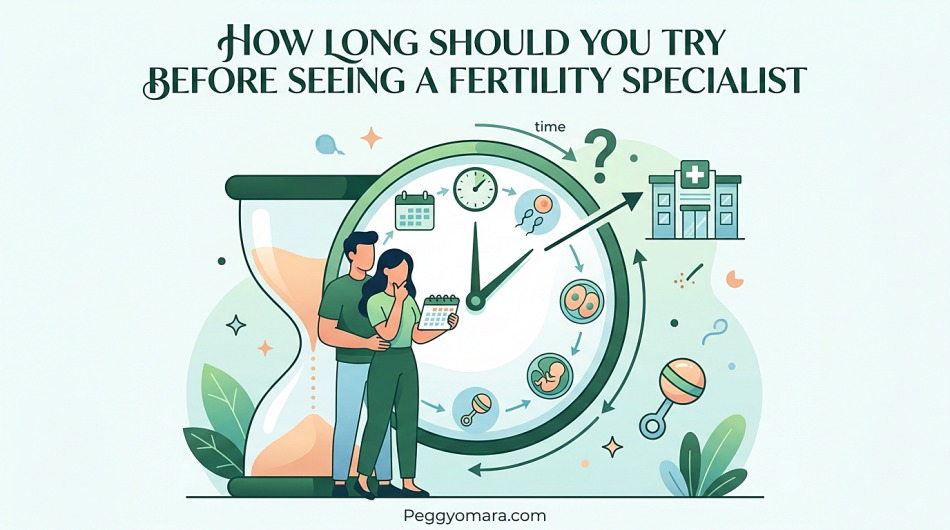
If you have been trying to conceive without success, you have probably asked yourself this question more than once. The decision to see a fertility specialist feels like a major milestone, and many couples struggle with whether they are jumping the gun or waiting too long. The medical guidelines are actually quite clear: if you are under 35, see a fertility specialist after 12 months of trying. If you are 35 or older, schedule that appointment after just 6 months.
These timelines come from the American Society for Reproductive Medicine (ASRM) and the American College of Obstetricians and Gynecologists (ACOG). They are based on fertility statistics that show when the odds of natural conception drop enough to warrant investigation.
However, numbers on a page do not capture the emotional weight of this decision. Many couples worry about being “too young” for help, fear judgment from doctors, or hope that next month will be the one. This guide gives you the full picture so you can make an informed, confident decision about when to seek help.
Table of Contents
Key Facts at a Glance
Here are the essential facts to remember about fertility timelines:
- Under age 35: See a fertility specialist after 12 months of regular, unprotected intercourse without conception
- Age 35-39: Seek help after 6 months of trying, as fertility declines more rapidly
- Age 40 and above: Consider consulting a specialist immediately or after 3 months of trying
- Infertility affects both partners: Approximately 40-50% of cases involve male factors
- Certain symptoms warrant immediate attention: Irregular periods, recurrent miscarriage, or known medical conditions mean you should not wait the full timeline
- “Trying” has a specific meaning: Regular unprotected intercourse during your fertile window, typically every 2-3 days throughout the cycle
How Long Should You Really Try Before Seeing a Fertility Specialist
The answer depends primarily on your age. Medical organizations have established evidence-based guidelines that account for natural fertility decline. Understanding these timelines helps you advocate for yourself when speaking with healthcare providers.
Under 35: The 12-Month Guideline
For women under 35, doctors recommend trying for 12 months before seeking fertility testing. This timeline reflects the natural probability of conception. A healthy couple in their 20s to early 30s has about a 20-25% chance of conceiving each month.
Over 12 months, approximately 85% of couples under 35 will conceive naturally. The remaining 15% may have underlying fertility issues that warrant investigation. This is why the 12-month mark serves as a reasonable screening point.
Some couples feel pressure to wait the full year even when they have concerns. While patience is important, you do not need to wait if you have symptoms like irregular cycles or severe menstrual pain. The 12-month guideline applies to couples with no known risk factors.
Age 35-39: The 6-Month Guideline
Women aged 35 to 39 should see a fertility specialist after 6 months of trying. Fertility begins declining more rapidly in the mid-30s. Egg quality and quantity both decrease, making conception harder and miscarriage more likely.
A woman of 35 has about half the fertility rate of a woman in her early 20s. By 38, that rate drops further. The 6-month guideline exists because waiting a full year at this age means missing valuable time for treatment.
If you are in this age group and have been trying with no success after 6 months, do not let anyone tell you to “just keep trying.” These are not just numbers. They represent your window of opportunity for successful treatment.
Age 40 and Above: Consider Immediate Consultation
Women over 40 face the steepest fertility decline. Many fertility specialists recommend booking an initial consultation even before you begin trying, or within the first 3 months. This does not mean you will need treatment immediately, but it establishes a baseline.
At 40, the monthly chance of conception drops to about 5%. By 43, it falls below 2%. Early consultation allows your doctor to assess ovarian reserve through blood tests and ultrasound. This information helps you make informed decisions about timing and treatment options.
If you are over 40 and hoping to conceive, consider scheduling a “fertility awareness” appointment before you start trying. This proactive approach gives you the full picture of your reproductive health.
Quick Reference: Age-Based Timeline
| Age Group | When to Seek Help | Monthly Conception Odds | Notes |
|---|---|---|---|
| Under 35 | After 12 months | 20-25% | Standard timeline for healthy couples |
| 35-39 | After 6 months | 10-15% | Declining egg quality; earlier intervention helps |
| 40-42 | After 3 months or immediately | 5% | Rapid decline; consider baseline testing |
| 43 and above | Immediate consultation recommended | Under 2% | Discuss all options including donor eggs |
What “Trying to Conceive” Actually Means
One of the most common sources of confusion in fertility forums is what “trying” actually means. Couples often ask whether they have been “really trying” or just “sort of trying.” The distinction matters for when you seek help.
The Medical Definition
Medically, “trying to conceive” means having regular unprotected vaginal intercourse during your fertile window. The fertile window spans approximately 5 days before ovulation through the day of ovulation itself. Sperm can survive up to 5 days in the reproductive tract, while an egg lives only 12-24 hours after release.
To maximize chances, couples should have intercourse every 2-3 days throughout the menstrual cycle. This frequency ensures sperm are present whenever ovulation occurs. You do not need to have sex daily. Every other day is sufficient and often less stressful.
What Counts as “Trying”
True “trying” means you are not using any form of contraception. This includes condoms, hormonal birth control, IUDs, withdrawal, or fertility awareness methods for contraception. You are allowing pregnancy to happen if it will.
Many couples track ovulation using methods like basal body temperature charting, ovulation predictor kits (OPKs), or cervical mucus monitoring. While helpful, strict tracking is not required to “count” as trying. Regular unprotected intercourse is the baseline.
What Does NOT Count as “Trying”
If you are using withdrawal (pulling out), you are not trying to conceive. If you are only having unprotected sex occasionally or only at certain times of the month based on guesswork, you may not be optimizing your chances. Infrequent intercourse can explain lack of conception even when no medical issue exists.
The timeline guidelines assume you have been having regular intercourse without contraception. If your situation differs, adjust your expectations accordingly. A couple having unprotected sex once a month has different odds than one having it every few days.
Signs You Should Seek Help Sooner
Certain symptoms and conditions warrant earlier evaluation regardless of how long you have been trying. Do not wait the full 6 or 12 months if any of the following apply to you.
- You have irregular periods or no periods at all. Regular cycles typically range from 21 to 35 days. If yours vary significantly or you skip months, you may not be ovulating regularly. This requires evaluation even if you have been trying only a few months.
- You have had two or more miscarriages. Recurrent pregnancy loss suggests underlying issues with egg quality, uterine environment, or genetic factors. See a specialist after your second loss, not your third.
- You have been diagnosed with PCOS, endometriosis, or another reproductive condition. These conditions significantly impact fertility. Early consultation allows for treatment that may improve your odds.
- You have a history of pelvic infections or sexually transmitted infections. Chlamydia, gonorrhea, and pelvic inflammatory disease can cause tubal damage. Even if treated, scarring may block fallopian tubes.
- You have had surgery on your ovaries, fallopian tubes, uterus, or cervix. Previous surgeries can create scar tissue or remove tissue needed for conception. Tell your doctor about any abdominal or pelvic surgery.
- You have severe menstrual pain or very heavy bleeding. Painful periods may indicate endometriosis. Heavy bleeding can signal fibroids or other uterine issues. Both affect implantation and pregnancy maintenance.
- Your partner has difficulty achieving or maintaining erections, or has pain with ejaculation. Male factor contributes to infertility in nearly half of cases. Sexual dysfunction often indicates underlying fertility issues.
- You have a known male factor issue such as low sperm count or poor motility. If your partner has already had a semen analysis showing abnormalities, do not wait to see a specialist.
- You have a thyroid condition, diabetes, or other chronic illness. These conditions can disrupt ovulation and hormone balance. Work with both your endocrinologist and a fertility specialist.
- You are a cancer survivor or currently undergoing treatment. Fertility preservation may be urgent. Some treatments require immediate action to protect future fertility options.
What Is Infertility?
Infertility is clinically defined as the inability to conceive after 12 months of regular, unprotected intercourse (or 6 months for women over 35). It is a medical condition, not a personal failing. Approximately 1 in 8 couples experience infertility.
Infertility can stem from female factors, male factors, or a combination of both. About one-third of cases involve female factors, one-third involve male factors, and the remaining third involve both partners or unexplained causes.
Contrary to common belief, infertility is not just a “woman’s problem.” Male factor infertility is equally common and requires the same medical attention. Both partners should undergo evaluation when conception does not occur within the expected timeframe.
OB/GYN vs. Fertility Specialist: Who Should You See?
Many couples wonder whether to start with their regular OB/GYN or go straight to a fertility specialist. The answer depends on your situation and the resources available in your area.
The Difference in Training
An OB/GYN completes four years of medical school and four years of residency in obstetrics and gynecology. They are excellent generalists for reproductive health, pregnancy care, and routine gynecological issues.
A fertility specialist, properly called a reproductive endocrinologist (RE), completes the same training plus an additional three years of fellowship specifically in reproductive endocrinology and infertility. They must pass board certification exams in this subspecialty.
This additional training means REs have deep expertise in hormonal disorders, complex fertility treatments, and assisted reproductive technologies like IVF. They also have specialized surgical training for fertility-related procedures.
When to Start with Your OB/GYN
If you are under 35 and have no known risk factors, starting with your OB/GYN is reasonable. Many OB/GYNs can order basic fertility workups including day 3 blood work, progesterone testing, and semen analysis. They can also prescribe initial fertility medications like Clomid.
Your OB/GYN can treat you for several months before referring you to a specialist if pregnancy does not occur. This approach works well for couples with straightforward, unexplained infertility.
When to Go Straight to a Specialist
Consider going directly to a reproductive endocrinologist if you are over 35, have known fertility issues, or have any of the red flags mentioned earlier. Specialists can move faster and offer more advanced testing from the start.
Additionally, if you have been working with your OB/GYN for several cycles without success, do not hesitate to ask for a referral. The standard guideline is to see a specialist after three failed Clomid cycles.
Provider Comparison
| Factor | OB/GYN | Reproductive Endocrinologist |
|---|---|---|
| Training | 4-year residency | 4-year residency + 3-year fellowship |
| Can order basic tests | Yes | Yes |
| Can prescribe Clomid/Letrozole | Yes | Yes |
| Performs IVF | No | Yes |
| Treats complex cases | Limited | Specialized expertise |
| Advanced surgical procedures | Limited | Yes (myomectomy, tubal surgery, etc.) |
Male Fertility Considerations
Male factor infertility contributes to approximately 40-50% of all infertility cases. Yet many couples delay male testing, focusing only on the female partner. This is a mistake that wastes valuable time.
Men should have a semen analysis if pregnancy has not occurred within the standard timeline. This simple test evaluates sperm count, motility (movement), and morphology (shape). It is non-invasive and relatively inexpensive.
Men should also see a fertility specialist sooner if they have known issues like undescended testicles, testicular surgery, or a history of cancer treatment. A urologist specializing in male fertility may also be appropriate.
If male factor is identified, treatments range from lifestyle changes and medications to surgical sperm retrieval and IVF with intracytoplasmic sperm injection (ICSI). Early identification leads to better outcomes.
What to Expect at Your First Fertility Appointment
The idea of a fertility appointment can feel intimidating. Many people imagine invasive tests and overwhelming news. In reality, the first visit is primarily a conversation and information-gathering session.
The Medical History Review
Your doctor will ask detailed questions about your menstrual history, previous pregnancies, sexual history, and overall health. They will want to know how long you have been trying, how often you have intercourse, and whether you track ovulation.
Both partners should attend this appointment. The doctor will ask about male health history, sexual function, and any previous children. Come prepared with dates of your last few cycles and a list of current medications.
Initial Testing
After the history review, your doctor will likely order baseline tests. For women, this typically includes blood work on day 3 of your cycle to check FSH, LH, estradiol, and AMH (anti-mullerian hormone). AMH indicates ovarian reserve. A progesterone check around day 21 confirms ovulation.
An ultrasound called an antral follicle count (AFC) may also be performed. This transvaginal ultrasound counts the resting follicles in your ovaries, giving another measure of ovarian reserve.
For men, a semen analysis is the primary test. This is usually done at a specialized lab and requires abstaining from ejaculation for 2-5 days before the test.
Timeline from Appointment to Results
Getting results takes time. Blood work typically comes back within a few days. Semen analysis results may take a week. Your doctor will schedule a follow-up appointment to discuss findings and recommend a treatment plan.
The entire diagnostic process can take 1-2 menstrual cycles. This is normal and necessary for accurate assessment. Patience during this phase pays off in targeted, effective treatment later.
Questions to Ask at Your First Visit
- What tests do you recommend for our situation?
- How long will the diagnostic process take?
- Based on our history, what treatment options might be appropriate?
- What are your success rates for couples like us?
- Do you offer financial counseling or payment plans?
- What lifestyle changes should we make now?
Special Circumstances That May Change Your Timeline
The standard guidelines do not fit every situation. Some individuals and couples should seek help on a different timeline based on their specific circumstances.
Recurrent Pregnancy Loss
If you have had two or more miscarriages, you should see a specialist even if you have also had successful pregnancies. Recurrent pregnancy loss (RPL) requires specialized evaluation for genetic, anatomical, hormonal, and immune causes.
Cancer Survivors
Cancer treatment can damage fertility in both men and women. If you are a survivor hoping to conceive, see a fertility specialist as soon as possible. If you have not yet started treatment and want future children, ask about fertility preservation options like egg or sperm freezing.
LGBTQ+ Family Building
Same-sex couples and individuals building families through donor gametes or surrogacy should consult a fertility specialist from the start. Even with no fertility issues, assisted reproduction requires medical support. Fertility clinics are increasingly welcoming to LGBTQ+ families and can guide you through donor selection, legal considerations, and treatment options.
Single Parents by Choice
If you are pursuing single parenthood through donor insemination or IVF with donor sperm, a fertility specialist can help you navigate the process. They can also assess your fertility before you begin, which is especially important if you are over 35.
Previous Fertility Treatment
If you have undergone fertility treatment before, whether successful or not, you likely have a shorter timeline for seeking help again. Your history indicates that conception does not come easily. Many doctors recommend returning for evaluation after just 3 months of trying for a second child.
Frequently Asked Questions
How long should you wait to see a fertility specialist?
If you are under 35, see a fertility specialist after 12 months of trying. If you are 35 or older, seek help after 6 months. Women over 40 should consider immediate consultation or waiting only 3 months.
Is IVF a good option for PCOS?
Yes, IVF is often an excellent option for PCOS when other treatments have failed. Women with PCOS typically respond well to ovarian stimulation and produce multiple eggs. However, less invasive treatments like ovulation induction with medication are usually tried first.
Can low serotonin cause infertility?
Low serotonin itself does not directly cause infertility. However, depression and anxiety associated with serotonin imbalance can affect fertility indirectly through stress hormones and reduced libido. Some antidepressants may also affect fertility or pregnancy. Discuss mental health medication with both your psychiatrist and fertility specialist.
Can an endocrinologist help with male infertility?
A reproductive endocrinologist primarily focuses on female fertility, though they do evaluate male factor through semen analysis. For male-specific issues, a urologist specializing in male fertility or an andrologist is more appropriate. They can address problems like varicocele, hormonal imbalances, or obstructive issues.
When should you see a fertility specialist after miscarriage?
After one miscarriage, you typically do not need a fertility specialist unless you are over 35 or have other risk factors. After two miscarriages, see a specialist for recurrent pregnancy loss evaluation. After three or more miscarriages, comprehensive testing is strongly recommended regardless of age.
Is 6 months too soon for a fertility specialist?
Six months is not too soon if you are 35 or older. This is the standard recommendation from medical organizations like ASRM and ACOG. For women under 35, 6 months may be early unless you have symptoms like irregular periods, but you can still request basic testing if you are concerned.
Knowing how long you should try before seeing a fertility specialist gives you a clear roadmap during an emotionally challenging time. The guidelines exist to help you take action at the right moment, neither rushing unnecessarily nor waiting so long that you miss your best window for success.
Trust your instincts alongside the medical guidance. If something feels wrong, if your cycles are irregular, if you have pain or other symptoms, do not let the calendar dictate your healthcare. You are the expert on your own body.
Seeking help is not giving up. It is taking control. Whether you are at the 6-month mark at age 36 or the 12-month mark at age 32, making that appointment is a proactive step toward building the family you want. The sooner you have answers, the sooner you can move forward with confidence.