
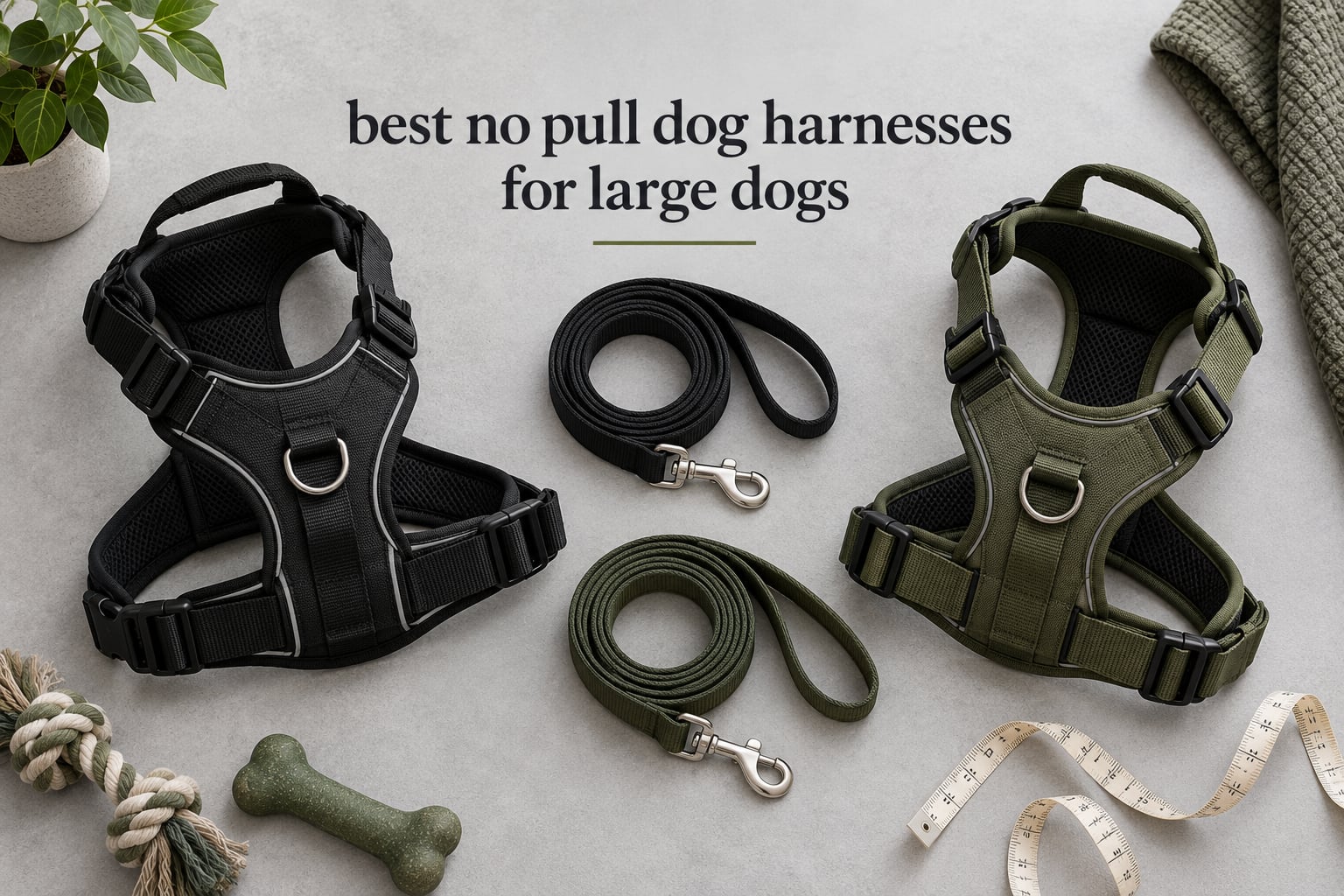
The rabbitgoo No-Pull Large Dog Vest is the best no pull dog harness for large dogs we found, because the front chest ring turns a pulling dog’s shoulders toward you instead of propelling them down the street, and the four adjustable straps let you dial that steering in properly. It works by redirection, not restraint, and it is the only tool in the box, not a substitute for leash training.
That honest caveat matters. Owners are tired of the phrase “no pull” being attached to anything with a D-ring on it, and they are right to be skeptical. A no-pull harness changes the geometry of a walk within a walk or two, but it cannot teach a dog anything. Owners on r/Dogtraining have asked outright for “any real solutions for strong pullers or jumpers,” and the honest answer is that the harness is the easy half.
What we did was compare ten large-dog harnesses built around a front chest attachment, and we ranked them on the things that actually decide whether a harness survives a 90-pound dog: published chest girth ranges, metal versus plastic hardware, number of adjustment points, weight limits, and how much padding sits where a harness rubs. Every pick below names its real drawbacks, because a list where nothing has a drawback is a sales page.
If you are also sorting out the rest of a large dog’s gear, our guides to the best dog crates for large dogs and the best dog beds for large dogs cover the setup around the walk.
Table of Contents
Top 3 Best No Pull Dog Harnesses for Large Dogs (October 2026)

rabbitgoo No-Pull Vest
- Front and back leash rings
- Four adjustable straps
- Breathable mesh with cushion padding

AUROTH Tactical No-Pull Vest
- Four adjustable metal rings
- MOLLE strips on both sides
- XL published for 75-135 lb dogs

PetSafe Easy Walk Harness
- Patented martingale loop
- Front chest attachment
- Low-coverage nylon mesh
All 10 Picks at a Glance
Every harness below is built for a dog in the large-breed range, and every one publishes a front leash attachment. The differences are in girth coverage, hardware, and padding. The Check Latest Price button on each row shows the current price for that specific model and size, so confirm your dog’s measurements against the brand’s chart before you order.
| Product | Specifications | Action |
|---|---|---|
| rabbitgoo No Pull Large Dog Vest |
|
Check Latest Price |
| AUROTH Tactical No Pull Vest |
|
Check Latest Price |
| PetSafe Easy Walk Harness |
|
Check Latest Price |
 Eagloo No Pull Large Dog Vest Eagloo No Pull Large Dog Vest |
|
Check Latest Price |
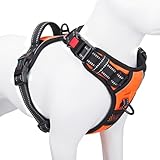 PHOEPET Reflective No Pull Vest PHOEPET Reflective No Pull Vest |
|
Check Latest Price |
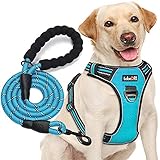 tobeDRI No Pull Harness with Leash tobeDRI No Pull Harness with Leash |
|
Check Latest Price |
 OneTigris Tactical Service Vest OneTigris Tactical Service Vest |
|
Check Latest Price |
 Embark No Pull Training Vest Embark No Pull Training Vest |
|
Check Latest Price |
 WINGOIN Heavy Duty No Pull Vest WINGOIN Heavy Duty No Pull Vest |
|
Check Latest Price |
 Sporn No Choke Mesh Harness Sporn No Choke Mesh Harness |
|
Check Latest Price |
How We Picked?
We ranked these on fit data and hardware rather than on marketing copy. Specifically, we looked for harnesses that publish a chest girth range instead of only a weight label, that use metal D-rings and metal adjustment hardware, that offer at least four adjustment points, and that carry enough owner reviews for the fit complaints to show up as a pattern.
This is desk research built on published specifications and owner review patterns, not a six-month walking diary with one dog. Where owner reports are thin, we say so rather than dressing it up.
1. rabbitgoo No-Pull Large Dog Vest: Best Overall for Large Dogs
rabbitgoo Dog Harness, No Pull for Large Dogs with 2 Leash Clips, Pet Vest
- Dual front and back leash rings give genuine steering
- Quick-release buckles go on and off in seconds
- Soft cushion padding over breathable air mesh
- Four adjustment points suit unusual body shapes
- Reflective strips for low light
- Straps are far easier to adjust off the dog than on
- Measurements can land across two sizes and split the fit
- Underside cross-strap makes on and off more awkward
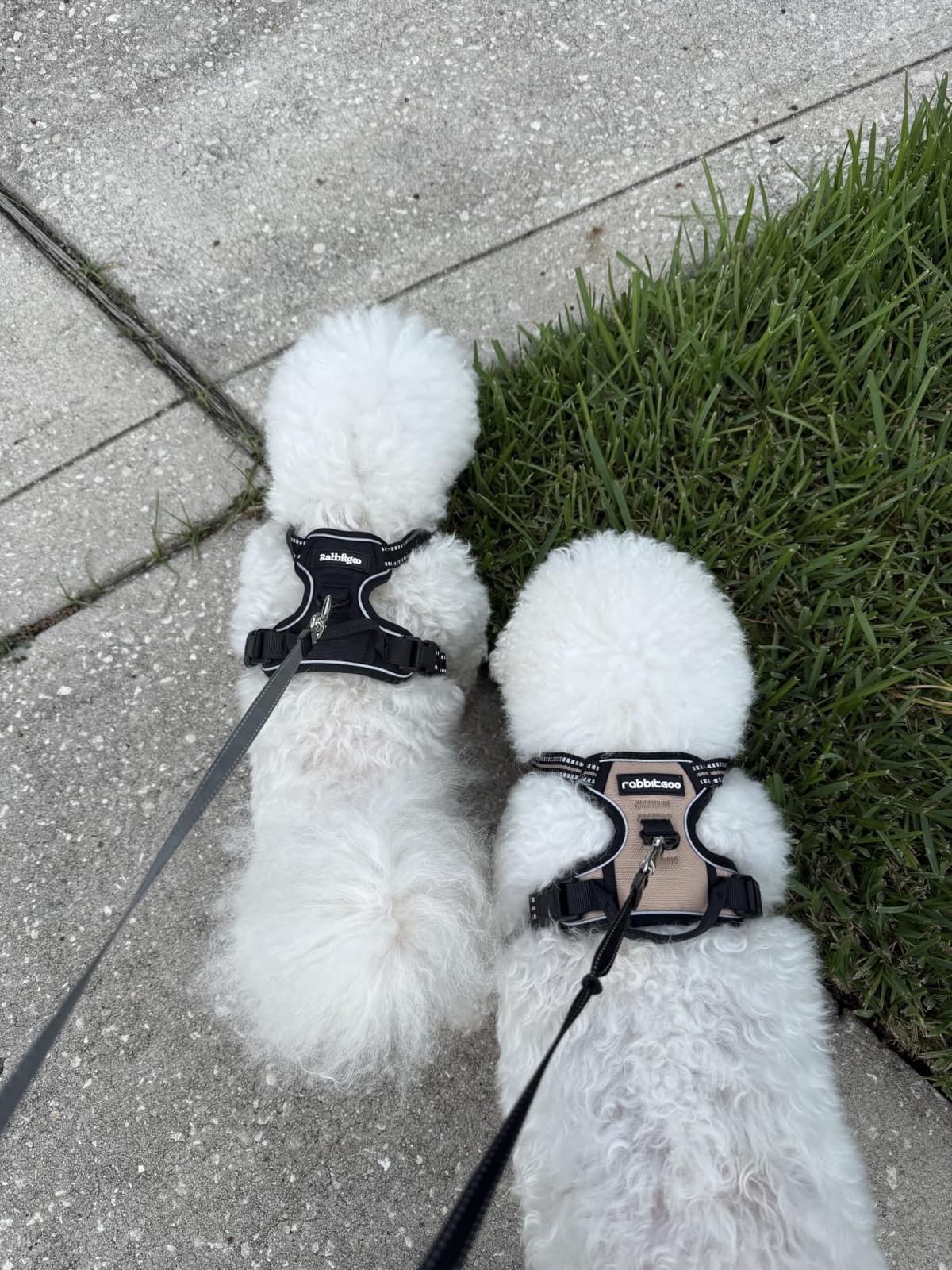
This is the most reviewed harness in the list by a wide margin, at 184k+ ratings, and the volume matters here because it means the failure modes are well documented. The construction is polyester Oxford over breathable air mesh with soft cushion padding, and it weighs 10.58 ounces, so it is light enough for long walks without feeling flimsy. Two metal leash rings do the work: the front chest clip for training and steering, the back clip for relaxed walks, jogging, and hiking.
Four adjustable straps, two at the neck and two at the chest, give more room to fit an awkward shape than the three-point designs you see on cheaper vests. The overhead design uses two fast-release buckles, and a top grab handle gives you something to hold when a 70-pound dog decides a squirrel is a personal invitation. The manufacturer lists Siberian Huskies, Labs, German Shepherds, Akitas, Chow Chows, Giant Schnauzers, and American Pit Bull Terriers among the breeds this sizing is aimed at.
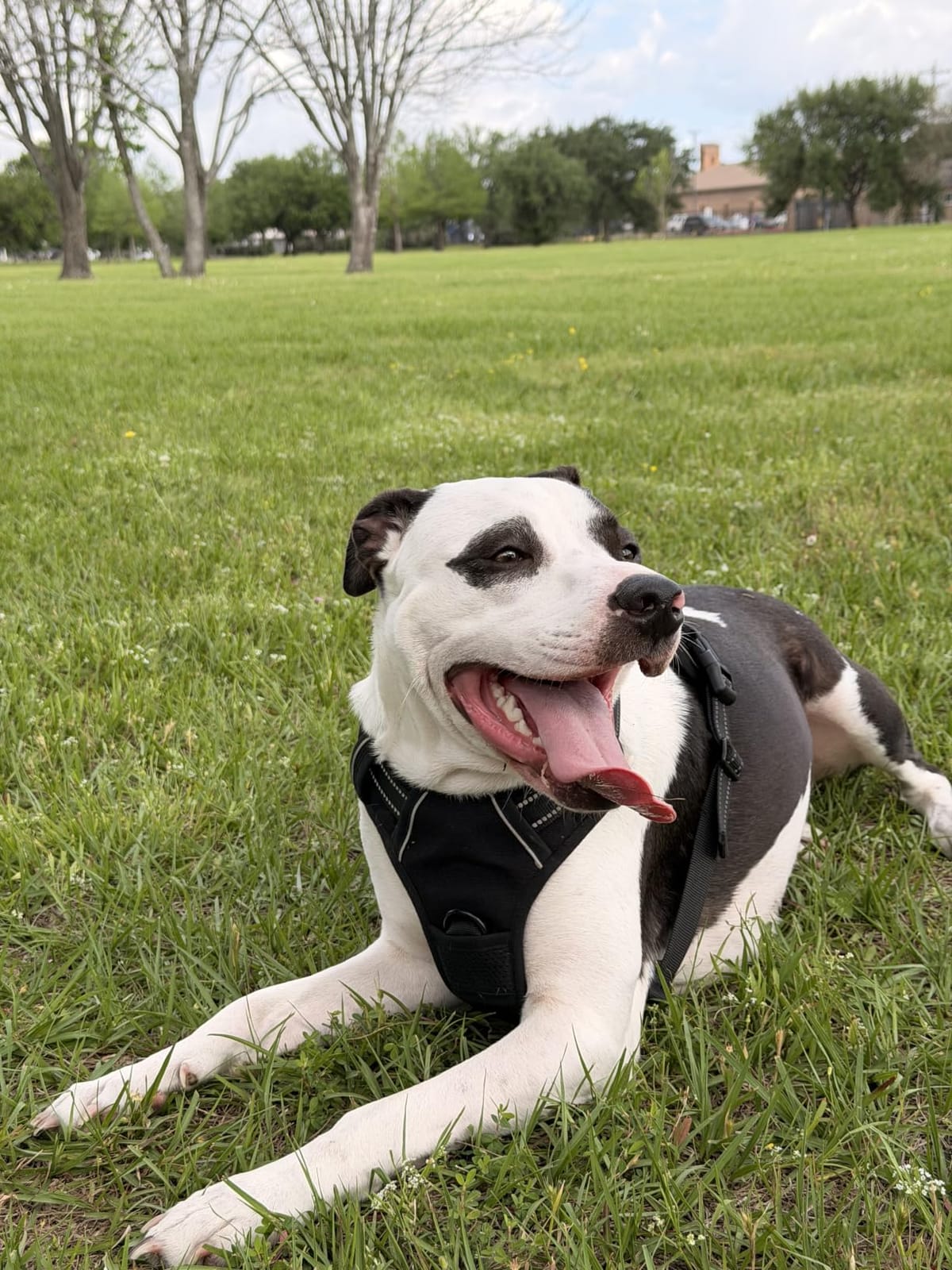
The recurring theme across reviews is that the front ring changes walk behaviour quickly, and that the buckle system makes it practical for daily use. The recurring complaint is fit arithmetic. Buyers report that a dog’s neck and chest measurements can fall in two different sizes, which splits the available adjustment and leaves a snug fit hard to dial in. The advice that comes up most often is to measure the girth with a soft tape and compare it against the size chart before ordering.
Two smaller issues worth knowing. The straps are fiddly to adjust while the harness is on the dog, so set it on the floor first and then dress the dog. And the underside cross-strap design, while stable once on, is more awkward to get on and off than a simple two-buckle vest, particularly for a dog who does not want to cooperate.
Is the rabbitgoo vest big enough for a large dog?
It is aimed squarely at medium to large breeds, and the four-point adjustment gives you real room to shape the fit. What it does not give you is a published chest girth number for each size, so measure your dog and work from the brand’s chart rather than from the size label alone. If your dog falls between sizes, the extra adjustment points help you close the gap.
Will it stop a heavy puller?
It will slow a heavy puller and take the steering away from them, but it will not hold a 90-pound dog still against something they genuinely want. Pair the front clip with leash training and treat the harness as the tool that makes that training possible. Owners on training forums consistently report the fastest results when they change the clip and work on loose-leash behaviour in the same week.
2. AUROTH Tactical No-Pull Vest: Best for Heavy Pullers
- Front clip measurably redirects lunging
- Four metal adjustment rings hold a precise fit
- MOLLE side strips carry pouches and ID
- Handles pullers without backing out
- Range of colours and camouflage options
- Sizing can run large for dogs on a size border
- Some versions use plastic rather than metal D-rings
- One owner reported fraying after about a month of heavy use
This is the one to look at if your dog weighs more than roughly 80 pounds and treats every walk as a drag race. The size chart is published properly: large covers a neck of 18-29 inches and a chest of 24-37 inches for dogs in the 45-80 pound range, and XL covers a neck of 20-31 inches and a chest of 26-42 inches for 75-135 pounds. Having a real girth range on a heavy-duty vest is rare, and it is why this one is easier to buy blind than most.
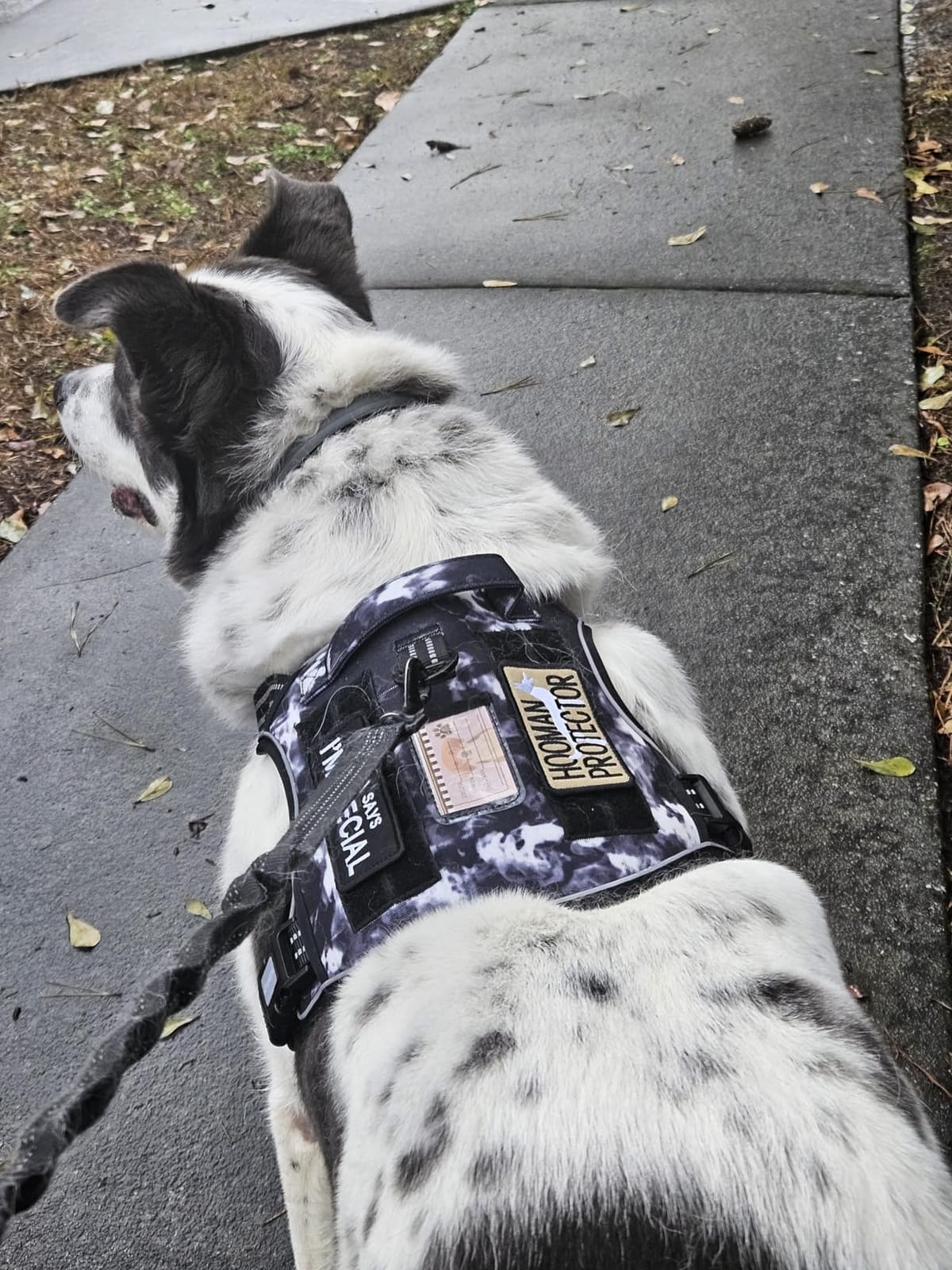
The hardware is where the heavy-puller case earns its keep. Four fully adjustable metal rings, two at the shoulder and two at the chest, means the load is spread across four points instead of concentrated at two, and the material is durable nylon with reinforced stitching over breathable air mesh with padded pressure points. MOLLE strips run along both sides for pouches and hook-and-loop patches, an ID badge is included, and a top grab handle gives you quick control and lifting assistance.
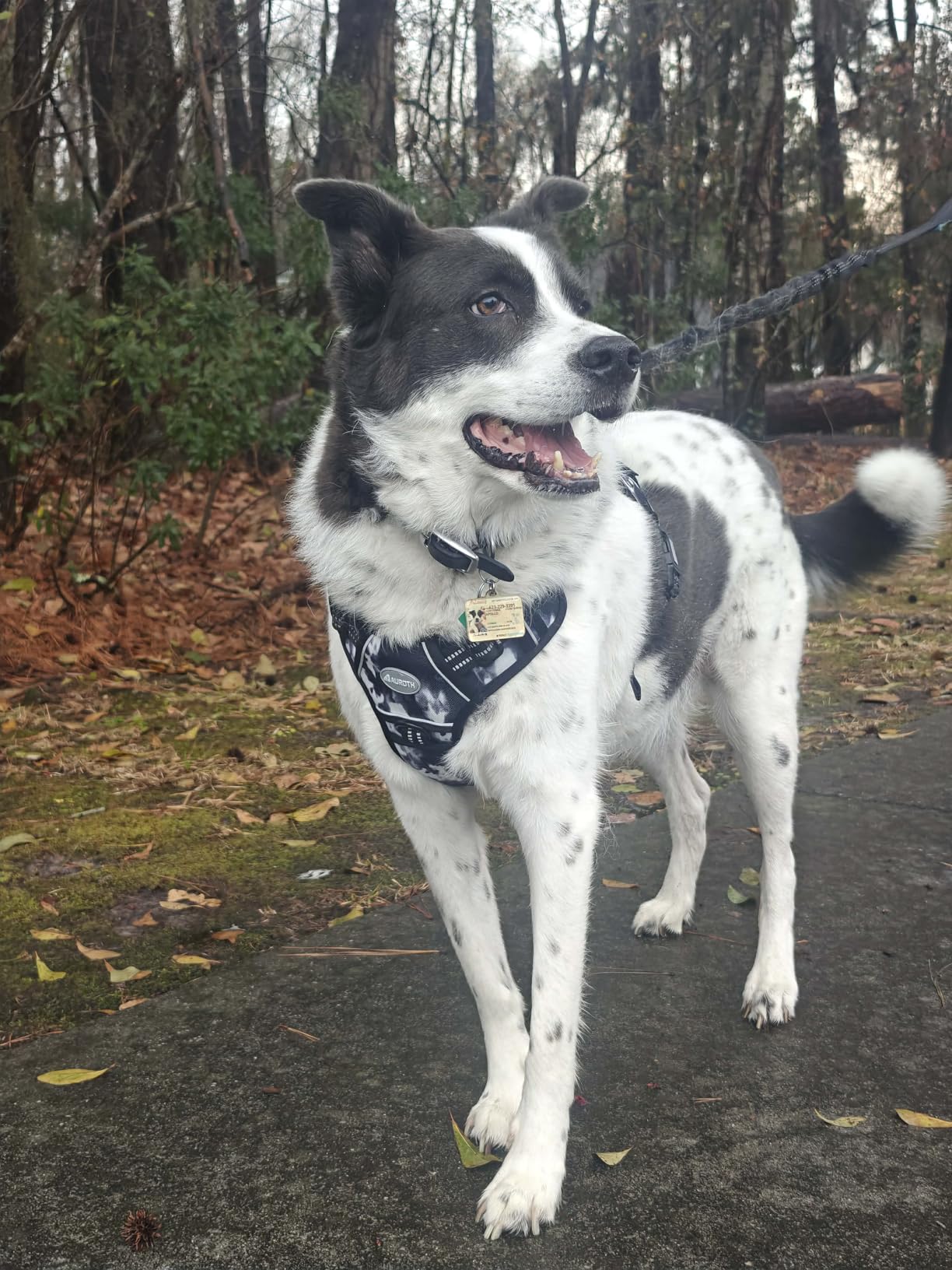
Owners of large, strong dogs consistently credit the front chest ring with ending lunges, and the MOLLE panel for carrying gear and identification. It is also a common recommendation among owners of dogs that back out of other harnesses, because the four-point metal adjustment holds position better under load than a plastic three-buckle layout.
The sizing caveat is the same one that appears on nearly every harness in this category. The vest can run large, so a dog on a size border may need to size down or up from the label, and the sizing is the dominant variable in whether owners are happy. Two specific things to check before you commit: some versions of this harness use plastic rather than metal D-rings, and one reviewer reported fraying and loosening after about a month with a very active dog. Ask for metal rings specifically.
How much pulling can this vest actually handle?
With four metal adjustment rings and reinforced nylon stitching, it is built for the large end of the range, and the published XL ceiling covers dogs up to 135 pounds. That is a strength rating, not a promise that your dog will stop, so keep training alongside it. If your dog is at the very top of that range or above it, check whether you need the OneTigris vest further down instead, which publishes a 1000D nylon build.
What do the MOLLE strips actually do?
They are attachment points for small pouches, loops, and hook-and-loop ID patches that slide onto the webbing on both sides of the vest. For most households it is a place for an ID tag, a waste bag pouch, or a service dog patch. It also means the vest sits slightly proud of the body, which some dogs notice more than a flat vest.
3. PetSafe Easy Walk Harness: Best Value and Best for Warm Weather
- Martingale loop redirects pulling without choking
- Two-tone buckle system is very quick to use
- Four fit points handle uneven proportions
- Low body coverage keeps dogs cool
- Long record of trainer and vet use
- Nylon can wear through with heavy daily use
- Chest strap loosens during walks and needs resetting
- May not fit deep-chested breeds as the dog grows
- Underarm nylon can chafe
This is the design most people mean when they say no-pull harness, and the mechanism is a patented martingale loop: when the leash connects to the ring on the center of the chest, a gentle, gradual tightening applies pressure that reduces lunging rather than choking. It has been around since 2004 and it is the most widely endorsed no-pull design on the market, with 49k+ ratings at 4.3 stars.
What makes it a genuinely good pick for a big dog in warm weather is what it leaves out. It has less body coverage than a vest, using breathable nylon mesh with adjustable comfort straps, so a heavy dog does not overheat the way it can under a full tactical panel. It weighs 9.52 ounces, uses a colour-coded fit system with quick-snap shoulder buckles, and offers four adjustment points for dogs that are not perfectly proportioned.
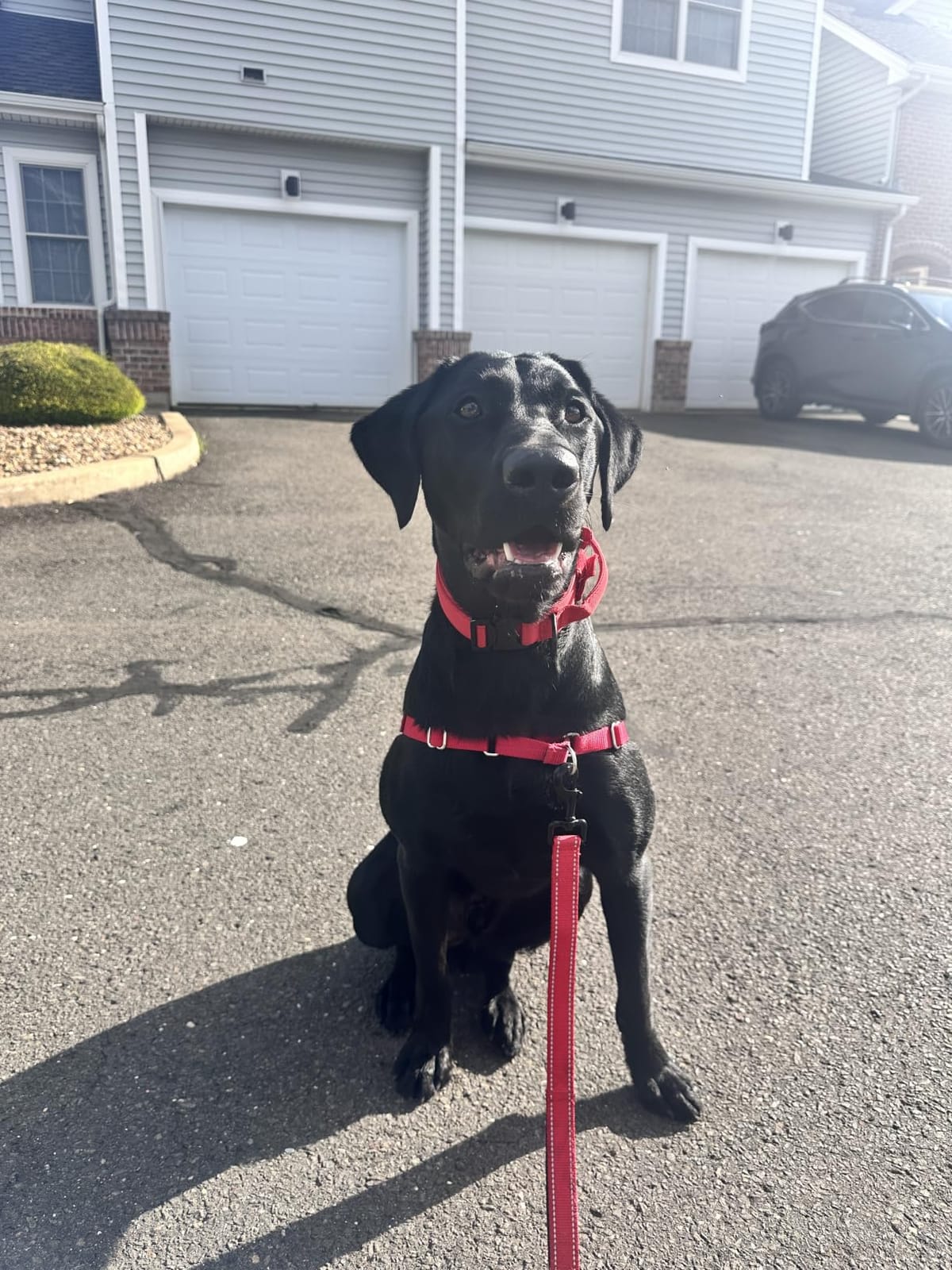
The pattern across long-form owner accounts is consistent: owners of hard pullers, including German Shepherd, Boxer, Lab, and bully breed mixes, describe the front ring plus martingale loop bringing pulling under control within one or two walks. Owners also report that a color-coded buckle system makes the on-and-off routine fast enough to use twice a day, which matters more than any spec.
Be clear-eyed about the weaknesses, because owners are specific about them. Reviewers report the nylon tearing or wearing through with heavy daily use on strong dogs, the chest strap loosening during a walk and needing periodic resetting, and fit problems on deep-chested breeds as the dog grows. Owners also report underarm chafing from the nylon, which is the most common complaint on this harness and a direct consequence of the light-pad, low-coverage design.
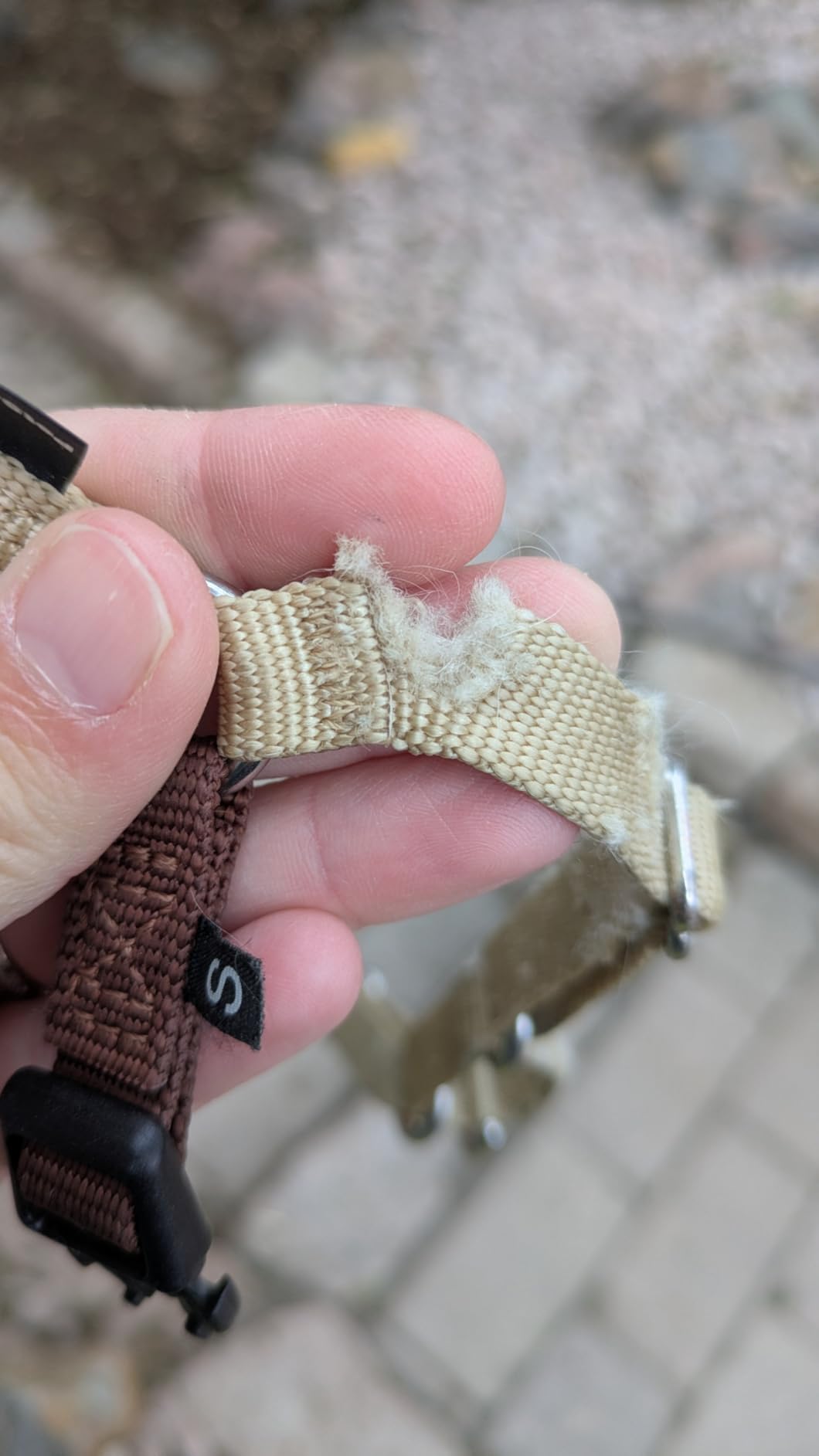
Why do owners complain about underarm chafing?
Because this harness trades padding for breathability, and the chafing hotspot is exactly where you would expect it to be. The nylon that sits under the front legs is minimal, so repeated walking builds up friction over weeks rather than days. If your dog is already missing hair there, or walks with a lot of shoulder action, the Eagloo or Sporn options in this list are padded in precisely that spot.
Is the martingale loop the same as a choke collar?
No, and the distinction is worth understanding before you buy. A choke collar tightens around the neck when the dog pulls. A martingale loop tightens a strap on the harness body itself, applying gradual pressure that the dog can respond to without load on the trachea. That is also why the front ring only works when the leash is short enough to keep the line tight as the dog surges forward.
4. Eagloo No-Pull Large Dog Vest: Best for Everyday Comfort
Eagloo Dog Harness for Large Dogs, No Pull Pet Vest with 2 Leash Clips
- Front O-ring visibly reduces pulling on strong-willed dogs
- Metal hardware feels sturdier than plastic rings
- Heavy chest padding stops the vest riding to the throat
- Back handle doubles as a car seat-belt loop
- Owners report multi-year durability
- Thick padding can get soggy in heavy rain or swimming
- Belly panel runs long on short-backed dogs
- Straps take real effort to adjust
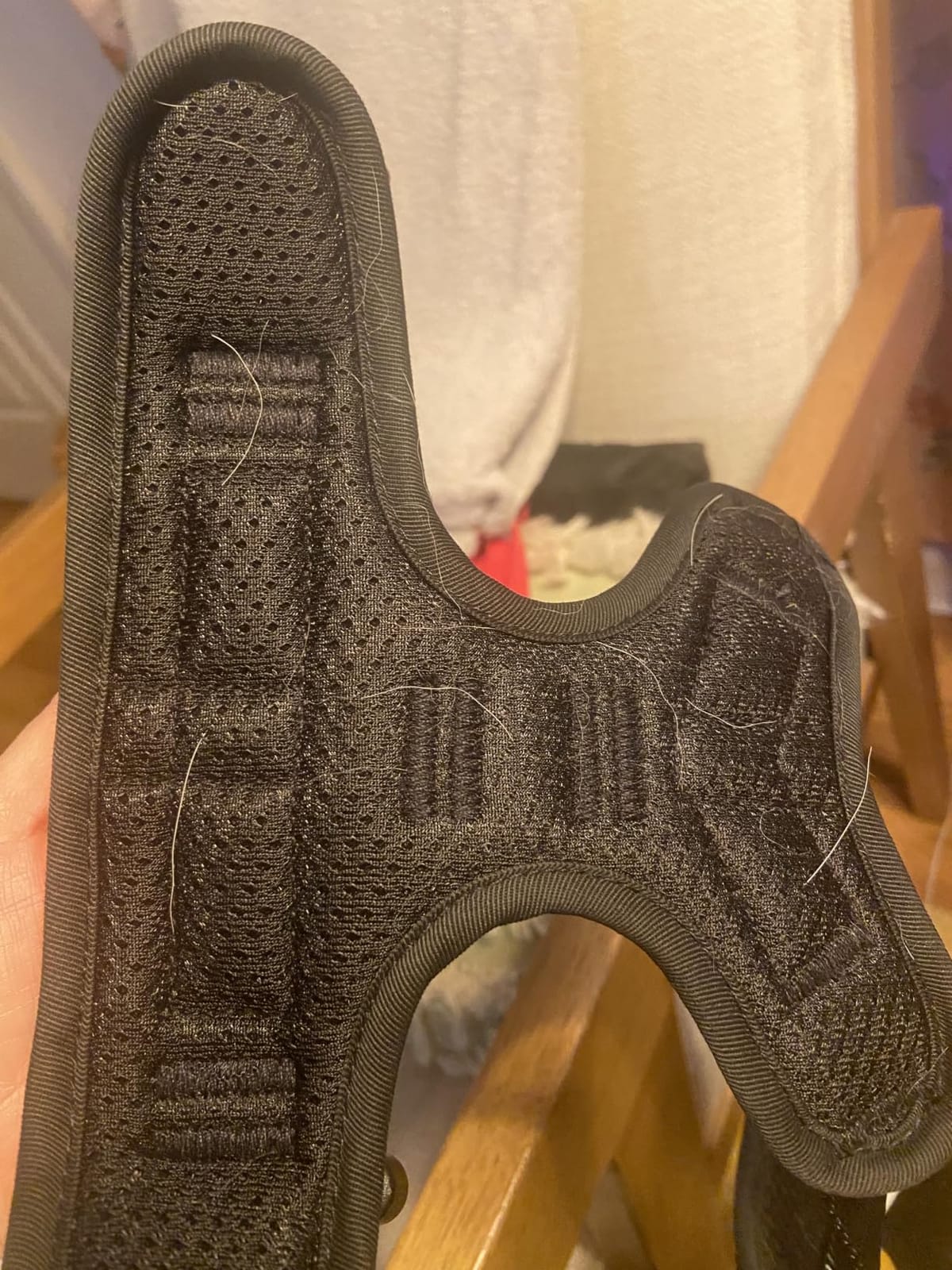
This is the one most likely to disappear into the rotation and still be going in three years. It has the most useful published size number on the list, a chest girth range of 15-35.4 inches for large and medium dogs, and at 8.6 ounces it stays light. Construction is nylon webbing with a breathable mesh lining and a sponge padding plate across the chest.
The leash hardware is unusually well thought through for a daily driver. Two metal rings do different jobs: a V-ring on the back for casual walking and a metal O-ring on the chest for heel training and pull control. The rear handle does double duty as a seat-belt loop and a lifting aid, which is why it is a natural fit for anyone who also needs car seat covers for large dogs and a back seat full of dog hair. Four adjustable straps with two quick-snap buckles finish the fit, and reflective nylon webbing handles dusk walks.
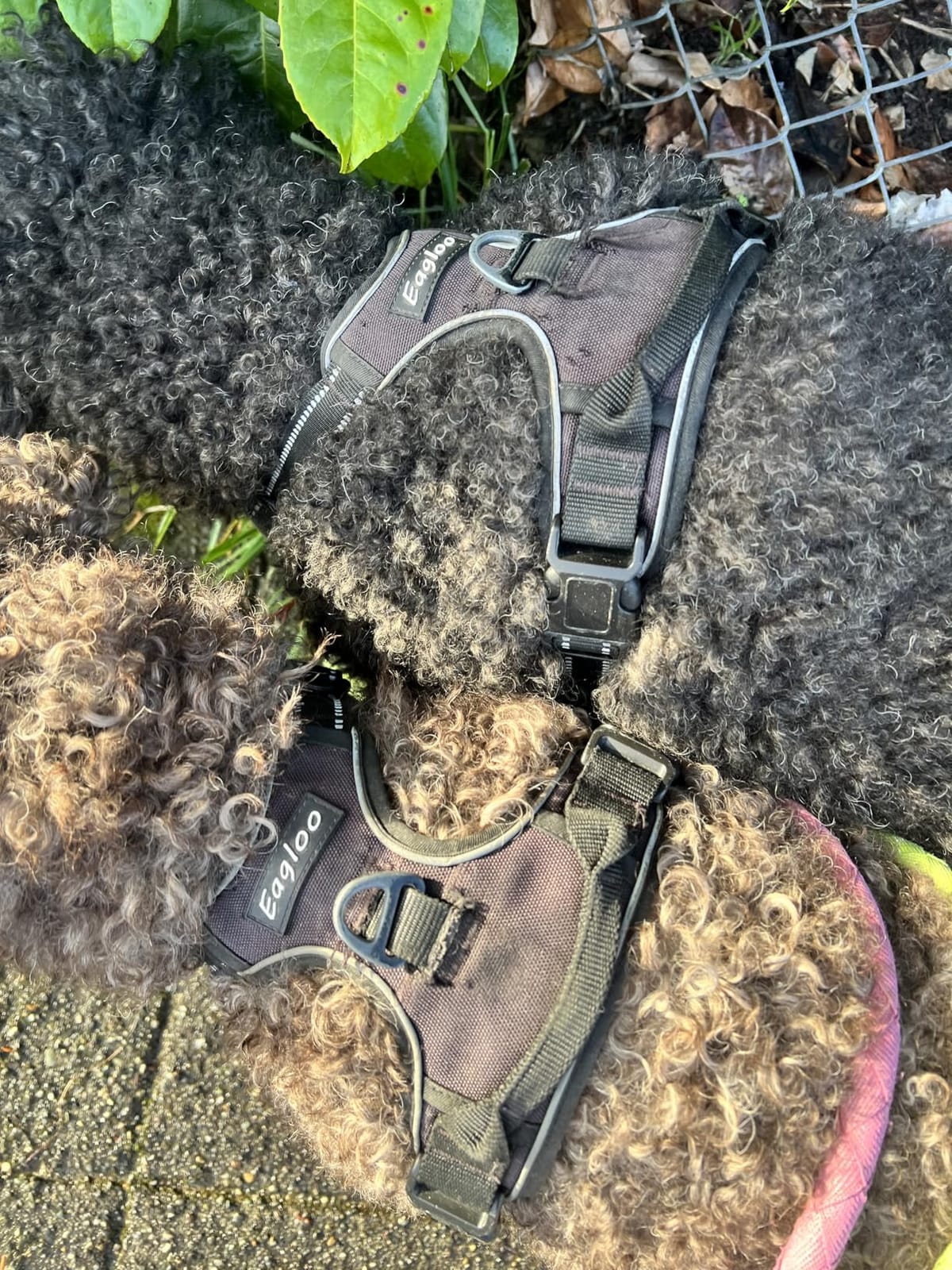
Reviewers of large-breed harnesses report that moving the leash to the front O-ring visibly changes walk behaviour, and several owners of dogs in the 45-70 pound range describe harnesses that have lasted five years or more with the stitching and clips still intact. The heavy padding across the chest is credited with keeping the vest from riding up toward the throat, which is the failure that makes people give up on front-clip harnesses.
The trade-offs are about heat and water. The padding that makes it comfortable is the same padding that reviewers flag as becoming soggy after heavy rain or a swim, and it dries slowly. The belly panel is long, which is fine on a long-backed dog like a Labrador or a German Shepherd but has been criticized by owners of shorter-backed breeds. Adjusting the straps also takes real effort.
How do I know if I need to size up?
Measure the girth at the widest point behind the front legs with a soft tape and compare it against the 15-35.4 inch published range for the size you are considering. If your dog sits in the top quarter of a size’s range, size up rather than trying to pull a smaller one down, because a vest pulled down tight starts to chafe under the front legs. Check the neck strap separately; the chest and neck sizes are not the same measurement.
Is this harness safe for car travel?
The rear handle is designed to double as a seat-belt loop, so it can tether into a back seat or cargo area. It is a convenience feature rather than a certified crash-tested restraint, so if you are serious about crash safety, look for a harness that publishes a crash test rating. For ordinary driving with a calm dog, the handle loop is a real convenience.
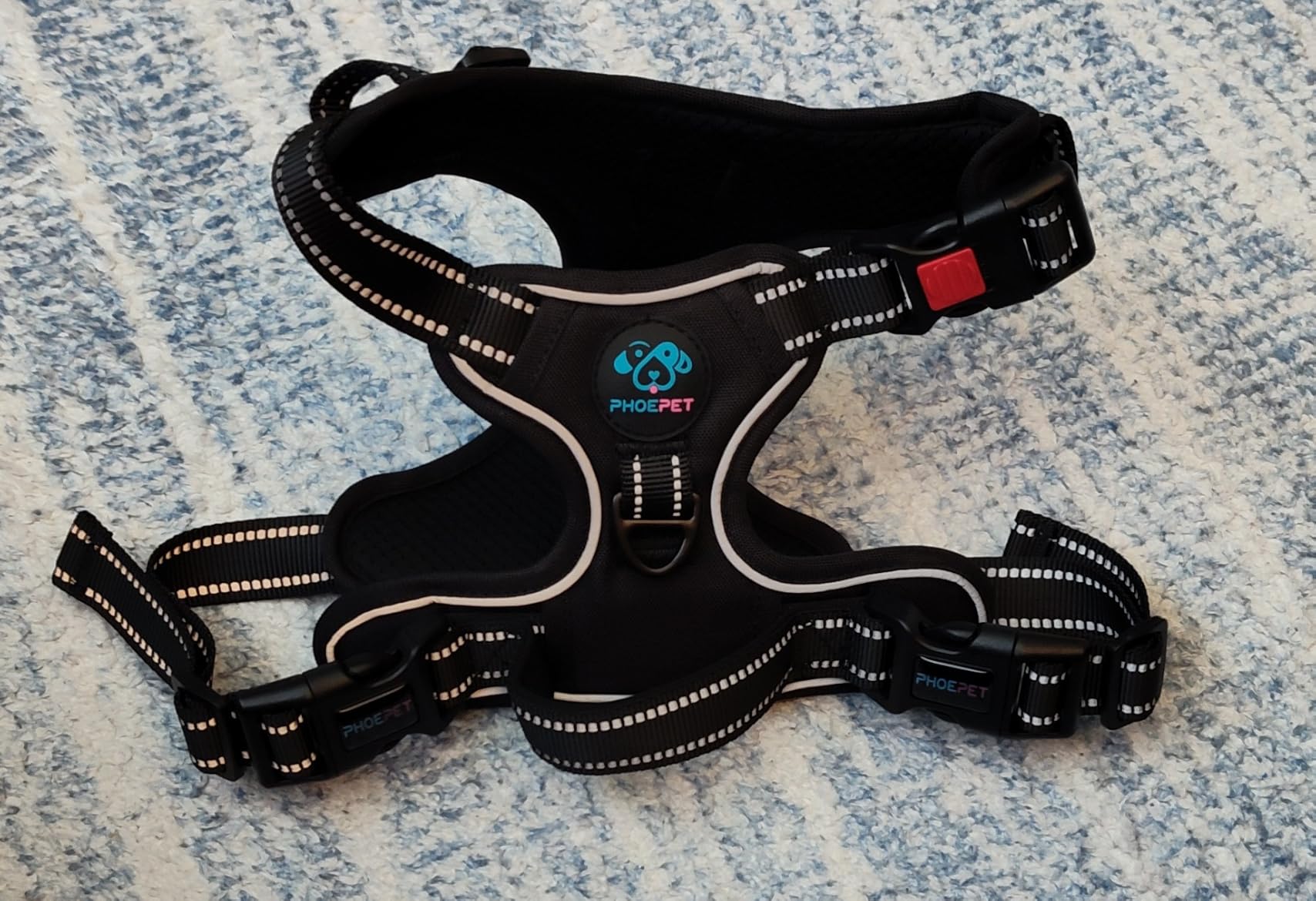
5. PHOEPET Reflective No-Pull Vest: Best for Escape Artists
PHOEPET Reflective Dog Harness Large Breed Adjustable No Pull Vest
- Lockable buckles stop dogs backing out of the harness
- Step-in design avoids a head opening
- Front hook loop reduces pulling with training
- Reflective material works in low light
- Rear handles help with lifting into a car
- Three buckles make it bulkier and slower to put on
- Straps are fiddly to adjust on an excited dog
- Front-clip use can pull the vest unevenly to one side
If your dog is an escape artist, the design feature that matters is not the front clip. It is the lockable neck buckle. This harness uses three buckles, one of which locks, and the dog never has to put its head through a tightening opening, so there is no moment where a determined dog can reverse out of the fit. That is a different failure mode from a harness that simply slides forward over the shoulders, and this design is built to close it.
The rest is a straightforward reflective no-pull vest: nylon webbing with a padded chest panel, two metal hook loops for leash attachment with the front hook serving the no-pull function, reflective material across the vest for low-light visibility, and soft grab handles on the back for control and lifting into a vehicle. It weighs 8.32 ounces and extra-large sizing is offered for large breeds.
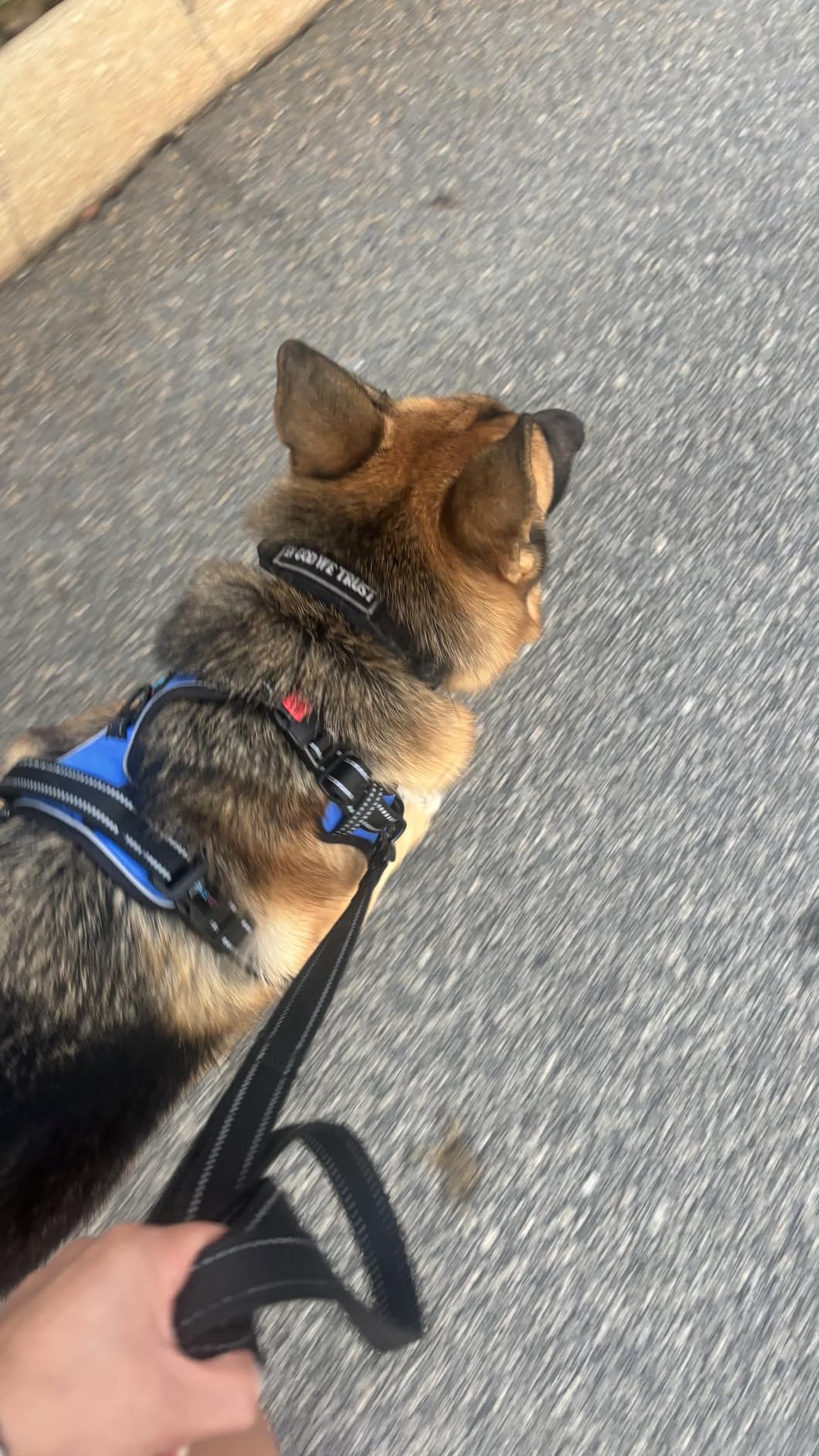
The pattern across reviews is that the lockable three-buckle design prevents escape, which matters most to owners of Huskies, Pit Bulls, and other determined pullers. Adjustability is described as secure but fiddly to set, and buyers generally accept that the front clip reduces rather than eliminates pulling. That honest framing is exactly right, and it matches what we say at the top of this guide.
Three practical downsides. Three buckles mean a bulkier garment that takes longer to put on than a two-buckle vest, which is a real cost twice a day over years. The straps are fiddly to adjust, especially on an excited dog that will not stand still. And some owners report that sustained front-clip use can pull the vest unevenly to one side, which means checking the fit every few walks rather than once a month.
How does a lockable buckle prevent escape?
It removes the release that dogs exploit. In a conventional harness, a dog that reverses and backs up can push its shoulders through the neck opening and slip out behind. When the neck buckle is locked closed, that opening no longer expands, so the same movement just tightens against the dog’s chest. It is a mechanical fix rather than a behavioral one, which is why it works on a dog that has already perfected the escape.
Is it heavy enough for a strong large dog?
It is built for large breeds and the lock is the feature that does the work, not the material weight. Where it is thinner than a tactical 1000D nylon vest is in sustained chewing, so for a dog that chews gear rather than escaping, a heavier vest in this list is a better match. For a dog whose problem is backing out, this is the right choice.
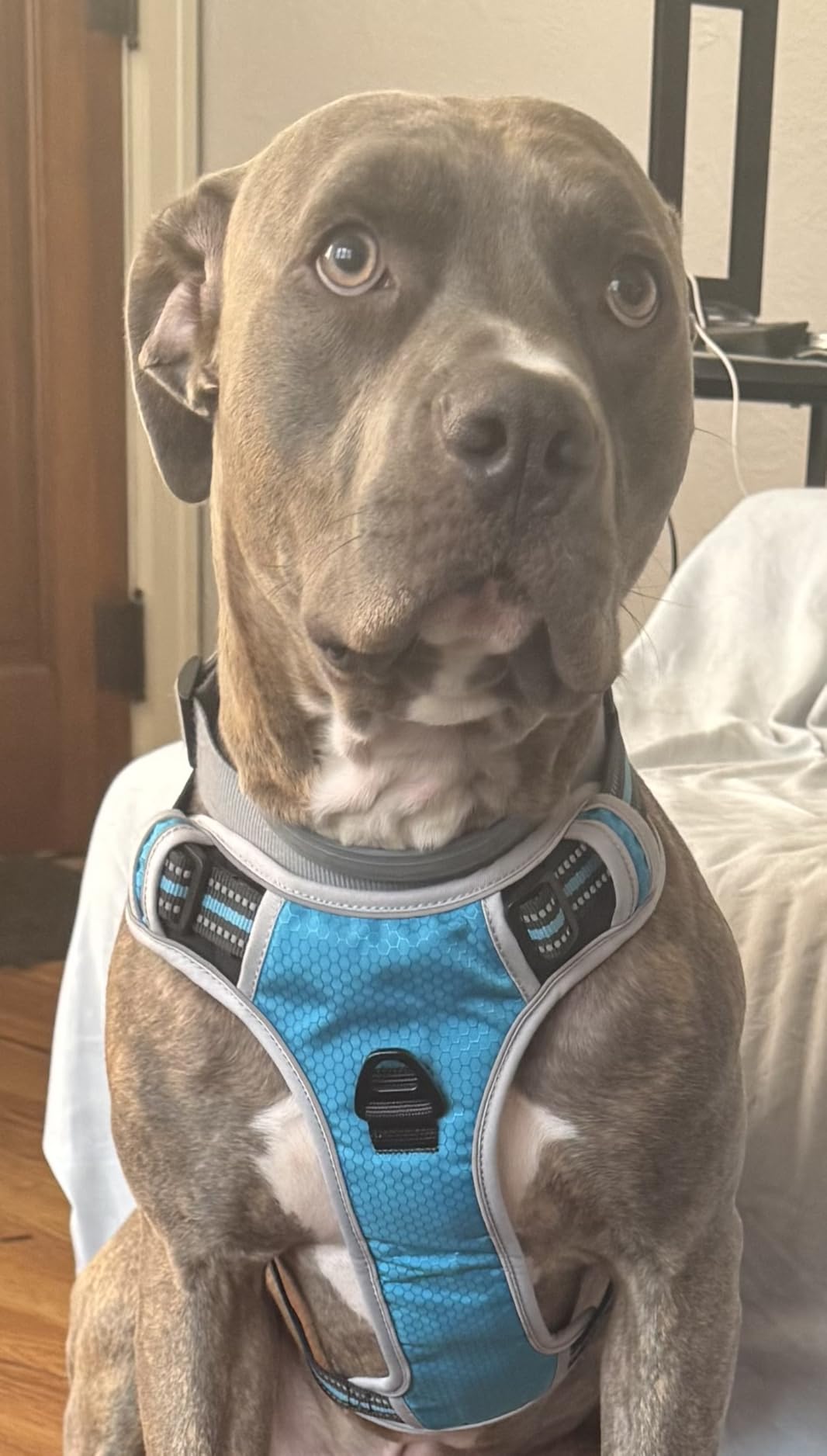
6. tobeDRI No-Pull Harness with Leash: Best Hardware and a Free Leash
tobeDRI No Pull Dog Harness Adjustable Reflective Oxford Easy Control Medium Large Dog Harness with A Free Heavy Duty 5ft Dog Leash, Blue, L
- Metal delta rings and bartack stitching hold under hard pulling
- Locking snaps prevent accidental detachment
- Machine washable which is rare on tactical vests
- Bundled 5 ft leash with reflective stitching
- Easy to handle for owners with limited dexterity
- Sizing can run small for large dogs
- Straps are hard to adjust
- Head opening is small for some dogs
- One report of fabric tearing at the hook
This is the best-constructed harness in the list at the hardware level, and it arrives with a 5 foot heavy duty leash so you can use the front ring properly on day one. The leash attachment points are two strong metal delta-shaped rings, one at the front and one at the back, sewn with box stitches and bartacks, which is the strongest stitching method in this list. Both snaps are locking quick-snap buckles.
The build is high-density nylon Oxford with nylon webbing, a breathable mesh lining, and rust-proof metal hardware, at 1.2 pounds. Four adjustors at the neck and chest give a custom fit with room to grow, reflective stitching handles night visibility, and the whole thing is machine washable, which is genuinely rare on a vest-style harness. The bundled leash has reflective stitching and a cushy handle.
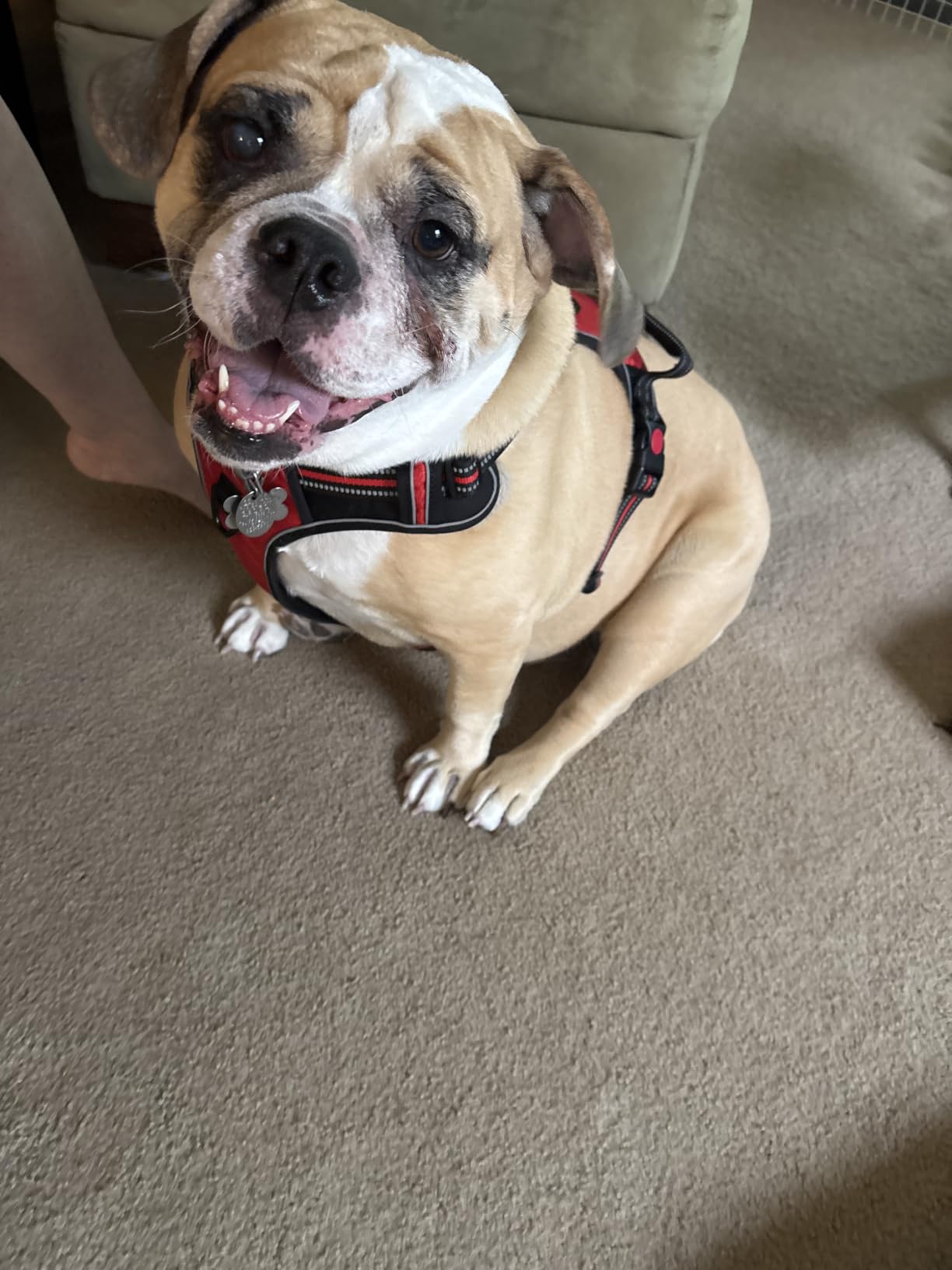
Owners highlight the box-stitched delta rings, the locking snaps, and the fact that they can wash the harness in a machine. Several buyers also note how easy it is to handle, which matters more than it sounds for owners with limited hand dexterity who do not want to work a fiddly buckle on an excited 70-pound dog.
The most common complaint is fit, and it runs in one direction. Several large-dog buyers found the sizing runs small, and the head opening is tight for some dogs, so measure carefully and be prepared to size up. Straps are also described as hard to adjust. A small minority report hardware or fabric failures, including one report of fabric tearing at the harness hook within days, and some buyers received items that did not match the advertised lock and triangle-ring design, so check what arrives against what was listed.
Why does the included leash matter?
Because a front clip only steers if the leash stays short and tight as your dog surges forward. A standard 6 foot leash that clips in while swinging wide gives the harness nothing to work with, and owners often blame the harness for a geometry problem the leash caused. A 5 foot leash bundled with a harness designed around a short front lead removes that variable from the equation.
Should I size up if my dog is between sizes?
Yes, and that is the specific advice for this harness. Unlike most designs in this list, the complaints here run toward running small rather than running large, and a tight fit at the neck opening on a strong dog is a safety problem rather than a comfort one. Measure the chest girth and the neck separately, and compare both against the chart.
7. OneTigris Tactical No-Pull Service Vest: Best for Hiking and Gear
OneTigris Tactical Dog Harness Vest No-Pull Service Dog Vest for Large Dogs
- Full vest spreads load across the torso without chafing
- MOLLE slots and loop panels suit working dogs
- Top handle works for lifting and traffic control
- Holds up to rough terrain and water crossings
- Large loop panel accepts custom patches
- Getting a precise fit takes careful measuring between sizes
- Heavier build than a basic harness
- ID patches are not included
- Smallest sizes cannot be tightened enough
If your large dog carries gear, works alongside you, or spends real time underbrush and in water, this is the one to build a kit around. It is durable 1000D nylon with a padded interior, and the construction philosophy is that the vest is a platform. A 9 by 2 inch loop panel on top and a 3.5 by 2 inch panel on the neck strap accept morale patches and ID badges, and two MOLLE straps plus hook-and-loop panels on each side carry pouches.
The sizing is published in detail: size L fits a neck of 18-25 inches, a chest of 27-36 inches, and a back of 11 inches, while XL fits a neck of 20-29 inches, a chest of 31-40 inches, and a back of 13 inches. A front leash attachment point provides the no-pull control, a top handle handles traffic control and lifting, and four quick-release buckles with tri-glide neck and chest slide buckles do the adjustment. The manufacturer advises against lifting a dog by the grab handle alone.
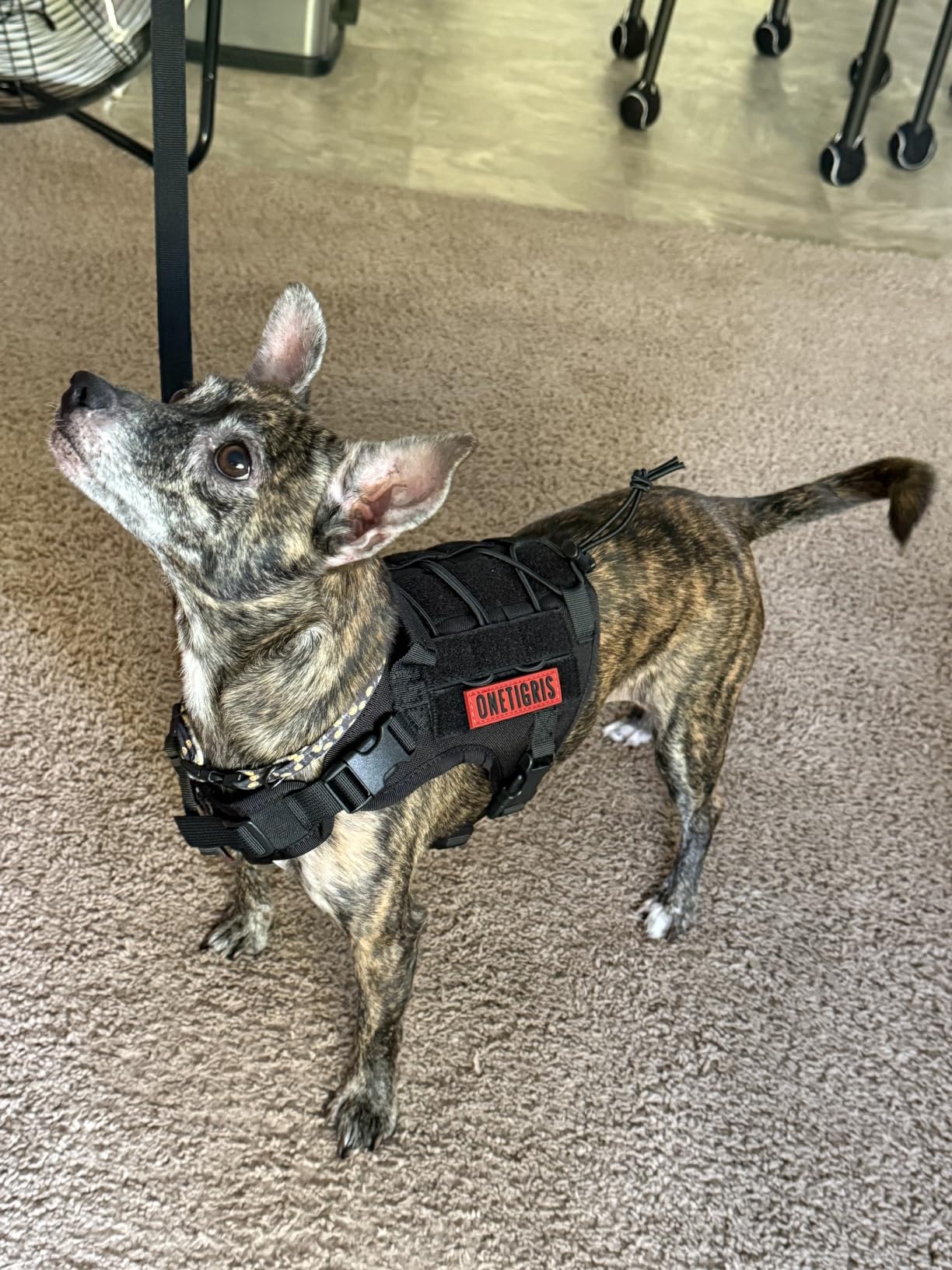
Long-term owners of bully breeds report the vest stays intact after years of daily walking with no fraying at the D-rings or seams, and hikers describe it holding up well while carrying pouches and water. The full-body design spreads load across the torso rather than concentrating it at two straps, which is why owners of broad, stocky dogs tend to report fewer hot spots on this model.
Fit is the recurring caveat and the manufacturer’s own guidance is to size by measurement rather than by label. It is a heavier build than a basic harness, noticeable on smaller dogs. ID patches are not included even though the loop panels are sized for them, and at the smallest sizes the vest cannot be tightened enough for an escape-artist dog, so this is a working-dog pick rather than an escape-proof one.
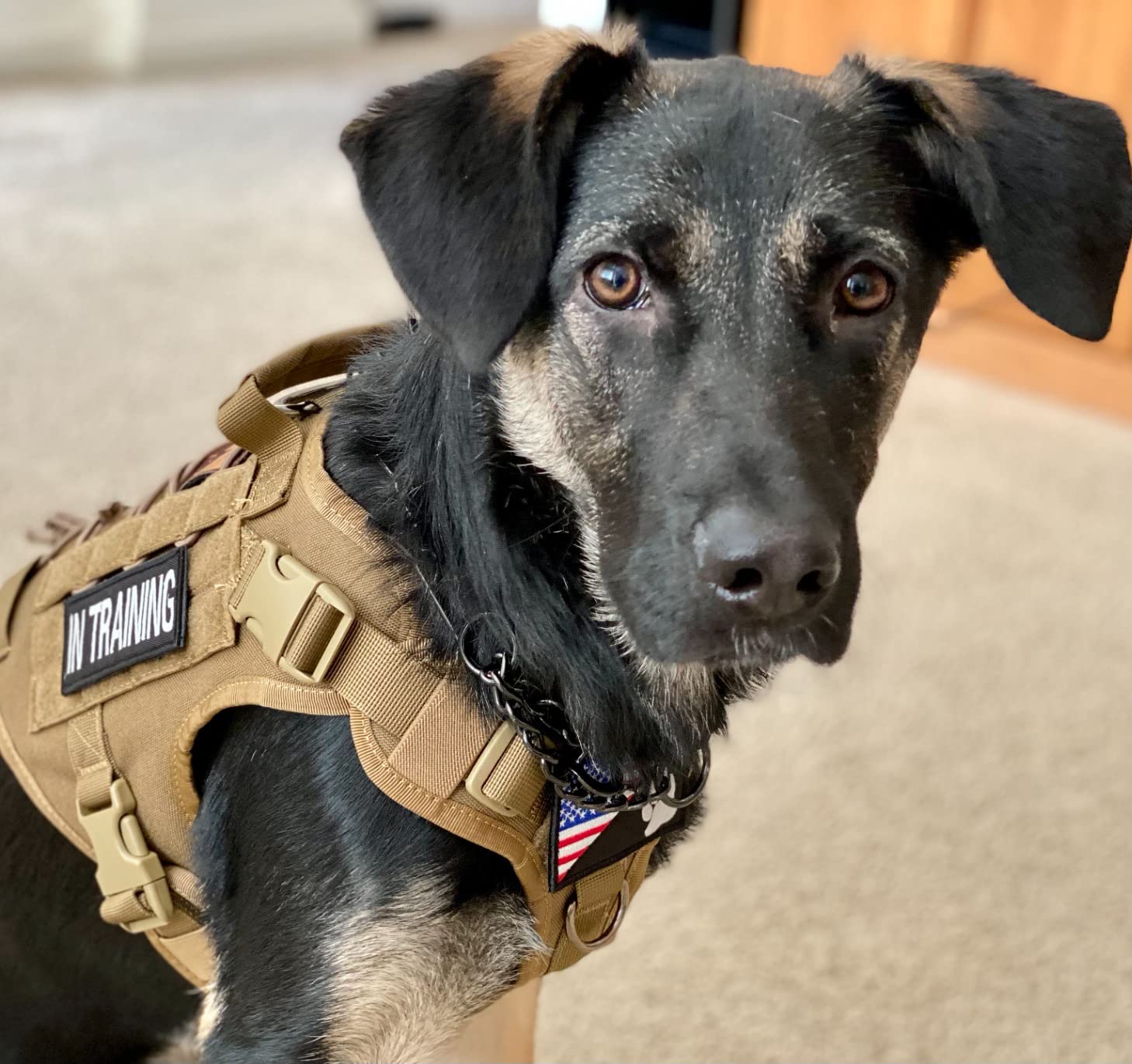
Will this fit a broad-chested bully breed dog?
It is one of the better fits in this list for stocky, broad-chest shapes, because the full vest wraps the torso rather than hanging from two shoulder straps, and the chest ranges are published in real numbers you can measure against. Measure the chest at its widest point and compare to the 27-36 inch or 31-40 inch ranges, and check the back length figure as well, since a back measurement that is too short is what causes rubbing at the elbows.
Is it a service dog harness?
It functions as one. The neck strap carries a 3.5 by 2 inch loop panel and the back carries a 9 by 2 inch panel, which between them cover the two patches most service dogs need, and the MOLLE strips let you mount a handle or a light. Note that the patches themselves are not included, so you are buying the mounting platform. Also follow the manufacturer guidance about the grab handle rather than lifting a dog from it.
8. Embark No-Pull Training Vest: Most Versatile
Embark No Pull Dog Harness, Reflective Adjustable Training Vest, No Choke
- Straps route between the legs so shoulders stay free
- Front ring reduces pulling without neck strain
- Reinforced stitching holds up over time
- Lightweight Oxford that does not overheat the dog
- Straps do not twist and loosen
- Plastic sliders and adjusters can loosen on the dog
- Padding gets heavy when wet and sags
- Back plate runs short on the large size
- Less reflective coverage than some rivals
This is the most thoughtfully engineered harness for a dog whose shoulders need to move, and the reason is the strap routing. The straps run between the legs rather than across the shoulder blades, which leaves the shoulder free and produces a noticeably more natural stride. The construction is heavy duty Oxford and military grade nylon with soft padding, at 11.36 ounces, and the large size covers a 33-39 inch chest with a 17-27 inch neck.
There is a gel grab handle on the back sized for a large dog’s hand, front and back leash attachments, 360-degree reflective trim for low light, and reinforced safety clips with extra-length adjustable straps. The manufacturer states a pulling strength of up to 750 lbs, which is a manufacturer claim rather than something we tested, but it is consistent with the reinforced hardware and the owner reports below.
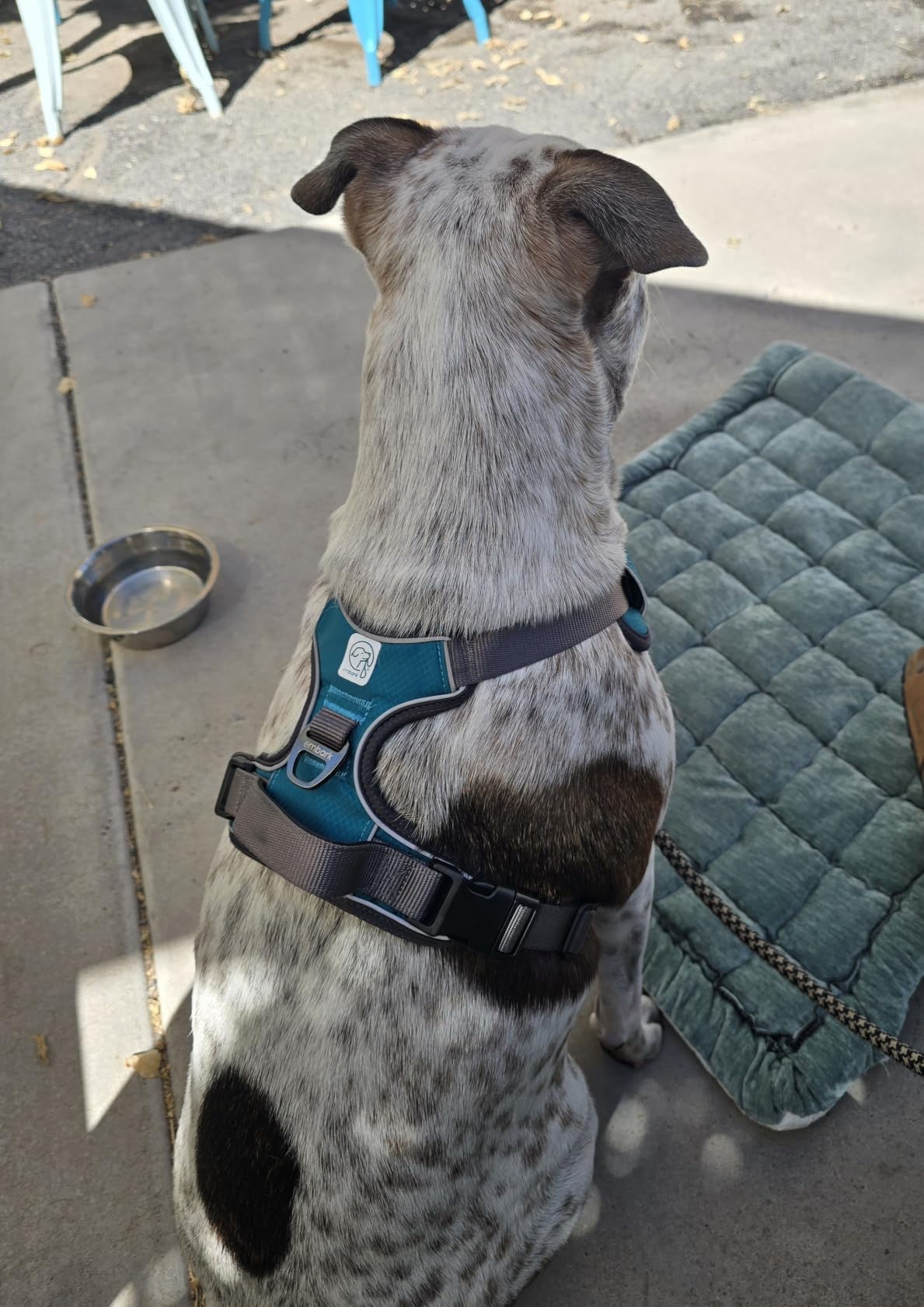
Owners of Great Danes, German Shepherds, and Alaskan Malamutes emphasise that the shoulder-free strap layout plus a solid front ring give genuine control without neck pressure, and that the smooth padding resists chafing. Owners also report that the straps do not twist and loosen as the dog pulls, which is the specific failure that quietly disables a front clip.
There are real criticisms. Reviewers report that the plastic sliders and adjusters can loosen while the dog is wearing it, which is a recurring theme across this whole category. The padding becomes heavy when wet and sags away from the body. On the large size the back plate runs short, which pulls the girth straps into the elbows, and the reflective coverage is more limited than some rivals. Worth noting, the manufacturer has been praised for issuing an updated harness with stronger buckles and thicker metal D-rings after early failures.
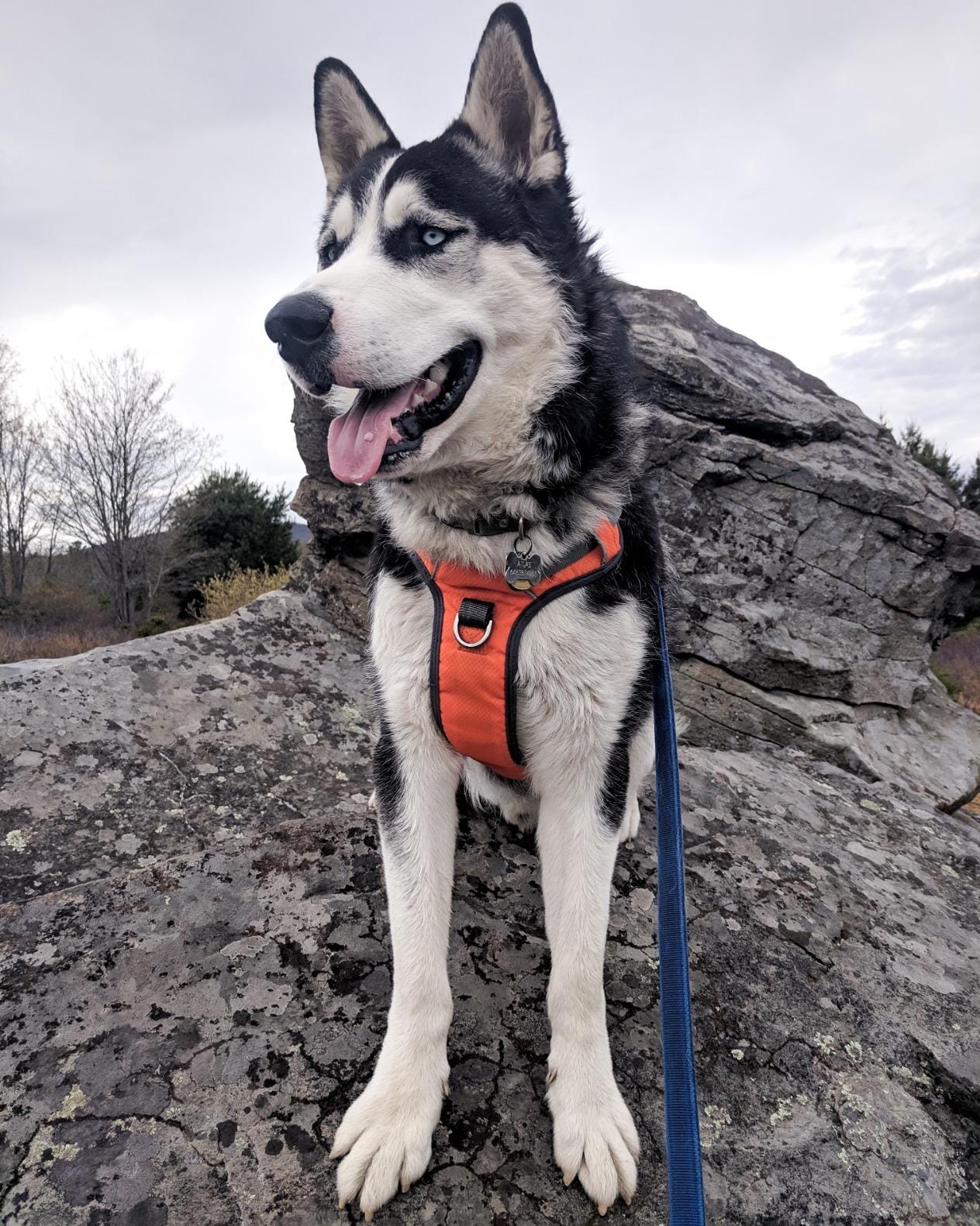
Is the 750 lb pulling rating accurate?
That is the manufacturer’s stated figure, and we have not independently verified it, so treat it as a design claim rather than a tested result. What is verifiable is the construction: reinforced safety clips, multi-pass stitching, and front and back metal attachment points. For a dog pulling under 100 pounds, the practical limit is the stitching and the fit rather than the rating.
Why does strap routing matter for big dogs?
A strap across the shoulder blade is a strap sitting on the joint that does the work. When a large dog pulls, that joint takes the load and the strap digs in, which restricts movement and creates exactly the kind of sore spot owners report at the elbow. Routing the straps between the legs moves the load onto the chest, where padding distributes it, so the shoulder can rotate freely through a full stride.
9. WINGOIN Heavy Duty No-Pull Vest: Best for Visibility and Thick Necks
WINGOIN Tactical Dog Harness for Large Dogs,No Pull Heavy Duty Dog Harness
- Side-entry design lowers resistance to being harnessed
- Bright colours are genuinely visible at night
- Neck and back lines adjust independently
- Sewn-in grab handle plus stainless steel D-rings
- Sizes run from 15 lb to 160 lb
- Buckles feel cheap next to metal hardware
- Straps loosen over time and need re-adjusting
- Adjustment takes real strength on strong dogs
- Leg openings can be cramped and bunch the back
This is the widest size ladder on the list and the one to look at if your dog is over 100 pounds. Sizes run from 15 pounds all the way to 160 pounds, with the large size fitting a chest girth of 27-37 inches and a neck of 19-25 inches for dogs in the 45-80 pound range, and an XX-Large published for 110-160 pounds with a chest of 36-43 inches. The XXL ceiling matters, because most no-pull vests stop being offered well before that.
Construction is a 1000D nylon outer layer over a breathable mesh inner layer, at 1.08 pounds. Two stainless steel D-rings give you front and back attachment, a sewn-in grab handle gives you control, a reflective strip design handles evening visibility, and a Velcro panel and ID pocket take patches. Four quick-release buckles let the vest go on from the side of the neck rather than over the head, which matters for dogs who object to harnesses.
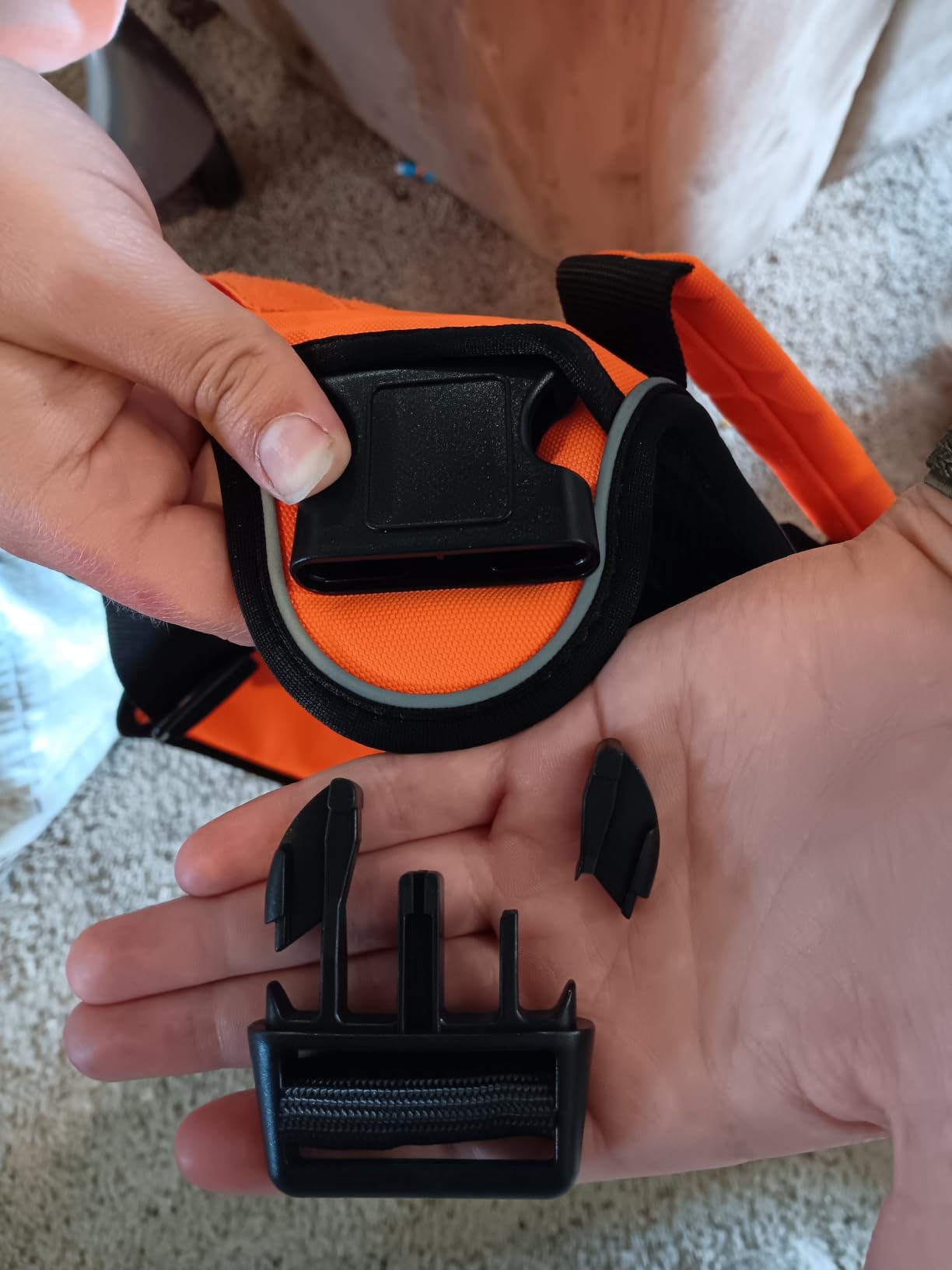
Owners of Mastiffs, Australian Shepherds, Huskies, and Cane Corsos report that the front D-ring ends pulling behaviour, and that the vest is bright enough to be seen at a distance in low light. The independent adjustment of the neck and back lines is specifically credited for fitting thick-necked dogs, which is a genuine problem for breeds like Mastiffs and Anatolians.
Two things temper that. Sizing is the main trap, with several buyers reporting that a dog can max out one size before the next becomes too large, so measure rather than guess. And the hardware is described as adequate rather than premium, with buckles that feel cheap next to the stainless steel rings. Straps also loosen over time, adjustment takes real strength on a strong dog, and some dogs find the leg openings cramped enough that the vest bunches on the back.
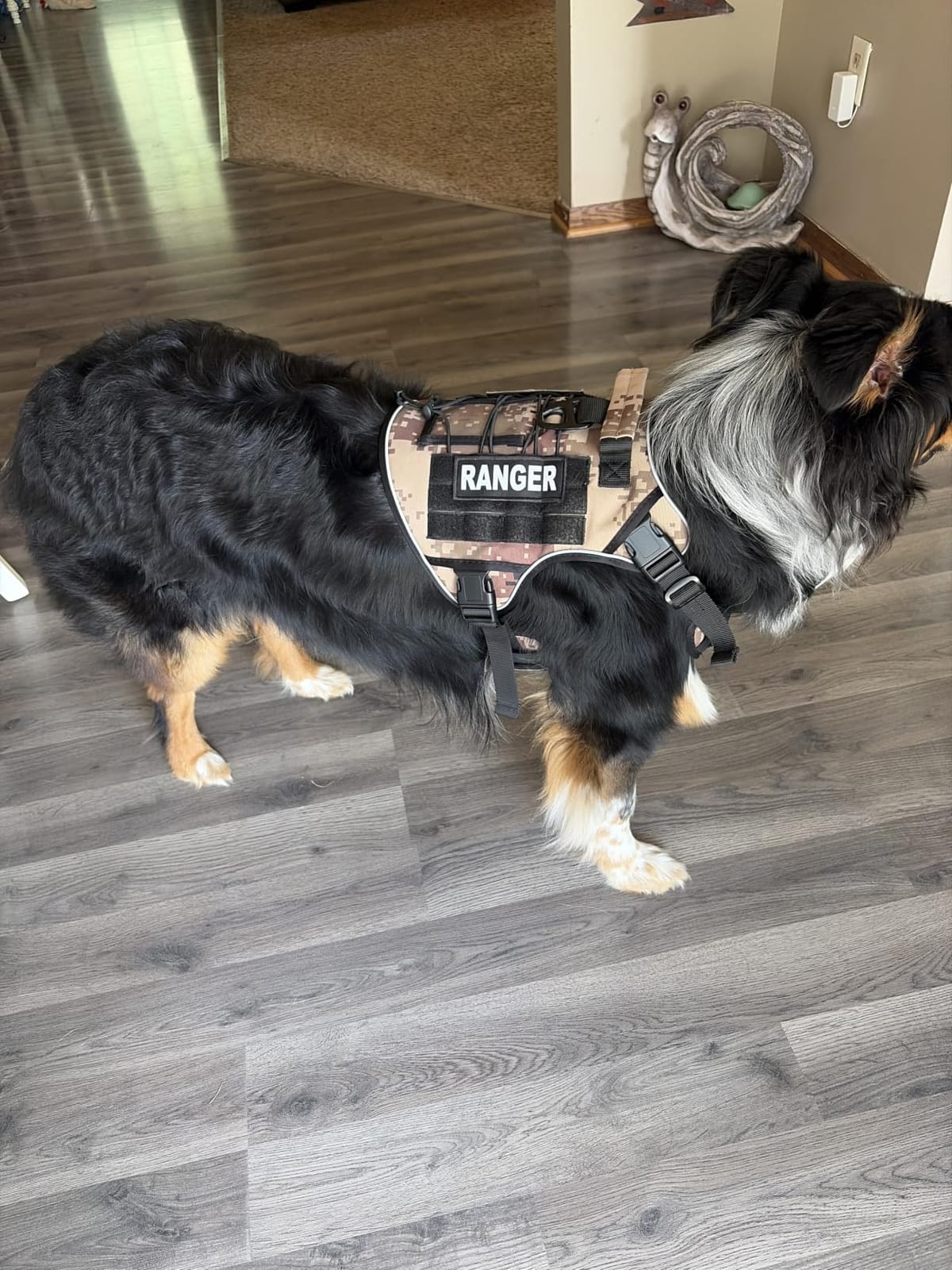
Is there a no-pull harness in this list for a dog over 100 pounds?
There are two. This one publishes an XX-Large for 110-160 pounds with a 36-43 inch chest, and the AUROTH above publishes an XL for 75-135 pounds with a 26-42 inch chest. Between those two, a 140-pound dog is covered. Anything heavier, the practical approach is to look at a heavy-duty working harness built for service dogs rather than a no-pull design, since no-pull mechanisms are about steering, not load capacity.
Why do thick-necked dogs struggle with harnesses?
Because most harnesses adjust the neck and chest on a shared strap, so tightening the chest to stop a slide also chokes the neck, and loosening the neck for comfort opens up the chest. This vest adjusts the neck and back lines independently, which decouples those two problems. It is the single most useful feature on this harness for Mastiff, Akita, and Cane Corso shaped dogs.
10. Sporn No-Choke Mesh Harness: Best for Sensitive Skin
- Padded sleeves reduce rubbing under the front legs
- Elastic mesh chest redirects pulling gently
- Extremely light at 2.26 ounces
- Weatherproof nylon suits year-round use
- Cord lock keeps the harness from shifting
- Mesh offers less structural padding than a vest
- Slip-over design needs the head through an opening
- Large and XL sizing tops out around 100 lbs
This is the lightest harness in the guide by a wide margin at 2.26 ounces, and it is built around the specific problem of rubbing. The design uses padded restraint sleeves where the legs pass through, which is the one place every other harness in this list reports hot spots. If your dog has bare skin, missing hair, or a history of underarm chafing, those sleeves are the reason to choose this over a heavier vest.
The steering mechanism is an elastic mesh chest that flexes with the dog’s movement and redirects pulling without neck strain, held in position by a cord lock, with a metal D-ring for leash attachment. The material is lightweight weatherproof nylon mesh, and the one-piece slip-over construction means no buckles to fumble. Large and XL fit necks of 16-24 inches for dogs of approximately 60-100 pounds.
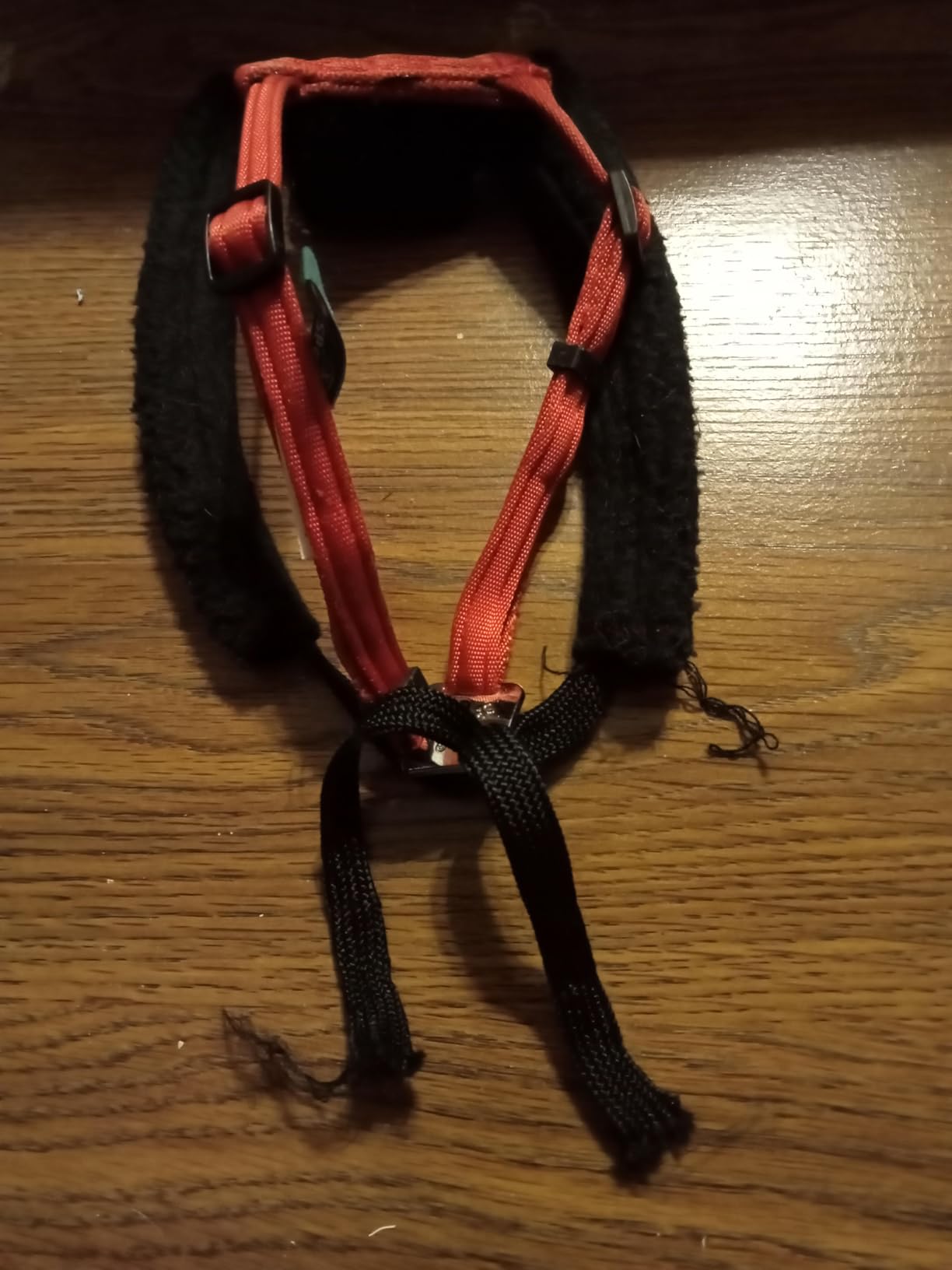
Buyers of this style typically value the anti-chafing sleeve padding and the very low weight for long walks, and the trade-off is less structural padding than a tactical vest. The weatherproof nylon is suited to year-round outdoor use, and the cord lock does a quiet but important job of keeping the harness from shifting during a walk, which is what keeps the front ring aligned.
Be clear about the ceiling. This listing returned full specification data but no written owner review text in our research pass, so what we have is the specification set and a 4.4-star average across 9166 ratings rather than a body of owner narrative, and we are weighting it accordingly. The mesh construction offers less padding than a vest style, the slip-over design means the head passes through an opening, and the Large and XL sizing tops out at roughly 100 pounds, which excludes the largest dogs in this guide.
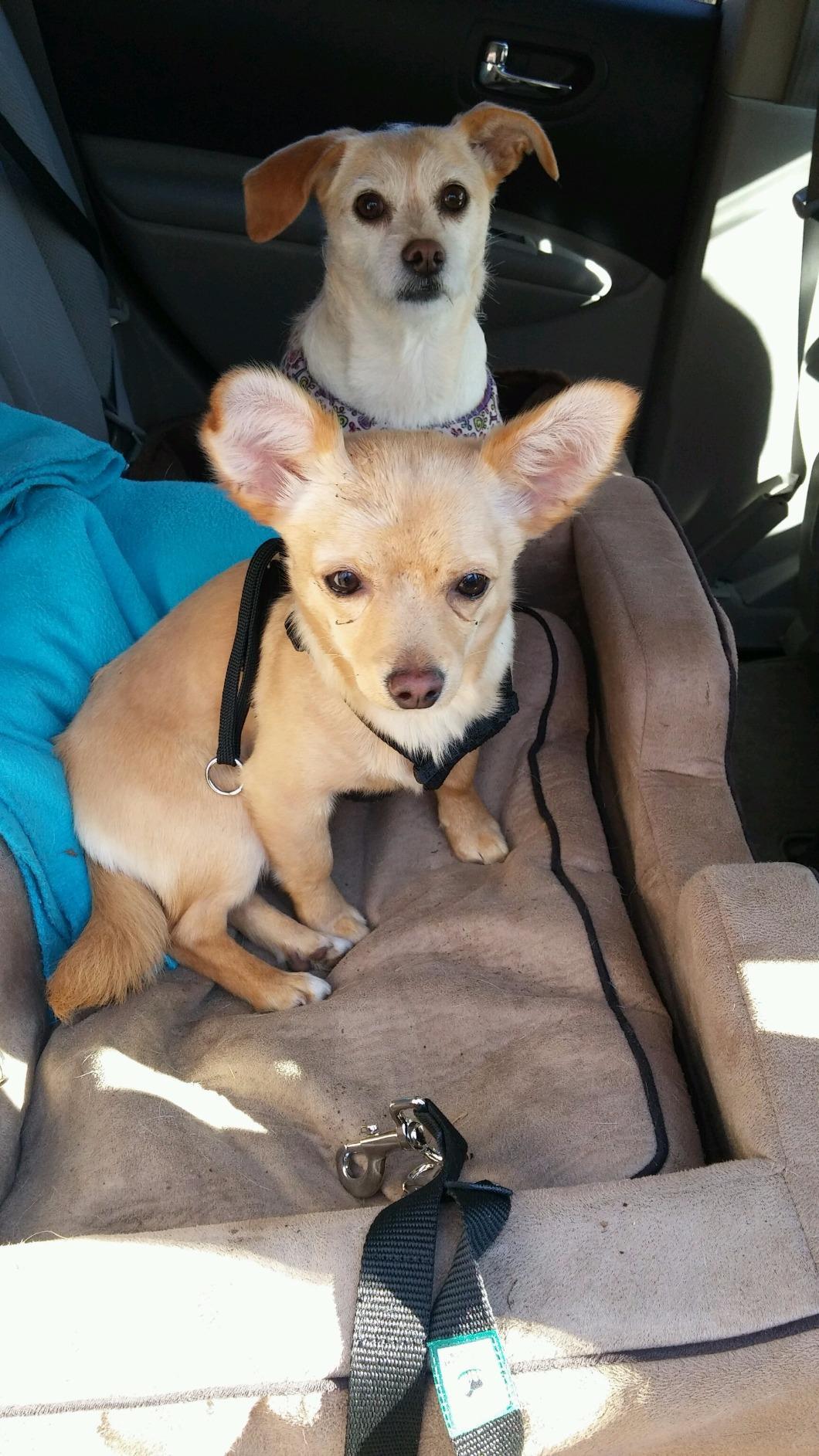
Will this stop chafing completely?
It addresses the three places chafing actually happens: behind the front legs, at the sternum, and under the belly strap. The padded restraint sleeves protect the underarm area, which is the most common complaint on minimal-coverage harnesses, and the elastic mesh flexes with the shoulder rather than resisting it. It is the most direct chafing answer in this guide, though not a guarantee, and a thin vest layer is still worth trying if your dog’s skin is reactive.
Can a 2.26 oz harness handle a strong dog?
It redirects pulling rather than restraining it, and the low weight is why it stays comfortable on long walks, so the answer depends on your dog’s size and temperament. Under about 60 pounds it is a comfortable fit. For a dog in the 90-100 pound range it is workable but thin, and above 100 pounds the published sizing simply stops, so move to one of the heavier vests in this guide.
Why Large Dogs Pull and Why a Harness Is Not a Cure?
Large dogs are not pulling to defy you. Almost every pulling behaviour in a dog over 50 pounds has a reinforcement history behind it, and knowing that changes how you train. A dog lunges at a squirrel, the lunge produces forward motion, the squirrel wins, and the motion gets reinforced. Repeat that a few hundred times and pulling stops being a choice and becomes a default the dog has no reason to abandon.
That is why a harness works. When the leash attaches to a ring on the center of the chest and the dog pulls forward, the leash angle turns the shoulders toward you rather than away, so the forward motion no longer propels them down the street. Owners consistently report visible changes within one or two walks, but the reason it holds is the training, not the hardware. Take the leash off the front ring too early and the default returns.
Some trainers caution against front-clip harnesses because a back-clip harness gives a dog a surface to push against, which can teach them to pull harder. That is a fair criticism of rear-only designs and it is why every harness in this guide has a front attachment. Once behaviour improves, you can move the leash to the back clip and keep the front ring available as a training tool rather than a permanent setup.
Buying Guide: Clip Type, Fit, Chafing and Escape-Proofing
Front clip, back clip, or both?
All ten picks here have a front chest attachment, and that is the non-negotiable feature for a puller. A front clip steers, a back clip distributes load, and dual-clip harnesses let you train on the front and walk relaxed on the back. The caveat is leash length, because a front clip only steers if the leash stays short as the dog surges. If your dog can walk past you on a 6 foot lead, the front ring is doing very little.
Matching a harness to your dog’s weight
The 45-80 pound range is where most no-pull vests are designed and where the selection is widest. Above that, published weight labels get vaguer and real girth numbers get rarer, so lean on measurements. For dogs in the 75-135 pound range, the AUROTH XL and the OneTigris XL both publish real chest ranges. For 110-160 pounds, the WINGOIN XXL is the only pick here with a published ceiling that high, and beyond that a heavy-duty working harness is a more honest recommendation than a no-pull design.
The three ways dogs get out of a harness
Backing out: the dog reverses and slips the neck opening. The fix is a lockable or double-closure neck buckle, which is what the PHOEPET design does, or a full-wrap vest that the dog cannot reverse through. Slipping forward over the shoulders: the harness rotates and the body slides out over the top. The fix is a top handle or a girth strap that tightens toward the chest, plus a fit tight enough that two fingers do not pass under the chest strap. Rear-clipping out: the dog turns inside the harness when the leash is attached behind. The fix is a design that keeps the torso enclosed rather than open at the back, which again points to a vest rather than a strap harness. Escape-proofing is a property of the design, not of the brand name, and it also depends on using the leash system the design was built around.
Where chafing happens and how to prevent it
Three hot spots, consistently. Behind the front legs, where the underarm rubs on every stride, at the sternum where a chest strap sits too high, and under the belly strap where the girth band digs in. The fix in all three cases is the same: wide padded girth straps, sitting low on the chest but not so low that the strap hits the point of the shoulder. Judge chafing over weeks, not days, since it takes repeated friction to show. Note that mesh lasts longer against rubbing but wears out faster as a fabric than nylon webbing does.
Hardware under real load, and broad chests
Metal D-rings and metal adjusters are the line between a harness that lasts a year and one that fails in a month, because plastic hardware and cold weather are a bad combination. Broad-chested bully breeds are the hardest fit in this category, since most vests are drafted for a narrower chest, and the fix is a design that wraps the torso and publishes a real chest range, which is why the OneTigris vest earns a place on a stocky dog where most tactical vests slide. Sighthounds are the opposite problem, where a narrow head and slim neck are the escape risk and a lockable buckle matters more than girth.
How to Measure Your Dog for a Harness?
Measure before you order, and use a soft tape measure rather than a weight label, because most sizing mistakes on this list come from buying by breed name. A dog’s coat, age, and body condition all shift a girth measurement by an inch or two, and an inch is often the difference between a snug fit and a harness that slides.
First, measure the chest girth at the widest point, which is just behind the front legs and across the rib cage. That is the number to compare against the published range, such as the Eagloo 15-35.4 inch span, the WINGOIN XXL 36-43 inch chest, or the Embark large 33-39 inch chest. Second, measure the neck at the base where the collar sits, because neck and chest sizes are frequently not the same size label. Third, for long-backed breeds, measure the back length from the base of the neck to the base of the tail, since a back plate that is too short drives the girth straps into the elbows. Fourth, adjust to the two-finger rule: you should fit two fingers flat under the chest strap, snug enough that the harness cannot rotate over the shoulders, loose enough that your dog can take a full stride without the strap binding.
Frequently Asked Questions
What is the best no pull harness for large dogs?
The rabbitgoo No-Pull Large Dog Vest is the best all-round no pull dog harness for large dogs because the front chest ring redirects pulling while four adjustable straps let you fit almost any large-dog shape. The AUROTH Tactical Vest is the stronger pick for dogs over 80 pounds, because it publishes a real chest girth range and uses four metal adjustment rings. The PetSafe Easy Walk is the pick if heat is your main concern, since it has the least body coverage in this guide.
What is the best dog harness that dogs cannot pull out of?
The PHOEPET Reflective No-Pull Vest answers this most directly, because its three-buckle design includes a lockable neck buckle, so a dog that reverses cannot push through the neck opening. Escape-proofing depends on which failure mode your dog uses. Backing out needs a lockable buckle, slipping forward over the shoulders needs a top handle or tight girth strap, and rear-clipping out needs an enclosed torso design. Full-wrap vests are the most reliable option overall.
Is there a no pull dog harness that actually works?
Yes, but it works by redirection rather than restraint, and understanding that changes your expectations. When the leash clips to a ring on the center of the chest, pulling turns your dog’s shoulders toward you rather than driving them forward, and owners report visible change within one or two walks. What it does not do is teach anything. Without leash training the default behaviour returns, and no harness replaces that work.
What is the best dog harness to prevent chafing?
The Sporn No-Choke Mesh Harness targets chafing most directly with padded restraint sleeves where the legs pass through, which is the most common hot spot on minimal-coverage designs. The Eagloo vest is a good second choice for large dogs, because its heavy chest padding keeps the vest from riding up toward the throat. Judge chafing over weeks rather than days, and note that mesh resists rubbing better but wears out faster than nylon webbing.
Is it better for a dog harness to be tight or loose?
Snug is correct, and the two-finger rule is the practical test: you should fit two fingers flat under the chest strap. That is tight enough that the harness cannot rotate over the shoulders and the dog cannot back out, and loose enough for a full stride without the strap binding. A loose front clip is useless because the harness slides before it steers, and a tight one restricts shoulder movement and creates its own hot spots.
Which No-Pull Harness Should You Buy?
If you want one answer for most large dogs, the rabbitgoo No-Pull Large Dog Vest is the one to buy, with four adjustment points and the largest review base in this guide behind it. Over 80 pounds, take the AUROTH instead, because its published girth ranges and four metal rings are the right build for that weight. A dog that backs out of harnesses needs the PHOEPET lockable buckle, a dog that rubs needs the Sporn sleeves, and a dog over 110 pounds needs the WINGOIN XXL, since the published size ladder on most vests stops long before that.
Whatever you choose, measure the chest and neck before ordering, adjust to the two-finger rule, and keep working on loose-leash behaviour at the same time. The harness makes the walk possible; the training is what makes it stay fixed. Our 2026 guide will be updated as new models land, and if you are still building out the setup, the best dog crates for large dogs roundup covers what to do at home afterward.