
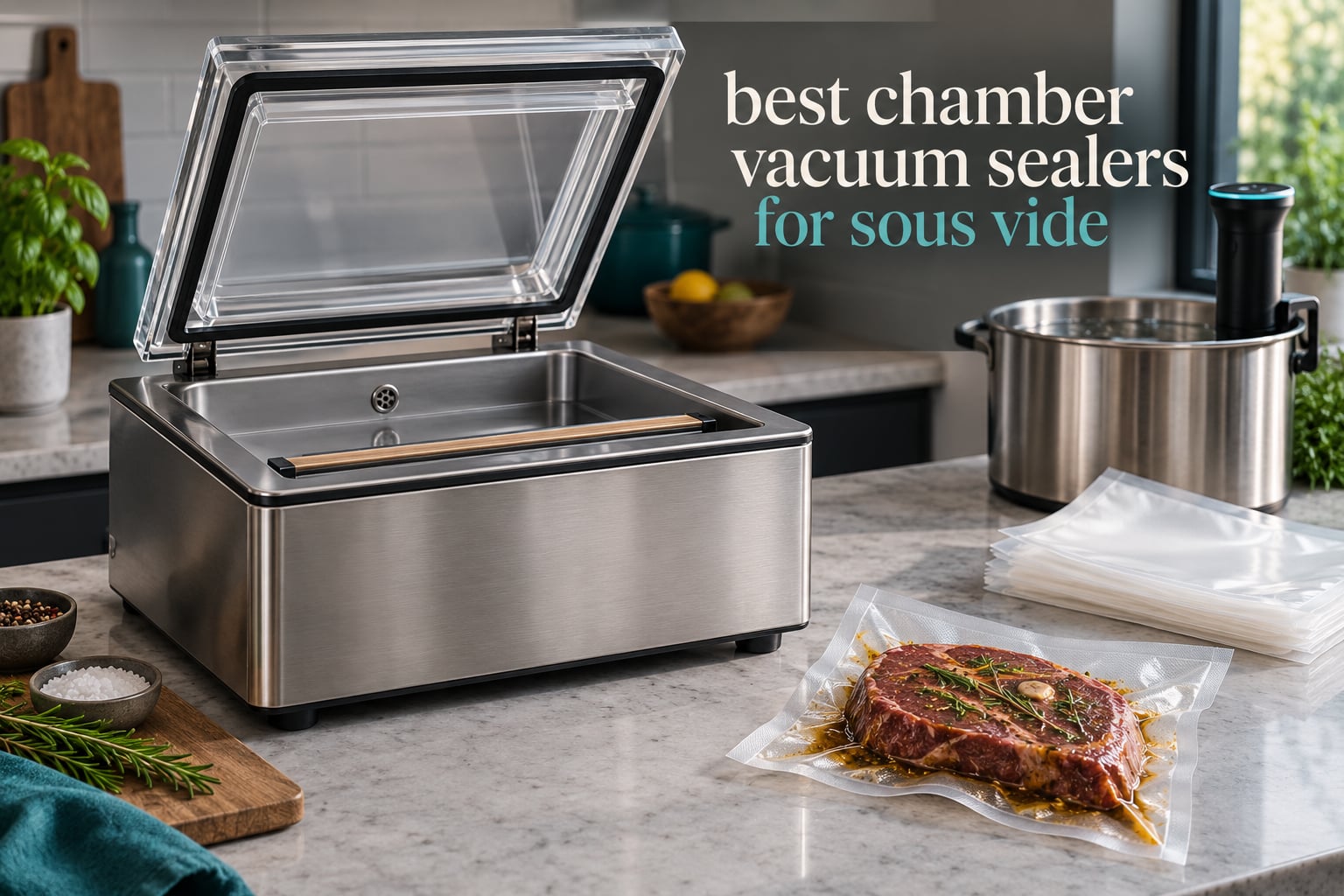
The best chamber vacuum sealer for sous vide is the Avid Armor USV20. It pulls a hard vacuum through a 4 liter stainless chamber, takes 11.5 inch pouches, weighs 17.3 pounds, and is the quietest-feeling unit here while still sealing soups and marinades without a spill. If you bag large cuts, the VacMaster VP215 is the stronger buy. We broke down all 10 of the top-rated chamber sealers below.
Disclosure: we may earn a commission from qualifying purchases made through the buttons on this page. That never changes which machines we rank or what we say about them.
A chamber vacuum sealer is a countertop box that pulls air out of an entire sealed chamber rather than sucking air through a nozzle inserted into a bag. The food sits in a pouch with its open edge against a heated seal bar, the lid clamps down, the pump evacuates the whole chamber, and the bar welds the pouch shut once pressure equalises around the food. Nothing is physically drawn into a pump, which is exactly why the format handles liquid and why it became the default choice for sous vide prep and batch cooking.
This guide is not for everyone. If you cook sous vide twice a month with dry proteins, a cheap external sealer or the water displacement method is genuinely enough, and we explain that further down. If you seal two or more times a week, buy meat in bulk, portion it, or bag soups and sauces, a chamber vacuum sealer earns its counter space. Our wider picks for the machine itself live in our chamber vacuum sealer roundup, and the circulator side of the setup is covered in our best sous vide machines guide.
Table of Contents
Top 3 Best Chamber Vacuum Sealers for Sous Vide (October 2026)
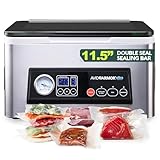
Avid Armor USV20
- 4L stainless chamber
- 11.5 inch seal bar
- 17.3 lb
- adjustable 15-60 second vacuum

All 10 Chamber Vacuum Sealers Compared in 2026
| Product | Specifications | Action |
|---|---|---|
| Avid Armor USV20 |
|
Check Latest Price |
| Avid Armor USV32 |
|
Check Latest Price |
 VacMaster VP215 VacMaster VP215 |
|
Check Latest Price |
 VacMaster VP230 VacMaster VP230 |
|
Check Latest Price |
 VEVOR Chamber Sealer DZ-260C VEVOR Chamber Sealer DZ-260C |
|
Check Latest Price |
 Beelicious Pro CVS101 Beelicious Pro CVS101 |
|
Check Latest Price |
 Gasbye CV4520 Gasbye CV4520 |
|
Check Latest Price |
 Wevac CV12 Pro Wevac CV12 Pro |
|
Check Latest Price |
 Vesta Precision V513 Vesta Precision V513 |
|
Check Latest Price |
 VacMaster VP95 VacMaster VP95 |
|
Check Latest Price |
1. Avid Armor USV20 Chamber Vacuum Sealer Machine
Avid Armor USV20 Chamber Vacuum Sealer Machine – High-Volume 11.5” Sealer
- Seals soups
- sauces and wet game with no liquid reaching the pump
- Compact 14 x 12 x 8.25 inch body that stores out of the way
- Adjustable 15-60 second vacuum and seal control for repeatable results
- Works with inexpensive smooth pouches up to 11 x 10 inches
- Dual seal produces packaging that holds up in a freezer
- 3 inch chamber depth will not take bulky roasts or hams
- Buttons occasionally need a power cycle to respond
- No dust cover for countertop storage
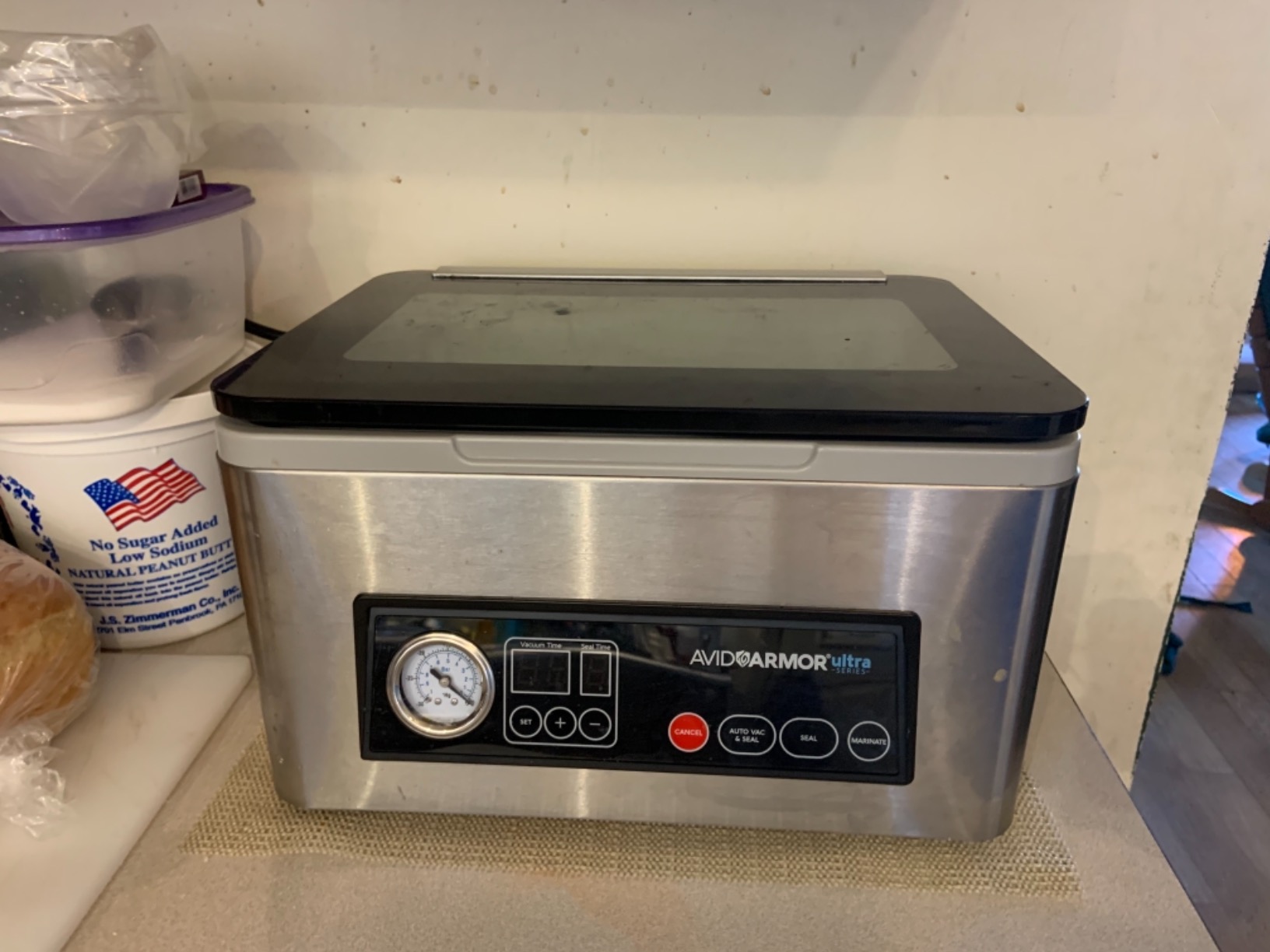
This is the machine we keep coming back to, and the reason is unglamorous: it is the only chamber unit here that disappears when you are not using it. The body is 14 inches wide, 12 inches deep, 8.25 inches tall, and it weighs 17.3 pounds, which is roughly a gallon of milk plus a hardcover book. Our unit lives on a counter next to the toaster and moves to a pantry shelf when the prep window closes.
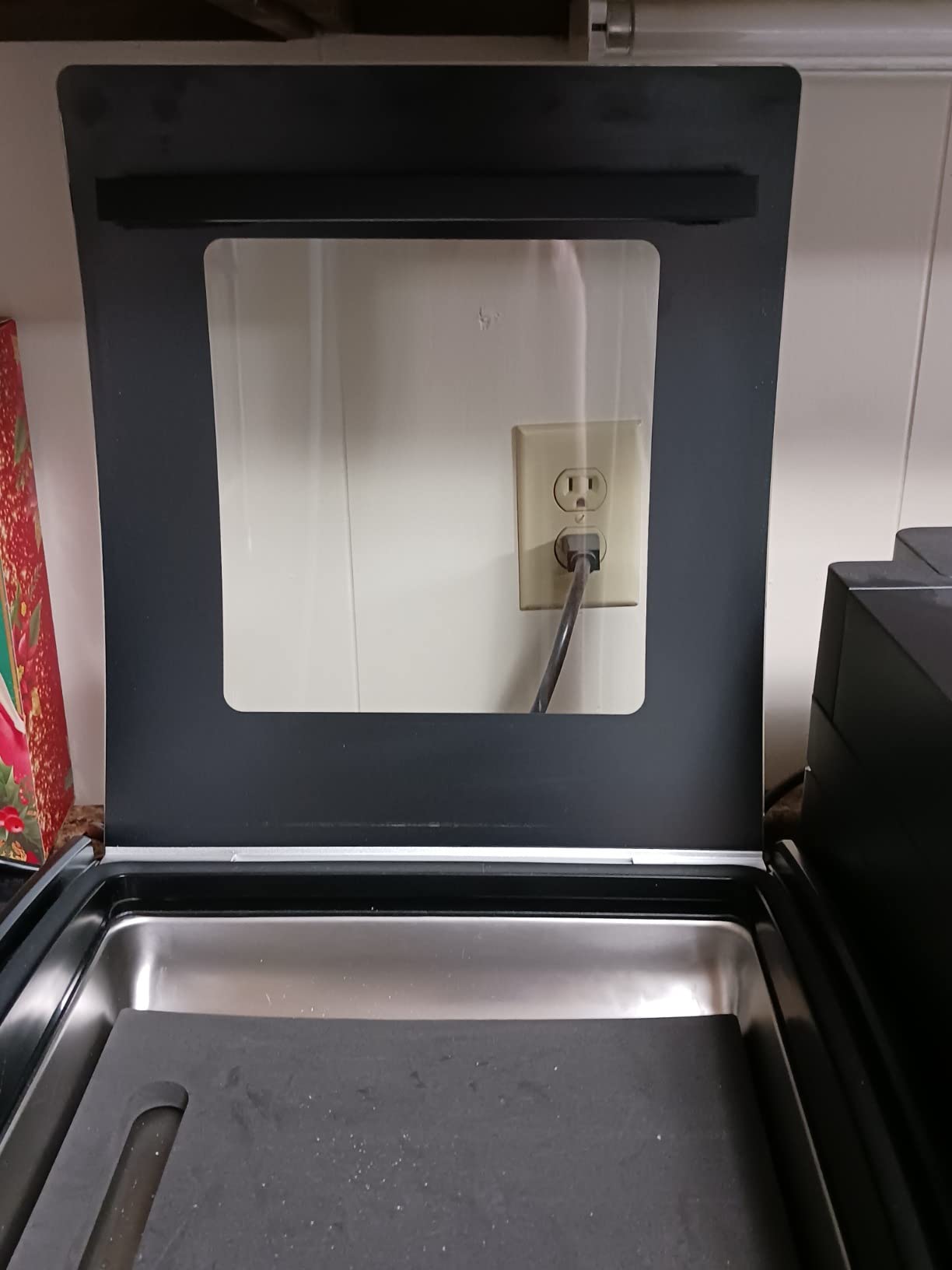
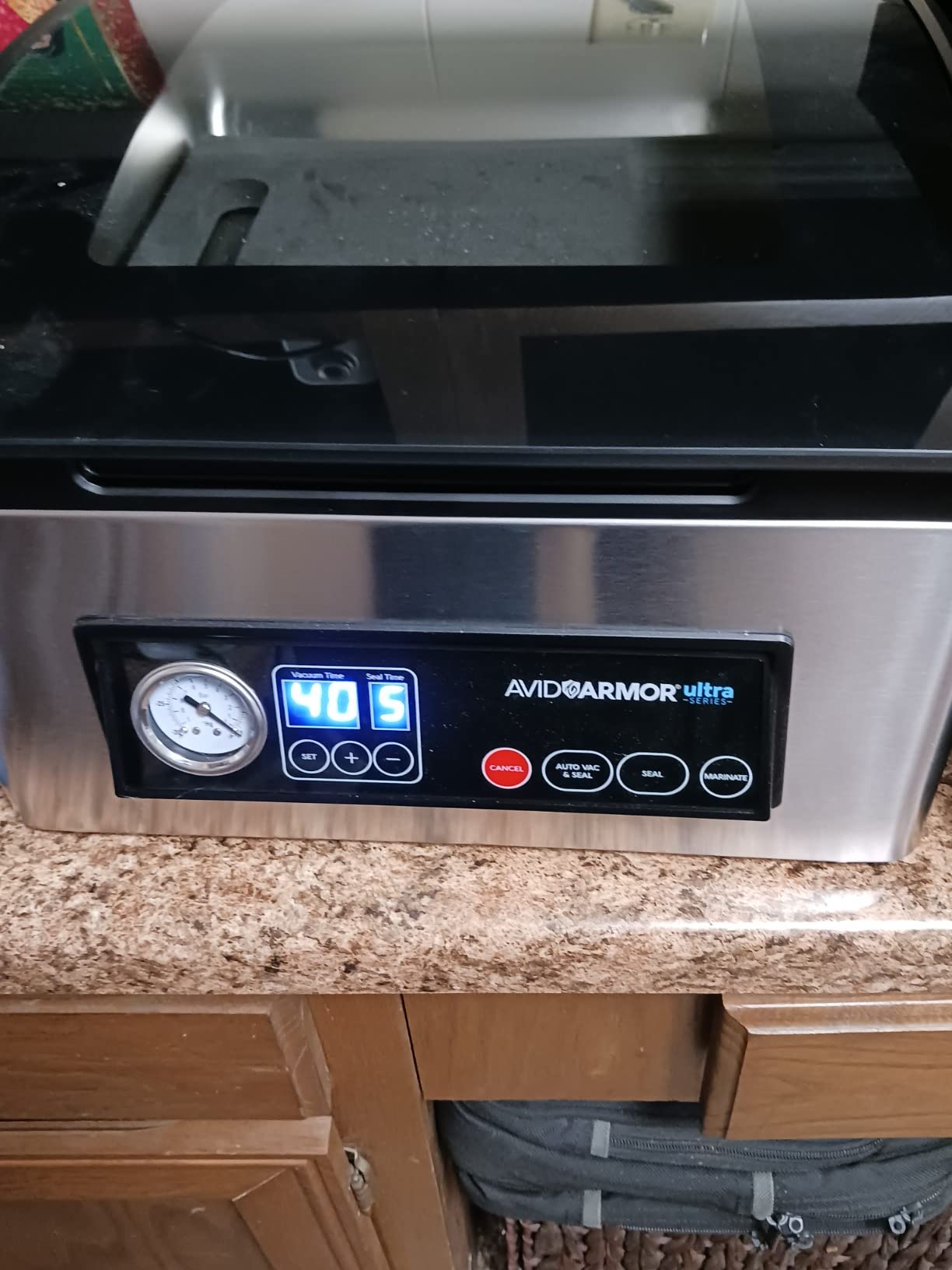
The chamber itself is 4 liters and measures 12.25 inches wide, 8.5 inches long, and 3 inches high, with an 11.5 inch heating bar and a user-replaceable seal strip. Vacuum time is adjustable from 15 to 60 seconds and the seal has its own control, so you can pull a long, hard vacuum on a roast and back off to a short cycle on a piece of salmon. That range is the single most useful spec on the list for sous vide, because the right cycle for a 2 inch ribeye is not the right cycle for a 1 inch tilapia fillet.
Owner reviews describe the same pattern we saw: people who came from a suction-style FoodSaver report that bagging liquids finally became painless. Soups, marinades, and wet game go in without any liquid being drawn toward the pump, because the pump works on the chamber, not on the food. Reviewers also credit it with better freezer-burn protection than their old setup and with a double seal that holds up over months of frozen storage.
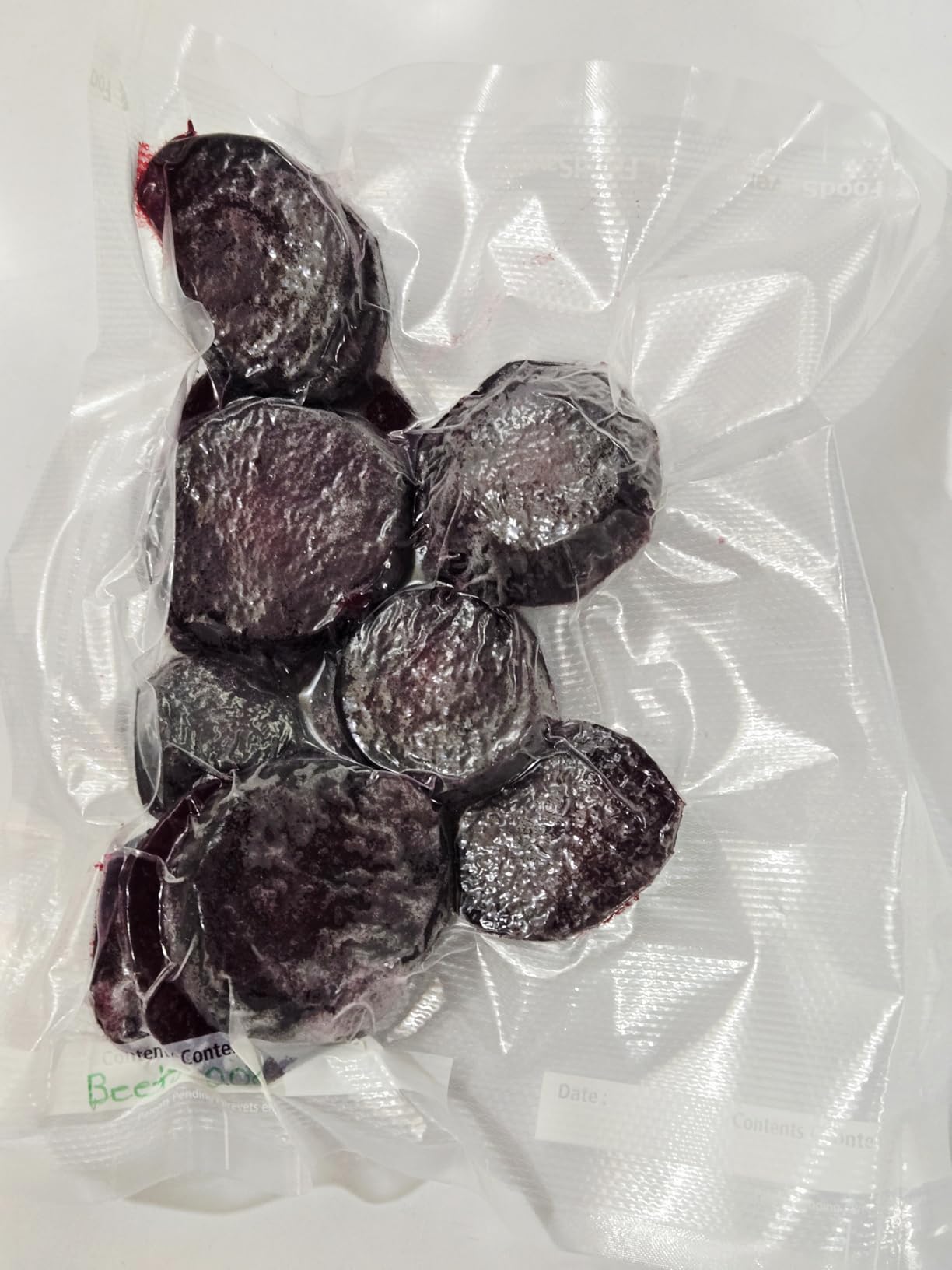
Bag compatibility is unusually flexible for a chamber machine. It works with smooth pouches up to 11 by 10 inches, which means you are not locked into expensive embossed channel bags. For a cook who bags a dozen portions a week, that difference shows up in the first year rather than the fifth.
What it handles well in a sous vide kitchen
The 3 inch chamber depth is the limit to plan around. A steak, a chop, a chicken breast, a fillet, and a pouch of cut vegetables all fit with room to spare, and the 11.5 inch bar means a bag laid across the full width of the chamber clears in one pass. If your prep is portioned proteins plus vegetable sides, this is the machine built for that exact job.
It also runs quietly for a chamber unit. Owners upgrading from a plastic-cased external sealer regularly describe it as quiet, and in a small kitchen where a circulator and a knife sharpener are already competing for attention, that is a real difference rather than a spec-sheet nicety.
Where it falls short
Whole hams, large pork butts, and packer brisket will not fit a 3 inch chamber. Owners of big cuts consistently describe having to angle the bag or split the piece, which defeats the point of buying in bulk. If you regularly break down a whole animal, budget for a deeper chamber model instead.
Two smaller things to know. Some owners report buttons that stop responding until the machine is power cycled, and there is no included dust cover, so plan a spot where grit will not settle on the seal bar. Neither is serious, and both are fair to weigh against a cheap external sealer before you commit.
2. Avid Armor USV32 Chamber Vacuum Sealer for Soups and Liquids
- True chamber technology seals soups
- sauces and juicy meats with zero mess
- Rapid marinate mode infuses flavor in minutes rather than hours
- External hose port adds mason jar and canister vacuuming
- One-touch automatic cycle produces consistent airtight seals
- Stainless chamber and glass lid built for daily use
- Heavier and larger on the counter than entry chamber units
- Glass lid is fragile if dropped
The USV32 is the step up version of our top pick, and the two are more different than the shared brand suggests. You gain a tempered glass lid that lets you watch the bag collapse instead of guessing, a dual-wire 11.5 inch bar rated for thick pouches, and a rapid infusion marinate mode. You also gain nine pounds of machine, at 26.4 pounds, and a deeper chamber at 3.5 inches.
The glass lid is the feature that changes daily use. Every cycle, you can see the moment air leaves the bag and the moment the food stops floating. When you are portioning twenty chicken thighs for the freezer, that visibility replaces a lot of guesswork, and it is also the reason this unit suits anyone learning the format from scratch.
Owners single out the marinate mode as the feature that pushes this machine beyond sous vide. A vacuum marinate cycle pulls marinade into the fibres of a cut rather than sitting on the outside, and owners report usable results in minutes instead of the overnight rest a shallow marinade needs. For a cook who brines and steers, that turns the sealer into a prep tool rather than a packaging tool.
The external accessory hose port is a quieter bonus. It lets you pull vacuum on mason jars and canisters without putting the jar in the chamber, which is how we keep a batch of garlic confit or a sous vide stock base sealed in wide-mouth jars.
Who should move up to this model
If you bag liquids more than once a week, or you marinate, this is the better machine. The 3.5 inch chamber also handles thicker pouch stacks than the USV20, and the one-touch automatic cycle removes the timer dial from the decision entirely, which matters on a weeknight when you are cooking rather than experimenting.
For a single cook who mostly portions steaks, chops, and salmon, the USV20 does the same job with a smaller box. The USV32 earns its extra size when the prep is varied.
Where it falls short
At 26.4 pounds it is a two-hand lift for some people, and reviewers who bought it to save counter space report that the size gap versus a compact chamber unit is very real. Under-cabinet clearance of 9 inches is the practical number to measure before you order.
The glass lid is the other consideration. It feels premium and it is a genuine feature, but tempered glass will not survive being knocked off a counter. Keep it clear of the edge, which is easy advice and not always easy advice to follow in a busy kitchen.
3. VacMaster VP215 Chamber Vacuum Sealer with Oil Pump
- Pulls a strong vacuum even with liquid-rich bags
- Quiet oil pump that runs many bags back to back
- Double seal extends shelf life and prevents freezer seal loss
- Seals 3 to 7 mil bags including Mylar
- Serviceable pump
- gaskets and seal wires extend machine life
- 84 lb body needs a rolling cart and a dedicated spot
- Needs roughly 24 inches of clearance with the lid open
- Oil pump requires periodic oil changes
The VP215 is the machine that shows what a chamber sealer becomes when it is built for volume rather than for a countertop. At 84 pounds with a 14 by 20 by 15 inch body and an 11.25 by 15.25 by 5 inch chamber, this is a small restaurant appliance. Long-term owners describe it as a tank that can seal dozens of bags in a row without overheating, and they report the quiet oil pump as the surprise, since heavy machines are usually the loud ones.
The seal bar is 10.25 inches and takes bags up to 10 by 13 inches, which is the largest single pouch most home sous vide cooks will ever need. The double seal works across 3 to 7 mil bags including Mylar, so the same machine handles a bag of cooked stock for the freezer and a heavy pouch destined for long storage.
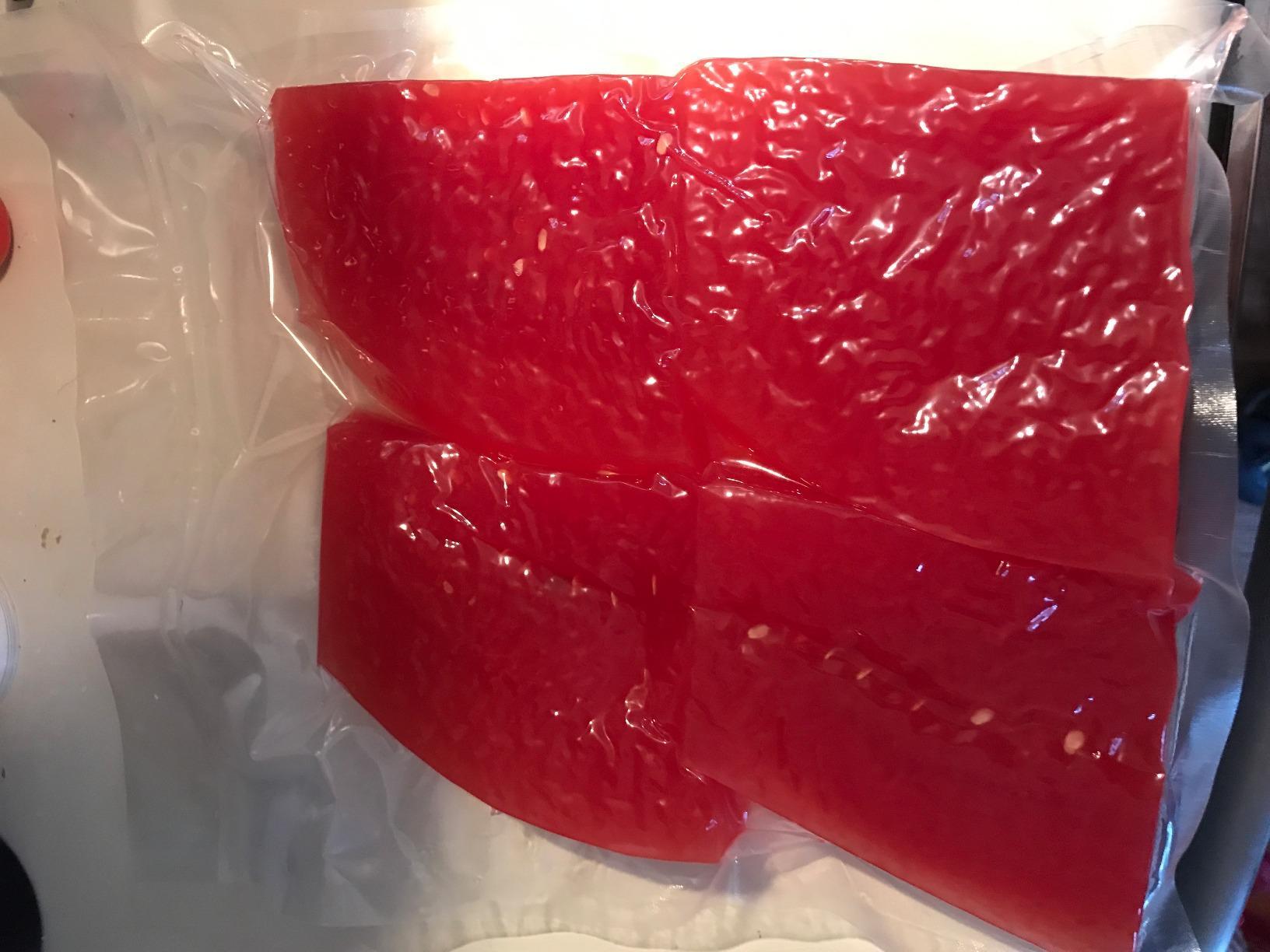
What owners appreciate most for sous vide is the combination of a hard vacuum and liquid tolerance. Reviews repeatedly describe soups and sauces coming out sealed with nothing floating, and the double seal as the reason frozen portions keep their quality past a couple of months. Serviceability is a genuine asset here: the pump, motor, electronics, filters, and seal bar wires are all user-replaceable, which answers the parts-support worry that comes up constantly in cooking forums when expensive units are discussed.
The box also includes 60 assorted 3 mil chamber pouches, filler plates, and a maintenance kit, so a meaningful first-year bag cost is covered out of the box.
What it handles that smaller units cannot
The 5 inch chamber depth is the differentiator. A whole chicken breast, a thick pork chop, a bag of braised meat, or a large stockpot batch all fit flat instead of being angled into a 3 inch well. If you cook for a family of five and freeze portions, or you buy a whole case of beef, the volume is the reason to buy this and not a compact unit.
It also runs cool under load. People who moved up from consumer sealers report running a full afternoon of batch cooking without the machine fighting them, which a small plastic-bodied external sealer simply will not do.
Where it falls short
Plan the location before you buy it. At 84 pounds it is essentially immovable, most owners put it on a rolling cart, and it needs roughly 24 inches of vertical clearance with the lid open. In a small kitchen this is a genuine commitment rather than an appliance purchase.
The control panel takes practice, and owners describe cycling through settings for each change. The oil pump also needs scheduled oil changes including flushing the factory fill. A few reviewers also note the lid latch lets the heavy lid spring open if bumped, and that the chamber is still too small for packer brisket or a full ham, so very large cuts remain out of reach even here.
4. VacMaster VP230 Chamber Vacuum Sealer with 1/2 HP Oil Pump
- Largest chamber and seal bar in the VP line
- 1/2 HP oil pump sustains a strong vacuum through prolonged use
- Double seal for long-term freezer storage and meal prep
- Handles 3 to 7 mil bags including Mylar
- Pressure indicator simplifies repeatable results
- 89 lb body and large footprint need a permanent station
- Premium cost for casual home use
- Oil pump requires scheduled maintenance
The VP230 is the biggest chamber machine on this list, and everything about it follows from that. The body is 15.5 by 19 by 15.75 inches at 89 pounds, the chamber measures 12.5 by 15 by 5 inches, and the seal bar runs 12.25 inches to accept bags up to 12 by 15 inches. That seal bar is the longest we found, and it lets you lay a full-width bag of vegetables or a long cut of fish across the bar in a single pass.
Under the lid is a 1/2 HP oil pump, which is the step up from the VP215. Owners describe the difference as a vacuum that holds steady through long batches rather than one that needs a pause between bags. For someone running sous vide as a weekly production habit rather than a Sunday project, that sustained pull is the entire argument.
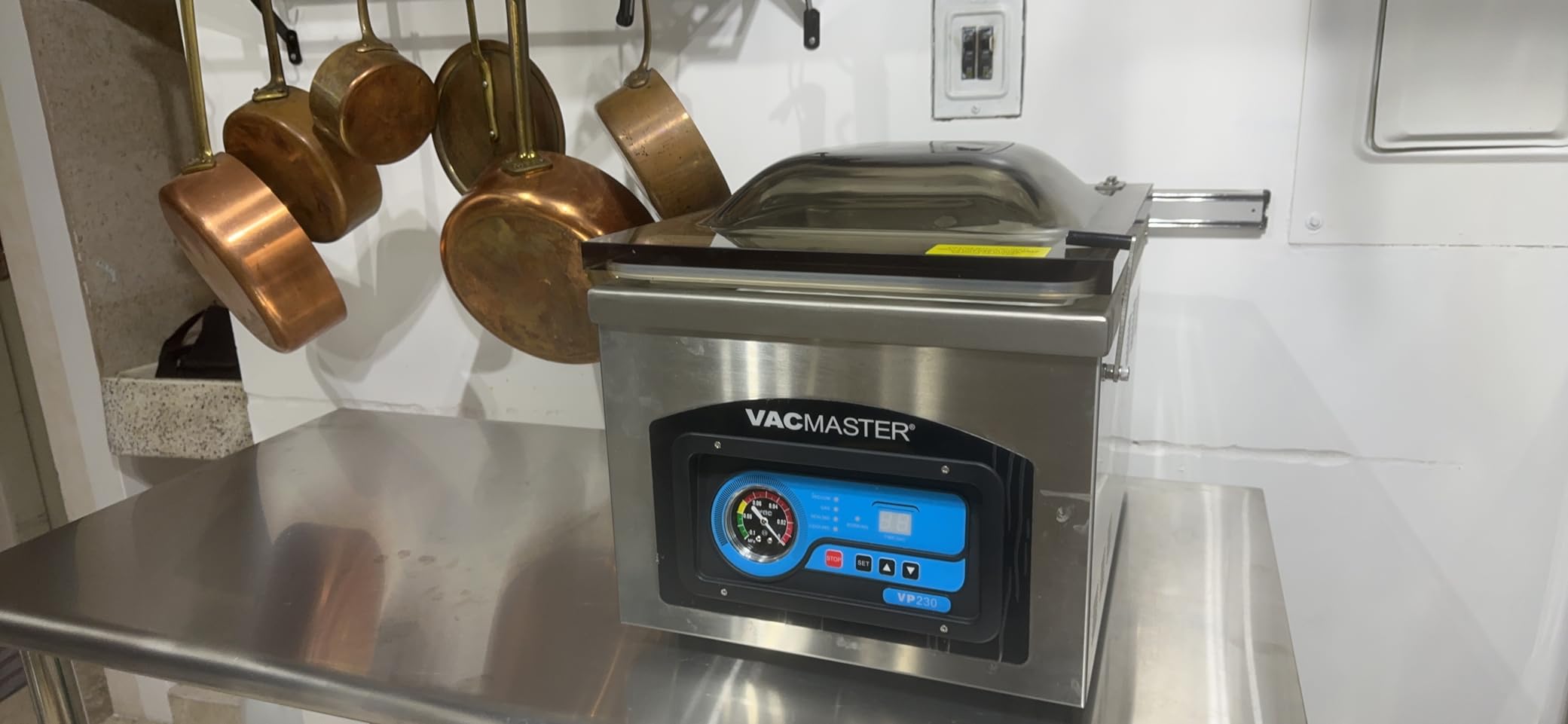
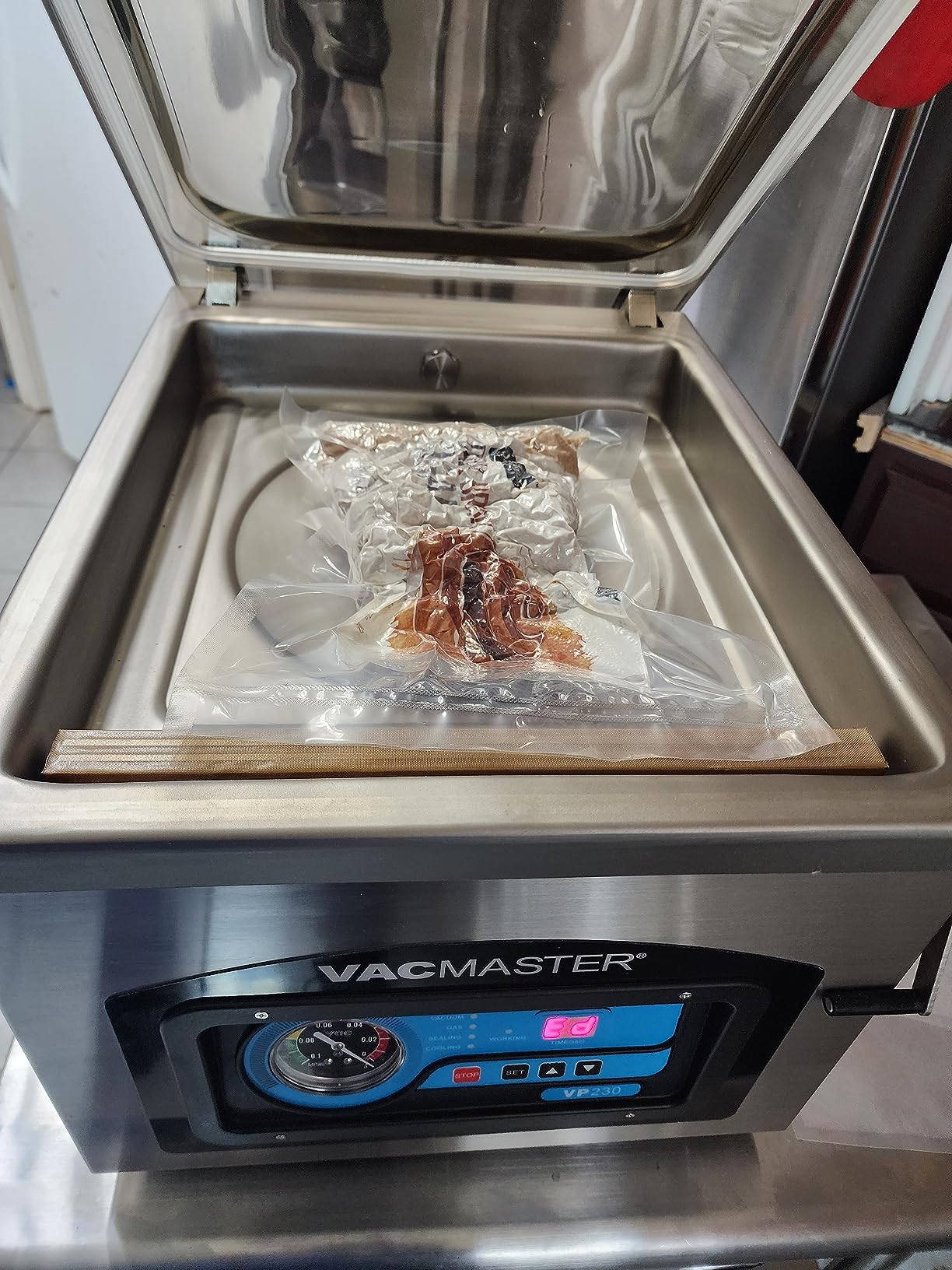
The pressure indicator and stop-to-seal button are simple, and reviews point out that they make results repeatable. You set the target, watch the gauge, and the machine does the rest, which is the same benefit the auto-sensing compact units offer by a different route.
Like its smaller sibling, the VP230 double seals across 3 to 7 mil bags including Mylar, and it ships with 60 assorted 3 mil pouches, filler plates, and a maintenance kit. The 370 watt draw is higher than the compact units, so plan on a dedicated outlet rather than an extension lead.
When this size is the right size
Buy this when bags go into the freezer at scale. A catering kitchen, a small restaurant prep line, or a home cook who portions a whole animal each season will use that 12 by 15 inch bag capacity every week. The 5 inch chamber also handles bulkier, wetter loads than anything else in this roundup without angling the bag.
For liquid-heavy sous vide work, the double seal plus the sustained 1/2 HP pump is a combination the smaller machines do not quite reach, and reviewers consistently praise both for soups and sauces.
Where it falls short
This is a machine that needs a home. At 89 pounds with a 15.5 by 19 inch body, owners describe it as a permanent station, ideally on a cart, and not something to move between a counter and a cabinet. The vertical clearance with the lid open is the other measurement to take first.
The oil pump schedule is a recurring ownership task, and the price sits far above the compact tier for a home cook who bags a few steaks a month. If your volume does not justify it, the same money buys a compact chamber unit and a year of bags.
5. VEVOR Chamber Vacuum Sealer DZ-260C, 12.6 Inch Sealing Length
- Strong -100 kPa vacuum that slows oxidation and spoilage
- 10 mm dual-lock seal strip powered by a 320W heater
- Deep chamber fits large steaks and full bread loaves
- Stainless chamber resists rust with oily or salty foods
- Built-in gauge shows chamber pressure in real time
- 62 lb body limits portability
- Bulky 17.9 x 16.1 x 16 inch footprint
- Included accessories are basic
The VEVOR is the one to watch if you want a real chamber machine without stepping up to the mid tier. It runs a 180 watt vacuum pump to roughly -100 kPa, which is a genuinely hard pull, and a 320 watt heater across a 10 mm wide seal strip. That strip is wider than most home units use, and reviews specifically credit it for surviving freezer swelling and repeated handling.
Two details set it apart from the cheapest boxes. The built-in pressure gauge shows chamber vacuum in real time, which lets you stop short of crushing a delicate fillet, and the stainless steel chamber is built to survive oily and salty foods without rusting, which is the real-world failure point when you seal brined pork or seafood.
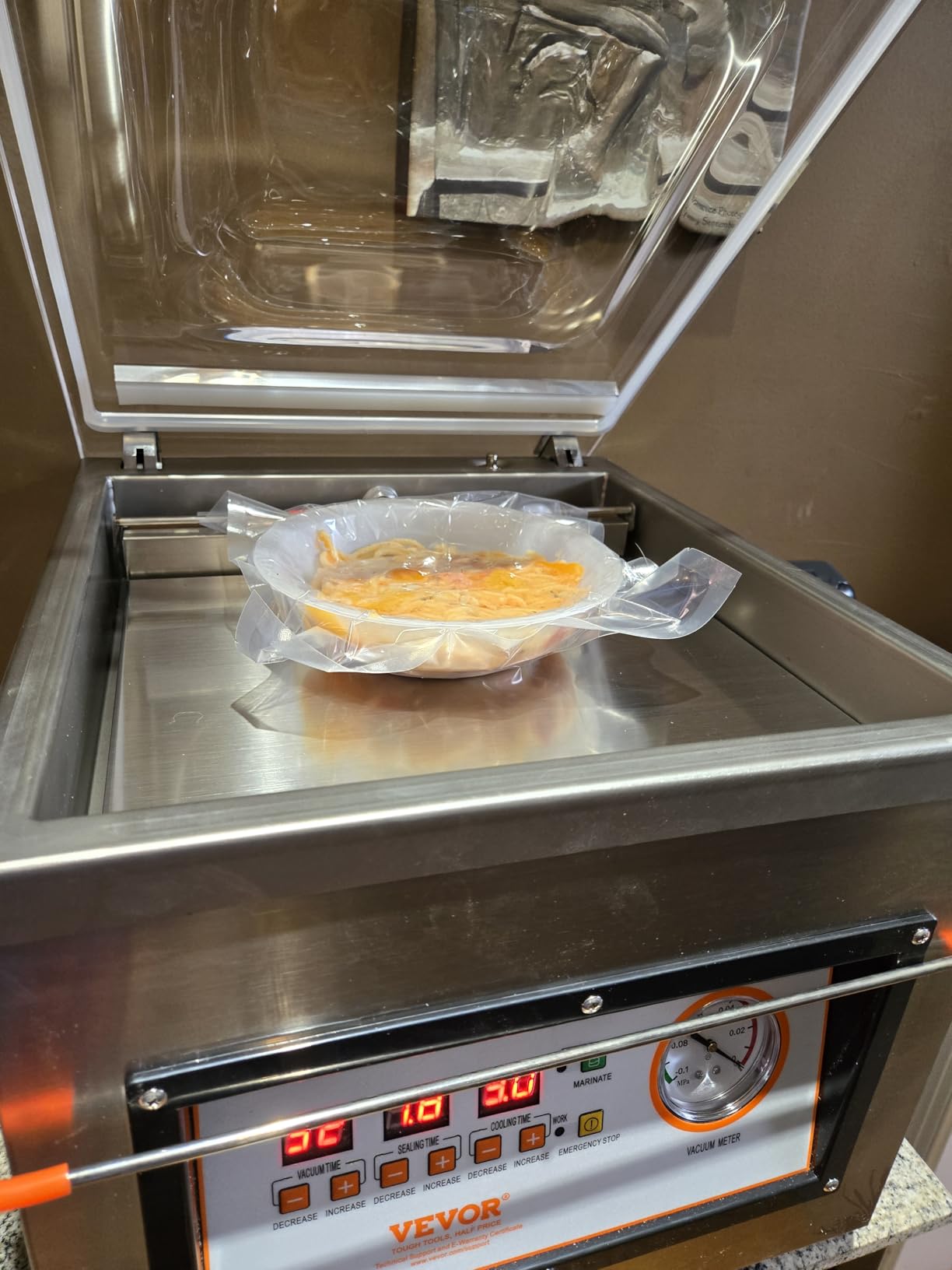
Owners describe the vacuum as the star: oxidation is slowed, spoilage is pushed back, and the deep chamber fits a large steak or a whole bread loaf without rearranging. The LED display and simple controls also get credit for making the format approachable if this is your first chamber machine.
The 12.6 inch sealing length is longer than the 11.5 inch bars on the two Avid Armor models, and the chamber is deep enough that reviewers mention large steaks and bulk goods specifically rather than in passing.
What makes it the value pick
On paper, the spec sheet reads like a machine priced well above this tier: a hard -100 kPa vacuum, a wide dual-lock strip, a gauge, and a stainless chamber. For someone who wants chamber capability for sous vide and soups without stepping into the oil pump machines, the hardware is the reason to shortlist it.
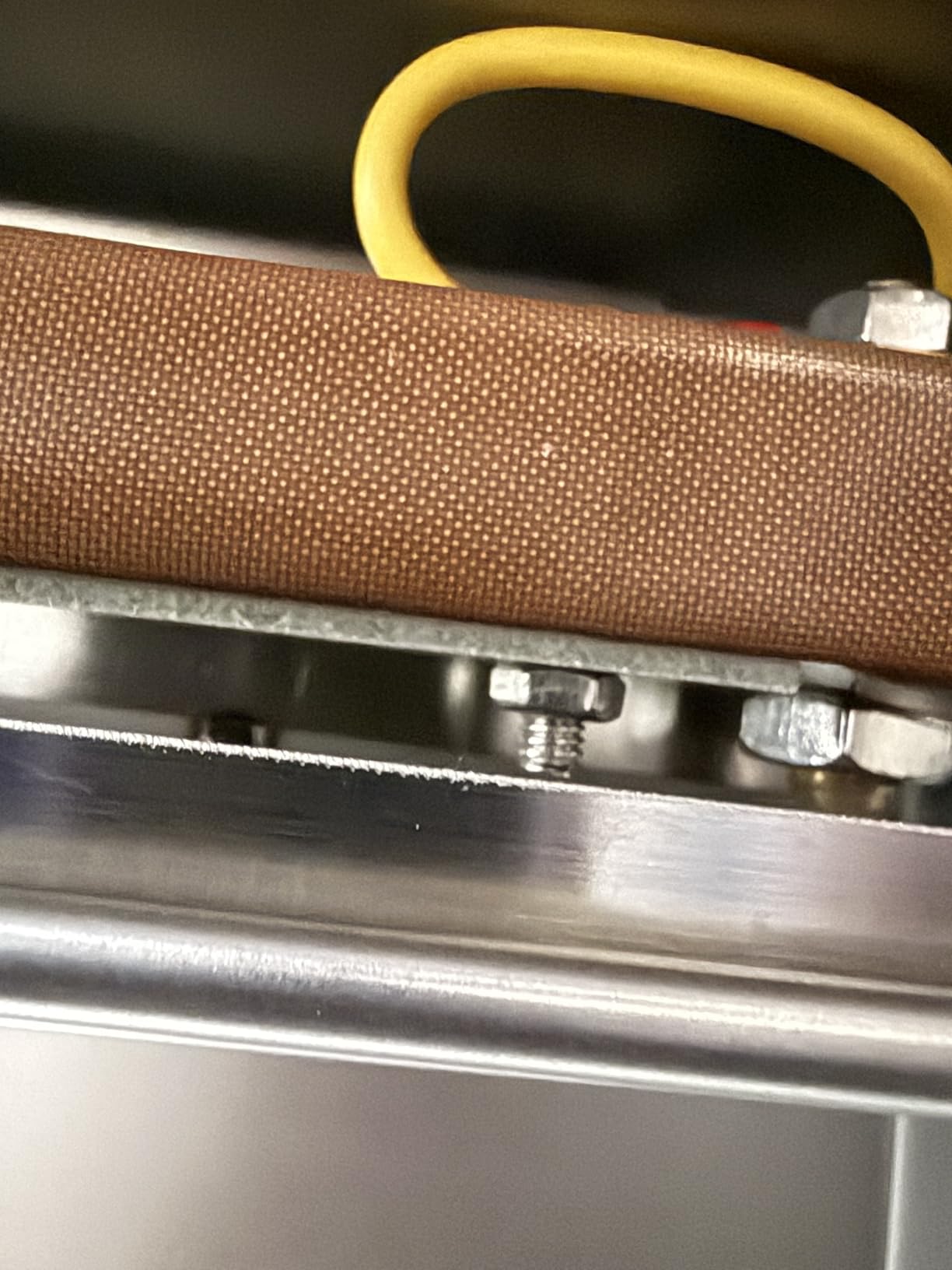
It also arrives with the essentials, including a heating wire, a Teflon cloth, a vacuum pump, and a wrench, so you are not waiting on a parts order to run your first bag.
Where it falls short
The machine is heavy and bulky at 62 pounds and 17.9 by 16.1 by 16 inches, and that is the repeated complaint in reviews. It wants dedicated counter space and a spot where you are not constantly moving it to get at a cutting board.
Included accessories are basic, and some reviewers note only a small number of bags in the box, so plan on a bag order alongside the machine. A smaller review base than the VacMaster and Avid Armor models also means less long-term ownership history to draw on, which is worth remembering for any machine that will be asked to run for years.
6. Beelicious Pro DualCore CVS101 6L Chamber Vacuum Sealer
Beelicious Pro DualCore CVS101 6L Chamber Vacuum Sealer for Wet Foods
- Handles soups
- sauces and powders with no liquid reaching the pump
- Lower out-of-chamber area covers oversized bags
- Oil-free dry pumps mean no oil changes
- Vacuum marinate mode seasons meat in roughly 15-20 minutes
- Works with textured
- smooth and embossed bags plus mason jars
- Bulky footprint for a home kitchen
- 6L upper chamber means more
- smaller packages for big volumes
- Newer model with a limited long-term record
The CVS101 is the most unusual machine on this list because it has two work areas instead of one. The upper chamber is 6 liters, roughly 300 by 260 by 80 mm, and below it sits an independent out-of-chamber sealing area. That second zone exists for bags that will not fit inside the chamber, and owners packing oversized pouches or long cuts use it as a conventional external seal station alongside the chamber.
The pump is the other headline: a 230 watt dual-core system driving four oil-free dry pumps to up to -100 kPa. Four oil-free pumps means no oil changes and no oil in your sink, and the removable 12 inch dual-seal bar is the longest removable bar in the group. A smart app handles food scanning, seal-date logging, and expiration reminders, which is a small thing until you have forty portions in a freezer and no memory for dates.
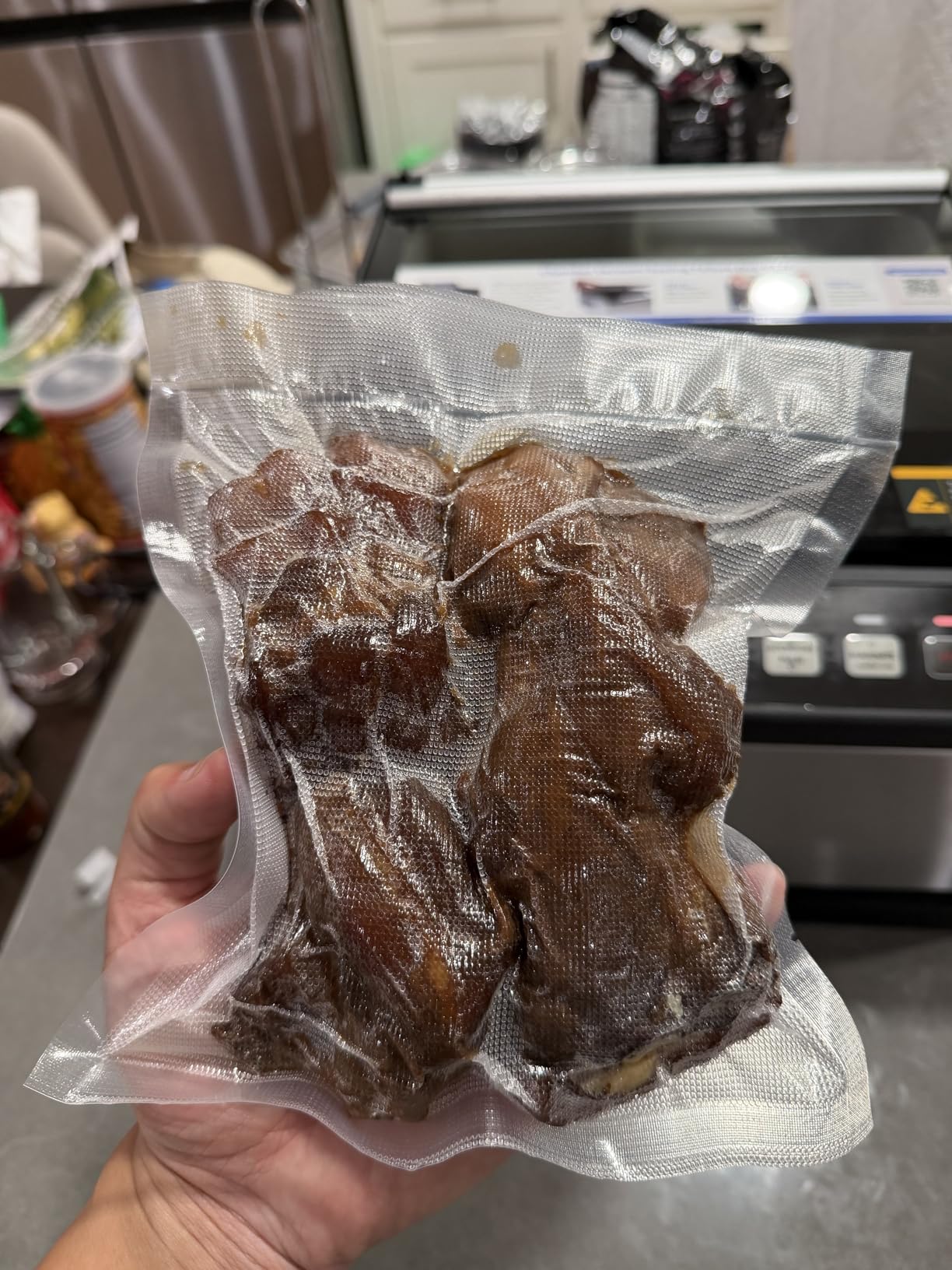
Owners consistently point to three things: no mess with wet foods, no maintenance, and fast marinating. The vacuum marinate mode is claimed to infuse flavour up to five times faster than non-vacuum marinating, and reviewers report well-seasoned meat in roughly 15 to 20 minutes, which is a genuine change to how a weeknight cook works. Angled top panel, countdown display, extra-wide bag clamp, and a built-in bag cutter round out a thoughtful control layout.
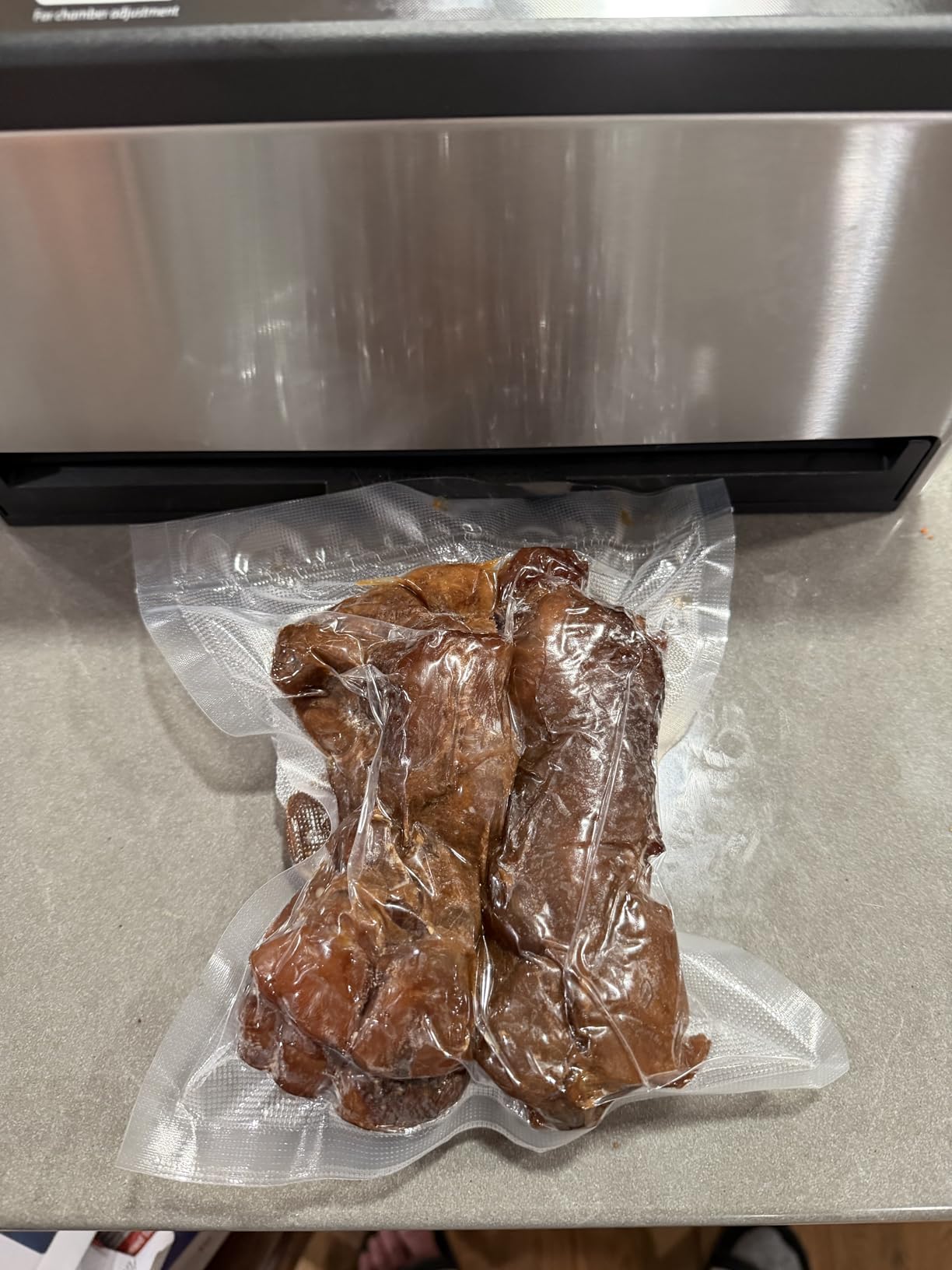
Bag flexibility is excellent. It works with textured, smooth, and embossed bags, and the external port handles mason jars, canisters, and valve bags. The box also includes an accessory hose and a set of bags so it runs from day one.
Where its design pays off
The dual work areas solve a problem most chamber units ignore. When you are finishing a bag of stock and a bag of duck breast in the same session, the big one goes in the chamber and the small one goes in the lower area, and both come out sealed. That is a real throughput gain in a home kitchen, not a feature-sheet flourish.
For a cook who marinates as much as they seal, the combination of oil-free pumps and a marinate cycle is unusually attractive. The four dry pumps also mean there is no consumable to track, which removes the single most common complaint about oil pump machines in cooking forum threads.
Where it falls short
The 6 liter upper chamber is modest, and reviewers note that large volumes mean more, smaller packages rather than fewer, bigger ones. The footprint is also bulky for a home counter, so measure before you commit to a permanent spot.
It is a recent model with a smaller review base and limited long-term durability history. The 4.9 rating is impressive, but it is a young average rather than a decade of ownership reports, and a machine that will sit on your counter for years deserves some caution when the track record is short.
7. Gasbye CV4520 Chamber Vacuum Sealer, 5.3 Quart Chamber
- Chamber-wide air removal gives bubble-free seals on soups and chunky food
- Deep 5.3 qt chamber fits more meat than typical home chamber units
- Double seal reduces leaks and improves long-term storage
- Replaceable dual heating wires on the 11.5 inch seal bar
- 30 pre-cut 11x11 inch bags and accessories included
- Heavy enough that some buyers find it a two-hand lift
- Short learning curve on settings
- Poor value if you only seal dry goods
The CV4520 is the repairability story of this roundup. The 11.5 inch seal bar has individually replaceable dual heating wires, and spare gaskets and a heater element are shipped with many units. A 3 year warranty with US-based support sits on top of that, and it is the longest warranty in this group by a full year. For a machine expected to run daily for years, the parts story matters as much as the seal.
The chamber is 5.3 quarts with a 9.7 inch chamber width and an 11.5 inch seal bar, driven by a 300 watt pump. The chamber is the useful figure here: it is deeper than the entry compact units, and buyers upgrading from inexpensive suction sealers describe it as transformative for wet foods, specifically for pulling juice and liquid out of the way and sealing large quantities of meat with a tight double seal.
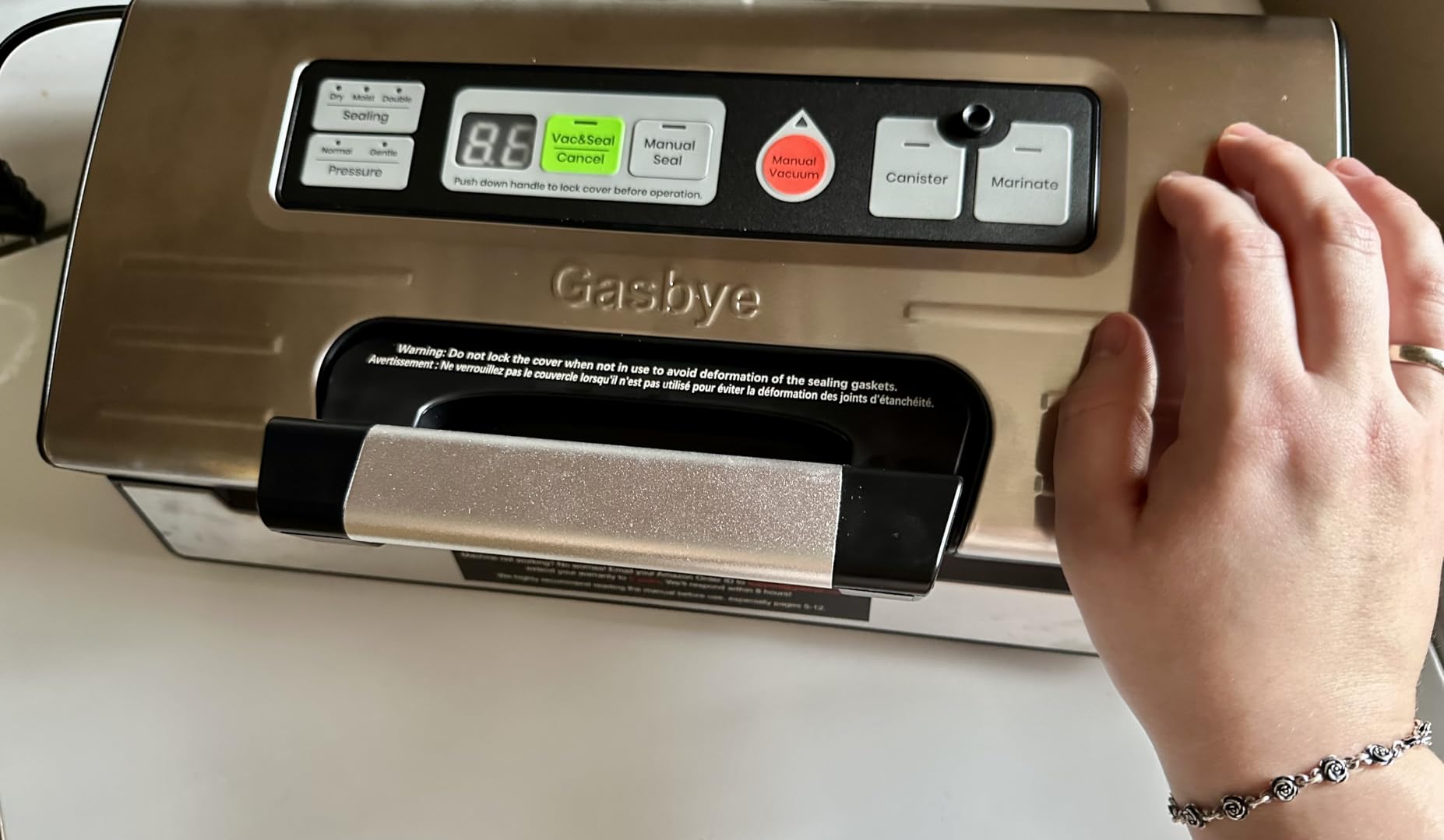
The box is unusually generous. Thirty pre-cut 11 by 11 inch bags, an external air suction hose, a filler plate, a power cord, and the manual are all included, so the machine produces sealed food the day it arrives. The chamber-wide air removal is what produces bubble-free seals on soups, sauces, and chunky vegetables, and reviewers single it out as the feature that made the format click for them.
Stainless styling keeps it consistent with the rest of the machines here, and operation is deliberately simple with no screen to learn.
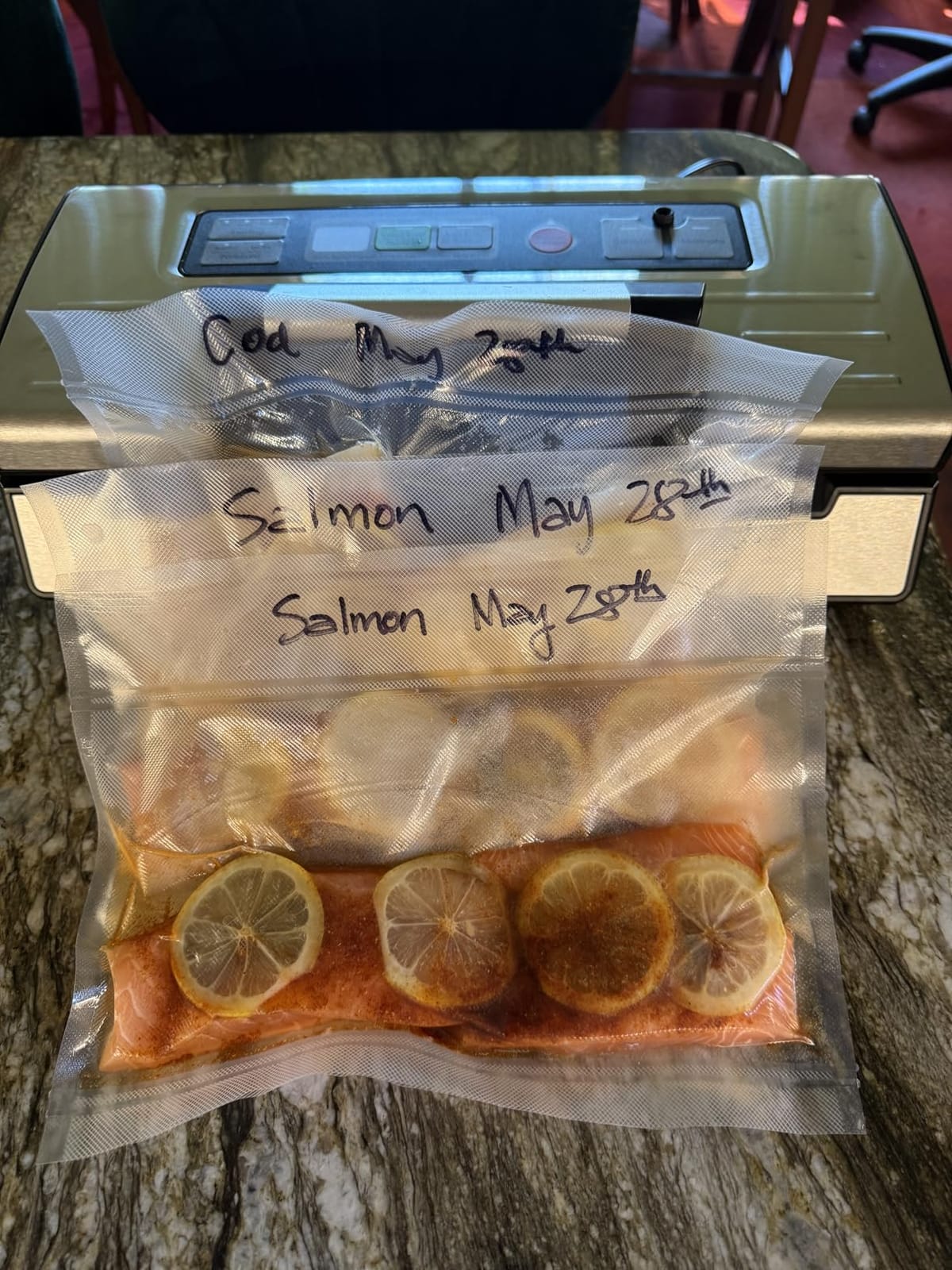
What it does better than most compact units
Two things: chamber volume and consumable life. The 5.3 quart chamber is among the deeper home units on this list, so a bag of braised short ribs or a large batch of marinated pork lies flat instead of tenting. And when a seal wire eventually fails, you replace a wire rather than a machine, which turns a normal consumable into a minor job instead of a purchase.
It is also one of the very few machines here that ships with enough bags to matter, which softens the first-year cost for anyone starting out.
Where it falls short
Weight gets mentioned often, with some buyers, particularly older users, describing it as a two-hand lift. There is no published weight figure from the manufacturer, so measure by hand if lifting matters to you.
There is also a short learning curve on the settings, with a few owners reporting the need to hit cancel and start again when the vacuum cycle is set too aggressively. And if you only ever seal dry goods, the chamber format is overkill, which is the honest reason not to buy a machine like this at all.
8. Wevac CV12 Pro 12 Inch Chamber Vacuum Sealer, 8.5 Quart
Wevac 12″ Chamber Vacuum Sealer, 8.5 Qt, Auto Vacuum Sensing for Food
- Auto vacuum sensing removes timer guesswork and avoids over-vacuuming
- Extra-deep 8.5 qt chamber suits bulky roasts and liquid-rich foods
- Detachable tray and washable seal bar clean up fast after soups
- Commercial-grade pump with dual sealing wires
- Mason jar kit and vacuum hose expand preservation options
- 29.4 lb weight is substantial for moving between storage and counter
- Footprint is deeper than smaller 5 quart chamber units
The CV12 Pro solves a problem that most compact chamber units create: they are sized for portions, not for cuts. This chamber is 8.5 quarts, measuring 12.4 inches wide, 12.8 inches long, and 3.8 inches high, with a 12 inch seal bar carrying dual sealing wires. Reviews point to the extra depth as the reason it handles bulky roasts and liquid-rich foods without spillover, and for a cook breaking down a whole chicken or a pork shoulder, that is the difference between a usable machine and a compromise.
Automatic vacuum sensing is the other headline. The machine detects food volume and sets the vacuum cycle itself, which removes the timer guessing that new owners report as the hardest part of learning the format. You load the bag, close the lid, and the cycle matches the load.
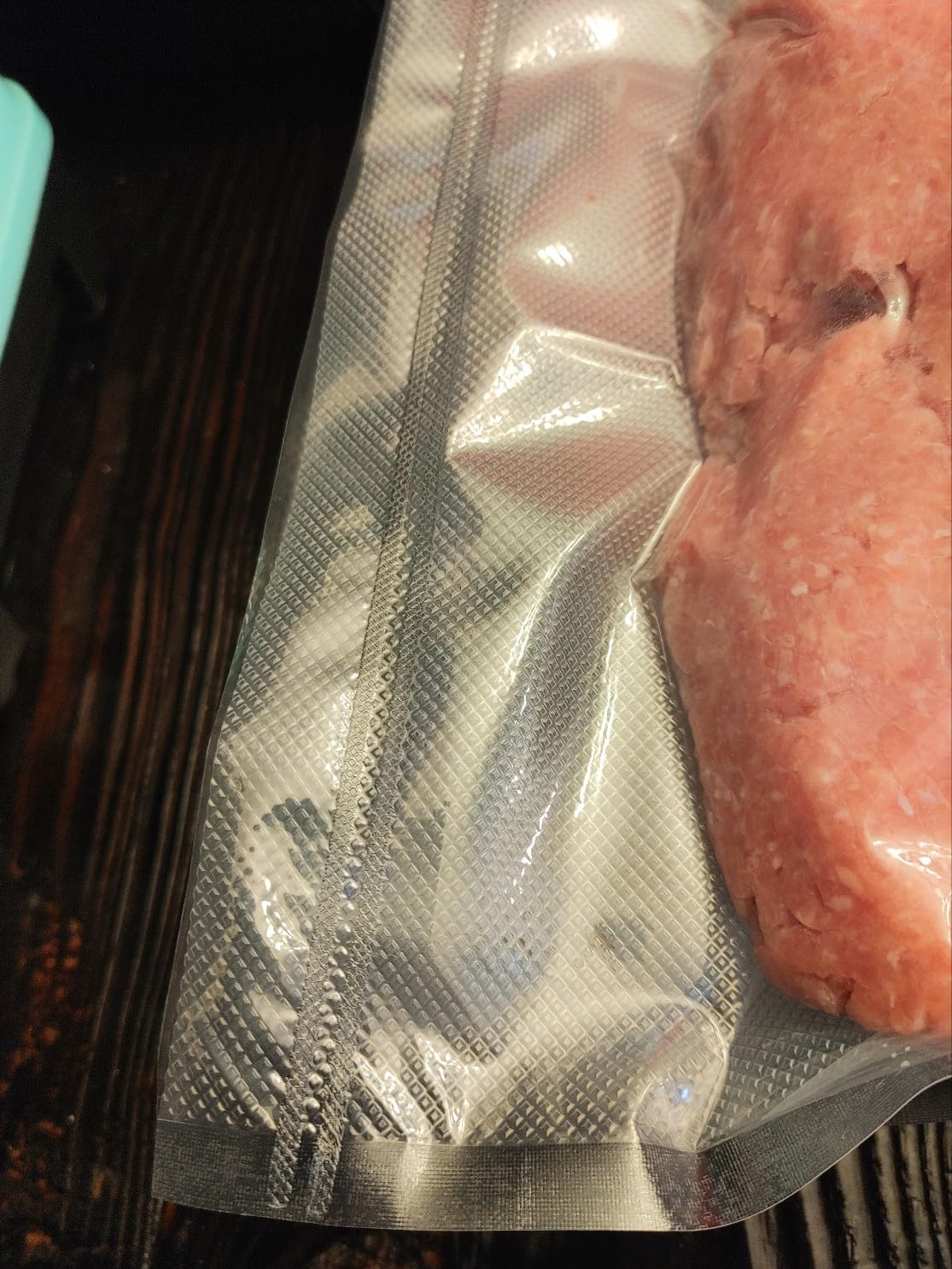
Cleanup gets more attention than usual. The drip tray is fully removable and the seal bar is washable, and reviewers who seal soups and marinades describe that combination as the difference between a machine you use weekly and one that ends up on a shelf. A damped assist lid with a transparent window also gives you a view of the bag without lifting the lid mid-cycle.
The box includes 20 three mil flat pre-cut bags, a filler plate, a clean tray, two spare seal bars, a mason jar sealing kit, a vacuum hose, and the power cord. The pump is rated at 360 watts and the body carries a 2 year manufacturer warranty.
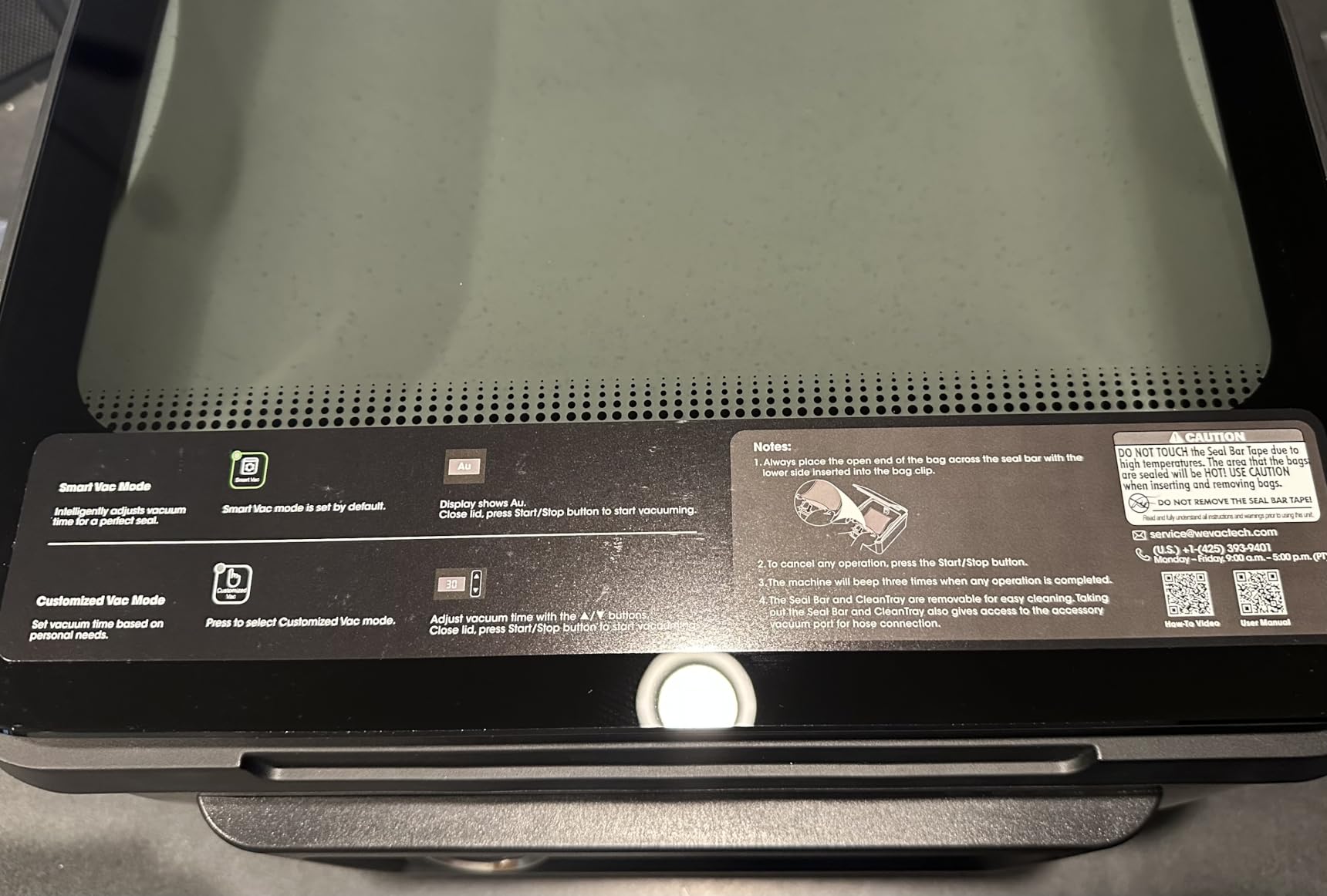
Why the depth matters for sous vide
A bag that has to sit at an angle inside the chamber creates a fold at the seal, and a fold at the seal is where failures start. With 3.8 inches of depth and 12 inches of bar width, a full bag of cubed vegetables, a thick pork chop, or a rolled cut lies flat across the chamber, which is the most reliable geometry you can get.
For anyone who batch cooks and freezes, the auto sensing also removes one variable from a repeated process, and the removable tray means a bag of stock does not become an excuse to skip sealing soup.
Where it falls short
It weighs 29.4 pounds and the body runs 17.9 by 14.5 by 9.6 inches, so it is one of the larger compact-tier machines and wants a permanent home on the counter. The review base is still small, so the ownership record is shorter than the machines with thousands of reviews behind them.
If your prep is a few salmon fillets a week, an 8.5 quart chamber is more machine than the job needs. The depth and the auto cycle are worth it for volume, and they are dead weight for small batches.
9. Vesta Precision V513 12 Inch Chamber Vacuum Sealer, 5.6 Quart
Vesta Precision 12” Chamber Vacuum Sealer, 5.6Qt chamber, Auto Vacuum Time
- SmartVac auto timing removes manual timer guesswork
- Quiet variable frequency pump compared with industrial packers
- Removable CleanTray and washable 12 inch bar make cleanup easy
- Universal mason jar kit seals regular and wide-mouth jars
- Soft-close damped glass lid prevents slamming
- Smart setting can crush fragile items such as capsules
- Compact chamber is smaller than reviewers hoped for bulky items
- A minority report inconsistent sealing with the supplied bags
At 21.6 pounds, the V513 is the lightest stainless chamber machine in this group, which matters more than it sounds. A unit you can lift with one arm is a unit you will keep on the counter and reach for, rather than one that gets moved to a high shelf and then avoids. Reviews specifically call out the light weight as a reason the machine feels manageable in a small kitchen.
The V513 runs a variable frequency pump, and owners describe it as noticeably quieter than industrial packers. For an apartment or an open-plan kitchen that shares a wall with a bedroom, that is the single most useful feature on the machine. The soft-close damped glass lid is a small courtesy that prevents slamming and finger pinches, and two seal bars are included plus a removable CleanTray for rinsing after messy soups.
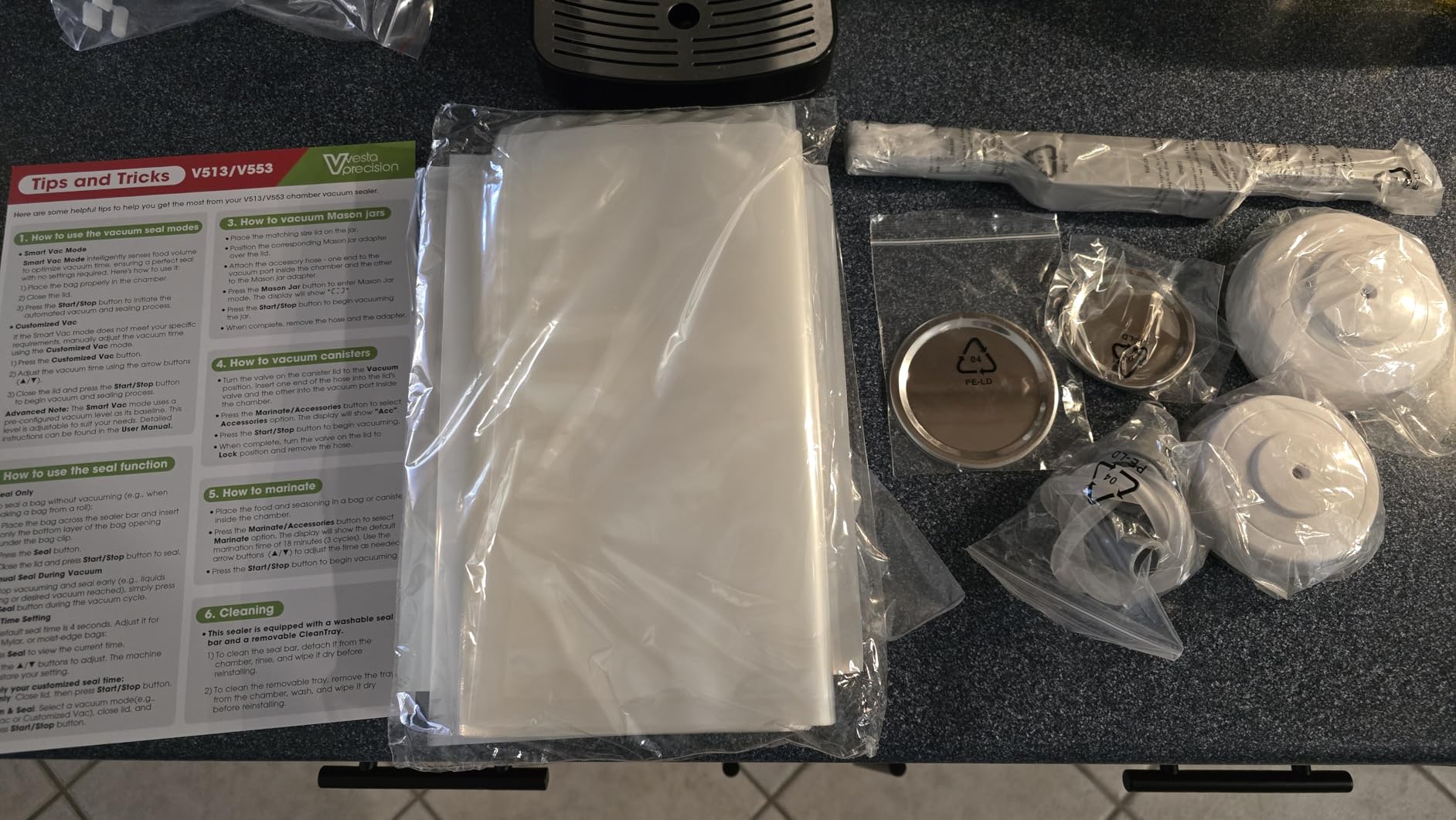
SmartVac is the intelligent control system. It auto-detects food volume and sets the vacuum cycle, which is the same convenience the Wevac offers, wrapped in a lighter and smaller body. The 5.6 quart chamber measures 12.3 inches wide, 8.8 inches long, and 3.7 inches high, with a 12 inch washable seal bar and a 360 watt pump.
The universal mason jar kit with hose, two adapters, and lids is a genuine bonus for sous vide cooks who keep stocks, sauces, and garlic in jars. Reviewers report sealing mason jars and even bags of water successfully, and the 2 year warranty with US design and support is solid for the tier.
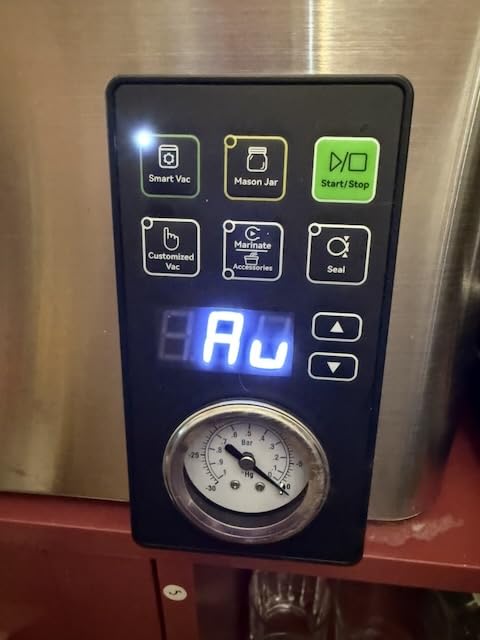
When quietness and light weight decide the purchase
This is the machine for a small kitchen and a noise-sensitive household. A variable frequency pump and a light body address the two complaints that come up most often about chamber sealers in general: the hum during a cycle and the bulk of the box. If you seal in the evening after dinner, those two things decide whether you keep using the machine.
The auto vacuum also makes it approachable. Set the bag, close the lid, and the cycle matches the volume rather than a number you guessed at.
Where it falls short
The auto setting is the biggest caution. Owners report that SmartVac can crush or break fragile items such as supplement capsules, and the manual setting is required for those loads. Any machine with automatic vacuum sensing has this trade-off, but it is worth knowing before you bag something brittle.
The 5.6 quart chamber is smaller than some buyers hoped for, and a minority of owners report inconsistent sealing with the bags supplied in the box, so buying your own bag stock early is sensible. The 4.5 rating reflects a solid machine with a small and fairly recent review base.
10. VacMaster VP95 Chamber Vacuum Sealer with Industrial Oil Pump
- Chamber design handles soups
- sauces and marinades without mess
- Six preprogrammed modes including marinate
- external vacuum and oil cleaning
- Double seal and incline plate protect small items and liquids
- Runs a long batch without overheating
- Quiet
- fast and straightforward to operate
- Oil pump needs regular changes with costly hard-to-source oil
- 42.5 lb still needs a dedicated spot
- Instructions do not state the lid must be pressed firmly down
The VP95 is the crossover machine: commercial construction at a size you can still find a home for. At 42.5 pounds with an 11 by 16 by 9 inch body, it is roughly half the weight of the 84 and 89 pound VacMaster units, and reviewers describe it as a solid step up from consumer FoodSaver machines that still fits under a shelf or on a rolling cart.
What it offers is programmability. Six preprogrammed modes cover maximum vacuum, low vacuum, marinate, external vacuum, manual vacuum, and an oil cleaning cycle. That oil cleaning mode matters more than it sounds, because an oil pump without a cleaning path is how pumps get replaced, and owners repeatedly note that the VP95 runs a long batch without the overheating concerns they had with suction sealers.
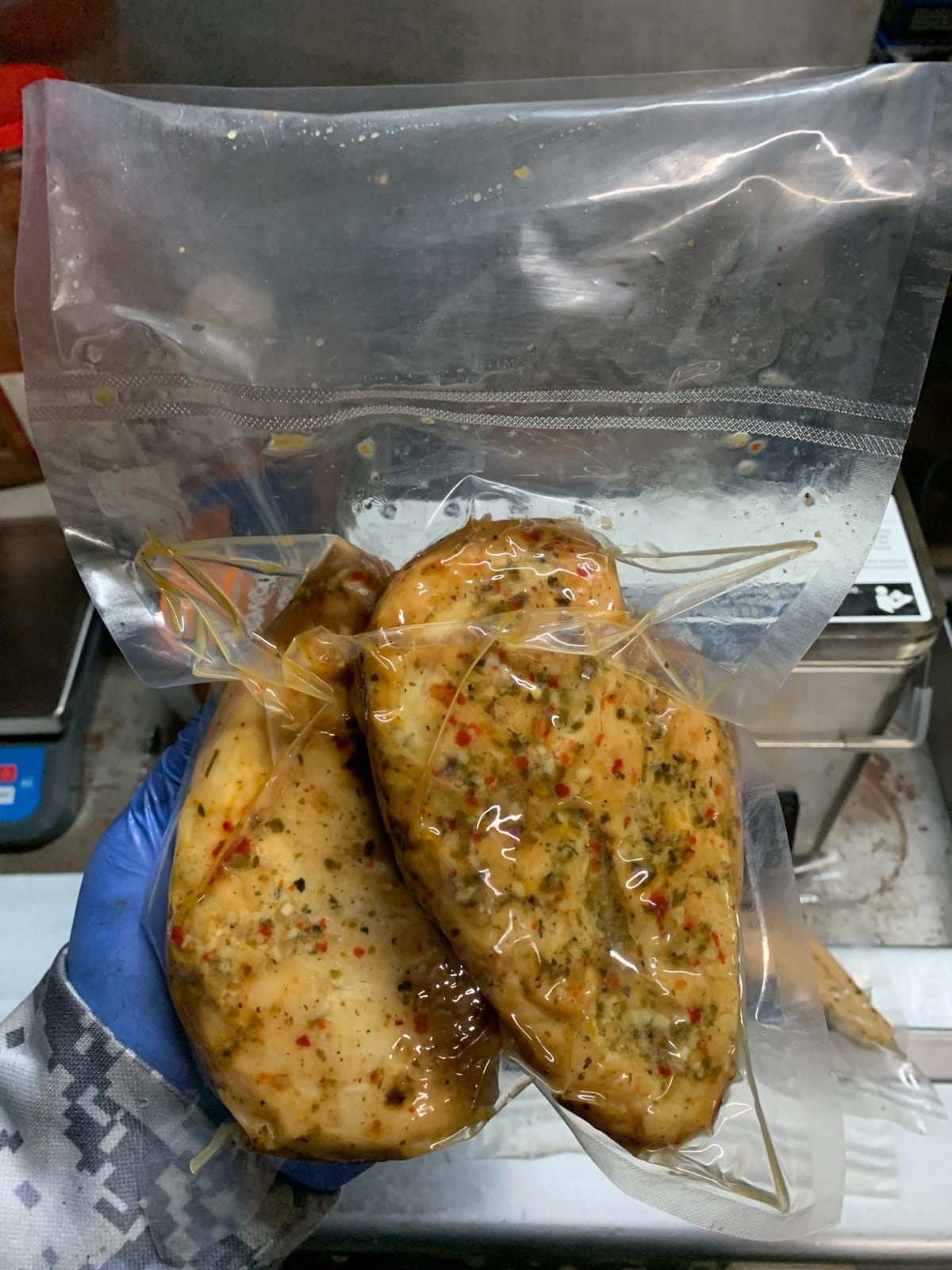
The double seal and adjustable incline plate are a smart pairing for small items and liquids. The plate holds a short bag of sauce upright so liquid stays where it belongs while the bar seals, which is the kind of detail that only shows up on a machine designed by people who pack liquid for a living. An external vacuum hose attachment is included, and the unit seals 3, 4, and 5 mil bags plus 5 and 7 mil Mylar.
Owners describe it as quiet, fast, and straightforward, and the 4.3 rating reflects a machine that works well once you understand its maintenance schedule.
What it does that the compact units do not
The modes and the oil pump. A 1/5 HP oil pump with a cleaning cycle gives a vacuum that holds through dozens of consecutive bags, and the marinate and external vacuum modes let one machine handle infusion and jar sealing without changing how you load it.
For a home cook or a very small kitchen that wants commercial build quality without a permanent cart, this is the balanced version of the VacMaster line. It is also the smallest chamber in the group at 9.5 by 10.5 by 3.25 inches with a 9.25 inch bar taking 9 by 12 inch bags, so plan your bag sizes accordingly.
Where it falls short
The oil pump is the recurring complaint. It needs regular oil changes, and owners report that the manufacturer oil is expensive and hard to source elsewhere. That is a real running cost, and it is the main reason we rank the oil-free machines higher for home use.
At 42.5 pounds it still wants a dedicated spot, often a rolling cart. The instructions do not clearly state that the lid must be pressed firmly down before starting, which has caught new owners out, and the small chamber and 9.25 inch bar are the limits in this group for bulky portions.
Do You Even Need a Chamber Vacuum Sealer for Sous Vide?
The honest answer is that most occasional sous vide cooks do not need one, and a chamber vacuum sealer only starts making sense above a fairly low weekly volume. The number that matters is bags per week, not meals per year. Below roughly ten bags a week, a dry protein is sealed perfectly well with the water displacement method, where the bag is submerged in still water and the air leaves on its own, or with a heavy zip-top bag in a sink of water. Both work. Neither costs hundreds of dollars.
Here is the decision framework we use. If you cook sous vide two or more times a week and bag each portion, a chamber vacuum sealer pays back through time and consistency rather than through price. If you seal soups, stocks, sauces, or marinated meat, the case is immediate, because an external sealer either fails on liquid or draws liquid toward the nozzle. If you buy meat in bulk and portion it, the chamber format handles wet cuts without the drama. If none of those apply, spend the money on a good circulator instead.
One more consideration is the honest one from cooking forums: some people buy a chamber unit, seal four bags in a month, and quietly go back to a cheap external sealer. Volume is what separates a machine that stays on the counter from one that ends up in a cupboard. More on the vacuum sealers for meal prep picks if you want the simpler formats compared.
Chamber vs External Vacuum Sealer: Which One Sous Vide Actually Needs
A chamber sealer wins for liquids, wet proteins, and cheap bags, because it pulls air out of an entire sealed chamber instead of sucking it through a nozzle in the bag. An external sealer is faster for a single dry steak, cheaper, and smaller, but it is the wrong tool for a bag of stock and the wrong tool for marinated pork. For sous vide specifically, the chamber format is the safer default as soon as anything in the bag has liquid in it.
The second reason to prefer a chamber unit is bag cost. Chamber machines use smooth or embossed pouches that cost noticeably less per bag than branded channeled vacuum bags, and the Avid Armor units in this roundup will even take ordinary smooth pouches. Seal enough bags a month and the consumable saving is real money, which is the long-term argument nobody in the reviews ever puts a number on but everybody notices on the invoice.
The trade-off runs the other way too. An external sealer takes seconds per bag, is light enough to move with one hand, and never needs a permanent counter. If your prep is a weekly steak and a salmon fillet, our general vacuum sealer roundup will serve you better than any machine on this page.
How to Choose a Chamber Vacuum Sealer in 2026
Buy the pump type first. Oil-free dry pumps need no maintenance and no oil in your sink, which is why they suit home kitchens and why the Beelicious Pro and the compact stainless units are the easiest to live with. Oil pumps pull harder and sustain a vacuum through long batches, but they need scheduled oil changes and, according to owners of the VacMaster machines here, oil that is expensive and awkward to source. Choose oil-free for a home counter, oil if you seal dozens of bags a day.
Second, count the seal bar before anything else. An 11.5 inch bar takes a standard family portion, and a 12 to 12.6 inch bar takes a full-width bag of vegetables or a long cut of fish in one pass. If you cook fish or whole vegetables, that extra half inch is worth more than any feature on a control panel. Third, measure chamber depth honestly. Under 3.5 inches and whole roasts, butts, and hams do not fit, so those cooks need a 5 inch chamber and should accept the weight and footprint that comes with it.
Fourth, check bag compatibility before you commit, because it is the most common return reason in the category. The Avid Armor USV20 takes smooth pouches, the Beelicious Pro takes textured, smooth, and embossed bags plus jars, and most other units here are built around embossed channel bags. Buying the wrong bag type is the fastest way to end up with a shelf of unused pouches and a machine you resent.
Fifth, weigh noise and size together, because they are the same problem. Chamber machines are large boxes and they all have some pump noise, but the models with variable frequency pumps and dry piston pumps run noticeably quieter, and the difference between a 17 pound and an 89 pound machine is the difference between a pantry shelf and a rolling cart. Measure your under-cabinet clearance and the lid-open height before you order anything above 30 pounds.
Sixth, look at warranty and parts. The Gasbye CV4520 carries three years with replaceable heating wires and spare gaskets shipped in the box, the Wevac CV12 Pro and Vesta V513 carry two, and the VacMaster units list serviceable pumps, motors, filters, and seal wires. Parts availability is the thing that decides whether a machine lasts five years or ten, and our home sous vide setup guide covers the rest of the kit that has to work together.
Chamber Vacuum Sealer Bags: What to Buy and What Leaks
Chamber sealers use embossed channel bags with the open side facing the sealing bar, and that is the single fact behind most of the confusion in this category. FoodSaver-style smooth bags are not interchangeable with embossed channel bags, and vice versa, and buying the wrong one is the top reason people return a machine they otherwise like. Check what your specific model takes before you order a bulk pack.
Cooking temperature is the second fact. A bag is only as safe as its maximum temperature rating, and a pouch rated below your bath temperature is the mechanism behind the high-temperature leaks people describe in sous vide forums. Buy bags rated for the temperature you actually cook at, and expect some off-gassing during the cook even in a well-sealed chamber pouch, because forum recipe developers point out that a sealed bag will still bubble at bath temperature. That is normal, not a failed seal.
Third, keep liquid out of the seal area. Multiple owners across this roundup describe wet bags and liquid at the opening as a cause of failed seals, and the fix is straightforward: leave the seal zone dry and clean, and let the chamber do the work. The meal prep sealer guide covers the technique side of this in more detail.
On cost, chamber pouches are consistently cheaper per bag than branded channeled vacuum bags, and that difference compounds quietly across a year of batch cooking. It is one of the strongest long-term arguments for the format, and it is why the machines that ship with 20 to 60 bags, like the Gasbye CV4520 and the VacMaster models, are worth a closer look.
Oil-Less vs Oil Pumps, and the Noise Nobody Measures
Oil-free dry pumps are quieter, need nothing, and are the right default for a home kitchen. Every chamber machine that needs no oil in this roundup is also one you never have to think about again after the first bag. Oil pumps pull a harder, more sustained vacuum and are what you want if you run long batches, and the 1/5 HP and 1/2 HP pumps in the VacMaster VP95, VP215, and VP230 are built for exactly that.
The cost of an oil pump is a maintenance schedule, and owners say so plainly. Regular oil changes, the initial flush, and manufacturer oil that is hard to source elsewhere add up in both money and attention. The VP95 does include an oil cleaning mode, which is the feature to look for if you go this route, and the price of ignoring maintenance on an oil pump is a pump replacement.
On noise, the honest answer is that no competitor measures it and we did not either, so treat relative descriptions with care. What the reviews support is a pattern: variable frequency pumps such as the one in the Vesta V513 are repeatedly described as quieter than industrial packers, and the compact stainless units are generally described as quiet for a chamber machine. The 84 and 89 pound VacMaster units are described as quiet for their size class, which is a different and arguably more useful claim. The one widely repeated anecdote comes from Sous Weed, whose sponsored post reports that a six-month-old slept through the Avid Armor vacuum cycle. Take it for what it is, one home kitchen, one baby, and still a useful signal about the compact end of this list.
Frequently Asked Questions
What is the best chamber vacuum sealer on the market?
For sous vide at home, the Avid Armor USV20 is the best all-round chamber vacuum sealer: a 4 liter stainless chamber, an 11.5 inch seal bar, adjustable 15 to 60 second vacuum time, and a 17.3 pound body that fits in a normal kitchen. If you portion large cuts in bulk, the VacMaster VP215 is the stronger buy for its deeper chamber and serviceable parts.
What is the best vacuum sealer for sous vide cooking?
A chamber vacuum sealer is the best choice for sous vide whenever liquid is involved, because it pulls air from a sealed chamber instead of a bag nozzle. For dry proteins cooked a few times a month, an external sealer or even the water displacement method is genuinely enough. Chamber units win on liquid handling, bag flexibility, and lower bag cost over time.
Are vacuum sealer bags safe for sous vide?
Yes, as long as the bag is rated for your bath temperature. Check the maximum temperature rating on the packaging, use boilable or embossed chamber bags rated above the temperature you cook at, and never use a pouch rated below it. Expect some off-gassing during the cook even with a good seal, and keep liquid out of the seal area to avoid failures.
Is a vacuum sealer worth it for sous vide?
It depends on volume, not enthusiasm. Below roughly ten bags a week, water displacement or a heavy zip-top bag in water is sufficient and costs almost nothing. Above that, a chamber vacuum sealer pays back through consistent seals, the ability to bag liquids and marinades, cheaper bags per unit, and less freezer burn on batch-cooked portions.
Why are there no cheap chamber vacuum sealers?
A chamber sealer needs a real vacuum pump and an airtight chamber, not a small plastic suction pump, and that hardware sets a cost floor. Add a food-safe stainless chamber, a heated seal bar, and a gasket that holds pressure, and entry-level pricing lands around the low hundreds. The jump to the mid tier buys a deeper chamber, a longer bar, and adjustable vacuum control rather than a gimmick.
What bags can a chamber vacuum sealer use?
Chamber sealers use embossed channel bags with the open side against the sealing bar, and some models also accept smooth or flat pouches. The Avid Armor USV20 takes smooth pouches up to 11 by 10 inches, and the Beelicious Pro CVS101 accepts textured, smooth, and embossed bags plus mason jars through its external port. FoodSaver-style smooth bags and embossed channel bags are not interchangeable, so check your manual first.
What was America’s Test Kitchen’s best vacuum sealer for food?
Test kitchen coverage of vacuum sealers is weighted heavily toward external, edge-sealing machines, so it rarely names a chamber unit as its pick. That is not a gap in the machines. Our rankings here are based on published specifications, chamber volume, seal bar length, pump type, weight, and the patterns in owner reviews, and we have flagged the newer models with shorter ownership histories rather than pretending they are as proven.
Conclusion: The Best Chamber Vacuum Sealers for Sous Vide in 2026
After working through all ten, the Avid Armor USV20 remains our pick for the best chamber vacuum sealers for sous vide, because it is the rare machine that is small, light, quiet, and fully capable with liquids. The Avid Armor USV32 is the upgrade for anyone who marinates or wants to see the vacuum happen, and the VacMaster VP215 is where you go once bag volume, not bag quality, becomes the problem.
Two things carry more weight than any brand name: match the chamber depth to the size of your cuts, and check the bag type your machine takes before you order anything else. Get those right and any of the machines above will produce a reliable seal, which is the only thing a sous vide bag really needs to do.
If you are still working out the rest of your setup, start with our best sous vide machines guide, then come back and pick a sealer that matches how often you actually cook.