

A stackable dehydrator is the cheapest, most flexible way to start preserving food at home, and the best stackable food dehydrators for beginners in 2026 all share one thing: you can add trays as your appetite for jerky and fruit leather grows instead of buying a bigger box on day one. We compared ten of them on tray count, temperature control, wattage, airflow direction and cleaning, so you can pick the right first machine without buying twice.
Stackable units cost a fraction of what a slide-out box dehydrator does, and they store flat between batches. The trade-off is honest: you lift trays off the top to check the food on the bottom, and a 350-watt column dries slower than a 600-watt box. That is a fine deal for one or two batches a week, and a bad deal if you are filling a family pantry. If you want a broader look first, our general guide to the best food dehydrators covers the box-style side of the market too.
This roundup is written for beginners: people who have never dried a slice of apple and want a first unit that will not frustrate them. It is not written for homesteaders processing pounds of meat or anyone running a small commercial operation. If that is you, skip ahead to the buying guide for a note on when a box-style machine is the better buy.
Table of Contents
Top 3 Best Stackable Food Dehydrators for Beginners in 2026
The NESCO FD-75A is the one we would buy first, the Presto 06300 is the simplest starter money can buy, and the Cosori CFD-N051-W is the quietest of the group. All three sit in the middle of the pack on price and all three have thousands of owner reviews behind them, which matters more for a first machine than any spec sheet.
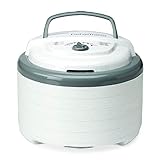
NESCO FD-75A Snackmaster Pro
- Expands from 5 to 12 trays
- 600W Converga-Flow fan
- 95-160F dial
- Includes fruit roll sheets and Clean-A-Screens
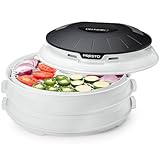
Presto 06300 Dehydro
- 4 trays expanding to 8
- No tray rotation needed
- Trays nest for 22% storage savings
- 600 watts

Quick Overview: Best Stackable Food Dehydrators for Beginners (October 2026)
All ten machines below load from the top and stack vertically. Prices shift constantly, so read the buttons rather than any number, and compare on tray geometry, airflow and wattage instead.
| Product | Specifications | Action |
|---|---|---|
| NESCO FD-75A Snackmaster Pro |
|
Check Latest Price |
| Presto 06300 Dehydro |
|
Check Latest Price |
| Cosori CFD-N051-W |
|
Check Latest Price |
 Hamilton Beach 32100A Hamilton Beach 32100A |
|
Check Latest Price |
 OSTBA GGJ-261B OSTBA GGJ-261B |
|
Check Latest Price |
 Magic Mill MFD-5000 Magic Mill MFD-5000 |
|
Check Latest Price |
 NutriChef PKFD14BK.5 NutriChef PKFD14BK.5 |
|
Check Latest Price |
 Commercial CHEF CHD200S Commercial CHEF CHD200S |
|
Check Latest Price |
 Rosewill RHFD-24001 Rosewill RHFD-24001 |
|
Check Latest Price |
 Elite Gourmet EFD308 Elite Gourmet EFD308 |
|
Check Latest Price |
What Is a Stackable Food Dehydrator?
A stackable food dehydrator is a countertop electric dehydrator with a vertical column of removable trays that load from the top, so you can add or remove trays as batch size changes. An electric heating element and a fan move warm, low-temperature air (typically 95F to 195F) across food laid on the stacked trays until the moisture is gone. Most models add a timer that shuts the machine off on its own.
1. NESCO FD-75A Snackmaster Pro Review
NESCO FD-75A Snackmaster Pro Food Dehydrator, For Snacks, Fruit, Beef Jerky, Gray
- Expands from 5 to 12 trays
- Top-mounted fan keeps drips off the heating element
- Includes fruit roll sheets and Clean-A-Screens
- 600W Converga-Flow airflow
- 1 year limited warranty
- No built-in timer or power switch
- Uneven drying between top and bottom trays
- Deep tray crevices slow cleaning
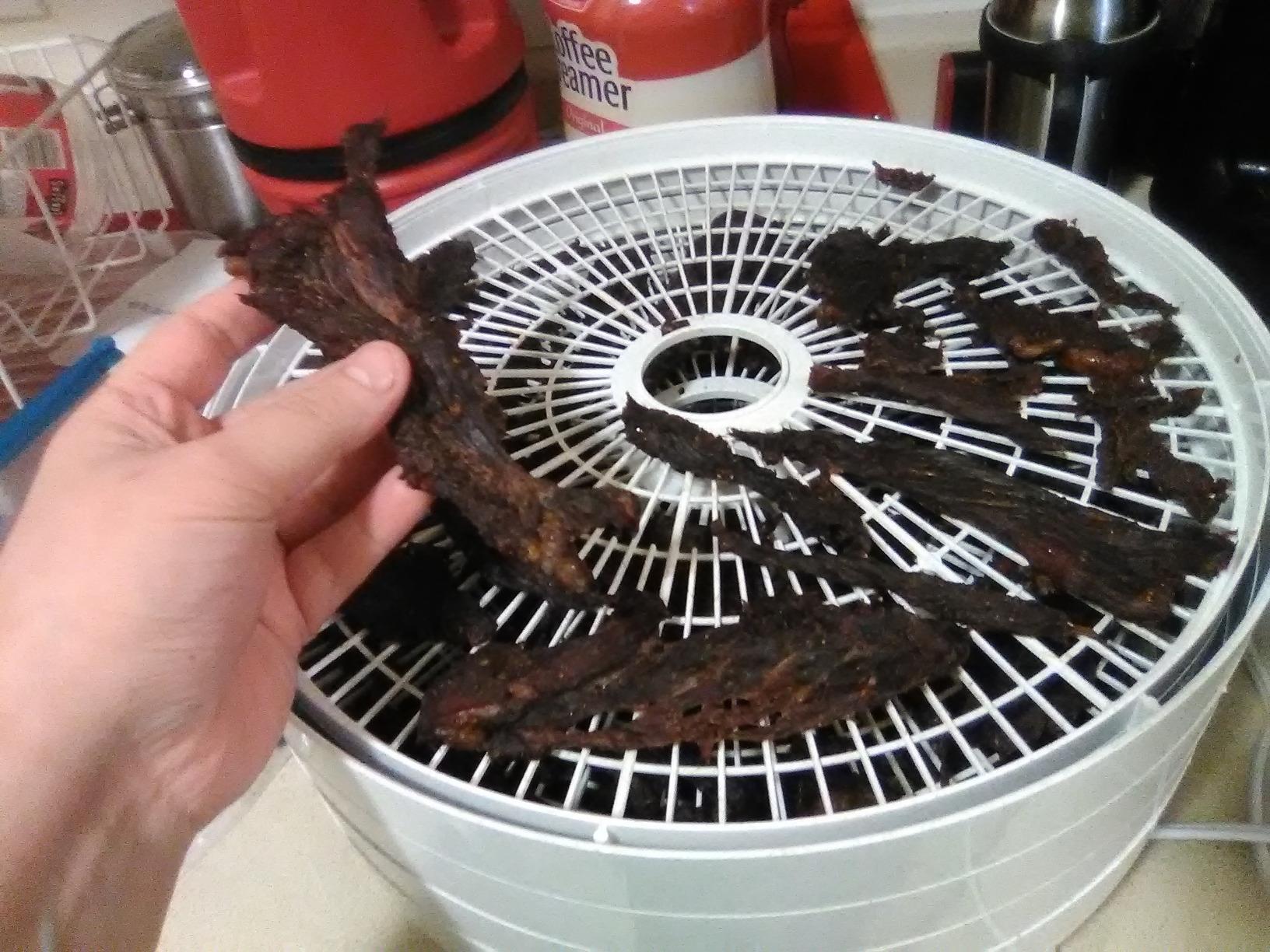
The NESCO FD-75A is the stackable dehydrator I recommend to a first-time buyer, and the reason is expandability rather than any single feature. It ships with five trays and grows to twelve on the same base, so a beginner who starts with banana chips is not locked out of a jerky harvest in October. The 600-watt Converga-Flow system is also the most powerful in this group, which matters because low wattage is where budget columns start dragging out batch times.
Owners on r/dehydrating repeatedly name this as the affordable, reliable first unit that can be expanded later, and that pattern matches what we saw across the 13757 reviews on this listing. It is assembled in the USA, which usually means replacement parts and a real warranty behind them rather than a dead end when a plastic tray finally cracks.
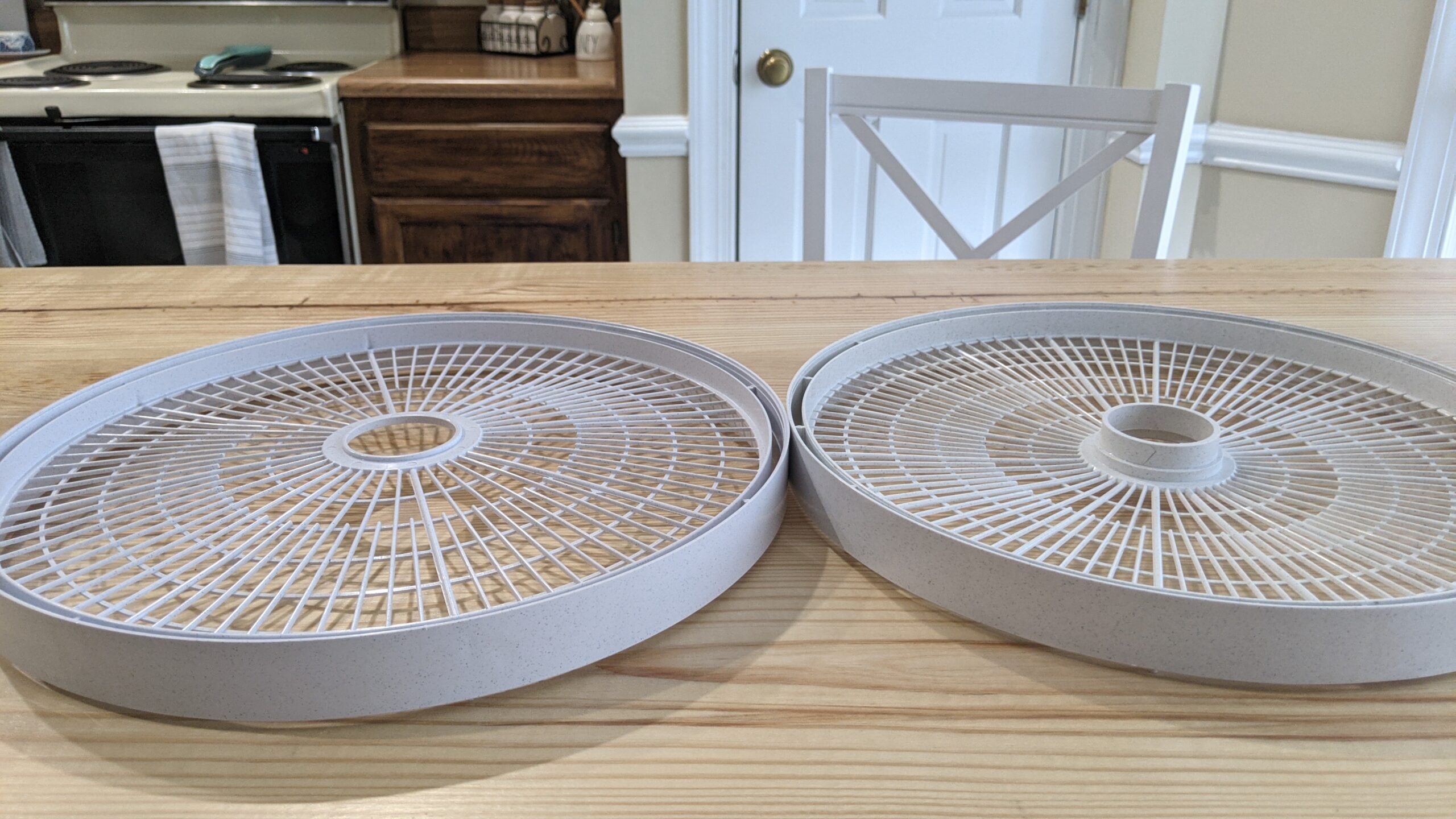
Two details decide whether this works for you. First, there is no built-in timer and no power switch, so you plug and unplug it yourself or run an external timer beside it. Second, drying is not perfectly even from top to bottom, and the fix most owners land on is rotating trays mid-batch. Neither is a dealbreaker for a beginner; both are just things to know before your first evening run.
The box also includes two Clean-A-Screens, two fruit roll sheets and a sample jerky seasoning and cure, which is genuinely useful because buying the mesh separately is where many new owners spend more than they budgeted for. The plastic body is the main long-term worry, since sustained heat eventually warps plastic trays no matter which brand you buy.
Who the NESCO FD-75A suits
It suits beginners who want room to grow and do not mind rotating trays once per batch. If you plan to dry fruit now and test a turkey breast later, this is the machine that can follow you there without a second purchase.
Who should skip the NESCO FD-75A
Skip it if you need to leave overnight runs, because there is no automatic shut-off to do it for you. Anyone who will not lift three trays off the top to check one at the bottom will find that irritating by the second batch.
2. Presto 06300 Dehydro Review
- No tray rotation needed
- Trays nest for 22% storage savings
- Expands from 4 to 8 trays
- Top-mounted fan and heater
- Good for jerky fruit and pet treats
- Only 4 trays included
- No built-in timer
- Basic dial controls
The Presto 06300 is the simplest dehydrator here that still does the job properly, and its no-rotation claim is the part that matters. The fan and heating element sit on top, so heat falls through the column instead of being pushed up past a heater at the base, and owners do not report the top-tray-overdrys-bottom-tray-stays-damp problem here the way they do on several other models.
It is also the easiest machine in the group to put away. The trays nest to cut storage depth by 22 percent and the cord wraps around the cover, so the whole thing lives in a cabinet between batches rather than holding a permanent patch of counter.
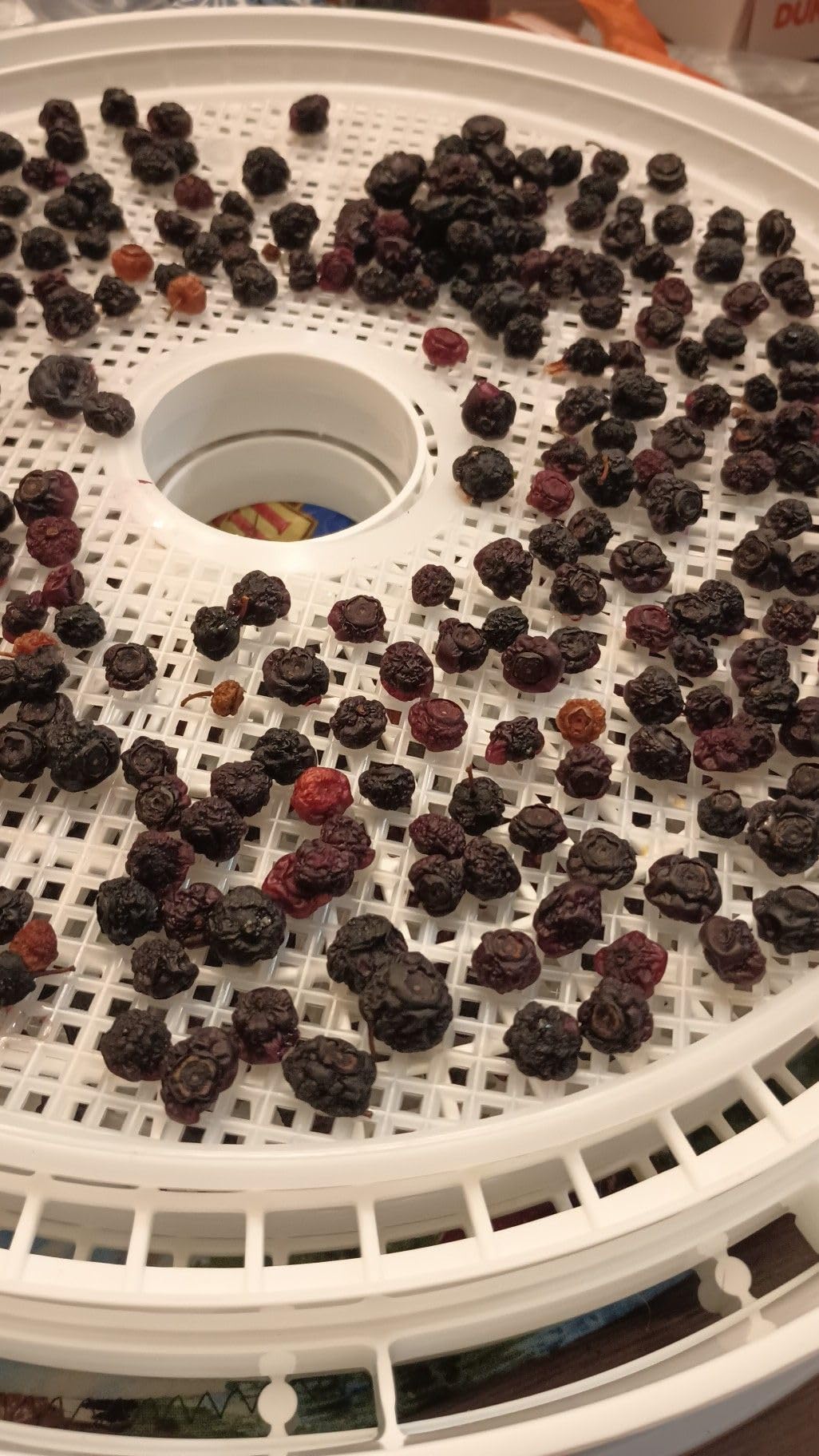
The compromises are real and they are on the spec sheet. You get four trays rather than five, expansion tops out at eight, and there is no timer, so an overnight run means you start it when you plan to be awake to stop it. The dial goes up to 165F, which is enough for fruit and most herb work but sits below what you would want for careful meat drying.
Because it is a basic analog design with few moving controls, there is very little that can break electronically, and the compatible tray, mesh and fruit-tray parts are numbered and widely available. That simplicity is the whole appeal: it is a tool, not a gadget.
Who the Presto 06300 suits
It suits a beginner who wants the least fuss, has a small kitchen, and plans to dry in the evening rather than overnight. If storage space is the deciding factor, this is the one to shortlist first.
Who should skip the Presto 06300
Skip it if you need a timer with automatic shut-off, or if you plan to make serious jerky where dial precision becomes important. It is also a poor fit for anyone who wants to start with a large batch, since four trays is the smallest starting column here.
3. Cosori CFD-N051-W Review
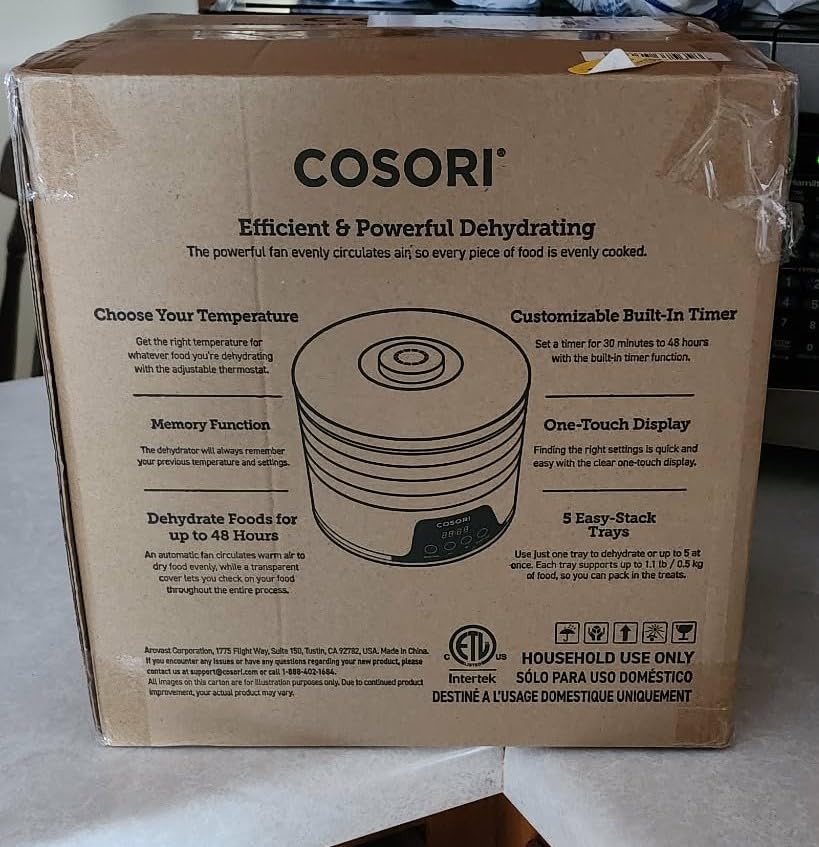
- Temperature adjustable in 1F steps
- Quiet operation under 47 dB
- 48 hour digital timer
- Tray height adjusts for thicker foods
- Recipe book with 50 recipes
- Only one mesh screen included
- Round trays waste some counter space
- Some reports of lid cracking over time
The Cosori CFD-N051-W is the most beginner-friendly interface in this roundup, and quietness is its standout trait at under 47 decibels. That matters more than it sounds if the machine lives on a counter a few feet from where you eat, because a column that growls for twelve hours changes how often you actually run it.
It also gives you finer temperature control than anything else at this tier. The dial steps in single-degree increments up to 165F and the 48 hour timer covers the longest fruit and meat cycles without babysitting, and a two year manufacturer warranty outlasts the one-year coverage most rivals carry.
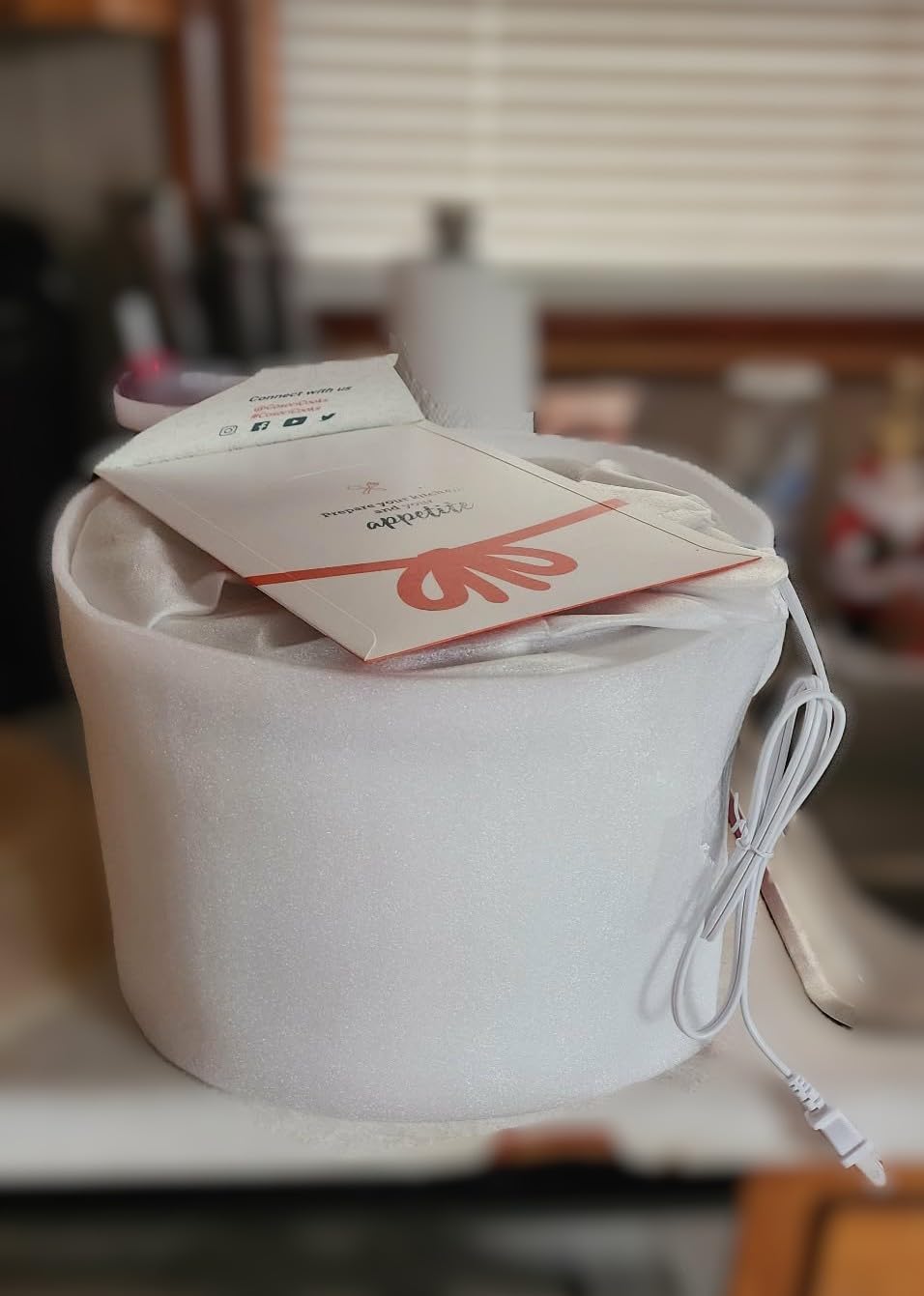
The round tray shape wastes some space compared with a rectangular column, and the hole in the middle of each tray is awkward for pouring mixture for fruit leather. Cosori ships one mesh screen and one fruit roll sheet, so plan to buy more of both before your second batch, and note that the sheet needs trimming to fit the round format.
Adjustable tray height is a quiet bonus most beginners only notice once they start drying thicker cuts of vegetable. The longer-run concern is durability: a small number of owners report the lid cracking after extended high-heat use, which is the same plastic fatigue issue that shows up in complaints across this whole category.
Who the Cosori CFD-N051-W suits
It suits beginners in apartments, shared homes, or anywhere the machine has to sit near living space. If you plan to run it while you work from home, the timer and low noise make this the easiest to live with.
Who should skip the Cosori CFD-N051-W
Skip it if counter space is tight and you want to maximise every square inch of drying area, since the round format gives that up. Anyone making large rectangular batches of herbs or snacks will get more usable area from a rectangular model.
4. Hamilton Beach 32100A Review
Hamilton Beach Digital Food Dehydrator for Fruit, Jerky, Vegetables & More
- 48 hour timer with auto shutoff
- Rectangular trays use space well
- Dishwasher safe trays and lid
- Clear vented lid for checking progress
- Includes mesh screen and fruit leather tray
- Noticeably loud while running
- Only one fine mesh screen included
- Chemical smell on the first run
The Hamilton Beach 32100A is the pick for a beginner whose batches run overnight, because the 48 hour timer shuts the machine off on its own. That single feature removes the most common beginner failure, which is starting a batch at bedtime and coming back to a scorched dehydrator and a ruined tray of food.
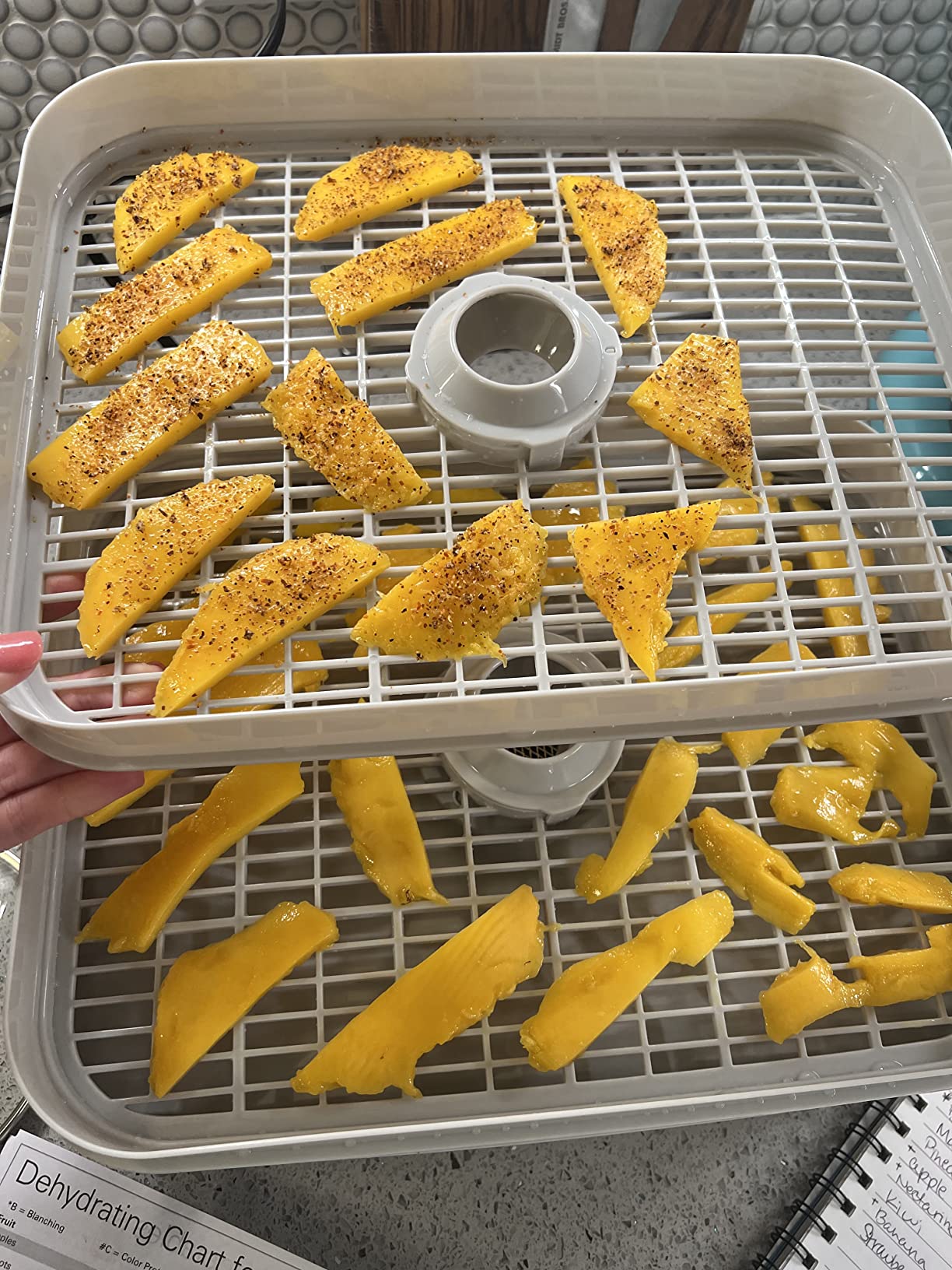
It also gives you the largest stated drying area of any model in this roundup at 4.2 square feet across five rectangular trays, and rectangular trays waste far less of the column than round ones. The clear vented lid means you check progress without pulling the stack apart.
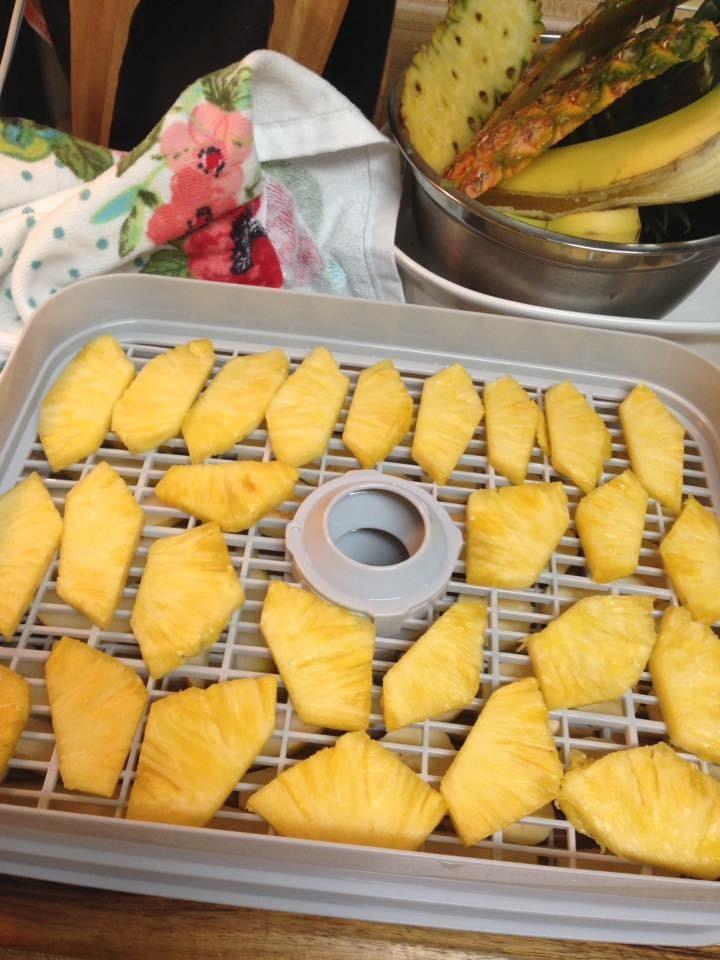
The heater is mounted at the base here, so airflow moves up through the column rather than down it, and that is the trade for the low price. Owners do report uneven drying on some units, and rotating tray positions partway through a batch largely fixes it. You also get a base-mounted heater rather than the top-mounted arrangement that keeps moisture away from the element on some rivals.
Noise is the other honest drawback: reviewers compare it to a box fan, so it is not an apartment machine. Some first-run chemical smell is normal, and only one fine mesh screen ships, which means herbs and small pieces fall through until you buy more.
Who the Hamilton Beach 32100A suits
It suits beginners drying at night, or anyone who wants a real automatic shut-off and dishwasher-safe cleanup. Families that want the biggest usable area per tray will like the rectangular format here.
Who should skip the Hamilton Beach 32100A
Skip it in a small apartment or any quiet shared space, since the fan is loud for long runs. It is also a weaker choice if you care about consistent results without rotating trays.
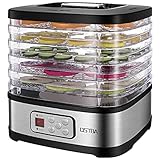
5. OSTBA GGJ-261B Review
OSTBA Food Dehydrator, 5 Trays, 240W Dryer for Jerky, Fruit & Snacks
- 72 hour timer is the longest in this roundup
- See-through window for checking food
- 360 degree air circulation
- Dishwasher safe BPA-free trays
- LED touchscreen control panel
- 240W means slower drying
- Inconsistent temperature accuracy
- Higher share of 1-star reviews
The OSTBA GGJ-261B is the one to buy if your batches run long, because its 72 hour timer is the longest here by a full day. Slow foods like whole banana leather, thick vegetable slices or cured meat can finish on a single setting instead of being restarted halfway through the night.
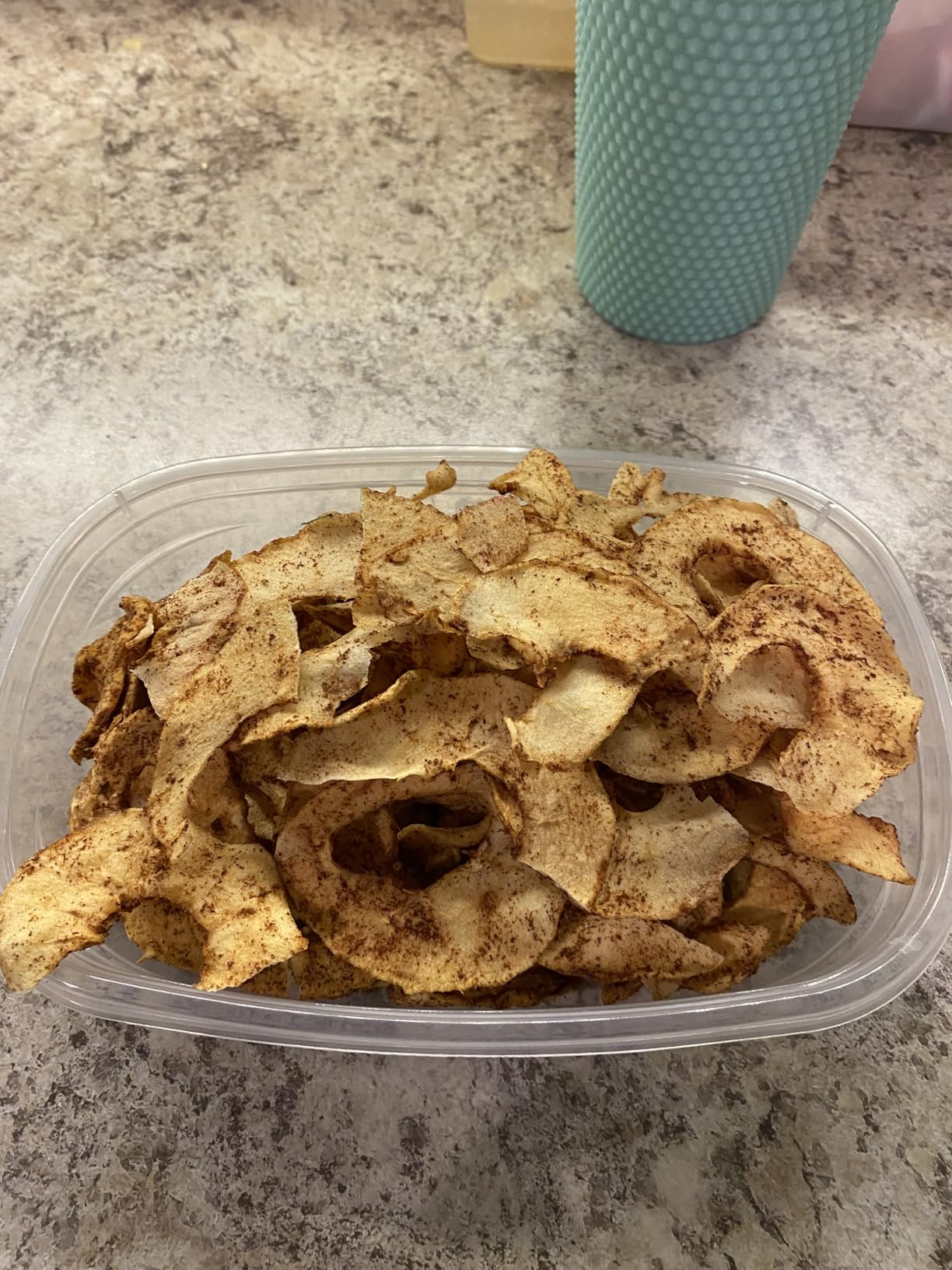
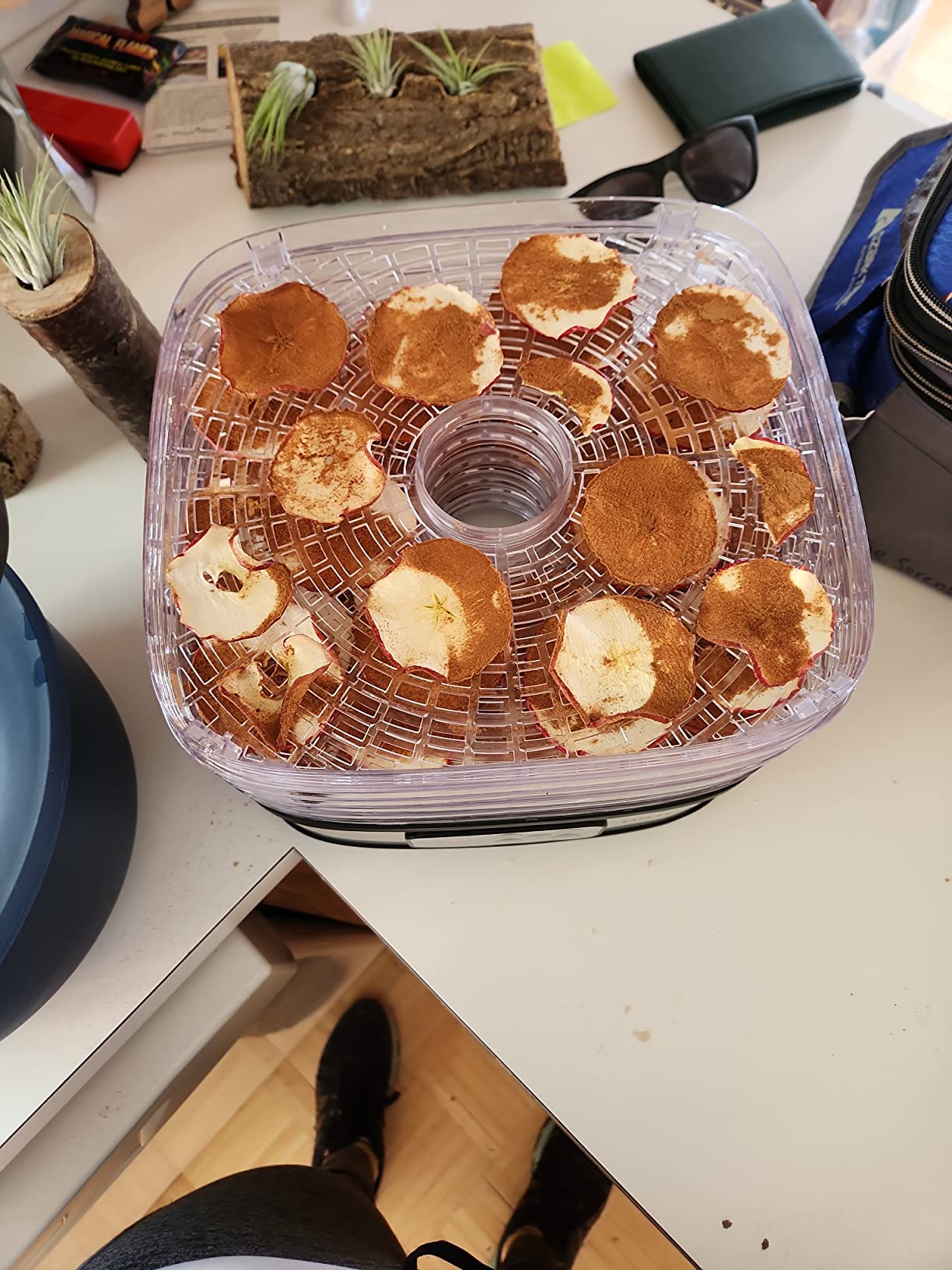
The see-through window is a small thing that changes the first-batch experience. You can watch slices of apple curl at the edges without unstacking the column, and the LED touchscreen panel is the most modern-looking control surface in the group.
What you give up is power. At 240 watts it has the lowest drying capacity in this roundup, so expect longer runs than a 600-watt column on the same food, and a few owners report the temperature does not hold as precisely as the dial suggests. Its rating sits a little below the leaders at 4.3, and its share of 1-star reviews is higher than most, which points to some quality control variation between production runs.
On the plus side it is ETL certified, comes with five dishwasher-safe BPA-free trays, and carries a 24 month warranty, which is one of the longer commitments in this category.
Who the OSTBA GGJ-261B suits
It suits beginners whose first batches are slow, thick fruit and long leather or vegetable runs where a 48 hour timer would not be enough. Buyers who want the most modern controls on a simple machine will like the touchscreen.
Who should skip the OSTBA GGJ-261B
Skip it if you want fast turnaround, since 240 watts is the slowest here. Anyone sensitive to inconsistent calibration, or who wants a unit with a long track record of proven durability, should look at a higher-wattage column instead.
6. Magic Mill MFD-5000 Review
- Food-grade stainless steel trays
- Reaches 167F
- Tray height adjusts from 0.6 to 1.1 inch
- Stainless steel base and body accents
- Dishwasher safe trays
- Only 240W
- Not expandable past 5 trays
- Some temperature calibration complaints
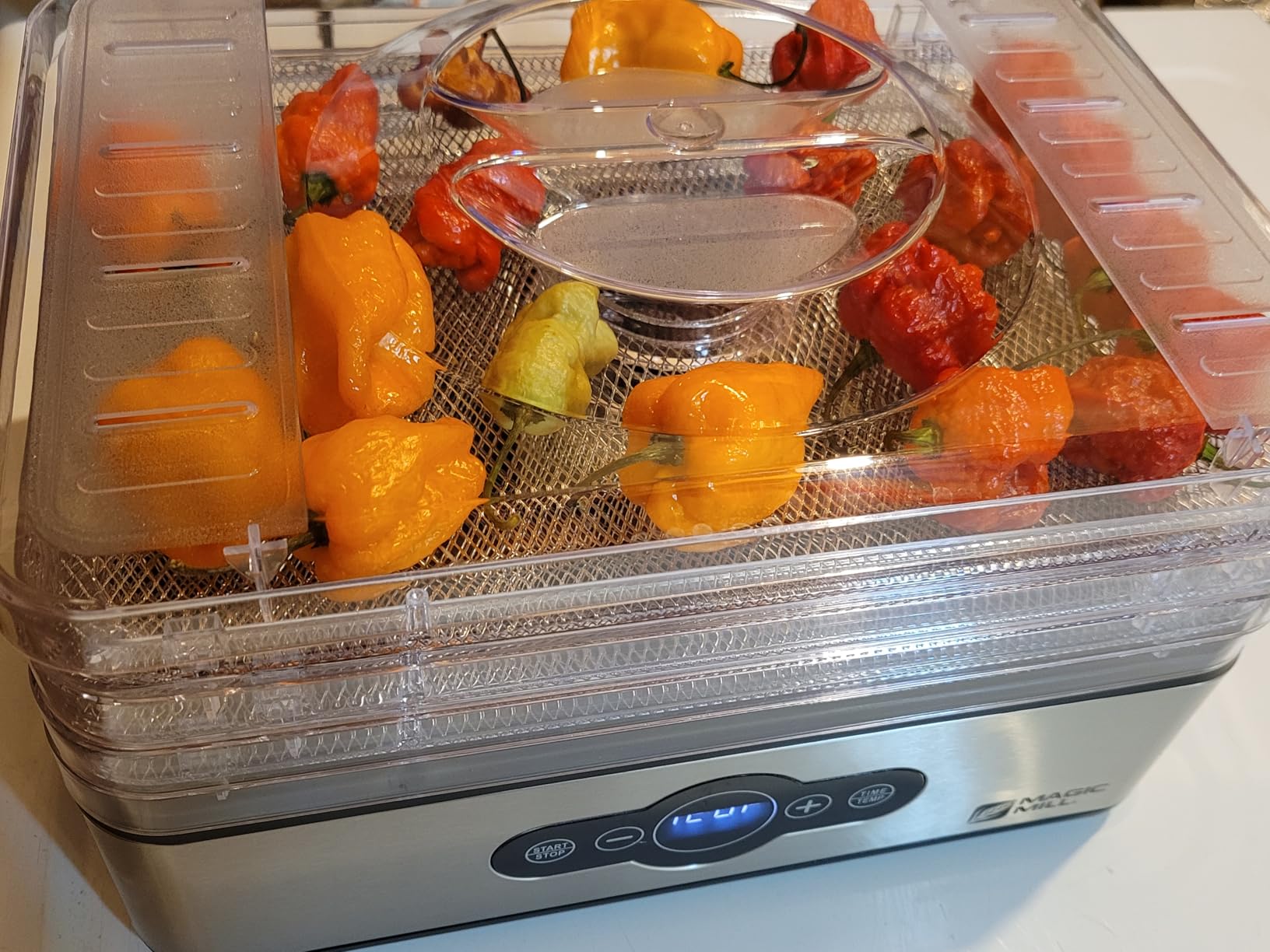
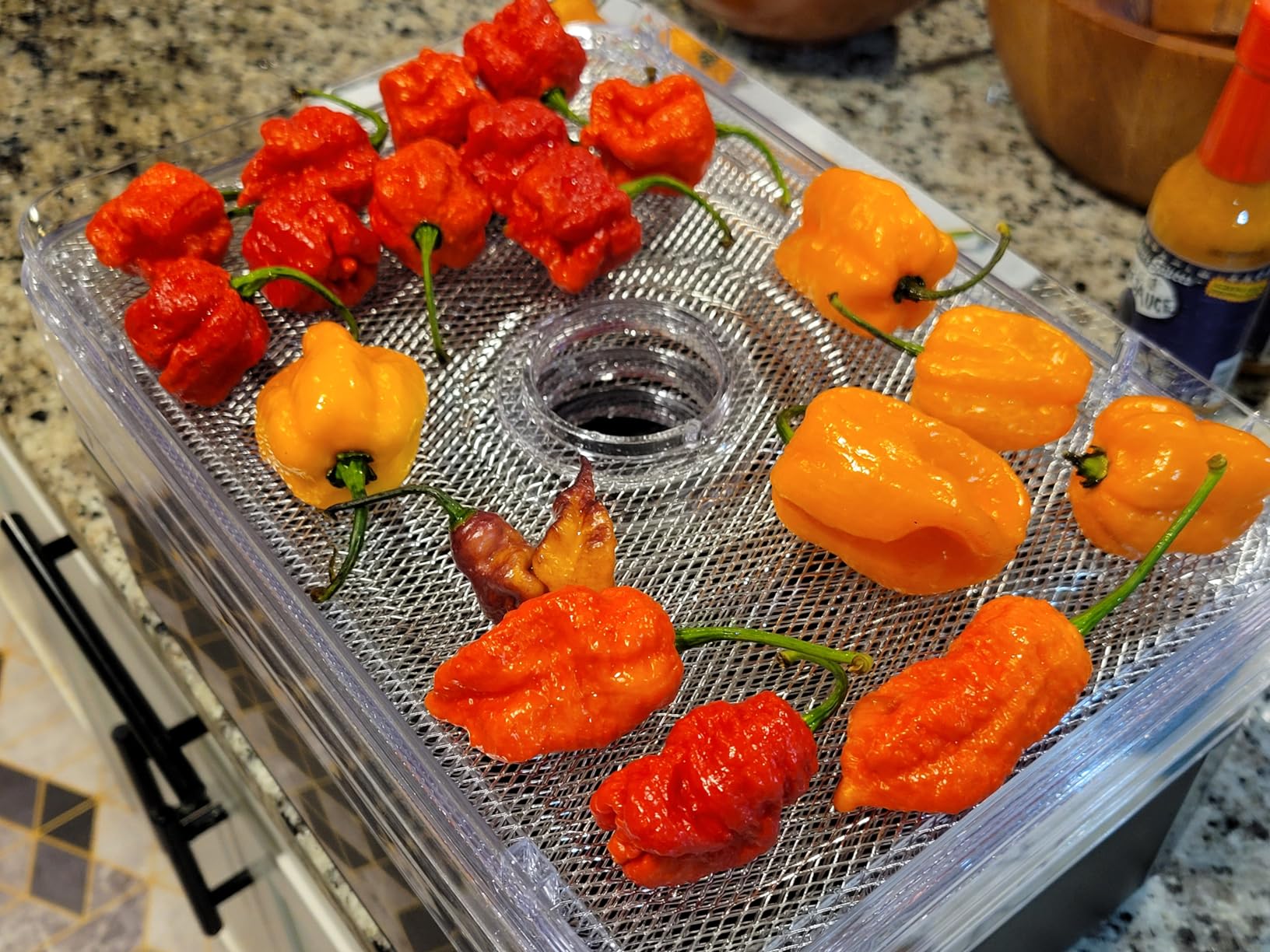
The Magic Mill MFD-5000 is the answer to the complaint that comes up most often in dehydrating circles, which is plastic trays that warp under sustained heat. Its five trays are food-grade stainless steel, and plastic is the thing that flexes and bows after a year of 160F runs. Trays that do not warp go straight in the dishwasher.
It also reaches 167F, the second-highest ceiling in this roundup, and the tray height adjusts from 0.6 to 1.1 inch so you can dry a single layer of thin apple slices or a thicker piece of squash on the same tray.
Stainless steel is not a free upgrade, and two costs show up here. The first is power: at 240 watts the drying is slower than the 500 and 600 watt columns. The second is expansion, because the listed specification is a fixed five trays with no expansion path, so a bigger batch later means a different machine.
A few owners also report the temperature reading drifting from the setting, and the body is still plastic even though the trays and base are steel, so it does not fully escape the warping concern for the frame. Budget dehydrators from different brands are frequently the same hardware sold under different names, and owners comparing this one with Cosori report results that are close to identical.
Who the Magic Mill MFD-5000 suits
It suits beginners who plan to keep the machine for years and are tired of replacing warped plastic trays. It is a good second dehydrator too, since a fixed stainless column works well for produce while a plastic expandable unit handles meat.
Who should skip the Magic Mill MFD-5000
Skip it if drying speed is your priority or if you want the option to grow the stack later. Buyers who want the lowest maintenance over a decade will be happiest with this one.
7. NutriChef PKFD14BK.5 Review
- 180F is the highest ceiling here
- 600W for faster drying
- One-button simple operation
- Stainless steel construction
- Trays remove for cleaning
- One-button control lacks precision
- Expandability is not confirmed
- Fewer owner reviews than rivals
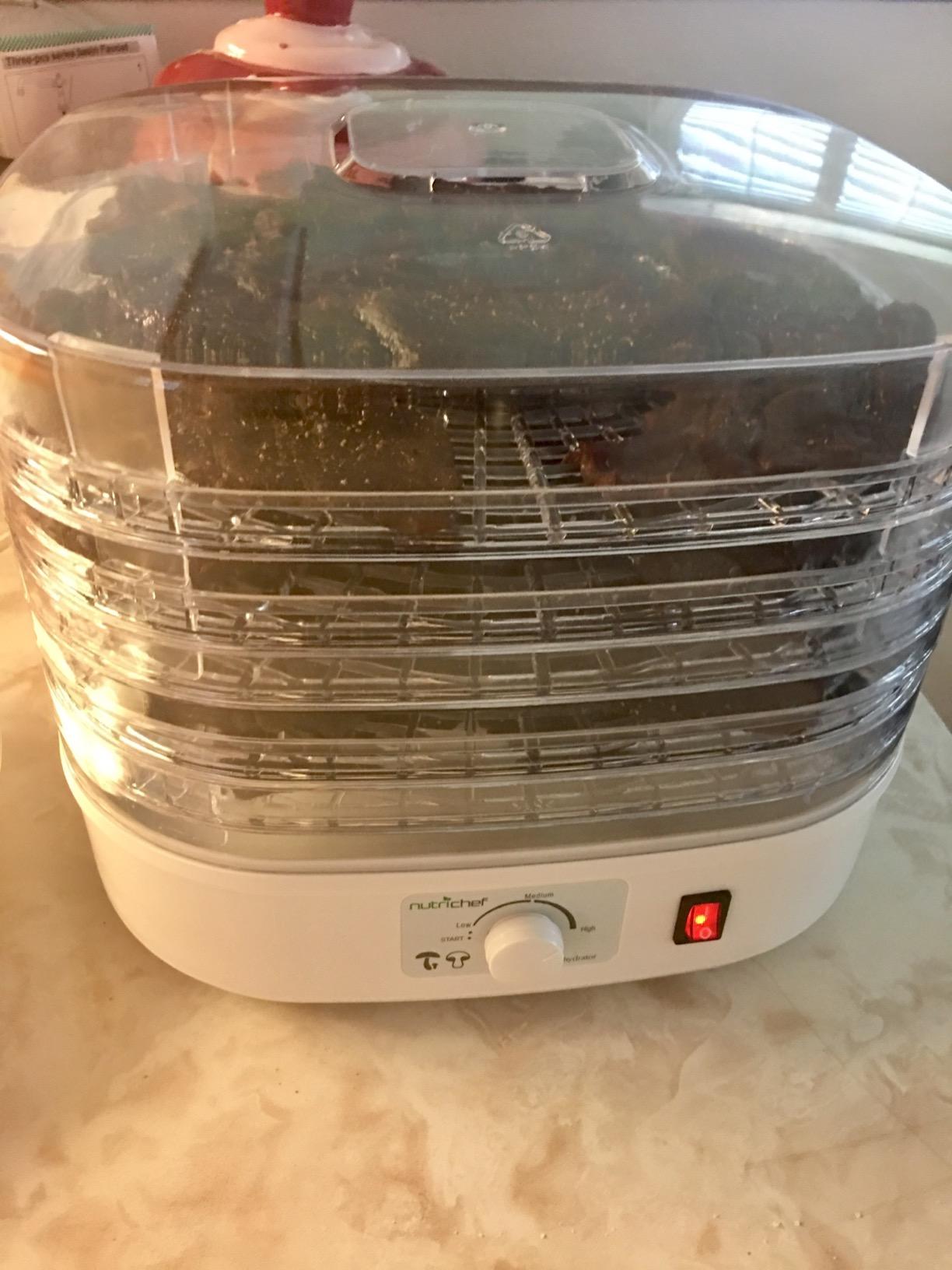
The NutriChef PKFD14BK.5 is the strongest raw spec sheet in this roundup, combining 600 watts of drying power with a 180F ceiling, the highest here by a clear margin. If your goal is meat and you want headroom above the usual 165 to 170F finishing range, this is the column that has it.
The stainless steel body and removable trays also address the two most common long-term complaints, warping and difficult cleaning, and enhanced heat circulation is claimed for even drying across the stack.
Where it falls short is control. One-button operation is friendly until you want to hold a specific temperature for a specific food, because the dial gives you a range rather than a set point you can trust, and that is a real problem for beginners learning to read texture and time together on their first batch of meat.
Expansion is not confirmed in the listed specifications, so do not buy it assuming a bigger column later. It also carries fewer owner reviews than the leaders here, which means less long-term reliability data to go on.
Who the NutriChef PKFD14BK.5 suits
It suits a beginner who has decided meat is the goal and wants the most temperature headroom and power available in a stackable column. Anyone prioritising easy cleaning over fine control will like the removable stainless trays.
Who should skip the NutriChef PKFD14BK.5
Skip it if you want to dial in exact temperatures, since a one-button interface cannot do that. Buyers who plan to grow capacity over the years should pick a unit with a confirmed expansion path.
8. Commercial CHEF CHD200S Review
Commercial Chef Food Dehydrator, 5 BPA-Free 10” x 9.25” Trays, CHD200S
- Largest rectangular trays in the group
- Dishwasher safe trays
- ETL listed
- Light at 5 pounds
- Transparent trays
- Mechanical dial with no display
- No built-in timer
- Bottom-mounted fan dries less evenly
The Commercial CHEF CHD200S is the geometric winner on tray area, with five transparent trays measuring 10 by 9.25 inches each. For a beginner cutting big fruit slices or spreading a wide leather tray, that rectangle holds noticeably more per layer than the round trays most stackables use, and you can see the food without opening anything.
It is also the lightest machine here at 5 pounds, which is a genuine advantage if you are moving it in and out of a cabinet every time you use it. Dishwasher-safe trays keep cleanup to a rinse and a load.
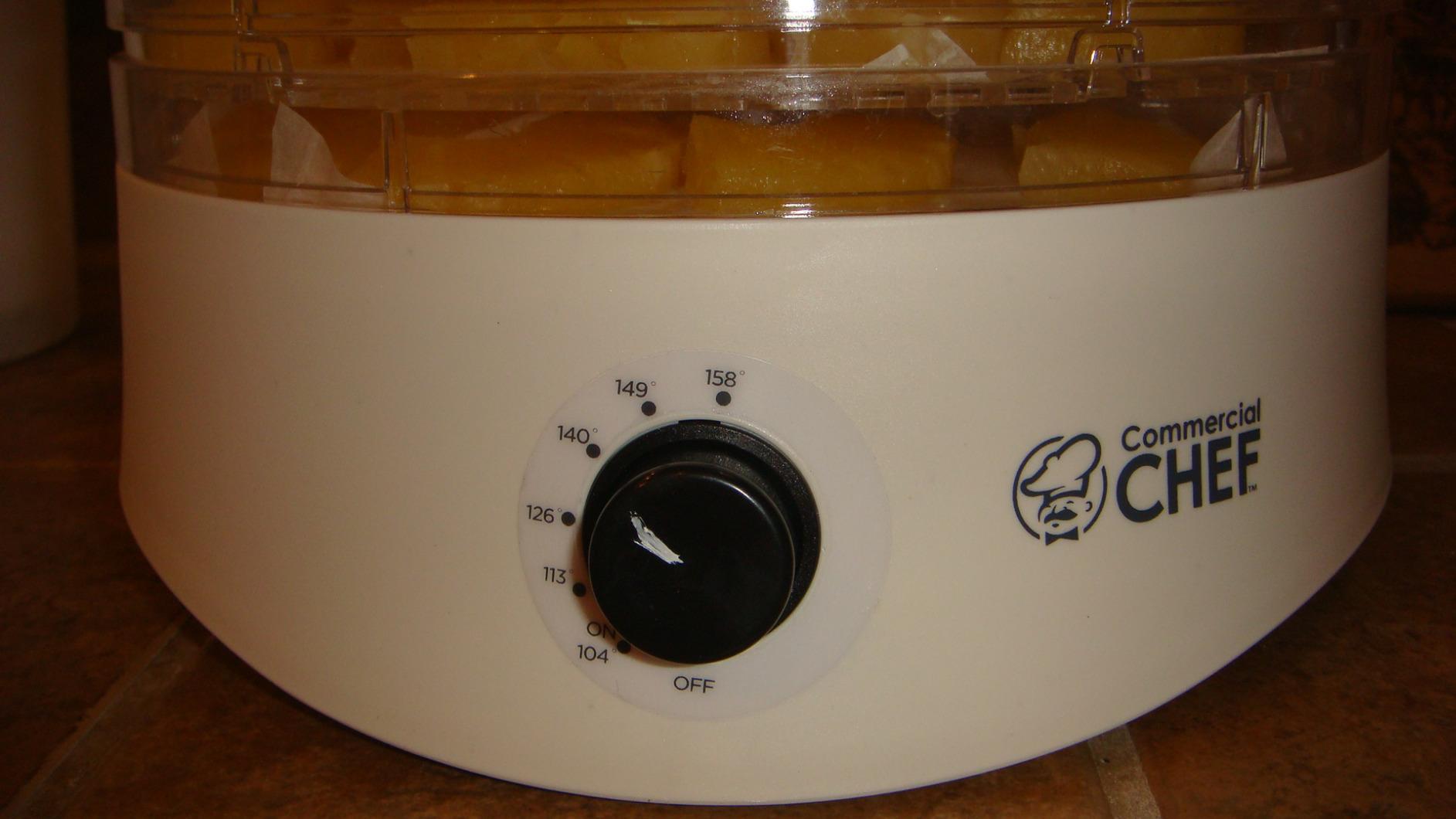
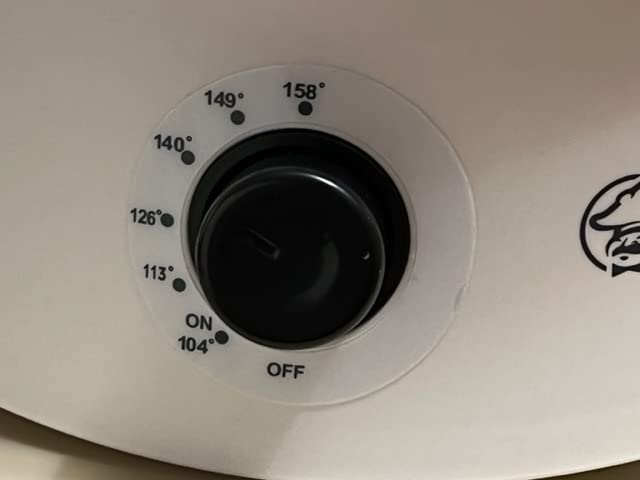
The catch is control and airflow. A mechanical dial with no digital display means you are estimating the setting rather than reading it, there is no timer at all, and the bottom-mounted fan pushes air up through the column, which is the arrangement most likely to leave the top tray drier than the bottom. Some owners report the calibration runs inaccurate.
Owners also describe the trays as feeling flimsy despite the BPA-free marketing, and with a rating of 4.3 it sits below the group leaders on consistency. It has a following outside kitchens for drying 3D printer filament, which tells you the chamber holds steady heat even if the food results are mixed.
Who the Commercial CHEF CHD200S suits
It suits beginners who want the largest flat drying area per tray and want to see the food at a glance. Anyone short on storage space will like how little it weighs and how well it stacks away.
Who should skip the Commercial CHEF CHD200S
Skip it if you plan unattended or overnight batches, since there is no timer to stop the run. It is also a poor match for anyone learning to dial in temperatures precisely.
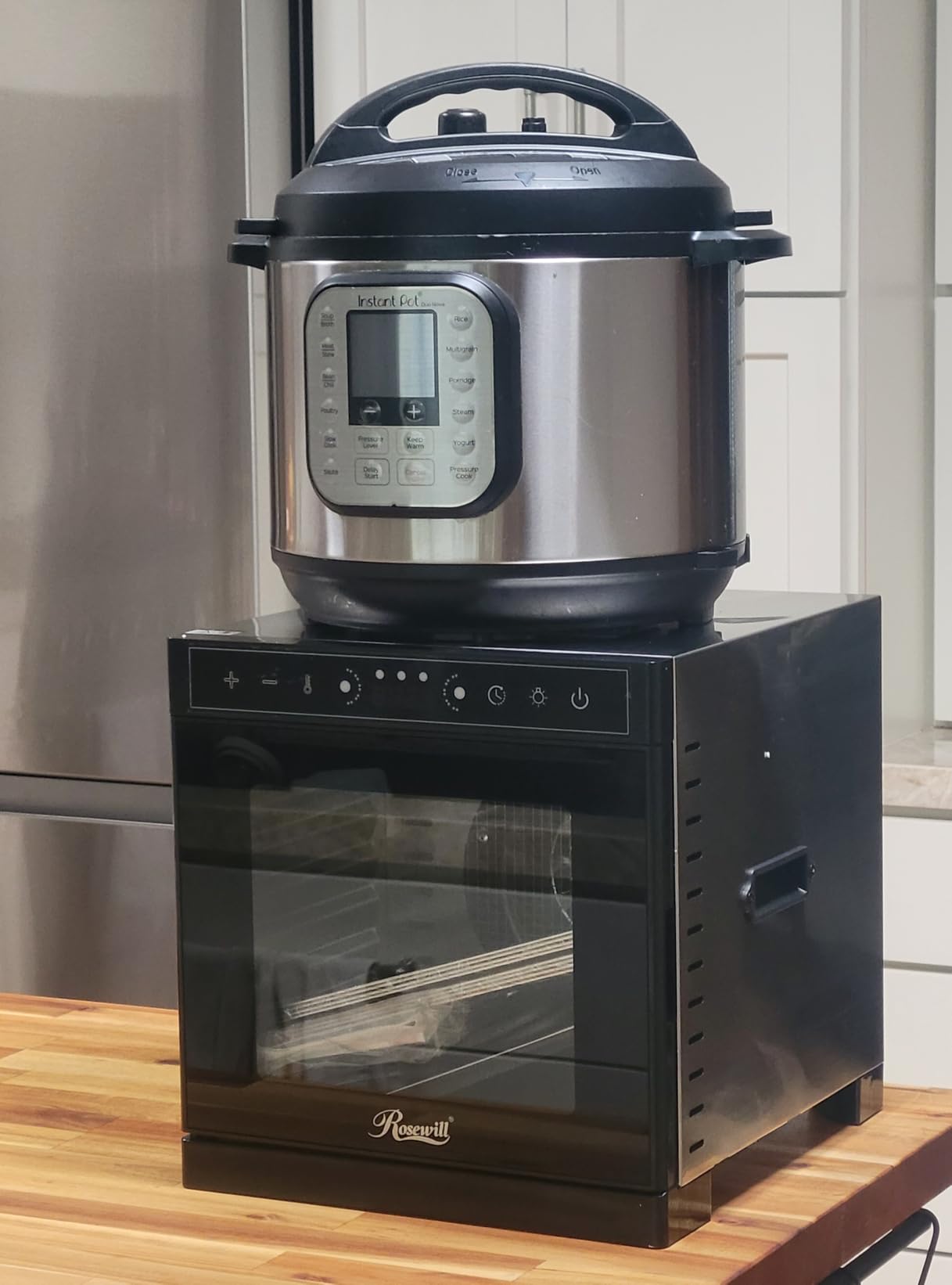
9. Rosewill RHFD-24001 Review
- Tray height adjusts from 0.8 to 1.5 inch
- 400W is strong for its tier
- 48 hour timer with auto shutoff
- 360 degree hot air circulation
- Dishwasher safe trays
- Only 257 reviews so far
- Reported slow airflow
- Confusing written instructions
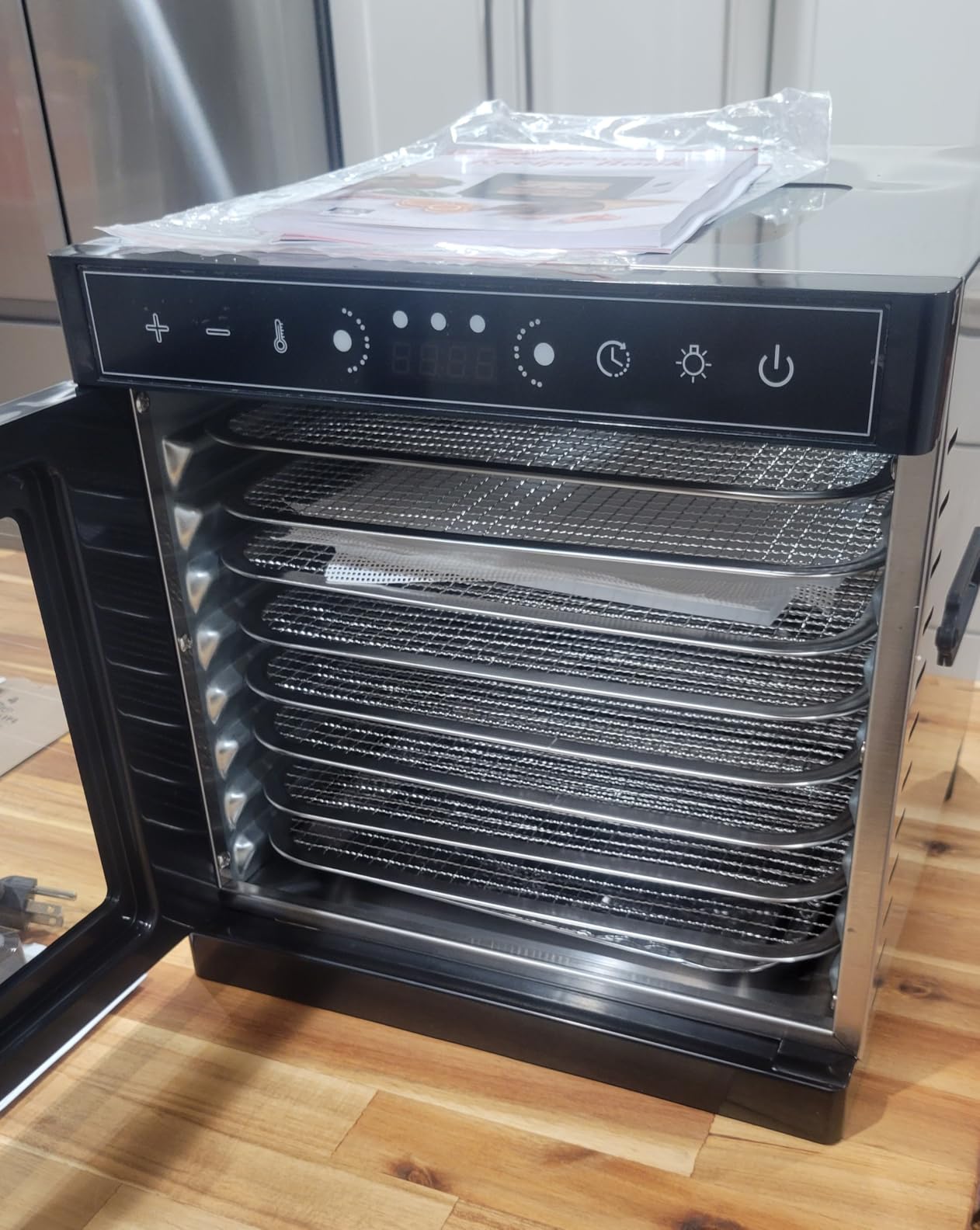
The Rosewill RHFD-24001 is the budget pick, and on paper it undercuts everything else in the group: 400 watts, a 48 hour timer with automatic shutoff, 360 degree air circulation, and tray height that adjusts from 0.8 to 1.5 inches by rotating the trays. Very few entry machines give a beginner all four.
It is also the quietest option that does not publish a decibel figure, which owners describe as quiet during normal runs, and the dishwasher-safe trays keep the whole cycle short.
The honest weakness is evidence, not performance. With 257 reviews this is the least-tested machine here, and it is a recent entry in the category, so we have no multi-year durability picture for the trays or the panel. A handful of owners report slower-than-expected drying, which is a little odd given the wattage, and the written instructions are thin enough that you will be guessing at first.
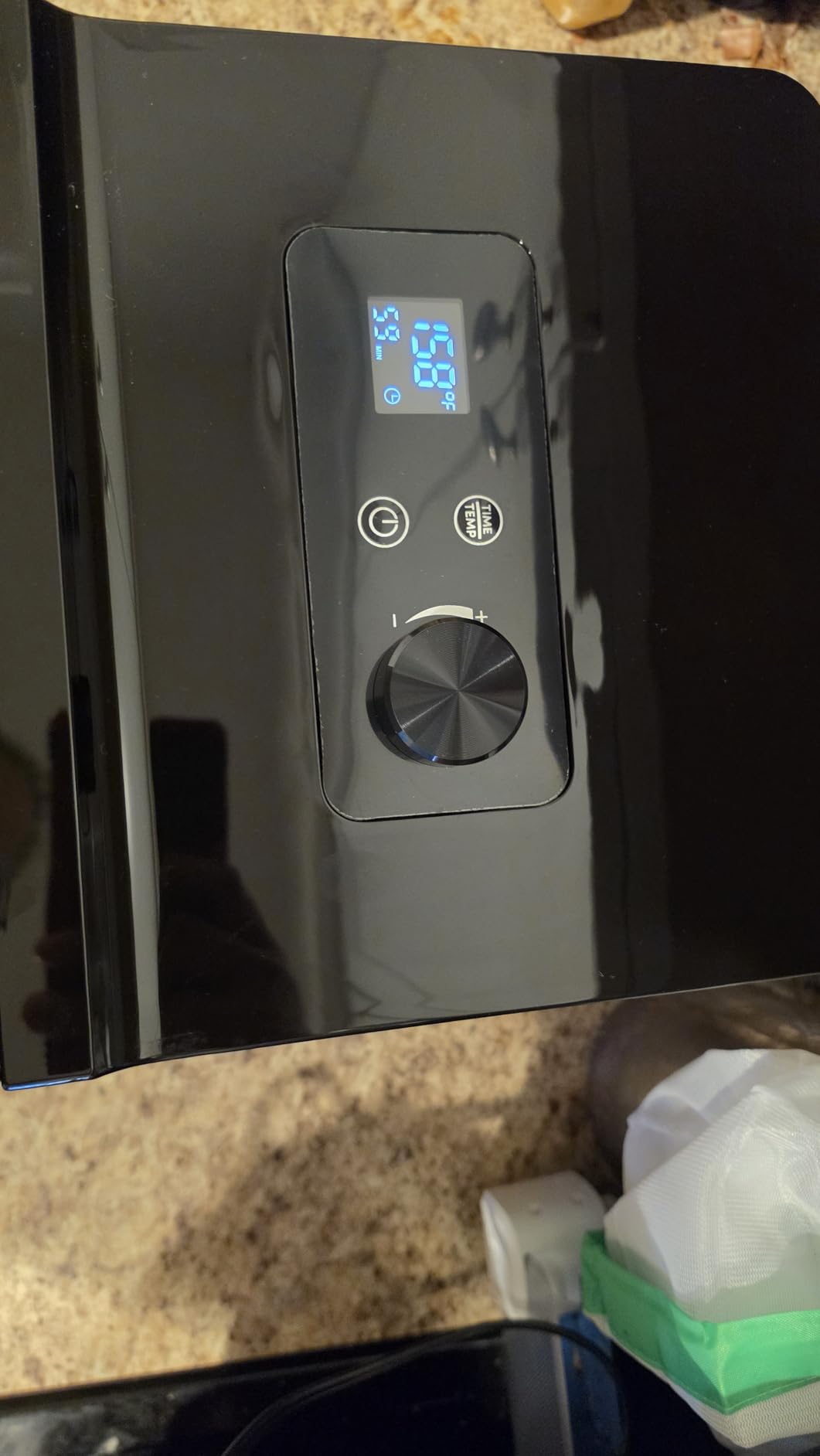
There is also a specification inconsistency worth knowing: the listed range reads 95F to 158F, with a higher figure appearing elsewhere in the product details, so confirm the ceiling before planning high-temperature meat. At 14.7 pounds it is unusually heavy for its footprint, which is fine unless you plan to move it often.
Who the Rosewill RHFD-24001 suits
It suits a beginner on a tight budget who still wants a timer with auto shutoff and adjustable tray height. Anyone who wants to try dehydrating without committing much money will find the feature list unusually complete.
Who should skip the Rosewill RHFD-24001
Skip it if buying a second-guess-free unit matters more than the specification list, because there is very little long-term history here. It is also a weaker fit for a large kitchen with room for a proven expandable column.
10. Elite Gourmet EFD308 Review
Elite Gourmet Food Dehydrator, Stainless Steel Trays, Adjustable Temp
- Horizontal airflow like premium box models
- Food-grade stainless steel trays
- Accurate digital temperature control
- Dishwasher safe trays and lid
- Beeps when the cycle ends
- Only 4 trays (fewest in set)
- Max timer only 24 hours
- Max temp 158°F (not 165°F for USDA jerky safety)
The Elite Gourmet EFD308 is the rarest thing in this roundup: a genuinely small machine with horizontal airflow, the same air direction used in premium box-style dehydrators. That means the fan pulls air across each tray evenly rather than driving it up a column, so a beginner gets more consistent results from a very compact footprint.
The four stainless steel trays are dishwasher safe, the digital temperature steps in single-degree increments and is reported as accurate by owners, and the unit beeps when the cycle ends so you do not have to guess when to come back.
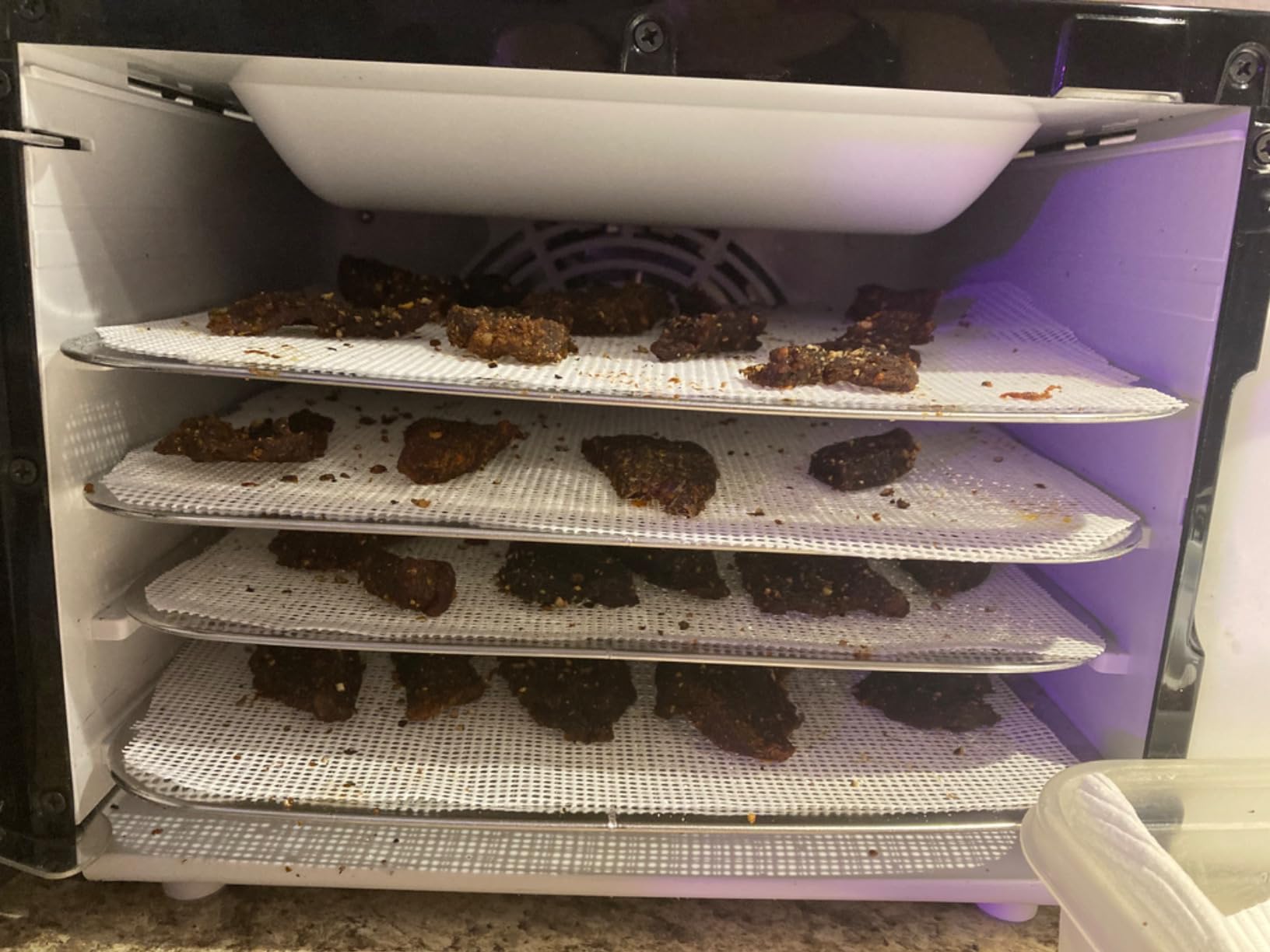
Two limits define it. Four trays is the smallest column here and 24 hours is the shortest maximum timer, so it is built for small batches rather than a pantry run. The 158F ceiling is also below what you want for careful jerky work, which needs a higher finishing temperature than fruit drying does.
Starting the machine requires a double-press on the power button, which owners find confusing the first time, and you are paying a per-tray premium for very little capacity. Treat it as an apartment or gift kitchen machine rather than a main dehydrator.
Who the Elite Gourmet EFD308 suits
It suits a beginner with very limited counter and storage space who wants even drying and stainless trays. It works well for a few trays of fruit, herbs or dog treats at a time.
Who should skip the Elite Gourmet EFD308
Skip it if you plan long batches, batch meat jerky, or expect to grow capacity soon. Buyers who want more trays for the money will get further elsewhere in this list.
Stackable vs. Slide-Out Dehydrators: Which Is Better for Beginners?
A stackable dehydrator is better for beginners who want to start small, dry one or two batches a week, and store the machine away between uses; a slide-out box is better if you expect to fill trays weekly or process meat in quantity. That is the short answer, and everything else follows from it.
The mechanical difference is how you reach the food. In a stackable column you lift every tray above the one you want to check, so testing a batch at the bottom means unstacking the top. Box-style units let each tray slide straight out at its own height, which is a real advantage when you are checking eight trays of meat at different times.
Airflow follows the same split. Stackables are nearly always vertical, with the fan and heater on top sending heat down through the column, so the top trays run hotter and drier and rotation becomes part of your routine. Boxes typically use horizontal airflow with a rear fan, which dries more evenly but costs more floor and counter space.
Cleaning and expansion are the other two trade-offs. Stackable plastic trays go in the dishwasher and a larger column is usually just another tray on the same base, but the base itself is fixed capacity. Boxes rarely expand at all, though they dry more of it per hour when you do run them. If you are outfitting a kitchen where drying happens alongside regular cooking, our picks for the best commercial food dehydrators show the far end of this spectrum.
One thing both designs share is that you rotate trays anyway. Even the airflow layouts that promise evenness are easier to manage when you swap top and bottom positions halfway through a long batch.
How Many Trays Does a Beginner Actually Need?
Two to four trays is enough for one or two people starting out. Six to eight is right for a family that will dry most weeks, and more than that is almost never a beginner purchase.
Most roundups on this topic jump straight from compact to nine or ten trays, which overshoots what a first batch needs. A stackable column exists precisely so you can start with the four or five trays that ship in the box and add another set only once you find yourself running out of space regularly.
Adding trays also slows things down. Owners who expanded a stackable well past its rated capacity report drying taking roughly twice as long as expected, with the top trays over-drying before the bottom ones are finished. The base heater is sized for the original column, not the expanded one, so wattage per tray drops as the stack grows.
A practical rule: count the trays you can fill in one sitting before you leave the house. That number is your capacity, and it is the only number that matters for a first machine.
Beginner Buying Guide: How to Choose a Stackable Food Dehydrator
Start with wattage, because it is the number that changes how long your food stays in the machine. Anything from 400 to 600 watts dries a batch in a workable time, while 240-watt columns are noticeably slower and are best suited to people who plan around long runs. A 350-watt unit sits in the middle and works fine for fruit and herbs.
Next, decide on tray material. Plastic trays are lighter, cheaper and dishwasher safe, but heat warps them over years and warped trays no longer sit flat, which slows airflow. Stainless steel trays resist warping and last longer, at the price of a heavier machine and slower drying in the budget models. If you plan to keep the dehydrator for five years or more, stainless is the better buy.
Fan placement is the third decision and it is mostly about maintenance. A top-mounted fan and heating element keeps dripping fruit and seasoning away from the element, which is why it shows up repeatedly as a deal-breaker breaker-turned-pro across owner forums. Bottom-mounted fans collect drips, which is harder to clean and ages the unit faster.
Temperature range matters more for meat than for fruit. Fruit and herbs dry comfortably in the 95F to 140F range, but a column capped at 158F leaves you less headroom for safe jerky finishing, so if meat is the goal look for 165F and above. A digital readout is worth paying for at this level because it tells you what the chamber is actually doing.
Timer with automatic shutoff is the feature that decides whether a first machine gets used. Without it, you are the timer, and most ruined first batches are people who fell asleep. Look for at least 24 hours, and 48 or more if you dry slow foods like thick fruit leather or cured meat.
Finally, measure your actual space and check the noise. A stackable column is a tall narrow object, so a slim footprint is easier to live with than a wide one, and the Presto here nests its trays to cut storage depth by 22 percent. Loud units belong in a garage, utility room or kitchen, not next to a bed or a home office, and if the machine will be near food prep, remember that dehydrating adds warmth, humidity and smell to a room. If you also plan to grind dried fruit into purees, our picks for the best food processors for baby food pair well with a dehydrator for that reason.
How to Use Your First Stackable Dehydrator in 5 Steps
Wash and dry everything first. A dehydrator concentrates whatever is on the food, and rinsing produces moisture, so slice and dry the produce before it goes anywhere near the trays.
Slice thin and cut consistently. Even thickness matters far more than thickness itself, because the thin pieces finish while the thick ones are still wet. A mandoline or sharp knife gets you to a uniform 3 to 6 millimeters for apples and pears.
Set the temperature, not the timer first. Start around 135F to 140F for fruit, 95F to 115F for herbs, and above 160F for well-cured meat, then use the timer as a backstop rather than the primary control.
Load the trays in single layers with space between pieces so air can move, and note the clock. Round stackable trays have a centre hole, so pour liquid mixtures into the middle and spread outward rather than off to one side.
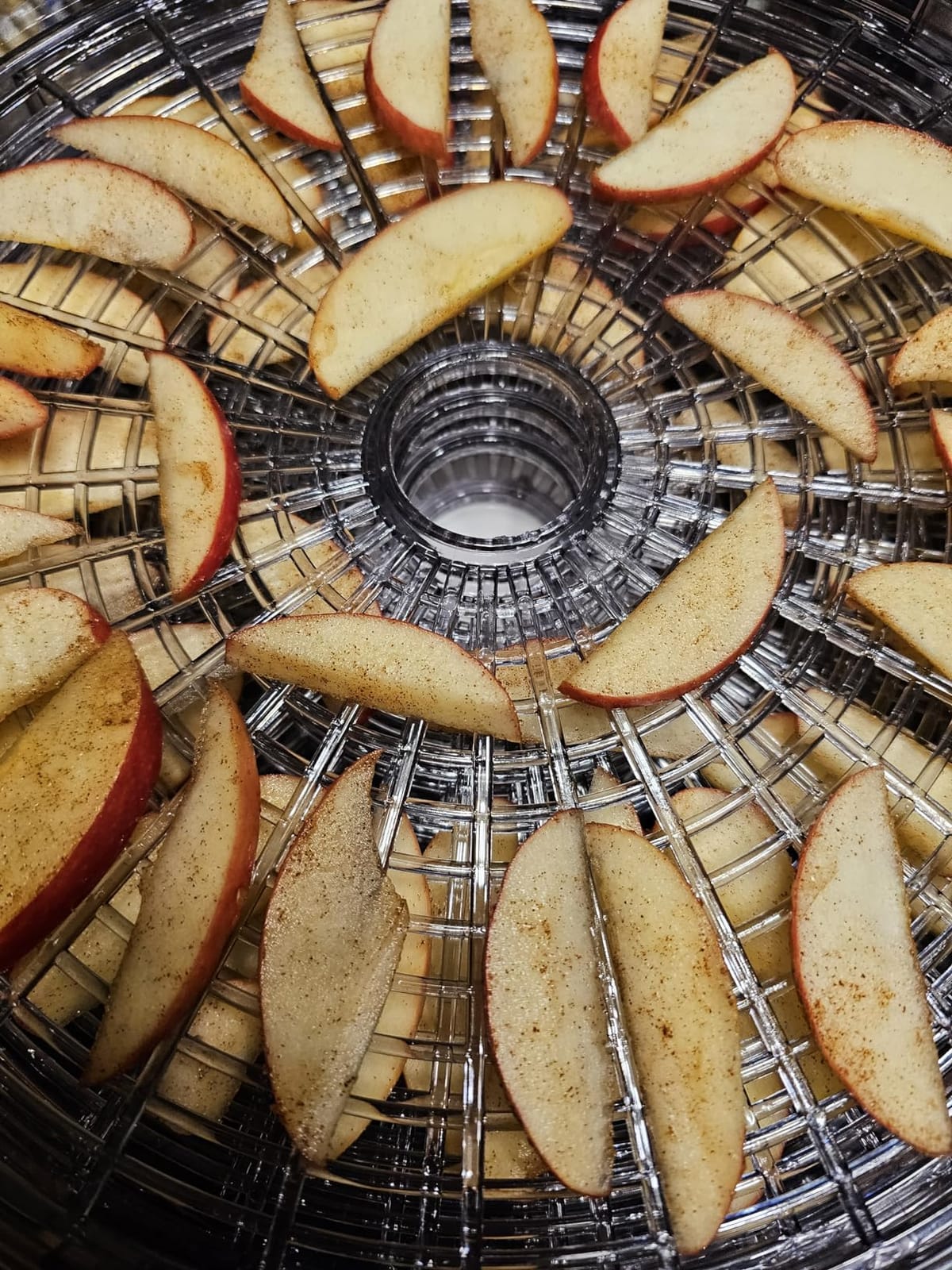
Rotate trays halfway through, then test for doneness rather than trusting the time. Fruit should be leathery and bend without snapping, herbs should crumble, and jerky should be dry all the way through with no translucent spots inside. A good first three batches are banana chips, apple slices and herb sprigs, because all three dry fast and forgive a beginner’s timing.
Frequently Asked Questions
What is the best entry-level dehydrator for beginners?
The NESCO FD-75A is the strongest entry-level stackable dehydrator for most beginners. It ships with five trays, expands to twelve on the same base, runs at 600 watts, and has more owner reviews than any other model in this roundup. The Presto 06300 is the simpler choice if you want a basic dial machine that stores compactly.
How many trays can you add to a stackable dehydrator?
It depends on the base. The NESCO FD-75A grows from 5 to 12 trays, and the Presto 06300 grows from 4 to 8. Several budget models are fixed at 5 trays with no expansion path, and Magic Mill lists no expansion at all. Adding trays also slows drying, because the heater is sized for the original column, so a doubled stack can take roughly twice as long.
Are stackable dehydrators better than box-style dehydrators for beginners?
Yes, if you are drying one or two batches a week and want the machine to store away between uses. A stackable column costs less, uses less counter space, and lets you start with four or five trays instead of eight. A slide-out box is the better buy if you plan to fill trays weekly or process meat, because trays pull out individually and horizontal airflow dries more evenly.
Can you overdry food in a dehydrator?
Yes, and it happens more often than beginners expect because there is no water left to limit the temperature. Fruit left too long becomes brittle and leathery instead of chewy, herbs lose their colour and aroma, and meat can become dangerously hard. Start at the lower end of the recommended range and check early, testing for leathery bend in fruit and a clean snap in herbs.
What are the most common mistakes beginners make when dehydrating?
The big ones are loading trays too thickly, spacing pieces so air cannot move, running at the maximum temperature out of impatience, and trusting a timer instead of testing the food. Others forget to rotate tray positions, so the top dries out while the bottom stays damp. Cutting uneven slices is the root cause behind most of these, because thin pieces finish long before thick ones do.
Do I need a fan in a food dehydrator?
A fan is strongly recommended. It moves warm air across the food so moisture leaves evenly, and removing it dramatically increases drying time and the risk of case hardening, where the outside dries hard and traps moisture inside. Fanless models are considered a deal-breaker by experienced dehydrators, so avoid them even if they are cheaper.
The Best Stackable Food Dehydrator for Beginners in 2026
The best stackable food dehydrators for beginners come down to one clear default: the NESCO FD-75A, because it starts at five trays, grows to twelve, and has the highest owner review count we found. If you want the simplest machine and the smallest footprint, the Presto 06300 does the same job with a dial and a lid that nests. If noise is what will stop you drying food at all, pick the Cosori CFD-N051-W and keep it running wherever you are.
Whichever you choose, start with two to four trays of something fast like banana chips or apple slices, set the temperature before the timer, and rotate the stack halfway through. Our picks for the best food dehydrators for families are worth a look once your batches outgrow a countertop column.