
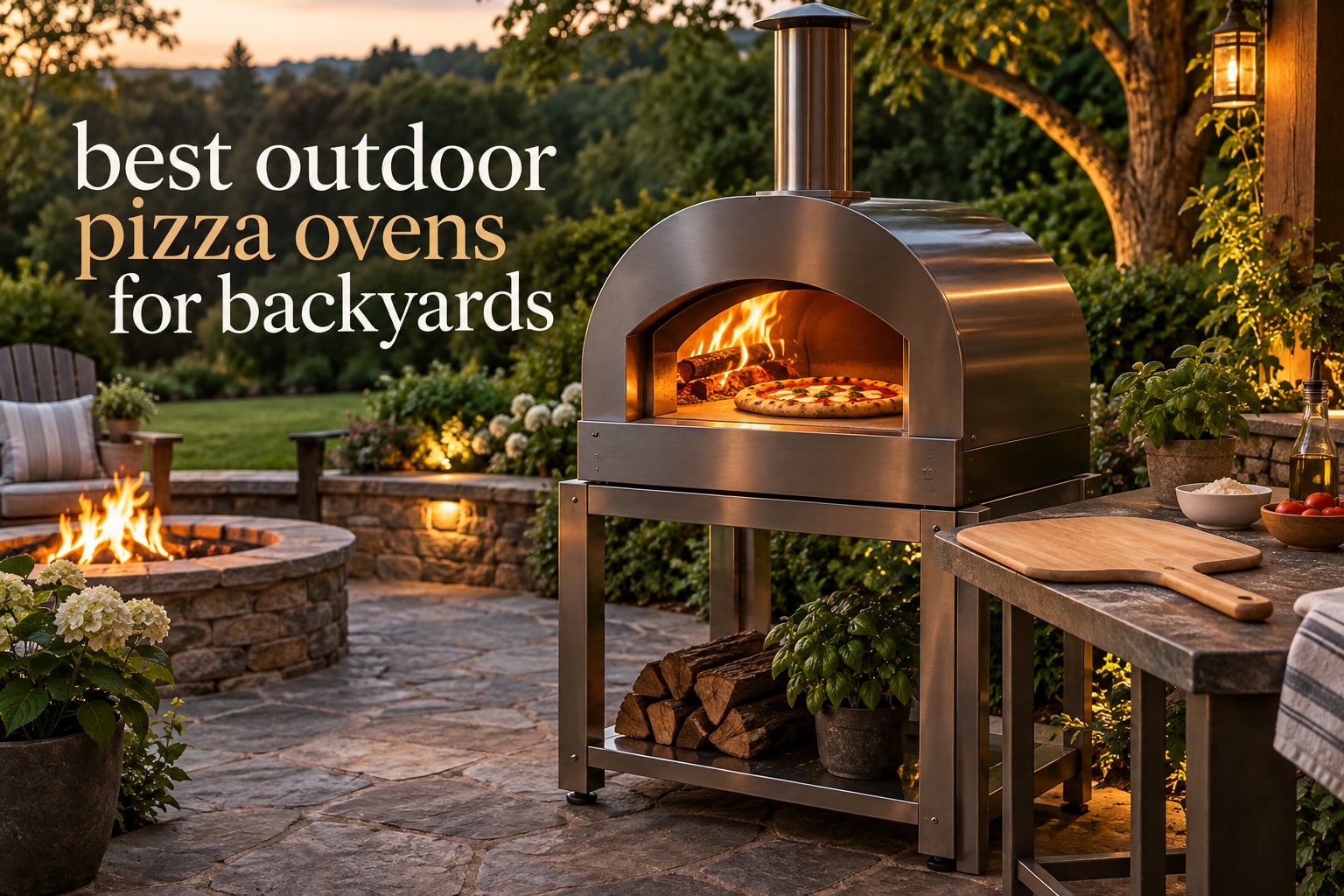
A backyard changes the way you cook. One oven out there reaches heat levels a kitchen range never will, and that is exactly what turns a homemade pie into something with leopard-spotted edges and a blistered, puffy rim. After working through the specifications, the owner reviews and the real-world failure modes of a dozen units, here is our shortlist of the best outdoor pizza ovens for backyards in 2026, ranked by what actually matters once the oven is sitting on the patio.
Two things decide this purchase before any brand name does: how hot the stone gets, and how much effort you want to put in on a Friday night. A gas oven reaches 900F and beyond in about twenty minutes and never asks you to manage a flame. A wood oven costs you the better part of an hour of fire-tending and hands you the smoky flavor that gas cannot imitate. Neither answer is better in the abstract, they just suit different evenings, and most backyard cooks figure out which one they are only after a few tries.
What follows covers all 12 ovens we ranked, with fuel, weight, size and warranty laid out side by side, plus guidance on where to place the oven, which fuel to pick and how to run a first cook without burning the first pie. If your patio cannot take a full-size unit, our picks for the best countertop pizza ovens for families are worth a look. If you are still working out whether backyard cooking is for you at all, start with the best indoor pizza ovens to see what heat you are starting from.
Table of Contents
Top 3 Best Outdoor Pizza Oven Picks for Backyards in 2026
The short version: the Gozney Roccbox is the best outdoor pizza oven for most backyards, the Ooni Koda 16 is the one to buy when you cook for a crowd, and the BIG HORN 12 inch pellet oven is the strongest value in the group. All three come in around 15 to 20 minutes to cooking temperature, bake a pie in roughly a minute or two, and can be moved to a different corner of the yard when the season turns.

All 12 Outdoor Pizza Ovens Compared Side by Side (September 2026)
Every oven in the roundup appears below with its fuel type, maximum temperature and the size it cooks to. The compact 12-inch units are the ones that fit a small patio or a side yard, while the 15 and 16-inch models are the practical choice for feeding four or more people. Read across the rows first, then jump to the full review for anything you are considering.
| Product | Specifications | Action |
|---|---|---|
| Gozney Roccbox |
|
Check Latest Price |
 Ooni Koda 16 Ooni Koda 16 |
|
Check Latest Price |
| BIG HORN 12 inch Pellet Oven |
|
Check Latest Price |
 PIZZELLO 16 inch Two Layer Oven PIZZELLO 16 inch Two Layer Oven |
|
Check Latest Price |
 Ooni Karu 12 Ooni Karu 12 |
|
Check Latest Price |
 BIG HORN 15 inch Gas Oven BIG HORN 15 inch Gas Oven |
|
Check Latest Price |
 Solo Stove Pi Prime Solo Stove Pi Prime |
|
Check Latest Price |
 HALO Versa 16 HALO Versa 16 |
|
Check Latest Price |
 BIG HORN 16 inch Multi Fuel BIG HORN 16 inch Multi Fuel |
|
Check Latest Price |
 Mimiuo 12 inch Gas Oven Mimiuo 12 inch Gas Oven |
|
Check Latest Price |
 Q Pizza PS102 Q Pizza PS102 |
|
Check Latest Price |
 EDOSTORY Wood Fired Patio Oven EDOSTORY Wood Fired Patio Oven |
|
Check Latest Price |
How We Ranked These 12 Backyard Pizza Ovens
We sorted the field on five criteria, and every score traces back to something a buyer can check before paying. First is real ceiling temperature, because a 550F chamber will never leopard-spot a crust no matter what the box claims. Second is how long the stone takes to reach that temperature from cold. Third is recovery, meaning how quickly the deck comes back up after a pizza leaves.
The fourth criterion is the one most lists skip: how the oven behaves in an actual backyard. Wind, uneven stone, a 53-pound frame you have to wrestle over a step and a control layout that puts a hot knob under your thumb all matter more than a fifth digit on the rating. The fifth is the accessory and support picture, because an oven that ships without a regulator, a peel or a usable thermometer costs you more the day it arrives.
A note on ratings: star scores and review counts tell you how an oven performs, not how it will fit your patio. We leaned on the high-volume, long-written reviews, and where owners disagree we say so rather than averaging them into a false consensus. Several ovens below have the same star rating and completely different personalities, and that difference is the point of reading past the first sentence of a review.
1. Gozney Roccbox – The Best All-Round Outdoor Pizza Oven for Backyards
Gozney Roccbox Outdoor Pizza Oven, Portable, Gas & Wood Fired – Black
- Highest rated oven in this roundup
- Holds temperature pizza after pizza
- Compact low profile footprint
- Optional wood burner for smoke
- Trusted by working chefs
- Low profile means less headroom for large pies
- Stone must be fully preheated before launching
The Roccbox is the oven we would put on our own patio, and it earns the top slot on evidence rather than brand reputation. It heats to 950F on propane, bakes a 12-inch pie in 60 seconds, and holds that temperature well past a dozen pizzas. Owners consistently describe it as the highest rated oven in this group, and the 4.7 star average across 1905 reviews is the strongest combination of score and volume in the roundup.
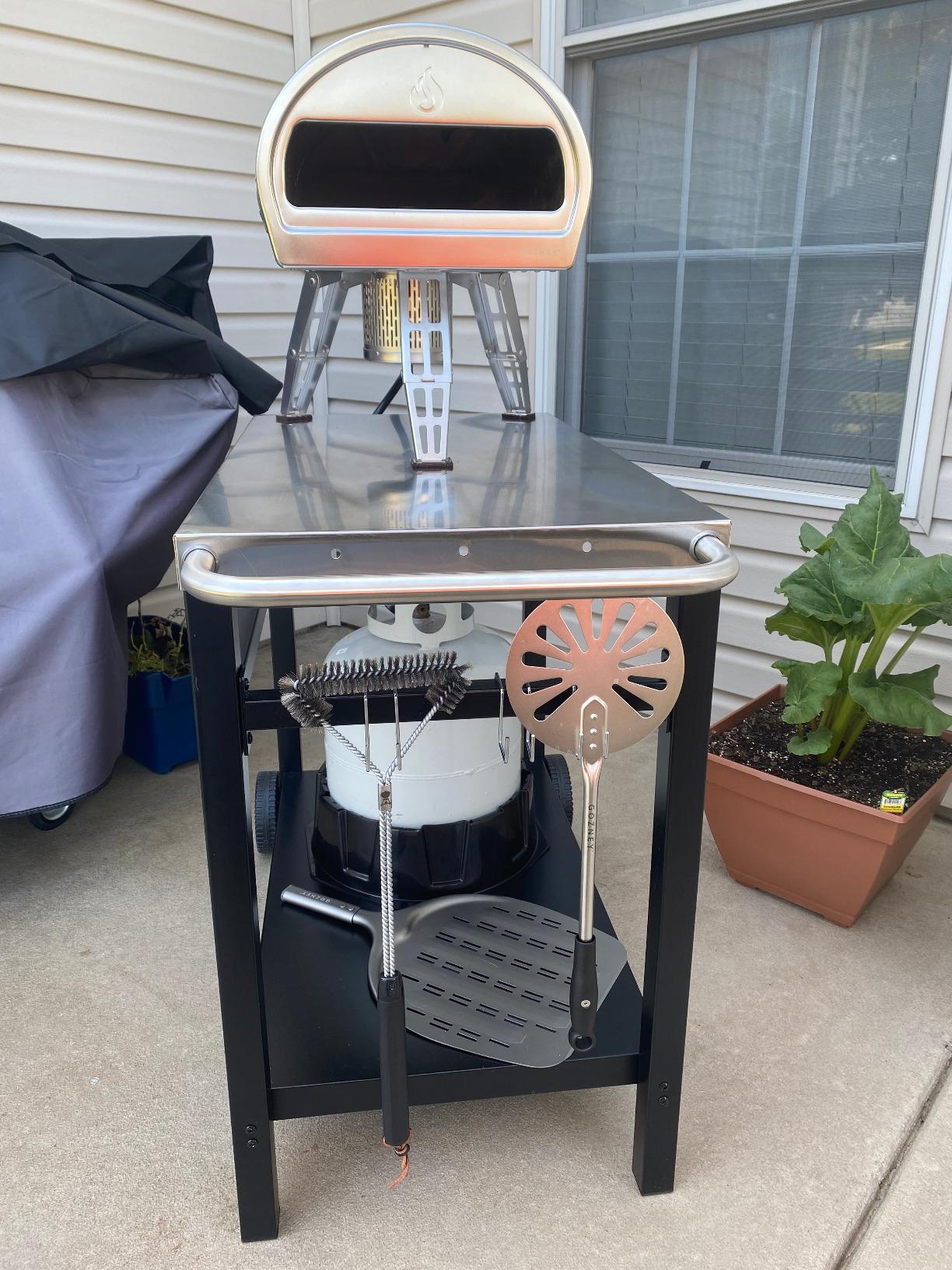
What makes it work in a backyard specifically is the shape. At 24.8 by 16.5 inches and 14.6 inches tall, the body is low and wide enough to sit on a patio table or a low stand without crowding the space. It is also a genuinely heavy piece at 48.5 pounds, and that is a fair trade: you get a small footprint and a real stone floor, and you pay for it with two people when moving it up a step.
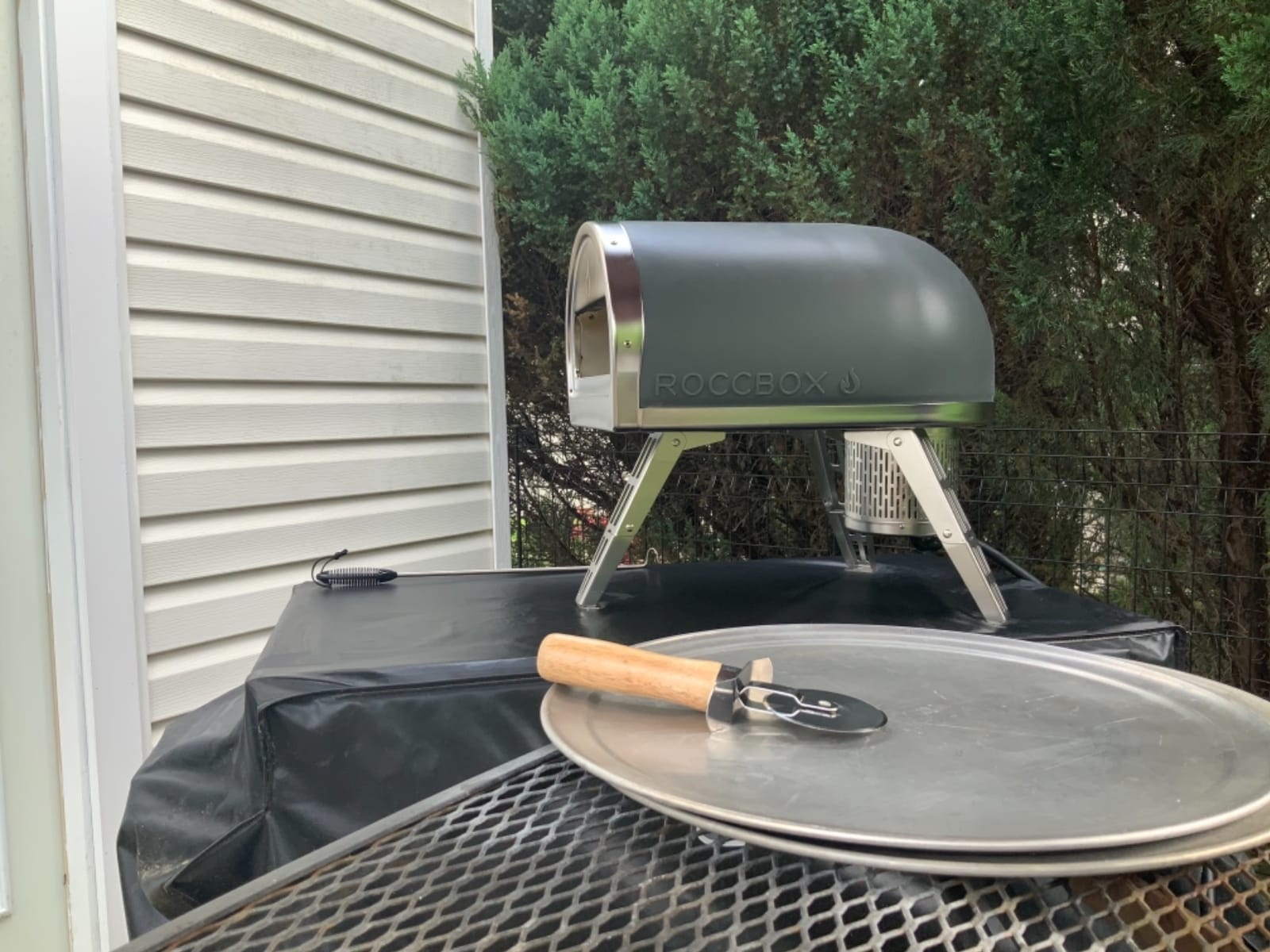
The 60-second cook is not a marketing figure pulled from a lab. The stone floor stores heat, the gas burner sits to one side, and the result is a crust that chars without drying out and a top that does not scorch. Recovery is fast enough that a second pie can go in almost as soon as the first comes out, which is what makes it workable for a group rather than just one person.
It also runs on wood if you want it to. A separate wood burner attachment slots into the same body, so owners who buy the gas version rarely go back, and plenty never attach the burner at all. Reviewers make the same point about multi-fuel ovens generally: people buy them for the option, then run propane nearly every time out of convenience, and are still glad they have it.
What the Roccbox does well that most 12-inch ovens cannot
Heat retention is the headline. Because the floor is a true stone slab rather than a steel plate, the deck stays in the high range across a long session instead of sagging after four or five pizzas. On a party night that is the difference between cooking dinner and cooking one pizza, standing around, and then cooking dinner.
It also holds up to a busy kitchen. Owners roast meat, fish and vegetables in it, and the low profile means you can slide a cast iron pan in without the awkward tip-and-rotate that tall ovens demand. The stone floor wipes clean, ash is minimal on gas, and the whole thing can live on a patio table through summer.
Where the Roccbox will disappoint you
The low profile cuts both ways. With a shorter opening, loading a stretched 12-inch dough needs a confident, angled launch rather than a flat slide, and first-time owners often crease the first two pies while they learn it. Buy a proper wooden peel and give yourself an evening to practice before cooking for anyone else.
The second drawback is that the stone demands a real preheat. There is no way around waiting for the deck to come up, and skipping it produces pale, floppy bottoms. Owners who rush the preheat are the ones who end up disappointed, and the fix is boring: wait until the stone itself is hot, not just the air inside the chamber.
2. Ooni Koda 16 – Best Outdoor Pizza Oven for Large Gatherings
- Even heat across a 16 inch stone
- Feeds a group without hours of rotating
- Roasts meat fish and vegetables
- Five year warranty after registration
- Gas fitting instructions omit thread seal tape
- Open front wastes gas in cold weather
- Some slow support responses
The Koda 16 is the one we recommend when more than four people are eating. Its 16-inch stone is the joint largest in this roundup, and that extra diameter is what lets you bake a genuinely generous pizza instead of four small ones. Owners report restaurant quality results in about a minute, and they report the setup takes minutes rather than a weekend.
Temperature is the same 950F ceiling as the Roccbox, reached in 20 minutes on the built-in burner, and the powder-coated carbon steel shell holds that heat through a long cook. At 40 pounds with folding legs, it is lighter than the Roccbox and considerably heavier than the 25-pound budget units, which is about the right trade for a backyard oven you will move once a season.
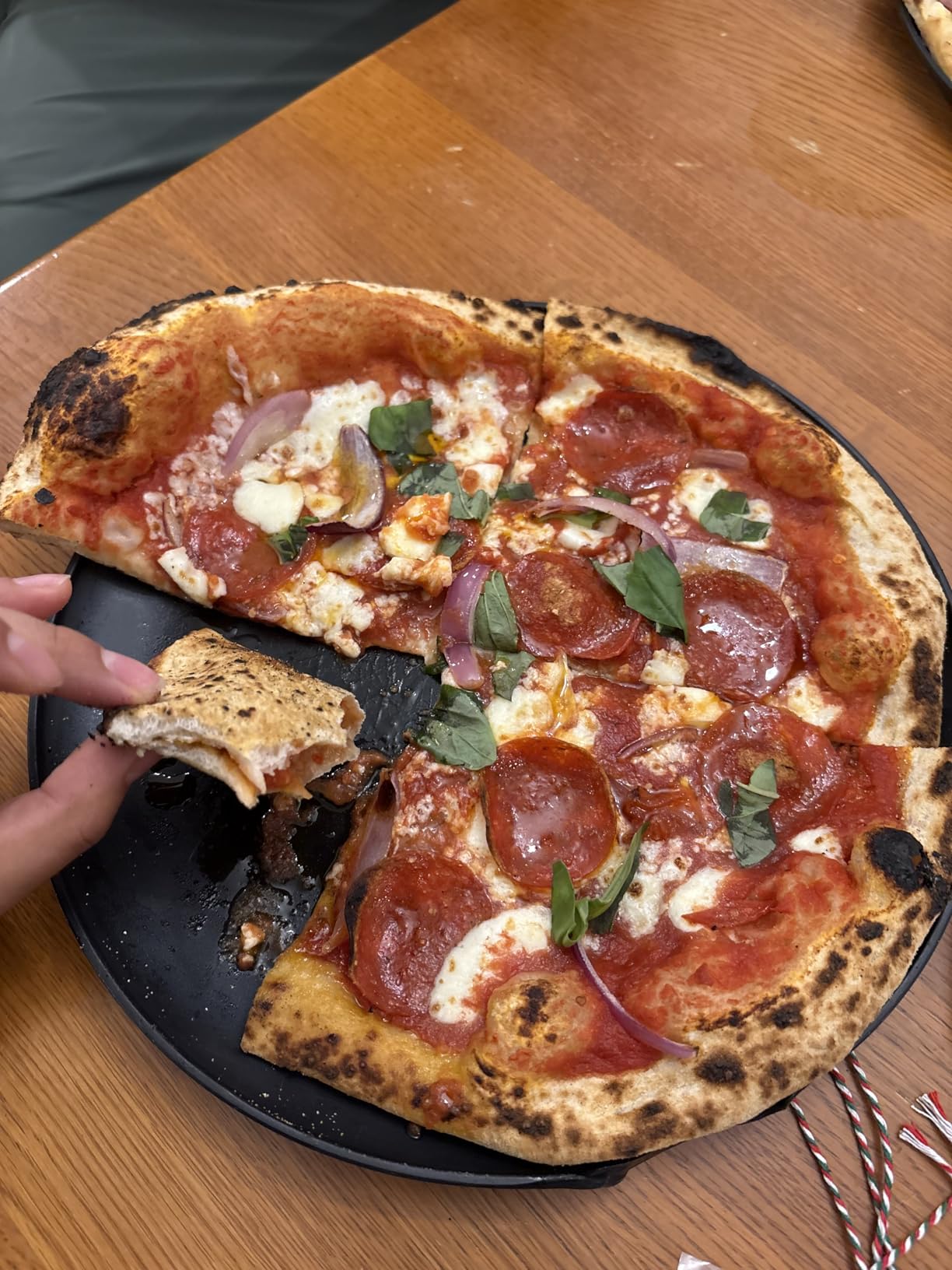
The thing that separates the Koda 16 from a smaller gas oven is how little babysitting it needs. A 12-inch oven forces you to turn the pizza and rotate it every 30 seconds for the full minute. The Koda’s wider stone gives you room to launch and turn without cramming, and owners say a single pie comes out even without constant repositioning.
It is also the most capable oven here for cooking beyond pizza. With the brand’s cast iron accessories it handles steaks, fish and vegetables, so it earns its space on a patio even on nights when nobody wants pizza. The 16-inch opening is high enough to slide a pan in flat, which the Roccbox is not.

Why a 16 inch stone actually changes a pizza night
Because you are no longer queueing. On a 12-inch stone, a party of six waits roughly three rounds before the first person eats. On a 16-inch stone you can put two pies out back to back, and because each has more margin around the edge, the second one does not suffer while the first is still finishing. That is a scheduling difference far more than a portion-size difference.
It also survives the beginner phase better than the compact ovens. Scorched cheese on a cramped chamber is nearly impossible to avoid, and a wider floor with more thermal mass simply forgives a sloppy launch. If your household is new to backyard pizza, the extra width is the most useful money you can spend.
Where the Koda 16 falls short
Two real caveats. The instructions do not tell you to apply thread seal tape to the gas fitting, and owners who skip that step report leaks, so seal the connection yourself before the first cook. Also, the front is open rather than doored, so in cold weather more of your propane goes out the front than heats the stone.
A few owners also report slow responses from support when they had temperature complaints, which matters if your first cook goes sideways. Our advice is to measure the stone yourself with an infrared thermometer rather than trusting the reading on the dial, and that single habit resolves most of the complaints people write about.
3. BIG HORN 12 Inch Pellet Oven – Budget Pick for a Backyard
- Wood fired flavor at a low entry point
- Most reviews of any oven in the roundup
- Folds flat for transport
- Tool free assembly
- Brand replaced a cracked stone
- Steep pellet lighting learning curve
- Uses pellets quickly
- Uneven cooking reported by some
- No built in thermometer
The BIG HORN 12 inch pellet oven is the highest rated product here by review count, with 2651 reviews averaging 4.4 stars, and it delivers real wood-fired flavor at a fraction of what the premium multi-fuel ovens cost. It is also the most genuinely portable unit in the group at 25 pounds, with folding legs that let it go into a car trunk or a closet between uses.
It runs on all-natural hardwood pellets out of the box, and the design adds gas and electric burner capability as optional accessories, so the same body can be run three different ways as your habits change. The quoted ceiling is 1110F, and owners routinely report 10 to 12 inch pies in 90 seconds to two minutes once the chamber is properly preheated.

The stainless steel shell is the reason it holds up outdoors season after season, and the two-year warranty is longer than most ovens in this price range offer. Buyers also report that the brand replaced a cracked stone for them, which is a small thing that tells you a lot about support when the one part you cannot replace is the one that matters.
Cleanup is straightforward, which matters more than it sounds. Pellets burn almost clean, so there is far less ash and soot than a split-log oven produces, and the chamber wipes down without much scrubbing. If you are cooking in a tight space near the house, that difference is not small.

Why this is the best value pick rather than the best oven
What you get is wood flavor and a light frame at a fraction of the cost, and for a family that cooks pizza weekly on a budget, that is the correct trade. The 25-pound weight means one person can move it, and the folding profile means you do not need a permanent masonry pad. Very few competitors in this roundup manage all three of those at once.
The multi-fuel design also future-proofs it. Start on pellets, learn what temperature management looks like, and add a gas burner later if you decide you want the convenience. Owners who did exactly that report that it turned into a two-person cooking setup without replacing the oven.
Where the learning curve bites
Lighting pellets and holding a steady temperature is genuinely harder than turning a gas knob, and the reviews say so repeatedly. Expect your first two cooks to be about managing the fire, not about pizza. The fix is unglamorous: small handfuls, add little and often, and give it the full 18 to 20 minutes the manual specifies before the first launch.
There is no built-in thermometer, so a separate infrared thermometer is close to mandatory rather than optional. Some owners also report uneven cooking between the top and the bottom of the pie, which is a classic small-chamber problem, so plan on turning every 30 to 40 seconds. Budget for that time, and the results justify it.
4. Ooni Karu 12 – Best Multi-Fuel Pizza Oven for a Small Backyard
- Authentic wood fired Neapolitan flavor
- Genuinely portable at 26.4 lb
- Fold down legs and removable chimney
- Runs on wood charcoal or gas
- Included peel fits too snug to use easily
- Gas burner sold separately
- Wood and charcoal need a learning curve
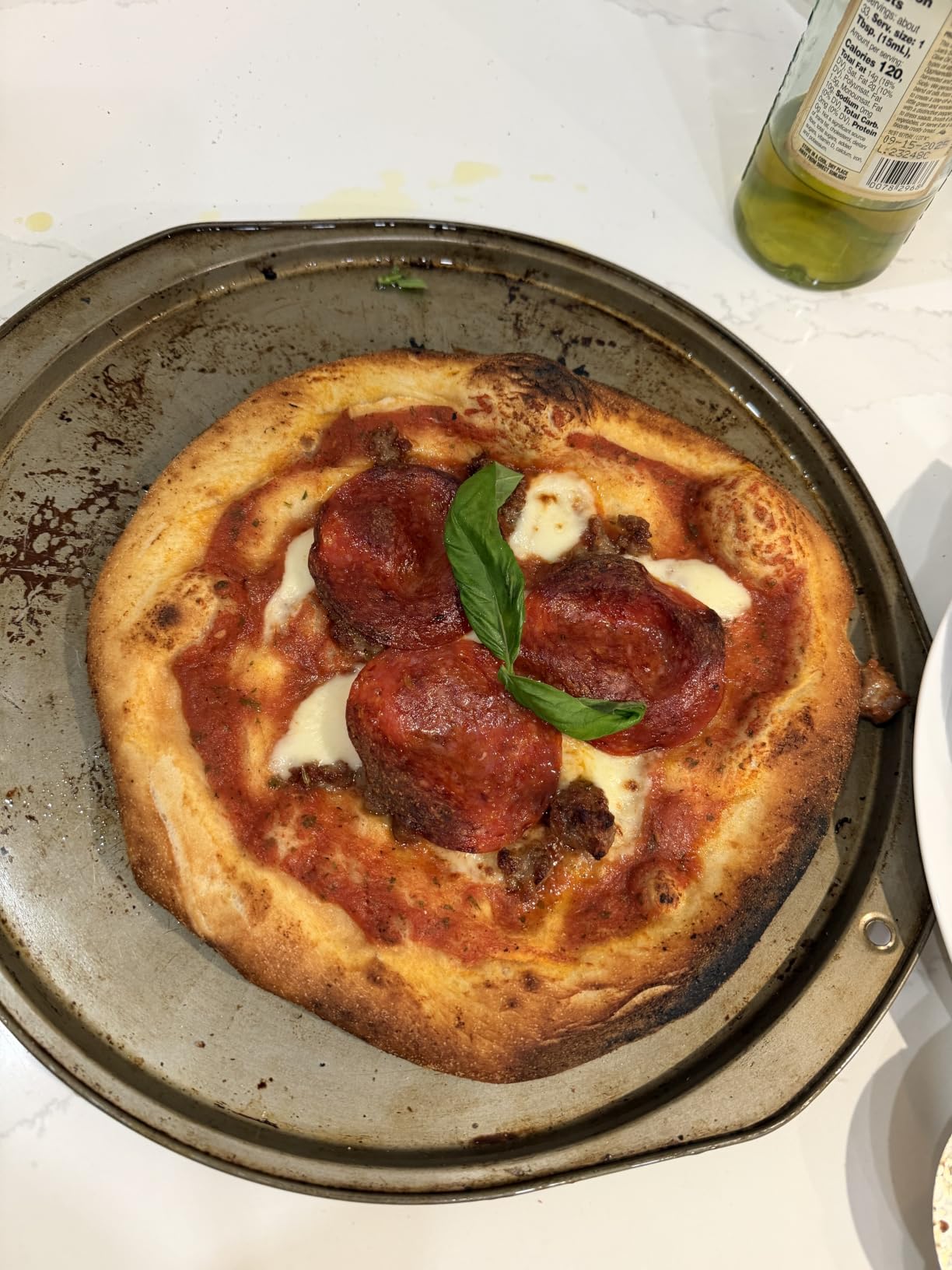
The Karu 12 is the multi-fuel option in its most honest form. It burns wood, charcoal or a separately sold gas burner, and at 26.4 pounds with folding legs and a chimney that unscrews, it is one of the few ovens here you can genuinely carry from a garage to a patio single-handed. Owners describe Neapolitan-style pies in 60 to 90 seconds with a flavor profile the gas-only units cannot reach.
The custom fuel tray is the piece that makes the difference. It is shaped to feed airflow across the whole fire rather than letting a flame lick one side, so the flame stays even, ash volume is low and the ceiling temperature of 950F arrives in about 15 minutes. That is faster than a typical split-log fire and faster than most pellet units in this roundup.

The build is straightforward aluminum and stainless with a solid feel, and cleanup is quick because there is little ash to chase. It also works with cast iron cookware, so the same oven handles a steak on a weeknight. That versatility is why it keeps showing up as the recommendation from owners who only planned to make pizza when they bought it.
Reviewers say the same thing often enough that it is worth repeating: people buy multi-fuel for the option, use gas most of the time, and are glad the option exists. Treat the Karu as a wood oven that can become a gas oven, not as a gas oven with a decorative firebox.
When the Karu 12 beats a dedicated gas oven
When flavor is the point. Wood smoke in the crust is a real, repeatable difference that no burner setting will reproduce, and the Karu gives you that on a frame light enough to bring out for a weekend rather than a season. For a patio near a house where a permanent heavy oven is not practical, that portability is the whole argument.
It is also the better choice if you plan to cook bread, focaccia or roasted vegetables often, because a live fire handles those jobs more gracefully than a burner set to a high flame. Owners who bought it purely for pizza tend to end up using it for at least half the weekend.
When a gas oven is the smarter buy
When you want one-button heat. Managing a wood fire while a table of guests waits is a different skill from turning a knob, and if that is not appealing, pay the extra for gas. The other honest caveat is the included peel, which owners repeatedly describe as fitting so snug it is awkward, so plan to buy a proper one regardless.
5. PIZZELLO 16 Inch Two Layer Oven – Best for Cooking More Than Pizza
PIZZELLO 16″ Outdoor Pizza Oven, Wood Fired 2-Layer Pizza Oven
- Cooks pizza and grills steaks at the same time
- Removable rack fits oversized items
- Complete accessory bundle with cover
- Adjustable legs and side carry handles
- Tall footprint at nearly 36 in
- Wood burning needs more hands on heat management
The PIZZELLO is the only oven in this roundup with two working cooking levels, and that changes what a backyard oven can be. You can put a pizza on the lower deck and steaks, fish or vegetables on the upper rack at the same time, which turns a pizza night into a full cookout without a grill. The center rack lifts out entirely, so the lower chamber also fits oversized items such as a whole turkey.
Fuel choice is wide for a wood oven: it runs on split logs, charcoal or pellets, and the front door and body vents give you real control over airflow. The stone belongs on the lower level where the temperature is highest, and the two height settings on the adjustable legs let you set the working height where your arms want it.
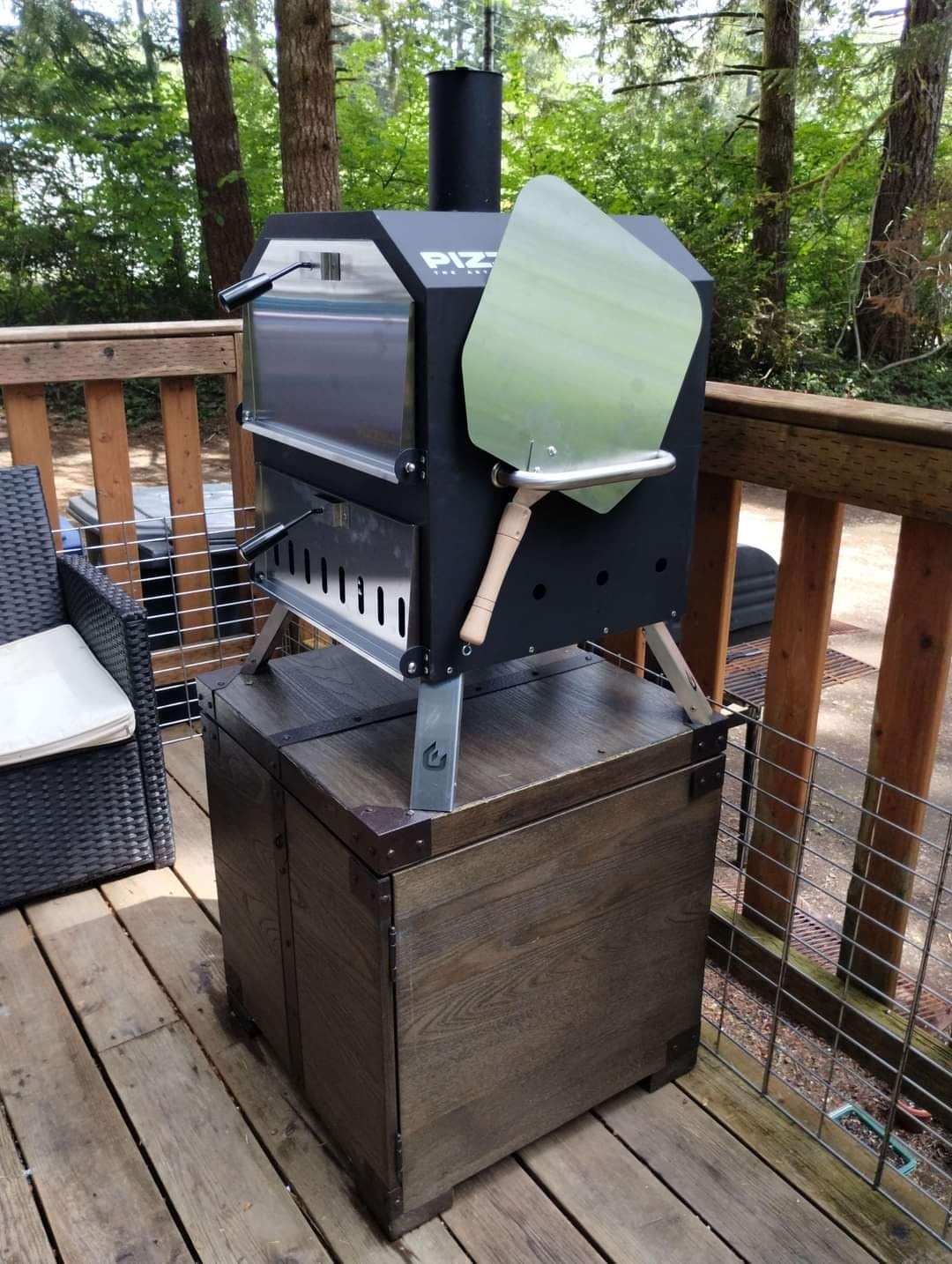
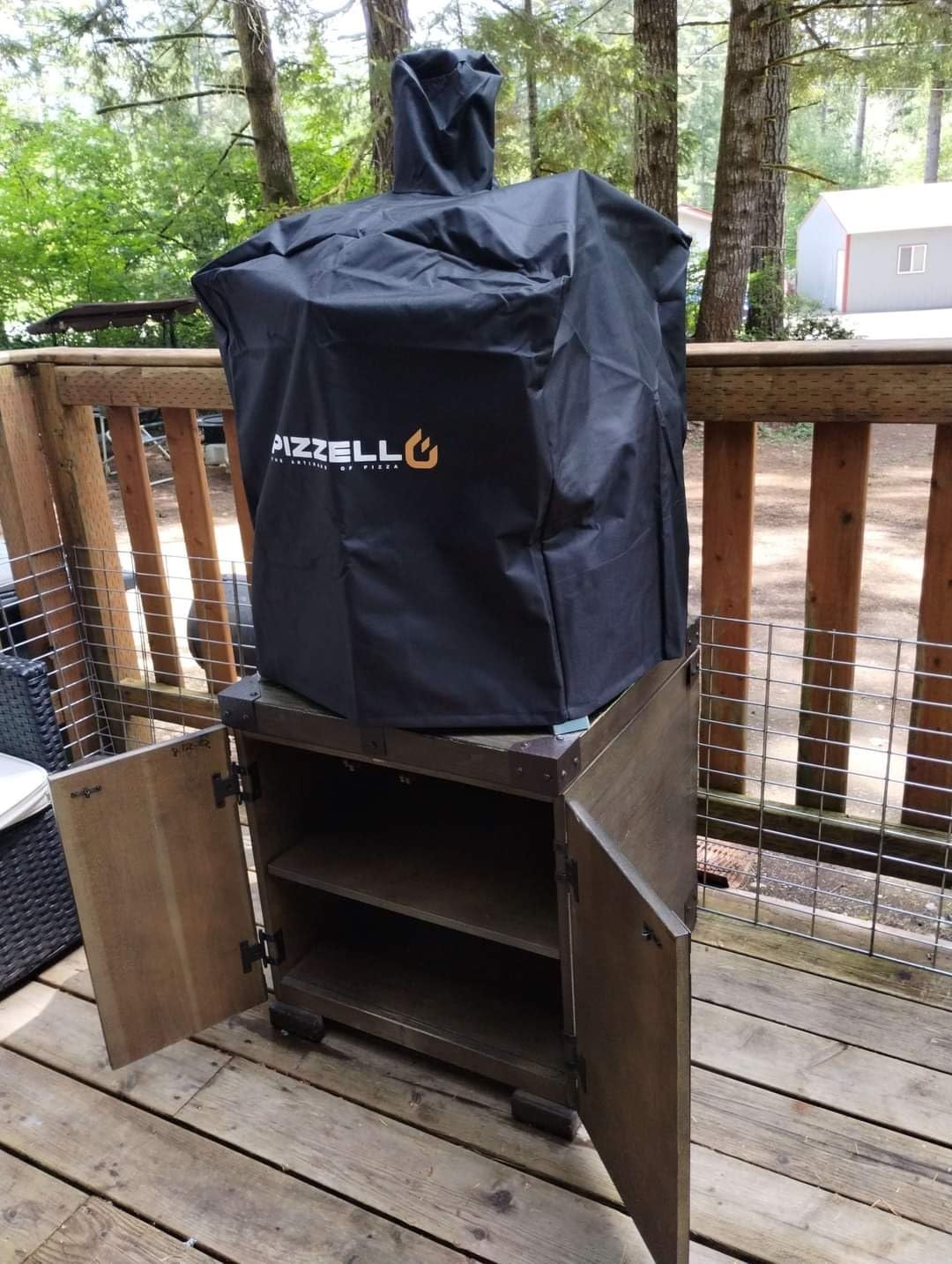
The accessory bundle is unusually complete. Two grill grates, a pizza peel, a 16 inch stone and a waterproof cover all ship in the box, which erases the most annoying first-week purchase of owning an oven. For a first backyard oven that will also handle meat, the box does most of the work for you.
Buyers consistently point to that two-level space as the reason they keep it in rotation, and the 4.2 star average reflects a product that does a lot rather than one that excels narrowly. If your idea of a backyard oven includes more than pizza, this is the one to look at first.
Who benefits most from the second level
Households that cook a main course alongside pizza. Once the top rack is loaded with vegetables or fish, the oven runs like a two-dish meal rather than a sequence of single pizzas. Owners using it that way report fewer separate appliances on the patio and noticeably less total cook time for a full meal.
It is also forgiving for beginners in one specific way. Because you can put the pizza low and keep the upper chamber as a holding space, a pizza that needs another minute does not mean the heat is lost from everything else. That is a small design detail that matters when you are hosting.
What you give up for the extra capacity
Space and effort. At nearly 36 inches tall it is one of the largest footprints in the group, and a 12-inch version exists if the patio is tighter. Managing a wood fire on two levels also means the far chamber heats less efficiently, so the upper rack needs its own timing rather than following the pizza exactly.
6. BIG HORN 15 Inch Gas Oven – Fastest Preheat in the Roundup
BIG HORN Gas Pizza Oven, Portable Propane Pizza Oven with 15 inch Pizza Stone, Stainless Steel Pizza Maker for Outdoor Cooking
- Heats to 750F in 10 minutes
- Dual burners remove the need to rotate
- Built in thermometer at the door
- Complete kit with stone peel and hose
- Crust char falls short of wood fired ovens
- Dual knob control has a narrow adjustment range
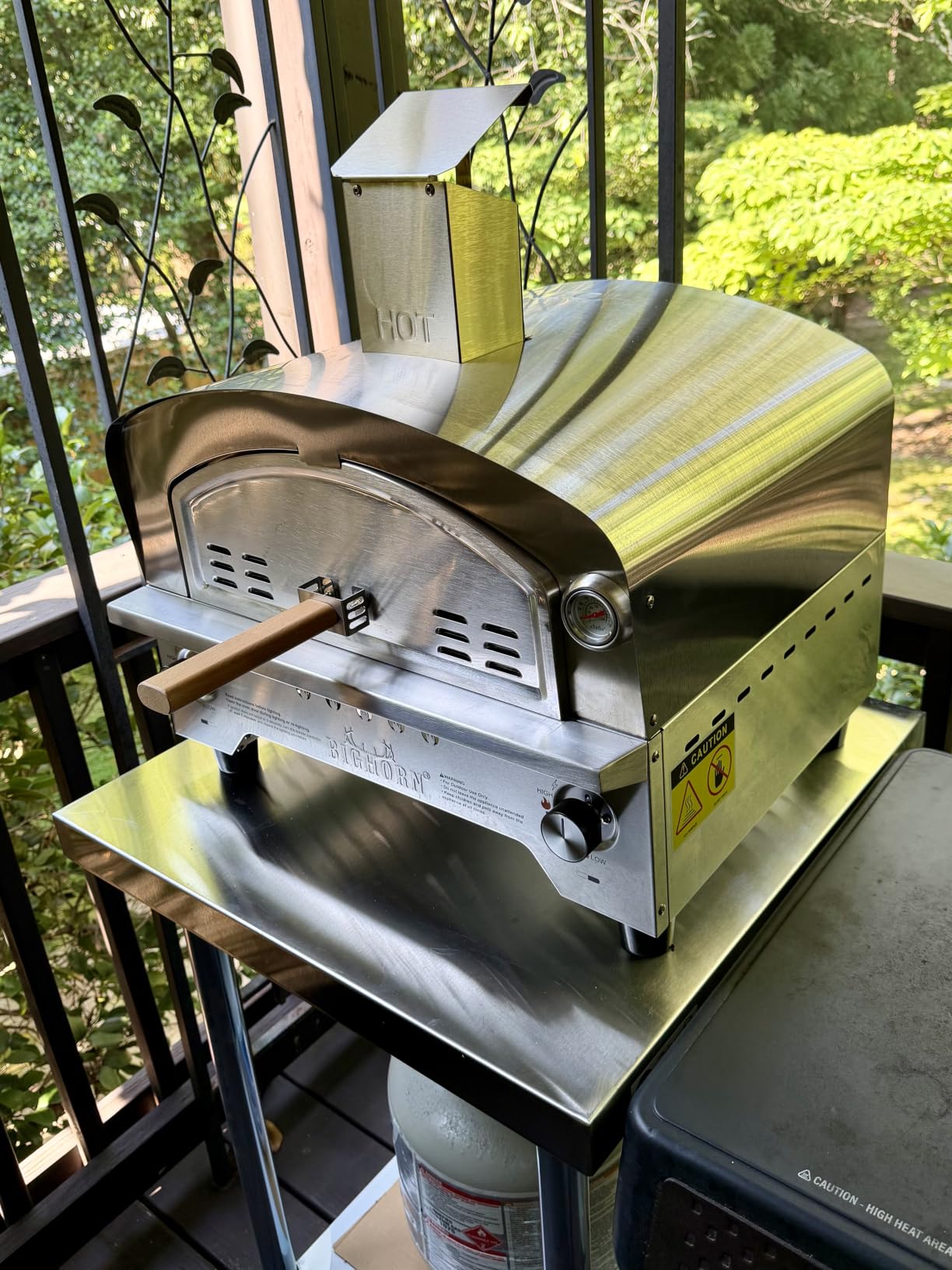
If speed is the deciding factor, this is the oven. The dual side burners are rated at 23000 BTU combined, and owners report 750F in ten minutes with a maximum near 1070F. The arc-shaped chamber circulates heat around the cooking area, which is why buyers say they never have to rotate the pizza mid-cook.
It cooks a 14.7 inch pizza in about 60 seconds, which puts it in the same class as the premium gas ovens despite costing far less. The chamber fits a 15 inch class stone, and the built-in thermometer at the door plus dual control knobs give you more adjustment than a single-dial oven, even if the range is still narrower than the premium brands.
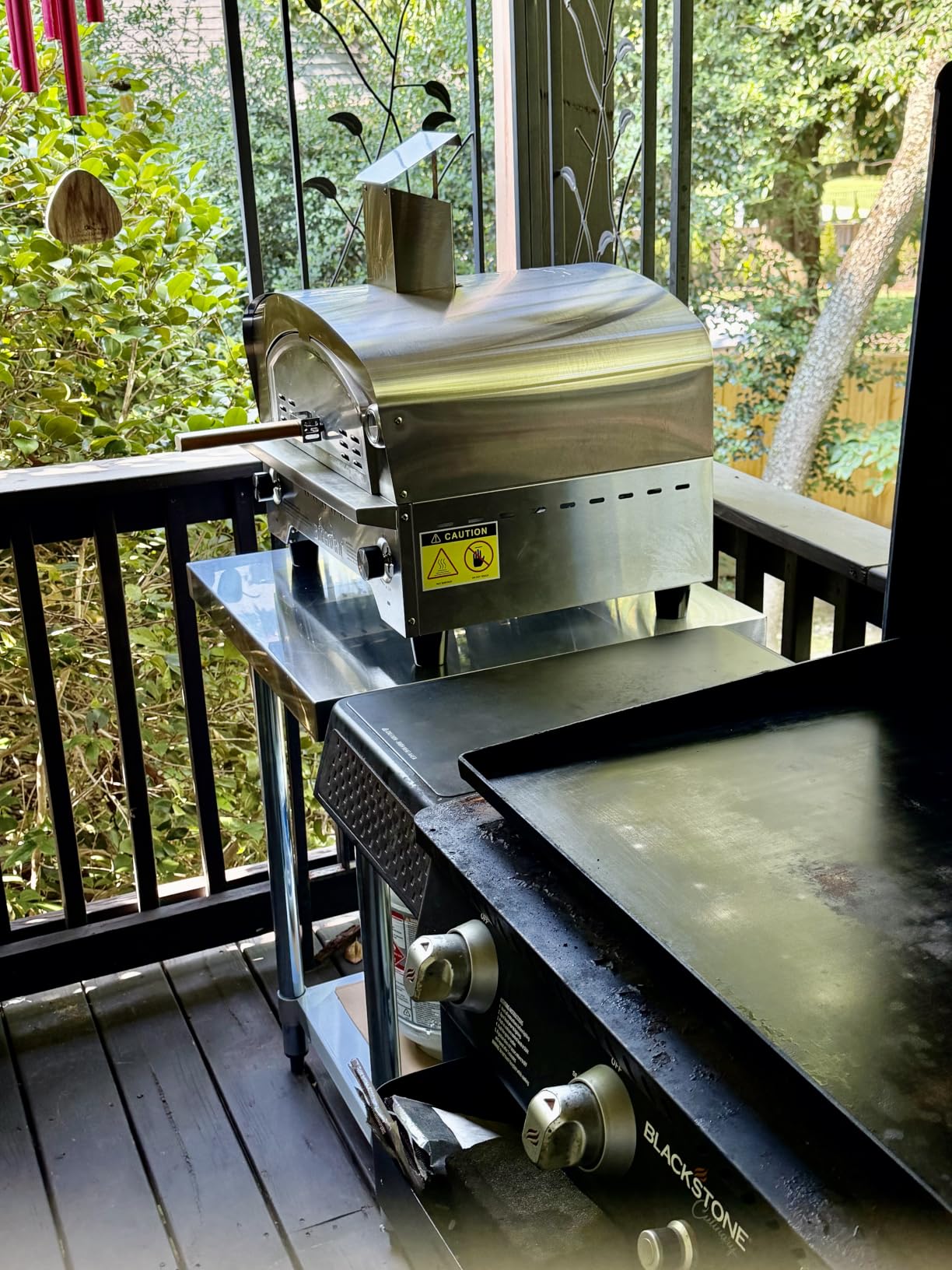
It also arrives as a complete kit. The foldable peel, a 14.7 inch pizza stone and the propane regulator hose are all included, so the first cook needs nothing extra. That is a genuine advantage for beginners, and the quick assembly and equally quick disassembly mean cleaning does not become a chore.
Beyond pizza, the same oven handles steaks, chicken, fish, lamb chops, sausages and vegetables. At a mid-range price with a 617-review history averaging 4.4 stars, it is a strong middle path for a backyard that wants gas convenience and a fast start to a party.
When dual burners genuinely change results
Evenness. Two burners pulling from both sides of the chamber means fewer hot spots than a single-sided flame, and owners specifically report not needing to rotate. For a group cooking back to back, no-rotation cooking removes a whole category of attention from the process, and the 14.7 inch floor is wide enough that nothing crowds the flame.
The ten-minute preheat is the other quiet advantage. It means a spontaneous decision to cook outside does not require a 45-minute commitment first, which is how a backyard oven actually gets used on a weeknight rather than only on planned weekends.
Where the gas-only ceiling shows
Flavor and refinement. The same review pattern that praises the speed also notes that crust char does not reach the standard of the wood fired or premium gas models, which is expected from a burner at this level. If leopard spotting is the entire reason you want an outdoor oven, spend up rather than sideways.
7. Solo Stove Pi Prime – Best Propane Oven for a Small Patio
Solo Stove Pi Prime Propane Pizza Oven | Portable Outdoor Gas Pizza Oven
- Fast and simple setup with no assembly
- Front facing precision temperature dial
- Crust reviewers compare favorably to wood fired
- Quiet well regarded brand
- Cooks fast enough to demand constant turning
- Needs a full stone preheat for a crisp bottom
- Sized for 12 inch pizzas rather than 16
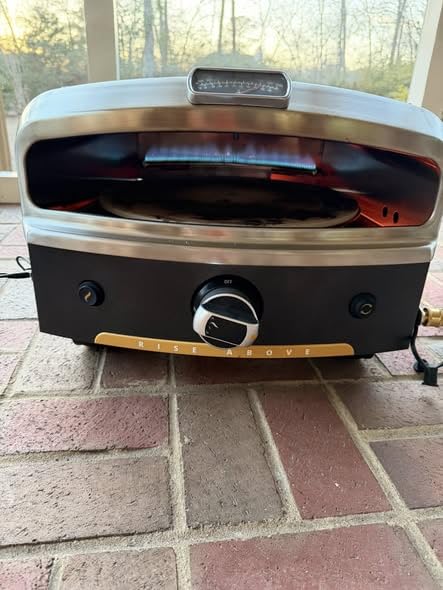
The Pi Prime is the easiest first oven in this roundup to get cooking on. You unbox it, drop in the stones and connect a propane cylinder, and that genuinely is the whole setup. The demi-dome design reaches 900F in about 15 minutes, and owners report 875F to 900F stone temperatures across a 15 to 30 minute window depending on how long they give it.
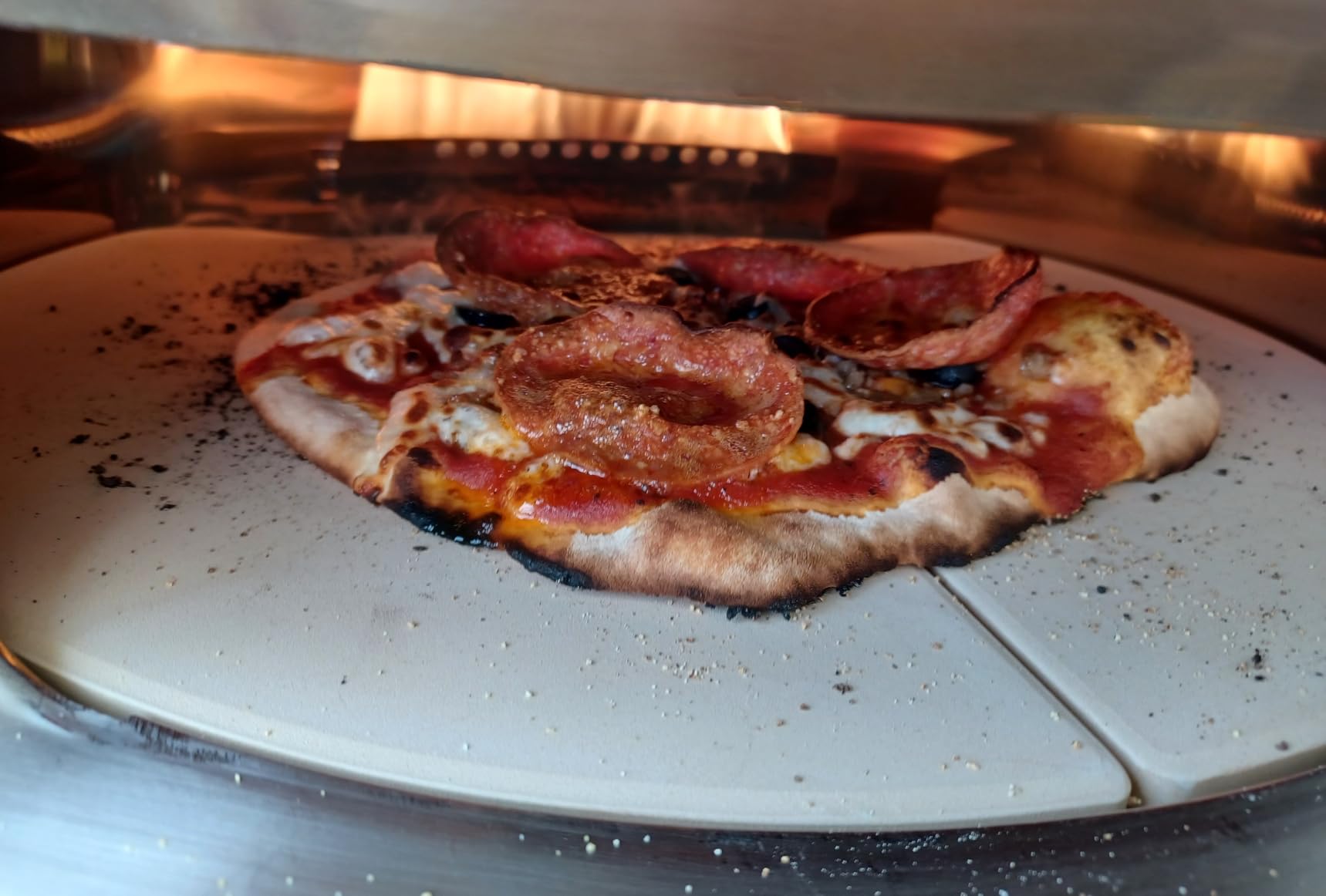
The cordierite stone is a real quality step over a steel plate. It spreads heat evenly and lets steam escape, which is what produces a base that is crisp rather than rubbery, and owners comparing results directly say the crust holds up well against wood-fired ovens. The 13 inch panoramic opening is wide enough to watch and turn without craning.
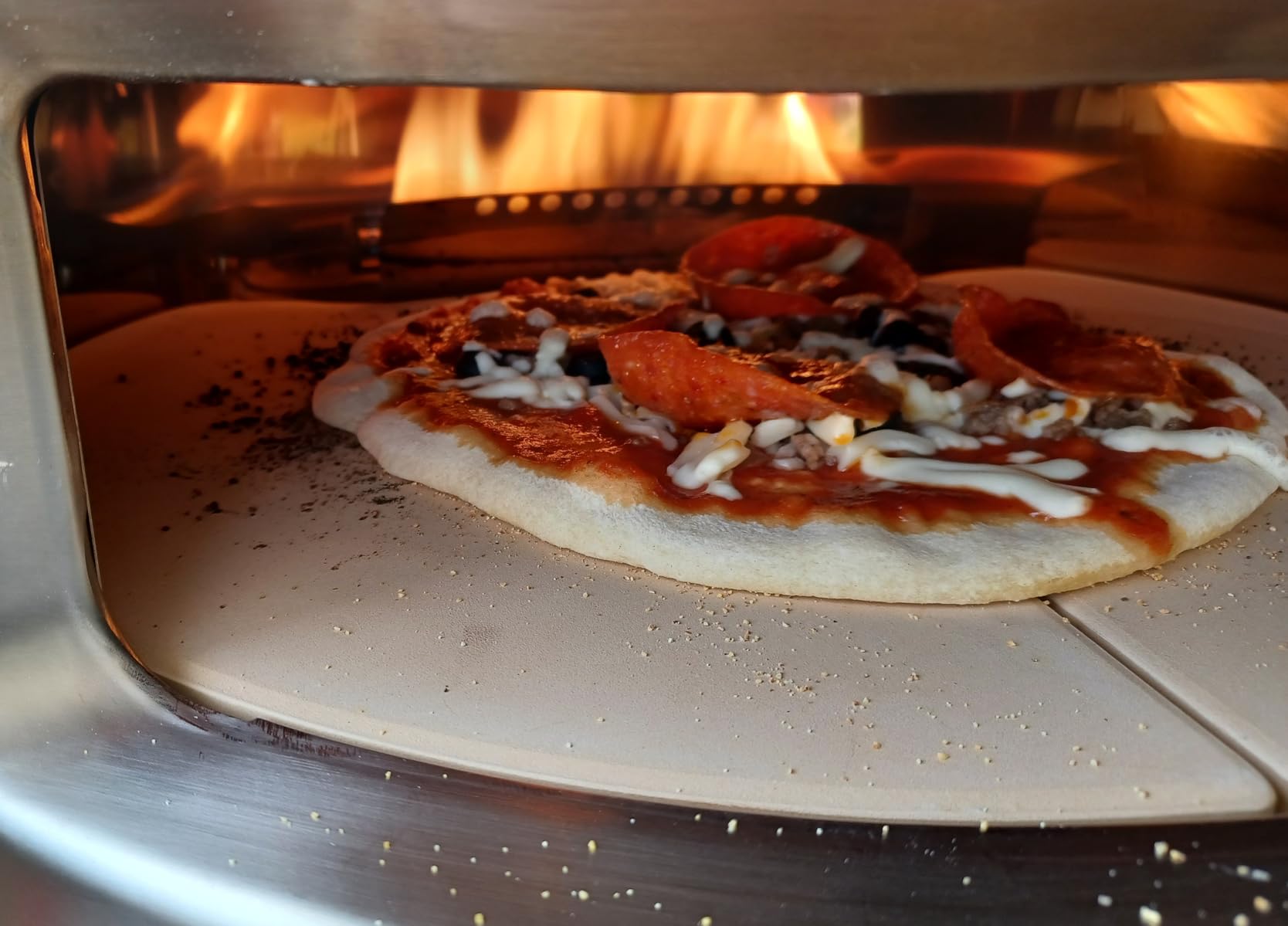
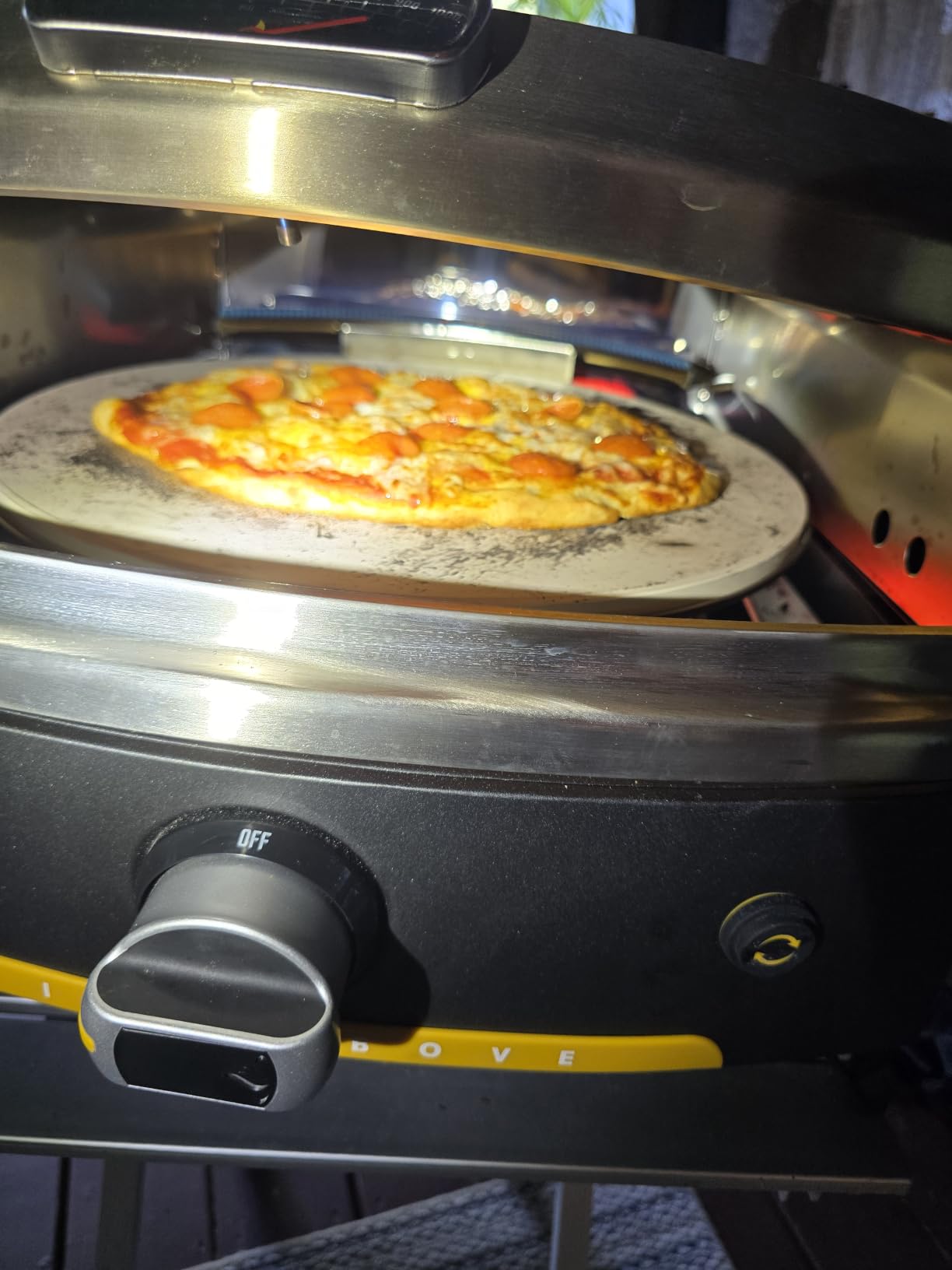
The front-facing temperature dial is the detail that makes it approachable. You can see and adjust the flame from where you stand, rather than reaching over the chamber, and the 304 stainless body is built for a life outdoors. It is also light and compact enough to move between a patio and an outdoor kitchen counter without a second person.
At 233 reviews and 4.5 stars, it does not have the review volume of the BIG HORN or Ooni units, and that matters when you want to see long-term patterns. What it does have is a clear identity: the simplest gas oven here that still produces a crust people take seriously.
Why this suits a genuinely small outdoor space
Footprint. At 20.5 by 20.5 inches the body is compact, and unlike the wood and multi-fuel units in this roundup it has no chimney, no fuel tray and no wood pile to plan around. That makes it one of the few ovens here that works on a small apartment patio or a narrow side yard without a redesign.
It is also a good fit for an outdoor kitchen built around a counter, since it sits flat and moves easily. Owners who started with one of these and later upgraded describe it as a fair first step rather than a compromise, which is exactly how you should think about a first backyard oven.
What to know before your first cook
Two things, both of which the reviews agree on. Give the stone a full preheat or the first pies will have soft bottoms, and be ready to turn constantly, because at 900F and a 90 second cook you have very little margin. Owners who expect a 60 second pizza with no attention will be disappointed; owners who prepare will be pleased.
8. HALO Versa 16 – Best Rotating Stone Pizza Oven
HALO Versa 16 Pizza Oven | 16” Rotating Stone, Patented Dual Burner System, 5-Minute Pizzas, Easy Clean | Propane Powered | HZ-1004-ANA
- No manual turning and no semolina mess
- Dual burners above and below the stone
- 16 inch capacity feeds a group
- Hinged clam shell makes cleaning easy
- Slower cooks than 60 second ovens
- Some owners cannot get the stone past 750F
- Gauge reads air not stone
- Heaviest portable gas unit at 43.5 lb
The Versa 16 solves the single most common complaint about 16 inch ovens: hot spots that force you to turn and rotate every pizza for a full hour. Its 16 inch cordierite stone is motorized and turns 360 degrees, so the pizza turns itself and semolina never piles up on one side. Owners running 400-plus pizzas call it the most consistent gas oven they have owned.
The heating is the other differentiator. Burners sit both above and below the stone in a U-shaped convection arrangement with infrared heating added on top, and that is why the reviews describe the crust as more even than anything else in this group. The stated preheat is 12 minutes to a 750F stone temperature, and the bakes run five minutes each.
There is no learning curve to speak of. There is nowhere for the pizza to catch, so you launch, walk back in five minutes and take it out. That is a genuinely different cooking rhythm from the launch-turn-remove cycle the rest of this list requires, and it is the reason owners describe it as the lowest-effort gas oven available.
It also runs from a 20 pound LP tank all the way down to 1 lb canisters, which matters for a backyard where you do not want a full tank sitting next to the oven. The clam-shell lid hinges fully up and the internals lift out, so cleaning is the least annoying of any 16 inch oven here.
Who the rotating stone is worth the weight for
Households with a lot of cooks and limited patience. If two or more people will be baking back to back for an hour, the five-minute unattended bake is a real workflow improvement, and no amount of technique gets you there on a fixed stone. Owners who have fired hundreds of pies point to consistency as the reason they stayed, not speed.
It is also the best fit for anyone with a physical limitation that makes repeated turning awkward. A self-turning oven removes the most repetitive motion in the whole process, and that is not a small consideration for people cooking for large groups over a long evening.
Where the Versa 16 asks too much
It is the heaviest portable gas unit here at 43.5 pounds, and it needs a surface and a power source for the stone motor. More importantly, some owners report they cannot get the stone above 600F to 750F, and the built-in gauge reads ambient air rather than stone temperature, so you need an infrared thermometer to know what you actually have.
One owner also reports the unit failing after about six pizzas, which is an isolated report but worth knowing given the motor is a mechanical part. Buy it for the no-turning experience, not for a five-minute cook, because a 60 second oven will always be faster once you have the technique.
9. BIG HORN 16 Inch Multi Fuel Oven – Best Wood and Pellet Flavor
BIG HORN OUTDOORS 16″ Multi-Fuel Outdoor Pizza Oven – 2-in-1 Wood-Fired & Gas Compatible (Burners Sold Separately), 1112°F Outdoor Stainless Pizza Cooker, Portable for Party Usage, Sliver
- Larger 16 inch chamber than the 12 inch sibling
- Glass window for watching the flame
- Adjustable air intake plate evens the burn
- Two year warranty and parts support
- Gas burner sold separately despite multi fuel claims
- Heavy at 42.5 lb and 36 in tall
- Pellet hopper runs through fuel fast
- Flames flare when the door opens
This is the BIG HORN 16 inch model, and the step up from its 12 inch sibling is the chamber size. Owners report generously sized pizzas that a 12 inch floor cannot accommodate, cooked in 60 to 90 seconds depending on size after a 15 minute preheat. The stated ceiling is 1112F, which is among the highest figures quoted by any oven in this roundup.
It runs on pellets or wood out of the box, with a gas burner as a separate purchase, and the adjustable air intake plate on the combustion chamber lets you tame a flame that is running too aggressive. That plate is the practical answer to the most common pellet-oven complaint, which is that the burn runs hot on one side until you intervene.

Two details make it pleasant to use. The glass flame-viewing window on the front means you can watch the fire without opening the door and flaring it, and the built-in thermometer on the door gives you a reference point while preheating. The stainless body and four foldable legs keep it stable on uneven patio stone.
Two-plus-year owners report durability that outlasts cheaper imports, and the two-year warranty with responsive replacement parts is a genuine advantage at this price. The 4.4 star average across 289 reviews reflects a product that is doing more than its price would suggest.
Why the 16 inch chamber is the real upgrade
Not the temperature, which is similar to the 12 inch version, but the usable floor. A 16 inch chamber gives you room to launch without crowding the flame, room to turn without awkward angles, and enough pizza to actually feed people rather than to satisfy one cook. Owners who moved up from the 12 inch say the size, not the heat, was what changed their results.
The window and the adjustable intake plate together make wood or pellet firing manageable for a beginner. You can see the flame state without losing heat, and you can slow the burn when it is too aggressive, which together remove most of the guesswork that makes first-time pellet cooking frustrating.
What to plan around before buying
Weight and height. At 42.5 pounds and 36 inches tall, this is a two-person lift and a tall footprint, and it will not slide under a counter or live in a small patio closet. The pellet hopper also runs through fuel faster than owners expect, and the drawer gets hot enough to be unpleasant to handle mid-cook.
One recurring note is that flames shoot from the hopper and chimney when you open the door, so open it slowly and stand to the side. The gas burner is a separate purchase despite the multi-fuel description, so factor that into the total if you want a burner week.
10. Mimiuo 12 Inch Gas Oven – Best Heavy Duty 12 Inch Cooker
- Heavier build holds heat better than lighter rivals
- Cordierite stone rated to 2200F resists cracking
- Complete kit with stone peel and cover
- Tool free setup and easy cleaning
- 33 lb weight undercuts the portability claim
- Stone staining appears over time though performance holds
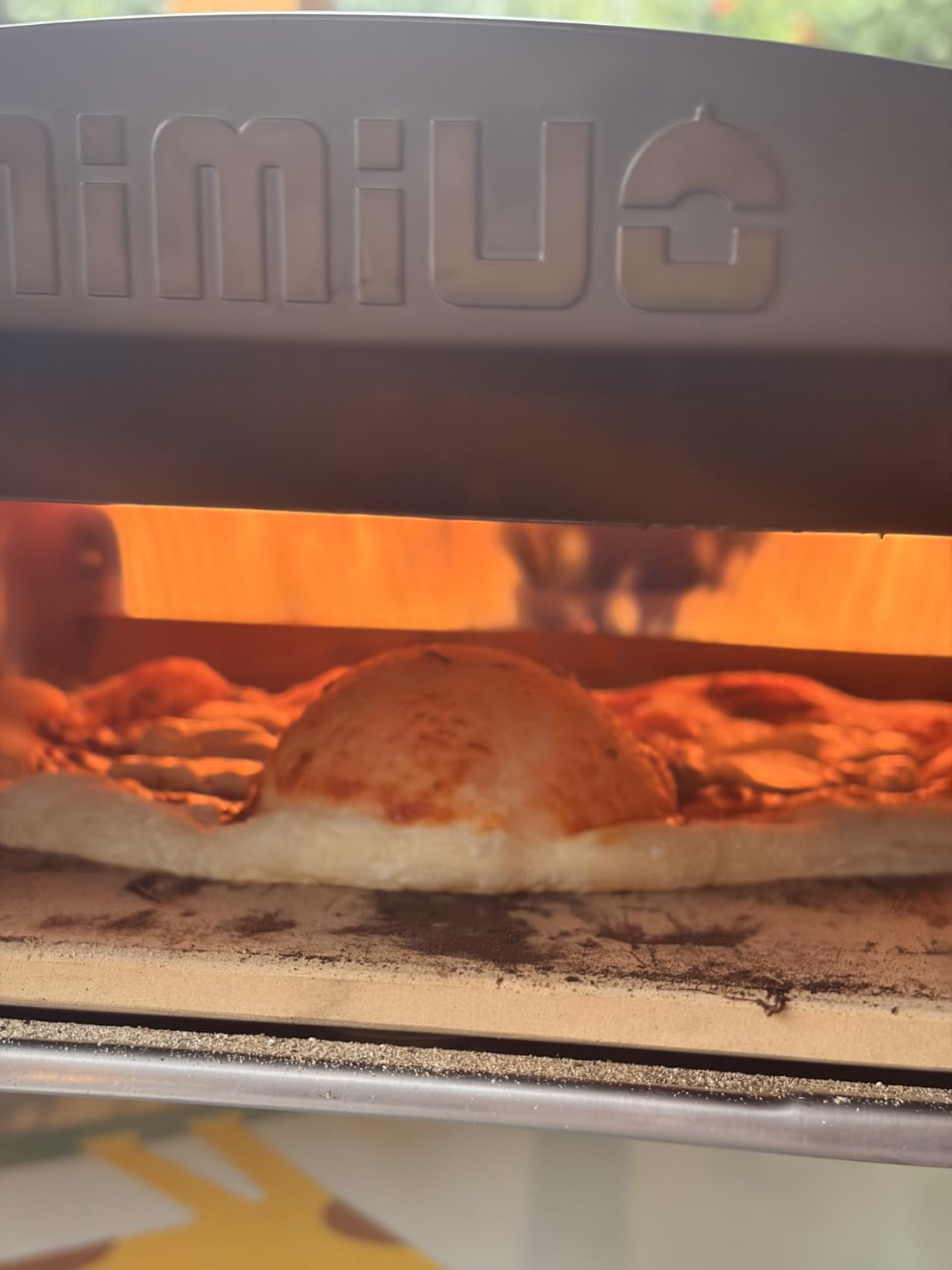
The Mimiuo takes the opposite approach to most portable ovens: it is deliberately heavy. At 33 pounds in thicker gauge stainless with added insulation, it does not sag between pizzas the way lighter 12-inch units do, and owners specifically cite the temperature drop between bakes as the thing this mass solves. If your complaint about cheap ovens is that the heat disappears after two pies, this one answers it.
The stone is a 13 inch square cordierite plate rated to 2200F, which is a genuine durability advantage over cheaper stone. It preheats to 900F in 10 to 15 minutes on propane and bakes in 60 seconds once hot, and the cordierite surface is forgiving of the temperature swings that crack lesser stones.
Everything needed arrives in the box: the oven, the stone, a peel and a protective cover. There is no separate regulator hose to buy, no thermometer to track down and nothing to assemble beyond unfolding the legs and connecting the propane line. For a first cook under a deadline, that matters more than it sounds.
It is also a useful outdoor cooker beyond pizza, and owners put steak, wings, vegetables and bread through it regularly. The 4.1 star average across 335 reviews sits mid-pack, and the reason is visible in the reviews: most complaints are about the weight rather than the cooking.
Why the extra weight is a feature here
Thermal mass, simply. More steel and more insulation means the stored heat in the chamber changes more slowly, so a pizza that comes out does not pull the whole oven down with it. On a fixed stone that matters enormously, and it is why owners report a more even cook than lighter comparators manage at the same burner setting.
It also means the oven is happy being left outside on a stand through the season. A heavier frame is less likely to be damaged by wind and rain when it is not being moved, and the stone is protected by the cover that ships with it. Weight is only a problem when you are carrying it, and many people are not.
When 33 pounds is too much to move
When you have steps, no wheels and a tight path from the garage. Carrying a loaded stone oven up a staircase is genuinely awkward, and anyone who moves theirs twice a year will feel that. The offsetting upside is that its small 25 by 14.8 by 12 inch footprint is one of the most compact here, so it is easy to place once it is in position.
One more expectation to set: cordierite stones stain over time, and owners confirm that discoloration is normal and does not affect how the pizza cooks. Judge it by the bake, not by the color of the stone.
11. Q Pizza PS102 – Best Rotating Stone Oven for Beginners
Q PIZZA 13″ Propane Gas Pizza Oven with Automatic Rotating Stone, PS102
- Automatic rotating stone needs no manual turning
- No assembly beyond attaching legs and propane
- Rotating turntable draws very little power
- One owner logged 200 pizzas in two years
- Reports of the rotating motor and knob failing early
- Plastic control knob melted from heat in one case
- Burns toppings at full heat with thick crust
The PS102 is a rotating stone oven at a price that undercuts every other one here by a wide margin, and that combination is unusual. The 13 inch stone platform turns automatically for even heating, preheats to 932F in 10 to 15 minutes, and bakes a pizza in about a minute. There is no manual turning, which is the single most common frustration beginners report with compact ovens.
Setup is as close to zero as it gets. You attach the legs and the propane line, drop in the stone and light it with the built-in gas ignition. At 33 pounds and 24.5 by 15 by 10 inches, the body is low and light enough for one person to reposition on a flat patio.
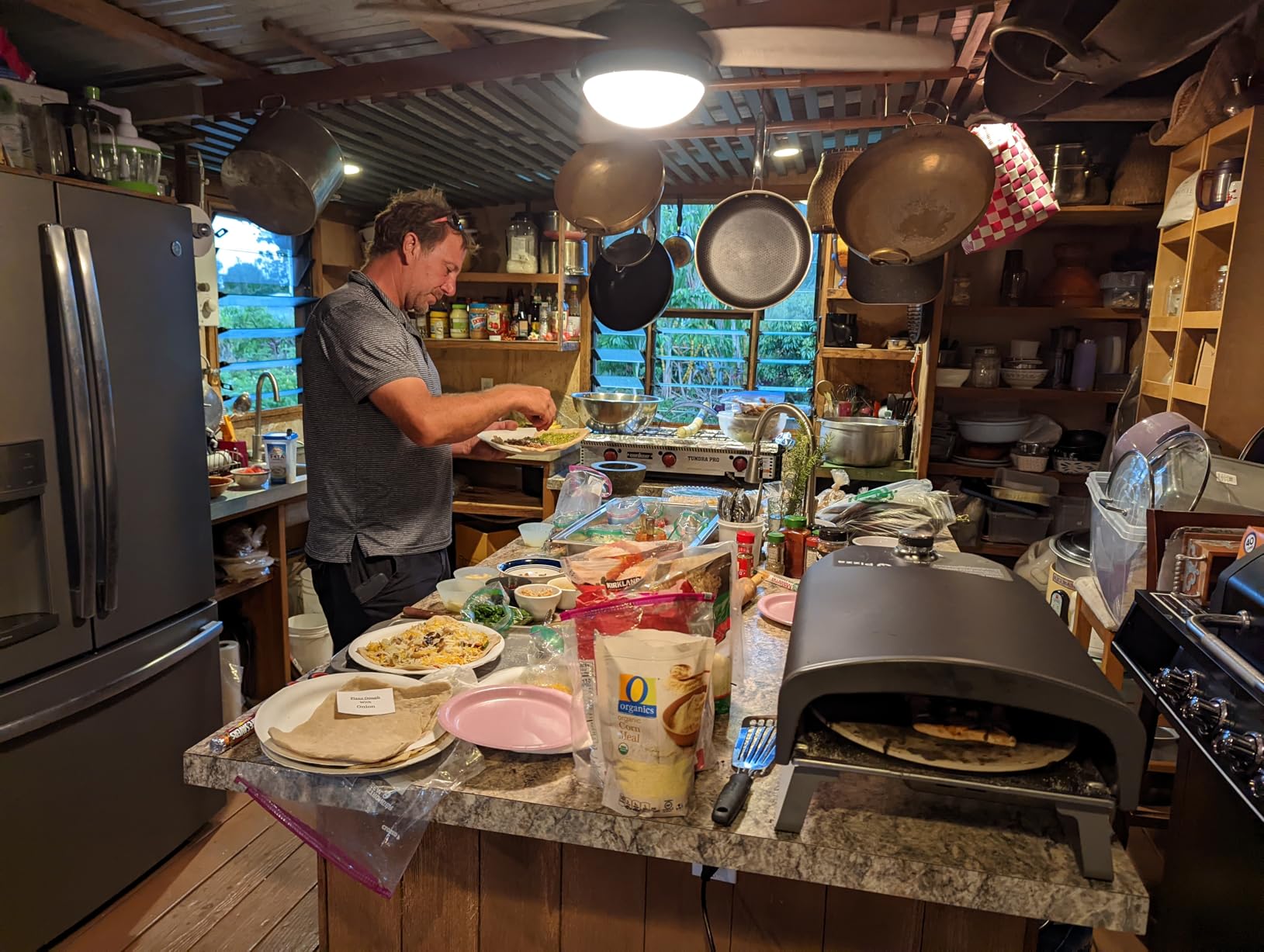
Durability over time is the mixed part of the story. One owner logged 200 pizzas across two years and cooked for parties of 20, which is a strong long-term data point when it appears. Other owners report the rotating motor and the control knob failing within weeks, and one reports the plastic knob melting from heat, so treat the mechanism as the component most likely to disappoint.
It also runs hotter than many people expect. Owners warn that at full heat anything thicker than a very thin crust burns on top before the base cooks, so start with a low-and-slow dough and dial the flame back until you have a feel for it. The 4.1 star average across 130 reviews reflects good results paired with real reliability complaints.

What a self-turning stone actually removes from the process
Attention, not effort. You still have to stand there, but you are not making split-second decisions about which edge is about to catch. For a beginner, that removes the single thing that makes compact ovens frustrating, and several owners say the rotating platform is the reason their first cooks turned out well.
It also means you can hold a conversation. On a fixed 12 inch stone you are turning and rotating through every cook, and after a few pizzas that becomes a job. Here you set the dial, launch and step back, which is a materially different evening for people who cook for guests regularly.
What to weigh before choosing it
The motor is the weak point, and the failures owners describe are mechanical rather than cosmetic. Weigh the low price and the no-turning convenience against the possibility of a motor replacement later, and keep the unit covered when it is not in use. Return shipping and import costs are also reported as painful outside the US, so check that before ordering.
12. EDOSTORY Wood Fired Patio Pizza Maker – Best Accessory Bundle
EDOSTORY Outdoor Wood-Fired Pizza Oven Patio Pizza Maker for Backyard
- Ready to cook in just 10 minutes
- Adjustable chimney and air outlet for fire control
- Wheels and side handle for repositioning
- Firewood shelf and detachable ash drawer
- Lowest star average in this roundup at 4.0
- Tallest and heaviest unit at 53 lb and 62.7 in
- Cooks are far slower than 60 second ovens
The EDOSTORY is the odd one out in this roundup, and we included it because its package is genuinely the most complete. Ready to cook in 10 minutes with a built-in thermometer, an adjustable chimney and air outlet for real fire control, a detachable ash drawer, and two large wheels plus a side handle so you can roll it into position without lifting it.
It also comes with more than any other oven here: a waterproof cover, a 12 by 12 inch stone, a peel, a cutter wheel, a brush, a glove, stands, trays and meshes. If you want everything on the patio from day one, this is the box that delivers it, and the open shelf underneath holds a useful stack of firewood.
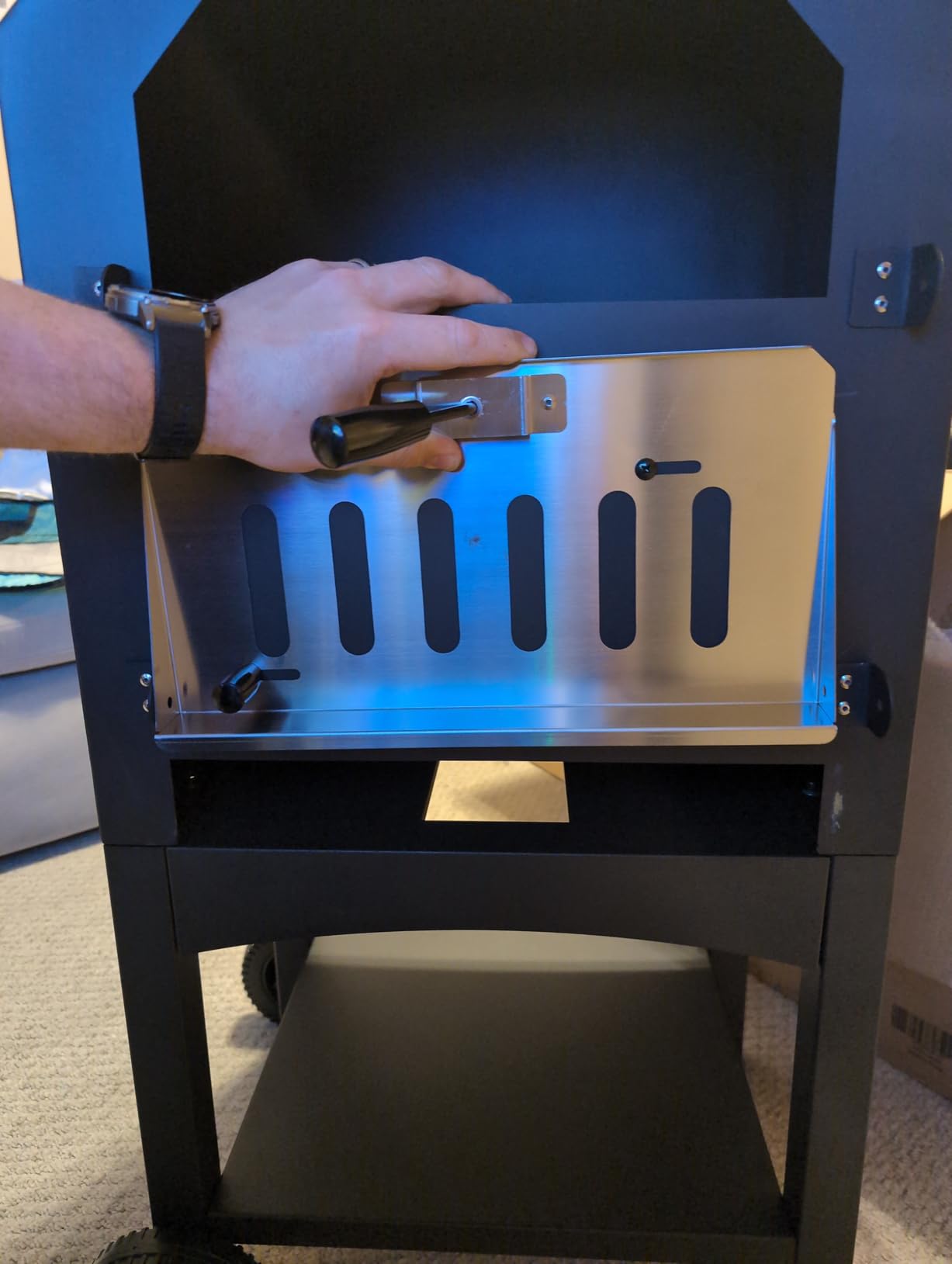
Where it differs from the premium ovens is the temperature. The quoted ceiling is 550F, and the stated cook time is 6 to 7 minutes rather than 60 seconds. That is a real limitation for leopard spotting, and it is why the 4.0 star average is the lowest in the roundup alongside 380 reviews.
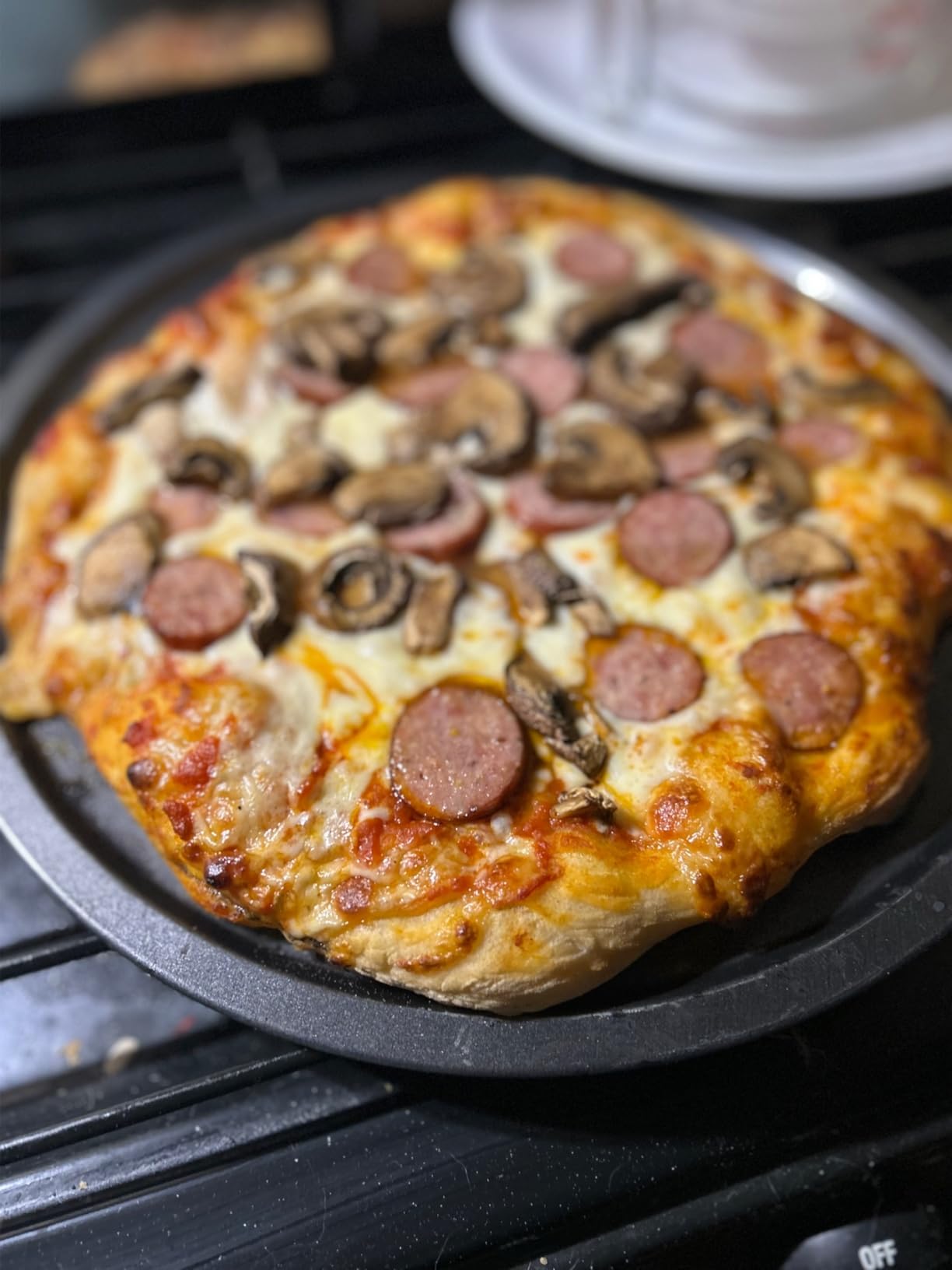
It still cooks good pizza, and owners using it for steaks, fish, bread and vegetables report that it earns its place as a general outdoor cooker. The adjustable chimney and air outlet are the parts that make a wood fire manageable, and they are the reason cooks here take minutes instead of a second.
Who this fixed-position backyard oven suits
Anyone treating it as a permanent fixture rather than a portable oven. At 62.7 inches tall and 53 pounds, this is not going anywhere once you position it, and the wheels are there to help with a flat patio rather than a gravel path. If you have a dedicated corner of yard and a firewood supply, the shelf and ash drawer make long sessions practical.
It also makes sense as a secondary cooker rather than a primary one. Set it up for steaks, fish, bread and vegetables across a long afternoon while a faster oven handles the pizza, and the slower cook times stop being a weakness and become the point.
What to consider before it becomes your main oven
Height and heat together. A 550F deck will not produce the char that people buy an outdoor oven for, and at nearly 63 inches you are working at a genuinely awkward angle unless you plan a counter-height stand. Buy it as a wood-fired outdoor kitchen centerpiece, not as your only pizza oven, and you will be happy with it.
Where to Put an Outdoor Pizza Oven in Your Backyard
Placement matters more than most buyers expect, because an outdoor pizza oven puts a 900F surface in a space that also has children, dogs, siding and dry leaves in it. The short answer is: non-combustible ground, generous clearance from anything that burns, and never directly against the house. That rules out placing a wood or gas oven tight to a wall or under a roof overhang, where heat accumulates and a spark becomes a problem.
On the surface question, a concrete patio is the ideal base, a gravel pad is a good second choice, and a wooden deck is the one to think hard about. The ovens in this roundup are freestanding appliances with radiant heat, and a wooden deck under a hot oven is a scenario worth avoiding unless the deck boards are well clear and you have a metal base under the oven itself. If your only option is a deck, a purpose-built stand that lifts the oven and gives the flame a path to vent downward is the safer configuration.
Height is the detail people underestimate. The ovens here range from about 10 inches to nearly 63 inches tall, and where the stone sits relative to your hands decides whether launching a pizza is comfortable or a daily workout. Owners with chest-height stands report a real difference when baking back to back, so if you can place the oven on a stand that puts the opening at roughly waist to chest height, do it before you buy rather than after.
Clearance from the structure and from plants is the safety piece. Leave open air on at least two sides, keep dry brush and leaves away from the chimney and the ash drawer, and check your local rules on open burning before you plan a weekly wood night. If you have young kids or an inquisitive dog, make the cooking zone a thing everyone understands is off limits while the oven is hot, and put a physical boundary around it rather than relying on a verbal reminder.
Wood, Gas, Pellet or Electric: Which Fuel Should You Buy?
Wood is the flavor option. It costs you the longest preheat, typically 45 to 60 minutes for a reliable deck temperature, and it asks you to feed and tend the fire. What you get is smoke in the crust, which is a genuine and repeatable difference, plus the ability to cook bread, roasts and vegetables with a live flame. Owners consistently say the wood ovens that frustrate people are the ones whose owners never learned to manage the fire.
Gas is the convenience option. Propane ovens in this roundup reach 900F to 1070F in 10 to 25 minutes and hold that heat with a dial, which makes them the right pick for most households. The costs are flavor, fuel consumption over a long session, and a hard dependency on a tank with usable pressure. Reviewers report burners that will not light when the tank runs low, so keep a second cylinder on hand if you cook often.
Pellets are the compromise that works. You get wood-adjacent flavor with gas-adjacent temperature control, and the ovens in this roundup that run pellets preheat in 15 to 20 minutes. The friction is handling: lighting a pellet hopper has a learning curve, and the hopper burns through fuel faster than owners expect once the oven is fully hot.
Electric units are the ones to skip for this particular job. They are tidy and they hold temperature perfectly, but they cap out well below what a stone needs for leopard spotting, and the ovens in this roundup all heat far above what a home range reaches for a reason. If you want reliable heat indoors instead, our picks among the best indoor pizza ovens are the right place to look.
What Size Outdoor Pizza Oven Do You Need?
Match the stone diameter to how many people you are actually feeding, not to what looks impressive on a stand. A 12 inch stone makes a genuine single-person or two-person pizza, which is plenty for a couple or a small family on a weeknight. It is also the size that fits a tight patio, and it is the size that forces the most turning.
A 14 to 16 inch floor is the practical sweet spot for most backyards. Fourteen to fifteen inch models such as the BIG HORN gas oven cook a 14.7 inch pie in about 60 seconds, and a 16 inch model gives you the room to launch and turn without crowding, which is what makes cooking for a group a normal evening rather than a production. If you routinely host six or more, go to 16 inches or wider.
Go bigger only if you have the space. A 20 inch class floor lets you bake two pies at once, and the masonry-style ovens handle that far better than a portable single chamber, but they also demand a permanent installation and a serious base. For most people reading this, a 12-inch oven for a couple or a 16-inch oven for a family is the right answer, and going larger mostly buys a wood pile. If you are instead outfitting a commercial kitchen that bakes all day, our guide to the best conveyor pizza ovens covers the other end of the spectrum.
The Accessories You Actually Need
An infrared thermometer is the first purchase, ahead of everything else. Oven dials and built-in gauges routinely read air temperature rather than stone temperature, and the difference between a 500F chamber and a 750F stone is the difference between a pale base and a crisp one. Owners who measure the deck report noticeably more consistent results, and it is the cheapest way to fix the most common beginner complaint.
A wooden pizza peel and a turning peel come next. The peel launches, the turning peel rotates, and a metal peel conducts heat straight into your crust base and softens it. Many of the ovens here ship with a peel, and several of those are the flimsy stock versions owners complain about, so check what you get before buying a replacement. A perforated peel also works under the dough so semolina does not slide off on the launch.
A cover is the accessory people skip and then regret. Moisture and condensation are what damage a stone and a steel shell over seasons, not rain in general, and a fitted cover costs less than replacing a cracked stone. Beyond that, a dough box for the fridge, semolina for dusting and a brush for the stone complete the kit. Skip branded sets that bundle fifteen items you will never touch and buy the four you will use weekly.
Your First Cook: A Simple Step by Step Routine
Start conservative. Fire the oven and let it come all the way up, giving gas units their stated preheat and giving wood units the full 45 minutes rather than the minimum. Confirm the stone temperature with your infrared thermometer, and if you do not have one, err toward waiting longer, because every owner complaint we read traces back to an underheated deck.
Then launch low and slow. Use a lower hydration dough with no sugar in your first few attempts, dust the peel generously with semolina, and slide rather than toss. A stretched dough that has proofed too long will not survive a hot stone, and the first two pies are practice for the third. Turn at about 30 seconds on compact ovens, and keep the pizza moving toward the flame on fixed stones where a hot spot forms.
Finally, expect to burn the first one. Owners across every fuel type say the same thing, and it is the single most common reason people give up on an outdoor oven. The learning curve is real but it is short, and the biggest single improvement most owners report after the first month is not the oven, it is the dough.
Frequently Asked Questions
Are outdoor pizza ovens worth it?
An outdoor pizza oven is worth it if you cook pizza more than a couple of times a month. A home oven tops out around 500F to 550F, which is too cool to char a crust or spring the dough properly. The ovens in this roundup reach 900F to 1070F, and that heat is the only way to get leopard spotting and an airy rim at home. If you bake twice a year, an indoor oven serves you better and takes up less space.
What is the best outdoor pizza oven?
The Gozney Roccbox is the best outdoor pizza oven overall, pairing the highest rating in this roundup at 4.7 stars with fast 60 second bakes and a stone floor that holds temperature through a long session. Buy the Ooni Koda 16 instead if you regularly cook for five or more people and want a wider floor with less turning. Choose the BIG HORN 12 inch pellet oven if wood flavor at a lower outlay matters most.
Is Ooni or Gozney better?
Ooni leads on feature breadth, the multi-fuel Karu line and app support, and Gozney leads on build quality and heat retention. The Roccbox holds the highest rating in our roundup and cooks in 60 seconds, while the Koda 16 offers a wider 16 inch floor and a five year warranty after registration. For most backyards we would start with the Roccbox and step up to a Koda 16 only if the floor size becomes the limiting factor.
What size outdoor pizza oven do I need?
A 12 inch stone suits one or two people and tight patios. A 14 to 16 inch floor is the sweet spot for families of two to five and cooks a 14.7 inch pie in about a minute. Go to 16 inches or larger if you routinely host six or more people or want to bake two pies at once. The larger the floor, the more turning a fixed stone needs, so beginners gain as much from a 16 inch oven as they lose.
How long does an outdoor pizza oven take to preheat?
Propane ovens in this roundup reach cooking temperature in 10 to 25 minutes, pellet ovens in 15 to 20 minutes, and wood ovens in 45 to 60 minutes for a reliable deck temperature. Budget the full time for your fuel type rather than the minimum quoted, because an underheated stone is the most common cause of a disappointing first cook. Confirm the temperature yourself with an infrared thermometer rather than trusting the built-in dial.
Final Verdict: The Best Outdoor Pizza Oven for Backyards in 2026
After ranking all 12, the Gozney Roccbox is our pick for the best outdoor pizza ovens for backyards in 2026. It carries the highest rating in the group at 4.7 stars across 1905 reviews, holds a real stone floor at 950F through a long session, and its low profile fits a patio without dominating it. If you cook for a crowd, the Ooni Koda 16 wins on floor size and forgiveness. If you want wood flavor without the premium outlay, the BIG HORN 12 inch pellet oven is the value pick.
Whichever you choose, buy an infrared thermometer before the oven does, give the stone a full preheat, and expect your first pie to be a write-off. Backyard pizza ovens are one of the few purchases where the gap between a good result and a great one is almost entirely technique, and that is good news, because it costs nothing to improve. Start with the oven that matches your fuel patience, keep it covered between seasons, and give it a month before you decide what you think of it.