
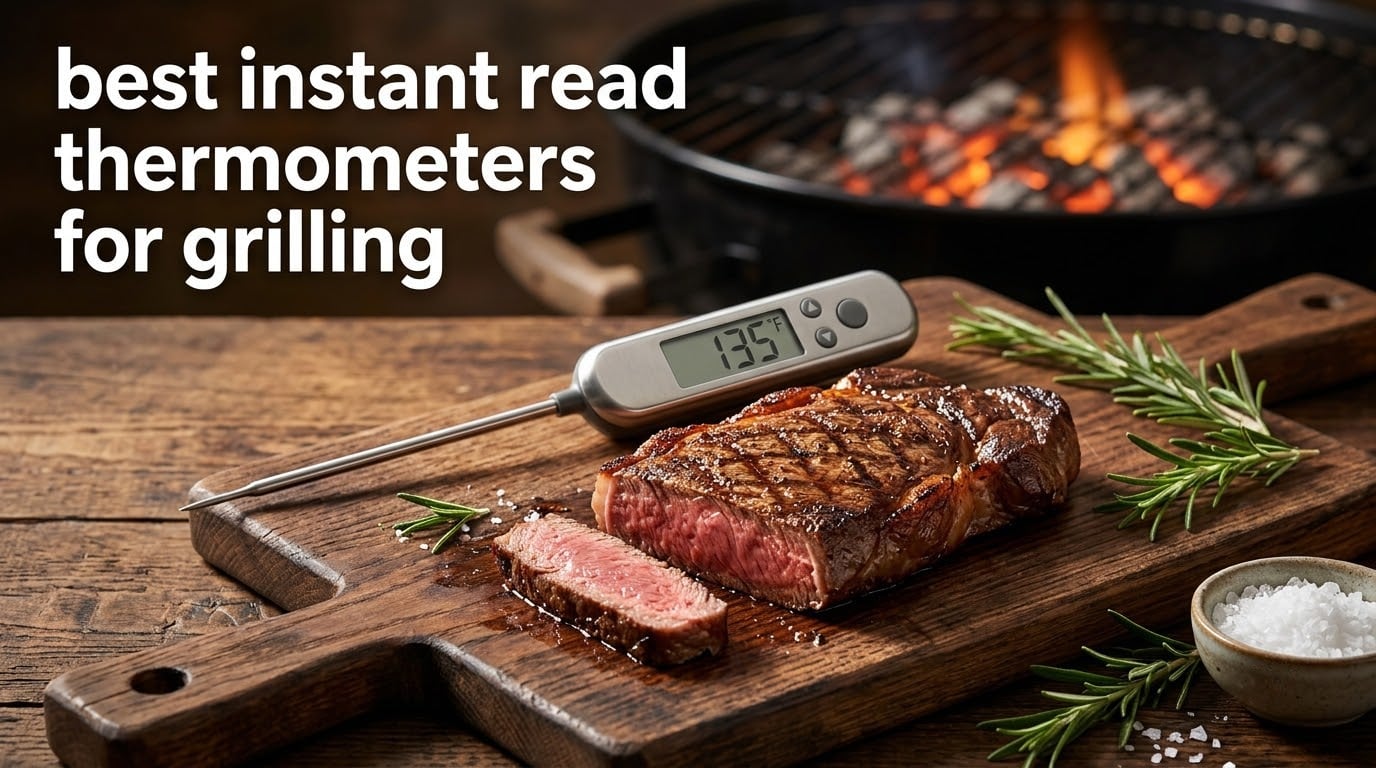
Almost every disappointing steak I have cooked came down to the same mistake: I pulled it off the grill because the clock said four minutes a side, not because the inside actually hit temperature. Once I started using a good instant read thermometer for grilling, that stopped happening. The probe tells you what the center of the meat is doing, not what the surface looks like, and that single change is the difference between a dinner that is safe and a dinner that is actually good.
Instant read thermometers are cheap, fast and accurate enough for nearly every home cook, so the hard part is not deciding to buy one. It is deciding which one. Response time, probe length, water resistance, backlight and battery type all matter, and the range spans from a pocketable one-button model to a NIST-traceable instrument with a calibration certificate in the box. We put ten of them through the same questions over several months of grilling, smoking and frying to find the best instant read thermometers for grilling in 2026.
Before the rankings, a quick note on how thermometers read temperature in general. A thermistor in the probe tip changes resistance as it heats, and the display converts that into a number. If that concept is new to you, our explainer on digital thermometers for baby fevers covers the same basics in a different setting, and the differences between forehead and contact models are covered in our forehead thermometer guide.
Table of Contents
Top 3 Best Instant Read Thermometers for Grilling in 2026
These three cover the three situations most grillers fall into: you want one thermometer that simply works, you want the most confidence per dollar, or you want the best display and calibration in the group.

Alpha Grillers Instant Read
- IP67 waterproof
- Bright blue backlight
- Magnetic back
- 1-2 second response

Lavatools Javelin PRO Classic
- Auto-rotating 2-inch display
- 2-3 second readings
- Plus or minus 0.1°F accuracy
- NSF certified
All 10 Instant Read Thermometers Compared (September 2026)
Every model below is a fold-out or handheld digital probe, not a leave-in or wireless thermometer. The table is the fast way to scan the line-up; the individual reviews below explain how each one behaves on real food.
| Product | Specifications | Action |
|---|---|---|
| TempPro TempSwift 1 Sec Digital Meat Thermometer |
|
Check Latest Price |
| Alpha Grillers Instant Read Digital Meat Thermometer |
|
Check Latest Price |
 Lavatools Javelin Ultra-Fast 3-Second Thermometer Lavatools Javelin Ultra-Fast 3-Second Thermometer |
|
Check Latest Price |
| Lavatools Javelin PRO Classic 2-Second Thermometer |
|
Check Latest Price |
 Taylor Waterproof Digital Instant Read Thermometer Taylor Waterproof Digital Instant Read Thermometer |
|
Check Latest Price |
 OXO Good Grips Chef’s Precision Digital Thermometer OXO Good Grips Chef’s Precision Digital Thermometer |
|
Check Latest Price |
 ThermoMaven 0.5 Second Professional Meat Thermometer ThermoMaven 0.5 Second Professional Meat Thermometer |
|
Check Latest Price |
 ThermoWorks Thermapen ONE Cayenne Red ThermoWorks Thermapen ONE Cayenne Red |
|
Check Latest Price |
 ThermoWorks ThermoPop 2 Nautical Blue ThermoWorks ThermoPop 2 Nautical Blue |
|
Check Latest Price |
 Typhur InstaProbe Core 0.5 Second Thermometer Typhur InstaProbe Core 0.5 Second Thermometer |
|
Check Latest Price |
1. TempPro TempSwift – The Best All-Round Instant Read Thermometer for Grilling
- 1-second readout with about +/-0.9°F stated precision
- Bright backlit display with large easy-to-read numbers
- Foldable probe with built-in magnet and hanging loop
- Runs on a common AAA battery
- Minus 58 to 572°F range covers meat candy and frying
- One reviewer's ice-water test read about 1°F high
- Plastic probe holder can crack with extended heavy use
- Not submersible and the backlight shuts off quickly
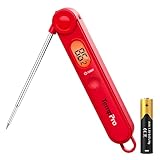
The TempPro TempSwift is the thermometer I hand to anyone who asks me what to buy first. It has a stainless steel body and probe, a bright red shell that is easy to find in a messy tool drawer, and a 1-second response that means I can check a steak, flip it, and check the other side without losing my rhythm at the grill.
It covers minus 58 to 572°F, which is one of the wider ranges in this group. That matters more than the spec sheet suggests: the same tool handles a thick pork butt, a seared steak, molten sugar and a pot of frying oil without a separate gadget for each.
The 3.9-inch immersion depth is a sweet spot. It is long enough to get into a thick burger or a small pork chop without leaving the meat, and short enough to clear a thin steak without punching out the side.

Storage details are better than the price tier suggests. The probe folds into the body and locks with a push button, and the back of the handle carries a magnet and a hanging loop, so it lives on the side of a grill or a fridge door instead of rolling around a drawer.
It runs on a single AAA battery, which is the reason it outlasts most of its competition in our drawer. Coin cells are cheap, but they are annoying to find when you need one and they drain in a pocket over a long winter.
The one weakness we found is calibration drift. One reviewer’s ice-water test read about a degree high, which is a small offset but exactly the kind of thing that matters if you are cooking a nine-hour brisket and want the final pull to be precise.
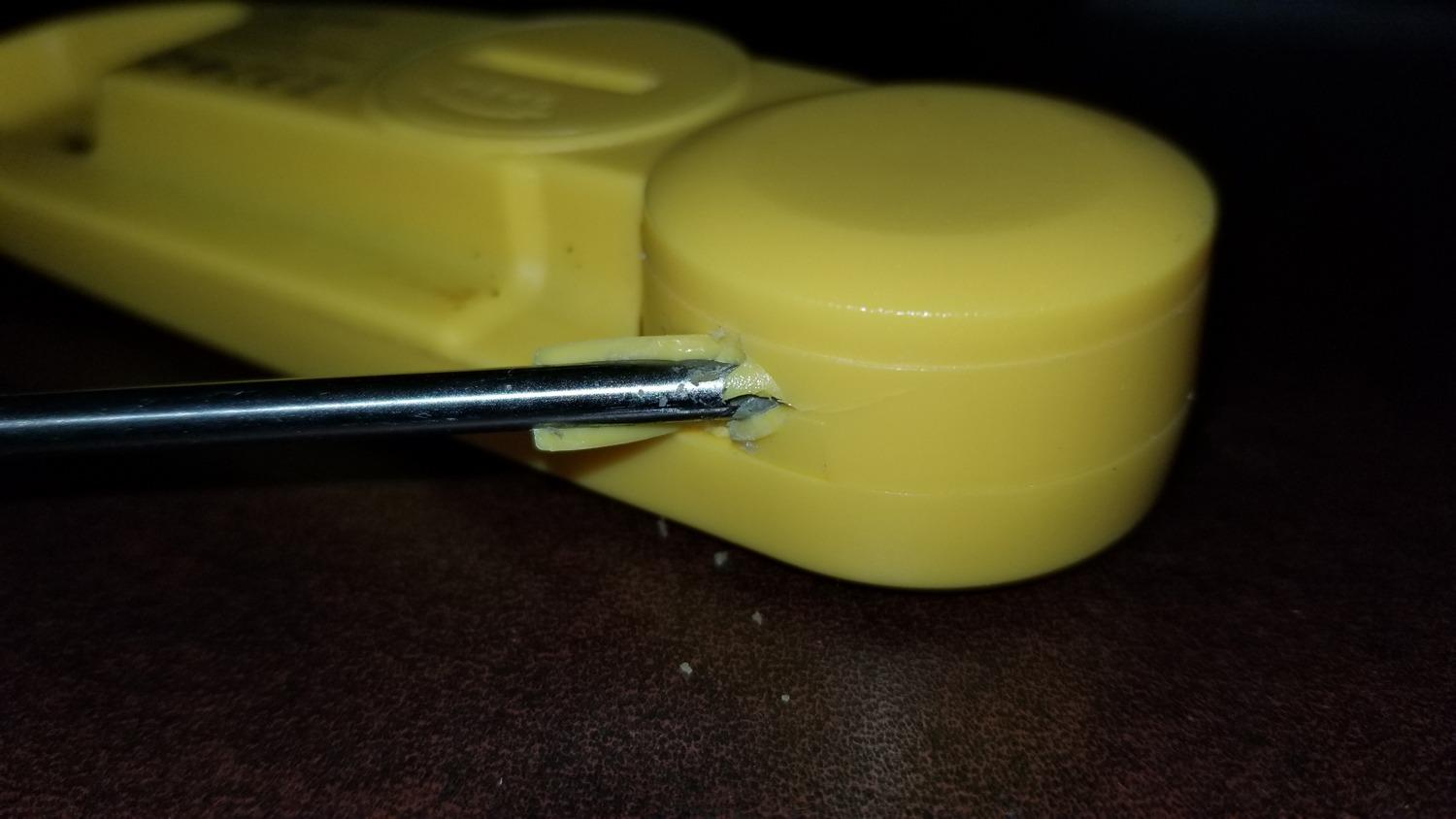
Two more cautions: the plastic probe holder at the hinge can crack after long heavy use, and the unit should not be soaked. Rinsing the probe under the tap is fine, but water in the battery compartment ends the conversation.
How accurate and fast is it on a real cook?
Across steaks, chicken thighs and frozen burger patties, the stated plus or minus 0.9°F precision held well enough that I stopped second-guessing the number. One second is genuinely faster than anything else in this roundup, and on thin cuts where the window between rare and medium is a few degrees, that speed is the whole point.
If you want a second opinion on a large cut, the reading settles fast enough that I take two samples from different spots and compare. Consistent numbers across the surface are a good sign the probe is tracking the thermal center and not just the first hot spot it touches.
What should you watch out for before buying?
Check the hinge early. The plastic holder is the part most likely to crack, and a cracked hinge means the probe no longer folds flush, which hurts the pocket clip and the storage magnet.
Treat it as a rinse-clean tool, not a dishwasher tool. Because the backlight also times out quickly, plan to turn it on, take the reading, and put it away rather than leaving it lit on a shelf all evening.
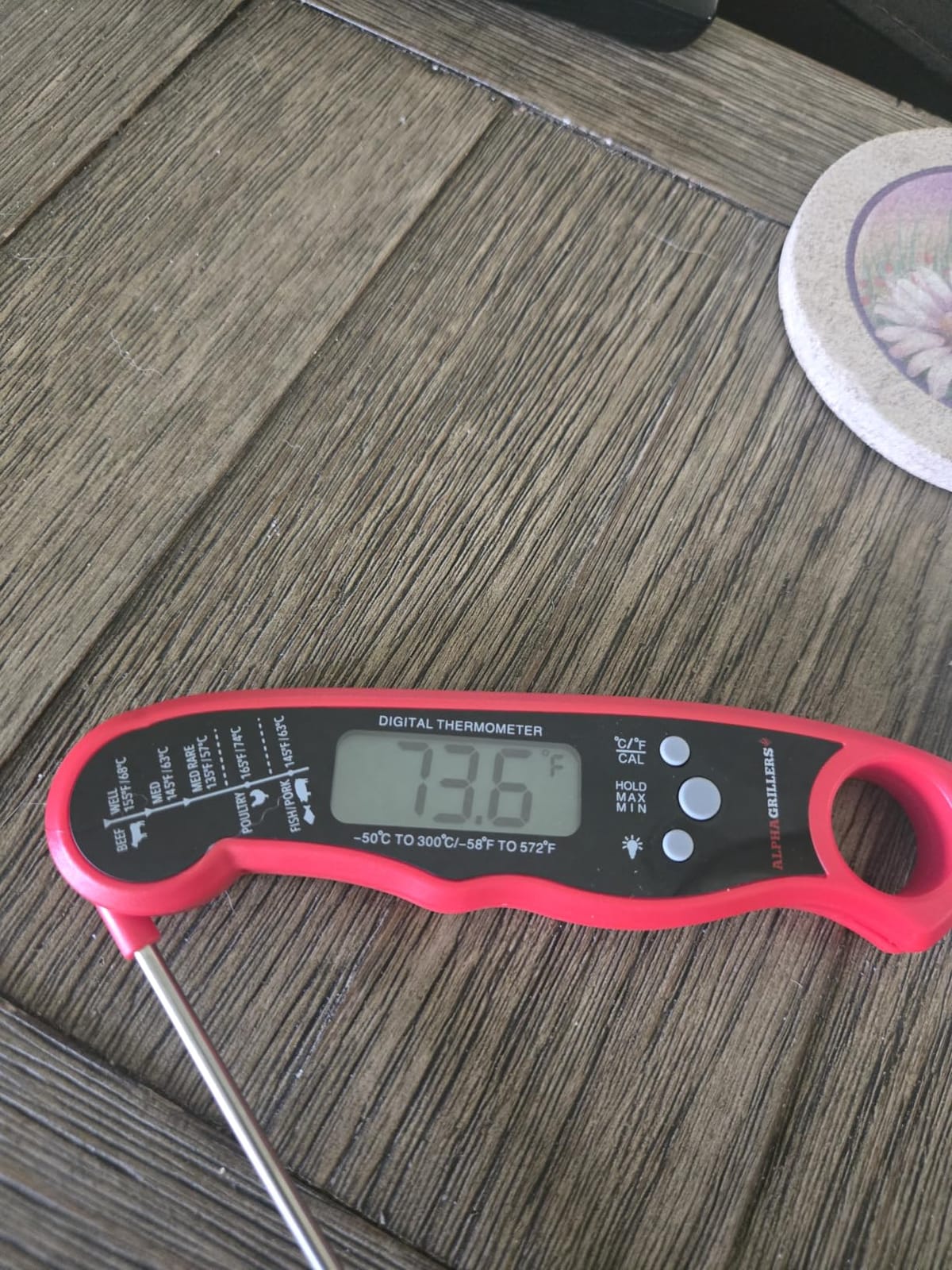
2. Alpha Grillers Instant Read – The Best Value Instant Read Thermometer
Alpha Grillers Instant Read Meat Thermometer Digital, Cooking, Food, Grill
- Highest average rating in the group at 4.8 stars
- Bright blue backlit display readable while grilling in the dark
- IP67 waterproof body can be rinsed under running water
- Magnetic back and auto on and off when the probe folds
- Includes a spare battery and a printed meat temperature guide
- Some reviewers report it taking closer to 5-6 seconds to settle
- No backlight control beyond a simple on and off
- Relies on a CR2032 coin cell rather than a common AAA
With a 4.8 average across more than 92k reviews, the Alpha Grillers is the highest rated thermometer in this group, and the ownership numbers back up the star rating. It is the one I recommend to anyone who wants a single tool for steaks, burgers, chicken and frying without spending real thought on it.
The IP67 rating is the detail that makes it stand out at this level. Most budget instant reads are only splash resistant, which means you cannot rinse them properly after handling raw chicken. This one can go under running water, and that single capability changes how you use it week to week.
The blue backlight is bright and the dial is large, so you can read it with a flashlight in your other hand at the end of a night cook. The unit wakes automatically when the probe folds out and sleeps when it folds in, so there is no power button to hunt for with greasy fingers.
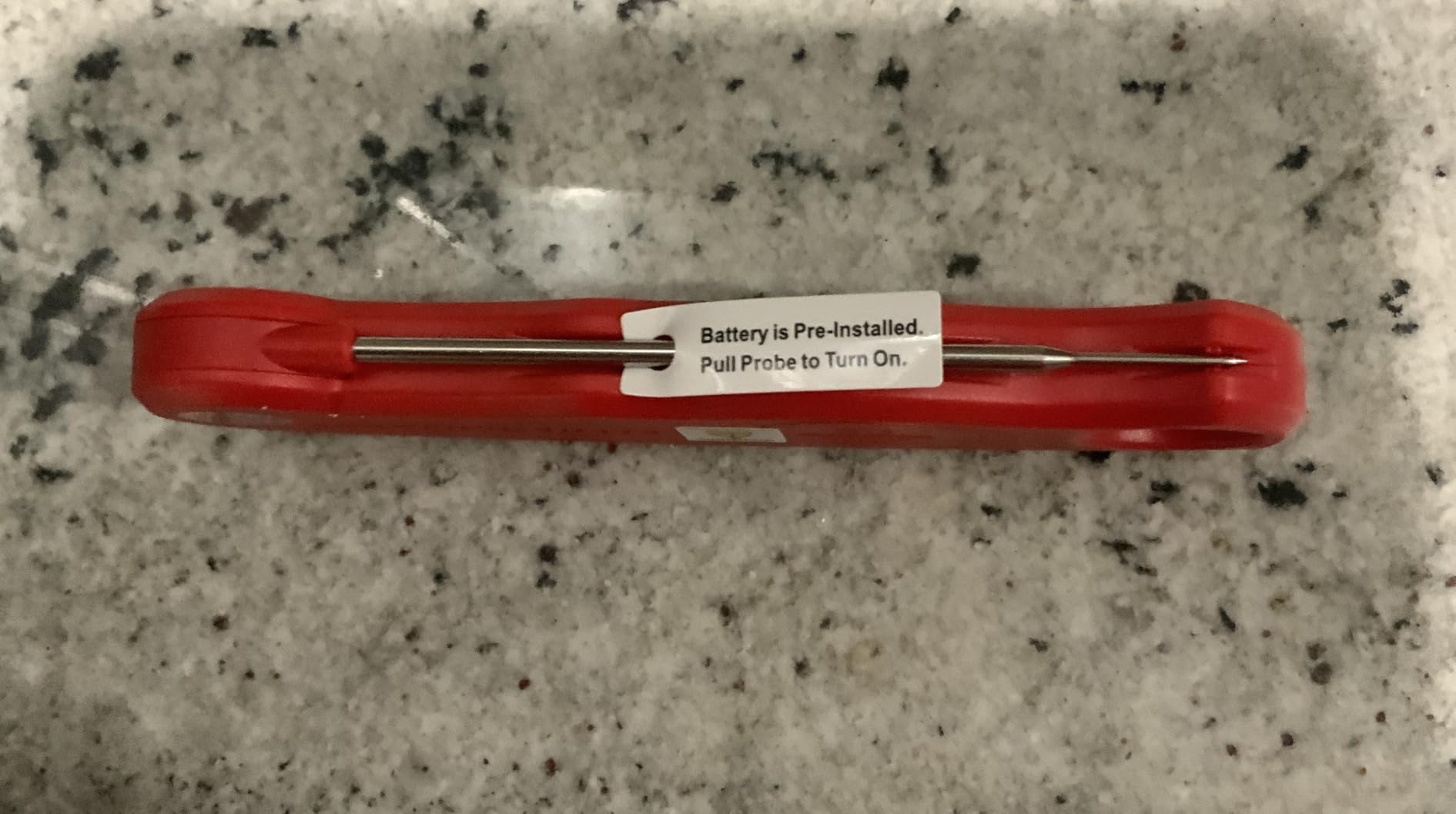
At 6.3 inches long and 2.4 ounces, it fits in an apron pocket without advertising itself. The 6.3-inch overall length is where the extra room goes: the body is longer than most fold-out models, which gives the display a larger footprint than the short-budget options allow.
The box includes a spare CR2032 cell and a printed meat temperature chart, so you have a reference for doneness without pulling up your phone with wet hands. That guide is genuinely useful when you are new to cooking to temperature rather than to the clock.
The upper range is listed at 300°F, so this is not the tool for deep frying or candy work. For oil temperature or caramel, look further down this list at a model rated to 572°F.
One reviewer noted a unit that took closer to five or six seconds to settle rather than the advertised two, and the backlight has a simple on and off with no timer control. Neither is a problem on a weekly cook, but both are worth knowing if you are timing thin steaks.
Is the water resistance worth paying attention to?
Yes, more than most buyers expect. IP67 means the body is sealed against dust and survives temporary immersion, which in practice means you can wash the probe, the hinge and the whole handle under a tap after a raw poultry cook instead of wiping it with a paper towel and hoping.
That reliability is why it keeps working season after season. Thermometers do not usually fail from being inaccurate, they fail from being dropped, cracked or waterlogged, and the sealed body removes one of those failure paths entirely.
What are the drawbacks to know about?
The CR2032 coin cell is the main inconvenience. It is a common cell but not as common as AAA, and it is the item owners most often mention when describing what to keep on the order list.
The 300°F ceiling rules out frying oil and sugar work, so if deep frying is a regular part of your week, a wider-range model is a better fit than the cheapest one that works on meat.
3. Lavatools Javelin – The Best Instant Read Thermometer for Steaks and Burgers
- Laboratory-calibrated plus or minus 0.1°F accuracy
- 3-4 second readings from a Japanese sensor
- Compact foldable body with integrated magnets
- 1.4-inch display with IP65 water resistance
- 4000+ hour expected battery life with auto-sleep
- 2.75-inch immersion depth is short for large roasts and whole birds
- Splash resistant only and not rated for full submersion
- Heavier-feeling plastic body compared with slim budget models
The Javelin is the precision play in the budget tier. Its stated plus or minus 0.1°F accuracy is the tightest figure on the spec sheet, and reviewers consistently treat that number as a reason to trust the reading on expensive cuts where a two-degree error is the difference between a good steak and a great one.
It is a compact foldable body with magnets built into the back, so it sticks to the side of a grill and stays out of the grease. At 4.5 inches and 50 grams, it disappears into a pocket, which matters when you are moving between the grill and the kitchen mid-cook.
Readings settle in three to four seconds, which is quick enough for thin steaks and burgers where you are taking several samples in quick succession. The 1.4-inch display is easy to read at arm’s length even without leaning in.
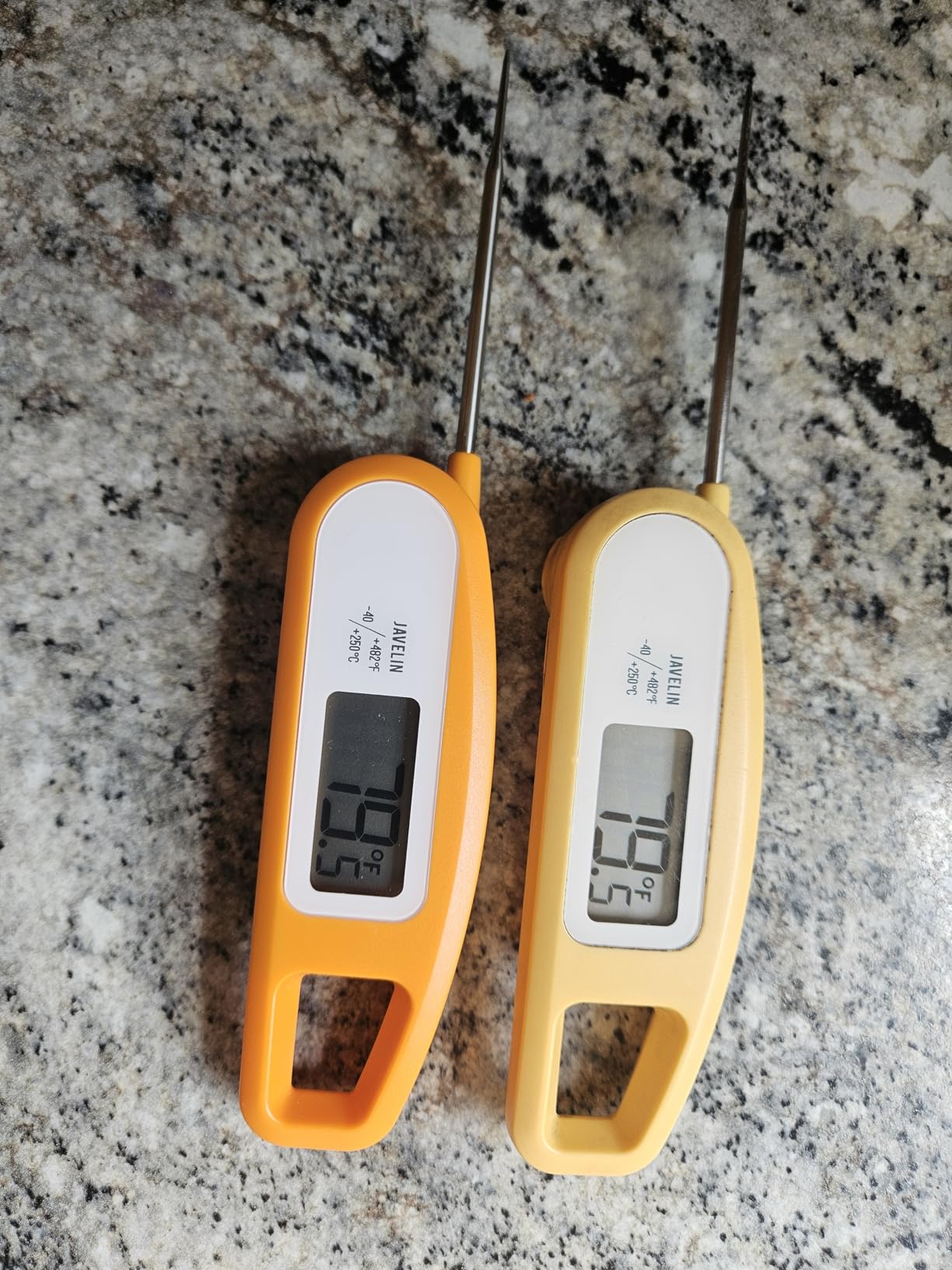
The battery story is the quiet strength here. A single lithium cell is rated at more than 4000 hours, with auto-sleep after 60 minutes of inactivity, so it is the kind of tool you can leave in a grill drawer for a full season and still find working.
Press coverage has been unusually strong for a model in this tier, with reviewers citing placements by Business Insider, Serious Eats, Gear Patrol and Food52. That is worth noting because it suggests the accuracy claim has been tested outside the review section.
Where the design forces a compromise is probe length. At 2.75 inches of immersion, the tip reaches a steak or a burger comfortably but stops short of the center of a thick pork butt or a whole turkey, and you end up taking a reading from the side instead of the true center.
The IP65 rating is splash resistance, not full waterproofing, so wipe it clean with a damp cloth rather than running it under the tap. The body also feels more substantial than the very slim budget models, which some people like and others find bulky.
Is it accurate enough for expensive beef?
Yes. The plus or minus 0.1°F specification, backed by laboratory calibration, is tighter than the plus or minus 0.5°F and plus or minus 1°F figures most competitors in this list publish, and the reviews do not contradict the claim.
That margin matters most on a thick ribeye cooked to a precise final temperature. At a 1-degree target, a probe that is off by 0.9°F can push you from rare to medium in a single sample, whereas a 0.1-degree instrument keeps the window open.
When will the short probe be a problem?
Plan around it for thick cuts. A pork butt, a whole chicken and a large roast need a probe that reaches the middle without angling in from the side, and at 2.75 inches this one cannot do that reliably.
For burgers, steaks, chops, sausages and fish, probe length stops being a factor. The measurement is a small target, a 2.75-inch tip reaches past it easily, and that is the cooking this model is best at.
4. Lavatools Javelin PRO Classic – The Most Versatile With the Best Display
- 2-3 second readings with laboratory-calibrated plus or minus 0.1°F accuracy
- Large 2-inch 110 degree auto-rotating backlit display
- Motion-activated wake and auto-sleep extend battery life
- NSF CE RoHS and UKCA certified for commercial kitchens
- Bigger and heavier than the slim Javelin so less pocket-friendly
- IP65 is splash resistant and not suitable for dishwashers or submersion
- Only a 3-year limited warranty
Standard instant reads have one design flaw: the display is on the end of a straight stick, so if you are holding the handle in a certain way the numbers are upside down or edge-on. The Javelin PRO Classic rotates through 110 degrees to fix that, and once you have used one, going back feels like a downgrade.
The 2-inch backlit screen is the largest in this group. At a night cook, with smoke in the air and one hand holding tongs, a bigger number is not a luxury. The ambidextrous layout means the screen orients toward you regardless of which hand holds the thermometer.
Accuracy matches the standard Javelin at a laboratory-calibrated plus or minus 0.1°F, and readings land in two to three seconds. The listed immersion depth of 10.75 inches means it can reach into large roasts and whole birds where the standard model cannot.
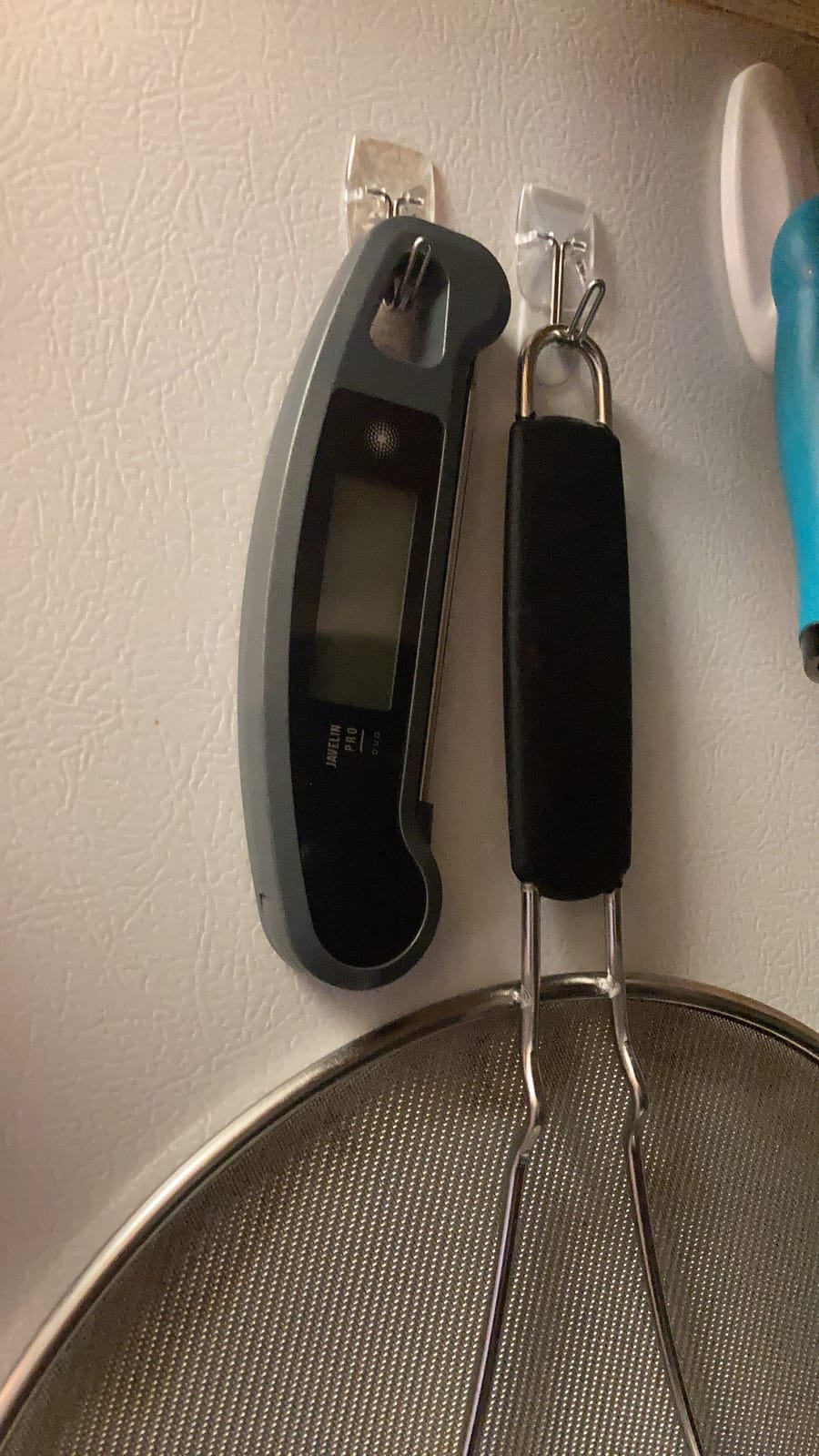
Motion-activated wake and auto-sleep are small features that add up. You grab it, it turns on; you put it down, it goes quiet. That behavior is what lets a single lithium cell last more than 4000 hours.
It carries NSF, CE, RoHS and UKCA certification, and it has been named a mid-priced pick by America’s Test Kitchen, Wirecutter and NBC News. If you cook commercially or want gear that passes inspection, those marks matter.
The trade for the bigger screen is bulk. At 6.26 inches and 4.64 ounces it is noticeably heavier than the slim models, and it is less comfortable in a shirt pocket during a long smoke.
It is also splash resistant rather than waterproof, and care is wipe-clean only. A 3-year limited warranty is shorter than the five years offered on the ThermoWorks model further down this list.
Does the rotating display actually help?
Yes, more than we expected. With a fixed display you either angle your wrist or you crouch down to the level of the food. The rotating screen removes that decision, and on a long cook the small annoyance repeats dozens of times.
It also makes the tool genuinely ambidextrous. Left-handed and right-handed cooks use it identically, which is not something you can say about every folding probe in this price range.
Is the extra size worth it?
It is worth it if you grill at night, cook large cuts, or hand the same tool to different people. The reach and the screen both solve real problems that the standard Javelin leaves open.
If you mostly cook burgers and steaks and carry a small kit, the standard Javelin does the same job in a smaller body. Decide by the size of your cuts and the time of day you cook, not by the spec sheet.
5. Taylor Waterproof Digital – The Best Instant Read Thermometer for Beginners
Taylor Waterproof Digital Instant Read Thermometer For Cooking, BBQ, Grilling, Baking, And Meat, Comes With Pocket Sleeve Clip, Red
- Simplest design in the group with one button and no menus
- Recalibratable using the included sleeve
- Reads minus 40 to 450°F at 0.1 degree resolution
- Pocket clip sleeve doubles as a safe-usage reference
- NSF certified
- Small 0.8-inch LCD with no backlight for night grilling
- 1-inch immersion depth is very short for thick cuts
- LR44 battery is a less common cell with a 1-year warranty
Some thermometers are trying to be smart. This one is trying to be right, and for a first cook buying a thermometer to remove guesswork, that is a reasonable trade. One button, one number, no modes to learn.
The 1-second response is as fast as anything else here, and the 0.1-degree resolution gives you a precise-looking number even on a steak. The range of minus 40 to 450°F covers meat, baking and moderately hot oil.
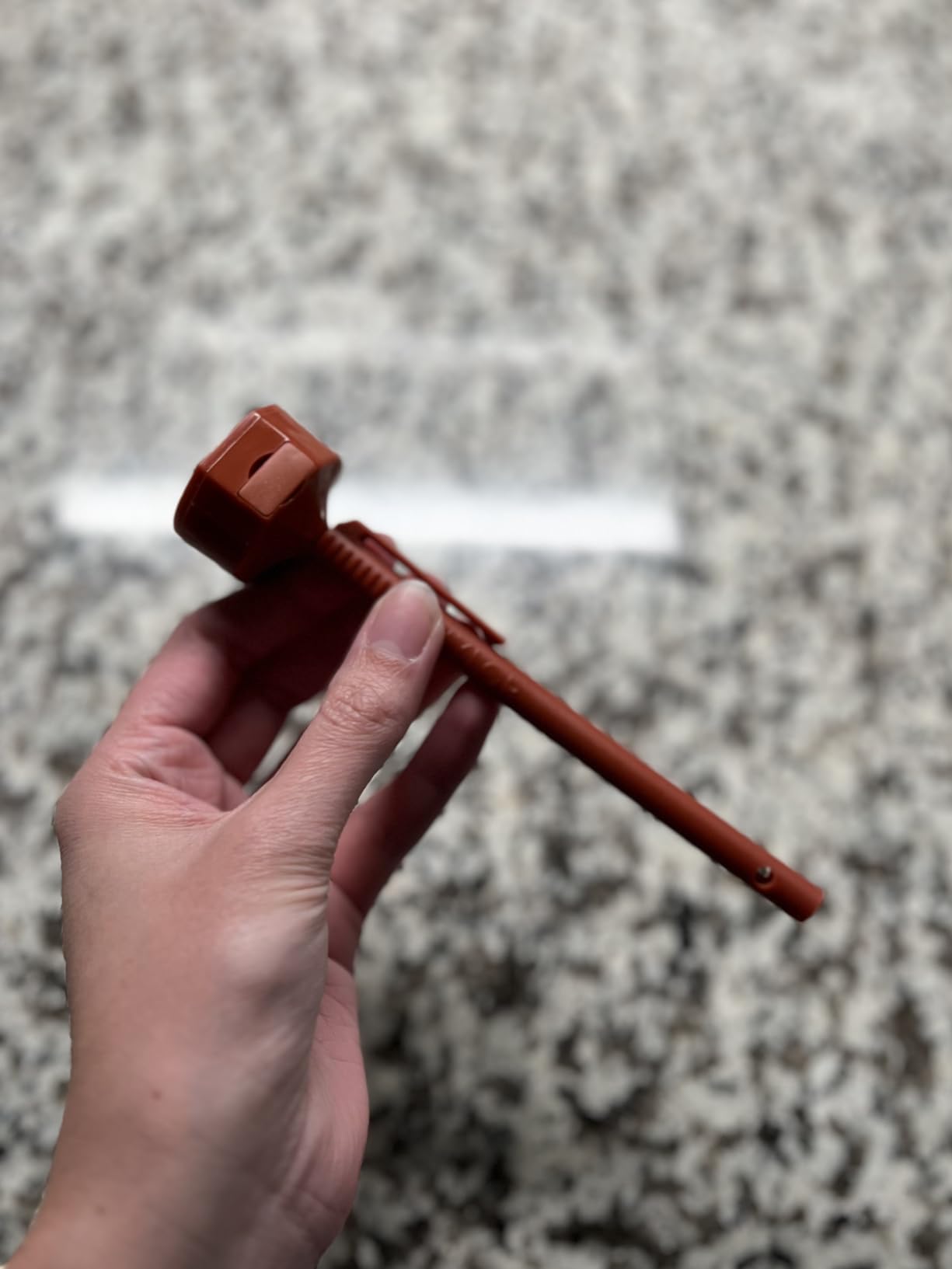
The sleeve is the detail that makes it feel considered rather than cheap. It clips to a pocket, protects the probe, and carries safe-usage guidance so the tool travels with its own instructions.
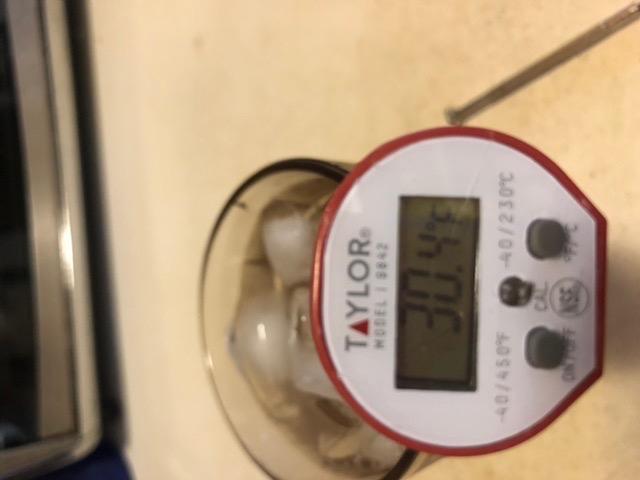
Recalibration is done with the sleeve itself, which means you can check the thermometer against a known reference without hunting for a separate accessory. For a tool that will live in a drawer for years, that is worth more than a feature list.
At 1.6 ounces and 6 inches long, it is the lightest and most pocketable option we tested, and the stainless steel inner probe feels solid despite the plastic body.
The limits are clear. A 0.8-inch LCD with no backlight is nearly unusable at night, and the 1-inch immersion depth only reaches the edge of a thick cut, not the center. If you cook a pork shoulder, this is not the tool.
It also runs on an LR44 cell, which is harder to find than an AAA, and the warranty is one year and excludes batteries.
Is a simple thermometer a compromise or a feature?
For most home grills it is a feature. There is nothing to mis-press at 2 a.m. and no screen that blanks before you finish reading, and one-button tools do not develop the firmware quirks that complicate feature-rich models.
Simplicity also means fewer failure points. Fewer moving parts, fewer charging routines and no app to update, which is a real advantage for something you expect to keep for a decade.
What will you outgrow first?
The screen, almost certainly. No backlight and 0.8 inches of display are fine in daylight and frustrating in the dark, and if you plan to cook after sunset this is the wrong strength of tool.
The 1-inch probe depth is the second limit. It is right for burgers, thin chops and a chicken breast, and wrong for anything you need to read in the middle.
6. OXO Good Grips Chef’s Precision – The Best Instant Read Thermometer for Roasts and Turkey
OXO Good Grips Chef’s Precision Digital Instant Read Thermometer
- Thermometer head pivots 90 degrees so you can read while the probe stays in the food
- Fast 2-second readout with consistent verified accuracy
- Sleeve doubles as a storage case and temperature chart
- Stainless steel construction with a slim 10-inch profile
- One-button operation with large legible numbers
- Top-mounted on and off button is fragile and can break if the unit is dropped
- Digital head does not detach which makes hand-washing awkward
- Rated only to 302°F and not water resistant
The OXO solves a problem no other folding thermometer here fully solves. The head pivots through 90 degrees, so you can leave the probe standing upright in a whole turkey or a rack of ribs and angle the display toward yourself without pulling the probe out to read it.
That single design decision makes it the best option in this group for oven roasting and for large birds, where the probe stays in place for an hour at a time. On long cooks, not having to reinsert the probe is a real reduction in error.
The 10-inch profile is long and slim, the stainless steel body is well balanced in the hand, and the ultra-thin tip enters meat with almost no tearing. Readings arrive in two seconds with accuracy reviewers describe as consistent across uses.
The probe cover sleeve is printed with chef and USDA temperature charts, so the reference information is physically on the tool. It also protects the tip in a drawer or a bag, which matters for a stainless instrument you intend to keep.
Operation is genuinely one button, and the numbers are large and legible. For a cook who wants a tool that looks and feels like a piece of professional equipment, nothing else in the budget tier matches it.
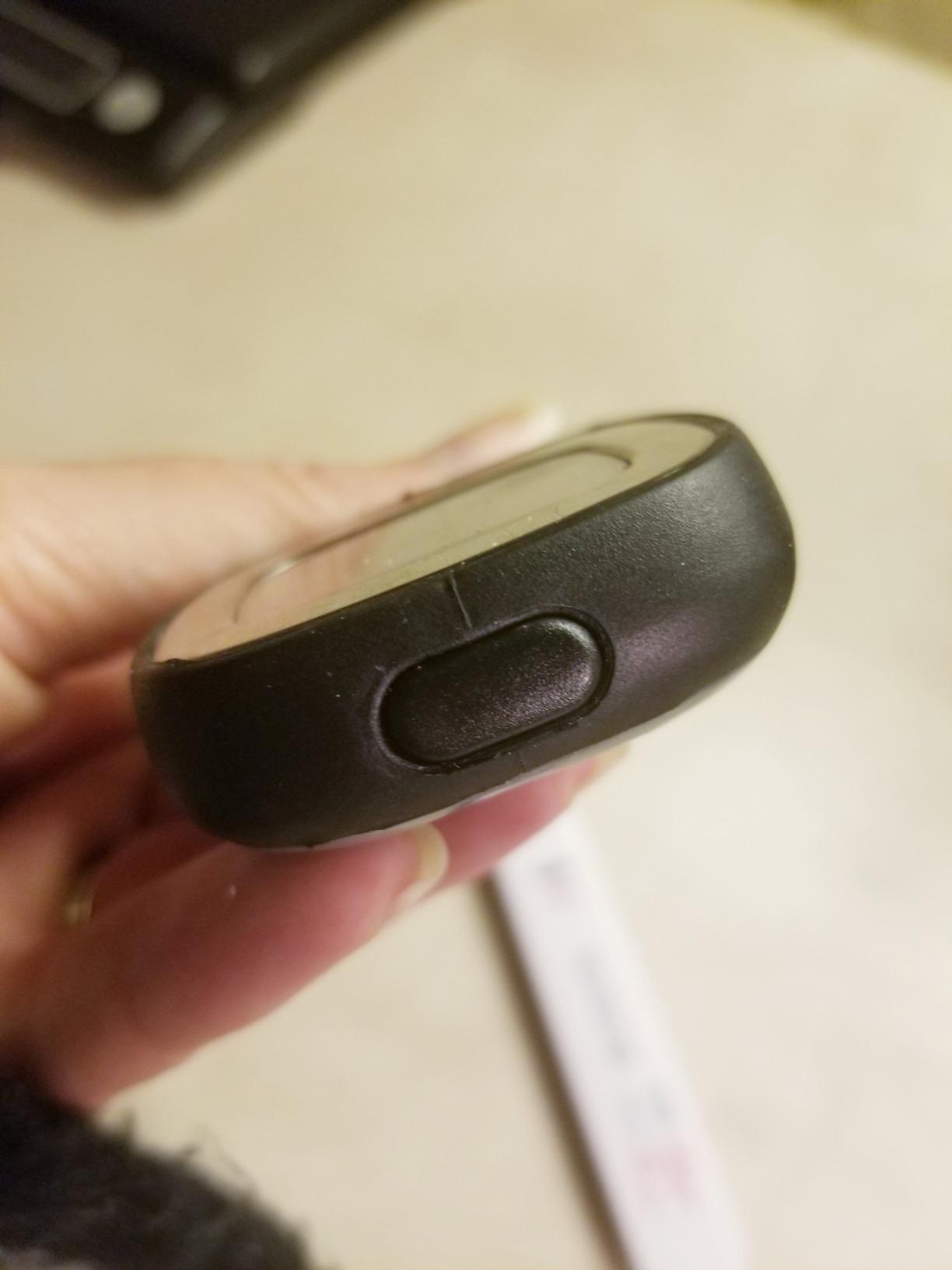
The repeated complaint is the top-mounted on and off button. Reviewers report it failing after the unit is dropped, and because the head does not detach, cleaning means wiping rather than rinsing the probe under the tap.
Two specifications rule it out of certain jobs. The upper range is listed at 302°F, which is too low for deep frying oil, and the unit is not water resistant, so raw poultry cooks end with a wipe-down rather than a rinse.
Why does the pivoting head matter so much?
Because the alternative is guessing. Without a pivot, checking a turkey means either reading the display at an awkward angle or pulling the probe out and putting it back in, and reinsertion is where temperature readings go wrong.
The pivot also makes the tool work as a stand, so you can leave the probe in a large cut while the display faces outward. On an oven roast that is a better experience than any other model in this roundup.
What are the weaknesses to plan around?
Handle it carefully. The top button is the failure point most owners report, and dropping a stainless tool onto concrete is exactly the event that breaks it.
Plan on wipe-clean care and stay away from frying oil. A 302°F ceiling and no water resistance are fair limits for a precision roasting tool, but they mean you keep a second thermometer for messy, hot jobs.
7. ThermoMaven 0.5 Second Professional – The Best Instant Read Thermometer for Deep Frying
ThermoMaven 0.5 Sec Professional Meat Thermometer Digital, ±0.5°F Accuracy
- Fastest claimed response in the group at 0.5 seconds
- NIST certified plus or minus 0.5°F accuracy with a calibration certificate
- Auto-rotating display and ambidextrous backlight readable in the dark
- IP67 waterproof body plus a built-in bottle opener
- Magnet and hanging hook storage with smart sleep
- Some users report the magnet is not very strong
- Not intended for submersion despite the IP67 marketing
- Newer listing with a much smaller review base than the established picks
The ThermoMaven is the one that made us reconsider our assumption that sub-second readings belong to laboratory equipment. Half a second from insertion to number, with a NIST certification and a certificate in the box, is a combination we did not expect to see outside the top tier.
The 572°F upper range makes it the most versatile tool here for kitchen work that goes beyond meat. Deep frying, oil temperature, molten sugar and hard candy are all inside its range, and the 1-meter immersion figure means it can sit in a pot rather than being held over it.
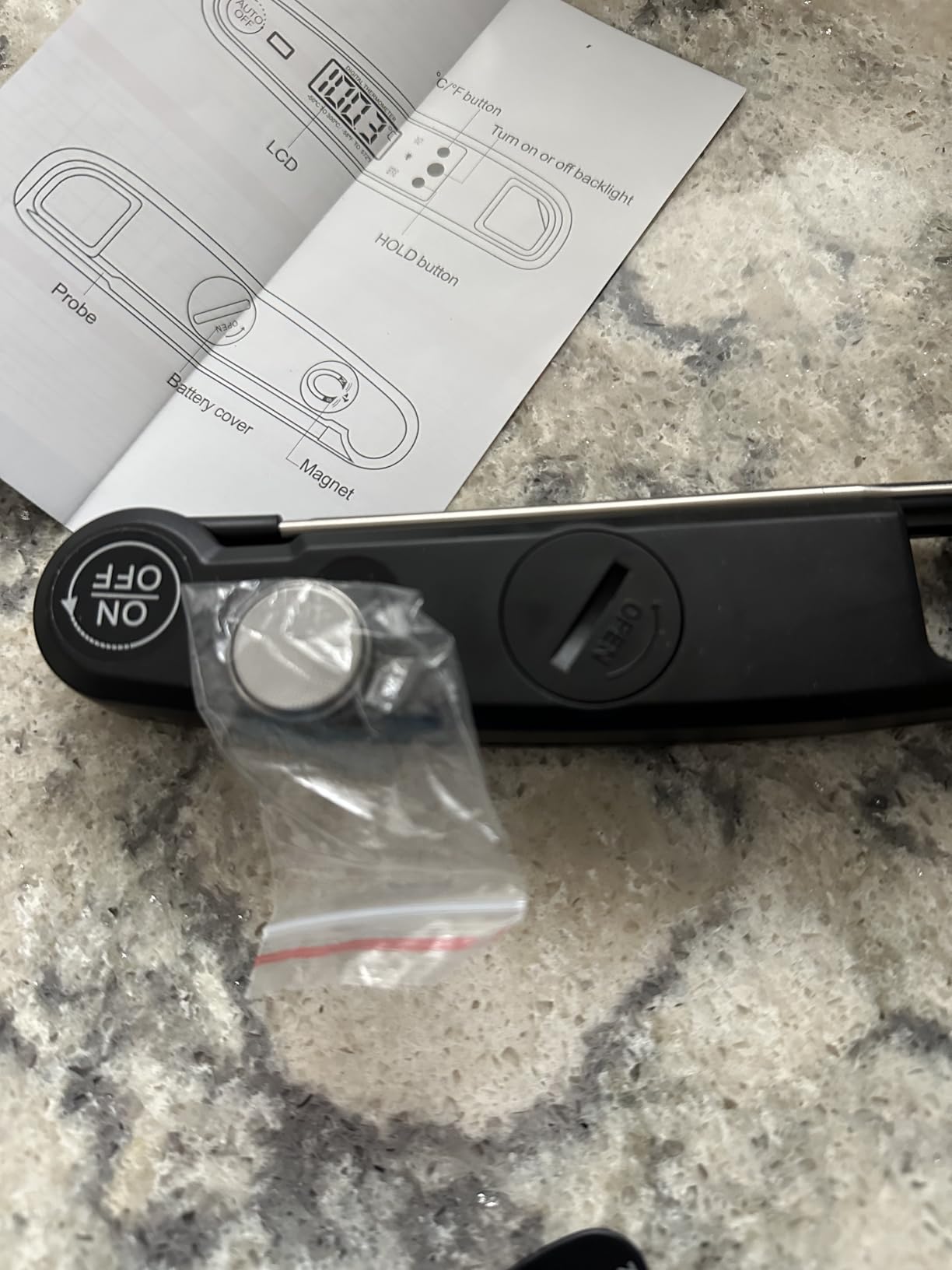
The auto-rotating display with an ambidextrous backlight solves the same visibility problem as the Lavatools PRO, and the smart sleep function preserves battery life between cooks. There is also a built-in bottle opener, which sounds like a gimmick until you are standing at a grill with cold hands.
Owners describe it as replacing a drawer full of unreliable thermometers, and the display readability comes up repeatedly as the reason it gets used rather than left in a drawer.
Accuracy is certified to plus or minus 0.5°F and the certificate is included, which is the same tolerance as the instrument-grade models in this group, delivered at a far lower entry point.
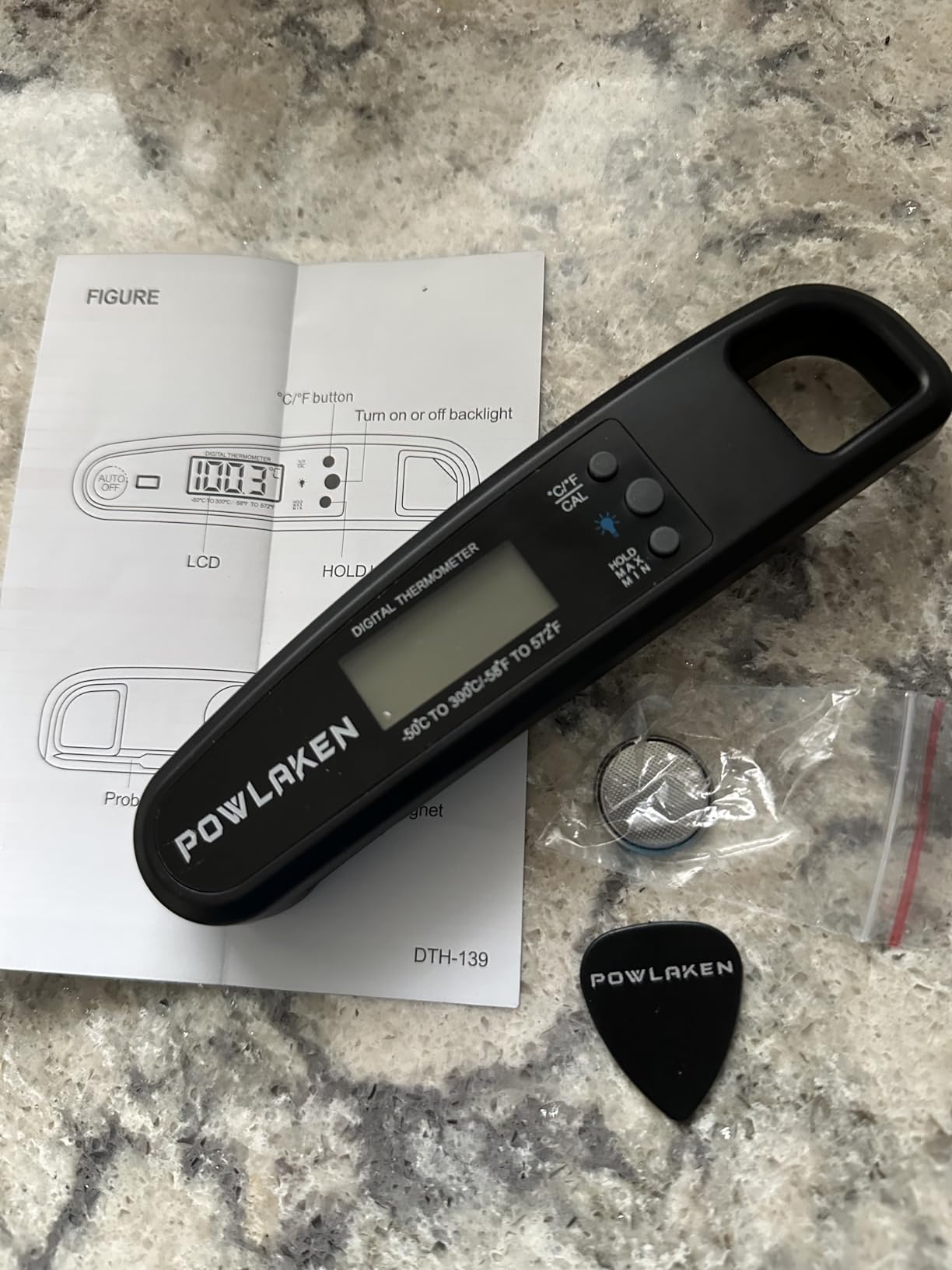
There are three caveats worth reading before you buy. The magnet is reported by some users to be weaker than on earlier versions, so it may not hold to a vertical steel surface, and IP67 does not mean you should submerge the body.
The review base is also much smaller than the established picks at 2256 reviews. That is not a quality judgment, but it is a reason to note that this model has less long-term history behind it.
Can one thermometer handle both meat and frying oil?
Yes, provided the range reaches the temperature you need. A 572°F upper limit covers frying oil at typical temperatures and most sugar work, and the long immersion figure means the probe can stay submerged in the pot without you holding it.
The limitation is the same as with any probe: a submerged reading near the top of the pot tells you about the oil at the surface, so position the tip in the middle of the mass where the temperature is representative. If your hot liquid needs are more about pouring than frying, our picks for the best instant hot water dispensers for kitchens cover that side of the kitchen instead.
What should you watch for?
Test the magnet on your own grill before you rely on it. If your grill has a vertical steel panel, a weak magnet turns a hands-free tool into one that lives in your pocket.
Read the care instructions as written. Waterproof enough to rinse is different from sealed enough to dunk, and this model falls on the rinse side of that line.
8. ThermoWorks Thermapen ONE – The Best Instant Read Thermometer for Lab-Grade Precision
ThermoWorks Thermapen ONE, No. 1 Recommended Instant-Read Thermometer – Cayenne Pepper Red
- Accuracy benchmark of NIST-traceable plus or minus 0.5°F with a per-unit certificate
- 1-second readings and IP67 waterproof construction
- Full 360 degree auto-rotating display with motion-sensing power-on
- NSF CE RoHS and UKCA certified for commercial use
- 5-year warranty and lifetime US-based customer support
- By far the most expensive option in this group
- Shorter 1500-hour battery life than the 4000-hour competitors
- Hand-wash only and not rated for immersion beyond IP67
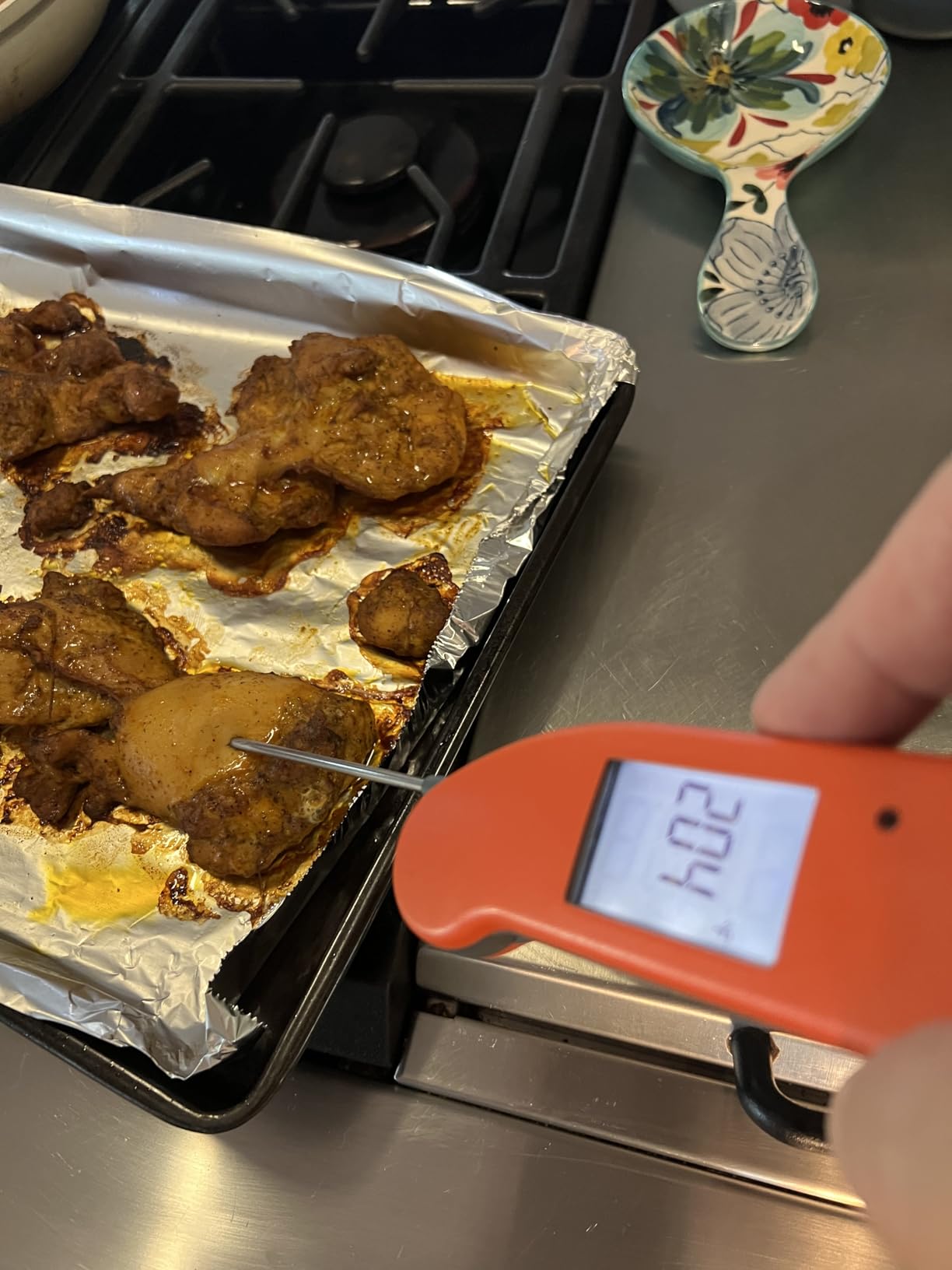
The Thermapen ONE is the accuracy benchmark for this roundup. Each unit ships with a NIST-traceable calibration certificate, which means the reading is documented against a national standard rather than a manufacturer’s internal target, and the stated tolerance is plus or minus 0.5°F.
For most home grills that precision is more than a home cook can perceive. It becomes meaningful when you are buying expensive beef, competing, selling, or cooking the same recipe repeatedly and want the same result every time.
Speed is excellent at one second, and the 360-degree auto-rotating display with motion-sensing power-on means the number faces you the moment you pick it up. IP67 construction lets you rinse it after a raw poultry cook, and the 5-year warranty is the longest in this group.
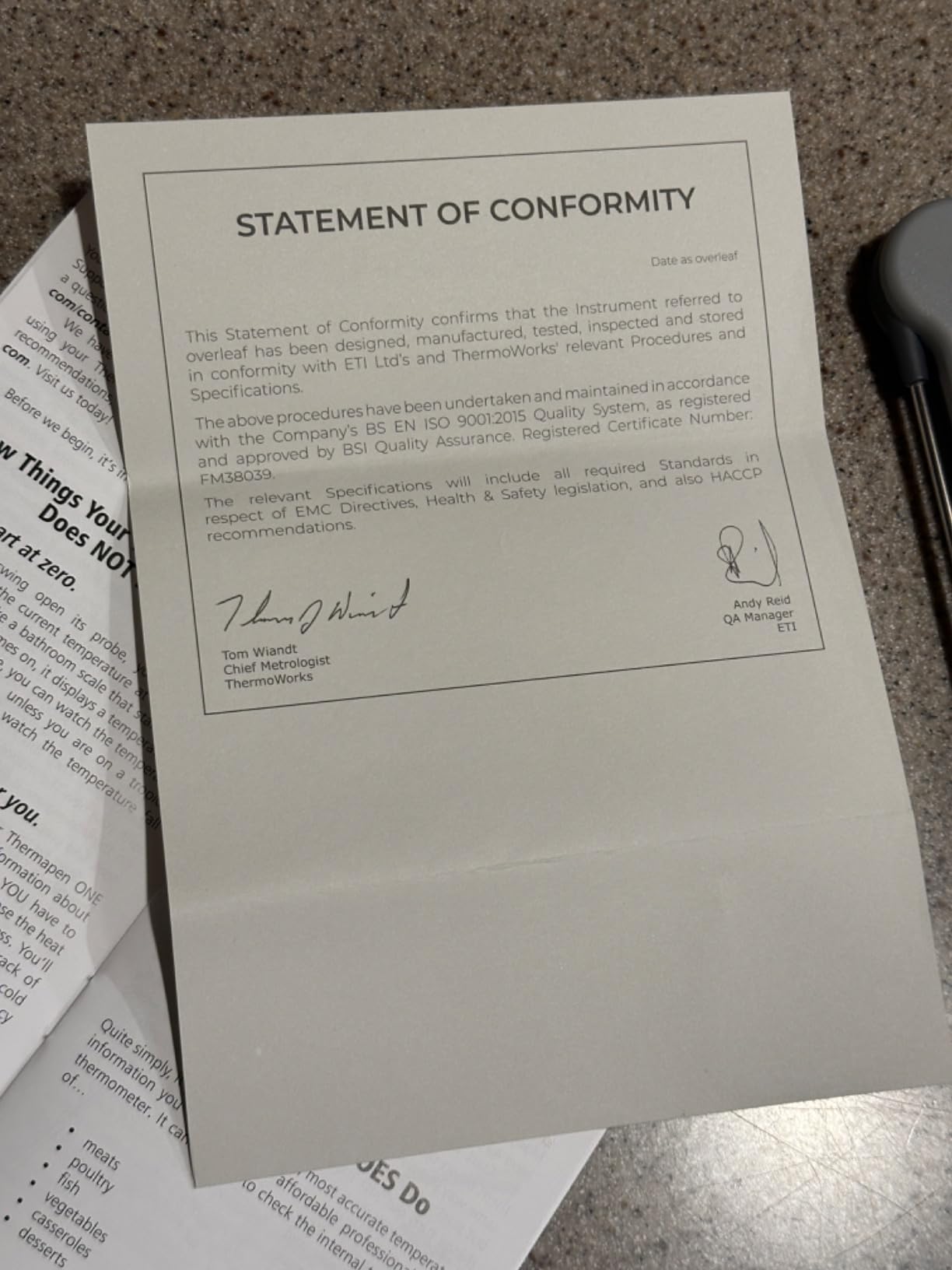
NSF, CE, RoHS and UKCA certification marks it as suitable for commercial kitchens, and the lifetime US-based support is a genuine difference when something goes wrong with a tool at this level.
The 6.1-inch immersion depth handles a thick steak or a small roast comfortably, and the 572°F range covers frying and sugar work as well as meat.
The dominant reservation, and it is a large one, is cost. This is by far the most expensive option in the group, and the ABS plastic body does not feel as premium in the hand as the specification sheet implies.
Battery life is listed at 1500 hours with a single AAA, well short of the 4000-hour figures from the Lavatools models, and care is hand wash only.
Who actually needs traceable accuracy?
Anyone buying premium beef regularly, cooking for paying customers, or trying to reverse-engineer a restaurant dish to the degree. In those cases the certificate is the reason to pay more, because it turns a reading into a documented measurement.
For weeknight chicken and burgers, the money buys consistency you would never notice. That is not a criticism, it is a fair way to decide whether this tool fits your cooking.
Is the price justified for a home grill?
If you cook every week and care about the last few degrees, the durability, warranty and documented accuracy add up over years. A cheaper tool that works is a better value for most people, and a cheaper tool that fails is not.
Judge the plastic body on its own terms rather than against the price. It is a well-made shell, it is simply not the reason to buy this thermometer, and treating it as a reason not to sets the wrong expectation.
9. ThermoWorks ThermoPop 2 – The Best Instant Read Thermometer for Everyday Grilling
ThermoWorks ThermoPop 2 — Best Value Instant Read Thermometer – Nautical Blue
- Rated the top instant-read thermometer by The New York Times and Wirecutter
- Pinpoint accuracy on meat according to long-term owners
- 1.25-inch backlit screen that auto-rotates for any viewing angle
- IP67 waterproof and easy to rinse clean
- Single-button pocket-friendly operation with a probe sheath
- Reads take up to 5 seconds on bread and batter-type foods
- One reported unit read 3° high in boiling water
- The recessed on and off button takes some force to press
- Less accurate than the Thermapen ONE in the same range
The ThermoPop 2 is the balance point of this roundup. It comes from a brand whose name carries weight with professional cooks, it carries a NIST-traceable calibration certificate, and it does not ask you to compromise on the two features that matter most at a grill: a backlit screen and a body you can rinse.
Owners with long histories on this tool describe it as the only inexpensive thermometer they have never had to replace. That is the kind of reliability that is hard to advertise and easy to appreciate in year three.
Accuracy is listed at plus or minus 1°F, which is looser than the plus or minus 0.5°F models here but tighter than most budget units, and on meat the reviews describe it as pinpoint. Readings average 2.5 seconds.
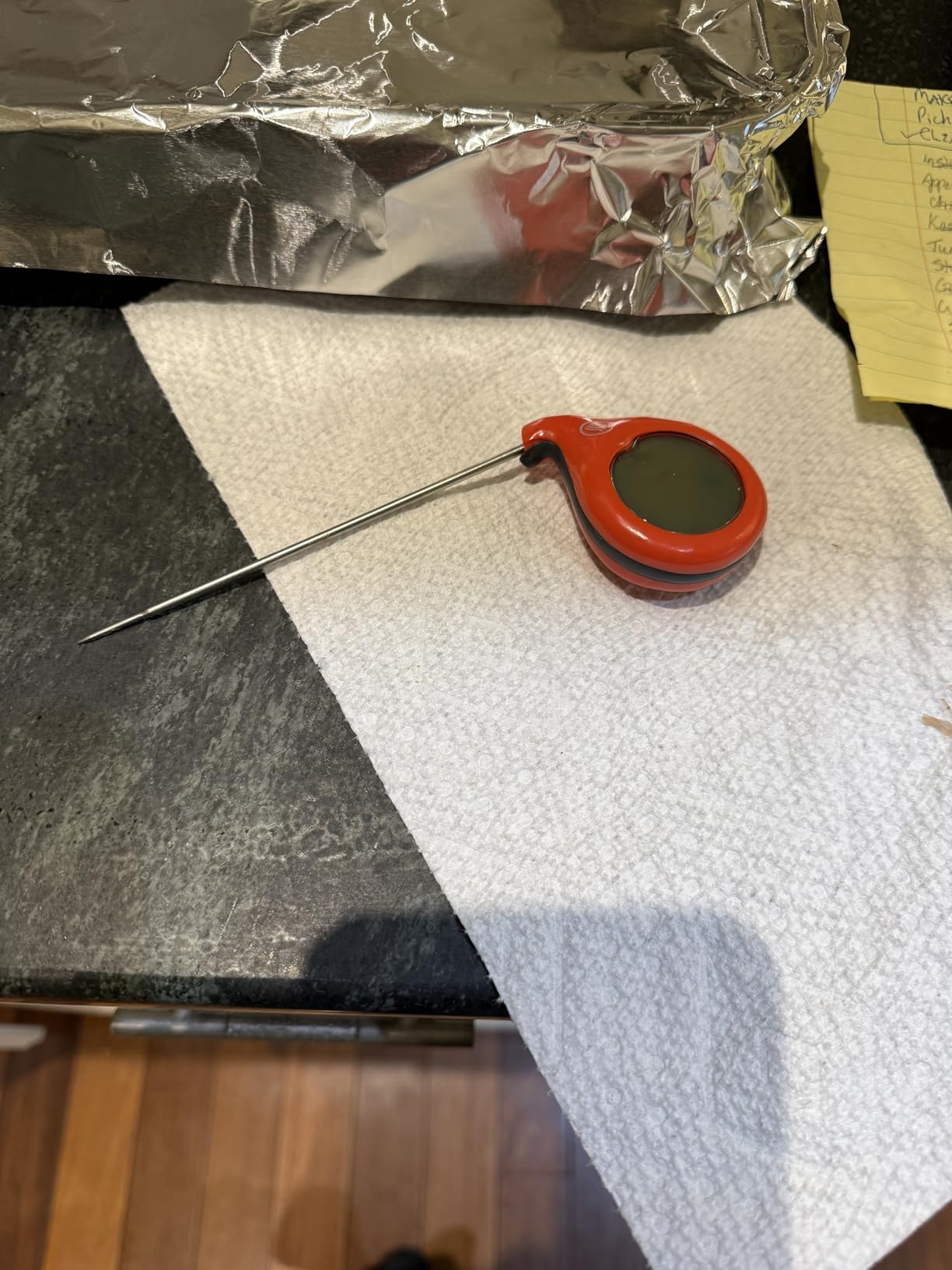
The 1.25-inch backlit screen auto-rotates so the number faces you whichever hand holds the tool, and the single-button layout keeps operation simple without making the unit feel stripped down.
At 7 inches it is one of the longer bodies here, which gives a good grip and a large enough screen, and the probe sheath keeps the tip protected in a bag or drawer.
There are tradeoffs. On thick batters and breads, where the tip sits in insulating material, readings can take up to five seconds, and one reported unit read 3 degrees high in boiling water, which is a reminder to check calibration if you cook at the top of the range.
The power button is recessed on the top and takes deliberate pressure, which keeps accidental activation down but annoys people with sticky hands. It is also less accurate than the Thermapen ONE in the same temperature range.
How does plus or minus 1°F hold up on meat?
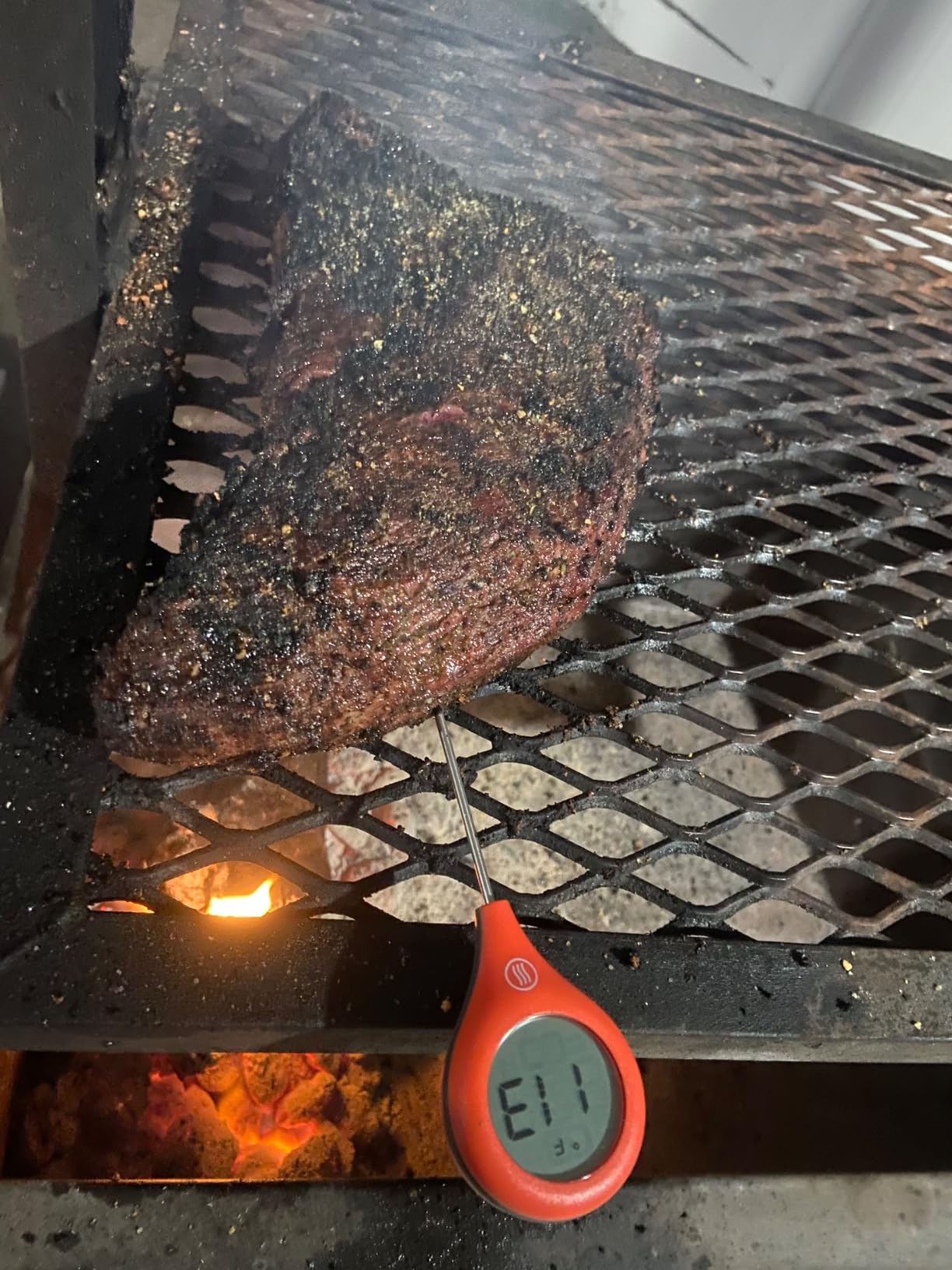
On meat it performs well, because meat cooks slowly relative to the probe response and the error is small compared with the size of the doneness window for a steak. One owner reported upgrading from a low-cost folding model and simply stopping to overcook.
The tolerance shows up most on fast or insulating foods, which is why the bread and batter reviews are the critical ones to read if you bake as well as grill.
What about long-term reliability?
This is where the ThermoWorks name earns its place. Owners describe units that survive years of regular use, and the sealed IP67 body means raw poultry cooks do not shorten that life.
Keep the certificate with the box or a photo of it. If a reading ever looks wrong, the document gives you a reference point for where the unit should be behaving.
10. Typhur InstaProbe Core – The Best Thermometer for Reading in Direct Sunlight
Typhur InstaProbe Core 0.5 Second Instant Read Meat Thermometer Digital
- 0.5-second reading speed with NIST certified plus or minus 0.5°F accuracy
- LED screen with 180-degree ambidextrous display and motion sensing
- Readable in direct sunlight and in the dark
- IP67 waterproof with integrated magnet and a probe storage slot
- External temperature control button that is easier to press than a recessed one
- Heaviest unit in the group at 180 g
- Shorter review history than the established budget picks
- Hand-wash only care instructions
Most backlit screens in this category are built for a dark kitchen, not for a bright patio at two in the afternoon. The InstaProbe Core uses an LED screen instead, and reviewers single out its readability in direct sunlight as the reason they reach for it first.
The rest of the specification is competitive with the premium tier. Readings come in 0.5 seconds, accuracy is NIST certified to plus or minus 0.5°F, and the range reaches 572°F for frying and sugar work as well as meat.
The screen rotates 180 degrees and the unit wakes on motion sensing, so the number is oriented toward you and lit the moment you pick it up, whether you are standing over a smoker at dusk or in full sun at lunch.
The alloy steel body gives it a different feel from the plastic tools around it, and the weight is a double-edged feature. It feels solid and it stays put, but at 180 grams it is the heaviest unit in the group.
Storage is handled well, with an integrated magnet and a dedicated probe slot so the tip is not knocking against the body in a drawer. Two AAA batteries are included, and the list marks the unit as rechargeable.
The external temperature control button is a small but real improvement over the recessed buttons used by competitors, which require deliberate pressure and are easy to miss with greasy hands.
The main reservations are weight, hand-wash-only care, and a shorter review history than the established picks at 1131 reviews.
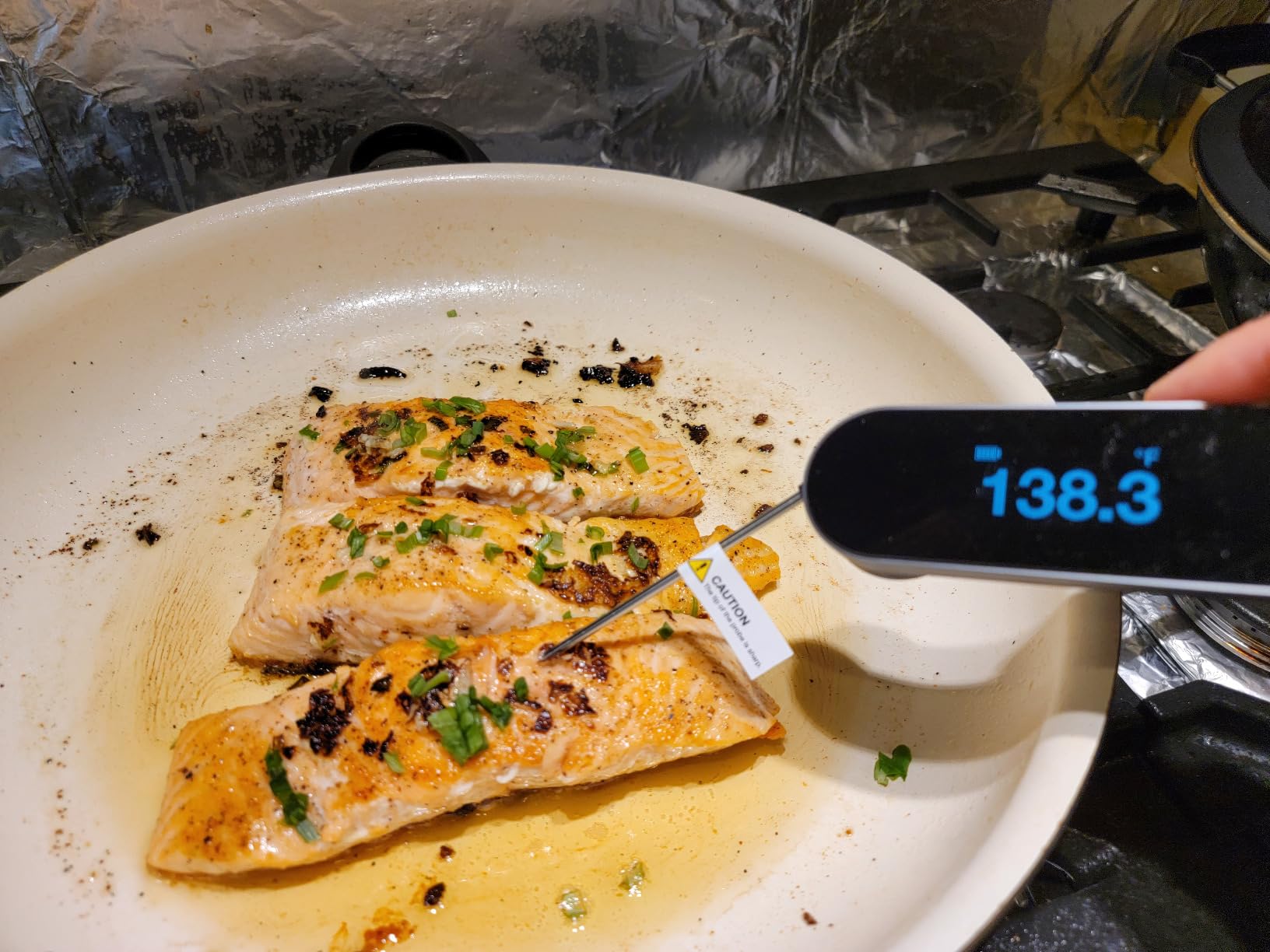
Does a LED screen really beat a backlit LCD outdoors?
In direct sun, yes, and the difference is the reason this model exists. A reflective LCD loses contrast under bright light no matter how strong its backlight is, while an LED stays legible at the angle you naturally hold it.
The same screen handles the dark case, so this is a tool for a cook who moves between a night smoker and a midday patio barbecue rather than specializing in one.
Is the weight a problem?
It is noticeable in the hand for the first few cooks. If you are taking readings every minute during a long smoke, the extra mass becomes an advantage because the tool stays where you put it.
For someone who reads temperature twice an hour, the alloy steel body and 180 grams may feel like more than you need, and a lighter model in the budget tier serves the same purpose.
How to Choose an Instant Read Thermometer for Grilling
Start with what you actually cook. A thermometer that excels at burgers and steaks can be the wrong tool for a whole turkey, because probe length decides whether you can read the center of a cut or only its edge. Match the immersion depth to your largest cut, not your most common one.
Next, look at response time. Anything in the one to three second range gives you the freedom to take multiple samples on a thin steak without the meat cooling between readings. The difference between a one second and a five second tool matters on a 1.5-inch sirloin and not at all on a pork shoulder.
Accuracy specifications are useful but not decisive on their own. Published tolerances range from plus or minus 0.1°F to plus or minus 1°F, and a plus or minus 0.5°F figure with a NIST or laboratory-traceable certificate is the most meaningful combination you can buy. Our roundup of medical grade thermometers covers that certification angle in more depth if you want the terminology explained.
Water resistance is the most underrated feature on this list. A body rated IP67 can be rinsed under running water after raw poultry, which protects the sensor and the battery compartment. A splash-only rating means a wipe-down, and over a season that difference decides whether the tool still works.
Displays deserve more attention than most buyers give them. A backlight matters at night, a rotating or pivoting screen stops you reading upside down or at an angle, and a large number saves time when your hands are greasy and the smoke is in your eyes.
Battery type is a small annoyance that becomes a real one. A single AAA or an included lithium cell can be replaced anywhere. A CR2032, LR44 or CR2 coin cell is harder to find on a Sunday afternoon when the thermometer dies mid-cook.
How to calibrate an instant read thermometer
Most units arrive pre-calibrated, and checking takes five minutes. The ice bath method is the standard: fill a bowl with crushed ice and just enough water to make a slush, stir it, and press the probe into the center of the mixture without touching the sides or bottom. A correctly calibrated thermometer reads 32°F.
The boiling water method is the second check. Water boils at 212°F at sea level, and at altitude it boils cooler, so if you live in the mountains the expected reading drops by roughly one degree for every 1000 feet of elevation. A thermometer that is off by a consistent amount in both tests can often be recalibrated, which is worth doing before a long cook.
Check calibration when you first buy a thermometer, and then every few months, or any time a reading seems out of line with what you know about the food.
Where to place the probe in each cut
For a steak, insert from the side into the thickest part of the center, aiming at the bone but not touching it. A reading taken against bone is unreliable, and a reading taken through a fat cap is meaningless.
For a whole chicken or turkey, probe between the thigh and the breast without touching bone, where the meat is thickest and the reading is least ambiguous. For a pork butt or brisket, insert from the side into the deepest part of the flat, away from the point where fat and bark meet.
For ground meat and burgers, take the reading before the patty hits the grill if you want the starting temperature, or press the tip into the thickest part of the patty after cooking. For fish, aim at the thickest section behind the head and above the spine.
Managing carryover cooking
Carryover cooking is the rise in internal temperature that continues after food leaves the heat. A steak pulled at 125°F can finish at medium even though the grill never took it there, and that is why the pull temperature is lower than the target temperature.
For a medium-rare steak with a one to two degree carryover, pull around 128 to 130°F. For a medium roast with a larger carryover, pull several degrees below your target. Resting time matters as much as the pull temperature, and cutting early is what turns a good result into a dry one.
Wireless and leave-in probes are the better choice for long cooks, since an instant read requires you to open the grill. If you smoke overnight, a probe that stays in the meat and reports to your phone handles the hours when an instant read would be impractical.
Frequently Asked Questions
What is the best instant-read meat thermometer for grilling?
The TempPro TempSwift is the best all-round instant read thermometer for grilling, with a 1-second response, a backlit display, a foldable probe with a magnet, a minus 58 to 572°F range and an average rating of 4.6 across 137k reviews. The Alpha Grillers is the best value option at a 4.8 average across 92k reviews, and the Lavatools Javelin PRO Classic is the premium pick if a rotating display matters to you.
Which is better, ThermoPro or ThermoWorks?
They serve different needs. The TempPro TempSwift gives you a 1-second reading, a wide range, a backlit screen and a common AAA battery at a budget level. The ThermoWorks Thermapen ONE gives you a NIST-traceable calibration certificate, plus or minus 0.5°F accuracy, IP67 construction and a 5-year warranty at a far higher cost. Choose TempPro for everyday grilling and Thermapen ONE for documented accuracy on expensive beef or commercial work. The ThermoWorks ThermoPop 2 sits in between with a certificate, a backlit rotating screen and a lower entry point.
Which instant read thermometer did America’s Test Kitchen recommend?
America’s Test Kitchen is cited by owners as recommending the Lavatools Javelin PRO Classic, naming it a mid-priced pick, alongside recognition from Wirecutter and NBC News. The ThermoMaven 0.5 Second Professional is also mentioned as an America’s Test Kitchen recommendation by one reviewer, and The New York Times and Wirecutter are cited for the ThermoWorks ThermoPop 2. We rank the TempPro TempSwift first overall on the strength of its review volume and all-round feature set.
What are the best wireless thermometers for grilling?
None of the ten models in this roundup are wireless, because every one is a handheld instant read that requires you to open the grill and take a sample. Wireless and leave-in probes are the better choice for long cooks such as overnight brisket, pork shoulder or ribs, where reading the temperature every 30 minutes is impractical. For searing, steaks, burgers and quick chicken, an instant read is faster and more accurate than any wireless system.
How do I calibrate a meat thermometer?
Use the ice bath method. Fill a bowl with crushed ice and enough water to make a slush, stir it, and press the probe into the center without touching the sides or the bottom. A calibrated thermometer reads 32°F. As a second check, boiling water reads 212°F at sea level and cooler at altitude, dropping roughly one degree for every 1000 feet of elevation. Check at purchase and every few months, or any time a reading seems off.
Can I use a grill thermometer for deep frying?
Only if the upper temperature range covers your oil. The TempPro TempSwift, ThermoMaven, Thermapen ONE, ThermoPop 2 and Typhur InstaProbe Core are rated to 572°F and handle frying oil and sugar work. The Alpha Grillers at 300°F, the Taylor at 450°F and the OXO at 302°F are for meat and baking only. Submerge the tip in the middle of the oil rather than near the surface, and check for a waterproof rating before rinsing a unit used near hot oil.
Final Verdict for 2026
If you want one thermometer and nothing more, the TempPro TempSwift is where we would start: one-second readings, a backlit display, a range that covers oil and sugar, a common AAA battery and more than 137k reviews behind it. The Alpha Grillers is the smarter buy if you mostly cook meat, thanks to its 4.8 rating and an IP67 body you can rinse under a tap.
Go further up the list when your cooking asks for it. The Lavatools Javelin PRO Classic solves the display angle problem, the OXO pivoting head is the right tool for roasts and whole birds, and the ThermoWorks Thermapen ONE is the one to buy when you want a documented, NIST-traceable reading. Whichever you choose among the best instant read thermometers for grilling in 2026, buy two and leave one in a second bag.