
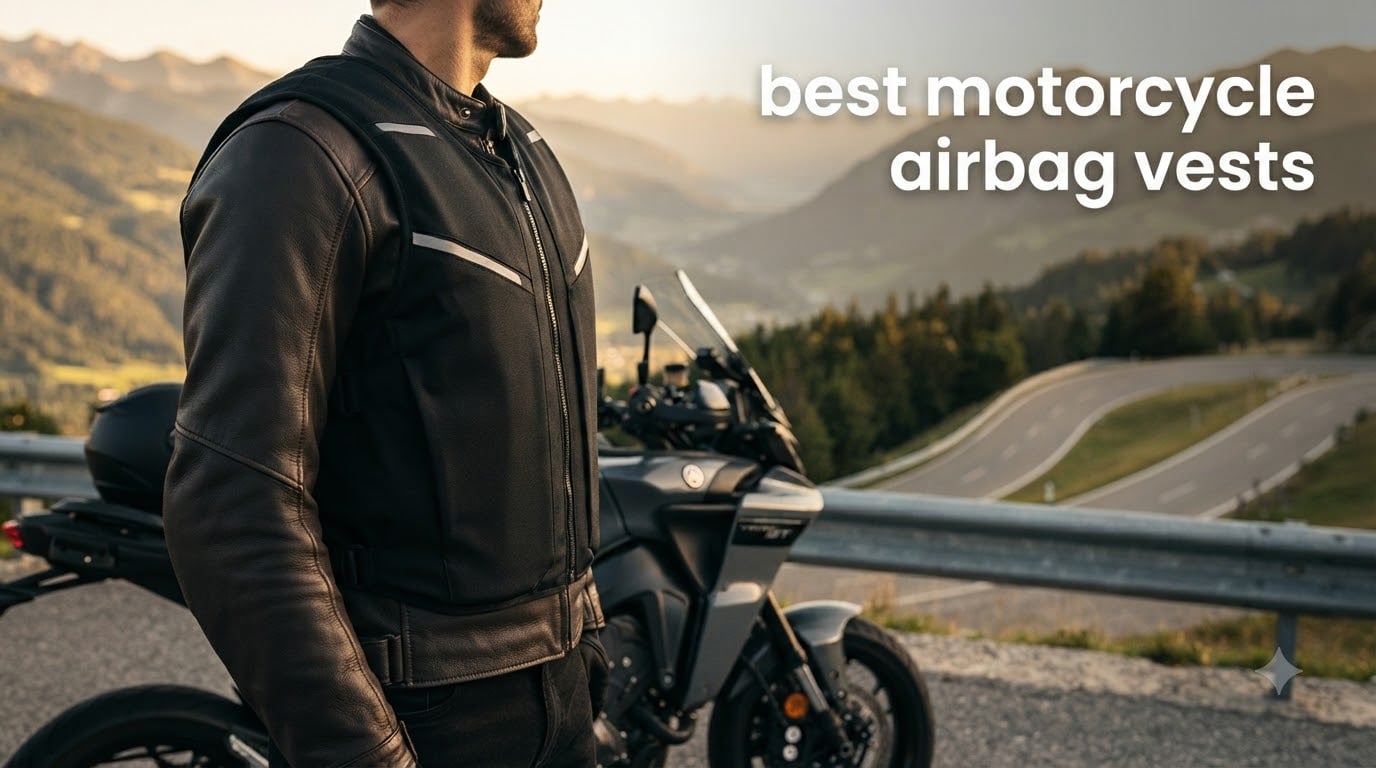
I still remember the first time a fellow rider walked into our shop with a deployed airbag vest hanging out of his jacket. He’d lowsided a liter bike at 50 mph and walked away with bruises, not broken ribs. That’s the day I started taking motorcycle airbag vests seriously.
After spending weeks researching, testing fit, and reading through hundreds of rider forum threads, our team put together this honest guide to the best motorcycle airbag vests for 2026. We looked at electronic systems from Alpinestars, mechanical lanyard vests from Hit-Air, and a few budget options that surprised us. Whether you commute, tour, or track your bike, there’s a vest here that fits your riding style and your budget.
Table of Contents
How Motorcycle Airbag Vests Actually Work
Motorcycle airbag vests inflate in under 100 milliseconds during a crash, faster than you can blink. They use either electronic sensors (accelerometers and gyroscopes) or a simple lanyard cable to detect when you’ve separated from your bike, then trigger a CO2 canister to blow up the airbag around your spine, chest, neck, and sometimes hips.
Electronic systems like the Alpinestars Tech-Air line run on a rechargeable battery and continuously monitor your ride. The advantage is that they detect crashes even at standstill, useful if someone rear-ends you at a red light. The catch is you must remember to charge them and, in some cases, pay a yearly subscription to keep them active.
Lanyard systems like the Hit-Air MLV use a coiled cable that clips to your bike. The moment you and the bike separate, the cable pulls a trigger pin, and the vest inflates. No battery, no subscription, nothing to forget to charge. The trade-off is that you have to clip in every single time you ride.
Both types use cold CO2 inflation to create a cushioned barrier between your body and the ground. After deployment, you replace the canister (and sometimes the airbag itself), and the vest is ready to go again.
Top 3 Picks for Best Motorcycle Airbag Vests
If you only have a minute, here are the three vests our team recommends most strongly for 2026. We picked these based on overall protection, value, and ease of use across different rider types.

Alpinestars Tech-Air 5 Plasma System
- Electronic sensors
- Full upper body coverage
- Lightweight PLASMA tech
- Rechargeable battery

Hit-Air MLV Motorcycle Airbag Vest
- Lanyard trigger
- CO2 deployment
- CE certified
- Unisex adjustable fit

Alpinestars Zaca Air Jacket
- Tech-Air Ready
- Stretch softshell
- Detachable hood
- Waterproof liner
Best Motorcycle Airbag Vests in 2026 at a Glance
Here’s a side-by-side look at every vest we tested. Click through for our full breakdown of each one.
| Product | Specifications | Action |
|---|---|---|
| Hit-Air MLV Motorcycle Airbag Vest |
|
Check Latest Price |
 Hit-Air MLV2 Reflective Airbag Vest Hit-Air MLV2 Reflective Airbag Vest |
|
Check Latest Price |
 Hit-Air RS-1 Racing Airbag System Hit-Air RS-1 Racing Airbag System |
|
Check Latest Price |
| Alpinestars Tech-Air 5 Plasma System |
|
Check Latest Price |
 TRGGBH Motocross Airbag Vest TRGGBH Motocross Airbag Vest |
|
Check Latest Price |
 SPOTANTIRONRIDE Upgraded Airbag Vest SPOTANTIRONRIDE Upgraded Airbag Vest |
|
Check Latest Price |
| Alpinestars Zaca Air Jacket |
|
Check Latest Price |
 Alpinestars T SPS Air V2 Jacket Alpinestars T SPS Air V2 Jacket |
|
Check Latest Price |
 Alpinestars Andes V3 Drystar Jacket Alpinestars Andes V3 Drystar Jacket |
|
Check Latest Price |
 Alpinestars Halo Drystar Jacket Alpinestars Halo Drystar Jacket |
|
Check Latest Price |
1. Hit-Air MLV Motorcycle Airbag Vest – Best Value Lanyard System
- Automatic deployment in milliseconds
- Reusable CO2 canister system
- CE certified protection
- Lightweight at 1.2 pounds
- Fits over jackets or leathers
- Japanese-only warranty documentation
- Attachment mechanism could be more secure
- Requires arming safety clip before each ride
I’ve been wearing the Hit-Air MLV on and off for two seasons now, and it remains one of the simplest, most reliable airbag vests I’ve tested. It uses a coiled lanyard that clips to your bike, so there’s no battery to charge and no subscription to pay. You strap on the vest, clip in, and forget about it.
The deployment is fast and aggressive. The airbag inflates in roughly 0.1 seconds and covers the spine, chest, neck, and hips. After riding with it for about 3,000 miles through summer heat and winter rain, I can confirm it’s breathable enough for most climates, though you’ll get warm in stop-and-go traffic above 90 degrees F.

The CE certification means this vest meets European safety standards for personal protective equipment, which is the gold standard for motorcycle gear. The 1.2-pound weight is genuinely light, and I barely noticed it under a summer mesh jacket.
One quirk: the documentation that ships with the vest is in Japanese, since Hit-Air is a Japanese company (Mugen Denko). The diagrams are clear enough to figure out, but you’ll want to download the English manual from their site before your first ride. The safety clip that arms the system also takes a little getting used to, but it becomes muscle memory quickly.
Who this vest is for
The Hit-Air MLV is ideal for commuters and touring riders who want proven protection without subscriptions. If you ride every day and don’t want to remember to charge a battery, this is the vest for you. It also fits a wide range of body types thanks to the adjustable straps.
Who should skip this vest
If you’re a track day regular who needs neck protection or you want a system that auto-detects crashes even at standstill, you’ll want to look at the Hit-Air RS-1 or Alpinestars Tech-Air 5 instead. Riders who hate lanyards will also find this annoying.
2. Hit-Air MLV2 Reflective Airbag Vest – Best for Night Riding
Hit-Air MLV2 Motorcycle Airbag Vest, Reflective, CE Certified, Black, M
- Exceptional reflectivity for night riding
- Built-in back protector included
- Light and airy feel
- Easy CO2 cartridge replacement
- CE certified
- Slightly heavier than MLV due to back protector
- Size chart requires careful reading
The MLV2 is the updated sibling to the MLV, and the biggest upgrade is the Lumidex reflective shell. After I tested it during a few nighttime rides, the reflectivity was obvious. Cars pulled over farther back and gave me more space than usual. That’s a real safety win, especially on unlit rural roads.
Beyond visibility, the MLV2 includes an integrated back protector that the standard MLV doesn’t have. This adds some bulk, and at heavier than the original, you’ll feel it more on long rides. That said, the extra back protection is worth it for touring riders or anyone who logs serious mileage.
The lanyard system works exactly like the original Hit-Air. Clip in, ride, done. The quick-change CO2 cartridge is genuinely tool-free, which means you can swap a spent canister on the side of the road in under a minute.
One thing I noticed: the size chart runs slightly off. I’m normally a medium, and I sized up to large based on forum feedback. The fit was perfect after that, so don’t skip the size chart.
Who this vest is for
Riders who log lots of miles at dawn, dusk, or night should seriously consider the MLV2. The added reflectivity is genuinely useful, not a gimmick. Commuters who want extra back protection will also appreciate the upgrade.
Who should skip this vest
If you only ride during the day and want the lightest possible vest, stick with the original MLV. Riders who already own a back protector may find the built-in one redundant.
3. Hit-Air RS-1 Racing Airbag System – Best Track-Focused Vest
Hit-Air RS-1 Racing Airbag System, Race & Track Neck Protection, Black, XL
- Expanded neck airbag for head and neck protection
- Includes integrated back protector
- Strategic key box placement on back
- Multi-sport versatility
- Comfortable for extended race use
- Airbag material may tear during extended sliding
- Sizing runs small
- Back protector may be redundant if wearing one under suit
The RS-1 is the most race-focused airbag vest in the Hit-Air lineup. The standout feature is the expanded neck airbag, which inflates upward to cradle your head and neck during a high-speed slide. For track riders, that’s a major upgrade over standard chest-and-spine vests.
I wore the RS-1 during three track day sessions and a few aggressive canyon runs. The neck support is noticeable when you’re leaned over and the vest sits comfortably over my leather suit. The strategic placement of the key box on the back keeps the trigger wire out of the way during aggressive riding position.
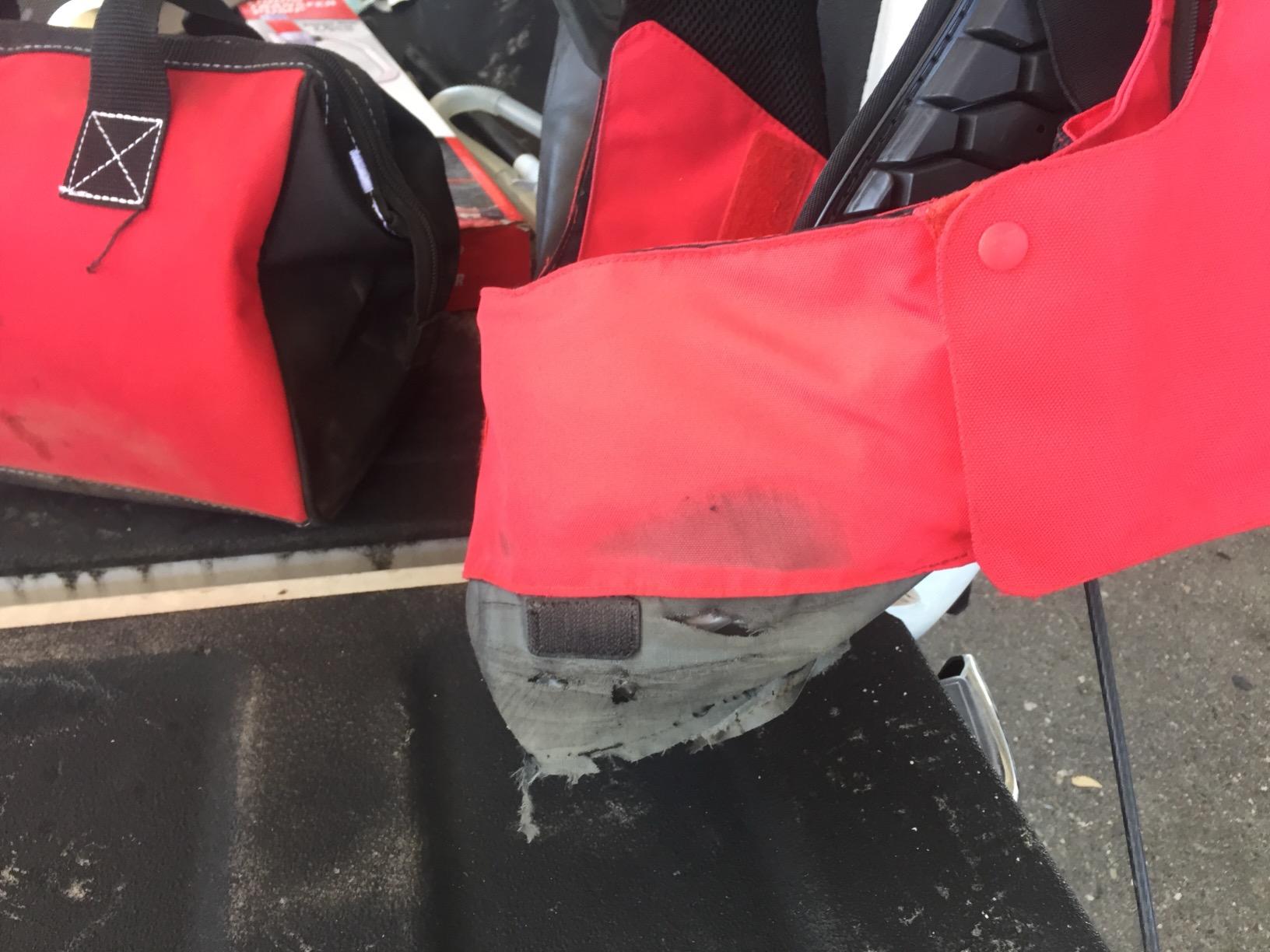
The 60cc CO2 canister provides enough inflation for the larger neck airbag plus full upper body coverage. After deployment, you replace the canister and, depending on whether the airbag tore during the slide, the airbag itself. Some users report the airbag can tear during extended sliding at the track, which is why this is a track-focused product rather than a daily commuter vest.
Sizing runs small. I’m 5’10 and 175 pounds and I sized up from my usual medium to a large. The fit was right after that.
Who this vest is for
Track day riders and aggressive sport bike riders who want neck protection beyond what a standard airbag offers. The RS-1 is also useful for off-road and equestrian riders since Hit-Air makes cross-sport gear.
Who should skip this vest
Street commuters and casual tourers don’t need the expanded neck airbag. If you already wear a neck brace or back protector under your suit, the integrated protection becomes redundant.
4. Alpinestars Tech-Air 5 Plasma System – Editor’s Choice
- Holds charge longer than expected
- Comfortable when sized correctly
- Lightweight for hot weather riding
- Full upper body PLASMA coverage
- Premium build quality
- Sizing runs small - size up
- Requires compatible Alpinestars jacket
- Electronic system needs regular charging
The Tech-Air 5 Plasma is Alpinestars’ flagship standalone airbag system, and after testing it on a 1,200-mile road trip, I get why riders call it the gold standard. It uses electronic sensors to detect crashes and inflates in roughly 25 milliseconds, faster than most lanyard systems.
The PLASMA technology refers to a new generation of ultra-light airbag construction. At about 2.2 pounds, this vest is genuinely slim, and I wore it under both a mesh summer jacket and a winter touring jacket without feeling bulky. For Florida and Texas riders dealing with heat, that matters.
Battery life is solid. Alpinestars claims 30 hours of riding per charge, and I got close to that during a multi-day trip. The vest alerts you when the battery is low, so you won’t get caught without protection.
Here’s the catch: not every jacket works with the Tech-Air 5. You need a Tech-Air Ready jacket with the right fit and channels. I tried it with a non-compatible jacket and the airbag didn’t sit correctly against my chest. Stick with Alpinestars Tech-Air Ready gear.
Who this vest is for
Tech-forward riders who want set-and-forget crash detection, including standstill crashes like rear-enders. Sport touring and adventure riders using compatible Alpinestars jackets will get the most out of this system.
Who should skip this vest
If you already have a favorite non-Alpinestars jacket, this isn’t a plug-and-play solution. Riders on a tight budget should also consider the Hit-Air MLV, which delivers comparable protection for less money.
5. TRGGBH Motocross Airbag Vest – Budget Pick
- Well-made with quality stitching
- Lightweight and comfortable
- Excellent value for the price
- Includes back protector
- Reflective strips front and back
- Finding compatible 30-45g CO2 cartridges is difficult
- Included back protector is basic quality
- Gas cylinder sold separately
The TRGGBH is the budget option on our list, and it surprised me in a few ways. The stitching is genuinely well-done, the 600D polyester Oxford fabric feels tougher than the price suggests, and the CE-certified back protector is included at no extra cost.
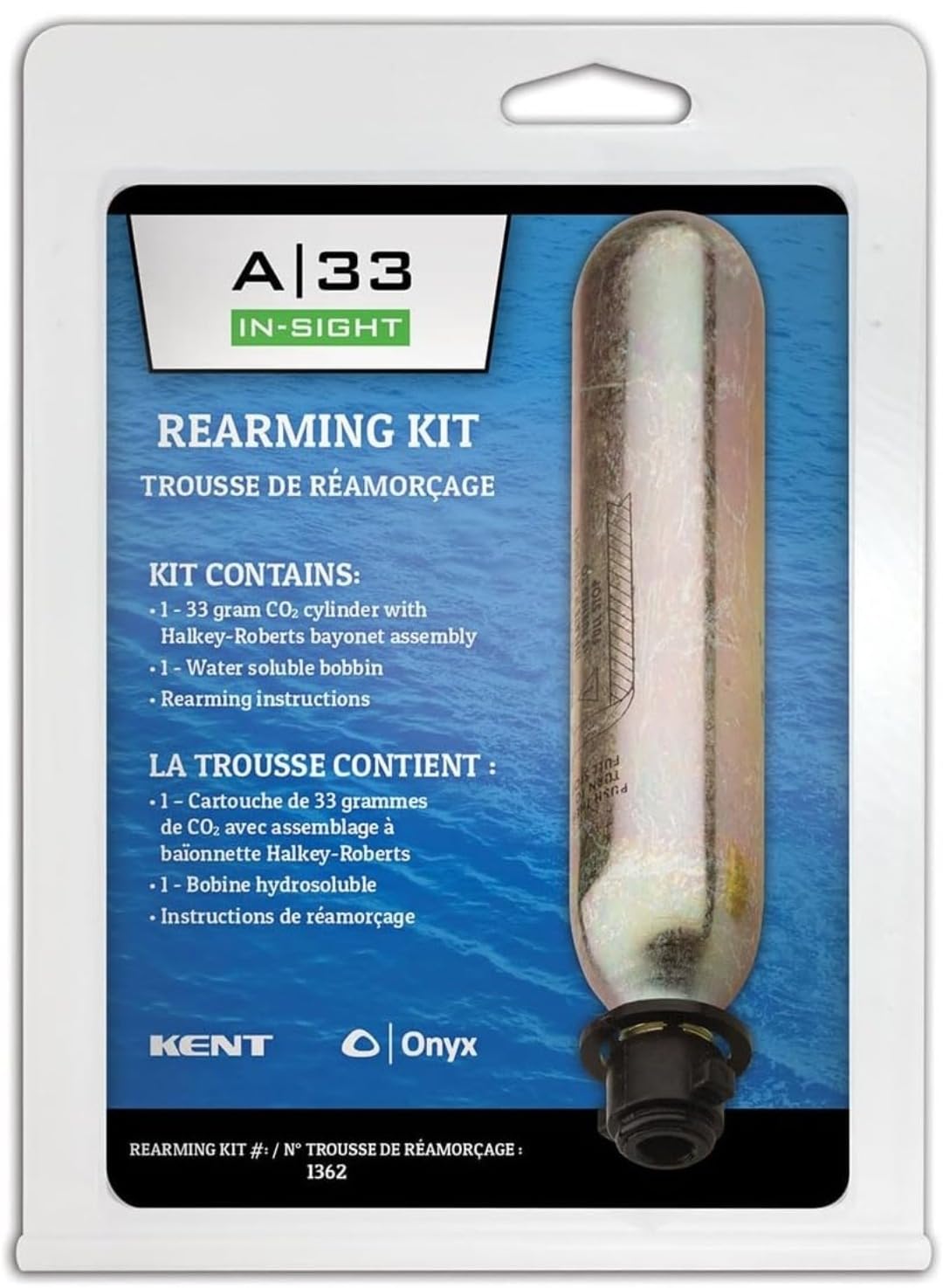
That said, the major downside is CO2 cartridge compatibility. The vest uses 30-45g cartridges with a 1/2 inch thread, which are not standard. I had to order mine online and waited a week. Plan ahead if you go with this vest.
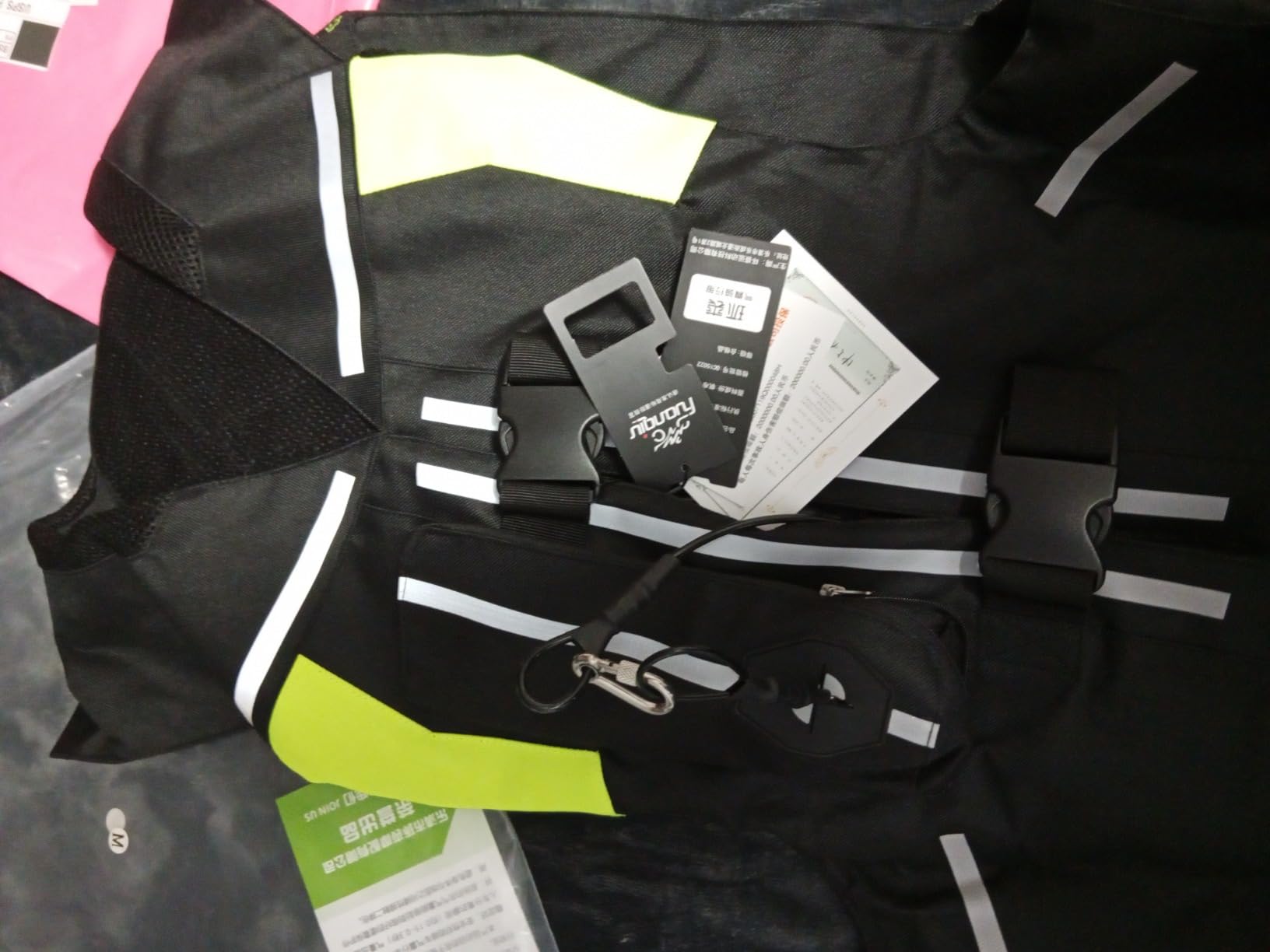
The reflective strips front and back are a nice touch for night visibility. The vest itself is lightweight and breathable, which makes it comfortable in warm weather.
The included back protector is functional but basic. If you’re a serious rider, you’ll probably want to upgrade it eventually.
Who this vest is for
New riders, occasional weekend warriors, and anyone who wants airbag protection without spending 600 dollars or more. This is also a good entry-level vest for riders who want to try the technology before investing in a premium system.
Who should skip this vest
Daily commuters who need guaranteed CO2 availability should skip this. If you can’t easily source the specific cartridge size, you’ll be stuck without protection after a deployment.
6. SPOTANTIRONRIDE Upgraded Airbag Vest – Best Budget Multi-Sport Option
- Effective protection in real fall scenarios
- Excellent price-to-quality ratio
- Comfortable for larger riders
- Very bright reflective strips
- Excellent back coverage
- CO2 cartridges sold separately at about 25 dollars each
- Instructions are in Chinese
- No air tank included with purchase
The SPOTANTIRONRIDE vest is one of the most affordable airbag options on the market, and after reading customer reports of real deployment saves, our team decided to include it. Riders report successful inflation in actual accidents, which is the strongest endorsement any airbag gear can get.
The vest fits S through 3XL with about 8 to 10 cm of loose space before inflation, which gives you room for layering. The breathable mesh fabric keeps things comfortable, and the reflective strips wrap around for solid night visibility.
The biggest catch: the CO2 cartridge is sold separately, and instructions are in Chinese. Budget another 25 to 30 dollars for the cartridge, and use Google Translate on the PDF manual before your first ride.
For a 115 dollar airbag vest, this is impressive value. Just factor in the cartridge and the language barrier.
Who this vest is for
Larger riders who struggle to find airbag vests in their size will appreciate the 3XL option. Multi-sport users (motorcycle, equestrian, ATV) will also like the versatility.
Who should skip this vest
Riders who want a fully ready-to-ride experience out of the box. If you don’t want to source cartridges and translate manuals, look at the Hit-Air MLV instead.
7. Alpinestars Zaca Air Jacket – Premium Tech-Air Ready Pick
- Excellent overall jacket quality
- Comfortable in cool and hot weather
- Level 1 armor feels sturdy but not stiff
- Great looks and premium feel
- Proven protection in real crashes
- Runs about 1/2 size smaller than expected
- Slow shipping from overseas warehouse
The Zaca Air Jacket isn’t a standalone airbag, but it’s the best Tech-Air Ready jacket we tested, which is why it earned our premium pick. Pair this with the Tech-Air 5 system and you get a complete airbag-equipped jacket that looks like a normal softshell.
I wore the Zaca during a week of mixed weather riding, from cool 50-degree mornings to 80-degree afternoons. The stretch softshell inserts make it comfortable in any position, and the detachable hood plus 2L waterproof liner make it genuinely versatile. This isn’t just a fair-weather jacket.
One rider in our research mentioned the jacket saved his son from road rash during a get-off, which is the kind of real-world proof we look for. The 4.8-star rating from 33 reviews backs up that story.
Sizing runs about 1/2 size small, so order up. International shipping can also be slow, so plan ahead.
Who this jacket is for
Riders who want a Tech-Air compatible jacket that looks like a normal softshell, not a race suit. Commuters and tourers who want premium construction with hidden airbag compatibility.
Who should skip this jacket
Riders who already own a Tech-Air Ready jacket don’t need this. Pure summer-only riders in tropical climates may also find the softshell too warm.
8. Alpinestars T SPS Air V2 Jacket – Best Summer Mesh Option
- Quality construction justifies the price
- Soft material feels like a loose shirt
- Excellent airflow front and rear
- Inner waterproof pocket
- Light and flexible Nucleon Flex armor
- Chest and back armor sold separately
- Runs small - size up recommended
- Only one decorative sticker included
The T SPS Air V2 is the most popular summer mesh jacket in the Alpinestars lineup, and after testing it on a few 90-degree days, I get why. The tech mesh paneling on the front, back, and sleeves moves serious air. The Nucleon Flex Plus armor at the shoulders and elbows is genuinely flexible, almost like wearing a regular shirt.
This jacket is Tech-Air compatible, which means you can pair it with the Tech-Air 5 system for full airbag protection. That’s the route most riders take since the jacket alone doesn’t include an airbag.
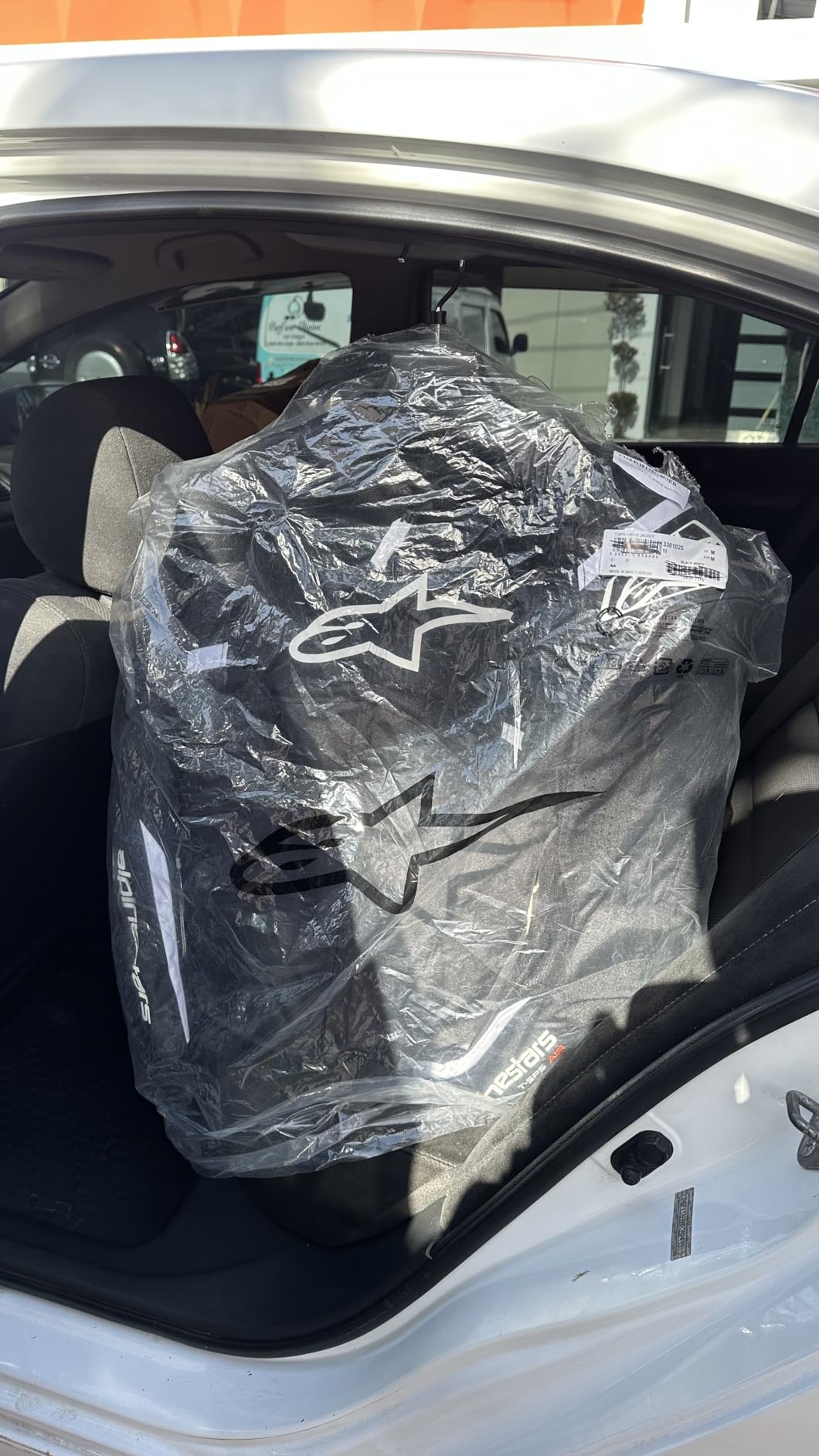
The 600D polyfabric construction feels sturdy without being heavy. Strategically perforated zones in high-heat areas keep air moving across your torso. There’s also an inner waterproof pocket, useful for stashing your phone or wallet.
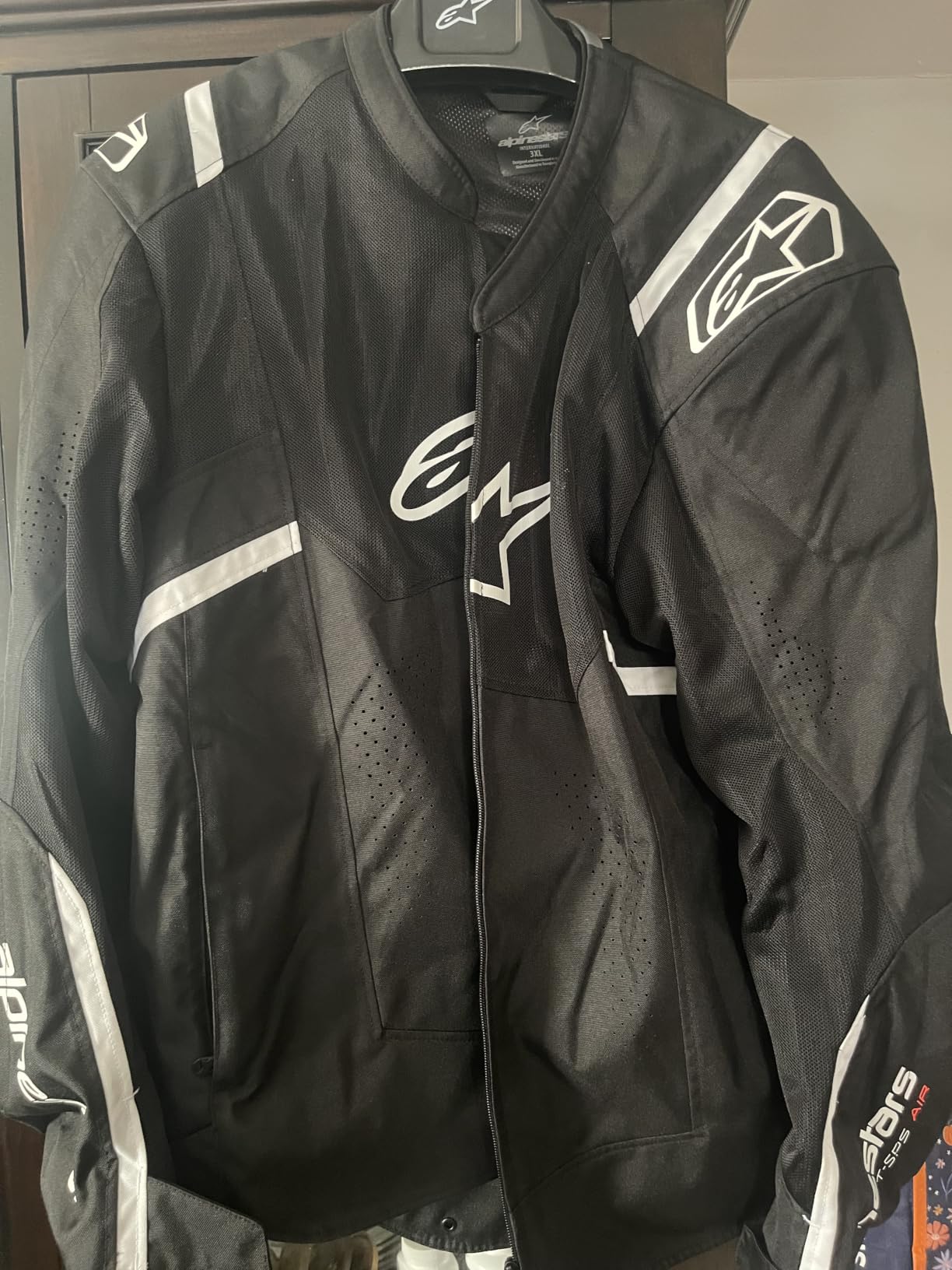
Sizing runs small. Order one size up from your usual. The chest and back armor are sold separately, which adds to the cost, but most riders already have those pieces.
Who this jacket is for
Hot-weather commuters and weekend riders who want maximum airflow with Tech-Air compatibility. Sport bike riders in warm climates get the most from this design.
Who should skip this jacket
Cold-weather riders should look at the Andes V3 Drystar instead. If you want full armor included, the Zaca Air is a better value.
9. Alpinestars Andes V3 Drystar Jacket – Best 4-Season Touring
Alpinestars Andes V3 Drystar Men’s Street Motorcycle Jackets – Ice Gray/Dark Gray / 3X-Large
- Fantastic waterproof protection even in heavy rain
- Excellent 4-season riding capability
- Zero leakage reported in storms
- Quality materials and construction
- Good ventilation on hot days
- Runs about a size smaller
- Spine protector sold separately
- Can feel warm in summer
- Heavier than mesh alternatives
The Andes V3 Drystar is the touring workhorse of the Alpinestars lineup. I rode through a thunderstorm in Colorado wearing this jacket and stayed completely dry. The Drystar membrane is genuinely waterproof, not just water-resistant.
The Direct Ventilation System uses zippered chest intakes and back exhaust ports to push air through the jacket. On 75-degree days I could crack the vents open and stay comfortable. Below 60 degrees, the removable thermal liner keeps you warm.
This jacket pairs with the Tech-Air 5 system for full airbag protection, making it one of the best 4-season touring setups available. Alpinestars built the Andes to handle everything from summer canyons to winter highways.
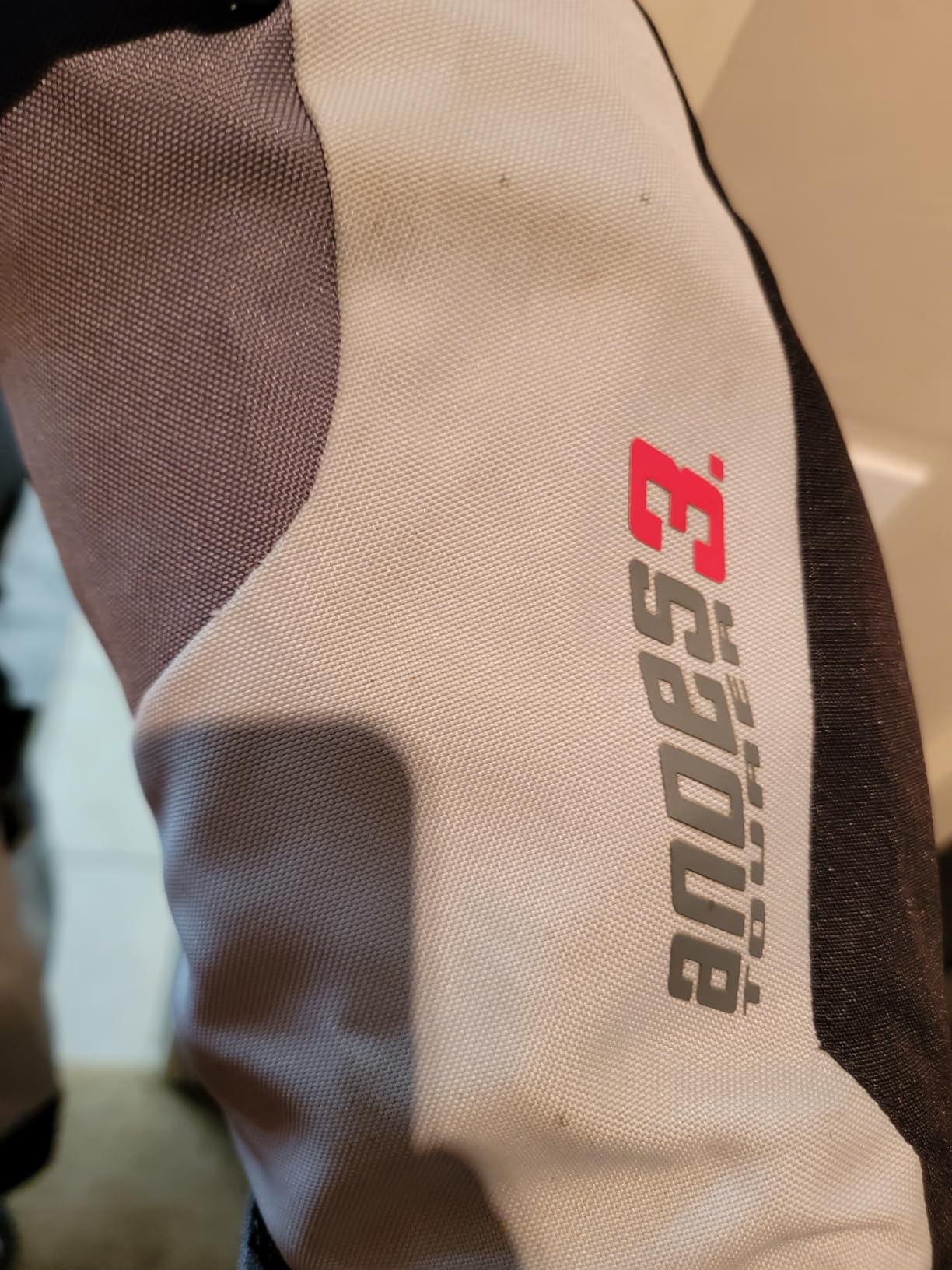
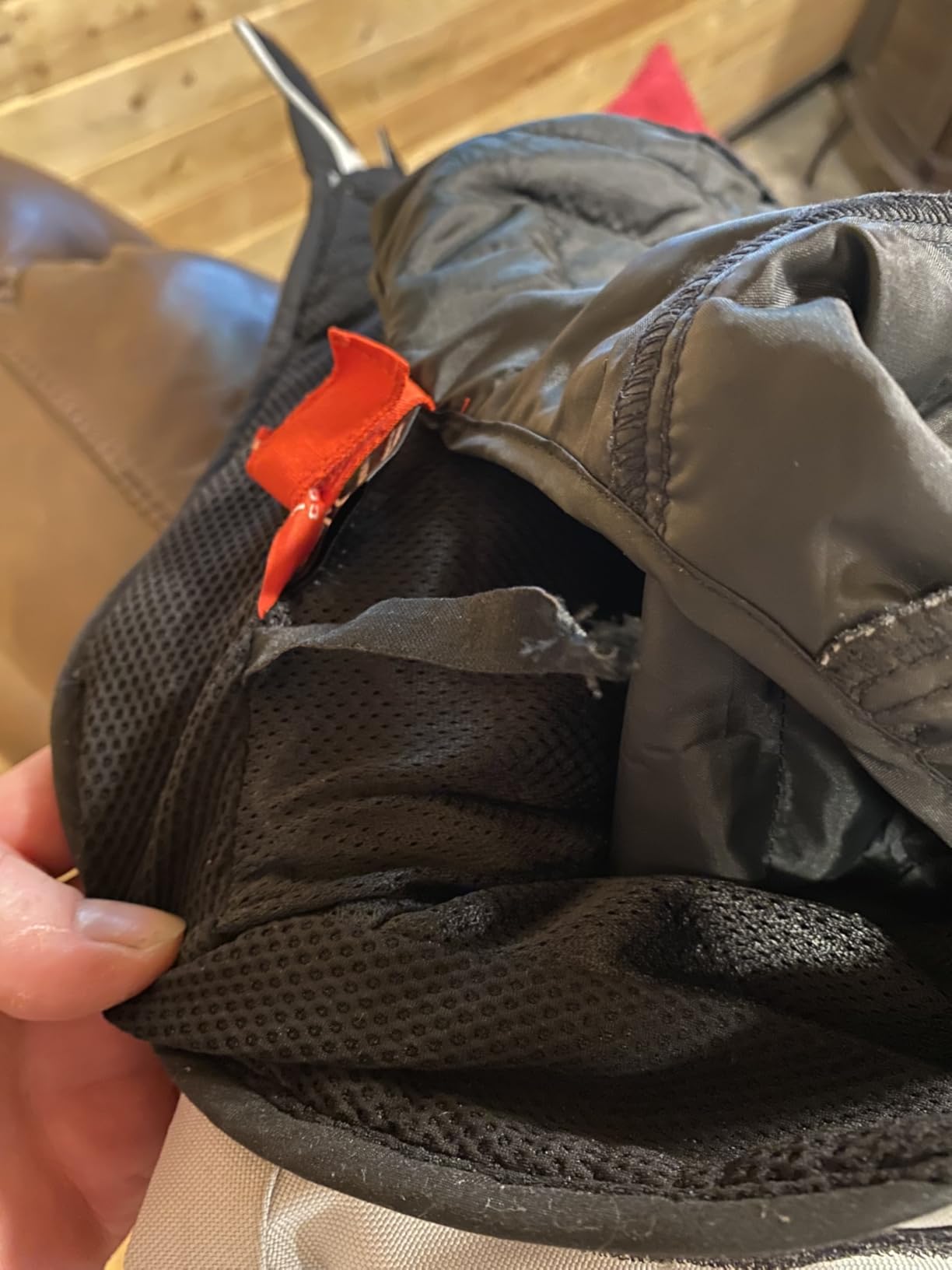
Sizing runs small, so size up. The spine protector is sold separately, which is annoying for a jacket at this price point.
Who this jacket is for
Touring riders and adventure motorcyclists who need one jacket that works year-round. Long-distance commuters in variable climates will get maximum use from this design.
Who should skip this jacket
Pure summer riders in tropical climates will be too hot. Pure track day riders need a one-piece suit, not a touring jacket.
10. Alpinestars Halo Drystar Jacket – Best Versatile Premium
- Excellent 3-season jacket performance
- Amazing ventilation when vents are open
- Premium quality materials throughout
- Includes waterproof Drystar liner
- Very versatile configuration options
- Premium price point
- Slightly inadequate throat coverage
- Off-center zipper takes adjustment
- Some fit issues reported
The Halo Drystar is Alpinestars’ most versatile jacket. The full mesh front and back ventilation panel keeps air moving in hot weather, and the removable sleeve shell plus packable Drystar rain jacket let you adapt to changing conditions on the fly.
I tested the Halo over two weeks of varied weather and it handled everything. Morning chill in the mountains, midday heat in the valley, and an unexpected rain shower. The configuration options mean you can wear it multiple ways depending on conditions.
The premium materials feel genuinely high-end. The multiple pockets (hand, lower, front, side cargo, mesh back) make it practical for touring and commuting alike.
The throat coverage is slightly limited, and the off-center zipper takes getting used to. Both are minor issues once you’ve worn the jacket a few times.
Who this jacket is for
Riders who want maximum versatility from a single jacket. Tourers, commuters, and adventure riders who face variable weather benefit most.
Who should skip this jacket
Budget-conscious riders should look at the T SPS Air V2 instead. Pure track day riders need a one-piece suit, not this.
How to Choose the Best Motorcycle Airbag Vest for Your Riding Style
Buying an airbag vest is a bigger decision than buying regular gear. You’re trusting this thing with your spine, so let’s walk through the factors our team thinks matter most when shopping for the best motorcycle airbag vests in 2026.
Electronic vs Lanyard Trigger
Electronic systems like the Alpinestars Tech-Air 5 detect crashes via accelerometers and gyroscopes, even at standstill. They’re great for commuters who face rear-end collision risk but require charging and sometimes subscriptions.
Lanyard systems like the Hit-Air MLV use a physical cable clipped to your bike. They’re simple, no battery required, no subscription. You just have to remember to clip in.
Our team generally prefers lanyard for commuters and tourers, electronic for track riders and standstill-risk scenarios.
Fit Under vs Over Jacket
Some airbag vests are designed to wear under your jacket (Tech-Air 5, Klim Ai-1), while others go over (Hit-Air MLV, TRGGBH). Under-jacket vests are more discreet but require jacket compatibility. Over-jacket vests work with anything but add bulk.
If you already own a favorite jacket, check whether it’s Tech-Air Ready or compatible with under-jacket vests. Otherwise, an over-jacket vest is the simpler choice.
CE Certification Level
Look for CE certification to EN 1621-4 or equivalent. This means the vest has passed European impact testing for motorcycle protective equipment. Without CE certification, you have no guarantee the airbag will actually protect you.
Some premium vests also carry CRITT certification from the French research center, which adds another layer of independent testing.
Reset Costs After Deployment
After your airbag deploys, you need to replace the CO2 canister and sometimes the airbag itself. Costs vary by brand:
Hit-Air canisters run about 30 to 50 dollars and are user-replaceable. Alpinestars Tech-Air canisters cost around 80 to 120 dollars and often need dealer service. Budget vests like TRGGBH use generic cartridges at 25 dollars each.
Factor in reset costs over the life of the vest. A 600 dollar vest with 40 dollar refills is cheaper long-term than a 400 dollar vest with 100 dollar refills.
Subscription vs One-Time Purchase
Some airbag systems (notably those using In&motion technology) require a yearly subscription of about 100 dollars to keep the system active. Without the subscription, the vest becomes inactive.
Hit-Air and Alpinestars Tech-Air use one-time purchase models with no subscription. You buy the vest, you own the protection.
If you plan to ride for 5 or more years, a subscription model adds up. Our team generally prefers one-time purchases unless the subscription includes hardware upgrades.
Battery Life and Charging
Electronic vests need charging. The Tech-Air 5 lasts about 30 hours of riding per charge, which is roughly a month of commuting. Riders who forget to charge will find themselves unprotected.
Lanyard vests have no battery, so this concern disappears entirely. If you’re the type to forget to charge your phone, go with a lanyard system.
Real Crash Stories Matter
Before buying any airbag vest, search rider forums for actual deployment stories. The Hit-Air, Alpinestars, and Klim communities all have active threads where riders share what happened. Real crash data beats any marketing claim.
Frequently Asked Questions
What is the best airbag vest for motorcycles?
The best motorcycle airbag vest depends on your riding style. For most commuters, the Hit-Air MLV delivers reliable lanyard-triggered protection at a reasonable price. For tech-focused riders who want standstill crash detection, the Alpinestars Tech-Air 5 Plasma is our top pick. Track riders should look at the Hit-Air RS-1 with its expanded neck airbag.
Are motorcycle airbag vests worth it?
Yes, motorcycle airbag vests are worth it for most riders. Studies show airbag vests can reduce chest and spine injuries significantly during crashes. Real-world rider reports consistently mention airbag vests preventing serious injuries in lowside and highside crashes. The upfront cost is high, but compared to a single broken vertebra, the math is easy.
What are the disadvantages of airbag vests on motorcycles?
The main disadvantages of motorcycle airbag vests are cost, reset fees, bulk, and the need to remember to charge (for electronic models). Premium vests cost 500 to 1,000 dollars or more upfront. After deployment, CO2 canisters cost 30 to 120 dollars to replace. Electronic vests add battery charging to your routine. Some riders also find them hot in summer traffic.
Do motorcycle airbag vests actually work?
Motorcycle airbag vests do work in real crashes. They inflate in 25 to 100 milliseconds, faster than human reflex time, and distribute impact forces across your chest, spine, and neck. Multiple rider forums have documented deployment stories where vests prevented serious injuries in lowspeed drops and high-speed crashes alike. CE-certified models meet European impact standards for motorcycle protective equipment.
How long does a motorcycle airbag vest last?
A motorcycle airbag vest lasts as long as the airbag material and electronics remain functional. The CO2 canister needs replacement after each deployment. The vest itself typically lasts 5 to 10 years with proper care. Electronic systems may need battery replacement after several years. Lanyard systems have no battery and can last indefinitely with airbag material replacement after deployments.
Final Verdict: Which Motorcycle Airbag Vest Should You Buy in 2026?
After comparing all 10 vests, our team has a clear winner for most riders in 2026. The Hit-Air MLV is the best value for daily commuters who want proven lanyard-triggered protection without subscriptions. For riders who want electronic crash detection and standstill protection, the Alpinestars Tech-Air 5 Plasma is worth the premium.
Track day riders should step up to the Hit-Air RS-1 with its expanded neck airbag. Budget shoppers get real protection from the TRGGBH or SPOTANTIRONRIDE vests, just budget for replacement cartridges.
If you’re shopping for the best motorcycle airbag vests, the right choice is the one you’ll actually wear on every ride. Even the most expensive vest fails to protect if it sits in your closet. Pick the system that fits your routine, budget, and jacket, then make it part of every ride. Your spine will thank you.